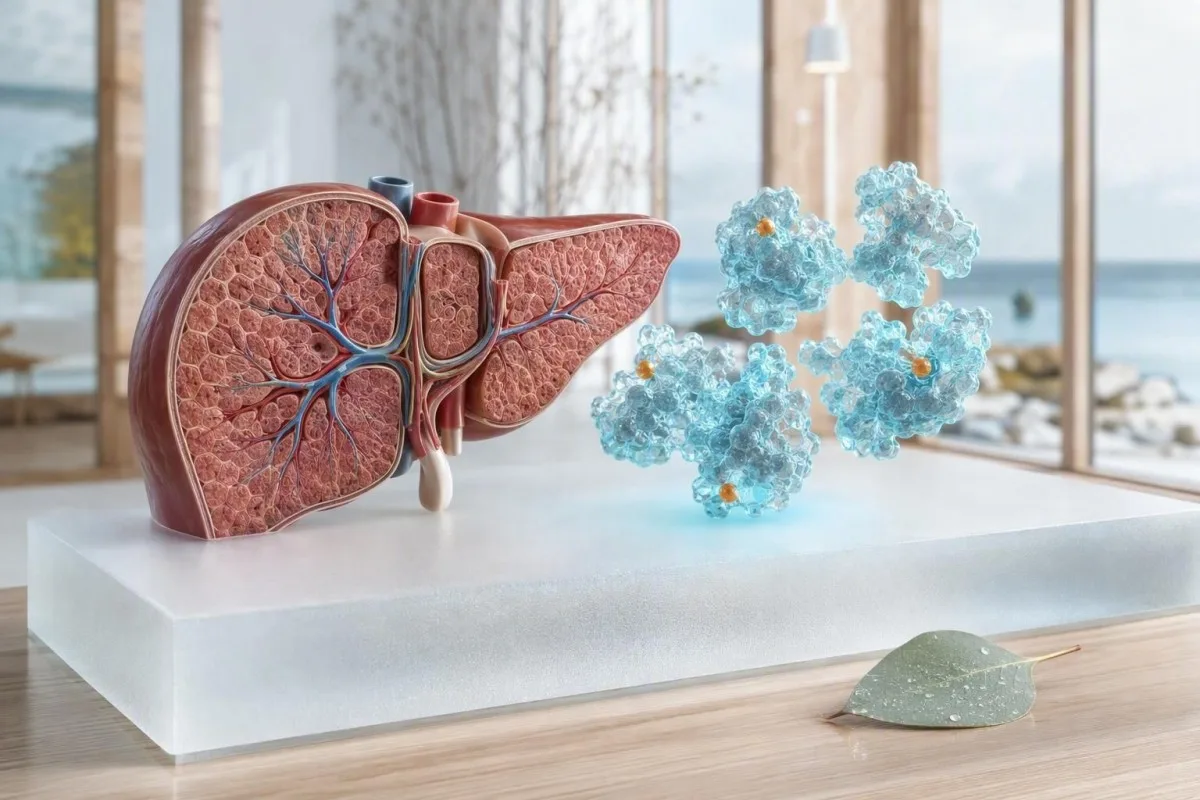
Ett lågt TIBC-resultat orsakar sällan symtom i sig. Symtomen kommer från tillståndet som förändrar transferrinproduktion, järnhantering eller proteinbalans.



- Lågt TIBC innebär vanligtvis att mindre transferrin finns tillgängligt för att transportera järn; många laboratorier för vuxna använder cirka 250–450 µg/dL (45–80 µmol/L) som referensintervall.
- Symtomen är indirekta: trötthet, feber, ledvärk, svullnad, gulsot eller viktnedgång pekar mot den underliggande sjukdomen snarare än lågt TIBC i sig.
- Inflammationsmönster visar vanligtvis lågt serumjärn, lågt TIBC, transferrinsaturation under 20% och ferritin som är normalt eller förhöjt.
- Mönster vid järnbrist ger vanligtvis lågt ferritin och högt – inte lågt – TIBC, såvida inte inflammation eller leversjukdom förekommer samtidigt.
- Transferrinmättnad beräknas som serumjärn dividerat med TIBC × 100; ett värde över 45% motiverar en bedömning av järninlagring när det är ihållande.
- Albumin spelar roll eftersom transferrin är ett leverproducerat protein; lågt albumin med lågt TIBC kan indikera minskad syntes, dåligt intag, proteintapp eller systemisk sjukdom.
- Snar granskning är lämplig vid förvirring, gulsot, svart avföring, andfåddhet i vila, snabbt ökande svullnad eller feber med svår svaghet.
- Återtestning med förnuft innebär att man undviker järntabletter 24 timmar före en järnpanel, när din läkare godkänner det, och att man skjuter upp rutinprovtagning under en akut febersjukdom om möjligt.
Vad ett lågt TIBC-resultat faktiskt betyder
Låg total järnbindningskapacitet innebär att blodbanan har mindre tillgänglig transferrinkapacitet för att binda järn. TIBC är ett indirekt mått på transferrin, ett protein som huvudsakligen produceras av levern; det är inte ett direkt mått på hur mycket järn din kropp lagrar.

De flesta laboratorier rapporterar vuxen TIBC runt 250–450 µg/dL eller 45–80 µmol/L, men intervallet som skrivs ut bredvid ditt resultat gäller eftersom analyskalibreringen skiljer sig åt. Ett värde på 210 µg/dL är inte automatiskt farligt; jag tolkar det tillsammans med serumjärn, ferritin, transferrinsmättning, C-reaktivt protein, albumin och den fullständiga blodbilden. Vår detaljerade järnstudieguide förklarar varför ingen enskild järnmarkör kan besvara varje fråga.
TIBC och transferrin är nära relaterade men är inte identiska tester. Transferrin mäts som en proteinkoncentration, ofta i g/L eller mg/dL, medan TIBC uppskattar den maximala järnbindningskapaciteten hos cirkulerande transferrin; vissa laboratorier beräknar det ena från det andra. AI blodprovsanalysator som läser lågt TIBC i relation till resten av en järnpanel snarare än att behandla en enskild flagga som en diagnos.
En praktisk detalj som patienter ofta missar: samma person kan ha ett lågt TIBC under en virusinfektion och ett högre värde flera veckor senare utan att något tillskott ändrar det. Dr. Thomas Kleins tillvägagångssätt är att först fråga om provet togs under en infektion, efter sjukhusbehandling eller mitt i en ny inflammatorisk skov; den tidslinjen förhindrar ofta ett onödigt järnförebyggande.
Beräkningen bakom transferrinsmättning
Transferrinsmättning är lika med serumjärn ÷ TIBC × 100. Serumjärn på 50 µg/dL med TIBC på 250 µg/dL ger en smättning på 20%, medan samma serumjärn med TIBC på 125 µg/dL ger 40%; en låg nämnare kan få smättningen att verka bedrägligt lugnande eller hög.
Symtom vid lågt TIBC: vad du kan känna och vad du inte kommer att känna
Låg TIBC orsakar i sig vanligtvis inga specifika symptom. Trötthet, minskad träningskapacitet, feber, bukfyllnad, ledvärk eller gulfärgning av ögonen uppstår från anemi, inflammation, leverdysfunktion, undernäring eller järnöverskott – inte från TIBC-värdet ensamt.

När lågt TIBC åtföljer hemoglobin under 120 g/L hos icke-gravida kvinnor eller 130 g/L hos män, trötthet, andfåddhet i trappor, hjärtklappning, huvudvärk och yrsel kan återspegla anemi. Ändå kan anemi av inflammation vara mild och fortfarande lämna en patient utmattad eftersom cytokiner förändrar järntillförseln till benmärgen. Jämför detta med symtom på låga röda blodkroppar om din CBC också är flaggad.
Symptom som får mig att misstänka lever- eller proteinrelaterade orsaker inkluderar ankelödem, ny bukpåverkan, lätt att få blåmärken, klåda, mörk urin, ljus avföring eller dålig aptit. Gulsot plus förvirring, blodiga kräkningar, svart tjärliknande avföring, svår andnöd eller snabbt expanderande svullnad kräver bedömning samma dag. Ett lågt TIBC är inte nödsituationen; de kliniska tecknen kan vara det.
I praktiken ser jag människor bli oroliga efter att ha sökt på “låg järnbindningskapacitet symptom” och omedelbart börja med järn. Det kan vara fel åtgärd om transferrinmättnaden redan är över 45% eller om ferritin är högt. Järn är användbart när bristen är konstaterad, men det är inte ett allmänt tonikum och kan dölja det diagnostiska mönstret.
Hur inflammation skapar lågt TIBC och lågt serumjärn
Inflammation är den vanligaste förklaringen till lågt TIBC med lågt serumjärn. Levern producerar mindre transferrin under ett akut fasrespons, medan hepcidin begränsar järnfrisättning från makrofager och intestinal absorption.
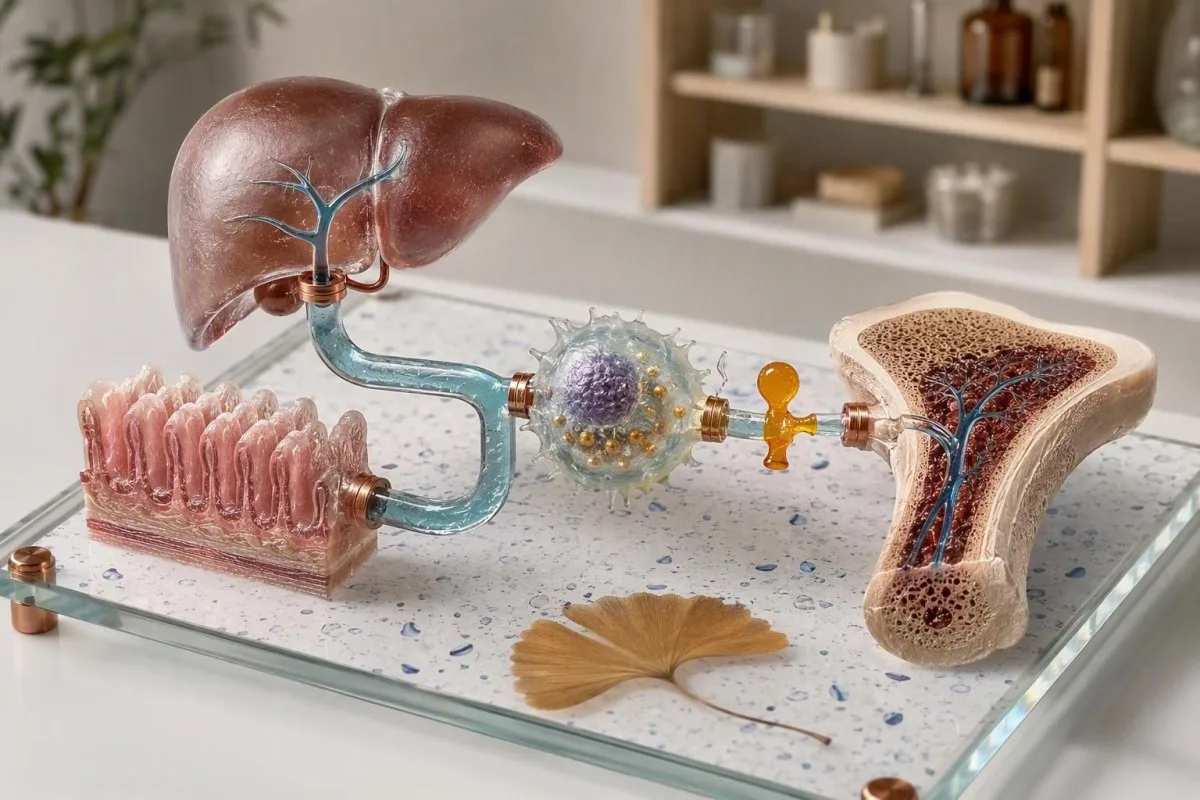
Ett typiskt inflammationsrelaterat mönster är serumjärn under 50 µg/dL, TIBC under 250 µg/dL, mättnad under 20%, och ferritin över 100 ng/mL, även om ingen av dessa gränser ensam diagnostiserar en sjukdom. Ferritin stiger med inflammatorisk signalering, så ett “normalt” ferritin utesluter inte järnbrist på ett tillförlitligt sätt när CRP är förhöjt. Det kliniska ramverket som beskrivs av Weiss et al. (2019) skiljer absolut järnbrist från funktionell järnrestriktion med hjälp av denna kombination, inte enbart ferritin.
Akuta infektioner, autoimmun sjukdom, kronisk njursjukdom, fetmarelaterad inflammation, nyligen genomgången kirurgi och cancer kan alla sänka transferrin. CRP över 10 mg/L gör ett lågt TIBC mer sannolikt att vara reaktivt, medan sänkan (erytrocytsedimentationshastighet) kan förbli hög i veckor efter att CRP sjunkit. För kontext om denna långsammare markör, se vår guide till varför sänkan förändras långsamt.
Det kontraintuitiva är att lagrat järn kan finnas men vara otillgängligt för benmärgen. Kantesti AI, en Plattform för tolkning av AI-biomarkörer, identifierar detta disharmoniska mönster med lågt järn/lågt TIBC och leder till frågor om aktiv sjukdom, njurfunktion och inflammatoriska markörer; den diagnostiserar inte orsaken enbart från laboratoriedata.
När lösligt transferrinreceptorer hjälper
Löslig transferrinreceptor påverkas vanligtvis mindre av inflammation än ferritin. Ett förhöjt resultat kan stödja sann järnrestriktiv erytropoes när ferritin är 50–300 ng/mL och CRP är förhöjt, även om analysspecifika referensintervall innebär att det bör beställas och tolkas av en kliniker.
Varför leversjukdomar kan sänka järnbindningskapaciteten
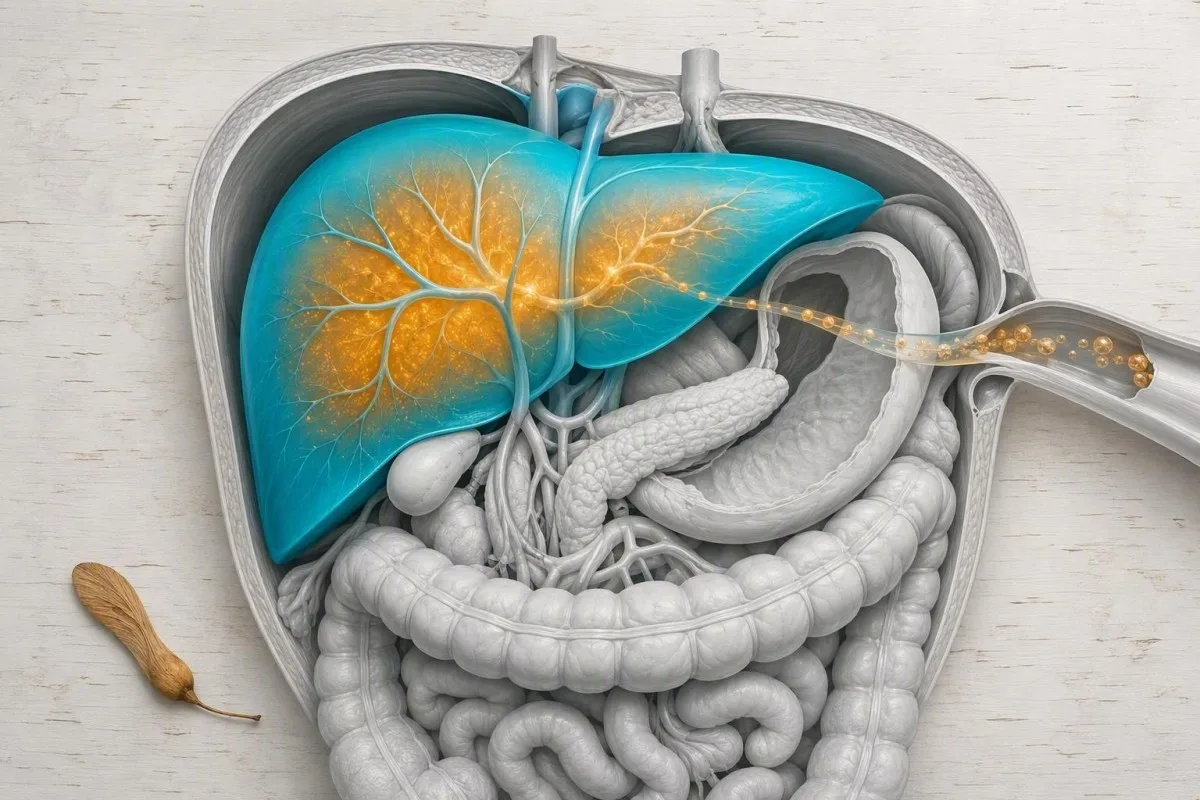
Leversjukdom kan sänka TIBC eftersom hepatocyter syntetiserar transferrin. Lågt TIBC tillsammans med lågt albumin, förlängd INR, förhöjt bilirubin, eller onormala AST och ALT bör flytta fokus från järnintag mot leverproduktion och sjukdomens svårighetsgrad.
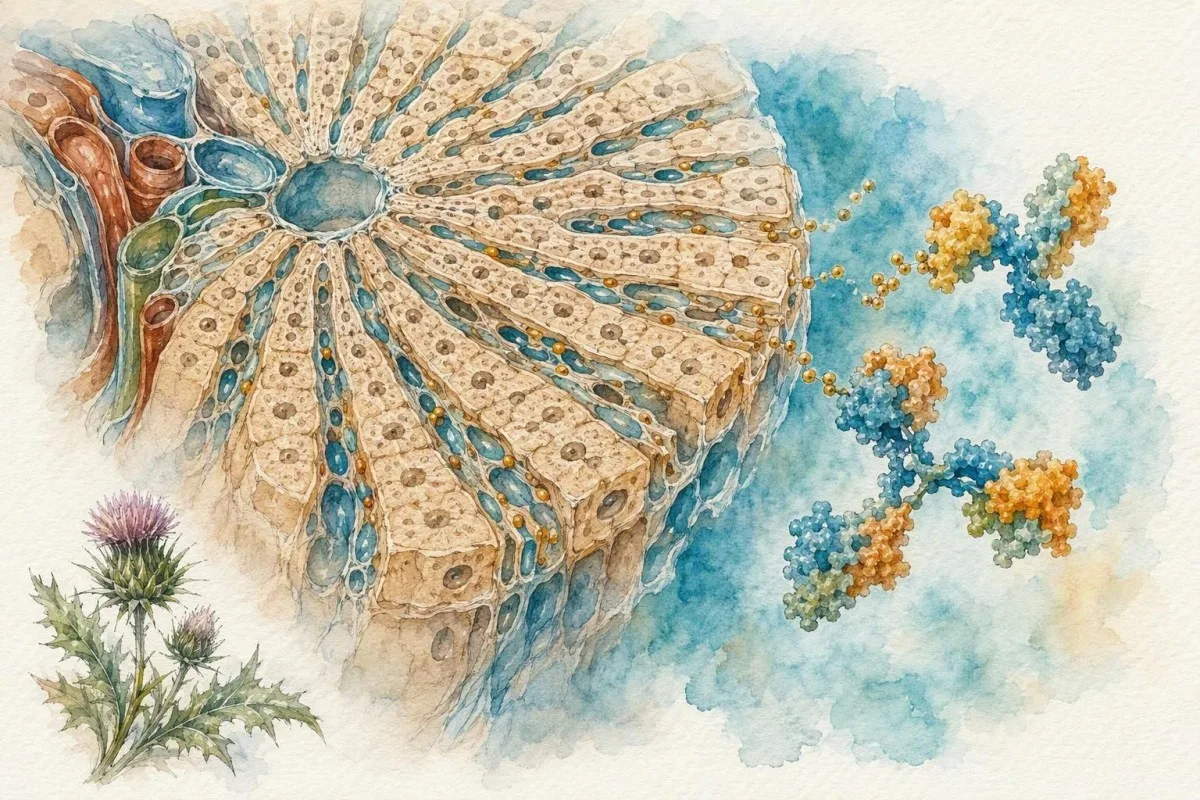
Ett lågt transferrinresultat kan förekomma vid fettleversjukdom, virushepatit, alkoholrelaterad leverskada, avancerad fibros och cirros, men det är inte tillräckligt specifikt för att stadieindela någon av dem. Albumin under 35 g/L tillsammans med ett ihållande lågt TIBC förtjänar en ordentlig klinisk genomgång, särskilt om det finns ödem eller viktnedgång. Granska det bredare mönstret i vår översikt av leverpanel.
Jag granskade nyligen en löpare med AST 89 IU/L efter ett långt lopp och låg-normalt TIBC; AST normaliserades efter återhämtning, medan albumin och bilirubin förblev normala. Träning kan tillfälligt påverka flera resultat, medan lågt TIBC plus gulsot och minskat albumin är en mycket annorlunda klinisk bild. Det är kombinationen – inte en isolerad AST eller TIBC – som ändrar nästa steg.
Ihållande hög transferrinmättnad behöver uppmärksamhet vid leversjukdom eftersom lågt transferrin kan blåsa upp procentandelen. EASL:s riktlinje för hemokromatos från 2022 använder transferrinmättnad över 45 % hos kvinnor och över 50 % hos män, tillsammans med förhöjt ferritin, som utlösare för vidare utredning snarare än att förlita sig på enskilda markörer (European Association for the Study of the Liver, 2022).
När leversymtom kräver akut vård
Ny gulsot, förvirring, blodiga kräkningar, svart avföring eller markerad buksvullnad kräver akut medicinsk bedömning oavsett TIBC-nivå. Dessa symtom kan indikera nedsatt gallflöde, gastrointestinal blödning eller dekompenserad leversjukdom; se vår genomgång av tidiga tecken på cirros.
Lågt TIBC från dålig proteinstatus eller proteintapp
Låg TIBC kan bero på otillräcklig proteintillgänglighet, minskad hepatisk syntes eller proteintapp genom njurarna eller tarmen. Eftersom transferrin har en halveringstid på cirka 8 dagar kan det sjunka tidigare än albumin vid akut sjukdom men är fortfarande ett dåligt enskilt nutritionstest.

Lågt intag, svår illamående, malabsorption, kronisk diarré, svåra brännskador och avancerad systemisk sjukdom kan sänka transferrin. Albumin under 30 g/L ökar sannolikheten för kliniskt meningsfull proteindeponering eller -förlust, men inflammation kan också sänka albumin. Därför missar ordination av höga järndoser för varje lågt TIBC-resultat det underliggande problemet.
Njurproteinläckage kan minska cirkulerande proteiner, särskilt när urinens albumin-kreatinin-kvot är markant förhöjd eller urinprotein är ihållande. Skummande urin, ögonlockspuffighet, ankelödem och viktökning är användbara ledtrådar, men många med proteinuri känner sig bra. Vår artikel om ihållande skummande urin förklarar hur ett urinprov klargör denna möjlighet.
Nutritionell bedömning bör inkludera vikttapp, muskelstyrka, matintolerans, tand- eller sväljsvårigheter och gastrointestinala symtom – inte bara albumin. Erfarenhetsmässigt, en ofrivillig förlust av 5% kroppsvikt under 6–12 månader förtjänar en klinikerledd bedömning även när järnpanelen endast ser måttligt avvikande ut.
När lågt TIBC pekar mot järnöverskott istället
Låg TIBC med högt serumjärn och hög transferrinmättnad kan tyda på järninlagring, särskilt när mättnaden kvarstår över 45 % på en upprepad fastande morgonprov. Detta är motsatsen till okomplicerad järnbrist, där TIBC vanligtvis stiger.

Hereditär hemokromatos, upprepade transfusioner, överdriven järnanvändning, ineffektiv erytropoes och vissa leversjukdomar kan ge detta mönster. Ferritin över 300 ng/mL hos män eller 200 ng/mL hos kvinnor används ofta som en praktisk tröskel för utvärdering, men ferritin kan också stiga vid alkoholbruk, metabolisk sjukdom och vävnadsreaktion. Vår hemokromatos symtomguide sätter dessa resultat i kliniskt sammanhang.
Försök inte att “sänka järn” med bloddonation om du är anemisk, gravid, sjuk eller inte har blivit undersökt. En läkare kan upprepa järnstudier efter en över natten fasta, granska tillskott och alkohol, kontrollera leverenzymer och överväga HFE-gentestning när mönstret är ihållande. Ett icke-fastande serumjärnvärde är en ledtråd, inte ett avgörande bevis.
Kantesti är en AI-baserat analysverktyg för blodprov används i 30 länder för att kartlägga TIBC, ferritin, järn, mättnad, hemoglobin och levermarkörer tillsammans. Vår AI flaggar ett mättnadsmönster för klinisk diskussion; diagnosen kräver fortfarande anamnes, upprepad testning och ibland genetik eller bilddiagnostik.
Kan du ha järnbrist med lågt TIBC?
Ja – järnbrist kan förekomma samtidigt med låg TIBC när inflammation, leversjukdom eller proteinbrist dämpar transferrin. Vid okomplicerad järnbrist, däremot, sjunker ferritin och TIBC stiger oftare över laboratorieintervallet.
Ett ferritin under 15 ng/mL är mycket specifik för uttömda järndepåer hos annars friska vuxna, medan många kliniker använder under 30 ng/mL för att förbättra känsligheten. Under inflammation kan ferritin under 100 ng/mL med transferrinmättnad under 20% fortfarande stödja järnbrist, särskilt vid kronisk njursjukdom eller hjärtsvikt. Se vår förklaring av lågt ferritin före anemi för symtom.
Detta är där en CBC får sin plats. Låg MCV, förhöjd RDW, reducerat retikulocythämoglobin och lågt ferritin talar för äkta järnbrist; normal eller lätt sänkt MCV med förhöjd CRP och låg TIBC talar för inflammation. Skillnaden är inte perfekt – talassemi-drag, B12-brist, njursjukdom och nyligen genomförd transfusion kan grumla den. Vår guide för låg MCV-triage täcker dessa konkurrerande förklaringar.
Dr. Thomas Klein råder patienter att inte bedöma järnbehandling enbart utifrån serumjärn. Serumjärn kan skifta med 30% eller mer under en dag och efter måltider; hemoglobinrespons, ferrintrend, symtom och orsaken till bristen spelar mycket större roll.
Mediciner, graviditet och tidsförskjutningseffekter på TIBC
Östrogenexponering och graviditet höjer ofta transferrin och TIBC, medan akut sjukdom, kortikosteroider och allvarlig systemisk stress kan sänka det. Medicinering och livsskede kan förklara ett oväntat resultat innan en sällsynt diagnos övervägs.
P-piller och graviditet ökar vanligtvis transferrinproduktionen, så en låg TIBC under graviditet är mer anmärkningsvärd när den paras med lågt albumin, inflammation eller leveravvikelser. Graviditetsspecifik ferrintolkning är annorlunda: en nivå under 30 µg/L används allmänt för att identifiera järnbrist under graviditet. Läs vår guide för ferritin under graviditetens olika trimestre istället för att tillämpa intervall för icke-gravida.
Järntabletter kan tillfälligt höja serumjärn och mättnad i flera timmar, vilket kan få en låg TIBC att se ut som järnöverskott. Om den ordinerande läkaren samtycker, kan intravenös järntillförsel under 24 timmar före provtagning och insamling av ett morgonprov ge en renare panel. De praktiska detaljerna finns i vår guide för TIBC-beredning.
Medicinering bör inkludera antikonvulsiva medel, kemoterapi, immunsuppressiva medel, testosteron- eller östrogenbehandling och intravenöst järn – inte för att var och en direkt orsakar låg TIBC, utan för att de kan förändra leverprover, inflammation, produktion av röda blodkroppar eller järndistribution. Sluta aldrig med ett föreskrivet läkemedel enbart för att förbättra ett laboratorieresultat.
Kan det låga TIBC-resultatet vara tillfälligt eller felaktigt?
Ett lågt TIBC-resultat kan vara tillfälligt under akut sjukdom, efter intravenös vätsketillförsel, eller när serumjärn varierar med tidpunkten, men ett korrekt utfört TIBC-test är vanligtvis analytiskt tillförlitligt. Den större risken är feltolkning av ett genuint resultat utanför dess kliniska kontext.
TIBC mäts vanligtvis genom att tillsätta järn till serum, avlägsna obundet järn och kvantifiera vad som blev bundet; direkta transferrin-immunanalyser använder en annan metod. Hemolys, svår lipemi och sällsynta paraproteiner kan störa vissa laboratorieanalyser. En plötslig förändring som strider mot tidigare trender motiverar en upprepning snarare än panik; vår delta-check-förklaring beskriver hur kliniker tänker kring plötsliga skift.
Upprepad testning är mest användbar när resultatet kan ändra behandlingen. För en stabil person med lågt TIBC under en förkylning eller autoimmun flare föredrar jag vanligtvis upprepade järnstudier 4–8 veckor efter återhämtning, tillsammans med CBC, ferritin, CRP, leverpanel och albumin. För någon med gulsot, svår anemi eller mättnad över 45% är tidsramen kortare.
Kantesti AI analyserar uppladdade rapporter på cirka 60 sekunder och kan hjälpa dig att jämföra datum, enheter och referensintervall, men OCR är inte ofelbart. Kontrollera att serumjärn inte misstas för ferritin och att µmol/L inte lästes som µg/dL; använd vår checklista för PDF-uppladdning innan du litar på en digital sammanfattning.
Nästa tester som läkare använder efter ett lågt TIBC
Nästa steg efter lågt TIBC är vanligtvis en mönsterbaserad panel: CBC, ferritin, serumjärn, transferrinmättnad, CRP eller ESR, albumin och leverenzymer. Urinproteintestning, njurfunktion, löslig transferrinreceptor eller genetisk testning läggs till endast när det initiala mönstret pekar dit.
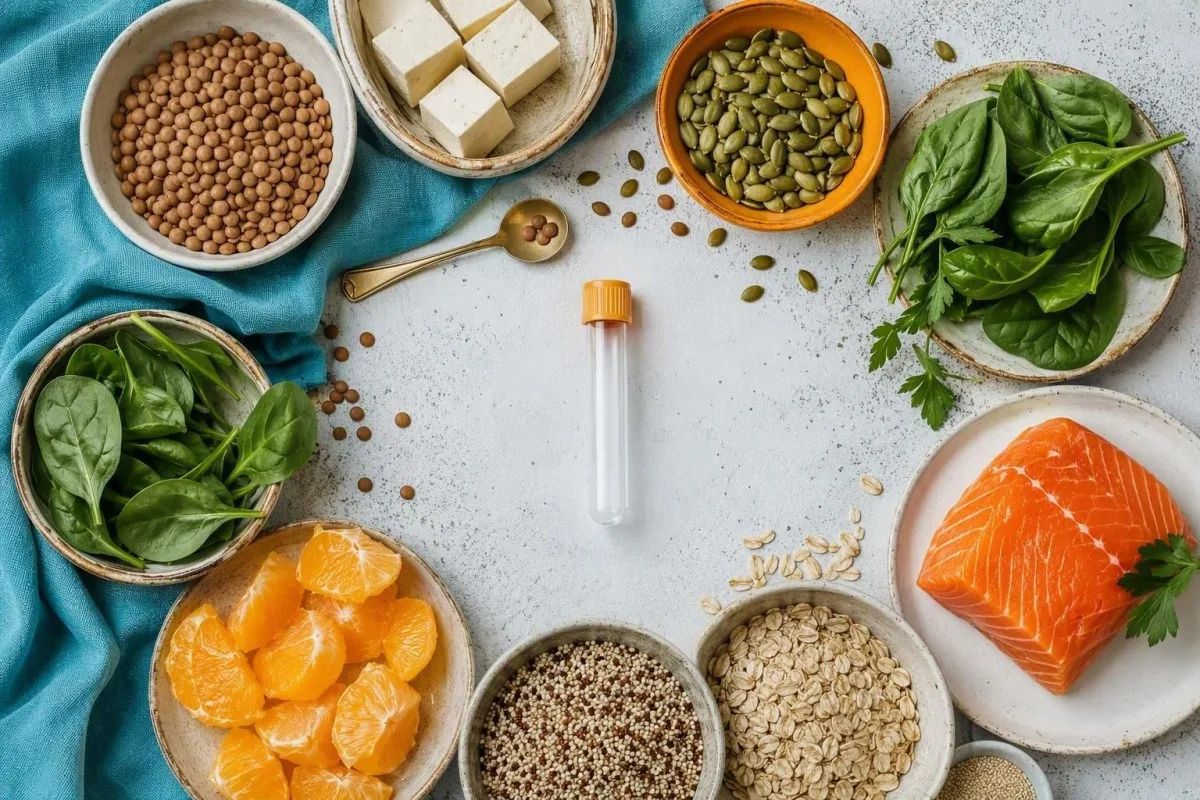
En rimlig första panel inkluderar hemoglobin, MCV, RDW, ferritin, järn, TIBC eller transferrin, mättnad, CRP, ALT, AST, ALP, bilirubin, albumin, kreatinin och eGFR. transferrinmättnad under 20% indikerar begränsad järntillgänglighet, medan ihållande värden över 45% kräver en bedömning av järnöverbelastning. Svaret ligger i förhållandet mellan dessa värden, inte i att beställa alla specialisttester samtidigt.
Om inflammation föreligger och ferritin är tvetydigt kan löslig transferrinreceptor eller retikulocythemoglobin hjälpa till att identifiera behandlingsbar järnbrist. Om albumin är lågt kan urinalys och urin ACR kontrollera renal proteintappning; om leverfynd är onormala kan hepatittestning och ultraljud vara lämpligt. Låg transferrinmättnad har en annan innebörd än lågt TIBC, även om de ofta förekommer tillsammans.
Kantesti:s neurala nätverk jämför resultatbanor snarare än en enskild ögonblicksbild, vilket är viktigt eftersom ferritin och CRP kan röra sig i motsatt riktning över flera veckor. Metodik och kliniska gränser beskrivs i vår medicinska valideringsöversikt; en resultat tolkning är förberedelse för en klinisk konversation, inte en ersättning för den.
Fyra mönster vid lågt TIBC som ändrar diagnosen
Lågt TIBC blir användbart när det tolkas som ett av fyra mönster: inflammation, lever- eller proteinpåverkan, järnöverbelastning eller blandad järnbrist plus inflammation. Varje mönster har en annan behandlingsväg och andra säkerhetsaspekter.
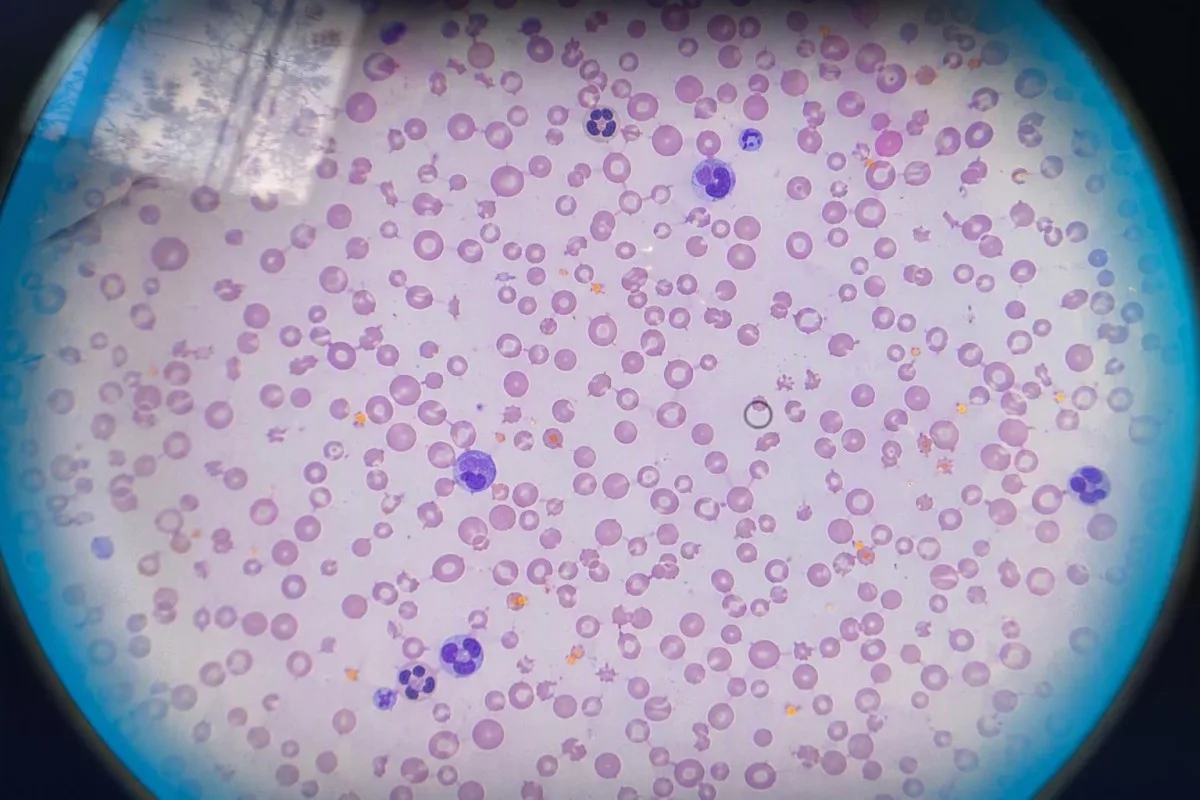
Inflammation: lågt järn, lågt TIBC, mättnad ofta under 20%, ferritin normalt eller högt, CRP förhöjt. Lever/proteinmönster: lågt TIBC med lågt albumin och eventuellt onormalt bilirubin, INR eller leverenzymer. Järninlagringsmönster: låg eller normal TIBC med järnmättnad över 45% och förhöjt ferritin. Dessa är utgångspunkter, inte rigida lådor.
Blandad brist: ferritin kan vara 30–100 ng/mL, mättnad under 20%, TIBC låg eller normal, och CRP förhöjt. I denna situation kan det vara nödvändigt att behandla den inflammatoriska sjukdomen och utreda blodförlust eller malabsorption. Mag-tarmbesvär, rikliga menstruationsblödningar och användning av antiinflammatoriska läkemedel bör man direkt fråga om – patienter uppger dem ofta inte om de inte blir tillfrågade.
För patienter är den användbara frågan inte “Hur höjer jag TIBC?” utan “Vad sänkte transferrin eller påverkade järnfördelningen?”. Vår ferritin och CRP vägleder hjälper till att göra den åtskillnaden innan ett tillskott väljs.
Vad du inte ska göra efter att ha sett en flagga för lågt TIBC
Behandla inte låg TIBC med järn på egen hand förrän ferritin, mättnad, hemoglobin och den kliniska kontexten har granskats. Ett lågt resultat betyder inte att ditt blod saknar järn, och extra järn kan vara olämpligt vid järninlagring eller leversjukdom.

Undvik att köpa järntillskott med hög dos eftersom en rapport säger “låg järnbindningskapacitet”. Vanliga terapeutiska järndoser innehåller 45–65 mg elementärt järn per tablett, tillräckligt för att orsaka illamående, förstoppning och mörka avföringar; hos fel person kan de öka järnlagren utan att ta itu med inflammation eller leversjukdom. Livsmedelsbaserade metoder är rimliga för de flesta, men de ersätter inte bedömning av anemi.
Använd inte enbart ett ferritininmätning för att utesluta brist under infektion, fetma, autoimmun sjukdom eller en nyligen genomgången operation. Och anta inte att trötthet är relaterad till järn om hemoglobin, ferritin, sköldkörtel, sömn, humör, mediciner och njurfunktion inte har beaktats. Vår guide till kosttillskott vid trötthet förklarar varför laboratoriestyrda val är säkrare.
Slutligen, jaga inte en perfekt TIBC-siffra. I min kliniska erfarenhet, att korrigera kronisk inflammation, behandla celiaki, kontrollera njursjukdom, stoppa undvikbar blodförlust eller förbättra nutrition påverkar järnpanelen mer meningsfullt än att försöka höja transferrin direkt.
Mat, återhämtning och realistiska sätt att stödja den underliggande orsaken
Mat kan stödja järnintag och proteinstatus, men kost ensam kan inte korrigera låg TIBC orsakad av aktiv inflammation, signifikant leversjukdom, nefrös proteinförlust eller järnöverskott. Den kostplanen måste matcha laboratoriemönstret.
Om järnbrist bekräftas, absorberas hemjärn från fisk, fågel och kött generellt mer effektivt än icke-hemjärn från baljväxter, tofu, linser, frön och berikade spannmål. C-vitaminhaltiga produkter kan förbättra icke-hemjärnupptaget, medan te och kaffe som intas till måltider kan minska det. Vår praktiska guide till heme- och icke-hemejärnmatvaror ger alternativ på måltidsnivå.
Om proteinintaget har varit dåligt, sikta på regelbundna måltider som innehåller en proteinkälla snarare än att lägga till oreglerade “transferrin-booster”. Generella proteinkrav för vuxna ligger ofta runt 0,8 g/kg/dag, medan äldre vuxna, akut sjukdom, idrottsträning och njursjukdom kräver individuell rådgivning. Personer med kronisk njursjukdom bör inte öka proteinintaget utan att diskutera planen med sitt njurteam.
Återhämtning innebär också att välja rätt omtestningsintervall. Hemoglobin stiger vanligtvis med ungefär 10–20 g/L under 2–4 veckor efter effektiv järnbehandling vid okomplicerad brist, men TIBC kanske inte normaliseras enligt den tidsplanen om inflammation eller leverproduktion förblir den huvudsakliga drivkraften.
När ett lågt TIBC-resultat kräver omedelbar medicinsk bedömning
Ordna en rutinmässig klinisk granskning för ihållande låg TIBC, och sök akutvård när den åtföljs av svåra symtom som gulsot, förvirring, bröstsmärta, andfåddhet i vila, svimning eller gastrointestinal blödning. Brådskan beror på personen och de åtföljande resultaten, inte på TIBC-värdet i sig.

Boka en tid i god tid om TIBC förblir under referensintervallet vid upprepade tester, ferritin är oväntat högt, mättnad är över 45%, hemoglobin sjunker, albumin är under 35 g/L, eller levervärden är avvikande. Ta med tidigare resultat, medicin- och tillskottslistor, aktuell sjukdomshistorik, menstruationshistorik där det är relevant, alkoholintag, kostförändringar och familjehistorik av järnöverskott eller leversjukdom. En välorganiserad tidslinje kan spara ett andra besök.
Vård samma dag är rimligt vid svart avföring, kräkning av blod, gul hud med dåsighet, hög feber med djup svaghet, eller andfåddhet som begränsar tal. Dessa symtom kan signalera blödning, infektion, svår anemi eller leverdekompensation, och att vänta på en ny järnpanel är inte säkert. För en strukturerad förberedelse, använd vår checklista för labbprover vid läkarbesök.
Från och med den 10 september 2026 är det säkraste budskapet enkelt: låg TIBC är en ledtråd om transferrinbiologi, inte en diagnos och inte en automatisk anledning till järn. Kantesti:s kliniska innehåll granskas med vår Medicinsk rådgivande nämnd, men din egen kliniker kan integrera undersökningsfynd, symtom, mediciner och lokala laboratoriemetoder.
Hur man följer upp ett lågt TIBC-resultat utan att överreagera
Följ låg TIBC tillsammans med datum, sjukdomsstatus, ferritin, mättnad, CRP, albumin, hemoglobin och behandlingsförändringar. En trend över två eller tre jämförbara prover är vanligtvis mer informativ än en mätning utanför referensintervallet.
Registrera om varje prov var fastande, om du tog järn inom 24 timmar, om du hade feber eller ansträngande träning, och om samma laboratorium användes. En förändring från TIBC 225 till 245 µg/dL kan vara vanlig biologisk och analytisk variation, medan 225 till 340 µg/dL efter återhämtning från lunginflammation kan vara kliniskt meningsfullt. Vår guide för jämförelse av blodprover visar vilka kontextuella detaljer som ska bevaras.
Kantesti, en Tolkningstjänst för AI-labbtester, kan organisera longitudinella rapporter och förklara varför låg TIBC, ferritin, CRP och albumin kan röra sig tillsammans eller avvika. Den är utformad för att göra dina frågor mer precisa: “Kan detta vara inflammatorisk järnbegränsning?” är mer användbart än “Är mitt järn lågt?”
Den lugnande punkten är att många låga TIBC-resultat återspeglar ett tillfälligt inflammatoriskt tillstånd eller ett reversibelt närings- och återhämtningsproblem. Den försiktiga punkten är lika verklig: ihållande resultat med anemi, onormala leverprov, ödem eller hög mättnad förtjänar ordentlig klinisk uppföljning snarare än internetspekulationer.
Vanliga frågor
Vilka symtom orsakar lågt TIBC?
Låg TIBC orsakar vanligtvis inga symtom i sig eftersom det mäter järnbindningskapacitet snarare än en kroppsfunktion som du kan känna direkt. Symtom som trötthet, svaghet, andfåddhet, feber, svullna anklar, gulsot eller ledvärk kommer från den underliggande orsaken, såsom anemi, inflammation, leversjukdom, proteinförlust eller järnöverskott. Hemoglobin under 120 g/L hos icke-gravida kvinnor eller 130 g/L hos män gör symtom relaterade till anemi mer sannolika. Brådskande bedömning är lämplig vid bröstsmärta, svimning, förvirring, svart avföring, svår andfåddhet eller gul hud med dåsighet.
Är lågt TIBC detsamma som lågt transferrin?
Låg TIBC återspeglar vanligtvis låg transferrin, men de två testerna är inte tekniskt sett identiska. Transferrin är ett leverproducerat bärarprotein som mäts direkt i g/L eller mg/dL, medan TIBC uppskattar hur mycket järn transferrinpoolen kan binda och rapporteras vanligtvis i µg/dL eller µmol/L. Typisk TIBC för vuxna är cirka 250–450 µg/dL, även om laboratoriernas referensintervall skiljer sig åt. Låga resultat för båda är vanliga vid inflammation och minskad leverproteinsyntes.
Betyder lågt TIBC järnbrist?
Låg TIBC betyder inte vanligtvis järnbrist utan komplikationer; klassisk järnbrist ger oftare låg ferritin och hög TIBC. Ett blandat mönster kan uppstå när järnbrist föreligger tillsammans med inflammation, leversjukdom eller dålig proteinstatus, vilket undertrycker TIBC. Ferritin under 15 ng/mL stöder starkt uttömda järnförråd hos en frisk vuxen, medan ferritin under 100 ng/mL plus transferrinmättnad under 20% fortfarande kan tyda på brist under inflammation. En CBC, ferritin, CRP och mättnad behövs innan järnbehandling påbörjas.
Vad orsakar låg TIBC med lågt järn?
Låg TIBC med lågt serumjärn återspeglar oftast inflammationsrelaterad järnrestriktion. I detta mönster minskar hepsidin frisättningen av järn till cirkulationen samtidigt som levern producerar mindre transferrin, vilket ger lågt järn, låg TIBC, mättnad ofta under 20% och ferritin som kan vara normalt eller högt. Kronisk njursjukdom, infektion, autoimmun sjukdom, fetmarelaterad inflammation, nyligen genomgången kirurgi och cancer kan skapa detta mönster. CRP över 10 mg/L stöder aktiv inflammation men identifierar inte dess källa.
Vad betyder låg TIBC med hög ferritin?
Låg TIBC med hög ferritin förekommer ofta vid inflammation, leversjukdom, metabol dysfunktion, alkoholrelaterad leverskada eller järnöverskott. Ferritin är både en järnlagringsmarkör och ett akutfasprotein, så ett högt värde innebär inte automatiskt ett överskott av lagrat järn. Kvarstående transferrinmättnad över 45% plus förhöjt ferritin är mer oroande för järninlagring och motiverar en bedömning ledd av läkare. Albumin, CRP, ALT, AST, bilirubin och fullständigt blodstatus hjälper till att skilja orsakerna åt.
Ska jag ta järn om min TIBC är låg?
Ta inte järn enbart för att TIBC är lågt. Oralt järn är lämpligt när järnbrist påvisas genom det övergripande mönstret, ofta inklusive lågt ferritin, låg mättnad och kompatibla CBC-fynd; många terapeutiska produkter innehåller 45–65 mg elementärt järn per tablett. Järn kan vara oanvändbart eller olämpligt när lågt TIBC beror på inflammation, leverpåverkan, proteinförlust eller järnöverskott. Be en läkare att först granska ferritin, transferrinmättnad, hemoglobin, CRP och levertester.
Få AI-drivna analyser av blodprov redan idag
Gå med i över 2 miljoner användare världen över som litar på Kantesti för snabb och korrekt analys av blodprover. Ladda upp dina blodprovsresultat och få en heltäckande tolkning av 15,000+-biomarkörer på sekunder.
📚 Refererade forskningspublikationer
Klein, T., Mitchell, S., & Weber, H. (2026). Urobilinogen i urinprov: Fullständig urinananalysguide 2026. Zenodo. https://doi.org/10.5281/zenodo.18226379. Länkar till ResearchGate och Academia.edu finns tillgängliga via publikationens DOI.. Kantesti AI Medical Research.
Klein, T., Mitchell, S., & Weber, H. (2026). Järnstudieguide: TIBC, järnmättnad och bindningskapacitet. Zenodo. https://doi.org/10.5281/zenodo.18248745. Länkar till ResearchGate och Academia.edu finns tillgängliga via publikationens DOI.. Kantesti AI Medical Research.
📖 Externa medicinska referenser
⚕️ Medicinsk ansvarsfriskrivning
Den här artikeln är endast avsedd för utbildningsändamål och utgör inte medicinsk rådgivning. Rådgör alltid med en behörig vårdgivare för beslut om diagnos och behandling.
E-E-A-T förtroendesignaler
Uppleva
Läkarledd klinisk granskning av arbetsflöden för laboratorietolkning.
Expertis
Laboratoriemedicinskt fokus på hur biomarkörer beter sig i kliniskt sammanhang.
Auktoritet
Skrivet av Dr. Thomas Klein med granskning av Dr. Sarah Mitchell och Prof. Dr. Hans Weber.
Trovärdighet
Evidensbaserad tolkning med tydliga uppföljningsspår för att minska larm.