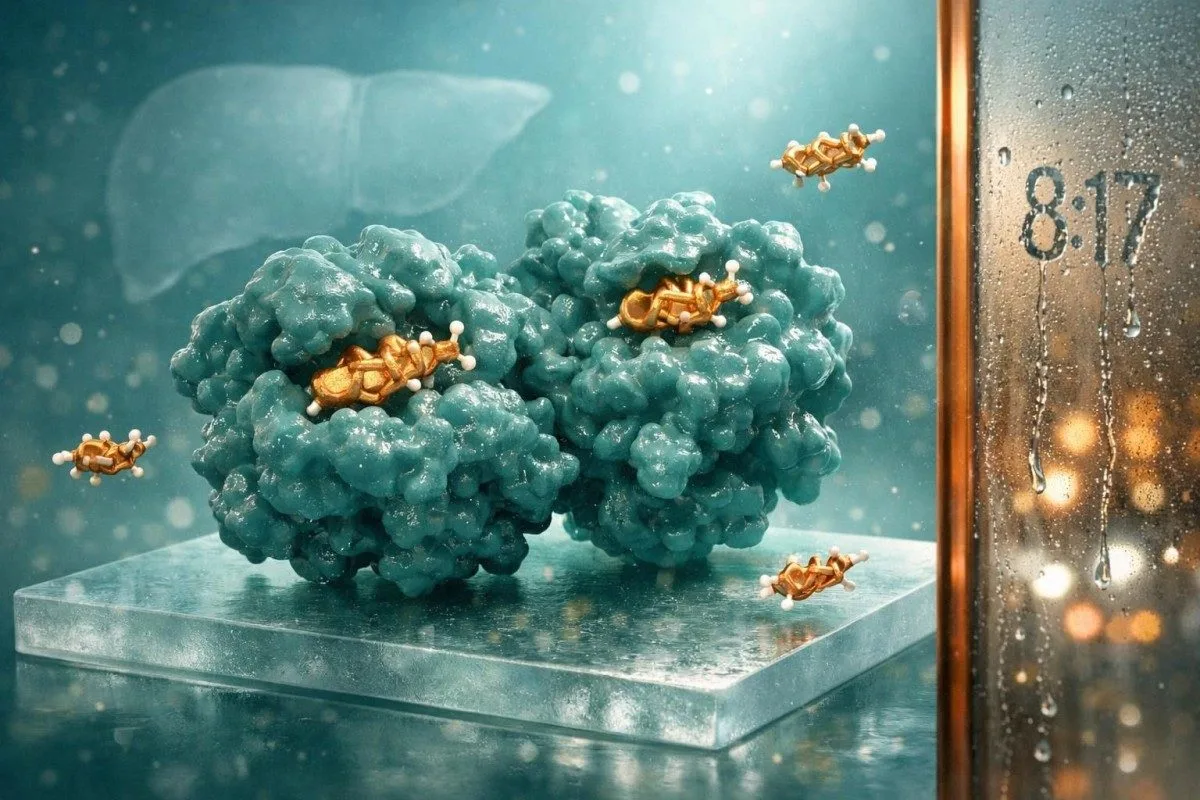
A normal total testosterone result can be misleading when SHBG is unusually high or low. This guide shows how clinicians use SHBG to estimate biologically active testosterone in men and women.


- SHBG is typically about 10-57 nmol/L in adult men and 18-144 nmol/L in premenopausal women, though ranges vary by lab.
- Free testosterone is usually only 1-3% of circulating testosterone, so a normal total testosterone does not always mean hormone availability is normal.
- High SHBG above roughly 80-100 nmol/L in many men can make free testosterone low even when total testosterone looks acceptable.
- Low SHBG below about 15-20 nmol/L often tracks with obesity, insulin resistance, androgen exposure, or hypothyroidism.
- Total testosterone should usually be repeated on 2 separate morning draws, ideally between 7 and 10 a.m., before diagnosing hypogonadism.
- PCOS workup often uses SHBG with total testosterone, DHEAS, prolactin, and cycle history because low SHBG can amplify androgen effects.
- Best estimation of free testosterone uses total testosterone, SHBG, and albumin; equilibrium dialysis remains the reference method when available.
- Next step after an abnormal SHBG result is to treat the cause—thyroid, liver, metabolic, medication, ovarian, or testicular—not the SHBG number alone.
Why an SHBG blood test can change the meaning of testosterone
An SHBG blood test measures sex hormone-binding globulin, the main carrier protein that binds testosterone in the bloodstream. If SHBG is high, free testosterone can be low even when total testosterone looks normal; if SHBG is low, total testosterone can look low in men or falsely reassuring in women with androgen excess. That is why doctors add SHBG when investigating low libido, fatigue, infertility, erectile changes, or possible PCOS.
About 40-60% of circulating testosterone is bound tightly to SHBG, roughly 38-50% is loosely bound to albumin, and only 1-3% is truly free testosterone. That is why our Kantesti AI blood test analyzer flags SHBG whenever symptoms such as low libido, brain fog, poor recovery, or fertility concerns do not match a seemingly normal total testosterone result.
In clinic, I—Thomas Klein, MD—see this weekly. A 39-year-old man reports fewer morning erections and heavy fatigue, his total testosterone is 430 ng/dL, everyone tells him he is fine, and then SHBG comes back at 78 nmol/L with a low calculated free testosterone; this is also why patients with exhaustion should review a broader fatigue blood test guide.
The reverse mistake happens too. A woman with irregular cycles may have a total testosterone of 32 ng/dL—technically within range—but an SHBG of 16 nmol/L, leaving much more hormone unbound and biologically active at the hair follicle and ovary.
SHBG never answers the whole question alone. We interpret it beside albumin, thyroid markers, liver enzymes, glucose metabolism, medications, and symptoms because isolated numbers are where endocrine mistakes usually begin.
What SHBG actually measures and what counts as normal
SHBG is made mainly in the liver, and adult male levels are commonly about 10-57 nmol/L while premenopausal female levels are often 18-144 nmol/L. Those ranges are wide because age, estrogen exposure, thyroid status, liver function, weight, and assay method all move the number.
SHBG is a liver-made transport protein, not a testosterone hormone and not a direct measure of gonadal output. Adult male SHBG is commonly about 10-57 nmol/L, premenopausal female SHBG about 18-144 nmol/L, and postmenopausal intervals may shift downward or broaden depending on the assay.
Estrogen tends to increase hepatic SHBG production, while insulin tends to suppress it. That is one reason combined oral contraceptives can raise SHBG by roughly 50% to 200% over several weeks, whereas obesity and hyperinsulinemia can push it lower.
Labs do this differently. Some European laboratories place the male upper limit closer to 55 nmol/L and others near 70 nmol/L, so we always compare the result with the reporting lab's interval and the rest of the biomarker reference guide.
If the report is crowded with abbreviations and mixed units, patients often miss the pattern. Our lab abbreviations explainer helps you sort nmol/L from ng/dL before you assume something is abnormal.
Why one number cannot be read without age and estrogen status
SHBG rises with age even when total testosterone declines. In men over 70, SHBG can sit 20-40% above younger-adult averages, which is why a 'normal' total testosterone may coexist with clearly low androgen symptoms.
How doctors use SHBG to estimate free testosterone from total testosterone
Free testosterone is the small fraction not tightly bound to SHBG, and it is usually only 1-3% of total testosterone. When SHBG is abnormal, measured or calculated free testosterone often reflects symptoms better than total testosterone alone.
The reference method for free testosterone is equilibrium dialysis, but many hospitals do not offer it because it is slower and more expensive. A practical alternative uses total testosterone, SHBG, and albumin—often with the Vermeulen equation from the Journal of Clinical Endocrinology & Metabolism in 1999—and our clinical validation standards explain why method choice matters.
Analog direct free-testosterone immunoassays are common, but I am cautious with them; in my experience they are least reliable when SHBG is very high or very low. If albumin is under about 3.5 g/dL from liver disease, inflammation, or kidney protein loss, calculated free testosterone can also drift off.
Many adult male lower limits for equilibrium-dialysis free testosterone cluster around 50-65 pg/mL, but the spread between labs is wide enough that I avoid one universal cutoff. This is one of those areas where context matters more than the number, especially when symptoms are mild or the assay method is unclear.
A useful habit is to read the testosterone method before the number. If you are unsure whether the assay was LC-MS/MS, immunoassay, or equilibrium-dialysis based, our how to read a blood report piece walks through the clues.
Which free testosterone method is best
Equilibrium dialysis is still the cleanest laboratory method, especially when SHBG is far outside range. Calculated free testosterone is usually good enough in routine practice if total testosterone is measured well, SHBG is trustworthy, and albumin is not severely abnormal.
What causes high SHBG and when doctors worry about it
High SHBG most often results from aging, oral estrogen, hyperthyroidism, liver disease, HIV, some anticonvulsants, and chronic calorie deficit. Values above about 80-100 nmol/L in many men often make free testosterone look worse than total testosterone suggests.
High SHBG usually reflects increased liver production or reduced insulin-androgen signaling. Oral estrogen pushes SHBG more than transdermal estrogen because first-pass liver exposure is stronger, which is a nuance many short articles skip.
Thyroid excess can move SHBG early—sometimes before someone looks obviously hyperthyroid. When SHBG is high and resting heart rate is up, I usually check TSH and free T4; a suppressed TSH is a classic clue, and our low TSH guide explains that relationship.
The liver angle matters because SHBG is synthesized there. A modest ALT rise, fatty liver, hepatitis, or heavy alcohol use does not always raise SHBG, but a discordant testosterone panel with abnormal transaminases deserves a look at our ALT interpretation article.
There is another pattern clinicians miss: lean endurance athletes and people who have lost weight fast often show SHBG of 70-120 nmol/L with normal total testosterone. They are not automatically healthier because SHBG is high; sometimes they are under-fueled, sleeping poorly, or overtraining.
What causes low SHBG and why it often points to insulin resistance
Low SHBG most often accompanies obesity, insulin resistance, hypothyroidism, androgen use, nephrotic syndrome, and sometimes glucocorticoids or acromegaly. An SHBG below 15-20 nmol/L is not diagnostic by itself, but it frequently tracks with high insulin exposure and lower metabolic reserve.
Insulin suppresses hepatic SHBG synthesis. That is why low SHBG often travels with triglyceride elevation, waist gain, fatty liver risk, and an HbA1c creeping toward 5.7% or higher; our HbA1c cutoff guide gives the glucose thresholds.
Ding and colleagues linked lower SHBG to future type 2 diabetes risk in the New England Journal of Medicine, and that association still holds up reasonably well in later cohorts. SHBG is not a diabetes test, but low SHBG often tells me the liver is seeing too much insulin for too long.
Hypothyroidism can lower SHBG, but not every patient reads like a textbook. When fatigue, cold intolerance, constipation, or heavy periods accompany a low SHBG, I revisit TSH and free T4, and our high TSH explainer is a good primer.
Low SHBG is often a metabolic clue, not a reproductive diagnosis.
In women, low SHBG can magnify acne, hirsutism, and scalp hair thinning even when total testosterone is not dramatic. In men with obesity, low SHBG can drag total testosterone into the 220-320 ng/dL range while free testosterone remains closer to normal, which is one reason diagnosis gets messy.
When doctors use SHBG for low libido, fatigue, infertility, or erectile changes in men
Doctors order SHBG in men when symptoms suggest low testosterone but the total testosterone is borderline or does not fit the story. The common trigger is a morning total testosterone between about 230 and 350 ng/dL, especially if the patient is older, lean, overtrained, has thyroid or liver issues, or is taking a medication that shifts SHBG.
As of March 30, 2026, most clinicians still follow the same core logic used in AUA and Endocrine Society practice: symptoms matter, and at least 2 low morning testosterone values matter too. A total testosterone below 300 ng/dL supports hypogonadism in many practices, but SHBG earns its keep when the result sits near the threshold rather than far below it.
The draw should usually be done between 7 and 10 a.m., and men who are sick, sleep-deprived, or working night shifts often need repeat testing before anyone labels them chronically low. Men evaluating low libido or fatigue should also think broader than hormones, which is why I often pair SHBG with the checklist in blood tests every man over 50.
Fertility changes the workup. If semen parameters are poor, I add LH, FSH, prolactin, estradiol, and sometimes genetic testing because normal total testosterone does not rule out impaired spermatogenesis; age-appropriate prostate screening also matters, and our PSA by age guide covers the basic thresholds.
One of my memorable cases was a 46-year-old cyclist with total testosterone of 382 ng/dL and SHBG of 92 nmol/L. His calculated free testosterone was low, sleep was fragmented, calories were short by his training log, and the fix started with recovery and thyroid review—not with a reflex prescription.
Borderline total testosterone is where SHBG earns its keep
When total testosterone is clearly very low, SHBG rarely changes the big picture. When total testosterone is borderline, SHBG can completely change whether the result looks reassuring, genuinely low, or merely distorted by binding.
How SHBG helps when doctors suspect PCOS or androgen excess
SHBG is useful in PCOS because low SHBG can make free testosterone high even when total testosterone is only mildly elevated or normal. In reproductive-age women, SHBG often falls with insulin resistance, which is one reason acne, hirsutism, and ovulatory problems can worsen before total testosterone leaves the lab range.
A practical estimate in women is the free androgen index, usually calculated as total testosterone in nmol/L divided by SHBG, multiplied by 100. An index above about 5 can support hyperandrogenism in some labs, but clinicians disagree on the cutoff and results become less stable when SHBG is extremely low.
Method matters more in women because testosterone concentrations are much lower than in men. Below about 150 ng/dL, many routine immunoassays lose precision, so LC-MS/MS total testosterone is usually the cleaner method when available.
PCOS is not diagnosed by SHBG alone. We still use a mix of cycle history, clinical hyperandrogenism, ultrasound features, and exclusion of thyroid disease, prolactin excess, and nonclassic CAH; our women's hormone guide lays out that broader picture.
Hormonal contraception muddies the water. Combined pills often raise SHBG sharply and may mask biochemical androgen excess for 8-12 weeks after stopping, so timing matters more than many patients are told; the women's 30s blood test checklist is useful if you are planning a more complete panel.
When SHBG is low in PCOS, I also look hard at fasting glucose, HbA1c, liver fat risk, and sleep quality. The endocrine story and the metabolic story are usually the same story wearing different clothes.
How to prepare for an SHBG blood test and which companion labs matter
The cleanest SHBG interpretation comes from a morning sample taken with total testosterone, albumin, and a repeat measurement if the first result is unexpected. Fasting is not mandatory for SHBG itself, but many clinicians combine it with glucose, insulin, lipid, or testosterone testing, so an 8-12 hour fast often keeps the whole panel cleaner.
For SHBG alone, fasting is optional. For a combined endocrine-metabolic panel, fasting for 8-12 hours is often cleaner and easier to interpret, especially if lipids, insulin, or glucose are being drawn too; our fasting guide covers the practical details.
Biotin can interfere with some hormone immunoassays, particularly at doses above 5 mg daily. If a result is surprising, I ask about hair-and-nail vitamins, acute illness, steroid use, and hard exercise in the prior 24 hours before I fully trust the number.
For men, companion tests often include LH, FSH, prolactin, estradiol, TSH, free T4, ALT, AST, CBC, ferritin, and sometimes sleep-apnea screening. For women with possible PCOS, I often add DHEAS, prolactin, 17-hydroxyprogesterone, HbA1c, lipids, and cycle timing because symptom clusters matter; our symptom-to-test decoder can help you organize that list.
If you already have a PDF or photo of your report, you can upload it to Try Free AI Blood Test Analysis. Kantesti AI reads SHBG beside albumin, thyroid, liver, and metabolic markers in about 60 seconds, which is usually faster than reconstructing the panel by hand.
Real-world SHBG patterns I watch for before calling a result abnormal
The most useful SHBG interpretation comes from patterns, not isolated numbers. High SHBG with low-normal total testosterone suggests reduced hormone availability; low SHBG with normal total testosterone in a woman suggests more unbound androgen effect; low SHBG with low total testosterone in an obese man may reflect metabolic suppression rather than primary testicular failure.
Pattern one is the lean symptomatic man with high SHBG. He often has a total testosterone that looks acceptable on paper, an SHBG above 70-90 nmol/L, a low free testosterone, and a history of under-fueling, thyroid overactivity, liver disease, or simply age-related binding changes.
As Thomas Klein, MD, I pay closest attention to discordance. If symptoms are heavy but total testosterone looks ordinary, or if total testosterone is low but LH and FSH are not behaving as expected, I stop and look for SHBG, albumin, thyroid disease, liver disease, and medication effects before I name the diagnosis.
Pattern two is the overweight man with low total testosterone and very low SHBG. In that setting, free testosterone may be less abnormal than the total number suggests, and the real driver may be insulin resistance, sleep apnea, poor sleep, or recent weight gain rather than primary testicular failure.
Across more than 2 million users who rely on Kantesti AI, these mismatch patterns are a common reason people re-check a report, and the human stories behind them are often similar to the recovery arc in this patient case story. For oversight, every hormone article on Kantesti is reviewed with input from our Medical Advisory Board.
What to do after a high or low SHBG result
Treat the cause of abnormal SHBG, not the protein itself. A high or low SHBG result should lead to repeat testing, medication review, thyroid and liver assessment, metabolic screening, and in some patients a formal endocrine or fertility evaluation.
High SHBG pushes me toward thyroid review, liver assessment, medication history, nutritional status, and sometimes HIV testing. Low SHBG pushes me toward insulin resistance, obesity, sleep apnea, androgen exposure, and hypothyroidism—different biology, different next steps.
Repeat testing is sensible when the clinical picture and the number disagree. As Thomas Klein, MD, I am more interested in the repeat pattern than the one-off value, and I usually repeat morning hormones in 2-8 weeks if illness, overtraining, contraceptive changes, or medication adjustments could have distorted the first sample.
Be skeptical of supplements marketed to 'fix SHBG.' Boron, magnesium, and herbal blends have patchy evidence at best, and any effect is usually smaller than correcting weight change, thyroid disease, oral estrogen exposure, or sleep loss; if you want the nutrition side interpreted conservatively, our AI supplement recommendations summarize where evidence is decent and where it is honestly thin.
Urgent review is warranted when women develop rapid virilization, voice deepening, or total testosterone above roughly 150 ng/dL, and when men have very low testosterone with headaches, visual symptoms, or severe infertility. For day-to-day interpretation, our platform and Kantesti's neural network are built to compare SHBG with the rest of the panel instead of giving you one orphaned number.
Red flags that should not wait
Rapid-onset hirsutism, clitoromegaly, voice change, galactorrhea, severe headaches, visual changes, or testosterone values far outside the expected range deserve prompt in-person assessment. Those are the moments when SHBG stops being an interpretation nuance and becomes part of a broader endocrine workup.
Research publications and clinical validation
Research matters because SHBG interpretation depends on assay quality and context, not a single cutoff. At About Kantesti we built our review process around endocrine physiology, lab-method nuance, and physician oversight so that an SHBG blood test is read as part of a whole endocrine-metabolic pattern.
Kantesti LTD. (2026). Women's Health Guide: Ovulation, Menopause & Hormonal Symptoms. Figshare. https://doi.org/10.6084/m9.figshare.31830721. ResearchGate. Academia.edu. This publication matters for SHBG because estrogen exposure, ovulation, and menopausal transition all shift SHBG and change how total testosterone should be read in women.
Kantesti LTD. (2026). Clinical Validation Framework v2.0 (Medical Validation Page). Zenodo. https://doi.org/10.5281/zenodo.17993721. ResearchGate. Academia.edu. That framework explains why our AI weights assay method, co-markers, and lab-specific intervals instead of forcing one blunt cutoff onto every SHBG panel.
As Thomas Klein, MD, I have learned that SHBG interpretation fails most often when the assay method is ignored or the clinical story is dismissed. That is why Kantesti AI checks albumin, thyroid markers, liver markers, metabolic markers, and sex-specific reference intervals before it labels an SHBG result reassuring or concerning.
Frequently Asked Questions
What is a normal SHBG level?
A typical SHBG range is about 10-57 nmol/L in adult men and 18-144 nmol/L in premenopausal women, but the exact interval varies by lab and assay. An SHBG above roughly 80-100 nmol/L in many men can lower free testosterone even when total testosterone is normal. An SHBG below about 15-20 nmol/L often points toward insulin resistance, obesity, hypothyroidism, or androgen exposure. Age, oral estrogen, thyroid disease, and liver function can all shift the result.
Can total testosterone be normal if free testosterone is low?
Yes. High SHBG can bind a larger share of testosterone, so a person may have a total testosterone of 400-500 ng/dL and still have a low free testosterone for that laboratory. This pattern is common in older men, lean endurance athletes, people with hyperthyroidism, and those taking oral estrogen. That is exactly why clinicians order SHBG when the number on the report does not match the symptoms.
Does a low SHBG mean I have high testosterone?
No. Low SHBG does not automatically mean testosterone is high; it more often reflects insulin resistance, obesity, hypothyroidism, steroid exposure, or protein loss. In men, low SHBG can make total testosterone look lower than the biologically active fraction really is. In women, low SHBG can increase free androgen effects such as acne or hirsutism even if total testosterone is only mildly elevated. The result has to be interpreted with total testosterone, albumin, and the clinical picture.
Is SHBG useful for diagnosing PCOS?
SHBG is useful in PCOS, but it is not a stand-alone diagnostic test. Low SHBG is common in PCOS because insulin resistance suppresses hepatic SHBG production, and that can make free testosterone disproportionately high. Some clinicians calculate a free androgen index and consider values above about 5 suggestive, but the cutoff is lab-dependent. Diagnosis still relies on a broader assessment of cycles, symptoms, ultrasound findings, and exclusion of other causes.
When should men ask for an SHBG blood test?
Men should ask about SHBG when they have symptoms of low testosterone but total testosterone is borderline, often around 230-350 ng/dL, or when the clinical story and the number do not match. The test is especially helpful in older men, lean men, men with thyroid or liver disease, endurance athletes, and anyone taking medications that alter SHBG. Most clinicians prefer the sample to be drawn between 7 and 10 a.m. and repeated at least once if the first result is abnormal. SHBG is also useful in male infertility workups when semen results and hormone results seem out of step.
Do I need to fast or stop supplements before an SHBG blood test?
Fasting is not required for SHBG alone, but an 8-12 hour fast is often helpful when the same blood draw includes glucose, insulin, lipids, or testosterone. High-dose biotin supplements above about 5 mg daily can interfere with some hormone immunoassays, so many labs advise stopping them for 48-72 hours first. Do not stop prescribed hormones or steroids on your own, but tell the clinician and lab exactly what you are taking. A morning blood draw usually gives the cleanest testosterone interpretation.
Get AI-Powered Blood Test Analysis Today
Join over 2 million users worldwide who trust Kantesti for instant, accurate lab test analysis. Upload your blood test results and receive comprehensive interpretation of 15,000+ biomarkers in seconds.
📚 Referenced Research Publications
Klein, T., Mitchell, S., & Weber, H. (2026). Women's Health Guide: Ovulation, Menopause & Hormonal Symptoms. Kantesti AI Medical Research.
Klein, T., Mitchell, S., & Weber, H. (2026). Clinical Validation Framework v2.0 (Medical Validation Page). Kantesti AI Medical Research.
⚕️ Medical Disclaimer
This article is for educational purposes only and does not constitute medical advice. Always consult a qualified healthcare provider for diagnosis and treatment decisions.
E-E-A-T Trust Signals
Experience
Physician-led clinical review of lab interpretation workflows.
Expertise
Laboratory medicine focus on how biomarkers behave in clinical context.
Authoritativeness
Written by Dr. Thomas Klein with review by Dr. Sarah Mitchell and Prof. Dr. Hans Weber.
Trustworthiness
Evidence-based interpretation with clear follow-up pathways to reduce alarm.