A positive result usually supports recent alcohol exposure, but the number is not a drinking diary. Laboratory methods, red-cell turnover and recent transfusion can change its meaning.


- Positive PEth usually supports alcohol exposure within the preceding weeks, but transfused donor red cells can also introduce this biomarker.
- Below 20 ng/mL is commonly considered compatible with abstinence or low alcohol consumption; it does not prove that no alcohol was consumed.
- 20–199 ng/mL commonly supports recent alcohol consumption, but this interval cannot reliably identify an exact daily amount.
- 200 ng/mL or higher often supports substantial or repeated alcohol exposure; it is not a stand-alone diagnosis of alcohol use disorder.
- PEth detection window is often approximately 2–4 weeks after repeated drinking, with shorter or longer persistence depending on starting concentration and elimination.
- PEth 16:0/18:1 is a commonly reported molecular species; results for different species or total PEth are not automatically interchangeable.
- Red-cell transfusion can produce a positive result without the recipient drinking, so transfusions during the preceding 4 weeks should be disclosed.
- Repeat testing often becomes more informative after 2–4 weeks, provided the same assay is used and transfusion or red-cell changes are considered.
- Withdrawal safety takes priority over retesting: people with dependence or previous withdrawal seizures should seek medical advice before abruptly stopping alcohol.
What do positive PEth test results actually mean?
Positive PEth test results usually support recent alcohol exposure, often within the preceding 2–4 weeks. Common laboratory thresholds are 20 and 200 ng/mL, but detection varies; transfusion can introduce donor PEth, and one result cannot establish exact drinking amounts, current impairment or alcohol use disorder.
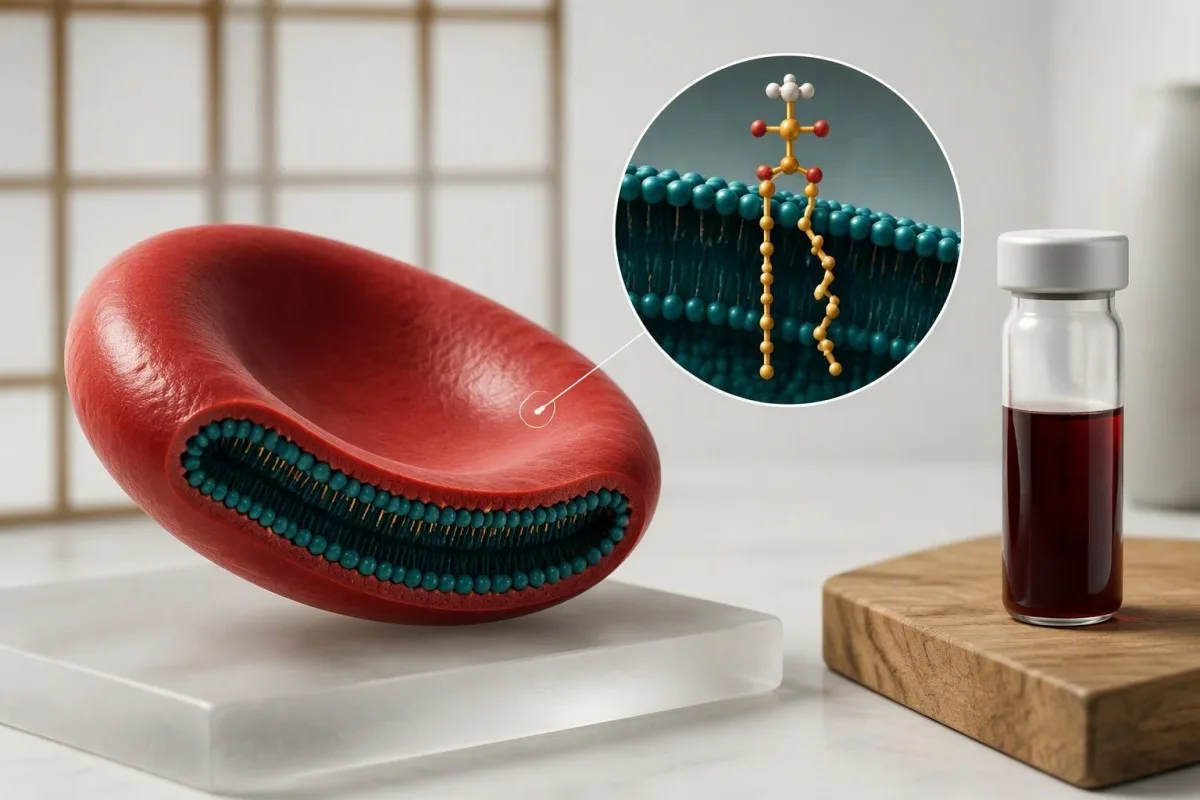
PEth measures an alcohol-associated lipid in red-cell membranes, not alcohol circulating at the moment of testing. Someone can have a positive PEth alcohol test with a blood ethanol concentration of 0 mg/dL, because the two tests answer different timing questions; a positive result alone cannot tell a clinician whether the person is currently intoxicated.
Kantesti is an AI blood test analyzer that can help organize a reported PEth concentration, its units and the laboratory’s interpretation alongside other results. Details about our organization explain the service’s scope; an automated explanation of 45 ng/mL should remain a starting point for a clinical conversation, not a verdict about someone’s behavior.
I’m Thomas Klein, MD, Chief Medical Officer, and my interpretation rule is simple: separate exposure evidence from diagnosis. A hypothetical patient with PEth 60 ng/mL needs questions about the sample date, drinking pattern and transfusion history before anyone assigns meaning—particularly when the answer could affect transplant assessment, employment or family decisions.
What does the phosphatidylethanol test measure?
The phosphatidylethanol test measures PEth lipids formed when ethanol is available to an enzyme called phospholipase D. Most clinical assays analyze whole blood and report PEth 16:0/18:1, sometimes alongside PEth 16:0/18:2; these are different molecular species, not two separate measures of alcohol use disorder.
PEth formation requires ethanol in the reaction environment. Phospholipase D ordinarily processes membrane phospholipids using water, but ethanol permits formation of phosphatidylethanol instead; the 16:0/18:1 designation describes its two fatty-acid chains, not a concentration, a date or a drinking score that can be interpreted without the actual numerical result.
Whole blood matters because erythrocytes carry much of the measured PEth; a serum-only result is not interchangeable with a validated whole-blood assay. Hahn, Anton and Javors described the formation and interpretation challenges in their 2016 review, including why differences between people limit the accuracy of translating one concentration into an individual’s alcohol intake.
A report reading “PEth detected” provides less information than “PEth 16:0/18:1: 38 ng/mL, cutoff 20 ng/mL.” Our explanation of qualitative and quantitative results helps distinguish these formats; if the molecular species or specimen type is missing, ask the laboratory before comparing the result with a previous measurement.
Which PEth cutoffs are commonly used?
Many laboratories interpret PEth 16:0/18:1 below 20 ng/mL as compatible with abstinence or low consumption, and 200 ng/mL or higher as supporting substantial alcohol exposure. These are interpretation bands rather than universal biological boundaries; a concentration of 19 versus 21 ng/mL should not trigger fundamentally different assumptions about a person.
The 2022 Basel consensus uses 20 and 200 ng/mL as useful interpretation thresholds for PEth 16:0/18:1 (Luginbühl et al., 2022). The lower threshold balances practical evidence of consumption against analytical and biological variability; the higher threshold identifies a pattern more commonly associated with sustained substantial exposure, rather than defining a precise number of drinks.
A result between 20 and 199 ng/mL supports consumption in many testing settings, but labels such as “moderate drinking” can sound more precise than the evidence allows. Two people with 80 ng/mL may have different drinking histories, and a falling concentration after previous heavier consumption can sit in the same band as a newly rising result.
There is no PEth emergency threshold equivalent to a critically high potassium concentration. A result of 500 ng/mL warrants a careful alcohol and health assessment, not emergency care solely because of the number; our guide to out-of-range laboratory flags explains why a highlighted report entry is not itself a diagnosis.
Why do PEth alcohol test cutoffs vary between labs?
PEth laboratory cutoffs vary because assays differ in their reporting limits, molecular targets, units and intended clinical use. A laboratory that quantifies down to 10 ng/mL can report a measurable concentration below a program’s 20 ng/mL decision threshold; “detected,” “quantifiable” and “positive” therefore need not mean the same thing.
The limit of detection, limit of quantification and clinical cutoff serve different purposes. Detection indicates a signal distinguishable from background, quantification indicates a concentration measurable with validated performance, and a decision cutoff guides interpretation; a 12 ng/mL measurement may be analytically valid while remaining below the laboratory’s usual positive interpretation band.
Some laboratories report µmol/L rather than ng/mL: for PEth 16:0/18:1, 0.05 µmol/L is approximately 35 ng/mL and 0.30 µmol/L approximately 210 ng/mL. These concentrations have been used in Swedish practice, but the conversion is species-specific; comparing 0.05 directly with a numerical cutoff of 20 without checking units is a serious interpretation error.
Kantesti’s clinical validation framework describes the need to preserve source-report context rather than replace a laboratory’s interpretation with a generic range. For serial PEth measurements, use the same molecular species and preferably the same laboratory; our guide to differences between test visits explains why a small numerical change is not always a meaningful biological change.
How long is the PEth detection window?
The PEth detection window is often approximately 2–4 weeks after repeated alcohol consumption, but it is not fixed. A low starting concentration may fall below a cutoff sooner, while a high starting concentration can remain measurable beyond 4 weeks; the laboratory’s reporting threshold also changes how long the result stays “positive.”
PEth elimination half-life is often discussed in the approximate range of 4–10 days, with wider individual variation reported. Hahn et al. (2016) emphasized that formation and elimination differ between individuals; a single drinking episode does not reliably produce the same concentration or the same detection duration in every person, even when the consumed amount is similar.
A simplified example makes the cutoff effect clearer: with a 7-day half-life, 160 ng/mL would fall to about 80, 40 and 20 ng/mL after 7, 14 and 21 days if no new PEth formed. This is a teaching calculation, not a patient-specific prediction; actual values can depart from it because red-cell turnover and elimination are not identical across people.
Persistence beyond 28 days does not automatically establish new drinking. A clinician needs the initial concentration and the direction of subsequent results, not just an advertised “maximum window”; our guide to blood-test timing and change explains why the biological timeline matters more than the date on which the report became available.
Can a PEth number reveal exactly how much someone drank?
A PEth concentration cannot reliably establish an exact number of drinks, the date of a last drink or whether alcohol use disorder is present. Higher values generally support greater exposure across groups, but individual differences in formation, elimination and drinking pattern prevent a trustworthy conversion such as “100 ng/mL equals two drinks daily.”
Drinking pattern affects interpretation independently of a weekly total. A hypothetical patient who concentrates 10 drinks into a weekend and another who distributes 10 across the week may not produce the same PEth result; the duration of ethanol availability and time from drinking to collection both influence formation, so a weekly drink count is not a laboratory conversion factor.
The definition of one standard drink also varies internationally: a UK alcohol unit contains 8 g of ethanol, while a US standard drink contains 14 g. When I review a history described as “three drinks,” I want the beverage volume and strength; otherwise, the exposure estimate may already differ substantially before the PEth concentration enters the discussion.
Alcohol use disorder is assessed through symptoms, loss of control, consequences and a clinical history—not through a 200 ng/mL threshold. Liver enzymes cannot supply the missing diagnosis either; our discussion of borderline GGT interpretation explains why a second alcohol-associated marker can strengthen context without identifying an exact drinking amount.
Can a transfusion cause positive PEth without drinking?
Yes: red-cell transfusion can introduce PEth from donor erythrocytes and produce a positive result without the recipient consuming alcohol. This is a biologically real concentration in the recipient’s sample, not necessarily an assay malfunction; disclose recent transfusions, including those during the preceding 4 weeks, before interpreting an unexpected positive.
Snozek et al. (2023) documented PEth elevation after packed red-cell transfusion in a previously negative patient. After 4 units, the reported concentrations were 57 ng/mL for PEth 16:0/18:1 and 38 ng/mL for PEth 16:0/18:2; this case demonstrates that transfusion-related concentrations can cross common positive thresholds and must not automatically be attributed to recipient drinking.
Transfusion can also lower an existing PEth concentration if donor cells contain less PEth than the recipient’s cells. The direction and magnitude depend on donor concentrations, the number of units, recipient red-cell mass and subsequent turnover; 4 transfused units cannot be treated as a predictable numerical correction that a clinician simply subtracts from the report.
Kantesti AI can help surface transfusion history when interpreting a report, but it cannot determine whether a particular donor unit contained PEth. Ask for transfusion dates, product type and any pre-transfusion sample; the related problem of A1c reliability after transfusion illustrates why donor erythrocytes can complicate more than one laboratory measurement.
How do anemia and red-cell turnover affect PEth?
Changes in red-cell survival can alter PEth concentration and persistence because erythrocytes carry the biomarker. Hemolysis, major changes in red-cell mass and transfusion may complicate a result; a low value such as 15 ng/mL deserves extra caution when the patient’s red-cell population is changing rapidly.
Shortened erythrocyte survival may reduce PEth persistence and make alcohol exposure easier to miss. Mature red cells normally circulate for roughly 120 days, but PEth can disappear much sooner because lipid elimination also occurs; the red-cell lifespan therefore must not be substituted for a 120-day alcohol detection window, and there is no validated bedside correction for every anemia type.
A hypothetical patient with hemoglobin 8.5 g/dL, an increased reticulocyte count and low haptoglobin needs assessment for altered red-cell turnover before a reassuring PEth interpretation is accepted. Our explanation of low haptoglobin causes is relevant here, but haptoglobin alone cannot establish hemolysis because liver production and other conditions also affect its concentration.
Reticulocytes provide context, not an arithmetic adjustment to PEth. A reticulocyte percentage of 6% may indicate increased marrow response, but clinicians must consider the absolute count and degree of anemia; our guide to high reticulocyte clues explains why a changing cellular population can make a single membrane-associated biomarker less straightforward.
What should happen after an unexpected positive PEth?
An unexpected positive PEth should prompt verification of the report, exposure history, transfusion history and laboratory method before a consequential decision. Around a cutoff—for example, 22 ng/mL against 20 ng/mL—measurement uncertainty and the full clinical picture matter more than a simple positive-versus-negative label.
Ethanol remaining in a collected specimen can permit PEth formation after collection under certain conditions. This preanalytical concern depends on ethanol being present and on the validated storage and processing method; ask the laboratory about its handling procedures rather than assuming every unexpected 25 ng/mL result is either proof of drinking or a false-positive test.
Ordinary use of alcohol hand sanitizer is not generally expected to produce a clinically positive PEth result, unlike the greater incidental-exposure sensitivity of some urine alcohol-metabolite testing. An unexpected 30 ng/mL result should not be explained away by sanitizer without investigation; discuss ingestion exposures, medications containing ethanol and specimen concerns with the clinician, while avoiding accusations.
Kantesti is an AI lab test interpretation service that can help identify missing units, analyte names and conflicting report wording; it does not adjudicate disputed alcohol exposure. A sample-quality flag should be checked with the testing laboratory, and our guide to hemolysis-related laboratory limitations distinguishes collection-related problems from clinical red-cell destruction.
How does PEth compare with EtG and other alcohol tests?
PEth generally addresses alcohol exposure over weeks, while urine EtG and EtS usually address a shorter interval measured in days. Blood ethanol mainly reflects very recent exposure; none of these tests independently diagnoses alcohol use disorder, and disagreement can be expected when the tests cover different periods.
Urine EtG detection is often approximately 1–3 days, with longer detection possible after substantial consumption. A claimed “80-hour test” is not a guarantee for every dose or cutoff; our explanation of EtG windows and cutoffs shows why low-level incidental exposure and specimen concentration deserve more attention with urine metabolite testing than with PEth.
A positive PEth with negative urine EtG can be consistent with exposure several days or weeks earlier, followed by no very recent drinking. Conversely, positive EtG with PEth below 20 ng/mL can occur after recent limited exposure or with different testing thresholds; these combinations should be interpreted as timing patterns, not as automatic evidence that one laboratory made a mistake.
Urine dilution affects urinary alcohol-metabolite interpretation but does not make PEth a urine test. When a urine specimen is unusually dilute, clinicians may review creatinine and collection conditions; our guide to urine concentration and creatinine helps explain why adding another biomarker is useful only when its own limitations are also understood.
Do positive PEth results mean the liver is damaged?
Positive PEth indicates alcohol-associated exposure, not the presence or severity of liver damage. A patient can have PEth above 200 ng/mL with normal ALT, and another can have serious liver disease with PEth below 20 ng/mL; exposure assessment and liver assessment must remain separate clinical tasks.
AST, ALT and GGT are not substitutes for PEth. A hypothetical panel with AST 89 IU/L, ALT 42 IU/L and PEth 250 ng/mL warrants an alcohol history, but exercise, medications and other liver conditions still need consideration; our guide to liver panel interpretation explains why an enzyme pattern cannot identify alcohol as the only cause.
Fibrosis assessment may require platelet count, age, imaging or elastography, rather than a higher PEth cutoff. A PEth concentration of 400 ng/mL cannot be converted into a fibrosis stage; our explanation of FIB-4 calculation limits describes why liver-risk estimates need their own inputs and why acute illness can distort the score.
A low PEth does not erase previous alcohol-associated liver injury. Someone with established cirrhosis and a result of 12 ng/mL still needs the agreed surveillance and specialist care; equally, abnormal liver tests in an abstinent person require investigation for other causes rather than repeated questioning that assumes the alcohol biomarker must have missed the answer.
When should PEth be repeated, and how are trends read?
Repeating PEth after approximately 2–4 weeks often provides more information than interpreting one isolated value. The interval should match the clinical purpose, and serial results should use the same analyte and preferably the same laboratory; recent transfusion or altered red-cell turnover can make a trend difficult to attribute to drinking alone.
A fall from 300 to 75 ng/mL over 14 days is compatible with clearance, but it does not prove complete abstinence. A rise from 75 to 140 ng/mL may suggest new exposure, although transfusion and analytical comparability still need checking; the strongest interpretation combines the trajectory with the history rather than turning a percentage change into a behavioral diagnosis.
Kantesti is an AI biomarker interpretation platform that can organize PEth trends alongside collection dates and related results, without calculating an exact last-drink date. Our AI technology guide describes contextual analysis; if a report lacks the species or units, those missing details should be resolved before a 2-week trend is presented as clinically meaningful.
A useful retest plan documents the question being asked, the interval and any confounding events. Record the last 4 weeks of transfusions, admissions and major health changes, and distinguish the collection date from the reporting date; our guide to results after hospital discharge explains why post-admission laboratory trends can have several overlapping causes.
What are the safest next steps after a positive result?
The safest response to positive PEth is a confidential clinical discussion, not punishment or an unsupervised withdrawal plan. Bring the exact concentration, laboratory cutoff, collection date and transfusion history; a result above 200 ng/mL should prompt assessment of drinking-related risks without assuming dependence or requiring the person to stop abruptly on their own.
Alcohol withdrawal can become dangerous when a dependent person abruptly reduces or stops drinking. Symptoms can begin within approximately 6–24 hours, and previous withdrawal seizures, hallucinations or severe dependence warrant medical advice before stopping; seizures, severe confusion, hallucinations or rapidly worsening symptoms require urgent care, regardless of whether PEth is 30 or 300 ng/mL.
Kantesti’s handling of sensitive laboratory information is described in privacy and your data. Before sharing a PEth report, check whether it contains another person’s information or unnecessary identifiers; our report-upload privacy checklist offers practical preparation, but an AI explanation cannot replace formal chain-of-custody procedures in a legal or occupational setting.
For high-stakes decisions, ask for a written interpretation that distinguishes findings from assumptions. A useful note states the value—such as 46 ng/mL—the assay, relevant transfusions and the limitations of identifying quantity or timing; I prefer that approach to labels such as “alcoholic,” which describe neither a laboratory measurement nor a careful assessment of the patient’s needs.
Research evidence, editorial limits and related publications
The directly relevant evidence for this article concerns PEth formation, interpretation thresholds and transfusion—not digestive or hormonal testing. The 2016 review, 2022 Basel consensus and 2023 transfusion report are listed separately from the two background publications below, so readers can distinguish evidence supporting PEth interpretation from other health-education material.
The Basel consensus supports useful interpretation bands, not precise drink-count calculations, and the transfusion case demonstrates a clinically consequential exception to attributing every positive result to recipient drinking. As of October 19, 2026, this article’s central advice remains to interpret 20 and 200 ng/mL in context; neither threshold independently establishes impairment, dependence or liver damage.
The editorial standard I use as Thomas Klein, MD, is to label hypothetical examples and avoid presenting them as actual patient cases or platform outcome data. Kantesti’s medical advisory information describes medical oversight; this article does not claim a new PEth-specific validation study, and its 7-day clearance example is an illustrative calculation rather than a validated prediction tool.
The two DOI publications supplied below are background resources and are not cited as PEth evidence. The digestive symptoms publication and hormonal symptoms publication address other topics; their ResearchGate and Academia.edu links are searches, not claims of verified publication records or peer review on those services.
Frequently Asked Questions
What is considered a positive PEth test result?
Many laboratories use 20 ng/mL as a positive interpretation threshold for PEth 16:0/18:1, although reporting limits and local policies differ. A concentration of 200 ng/mL or higher often supports substantial or repeated alcohol exposure. These bands do not identify an exact number of drinks or diagnose alcohol use disorder. Recent red-cell transfusion can introduce donor PEth and must be considered before attributing the result to the recipient’s drinking.
How far back can a PEth test detect alcohol?
PEth often reflects alcohol exposure over approximately 2–4 weeks after repeated consumption, but its detection window varies. A high starting concentration can remain measurable beyond 4 weeks, while a low concentration may fall below the laboratory cutoff sooner. Differences in elimination, red-cell turnover and assay thresholds all affect persistence. A positive result cannot establish the exact date of the last drink.
Can one night of drinking make PEth positive?
One drinking episode can produce measurable PEth and may cross a laboratory’s positive threshold, but this does not happen predictably in every person. The amount consumed, duration of ethanol exposure, baseline PEth and time until collection affect the result. A value below 20 ng/mL therefore does not exclude every isolated drinking episode. A single result cannot reliably distinguish one heavier episode from a different pattern of recent consumption.
Can a blood transfusion cause a positive PEth test?
Red-cell transfusion can cause positive PEth because donor erythrocytes may already contain phosphatidylethanol. A published 2023 case reported PEth 16:0/18:1 of 57 ng/mL after 4 packed red-cell units in a previously negative patient. This represents transferred biomarker rather than proof that the recipient drank alcohol. Provide transfusion dates, product details and any pre-transfusion PEth result before a high-stakes interpretation.
Does a PEth result above 200 ng/mL mean alcohol use disorder?
A PEth result of 200 ng/mL or higher often supports substantial or repeated alcohol exposure, but it does not independently diagnose alcohol use disorder. Diagnosis requires assessment of symptoms, impaired control, consequences and the person’s clinical history. The concentration also cannot establish current intoxication or the severity of liver damage. Transfusion and changes in red-cell survival should be considered when the laboratory result conflicts with the history.
How quickly does PEth fall after stopping alcohol?
PEth elimination half-life is often approximately 4–10 days, but wider individual variation occurs. In a simplified example using a 7-day half-life, 160 ng/mL would decrease to approximately 80 ng/mL after 7 days and 40 ng/mL after 14 days if no new PEth formed. This calculation is not a reliable personal clearance prediction. Repeat testing after roughly 2–4 weeks can help interpret direction, particularly when the same assay is used and transfusion or red-cell changes are excluded.
Get AI-Powered Blood Test Analysis Today
Join over 2 million users worldwide who trust Kantesti for instant, accurate lab test analysis. Upload your blood test results and receive comprehensive interpretation of 15,000+ biomarkers in seconds.
📚 Referenced Research Publications
Klein, T., Mitchell, S., & Weber, H. (2026). Diarrhea After Fasting, Black Specks in Stool & GI Guide 2026. Kantesti AI Medical Research.
Klein, T., Mitchell, S., & Weber, H. (2026). Women's Health Guide: Ovulation, Menopause & Hormonal Symptoms. Kantesti AI Medical Research.
📖 External Medical References
Hahn JA, Anton RF, Javors MA. (2016). The Formation, Elimination, Interpretation, and Future Research Needs of Phosphatidylethanol for Research Studies and Clinical Practice. Alcoholism: Clinical and Experimental Research.
Luginbühl M et al. (2022). Consensus for the use of the alcohol biomarker phosphatidylethanol (PEth) for the assessment of abstinence and alcohol consumption in clinical and forensic practice (2022 Consensus of Basel). Drug Testing and Analysis.
Snozek CLH et al. (2023). Artificial elevation of phosphatidylethanol due to red blood cell transfusion. Clinical Biochemistry.
⚕️ Medical Disclaimer
This article is for educational purposes only and does not constitute medical advice. Always consult a qualified healthcare provider for diagnosis and treatment decisions.
E-E-A-T Trust Signals
Experience
Physician-led clinical review of lab interpretation workflows.
Expertise
Laboratory medicine focus on how biomarkers behave in clinical context.
Authoritativeness
Written by Dr. Thomas Klein with review by Dr. Sarah Mitchell and Prof. Dr. Hans Weber.
Trustworthiness
Evidence-based interpretation with clear follow-up pathways to reduce alarm.