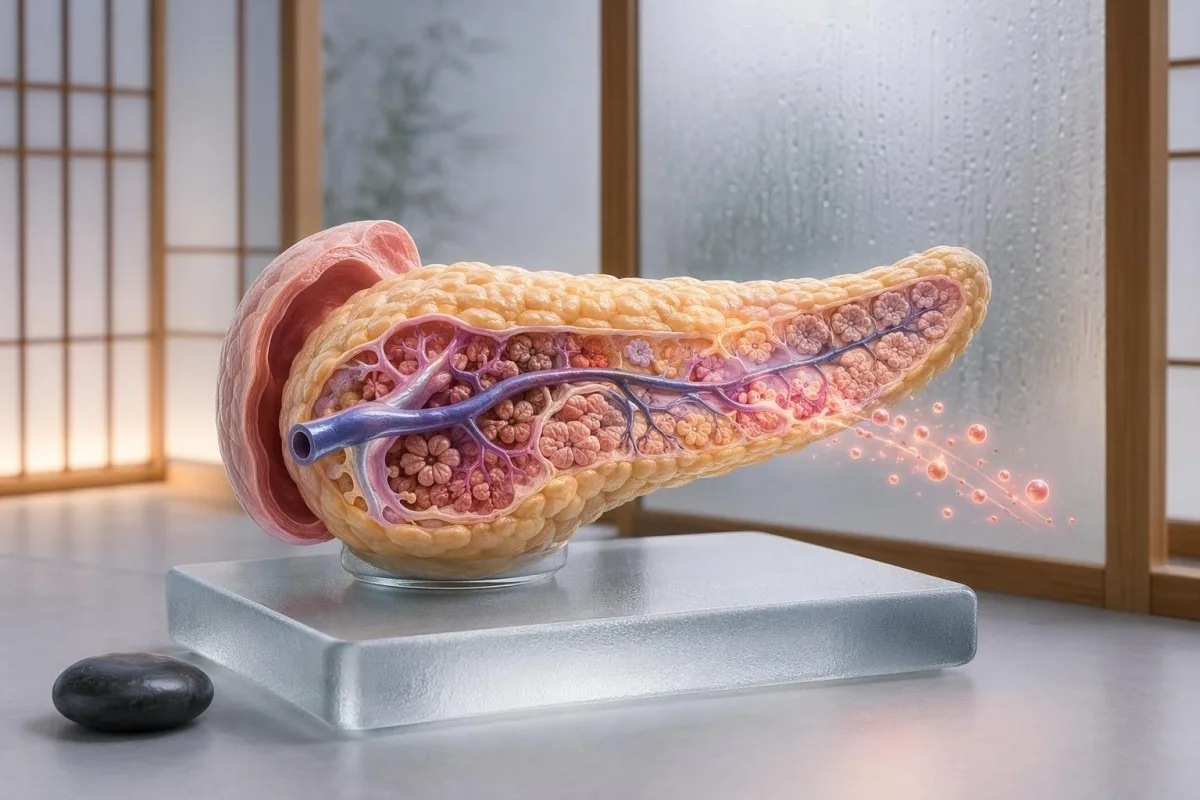
Et høyt lipase-resultat kan være en stille laboratorie-kuriositet eller det første tegnet på akutt pankreatitt. Forskjellen ligger vanligvis i symptomene, graden av forhøyelse og hva de omkringliggende laboratoriene viser.


- Danger threshold: lipase over 3 ganger laboratoriets øvre grense pluss typisk smerte i øvre del av magen er et varselmønster for pankreatitt.
- Lett forhøyelse: lipase mindre enn 3 ganger øvre grense uten smerte er ofte ikke akutt, men bør vanligvis gjentas eller forklares.
- Typisk område: mange voksenlaboratorier rapporterer lipase rundt 13-60 U/L, men referanseområder varierer etter metode og land.
- Emergency symptoms: alvorlig smerte i øvre del av magen, gjentatt oppkast, feber, gulsott, besvimelse, forvirring eller rask puls krever øyeblikkelig hjelp samme dag.
- Årsaker til høyt lipase: pankreatitt, gallestein, nedsatt nyrefunksjon, tarmsykdom, diabetesketoacidose, høye triglyserider, medisiner og makrolipase kan alle øke lipase.
- Pancreatitis clue: akutt pankreatitt diagnostiseres vanligvis når 2 av 3 er til stede: typisk smerte, lipase eller amylase over 3 ganger øvre grense, eller bildediagnostisk bevis.
- Severity clue: selve lipasen tallet graderer ikke pålitelig alvorlighetsgraden av pankreatitt; stigende BUN, lavt kalsium, høy CRP, organsvikt og klinisk tilstand betyr mer.
- Follow-up timing: mildt isolert lipase blir ofte kontrollert på nytt om 1-2 uker, mens bekreftet pankreatitt håndteres etter symptomer og komplikasjoner heller enn å jage lipase til normalt nivå.
Når er høyt lipase farlig kontra mildt unormalt?
Yes — høyt lipase kan være farlig når den er mer enn 3 ganger den øvre grensen for laboratoriet og ledsages av alvorlige smerter i øvre del av magen, oppkast, feber, gulsott, besvimelse eller forvirring. En mildt forhøyet lipase uten smerte er ofte ikke en nødsituasjon, men den fortjener likevel kontekst, spesielt nyrefunksjon, leverenzymer, triglyserider, medisiner og gjentatt testing.
Jeg er Thomas Klein, MD, og i klinisk gjennomgang behandler jeg lipase som et mønstermarkør, ikke en frittstående dom. En lipase på 75 U/L i et laboratorium med en øvre grense på 60 U/L forteller en helt annen historie enn en lipase på 720 U/L med knusende epigastriske smerter som stråler ut til ryggen.
Kantesti er en AI-blodprøveanalysator som leser lipase sammen med lever-, nyre-, betennelses- og metabolske markører, snarere enn å behandle ett flagg som en diagnose. Hvis du prøver å forstå amylase, lipase og pankreaspaneler sammen, har vår veiledning for pankreas blodprøver dybdegående informasjon om hvordan disse enzymene oppfører seg.
Den praktiske inndelingen er slik: lipase over 3 ganger den øvre grensen for normalområdet er bekymringsfullt for pankreatitt når symptomene passer, mens isolert lipase under 3 ganger den øvre grensen ofte skyldes ikke-pankreatiske årsaker. Jeg har sett pasienter sendt til akuttmottak for en lipase på 90 U/L og ingen smerte; de fleste av disse tilfellene krevde en nøye re-sjekk, ikke panikk.
Hvilket lipasenivå antyder pankreatitt?
Et lipasenivå over 3 ganger den øvre grensen for normalområdet i laboratoriet støtter pankreatitt når smertemønsteret passer. Hvis et laboratorium bruker 60 U/L som øvre grense, er et resultat over omtrent 180 U/L den vanlige biokjemiske terskelen klinikere tar seriøst.
Mange voksenlaboratorier rapporterer et referanseintervall for lipase nær 13-60 U/L, men jeg har sett øvre grenser fra 50-tallet til over 140 U/L avhengig av analysator og reagens. Derfor bør uttrykket "høy lipase" alltid oversettes til multipler av laboratoriets øvre grense, ikke bedømmes ut fra råtallet alene.
Den reviderte Atlanta-klassifiseringen fra 2012 sier at akutt pankreatitt diagnostiseres når 2 av 3 kriterier er til stede: karakteristiske magesmerter, amylase eller lipase minst 3 ganger den øvre grensen, eller bildediagnostiske funn som er konsistente med pankreatitt (Banks et al., 2013). Dette er grunnen til at klinikere ikke diagnostiserer pankreatitt fra ett mildt unormalt enzym hos en pasient som ser frisk ut.
Angst for referanseintervall er reell. Hvis resultatet ditt ligger like utenfor det trykte intervallet, les det med samme skepsis som vi beskriver i vår feller i normalområdet: et grenseflagg kan reflektere laboratorievariasjon, nylig sykdom, nyreclearance eller timing, heller enn en aktiv pankreatisk nødsituasjon.
Hvilke symptomer på høyt lipase krever øyeblikkelig hjelp?
Høye lipase-symptomer som krever akutt hjelp inkluderer sterke, vedvarende smerter i øvre del av magen, smerter som sprer seg til ryggen, gjentatt oppkast, feber, gulsott, besvimelse, forvirring, kortpustethet eller en puls som vedvarer over 120 slag per minutt. Disse symptomene betyr mer enn en liten forskjell mellom 300 og 500 U/L.
Smerten ved akutt pankreatitt er vanligvis dyp, konstant og lokalisert i øvre del av magen; mange pasienter lener seg forover fordi det føles verre å ligge flatt. I min erfaring er formuleringen pasienter bruker ofte ikke «smerte», men «trykk», «brennende følelse» eller «som et belte som strammer» over øvre del av magen.
Kontakt legevakt/112 eller dra til legevakt hvis høy lipase forekommer sammen med lavt blodtrykk, blå lepper, ny forvirring eller manglende evne til å holde på væske i mer enn 6–8 timer. Dette er ikke bare advarselstegn ved pankreatitt; det kan være tegn på mulig dehydrering, sepsis, blødning eller belastning på organer, og vår veiledning for kritiske verdier forklarer hvorfor symptomer kan veie tyngre enn den trykte laboratorievarsellappen.
Tenner et al. rapporterte i American College of Gastroenterology sin retningslinje at tidlig vurdering bør fokusere på hemodynamisk status, risiko for organsvikt og årsak til pankreatitt, heller enn enzymhøyde alene (Tenner et al., 2013). Sagt rett ut: en lipase på 450 U/L hos en komfortabel pasient kan være mindre akutt enn 210 U/L hos en som er klam, kaster opp og har hypotensjon.
Hva forårsaker høyt lipase hvis det ikke er pankreatitt?
Årsaker til høyt lipase utover pankreatitt inkluderer nyrepåvirkning, sykdom i galleblæren, tarmobstruksjon eller iskemi, cøliaki, inflammatorisk tarmsykdom, diabetisk ketoacidose, infeksjoner, medisiner og en ufarlig antistoffbundet form kalt makrolipase. Bukspyttkjertelen er vanlig, men ikke automatisk.
Lipase fjernes delvis via nyrene, så redusert filtrering kan etterlate mer enzym i sirkulasjon. En pasient med kronisk nyresykdom og eGFR 28 mL/min/1.73 m² kan ha en lipase på 90–160 U/L i måneder uten klassiske pankreatittsymptomer.
Tarm- og gallegangsproblemer kan også dytte lipase oppover fordi nærliggende fordøyelsesvev deler enzym- og inflammatoriske signalveier. Når lipase er lett forhøyet sammen med diaré, oppblåsthet, vekttap eller slim i avføringen, tenker jeg bredere enn bare bukspyttkjertelen og ser ofte på typen mønstre som dekkes i vår tarmhelseprøver.
Diabetisk ketoacidose er en klassisk felle: lipase kan være forhøyet selv uten pankreatitt, og magesmerter kan komme fra acidose i seg selv. Glukose over 250 mg/dL, positive ketoner, lav bikarbonat og en aniongap over omtrent 12 mmol/L endrer tolkningen umiddelbart.
Hvilket laboratoriemønster peker mot høyt lipase pankreatitt?
A pankreatitt med høy lipase mønsteret er lipase over 3 ganger øvre referansegrense pluss typiske smerter, ofte med forhøyet antall hvite blodceller, forhøyet CRP, unormale leverprøver, stigende BUN, lavt kalsium eller høye triglyserider. Lipase bekrefter frigjøring av pankreasenzymer; de omkringliggende prøvene anslår årsak og risiko.
Et antall hvite blodceller over 12 x 10⁹/L kan gjenspeile stress eller inflammasjon, mens CRP over 150 mg/L ved 48 timer er et klassisk tegn knyttet til mer alvorlig pankreatitt. En stigende BUN på 5 mg/dL eller mer i løpet av første døgn er et annet varseltegn, fordi det kan signalisere dehydrering og dårligere utfall.
ALT er overraskende nyttig. En ALT over 150 IU/L tidlig i akutt pankreatitt tyder sterkt på en gallesteinsrelatert årsak i mange studier, og det er derfor vi leser den sammen med bilirubin, alkalisk fosfatase og GGT; vår ALT mønsterguide forklarer leverenzym-siden av den gåten.
Kantesti AI behandler lipase som et forgreiningspunkt: pankreatisk enzymøkning, mønster for galleveisobstruksjon, nyreclearance-problem, metabolsk utløser eller medisin-spor. Det er nærmere hvordan leger resonnerer ved sengekanten enn den enkle snarveien "høy betyr pankreatitt".
Hvilke vanlige triggere får lipase til å stige kraftig?
De vanligste utløserne for lipaseøkninger på pankreatittnivå er gallestein, alkoholrelatert pankreasirritasjon og svært høye triglyserider. Triglyserider over 1000 mg/dL eller 11,3 mmol/L er en velkjent pankreatittrisikosone, selv om anfall kan oppstå lavere hos mottakelige pasienter.
Gallestein kan kortvarig blokkere åpningen til bukspyttkjertelen og utløse intens enzymfrigjøring. Tegnet er ofte en lipaseøkning med ALT, AST, bilirubin, alkalisk fosfatase eller GGT som stiger i samme 24-48 timers vindu.
Alkoholrelatert pankreatitt kommer vanligvis ikke fra en enkelt drink isolert; den har en tendens til å reflektere gjentatt stress på bukspyttkjertelen, måltider med høyt fettinnhold, dehydrering og individuell mottakelighet. Jeg har sett tungt helgeinntak etterfulgt av lipase over 600 U/L på mandag, men det samme tallet hos en annen pasient kom fra en liten gallestein.
Triglyserider fortjener spesiell oppmerksomhet fordi serumet kan se melkeaktig ut når nivåene er svært høye, og standardanalyser kan av og til bli påvirket. Hvis triglyseridene dine er høye eller grenseverdi, vår triglyseridrisikoguide forklarer hvorfor faste gjentatt testing og glukosekontroll kan endre risikoberegningen.
Kan nyresykdom eller medisiner forårsake høyt lipase?
Ja, nyresykdom og flere medisiner kan forårsake høy lipase uten klassisk pankreatitt. Redusert nyreclearance, nylig abdominal sykdom, GLP-1-reseptoragonister, DPP-4-hemmere, azathioprin, valproat, tiazider, loopdiuretika og opioider kan alle være med i differensialdiagnosen.
En stigning i kreatinin fra 0,9 til 1,6 mg/dL kan gjøre en mild forhøyelse av lipase mer troverdig som et utløsningsproblem. Derfor leser jeg aldri lipase uten eGFR, BUN, hydreringsstatus og noen ganger urinresultater; veiledning for tolkning av kreatinin er nyttig når nyretallene skifter samtidig.
Medisinerings timing har betydning. Hvis lipase steg fra 45 til 140 U/L to uker etter oppstart av et nytt medikament, og det er kvalme, men ingen smerter i øvre del av magen, kan legen gjenta testen, sjekke amylase og leverenzymer, og avgjøre om medisinen er sannsynlig fremfor å stoppe den blindt.
Kantesti er en Tjeneste for tolkning av laboratorieprøver med AI bygget for å markere disse kontekstkollisjonene: høy lipase med lav eGFR er ikke det samme mønsteret som høy lipase med høy ALT og bilirubin. Den skillet kan forhindre både underreaksjon og unødvendig panikk.
Hva bør du gjøre etter å ha sett et høyt lipase-resultat?
Ditt neste steg avhenger av symptomer og de mange gangene over øvre grense for laboratoriet. Alvorlige symptomer pluss lipase over 3 ganger øvre grense betyr akutt vurdering, mens mild isolert lipase ofte betyr å sjekke kontekst, gjenta testen og gjennomgå medisiner.
Hvis du har sterke magesmerter, ikke vent på en rutineavtale bare fordi resultatet kom gjennom en portal om natten. Et resultat på 220 U/L kan være på et akuttnivå hvis øvre grense er 60 U/L og symptomene passer.
Hvis du føler deg bra og resultatet er 65-100 U/L med en øvre grense på 60 U/L, vil jeg vanligvis ha historien: nylig gastroenteritt, intens trening, nyrefunksjon, diabeteskontroll, alkohol, nye medisiner, og om laboratoriet ble gjentatt. Vår artikkel om når man skal gjentatte unormale laboratorieresultater forklarer hvorfor re-sjekking for tidlig kan skape mer støy enn klarhet.
Et fornuftig gjentatt panel inkluderer ofte lipase, amylase, CBC, CMP, bilirubin, ALT, AST, alkalisk fosfatase, GGT, triglyserider, glukose, kalsium, kreatinin og noen ganger CRP. Den listen er lengre enn mange pasienter forventer, men det er slik vi unngår å gjøre ett enzym om til en falsk diagnose.
Hvor lenge forblir lipase høyt etter pankreatitt?
Lipase stiger vanligvis innen 4–8 timer, topper seg rundt 24 timer, og kan forbli forhøyet i 8–14 dager etter akutt pankreatitt. Et fallende lipase betyr ikke alltid bedring, og et fortsatt høyt lipase betyr ikke alltid forverring.
Dette overrasker pasientene. Noen kan føle seg 70% bedre mens lipase forblir 300 U/L fordi enzymklaringen henger etter den kliniske historien; sykehusavdelinger følger vanligvis smerte, feber, hydrering, kostholdstoleranse, oksygennivå, nyrefunksjon og komplikasjoner tettere enn daglig lipase.
For milde isolerte forhøyninger er en ny måling om 1-2 weeks ofte mer nyttig enn neste morgen, med mindre symptomene endrer seg. Hvis resultatet normaliseres, ser jeg etter en midlertidig utløser; hvis det vedvarer, tenker jeg på nyreclearance, medisiner, tarmsykdom, makrolipase eller billeddiagnostikk.
Kantesti AI kan sammenligne lipase på tvers av besøk og vise om en verdi er en topp, et platå eller en sakte drift. For pasienter som tar skjermbilder fra forskjellige laboratorier, hjelper vår lesing av trendgrafer med å skille reell biologisk bevegelse fra forskjellige referanseområder.
Hvem trenger ekstra forsiktighet ved forhøyet lipase?
Gravide, barn, eldre, immunsupprimerte pasienter og personer med nyresykdom eller diabetes trenger ekstra forsiktighet når lipase er forhøyet. Disse gruppene kan ha mindre typiske smerter, raskere dehydrering eller snevrere sikkerhetsmarginer.
Under graviditet er smerter i øvre del av magen med oppkast lett å feilmerke som refluks eller matforgiftning, men gallestein og høye triglyserider kan utløse pankreatitt. Vurdering samme dag er klokt hvis smerten er alvorlig, det er feber, gulsott, dehydrering eller unormale leverenzymer; vår graviditets-lab-røde flagg dekker tilstøtende akutte mønstre.
Barn kan ha pankreatitt fra virusinfeksjon, traume, medisiner, medfødte kanaldannelser eller metabolske lidelser. Pediatriske referanseområder og terskelverdier for lipase varierer med alder og laboratorium, så jeg unngår å anvende voksne grenseverdier rigid på spedbarn eller småbarn.
Eldre voksne presenterer noen ganger stille: dårlig appetitt, svakhet, forvirring eller et fall i stedet for typiske smerter. NICE-retningslinjer for pankreatitt understreker tidlig gjenkjenning og passende billeddiagnostikk eller spesialistvurdering når symptomer og enzymer peker mot diagnosen (NICE, 2018).
Når krever høyt lipase bildediagnostikk?
Høyt lipase krever billeddiagnostikk når diagnosen er usikker, symptomene er alvorlige, gallestein er mistenkt, gulsott er til stede, eller pasienten ikke blir bedre innen 48–72 timer. Ultralyd er ofte først for gallestein; CT er ikke alltid nødvendig den første dagen.
En abdominal ultralyd kan oppdage gallestein, gallerørsdilatasjon og noe pankreassvulming, men tarmgass skjuler ofte bukspyttkjertelen. En normal ultralyd utelukker ikke fullstendig pankreatitt, mikrolithiasis eller tidlig galleveisobstruksjon.
Kontrast CT er mest nyttig når diagnosen er uklar, pasienten forverres, eller komplikasjoner er mistenkt etter de første 48-72 timene. Å bestille CT for tidlig kan gå glipp av utviklende vevsendringer og utsette pasienten for kontrastrisiko uten å endre håndteringen.
Hvis lipasen din er høy, men bildediagnostikk er normal, avhenger neste steg av helheten, ikke flauhet over at skanningen ikke forklarte alt. En blodprøve second opinion kan hjelpe når symptomer, enzymnivå og bildediagnostikk ser ut til å være uenige.
Hva bør du unngå etter et høyt lipase-resultat?
Etter et høyt lipaseresultat, unngå alkohol, svært fete måltider, dehydrering og å slutte med foreskrevne medisiner på egen hånd uten kliniske råd. Hvis det er sterke smerter eller oppkast, er mateksperimenter og internett-detox-planer feil vei å gå.
Hvis pankreatitt mistenkes, anbefaler mange klinikere i utgangspunktet tarmhvile eller en forsiktig diettplan avhengig av alvorlighetsgrad, kvalme og hydrering. Ved milde tilfeller som forbedres raskt, kan tidlig inntak av lite fett oralt brukes; ved alvorlig oppkast er væske og sykehusovervåking det første.
Ikke anta at kosttilskudd er ufarlige. Høydose vitamin D med hyperkalsemi, visse urteprodukter og flere vekttapsmidler kan komplisere magesymptomer eller leverprøver, så list opp alt du tar, inkludert injeksjoner og reseptfrie produkter.
Medisinforbindelser er nyanserte. GLP-1-reseptoragonister og DPP-4-hemmere har blitt diskutert i sikkerhetsgjennomganger av pankreatitt, men magesmerter pluss lipase bør vurderes individuelt i stedet for å bli automatisk skyldt på; vår veiledning for medikamentovervåking gir en tryggere måte å tenke på tidspunkt.
Hvordan Kantesti leser lipase i klinisk sammenheng
Kantesti er en AI-plattform for tolkning av biomarkører som tolker lipase ved å kombinere enzymverdien, referanseområdet, symptomindikasjoner, nærliggende biomarkører, medisinering, og tidligere trender. Det er viktig fordi lipase er en triage-indikasjon, ikke en diagnose i seg selv.
Vårt nevrale nettverk leser opplastede PDF-er og bilder på omtrent 60 sekunder og kartlegger lipase mot markører som amylase, ALT, bilirubin, kreatinin, BUN, kalsium, triglyserider, glukose, WBC og CRP. Mekanismen er beskrevet i vår technology guide, inkludert hvordan strukturert biomarkørekstraksjon skiller seg fra generell tekstoppsummering.
Plattformen har blitt brukt av over 2 millioner mennesker på tvers av 127+ land og 75+ språk, noe som gir oss et praktisk syn på hvordan referanseintervaller varierer mellom laboratorier. Vår kliniske valideringsprosess forklarer den medisinske tilsynet, benchmarking og sikkerhetsgrensene bak tolkningene.
Kantesti's output er ikke en erstatning for akuttmedisinsk hjelp. Hvis du har et lipaseresultat og ønsker en strukturert forklaring før en vanlig legetime, kan du laste opp et lipaseresultat; for selskapets styring og personverns kontekst, se vår Kantesti background.
Forskningsgrunnlag, klinisk gjennomgang og konklusjon
Fra og med 11. juni 2026 er det tryggeste svaret dette: høy lipase er farlig når det kliniske bildet antyder pankreatitt eller en annen akutt abdominal sykdom, men mild isolert forhøyelse er ofte et oppfølgingsproblem heller enn en nødsituasjon. Jeg, Thomas Klein, MD, vil heller se én bekymret pasient tidlig enn én dehydrert pasient sent.
Denne artikkelen ble skrevet ut fra prinsipper for legegjennomgang brukt i akutt-triage, primærpleie-oppfølging, og laboratoriemønstertolkning. Vår medisinske rådgivende styre vurderer sikkerhetsrammene for innhold rettet mot pasienter, særlig der et laboratoriefunn kan representere enten et mindre funn eller en nødsituasjon.
Kantesti AS. (2026). Flerspråklig AI-assistert klinisk beslutningsstøtte for tidlig hantavirus-triage: design, teknisk validering og reell implementering på tvers av 50 000 tolkede blodprøverapporter. Figshare. DOI: utplassert triageringsforskning.
Kantesti LTD. (2026). En forhåndsregistrert, rubrikkbasert automatisert teknisk benchmark av Kantesti-blodprøvetolkningsmotoren på 100 000 syntetiske testtilfeller. Figshare. DOI: teknisk benchmark-artikkel. Ekstern klinisk tolkning i denne artikkelen følger også diagnostiske prinsipper for pankreatitt beskrevet av Banks et al. (2013), Tenner et al. (2013) og NICE (2018).
Ofte stilte spørsmål
Er høy lipase farlig hvis jeg ikke har smerter?
Høy lipase uten smerter er mindre sannsynlig å være en akutt tilstand, spesielt hvis den er mindre enn 3 ganger laboratoriets øvre referansegrense. Mange milde forhøyelser rundt 1–2 ganger øvre grense skyldes nyreclearance, nylig magesykdom, medisiner eller variasjon i laboratoriet. Du bør likevel få det vurdert av en lege hvis det vedvarer, øker, eller opptrer sammen med unormal kreatinin, leverenzymer, triglyserider, glukose eller kalsium.
Hva betyr et forhøyet lipasenivå for pankreatitt?
Et lipasenivå over 3 ganger øvre normalgrense støtter pankreatitt når typiske smerter i øvre del av abdomen eller funn ved bildediagnostikk foreligger. Hvis laboratoriets øvre grense er 60 U/L, oppfyller et resultat over omtrent 180 U/L enzymkriteriet. Pankreatitt kan ikke diagnostiseres utelukkende ut fra lipase; klinikere trenger vanligvis 2 av 3 funn: typiske smerter, forhøyede enzymer eller billeddiagnostiske holdepunkter.
Kan lipase være forhøyet på grunn av nyreproblemer?
Ja, nyresvikt kan øke lipase fordi enzymet delvis fjernes via nyrene. En person med lav eGFR eller stigende kreatinin kan ha lipaseverdier 1–3 ganger øvre referansegrense uten pankreatitt. Kombinasjonen av høy lipase og unormalt kreatinin bør tolkes annerledes enn høy lipase sammen med sterk smerte i øvre del av magen og oppkast.
Hvor lenge forblir lipase forhøyet etter pankreatitt?
Lipase stiger ofte innen 4–8 timer etter akutt pankreatitt, topper seg rundt 24 timer, og kan forbli forhøyet i 8–14 dager. Et lipaseresultat kan forbli høyt etter at smertene bedrer seg, så leger følger vanligvis symptomer, væskebehandling, nyrefunksjon, feber, oksygennivå og komplikasjoner i stedet for å vente på at lipase normaliseres. Å gjenta lipase daglig er sjelden nyttig når diagnosen er avklart.
Hva er de vanligste årsakene til forhøyet lipase?
De vanligste årsakene til høyt lipase inkluderer akutt pankreatitt, gallestein, alkoholrelatert irritasjon i bukspyttkjertelen, høye triglyserider, nyrepåvirkning, tarmsykdom, diabetisk ketoacidose og medikamenteffekter. Triglyserider over 1000 mg/dL eller 11,3 mmol/L er en anerkjent risikosone for pankreatitt. En god oppfølgingspakke sjekker ofte amylase, leverenzymer, bilirubin, kreatinin, glukose, kalsium, triglyserider, CBC og CRP.
Bør jeg dra til legevakt (ER) for høyt lipase?
Dra til legevakten ved høy lipase hvis du har alvorlige, konstante smerter øverst i magen, gjentatt oppkast, feber, gulsott, besvimelse, forvirring, kortpustethet eller rask puls. Lipase over 3 ganger øvre grense med typiske smerter er et advarselmønster for pankreatitt som krever øyeblikkelig vurdering. Hvis du føler deg bra og resultatet bare er mildt forhøyet, kontakt legen din for ny testing og kontekst i stedet for å bruke legevakten automatisk.
Må jeg faste før en ny lipase blodprøve?
Lipase testing krever vanligvis ikke faste, så følg laboratoriets anvisninger. Hvis legen din også sjekker triglyserider, spør om en 8- til 12-timers faste er nødvendig, da nylige måltider kan påvirke det resultatet.
Bør jeg spørre om genetisk testing etter pankreatitt?
Genetisk vurdering kan være fornuftig etter tilbakevendende uforklarlig pankreatitt, pankreatitt i ung alder, eller en nær familiehistorie. En gastroenterolog kan avgjøre om rådgivning eller testing kan klargjøre risiko- og forebyggingsalternativer.
Få AI-drevet analyse av blodprøver i dag
Bli med over 2 millioner brukere over hele verden som stoler på Kantesti for øyeblikkelig, nøyaktig analyse av laboratorietester. Last opp blodprøveresultatene dine og få omfattende tolkning av 15,000+-biomarkører på sekunder.
📚 Refererte forskningspublikasjoner
Klein, T., Mitchell, S., & Weber, H. (2026). Flerspråklig AI-assistert klinisk beslutningsstøtte for tidlig triage ved hantavirus: design, ingeniørmessig verifisering og utrulling i den virkelige verden på tvers av 50 000 tolket blodprøverapporter. Kantesti KI medisinsk forskning.
Klein, T., Mitchell, S., & Weber, H. (2026). En forhåndsregistrert, rubrikkbasert automatisert teknisk benchmark av Kantesti blodprøvetolkningsmotoren på 100 000 syntetiske testtilfeller. Kantesti KI medisinsk forskning.
📖 Eksterne medisinske referanser
National Institute for Health and Care Excellence (2018). Pankreatitt: diagnostikk og behandling. NICE-retningslinje NG104. NICE-retningslinje.
⚕️ Medisinsk ansvarsfraskrivelse
Denne artikkelen er kun for informasjonsformål og utgjør ikke medisinsk rådgivning. Rådfør deg alltid med en kvalifisert helsepersonell for beslutninger om diagnose og behandling.
E-E-A-T tillitssignaler
Experience
Klinisk gjennomgang ledet av lege av arbeidsflyter for laboratorietolkning.
Expertise
Fagområde laboratoriemedisin med fokus på hvordan biomarkører oppfører seg i klinisk kontekst.
Authoritativeness
Skrevet av Dr. Thomas Klein med gjennomgang av Dr. Sarah Mitchell og Prof. Dr. Hans Weber.
Trustworthiness
Evidensbasert tolkning med tydelige oppfølgingsveier for å redusere uro.