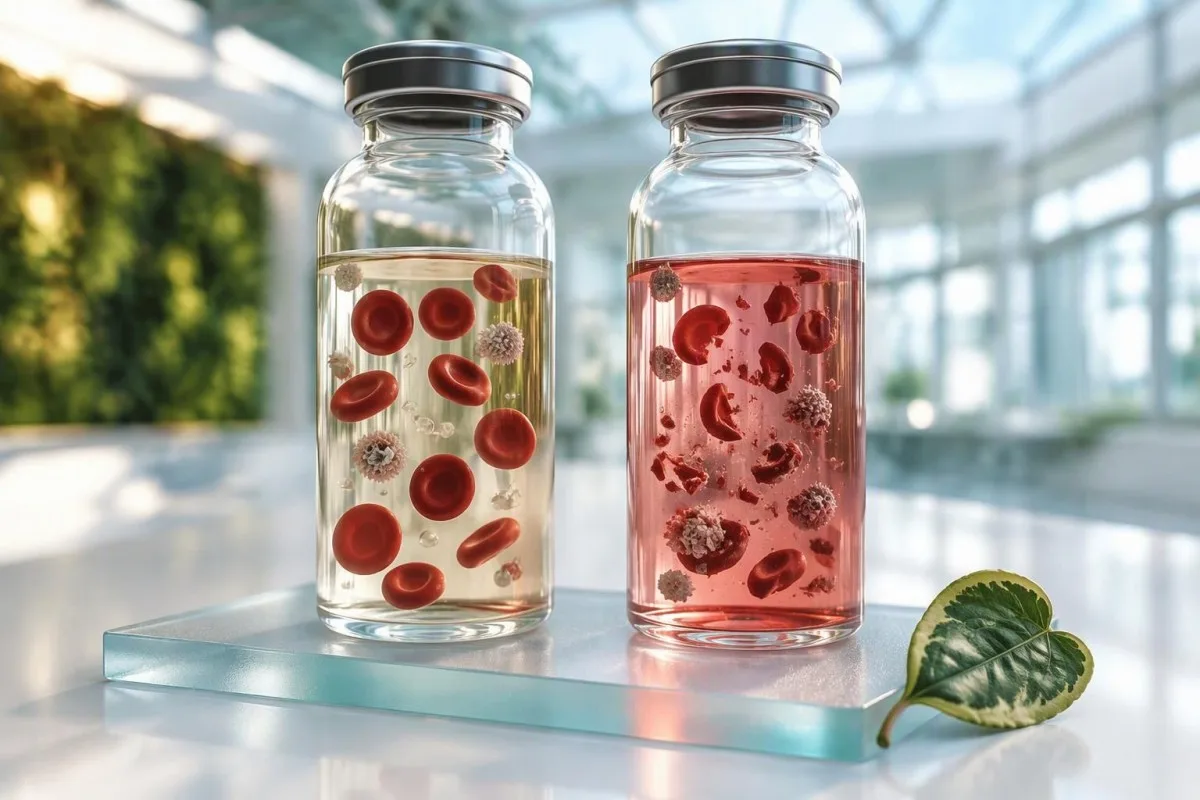
Жогорку гемолиз индекси, адатта, чогулткандан кийинки клеткалардын бузулушун билдирет, бул сиздин диагнозуңуз эмес. Пайдалуу суроо кайсы отчеттогу жыйынтыктар ишенимдүү бойдон кала берет жана кайсынысын кайталап текшерүү керек.


- Жогорку гемолиз индекси сывороткада же плазмада эркин гемоглобин бар экенин, адатта, чогултуу же ташуу учурунда клеткалардын бузулушунан улам пайда болгонун билдирет.
- Калий айрыкча алсыз, анткени кызыл кан элементтери плазманын 3,5–5,0 ммоль/л диапазонуна салыштырмалуу болжол менен 100–120 ммоль/л калийди камтыйт.
- LDH жана AST гемолизделген үлгүдө олуттуу түрдө жогорулашы мүмкүн; жалгыз күтүлбөгөн көтөрүлүш кайталап текшерүүгө чейин боор же булчуң оорусу катары белгиленбеши керек.
- Анализатордун чектери методго мүнөздүү: бир анализатордогу 100 гемолиз индекси катуулуктун универсалдуу өлчөөсү же гемолитикалык анемиянын диагнозу эмес.
- Канды кайра алуу чечими assay, аракечтигинин даражасы жана клиникалык шашылыш шарттардан көз каранды — бир гана үлгүнүн көрүнүшүнө эмес.
- Калийдин шашылыш чечимдери эгерде натыйжа жогору болсо, гемолизделбеген плазма үлгүсү, бүт кандын газын өлчөө же ЭКГ тарабынан тез ырастоону талап кылат.
- In-vivo гемолиз анемия, ретикулоцитоз, төмөн хаптоглобин жана жогорулатылган кыйыр билирубин сыяктуу клиникалык көрүнүштү пайда кылат; бир гана жогорку индекс муну далилдей албайт.
- 27-сентябрга карата, 2026-жыл, бейтаптар аны аткарардан мурун лаборатория ар бир жабыркаган натыйжаны жашырдыбы, квалификацияладыбы же аналитикалык түрдө оңдодубу деп сурашы керек.
Жогорку гемолиз индекси чындыгында эмнени өлчөйт
A жогорку гемолиз индекси анализатор лабораториялык үлгүдөгү суюк бөлүктө ашыкча эркин гемоглобинди аныктагандыгын билдирет. Көпчүлүк амбулатордук кан алуу учурларында, бул дененин ичинде эритроциттердин бузулушун билдиргенден көбүрөөк, чогулткандан кийин клеткалардын сынышын чагылдырат.
Индекс көбүнчө спектрофотометрия аркылуу түзүлөт: анализатор гемоглобин жарыкты сиңирген толкун узундуктарында сорууну өлчөйт, андан кийин assay-спецификалык аракечтиктин эрежелерин колдонот. Кызгылт-кызыл сыворотка үлгүсү 50, 100 же 300 катары белгиленген индекске ээ болушу мүмкүн, бирок бул сандар өндүрүүчүлөрдүн арасында стандартташтырылган эмес. медициналык валидациялоо ыкмасы биз колдонуп жаткан лабораториянын өз комментарийин жана assay белгилерин биринчи далил катары карайт.
Татаал чогултуу, өтө катуу чайкалган түтүк, клеткалардан кечиктирилген бөлүү, өтө төмөн температура же пневматикалык түтүк аркылуу ташуу баары гемолизделген кан үлгүсүн жаратышы мүмкүн. Менин клиникалык ишимде, эң көп кездешкен себеп бейтаптын венасы эмес; бул техникалык жактан татаал кан алуу, кичинекей чогултуучу түзүлүш же күч менен которуу менен айкалышкан. Көзгө нормалдуу көрүнгөн үлгү да сезгич assayга таасир этүүчү жетиштүү эркин гемоглобинге ээ болушу мүмкүн.
Кантести - бул AI кан анализи анализатору гемолиз жөнүндөгү комментарийди үлгү-сапаты боюнча сигнал катары, оорунун далили катары эмес, кабыл алган. Доктор Томас Клейндин практикалык эрежеси жөнөкөй: лаборатория аны ишенимсиз деп белгилеп койбогонун, жашырбаганын же эскертүү менен чыгарбаганын текшергенден кийин гана жабыркаган аналитаны чечмеле.
Эмне үчүн түс маанилүү, бирок чечимди аныктабайт
Көрүнүп турган кызгылт сыворотка көбүнчө олуттуу эркин гемоглобинге туура келет, бирок визуалдык инспекция начар гемолизди өткөрүп жиберет жана субъективдүү. Заманбап индекстер визуалдык баалоого караганда ырааттуу, бирок алардын клиникалык мааниси дагы деле анализаторго, реагентке жана тест методуна жараша өзгөрөт.
Үлгүдөгү гемолиз vs. организмдеги гемолиз
Жогорку индекс көбүнчө көрсөтөт in-vitro гемолиз, клетканын бузулушу түтүктө же иштетүү учурунда болгон дегенди билдирет. In-vivo гемолиз тастыктоочу симптомдорду, CBC жыйынтыктарын жана багытталган кан тесттерин талап кылган медициналык процесс болуп саналат.
In-vivo гемолиз көбүнчө ырааттуу көрүнүштү пайда кылат: гемоглобиндин төмөндөшү, ретикулоцитоз, кыйыр билирубиндин жогорулашы, LDHнын көбөйүшү жана төмөн хаптоглобин. Түнкү заара, сарык, чарчоо же белдин оорушу пайда болушу мүмкүн, бирок өнөкөт жеңил гемолиз тынч болушу мүмкүн. Башка жагынан алганда туруктуу CBC менен бир гана жогорку гемолиз индекси аналитикалыкка караганда көп учурда пре-аналитикалык болуп саналат.
Бул айырмачылык маанилүү, анткени гемолизделген үлгү гемолизди диагноз коюу үчүн колдонулган көрүнүштү – өзгөчө жогорулаган калий, LDH, AST жана фосфатты – жалган имитациялай алат. Lippi жана башкалар. гемолизди клиникалык лабораторияларда жараксыз үлгүлөрдүн негизги себеби катары сүрөттөшкөн, так ушул себептен клетка ичиндеги мазмуну үлгүгө агып кирип, спектрдик аракечтик фототометрдик ыкмаларга таасир этет (Lippi et al., 2008).
Эгерде анемия же сарык чындап эле бар болсо, клиницисттер үлгүсүн кайталап, ретикулоциттерди, билирубин фракцияларын, хаптоглобинди жана ретикулоциттердин интерпретациясын кошушу мүмкүн rather than relying on the index. Kantesti’s AI лабораториялык тест чечмелөө кызматы аркылуу жарыяланат compares these linked results and flags when the pattern deserves clinician review rather than a routine redraw.
A useful clue from timing
True hemolysis persists across carefully collected samples; collection-related hemolysis usually disappears on repeat testing. That contrast is often more informative than one isolated laboratory flag.
Гемолизден улам кайсы кан анализинин жыйынтыгы эң көп өзгөрөт
Hemolysis most often creates falsely high potassium, LDH, AST, phosphate, magnesium, iron, and sometimes total protein results. The magnitude is assay-dependent, so a laboratory’s interference comment outweighs any universal correction formula.
Potassium is the safety-critical example. Red cellular elements contain approximately 100–120 mmol/L potassium, while normal plasma potassium is 3.5–5.0 mmol/L; even modest cellular leakage can push a normal result above 5.5 mmol/L. A reported potassium of 6.2 mmol/L with a high hemolysis index may be pseudohyperkalemia, but it still needs rapid clinical triage if symptoms, kidney disease, ECG changes, or potassium-raising medicines are present.
LDH is highly concentrated within cellular elements, and AST is also more abundant inside them than in serum. In a 52-year-old runner with AST 89 IU/L, a hemolysis warning plus normal ALT and CK changes my first step from diagnosing liver disease to repeating the panel. See our practical guide to high AST results for the non-hemolysis causes that remain relevant.
Phosphate, magnesium, and iron may rise because they are released from disrupted cells; bilirubin and some enzyme assays can be biased in either direction by optical interference. This is why a numerical result may be released but not clinically usable. A боор панелин түшүндүргүч helps separate a real enzyme pattern from one compromised result.
Tests that can be falsely lower
Hemoglobin absorbance can produce negative interference in some colorimetric or enzymatic assays, including selected lipase, alkaline phosphatase, and bilirubin methods. There is no safe assumption that hemolysis only makes values high.
Гемолиз менен бирге калийдин жогорулашы: качан шашылыш?
A potassium result of 6.0 mmol/L or higher with a hemolysis flag should be confirmed promptly, but it must not be dismissed automatically. Immediate assessment is appropriate when potassium is 6.5 mmol/L or higher, an ECG is abnormal, or weakness, palpitations, chest symptoms, or significant kidney impairment are present.
Pseudohyperkalemia is common when cellular elements rupture during collection, but genuine hyperkalemia can coexist with a difficult draw. A fresh lithium-heparin plasma specimen, carefully collected whole-blood analysis, and ECG are common confirmation routes. Do not try to lower potassium through diet or supplements before speaking with the clinician who ordered the test; that could delay necessary care.
The risk rises when a patient has eGFR below 30 mL/min/1.73 m², takes an ACE inhibitor, ARB, spironolactone, trimethoprim, or potassium supplement, or has metabolic acidosis. In those settings, a result of 5.8 mmol/L deserves more attention than the same result in a well person with normal renal function and an obviously compromised tube. Our detailed калийди алуу катасы боюнча колдонмо explains this decision point.
A clenched fist during collection can raise potassium slightly even without visible sample hemolysis, while prolonged tourniquet use adds another source of pre-analytical variation. The thing is, neither detail can prove the result is false. Repeat testing is the safe answer when the number could alter urgent treatment.
Symptoms that override the laboratory caveat
Severe muscle weakness, fainting, new palpitations, chest discomfort, or shortness of breath need urgent assessment regardless of a hemolysis comment. Laboratory uncertainty should never be used to explain away concerning symptoms.
LDH, AST жана CK: гемолизделген үлгүдөгү ферменттерди окуу
LDH and AST are among the least reliable results in a markedly hemolyzed specimen because both are released from disrupted cellular elements. CK is often less directly affected by red-cell leakage but can still be analytically affected depending on the laboratory method.
An isolated LDH elevation should not trigger a cancer, liver, or hemolytic-anemia work-up until specimen quality is addressed. LDH has five isoenzymes and is found in many tissues, so even a pristine high value is nonspecific. Our explanation of LDH test meaning shows why trends and companion tests matter more than a single result.
AST can rise after strenuous exercise, alcohol exposure, muscle injury, or liver injury, while ALT is more liver-focused. When AST is 90 IU/L but ALT is 22 IU/L and the sample is hemolyzed, repeating AST, ALT, CK, and bilirubin after 48–72 hours without unusual exercise often clarifies the picture. This timing is clinical convention, not a hard evidence-based rule for every patient.
Kantesti AI uses pattern logic: AST plus LDH plus a hemolysis flag is labelled potentially compromised, whereas AST plus ALT plus bilirubin elevation in a clean sample carries different weight. That distinction prevents false alarms while preserving follow-up for genuine liver or muscle disease.
Why an AST:ALT ratio may be unusable
A hemolyzed AST value can artificially inflate the AST:ALT ratio, making it unsuitable for alcohol-related liver pattern interpretation or fibrosis scores. Repeat the panel before calculating ratios that may influence a referral.
Гемолизден кийин кайсы жыйынтыктар колдонууга жарактуу болушу мүмкүн?
Many results can remain usable despite a hemolyzed sample if the hemolysis level is below that assay’s validated interference limit. Sodium, chloride, urea, creatinine, glucose, and many immunoassays are often less affected, but “often” is not a guarantee.
Laboratories validate each test by measuring bias at increasing free-hemoglobin concentrations, then set suppression or comment thresholds. A sodium result may be reliable in a moderately hemolyzed specimen while potassium from the same tube is not. This analyte-by-analyte decision is why a blanket request to repeat an entire panel can be unnecessary.
Cardiac troponin, thyroid hormones, vitamin B12, and ferritin have assay-specific susceptibility to hemoglobin interference; no result should be assumed valid or invalid solely from the test name. If chest pain is present, troponin testing follows urgent clinical pathways regardless of a specimen flag. Read our guide to troponin result differences for why assay identity matters.
A laboratory may release a result with an HIL comment, suppress it entirely, or report that interference is not significant at the measured index. Kantesti’s neural network preserves that distinction when extracting PDF reports rather than treating every number as equally precise. The Kantesti AI көрсөткүчү describes technical evaluation of this report-reading workflow.
The serum-versus-plasma detail
Serum waits for clotting before separation, whereas plasma is separated from anticoagulated whole blood. Delay before separation can increase contact between cells and liquid, but both specimen types can hemolyze during collection or transport.
Лабораториялар боюнча гемолиз индексинин кесилиши эмне үчүн айырмаланат
There is no universal normal range for a hemolysis index because instruments, wavelengths, sample types, and assay reagents differ. A value of 150 may be a minor flag in one laboratory and a rejection threshold in another.
The HIL system—hemolysis, icterus, and lipemia indices—usually estimates optical interference before selected chemistry assays run. It is not the same as plasma free hemoglobin measured for suspected intravascular hemolysis, which may be reported in mg/dL. Confusing these two measures is a surprisingly common source of unnecessary worry.
Laboratories choose action limits based on acceptable analytical bias, frequently aligned with a change no greater than 10% or a fraction of biological variation. Yet a 10% error is trivial for one test and consequential for potassium near 6.0 mmol/L. Clinicians disagree on the most practical cutoff because the correct threshold depends on what decision the result will drive.
Кантести - бул AI кан анализинин жыйынтыгы платформасы that displays the exact printed laboratory flag and reference context instead of translating an index into a made-up universal severity grade. Readers comparing reports from different countries can use our 15,000-маркёрлик колдонмо to check units and assay names before comparing trends.
Why you should not compare index values over time
A hemolysis index of 80 in one laboratory and 80 in another may not represent the same free-hemoglobin concentration. Compare clinical analytes across laboratories cautiously unless the assay method and specimen handling are consistent.
Канды кайра алуу качан керек — качан керек эмес
A redraw is usually needed when hemolysis could change a result that guides an urgent or major clinical decision. It may not be needed when the laboratory confirms negligible interference for the released tests and the result fits the clinical picture.
Redraw promptly for a high potassium, unexpectedly high LDH or AST, discrepant phosphate or magnesium, or any result the laboratory has withheld. Repeat testing also makes sense when a result conflicts sharply with a prior baseline—such as creatinine 0.8 to 2.1 mg/dL without illness, dehydration, or medication change. A delta-check түшүндүрмөсү can help frame that conversation.
A repeat may be unnecessary for a stable HbA1c, TSH, or creatinine when the lab has explicitly released it without an interference warning. Still, repeat if the number would trigger a medication change, imaging, or referral. In my experience, patients are reassured by asking one specific question: “Which individual results did the lab consider affected?”
Do not assume fasting fixes hemolysis. Better prevention is a relaxed collection, appropriate tube filling, gentle inversions rather than shaking, rapid transport, and timely centrifugation. Our repeat-test guide after hemolysis gives patients a practical checklist.
Hospital and emergency settings
In emergency care, clinicians may use a rapid whole-blood result while simultaneously sending a carefully collected confirmatory specimen. Treatment decisions are based on symptoms, ECG findings, kidney function, and repeat values—not the hemolysis index alone.
Чогултуу жана ташуу учурунда кан үлгүлөрү эмне үчүн гемолиздейт
Most hemolyzed blood samples arise from mechanical stress, delayed processing, or temperature extremes rather than any fault in the patient. Prevention begins before the tube reaches the analyzer.
Drawing through an undersized device, pulling too forcefully with a vacuum device, forcing a sample through a connector, or vigorous shaking can damage cellular elements. Underfilling additive tubes creates a wrong blood-to-additive ratio, which can introduce separate errors even if hemolysis is absent. The details sound fussy, but they change real results.
Transportation matters after collection. Extended heat exposure, freezing, rough transit, and a long delay before separating serum or plasma can increase hemolysis. Samples from lines can also be misleading if collection follows infusion or if technique is difficult; a clean peripheral collection may be preferable when the result is pivotal.
Patients can help by arriving hydrated unless fluid restriction applies, keeping their arm warm, and avoiding repeated fist pumping. None of these steps guarantees a clean sample, particularly in fragile veins. A baseline draw preparation guide covers preparation without turning routine testing into an ordeal.
Exercise is a separate issue
A hard workout can genuinely raise CK, AST, and creatinine for 24–72 hours even when the specimen is pristine. Exercise may coexist with collection hemolysis, so a repeat result should ideally follow an ordinary rest day when medically appropriate.
CBC жана кандын мазкасы эмнени айтып бере алат
A complete blood count can help distinguish a poor specimen from possible true hemolysis, but it cannot do so by itself. Falling hemoglobin, rising reticulocytes, and smear changes carry more diagnostic weight than the chemistry hemolysis index.
A true hemolytic process commonly causes reticulocytosis as marrow responds to shortened red-cell survival, although this response may be absent with iron deficiency, marrow disease, or very early onset. A reticulocyte count above the laboratory’s upper limit—often roughly 2.0%—must be converted to an absolute count and interpreted alongside hemoglobin. Percentage alone can mislead in anemia.
A peripheral cell sample slide may show schistocytes, spherocytes, bite cells, or polychromasia depending on cause. Schistocytes at 1% or more on a standardized review can support thrombotic microangiopathy in the right setting, but this is a specialist interpretation and urgent symptoms matter. Our guide to шашылыш шистоцит табылгалары explains why this is not a home diagnosis.
Dr. Thomas Klein advises looking for internal consistency: high LDH plus low haptoglobin plus anemia on a clean repeat sample is meaningful; high LDH alone in a hemolyzed tube is not. The hematocrit and hemoglobin comparison is useful when CBC values seem contradictory.
A falsely high MCHC can be a clue
Markedly high MCHC can occur with sample hemolysis, lipemia, cold agglutinins, or spherocytosis. It should prompt laboratory review rather than an immediate conclusion about red-cell disease.
Өзгөчө кырдаалдар: балдар, кош бойлуулук жана жетүү кыйынчылыгы
Hemolysis is more common when collection is technically difficult, including neonatal, pediatric, emergency, and critical-care testing. The consequences may also be greater because small electrolyte shifts can affect urgent decisions.
In newborns and young children, capillary collection and low sample volumes can increase cellular disruption, while potassium reference intervals differ by age. A potassium value that is high for an adult may be less abnormal in a newborn, yet any suspected hyperkalemia still requires prompt clinician-led confirmation. Never apply adult cutoffs to a child’s report without the laboratory’s pediatric range.
Pregnancy adds another layer: anemia is common from dilution or iron deficiency, while HELLP syndrome and other obstetric emergencies can involve real hemolysis. New headache, visual symptoms, right-upper abdominal pain, high blood pressure, or reduced fetal movement need urgent maternity assessment—not an assumption that the tube was damaged. Our HELLP laboratory pattern guide details the red flags.
For people with dialysis access, implanted lines, burns, or very difficult peripheral access, a higher rate of unsuitable samples may be unavoidable. The care team can often arrange an approach that minimizes redraws, but the test’s clinical urgency determines whether another sample is required.
Home collection kits
Finger-prick samples are not interchangeable with venous samples for every analyte, and inadequate handling can create interference. Follow kit-specific instructions and ask the provider whether a venous redraw is needed after a high hemolysis flag.
Лабораториялык отчеттогу гемолиз комментарийин кантип окуу керек
A lab report may say “hemolyzed,” “hemolysis index elevated,” “interference possible,” or “result not reported.” These phrases have different implications: a suppressed result is unusable, while a released result may remain valid if interference is below the assay’s limit.
Look for a comment attached to the individual analyte, not merely a general specimen note. For example, potassium may say “not reported due to hemolysis,” while creatinine is reported without qualification. This reflects the laboratory’s validation work and is more useful than judging the tube’s color from a photograph.
If a number is marked with an H for high and also a hemolysis caveat, it can be both analytically elevated and clinically uncertain. Ask the ordering clinician whether the result fits your medications, symptoms, earlier values, and other tests. Our guide to чектен чыккан көрсөткүчтөрдүн белгилери explains why a flag is a prompt for context, not a diagnosis.
Kantesti AI can organize a photographed or PDF report in about 60 seconds, but it cannot inspect the physical specimen or replace a laboratory’s interference decision. Our технология боюнча колдонмо explains how we preserve qualifiers, units, and reference intervals for clinician discussion.
A question worth writing down
Ask: “Was this specific test suppressed, corrected, or released as valid despite the hemolysis index?” That single question usually gets a clearer answer than asking whether the whole panel was “bad.”
Гемолизделген жыйынтык алгандан кийин эмне кылбоо керек
Do not self-treat a possibly false result, ignore a potentially dangerous one, or assume every result in the panel is invalid. The right response is targeted confirmation based on the analyte and your clinical context.
Do not stop prescribed ACE inhibitors, diuretics, thyroid medicine, or supplements solely because one hemolyzed sample was abnormal. Potassium, thyroid, and kidney results must be interpreted against the medication list and a repeat value where needed. Sudden medication changes can be riskier than waiting a few hours for confirmation.
Avoid searching for a diagnosis from a high LDH or AST result before checking sample quality. Serious disease can cause these elevations, of course, but an unreliable first sample does not justify a frightening conclusion. For muscle-specific concerns, our high CK safety guide sets out symptoms that do need prompt care.
Likewise, do not repeatedly redraw yourself through commercial testing without sharing the original report with a clinician. Recurrent hemolysis may be a collection issue, but recurrent abnormal results in properly handled samples deserve a structured evaluation.
When to seek same-day help
Seek urgent advice for high potassium with weakness or palpitations, jaundice with dark urine, severe fatigue with breathlessness, chest pain, fainting, or rapidly worsening symptoms. A specimen-quality note cannot lower the urgency of these clinical signs.
Канды кайра алгандан кийин жыйынтыктарды кантип коопсуз салыштыруу керек
A clean repeat sample is most useful when collected under comparable conditions and interpreted as a trend, not as a verdict on the first result. A large change after a hemolyzed draw often identifies interference, but biological variation still exists.
Record the draw date, fasting status, exercise in the previous 48 hours, illness, supplements, and medications. Creatinine can shift with hydration and exercise; AST and CK can shift after training; potassium may shift with kidney function and medicines. These ordinary variables matter even when the second sample has no hemolysis flag.
For potassium, a change from 6.1 mmol/L in a hemolyzed sample to 4.3 mmol/L in a clean sample strongly supports pseudohyperkalemia. For AST, a decline from 88 to 29 IU/L may reflect removal of interference, recovery after exercise, or both; timing and ALT help adjudicate. Our кан анализин өзгөртүү боюнча колдонмо explains reference change value more fully.
Кантести - бул AI менен иштеген кан анализин талдоо куралы that can place repeat values beside prior results while retaining specimen-quality comments. Trend displays are useful, but they must never obscure a redrawn critical result that needs immediate clinician action.
Баштапкы отчетту сактаңыз
Save the first report, including the hemolysis comment, rather than deleting it after the repeat. It documents why a value changed and prevents future clinicians from mistaking a collection artifact for sudden disease resolution.
Клиницисттен же лабораториядан берүүчү суроолор
The best question after a high hemolysis index is not “Do I have hemolysis?” but “Which analytes were affected, how urgently should they be repeated, and what symptoms would change the plan?” A short, specific discussion avoids both false reassurance and unnecessary alarm.
Ask whether the abnormal value was suppressed, whether the lab has a validated interference threshold for that method, and whether a fresh plasma or whole-blood sample is preferable. For potassium, ask whether an ECG or same-day repeat is needed. For enzyme results, ask whether exercise, alcohol, infection, or medicines may also be contributing.
Ask whether you need a full panel or only selected tests repeated. A targeted redraw often includes potassium, AST, LDH, phosphate, magnesium, or bilirubin, whereas a CBC or HbA1c may not need repeating. This can reduce cost, discomfort, and confusing duplicate results without compromising care.
Биздин дарыгерлер да Медициналык кеңеш review clinical-safety principles used in Kantesti content, but personal treatment decisions belong with the clinician who knows your history and can assess you. Most patients find that a precise repeat plan is far calmer than trying to interpret a colored sample image online.
Кыскача айтканда
A high hemolysis index is usually a laboratory-quality warning, not a diagnosis. Respect the warning, identify the affected tests, and repeat only what could change clinical decisions.
Kantesti кан отчетторундагы гемолиз белгилерин кантип чечет
Kantesti identifies hemolysis flags and links them to the results most likely to be affected, but it does not replace laboratory validation or urgent clinical assessment. A flagged potassium, troponin, or critical electrolyte result always needs the laboratory and treating team’s protocol.
Kantesti AI reads the test name, value, unit, reference interval, collection context, and printed laboratory comments together. That matters because “high potassium” without the accompanying hemolysis statement is an incomplete clinical fact. Our system is designed to surface uncertainty plainly rather than conceal it behind a confident-looking score.
Кантести - бул AI биомаркер чечмелөө платформасы used across 127+ countries, so it also avoids assuming that identical labels or index values mean identical methods. Different laboratories may use serum, plasma, direct or indirect assays, and different interference thresholds. International reports need the source laboratory’s own interpretive note preserved.
As of September 27, 2026, our safety approach is to encourage a clinician discussion for results that are critical, internally inconsistent, newly abnormal, or clearly compromised by blood test hemolysis. If you want to understand how health data are handled, our Биз жөнүндө бетинде describes the organization and its privacy-focused approach.
The limit of any report interpretation
No report-reading system can know whether you have palpitations, jaundice, dehydration, or a new medication unless you provide that context to a clinician. The specimen flag is one piece of evidence, not a substitute for examination or urgent care.
Көп берилүүчү суроолор
Кандагы гемолиздин индексинин жогору болушу эмнени билдирет?
Жогорку гемолиз индекси лабораториялык анализатор сывороткадагы же плазмадагы эритроциттердин элементтеринен пайда болгон эркин гемоглобинди аныктаганын билдирет. Көпчүлүк учурлар бейтаптын медициналык абалынан эмес, чогултуу, ташуу же иштетүү учурунда пайда болот. Индекс калий, LDH, AST, фосфат, магний жана темирдин натыйжаларын ишенимсиз кылышы мүмкүн, бирок анын таасири анализге жараша болот. Гемолиз индекси гемолитикалык анемияны диагностикалоочу тест эмес.
Жогорку гемолиз индекси жогорку калийге алып келиши мүмкүнбү?
Ооба, жогорку гемолиз индекси псевдогиперкалиемияга алып келиши мүмкүн, анткени эритроцит клеткаларында калийдин курамы 100–120 ммоль/л, ал эми кадимки плазма калийи 3,5–5,0 ммоль/л. Жада калса чектелген клеткалык бузулуулар да ченемден жогору, 5,5 ммоль/л жогору калийди жалган көрсөтүшү мүмкүн. 6,0 ммоль/л же андан жогору калийдин натыйжасы, айрыкча бөйрөк оорусу, калийди көтөрүүчү дары-дармектер, алсыздык же жүрөк айлануу болгон учурда тез арада ырасталышы керек. ЭКГ жана кылдаттык менен чогултулган кайталап үлгү талап кылынышы мүмкүн.
Гемолизделген үлгүдөн кийин бардык кан анализдерин кайталап өткөрүшүм керекпи?
Жок, гемолизделген үлгү кандын бардык анализин автоматтык түрдө жараксыз кылбайт. Лабораториялар ар бир анализ үчүн өз алдынча кийлигишүүнү баалайт жана натрий, хлорид, креатинин, глюкоза жана кээ бир иммундук анализдөөлөр белгилүү бир гемолиз деңгээлинде колдонулушу мүмкүн. Лаборатория тарабынан жокко чыгарылган, квалификацияланган же чечимди өзгөртө турган, мисалы, калий же күтүлбөгөн жогорку LDH жана AST сыяктуу кайталап анализдер. Толук панелди кайрадан жасоодон мурун кайсы конкреттүү аналиттер таасир эткендигин сураңыз.
Гемолизделген үлгү менин гемолитикалык анемиянын бар экендигин билдиреби?
Кандын гемолизделген үлгүсү өзү эле гемолитикалык анемия бар экенин билдирбейт. Гемолитикалык анемия, адатта, гемоглобиндин төмөндөшү, ретикулоциттердин жогорулашы, кыйыр билирубиндин жана LDHдин көбөйүшү, ошондой эле кылдаттык менен алынган үлгүдөгү хаптоглобиндин төмөндөшү сыяктуу көрүнүштөр менен тастыкталат. Сарык, зааранын карарышы, дем алуунун кыйындашы же күчтүү чарчоо сыяктуу симптомдор тынчсызданууну күчөтөт, бирок кээ бир бейтаптарда симптомдор жеңил болот. Айлануунун жол-жобосуна байланыштуу гемолизди чыныгы эритроциттердин бузулушунан бөлүү үчүн кайталап таза үлгү алуу, адатта, биринчи ыкма болуп саналат.
Гемолизден кийин кан анализин кайталап берүүдөн мурун канча убакыт күтүү керек?
Калий, тропонин же башка шашылыш натыйжалар боюнча кайталап текшерүү көбүнчө ошол эле күнү жүргүзүлүшү мүмкүн. Күчтүү көнүгүүлөрдөн кийинки AST, CK, же LDHдин шашылыш эмес аномалияларында, кээде клиницисттер адаттан тыш көнүгүүлөрдү 48–72 саатка чейин токтоткондон кийин кайталап текшеришет, анткени көнүгүүлөрдүн өзү бул ферменттерди көбөйтүшү мүмкүн. Жогорку гемолиз индекси үчүн универсалдуу күтүү мөөнөтү жок; тиешелүү тест жана тестирлөөнүн себеби убакытты аныктайт. Лаборатория же буйрутма берген клиницист конкреттүү планын бериши керек.
Суусуздануу гемолиздин жогорку индексине алып келиши мүмкүнбү?
Суусуздануу гемолиз индексинин жогорулашына түздөн-түз себеп болбойт, бирок чогултууну кыйындатып, техникалык жактан татаал чогултуу мүмкүнчүлүгүн жогорулатат. Чогулткандан кийин жылуулукка дуушарлануу же начар сактоо да клетка элементтерин бузуп, индексди жогорулатышы мүмкүн. Суюктукка чектөөсү жок адамдар үчүн венага жетүүгө гидратация жардам берет, бирок чогултулган үлгү бузулган болсо, аны оңдой албайт. Жаңы туура иштетилген үлгү туура ырастоо болуп саналат.
Бүгүн AI менен күчөтүлгөн кан анализин талдоону алыңыз
Дүйнө жүзү боюнча 2 миллиондон ашык колдонуучу Kantestiти заматта, так лабораториялык анализ талдоосу үчүн ишенет. Кан анализиңизди жүктөп, бир нече секунд ичинде 15,000+ биомаркерлеринин комплекстүү чечмелөөсүн алыңыз.
📚 Шилтемеленген изилдөө басылмалары
Кляйн, Т., Митчелл, С., & Вебер, Х. (2026). Klein, T. (2026). A Pre-Registered, Rubric-Based Automated Technical Benchmark of the Kantesti Blood-Test Interpretation Engine on 100,000 Synthetic Test Cases. Figshare. https://doi.org/10.6084/m9.figshare.32095435. Kantesti AI медициналык изилдөө.
Кляйн, Т., Митчелл, С., & Вебер, Х. (2026). Kantesti LTD. (2026). Клиникалык валидация алкагы v2.0 (Медициналык валидация барагы). Zenodo. https://doi.org/10.5281/zenodo.17993721. Kantesti AI медициналык изилдөө.
📖 Тышкы медициналык шилтемелер
⚕️ Медициналык эскертүү
Бул макала билим берүү максатында гана жана медициналык кеңеш болуп саналбайт. Диагноз коюу жана дарылоо чечимдери үчүн дайыма квалификациялуу саламаттыкты сактоо адисине кайрылыңыз.
E-E-A-T ишеним сигналдары
Тажрыйба
Дарыгер жетектеген лабораториялык чечмелөө иш процесстерин клиникалык кароо.
Экспертиза
Биомаркерлер клиникалык контекстте кандай жүрөрүнө лабораториялык медицина багыты.
Авторитеттүүлүк
Доктор Томас Клейн жазган, доктор Сара Митчелл жана профессор доктор Ханс Вебер тарабынан каралган.
Ишенимдүүлүк
Тынчсызданууну азайтуу үчүн так кийинки кадамдар менен далилге негизделген чечмелөө.