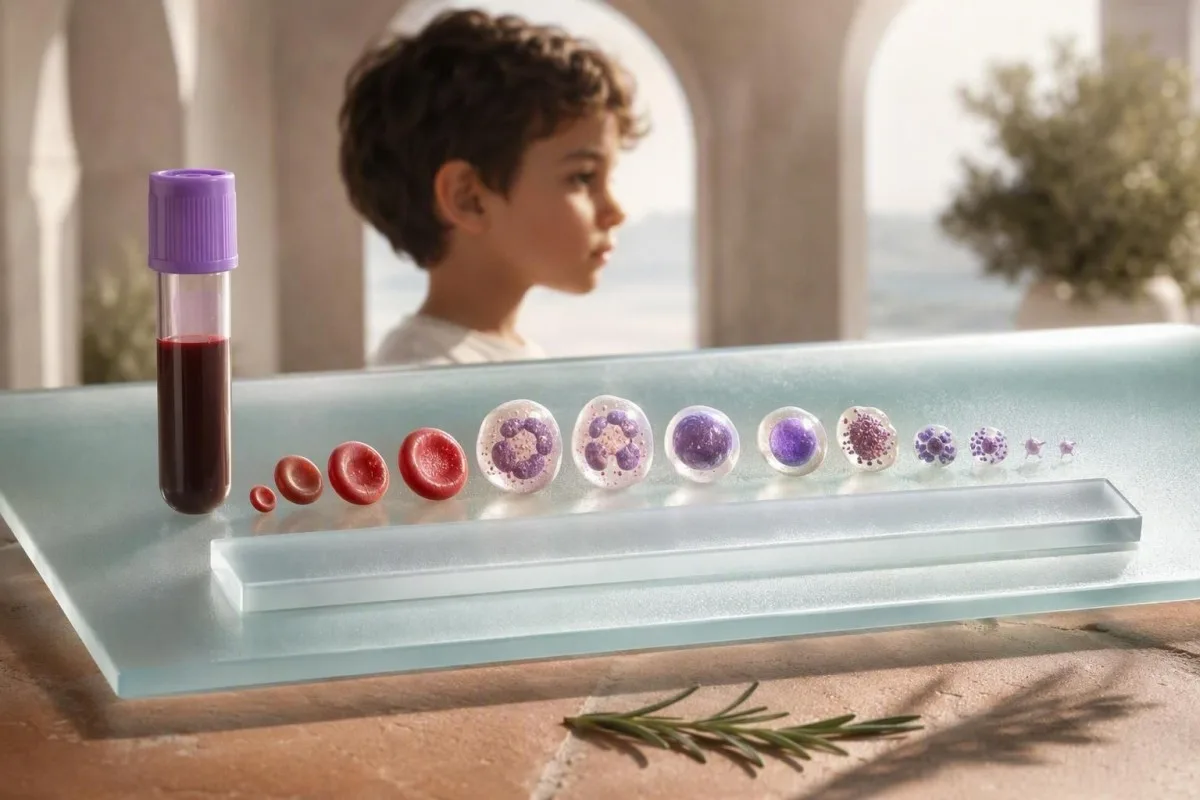
G ekking gervigreindar getur skipulagt rannsóknarniðurstöður barns og útskýrt ókunn hugtök, en hún getur ekki komið í stað barnalæknis sem þekkir aldur barnsins, vaxtarmynstur, rannsókn og einkenni.


- Bein svör: G ekking gervigreindar getur túlkað blóðprufumynstur fyrir börn sem upplýsingabætiefni, en barnalæknir verður að taka greiningar- og meðferðarákvarðanir.
- Aldurssértæk bil: Lymfócýtafjöldi sem er væntanlegur á aldrinum 2 ára getur verið merktur sem hár með fullorðins viðmiðunarbil.
- Kynþroski skiptir máli: Alkalískur fosfatasi getur farið yfir 300 IU/L við beinvöxt án lifrarsjúkdóms.
- Bráð einkenni: Öndunarerfiðleikar, rugl, krampar, bláar varir, alvarleg ofþornun eða mjög veikt barn þurfa tafarlausa klíníska umönnun óháð gervigreindar skýrslu.
- Gæði sýna: Hemólýsa, seinkuð vinnsla og storknun blóðflagna í EDTA geta skapað blekkjandi kalíum-, LDH- eða blóðflagna niðurstöður.
- Megingildi: Að bera saman niðurstöður frá sama rannsóknarstofu yfir vikur eða mánuði er oft gagnlegra en að bregðast við einni mörkuðum niðurstöðu.
- Engin sjálfsmeðferð: Foreldrar ættu ekki að byrja á járn-, D-vítamín-, skjaldvakna- eða saltaaukameðferð einvörðungu út frá túlkun á niðurstöðum rannsókna á netinu.
- Persónuvernd: Aðeins skal hlaða upp skýrslu barns með samþykki foreldris eða lögráðamanns og vandlega fjarlægja óþarfa auðkenni.
Hvað gervigreind getur og getur ekki gert við blóðprufu barns
G.v. getur túlkað niðurstöður blóðrannsókna hjá börnum aðeins sem skipulagða skýringu, ekki sem greiningu eða staðgengil fyrir barnalækna. Hún getur bent á flaggaða gildi, breytt einingum, lýst algengum orsökum og komið upp spurningum fyrir lækninn; hún getur ekki metið vökvajafnvægi, þroskaþrep, athugunarniðurstöður eða hversu veikt barn lítur út. Frá og með 6. september 2026 er þessi greinarmunur enn þá öryggismörk sem ég ræði oftast við foreldra.
Ég er Dr. Thomas Klein, og í klínískri endurskoðun hef ég séð eðlilega CBC hjá smábarni valda tilgangslausri kvíða þegar fullorðinsviðmið voru notuð. Niðurstaða utan prentaðra viðmiða er ekki sjálfkrafa óeðlileg fyrir barn, þar sem margar skýrslur nota sjálfgefið breið eða fullorðinsafleidd viðmið. Skynsamleg G.v. heilsu-skýrsla ætti að tilgreina hvaða viðmiðunarbil hún notaði og vísa fjölskyldum aftur til pantaðs læknis.
Kantesti er AI blóðprufugreiningartæki hönnuð til að skipuleggja rannsóknargögn og útskýra mynstur á einföldu máli; fyrir barnalækningaskýrslur ætti niðurstaða okkar að vera notuð sem upphaf að samræðum við barnalækni, ekki sem grænt ljós til að starfa sjálfstætt. Barn með hita, 18 mánaða, með róandi útlitsskýrslu, getur samt þarfnast mats sama dag ef það er sljóvt, andar hratt eða drekkur illa.
Túlkun á niðurstöðum rannsókna á netinu er gagnlegust þegar hún breytir kaótískri PDF í hagnýtar spurningar: Var barnið fastandi? Var nýleg veiru-sýking? Fer hæð eða þyngd yfir prósentur? Foreldrar geta einnig skoðað okkar G.v. læknisskýrslu öryggispróf áður en þeir treysta á neina sjálfvirka skýringu.
Af hverju börn þurfa aldurssértæk viðmiðunarbil fyrir rannsóknir
Börn þurfa viðmiðunarbil sem passa við aldur, kyn, kynþroskaþrep, próf og stundum meðgöngualdur. Tölur geta breyst verulega milli ungbarna, skólaaldurs og unglingsár, á meðan barnið heldur áfram að vera vel.
Hemóglóbín nýbura er almennt um 14 til 22 g/dL, en dæmigert viðmið fyrir 1-5 ára er um það bil 11,0 til 13,5 g/dL; rannsóknarstofur setja sín eigin sannreyndu viðmið. Fysiologísk lækkun eftir fæðingu er væntanleg, en sama hemóglóbín upp á 9 g/dL þarf mismunandi bráðabirtingarmat hjá dafnandi 2 mánaða barni en hjá föl-leitandi 8 ára barni.
Algjörar eitilfrumu-fjöldi er einnig aldurstengdur. Fjöldi um það bil 4,0 × 10⁹/L getur verið eðlilegt hjá leikskólabarni en þó yfir mörgum gildum fullorðinna, sem er ástæðan fyrir því að mismunagreining verður að vera lesin eftir aldri fremur en einungis prósentuhlutfalli; okkar leiðbeiningar um eitilfrumutalningar eftir aldri útskýrir muninn.
Soldin og félagar lýstu því hvernig þroskafræðileg lífeðlisfræði gerir bil hjá börnum mun frábrugðin gildum fullorðinna fyrir margar greiningar (Soldin et al., 2005). Í reynd vil ég fyrst fá bil rannsóknastofnunarinnar sjálfrar, síðan nákvæman aldur barnsins við sýnatöku – ekki almennt vefsíðabil.
Hvernig vöxtur og kynþroski breyta rannsóknarniðurstöðum
Vöxtur og kynþroski geta breytt alkalískri fosfatasa, blóðrauða, ferritíni, lípíðum og kynhormónum nægilega til að líkja eftir sjúkdómi á greiningu fullorðinna. Tímasetning vaxtarkipps barnsins skýrir oft meira en eitt merkt númer.
Við hraðan beinvöxt, getur alkalísk fosfatasi (ALP) farið yfir 300 IU/L og verið eðlilegt fyrir aldurinn vegna mikillar virkni beinfrumuforvera. Hækkað ALP með eðlilegu bilirúbíni, GGT, kalsíum, fosfati, einkennum og vaxtarsögu er mjög önnur mynd en gallrásasjúkdómur í lifur; sjá útskýringu okkar á ALP eftir beinavöxt.
Kynþroski bætir annarri hlið við. Blóðrauði hækkar oft hjá drengjum þegar testósterón eykur framleiðslu rauðra blóðkorna, á meðan unglingar sem eru með tíðir geta fengið járnskort með ferritíni undir 15 ng/mL jafnvel áður en blóðrauðinn lækkar. Leikskólaleiðbeiningar NHLBI frá 2011 um hjarta- og æðasjúkdóma hjá börnum viðurkenna einnig að gildi lípíða breytast með þroska og ætti að meta þau með því að nota viðmiðunarþætti fyrir börn (Expert Panel, 2011).
Kantesti er AI blóðrannsóknartúlkunarvettvangur sem getur sýnt þessa þroskafrávik, en hún getur ekki áreiðanlega ályktað um Tanner-stig út frá rannsóknarniðurstöðum PDF. Læknir getur með réttu spurt um tíðir, vaxtarhraða, fæði, íþróttaiðkun, lyf og hvenær á ættinni kynþroski hefst áður en hormóna- eða járnpróf er túlkað.
Af hverju þarf sérfræðingamat á niðurstöðum nýbura og fyrirbura
Úrslit rannsókna á nýburum og fyrirburum ætti ekki að túlka eingöngu út frá almennri gervigreindarútkomu því eðlilegur lífeðlisfræði breytist eftir klukkustundir og daga eftir fæðingu. Bilirubin, glúkósi, kalsíum, hematókrít og skjaldkirtilsskimun krefjast öll tímaviðkvæmrar nýburasamskiptaupplýsinga.
Heildarbilirúbínmagn 12 mg/dL (205 µmol/L) getur verið fylgt eftir eða þarfnast tafarlausrar meðferðar eftir fæðingaraldur í klukkustundum, meðgöngulengd, fóðrun, hættu á blóðlýsu og hraða hækkunar. Þess vegna nota ákvarðanir um gulu nýbura klukkustundar-sérstakar nómgram og klínískt mat fremur en ein almenn mörk.
Blóðglúkósi undir 47 mg/dL (2.6 mmol/L) er almennt notað sem rekstrarmörk í áhættuhópum nýbura, en meðferð fer eftir einkennum, fóðrun, endurteknum mælingum og staðbundnum leiðbeiningum fyrir nýbura. Hælprófunarniðurstaða getur einnig verið frábrugðin fljótt unnu rannsóknarstofuglúkósagildi.
Foreldrar ættu að líta á óeðlilegt skilaboð frá nýbura-skimun sem hraðvirka tengiliðaleið, ekki sem netrannsóknarvandamál. Yfirlit okkar yfir fæðingarmerkimiða útskýrir hvers vegna sum úrslit þurfa samdægurs samskipti en önnur þurfa áætlaða endurtekningu.
Hvernig á að lesa CBC barnsins án þess að hafa of miklar áhyggjur
Heildarblóðtala barns er gagnleg þegar hún er lesin sem mynstur: hemóglóbín, MCV, retíkúlósítar, hvítblóðfrumuþátttaka, blóðflögur, einkenni og ferill eiga saman. Einangrað hátt eða lágt merki gefur sjaldan greiningu.
Blóðrauði undir 11,0 g/dL hjá ungum barni leiðir oft til mats á járnskorti, fæði, útsetningu fyrir blýi, langvarandi bólgu, blóðrauða, blóðmissi; MCV og ferritín hjálpa til við að þrengja spurninguna. Ferritín getur litið fölskvunni róandi út meðan á sýkingu stendur vegna þess að það hækkar sem bráðfasaefni.
Fullkominn neytófilur undir 1,5 × 10⁹/L kallast daufkyrningafæð í mörgum aðstæðum, en brýnt er breytilegt eftir aldri, uppruna, lengd, hita og dýpt minnkunar. Heilsugott barn með ANC 1,2 × 10⁹/L eftir vírus er ekki sama klíníska ástand og barn með hita og ANC undir 0.5 × 10⁹/L; lestu okkar leiðbeiningar um daufkyrningastig.
Þegar ég met CBC eftir magapest skoða ég hvort blóðþétting útskýri vægt hátt hemóglóbín- eða blóðflögugildi áður en ég geri ráð fyrir vandamáli í merg. Endurtekning eftir bata er oft öruggari en víðtæk próf, nema marblettir, vedraður hiti, beinverkir, þyngdartap eða marktæk fölskur breyti áhættunni.
Af hverju sýnas meðhöndlun getur blekkt gervigreind og lækna
Slæm söfnun eða seinkuð vinnsla getur gert blóðrannsóknarniðurstöður barns rangar áður en nokkur maður eða reiknirit sér þær. Blóðlýsa, erfið söfnun, löng stöðutími og rangt rör geta breytt niðurstöðum nægilega til að kveikja falska viðvörun.
Blóðlýsa losar innanfrumu kalíum og LDH í sýnið, svo hátt kalíumgildi með blóðlýsufána gæti krafist tafarlausrar endurtekningar frekar en tafarlausrar meðferðar. Samt sem áður þarf barn með veikleika, hjartsláttartruflanir, nýrnasjúkdóm eða áhyggjur af hjartalínuriti ennþá skjótt klínískt mat; viðvörun sýnisins sönar ekki að kalíumið sé skaðlaust.
EDTA-tengd blóðflagnafelling getur leitt til oflátt lágs blóðflagnafjölda, stundum undir 100 × 10⁹/L, þrátt fyrir eðlilegar blóðflögur hjá barninu. Rannsókn á blóðfilmu á rannsóknarstofu eða endurtekin próf í sítrat-rör getur skýrt þetta algenga forgreiningargildru; grein okkar um EDTA-þyrping blóðflagna sýnir hvers vegna ein tala getur blekkt.
Kantesti’s AI-knúið blóðprófunargreiningartól getur bent á innri ósamræmi og sýnilegar athugasemdir rannsóknarstofu, en það getur ekki skoðað rörið eða fylgst með erfiðum sýnatökum. Foreldrar ættu að mynda allt skýrsluna, þar á meðal athugasemdir um gæði sýnis, tímasetningu sýnatöku og viðmiðunarmörk - ekki aðeins merktu síðuna.
Hvernig hiti, ofþornun og veirur breyta tímabundið prófum
Bráð veikindi geta tímabundið breytt glúkósa, natríum, kreatíníni, hvítfrumu fjölda, CRP, ferritíni og lifrarensímum hjá börnum. Niðurstaða meðan á hita stendur ætti oft að bera saman við endurtekningu eftir bata frekar en að líta á hana sem grunngildi barnsins.
Uppköst og minni inntaka getur þétt blóðrauða og þvagefni, en alvarleg niðurgangur getur lækkað bíkarbónat og truflað natríum eða kalíum. Natríum undir 130 mmól/L, sérstaklega með rugli, alvarlegum höfuðverk, flogaveiki eða endurteknum uppköstum, krefst bráðrar læknisfræðilegrar mats frekar en netskýringa.
CRP hækkar og lækkar hraðar en ESR, en hvorugt próf greinir sérstaka orsök sjálft. CRP á 40 mg/L getur komið fram með veiru- eða bakteríusjúkdómum, vefáverka og bólgusjúkdómum; útlits barnsins, lengd hita, rannsókn og stundum ræktun skipta meira máli en eitt merki.
Hagnýta regla Dr. Thomas Klein er einföld: skráðu veikindadag, lyf, vökvainntöku og hitastig við hlið niðurstöðunnar. Sá lítill minnispunktur gerir rannsóknarstofubreytingar milli heimsókna mun auðveldari fyrir barnalækni að túlka.
Einkenni sem taka fram öllum róandi gervigreindar skýrslum
Bráð einkenni vega þyngra en venjuleg gervigreindarskýrsla vegna þess að rannsóknarstofupanel útiloka ekki margar bráðatilfelli barna. Barn sem á erfitt með að anda, erfitt að vekja, blátt um varirnar, hefur flogaveiki eða sýnir merki um alvarlegt ofþornun þarf bráða meðferð núna.
Leitaðu bráðrar umönnunar fyrir barn með útbrot sem ekki hverfa með hita, stirðum hálsi, viðvarandi alvarlegum höfuðverk, breyttu hegðun eða lélegri gegndræpni eins og köldum flekkóttum höndum og marktækt minnkuðu þvagi. CBC eða CRP getur ekki örugglega útilokað snemma blóðeitrun, heilahimnubólgu, blindraristlabólgu, sykursýru eða ofnæmisbráðaástand.
Fyrir hættu á sykursýki, uppköst með djúpum eða hröðum öndun, kviðverki, syfju eða miðlungs-til-stórum ketónum þarf bráða mats. Blóðglúkósi á 200 mg/dL (11.1 mmol/L) með klassískum einkennum styður sykursýnismat, en ketónsýrumatsmat krefst glúkósa, ketóna, blóðsalta, sýru-jafnvægisástands og klínísku.
Niðurstaða getur ekki dæmt öndunarvinnu eða háræðafyllingu. Foreldrar sem hafa áhyggjur af brjóstverkjum geta notað okkar leiðbeiningar um bráða blóðprófseinkenni fyrir samhengi, en þeir ættu ekki að bíða eftir sjálfvirkri greiningu þegar barn virðist alvarlega veikt.
Lyf, vítamín og fæðubótarefni sem breyta barnarannsóknum
Algeng lyf og bætiefni geta breytt eða haft áhrif á blóðpróf barna, svo gervigreind þarf fullkomið lyfjalista til að forðast villandi skýringar. Bíatín, barksterar, krampastillandi lyf, járn, D-vítamín og nýlegir bláæðainnrennsli eru algeng dæmi.
Háir skammtar af bíatíni geta haft áhrif á sumar ónæmisfræðilegar prófanir og gefið villandi skjaldkirtils- eða hormónaniðurstöður; fjölskyldur ættu að upplýsa lækninn um hár-, nagla- eða fjölvítamínvörur. Skammturinn skiptir máli: venjulegt mataræði er annað en fæðubótarefni sem innihalda 5.000 til 10.000 míkrógömm daglega.
Einnig skal ekki byrja að gefa járn eingöngu vegna þess að barn lítur þreytt út eða hefur lágt-eðlilegt ferritín. Of mikið járn getur verið skaðlegt og rannsóknir vegna skorts á járni, talassemíu, langvarandi bólgu og blýeitrunar eru mismunandi; okkar leiðbeiningar um járnrannsóknir sýna hvers vegna transferrínmettun og ferritín eru túlkuð saman.
D-vítamínmeðferð er annað svæði þar sem samhengi skiptir máli. 25-hýdroxý D-vítamíngildi undir 20 ng/mL (50 nmol/L) eru oft talin vera skortur, en skammtar fyrir börn fara eftir aldri, líkamsstærð, mataræði, hættu á vanfrásogi, kalsíum og staðbundnum leiðbeiningum - ekki almennri gervigreindarnæringaráætlun.
Af hverju horfur eru venjulega öruggari en ein barnarannsóknarniðurstaða
Endurteknar niðurstöður frá sömu rannsóknarstofu eru oft upplýsandi en ein óljós gildi hjá börnum. Þróun getur bent á bata, breytingar tengdar vexti, áhrif lyfja eða viðvarandi mynstur sem réttlætir sérfræðilegt mat.
Ferrítínbreyting úr 8 í 28 ng/mL eftir meðferð undir leiðsögn læknis segir skýrari sögu en ein stök niðurstaða upp á 18 ng/mL, sérstaklega ef CRP lækkaði á sama tíma. Fyrir skjaldkirtilspróf er TSH-breyting aðeins marktæk þegar samhengi við söfnunartíma, próf, veikindi og fylgni við lyfjagjöf eru höfð í huga.
Kantesti er þjónustu fyrir túlkun á rannsóknarprófum með gervigreind sem getur sett fyrri skýrslur hlið við hlið og bent á verulegar breytingar, en kerfið ætti aldrei að fullyrða að þróun sanni greiningu. Greiningarmunur rannsóknarstofu og eðlileg líffræðileg sveifla getur útskýrt litlar breytingar, sérstaklega nálægt viðmiðunarmörkum.
Vistaðu upprunalegu PDF-skjölin og taktu fram hvort barnið var með hita, mikla íþróttaiðkun, föstu, vaxtarkipp eða lyfjabreytingu. Okkar niðurstöður með tímanum lýsir smáatriðum sem gera endurteknar prófanir klínískt nothæfar.
Hvað foreldrar ættu að hafa í huga áður en þeir nota netútgáfu rannsóknarniðurstaðna
Foreldrar ættu að hlaða upp fullkominni skýrslu, nákvæmum aldri, kyni við fæðingu þar sem það á við, söfnunardegi og -tíma og viðmiðunarmörkum rannsóknarstofunnar sjálfrar. Klipptar skjámyndir án eininga eða athugasemda um sýni eru algeng orsök ónákvæmrar gervigreindarmiðaðrar greiningar á læknisskýrslum.
Gagnleg innsending inniheldur aldur barns í árum og mánuðum, vaxtar- og þyngdartrend ef við á, nýleg veikindi, fastandi ástand, núverandi lyf, fæðubótarefni og klíníska spurningu sem leiddi til prófunar. Ekki hafa með fullt heimilisfang barns, upplýsingar um skóla eða óþarfa auðkenni.
Gervigreindin styður upphleðslu skýrslna á mörgum tungumálum og getur skilað útskýringu á um það bil 60 sekúndum, en hraði er ekki klínísk leyfisveiting. Okkar PDF-innhleðsluskoðunarlisti er sérstaklega gagnlegt fyrir aukastafanúmer, óskýrar ljósmyndir, afritarplötur og einingamissvörun.
Ef skýrslan segir ‘viðkvæmt’, ‘símasvar’, ‘bráðasta athugun’ eða inniheldur rannsóknarbeiðni um tafarlaust nýtt sýnatöku, hafðu fyrst samband við þjónustuna sem pantaði. Netgreining ætti ekki að tefja eigin viðbragðsáætlun rannsóknarstofunnar.
Spurningar til að taka úr gervigreindar skýrslu til barnalæknis
Öruggasta notkun gervigreindar skýrslu er að búa til beinar spurningar fyrir lækninn, ekki að búa til meðferðaráætlun. Spyrðu hvort viðmiðið sé fyrir börn, hvort mynstrið passi við nýleg veikindi eða vöxt og hvort endurpróf sé nauðsynlegt.
Góðar spurningar eru: ‘Hvaða gildi skiptir mestu máli?’ ‘Notar þessi rannsóknarstofa aldursmiðað tímabil?’ ‘Ættum við að endurtaka það þegar barnið mitt er við góða heilsu?’ og ‘Hvaða einkenni myndu fá ykkur til að vilja sjá okkur fyrr?’ Þessar spurningar eru gagnlegri en að spyrja hvort sérhver vísir þýði sjúkdóm.
Fyrir lágt blóðrauða, spyrðu hvort retíkulósítar, MCV, ferritín, transferrín mettun, mataræði og fjölskylduættarbreyti mismunadrifi. Fyrir háan ALT, spyrðu um nýleg veiruveikindi, lyf, þyngdarþróun, vöðvaskemmdir og hvort endurteknir ALT og AST séu nauðsynlegir; okkar Útskýring á ALT gefur foreldrum orðaforða án þess að koma í stað mats.
Ef gervigreindar svar og barnalæknir eru ósammála, ætti túlkun barnalæknisins að ráða því þau hafa barnið fyrir framan sig. Annar barnalæknisálit er skynsamlegt þegar óeðlileg ástandvaranleg, útskýringin er enn óljós, eða einkenni passa ekki við fyrirhugaða áætlun.
Reglur um friðhelgi og samþykki fyrir rannsóknarskýrslum barna
Rannsóknarskýrsla barns er viðkvæm heilsuupplýsing og skal aðeins deila henni af foreldri eða lögráðamanni með þjónustu sem er meðvitað um persónuvernd. Fjölskyldur ættu að skilja hver getur nálgast skýrsluna, hversu lengi hún er geymd og hvernig beiðnir um eyðingu virka.
Fjarlægðu skólanafn, heimilisföng og óviðkomandi fjölskylduupplýsingar áður en þú hleður upp skýrslunni. Geymdu söfnunardagsetningu, nafn rannsóknarstofu, viðmiðunarviðmið og athugasemdir læknis þar sem fjarlæging þessara upplýsinga getur gert túlkun barna minna örugga.
Kantesti Gervigreind notar GDPR-samhæfða, persónuverndarmiðaða gagnaumsýslu, en lögráðamenn ættu samt að ákveða vandlega hvort netgreining sé viðeigandi fyrir aðstæður barnsins. Deildur aðgangur að fjölskyldu ætti að vera vísvitandi og takmarkaður; leiðbeiningar okkar um deilingu niðurstaðna fjölskyldu fjalla um hagnýt samþykkisákvarðanir.
Unglingar eiga skilið að hafa rödd í því hvernig heilsuupplýsingum þeirra er deilt, sérstaklega fyrir viðkvæma prófun. Staðbundnar reglur eru mismunandi varðandi trúnað og samþykki, svo fjölskyldur ættu að spyrja meðferðaraðilann hvernig niðurstöður verða tilkynntar foreldrum og ungmenninu.
Hvernig öruggt eftirlit gervigreindar á barnasviði ætti að líta út
Örugg túlkun gervigreindar barna ætti að upplýsa um takmarkanir hennar, varðveita upprunaleg gagna úr rannsóknarstofu, greina bráðar rauðar flögg og beina notendum að endurskoðun lækna. Hún ætti aldrei að greina barn frá einni plötu, ávísa lyfjum eða fullvissa fjölskyldur frá bráðaþjónustu.
Nákvæmni hefur nokkur lög: lestur PDF skjalanna rétt, samsvörun greiningar og eininga, val á viðeigandi tímabili og túlkun á mynstri í klínískum samhengi. Sýnilega nákvæm umritun getur samt leitt til öruggrar niðurstöðu ef skólaaldri barns á aldrinum 14 ára, hiti eða lyfjasaga vantar.
Hjá Kantesti endurskoðar læknateymi okkar öryggismörk og uppsagnarorðalag; lesendur geta séð nálgun okkar við klínísk staðfesting og læknana á Læknisfræðileg ráðgjafarnefnd. Kantesti er AI lífmerkjatúlkunarvettvangur sem ætti að gera næstu klínísku samræður skýrari, aldrei koma í staðinn.
Grunnnitur minn eftir 15 ára starfsreynslu er einfaldur: notaðu gervigreind til að skilja skýrsluna, varðveita þróunina og undirbúa spurningar. Notaðu barnalækni til að ákvarða hvað niðurstaðan þýðir fyrir þetta tiltekna barn, í dag.
Algengar spurningar
Getur gervigreind túlkað blóðprufur hjá börnum?
Gervigreind getur túlkað blóðprufur barna sem fræðslutæki, en hún getur ekki greint eða meðhöndlað barn á öruggan hátt án klíníks mats barnalæknis. Niðurstöður hjá börnum krefjast aldurssértækra viðmiðunarbila, samhengis varðandi kynþroska, einkenna, niðurstaðna úr skoðun og þekkingar á gæðum sýnisins. Til dæmis má búast við ALP-gildi yfir 300 IU/L meðan á vaxtarkipp stendur, en sama niðurstaða gæti kallað á annað mat hjá fullorðnum. Foreldrar ættu að nota útskýringu gervigreindar til að undirbúa spurningar fyrir lækninn sem pantaði rannsóknina.
Hvers vegna eru viðmiðunargildi blóðrannsókna fyrir fullorðna ekki örugg fyrir börn?
Viðmiðunargildi rannsókna fyrir fullorðna eru óörugg fyrir börn vegna þess að blóðrauði, eitilfrumur, alkalískur fosfatasi, kreatínín, hormón og mörg önnur mæligildi breytast með þroska. Leikskólabarn getur eðlilega haft heildarfjölda eitilfrumna nálægt 4,0 × 10⁹/L, sem rannsóknarskýrsla fyrir fullorðna gæti merkt sem hækkaðan. Túlka þarf einnig gallrauða hjá nýburum með hliðsjón af aldri í klukkustundum, en ekki út frá einu algildu gildi. Nota skal viðmiðunarbilið fyrir börn hjá viðkomandi rannsóknarstofu og nákvæman aldur barnsins þegar þess er kostur.
Hvenær ætti ég að leita bráðrar læknisaðstoðar í stað þess að bíða eftir niðurstöðum úr rannsóknarstofu gervigreindar?
Leitaðu tafarlaust til bráðamóttöku ef barn á erfitt með andardrátt, er með bláar varir, krampa, er ruglað, erfitt að vekja, er alvarlega vökva skortur, eða lítur alvarlega veikt út. Natríumstyrkur undir 130 mmol/L með taugasjúkdóms einkenni, eða uppköst með djúpri öndun og ketónum, þarf einnig skjóta læknisfræðilega mats. Eðlilegt CBC, CRP, eða AI heilsumats getur ekki útilokað margar neyðartilvik. Einkenni og útlit barnsins eru í forgangi fram yfir túlkun á niðurstöðum rannsókna á netinu.
Getur erfið blóðtaka valdið fölskum, óeðlilegum niðurstöðum hjá börnum?
Já, erfið söfnun getur valdið röngum frávikum hjá börnum. Hemólýsa getur ranglega hækkað kalíum og LDH, á meðan storknun blóðflagna í EDTA getur gefið ranglega lágan fjölda blóðflagna, stundum undir 100 × 10⁹/L. Rannsóknarstofa getur bætt við athugasemd um hemólýsu eða storknun, og endurtekin sýni eða athugun á blóðfilmu getur skýrt niðurstöðuna. Fjölskyldur ættu aldrei að gera ráð fyrir að flaggað gildi sé raunverulegt eða rangt án klínískrar ráðgjafar.
Ættu foreldrar að gefa járn eða D-vítamín eftir AI rannsóknarstofuskýrslu?
Foreldrar ættu ekki að byrja á járni eða D-vítamíni í miklum skömmtum eingöngu út frá greiningarupplýsingum frá gervigreind. Ferritín undir 15 ng/mL getur bent til járnskorts, en sýking getur hækkað ferritín og blóðleysi hefur ýmsar aðrar orsakir sem þarfnast annarrar meðferðar. 25-hýdroxývítamín D-gildi undir 20 ng/mL réttlæta oft meðferð undir leiðsögn læknis, með skömmtun byggðri á aldri, líkamsstærð, kalsíumstöðu, mataræði og sjúkrasögu. Of mikið járn og D-vítamín geta bæði valdið skaða.
Fáðu AI-knúna greiningu á blóðprufum í dag
Vertu með yfir 2 milljónir notenda um allan heim sem treysta Kantesti fyrir tafarlausa og nákvæma greiningu á blóðprufum. Hladdu upp niðurstöðum blóðrannsókna þinna og fáðu yfirgripsmikla túlkun á 15,000+ lífmerkjum á sekúndum.
📚 Tilvísuð rannsóknarútgáfa
Klein, T., Mitchell, S., & Weber, H. (2026). Leiðbeiningar um sermisprótein: Blóðprufa um glóbúlín, albúmín og A/G hlutfall. Kantesti AI Medical Research.
Klein, T., Mitchell, S., & Weber, H. (2026). Leiðarvísir fyrir C3- og C4-komplement blóðpróf og ANA-títra. Kantesti AI Medical Research.
📖 Ytri læknisfræðilegar heimildir
⚕️ Fyrirvari vegna læknisfræðilegra mála
Þessi grein er eingöngu til fræðslu og felur ekki í sér læknisráðgjöf. Leitaðu alltaf til hæfs heilbrigðisstarfsmanns vegna ákvarðana um greiningu og meðferð.
E-E-A-T traustmerki
Reynsla
Læknastýrð klínísk yfirferð á vinnuferlum við túlkun rannsóknarniðurstaðna.
Sérþekking
Áhersla á rannsóknarstofulækningar: hvernig lífmarkarar hegða sér í klínísku samhengi.
Yfirvald
Skrifað af Dr. Thomas Klein með yfirferð Dr. Sarah Mitchell og próf. Dr. Hans Weber.
Traustleiki
Rökstudd túlkun byggð á gögnum með skýrum eftirfylgnileiðum til að draga úr ávörun.