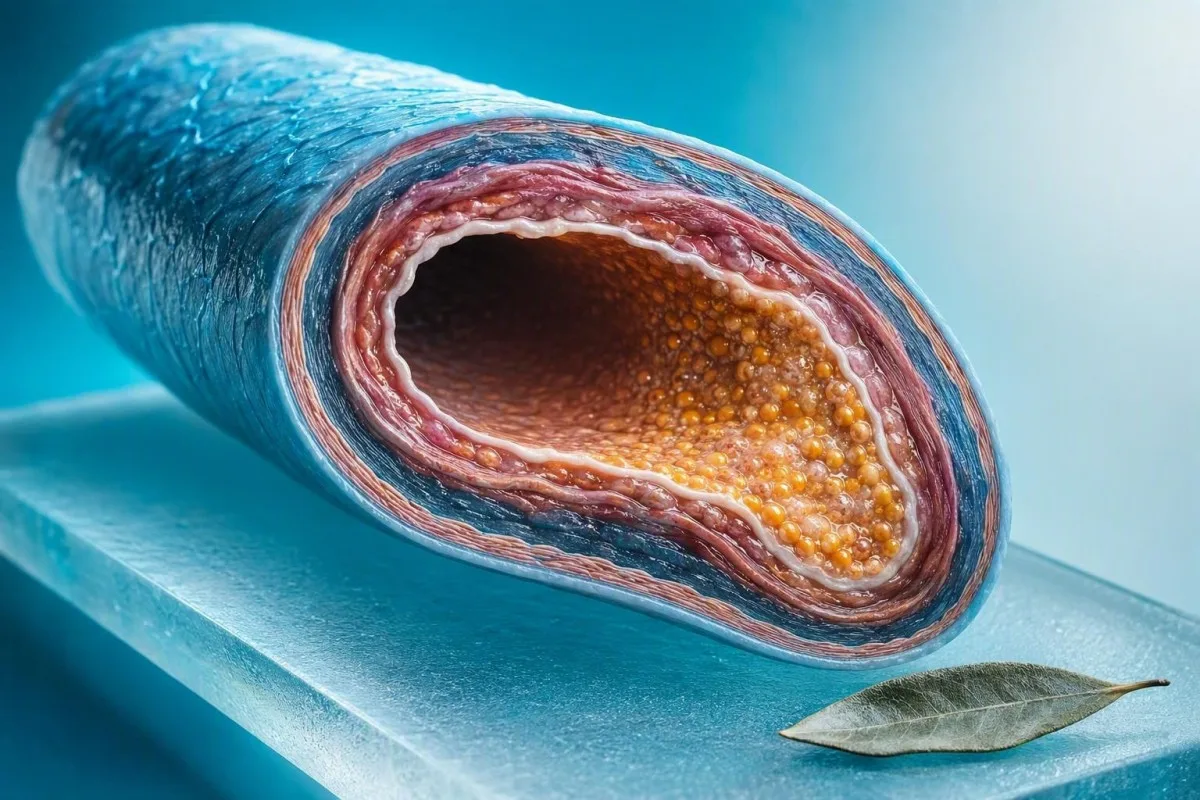
Most people with raised LDL feel entirely well. The concern is not how you feel today, but the quiet accumulation of cholesterol-containing particles in artery walls over years.


- Silent by nature: high LDL cholesterol usually causes no physical symptoms, even when LDL-C is 190 mg/dL (4.9 mmol/L) or higher.
- LDL-C threshold: an LDL-C level of 190 mg/dL (4.9 mmol/L) or above warrants prompt clinical assessment for severe hypercholesterolaemia and possible familial disease.
- Risk is cumulative: artery exposure to LDL particles over decades matters more than a single isolated result.
- ApoB count: ApoB can clarify particle-related risk, particularly when triglycerides are 200 mg/dL (2.3 mmol/L) or higher.
- Lp(a) test: measuring lipoprotein(a) once in adulthood can identify inherited risk that a standard lipid panel misses.
- Urgent symptoms differ: chest pressure, sudden breathlessness, weakness on one side, or speech difficulty need emergency care; they are not symptoms of LDL itself.
- Secondary causes: hypothyroidism, diabetes, kidney disease, menopause, and some medicines can raise LDL-C.
- Practical next step: discuss the whole risk picture—blood pressure, smoking, glucose, family history, ApoB, and LDL trend—not LDL-C alone.
Why High LDL Usually Causes No Symptoms
Yes—LDL cholesterol can be high without any symptoms at all. High LDL cholesterol symptoms are usually absent because LDL particles build up inside artery walls gradually rather than causing an immediate sensation, so a person can feel fit while their long-term cardiovascular risk rises.
LDL, or low-density lipoprotein cholesterol, transports cholesterol through the circulation; it does not cause tiredness, headaches, dizziness, or weight gain in a reliable way. In clinic, I have met people with LDL-C above 220 mg/dL (5.7 mmol/L) who cycle to work daily and have no clue anything is amiss. Their lack of symptoms is reassuring only in the very short term.
The biological issue is retention. ApoB-containing particles can cross the inner arterial lining, become trapped, and trigger a local tissue response that slowly forms plaque; this process may begin decades before angina or a stroke. The genetic reasons LDL rises are particularly relevant when a healthy lifestyle and a high result seem to contradict one another.
A normal physical examination does not rule out elevated LDL-C. Tendon xanthomas—firm cholesterol deposits over the Achilles tendon or knuckles—can occur in familial hypercholesterolaemia, but they are uncommon and usually signal longstanding, marked elevation rather than a useful early warning sign.
How LDL Raises Risk While You Feel Well
High LDL is dangerous because it increases the chance of atherosclerotic plaque, not because it produces a day-to-day symptom. The risk rises with both the LDL-C level and the number of years arteries are exposed to it.
An artery can enlarge outward as plaque develops, preserving blood flow until the narrowing is substantial. That compensatory remodeling is why a stress test, if one is performed early, may be normal even though prevention still matters. A sudden plaque disruption and clot formation can be the first visible event.
The Cholesterol Treatment Trialists' Collaboration pooled 27 trials and found that lowering LDL-C by 1 mmol/L, or 38.7 mg/dL, reduced major vascular events by roughly 22% over about 5 years (Baigent et al., 2010). That is compelling evidence for causation, although an individual's absolute benefit depends strongly on baseline risk.
Oxidation and particle retention are part of the mechanism, but an oxidized LDL result is not a replacement for standard risk assessment. Our explanation of oxidized LDL testing covers where that more specialised marker may add context and where it can overcomplicate a straightforward panel.
How a Lipid Panel Detects Silent LDL Elevation
A lipid panel detects high LDL before symptoms develop by measuring total cholesterol, HDL-C, triglycerides, and LDL-C. Non-fasting testing is acceptable for many adults, but a fasting repeat can help when triglycerides are high or a result will guide a treatment decision.
LDL-C is often calculated rather than directly measured. The older Friedewald calculation becomes unreliable when triglycerides are above 400 mg/dL (4.5 mmol/L), and even at lower values its accuracy can drift, especially after a meal; direct LDL testing can be useful in those situations.
As of August 2, 2026, I advise saving the actual values, units, fasting status, recent illness, and medicines rather than relying on a lab flag alone. Kantesti is an AI blood test analyzer that reads a complete lipid panel in its laboratory context and can organise longitudinal results in about 60 seconds after an upload.
A single result deserves confirmation if it is surprising, but not dismissal. The blood test biomarkers guide helps patients recognise which accompanying markers—glucose, thyroid results, kidney markers, and liver enzymes—can change the interpretation of an LDL result.
LDL Levels: What the Numbers Mean in Context
LDL-C below 100 mg/dL (2.6 mmol/L) is often described as optimal for people without established cardiovascular disease, but no single target fits every adult. A value of 190 mg/dL (4.9 mmol/L) or higher is a major threshold because it may represent severe primary hypercholesterolaemia.
Laboratory reference intervals tell you what is statistically common in a tested population; treatment targets reflect cardiovascular risk. Someone with diabetes, chronic kidney disease, or a previous heart attack usually needs a substantially lower LDL-C goal than a healthy 28-year-old with LDL-C of 135 mg/dL (3.5 mmol/L).
The 2018 AHA/ACC cholesterol guideline recommends evaluating adults with LDL-C at or above 190 mg/dL without waiting for a calculated 10-year risk score (Grundy et al., 2019). That threshold is not an emergency-room number, but it should prompt a clinician-led plan within weeks, not a vague recheck next year.
Sex-specific averages can be confusing during hormonal transitions. For an age and risk-based discussion, see LDL targets for men and bring the full panel rather than total cholesterol alone.
Which Risk Factors Make Prompt Assessment More Important
High LDL needs faster assessment when it occurs alongside diabetes, smoking, high blood pressure, chronic kidney disease, or premature cardiovascular disease in close relatives. These factors multiply risk rather than simply adding a few points to it.
A parent, sibling, or child with a heart attack, coronary stent, or sudden cardiac death before age 55 in men or 65 in women is a risk-enhancing family history. I pay particular attention when LDL-C is above 160 mg/dL (4.1 mmol/L) in this setting, even when the person is young enough for a calculator to estimate a deceptively low 10-year risk.
Diabetes and LDL are an especially consequential pairing because elevated glucose can damage the arterial lining while ApoB-containing particles supply the material for plaque. Untreated blood pressure of 140/90 mmHg or above also increases arterial stress; our guide to secondary causes of hypertension explains which laboratory clues deserve attention.
Pregnancy, autoimmune disease, chronic inflammatory conditions, South Asian ancestry, early menopause, and long-term HIV treatment can change the risk conversation too. A calculator is useful, but it cannot hear the family story or account perfectly for every risk-enhancing factor.
When High LDL Suggests Familial Hypercholesterolaemia
Familial hypercholesterolaemia is more likely when untreated LDL-C is 190 mg/dL (4.9 mmol/L) or higher in adults, especially with early heart disease in relatives. It is an inherited condition, so a normal body weight and an excellent diet do not exclude it.
Heterozygous familial hypercholesterolaemia affects roughly 1 in 250 people, although estimates vary by population and testing strategy. In my experience, the missed clue is often an old lipid result from adolescence or a relative described as having “bad cholesterol” rather than a documented diagnosis.
Ask whether first-degree relatives have had LDL-C above 190 mg/dL, bypass surgery, stents, or strokes at a young age. Children in affected families may need testing well before adulthood; child cholesterol screening explains age-based decisions and why cascade testing can be lifesaving.
Genetic testing can support a diagnosis, but a negative result does not eliminate inherited risk because current panels do not identify every causal variant. Clinicians generally treat the LDL level, family pattern, and cardiovascular history—not a genetic report in isolation.
Medical Conditions and Medicines That Can Raise LDL
Hypothyroidism, nephrotic syndrome, cholestatic liver disease, diabetes, and some medicines can raise LDL-C. Finding a secondary cause matters because correcting it may reduce LDL, although it does not always remove the need for cardiovascular prevention.
Overt hypothyroidism commonly raises LDL-C by reducing hepatic LDL receptor activity. A raised TSH with low free T4 is more informative than a borderline TSH alone; our review of high free T4 results also shows why thyroid results must be read as a pattern.
Nephrotic-range protein loss can raise both LDL-C and triglycerides, while chronic kidney disease changes vascular risk even with modest LDL elevations. An eGFR below 60 mL/min/1.73 m² persisting for 3 months meets a chronic kidney disease definition and should alter the prevention discussion.
Corticosteroids, ciclosporin, some antiretroviral medicines, atypical antipsychotics, and certain hormonal treatments may affect lipids. Do not stop a prescribed medicine because of a lipid panel; the safer move is to ask the prescriber whether timing, dose, or an alternative is appropriate.
Why ApoB, Non-HDL Cholesterol, and Lp(a) Matter
ApoB estimates the number of atherogenic lipoprotein particles, while non-HDL cholesterol captures cholesterol in all potentially plaque-forming particles. These markers are most useful when LDL-C seems reassuring but triglycerides, insulin resistance, or family history suggest hidden risk.
Each LDL, VLDL remnant, and lipoprotein(a) particle generally carries one ApoB molecule, so ApoB approximates particle number. An ApoB of 130 mg/dL or higher is a risk-enhancing factor in the AHA/ACC guideline, particularly when triglycerides are persistently 200 mg/dL (2.3 mmol/L) or above (Grundy et al., 2019).
Non-HDL cholesterol is simply total cholesterol minus HDL-C and remains valid without fasting. It is often more dependable than calculated LDL-C when triglycerides are raised; the remnant cholesterol guide explains why this is not just a mathematical footnote.
Lp(a) is largely inherited and changes little with diet or exercise. The 2019 ESC/EAS guideline advises measuring it at least once in each adult's lifetime, with levels above 50 mg/dL or 125 nmol/L generally considered a risk-enhancing range (Mach et al., 2020).
How Clinicians Estimate Your Overall Heart Risk
Clinicians estimate cardiovascular risk by combining age, sex, LDL-C, HDL-C, blood pressure, diabetes, smoking status, kidney function, and family history. An LDL result is a risk factor, not a complete diagnosis or a prediction of when an event will happen.
Risk calculators estimate probability over 10 years, so they can underestimate lifetime risk in a 35-year-old with LDL-C of 175 mg/dL (4.5 mmol/L) and a strong family history. Conversely, a 76-year-old can have a high calculated risk even with LDL-C of 105 mg/dL (2.7 mmol/L), simply because age is powerful.
Coronary artery calcium scanning may help selected adults aged roughly 40 to 75 years when the decision about medication remains uncertain after a careful discussion. A calcium score of zero can sometimes support deferring a statin, but not usually in smokers, people with diabetes, or those with a strong premature family history.
Kantesti is an AI blood test interpretation platform that connects lipid values with related laboratory patterns and longitudinal change; it does not diagnose coronary artery disease or replace a clinician's assessment. Our medical validation approach describes why any automated interpretation should be reviewed against clinical context.
When High LDL Needs Fast Review—and When It Is an Emergency
An isolated high LDL result rarely needs emergency care, but LDL-C of 190 mg/dL (4.9 mmol/L) or higher should be reviewed promptly. Emergency assessment is needed for symptoms suggesting a heart attack or stroke, not for LDL elevation alone.
Call emergency services for new central chest pressure lasting more than a few minutes, severe shortness of breath, fainting, sudden facial droop, one-sided weakness, or new difficulty speaking. These symptoms need immediate assessment even if your last lipid panel was normal, because LDL is only one part of cardiovascular risk.
Arrange a timely primary-care or lipid-clinic appointment if LDL-C is at least 190 mg/dL, non-HDL cholesterol is at least 220 mg/dL (5.7 mmol/L), or a close relative had premature vascular disease. I would also move quickly when a lipid result rises sharply from a prior baseline, as that can uncover thyroid, kidney, medication, or dietary changes.
Palpitations are not a typical LDL symptom, but they deserve their own evaluation when accompanied by dizziness, chest discomfort, or breathlessness. Our heart palpitations blood-test guide explains the separate diagnostic pathway.
Lifestyle Changes That Meaningfully Lower LDL Cholesterol
Replacing saturated fats with unsaturated fats, increasing soluble fibre, and improving weight or activity where relevant can lower LDL-C. Lifestyle treatment is valuable at every LDL level, but severe inherited elevation often needs medicine as well.
A practical dietary swap is replacing butter, fatty processed meats, coconut oil, and frequent full-fat cheese with olive or rapeseed oil, nuts, seeds, beans, and fish where appropriate. Soluble fibre from oats, barley, pulses, and psyllium can lower LDL-C by about 5% to 10% when used consistently; 5 to 10 g of psyllium daily is a common evidence-based range, provided fluids and medicines are timed sensibly.
Weight loss can improve LDL-C, triglycerides, glucose, and blood pressure, but the LDL response varies considerably. A lean person with LDL-C of 210 mg/dL (5.4 mmol/L) has not “failed” at lifestyle; inherited receptor biology may be the main driver, which is an emotionally important distinction.
A Mediterranean-style pattern is more sustainable for most patients than an extreme cleanse. See our practical review of Mediterranean diet markers for which laboratory trends are worth rechecking after 8 to 12 weeks.
When Medication Becomes Part of LDL Treatment
Statins are first-line medicines for lowering LDL-C because they reduce cardiovascular events as well as the laboratory number. The usual decision depends on overall risk, LDL-C level, age, pregnancy plans, other medicines, and patient preferences.
Moderate-intensity statins usually lower LDL-C by about 30% to 49%, while high-intensity regimens generally lower it by 50% or more. Atorvastatin 40 to 80 mg and rosuvastatin 20 to 40 mg are typical high-intensity doses, though the best choice is not always the highest dose.
Muscle aches occur in clinical practice, but true statin-associated muscle injury with markedly raised creatine kinase is uncommon. If symptoms occur, clinicians often pause treatment, check for hypothyroidism or drug interactions, and try a lower dose, a different statin, or a non-statin option rather than concluding that every lipid medicine is intolerable.
Supplements should not be presented as equivalent to proven lipid-lowering therapy. Some products have interactions or quality concerns; our supplement safety guide for cholesterol explains where caution is justified.
When to Repeat Lipids and How to Read a Trend
Most clinicians repeat a lipid panel 4 to 12 weeks after starting or changing LDL-lowering treatment, then every 3 to 12 months once stable. The right interval depends on the degree of risk, treatment changes, and whether the result is likely to alter management.
Biological variation is real: LDL-C can shift with weight change, thyroid status, acute illness, menopause, diet pattern, and laboratory method. A 10 mg/dL (0.26 mmol/L) difference is often less meaningful than a sustained 40 mg/dL (1.0 mmol/L) rise across comparable tests.
When I review a panel, I compare LDL-C with non-HDL-C, ApoB where available, triglycerides, HbA1c, TSH, creatinine, medication adherence, and timing. Kantesti is an AI-powered blood test analysis tool that can place these results side by side, which is often more useful than interpreting one flagged LDL value in isolation.
Use the same laboratory where practical and note whether the test was fasting. The longitudinal blood-test guide explains how to distinguish an ordinary fluctuation from a trend worth taking to a clinician.
A Practical Plan for LDL That Is High but Symptom-Free
If your LDL is high but you have no symptoms, ask for a structured cardiovascular risk review rather than waiting for symptoms. Bring your lipid values, previous results, family history, current medicines, blood pressure readings, and questions about ApoB or Lp(a).
Useful questions include: Is this result likely persistent? Do I meet criteria for familial hypercholesterolaemia? Should we check ApoB, Lp(a), HbA1c, TSH, urine albumin, or a direct LDL measurement? If medication is offered, ask what LDL reduction is expected and when the response will be checked.
Dr. Thomas Klein’s practical advice is to avoid two unhelpful extremes: panicking over a mildly raised LDL-C of 130 mg/dL (3.4 mmol/L) without considering risk, or dismissing LDL-C of 195 mg/dL (5.0 mmol/L) because you run 10 kilometres every weekend. Prevention is rarely about one number; it is about the pattern and the years ahead.
Kantesti’s clinical content is developed with physician oversight, and our Medical Advisory Board supports evidence-led interpretation standards. If symptoms of possible heart attack or stroke occur, skip online interpretation and seek emergency care.
Frequently Asked Questions
Can high LDL cholesterol cause symptoms?
High LDL cholesterol usually causes no symptoms, even when the LDL-C level is 190 mg/dL (4.9 mmol/L) or higher. LDL particles contribute to plaque formation gradually inside artery walls, which does not create a feeling that a person can reliably notice. Chest pain, breathlessness, or stroke symptoms can occur when cardiovascular disease is already present, but they are not direct high LDL cholesterol symptoms. A lipid panel is therefore the dependable way to identify raised LDL before complications develop.
Is high LDL cholesterol dangerous if I feel healthy?
High LDL cholesterol can be dangerous despite feeling healthy because cardiovascular risk reflects cumulative exposure to plaque-forming particles over years. LDL-C of 190 mg/dL (4.9 mmol/L) or above warrants prompt medical assessment, while lower levels may still matter when diabetes, smoking, high blood pressure, kidney disease, or early heart disease in the family are present. A meta-analysis by Baigent et al. found that each 1 mmol/L reduction in LDL-C lowered major vascular events by about 22% over roughly 5 years. Feeling well is a reason to act preventively, not a reason to ignore a persistent result.
Why is my LDL cholesterol high but I have no symptoms?
LDL cholesterol can be high without symptoms because its main effect is slow particle retention and plaque development in artery walls rather than an immediate disturbance of how you feel. Genetics, diet composition, hypothyroidism, diabetes, kidney disease, menopause, and certain medicines can all contribute. Adults with untreated LDL-C at or above 190 mg/dL (4.9 mmol/L) should be assessed for familial hypercholesterolaemia and secondary causes. A clinician can interpret LDL alongside blood pressure, glucose, triglycerides, ApoB, and family history.
What LDL level requires urgent attention?
An LDL-C level of 190 mg/dL (4.9 mmol/L) or higher needs prompt outpatient clinical review, but it is usually not an emergency by itself. Same-day emergency care is appropriate for new chest pressure, severe breathlessness, fainting, facial droop, one-sided weakness, or speech difficulty, regardless of the LDL result. LDL-C of 160 to 189 mg/dL (4.1 to 4.8 mmol/L) also deserves timely assessment when there is a strong family history or other risk factors. Do not wait for physical symptoms before arranging a review.
Should I fast before repeating a high LDL test?
Most lipid panels can be performed without fasting, and non-fasting LDL-C is useful for routine cardiovascular risk assessment. A fasting repeat is often helpful when triglycerides are above 400 mg/dL (4.5 mmol/L), when calculated LDL-C may be inaccurate, or when a clinician needs a clearer baseline before treatment. Keep exercise, alcohol intake, supplements, and acute illness in mind because they can affect parts of the panel. Ask the ordering clinician whether the laboratory uses calculated or direct LDL-C.
Can diet alone lower LDL cholesterol?
Diet can lower LDL-C, often by 5% to 15%, when saturated fats are replaced with unsaturated fats and soluble fibre intake rises. Adding 5 to 10 g daily of psyllium, beans, oats, barley, nuts, and unsaturated oils can support a meaningful reduction over 8 to 12 weeks. However, diet alone may not bring LDL-C below target in familial hypercholesterolaemia or when baseline LDL-C is 190 mg/dL (4.9 mmol/L) or higher. Medication and lifestyle are often complementary rather than competing treatments.
Get AI-Powered Blood Test Analysis Today
Join over 2 million users worldwide who trust Kantesti for instant, accurate lab test analysis. Upload your blood test results and receive comprehensive interpretation of 15,000+ biomarkers in seconds.
📚 Referenced Research Publications
Klein, T., Mitchell, S., & Weber, H. (2026). Kantesti LTD. (2026). Women's Health Guide: Ovulation, Menopause & Hormonal Symptoms. Figshare. ResearchGate: https://www.researchgate.net/ Academia.edu: https://www.academia.edu/ DOI. Kantesti AI Medical Research.
Klein, T., Mitchell, S., & Weber, H. (2026). Kantesti LTD. (2026). Multilingual AI Assisted Clinical Decision Support for Early Hantavirus Triage: Design, Engineering Validation, and Real-World Deployment Across 50,000 Interpreted Blood Test Reports. Figshare. ResearchGate: https://www.researchgate.net/ Academia.edu: https://www.academia.edu/ DOI. Kantesti AI Medical Research.
📖 External Medical References
⚕️ Medical Disclaimer
This article is for educational purposes only and does not constitute medical advice. Always consult a qualified healthcare provider for diagnosis and treatment decisions.
E-E-A-T Trust Signals
Experience
Physician-led clinical review of lab interpretation workflows.
Expertise
Laboratory medicine focus on how biomarkers behave in clinical context.
Authoritativeness
Written by Dr. Thomas Klein with review by Dr. Sarah Mitchell and Prof. Dr. Hans Weber.
Trustworthiness
Evidence-based interpretation with clear follow-up pathways to reduce alarm.