Faodaidh dà sheòrsa ALDOB a dh’adhbhraicheas galair am breithneachadh a dhearbhadh—ach tha an seòrsachadh agus an t-àite aca cudromach. Tha deuchainn anail a’ freagairt ceist eadar-dhealaichte, agus faodaidh dùbhlan fructóis a dh’aona-ghnothach èiginn mheidigeach adhbharachadh.

Prìomh phuingean
- Dearbhadh mar as trice feumar 2 chaochladh ALDOB phatogineach no a dh’fhaodadh a bhith phatogineach a bheir buaidh air leth-bhreacan mu choinneamh a chèile den ghine, agus am mìneachadh a rèir na h-eachdraidh clionaigich.
- Caochlaidhean mì-chinnteach cha dhearbhaich iad neo-fhulangas fructóis oighreachail; feumar fhathast mìneachadh speisealaiche ma tha 1 caochladh phatogineach agus 1 VUS ann.
- Toraidhean giùlain mar as trice aithnichidh iad 1 leth-bhreac ALDOB air a bheil buaidh agus chan eil iad, leotha fhèin, a’ mìneachadh chomharran neo-fhulangas fructóis oighreachail.
- Oighreachas tha e a’ leantainn pàtran fèin-sòghail cùlaigich: tha teansa 25% aig 2 phàrant a tha nan luchd-giùlain gum bi leanabh air a bheil a’ ghalar aca anns gach torrachas.
- Suidheachaidhean eadar-dhealaichte feumaidh iad deuchainnean eadar-dhealaichte: bidh deuchainn ALDOB a’ sgrùdadh fàilligeadh oighreachail ann am meata-bolachd fructóis, agus bidh deuchainn anail a’ sgrùdadh droch-ghabhail anns a’ chaolan.
- Dùbhlan sàbhailteachd a’ ciallachadh nach bi frùctós air a thoirt a dh’aona ghnothach aig an taigh; faodaidh dùbhlain frùctós beòil no intravenous mòr-thuiteam ann an siùcar fala agus milleadh air buill-bodhaig adhbharachadh.
- Ceimigeachd ghnàthach faodaidh i duilgheadasan fhoillseachadh, ach chan urrainn eadhon toradh glùcois de 90 mg/dL neo-fhulangas shealbhaichte do fhrùctós a chur às àicheadh ann an cuideigin a tha a’ seachnadh frùctós.
- Làimhseachadh feumar frùctós, sucros agus sorbitol a sheachnadh fo stiùireadh eòlaiche, còmhla ri sgrùdadh air stuthan-taice ann an cungaidhean agus sgrùdadh beathachaidh.
Cuin a dhearbhas deuchainn gine ALDOB am breithneachadh?
A deuchainn airson neo-fhulangas shealbhaichte do fhrùctós faodaidh i an suidheachadh a dhearbhadh nuair a dh’aithnicheas i 2 dhreach ALDOB phataigineach no dualtach a bhith phataigineach air dà lethbhreac eadar-dhealaichte den ghine, a tha a’ freagairt ris an dealbh chlionaigeach. Chan eil caochladh le brìgh neo-chinnteach ga dhearbhadh. Faodaidh dùbhlain frùctós a dh’aona ghnothach a bhith cunnartach agus cha bu chòir feuchainn orra aig an taigh idir.
Neo-fhulangas shealbhaichte do fhrùctós, no HFI, ’s e neo-chomas sealbhaichte a th’ innte frùctós a mheatabolaigeadh gu sàbhailte an dèidh dha a dhol a-steach do na ceallan. Chan e a’ cheist dhiagnostach dìreach a bheil iomradh air ALDOB ann an aithisg: ’s e a bheil caochlaidhean air an dà lethbhreac den ghine a dh’fhaodas easbhaidh aldolase B adhbharachadh, seach 1 lorg tuiteamach no mì-chinnteach.
Faodaidh dearbhadh moileciuil seachnadh a dhèanamh air seann rannsachaidhean ionnsaigheach agus deuchainnean cunnartach stèidhichte air nochdadh. Tha an lèirmheas le Ali et al. (1998) a’ mìneachadh bunait mheatabolach agus cunnartan diagnosachd HFI; bidh deuchainnean ginteil an latha an-diugh a’ sgrùdadh na h-uireasbhaidh shealbhaichte gun iarraidh air an neach frùctós ithe no ath-bhualadh a bh’ ann roimhe ath-riochdachadh.
Mar eisimpleir, dh’fhaodadh gum biodh 2 dhreach a tha air an seòrsachadh gu soilleir mar adhbharan galair aig inbheach beachd-bharail a tha air biadh milis a sheachnadh bho òige, ach gum biodh einnseaman an grùthain àbhaisteach an-diugh. Tha an co-mheasgachadh sin so-chreidsinneach oir tha seachnadh sa bhiadh a’ lùghdachadh na nochdaidh; chan eil ceimigeachd làithreach àbhaisteach a’ cur às do uireasbhaidh ginteil a mhaireas fad beatha no a’ fàgail dùbhlan mheasan deuchainneach sàbhailte.
Tha Kantesti na Anailisiche deuchainn fala AI a tha a’ cuideachadh le bhith a’ mìneachadh ceimigeachd àbhaisteach còmhla ri breithneachadh ginteil clàraichte; cha bhith sinn a’ dèanamh sreathachadh ALDOB no a’ dearbhadh atharrachaidhean gu neo-eisimeileach. Ar cùl-fhiosrachadh companaidh tha a’ mìneachadh ar dreuchd, agus tha an slighe-deuchainn Pompe a’ sealltainn suidheachadh eile far a bheil fianais mhoileciuil agus bith-cheimigeach a’ freagairt cheistean eadar-dhealaichte.
Dè nì an gine ALDOB ann am meata-bolachd fructóis?
Tha ALDOB a’ còdachadh aldolase B, einnsein a tha an sàs ann am meata-bolachd frùctais anns an adha, anns na dubhagan agus anns a’ chaolan bheag. Ann an HFI, tha giullachd mhì-fhreagarrach a’ leigeil le frùctas-1-fosfáit cruinneachadh, a’ glacadh fosfáit agus a’ cur dragh air pròiseasan a tha an urra ri lùth, a’ gabhail a-steach cinneasachadh glùcois.
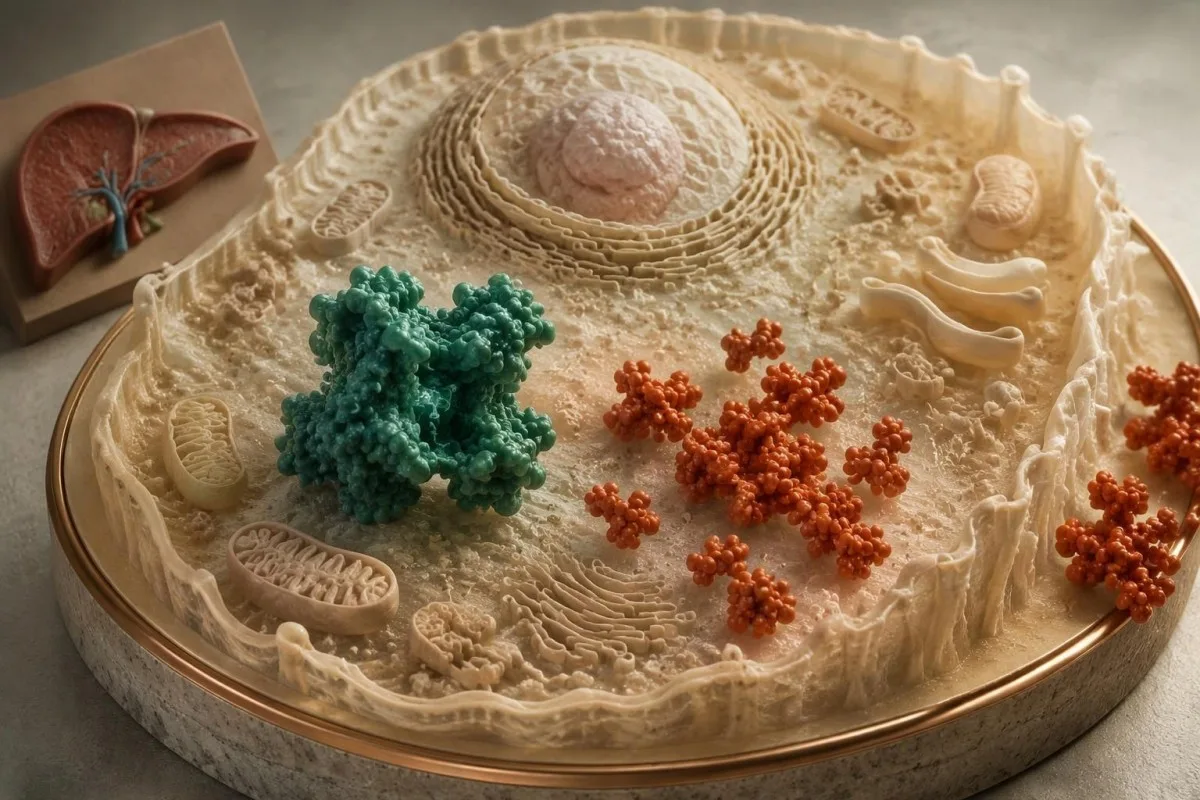
Tha an àireamh ann an frùctas-1-fosfáit ag ainmeachadh a’ mhoileciuill, chan e sgòr cho dona ’s a tha e ann an obair-lann. Faodaidh fructokinase fhathast frùctas a tha a’ tighinn a-steach a chur ri fosfáit nuair a tha aldolase B easbhaidheach, agus mar sin tha an t-slighe a’ leantainn oirre a’ cleachdadh stòrasan suas an abhainn bhon bhacadh; tha sin a’ mìneachadh carson a dh’fhaodas dìreach barrachd frùctais a chur ris an duilgheadas a dhèanamh nas miosa, seach a bhith a’ nochdadh neo-fhulangas gun chron.
Sucrose contains 2 linked sugars: glucose and fructose. Sorbitol can also be converted to fructose, so an exposure history limited to fruit misses table sugar, sweetened medicines, and some sugar-free products; all 3 substances belong in the discussion with a metabolic specialist.
HFI is not an IgE-mediated food allergy, and a conventional allergy panel does not measure aldolase B function. A person can react metabolically without hives or wheezing, while 1 isolated episode of nausea after fruit remains too nonspecific to establish an inherited enzyme disorder.
A routine serum aldolase result is not an ALDOB gene test and cannot confirm HFI. Our explanation of serum aldolase testing concerns a different laboratory use—particularly muscle-related investigation—so neither an elevated result nor a value within range should be substituted for molecular testing.
Cò a bu chòir measadh fhaighinn airson neo-fhulangas fructóis oighreachail?
ALDOB testing is most useful when symptoms or family history suggest HFI, especially vomiting, lethargy, hypoglycemia, or liver abnormalities after fructose-containing foods. A lifelong aversion to sweets can be a useful clue, but it is not diagnostic on its own.

Symptoms often become apparent when fructose or sucrose enters an infant's diet, frequently around complementary feeding at roughly 4–6 months. The exact age depends on actual exposure, including formula ingredients or medicines; age alone cannot distinguish HFI from infection, reflux, or other feeding problems.
A hypothetical 28-year-old who has always refused desserts may report becoming unwell only after a newly introduced sweetened supplement. That history deserves more attention than a generic label of irritable bowel syndrome because longstanding self-protection can conceal HFI until an unfamiliar product bypasses the person's usual food choices.
Document previous exposures rather than recreating them: record the product, approximate amount, timing, symptoms, and any contemporaneous laboratory values. A glucose of 45 mg/dL, approximately 2.5 mmol/L, during illness would be a serious clue, but our guide to adhbharan airson glùcois ìosal explains why other causes still need evaluation.
Family history changes the testing threshold even before symptoms develop. A sibling of an affected child has a different risk from someone with 1 distant relative who dislikes fruit; an asymptomatic at-risk infant should be assessed promptly through clinical genetics or a metabolic service rather than waiting for a dietary reaction.
Dè an deuchainn ghinteil ALDOB a bu chòir dhut iarraidh?
A diagnostic ALDOB gene test generally uses sequencing, with deletion and duplication analysis considered according to the laboratory method and initial findings. Testing only a few common variants is narrower than examining the gene more comprehensively and may leave a suspected diagnosis unresolved.
Ask 3 practical questions before testing: does the assay examine the coding regions and relevant splice boundaries, does it assess deletions or duplications, and what does it explicitly not detect? Some laboratories bundle these methods; others offer copy-number testing separately, so identical-looking order names may conceal different coverage.
Targeted familial testing is efficient when a relative's 2 disease-causing variants are already documented. By contrast, a limited common-variant screen may be a poor stopping point in someone with convincing symptoms, especially when their ancestry or family variant spectrum differs from the population used to design the screen.
Testing can use DNA obtained from an appropriately collected clinical sample, sometimes including saliva or a cheek swab if the laboratory accepts it. No fructose loading is required, and fasting is usually unnecessary for DNA analysis itself; check separate preparation instructions if routine chemistry is collected at the same appointment.
A broader metabolic gene panel may be appropriate when the presentation does not fit HFI cleanly, but more genes also create more opportunities for uncertain findings. The Gaucher diagnostic sequence provides a useful comparison: clinicians select tests to answer a specific biological question, not merely to maximize the number of genes reported.
Ciamar a bu chòir dhut toraidhean deuchainn ghinteil ALDOB a leughadh?
Leugh ALDOB genetic test results by checking the variant classification, zygosity, and whether 2 relevant variants affect opposite gene copies. The words positive, detected, or abnormal are insufficient without those details and the assay's limitations.
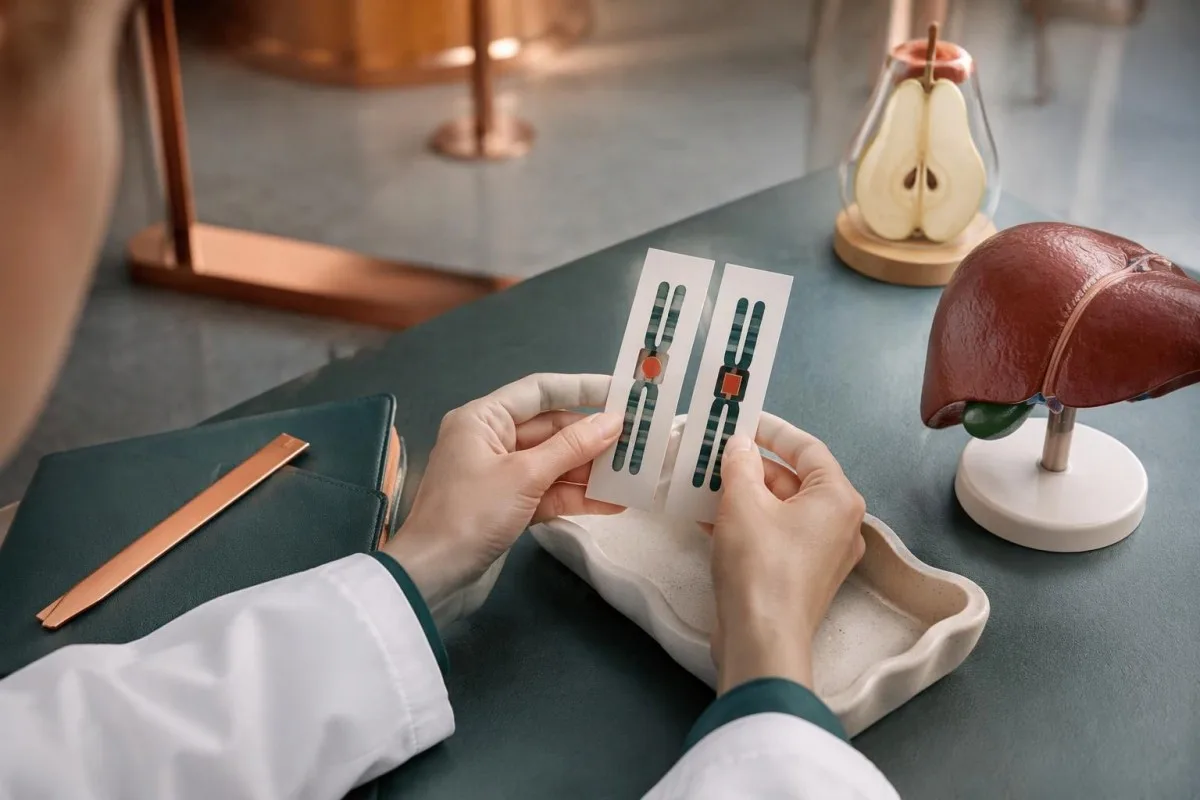
Clinical laboratories commonly use 5 variant categories: pathogenic, likely pathogenic, uncertain significance, likely benign, and benign. These categories describe evidence about a variant's relationship to disease; they do not provide a five-step scale of how sick a person is or how much fructose they can tolerate.
A homozygous result usually means the same variant is present on both copies, whereas compound heterozygous describes 2 different variants affecting opposite copies. A single heterozygous pathogenic finding generally supports carrier status, although a symptomatic person may still need investigation for a second change the assay did not detect.
One report may use an HGVS description such as c.448G>C, p.Ala150Pro; older literature may describe the protein change with different numbering. Compare the DNA change, protein change, and reference transcript together rather than deciding that 2 differently formatted names necessarily represent different variants.
Save the complete report, including methodology, classification date, and limitations—not only the summary page. Our Alport genetic report guide explains the broader reason this matters: inheritance rules and variant interpretation depend on the specific gene, so conclusions from another inherited disorder cannot simply be transferred to ALDOB.
A bheil caochladh ALDOB le brìgh neo-chinnteach a’ ciallachadh HFI?
An ALDOB variant of uncertain significance, or VUS, does not confirm or exclude HFI. A report containing 1 pathogenic variant and 1 VUS remains diagnostically unresolved unless additional evidence supports reclassification and the variants' arrangement is established.
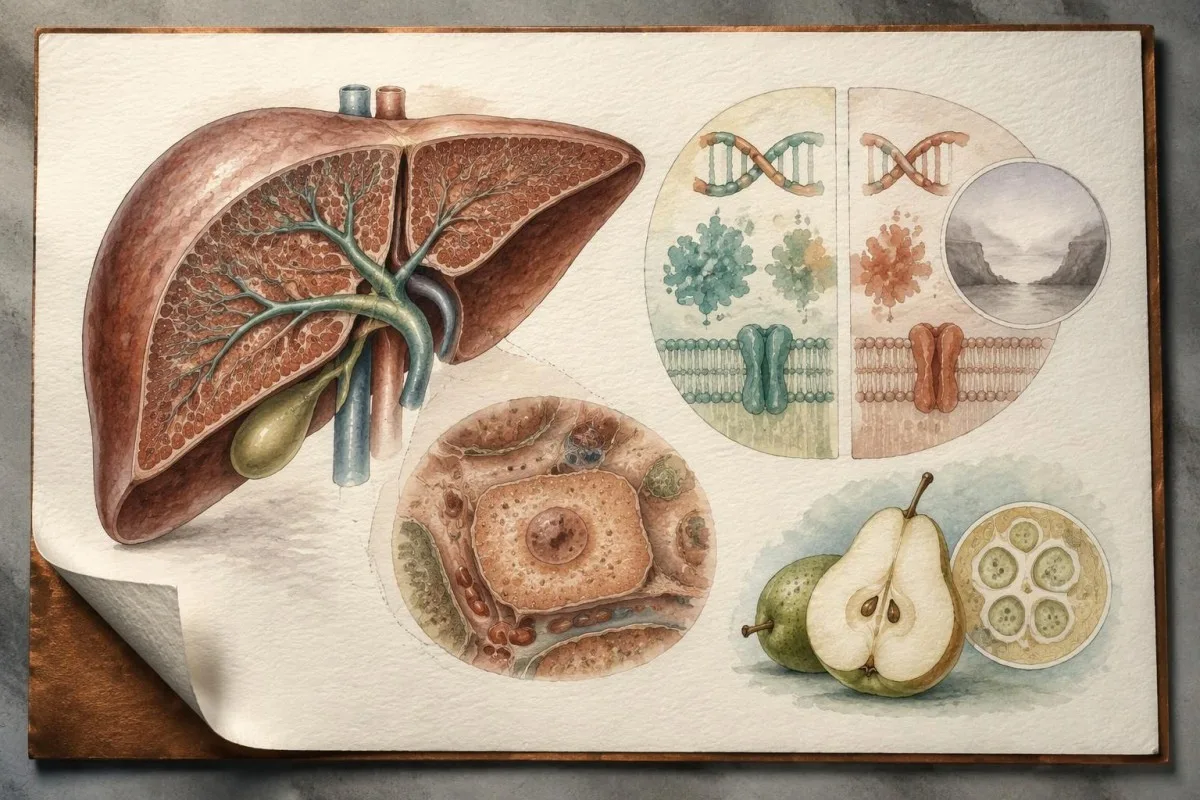
The ACMG/AMP recommendations state that a VUS should not be used for clinical decision-making as though it were pathogenic (Richards et al., 2015). This does not mean ignoring symptoms: 2 separate questions remain—whether the molecular diagnosis is established, and whether precautionary care is justified while a convincing clinical history is investigated.
Segregation testing asks whether a variant tracks with disease or clarifies which parental copy it occupies. A functional assay asks whether the change disrupts the gene product; these are 2 different evidence types, and neither automatically proves pathogenicity unless the assay or family evidence is sufficiently informative.
For example, a hypothetical child has 1 known pathogenic ALDOB variant and 1 rare missense VUS. Finding the changes on opposite copies improves the inheritance interpretation but does not make the VUS disease-causing; rarity, computer predictions, and an in-trans arrangement must still be weighed within formal classification criteria.
Ask the laboratory or genetics service who manages reanalysis and whether a review after 12–24 months would be useful for your particular result. That is a practical interval, not a universal guideline; our uncertain genetic results guide also explains why updated evidence can change classification without changing the person's DNA.
An urrainn do dheuchainn ALDOB àicheil neo-fhulangas fructóis oighreachail a chur às?
A negative ALDOB test reduces the likelihood of HFI but does not always exclude it, especially when the assay examined only common variants or did not assess relevant structural changes. The strength of a negative result depends on coverage and the original clinical suspicion.
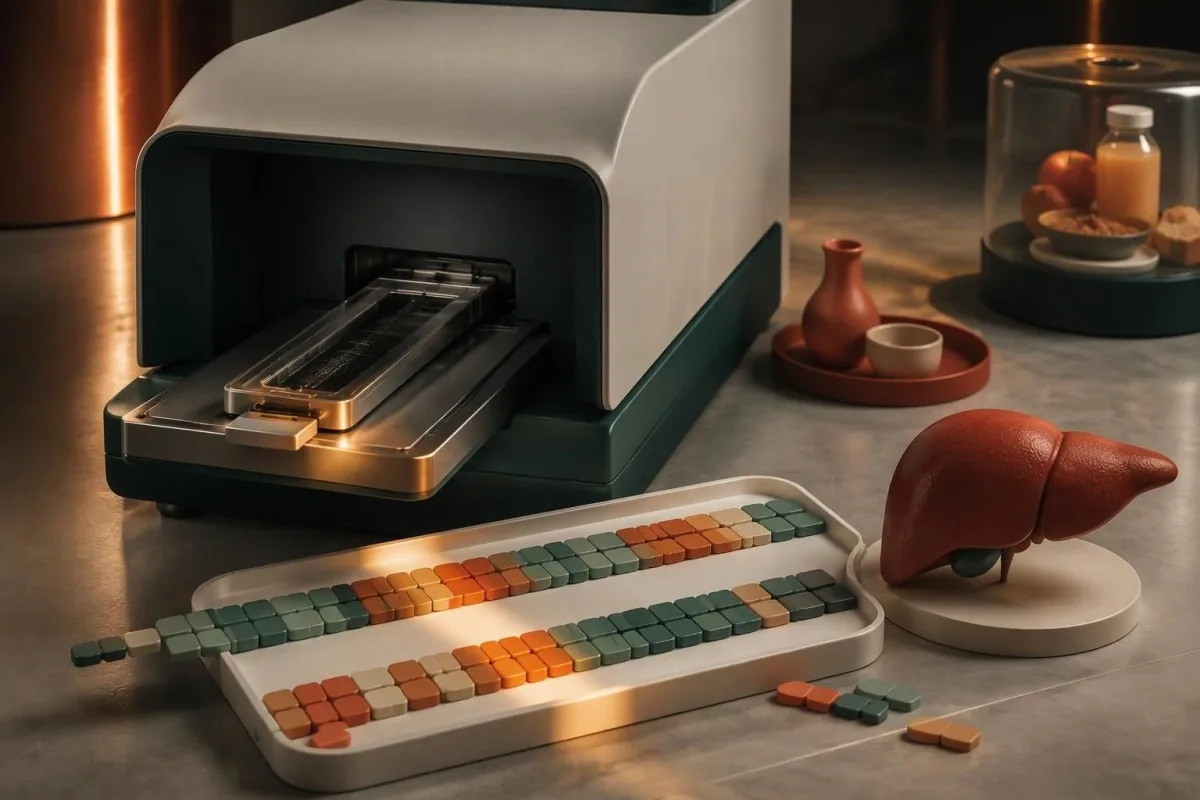
Zero detected variants means no reportable findings were identified by that method—not that every possible ALDOB change was examined. Coding-region sequencing, copy-number analysis, and assessment of deep intronic or regulatory changes have different capabilities; the report's limitations section should identify which possibilities remain outside the assay.
A hypothetical person with 1 pathogenic variant on a common-variant screen and a strong exposure-linked history should not be reassured solely by a carrier label. The next question is whether comprehensive sequencing and appropriate deletion/duplication analysis could identify a second variant, rather than whether the person can prove symptoms by eating fruit.
A well-covered negative test and a weakly suggestive history may appropriately shift attention toward malabsorption or another diagnosis. There is no single percentage for the residual risk after all negative ALDOB tests; our stiùireadh mu chrìochan sgrìonaidh luchd-giùlain illustrates why assay-specific blind spots matter.
Tha Kantesti na àrd-ùrlar mìneachaidh deuchainn fala AI, not a genetic testing laboratory, so a normal chemistry panel or AI explanation cannot overrule a specialist's concern about missed variants. Our stiùireadh teicneòlais AI describes the interpretation workflow; diagnostic DNA coverage remains the issuing laboratory's responsibility.
Carson a tha caochlaidhean ALDOB ann an trans agus ann an cis cudromach?
In trans means 2 variants lie on opposite gene copies; ann an cis means they lie together on the same copy. Because HFI is autosomal recessive, 2 pathogenic findings in cis do not by themselves establish that both ALDOB copies are affected.
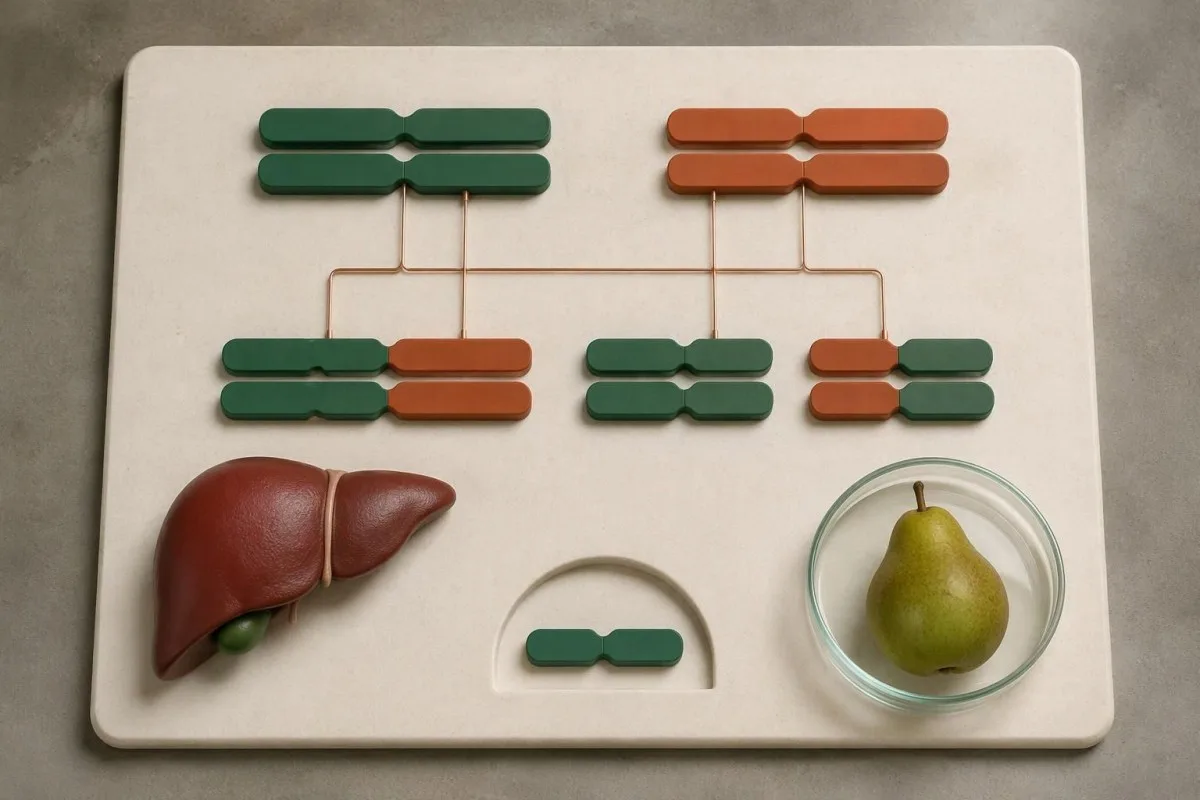
Each person usually has 2 ALDOB copies, one inherited from each biological parent. If variant A and variant B occupy the same inherited copy, the other copy may remain functional; simply counting two variant names can therefore produce the wrong conclusion about an autosomal recessive diagnosis.
Consider a hypothetical report listing 2 heterozygous pathogenic variants but stating that phase is unknown. If parental testing shows A came from one parent and B from the other, the findings support an in-trans arrangement; if both came together from one parent, the interpretation changes and further evaluation may be needed.
Parental testing is not the only way to establish phase: some sequencing methods can resolve it directly when the variants and read structure permit. Ask whether the laboratory has already established phase before paying for 2 additional family tests, and distinguish an experimentally determined result from an assumption based on population data.
Family results must still be interpreted alongside variant classification and symptoms. Our MEFV result interpretation guide highlights another gene where counting findings alone can mislead; for ALDOB, the decisive combination is disease-causing evidence plus the appropriate two-copy arrangement.
Dè tha toraidhean ALDOB a’ ciallachadh do chloinn agus do pheathraichean is bhràithrean?
HFI follows autosomal recessive inheritance: when both parents carry a disease-causing ALDOB variant, each pregnancy has a 25% chance of an affected child, a 50% chance of a carrier, and a 25% chance of a child inheriting neither familial variant.
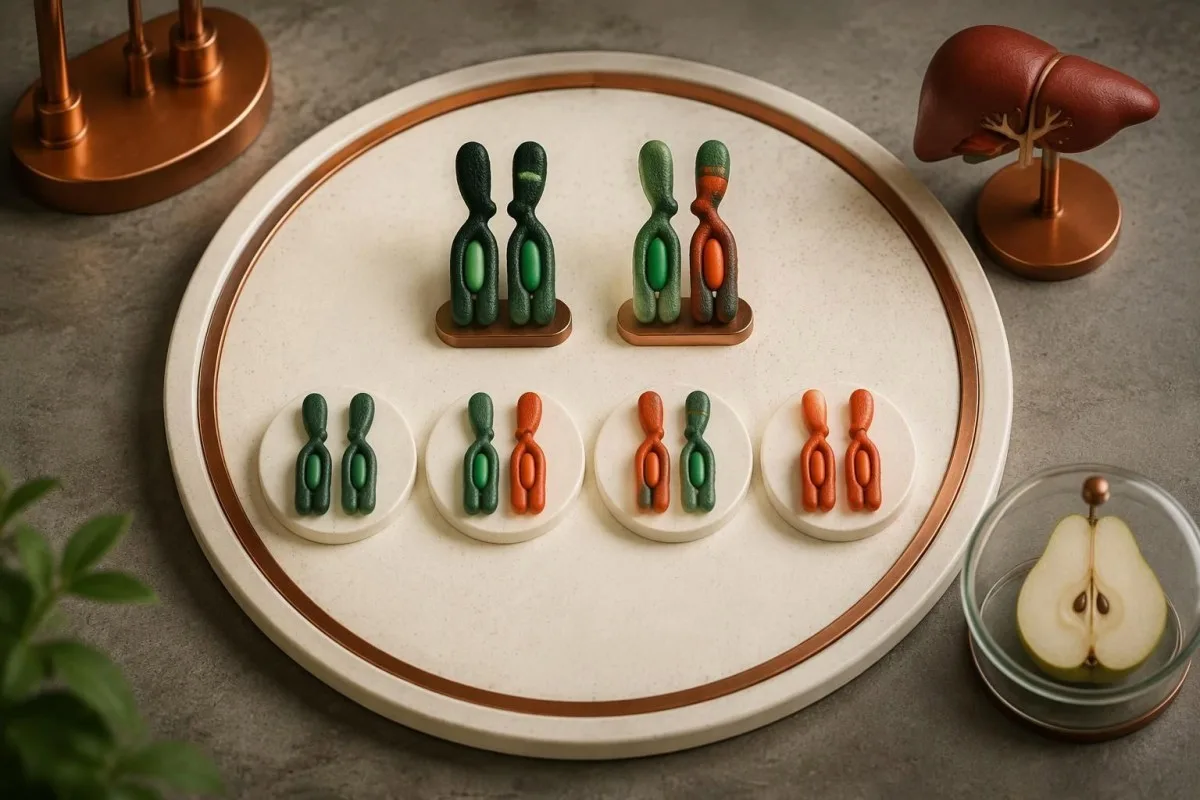
The 25% risk applies independently to every pregnancy; having 1 unaffected child does not reduce the next child's risk. Full siblings of an affected person should be offered an appropriate genetics discussion, and testing the established familial variants is often more informative than ordering a nonspecific screening panel.
An unaffected sibling of an affected child has a 2-in-3 carrier probability before genetic testing, assuming both parents are carriers and the sibling truly does not have HFI. That conditional figure should not be applied to an infant whose exposure history or disease status has not yet been adequately assessed.
If an affected person has children with a confirmed non-carrier partner, all children are expected to be carriers rather than affected under the usual two-copy model. If the partner is a carrier, each pregnancy has a 50% chance of HFI; a negative partner screen still needs interpretation according to its coverage.
Kantesti can help organize separate relatives' routine laboratory histories, but family-sharing tools do not infer carrier status or replace consent for genetic testing. Our prìomhachasan deuchainn teaghlaich explain why a shared household does not mean everyone needs identical tests, particularly when one relative requires targeted ALDOB analysis.
Ciamar a tha HFI eadar-dhealaichte bho dhroch-ghabhail fructóis?
HFI is a cellular fructose-metabolism disorder caused by biallelic disease-causing ALDOB variants; fructose malabsorption is impaired intestinal absorption. Malabsorption usually produces gas, bloating, abdominal discomfort, or diarrhea, rather than the characteristic fructose-triggered hypoglycemia and organ toxicity of HFI.
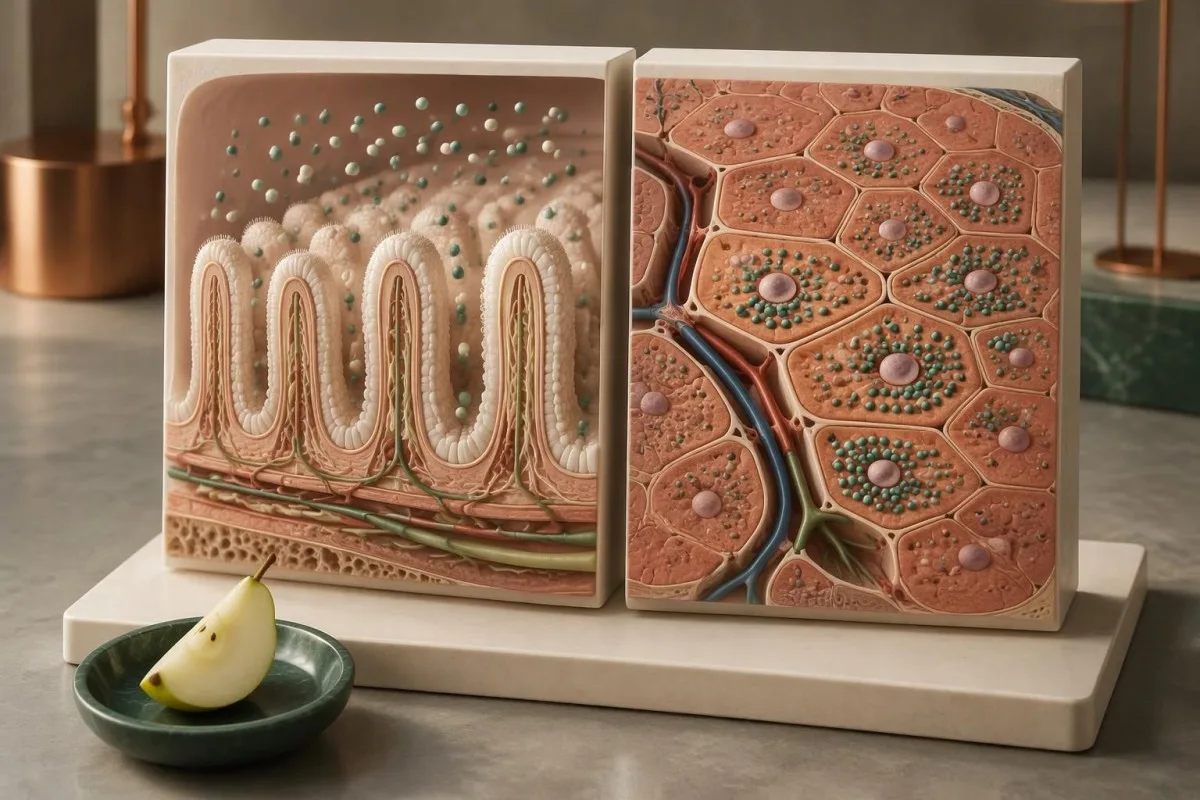
A fructose breath test measures fermentation-related gases after an ingested substrate; it does not measure aldolase B activity or identify ALDOB variants. The North American Consensus uses a 25 g fructose substrate for adult malabsorption testing and a hydrogen rise of at least 20 ppm above baseline as a positive criterion (Rezaie et al., 2017).
Those breath-test numbers are laboratory protocol details, not instructions for home testing. When HFI is suspected, clinicians should address that risk before administering fructose; our lactose testing explanation shows why different sugar tests cannot be treated as interchangeable.
A positive breath result does not prove that every symptom is caused by fructose, and a negative result does not investigate the ALDOB pathway. Differences in dose, preparation, transit, and gas production affect interpretation; the stiùireadh mu dheuchainn anail SIBO explains several overlapping sources of uncertainty.
Sucrose-related gastrointestinal symptoms have another possible explanation: sucrase-isomaltase deficiency, which impairs digestion at the intestinal brush border. Our sucrase-isomaltase testing guide describes that distinction; a response to a low-FODMAP diet or digestive enzyme does not establish or safely exclude HFI.
Dè na toraidhean àbhaisteach ann am fuil agus ann am fual a dh’fhaodas taic a thoirt don sgrùdadh?
Routine chemistry can identify HFI complications but cannot confirm the genetic diagnosis. Depending on exposure and severity, clinicians may find hypoglycemia, increased lactate or urate, low phosphate, liver abnormalities, or evidence of proximal renal tubular dysfunction.
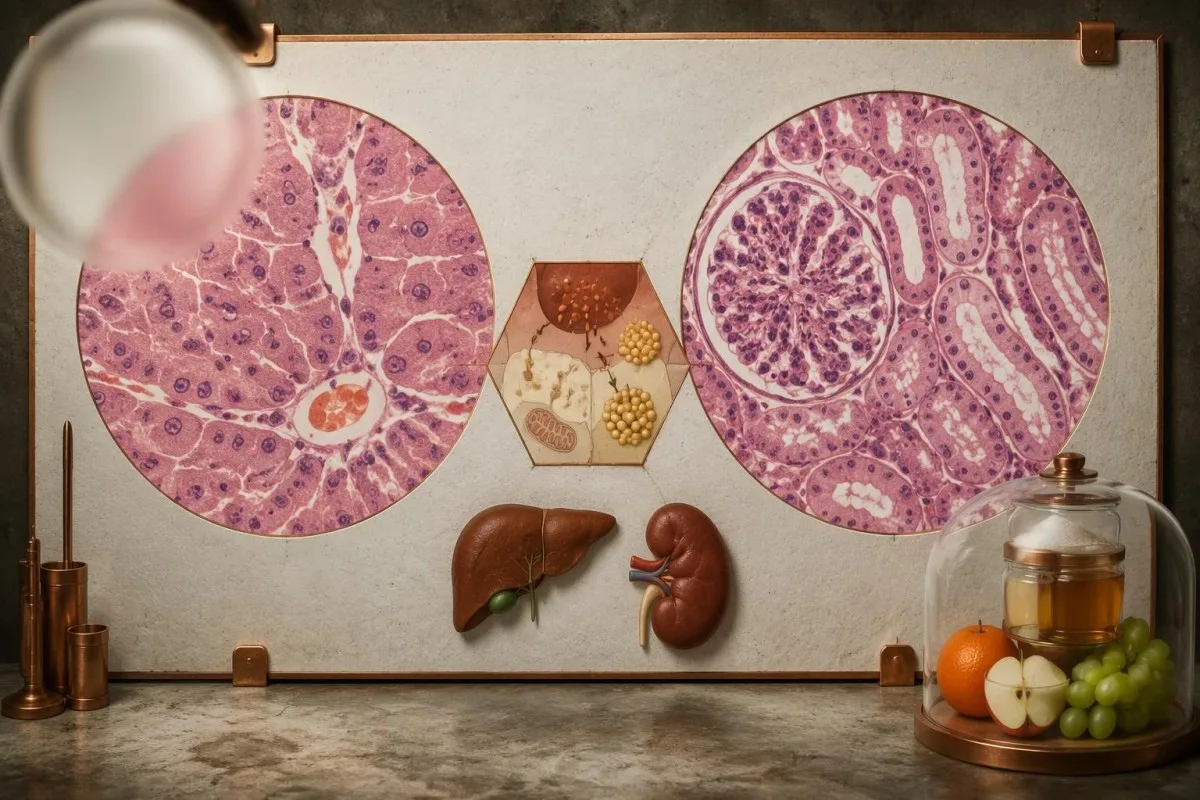
For perspective, glucose below 54 mg/dL, or 3.0 mmol/L, is a clinically significant hypoglycemia threshold used in diabetes care, but it is not an HFI diagnostic cutoff. In a person without diabetes, symptoms, laboratory confirmation, and context guide assessment; suspected acute HFI toxicity warrants action before every criterion is documented.
An adult phosphate reference interval is often approximately 0.8–1.5 mmol/L, equivalent to 2.5–4.6 mg/dL, but children's intervals are higher and laboratories differ. Phosphate trapping and kidney losses can contribute to low values in HFI; neither a single low phosphate nor a normal result outside an exposure episode identifies the underlying cause.
ALT and AST indicate cellular injury, while bilirubin, albumin, and coagulation results answer additional questions about liver handling or function. A hypothetical ALT of 120 U/L with an upper limit of 40 U/L is 3 times that laboratory's limit, not an HFI-specific pattern; our mìneachadh pannal grùthan separates these meanings.
Renal tubular problems can produce urinary glucose or other losses even when filtration markers are relatively preserved. Kantesti can help explain reported chemistry and trends, but a creatinine of 0.8 mg/dL does not exclude tubular dysfunction; our kidney chemistry guide explains why filtration and tubular handling are different questions.
Carson nach bu chòir dùbhlain fructóis fheuchainn aig an taigh idir?
Deliberate fructose exposure can cause severe hypoglycemia, metabolic disturbance, and liver or kidney injury in HFI. Do not test suspected HFI by drinking juice, eating sugar, taking sorbitol, or performing a home breath-test challenge; genetic testing does not require any of these exposures.
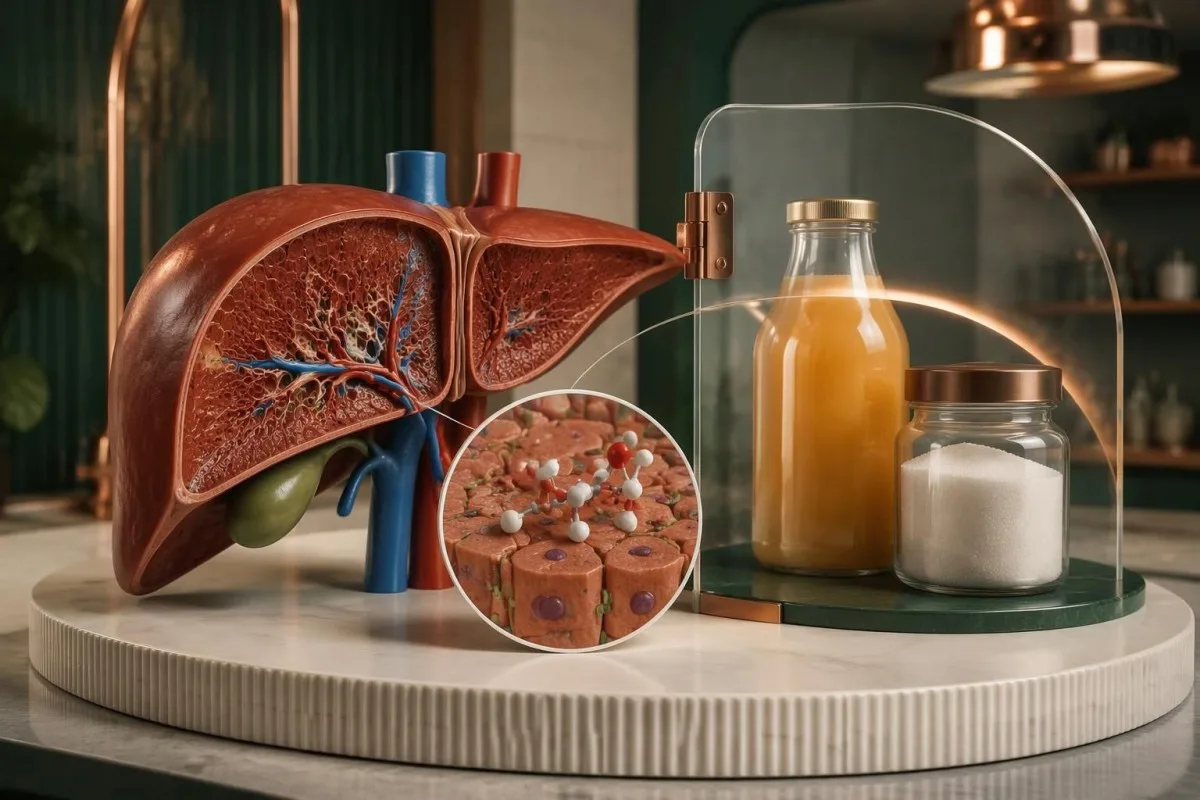
The older intravenous fructose tolerance test is hazardous and is not a routine recommended route to HFI diagnosis. Ali et al. (1998) describe serious diagnostic-exposure risks; an apparently small dose, 1 symptom-free exposure, or an uncertain genetic report does not establish a universally safe threshold for another trial.
Confusion, marked drowsiness, seizures, collapse, or persistent vomiting after a concerning exposure require urgent medical assessment. Call the local emergency service and say that HFI is known or suspected; do not delay care to collect a fasting sample, arrange a genetics appointment, or complete a symptom diary.
Do not give anything by mouth to a person who is unconscious, seizing, or unable to swallow safely. For an alert adult with an established hypoglycemia plan, that plan may specify 15 g of verified fructose-free glucose or dextrose and a recheck after 15 minutes; children and anyone without a plan need age-appropriate professional guidance.
Emergency clinicians may need to assess glucose, electrolytes, lactate, acid-base status, and organ function while treating the person. Our lactate handling explanation describes measurement limitations, but suspected clinical toxicity must not be dismissed as a sampling artifact or managed by waiting for an AI interpretation.
Dè dh’atharraicheas às dèidh do neo-fhulangas fructóis oighreachail a bhith air a dhearbhadh?
Confirmed HFI requires specialist-guided avoidance of fructose, sucrose, and sorbitol, with review of food ingredients, medicines, and nutritional adequacy. There is no single evidence-based gram allowance that patients should use to determine their own safe exposure limit.

A generic low-FODMAP plan is not an HFI prescription, and sugar-free does not mean sorbitol-free. Check the actual ingredient list and preparation rather than relying on a front-of-pack claim; all 3 relevant substances can appear in products that seem suitable for someone with ordinary intestinal fructose malabsorption.
Glucose, lactose, and starch are chemically different from fructose, but packaged foods containing them can still include unsafe additional ingredients. A hypothetical plain-rice meal is not equivalent to rice coated in a sweetened sauce; individualized food lists and manufacturer clarification are safer than assuming every item in a food category is suitable.
Medicines, liquid supplements, dental products, and some medical preparations need formulation-specific checks by a pharmacist or metabolic team. Do not stop treatment or refuse all vaccines based on a generic ingredient warning; the appropriate decision depends on the exact substance, quantity, route, and available alternative, not simply whether 1 unfamiliar ingredient appears.
Tha Kantesti na Inneal mion-sgrùdaidh deuchainn fala le cumhachd AI that can help explain nutritional laboratory follow-up, but our nutrition output is not a substitute for an HFI-specific prescription. Our vitamin needs guide explains why restricted diets merit assessment; our prìobhaideachd agus cleachdaidhean dàta also matter before sharing genetic documents involving relatives.
Dè na h-ath cheumannan—agus crìochan ar rannsachaidh?
The next step is to match the full ALDOB report with clinical history through a genetics or metabolic service, not to experiment with fructose. Request clarification of classification, phase, and assay coverage; use routine laboratory interpretation as supporting information rather than molecular confirmation.

Bring 3 items to the appointment: the complete genetic report, a record of previous naturally occurring reactions, and an ingredient list for current medicines and supplements. A confirmed two-copy result, an unresolved VUS combination, and a limited negative screen require different next steps; asking which category applies is more useful than asking only whether the test is positive.
Routine results should retain their original units, reference intervals, and collection dates so changes can be assessed meaningfully. Our againn fiosrachadh dearbhaidh teicnigeach explains the scope of our interpretation work; it should not be read as validation of ALDOB variant classification, genotype-based dietary dosing, or emergency HFI triage.
The Kantesti research publications listed below address 2 different technical topics: multilingual hantavirus decision support involving 50,000 interpreted reports, and an automated benchmark involving 100,000 synthetic cases. Neither publication directly tests HFI diagnosis, ALDOB sequencing accuracy, VUS reclassification, or the safety of a fructose challenge, and their findings should not be generalized to those tasks.
Figshare hosting and DOI registration make a document identifiable; they do not, by themselves, establish peer review or prospective clinical validation. Our prionnsapalan AI cunntachail explain why 1 reassuring generated explanation must never outweigh concerning symptoms, the issuing genetic laboratory's limitations, or advice from a metabolic specialist.
Ceistean cumanta
0 Am faod deuchainn ginteil neo-fhulangas oighreachail ri frùctas a dhearbhadh?
Faodaidh deuchainn ginteil clionaigeach ALDOB neo-fhulangas oighreachail fructose a dhearbhadh nuair a chomharraicheas i 2 dhreachan pathogenic no dualtach a bhith pathogenic a bheir buaidh air leth-bhreacan mu choinneamh den ghine, air am mìneachadh còmhla ri eachdraidh clionaigeach. Faodaidh an toradh a bhith homozygous no compound heterozygous. Mar as trice tha aon dreach pathogenic a’ comharrachadh inbhe neach-giùlain, agus feumar measadh a bharrachd a dhèanamh air dreachan mì-chinnteach. Chan fheum deuchainnean ginteil fructose ithe.
Dè tha caochladh ALDOB aig a bheil brìgh neo-chinnteach a’ ciallachadh?
Tha caochladh ALDOB aig a bheil cudromachd neo-chinnteach a’ ciallachadh nach gabh, leis an fhianais a tha ri fhaighinn, dearbhadh gu earbsach a bheil an t-atharrachadh sin ag adhbharachadh galair no a bheil e mì-choireach. Chan eil toradh anns a bheil 1 caochladh phataigeach agus 1 VUS, leis fhèin, a’ dearbhadh neo-fhulangas oighreachail ri fructòs. Dh’fhaodadh deuchainnean air buill teaghlaich, fianais ghnìomhachail dhearbhta no ath-sheòrsachadh san àm ri teachd cuideachadh le soilleireachadh a dhèanamh air an toradh. Dh’fhaodadh cùram faiceallach a bhith iomchaidh fhathast nuair a tha eachdraidh a’ chlinig na adhbhar dragha, ach chan eil dùbhlan fructòis na dhòigh shàbhailte air a’ mhì-chinnt a rèiteachadh.
A bheil deuchainn ALDOB àicheil a’ cur às do dh’fhulangas oighreachail do fhrùctas?
A negative ALDOB test reduces the likelihood of hereditary fructose intolerance but may not exclude it if the assay has limited coverage. Zero detected variants means no reportable changes were found by that particular method. A common-variant screen and comprehensive sequencing with appropriate copy-number analysis provide different levels of information. Persistent clinical suspicion should prompt specialist review of the report's limitations rather than deliberate fructose exposure.
An e an aon rud a th’ ann an deuchainn-anail fructòs agus deuchainn HFI?
Bidh deuchainn-anail fructóis a’ sgrùdadh malabsorptachadh intestinal, ach bidh deuchainn ginteil ALDOB a’ sgrùdadh neo-fhulangas fructóis oighreachail. Tha Co-aontachd Ameireaga a Tuath a’ mìneachadh pròtacal malabsorptachaidh airson inbhich a bhios a’ cleachdadh 25 g de fructós agus àrdachadh haidridein co-dhiù 20 ppm os cionn na bun-loidhne, ach ’s e mion-fhiosrachadh mu dheuchainnean clionaigeach a tha seo seach stiùireadh airson cleachdadh aig an taigh. Cha chomharraich deuchainn-anail caochlaidhean ALDOB no cha tomhais i gnìomhachd aldolase B. Cha bu chòir fructós a thoirt seachad ma tha amharas ann air HFI gus am bi luchd-clionaigeach air dèiligeadh ris a’ chunnart mheatabolach.
An urrainn do neach-giùlain ALDOB comharraidhean de dh’ fhulangas oighreachail ri frùctós a leasachadh?
0 Chan àbhaist do neach aig nach eil ach 1 dhreach ALDOB a dh’adhbharaicheas galar a bhith na neach-giùlain, agus chan eilear an dùil gum bi neo-fhulangas oighreachail do fhructós air an neach sin air sgàth an toraidh sin a-mhàin. Bu chòir fhathast sgrùdadh a dhèanamh air na comharraidhean, oir dh’fhaodadh gun do chaill an deuchainn dàrna dreach, no gur e suidheachadh eile as coireach. Chan eil dà dhreach air an aon leth-bhreac den ghine cuideachd a’ dearbhadh a’ bhreithneachaidh rùisich gu fèin-obrachail. Bu chòir do sheirbheis ginteachd na toraidhean a cho-rèiteachadh le còmhdach na deuchainn, an ìre, agus an eachdraidh chlionaigeach.
0 An urrainn do dheuchainnean fala àbhaisteach eas-fhulangas oighreachail do fhrùctòs a chur às àicheadh?
Normal routine blood tests cannot exclude hereditary fructose intolerance, especially in someone who avoids fructose-containing foods. A glucose result of 90 mg/dL, approximately 5.0 mmol/L, describes that collection moment rather than the person's ALDOB genotype. Liver and kidney chemistry can also appear normal between exposures or after dietary treatment. Diagnosis relies on appropriate molecular testing and clinical assessment, not on reproducing symptoms with sugar or juice.
Faigh mìneachadh air na toraidhean deuchainn fala agad
Luchdaich suas aithisg an obair-lann agad agus mìnichidh AI Kantesti gach bith-chomharradh ann an cànan soilleir taobh a-staigh diogan. Air a chleachdadh le còrr is 2 mhillean neach air feadh an t-saoghail.
Tùsan
- Klein, T., Mitchell, S., & Weber, H. (2026). Taic Cho-dhùnaidhean Clionaigeach le Taic AI Ioma-chànanach airson Triaigeadh Tràth Hantavirus: Dealbhadh, Dearbhadh Innleadaireachd agus Cleachdadh san t-Saoghal Fhìor thar 50,000 Aithisg Deuchainn-fala le Mìneachadh. Rannsachadh Meidigeach AI Kantesti. DOI
- Klein, T., Mitchell, S., & Weber, H. (2026). Measadh Teicnigeach fèin-ghluasadach ro-ìreichte, stèidhichte air Rubric den Kantesti Inneal Mìneachaidh Deuchainn fala air 100,000 cùis deuchainn Synthetic. Rannsachadh Meidigeach AI Kantesti. DOI
- Ali M et al. (1998). Hereditary fructose intolerance. Journal of Medical Genetics. DOI
- Richards S et al. (2015). Inbhean agus stiùiridhean airson mìneachadh atharrachaidhean ann an sreathan: moladh co-aontachd co-phàirteach bho Cholaiste Ameireaganach Gintinneachd is Gintinneachd-mheanbh-eòlas agus an Comann airson Gintinneachd-mheanbh-eòlas Mhoileciuilich. Gintinneachd ann an Leigheas. DOI PubMed
- Rezaie A et al. (2017). Deuchainnean analach stèidhichte air haidridein agus meatan ann an tinneasan na slighe-bhìdh: Co-aontachd Ameireaga a Tuath. The American Journal of Gastroenterology. DOI PubMed
- 2M+Deuchainnean air an sgrùdadh
- 127+Dùthchannan
- 100+Cànanan
Mu dheidhinn an sgioba mheidigeach


Comharran earbsa E-E-A-T
Eòlas
Lèirmheas clionaigeach air a stiùireadh le lighiche air sruthan-obrach mìneachaidh obair-lann.
Eòlas
Fòcas air leigheas obair-lann air mar a bhios bith-chomharraidhean (biomarkers) a’ giùlan ann an co-theacsa clionaigeach.
Ùghdarrasachd
Ath-sgrùdadh meidigeach leis an Dr Thomas Klein, le tabhartasan bhon Dr Sarah Mitchell agus an t-Oll. Dr Hans Weber.
Earbsachd
Mìneachadh stèidhichte air fianais le slighean leanmhainn soilleir gus dragh a lughdachadh.



Àicheadh meidigeach
Tha an artaigil seo dìreach airson adhbharan foghlaim agus chan eil e a’ dèanamh comhairle mheidigeach. Cuir fios an-còmhnaidh gu solaraiche cùram slàinte teisteanasach airson co-dhùnaidhean breithneachaidh is leigheis.
Foillsichte · Cuir fios chun sgioba dheasachaidh
Foillsichte le Kantesti Ltd, clàraichte ann an Sasainn agus sa Chuimrigh, àireamh companaidh. 17090423, Lunnainn, an Rìoghachd Aonaichte.
