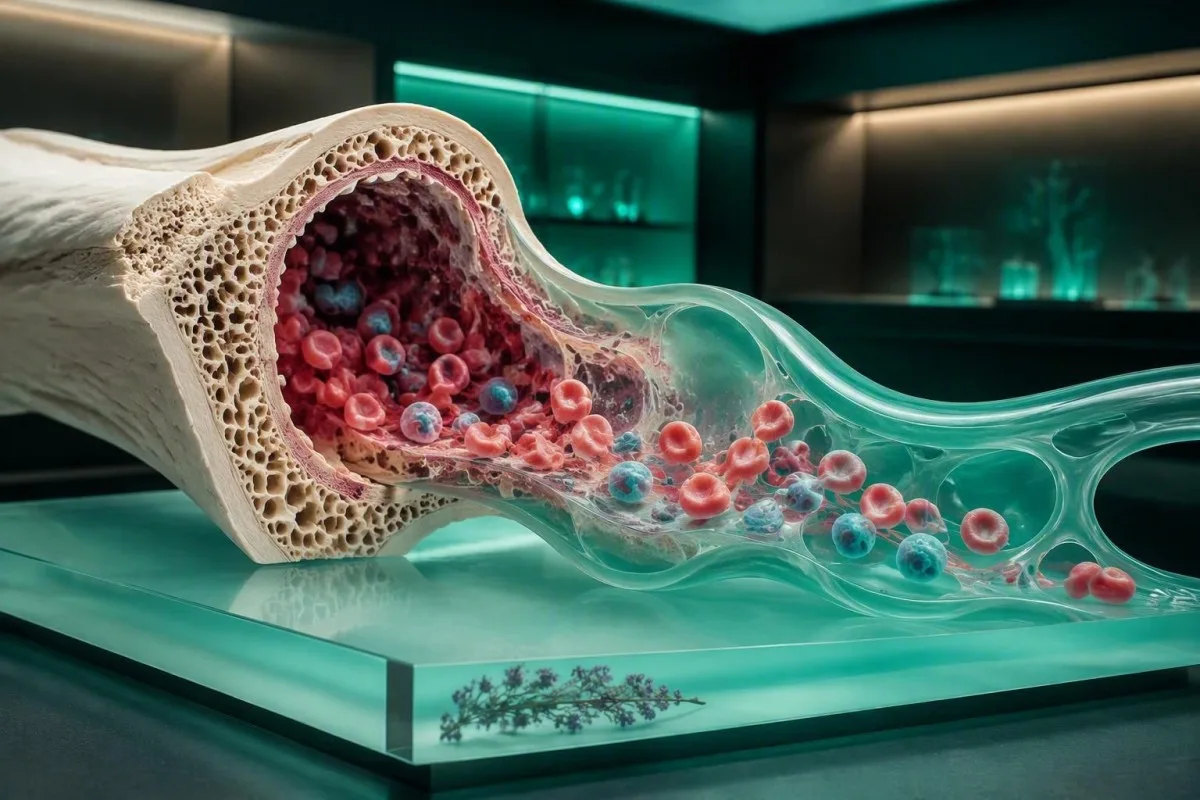
Tha polychromasia air fuathas fala a’ ciallachadh gu bheil ceallan fola dearga òga follaiseach gu neo-àbhaisteach a’ cuairteachadh. Faodaidh e a bhith na chomharra misneachail air faighinn seachad air smior às dèidh call fala no làimhseachadh, ach bu chòir anemia còmhla ri polychromasia a bhith a’ brosnachadh cunntas reticulocyte agus, nuair a bhios feum air, deuchainn airson hemolysis.


- Ciallachadh Polychromasia: tha ceallan fala dearga bàn-liath air sliseag air a dathadh mar as trice nan reticulocytes, ceallan ùra a tha fhathast a’ cumail RNA air fhàgail.
- Reticulocytes àbhaisteach: tha a’ mhòr-chuid de dh’obair-lann dhaoine fa-inbheach a’ toirt cunntas air ceudad reticulocyte de timcheall air 0.5% gu 2.5%, ged a tha cunntasan iomlan nas earbsaiche ann an anemia.
- Pàtran faighinn seachad: faodaidh polychromasia nochdadh 3 gu 7 latha às dèidh call fala geur, làimhseachadh iarainn, no ceartachadh dìth bhiotaimin B12.
- Cluiche hemolysis: tha anemia le polychromasia, àrd LDH, bilirubin neo-dhìreach os cionn raon an obair-lann, agus haptoglobin ìosal a’ toirt taic do sgrios ceallan-fala dearga luath.
- Reticulocytes ceartachaidh: faodadh faileas de cheudadan reticulocyte os cionn 21% a bhith neo-leòir fhathast nuair a tha hematocrit ìosal; bidh luchd-clionaigeach ga cheartachadh airson hematocrit an euslaintich.
- Pàtran èiginneach: bidh aithris air buidheachas, fual dorcha, dìth anail aig fois, pian broilleach, faileas, no sgrìobadh a’ sealltainn schistocytes a’ feumachdainn measadh clionaigeach air an aon latha.
- Chan e breithneachadh: “tha polychromasia ”beag“ no ”meadhanach” na tuairisgeul lèirsinneach san obair-lann, chan e ìre tomhais airson cho dona sa tha tinneas.
- An ath dheuchainn: faighnich a bheil àireamh iomlan de reticulocytes, clàr-amais toradh reticulocyte, roinnean bilirubin, LDH, haptoglobin, agus deuchainn antiglobulin dìreach a’ freagairt air do phàtran CBC.
Dè a tha polychromasia a’ toirt cunntas air fuathas iomaill
Polychromasia air sgrìobadh fala a’ toirt cunntas air ceallan dearga a ghlacas dath gorm-liath an àite an dath pinc-sailein àbhaisteach leis gu bheil iad nan ceallan òga anns a bheil RNA ribosomach fuigheall. Chan eil an toradh fhèin a’ dearbhadh laisg, aillse, no dìth iarainn; tha e ag innse dhuinn gu bheil an smior a’ leigeil a-mach reticulocytes a-steach don chuairteachadh.
Faodaidh inneal-anailis àbhaisteach CBC cunntadh reticulocytes gu dealanach, fhad “s a leigeas sgrìobhadh le làimh le proifeasanta san obair-lann faicinn an sgaoileadh agus atharrachaidhean cumadh a tha nan cois. Nam obair clionaigeach, gu tric chan e an fhacal as cudromaiche san aithisg ach ”polychromasia” leis fhèin ach a bheil e còmhla ri anemia, RDW ag èirigh, no ceallan briste. Dè tha CBC a’ toirt a-steach a' cuideachadh le mìneachadh carson a tha na toraidhean sin còmhla.
Mairidh cealla dearg àbhaisteach inbheach mu 120 latha, fhad “s nach mair reticulocyte ach 1 gu 2 latha san t-sruth fala mus tig iad gu ìre. Mar sin, tha cuspair follaiseach a” nochdadh gu bheil cinneasachadh smior ag àrdachadh no gun deach an leigeil a-mach na bu thràithe na bha dùil. Tha “Beag,” “meadhanach,” agus “mòr” nan tuairisgeulan obair-lann; chan eil sgèile àireamhach eadar-nàiseanta co-fhreagarrach ann dha na faclan sin.
Tha Kantesti na Anailisiche deuchainn fala AI a' mìneachadh carson a tha na toraidhean sin còmhla ris an hemoglobin, MCV, RDW, bilirubin, agus toraidhean roimhe na bhith a' làimhseachadh aon bhrat-fhollaiseach mar dhearbhadh. Bho 18 Sultain, 2026, tha an dòigh-obrach seo stèidhichte air pàtranan gu h-àraid feumail nuair a gheibh euslaintich aithisg morf-eòlais mus bi cothrom aig an dotair fhaicinn.
Carson a tha na ceallan a’ coimhead gorm
Bidh dathan supravital a“ dèanamh RNA reticular gu h-àraid follaiseach, ach faodaidh eadhon sleamhnag air a dhath le Wright-Giemsa àbhaisteach nochdadh gu leòr de RNA fuigheall gus polychromasia a chruthachadh. Tha an dath na chomharradh air aibidh, chan ann na fhianais gu bheil an sampall obair-lann fhèin ”gorm” no air a thruailleadh.
Mar a tha obair-lann a’ comharrachadh polychromasia agus na crìochan aige
Tha polychromasia air a chomharradh le sgrùdadh miocroscopach air sleamhnag sampall cealla iomaill air a dhath, mar as trice às deidh inneal-anailis fèin-ghluasadach a’ comharrachadh neo-riaghailteachd no nuair a dh’iarras neach-clionaigeach sgrùdadh. Tha beachd sgrìobaidh leth-chunntachail, mar sin is e cunntas reticulocyte an deuchainn a thionndas an tuigse gu àireamh.
Tha obair-lannan eadar-dhealaichte a thaobh cuin a thòisicheas iad air ath-sgrùdadh le làimh: bidh cuid a’ cleachdadh pàtranan sgapaidh an inneal-anailis, stairsnich anemia trom, bloighean reticulocyte àrd neo-aibidh, no morf-eòlas roimhe seo neo-àbhaisteach. Is e sin aon adhbhar gum faod dà aithisg bho obair-lannan eadar-dhealaichte an aon ìre de polychromasia a mhìneachadh ann an dòigh eadar-dhealaichte. Bu chòir an toradh a leughadh an-còmhnaidh còmhla ris na h-ìrean iomraidh CBC fhèin aig an obair-lann.
An cunntas reticulocytes iomlan mar as trice nas fhiosaiche na ceudad ann an anemia leis gum faod an ceudad a bhith a’ coimhead àrd dìreach leis gu bheil nas lugha de cheallan dearga gu h-iomlan. Bidh mòran obair-lann inbheach a’ cleachdadh timcheall air 25 gu 100 × 10⁹/L mar raon iomraidh, ach tha raointean ionadail ag atharrachadh a rèir inneal-anailis agus sluagh-sluaigh. Tha ar mìneachadh air pàtranan reticulocyte àrd a' còmhdach an loidsig chlinigeach nas mionaidiche.
Faodaidh sgrìobadh cuideachd nochdadh spherocytes, schistocytes, ceallan bìde, ceallan dearga niuclasach, no atharrachadh mòr ann an tomhas nach urrainn cunntasan fèin-ghluasadach a sheòrsachadh gu tur. Chuir Zini et al. (2012) cuideam air gu bheil aithneachadh tomhais de schistocytes cudromach leis gu bheil brisidhean fada nas èiginn na ath-bheothachadh smior gun duilgheadasan.
Chan eil sgrìobadh àicheil a’ dùnadh a-mach reticulocytosis
Faodar reticulocytosis tlàth a thomhas le innealan-anailis stèidhichte air flùranachas mus bi e follaiseach gu lèirsinneach air sleamhnag àbhaisteach air a dhath. Air an làimh eile, tha aithris air polychromasia tlàth airidh air dearbhadh an àite a bhith a’ dèanamh tomhais nuair nach deach an cunntas reticulocyte òrdachadh.
Cuin a tha polychromasia a’ nochdadh faighinn seachad air smior àbhaisteach
Mar as trice bidh polychromasia a’ nochdadh ath-bheothachadh smior iomchaidh nuair a tha hemoglobin air tuiteam o chionn ghoirid agus tha an cunntas reticulocyte ag èirigh taobh a-staigh làithean. Mar as trice tha dùil ris às dèidh call fala a tha air stad leis fhèin, ath-nuadhachadh iarainn soirbheachail, no ath-bheothachadh bho chumail air ais smior sealach.
After an acute loss of red cells, erythropoietin rises but the marrow response is not immediate; reticulocytosis usually becomes evident after about 3 to 5 days and can peak around 7 to 10 days. I often reassure patients who see polychromasia after treatment that this timing can be a sign the treatment is working, provided symptoms and hemoglobin are moving in the right direction.
A practical example is a patient with iron-deficiency anemia whose hemoglobin rises from 92 g/L to 103 g/L over 2 to 3 weeks of effective therapy. Their RDW may temporarily widen because older small cells and newer better-hemoglobinized cells coexist. The early RDW rise after iron therapy is easily mistaken for deterioration.
Tha Kantesti na àrd-ùrlar mìneachaidh deuchainn fala AI that compares CBC trends across visits, which can distinguish a one-time recovery response from persistent anemia with ongoing cell loss. For adults with iron deficiency, the cause still needs attention; replacement without asking why iron fell can miss menstrual, gastrointestinal, dietary, or absorption-related contributors.
Recovery after vitamin replacement
In vitamin B12 or folate deficiency, a brisk reticulocyte response can occur roughly 3 to 5 days after treatment begins. A falling potassium level is an uncommon but recognized concern during rapid hematologic response in severe deficiency, so clinicians may recheck electrolytes in frail or profoundly anemic patients.
Cuin a tha polychromasia a’ moladh hemolysis
Polychromasia suggests hemolysis when it appears with anemia and biochemical evidence of red-cell breakdown, especially raised LDH, increased unconjugated bilirubin, and reduced haptoglobin. No single one of these tests proves hemolysis; the combined pattern and the clinical history decide the likelihood.
Hemolysis can be inherited, immune-mediated, medication-related, mechanical, infection-associated, or linked to systemic illness. Barcellini and Fattizzo (2015) describe the classic laboratory constellation as reticulocytosis, increased LDH and unconjugated bilirubin, plus low haptoglobin. Haptoglobin can be low in liver disease without hemolysis, which is a nuance that prevents plenty of unnecessary alarm.
A direct antiglobulin test, also called DAT or Coombs testing, helps assess immune hemolysis when the history and chemistry fit. Spherocytes with a positive DAT may support warm autoimmune hemolytic anemia, while bite cells can suggest oxidative injury in a susceptible person. For related context, see our guide to haptoglobin ìosal a bharrachd air hemolysis.
I become more concerned when a person has fatigue, jaundice, dark tea-colored urine, back pain, or a rapid hemoglobin decline of more than about 20 g/L over days. These symptoms do not identify the cause, but they change the timeframe for evaluation from routine follow-up to urgent assessment.
Hemolysis outside the bloodstream
Extravascular hemolysis occurs mainly in the spleen and liver and may produce jaundice without obvious dark urine. Intravascular hemolysis more often lowers haptoglobin sharply and can produce hemoglobinuria, although hydration and timing affect what a urine sample shows.
Polychromasia às dèidh call fala fhollaiseach no falaichte
Polychromasia can follow blood loss because a healthy marrow responds by releasing more reticulocytes after roughly 3 to 5 days. The key next question is whether bleeding has stopped and whether the hemoglobin trend is stable, rising, or continuing to fall.
Heavy menstrual bleeding is a frequent cause of iron depletion and anemia in people who menstruate, particularly when pads or tampons need changing every 1 to 2 hours, clots are large, or bleeding lasts more than 7 days. A reticulocyte response does not make continued loss harmless. Our review of heavy menstrual bleeding warning signs outlines when prompt care is sensible.
Gastrointestinal loss may be invisible: black tarry stool, red rectal bleeding, persistent abdominal symptoms, regular NSAID use, and iron deficiency after menopause all deserve medical discussion. A normal reticulocyte response can coexist with low ferritin because the marrow may be trying to compensate while iron stores continue to drain.
One clinical trap is checking a hemoglobin level immediately after a sudden loss. In the first hours, it can underestimate severity because plasma and red cells have not equilibrated; repeat CBC testing after fluid shifts may tell a different story. Symptoms such as collapse, resting breathlessness, or persistent fast heartbeat trump any single early number.
Do not self-treat presumed loss
Oral iron is commonly used, but taking it before establishing the likely cause can obscure the diagnostic timeline and cause constipation or nausea. Ferritin, transferrin saturation, CRP, and a focused bleeding history usually give more useful direction than starting several supplements at once.
Dè na toraidhean reticulocyte a shoilleiricheas comharra fuathais
A reticulocyte count clarifies polychromasia by measuring marrow output, and a corrected reticulocyte percentage or reticulocyte production index adjusts that output for the degree of anemia. In adults, a raw reticulocyte percentage of 0.5% to 2.5% is often reported as typical, but interpretation changes sharply when hematocrit is low.
An corrected reticulocyte percentage equals reticulocyte percentage multiplied by patient hematocrit divided by 45%. For example, 4% reticulocytes with a hematocrit of 27% corrects to 2.4%, not 4%. This matters because a percentage can look impressive while the actual response remains only modest for severe anemia.
An clàr-amais cinneasachaidh reticulocytes (RPI) further divides the corrected percentage by a maturation factor, typically about 1.0 at hematocrit 45%, 1.5 at 35%, 2.0 at 25%, and 2.5 at 15%. An RPI above about 3 generally indicates an appropriate regenerative response; an RPI below 2 in significant anemia suggests underproduction, though cutoffs are not perfectly uniform.
Kantesti AI interprets reticulocyte data by pairing the absolute count with hematocrit and prior hemoglobin, not by flagging a percentage in isolation. The reticulocyte count and immature fraction guide explains why an immature reticulocyte fraction can rise before mature reticulocytes do.
Reticulocyte hemoglobin adds another layer
Reticulocyte hemoglobin content, often called Ret-He or CHr, estimates iron available to newly produced cells over the prior few days. Low values can support iron-restricted erythropoiesis, but device-specific cutoffs commonly range around 25 to 30 pg and should not be swapped between analyzers.
Toraidhean CBC agus ceimigeachd a bu chòir a leughadh le polychromasia
Polychromasia is best interpreted with hemoglobin, MCV, RDW, bilirubin fractions, LDH, haptoglobin, and kidney function. A low hemoglobin plus a high reticulocyte response points toward loss or destruction, while low hemoglobin plus low reticulocytes points toward inadequate production.
Hemoglobin reference intervals differ by laboratory, altitude, sex, and pregnancy status, but many adult labs use approximately 120 to 160 g/L for nonpregnant women and 135 to 175 g/L for men. MCV below 80 fL often directs attention toward iron deficiency or thalassemia traits, whereas MCV above 100 fL raises questions about B12, folate, alcohol, liver disease, thyroid disease, medicines, or reticulocytosis itself. Review borderline MCV patterns before interpreting the index alone.
LDH is sensitive but nonspecific: skeletal muscle injury, liver conditions, sample hemolysis, and many other processes can elevate it. In suspected hemolysis, an LDH rise accompanied by indirect bilirubin elevation and a low haptoglobin is more persuasive than LDH alone. Our LDH test overview explains common non-red-cell causes.
A creatinine rise or reduced eGFR may blunt erythropoietin signaling and produce anemia with an inappropriately low reticulocyte response. That contrast is diagnostically useful: a person with hemoglobin 90 g/L and reticulocytes 0.6% needs a different work-up from someone with the same hemoglobin and reticulocytes 6.0%.
RDW is a timing marker, not a diagnosis
An RDW above roughly 14.5% is common in mixed cell populations, including early iron treatment and recent reticulocytosis. It can be normal in thalassemia trait and abnormal in dozens of unrelated settings, so it should never be used as a stand-alone screen for cause.
Beachdan eile air fuathas a dh’atharraicheas an ciallachadh
Polychromasia becomes more informative when another red-cell shape accompanies it. Spherocytes, schistocytes, bite cells, target cells, or nucleated red cells can narrow the differential diagnosis and sometimes change urgency immediately.
Schistocytes are fragmented red cells and can signal microangiopathic hemolysis, mechanical valve-related injury, severe hypertension, or disseminated coagulation depending on the clinical setting. The International Council for Standardization in Haematology uses a threshold of more than 1% schistocytes as suspicious for thrombotic microangiopathy when the morphology is otherwise appropriate, but interpretation belongs with an experienced laboratory and clinical team. Read about lorg schistocyte èiginneach if that exact word appears on your report.
Spherocytes are dense, round red cells lacking central pallor and may occur in hereditary spherocytosis or immune hemolysis. Polychromasia plus spherocytes often justifies a DAT, bilirubin, and family-history review; polychromasia alone does not. A high MCHC can strengthen suspicion but can also result from analytical artifacts.
Nucleated red cells in an adult peripheral sample are not simply “extra reticulocytes.” They can occur with severe marrow stress, profound hemolysis, hypoxia, marrow infiltration, or critical illness, and they deserve clinician review even when the reticulocyte count is high.
Shape reports need a real sample review
Automated analyzers are excellent screening tools but may generate morphology flags from cold agglutinins, marked leukocytosis, or sample handling issues. A manual review is particularly valuable when a result would lead to emergency referral or a major treatment decision.
Adhbharan polychromasia a bharrachd air hemolysis agus call fala
Polychromasia can occur without active hemolysis or bleeding when the marrow is rebounding from suppression, responding to erythropoietin, or releasing cells early under physiologic stress. The reticulocyte count, medication list, and prior CBCs usually separate these possibilities.
Recovery after viral illness, chemotherapy, severe nutritional deficiency treatment, or transient marrow suppression can produce a temporary reticulocyte surge. In my experience, the trend is reassuring only when white cells and platelets are also recovering as expected and there are no blasts or unexplained persistent cytopenias. Aplastic anemia CBC warning patterns show the contrasting low-production picture.
Erythropoiesis-stimulating agents used in selected kidney disease or cancer-care settings can increase reticulocyte output. High altitude, chronic hypoxemia, and some congenital hemoglobin disorders may also raise baseline production. These are context-dependent effects, not reasons to dismiss new anemia.
Certain medicines can cause hemolysis in susceptible people, including oxidant drugs in G6PD deficiency; the timing after a new medicine, food exposure, or illness can be more revealing than a single test. If G6PD testing is performed during or soon after a hemolytic episode, young cells can make enzyme activity look falsely normal, so clinicians sometimes repeat it later.
Why a normal CBC can still carry a comment
Mild polychromasia with normal hemoglobin may be transient, especially after recent recovery. Persistent morphology comments across several draws merit discussion, but they do not automatically indicate a marrow disorder.
Torrachas, ùr-bhreitheanan, agus mìneachadh sònraichte a rèir aois
Polychromasia is more common in newborn cell samples because neonatal red-cell turnover and marrow activity differ from adult physiology. During pregnancy, anemia and reticulocyte interpretation need trimester-specific ranges and a focused assessment for iron deficiency, hemolysis, and obstetric complications.
Newborns normally have higher reticulocyte counts than adults, often about 3% to 7% in the first days of life, then values fall over subsequent weeks. For that reason, a smear description that would be notable in a 40-year-old may be entirely expected in a newborn. Pediatric interpretation should use the reporting laboratory’s age-specific intervals.
Pregnancy expands plasma volume, which can lower hemoglobin concentration without equal loss of red-cell mass. The World Health Organization commonly defines anemia in pregnancy as hemoglobin below 110 g/L, although trimester-specific practices differ; a falling ferritin or low transferrin saturation adds useful evidence for iron-restricted production. See Raointean ferritin torrachas airson mion-fhiosrachadh mu àm.
Polychromasia with falling platelets, rising AST or ALT, elevated LDH, hypertension, upper abdominal pain, severe headache, or visual symptoms in pregnancy needs urgent obstetric evaluation. That combination can occur in HELLP syndrome or other serious conditions, and it should never be managed as an online lab question alone.
After delivery
Postpartum blood loss can trigger a reticulocyte response after several days, but symptoms matter more than the smear phrase. Heavy bleeding, faintness, chest symptoms, or breathlessness after delivery requires urgent in-person care, even if a prior CBC was acceptable.
An urrainn don chomharra a bhith na artifact sampla no aithris?
Polychromasia itself is usually a genuine cellular observation, but pre-analytical problems and automated flags can distort the surrounding CBC data. A repeat sample is reasonable when the result conflicts with how you feel, prior results, or other laboratory findings.
Delayed slide preparation can change cell appearance, and prolonged storage of an EDTA sample may cause red-cell crenation or other artifacts. This does not usually create true reticulocytosis, but it can complicate morphology interpretation. A fresh repeat sample is often preferable to overinterpreting an equivocal comment.
In-vitro hemolysis means cells broke down after collection, not necessarily inside the body. It can falsely raise potassium, LDH, AST, and phosphate, but it does not establish clinical hemolytic anemia. Our guide to potassium errors from sample hemolysis explains why the laboratory may request a redraw.
Cold agglutinins can make red cells clump in the tube, producing spuriously low red-cell counts and high MCV or MCHC until the sample is warmed and rerun. When indices look physically implausible, such as an unexpectedly high MCHC, I ask the laboratory whether analytical interference was assessed before assigning a disease label.
Trend before certainty
A repeat CBC after 1 to 2 weeks can be informative in a stable person with mild unexplained polychromasia, but faster retesting is appropriate when hemoglobin is falling or symptoms are progressing. Exact timing should be individualized by the clinician who knows the underlying history.
Cuin a tha polychromasia a’ feumachdainn measadh meidigeach èiginneach
Polychromasia needs urgent assessment when it accompanies symptoms or results suggesting rapid anemia, major hemolysis, or microangiopathy. Seek same-day medical care for chest pain, fainting, shortness of breath at rest, confusion, jaundice with dark urine, heavy ongoing bleeding, or a smear reporting schistocytes.
A hemoglobin below 70 g/L is commonly a threshold where transfusion is considered in stable hospitalized adults, though symptoms, active loss, heart disease, and the specific setting alter decisions. It is not a home-management cutoff and does not mean every person at 71 g/L is safe. A rapid decline is often more alarming than a chronic stable value.
Polychromasia with platelets below 150 × 10⁹/L, creatinine rising, neurologic symptoms, and schistocytes raises concern for thrombotic microangiopathy and requires emergency evaluation. The reason this combination matters is that it can reflect simultaneous red-cell fragmentation, platelet consumption, and organ injury—not simple iron deficiency.
Call emergency services rather than driving yourself if severe breathlessness, collapse, new weakness, or chest pressure develops. The blood-test guide for shortness of breath explains some laboratory patterns, but no online interpretation can safely rule out urgent cardiopulmonary causes.
Symptoms can outweigh a “mild” smear phrase
A report saying “slight polychromasia” does not make severe symptoms mild. Conversely, marked polychromasia in a person recovering comfortably with a rising hemoglobin can be less urgent than the wording sounds.
Ceumannan practaigeach a tha romhainn agus ceistean airson do neach-leigheis
The most useful next step after polychromasia is to confirm whether anemia is present and whether reticulocyte production is appropriate for the hemoglobin level. Bring the full CBC, prior results, medication list, and a short timeline of bleeding, infection, new drugs, diet changes, and symptoms.
Useful questions include: “What is my absolute reticulocyte count?”, “Is my response corrected for hematocrit?”, “Do bilirubin, LDH, and haptoglobin suggest hemolysis?”, and “Should we check ferritin, transferrin saturation, B12, folate, kidney function, or a DAT?” Those questions are more productive than asking whether polychromasia is simply good or bad.
Dr. Thomas Klein, our Chief Medical Officer, advises recording recent events with dates: infection, donation, surgery, a heavy period, medication start, endurance event, or iron treatment. The marrow response has a clock, and a result taken 4 days after an event means something different from one taken 4 months later. Iron-study interpretation can help you prepare for that discussion.
Do not stop prescribed medicines or start high-dose iron, folate, or B12 solely because of a smear comment. Folic acid can improve the anemia of B12 deficiency while neurologic injury progresses, which is why B12 status should be checked first when macrocytosis or neurologic symptoms are present.
What to bring to a repeat draw
Bring the laboratory name, specimen date, whether you were recently ill, and a list of supplements including biotin. Hydrate normally unless instructed otherwise, and ask whether reticulocyte testing requires a separate order; in many systems it is not automatically included in a CBC.
A’ cleachdadh ghluasadan gu sàbhailte nuair a nochdas beachd fuathais
Trend review is useful when polychromasia appears because the direction of hemoglobin, reticulocytes, RDW, bilirubin, and platelets often matters more than one isolated result. It cannot replace a clinician’s examination, a repeat smear, or urgent care when red flags are present.
Tha Kantesti na Inneal mion-sgrùdaidh deuchainn fala le cumhachd AI that organizes uploaded reports into longitudinal patterns and flags combinations that deserve clinician follow-up. In practice, a hemoglobin rise of 10 to 20 g/L over a few weeks after identified iron deficiency is quite different from a fall of 20 g/L with increasing bilirubin and reticulocytes.
Our system can explain terminology in 75+ languages, but it deliberately treats a morphology comment as context rather than a verdict. Dr. Thomas Klein’s medical-review approach is to look for discordance: for example, high reticulocytes with no anemia may be transient, while low reticulocytes with marked anemia may point toward an underproduction problem. You can also review low reticulocyte symptoms for that opposite pattern.
For transparency around methodology and clinical boundaries, consult our inbhean dearbhaidh meidigeach. Kantesti does not diagnose the cause of polychromasia from an image alone; our role is to help you recognize the relevant pattern, preserve trends, and prepare sharper questions for a qualified clinician.
Privacy and clinical limits
A laboratory PDF may contain identifiers and unrelated clinical information, so remove or protect details according to your preferences before sharing it. Digital interpretation is most valuable when it improves the next medical conversation rather than delaying needed care.
Prìomh bheachd: mìneachadh an fhreagairt, chan e dìreach an dath
Polychromasia usually means the marrow is releasing young red cells, and the next step is to determine whether that response is appropriate recovery or a clue to ongoing loss or destruction. An absolute reticulocyte count plus hemoglobin trend is the most efficient starting point for most stable adults.
Most patients with a single mild smear comment and stable hemoglobin do not need to panic. They do need the comment placed beside symptoms, the CBC, and a reticulocyte result. Persistent polychromasia without an obvious explanation is a reasonable reason to ask for a clinician-led review, especially after age 50 or with recurrent anemia.
Kantesti AI supports this kind of structured review, while our physicians and clinical advisors retain clear boundaries around diagnosis and urgent triage. Readers who want to understand how medical oversight informs our work can meet the bòrd comhairleachaidh meidigeach.
For adjacent laboratory context, our stiùireadh rannsachaidh reticulocyte agus LDH links the turnover markers discussed here. The evidence is rarely black-and-white: timing, symptoms, and the pattern of companion results are what turn polychromasia from a microscope observation into a clinically useful answer.
Foillseachaidhean rannsachaidh
Kantesti’s related educational publications are listed below for readers who want transparent source trails. They are supplementary resources and do not replace hematology guidelines, laboratory quality standards, or individualized medical care.
Ceistean Bitheanta
A bheil polychromasia air stròc fuil dona?
Tha polychromasia air sguab fala cha mhath mar rud cunnartach gu fèin-obrachail; mar as trice tha e a' ciallachadh gu bheil ceallan fala dearga òga a' dol a-steach do chuairteachadh. Faodaidh e a bhith àbhaisteach rè faighinn seachad air call fala no leigheas èifeachdach air anemia, gu tric a' tòiseachadh mu 3 gu 5 latha às dèidh brosnachaidh. Bidh e nas draghail nuair a tha haemoglobin a' tuiteam, tha cunntas iomlan nan reticulocytes àrd, no tha LDH, bilirubin neo-dhìreach, agus comharran a' nochdadh air hemolysis. Tha a' bhuidheach, fual dorcha, falamh, pian anns a' bhroilleach, no dìth anail aig fois feumach air measadh meidigeach èiginneach.
A bheil polychromasia an-còmhnaidh a' ciallachadh hemolysis?
Chan eil, chan eil polychromasia an-còmhnaidh a’ ciallachadh hemolysis. Faodaidh e tachairt an dèidh fuil a chall o chionn ghoirid, làimhseachadh iarainn no vitimain B12, faighinn seachad air casg smior geàrr-ùine, làimhseachadh erythropoietin, no ann an ùr-bhreithean le tionndadh cheallan dearga nas àirde gu nàdarrach. Tha hemolysis nas dualtaiche nuair a tha polychromasia a’ tachairt le anemia, haptoglobin ìosal, LDH àrdaichte, bilirubin neo-cheangailte àrdaichte, agus freagairt reticulocyte iomchaidh. Faodar deuchainn antiglobulin dìreach a chur ris nuair a thathas a’ gabhail dragh mu bhith a’ galar gu dìonach.
Dè an àireamh reticulocyte a tha àrd le polychromasia?
Anns a' mhòr-chuid de shaotharlannaichean inbheach tha liosta de reulocite ann an timcheall air 0.5% gu 2.5% agus àireamh iomlan timcheall air 25 gu 100 × 10⁹/L, ged a tha raointean ag atharrachadh a rèir obair-lann. Tha àireamh iomlan de reulocite os cionn timcheall air 100 × 10⁹/L gu tric a’ nochdadh toradh smior-chnàimh nas àirde. Ann an anemia, bidh luchd-clionaigeach a’ tomhas reulocite ceartachaidh a’ cleachdadh hematocrit agus faodaidh iad clàr-amais cinneasachaidh reulocite a chleachdadh; mar as trice tha RPI os cionn timcheall air 3 a’ riochdachadh freagairt ath-nuadhachaidh iomchaidh. Faodaidh ceudad àrd às aonais ceartachadh a bhith meallta nuair a tha hematocrit ìosal.
An urrainn do dhìth iarainn polychromasia adhbhrachadh?
Bidh dìth iarainn gun làimhseachadh nas trice a’ toirt air falbh freagairt reticulocyte neo-iomchaidh leis gu bheil feum air iarann gus hemoglobin a dhèanamh, ach faodaidh polychromasia nochdadh às deidh do leigheas iarainn èifeachdach tòiseachadh. Bidh àrdachadh reticulocyte gu tric a’ tachairt taobh a-staigh 3 gu 7 latha bho làimhseachadh soirbheachail, mus tog hemoglobin suas gu mòr. Cuidichidh Ferritin, ceudad transferrin, MCV, RDW, agus an eachdraidh sèididh gus dearbhadh an robh dìth iarainn an làthair. Faodaidh call fala menstrual no gastrointestinal leantainneach anemia a chumail suas a dh’aindeoin freagairt shoilleir san smior.
An fhiosrach mi airson deuchainn fala ath-aithris an dèidh polychromasia?
Faodaidh gur e freagarrach ath-dheuchainn a dhèanamh air CBC agus cunntas reticulocyte nuair nach eil polychromasia soilleir, nuair a tha anemia an làthair, no nuair a dh’ fhaodadh gu robh bacadh anailis air an sampall. Faodar daoine seasmhach le toraidhean ciùin ath-dheuchainn ann an 1 gu 2 seachdainean, ach tha an ùine an urra ri comharraidhean, ìre hemoglobin, agus an adhbhar a thathar a’ gabhail ris. Tha deuchainn nas luaithe freagarrach ma tha hemoglobin a’ tuiteam, ma tha fuil a’ sruthadh gu gnìomhach, no ma thèid hemolysis a ghabhail ris. Faodaidh neach-clionaigeach cuideachd LDH, roinnean bilirubin, haptoglobin, ferritin, B12, folate, creatinine, agus DAT òrdachadh.
An urrainn do polychromasia a bhith àbhaisteach ann an torrachas no ùr-bhreitheanan?
Faodaidh polychromasia a bhith nas cumanta ann am ùr-bhreith leis gu bheil cunntasan reticulocyte gu tric timcheall air 3% gu 7% anns a 'chiad làithean de bheatha, nas àirde na luachan inbheach. Bidh atharrachaidhean torrachais a 'toirt buaidh air tomhas-lìonaidh plasma agus riatanasan ceallan-deirge, mar sin feumaidh toraidhean hemoglobin agus iarainn mìneachadh sònraichte air torrachas; bidh Buidheann Slàinte na Cruinne gu tric a' cleachdadh hemoglobin fo 110 g/L gus anemia a mhìneachadh ann an torrachas. Feumaidh polychromasia le truileagan ìseal, àrdachadh ann an enzymes grùthan, LDH àrd, bruthadh-fala àrd, ceann goirt trom, no pian bhoilg àrd measadh obsteatrach èiginneach. Cha bu chòir dùil a bhith ris na h-ìrean iomraidh inbheach airson sampallan ùr-bhreith.
Faigh Mion-sgrùdadh Deuchainn Fala le Cumhachd AI an-diugh
Thig còmhla ri còrr is 2 mhillean neach air feadh an t-saoghail a tha a’ earbsa Kantesti airson mion-sgrùdadh sa bhad, ceart air deuchainnean obair-lann. Luchdaich suas na toraidhean deuchainn fala agad agus faigh mìneachadh coileanta air biomarcair 15,000+ ann an diogan.
📚 Foillseachaidhean Rannsachaidh le Iomraidhean
Klein, T., Mitchell, S., & Weber, H. (2026). Stiùireadh Deuchainn Fuil Co-fhreagairt C3 C4 & Tìtear ANA. Rannsachadh Leigheis AI Kantesti.
Klein, T., Mitchell, S., & Weber, H. (2026). Deuchainn Fuil Bhìoras Nipah: Stiùireadh airson Lorg is Breithneachadh Tràth 2026. Rannsachadh Leigheis AI Kantesti.
📖 Iomraidhean Meidigeach Taobh a-muigh
Phillips J, Henderson AC (2018). Hemolytic anemia: Evaluation and differential diagnosis. American Family Physician.
⚕️ Àicheadh Meidigeach
Tha an artaigil seo dìreach airson adhbharan foghlaim agus chan eil e a’ dèanamh comhairle mheidigeach. Cuir fios an-còmhnaidh gu solaraiche cùram slàinte teisteanasach airson co-dhùnaidhean breithneachaidh is leigheis.
Comharran earbsa E-E-A-T
Eòlas
Lèirmheas clionaigeach air a stiùireadh le lighiche air sruthan-obrach mìneachaidh obair-lann.
Eòlas
Fòcas air leigheas obair-lann air mar a bhios bith-chomharraidhean (biomarkers) a’ giùlan ann an co-theacsa clionaigeach.
Ùghdarrasachd
Air a sgrìobhadh le Dr. Thomas Klein le ath-sgrùdadh le Dr. Sarah Mitchell agus Prof. Dr. Hans Weber.
Earbsachd
Mìneachadh stèidhichte air fianais le slighean leanmhainn soilleir gus dragh a lughdachadh.