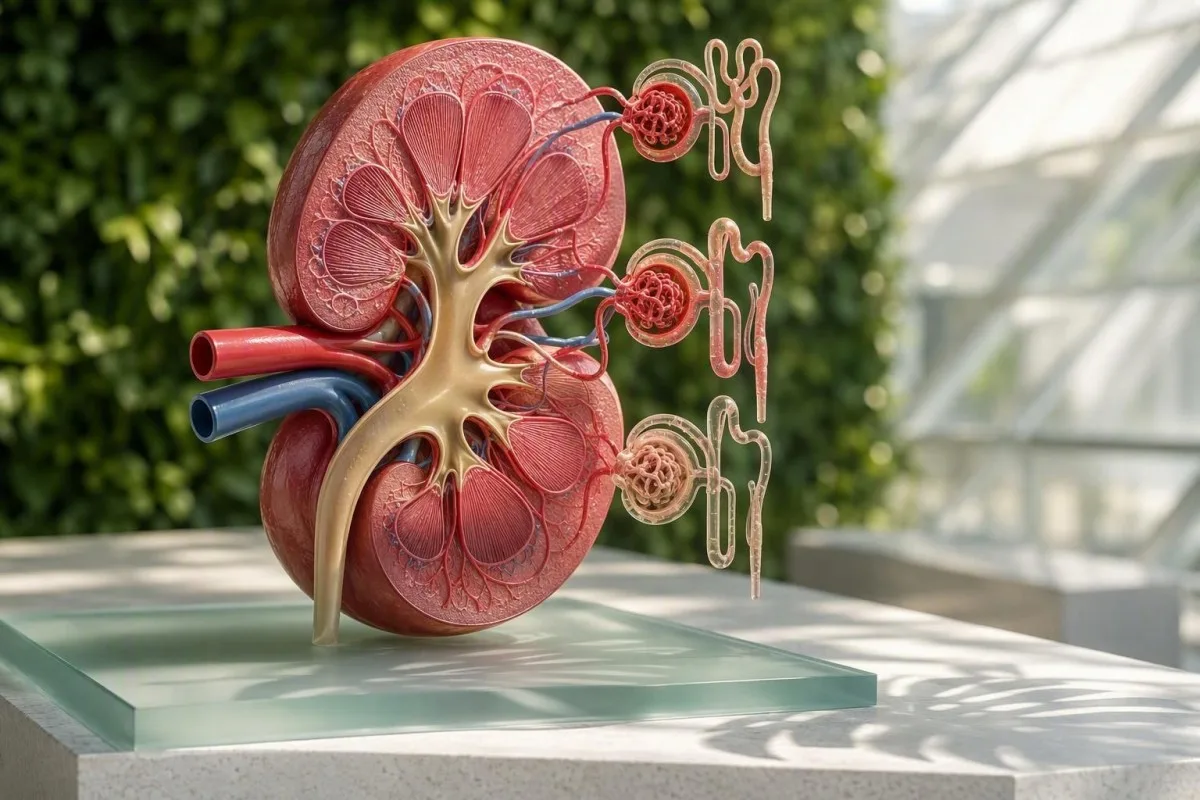
Madal eGFR pärast oksendamist, kuumutamist, kõhulahtisust või ebapiisavat vedelikutarbimist võib olla pöörduv. Tulemus vajab siiski konteksti: sümptomid, lähtekreatiniin, uriinianalüüsi leiud, ravimid ja taastumise kiirus on olulised.


- Ajutine madal GFR võib tekkida, kui dehüdratsioon vähendab neerude verevoolu ja tõstab kreatiniini taset tundide või päevade jooksul.
- AKI lävi on kreatiniini suurenemine vähemalt 0,3 mg/dl 48 tunni jooksul või 1,5 korda lähtetasemest 7 päeva jooksul.
- Kreatiniini kordusanalüüs määratakse sageli 24–72 tunni jooksul pärast vedeliku manustamist ja taastumist lihtsa kahtlustatava dehüdratsiooni korral.
- CKD definitsioon nõuab eGFR-i alla 60 mL/min/1,73 m² või neerukahjustuse markereid vähemalt 3 kuu jooksul.
- Uriini ACR 30 mg/g või enam võib viidata neerukahjustusele isegi siis, kui eGFR on üle 60 mL/min/1,73 m².
- Kiire ülevaatus on vajalik väga väikese uriinierituse, segasuse, hingeldamise, tursete, raske nõrkuse või kaaliumi kõrvalekallete korral.
- Ravimi risk tõuseb dehüdratsiooni korral, kui kasutatakse MSPVA-id, AKE inhibiitoreid, ARB-sid, diureetikumid, liitium või SGLT2 ravimeid.
- Üksikud tulemuse piirangud oluline, sest kreatiniinipõhine eGFR on kiiresti muutuva neeru talitluse korral vähem usaldusväärne.
Kas dehüdratsioon võib põhjustada ajutiselt madalat GFR-i testi tulemust?
Jah – dehüdratsioon võib ajutiselt alandada GFR testi tulemust kuna ringleva vedeliku mahu vähenemine vähendab neerude verevoolu, põhjustades kreatiniini tõusu ja arvutatud eGFRi langust. Kui põhjus kõrvaldatakse kiiresti, naasevad paljud inimesed 24–72 tunni jooksul lähedale oma eelmisele tasemele; madalat GFRi ei tohiks kunagi automaatselt eirata.
GFRi test tavaliselt teatab eGFR, mis on hinnang, mis arvutatakse seerumi kreatiniini, vanuse ja soo põhjal, mitte otsene filtreerimise mõõtmine. Ägeda vedelikukaotuse ajal võib kreatiniin koguneda enne, kui neerud on püsivalt kahjustatud. Kantesti on AI vereanalüüsi analüsaator mis loeb eGFRi koos kreatiniini, kusihappe, elektrolüütide ja varasemate tulemustega, selle asemel et käsitleda ühte madalat numbrit diagnoosina.
Oma kliinilises töös on klassikaline stsenaarium 38-aastane patsient, kellel on kahe päeva jooksul olnud gastroenteriit, kelle kreatiniini tase tõuseb 0,8 mg/dl-lt 1,2 mg/dl-ni ja eGFR langeb 98 ml/min/1,73 m²-lt 58 ml/min/1,73 m²-ni. See võib olla pöörduv prerenalne füsioloogia, kuid 0,4 mg/dl tõus vastab ägeda neerukahjustuse kriteeriumile ja nõuab õigeaegset jälgimist, mitte ainult rahustamist.
Dr. Thomas Kleini praktiline reegel on lihtne: anamnees näitab meile, kas dehüdratsioon on tõenäoline, samas kui korduv proov näitab meile, kas see oli kogu selgitus. Üksik madal väärtus ei saa kroonilist neeruhaigust diagnoosida; meie CKD staadiumide juhend selgitab, miks kestus muudab tõlgendamist.
Miks vedelikukaotus muudab kreatiniini ja eGFR-i
Vedelikukaotus alandab eGFRi neerude perfusiooni rõhu vähendamise teel, seetõttu säästavad neerud soola ja vett, filtreerides samal ajal vähem plasma. Seda nimetatakse filtreerimise prerenalseks vähenemiseks; see võib esineda kõhulahtisuse, oksendamise, palaviku, kuumuse käes viibimise, raske füüsilise koormuse või liigse diureesi korral.
Kreatiniin tekib enamasti lihasmetabolismis ja elimineerub filtreerimise teel, seega kõrgem kontsentratsioon võib peegeldada madalamat kliirensit, kontsentratsiooni veekao tõttu, lihaste suurenenud lagunemist või mitmeid tegureid koos. eGFRi võrrandid eeldavad suhteliselt püsivat kreatiniini taset; kui see muutub kiiresti, jääb arvutatud eGFR tegelikust füsioloogiast maha.
Kusihappe ja kreatiniini suhe üle ligikaudu 20:1, kui see on teatatud mg/dl-des võib toetada vedeliku depopuleerumist, kuid see ei ole dehüdratsiooni test. Seedetrakti verejooks, kortikosteroidid, kõrge valgu tarbimine ja katabolism võivad samuti kusihapet tõsta; vaadake meie üksikasjalikku BUN ja kreatiniini suhe juhendab lõkse, mida arstid väldivad.
KDIGO defineerib ägedat neerukahjustust kui kreatiniini tõusu võrra 0,3 mg/dL või rohkem 48 tunni jooksul, tõusuni 1,5 korda võrreldes algtasemega 7 päeva jooksul, või uriini väljutamine alla 0,5 ml/kg/tunnis 6 tundi (KDIGO, 2012). Need künnised on tahtlikult tundlikud, sest suure eGFRi languse ootamine võib jätta ravitava probleemi märkamata.
Kuidas lugeda madalaid eGFR-i numbreid pärast dehüdratsiooni
eGFR 60–89 ml/min/1,73 m² ei ole automaatselt neeruhaigus, eriti pärast dehüdratsiooni, eakatel täiskasvanutel või uriinianomaaliate puudumisel. eGFR alla 60 muutub kliiniliselt oluliseks, kui see püsib 3 kuud või esineb koos murettekitavate sümptomite või äkilise kreatiniini tõusuga.
eGFR väärtus 90 või kõrgem mL/min/1,73 m² peetakse täiskasvanutel üldiselt normaalseks või kõrgeks, kuigi uriini albumiin võib siiski viidata neerukahjustusele. eGFR 45-59 klassifitseeritakse G3a ainult siis, kui on kindlaks tehtud kroonilisus või muud neerumarkerid; vanus, lihasmass ja eelnev tulemus jäävad oluliseks kontekstiks.
Äkiline langus 105-lt 62-le on sageli informatiivsem kui stabiilne 62-ne näitaja mitme aasta jooksul. Vastupidi, 78-ne eGFR lihaseliselt 25-aastaselt pärast pikka jooksu võib peegeldada ajutist kreatiniini teket, mitte vähenenud filtratsiooni; meie artikkel teemal kreatiniin pärast treeningut selgitab seda tavalist valehäiret.
KDIGO 2024 väidab, et krooniline neeruhaigus nõuab neeru struktuuri või funktsiooni kõrvalekaldeid, mis on esinenud 3 kuud (KDIGO Work Group, 2024). See ajaline nõue takistab kliinikuid lühiajalise dehüdratsioonijärgu nimetamist krooniliseks haiguseks.
Laboratoorsed vihjed, mis toetavad dehüdratsiooni, mitte püsivat neeruhaigust
Kontsentreeritud uriiniproov, sobiv vedelikukaotuse ajalugu ja taastumine pärast hüdratatsiooni soosivad dehüdratsiooni, samas kui albumiinuria, veri uriinis, püsivad kõrvalekalded või neeru struktuurile viitav leid muudavad kroonilise haiguse tõenäolisemaks. Ükski laboratoorne näitaja ei lahenda küsimust.
uriini erikaal üle 1.020 näitab sageli kontsentreeritud uriini ja näidud üle 1.030 võivad esineda märkimisväärse veesäästuga. See on ebatäiuslik: glükoos, valk ja radioloogiline kontrastaine võivad samuti suurendada erikaalu, mistõttu uriini erikaalu tulemus vajab täielikku uriinianalüüsi konteksti.
Tavaline uriinianalüüs ei tõesta dehüdratsiooni, kuid valk, punalibled, valgelibled või silindrid muudavad diferentsiaaldiagnostikat. Püsiv albumiini ja kreatiniini suhe 30 mg/g või rohkem on neerukahjustuse marker isegi siis, kui eGFR jääb üle 60 mL/min/1,73 m².
Murettekitav muster on madal eGFR pluss kaalium üle labori normi, bikarbonaat alla 22 mmol/l, või uus valk uriinis. Need koos viitavad häiritud neerude toimele, mitte lihtsale kontsentratsioonile kuuma päeva tõttu, ja need vajavad kliinilist hindamist.
Millal peaksite määrama kreatiniini kordusanalüüsi?
Kreatiniini korduv kontroll on tavaliselt sobiv 24–72 tunni jooksul pärast eeldatud lihtsa dehüdratsiooni korrigeerimist, tingimusel et inimene suudab juua, urineerida normaalselt ja tal ei ole hoiatusmärke. Täpne ajastus sõltub kreatiniini tõusu määrast, neerude algseisundist, vanusest ja ravimitest.
Kerge, isoleeritud tulemuse korral pärast selgelt taastuva haigust, kordavad arstid sageli kreatiniini, uureat, kaaliumi, bikarbonaati ja uriinianalüüsi pärast suukaudset rehidreerimist ja normaalse söömise taastumist. Ei ole universaalset kogust vett, mida peale sundida; südamepuudulikkuse, maksahaiguse või kaugelearenenud neeruhaigusega inimestele vajavad individuaalset vedeliku nõuannet.
Kantesti AI on an AI vereanalüüsi tulemuste tõlgendamise platvorm mis võrdleb praegust neeru paneeli ajalooliste väärtustega, mis on sageli kasulikum kui võrdlemine tulemust rahvapopulatsiooni referentsvahemikuga. Kreatiniin 1,1 mg/dL võib olla ühe inimese jaoks tavaline ja tähenduslik hüpe 0,6 mg/dL-lt teise jaoks.
Korduv uuring pärast 1–2 nädala jooksul võib olla põhjendatud alles pärast seda, kui kliinik on veendunud, et äge episood taandub ja väärtused lähenevad baastasemele. Kasutage võimalusel sama laborit ja lugege meie biokeemilise põhipaneeli juhendit enne, kui oletate, et märgistatud väärtus on isoleeritud.
Millal vajab madal GFR pärast dehüdratsiooni erakorralist abi
Otsige sama päeva meditsiinilist hinnangut madala GFR-i korral koos minimaalse uriinierituse, püsiva oksendamise, segasuse, tugeva pearingluse, hingeldusnähtude, rinnavalu, tursete või märgatava nõrkuse korral. Need sümptomid võivad viidata kliiniliselt olulisele vedelikutasakaalu häirele, ägedale neerukahjustusele või ohtlikele elektrolüütide muutustele.
Kiireloomulisus suureneb, kui kreatiniin tõuseb 0,3 mg/dL 48 tunni jooksul, nädalaga 50% baastasemest või kui uriinieritus on selgelt vähenenud. Täiskasvanul, kelle uriinieritus on 24 tunni jooksul alla umbes 400 ml, ei soovitaks ma ilma kiire kliinilise juhendamiseta lihtsalt kodus rohkem juua.
Kaalium üle 6,0 mmol/L, naatrium alla 120 mmol/L, või bikarbonaat alla 15 mmol/L võivad sõltuvalt sümptomitest ja EKG leidudest vajada kiiret ravi. Meie elektrolüütide “red-flag” juhend selgitab, miks neeru tulemusi ja elektrolüüte tuleb lugeda koos.
Dehüdratsioon võib esineda koos sepsise, kuseteede obstruktsiooni, rabdomüolüüsi, diabeetilise ketoatsidoosi või ravimimürgistusega. See, et inimene on kõhulahtisust põdenud, ei välista neid võimalusi – eriti kui esineb palavik, küljevalu, tume koka-värvi uriin või tugev lihasvalu.
Kuidas arstid eristavad dehüdratsiooni kroonilisest neeruhaigusest
Kliinikud eristavad ajutist eGFR dehüdratsiooni kroonilisest neeruhaigusest, dokumenteerides taastumise, kontrollides uriini albumiini, ülevaates vanemaid tulemusi ja otsides püsivaid kõrvalekaldeid üle 3 kuu. Ainult eGFR väärtus ei saa kindlaks määrata neeruhaiguse põhjust ega kestust.
Uriini albumiini ja kreatiniini suhe alla 30 mg/g on kategooriasse A1, 30-300 mg/g kui A2 ja üle 300 mg/g kui A3. Albuminuuria võib olla mööduv pärast palavikku, tugevat füüsilist koormust, kuseteede infektsiooni või kontrollimatu glükoosi korral, nii et kõrvalekalletega proov vajab tavaliselt kinnitust, mitte kiiret diagnoosi.
Kliinikud vaatavad üle ka vererõhu, diabeedi seisundi, neeru ultraheli ajaloo, perekonna ajaloo, ravimite kasutamise ja selle, kas kreatiniin on kunagi normaliseerunud. albumiini-kreatiniini suhte ettevalmistamise juhend käsitleb praktilisi küsimusi, nagu füüsiline koormus ja menstruatsioon, mis võivad proovi moonutada.
KDIGO 2024 soovitab hinnata nii GFR kategooriat kui ka albuminuuria kategooriat, kuna risk tõuseb palju rohkem, kui mõlemad on kõrvalekalletega, kui ainult eGFR on kergesti madal (KDIGO Work Group, 2024). Minu kogemuse kohaselt hoiab see paarishindamine ära nii alareageerimise kui ka tarbetu paanika.
Uriinitulemused, mis muudavad ajutise selgituse vähem tõenäoliseks
Veri, märkimisväärne valk, rakulised torukesed või püsiv albumiin uriinis muudavad dehüdratsiooni üksinda vähem veenvaks ja põhjustavad tavaliselt täiendavat neeru-uuringut. Dehüdratsioon võib uriiniproovi kontsentreerida, kuid see ei tekita tavaliselt püsivat aktiivset uriini setet.
Granulaarsed torukesed võivad ilmuda pärast märkimisväärset torukesepõhist stressi, samas kui punaliblede torukesed tekitavad muret glomerulaarse haiguse pärast. Üksik laboriuuring tuleks korreleerida proovi kvaliteedi ja sümptomitega, kuid need leiud väärivad üldiselt rohkem tähelepanu kui isoleeritud kontsentreeritud uriin; uurige granulaarsed silindrid uriinis põhjaliku analüüsi saamiseks.
Ribapulga proteiin võib kontsentreeritud uriinis kõrgemalt näidata, seega on albumiini ja kreatiniini suhe tavaliselt kinnitamiseks kasulikum. Püsiv ACR 300 mg/g või rohkem on kõrge riskiga marker ja seda ei tohiks ilma arsti hinnanguta kehva hüdratatsiooniga seostada.
Nähtav punane või teelaadne uriin, valu küljes, palavik või võimetus uriini lasta muudavad olukorra kiireloomulisemaks. Obstruktsioon ja kuseteede infektsioon võivad vähendada GFR-i ja mõlemad vajavad muud vastust kui kodus vedelike asendamine.
Ravimid, mis võivad muuta dehüdratsiooni ägedaks neerukahjustuseks
MSPVA-d, diureetikumid, AKE inhibiitorid, ARB-d, liitium ja mõned diabeediravimid võivad võimendada dehüdratsiooniga seotud GFR-i langust. Need ravimid on sageli sobivad pikaajalised ravimeetodid, kuid äge haigus võib muuta ohutusplaani.
MSPVA-d võivad vähendada neerude võimet säilitada filtreerimist madala ringleva mahu ajal, eriti eakatel inimestel ja diureetikumi ning AKE inhibiitori või ARB võtvatel inimestel. Ärge lõpetage ettenähtud ravimeid refleksidena; küsige retsepti väljakirjutajalt või apteekrilt haiguspäeva plaani oma seisunditele.
SGLT2 inhibiitorid põhjustavad sageli väikese varajase eGFR languse pärast kasutuselevõttu hemodünaamilise muutuse tõttu glomerulaarides, mitte tingimata neerukahjustuse tõttu. Eristamine dehüdratsioonist on oluline ja meie ülevaade eGFR muutustest SGLT2 ravimitega selgitab, miks glükoosi, vererõhku, sümptomeid ja ajastamist hinnatakse koos.
Metformiin ei alanda otseselt GFR-i, kuid äge neerukahjustus võib muuta selle ohutuks ajutiseks jätkamiseks. Liitiumi tasemed võivad mahu vähenemisega tõusta, samas kui trimetoprim võib kreatiniini tõsta ilma mõõdetud filtreerimise proportsionaalse languseta – üks neist peensustest, mis muudab enese tõlgendamise riskantseks.
Miks vanus, rasedus, lihasmass ja treening mõjutavad eGFR-i tõlgendamist
Kreatiniinipõhine eGFR võib alahinnata filtreerimist lihaselistel inimestel ja üle hinnata seda nõrkadel inimestel väikese lihasmassiga; rasedus kasutab hoopis teisi ootusi. Madal eGFR pärast dehüdratsiooni on seetõttu erinev tähendus kehaehitajal, eakal inimesel ja rase patsiendil.
Raseduse ajal tõuseb GFR tavaliselt, seega langeb kreatiniin sageli umbes 0,4–0,8 mg/dL; väärtus, mida peetakse väljaspool rasedust tavaliseks, võib kontekstis muret tekitada. Iga rase naine, kellel on oksendamine, hüpertensioon, peavalu, turse või ebanormaalsed neerutulemused, peaks võtma ühendust oma sünnitusabi meeskonnaga ja meie raseduse GFR juhend annab vastava raamistiku.
78-aastane inimene, kellel on madal janu tunne ja kes kasutab diureetikume, võib arendada neerude hüpoperfusiooni näiliselt tagasihoidliku vedeliku kaoga. Vastupidi, jõusportlane võib omada kreatiniini üle referentsintervalli lihasmassi, kreatiini lisandite või hiljutise treeningu tõttu, isegi normaalse tegeliku filtreerimisega.
Tsüstatiin C võib aeg-ajalt selgitada ebakindlat kreatiniinitulemust, kuna see sõltub vähem lihasmassist, kuigi kilpnäärmehaigused, suitsetamine, steroidid ja põletik võivad seda mõjutada. Dr. Thomas Klein kasutab seda sageli otsustava tegurina, mitte ajaloo ja järjestikuste tulemuste asendajana.
Mida teha kodus kordus-GFR-i testi oodates
Kui olete ärkvel, suudate juua ja uriini lasta, asendage vedelikke järk-järgult, vältige rasket treeningut ja MSPVA-sid ning registreerige sümptomid enne uuesti kontrolli. Kodused meetmed ei ole sobivad, kui esinevad punased lipud või raske haigus.
Väikesed sagedased joogid talutakse üldiselt paremini kui suurte koguste kiire tarbimine, eriti pärast oksendamist. Suukaudne rehüdratsioonilahus võib olla kasulik kõhulahtisuse korral, kuna see asendab naatriumi ja glükoosi ning vett; vedelikupiirangutega inimestele on vaja arsti poolt antud nõuandeid.
Kahvatu kollane uriin võib viidata mõõdukale hüdratatsioonile, kuid see ei ole puhastussertifikaat. Tume uriin võib peegeldada kontsentratsiooni, ravimeid, bilirubiini või lihaspigmenti, seega lugege meie juhendit tumeda uriini hoiatusmärgid kui värvus püsib pärast vedeliku manustamist.
Vältige rasket treeningut 24–48 tunni enne planeeritud kreatiniini kordusanalüüsi, välja arvatud juhul, kui teie arst teisiti määrab. Märkige üles haiguse kuupäevad, palavik, kõhulahtisuse episoodid, ravimiannused, treening, toidulisandid ja uriini eritumise hulk; see väike ajaskaala muudab sageli tõlgendust.
Miks trendid on kasulikumad kui üks madal eGFR-i tulemus
Kreatiniini muutuse suund ja kiirus on tavaliselt kliiniliselt kasulikumad kui üksik eGFR väärtus. Stabiilne eGFR 55 ja uus langus 95-lt 55-le võivad kanda väga erinevaid riske, kuigi kuvatav arv on identne.
Laborid võivad kasutada delta-kontrolle, kui kreatiniini tase ootamatult muutub, kuid ka bioloogiline varieeruvus, analüüsi varieeruvus, dieet ja vedeliku tarbimine mängivad rolli. 0,1 mg/dl muutus võib ühes olukorras olla müra ja teises tähenduslik, kui inimese baasliin on pidevalt 0,5 mg/dl.
Kantesti on AI-põhine vereanalüüsi analüüsitööriist mis korraldab järjestikuseid neerutulemusi koos teie salvestatud kliinilise taustaga, nagu haigused ja ravimimuutused. See lähenemisviis on paralleelne meie poolt kirjeldatud praktilise meetodiga. pikaajalise laborianalüüsi juhend: looge oma baasliin enne haiguse kulgemise järeldamist.
Alates 29. augustist 2026 ei tohiks ükski tarbijale suunatud tõlgendus asendada arsti otsust, kui eGFR kiiresti langeb. Graafik võib tuvastada mustri; see ei saa uurida patsienti dehüdratsiooni, obstruktsiooni, südamepuudulikkuse või süsteemse haiguse suhtes.
Standardse GFR-i testi piirangud ägeda haiguse ajal
Standardne kreatiniinipõhine eGFR on kõige vähem usaldusväärne, kui neerufunktsioon kiiresti muutub, kuna kreatiniini tasakaalustumine võtab aega. Aktiivse dehüdratsiooni või varajase taastumise ajal jälgivad arstid järjestikust kreatiniini ja uriini eritumist, mitte ei tugine ühele arvutatud eGFR-ile.
2021. aasta CKD-EPI kreatiniini võrrand parandab populatsioonitasemel hindamist, eemaldades rassikorrektsiooni, kuid see eeldab siiski, et kreatiniini tootmine ja eritumine on mõistlikult stabiilsed. Kreatiinilisandid, keedetud liha mõni tund enne proovivõttu, amputatsioon, kakeksia ja suur lihasmass võivad kõik tõlgendust mõjutada.
Kantesti AI tõstab esile tulemuste kombinatsioone järelkontrolliks, kuid ei diagnoosi ägedat neerukahjustust ega määra vedelikravi. Meie tehnoloogia juhend kirjeldab, kuidas kontekstuaalne tõlgendus erineb meditsiinilise hindamise asendamisest.
GFRi mõõtmine eksogeensete filtreerimismarkerite abil on reserveeritud valitud olukordadeks, nagu elundidoonori hindamine või suur ebakindlus, mitte rutiinseks dehüdratsiooni järelkontrolliks. Enamik patsiente vajab hoolikat kliinilist läbivaatust, uriinianalüüsi, korduvat neerupaneeli ja hinnangut selle kohta, kas näitaja taastub.
Arsti kontrollnimekiri madala GFR-i kohta pärast dehüdratsiooni
Ohutu järelkontrolli plaan kontrollib raskusastet, põhjust, taastumist, uriini leidude, ravimite ja tüsistuste—mitte ainult eGFR numbrit. See struktureeritud lähenemisviis tuvastab inimesi, kes saavad varsti uuesti kontrolli ja neid, kes vajavad kiiret haiglatasemel hindamist.
Küsisin vedelikukaotuse, uriini mahu, hiljutise kontrastuuringu, infektsiooni sümptomite, lihaskahjustuse, uriini obstruktsiooni, diabeedi, südamepuudulikkuse ning iga retsepti- või käsimüügiravimi kohta. Seejärel võrdleksin kreatiniini viimase teadaoleva väärtusega ja kontrolliksid kaaliumit, bikarbonaati, uureat, uriinianalüüsi ja uriini ACR-i, kui see on asjakohane.
Taastumise järel baasliini suunas naasev korduv tulemus toetab ajutist hemodünaamilist põhjust, kuigi see ei välista tulevast riski diabeedi või hüpertensiooniga inimesel. Madalaks jääv, halvenev või albuminuuriaga kaasnev tulemus väärib ametlikku neerude uuringut ja mõnikord nefroloogi konsultatsiooni.
Meie kliinilist sisu vaadatakse üle koos standarditega, mida kirjeldab Kantesti meditsiiniline valideerimismeeskond. Kantesti roll on aidata teil paremini küsimusi valmistada ja trende märgata; järgmine kliiniline otsus kuulub spetsialistile, kes saab teid uurida ja tulemuse alusel tegutseda.
Korduma kippuvad küsimused
Kas dehüdratsioon võib põhjustada eGFR-i madalana näitamist?
Jah. Dehüdratsioon võib vähendada verevoolu neerudesse, tõsta seerumi kreatiniini taset ja põhjustada ajutiselt madalat arvutatud eGFR-i. Kreatiniini tõus vähemalt 0,3 mg/dl 48 tunni jooksul vastab KDIGO ägeda neerukahjustuse kriteeriumile, isegi kui põhjus võib olla pöörduv. Korduv neerupaneel pärast taastumist, mis sageli uneennetatud juhtudel toimub 24-72 tunni jooksul, aitab kindlaks teha, kas muutus taandub.
Kui kaua võtab eGFR-i paranemine pärast dehüdratsiooni?
Dehüdratsiooniga seotud eGFR-i muutus paraneb sageli 24–72 tunni jooksul pärast vedelikukaotuse lõppemist ja neerude verevarustuse taastumist, kuid taastumine võib pärast rasket haigust või enne olemasoleva neeruhaigusega inimestel kauem aega võtta. Kreatiniin ei muutu koheselt, seega võib eGFR kliinilisest paranemisest maha jääda. Püsiv madal eGFR, tõusev kreatiniin, madal uriini eritumine või kõrvalekalded kaaliumisisalduses vajavad korduva koduse vedelikutarbimise asemel meditsiinilist läbivaatust. Kroonilist neeruhaigust ei saa diagnoosida, välja arvatud juhul, kui kõrvalekalded püsivad vähemalt 3 kuud.
Kas ma peaksin kreatiniini uuesti kontrollimiseks jooma palju vett?
Ärge sundige liigset veetarbimist enne kreatiniini kordusanalüüsi; püüdke normaalse, mugava vedeliku tarbimise poole, välja arvatud juhul, kui arst on määranud vedelikupiirangu või -eesmärgi. Kiire liigne tarbimine võib vähendada naatriumi taset, eriti eakatel inimestel, vastupidavuslikel sportlastel ja teatud ravimeid võtvatel inimestel. Vältige alkoholi, NSAID-e ja ebatavaliselt pingutavat treeningut 24-48 tundi enne proovi võtmist, kui see on meditsiiniliselt ohutu. Südamepuudulikkuse, tsirroosi või neeruhaiguse raske vormiga inimesed peaksid oma arstilt küsima, kui palju vedelikku on sobiv.
Milline eGFR-i arv on ohtlik pärast dehüdratsiooni?
Ei ole ühte kindlat ohtlikku eGFR-i numbrit, sest ägedust määravad muutuste kiirus, sümptomid, kaaliumitase, uriini eritumiskogus ja neerude algne funktsioon. Alla 60 mL/min/1.73 m² eGFR, mis on uus, peaks olema hinnatud, samas kui alla 30 mL/min/1.73 m² eGFR vajab üldjuhul kiiret meditsiinilist arutelu. Kiiret hindamist vajatakse varem, kui uriini eritumiskogus on väga väike, kreatiniin tõuseb 0,3 mg/dL 48 tunni jooksul, kaalium on üle 6,0 mmol/L või ilmnevad sellised sümptomid nagu segasus või hingeldus.
Kas tavaline uriinianalüüs võib välistada neeruhaiguse pärast madalat eGFR-i?
Ei. Uriinianalüüs vähendab muret mõnede põletikuliste neeruhaiguste pärast, kuid ei välista kõiki neeruhaigusi ega obstruktsiooni. Uriini albumiini-kreatiniini suhe alla 30 mg/g on rahustav, samas kui püsivad väärtused 30 mg/g või rohkem viitavad neerukahjustusele isegi siis, kui eGFR on üle 60 mL/min/1.73 m². Arstid tõlgendavad uriinitulemusi koos korduvate kreatiniini-, vererõhu-, ravimite ajaloo-, diabeedi staatuse ja varasemate neerumõõtmistega.
Kas treening või kreatiin võib põhjustada madalat GFR-i testi tulemust?
Tugev füüsiline koormus, lihaskahjustus, keedetud liha ja kreatiinilisandid võivad tõsta seerumi kreatiniini taset ning muuta kreatiniinipõhise eGFR-i näiliselt madalamaks ilma vastava tegeliku filtreerimisvõime vähenemiseta. See efekt on eriti oluline pärast pikamaajooksusündmusi, intensiivset jõutreeningut või CrossFit-stiilis treeninguid. Tugev lihasvalu, nõrkus, turse või pärast treeningut tekkinud koolapruun uriin vajavad kiiremat hindamist, kuna rabdomüolüüs võib põhjustada tõelist ägedat neerukahjustust. Korduv proovivõtt pärast 24-48 tundi puhkust võib olla informatiivne, kui arst peab seda ohutuks.
Hangi AI-toega vereanalüüsi analüüs juba täna
Liitu enam kui 2 miljoni kasutajaga üle maailma, kes usaldavad Kantesti-d kohese ja täpse laborianalüüsi jaoks. Laadi üles oma vereanalüüsi tulemused ja saad põhjaliku tõlgenduse 15,000+ biomarkerite kohta sekunditega.
📚 Viidatud teaduspublikatsioonid
Klein, T., Mitchell, S., & Weber, H. (2026). aPTT normaalne vahemik: D-dimeer, valk C vere hüübimise juhend. Kantesti AI Medical Research.
Klein, T., Mitchell, S., & Weber, H. (2026). Seerumi valkude juhend: globuliinide, albumiini ja A/G suhte vereanalüüs. Kantesti AI Medical Research.
📖 Välised meditsiinilised viited
⚕️ Meditsiiniline lahtiütlus
Käesolev artikkel on mõeldud üksnes hariduslikel eesmärkidel ega kujuta endast meditsiinilist nõuannet. Diagnoosi ja ravivalikute otsuste tegemiseks konsulteeri alati kvalifitseeritud tervishoiutöötajaga.
E-E-A-T usaldussignaalid
Kogemus
Arsti juhitud kliiniline ülevaade labori tõlgendamise töövoogudest.
Ekspertiis
Laborimeditsiin keskendub sellele, kuidas biomarkerid käituvad kliinilises kontekstis.
Autoriteetsus
Kirjutanud dr Thomas Klein, ülevaade: dr Sarah Mitchell ja prof dr Hans Weber.
Usaldusväärsus
Tõenduspõhine tõlgendus selgete edasiste sammudega, et vähendada ärevust.