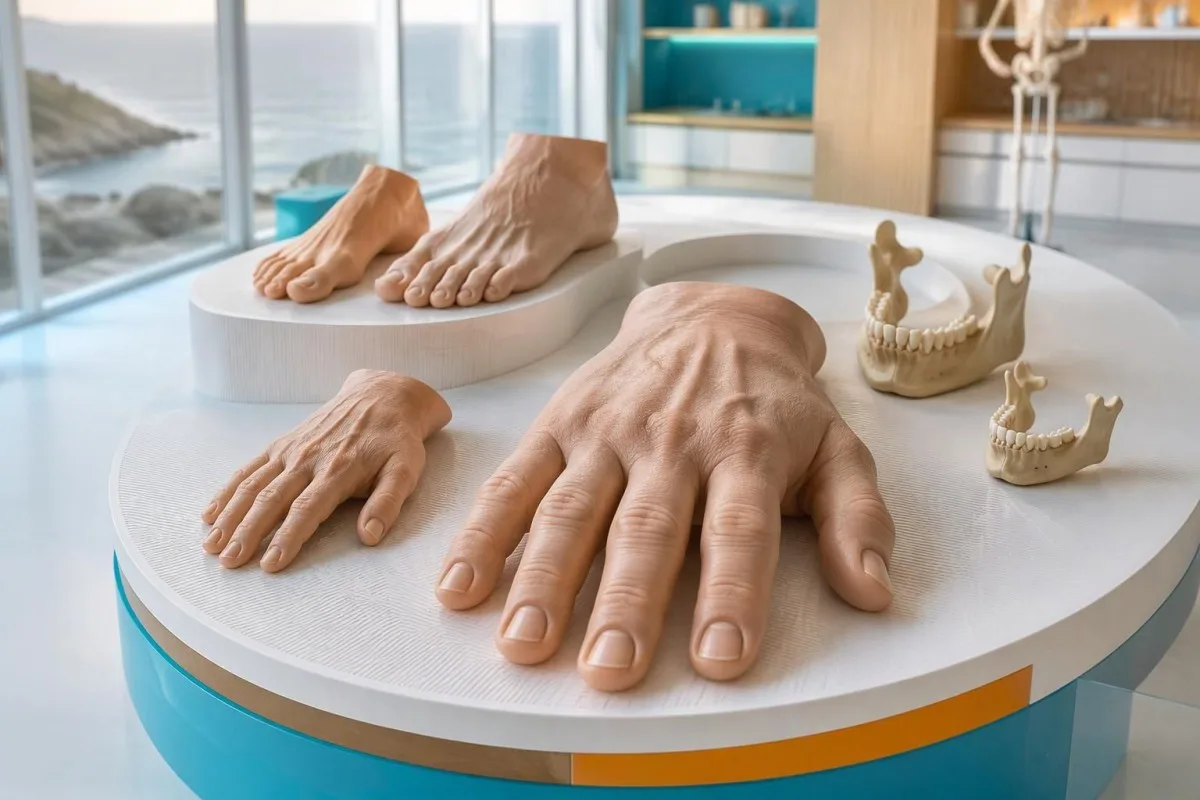
قد تشير زيادة حجم اليدين أو القدمين تدريجيًا، أو تغيّر شكل الفك، أو اتساع المسافات بين الأسنان، أو زيادة التعرّق، أو انقطاع النفس أثناء النوم إلى ضخامة الأطراف، ولا سيما عندما تتطور عدة تغيرات معًا. لا تكفي الأعراض لتأكيد التشخيص؛ إذ يلزم تقييم سريري وفحص دم لمستوى عامل النمو الشبيه بالأنسولين-1 (IGF-1) مع مراعاة العمر.

أهم النقاط
- تقدم أهم من وجود عرض منفرد: فزيادة مقاس الخاتم مع تغيّر العضة على مدى عدة سنوات تستدعي مراجعة سريرية، حتى دون تغيرات واضحة في ملامح الوجه.
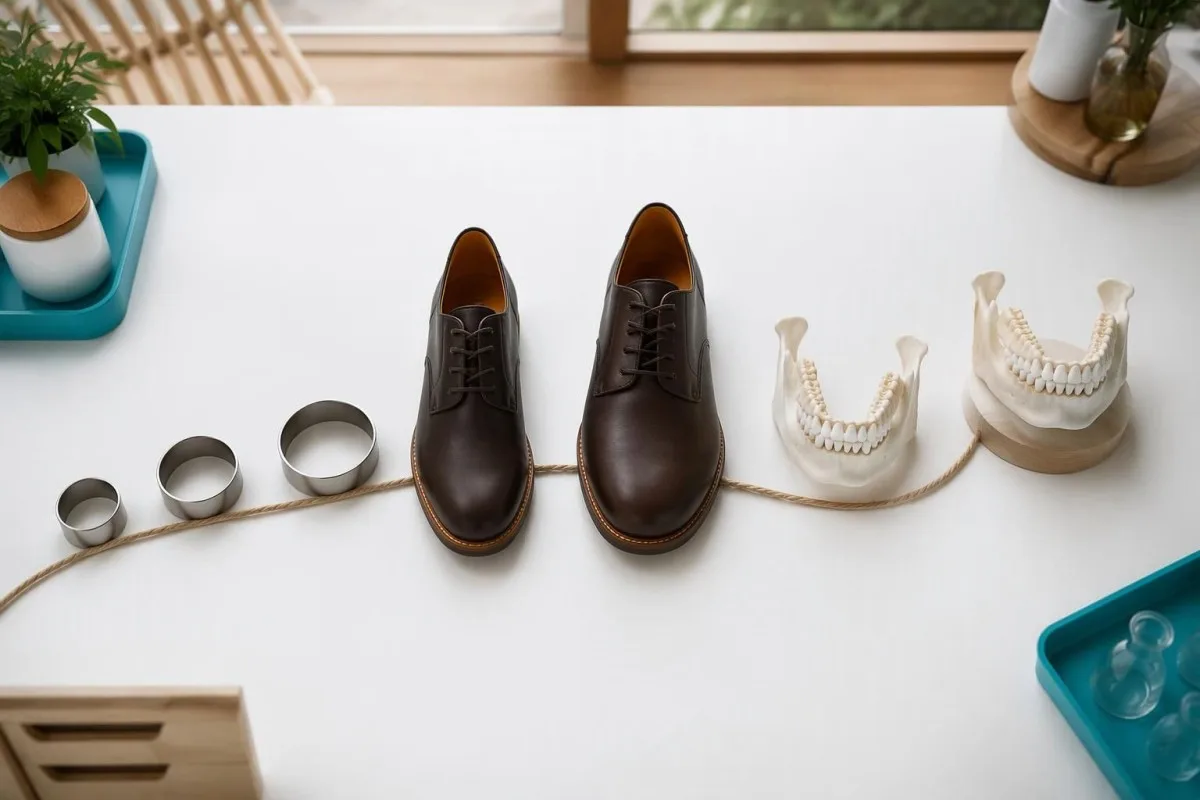
- اليدان والقدمان قد يزداد عرضهما بعد توقف زيادة الطول لدى البالغين؛ ولا يوجد عدد معتمد لمقاسات الخواتم أو الأحذية يشخّص ضخامة الأطراف.
- تغيرات الوجه قد تشمل بروزًا أكبر للفك السفلي، واتساع الأنف، وزيادة سُمك الشفتين، وظهور فراغات جديدة بين الأسنان؛ ويمكن لمقارنة صورتين مؤرختين أن توضح التسلسل الزمني.
- انقطاع النفس أثناء النوم إلى جانب تضخّم اليد أو القدم أو الفك، يعزّز سبب التحري عن فرط هرمون النمو؛ فالشخير وحده ليس مؤشرًا محددًا.
- IGF-1 هو الفحص الكيميائي الحيوي الأول المعتاد، ويجب أن يتوافق المجال المرجعي فيه مع عمر الشخص وطريقة الفحص المعتمدة في المختبر.
- عتبة 1.3× مستمدة من توافق الخبراء بشأن ضخامة الأطراف لعام 2024: يمكن تأكيد التشخيص إذا تجاوز مستوى IGF-1 مقدار 1.3 مرة الحد الأعلى المعدّل بحسب العمر، عند وجود سمات سريرية مميزة.
- اختبار كبت الغلوكوز يحسم عدم اليقين أحيانًا: فقد يستخدم الطبيب 75 غرامًا من الغلوكوز الفموي وقياسات متسلسلة لهرمون النمو بدلًا من الاعتماد على نتيجة واحدة عشوائية لهرمون النمو.
- أعراض الطوارئ تشمل صداعًا شديدًا ومفاجئًا مصحوبًا بمشكلات بصرية جديدة أو قيء أو انخفاض مستوى اليقظة؛ اطلب الرعاية الطارئة بدلًا من انتظار موعد لمراجعة الهرمونات.
ما أعراض ضخامة الأطراف التي تستحق الانتباه؟
تثير أعراض ضخامة الأطراف القلق عندما يتفاقم تضخم اليدين أو القدمين أو الوجه بالتزامن مع تغيرات مثل التعرق أو الشخير أو تغير تطابق الأسنان. عادةً ما يكون ضيق خاتم واحد أمرًا غير محدد؛ أما حدوث تغيرين مستقلين معًا فيوفر سببًا أقوى لإجراء تقييم سريري، رغم أن قائمة الأعراض لا يمكنها إثبات التشخيص.
تنتج ضخامة الأطراف عن فرط هرمون النمو بعد انغلاق صفائح النمو. يحفز هرمون النمو إنتاج عامل النمو الشبيه بالإنسولين 1، أو IGF-1، الذي يعزز تضخم الأنسجة الرخوة وبعض العظام؛ وتنشأ معظم الحالات عن ورم غدي نخامي غير سرطاني، لا عن مشكلة غذائية.
قد يصعب تمييز التغير التدريجي مقارنةً بعَرَض مفاجئ. وقد تكشف مقارنة مظهرك الحالي بصور التُقطت قبل 3–5 سنوات عن تغير في الحاجب أو الفك أو الأنف قد لا تلاحظه عند تفقد المرآة يوميًا؛ وهذه الفترة إطار عملي للمقارنة، وليست مدة انتظار مطلوبة.
على سبيل المثال، تخيل شخصًا يبلغ 46 عامًا أعاد توسيع خاتم زفافه مرتين، وأصبحت أحذيته أعرض، ووثّق طبيب أسنانه تغيرًا في تطابق الأسنان. يجعل ثبات وزن الجسم زيادة الوزن البسيطة تفسيرًا أقل اكتمالًا، لكن لا بد من الفحص والاختبارات الهرمونية قبل تشخيص ضخامة الأطراف.
Kantesti هو محلل لفحوص الدم بالذكاء الاصطناعي، ويمكنه المساعدة في شرح تقرير IGF-1 دون اعتبار قائمة الأعراض تشخيصًا. ملكنا منظمتنا وهدفنا توضيح دورنا: نساعد على فهم النتائج الموجودة، بينما يقيّم الطبيب التغيرات الجسدية ويقرر ما إذا كان إجراء اختبارات متخصصة مناسبًا.
كيف تغيّر ضخامة الأطراف حجم اليدين ومقاس الخاتم
قد تجعل ضخامة الأطراف يدي البالغ أعرض وأكثر سماكة، ما يؤدي تدريجيًا إلى عدم ملاءمة الخواتم، لا في الطقس الحار فحسب. يكون التضخم الذي يصيب كلتا اليدين بمرور الوقت أكثر دلالة من التورم المحصور في إصبع واحد، ولا سيما عند تغير ملاءمة الأحذية أو شكل الوجه أو التعرق أيضًا.
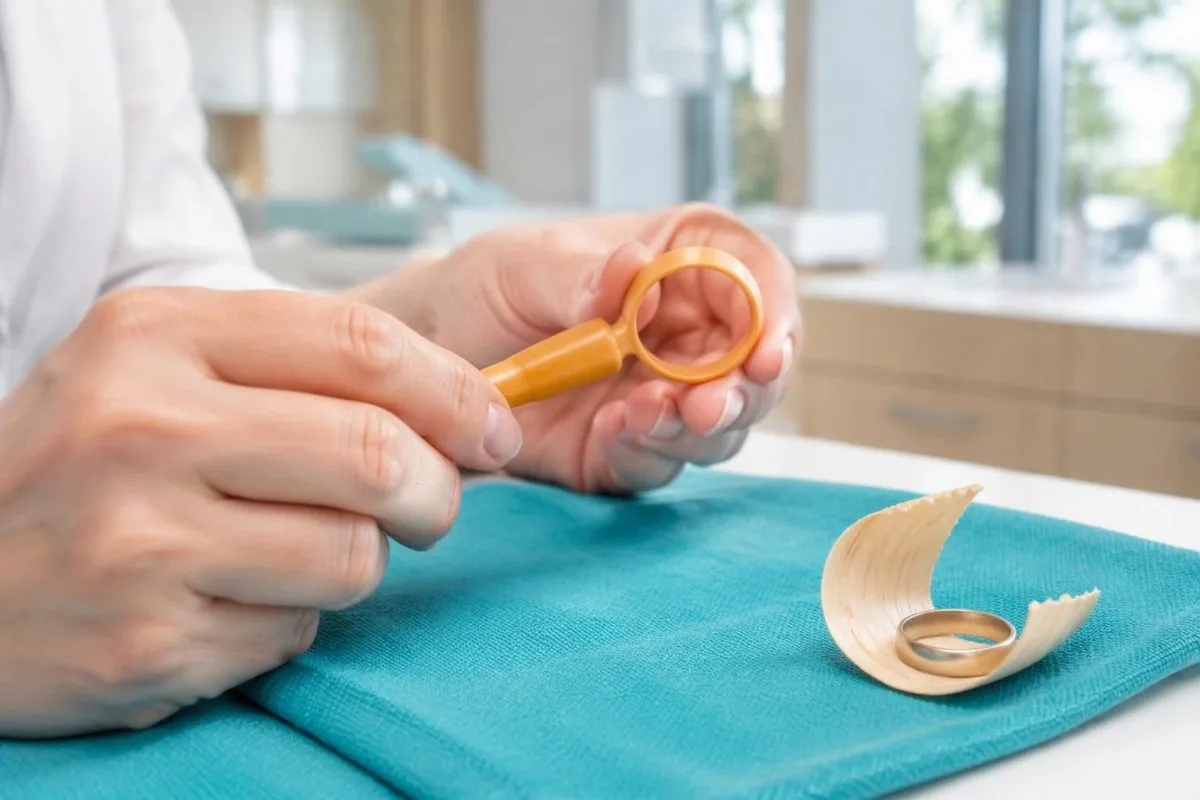
يقيس مقاس الخاتم المحيط، لا سبب التضخم. قد يعكس التغير بمقدار مقاس خاتم واحد زيادة الوزن أو التهاب المفاصل أو احتباس السوائل أو اختلاف أنظمة المقاسات؛ وتُؤخذ ضخامة الأطراف في الحسبان عندما يكون التغير مستمرًا ومصحوبًا بزيادة سماكة راحتي اليدين أو بعلامات مميزة أخرى.
يختلف التورم المؤقت عن تضخم الأنسجة التدريجي. ويمكن التحقق مما إذا كان الخاتم نفسه يلائم الإصبع صباحًا ومساءً لمدة أسبوع لرصد التذبذب، لكن هذه الملاحظة المنزلية لا تستبعد ضخامة الأطراف؛ وتجنب محاولة تمرير خاتم ضيق بالقوة مرارًا فوق مفصل متورم.
قد يشبه احتباس السوائل المرتبط بالغدة الدرقية انتفاخ اليدين دون أن يحاكي النمط الكامل لضخامة الأطراف. وشرحنا لـ قصور نشاط الغدة الدرقية الطفيف يساعد على التمييز بين التغيرات الدرقية المحددة مخبريًا والتضخم الجسدي؛ فحدوث اضطراب طفيف في TSH وحده لا ينبغي أن يفسر تلقائيًا تغيرًا على مدى عدة سنوات في حجم اليدين والفك.
يفصل سجل مفيد للموعد بين ملاحظتين: اتساع اليد عمومًا وتضخم متمركز حول مفاصل معينة. دوّن تواريخ تقريبية لتوسيع الخواتم، ولاحظ ما إذا كان ألم مفاصل الأصابع أو تيبس الصباح أو سماكة راحة اليد قد ظهر أولًا؛ فهذه التفاصيل تساعد الطبيب على التمييز بين نمو الأنسجة ومرض المفاصل أو التورم المتقطع.
متى تكون زيادة مقاس الحذاء مؤشرًا مبكرًا
قد يكون ازدياد عرض القدمين أو حجمهما تدريجيًا في مرحلة البلوغ علامة مبكرة على ضخامة الأطراف، ولا سيما إذا تغير حجم اليدين أيضًا. لا يُعد استبدال الأحذية مرة واحدة تشخيصًا؛ إذ يمكن لاختلاف العلامات التجارية أو تغيرات القدم المرتبطة بالحمل أو زيادة الوزن أو الوكعات أو هبوط قوس القدم أن تغير ملاءمة الحذاء أيضًا دون فرط هرمون النمو.
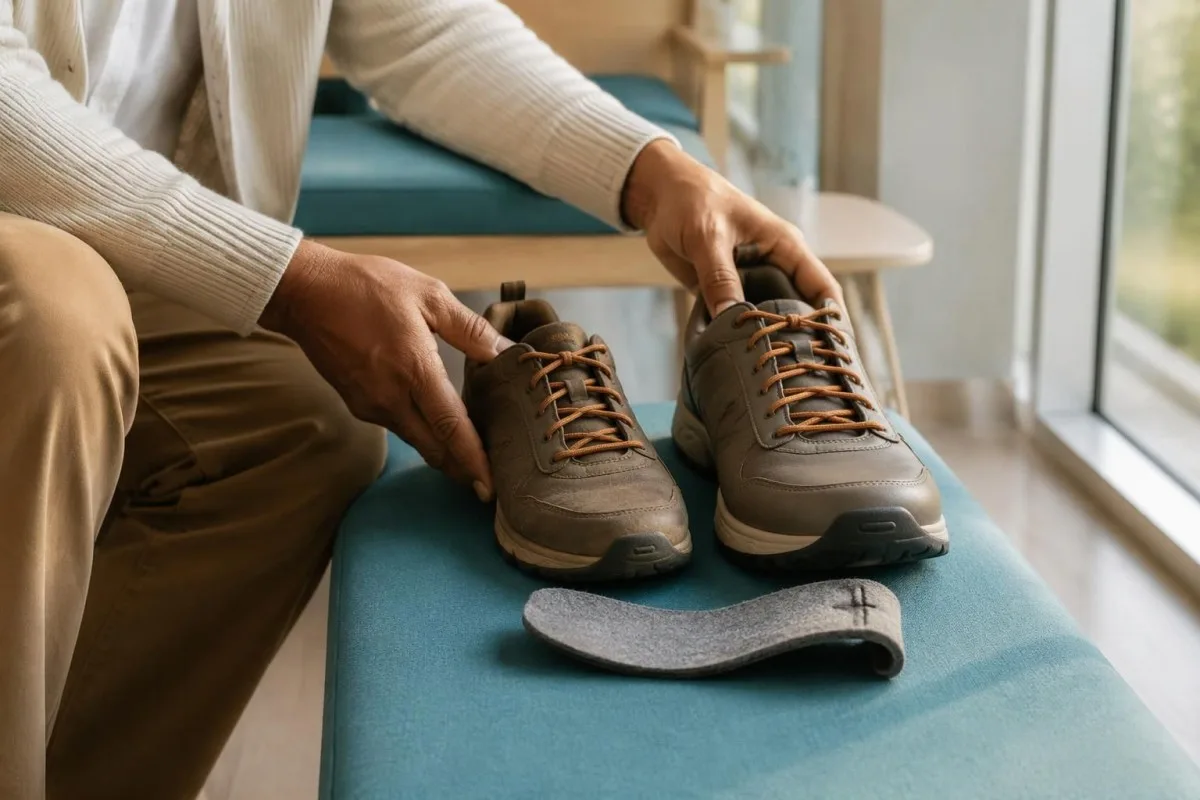
يتغير عرض القدم أحيانًا قبل مقاس الحذاء المدوّن. إذا كانت الأحذية المشتراة بفارق 3 سنوات متساوية في الطول، لكنك تحتاج إلى صندوق أصابع أوسع تدريجيًا، فسجل هذه المعلومة؛ فقد يتزامن ازدياد سماكة الأنسجة الرخوة مع تغيرات ميكانيكية في القدم، لذا لا يكفي قياس الطول وحده.
يتطور التضخم المرتبط بضخامة الأطراف عمومًا تدريجيًا ويصيب كلتا القدمين. أما التورم المفاجئ في ساق واحدة أو قدم واحدة، ولا سيما مع انزعاج في ربلة الساق أو دفئها، فيحتاج إلى تقييم مختلف؛ ودليلنا عن urgent one-sided leg swelling explains why that pattern should not be attributed to a slow hormonal disorder.
For a hypothetical 51-year-old, moving from the same manufacturer's size 8 to size 10 over several years would be more informative than comparing unrelated brands. The observation becomes more meaningful if a ring has also needed resizing, but there is no validated shoe-size increase that confirms acromegaly.
Bring 2 pairs of dated shoes or purchase records if available, rather than buying measuring equipment. A clinician can assess edema, arches, joints and soft tissues together; foot photographs should be taken in comparable positions because perspective can make a stable foot appear larger.
ما الذي قد تكشفه تغيرات الفك والأسنان
Acromegaly facial changes can include a more prominent lower jaw, broader nose, thicker lips and wider spacing between teeth. A changing bite documented on 2 dental visits can be more useful than a subjective impression of looking different, because jaw growth and ordinary weight gain affect appearance differently.
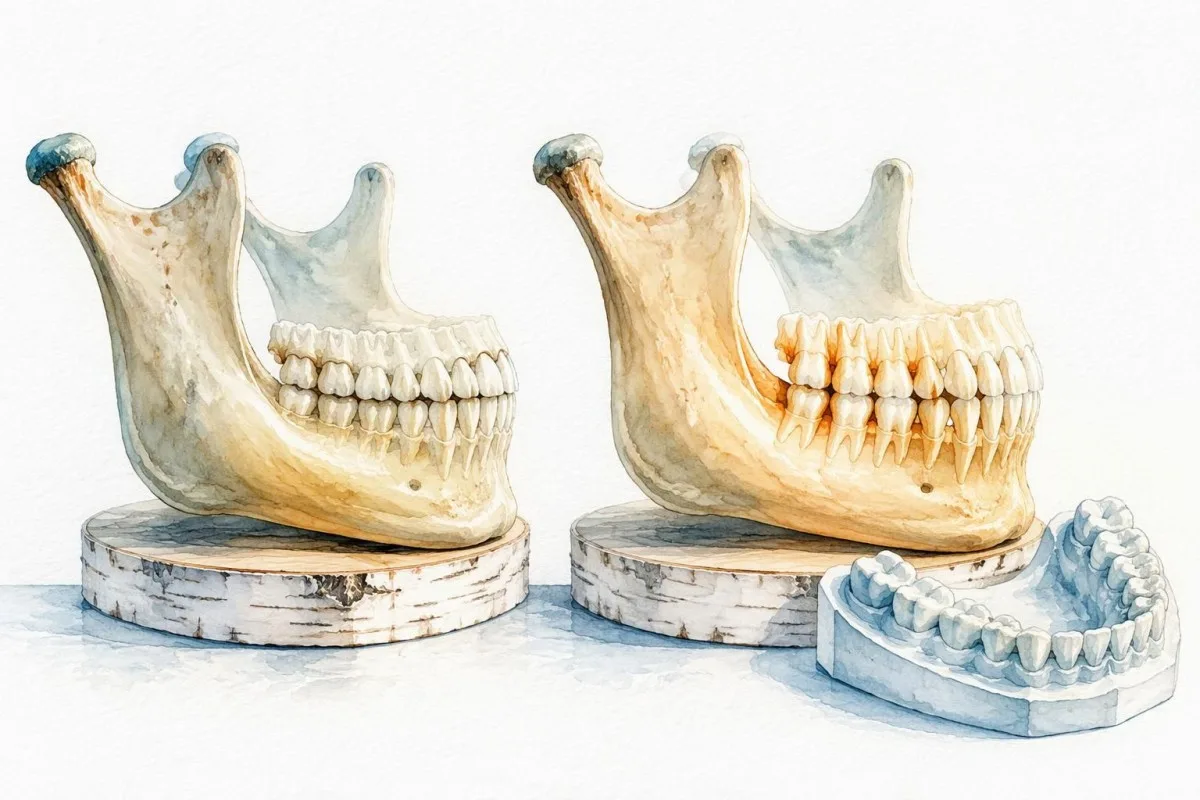
New tooth spacing does not necessarily mean the teeth themselves have enlarged. Enlargement of the jaw can change their positions relative to one another, while gum disease, missing teeth and orthodontic movement can also produce gaps; comparing dental records from 2 dates helps identify which process is more plausible.
Photographs are most useful when lighting, camera distance and head position are similar. Choose 1 older front-view photograph and 1 side view if possible; wide-angle phone lenses can exaggerate the nose and jaw, so apparent enlargement in a close selfie is not reliable evidence of hormone excess.
Bone disorders can also change skull or jaw shape, but usually require a different diagnostic pathway. Our explanation of Paget disease testing describes one alternative; an ALP result, whether normal or raised, cannot replace IGF-1 testing when the broader pattern suggests acromegaly.
Ask a dentist whether 2 findings are documented: a progressive bite change and new spacing not explained by gum or orthodontic disease. A dentist may recognize the physical pattern, but photographs, bite impressions and dental imaging cannot confirm acromegaly without an endocrine assessment.
لماذا لا تكتسب زيادة التعرّق دلالتها إلا ضمن نمط أوسع
Increased sweating and oily or thicker skin can accompany acromegaly, but sweating alone is a weak diagnostic clue. Persistent sweating becomes more relevant when it develops alongside at least 1 structural change, such as broader hands or a changing jaw; the combination guides evaluation rather than proving a hormonal cause.
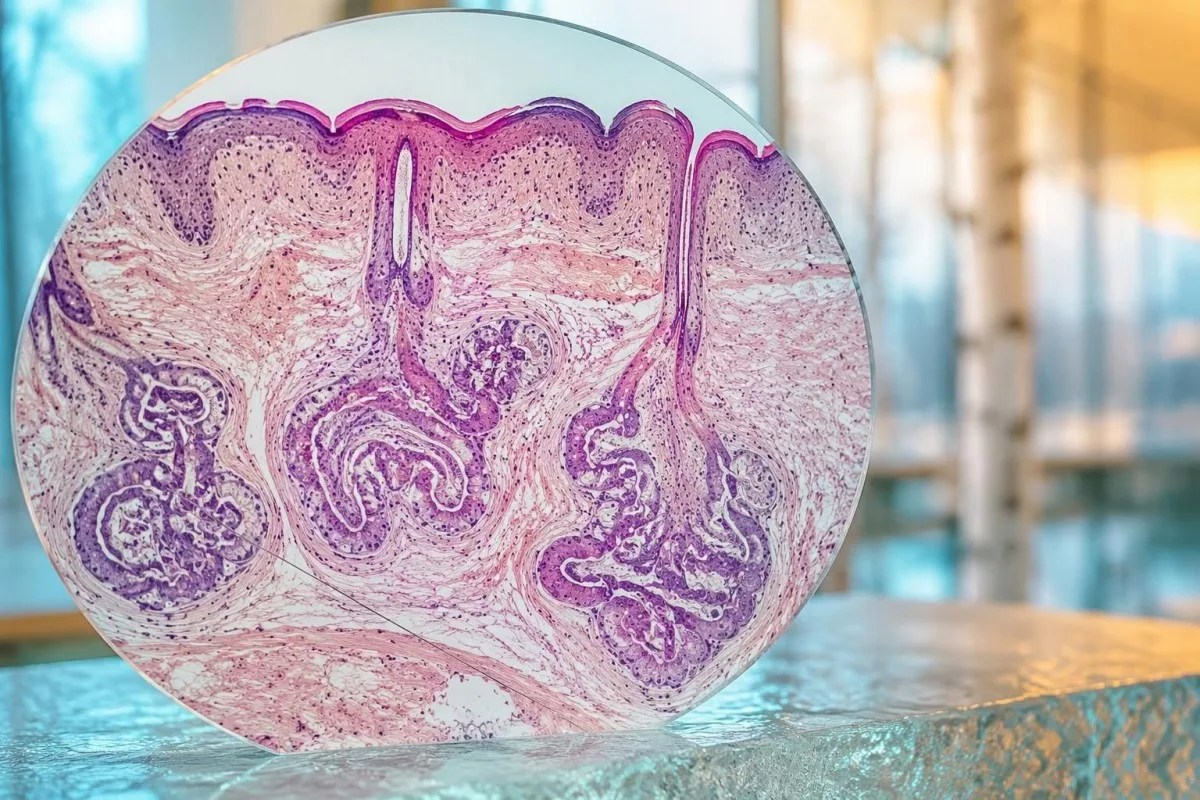
A useful sweating history distinguishes persistent excess perspiration from brief episodes. Recording triggers and timing for 7 days can reveal links to exercise, medicines, meals or hot flashes; acromegaly does not have a distinctive sweat odor or a validated sweating frequency that separates it from other causes.
Episodic sweating with pounding headaches, palpitations and marked blood-pressure swings suggests a different endocrine question. Our guide to adrenal hormone warning patterns explains when metanephrine testing may be considered; that test and IGF-1 answer different questions, even when 2 conditions share sweating as a symptom.
Hot flashes can coincide with the age at which acromegaly becomes noticeable, creating an easy attribution error. The discussion of fluctuating menopause hormone results explains why 1 estradiol measurement is not a complete explanation for sweating, especially if ring fit and facial shape are also changing.
Skin tags are common and are not an acromegaly screening test. In a hypothetical 48-year-old with new sweating and several skin tags, we would distinguish metabolic or medication-related explanations from the much more specific observation of progressive hand and jaw enlargement; counting skin tags does not resolve that distinction.
كيف يرتبط انقطاع النفس أثناء النوم بتضخّم الأنسجة
Acromegaly can contribute to obstructive sleep apnea through enlargement of the tongue and other upper-airway tissues. Loud snoring, witnessed breathing pauses and daytime sleepiness warrant sleep evaluation; when these occur with progressive hand or jaw enlargement, an IGF-1 test may also be appropriate rather than assuming 1 diagnosis explains everything.
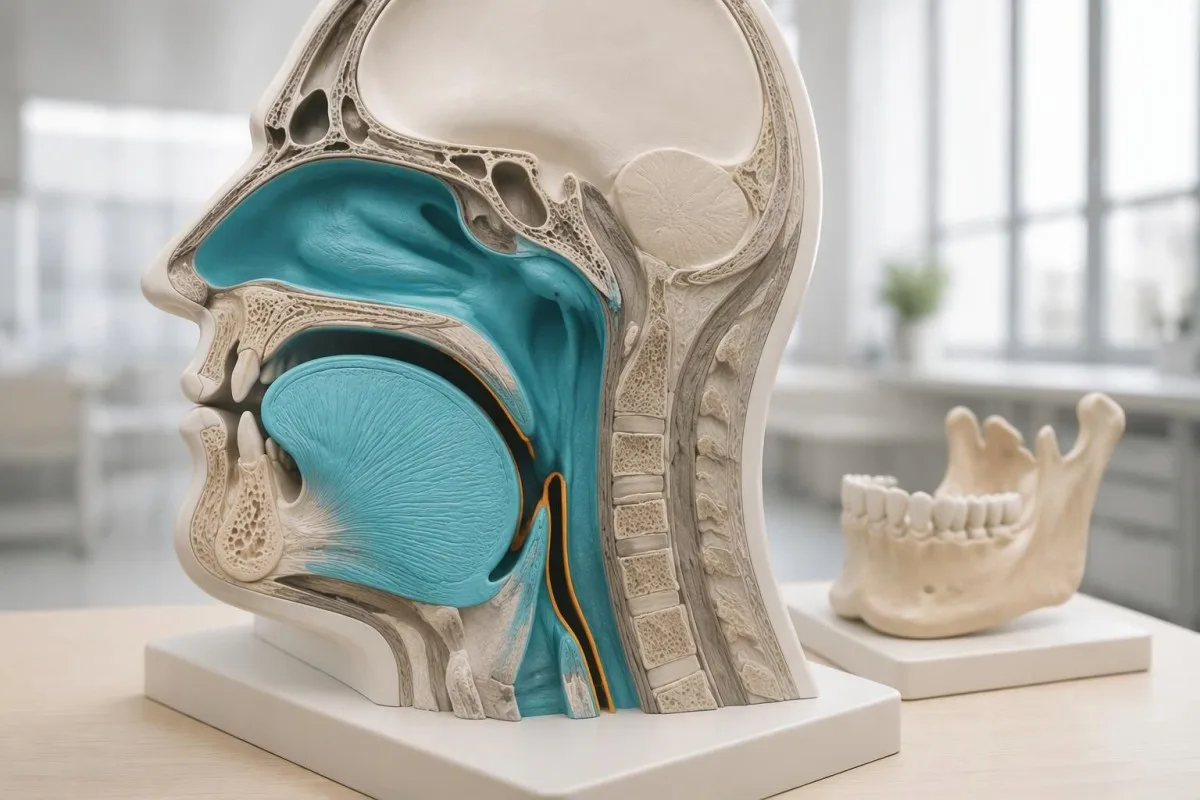
Obstructive sleep apnea is assessed using respiratory events during sleep, not facial appearance. An apnea–hypopnea index of at least 5 events/hour with relevant symptoms or comorbidities, or at least 15 events/hour regardless of symptoms, commonly supports adult diagnosis; neither threshold identifies the underlying cause as acromegaly.
Sleep studies answer a different question from a daytime sleepiness test. Our explanation of sleep-study test selection distinguishes overnight respiratory assessment from testing for narcolepsy; a normal or abnormal multiple sleep latency test does not assess growth hormone excess.
The Endocrine Society guideline recommends considering IGF-1 testing when several associated conditions occur together, including sleep apnea, diabetes, arthritis, carpal tunnel syndrome, excessive sweating and hypertension (Katznelson et al., 2014). Having 1 of these common conditions does not justify assuming acromegaly, but their coexistence can lower the threshold for discussing testing.
Treating hormone excess does not guarantee that sleep apnea disappears. If a person already uses positive-airway-pressure treatment, 1 improved night of sleep is not evidence that it can be stopped; residual airway anatomy and weight-related factors may persist, and any treatment change requires reassessment by the sleep team.
خدر اليدين وألم المفاصل: مؤشرات داعمة
Carpal tunnel syndrome and joint discomfort can accompany acromegaly because tissue enlargement affects nerves, cartilage and joint mechanics. Numbness in the thumb, index and middle fingers is more consistent with median-nerve compression than numbness involving all 5 fingers equally, but the nerve pattern does not establish a hormonal cause.
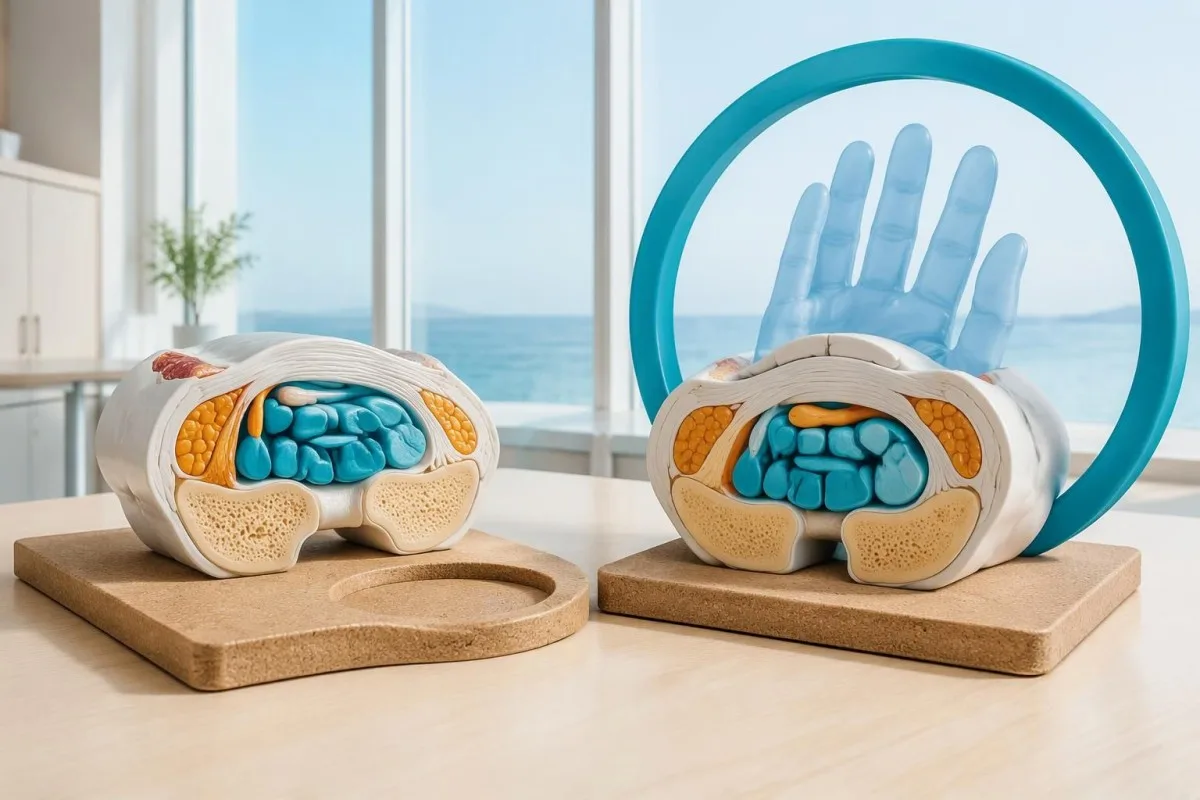
Bilateral symptoms are useful context, not proof of acromegaly. Nighttime tingling in both hands plus 2 ring resizings and a changing bite deserves a different discussion from isolated tingling after repetitive wrist use; the associated structural changes explain why an endocrine cause might enter the differential.
The fingers involved help localize the problem before choosing tests. Our guide to median-nerve symptom patterns explains why little-finger numbness may point elsewhere; an abnormal nerve-conduction study can confirm nerve dysfunction without answering whether IGF-1 excess contributed.
Joint symptoms can outlast successful control of growth hormone excess. After years of altered cartilage and bone mechanics, correcting 1 hormone pathway does not necessarily reverse established degenerative changes; this is why early recognition matters even when pain has been labeled ordinary arthritis.
Kantesti can help organize an IGF-1 result alongside glucose or thyroid findings, but nerve symptoms still require clinical localization. For a hypothetical 55-year-old, distinguishing 2 problems—median-nerve compression and progressive tissue enlargement—avoids interpreting every abnormal laboratory value as the cause of hand numbness.
مؤشرات أخرى: تغيّرات مستوى الغلوكوز وضغط الدم والهرمونات
Growth hormone excess can contribute to insulin resistance, high blood pressure and changes in other pituitary hormone functions. These findings are common outside acromegaly; concern rises when at least 2 metabolic or hormonal problems develop alongside progressive hand, foot or facial enlargement, rather than when a single routine result is abnormal.
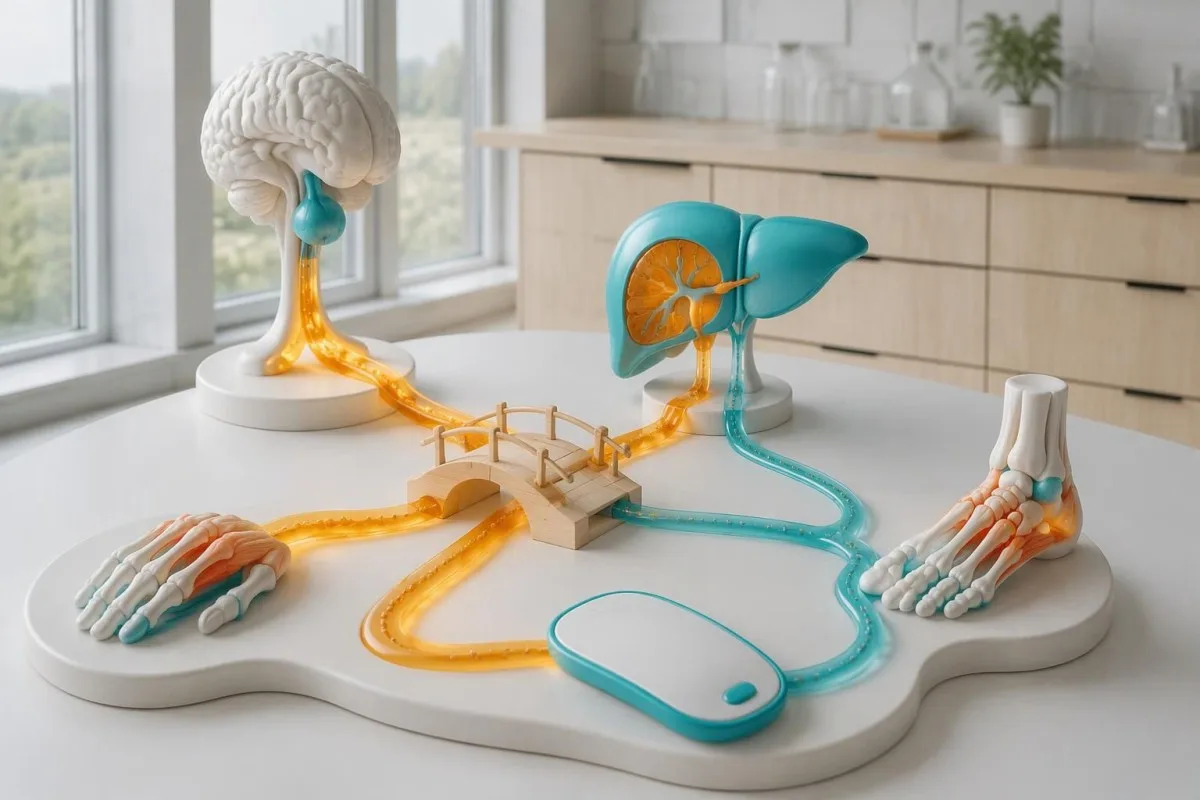
Diabetes is a possible associated condition, not a diagnostic shortcut. An HbA1c of at least 6.5% or fasting plasma glucose of at least 126 mg/dL, equivalent to 7.0 mmol/L, meets commonly used diabetes thresholds when confirmation requirements are satisfied; neither value identifies growth hormone excess as the cause.
Thirst and blurred vision may therefore need evaluation independently of changes in appearance. Our guide to أعراض تحذير ارتفاع نسبة السكر في الدم explains why a hypothetical glucose result of 280 mg/dL with symptoms deserves prompt clinical attention, even while a separate acromegaly assessment is being arranged.
Pituitary dysfunction can alter menstrual cycles, sexual function or fertility, but these symptoms have many causes. Our women's hormonal symptom guide discusses relevant alternatives; missing 2 periods alongside progressive jaw and hand changes deserves a broader review than assuming a single age-related explanation.
At Kantesti, we distinguish a complication marker from a disease-specific test: 1 abnormal HbA1c cannot substitute for age-adjusted IGF-1. Bring blood-pressure readings, medication names and the timing of hormonal symptoms, because a clinician may need to assess associated conditions and pituitary function in parallel.
ما الحالات الأخرى التي قد تسبب تغيرات جسدية مشابهة؟
Weight gain, fluid retention, thyroid disease, arthritis and dental problems can resemble parts of the acromegaly pattern. The distinction depends on the distribution and progression of change: enlargement affecting hands, feet and jaw over several years is harder to explain with 1 localized joint or dental problem.
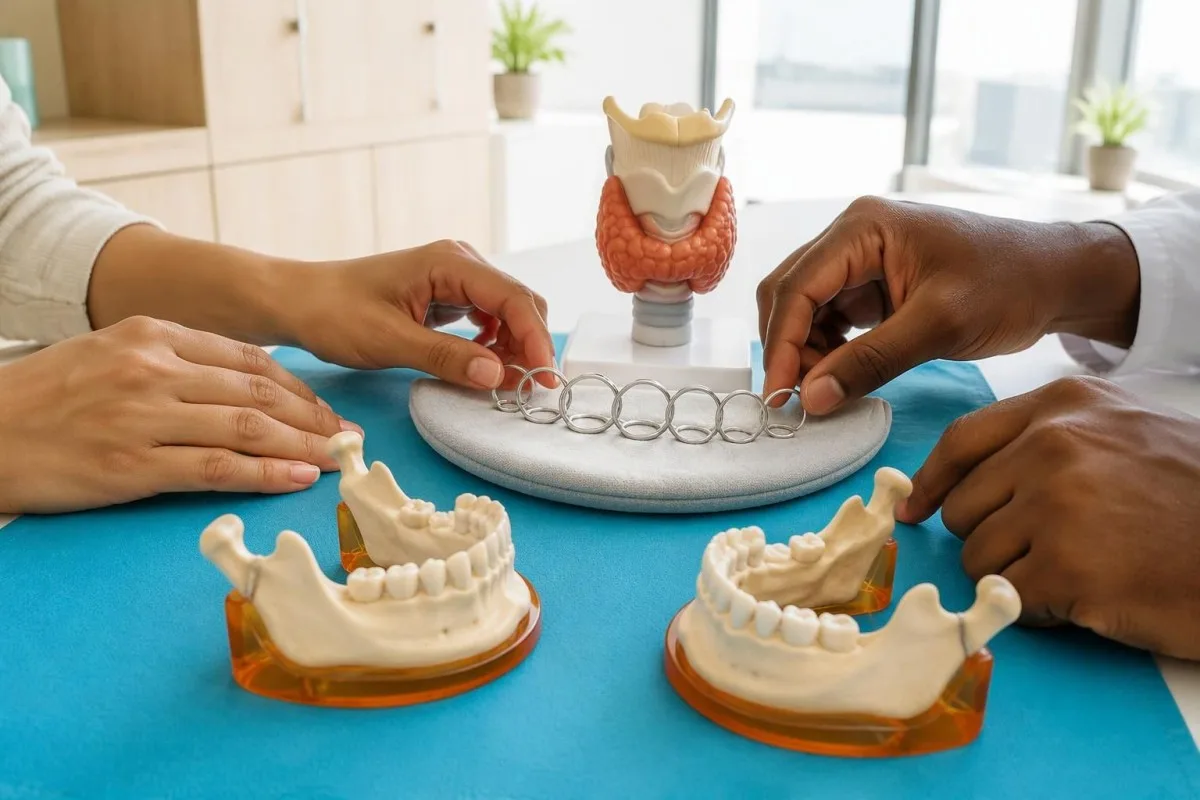
Weight gain often changes facial fullness without producing the same progressive mandibular prominence or dental spacing. In a hypothetical 50-year-old whose weight rose by 12 kg, tighter rings may have an ordinary explanation; a dentist-confirmed change in jaw relationship still deserves separate attention rather than dismissal.
Cushing syndrome can cause facial rounding, metabolic problems and muscle weakness, but its testing pathway differs from acromegaly. Our guide to cortisol screening and confirmation explains why 1 random cortisol result does not establish Cushing syndrome, just as a random growth hormone result does not establish acromegaly.
A pituitary problem can sometimes produce low free T4 without an appropriately elevated TSH. Our explanation of low T4 with normal TSH helps clarify why those 2 measurements must be interpreted together; a normal TSH alone is not a complete assessment of pituitary-related thyroid function.
Childhood growth and adult tissue enlargement should not be confused. Excess growth hormone before growth-plate closure can cause gigantism, whereas adult acromegaly does not usually increase height; a naturally large shoe size that has remained unchanged for 20 years is not equivalent to progressive adult enlargement.
لماذا يكون IGF-1 عادةً أول فحص للدم
Age-adjusted IGF-1 is usually the first biochemical test when acromegaly is suspected because it reflects growth hormone activity more consistently than a single growth hormone measurement. The 2024 consensus states that characteristic clinical features plus IGF-1 above 1.3 times the age-adjusted upper limit can confirm the diagnosis (Giustina et al., 2024).
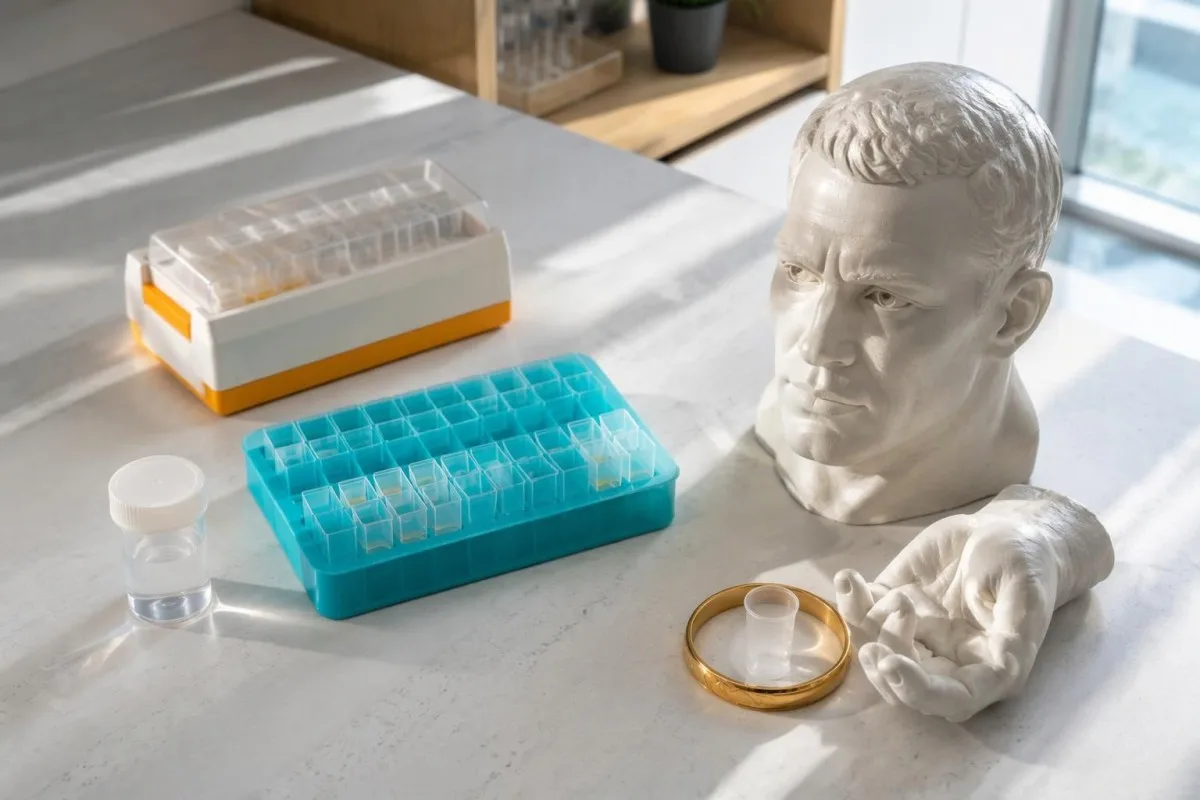
IGF-1 has no single normal adult range that applies to every age and assay. For example, if a hypothetical laboratory upper limit is 250 ng/mL and the result is 340 ng/mL, the result is 1.36 times that upper limit; using another laboratory's range could change the interpretation incorrectly.
A normal IGF-1 usually argues against acromegaly, but confounders can reduce its reliability. Poorly controlled diabetes, significant liver disease, undernutrition and oral estrogen can affect results; 1 normal measurement should be reviewed in context when physical features are compelling, rather than overridden or accepted automatically.
Kantesti is an AI blood test interpretation platform that can explain an IGF-1 value relative to the reference interval printed on the report. ملكنا دليل تفسير المؤشرات الحيوية provides laboratory context, but identifying the assay, age range and clinical reason for testing remains part of clinician-led assessment.
Liver and nutritional status matter because IGF-1 production is closely linked to hepatic function and systemic health. Our دليل تفسير بروتين المصل explains relevant background markers; 1 albumin result cannot validate or invalidate IGF-1, but it may prompt a closer review of illness or nutrition.
| المستوى | النطاق | ما الذي يعنيه |
|---|---|---|
| ضمن حدود المختبر | At or below the age-adjusted upper limit | Usually argues against acromegaly; consider confounders if clinical suspicion remains strong. |
| ارتفاع على الحدّ | >1.0–1.3× the age-adjusted upper limit | Requires clinical review; repeat testing and sometimes glucose suppression testing resolve uncertainty. |
| Above the consensus diagnostic threshold | >1.3× the age-adjusted upper limit | Can confirm acromegaly when characteristic clinical features are present; specialist interpretation is needed. |
متى يكون اختبار تثبيط هرمون النمو مفيدًا
A glucose suppression test may help when IGF-1 results and clinical findings are equivocal. The test commonly uses 75 g oral glucose followed by serial growth hormone measurements; it assesses whether growth hormone suppresses appropriately, rather than treating one high random growth hormone value as diagnostic.
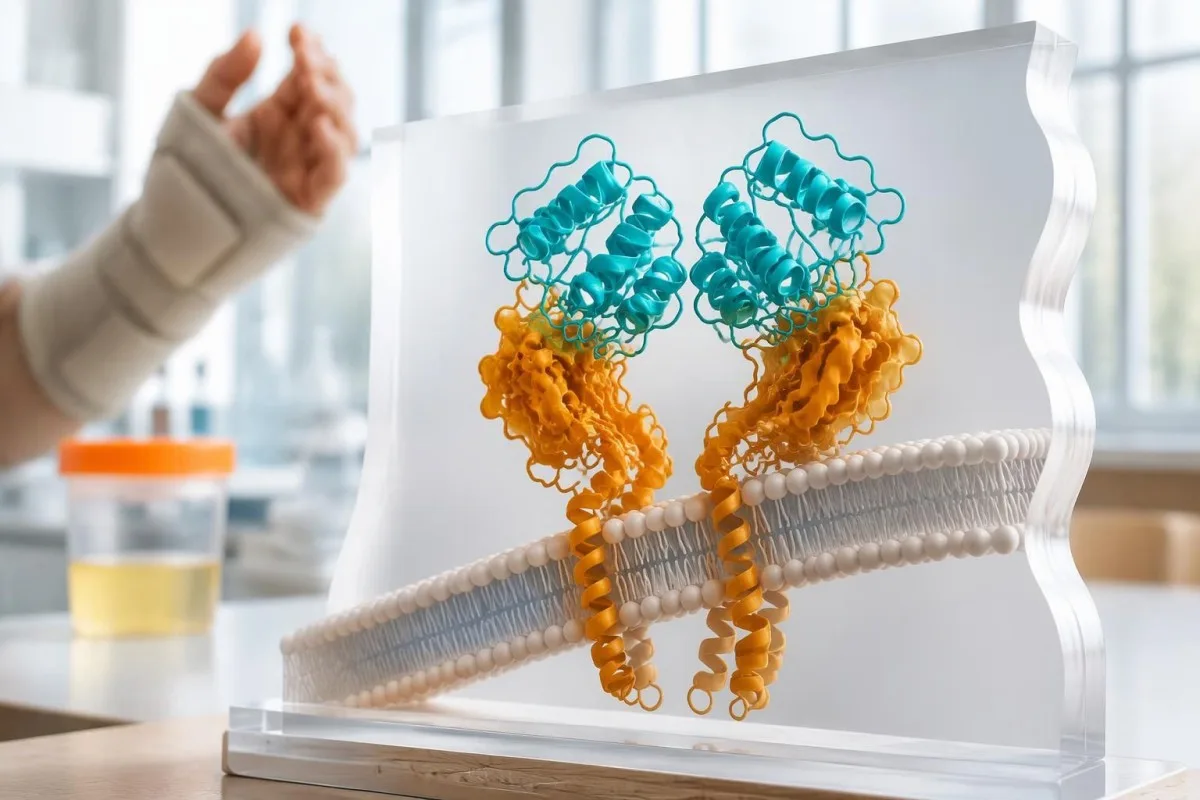
Growth hormone is released in pulses and can rise with sleep, exercise and physiological stress. That is why 1 random value, whether high or low, is unreliable for establishing or excluding acromegaly; an isolated result should not trigger a diagnosis based solely on a generic laboratory range.
Diagnostic cutoffs have changed with assay sensitivity. The Endocrine Society guideline used suppression below 1 ng/mL after glucose to exclude acromegaly in the appropriate testing context (Katznelson et al., 2014); specialist practice may use lower assay-dependent thresholds, including 0.4 ng/mL, rather than one universal cutoff.
For example, a hypothetical IGF-1 of 275 ng/mL against an upper limit of 250 ng/mL equals 1.10 times the upper limit. If growth hormone falls to 0.7 ng/mL, interpretation may differ by assay and clinical context; repeating IGF-1 and reviewing confounders is safer than selecting whichever cutoff gives a preferred answer.
Kantesti does not independently validate an acromegaly diagnosis or choose a glucose-test cutoff. Our منهجيتنا السريرية والقيود explain why interpretation must remain tied to the source report; our separate guide to التغيرات المخبرية ذات الدلالة explains why 2 results are not automatically comparable.
متى ينبغي حجز موعد للمراجعة، ومتى تكون الأعراض طارئة
Book a clinical review for unexplained progressive enlargement of hands, feet or jaw, especially when sweating, sleep apnea or a changing bite accompanies it. There is no minimum duration you must wait; a sudden severe headache with new visual symptoms is a separate emergency, not something to observe for 2 weeks.
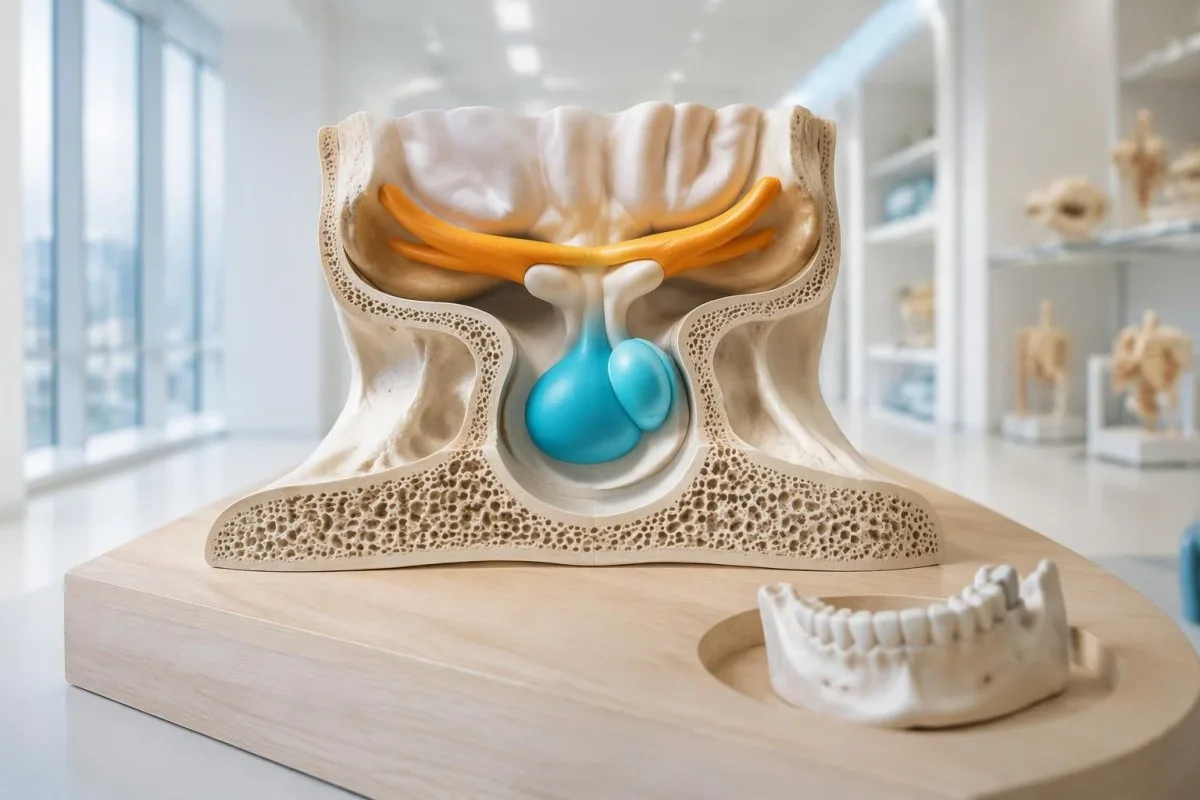
A pituitary growth can affect nearby visual pathways, sometimes causing loss of peripheral vision. New difficulty noticing objects on either side, double vision or a substantial visual change warrants prompt assessment; involvement of 1 or both eyes does not reliably determine whether the cause is pituitary, retinal or neurological.
Sudden severe headache with vomiting, double vision, reduced alertness or visual loss can indicate pituitary apoplexy or another neurological emergency. Seek emergency care immediately rather than waiting for an IGF-1 result; even 1 abrupt neurological warning symptom can justify urgent assessment when severe or unexplained.
Pituitary adenomas are usually noncancerous, but noncancerous does not mean harmless when a growth produces excess hormones or presses on nearby structures. Our guide to neurological warning symptoms explains why progressive and sudden symptoms follow different routes; a 5-year appearance change and an abrupt visual deficit should not receive the same triage.
For gradual changes without emergency features, prepare 3 categories of evidence: appearance or sizing changes, associated symptoms and existing results. Ask whether an age-adjusted IGF-1 test and endocrine referral are appropriate; avoid arriving with a self-confirmed diagnosis or postponing care until every possible symptom appears.
ماذا يحدث بعد ظهور نتيجة غير طبيعية لفحص الهرمونات؟
After biochemical confirmation or strong specialist-supported suspicion, pituitary MRI usually identifies the source and its relationship to surrounding structures. Imaging alone cannot confirm acromegaly: a pituitary finding may be incidental, and the 10 mm size boundary between microadenoma and macroadenoma describes size rather than hormone secretion.
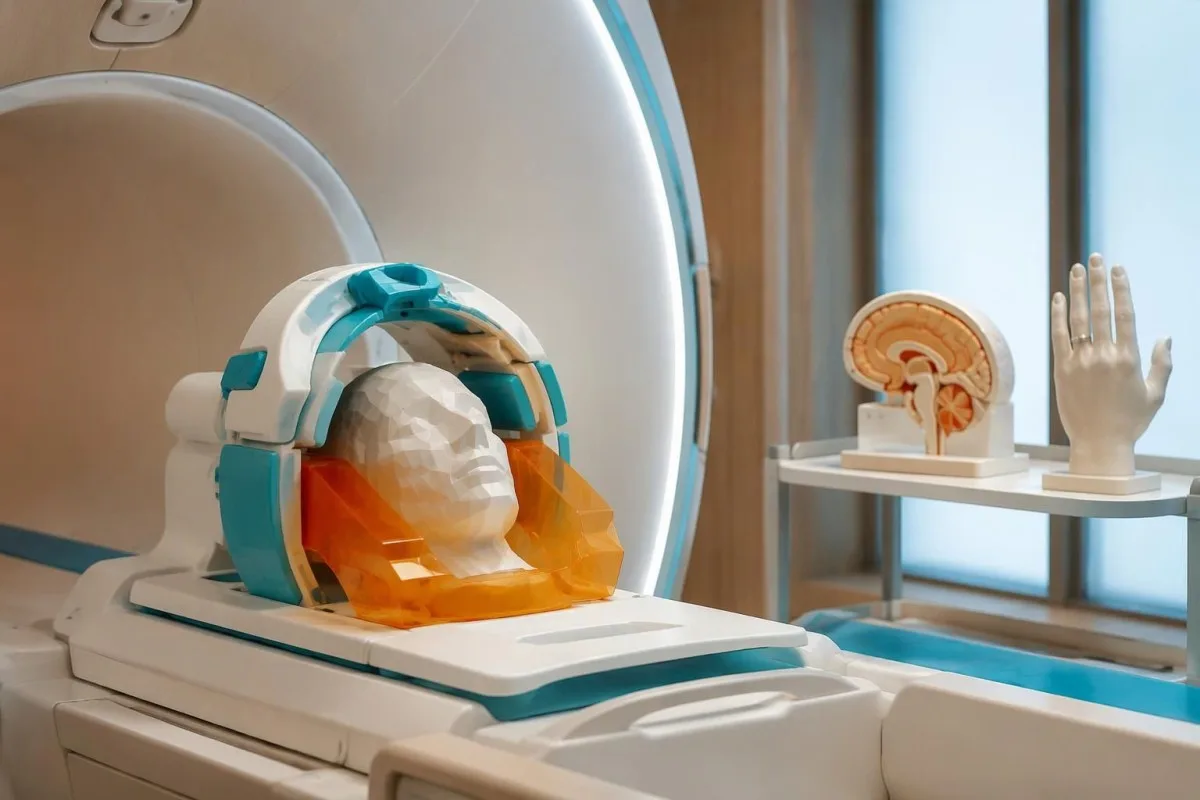
A pituitary microadenoma measures less than 10 mm, while a macroadenoma measures at least 10 mm. A smaller growth can still secrete clinically significant growth hormone; conversely, a larger nonfunctioning growth may not cause acromegaly, so dimensions and biochemical activity answer different questions.
An endocrine team may assess prolactin, thyroid function, adrenal function and reproductive hormone pathways as well as IGF-1. Our guide to ارتفاعات البرولاكتين الطفيفة explains why 1 raised prolactin result can have several causes; it does not prove that a pituitary growth is secreting multiple hormones.
Visual-field testing may be needed when MRI shows proximity to the optic chiasm or when vision is affected. A reassuring ability to read a phone screen at 30 cm does not exclude peripheral field loss; formal testing assesses a different part of vision from everyday reading.
Kantesti AI cannot infer pituitary growth size from an IGF-1 concentration. If the pituitary MRI does not explain convincing biochemical findings, a specialist may review imaging quality, assay issues and rare alternative sources; a negative scan should not be converted into an unsupported claim that 1 hormone result was necessarily wrong.
التحضير لموعدك والتحقق من مصادرنا
The most useful next step is a short timeline connecting physical changes, associated symptoms and existing laboratory results. Bring 2 dated photographs if available, ring or shoe history and the full IGF-1 report; these support a focused clinical discussion without turning home observations into a diagnostic score.
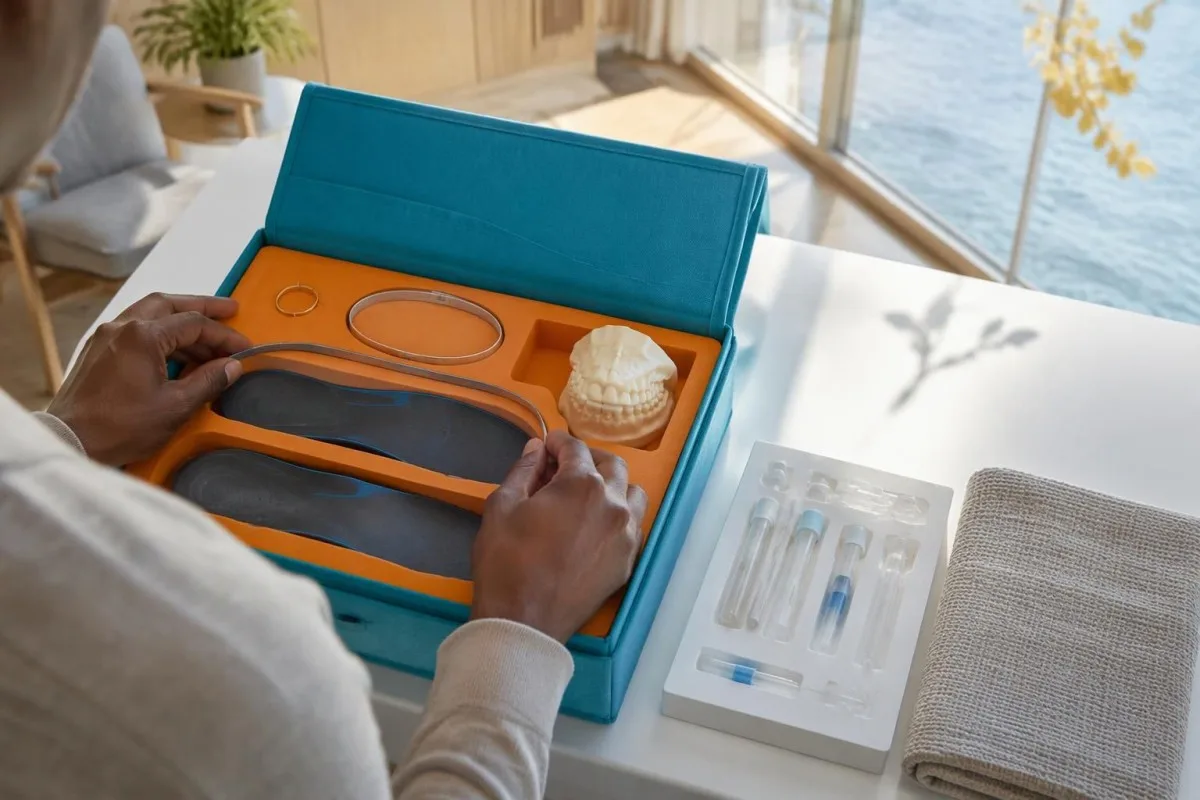
Write down when each change began and whether it has continued, fluctuated or stopped. A 1-page record is usually more useful than dozens of unlabeled photographs: include weight changes, dental observations, sleep-apnea treatment and medication or supplement use, especially prescribed hormones that could influence laboratory interpretation.
Kantesti is an AI-powered blood test analysis tool that can help explain an existing IGF-1 report and organize questions for your clinician. دليلنا إلى التحقق من شروح تقارير الذكاء الاصطناعي describes source verification; an explanation cannot replace examination, and a normal metabolic panel does not mean IGF-1 was tested.
Protect identifying information when sharing laboratory reports or old photographs. Kantesti's إرشادات الخصوصية والبيانات explains our data approach; use only the materials needed for the question, and obtain permission before sharing another person's results or images, even when comparing 2 family members.
The clinical recommendations here draw on the Endocrine Society's 2014 guideline and the 2024 diagnostic consensus, listed below. The 2 accompanying Figshare publications concern gastrointestinal and women's hormonal health; they are related educational resources, not evidence for acromegaly diagnosis, and a repository DOI does not by itself establish peer review.
الأسئلة الشائعة
ما العلامات المبكرة لضخامة الأطراف؟
قد تشمل العلامات المبكرة لضخامة الأطراف ازدياد ضيق الخواتم تدريجيًا، والحاجة إلى أحذية أوسع، وزيادة التعرق، وظهور أعراض جديدة لمتلازمة النفق الرسغي، وتغيّر إطباق الأسنان. قد تكشف مقارنة صورتين مؤرختين أو سجلات الأسنان عن تغيّرات يصعب ملاحظتها يومًا بيوم. لا تؤكد زيادة محددة في مقاس الخاتم أو عدد معين من الأعراض الإصابة بضخامة الأطراف. ينبغي أن يستدعي تفاقم هذه التغيّرات دون تفسير تقييمًا سريريًا وإجراء اختبار IGF-1 المعدّل حسب العمر.
هل تعني زيادة مقاس الخاتم أو الحذاء أنني مصاب بضخامة الأطراف؟
زيادة مقاس الخاتم أو الحذاء لا تعني بحد ذاتها أنك مصاب بضخامة الأطراف. فقد تؤثر زيادة الوزن واحتباس السوائل والتهاب المفاصل والتغيرات التي تطرأ على القدمين بسبب الحمل والاختلافات في الأحذية على مدى ملاءمتها أيضًا. ليس لتغير مقاس الحذاء درجة واحدة دلالة تشخيصية مثبتة، لكن الزيادة المستمرة في الحجم المصحوبة بتغيرات في الفك أو التعرق أو انقطاع النفس أثناء النوم تستدعي التقييم. يعتمد التشخيص على النتائج السريرية والفحوصات الهرمونية المناسبة.
هل يمكن أن يغيّر ضخامة الأطراف ملامح وجهك أو يسبب فراغات بين أسنانك؟
قد يجعل ضخامة الأطراف الفك السفلي أكثر بروزًا ويزيد التباعد بين الأسنان مع تغيّر أبعاد الفك. وقد يؤدي أيضًا إلى اتساع الأنف وزيادة سماكة الشفتين، لكن أمراض اللثة وحركة الأسنان التقويمية والتغيرات المعتادة في ملامح الوجه قد تؤدي إلى نتائج متداخلة. ويمكن أن تساعد مقارنة سجلات الأسنان من تاريخين في تحديد ما إذا كان الإطباق أو التباعد قد ازداد. ولا يمكن للصور الوجهية ونتائج فحص الأسنان تأكيد ضخامة الأطراف من دون تقييم كيميائي حيوي.
ما فحص الدم الذي يكشف ضخامة الأطراف؟
عادةً ما يكون عامل النمو الشبيه بالإنسولين-1 (IGF-1) المعدّل حسب العمر أول اختبار دم يُجرى عند الاشتباه بضخامة الأطراف. وينص توافق الآراء لعام 2024 على أن مستوى IGF-1 الذي يتجاوز 1.3 ضعف الحد الأعلى المعدّل حسب العمر يمكن أن يؤكد ضخامة الأطراف عند وجود سمات سريرية مميزة. وقد تستدعي النتائج الحدّية أو المتعارضة إعادة الفحص وإجراء اختبار تثبيط الغلوكوز تحت إشراف طبيب. ولا يُعد قياس عشوائي واحد لهرمون النمو بديلاً تشخيصياً موثوقاً.
هل يمكن أن تكون مصابًا بضخامة الأطراف مع نتيجة طبيعية لمستوى عامل النمو الشبيه بالإنسولين-1 (IGF-1)؟
عادةً ما يرجّح قياس طبيعي لمستوى IGF-1، موثوق ومعدّل بحسب العمر، عدم وجود ضخامة النهايات غير المعالجة. ومع ذلك، قد يؤثر السكري غير المنضبط جيدًا، وأمراض الكبد الشديدة، وسوء التغذية، والإستروجين الفموي في مستوى IGF-1 ويعقّد تفسيره. إذا استمرت التغيرات الجسدية المميزة رغم ظهور نتيجة طبيعية واحدة، فينبغي للطبيب مراجعة الاختبار والمجال المرجعي والعوامل المربكة المحتملة. وقد يكون تكرار الاختبار أو إجراء تقييم لدى اختصاصي مناسبًا، بدلًا من افتراض أن الأعراض تثبت التشخيص أو أن الظروف المحيطة لا تؤثر أبدًا.
متى ينبغي اعتبار أعراض ضخامة الأطراف المحتملة حالة طارئة؟
عادةً ما يستدعي التضخم التدريجي لليدين أو القدمين أو الوجه مراجعة سريرية مجدولة، لا رعاية طارئة. أما الصداع الشديد المفاجئ المصحوب بفقدان حديث للرؤية أو ازدواجها، أو القيء، أو انخفاض مستوى اليقظة، فيستلزم تقييمًا طارئًا، لاحتمال حدوث سكتة نخامية أو حالات طوارئ عصبية أخرى. لا تنتظر 24 ساعة ظهور نتيجة فحص هرموني روتيني عند حدوث هذه العلامات التحذيرية. كما تستدعي مشكلات الرؤية الجديدة أو المتفاقمة تقييمًا سريريًا عاجلًا، حتى في غياب تغيرات واضحة في المظهر.
تعرّف على نتائج تحليل الدم
حمّل تقرير المختبر الخاص بك، وسيشرح الذكاء الاصطناعي في Kantesti كل مؤشر حيوي بلغة مبسطة خلال ثوانٍ. يستخدمه أكثر من مليوني شخص حول العالم.
مراجع
- كلاين، ت.، ميتشل، س.، وآمبر، ه. (2026). الإسهال بعد الصيام، والنقاط السوداء في البراز، ودليل الجهاز الهضمي لعام 2026. أبحاث Kantesti الطبية بالذكاء الاصطناعي. DOI
- كلاين، ت.، ميتشل، س.، وآمبر، ه. (2026). دليل صحة المرأة: الإباضة، وانقطاع الطمث، والأعراض الهرمونية. أبحاث Kantesti الطبية بالذكاء الاصطناعي. DOI
- Katznelson L et al. (2014). Acromegaly: An Endocrine Society Clinical Practice Guideline. مجلة الغدد الصماء السريرية والاستقلاب. DOI
- Giustina A et al. (2024). Consensus on criteria for acromegaly diagnosis and remission. Pituitary. DOI
- 2 مليون+الفحوصات المُحلَّلة
- 127+بلدان
- 100+اللغات
حول الفريق الطبي


إشارات الثقة E-E-A-T
خبرة
مراجعة سريرية تقودها طبيبة/طبيب لخطوات تفسير نتائج المختبر.
خبرة
تركيز طب المختبر على كيفية سلوك المؤشرات الحيوية في السياق السريري.
السلطة
راجع المحتوى طبيًا الدكتور توماس كلاين، بمساهمات من الدكتورة سارة ميتشل والأستاذ الدكتور هانس فيبر.
الجدارة بالثقة
تفسير قائم على الأدلة مع مسارات متابعة واضحة لتقليل حالة الإنذار.




إخلاء المسؤولية الطبية
هذه المقالة لأغراض تعليمية فقط ولا تشكل نصيحة طبية. استشر دائمًا مقدم رعاية صحية مؤهلًا لاتخاذ قرارات التشخيص والعلاج.
نُشر · تواصل مع فريق التحرير
نُشر بواسطة Kantesti Ltd، المسجلة في إنجلترا وويلز، رقم الشركة. 17090423, ، لندن، المملكة المتحدة.
