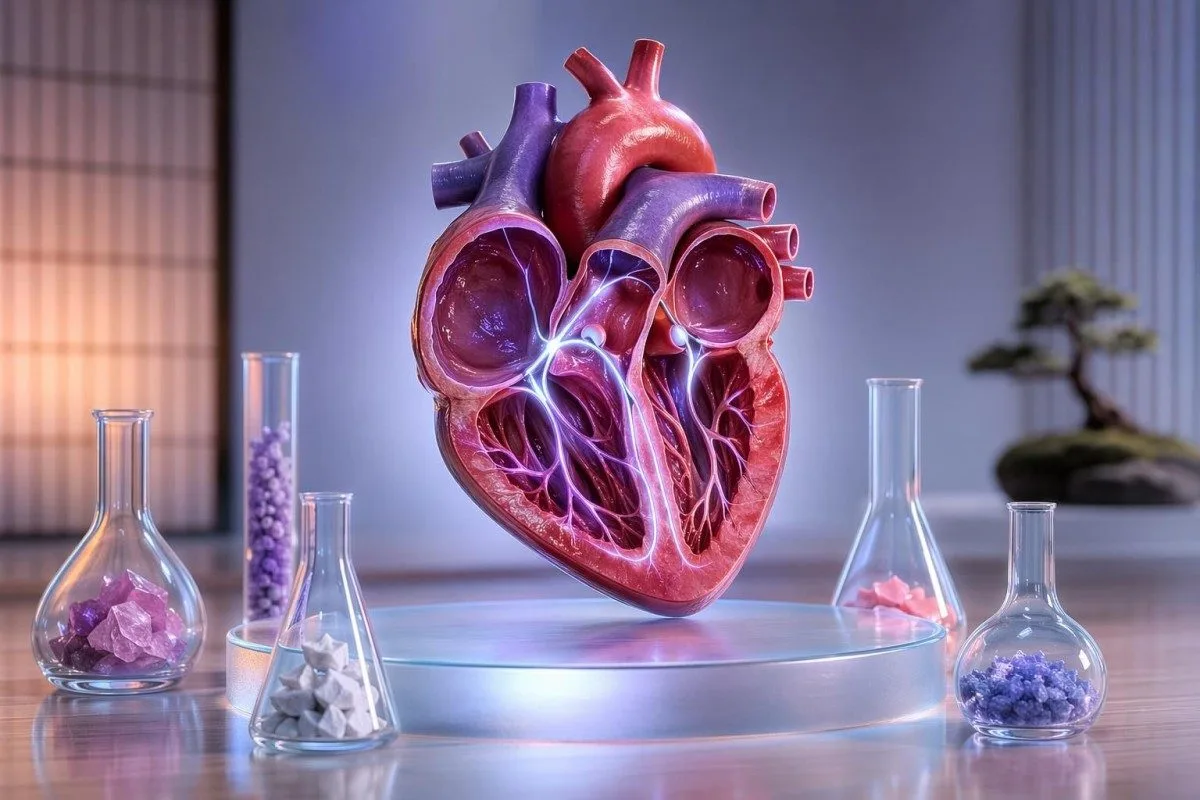
Palpitations often start as a rhythm question, but the lab story can reveal why the heart became irritable. The trick is knowing when electrolytes matter—and when only ECG monitoring can answer the question.


- Blood test for irregular heartbeat can find triggers such as potassium below 3.5 mmol/L, magnesium below 0.70 mmol/L, calcium imbalance, low TSH, anemia, kidney strain, and medication effects.
- ECG monitoring is the test that identifies the rhythm; blood work can explain why palpitations may be happening but cannot diagnose atrial fibrillation or SVT by itself.
- Potassium magnesium heart palpitations patterns matter: low magnesium can make low potassium difficult to correct, especially after diuretics, vomiting, diarrhea, or heavy sweating.
- Calcium and QT interval are linked: low calcium tends to prolong the QT interval, while high calcium can shorten it and increase cardiac irritability.
- Thyroid markers matter most when TSH is suppressed below 0.1 mIU/L or free T4 is high, because thyroid excess increases atrial fibrillation risk.
- Anemia clues include hemoglobin below 13 g/dL in adult men or below 12 g/dL in non-pregnant adult women; anemia usually causes sinus tachycardia rather than a named arrhythmia.
- Medication-related lab shifts are common with diuretics, PPIs, ACE inhibitors, ARBs, spironolactone, digoxin, thyroid replacement, and QT-prolonging drugs.
- Urgent care is needed for palpitations with fainting, chest pain, breathlessness, new neurologic symptoms, resting pulse above 120 bpm, potassium above 6.0 mmol/L, or severe weakness.
What can a blood test show when your heartbeat feels irregular?
A blood test for irregular heartbeat can identify reversible triggers—potassium below 3.5 mmol/L, magnesium below about 0.70 mmol/L, calcium outside the corrected 2.15–2.55 mmol/L range, low TSH, anemia, kidney strain, or medication effects. It cannot name the rhythm. If palpitations are frequent, prolonged, associated with fainting or chest pain, or your resting pulse is above 120 bpm, ECG monitoring matters more than another lab panel.
In clinic, I often see the same story: a patient has a normal 10-minute appointment ECG, but their symptoms happen at 9:40 p.m. while lying in bed. That is why I pair lab review with rhythm timing, and why our blood test for irregular heartbeat interpretation always separates triggers from diagnosis.
A typical first-line panel includes BMP or CMP, magnesium, calcium with albumin, CBC, ferritin or iron studies when anemia is possible, TSH with free T4 if indicated, kidney function, and sometimes troponin or BNP when symptoms suggest heart strain. For a wider cardiac marker map, our guide to heart problem blood tests explains which results predict risk rather than rhythm.
As of May 4, 2026, the practical rule is still simple: labs explain the terrain, ECG captures the event. Thomas Klein, MD, usually tells patients that an electrolyte result is like checking the road surface, while an ECG is the dashcam that shows what actually happened.
Potassium: the electrolyte most likely to change rhythm risk
Potassium is the electrolyte I worry about first when palpitations occur, because both low and high levels can change cardiac conduction. The adult serum potassium reference range is usually 3.5–5.0 mmol/L; values below 3.0 mmol/L or above 6.0 mmol/L deserve prompt clinical review, especially if symptoms or ECG changes are present.
Low potassium increases ectopic beats because heart cells repolarize less predictably, and it often shows up after loop diuretics, thiazides, vomiting, diarrhea, insulin surges, or heavy endurance training. I have seen palpitations settle within 48 hours after potassium rose from 3.1 to 4.1 mmol/L, but that improvement only made sense because the ECG showed benign premature beats.
High potassium is a different problem. A level above 6.0 mmol/L can cause peaked T waves, PR prolongation, QRS widening, and dangerous slowing; our article on high potassium warning signs covers why lab technique and kidney function must be checked before assuming the number is real.
Goyal et al. reported in JAMA that, after acute myocardial infarction, the lowest mortality was seen around potassium 3.5–4.5 mmol/L rather than at higher historical targets (Goyal et al., 2012). That does not mean everyone with palpitations needs potassium pushed above 4.5 mmol/L; it means the target depends on the clinical setting, kidney function, and medication list.
Calcium changes the QT interval, not just bones
Calcium affects the plateau phase of cardiac repolarization, so abnormal levels can alter QT interval behavior. Corrected total calcium is commonly 2.15–2.55 mmol/L, or 8.6–10.2 mg/dL; low calcium tends to prolong QT, while high calcium tends to shorten QT and can make the heart feel jumpy.
The overlooked part is albumin. If albumin is 30 g/L, total calcium may look low even when ionized calcium is normal, so I never interpret a borderline calcium result without albumin or an ionized calcium when symptoms are convincing.
Surawicz et al. described how electrolyte disturbances can change QT interval interpretation in the AHA/ACCF/HRS ECG standardization recommendations (Surawicz et al., 2009). That reference still matches what clinicians see at the bedside: the lab value becomes more meaningful when the ECG interval changes in the expected direction.
High calcium with palpitations raises a different diagnostic path—dehydration, excess calcium supplements, vitamin D toxicity, hyperparathyroidism, or malignancy in a minority of cases. Our guide to calcium result ranges breaks down when total calcium, corrected calcium, ionized calcium, PTH, and vitamin D belong together.
Thyroid markers: the small gland with a big rhythm footprint
Thyroid excess is one of the most important non-electrolyte causes of palpitations because it increases adrenergic tone and atrial irritability. A suppressed TSH below 0.1 mIU/L, especially with high free T4 or free T3, raises concern for thyrotoxicosis-related tachycardia or atrial fibrillation.
A common mistake is treating every low TSH as the same. A TSH of 0.32 mIU/L in a patient taking biotin, or tested during acute illness, is not the same as TSH below 0.01 mIU/L with free T4 of 32 pmol/L and a resting pulse of 115 bpm.
The 2023 ACC/AHA/ACCP/HRS atrial fibrillation guideline recommends evaluating reversible contributors, including thyroid disease, when atrial fibrillation is identified (Joglar et al., 2024). Our deeper thyroid panel guide explains why TSH, free T4, free T3, antibodies, timing, and supplements sometimes disagree.
I ask specifically about levothyroxine dose changes, weight loss drugs, amiodarone, iodine exposure, and high-dose biotin. Biotin can make some immunoassay-based thyroid tests look falsely hyperthyroid, and our biotin thyroid test article explains why stopping biotin 48–72 hours before testing is often recommended.
Anemia clues: when the heart races to compensate
Anemia can cause palpitations by making the heart pump faster to deliver enough oxygen, even when the rhythm itself is sinus tachycardia. Hemoglobin below 13 g/dL in adult men or below 12 g/dL in non-pregnant adult women is generally anemic, though pregnancy and altitude change interpretation.
A 34-year-old runner once came in convinced she had atrial fibrillation because her watch flagged fast beats after stairs. Her hemoglobin was 9.8 g/dL, MCV 72 fL, ferritin 6 ng/mL, and the ECG showed regular sinus tachycardia—uncomfortable, yes, but a very different plan.
Iron deficiency may appear before hemoglobin drops. Ferritin below 30 ng/mL often supports depleted iron stores in symptomatic adults, while inflammation can make ferritin look falsely reassuring; our iron deficiency anemia article explains the sequence of ferritin, transferrin saturation, MCV, MCH, and RDW.
Do not blame every palpitation on mild anemia. A hemoglobin of 11.8 g/dL may explain exertional pounding in one patient, but sudden irregular runs lasting 20 minutes still deserve rhythm capture, especially after age 50 or with structural heart disease.
Kidney, sodium, CO2 and glucose patterns that make palpitations worse
Kidney function and acid-base results often explain why electrolytes moved in the first place. Creatinine, eGFR, BUN, sodium, chloride, CO2 or bicarbonate, and glucose can point toward dehydration, kidney impairment, diuretic effect, vomiting, diarrhea, ketoacidosis, or insulin-related potassium shifts.
A CO2 of 18 mmol/L with an anion gap of 20 is not just a minor chemistry flag in someone with palpitations. It can signal metabolic acidosis, which may pull potassium out of cells while total body potassium is still depleted.
Low sodium rarely causes a specific arrhythmia on its own, but sodium below 125 mmol/L can cause confusion, falls, seizures, and medication clues that also affect rhythm. Our electrolyte panel guide explains how sodium, potassium, chloride, and CO2 fit together rather than acting as isolated numbers.
Glucose matters because insulin moves potassium into cells. A patient correcting a glucose of 320 mg/dL with insulin can see potassium fall quickly, which is why emergency teams monitor potassium repeatedly during diabetic ketoacidosis or severe hyperglycemia treatment.
Medication-related lab shifts doctors look for first
Medication-related electrolyte shifts are one of the most fixable causes of palpitations. Diuretics can lower potassium and magnesium, ACE inhibitors and ARBs can raise potassium, spironolactone can raise potassium, PPIs can lower magnesium over time, and thyroid replacement can push the pulse too high if the dose overshoots.
The dangerous pairing is not always obvious. Digoxin plus low potassium, even at a digoxin level near the upper therapeutic range, can provoke nausea, visual changes, slow rhythms, or extra beats; older adults with eGFR below 60 mL/min/1.73 m² need extra caution.
QT-prolonging medicines add another layer: some antibiotics, antiemetics, antipsychotics, antidepressants, and antiarrhythmics become riskier when potassium is below 3.5 mmol/L or magnesium is low. Our medication monitoring timeline gives practical intervals for rechecking labs after starting or changing common drugs.
Some European labs flag potassium above 5.1 mmol/L, while others use 5.3 mmol/L, and that tiny difference can cause unnecessary anxiety. I care more about the trend, kidney function, hemolysis comment, and whether the patient recently started ramipril, losartan, trimethoprim, spironolactone, or high-dose potassium supplements.
When ECG monitoring matters more than blood work
ECG monitoring matters more than blood work when the question is, “What rhythm am I having?” A normal potassium, magnesium, calcium, CBC, and TSH panel cannot rule out atrial fibrillation, supraventricular tachycardia, ventricular ectopy, pauses, or intermittent heart block.
Match the monitor to symptom frequency. Daily palpitations may need a 24–48 hour Holter, weekly symptoms often need a 7–14 day patch, monthly episodes may require a 30-day event monitor, and rare fainting episodes sometimes justify an implantable loop recorder.
The 2020 ESC atrial fibrillation guideline defines clinical AF as requiring ECG documentation, usually with a tracing of at least 30 seconds (Hindricks et al., 2021). That single rule prevents a lot of mislabeling based on watches, pulse checks, or the phrase “irregular heartbeat” in a clinic note.
Kantesti AI can help you interpret the lab side quickly, but it will never pretend that a laboratory panel replaces rhythm documentation. If symptoms are new, severe, or associated with chest pressure, our article on troponin test patterns explains why emergency clinicians sometimes order heart injury markers alongside ECGs.
Why pattern reading beats chasing one flagged result
Pattern reading is safer than reacting to one red or high flag, because palpitations often come from combinations: low-normal potassium plus low magnesium, suppressed TSH plus high free T4, anemia plus dehydration, or QT medicine plus borderline calcium. One number rarely tells the whole rhythm story.
When I review a panel showing potassium 3.6 mmol/L, magnesium 0.71 mmol/L, hemoglobin 10.7 g/dL, and TSH 0.08 mIU/L, none of those values alone tells me the rhythm. Together they explain why a heart that is electrically normal at baseline might feel unstable.
Our blood test comparison approach weighs trend size, unit conversion, fasting status, hydration, timing, medications, and the lab’s reference interval. A potassium fall from 4.4 to 3.6 mmol/L over 10 days after starting hydrochlorothiazide is more meaningful than a single 3.6 on a healthy annual panel.
Kantesti AI interprets rhythm-related laboratory results by analyzing electrolytes, renal markers, CBC indices, thyroid markers, medication context, and longitudinal trends together. That is also how human clinicians think when the lab values are technically “normal” but the patient’s story is not.
Red flags: when palpitations and labs need urgent care
Urgent assessment is needed when palpitations occur with fainting, chest pain, severe breathlessness, new neurologic symptoms, a resting heart rate above 120 bpm, or a very slow pulse below 40 bpm. Lab red flags include potassium below 2.5 mmol/L, potassium 6.0 mmol/L or higher, severe anemia, marked calcium abnormality, or magnesium below 0.50 mmol/L.
Do not wait for a routine portal message if the lab calls a critical potassium result. Even false high potassium from hemolysis must be clarified quickly, because true hyperkalemia can deteriorate before symptoms feel dramatic.
A low hemoglobin with palpitations becomes more urgent when there is black stool, heavy bleeding, chest pain, or known coronary disease. Our guide to critical blood values explains why the same number may be routine in one setting and dangerous in another.
Thomas Klein, MD, uses a simple rule with patients: symptoms decide speed, labs decide direction. If your body is telling you something is acutely wrong—collapse, crushing chest pressure, severe shortness of breath—do not try to solve it by uploading another PDF first.
Food, supplements and hydration choices that can move rhythm labs
Nutrition and hydration can shift rhythm-related labs, but supplements should be chosen from results rather than guesswork. Potassium-rich diets, magnesium supplements, calcium tablets, vitamin D, salt substitutes, and sports drinks can help some people and harm others, especially when kidney function or medications change excretion.
Salt substitutes are the trap I see most often. Many contain potassium chloride, and a person taking an ACE inhibitor plus spironolactone can push potassium above 5.5 mmol/L without realizing their “heart healthy” seasoning changed the lab.
Magnesium glycinate and citrate behave differently in the gut; citrate can loosen stools, which may worsen electrolyte loss if diarrhea is already part of the story. Our magnesium supplement comparison explains typical elemental doses and why kidney function should be checked before higher-dose use.
Calcium and vitamin D are not rhythm supplements. If corrected calcium is already 2.65 mmol/L or vitamin D intake is high, adding calcium “for palpitations” can push the wrong direction; our vitamin D dose guide gives safer level-based dosing.
Athletes, pregnancy and older adults need different interpretation
Athletes, pregnant patients, and older adults need more individualized interpretation because baseline heart rate, plasma volume, kidney function, and medication exposure differ. A result that is mildly abnormal in a 28-year-old runner may be much more concerning in an 82-year-old taking digoxin and furosemide.
Endurance athletes can have resting heart rates in the 40s and benign ectopy, but they also lose sodium, potassium, and magnesium through sweat during long sessions. If palpitations cluster after hot-weather training, a basic electrolyte panel drawn the next morning may miss the lowest point.
Pregnancy lowers hemoglobin by dilution and changes thyroid reference intervals, especially in the first trimester. Our prenatal blood tests guide explains why trimester-specific ranges matter before calling a result abnormal.
Older adults are the group where I move fastest. eGFR may fall from 75 to 45 mL/min/1.73 m² with age or illness, and that can turn a stable potassium supplement, digoxin dose, or diuretic plan into a palpitation trigger within days.
How Kantesti AI interprets rhythm-related blood results
Kantesti AI interprets rhythm-related blood results by grouping potassium, magnesium, calcium, kidney markers, CBC clues, thyroid markers, glucose, acid-base patterns, and medication context into clinically ranked explanations. Our platform does not diagnose arrhythmias; it helps you understand which lab clues may be making palpitations more likely.
Our neural network has been trained to recognize patterns across 15,000+ biomarkers, but the medical rules are deliberately conservative for YMYL safety. You can read how we validate outputs against physician review on our medical validation page.
Kantesti is built by clinicians, engineers, and patient-safety specialists, with medical oversight described on our Medical Advisory Board page. As Dr. Thomas Klein, I care less about dazzling users with 40 possible causes and more about ranking the 3 or 4 that match the actual lab pattern.
If you want to see how your own panel reads, upload a PDF or photo through Try Free AI Blood Test Analysis. For a deeper marker-by-marker map, our biomarkers guide shows how Kantesti categorizes electrolyte, thyroid, CBC, renal, and cardiac-related results.
Kantesti research publications and clinical reading standards
Research transparency matters because blood test interpretation can change medical decisions, anxiety, and follow-up timing. Kantesti’s clinical writing standards use physician review, guideline cross-checking, and internal validation rather than treating lab flags as standalone diagnoses.
Our population-scale validation work is described in the pre-registered benchmark, Kantesti AI Engine validation, which includes anonymised blood test cases across 127 countries and trap cases designed to penalize overdiagnosis. The point is not to replace clinicians; it is to reduce missed context when a lab report is read in isolation.
Kantesti AI. (2026). Urobilinogen in Urine Test: Complete Urinalysis Guide 2026. Zenodo. https://doi.org/10.5281/zenodo.18226379. ResearchGate: https://www.researchgate.net/search/publication?q=Urobilinogen%20in%20Urine%20Test%3A%20Complete%20Urinalysis%20Guide%202026. Academia.edu: https://www.academia.edu/search?q=Urobilinogen%20in%20Urine%20Test%3A%20Complete%20Urinalysis%20Guide%202026.
Kantesti AI. (2026). Iron Studies Guide: TIBC, Iron Saturation & Binding Capacity. Zenodo. https://doi.org/10.5281/zenodo.18248745. ResearchGate: https://www.researchgate.net/search/publication?q=Iron%20Studies%20Guide%3A%20TIBC%2C%20Iron%20Saturation%20%26%20Binding%20Capacity. Academia.edu: https://www.academia.edu/search?q=Iron%20Studies%20Guide%3A%20TIBC%2C%20Iron%20Saturation%20%26%20Binding%20Capacity.
For ongoing clinical updates, we keep related explainers in the Kantesti Blog and revise articles when guideline thresholds, assay behavior, or safety recommendations change. Bottom line: use blood work to identify triggers, use ECG monitoring to identify rhythm, and bring both to your clinician when symptoms are recurrent.
Frequently Asked Questions
What blood test checks for an irregular heartbeat?
A blood test for irregular heartbeat usually checks triggers rather than the rhythm itself: potassium, magnesium, calcium, sodium, kidney function, CBC, thyroid markers, glucose, and sometimes iron studies. Potassium below 3.5 mmol/L, magnesium below 0.70 mmol/L, suppressed TSH below 0.1 mIU/L, or hemoglobin below 12–13 g/dL can make palpitations more likely. The rhythm still needs ECG documentation, because blood tests cannot diagnose atrial fibrillation, SVT, or heart block.
Can low potassium cause heart palpitations?
Low potassium can cause palpitations because it changes how heart muscle cells reset electrically between beats. The usual adult potassium range is 3.5–5.0 mmol/L, and symptoms become more concerning below 3.0 mmol/L or when low potassium occurs with low magnesium. Severe hypokalemia below 2.5 mmol/L can be dangerous and should be assessed urgently, especially with weakness, fainting, or ECG changes.
Does a normal magnesium blood test rule out magnesium-related palpitations?
A normal serum magnesium result does not fully rule out magnesium-related palpitations because most magnesium is stored inside cells and bone, not in the bloodstream. The common serum range is about 0.70–1.00 mmol/L, but symptoms can still occur near the low end when potassium is also low or a diuretic is involved. Clinicians often interpret magnesium together with potassium, kidney function, medications, cramps, tremor, and QT interval.
Can thyroid blood tests explain an irregular heartbeat?
Thyroid blood tests can explain some irregular heartbeat symptoms, especially when thyroid hormone is excessive. A TSH below 0.1 mIU/L with high free T4 or free T3 increases concern for thyrotoxicosis-related tachycardia or atrial fibrillation. Thyroid results should be interpreted with medication dose, biotin supplement use, illness timing, and ECG findings.
When do palpitations need ECG monitoring instead of more blood work?
Palpitations need ECG monitoring when the goal is to identify the actual rhythm, because normal blood work cannot exclude intermittent atrial fibrillation, SVT, ventricular ectopy, pauses, or heart block. Daily symptoms may be captured with a 24–48 hour Holter, while weekly symptoms often need a 7–14 day patch monitor. Fainting, chest pain, severe breathlessness, neurologic symptoms, or resting heart rate above 120 bpm should prompt urgent medical assessment.
Which medicines can change lab results and trigger palpitations?
Diuretics can lower potassium and magnesium, ACE inhibitors and ARBs can raise potassium, spironolactone can raise potassium, PPIs can lower magnesium over months to years, and thyroid replacement can cause palpitations if the dose is too high. QT-prolonging medicines become riskier when potassium is below 3.5 mmol/L or magnesium is low. Digoxin toxicity is more likely with kidney impairment, low potassium, or interacting medicines, even when the result is not dramatically high.
Get AI-Powered Blood Test Analysis Today
Join over 2 million users worldwide who trust Kantesti for instant, accurate lab test analysis. Upload your blood test results and receive comprehensive interpretation of 15,000+ biomarkers in seconds.
📚 Referenced Research Publications
Klein, T., Mitchell, S., & Weber, H. (2026). Urobilinogen in Urine Test: Complete Urinalysis Guide 2026. Kantesti AI Medical Research.
Klein, T., Mitchell, S., & Weber, H. (2026). Iron Studies Guide: TIBC, Iron Saturation & Binding Capacity. Kantesti AI Medical Research.
📖 External Medical References
⚕️ Medical Disclaimer
This article is for educational purposes only and does not constitute medical advice. Always consult a qualified healthcare provider for diagnosis and treatment decisions.
E-E-A-T Trust Signals
Experience
Physician-led clinical review of lab interpretation workflows.
Expertise
Laboratory medicine focus on how biomarkers behave in clinical context.
Authoritativeness
Written by Dr. Thomas Klein with review by Dr. Sarah Mitchell and Prof. Dr. Hans Weber.
Trustworthiness
Evidence-based interpretation with clear follow-up pathways to reduce alarm.