Most labs still use simple sex- and age-based ESR cutoffs, but the sed rate only becomes meaningful when you read it beside CRP and the CBC. Here is how I interpret borderline, high, and very high results in 2026 practice.


- Men under 50 usually have an ESR normal range of 0-15 mm/h.
- Women under 50 usually have an ESR normal range of 0-20 mm/h.
- Adults over 50 are often considered normal up to 20 mm/h in men and 30 mm/h in women.
- Miller formula estimates the upper limit as age/2 for men and (age + 10)/2 for women.
- Very high ESR above 100 mm/h raises concern for infection, vasculitis, myeloma, or severe inflammatory disease.
- CRP rises faster than ESR, often within 6-8 hours, while ESR may lag by 24-48 hours.
- False-high ESR can occur with anemia, pregnancy, obesity, chronic kidney disease, and high immunoglobulin states.
- Normal ESR does not rule out early infection, localized inflammation, or giant cell arteritis.
- Trend beats one number: a drop from 80 to 35 mm/h is often more meaningful than whether the report still shows abnormal.
What is the normal range for ESR in adults?
Normal range for ESR in most adults is 0-15 mm/h for men under 50 and 0-20 mm/h for women under 50. After age 50, many labs accept 0-20 mm/h for men and 0-30 mm/h for women; in very old adults, values in the 20-40 mm/h range can appear without a dangerous illness. A high ESR does not diagnose one disease. It usually reflects inflammation, infection, autoimmune activity, anemia, kidney disease, pregnancy, or age itself. CRP rises and falls faster, so when inflammation is suspected, I usually read ESR and CRP together.
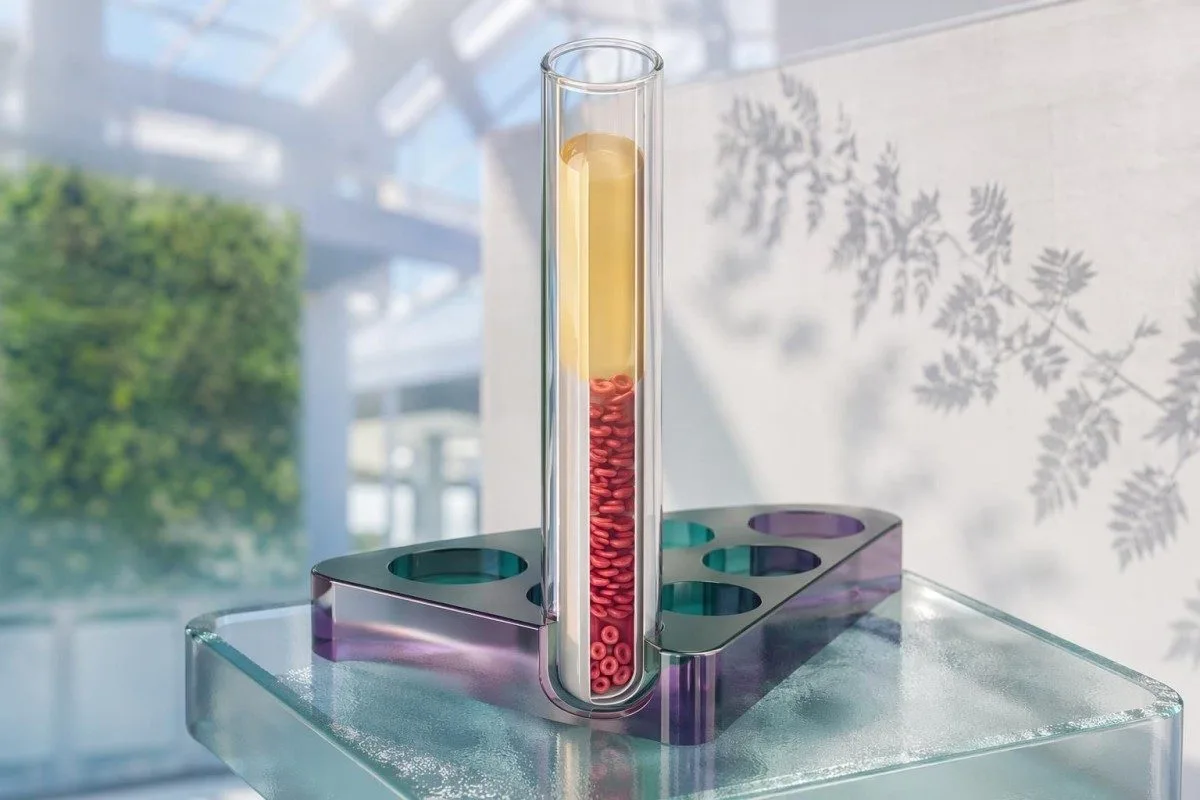
ESR measures how far erythrocytes settle in a vertical tube over 1 hour by the Westergren method, and the result is reported in mm/h. Faster settling usually means more fibrinogen or immunoglobulins are helping the cells form rouleaux, which is why Kantesti AI never interprets ESR in isolation and instead weighs it against CRP, hemoglobin, ferritin, creatinine, and platelets.
Different labs do use slightly different reference ranges. I still see adult male upper limits of 10 mm/h in some European reports and 15-20 mm/h in North American reports, which is why an abnormal flag alone can mislead; our inflammation marker guide explains why ESR is only one part of the puzzle.
Here is the practical takeaway: an ESR of 18 mm/h can be ordinary in a healthy 62-year-old woman and meaningful in a 28-year-old man with fevers, weight loss, and joint swelling. In my clinic as Thomas Klein, MD, and across cases reviewed with our physicians, I rarely chase a mildly abnormal ESR unless symptoms or companion labs point somewhere; that conservative approach is close to the advice in Brigden's review (Brigden, 1999).
Why one lab flags 18 and another does not
Tube position, timing, and the anticoagulant mix can shift a borderline result enough to cross the lab cutoff. That is why I trust a stable pattern more than a single ESR of 21 or 22 mm/h with no symptoms.
How age and sex change the ESR blood test normal range
Age and sex do change the ESR blood test normal range. A widely used rule estimates the upper limit of normal as age divided by 2 for men and (age + 10) divided by 2 for women, but I treat that formula as a ceiling for context, not a pass-fail diagnosis.
For everyday practice, I still prefer simple brackets: men 18-49 years often fall at 0-15 mm/h, women 18-49 years at 0-20 mm/h, men over 50 at 0-20 mm/h, and women over 50 at 0-30 mm/h. If you want a second reference point, our detailed ESR-by-age chart shows how these cutoffs are used in routine reports.
Older age raises ESR partly because fibrinogen and immunoglobulin levels tend to drift upward, and red-cell characteristics change as well. That does not mean we should shrug off every elevated number in older adults; our blood test range guide gets into why age-adjusted normals reduce false alarms but do not erase disease risk.
Sex hormones matter less than many people think, but life stage matters a lot. In the second and third trimester of pregnancy, ESR commonly reaches 40-50 mm/h and sometimes higher because plasma proteins rise and hematocrit falls, so a pregnant patient with ESR 45 mm/h and no other red flags is a very different case from a non-pregnant patient with the same result.
The Miller rule is a context tool, not a diagnosis
The Miller rule is useful for quick chart review, but it was never meant to overrule symptoms such as fever, jaw claudication, or unintentional weight loss. As of April 25, 2026, I still use it to reduce over-calling in older adults, not to reassure someone who looks systemically unwell.
What does a high ESR mean in real clinical practice?
High ESR meaning depends on the company it keeps. The most common causes are infection, autoimmune disease, chronic inflammatory conditions, some cancers, kidney disease, anemia, and pregnancy, but the same ESR can mean very different things depending on CRP, CBC, ferritin, and symptoms.
An ESR of 55 mm/h with swollen small joints, morning stiffness, and a positive autoimmune panel pushes me toward inflammatory rheumatology causes more than infection. That is why patients with persistent symptoms often need a broader autoimmune workup rather than a repeat ESR alone.
I see iron deficiency inflate ESR all the time. A 34-year-old woman with ferritin 9 ng/mL, hemoglobin 10.6 g/dL, heavy periods, and ESR 42 mm/h may have no occult infection at all, which is why I usually look at anemia first with a focused low hemoglobin review before sending people down a more alarming path.
Pair ESR with the white count and platelets and the story gets clearer. ESR 60 mm/h + CRP 80 mg/L + neutrophilia suggests an active inflammatory or infectious process, whereas ESR 60 mm/h + normal CRP + hemoglobin 9.8 g/dL is often a slower, less specific picture; our WBC reference guide helps with that cross-check.
ESR vs CRP: which test is better for suspected inflammation?
ESR vs CRP is not a tie; CRP is usually better for acute inflammation, while ESR is often more useful for slower, smoldering processes and a few rheumatologic conditions. I order both when the history is muddy, because they answer slightly different biological questions.
CRP begins rising within about 6-8 hours of an inflammatory trigger, often peaks by 48 hours, and falls quickly as the trigger resolves. ESR usually lags by 24-48 hours because it reflects changes in fibrinogen and red-cell aggregation rather than a single acute-phase protein, exactly the distinction Gabay and Kushner described in the New England Journal of Medicine (Gabay & Kushner, 1999); if you need a refresher on cutoffs, see our CRP normal range guide.
ESR still earns its keep in giant cell arteritis, polymyalgia rheumatica, rheumatoid arthritis, some chronic bone and joint infections, and plasma-cell disorders. On the flip side, I have seen patients with active lupus run an ESR of 70 mm/h with only modest CRP elevation, while a bacterial infection can drive CRP very high early; our piece on high CRP patterns walks through those scenarios.
The units are not interchangeable: ESR is mm/h and CRP is mg/L. When Thomas Klein, MD, reviews discordant results on Kantesti, we lean on timing, anemia status, kidney function, and symptoms, and our medical validation standards spell out how that multi-marker approach is checked clinically.
When I deliberately order both
I am most likely to order both tests when the symptoms are vague but potentially serious: unexplained fever, proximal muscle pain, swollen joints, or suspected vasculitis. A normal CRP with ESR 45 mm/h tells a different story from CRP 45 mg/L with ESR 18 mm/h, and that mismatch often teaches more than either number alone.
Why ESR can be high even when inflammation is not severe
ESR can be high without severe inflammation. The classic non-dangerous or less-specific reasons are anemia, pregnancy, older age, obesity, chronic kidney disease, and high immunoglobulin levels, so a raised sed rate by itself is rarely a verdict.
Anemia speeds sedimentation because there are fewer red cells crowding the tube, so the cells fall faster. I see this with iron deficiency, anemia of chronic disease, and sometimes after recent illness, which is one reason an iron deficiency anemia panel can explain an ESR of 35-50 mm/h better than a scan ever will.
Obesity and chronic kidney disease can nudge ESR upward even when infection is not present, and monoclonal proteins can push it much higher by altering plasma viscosity and rouleaux formation. If ferritin is also high, remember ferritin is an acute-phase reactant as well as an iron marker, so I often cross-check with our high ferritin guide before assuming iron overload.
One nuance patients almost never hear: a person can feel washed out, achy, and exhausted with ESR 28 mm/h and still have a non-inflammatory explanation such as low iron, poor sleep, or recovery from a viral infection. That is why a structured fatigue lab checklist often beats repeating ESR every few days.
How high is too high? Mild, moderate, and ESR above 100
An ESR above 100 mm/h is the level that changes my posture. Values in that range have a much higher association with serious infection, vasculitis, inflammatory rheumatic disease, or plasma-cell disorders, although even then the result still needs context.
A very high ESR is not automatically cancer, but it is rarely a throwaway result. Brigden's review made the same point years ago, and in day-to-day practice I still find deep infection, temporal arteritis, polymyalgia rheumatica, endocarditis, osteomyelitis, and myeloma near the top of the differential when ESR clears 100 mm/h (Brigden, 1999); if you are sorting out what deserves rapid follow-up, our critical lab guide is a useful companion.
Symptoms determine urgency. An adult over 50 years with new temple headache, scalp tenderness, jaw pain when chewing, or vision change plus ESR 50-100+ mm/h needs same-day evaluation for giant cell arteritis, and the 2021 ACR/Vasculitis Foundation guideline by Maz et al. still supports checking both ESR and CRP in that situation (Maz et al., 2021); for related immune patterns, see our lupus lab guide.
Rheumatoid disease can also drive ESR hard, especially when platelets are high and hemoglobin is drifting down. If the history includes prolonged morning stiffness, hot swollen joints, or nodules, I usually pair ESR with antibody testing and our rheumatoid factor interpretation rather than treating the sed rate as a diagnosis.
A painless but persistent result still matters
A painless but persistent ESR of 90-110 mm/h with weight loss, night sweats, or back pain is not an emergency-room diagnosis by itself, yet it deserves prompt medical review within days, not months. This is one of those areas where context matters more than the number, but the number still earns respect.
Can ESR be normal when inflammation is present?
A normal ESR does not rule out inflammation. Early infection, localized infection, some vasculitic syndromes, and certain inflammatory flares can appear with ESR in the normal range, especially if the test was done before plasma proteins had time to rise.
This lag is why I distrust a single normal ESR in the first 24 hours of a clinically hot picture. The 2021 Maz et al. guideline is a good reminder that giant cell arteritis can occasionally present with a normal ESR or CRP, so if symptoms are classic, the next step is not reassurance but faster evaluation; our guide on reading blood results in context covers that mindset.
There is another twist: in systemic lupus erythematosus, ESR often rises more readily than CRP, while sickle cell disease, marked polycythemia, and abnormal red-cell shapes can keep ESR deceptively low because the cells do not stack normally. So a normal ESR is a weak screening test in patients with strong symptoms, unusual red-cell disorders, or an obviously inflammatory history.
When patients upload a normal ESR but persistent fever, joint swelling, or unexplained weight loss to our AI blood test platform, Kantesti flags the mismatch rather than giving false reassurance. That is exactly where a trend, a repeat CRP, and a targeted history help more than another generic panel.
What doctors pair with ESR to figure out the cause
Doctors do not solve a high ESR with ESR alone. The most useful companion tests are CRP, CBC, ferritin, creatinine, albumin, liver enzymes, platelets, and sometimes serum protein electrophoresis, because each one narrows the differential in a different way.
My standard cross-check for an unexplained sed rate starts with CRP, hemoglobin, MCV, platelets, ferritin, creatinine, albumin, and urinalysis. Our blood test biomarkers guide maps those markers out, but the short version is simple: ESR tells you that something may be happening; the companion markers suggest what kind of thing it is.
Patterns matter. ESR 58 mm/h + platelets 510 x10^9/L + CRP 42 mg/L usually means far more than ESR 58 alone, which is why I almost always look at thrombocytosis next with our high platelet count guide.
Kantesti AI interprets ESR by weighting age, sex, renal function, red-cell indices, inflammatory markers, and trend direction in the same review, and we benchmarked that layered approach in our pre-registered clinical validation paper at Figshare. In my own review sessions as Thomas Klein, MD, the combination I worry about most is ESR above 80 mm/h, albumin below 3.2 g/dL, and falling hemoglobin, because together they often signal more than routine wear and tear.
One lab pattern that is easy to miss
An ESR of 45 mm/h with CRP 3 mg/L, hemoglobin 11.0 g/dL, MCV 74 fL, and ferritin 8 ng/mL often points to iron deficiency rather than systemic autoimmunity. On the other hand, ESR 45 mm/h with CRP 45 mg/L, normal MCV, and platelets 470 x10^9/L pushes me toward active inflammatory disease or infection.
When to repeat ESR and how to judge the trend
Repeat ESR based on the clinical question, not anxiety. For a suspected acute infection, I usually repeat in 1-2 weeks if symptoms persist; for chronic autoimmune monitoring, the interval is more often 4-12 weeks, depending on treatment changes and how the patient feels.
Trends are often more informative than a lone value. A fall from 82 to 34 mm/h after antibiotics or steroid-sparing treatment is meaningful even if the result is not yet normal, and our blood test comparison guide explains why direction beats perfection.
Use the same lab when possible. Switching between methods or reference ranges can turn a real improvement into apparent noise, so I ask patients to store their prior reports and compare them side by side with a blood test history tracker.
As of April 25, 2026, automated ESR analyzers are common and generally reliable, but borderline differences of 3-5 mm/h still happen in real life. That is why I almost never react to a move from 21 to 24 mm/h unless symptoms, CRP, or companion labs moved too.
When to seek urgent care and how Kantesti can help
Seek urgent medical care when a high ESR comes with red-flag symptoms. The combinations I worry about most are ESR above 50 mm/h with new headache or vision change, fever with back pain or shortness of breath, or weight loss and drenching night sweats, because the danger is in the syndrome, not just the number.
If your result is already back and you want a fast, structured explanation, you can upload the report to Try Free AI Blood Test Analysis. Kantesti reads PDFs and photos in about 60 seconds, supports 75+ languages, and helps separate a borderline age-related result from a pattern that really needs a doctor soon.
Our platform is not an emergency service, and I am careful about that distinction. A patient with jaw pain on chewing, one-sided visual blur, or ESR 90 mm/h plus fever should contact a clinician the same day, and if you need a human follow-up route after the AI read, you can contact our team for the right next step.
Bottom line: the normal range for ESR is useful, but the story around the ESR is what makes it clinically meaningful. Most patients feel better once we compare age, sex, CRP, CBC, ferritin, kidney function, and symptoms side by side — that is exactly the kind of pattern recognition Kantesti was built for.
Frequently Asked Questions
What is the normal range for ESR in adults?
Normal ESR in adults is usually 0-15 mm/h for men younger than 50 and 0-20 mm/h for women younger than 50. Many labs use 0-20 mm/h for men over 50 and 0-30 mm/h for women over 50. In very old adults, especially over 70-80, values into the 20s or even low 30s can be seen without a dangerous cause. Labs vary, so the reference interval printed on your report still matters.
Is ESR 30 high?
An ESR of 30 mm/h is mildly high for a younger man, borderline to mildly high for many women over 50, and sometimes within age-adjusted expectations in older adults. By itself, ESR 30 does not diagnose infection, autoimmune disease, or cancer. I would usually interpret it alongside CRP, hemoglobin, ferritin, kidney function, and symptoms. If you feel well and other labs are normal, repeating the test in a few weeks is often more useful than panicking.
What causes high ESR with normal CRP?
High ESR with normal CRP commonly happens with anemia, older age, pregnancy, chronic kidney disease, and some autoimmune conditions such as lupus. ESR is also influenced by red-cell shape and plasma proteins, while CRP is a faster, more specific acute-phase marker. A pattern like ESR 45 mm/h with CRP 2 mg/L and hemoglobin 10.5 g/dL often points away from acute bacterial infection. That discordant combination deserves context, not assumption.
Is ESR or CRP better for inflammation?
CRP is generally better for acute inflammation because it starts rising within 6-8 hours and often peaks around 48 hours. ESR changes more slowly and can stay elevated for days to weeks after the trigger settles. ESR still helps in some chronic inflammatory conditions, giant cell arteritis, and situations where anemia or immunoglobulin changes are part of the story. In practice, the most informative approach is often to order both.
Can anemia raise ESR?
Yes, anemia can raise ESR, sometimes substantially. Reduced hematocrit allows red cells to settle faster, so iron deficiency or anemia of chronic disease can push ESR into the 30-50 mm/h range even without a dangerous infection. That is why an ESR result makes more sense when you also look at hemoglobin, MCV, ferritin, and CRP. I see this pattern often in menstruating women and older adults.
What does ESR above 100 mean?
ESR above 100 mm/h is strongly associated with significant underlying disease and usually warrants prompt medical evaluation. Common causes include deep infection, vasculitis such as giant cell arteritis, polymyalgia rheumatica, severe inflammatory arthritis, and plasma-cell disorders like myeloma. The number still does not tell you which diagnosis is present, but it is not a result I ignore. If it comes with fever, vision change, severe headache, or shortness of breath, same-day care is appropriate.
Can cancer cause a high ESR?
Yes, some cancers can raise ESR, especially lymphoma, myeloma, metastatic disease, and cancers causing major inflammation or anemia. ESR is not a cancer screening test, though, and most mildly elevated results are not caused by cancer. An ESR of 25-40 mm/h with normal CRP and mild iron deficiency is far more commonly explained by benign or non-cancer causes. Persistent high ESR plus weight loss, night sweats, or unexplained anemia deserves a proper workup.
Get AI-Powered Blood Test Analysis Today
Join over 2 million users worldwide who trust Kantesti for instant, accurate lab test analysis. Upload your blood test results and receive comprehensive interpretation of 15,000+ biomarkers in seconds.
📚 Referenced Research Publications
Kantesti LTD (2026). Clinical Validation of the Kantesti AI Engine (2.78T) on 15 Anonymised Blood Test Cases: A Pre-Registered Rubric-Based Benchmark Including Hyperdiagnosis Trap Cases Across Seven Medical Specialties. Kantesti AI Medical Research.
Kantesti LTD (2026). Urobilinogen in Urine Test: Complete Urinalysis Guide 2026. Kantesti AI Medical Research.
📖 External Medical References
Brigden ML (1999). Clinical utility of the erythrocyte sedimentation rate. American Family Physician.
Maz M et al. (2021). 2021 American College of Rheumatology/Vasculitis Foundation Guideline for the Management of Giant Cell Arteritis and Takayasu Arteritis. Arthritis Care & Research.
⚕️ Medical Disclaimer
This article is for educational purposes only and does not constitute medical advice. Always consult a qualified healthcare provider for diagnosis and treatment decisions.
E-E-A-T Trust Signals
Experience
Physician-led clinical review of lab interpretation workflows.
Expertise
Laboratory medicine focus on how biomarkers behave in clinical context.
Authoritativeness
Written by Dr. Thomas Klein with review by Dr. Sarah Mitchell and Prof. Dr. Hans Weber.
Trustworthiness
Evidence-based interpretation with clear follow-up pathways to reduce alarm.