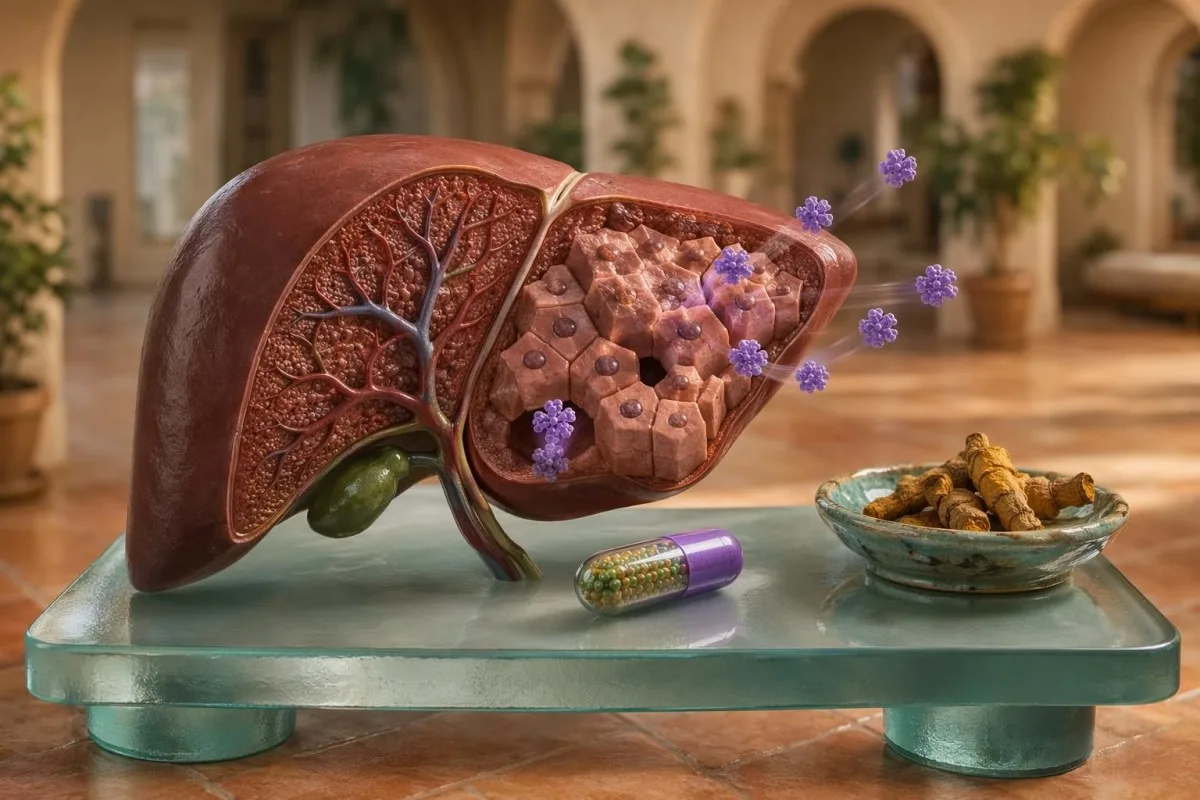
Curcumin can be useful for some low-grade inflammatory patterns, but the lab context matters more than the capsule label. Here is how I read CRP, ESR, liver, kidney and clotting clues before a patient mixes it with medicines or surgery.


- Curcumin for inflammation is most plausible when hs-CRP is persistently 2–10 mg/L and infection, injury, autoimmune flare and cancer warning signs are not driving the result.
- CRP blood test values below 5 mg/L are often reported as normal on standard assays, while hs-CRP uses cardiovascular risk bands of <1, 1–3 and >3 mg/L.
- Retest timing is usually 4–8 weeks after a stable curcumin dose; testing 2 days after exercise, infection or dental work can falsely suggest failure.
- Joint inflammation needs context: osteoarthritis pain may improve without CRP changing, while rheumatoid arthritis should be tracked with CRP, ESR, anti-CCP, RF and clinical exam.
- Safety labs before combining curcumin with medicines include ALT, AST, ALP, bilirubin, creatinine/eGFR, CBC with platelets and sometimes PT/INR or aPTT.
- Medication caution is strongest with warfarin, DOACs, clopidogrel, aspirin, NSAIDs, diabetes medicines, chemotherapy and immunosuppressants.
- Surgery planning usually means pausing concentrated curcumin 1–2 weeks before elective procedures unless the surgical team gives different instructions.
- Red flags include CRP >50 mg/L, fever, night sweats, jaundice, black stools, severe swelling, new anemia or unexplained weight loss; do not self-treat these with supplements.
When curcumin may help inflammation — and when it should not
Curcumin for inflammation may help when inflammation is low-grade and persistent — for example, hs-CRP 2–10 mg/L after infection, injury and autoimmune flare have been ruled out. It is not an emergency treatment, and I would not use it to mask CRP >50 mg/L, fever, severe joint swelling or unexplained weight loss.
Track response with CRP or hs-CRP, ESR, CBC and symptom scores; check ALT, AST, bilirubin, eGFR, platelet count and PT/INR before combining curcumin with anticoagulants, NSAIDs or planned surgery. Our Kantesti AI blood test analyzer reads these patterns together instead of treating one marker as the whole story.
I’m Thomas Klein, MD, Chief Medical Officer at Kantesti, and the pattern I see most often is not dramatic disease — it is a mildly raised hs-CRP around 3.8 mg/L in a tired 48-year-old with abdominal weight gain, sore knees and normal white cells. In that setting, curcumin may be one small tool, but sleep, periodontal health, waist circumference and diet usually move CRP more reliably than any single capsule.
A standard CRP blood test is useful when inflammation is obvious; hs-CRP is better when the question is low-grade cardiovascular or metabolic risk. If you need the lab basics first, our guide to blood tests for inflammation explains why CRP, ESR, ferritin and CBC often disagree.
What the CRP blood test can and cannot prove
The CRP blood test measures C-reactive protein, a liver-made inflammation protein that rises within about 6–8 hours after a strong inflammatory trigger. Standard CRP is usually reported as normal below 5 mg/L, while hs-CRP is designed to separate lower values such as 0.6, 1.9 and 4.2 mg/L.
A CRP result below 5 mg/L is commonly considered normal for acute inflammation screening, but some European laboratories use <3 mg/L as a tighter reference interval. The AHA/CDC hs-CRP categories are still widely used clinically: <1 mg/L suggests lower cardiovascular inflammatory risk, 1–3 mg/L average risk and >3 mg/L higher risk when the patient is otherwise well.
Here is the trap: hs-CRP above 10 mg/L should usually be repeated when you are well, because a cold, hard training session, dental infection or vaccine reaction can swamp the low-grade signal. I have seen marathon runners test at 18 mg/L two days after a race and return to 1.4 mg/L ten days later.
Sahebkar’s meta-analysis in Phytotherapy Research reported that curcuminoids can lower CRP in some trials, but the effect was not uniform across diseases, doses and formulations (Sahebkar, 2014). For a deeper look at assay differences, see our CRP versus hs-CRP guide.
How to track whether curcumin is actually working
Curcumin response should be judged by a trend, not one isolated CRP value. A fair trial usually means a baseline hs-CRP or CRP, stable dose for 4–8 weeks, no new infection or injury, and a repeat test under similar conditions.
For low-grade inflammation, I usually want at least two pre-treatment values if the first hs-CRP is between 3 and 10 mg/L. CRP has enough biological variability that a fall from 4.2 to 3.7 mg/L may be noise, while a fall from 6.8 to 2.1 mg/L under similar conditions is more persuasive.
Use a symptom score beside the lab. A knee pain score dropping from 7/10 to 4/10 while CRP stays at 2.5 mg/L can still be clinically meaningful, especially in osteoarthritis where pain is often local and CRP may be normal.
Kantesti’s trend analysis compares dates, units, reference ranges and related markers so a changed lab unit does not masquerade as improvement. If you are building a before-and-after plan, our guide to blood test progress tracking gives a practical retest framework.
Curcumin for joint inflammation: osteoarthritis is not rheumatoid arthritis
Supplements for joint inflammation may be more reasonable for osteoarthritis aches than for uncontrolled autoimmune arthritis. Rheumatoid arthritis needs disease-modifying treatment decisions guided by exam, CRP, ESR, anti-CCP, rheumatoid factor and imaging — not supplement response alone.
Daily, Yang and Park reviewed randomized trials of turmeric extracts and curcumin for arthritis symptoms and found signals of pain improvement, particularly in osteoarthritis, but the studies were small and varied in extract quality (Daily et al., 2016). In clinic, I treat that evidence as “possible benefit,” not as proof that joint inflammation is controlled.
CRP can be completely normal in hand osteoarthritis, tendon irritation or mechanical knee pain. A swollen, warm wrist with morning stiffness over 60 minutes is a different animal; I would look for anti-CCP, RF, ESR, CRP and sometimes uric acid or ANA depending on the story.
A useful rule: pain improvement without CRP improvement may still matter in osteoarthritis, but CRP improvement without better swelling in rheumatoid arthritis is not enough. Patients with persistent joint swelling should read our joint pain lab guide before assuming curcumin is the missing piece.
Why “immune support” can be the wrong goal
Supplements for immune system support are often marketed as if more immune activity is always better, but inflammation is usually a regulation problem, not a weakness problem. Curcumin is best thought of as a potential immune-modulating compound, not an immune booster.
When a patient has CRP 22 mg/L, neutrophils 13.0 x10^9/L and fever, I do not want immune dampening guesses; I want to know why the innate immune system is activated. Curcumin should not delay urgent evaluation for pneumonia, kidney infection, appendicitis or septic arthritis.
On the other side, a person with Hashimoto’s disease, psoriasis or inflammatory bowel disease may have immune overactivity in one pathway and normal defense against infection in another. This is why CBC differential, ESR, CRP, ferritin, albumin and disease-specific antibodies often matter more than a supplement label.
Kantesti AI interprets immune clues by reading WBC count, neutrophils, lymphocytes, eosinophils, platelets and inflammatory proteins as a pattern. Our article on immune system blood tests explains why a normal WBC of 6.2 x10^9/L does not rule out chronic inflammation.
Dose, formulation and the black-pepper problem
Most curcumin trials use about 500–1,500 mg/day of curcuminoids or enhanced-bioavailability extracts, usually for 4–12 weeks. Kitchen turmeric is not the same dose: one teaspoon of turmeric powder may contain only about 100–200 mg of curcuminoids, depending on the product.
Bioavailability is the awkward part. Curcumin is poorly absorbed, so manufacturers add piperine, phospholipids, micelles or nanoparticles; these can raise absorption, but they may also change medication exposure in ways that are hard to predict from a product label.
Piperine is the one I ask about carefully because it can affect drug transport and metabolism. If a patient is on warfarin, tacrolimus, anticonvulsants or a narrow-therapeutic-index medicine, “just a spice extract” stops being a casual decision.
Take curcumin with a meal that contains fat if your clinician agrees it is appropriate, and avoid stacking five anti-inflammatory supplements at once. Our AI lab analysis tool can help organize supplement-related lab changes, and our guide to supplement timing conflicts covers combinations I routinely see go wrong.
Safety labs to check before combining curcumin with medications
Before curcumin is combined with prescription medication, the core safety panel is usually CBC with platelets, ALT, AST, ALP, bilirubin, creatinine/eGFR and glucose or HbA1c if diabetes medicines are involved. These labs do not make curcumin risk-free, but they reveal problems that change the risk calculation.
A platelet count of 150–450 x10^9/L is generally considered normal in adults; a count below 100 x10^9/L deserves caution before adding anything with possible bleeding effects. I also pay attention to hemoglobin because occult bleeding can show up as falling Hb before a patient notices black stools.
ALT and AST are often reported with upper limits around 35–45 IU/L, though laboratories vary by sex, body size and method. If ALT is already 96 IU/L, I want the liver story clarified before adding a concentrated botanical extract.
Creatinine and eGFR matter because dehydration, kidney disease and interacting drugs can amplify side effects. Our guide to liver labs before new medicines is a useful checklist for anyone taking statins, methotrexate, antifungals, seizure medicines or long-term NSAIDs.
Blood thinners, NSAIDs and clotting labs
Curcumin deserves extra caution with warfarin, apixaban, rivaroxaban, dabigatran, clopidogrel, aspirin and regular NSAID use. The concern is not that curcumin reliably “thins blood” like a drug; the concern is additive uncertainty when platelet function, clotting proteins and procedures are already in play.
A normal PT/INR in someone not taking warfarin is often around 0.8–1.2, while aPTT is commonly about 25–35 seconds. Those numbers do not fully measure platelet function, so a normal INR does not prove aspirin-plus-curcumin is harmless.
A 72-year-old on apixaban for atrial fibrillation asked me about curcumin after knee pain improved in a friend. His platelets were 118 x10^9/L and eGFR 42 mL/min/1.73 m²; that combination made me far more cautious than I would be in a healthy 35-year-old with normal renal function.
Douketis and colleagues’ 2022 CHEST guideline focuses on perioperative antithrombotic medication management, and it is a good reminder that procedure bleeding risk is highly specific to the drug, kidney function and operation type (Douketis et al., 2022). If you take anticoagulants, start with our blood thinner lab guide before adding concentrated curcumin.
Liver and gallbladder clues that change the curcumin decision
Curcumin should be paused and reviewed if liver or bile-flow labs are abnormal, especially ALT, AST, ALP, GGT or bilirubin. Rare liver injury has been reported with turmeric or curcumin products, and gallbladder symptoms can become more noticeable in susceptible people.
The pattern matters more than one enzyme. ALT 84 IU/L with AST 51 IU/L suggests a hepatocellular pattern, while ALP 210 IU/L plus GGT 180 IU/L and bilirubin 2.1 mg/dL points more toward bile duct or cholestatic trouble.
I get especially cautious when symptoms line up with labs: itching, dark urine, pale stools, right upper abdominal pain or yellow eyes. Those are not “detox” signs; they are reasons to stop non-essential supplements and seek clinical review.
Curcumin can stimulate bile flow in some contexts, which may be uncomfortable or risky in people with gallstones or bile duct obstruction. For pattern reading, our liver function test guide explains why GGT often clarifies whether ALP is liver-related.
Kidney, glucose and iron labs patients often forget
Kidney function, glucose control and iron status can all change how safe or useful curcumin looks. I usually check eGFR, creatinine, urine ACR, fasting glucose or HbA1c, ferritin and transferrin saturation when the patient has diabetes, kidney disease, anemia or multiple medications.
An eGFR above 60 mL/min/1.73 m² is generally reassuring, but it does not rule out early kidney damage; urine albumin-creatinine ratio can rise years before creatinine looks abnormal. A urine ACR below 30 mg/g is usually considered normal, while 30–300 mg/g suggests moderately increased albuminuria.
Curcumin may modestly affect glucose handling in some patients, so I watch for low glucose if someone also uses insulin, sulfonylureas or GLP-1 therapy with reduced food intake. HbA1c of 6.5% or higher meets the usual diabetes threshold, but day-to-day hypoglycemia risk is not captured by A1c alone.
Iron is the quiet issue. Curcumin can bind iron in laboratory and animal models, so a patient with ferritin 9 ng/mL and restless legs should not start high-dose curcumin casually; our kidney ACR guide helps explain the renal side of that safety check.
Before surgery or dental procedures: the practical stop rule
For elective surgery, many clinicians ask patients to stop concentrated curcumin 1–2 weeks before the procedure, especially when anticoagulants, antiplatelet drugs, NSAIDs or high-bleeding-risk operations are involved. Food-level turmeric in cooking is a different exposure than 1,000 mg/day of enhanced curcumin extract.
The exact stop window is not universal. A minor dental cleaning is not the same as spinal surgery, colon polyp removal or joint replacement, so the surgical team’s protocol should override internet rules.
Pre-op labs often include CBC, electrolytes, creatinine/eGFR and sometimes PT/INR, aPTT or liver tests depending on age, medicines and procedure type. A hemoglobin of 10.2 g/dL or platelet count of 92 x10^9/L changes the conversation even if the operation is labelled routine.
Bring the bottle, not just the word “turmeric.” Formulation, piperine content and dose are clinically relevant, and our blood test before surgery checklist shows which abnormal results should be settled before the day of anesthesia.
Who should avoid curcumin or get clinician clearance first
Curcumin is not a good self-start supplement for everyone. People who are pregnant, trying to conceive with fertility treatment, on chemotherapy, on immunosuppressants, taking blood thinners, living with active liver disease, or awaiting surgery should get clinician clearance first.
I am also careful in patients with gallstones, bile duct disease, recurrent kidney stones, severe reflux, iron deficiency or unexplained anemia. Those groups can be left out of supplement marketing, but they are exactly where adverse effects become less theoretical.
Children need a separate conversation. Pediatric reference ranges for liver enzymes, creatinine, CRP and blood counts are age-specific, so adult supplement assumptions can mislead quickly in a 9-year-old.
Cancer treatment is another no-guess zone because curcumin can interact with drug transport, oxidative pathways and trial protocols. If a medicine is monitored with levels or tight lab targets, our medication monitoring guide is a safer starting point than a generic supplement stack.
How Kantesti AI reads curcumin-related lab patterns
Kantesti AI interprets curcumin-related inflammation questions by comparing CRP, hs-CRP, ESR, CBC, platelets, liver enzymes, kidney markers, glucose markers and medication context in one structured readout. A single CRP result is never treated as a diagnosis.
Our neural network checks units, age, sex, reference intervals and impossible combinations, then flags patterns that need medical review. The reason this matters is simple: CRP 7 mg/L with neutrophils 15 x10^9/L is not the same clinical problem as CRP 7 mg/L with HbA1c 6.1%, waist gain and normal CBC.
Kantesti’s clinical standards are reviewed through our medical validation process and physician oversight from the Medical Advisory Board. I, Dr. Thomas Klein, still want patients to use our output as interpretation support — not as permission to ignore fever, bleeding or severe pain.
The platform maps more than 15,000 biomarkers, which helps when a supplement question touches liver, kidney, immune and coagulation markers at once. You can read more about our biomarker framework in the blood test biomarkers guide.
A six-week lab-based curcumin plan I would consider reasonable
A reasonable curcumin trial is specific, time-limited and measurable: baseline symptoms and labs, one product, one dose, 4–8 weeks of consistent use, then a repeat CRP or hs-CRP plus safety labs if risk factors exist. If nothing measurable improves, stop and reassess.
For a low-risk adult, a typical trial might be 500 mg/day of a reputable curcumin extract with food, increasing to 1,000 mg/day only if tolerated and medication interactions are not an issue. I avoid changing diet, exercise, sleep supplements and curcumin all in the same week because then nobody knows what caused the lab change.
Retest under similar conditions: no acute illness, no unusually hard workout for 48–72 hours, and no dental infection brewing. If hs-CRP falls from 5.6 to 2.4 mg/L and knee pain improves by 30%, that is a cleaner signal than a vague “I feel less inflamed.”
Use stop rules. Jaundice, dark urine, new bruising, black stools, severe abdominal pain, rash, wheezing or ALT rising above 2–3 times the lab upper limit should trigger discontinuation and medical review; you can try free AI blood test analysis if you want help organizing before-and-after reports.
Bottom line: match the supplement to the lab pattern
Curcumin may be worth discussing when the lab pattern suggests stable, low-grade inflammation rather than acute disease. As of May 16, 2026, I would track CRP or hs-CRP alongside ESR, CBC, liver enzymes, kidney function and medication risk before calling any supplement “anti-inflammatory.”
The safest patients are usually those with mildly elevated hs-CRP, normal CBC, normal liver and kidney labs, no bleeding history and no interacting medicines. The riskiest patients are often the ones who think supplements are separate from medicine — anticoagulants, upcoming procedures, abnormal liver tests and anemia make that assumption unsafe.
Kantesti is built for this kind of pattern work: upload a PDF or photo, and our AI returns a structured interpretation in about 60 seconds across languages, units and reference ranges. Our About Us page explains how Kantesti LTD, a UK medical AI company, organizes physician-led blood test interpretation for patients and clinical teams.
If you remember one thing, make it this: CRP tells you that a fire alarm rang, not what started the fire. Curcumin can be a reasonable extinguisher for some small, smouldering fires, but it is the wrong tool for a five-alarm blaze.
Frequently Asked Questions
Does curcumin lower CRP?
Curcumin may lower CRP in some people with low-grade inflammation, but the effect is inconsistent across studies, doses and diseases. A fair test usually needs a baseline CRP or hs-CRP, 4–8 weeks of consistent dosing, and repeat testing when you are free from infection or injury. A fall from 6.0 to 2.5 mg/L is more meaningful than a tiny change from 3.2 to 2.9 mg/L.
What CRP level is too high to treat with curcumin alone?
CRP above 10 mg/L should usually be repeated or explained before assuming it is chronic low-grade inflammation, and CRP above 50 mg/L often needs prompt medical evaluation. Fever, severe pain, swollen joints, shortness of breath, jaundice, night sweats or unexplained weight loss should not be self-treated with curcumin. Curcumin is not a substitute for diagnosing infection, autoimmune flare, tissue injury or cancer warning signs.
Which blood tests should I check before taking curcumin with medication?
Before combining curcumin with medications, many clinicians review CBC with platelets, ALT, AST, ALP, bilirubin, creatinine/eGFR and glucose or HbA1c when diabetes medicines are used. PT/INR or aPTT may be needed if you take warfarin, have liver disease, bruise easily or are preparing for surgery. A platelet count below 100 x10^9/L or abnormal INR should prompt clinician review before adding concentrated curcumin.
Should I stop curcumin before surgery?
Many surgical teams advise stopping concentrated curcumin 1–2 weeks before elective surgery, especially if you take anticoagulants, antiplatelet drugs, aspirin or NSAIDs. Food-level turmeric in meals is usually a much lower exposure than 500–1,500 mg/day of curcumin extract. Always follow your surgeon or anesthetist’s protocol because bleeding risk depends on the exact procedure, kidney function and medication list.
Is curcumin safe for joint inflammation?
Curcumin may help symptoms in some people with osteoarthritis, but it should not replace proper evaluation for rheumatoid arthritis, gout, infection or severe inflammatory joint disease. Joint swelling with morning stiffness over 60 minutes, high CRP or ESR, positive anti-CCP, fever or a hot single joint needs medical assessment. For osteoarthritis, symptom improvement can occur even when CRP remains normal.
Can curcumin affect liver blood tests?
Curcumin is usually tolerated, but rare liver injury has been reported with turmeric or curcumin products, particularly concentrated extracts. ALT, AST, ALP, GGT and bilirubin are the main labs to review if symptoms such as dark urine, itching, pale stools, right upper abdominal pain or yellow eyes appear. If ALT rises above 2–3 times the upper limit of normal after starting curcumin, stop the supplement and seek clinical review.
Is curcumin an immune system supplement?
Curcumin is better described as a possible immune-modulating compound than an immune system booster. Boosting immune activity is not always desirable, especially in autoimmune disease, allergy, transplant medicine or active infection. If CRP is high with abnormal white cells, fever or worsening symptoms, the priority is diagnosis rather than adding supplements for immune system support.
Get AI-Powered Blood Test Analysis Today
Join over 2 million users worldwide who trust Kantesti for instant, accurate lab test analysis. Upload your blood test results and receive comprehensive interpretation of 15,000+ biomarkers in seconds.
📚 Referenced Research Publications
Klein, T., Mitchell, S., & Weber, H. (2026). Multilingual AI Assisted Clinical Decision Support for Early Hantavirus Triage: Design, Engineering Validation, and Real-World Deployment Across 50,000 Interpreted Blood Test Reports. Kantesti AI Medical Research.
Klein, T., Mitchell, S., & Weber, H. (2026). Iron Studies Guide: TIBC, Iron Saturation & Binding Capacity. Kantesti AI Medical Research.
📖 External Medical References
Sahebkar A (2014). Are curcuminoids effective C-reactive protein-lowering agents in clinical practice? Evidence from a meta-analysis. Phytotherapy Research.
⚕️ Medical Disclaimer
This article is for educational purposes only and does not constitute medical advice. Always consult a qualified healthcare provider for diagnosis and treatment decisions.
E-E-A-T Trust Signals
Experience
Physician-led clinical review of lab interpretation workflows.
Expertise
Laboratory medicine focus on how biomarkers behave in clinical context.
Authoritativeness
Written by Dr. Thomas Klein with review by Dr. Sarah Mitchell and Prof. Dr. Hans Weber.
Trustworthiness
Evidence-based interpretation with clear follow-up pathways to reduce alarm.