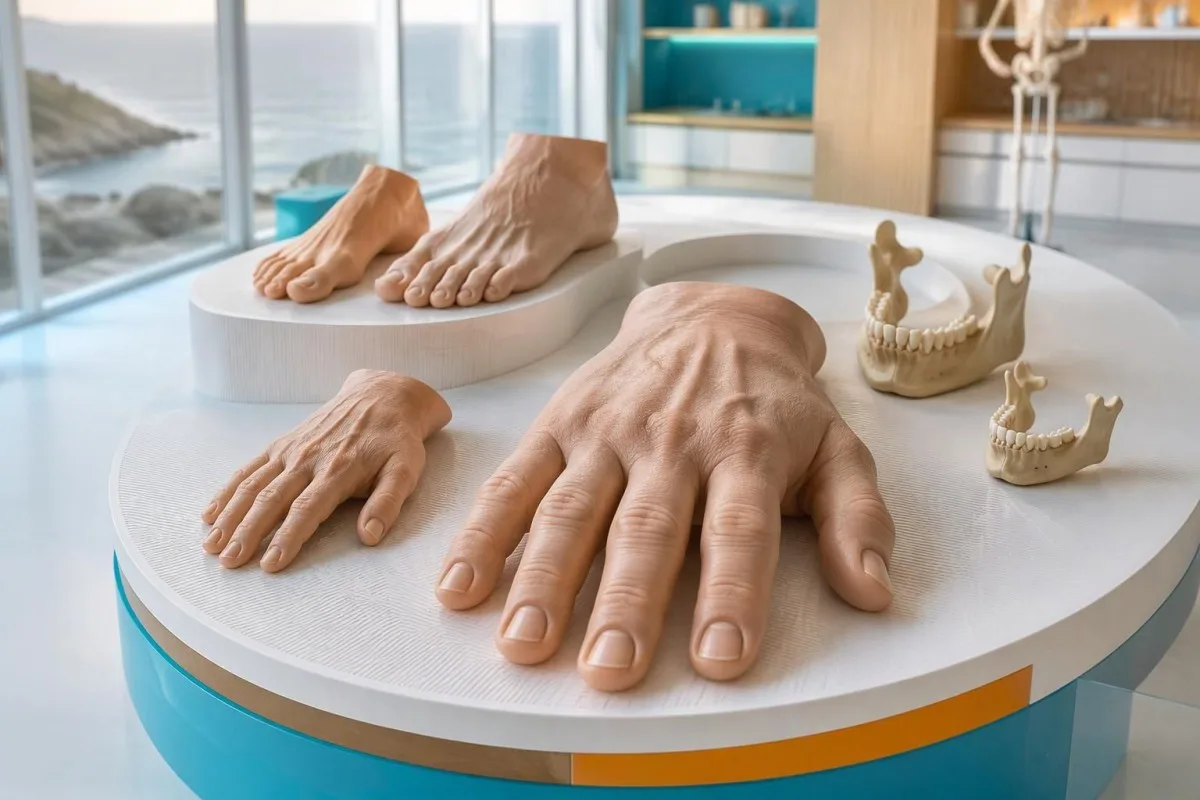
கைகள் அல்லது பாதங்கள் படிப்படியாகப் பெரிதாவது, தாடை மாறுவது, பற்களுக்கிடையிலான இடைவெளி அதிகரிப்பது, வியர்வை அதிகரிப்பது மற்றும் தூக்கத்தில் மூச்சுத்திணறல் ஆகியவை அக்ரோமெகலியைக் குறிக்கலாம்—குறிப்பாக, இத்தகைய பல மாற்றங்கள் ஒன்றாக ஏற்பட்டால். அறிகுறிகளால் மட்டும் இதை உறுதிப்படுத்த முடியாது; மருத்துவ மதிப்பீடும் வயதுக்கேற்ப அளவிடப்படும் IGF-1 இரத்தப் பரிசோதனையும் தேவை.

முக்கிய குறிப்புகள்
- முன்னேற்றம் ஒரு தனித்த அறிகுறியைவிட முக்கியமானது: பல ஆண்டுகளாக மோதிர அளவு அதிகரிப்பதும் கடித்தல் முறை மாறுவதும், முகத்தில் வியத்தகு மாற்றங்கள் இல்லாவிட்டாலும், மருத்துவ மதிப்பாய்வுக்கு உரியவை.
- கைகள் மற்றும் பாதங்கள் வயது வந்தபின் உயரம் அதிகரிப்பது நின்ற பிறகும் அகலமாகலாம்; அக்ரோமெகலியைக் கண்டறிய உதவும் மோதிரம் அல்லது காலணி அளவுகளின் சரிபார்க்கப்பட்ட எண்ணிக்கை எதுவும் இல்லை.
- முக மாற்றங்கள் கீழ்த் தாடை மேலும்突出மாகுதல், மூக்கு அகலமாதல், உதடுகள் தடிப்பாதல் மற்றும் பற்களுக்கிடையில் புதிதாக இடைவெளிகள் தோன்றுதல் ஆகியவை இதில் அடங்கலாம்; தேதியிடப்பட்ட 2 புகைப்படங்களை ஒப்பிடுவது மாற்றங்களின் காலவரிசையைத் தெளிவுபடுத்தலாம்.
- தூக்கத்தில் மூச்சுத்தடை கை, பாதம் அல்லது தாடை பெரிதாவதுடன் சேர்ந்து காணப்படுவது, வளர்ச்சி ஹார்மோன் அதிகமாக உள்ளதா எனப் பரிசோதிக்க வேண்டிய காரணத்தை வலுப்படுத்துகிறது; குறட்டை மட்டும் குறிப்பான அறிகுறி அல்ல.
- IGF-1 வழக்கமாக மேற்கொள்ளப்படும் முதல் உயிர்வேதியியல் பரிசோதனை இதுவாகும்; அதன் குறிப்பு வரம்பு நபரின் வயதுக்கும் ஆய்வகத்தின் பரிசோதனை முறைக்கும் பொருந்த வேண்டும்.
- 1.3× வரம்பு இது 2024 அக்ரோமெகலி ஒருமித்த கருத்திலிருந்து பெறப்பட்டது: வழக்கமான மருத்துவ அம்சங்கள் இருக்கும்போது, வயதுக்கேற்ப நிர்ணயிக்கப்பட்ட மேல்நிலை வரம்பை விட IGF-1 அளவு 1.3 மடங்குக்கு அதிகமாக இருந்தால் நோயறிதலை உறுதிப்படுத்தலாம்.
- குளுக்கோஸ் ஒடுக்குதல் பரிசோதனை (Glucose suppression testing) சில நேரங்களில் நிச்சயமின்மையைத் தீர்க்கிறது: ஒரு சீரற்ற வளர்ச்சி ஹார்மோன் முடிவை மட்டும் நம்புவதற்குப் பதிலாக, ஒரு மருத்துவர் 75 g வாய்வழி குளுக்கோஸையும், தொடர்ச்சியான வளர்ச்சி ஹார்மோன் அளவீடுகளையும் பயன்படுத்தலாம்.
- அவசர அறிகுறிகள் புதிய பார்வைப் பிரச்சினைகள், வாந்தி அல்லது விழிப்புநிலை குறைதல் ஆகியவற்றுடன் திடீரென ஏற்படும் கடுமையான தலைவலியும் இதில் அடங்கும்; ஹார்மோன் பரிசோதனைக்கான சந்திப்புக்காகக் காத்திருக்காமல் அவசர சிகிச்சை பெறுங்கள்.
அக்ரோமெகலி அறிகுறிகளில் எவற்றுக்கு கவனம் தேவை?
வியர்வை, குறட்டை அல்லது கடித்தல் சீரமைப்பில் மாற்றம் போன்றவற்றுடன் கை, கால் அல்லது முகம் பெரிதாகும் மாற்றங்களும் தொடரும்போது, அக்ரோமேகலியின் அறிகுறிகள் கவலைக்குரியவை. ஒரு மோதிரம் இறுக்கமாக இருப்பது மட்டும் பொதுவாகக் குறிப்பிட்ட நோயைக் குறிக்காது; ஒன்றுக்கொன்று தொடர்பில்லாத 2 மாற்றங்கள் ஒரே காலகட்டத்தில் தோன்றினால், மருத்துவ மதிப்பீடு பெறுவதற்கான காரணம் வலுவாகிறது; இருப்பினும், அறிகுறிப் பட்டியல் எதுவும் நோயறிதலை உறுதிப்படுத்த முடியாது.

வளர்ச்சித் தட்டுகள் மூடிய பிறகு, வளர்ச்சி ஹார்மோன் அதிகமாகச் சுரப்பதால் அக்ரோமேகலி ஏற்படுகிறது. வளர்ச்சி ஹார்மோன், இன்சுலின் போன்ற வளர்ச்சிக் காரணி 1 அல்லது IGF-1 உற்பத்தியைத் தூண்டுகிறது; இது மென்மையான திசுக்களும் சில எலும்புகளும் பெரிதாக உதவுகிறது; பெரும்பாலான நிகழ்வுகள் உணவுப் பிரச்சினையால் அல்ல, புற்றுநோயற்ற பிட்யூட்டரி அடினோமாவால் ஏற்படுகின்றன.
திடீரெனத் தோன்றும் அறிகுறியைவிட, படிப்படியான மாற்றத்தை அடையாளம் காண்பது கடினமாக இருக்கலாம். 3–5 ஆண்டுகளுக்கு முந்தைய புகைப்படங்களுடன் உங்கள் தற்போதைய தோற்றத்தை ஒப்பிட்டுப் பார்த்தால், தினசரி கண்ணாடிப் பார்வையில் தவறவிடப்படும் புருவம், தாடை அல்லது மூக்கில் ஏற்பட்ட மாற்றம் தெரியவரலாம்; இந்தக் கால இடைவெளி ஒப்பிடுவதற்கான நடைமுறையான காலவரம்பு மட்டுமே, கட்டாயமாகக் காத்திருக்க வேண்டிய காலம் அல்ல.
எடுத்துக்காட்டாக, திருமண மோதிரத்தின் அளவை 2 முறை மாற்றியுள்ள, காலணிகள் அகலமாகியுள்ள, மேலும் கடித்தல் சீரமைப்பு மாறுவதைப் பல் மருத்துவர் பதிவு செய்துள்ள 46 வயதுடைய ஒருவரைக் கருதுங்கள். உடல் எடை நிலையாக இருப்பதால், எளிய எடை அதிகரிப்பு மட்டும் முழுமையான விளக்கமாக இருக்காது; இருப்பினும், இதை அக்ரோமேகலி என்று கூறுவதற்கு முன் பரிசோதனையும் ஹார்மோன் பரிசோதனைகளும் தேவை.
Kantesti என்பது AI இரத்தப் பரிசோதனை பகுப்பாய்வி; அறிகுறிப் பட்டியலை நோயறிதலாகக் கருதாமல், IGF-1 அறிக்கையைப் புரிந்துகொள்ள இது உதவக்கூடும். நமது அமைப்பு மற்றும் நோக்கம் எங்கள் பங்கை விளக்குகிறோம்: ஏற்கெனவே உள்ள முடிவுகளைப் புரிந்துகொள்ள நாங்கள் உதவுகிறோம்; அதேவேளையில், உடல் மாற்றங்களை மருத்துவர் மதிப்பீடு செய்து, நிபுணர் பரிசோதனை பொருத்தமானதா எனத் தீர்மானிக்கிறார்.
அக்ரோமெகலி கைகளையும் மோதிர அளவையும் எவ்வாறு மாற்றுகிறது
அக்ரோமேகலி, வயது வந்தோரின் கைகளை அகலமாகவும் தடிமனாகவும் மாற்றக்கூடும்; இதனால் வெப்பமான காலநிலையில் மட்டும் அல்லாமல், படிப்படியாக மோதிரங்கள் பொருந்தாமல் போகலாம். காலப்போக்கில் இரு கைகளும் பெரிதாவது, ஒரு விரலில் மட்டும் வீக்கம் ஏற்படுவதைவிட அதிகமாக அக்ரோமேகலியைச் சுட்டிக்காட்டுகிறது; குறிப்பாக, காலணி பொருத்தம், முக வடிவம் அல்லது வியர்வையிலும் மாற்றம் ஏற்பட்டால்.
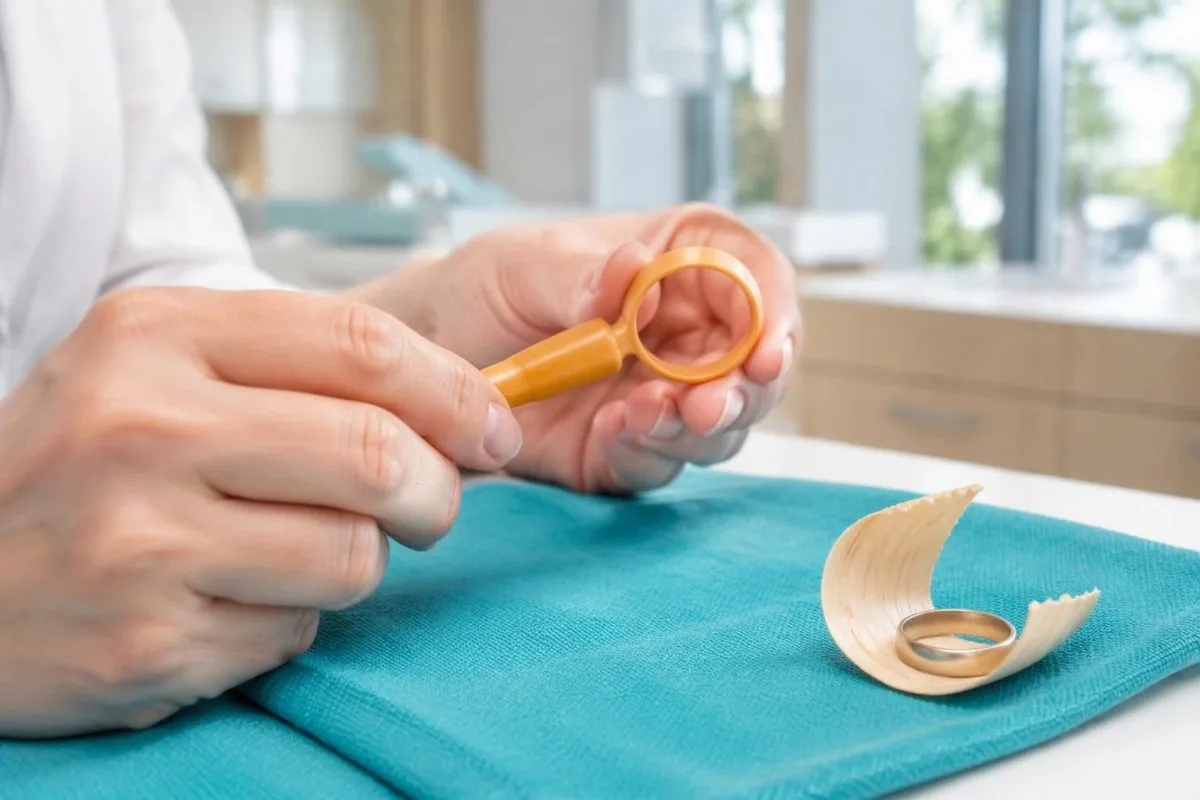
மோதிர அளவு சுற்றளவை அளக்கிறது; பெரிதாவதற்கான காரணத்தை அல்ல. மோதிர அளவில் 1 அளவு மாற்றம், எடை அதிகரிப்பு, மூட்டுவலி, திரவத் தேக்கம் அல்லது மாறுபட்ட அளவீட்டு முறைகளால் ஏற்படலாம்; மாற்றம் நீடித்து, உள்ளங்கைகள் தடிமனாதல் அல்லது பிற தனித்துவமான அறிகுறிகளுடன் இருக்கும்போது அக்ரோமேகலி ஒரு சாத்தியமாகக் கருதப்படுகிறது.
தற்காலிக வீக்கம், திசுக்கள் படிப்படியாகப் பெரிதாவதைவிட வேறுபட்ட விதத்தில் மாறும். 1 வாரம் காலையில் மற்றும் மாலையில் அதே மோதிரம் பொருந்துகிறதா எனச் சரிபார்ப்பது, வீக்கம் ஏற்ற இறக்கமாக உள்ளதா என்பதைக் கண்டறியலாம்; ஆனால் இந்த வீட்டுக் கவனிப்பு அக்ரோமேகலி இல்லை என்பதை உறுதிப்படுத்தாது; வீங்கிய மூட்டின் மீது இறுக்கமான மோதிரத்தை மீண்டும் மீண்டும் வலுக்கட்டாயமாகப் போடுவதைத் தவிர்க்கவும்.
தைராய்டு தொடர்பான திரவத் தேக்கம், அக்ரோமேகலியின் முழுமையான அறிகுறித் தொகுப்பை ஏற்படுத்தாமல், கை புடைப்பைப் போலத் தோன்றலாம். எங்கள் விளக்கம் லேசான தைராய்டு செயல்பாட்டுக் குறைவு ஆய்வகப் பரிசோதனைகளால் வரையறுக்கப்படும் தைராய்டு மாற்றங்களையும் உடல் பெரிதாவதையும் வேறுபடுத்த உதவுகிறது; சற்றே அசாதாரணமான TSH முடிவு மட்டும், கை மற்றும் தாடை அளவில் பல ஆண்டுகளாக ஏற்பட்ட மாற்றத்தைத் தானாகவே விளக்குவதாகக் கருதக்கூடாது.
பயனுள்ள மருத்துவச் சந்திப்புக் குறிப்பில் 2 கவனிப்புகள் தனித்தனியாகப் பதிவாக வேண்டும்: கைகள் ஒட்டுமொத்தமாக அகலமாவது, குறிப்பிட்ட மூட்டுகளை மையமாகக் கொண்டு பெரிதாவது. மோதிர அளவை மாற்றிய தோராயமான தேதிகளைக் கொண்டுவந்து, முழங்கால் மூட்டு வலி, காலையில் ஏற்படும் விறைப்பு அல்லது உள்ளங்கை தடிமனாதல் ஆகியவற்றில் எது முதலில் ஏற்பட்டது என்பதைக் குறித்துக்கொள்ளுங்கள்; இந்த விவரங்கள், திசு வளர்ச்சியை மூட்டு நோய் அல்லது இடையிடையே ஏற்படும் வீக்கத்திலிருந்து மருத்துவர் வேறுபடுத்த உதவும்.
காலணி அளவு அதிகரிப்பது ஆரம்ப அறிகுறியாக இருக்கும்போது
வயது வந்தோருக்கு கால்கள் படிப்படியாக அகலமாகவோ பெரிதாகவோ மாறுவது, குறிப்பாக கை அளவும் மாறும்போது, அக்ரோமேகலியின் ஆரம்ப அறிகுறியாக இருக்கலாம். காலணிகளை 1 முறை மாற்றுவது மட்டும் நோயறிதலுக்குப் போதாது: பிராண்ட் வேறுபாடுகள், கர்ப்பம் தொடர்பான கால் மாற்றங்கள், எடை அதிகரிப்பு, பனியன் அல்லது பாத வளைவு தாழ்வது ஆகியவையும் வளர்ச்சி ஹார்மோன் அதிகமின்றி காலணி பொருத்தத்தை மாற்றக்கூடும்.
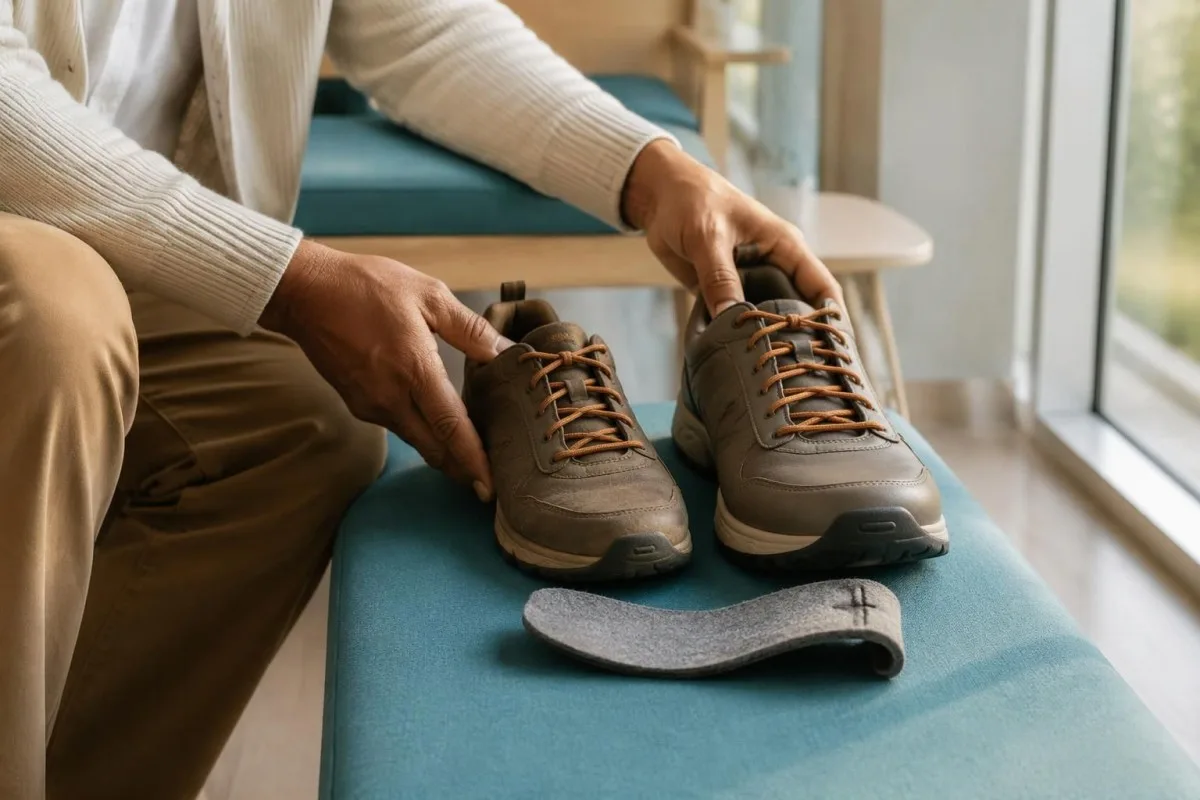
குறிப்பிடப்பட்ட காலணி அளவு மாறுவதற்கு முன்பே சில நேரங்களில் கால் அகலம் மாறும். 3 ஆண்டுகள் இடைவெளியில் வாங்கிய காலணிகளின் நீளம் ஒன்றாக இருந்தாலும், முன்பகுதி அதிக அகலமாக இருந்தால்தான் பொருந்துகிறதெனில், அந்த விவரத்தைப் பதிவு செய்யுங்கள்; மென்மையான திசுக்கள் தடிமனாதலும், பாதத்தின் இயந்திரவியல் மாற்றங்களும் ஒன்றாக இருக்கக்கூடும்; எனவே நீளத்தை மட்டும் அளவிடுவது முழுமையான அளவீடு அல்ல.
அக்ரோமேகலி தொடர்பான பெரிதாதல் பொதுவாகப் படிப்படியாக உருவாகி, இரு கால்களையும் பாதிக்கிறது. ஒரு கால் அல்லது பாதத்தில் திடீரென வீக்கம் ஏற்பட்டால், குறிப்பாகக் கெண்டைக்கால் அசௌகரியம் அல்லது சூடாக இருப்பதுடன் இருந்தால், வேறுவிதமான மதிப்பீடு தேவைப்படுகிறது; எங்கள் வழிகாட்டி urgent one-sided leg swelling explains why that pattern should not be attributed to a slow hormonal disorder.
For a hypothetical 51-year-old, moving from the same manufacturer's size 8 to size 10 over several years would be more informative than comparing unrelated brands. The observation becomes more meaningful if a ring has also needed resizing, but there is no validated shoe-size increase that confirms acromegaly.
Bring 2 pairs of dated shoes or purchase records if available, rather than buying measuring equipment. A clinician can assess edema, arches, joints and soft tissues together; foot photographs should be taken in comparable positions because perspective can make a stable foot appear larger.
தாடை மற்றும் பற்களில் ஏற்படும் மாற்றங்கள் எதை வெளிப்படுத்தலாம்
Acromegaly facial changes can include a more prominent lower jaw, broader nose, thicker lips and wider spacing between teeth. A changing bite documented on 2 dental visits can be more useful than a subjective impression of looking different, because jaw growth and ordinary weight gain affect appearance differently.
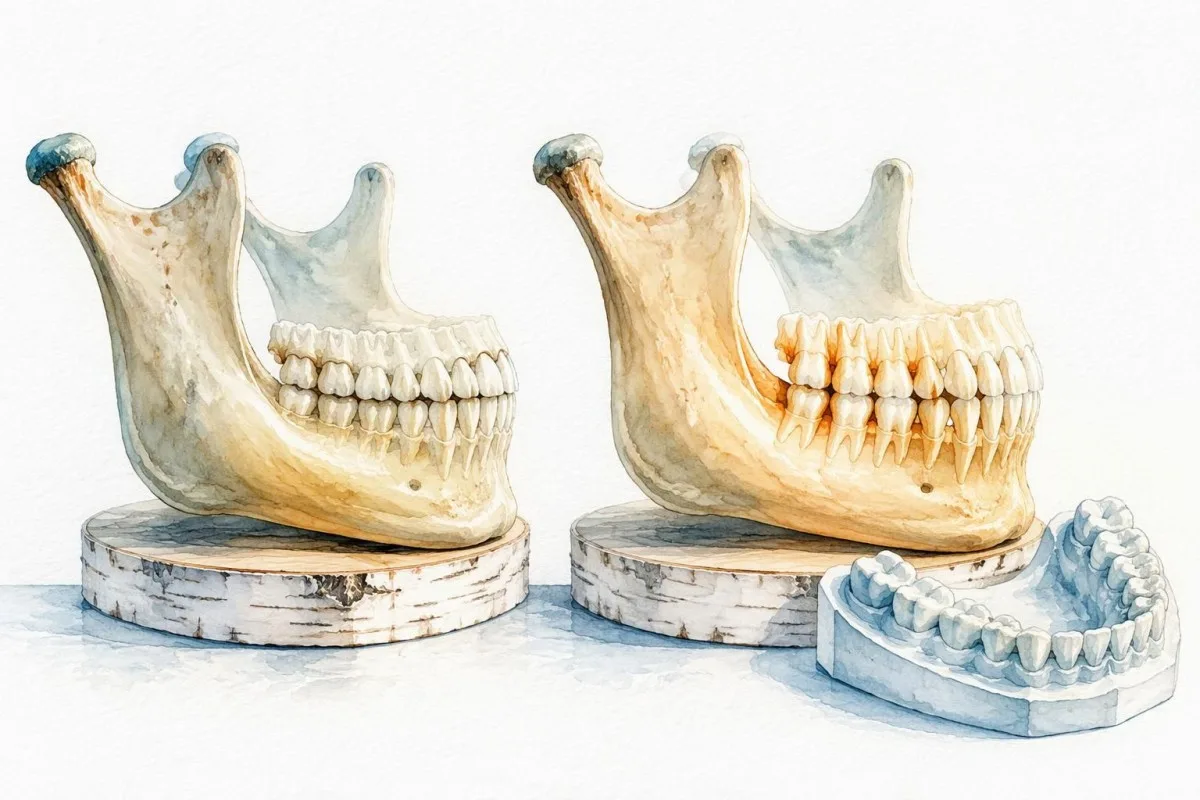
New tooth spacing does not necessarily mean the teeth themselves have enlarged. Enlargement of the jaw can change their positions relative to one another, while gum disease, missing teeth and orthodontic movement can also produce gaps; comparing dental records from 2 dates helps identify which process is more plausible.
Photographs are most useful when lighting, camera distance and head position are similar. Choose 1 older front-view photograph and 1 side view if possible; wide-angle phone lenses can exaggerate the nose and jaw, so apparent enlargement in a close selfie is not reliable evidence of hormone excess.
Bone disorders can also change skull or jaw shape, but usually require a different diagnostic pathway. Our explanation of Paget disease testing describes one alternative; an ALP result, whether normal or raised, cannot replace IGF-1 testing when the broader pattern suggests acromegaly.
Ask a dentist whether 2 findings are documented: a progressive bite change and new spacing not explained by gum or orthodontic disease. A dentist may recognize the physical pattern, but photographs, bite impressions and dental imaging cannot confirm acromegaly without an endocrine assessment.
பரந்த அறிகுறித் தொகுப்பில் மட்டுமே வியர்வை அதிகரிப்பு ஏன் முக்கியம்
Increased sweating and oily or thicker skin can accompany acromegaly, but sweating alone is a weak diagnostic clue. Persistent sweating becomes more relevant when it develops alongside at least 1 structural change, such as broader hands or a changing jaw; the combination guides evaluation rather than proving a hormonal cause.
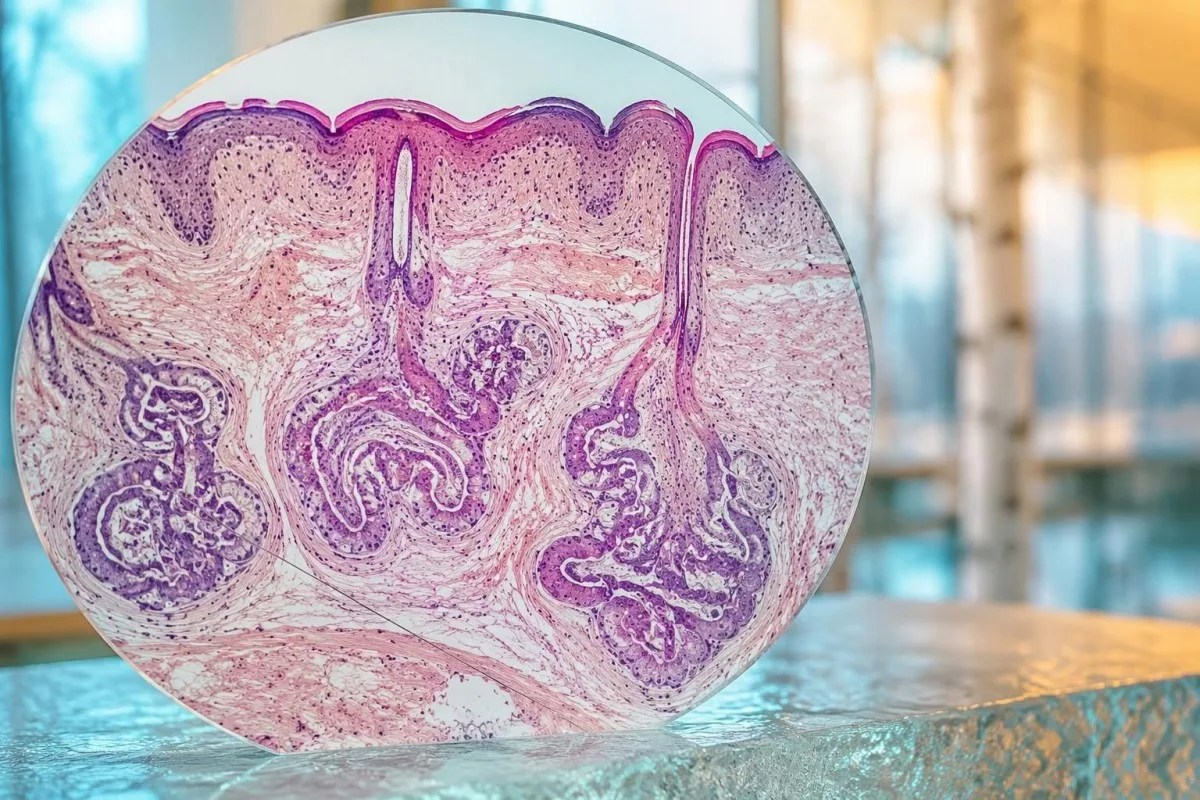
A useful sweating history distinguishes persistent excess perspiration from brief episodes. Recording triggers and timing for 7 days can reveal links to exercise, medicines, meals or hot flashes; acromegaly does not have a distinctive sweat odor or a validated sweating frequency that separates it from other causes.
Episodic sweating with pounding headaches, palpitations and marked blood-pressure swings suggests a different endocrine question. Our guide to adrenal hormone warning patterns explains when metanephrine testing may be considered; that test and IGF-1 answer different questions, even when 2 conditions share sweating as a symptom.
Hot flashes can coincide with the age at which acromegaly becomes noticeable, creating an easy attribution error. The discussion of fluctuating menopause hormone results explains why 1 estradiol measurement is not a complete explanation for sweating, especially if ring fit and facial shape are also changing.
Skin tags are common and are not an acromegaly screening test. In a hypothetical 48-year-old with new sweating and several skin tags, we would distinguish metabolic or medication-related explanations from the much more specific observation of progressive hand and jaw enlargement; counting skin tags does not resolve that distinction.
தூக்கத்தில் மூச்சுத்திணறல் திசுப் பெரிதாக்கத்துடன் எவ்வாறு தொடர்புடையது
Acromegaly can contribute to obstructive sleep apnea through enlargement of the tongue and other upper-airway tissues. Loud snoring, witnessed breathing pauses and daytime sleepiness warrant sleep evaluation; when these occur with progressive hand or jaw enlargement, an IGF-1 test may also be appropriate rather than assuming 1 diagnosis explains everything.
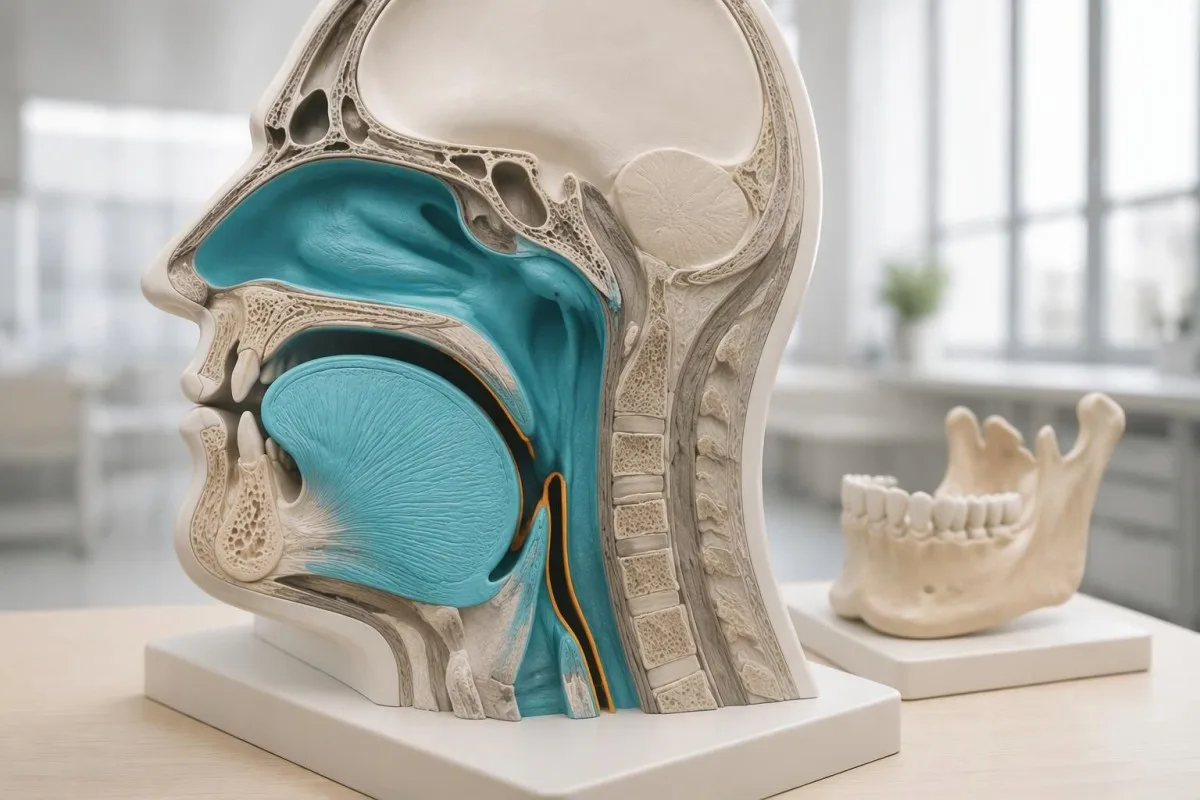
Obstructive sleep apnea is assessed using respiratory events during sleep, not facial appearance. An apnea–hypopnea index of at least 5 events/hour with relevant symptoms or comorbidities, or at least 15 events/hour regardless of symptoms, commonly supports adult diagnosis; neither threshold identifies the underlying cause as acromegaly.
Sleep studies answer a different question from a daytime sleepiness test. Our explanation of sleep-study test selection distinguishes overnight respiratory assessment from testing for narcolepsy; a normal or abnormal multiple sleep latency test does not assess growth hormone excess.
The Endocrine Society guideline recommends considering IGF-1 testing when several associated conditions occur together, including sleep apnea, diabetes, arthritis, carpal tunnel syndrome, excessive sweating and hypertension (Katznelson et al., 2014). Having 1 of these common conditions does not justify assuming acromegaly, but their coexistence can lower the threshold for discussing testing.
Treating hormone excess does not guarantee that sleep apnea disappears. If a person already uses positive-airway-pressure treatment, 1 improved night of sleep is not evidence that it can be stopped; residual airway anatomy and weight-related factors may persist, and any treatment change requires reassessment by the sleep team.
கை மரத்துப்போதலும் மூட்டு வலியும்: துணை அறிகுறிகள்
Carpal tunnel syndrome and joint discomfort can accompany acromegaly because tissue enlargement affects nerves, cartilage and joint mechanics. Numbness in the thumb, index and middle fingers is more consistent with median-nerve compression than numbness involving all 5 fingers equally, but the nerve pattern does not establish a hormonal cause.
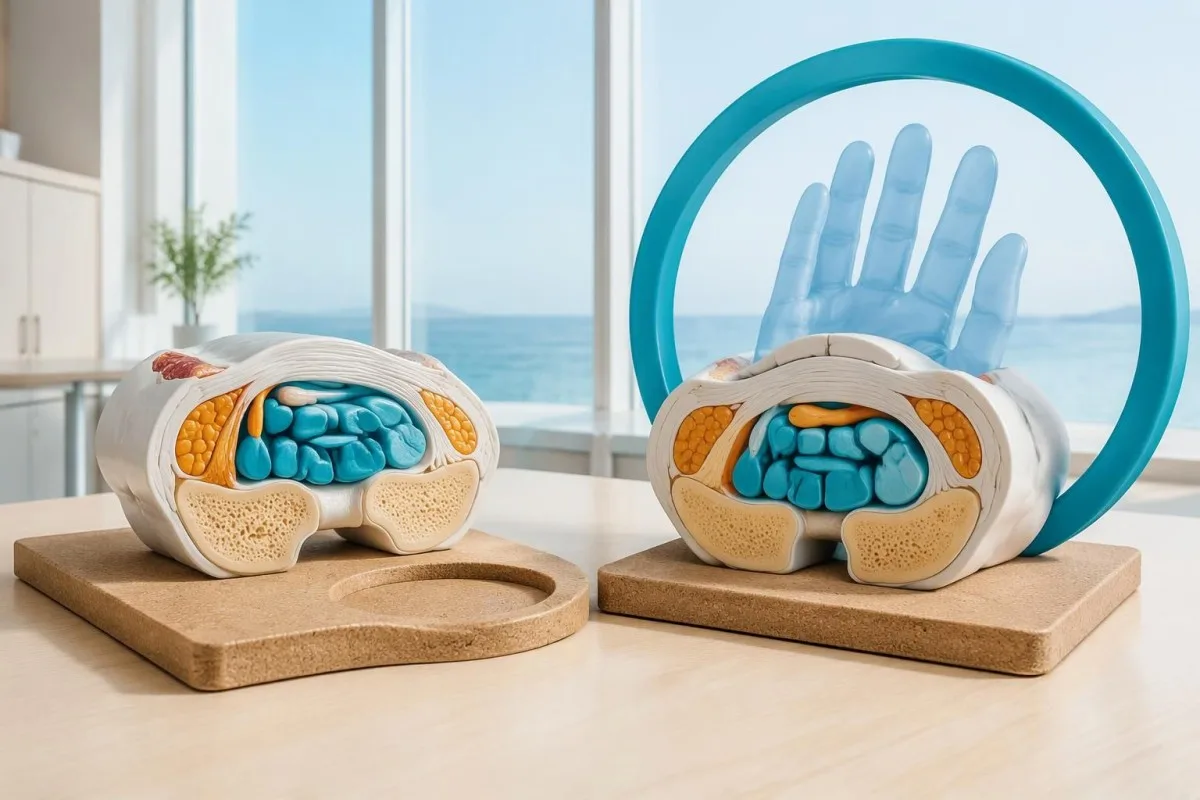
Bilateral symptoms are useful context, not proof of acromegaly. Nighttime tingling in both hands plus 2 ring resizings and a changing bite deserves a different discussion from isolated tingling after repetitive wrist use; the associated structural changes explain why an endocrine cause might enter the differential.
The fingers involved help localize the problem before choosing tests. Our guide to median-nerve symptom patterns explains why little-finger numbness may point elsewhere; an abnormal nerve-conduction study can confirm nerve dysfunction without answering whether IGF-1 excess contributed.
Joint symptoms can outlast successful control of growth hormone excess. After years of altered cartilage and bone mechanics, correcting 1 hormone pathway does not necessarily reverse established degenerative changes; this is why early recognition matters even when pain has been labeled ordinary arthritis.
Kantesti can help organize an IGF-1 result alongside glucose or thyroid findings, but nerve symptoms still require clinical localization. For a hypothetical 55-year-old, distinguishing 2 problems—median-nerve compression and progressive tissue enlargement—avoids interpreting every abnormal laboratory value as the cause of hand numbness.
பிற அறிகுறிகள்: குளுக்கோஸ், இரத்த அழுத்தம் மற்றும் ஹார்மோன் மாற்றங்கள்
Growth hormone excess can contribute to insulin resistance, high blood pressure and changes in other pituitary hormone functions. These findings are common outside acromegaly; concern rises when at least 2 metabolic or hormonal problems develop alongside progressive hand, foot or facial enlargement, rather than when a single routine result is abnormal.
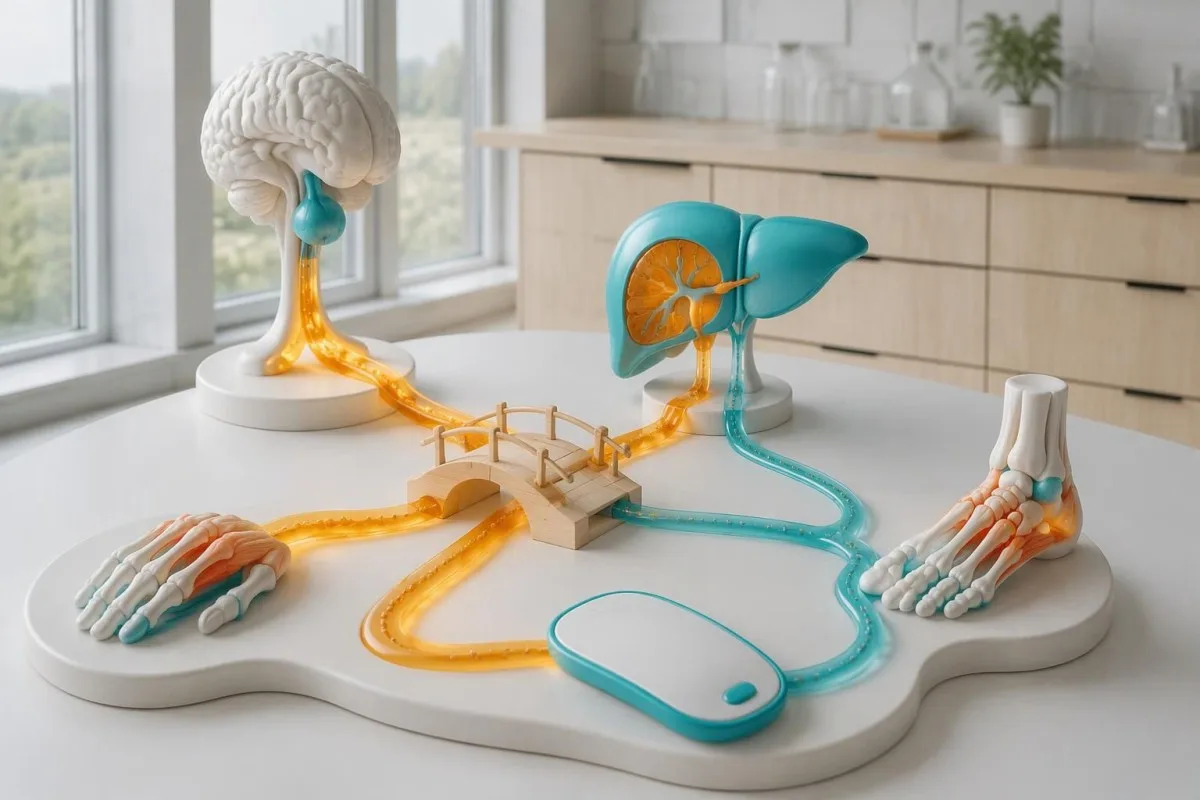
Diabetes is a possible associated condition, not a diagnostic shortcut. An HbA1c of at least 6.5% or fasting plasma glucose of at least 126 mg/dL, equivalent to 7.0 mmol/L, meets commonly used diabetes thresholds when confirmation requirements are satisfied; neither value identifies growth hormone excess as the cause.
Thirst and blurred vision may therefore need evaluation independently of changes in appearance. Our guide to அதிக குளுக்கோஸ் எச்சரிக்கை அறிகுறிகள் explains why a hypothetical glucose result of 280 mg/dL with symptoms deserves prompt clinical attention, even while a separate acromegaly assessment is being arranged.
Pituitary dysfunction can alter menstrual cycles, sexual function or fertility, but these symptoms have many causes. Our women's hormonal symptom guide discusses relevant alternatives; missing 2 periods alongside progressive jaw and hand changes deserves a broader review than assuming a single age-related explanation.
At Kantesti, we distinguish a complication marker from a disease-specific test: 1 abnormal HbA1c cannot substitute for age-adjusted IGF-1. Bring blood-pressure readings, medication names and the timing of hormonal symptoms, because a clinician may need to assess associated conditions and pituitary function in parallel.
இதேபோன்ற உடல் மாற்றங்களுக்கு வேறு என்ன காரணமாக இருக்கலாம்?
Weight gain, fluid retention, thyroid disease, arthritis and dental problems can resemble parts of the acromegaly pattern. The distinction depends on the distribution and progression of change: enlargement affecting hands, feet and jaw over several years is harder to explain with 1 localized joint or dental problem.
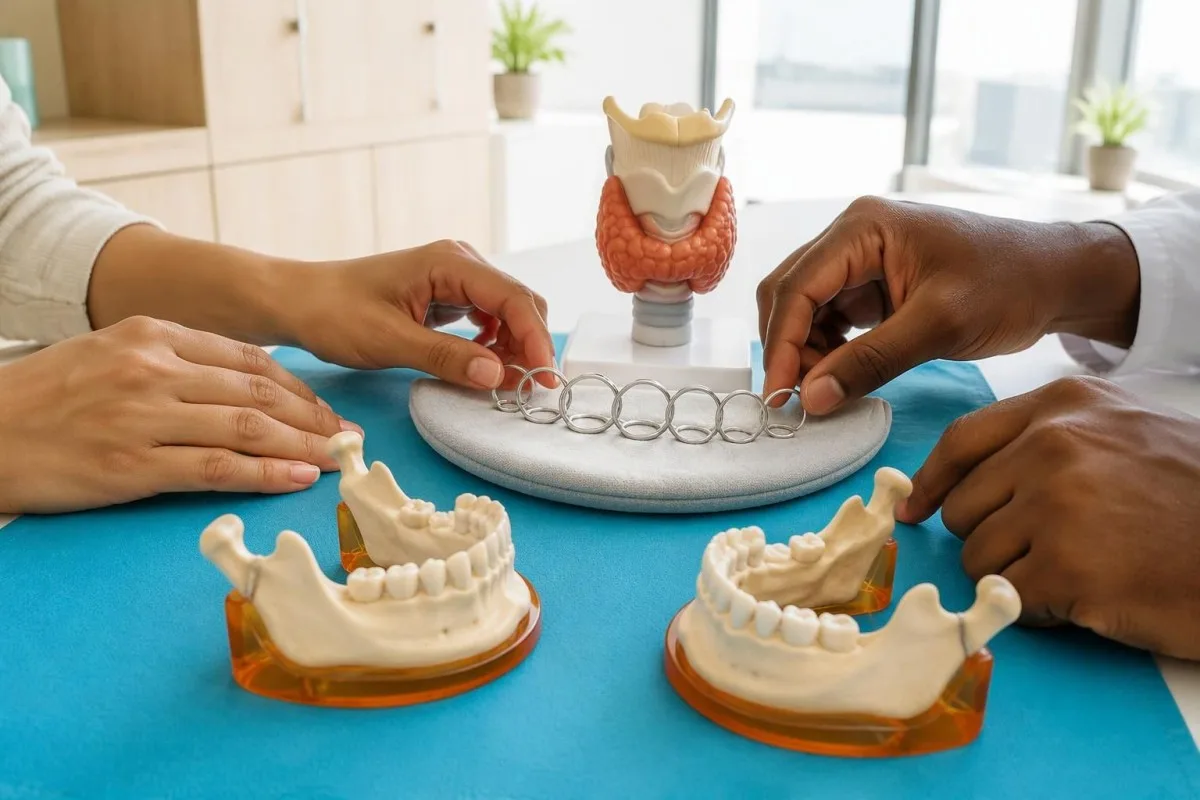
Weight gain often changes facial fullness without producing the same progressive mandibular prominence or dental spacing. In a hypothetical 50-year-old whose weight rose by 12 kg, tighter rings may have an ordinary explanation; a dentist-confirmed change in jaw relationship still deserves separate attention rather than dismissal.
Cushing syndrome can cause facial rounding, metabolic problems and muscle weakness, but its testing pathway differs from acromegaly. Our guide to cortisol screening and confirmation explains why 1 random cortisol result does not establish Cushing syndrome, just as a random growth hormone result does not establish acromegaly.
A pituitary problem can sometimes produce low free T4 without an appropriately elevated TSH. Our explanation of low T4 with normal TSH helps clarify why those 2 measurements must be interpreted together; a normal TSH alone is not a complete assessment of pituitary-related thyroid function.
Childhood growth and adult tissue enlargement should not be confused. Excess growth hormone before growth-plate closure can cause gigantism, whereas adult acromegaly does not usually increase height; a naturally large shoe size that has remained unchanged for 20 years is not equivalent to progressive adult enlargement.
IGF-1 ஏன் பொதுவாக முதல் இரத்தப் பரிசோதனையாகும்
Age-adjusted IGF-1 is usually the first biochemical test when acromegaly is suspected because it reflects growth hormone activity more consistently than a single growth hormone measurement. The 2024 consensus states that characteristic clinical features plus IGF-1 above 1.3 times the age-adjusted upper limit can confirm the diagnosis (Giustina et al., 2024).
IGF-1 has no single normal adult range that applies to every age and assay. For example, if a hypothetical laboratory upper limit is 250 ng/mL and the result is 340 ng/mL, the result is 1.36 times that upper limit; using another laboratory's range could change the interpretation incorrectly.
A normal IGF-1 usually argues against acromegaly, but confounders can reduce its reliability. Poorly controlled diabetes, significant liver disease, undernutrition and oral estrogen can affect results; 1 normal measurement should be reviewed in context when physical features are compelling, rather than overridden or accepted automatically.
Kantesti is an AI blood test interpretation platform that can explain an IGF-1 value relative to the reference interval printed on the report. நமது உயிர் குறிப்பான் விளக்கம் வழிகாட்டி provides laboratory context, but identifying the assay, age range and clinical reason for testing remains part of clinician-led assessment.
Liver and nutritional status matter because IGF-1 production is closely linked to hepatic function and systemic health. Our சீரம் புரத விளக்கம் வழிகாட்டி explains relevant background markers; 1 albumin result cannot validate or invalidate IGF-1, but it may prompt a closer review of illness or nutrition.
| நிலை | வரம்பு | அதன் பொருள் |
|---|---|---|
| ஆய்வக இடைவெளிக்குள் | At or below the age-adjusted upper limit | Usually argues against acromegaly; consider confounders if clinical suspicion remains strong. |
| எல்லைக்கோட்ட உயர்வு | >1.0–1.3× the age-adjusted upper limit | Requires clinical review; repeat testing and sometimes glucose suppression testing resolve uncertainty. |
| Above the consensus diagnostic threshold | >1.3× the age-adjusted upper limit | Can confirm acromegaly when characteristic clinical features are present; specialist interpretation is needed. |
வளர்ச்சி ஹார்மோன் ஒடுக்கப் பரிசோதனை எப்போது பயனுள்ளதாக இருக்கும்
A glucose suppression test may help when IGF-1 results and clinical findings are equivocal. The test commonly uses 75 g oral glucose followed by serial growth hormone measurements; it assesses whether growth hormone suppresses appropriately, rather than treating one high random growth hormone value as diagnostic.
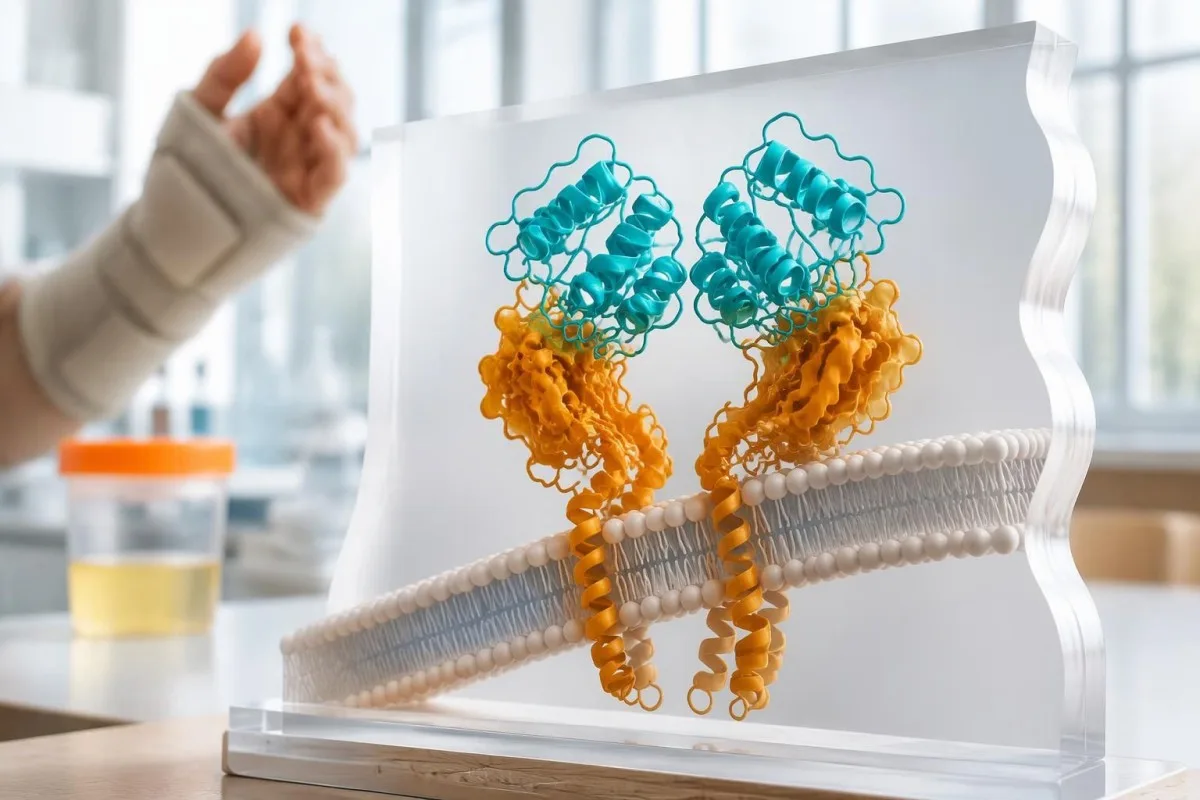
Growth hormone is released in pulses and can rise with sleep, exercise and physiological stress. That is why 1 random value, whether high or low, is unreliable for establishing or excluding acromegaly; an isolated result should not trigger a diagnosis based solely on a generic laboratory range.
Diagnostic cutoffs have changed with assay sensitivity. The Endocrine Society guideline used suppression below 1 ng/mL after glucose to exclude acromegaly in the appropriate testing context (Katznelson et al., 2014); specialist practice may use lower assay-dependent thresholds, including 0.4 ng/mL, rather than one universal cutoff.
For example, a hypothetical IGF-1 of 275 ng/mL against an upper limit of 250 ng/mL equals 1.10 times the upper limit. If growth hormone falls to 0.7 ng/mL, interpretation may differ by assay and clinical context; repeating IGF-1 and reviewing confounders is safer than selecting whichever cutoff gives a preferred answer.
Kantesti does not independently validate an acromegaly diagnosis or choose a glucose-test cutoff. Our மருத்துவ முறையியல் மற்றும் வரம்புகள் explain why interpretation must remain tied to the source report; our separate guide to ஆய்வக முடிவுகளில் முக்கியத்துவமுள்ள மாற்றங்கள் குறித்த வழிகாட்டி explains why 2 results are not automatically comparable.
மதிப்பாய்வுக்கு எப்போது முன்பதிவு செய்வது—அறிகுறிகள் எப்போது அவசரமானவை
Book a clinical review for unexplained progressive enlargement of hands, feet or jaw, especially when sweating, sleep apnea or a changing bite accompanies it. There is no minimum duration you must wait; a sudden severe headache with new visual symptoms is a separate emergency, not something to observe for 2 weeks.
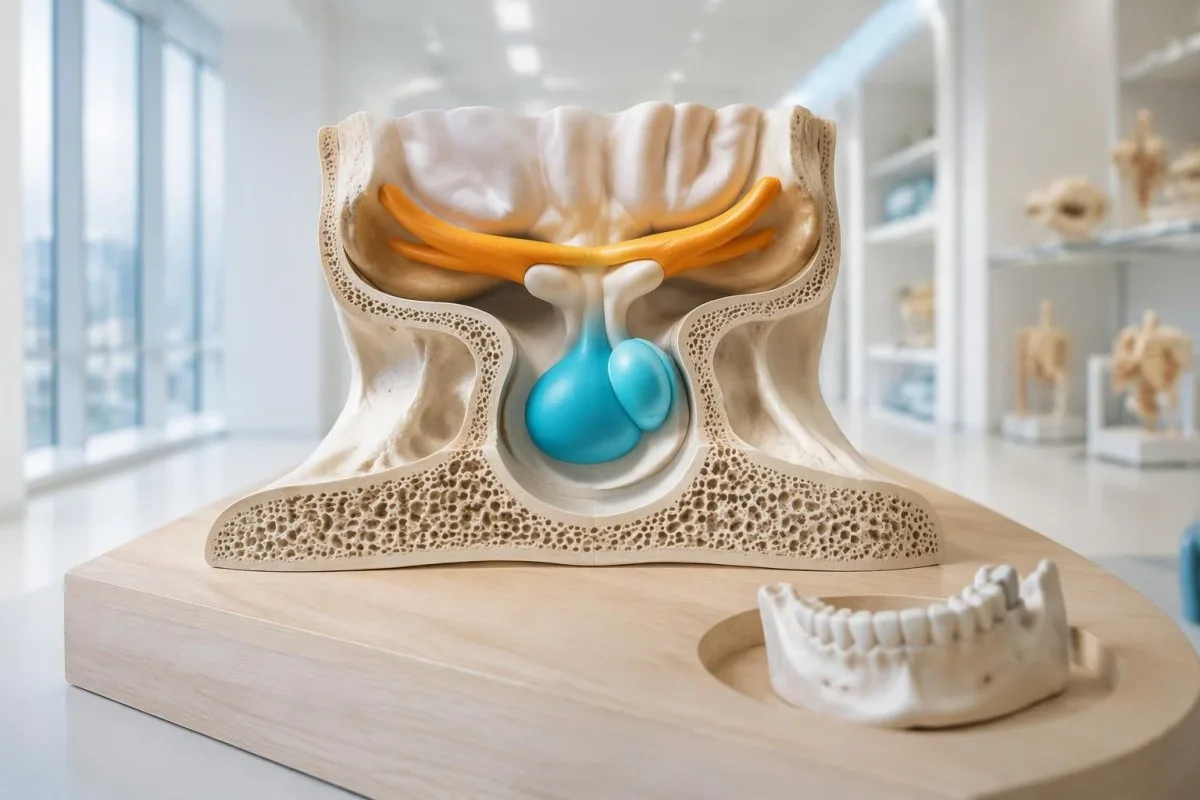
A pituitary growth can affect nearby visual pathways, sometimes causing loss of peripheral vision. New difficulty noticing objects on either side, double vision or a substantial visual change warrants prompt assessment; involvement of 1 or both eyes does not reliably determine whether the cause is pituitary, retinal or neurological.
Sudden severe headache with vomiting, double vision, reduced alertness or visual loss can indicate pituitary apoplexy or another neurological emergency. Seek emergency care immediately rather than waiting for an IGF-1 result; even 1 abrupt neurological warning symptom can justify urgent assessment when severe or unexplained.
Pituitary adenomas are usually noncancerous, but noncancerous does not mean harmless when a growth produces excess hormones or presses on nearby structures. Our guide to neurological warning symptoms explains why progressive and sudden symptoms follow different routes; a 5-year appearance change and an abrupt visual deficit should not receive the same triage.
For gradual changes without emergency features, prepare 3 categories of evidence: appearance or sizing changes, associated symptoms and existing results. Ask whether an age-adjusted IGF-1 test and endocrine referral are appropriate; avoid arriving with a self-confirmed diagnosis or postponing care until every possible symptom appears.
ஹார்மோன் பரிசோதனை முடிவு அசாதாரணமாக இருந்தால் அடுத்து என்ன நடக்கும்?
After biochemical confirmation or strong specialist-supported suspicion, pituitary MRI usually identifies the source and its relationship to surrounding structures. Imaging alone cannot confirm acromegaly: a pituitary finding may be incidental, and the 10 mm size boundary between microadenoma and macroadenoma describes size rather than hormone secretion.
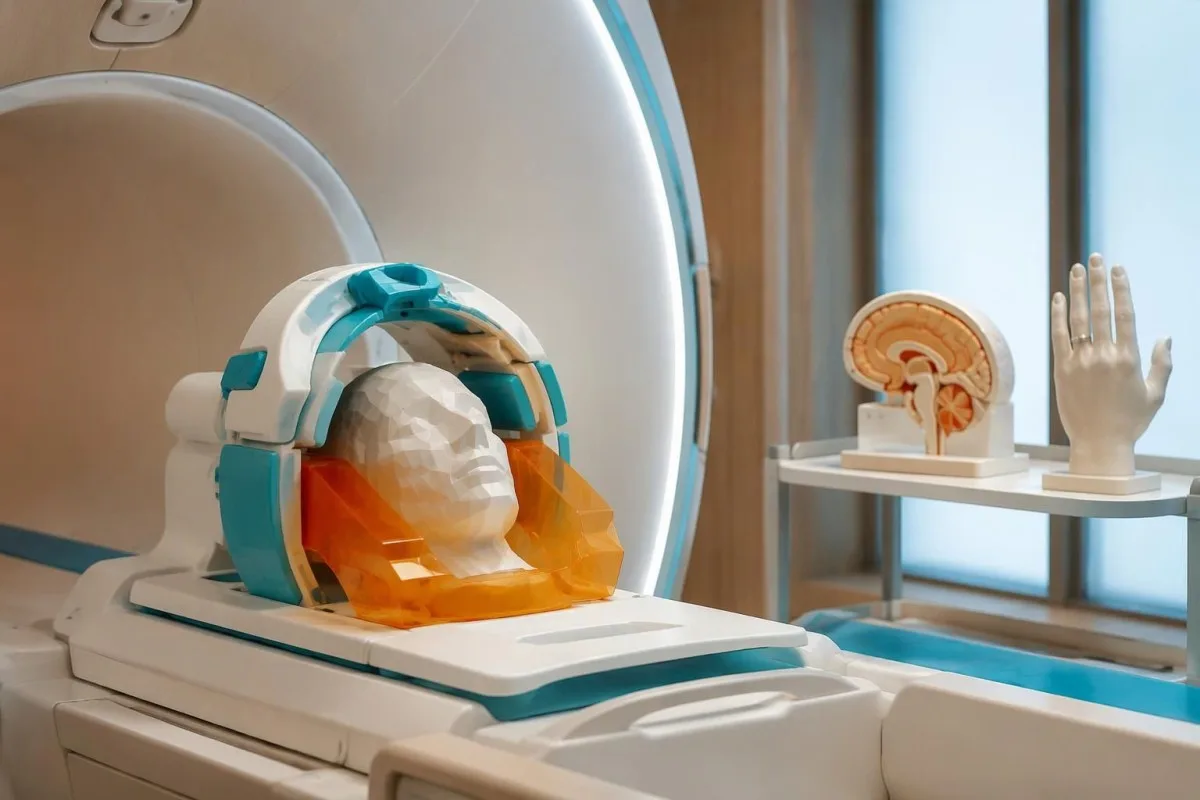
A pituitary microadenoma measures less than 10 mm, while a macroadenoma measures at least 10 mm. A smaller growth can still secrete clinically significant growth hormone; conversely, a larger nonfunctioning growth may not cause acromegaly, so dimensions and biochemical activity answer different questions.
An endocrine team may assess prolactin, thyroid function, adrenal function and reproductive hormone pathways as well as IGF-1. Our guide to மிதமான புரோலாக்டின் உயர்வுகள் explains why 1 raised prolactin result can have several causes; it does not prove that a pituitary growth is secreting multiple hormones.
Visual-field testing may be needed when MRI shows proximity to the optic chiasm or when vision is affected. A reassuring ability to read a phone screen at 30 cm does not exclude peripheral field loss; formal testing assesses a different part of vision from everyday reading.
Kantesti AI cannot infer pituitary growth size from an IGF-1 concentration. If the pituitary MRI does not explain convincing biochemical findings, a specialist may review imaging quality, assay issues and rare alternative sources; a negative scan should not be converted into an unsupported claim that 1 hormone result was necessarily wrong.
உங்கள் சந்திப்புக்குத் தயாராகுதல் மற்றும் எங்கள் ஆதாரங்களைச் சரிபார்த்தல்
The most useful next step is a short timeline connecting physical changes, associated symptoms and existing laboratory results. Bring 2 dated photographs if available, ring or shoe history and the full IGF-1 report; these support a focused clinical discussion without turning home observations into a diagnostic score.
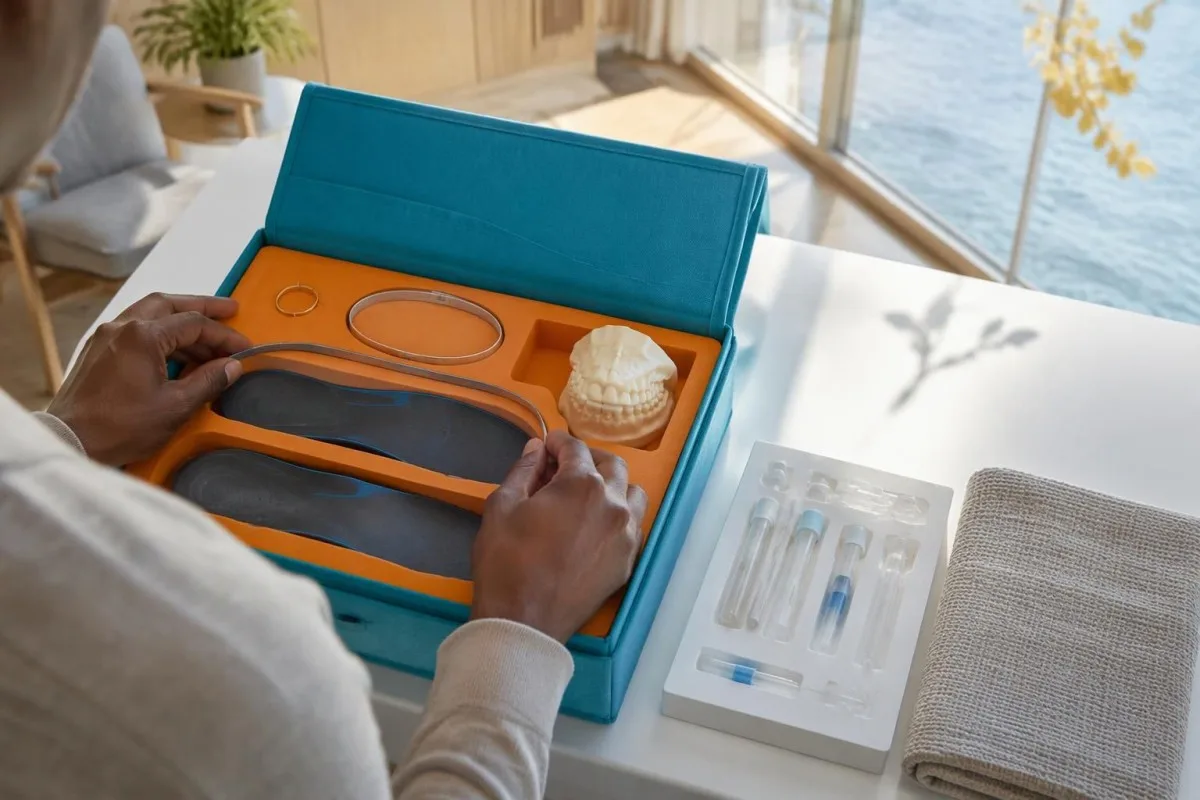
Write down when each change began and whether it has continued, fluctuated or stopped. A 1-page record is usually more useful than dozens of unlabeled photographs: include weight changes, dental observations, sleep-apnea treatment and medication or supplement use, especially prescribed hormones that could influence laboratory interpretation.
Kantesti is an AI-powered blood test analysis tool that can help explain an existing IGF-1 report and organize questions for your clinician. எங்கள் வழிகாட்டி AI அறிக்கை விளக்கங்களைச் சரிபார்ப்பது describes source verification; an explanation cannot replace examination, and a normal metabolic panel does not mean IGF-1 was tested.
Protect identifying information when sharing laboratory reports or old photographs. Kantesti's தனியுரிமை மற்றும் தரவு வழிகாட்டுதல் explains our data approach; use only the materials needed for the question, and obtain permission before sharing another person's results or images, even when comparing 2 family members.
The clinical recommendations here draw on the Endocrine Society's 2014 guideline and the 2024 diagnostic consensus, listed below. The 2 accompanying Figshare publications concern gastrointestinal and women's hormonal health; they are related educational resources, not evidence for acromegaly diagnosis, and a repository DOI does not by itself establish peer review.
அடிக்கடி கேட்கப்படும் கேள்விகள்
அக்ரோமேகலியின் ஆரம்ப அறிகுறிகள் என்ன?
அக்ரோமேகலி நோயின் ஆரம்ப அறிகுறிகளில், மோதிரங்கள் படிப்படியாக இறுக்கமாவது, காலணிகளின் அளவு பெரிதாவது, வியர்வை அதிகரிப்பது, புதிதாக மணிக்கட்டு நரம்புப் பாதிப்பு அறிகுறிகள் தோன்றுவது, பற்கள் கடிக்கும் விதம் மாறுவது ஆகியவை அடங்கலாம். தேதியிடப்பட்ட 2 புகைப்படங்கள் அல்லது பல் மருத்துவப் பதிவுகளை ஒப்பிடுவது, அன்றாடம் கவனிக்கக் கடினமான மாற்றங்களை வெளிப்படுத்தலாம். குறிப்பிட்ட அளவுக்கு மோதிரத்தின் அளவு அதிகரிப்பதோ அல்லது குறிப்பிட்ட எண்ணிக்கையிலான அறிகுறிகள் இருப்பதோ மட்டும் அக்ரோமேகலி இருப்பதை உறுதிப்படுத்தாது. காரணம் தெரியாத இந்த முன்னேற்றம், மருத்துவ மதிப்பீட்டையும் வயதுக்கேற்ற IGF-1 பரிசோதனையையும் மேற்கொள்ளத் தூண்ட வேண்டும்.
மோதிரம் அல்லது காலணி அளவு அதிகரிப்பது எனக்கு அக்ரோமேகலி இருப்பதைக் குறிக்கிறதா?
மோதிரம் அல்லது காலணி அளவு அதிகரிப்பது மட்டுமே உங்களுக்கு அக்ரோமெகலி இருப்பதைக் குறிக்காது. எடை அதிகரிப்பு, உடலில் திரவம் தேங்குதல், மூட்டுவலி, கர்ப்பம் தொடர்பான பாத மாற்றங்கள் மற்றும் காலணிகளின் வேறுபாடுகள் ஆகியவையும் பொருத்தத்தை மாற்றக்கூடும். ஒரு காலணி அளவு அதிகரிப்பதற்கு உறுதிப்படுத்தப்பட்ட நோயறிதல் முக்கியத்துவம் இல்லை; ஆனால் தாடை மாற்றங்கள், வியர்வை அல்லது தூக்க மூச்சுத்திணறலுடன் தொடர்ந்து அளவு பெரிதாவது மதிப்பாய்வு செய்யப்பட வேண்டும். நோயறிதல் மருத்துவக் கண்டறிதல்களையும் பொருத்தமான ஹார்மோன் பரிசோதனைகளையும் சார்ந்தது.
அக்ரோமெகலி உங்கள் முகத்தை மாற்றுமா அல்லது பற்களுக்கு இடையில் இடைவெளிகளை ஏற்படுத்துமா?
அக்ரோமேகலி, தாடையின் அளவுகள் மாறும்போது கீழ்த்தாடையை மேலும்突出மாக்கி, பற்களுக்கு இடையிலான இடைவெளியை அதிகரிக்கலாம். இது மூக்கை அகலமாகவும் உதடுகளை தடிமனாகவும் மாற்றலாம்; ஆனால் ஈறு நோய், பற்சீரமைப்பு சிகிச்சையால் ஏற்படும் பற்களின் நகர்வு மற்றும் இயல்பான முக மாற்றங்கள் ஆகியவையும் இதேபோன்ற அறிகுறிகளை ஏற்படுத்தக்கூடும். இரண்டு தேதிகளில் எடுக்கப்பட்ட பல் பதிவுகளை ஒப்பிடுவது, பற்களின் கடி அல்லது இடைவெளி அதிகரித்துள்ளதா என்பதைத் தீர்மானிக்க உதவும். உயிர்வேதியியல் மதிப்பீடு இல்லாமல், முகப் புகைப்படங்களும் பல் பரிசோதனை முடிவுகளும் அக்ரோமேகலியை உறுதிப்படுத்த முடியாது.
அக்ரோமேகலியைப் பரிசோதிக்க எந்த இரத்தப் பரிசோதனை செய்யப்படுகிறது?
அக்ரோமெகலி இருப்பதாகச் சந்தேகிக்கப்படும்போது, வயதுக்கேற்ப சரிசெய்யப்பட்ட IGF-1 அளவீடே பொதுவாக முதலில் செய்யப்படும் இரத்தப் பரிசோதனையாகும். 2024ஆம் ஆண்டின் ஒருமித்த கருத்தின்படி, நோய்க்குரிய தனிச்சிறப்பான மருத்துவ அறிகுறிகள் இருக்கும்போது, வயதுக்கேற்ப சரிசெய்யப்பட்ட மேல் வரம்பை விட 1.3 மடங்குக்கும் அதிகமான IGF-1 அளவு அக்ரோமெகலியை உறுதிப்படுத்தலாம். எல்லைக்கோட்டில் உள்ள அல்லது ஒன்றுக்கொன்று முரண்படும் முடிவுகளுக்கு, மீண்டும் பரிசோதனை செய்வதும் மருத்துவரின் மேற்பார்வையில் குளுக்கோஸ் ஒடுக்கச் சோதனை செய்வதும் தேவைப்படலாம். ஒருமுறை சீரற்ற நேரத்தில் அளவிடப்படும் வளர்ச்சி ஹார்மோன் பரிசோதனை, நம்பகமான மாற்று நோயறிதல் சோதனை அல்ல.
IGF-1 முடிவு இயல்பாக இருந்தாலும் அக்ரோமேகலி இருக்க முடியுமா?
நம்பகமான முறையில் அளவிடப்பட்ட, வயதுக்கேற்ப சரிசெய்யப்பட்ட இயல்பான IGF-1 அளவு, பொதுவாக சிகிச்சையளிக்கப்படாத அக்ரோமெகலியை எதிர்த்து வாதிடுகிறது. இருப்பினும், மோசமாகக் கட்டுப்படுத்தப்படும் நீரிழிவு, குறிப்பிடத்தக்க கல்லீரல் நோய், ஊட்டச்சத்துக் குறைபாடு மற்றும் வாய்வழி ஈஸ்ட்ரோஜன் ஆகியவை IGF-1 அளவைப் பாதித்து, அதன் விளக்கத்தைச் சிக்கலாக்கலாம். 1 இயல்பான முடிவு கிடைத்த பிறகும், தனித்துவமான உடல் மாற்றங்கள் தொடர்ந்து இருந்தால், மருத்துவர் பரிசோதனை முறையையும், குறிப்பு வரம்பையும், முடிவைப் பாதிக்கக்கூடிய காரணிகளையும் மறுபரிசீலனை செய்ய வேண்டும். அறிகுறிகளே நோயறிதலை உறுதிப்படுத்துகின்றன என்றோ, சூழல் ஒருபோதும் முக்கியமல்ல என்றோ கருதுவதற்குப் பதிலாக, பரிசோதனையை மீண்டும் செய்வது அல்லது நிபுணர் மதிப்பீட்டைப் பெறுவது பொருத்தமானதாக இருக்கலாம்.
அக்ரோமேகலி அறிகுறிகள் இருப்பதாகச் சந்தேகிக்கப்படும் போது, அவசரநிலையாக எப்போது கருத வேண்டும்?
கை, கால் அல்லது முகம் படிப்படியாகப் பெரிதாவது பொதுவாக அவசர சிகிச்சையைவிட திட்டமிட்ட மருத்துவப் பரிசோதனையைக் கோருகிறது. புதிதாகப் பார்வை இழப்பு, இரட்டைப் பார்வை, வாந்தி அல்லது விழிப்புணர்வு குறைதல் ஆகியவற்றுடன் திடீரென ஏற்படும் கடுமையான தலைவலிக்கு அவசர மதிப்பீடு தேவை; ஏனெனில் பிட்யூட்டரி சுரப்பியில் திடீர் இரத்தக்கசிவு மற்றும் பிற நரம்பியல் அவசரநிலைகள் ஏற்படக்கூடும். இத்தகைய எச்சரிக்கை அறிகுறிகள் தோன்றினால், வழக்கமான ஹார்மோன் பரிசோதனை முடிவுக்காக 24 மணிநேரம் காத்திருக்க வேண்டாம். தோற்றத்தில் வெளிப்படையான மாற்றங்கள் இல்லாவிட்டாலும், புதிதாக ஏற்படும் அல்லது படிப்படியாக மோசமடையும் பார்வைப் பிரச்சினைகளுக்கும் உடனடி மருத்துவ மதிப்பீடு அவசியம்.
உங்கள் இரத்த பரிசோதனை முடிவுகளை புரிந்துகொள்ளுங்கள்
உங்கள் ஆய்வக அறிக்கையைப் பதிவேற்றுங்கள்; Kantesti-இன் AI ஒவ்வொரு உயிர்குறியீட்டையும் சில நொடிகளில் எளிய மொழியில் விளக்குகிறது. உலகம் முழுவதும் 2 மில்லியனுக்கும் அதிகமானோர் பயன்படுத்துகின்றனர்.
குறிப்புகள்
- Klein, T., Mitchell, S., & Weber, H. (2026). உண்ணாவிரதத்திற்குப் பிறகான வயிற்றுப்போக்கு, மலத்தில் கருப்புப் புள்ளிகள் மற்றும் இரைப்பை-குடல் வழிகாட்டி 2026. Kantesti AI மருத்துவ ஆராய்ச்சி. டி.ஓ.ஐ.
- Klein, T., Mitchell, S., & Weber, H. (2026). பெண்கள் நல வழிகாட்டி: அண்டவிடுப்புச் சுழற்சி, மாதவிடாய் நிறுத்தம் மற்றும் ஹார்மோன் அறிகுறிகள். Kantesti AI மருத்துவ ஆராய்ச்சி. டி.ஓ.ஐ.
- Katznelson L et al. (2014). Acromegaly: An Endocrine Society Clinical Practice Guideline. The Journal of Clinical Endocrinology & Metabolism. டி.ஓ.ஐ.
- Giustina A et al. (2024). Consensus on criteria for acromegaly diagnosis and remission. Pituitary. டி.ஓ.ஐ.
- 2மி+பகுப்பாய்வு செய்யப்பட்ட பரிசோதனைகள்
- 127+நாடுகள்
- 100+மொழிகள்
மருத்துவக் குழுவைப் பற்றி


E-E-A-T நம்பிக்கை சிக்னல்கள்
அனுபவம்
ஆய்வக விளக்க (lab interpretation) பணிச்சூழல்களின் மீது மருத்துவர் வழிநடத்தும் மருத்துவ மதிப்பாய்வு.
நிபுணத்துவம்
மருத்துவ சூழலில் உயிர்க்குறிகள் (biomarkers) எவ்வாறு நடக்கின்றன என்பதில் ஆய்வக மருத்துவத்தின் கவனம்.
அதிகாரம்
டாக்டர் தாமஸ் க்ளைனால் மருத்துவ ரீதியாக மதிப்பாய்வு செய்யப்பட்டது; டாக்டர் சாரா மிட்செல் மற்றும் பேராசிரியர் டாக்டர் ஹான்ஸ் வெபர் ஆகியோரின் பங்களிப்புகளுடன்.
நம்பகத்தன்மை
எச்சரிக்கையை குறைக்க தெளிவான பின்தொடர்பு பாதைகளுடன் ஆதார அடிப்படையிலான விளக்கம்.




மருத்துவ மறுப்பு அறிவிப்பு
இந்த கட்டுரை கல்வி நோக்கங்களுக்காக மட்டுமே; இது மருத்துவ ஆலோசனையாகாது. நோயறிதல் மற்றும் சிகிச்சை முடிவுகளுக்காக எப்போதும் தகுதியான சுகாதார வழங்குநரை அணுகுங்கள்.
வெளியிடப்பட்டது · ஆசிரியர் குழுவைத் தொடர்புகொள்ளவும்
Kantesti Ltd ஆல் வெளியிடப்பட்டது; இங்கிலாந்து மற்றும் வேல்ஸில் பதிவு செய்யப்பட்டது; நிறுவன எண். 17090423, லண்டன், ஐக்கிய இராச்சியம்.
