
A modest rise can be part of recovery, but the date of your operation, your previous count and your symptoms change what happens next.

Key takeaways
- Likely explanation: A small platelet rise after surgery is often reactive, reflecting tissue repair, inflammation or blood loss.
- Common threshold: A platelet count of 450 × 10⁹/L or higher is commonly called thrombocytosis; laboratory reference limits can differ.
- Timing: Platelets can initially fall after an operation and then rebound, often reaching a peak around the second postoperative week.
- Trend matters: A falling count in a person recovering well is generally more reassuring than a count that continues to climb.
- Follow-up: Ask your surgical team when to repeat the complete blood count; a repeat in a few weeks may be reasonable for an otherwise well person, but the schedule is individual.
- Iron loss: Blood loss and iron deficiency can contribute to high platelets; ferritin can be harder to interpret during inflammation.
- Urgent symptoms: New chest pain, sudden breathlessness or stroke-like symptoms need emergency care, regardless of the platelet number.
- Medication safety: Do not start aspirin or change prescribed clot-prevention treatment solely because of a high platelet result.
What does a slightly elevated platelet count mean after surgery?
A slightly elevated platelet count after surgery often means the bone marrow is responding to tissue repair, inflammation or blood loss. This temporary response is called reactive thrombocytosis; the operation date, the actual count and how you feel determine whether a repeat test or earlier review is appropriate.

Platelets are small cell fragments that help form clots. A typical adult reference interval is approximately 150–450 × 10⁹/L, although your laboratory may use a different upper limit; 450 × 10⁹/L is the same as 450,000 platelets per microlitre.
The phrase mildly elevated platelets after surgery does not identify a single diagnosis. A result just above the laboratory limit may reflect normal variation or recovery, while a persistent rise can also point to iron deficiency, infection or, less commonly, a bone marrow condition.
For example, a hypothetical person whose count rose from 280 before surgery to 465 × 10⁹/L on postoperative day 12, with an uncomplicated recovery, has a pattern that can fit a reactive rise. That pattern is reassuring but does not prove the cause; see how platelet changes over time add context.
A count above 450 is not automatically an emergency, and a count below 450 does not rule out a postoperative complication. The result is one part of a clinical assessment, not a substitute for checking new symptoms.
| Level | Range | What it means |
|---|---|---|
| Typical adult interval | 150–450 × 10⁹/L | Use the interval printed on your own report; an individual baseline may differ. |
| Mild example | 451–600 × 10⁹/L | Often reactive after surgery; clinical context and a follow-up plan matter more than this informal category. |
| Higher example | 601–999 × 10⁹/L | Discuss promptly with the surgical team; the cause and rate of change guide timing. |
| Extreme elevation | ≥1,000 × 10⁹/L | Requires prompt clinician assessment; urgency also depends on symptoms and the clinical setting. |
Why do platelet counts increase after surgery?
Platelet count increases after surgery because tissue injury and the immune response stimulate the bone marrow to make more platelets. Blood loss, iron deficiency and removal of the spleen can add to that response.

One signaling protein, interleukin-6, helps increase thrombopoietin, a hormone involved in platelet production. The timing of this response is not instantaneous: a count taken on day 2 can look very different from one taken on day 12.
The IL-6 test guide explains why this inflammatory signal is not specific to one illness. An elevated platelet count alone cannot distinguish expected healing from an infection or another source of inflammation.
Blood loss may also lower iron stores, and iron deficiency is a recognized cause of reactive thrombocytosis. In a 2011 review, Bleeker and Hogan described tissue damage, infection, inflammation and iron deficiency among the common causes of reactive platelet elevations (Bleeker and Hogan, 2011).
After splenectomy, or removal of the spleen, platelet counts can rise substantially because the spleen normally retains and removes some platelets. The rise may last longer than it does after other operations, so follow the specific plan given by the surgical team.
When do platelets peak after an operation?
Platelets often fall during the first few days after surgery and then rebound, with a postoperative peak commonly around day 14. The exact pattern varies with the procedure, blood loss, complications and a person's starting count.

Early decreases can reflect dilution from fluids and platelet consumption during and after the operation. Skeith and colleagues describe the subsequent physiologic platelet overshoot in their review of postoperative platelet changes (Skeith et al., 2020).
A result on day 3 and one on day 14 therefore answer different questions. A mildly high count on day 14 in someone healing well is more compatible with a normal recovery response than a new rise months later, although neither timing proves a cause.
A hypothetical count of 220 before surgery, 145 on day 2, 490 on day 14 and 360 four weeks later illustrates a rise and recovery; all values are in × 10⁹/L. Actual monitoring may be more or less frequent, depending on the operation and symptoms.
A substantial fall after heparin exposure deserves a different assessment from a postoperative rise, even if the absolute count remains within range. The guide to PF4 antibody testing explains why a suspected heparin-related platelet fall requires prompt clinical assessment rather than interpretation of an antibody result alone.
How do the platelet level and trend affect follow-up?
The platelet level helps clinicians decide how quickly to review a result, but the trend and the person's condition are more informative than a single cutoff. A count that is falling as recovery progresses is generally more reassuring than one that rises on successive tests.
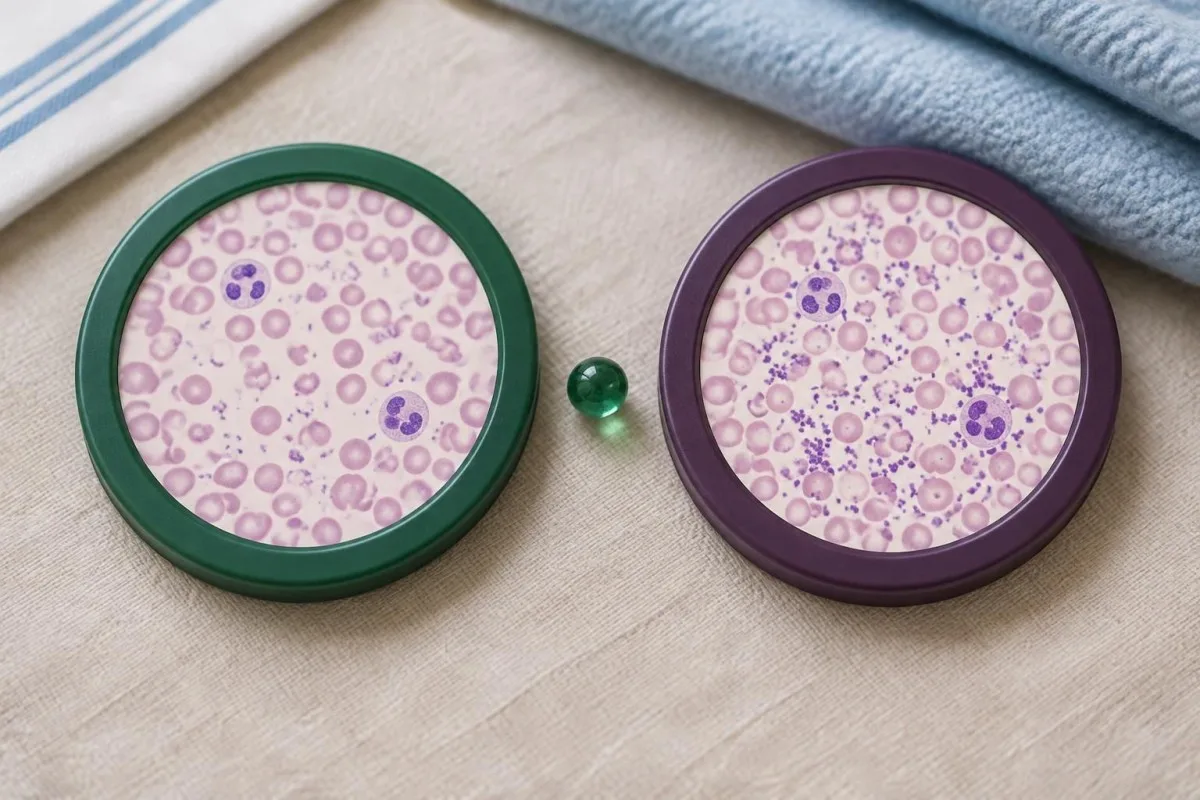
A result of 470 × 10⁹/L is approximately 4% above a 450 upper limit; 600 × 10⁹/L is about 33% above it. These are mathematical comparisons, not validated risk categories, and a small difference near the limit can reflect ordinary biological or laboratory variation.
A jump from 480 to 720 × 10⁹/L over several days deserves a conversation with the surgical team sooner than a decline from 520 to 470 over the same period. The team will also consider fever, wound changes, blood loss, the type of operation and any other abnormal complete blood count results.
Very high counts, including 1,000 × 10⁹/L or more, can still be reactive; the number alone cannot distinguish a reactive process from a bone marrow disorder. Prompt review is appropriate, particularly because very high counts can sometimes be associated with bleeding as well as clotting problems.
Other platelet measurements are not substitutes for the count. For example, platelet size variation may add context, but it cannot establish why a postoperative platelet count is high.
When should a high platelet count be rechecked?
A repeat complete blood count is often used to confirm that a postoperative platelet rise is settling, but there is no single repeat interval suitable for every operation. Your surgical team should choose the timing based on the count, symptoms and recovery.
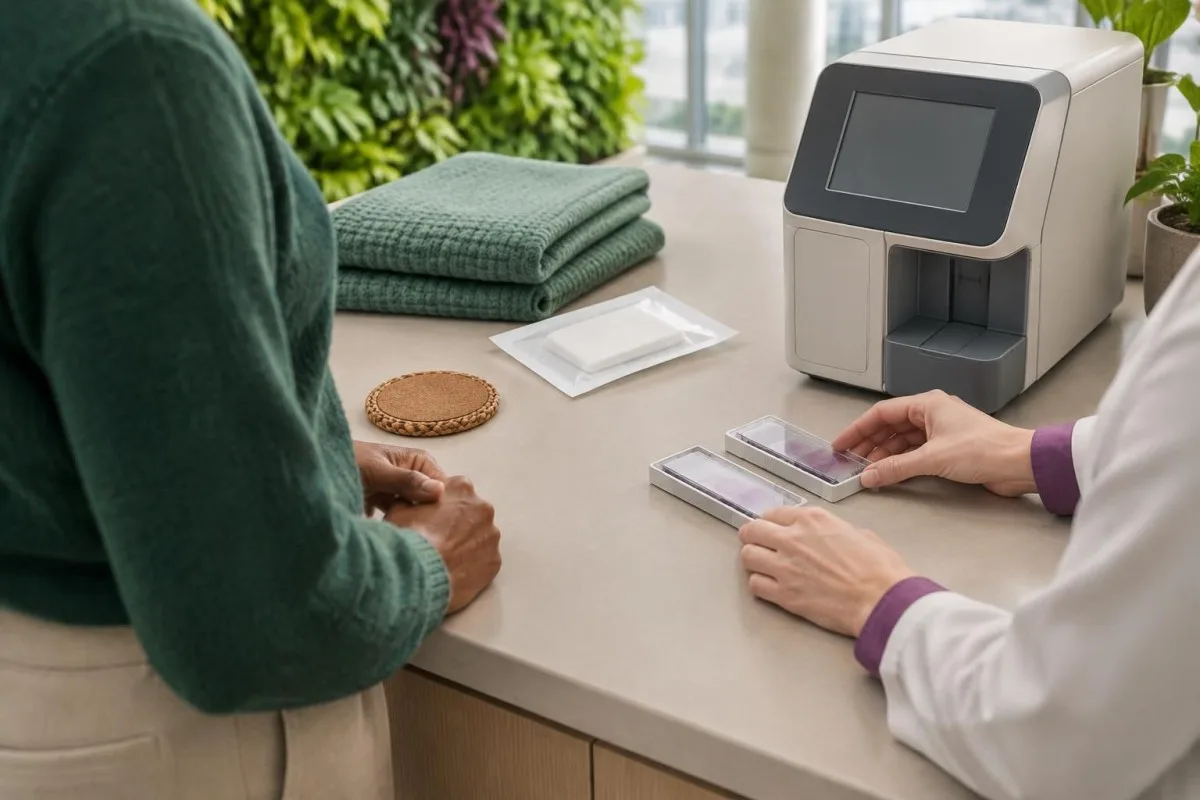
For an otherwise well person with a mildly elevated result around the second postoperative week, a clinician may suggest another complete blood count in 2–4 weeks. This is an example of a practical interval, not a universal guideline; a rapidly rising count, complications or a very high result may need earlier testing.
Ask which clinician will review the next result and how you will receive it. Keep the operation date, preoperative platelet count, postoperative counts and relevant medicines together; the biomarker guide can help identify the names used on a report.
If the count stays at or above 450 × 10⁹/L after the expected recovery period, or remains unexplained on repeat testing, arrange further review rather than assuming surgery is still the cause. There is no single duration that diagnoses a marrow disorder; the baseline, trend and other findings determine the next step.
The team may request a peripheral smear if the analyzer result needs confirmation or other cell abnormalities are present. A smear lets a laboratory professional examine cellular elements directly, but the need for one depends on the complete report.
Which other blood tests help explain high platelets?
A complete blood count, iron studies and sometimes inflammation markers can help identify why platelets remain high after surgery. These tests are selected according to the patient's symptoms and history, not ordered automatically for every mild rise.

Hemoglobin and mean corpuscular volume (MCV) provide clues about anemia and red cell size after blood loss. A low MCV can occur with iron deficiency, but early iron deficiency may occur before MCV or hemoglobin falls; see the explanation of MCV on a CBC.
Ferritin estimates stored iron, but it also rises during inflammation, so a ferritin result in the reference interval does not always exclude iron deficiency soon after surgery. Clinicians may interpret ferritin with transferrin saturation and other findings; the iron studies guide explains the components.
C-reactive protein and white blood cell count can support an assessment of inflammation or infection, but surgery itself can change them. Neither marker identifies an infection on its own; the pattern of white cells and CRP must be read with symptoms and examination.
Do not start an iron supplement simply to lower a platelet count. Iron treatment is useful when deficiency is identified or strongly suspected, but the clinician should also investigate the reason for the deficiency and select a suitable treatment.
When do symptoms or clot risks need urgent attention?
New chest pain, sudden shortness of breath, coughing up blood, fainting or stroke-like symptoms after surgery require emergency assessment, even if the platelet count is only slightly elevated or normal. Call local emergency services rather than waiting for a repeat blood test.

New swelling, pain, warmth or redness in one leg can be a sign of deep vein thrombosis and needs urgent same-day medical assessment. The guide to leg clot warning signs describes symptoms that should not wait for a routine appointment.
Facial drooping, arm weakness or speech difficulty can signal stroke; sudden severe neurological symptoms need emergency help even if they improve. Record when symptoms began if possible, and do not drive yourself; see the stroke warning signs.
Contact the surgical team promptly about fever, worsening pain, increasing redness or drainage at the operation site, or a new unexplained deterioration. These symptoms may indicate a complication whether the platelet count is 350 or 500 × 10⁹/L.
Surgery itself can increase clot risk through reduced mobility and other factors; a mild reactive platelet rise does not reliably measure that risk. Continue prescribed clot-prevention measures as directed, and do not add aspirin or stop an anticoagulant without advice because bleeding risk and medication interactions also matter.
What if platelets stay high after recovery?
Platelets that remain elevated after surgical recovery warrant a review for continuing inflammation, iron deficiency and less common causes, including a myeloproliferative neoplasm. Persistent elevation does not by itself mean cancer.

A clinician will usually compare earlier complete blood counts, examine the trend and look for a reactive explanation before considering specialized testing. A platelet count of 450 × 10⁹/L or higher on repeated tests is a reason to discuss the finding, especially if it was present before surgery.
If the elevation is unexplained or accompanied by other concerning findings, a clinician may refer to hematology and consider mutation tests such as JAK2, along with other investigations. A JAK2 result is interpreted with the full clinical picture; a negative result does not rule out every marrow condition.
Useful details for the appointment include the date and type of surgery, previous platelet counts, recent infection or bleeding, iron results, medicines and any history of clots. Ask whether a repeat count is needed and what change would prompt an earlier call.
Our medical content standards explain how educational material is developed; this article cannot determine the cause of an individual result or replace the postoperative team's advice.
Frequently asked questions
Is a platelet count of 450 or 500 normal after surgery?
A platelet count of 450 × 10⁹/L is at the commonly used threshold for thrombocytosis, while 500 × 10⁹/L is mildly above many adult laboratory ranges. Either result can occur as a temporary response after surgery, especially during the second postoperative week. The laboratory's own range, previous count, recovery and follow-up result are needed to interpret it.
How long do platelets stay high after surgery?
Platelets often rebound after an initial postoperative fall and can peak around day 14, but the duration of elevation varies. A mild reactive rise may settle over the following weeks as recovery progresses. Persistent elevation after recovery, or a count that keeps rising, should be reviewed rather than attributed to surgery indefinitely.
Can blood loss during surgery cause high platelets?
Blood loss during surgery can contribute to a later high platelet count, particularly if it causes iron deficiency. Iron deficiency can be present even when hemoglobin or mean corpuscular volume has not yet fallen. A clinician may check ferritin and transferrin saturation, bearing in mind that postoperative inflammation can raise ferritin.
Do mildly elevated platelets after surgery mean I have a blood clot?
Mildly elevated platelets after surgery do not by themselves diagnose a blood clot. A clot can also occur with a platelet count within the typical adult interval of approximately 150–450 × 10⁹/L. New one-sided leg swelling needs urgent assessment, while sudden breathlessness, chest pain or stroke-like symptoms require emergency care.
Should I take aspirin for a high platelet count after surgery?
Do not start aspirin solely because a postoperative platelet count is above 450 × 10⁹/L. The decision depends on the cause of the elevation, clot risk, bleeding risk and any medicines already prescribed. Continue existing treatment as directed and ask the surgical team before making changes.
When should persistent high platelets be investigated?
A platelet count that remains at or above 450 × 10⁹/L after recovery, or rises on repeated tests, deserves clinical review. The clinician may look for iron deficiency, inflammation, infection or a pre-existing elevation before considering specialist tests. The appropriate timing depends on the operation, the degree of elevation and any symptoms or other abnormal blood results.
Get your blood test results explained
Upload your lab report and Kantesti's AI explains each biomarker in plain language within seconds. Used by more than 2 million people worldwide.
References
- Klein, T., Mitchell, S., & Weber, H. (2026). aPTT Normal Range: D-Dimer, Protein C Blood Clotting Guide. Kantesti AI Medical Research. DOI
- Klein, T., Mitchell, S., & Weber, H. (2026). Serum Proteins Guide: Globulins, Albumin & A/G Ratio Blood Test. Kantesti AI Medical Research. DOI
- Skeith L et al. (2020). A practical approach to evaluating postoperative thrombocytopenia. Blood Advances. DOI
- Bleeker JS and Hogan WJ (2011). Thrombocytosis: Diagnostic Evaluation, Thrombotic Risk Stratification, and Risk-Based Management Strategies. Thrombosis. DOI
- 2M+Tests analysed
- 127+Countries
- 100+Languages
About the medical team


E-E-A-T Trust Signals
Experience
Physician-led clinical review of lab interpretation workflows.
Expertise
Laboratory medicine focus on how biomarkers behave in clinical context.
Authoritativeness
Medically reviewed by Dr. Thomas Klein, with contributions from Dr. Sarah Mitchell and Prof. Dr. Hans Weber.
Trustworthiness
Evidence-based interpretation with clear follow-up pathways to reduce alarm.




Medical disclaimer
This article is for educational purposes only and does not constitute medical advice. Always consult a qualified healthcare provider for diagnosis and treatment decisions.
Published · Contact the editorial team
Published by Kantesti Ltd, registered in England & Wales, company no. 17090423, London, United Kingdom.
