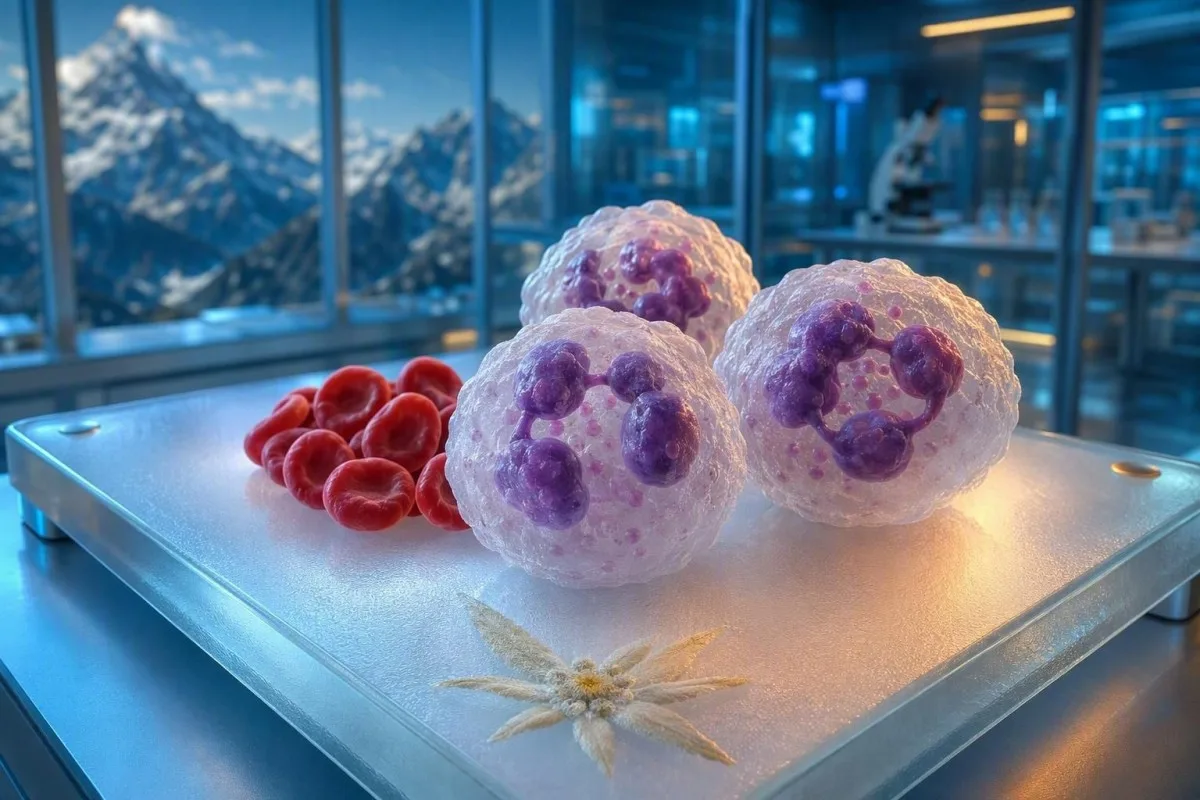
Un resultat leugièrament naut de neutrophils es sovent temporari, mès l'absolut de neutrophils, lo rèste dau CBC, los simptòmas e la tendància determinan se cal agir.


- Neutrophils de limita vòl dire de sòlit un ANC just au dessús de la limita superiora del laboratòri, sovent a l'entorn de 7.0-7.5 × 10⁹/L per los adults.
- Comptatge absolut de neutrofils es pus informatiu que lo percentatge de neutrophils ; calculatz l'ANC coma WBC × percentatge de neutrophils ÷ 100.
- Neutrofília lleugèra en dejós de 15 × 10⁹/L sens simptòmas alarmants es comunament reactiu e pòt seguir una infeccion, fumar, l'exercici o un tractament de corticoides.
- Repetir lo temps es de sòlit 2-6 setmanas aprèp la recuperacion d'una malautiá corta, un exercici fòrt, una vaccinacion o un cambiament de medicament.
- revísió urgent es apropiat per la febre amb malautiá grèva, dificultats de respirar, confusion, augmentacion rapida de las caufas, blastes, anemia o plaquetas basas.
- Los corticoides e l'adrenalina pòdon aumentar los neutrophils circulants en quauques oras en desplaçant las cellulas dei parés dei vaissèus dins lo lièch sanguin mesurat.
- elevacion persistenta pendent mai de 3 mes, especialament au dessús de 15-20 × 10⁹/L, merita una revision menada per un clinician e sovent un filmu sanguin.
- Embaràs pòt normalament aumentar los recuèlhs de granulocits, particularament pendent lo tresen trimèstre, doncas los intervales de referéncia de las personas adultas non prenhantas pòdon èsser enganaires.
Ce que vòl dire un resultat de neutrophils de limita
Los granulocits limit tròps significa generalament una leugiera augmentacion del recuèlh absolut de granulocits (RAG), pas un diagnòstic. Dins la màger part dels adults sens problèma, un RAG leugierament superior a l'interval del laboratòri se normaliza quand lo factor temporari passa ; lo primièr trabalh es de verificar lo recuèlh absolut, lo recuèlh blanc total e los simptòmas puslèu que de reagir a un percentatge destacat.
Los intervales de referéncia dels RAG de las personas adultas van de gaireben 1,5 a 7,5 × 10⁹/L, tot parièr la limita superiora varia segon l'analizator, l'ancetral, l'estat de pregnesa e la metòda del laboratòri local. Una valor de 7,8 × 10⁹/L es clinicament fòrça diferenta de 28 × 10⁹/L, quitament se las doas pòdon èsser marcadas coma elevadas ; vejatz nòstre guia del interval normal de granulocits.
Lo lo percentatge de granulocits pòt paréisser elevat simplament perqué los linfositos son baissats aprés un stres o una exposicion als corticosteroïdes. Per exemple, un WBC de 6,0 × 10⁹/L amb 78% de granulocits balha un RAG de 4,68 × 10⁹/L, que es normal malgrat lo percentatge elevat.
Kantesti es un Analizador de tèst de sang d'IA que legís la formula sanguina de la CBC en parallèl del WBC total, de l'emoglobina, dels plaquetas e dels resultats precedents puslèu que de considerar un sol marca-roge coma un signe de malautiá. A la data del 28 d'agost de 2026, aquela apròcha per patrons demòra la via pus segura per interpretar los resultats limit tròps.
Perqué los marca-tèstes dels laboratòris son pas de diagnòstics
Los intervales de referéncia cobrisson la partida centrala de 95% d'una populacion seleccionada, doncas de mesuras 1 sus 20 sanas pòdon èsser en defòra d'un interval indicat per azard. Un marca-tèste es un ensenhament per la contextualizacion, pas una pròva que quicòm va mal.
Perqué l'absolut de neutrophils es pus important que lo percentatge
L'RAG es lo recuèlh que los clinicians utilisar per jutjar l'aumentacion dels granulocits perqué combina lo WBC total amb la formula sanguina. Un percentatge de granulocits elevat amb un RAG normal es sovent un desplaçament proporcional, mentre qu'un RAG elevat confirma una veritabla neutrofilia.
La formula es simpla: ANC = WBC × (% neutrofils + % bandes) ÷ 100. Amb un GB 12,0 × 10⁹/L e neutrofils 75%, l'ANC es de 9,0 × 10⁹/L; aquò es una neutrofília leugièra, pas una emergéncia en isolacion.
Vesi sovent una angoissa evitable quand un portal raporta 82% neutrofils mas aficha pas lo calcul clarament. La règle practica del Dr. Thomas Klein es de senhalar lo GB, l'ANC, l'emoglobina, la formula plaquetària e tota marca de granulocits imadurs abans de decidir que significa lo resultat; nòstre Guia dels components de la CBC ajuda amb los tèrmes.
Un WBC sur 11 × 10⁹/L es comunament apelada leucocitòsi en adults non emprenhadas, mas la causa pòt pas èsser inferida sonque per aqueste nombre. Riley e Rupert (2015) conselhan als clinicians de repetir lo CBC e de revirar un esmalh periferic quand la leucocitòsi es inexplicada o persistenta.
Causas temporàrias comunas de neutrofilia leugièra
La neutrofília leugièra reflècta mai sovent un procèssus reactiu temporari: una infeccion recenta, un stress fisic, lo tabagisme, una inflaman, un efèit medicamentós o una emprenhadura. Aquestas causas aumentan los neutrofils circulants sens necessariamente significar que la medula ossosa produís de cellulas anormalas.
Un refredat, una inflaman dentària, de simptòmas urinàrias, una erupcion cutanèa o quitament los primièrs jorns aprèp una malautiá virala pòdon aumentar l'ANC dins lo 8-14 × 10⁹/L gamma. Los neutrofils pòdon demorar leugièrament elevats pendent de jorns aprèp que la fèbre siá desapareguda perque la liberacion de la medula e la recuperacion tissular s'arrèstan pas al meteis moment.
Una sesilha d'interval dura, un maraton, un episòdi de panica o una dolor aguda pòdon provocar desmargination—las cellulas que repausavan abans lòng de las parets vascularas dintran dins l' escantilh circulant. Aquela aumentacion pòt passar en qualques minutas a d'oras e es una rason per que demandi als atlètas d'evitar un entrainament inhabitualament dur pendent 24-48 oras abans un CBC planificat; nòstre guida de planificacion de laboratòri ligada a l'exercici explica lo patron mai larg.
Lo tabagisme es associat a de comptatges de GB e de neutrofils mai nautas, mentre que l'obesitat, la maladia gengival cronica e las malautiás inflamatòrias de la pèl pòdon sostenir una augmentacion modesta. Lo significat leugièrament elevat dels neutrofils es donc sovent ligat a l'exposicion e a la fisiologia, pas a una infeccion bacteriana amagada.
Medecinas, vacunas e eveniments de la vida que pòdon aumentar los neutrophils
Los corticosteròides, los inhaladors de beta-agonistas, lo liti e los medicaments estimulants de colònias pòdon aumentar los neutrofils, de còps substancialament. Arretatz pas un medicament prescrit a causa d'una marca de CBC; documentatz alara lo medicament, la dòsi e lo moment per lo clinician que revira lo resultat.
La prednisona e los glucocorticòides similars pòdon aumentar los neutrofils circulants dins 4-6 oras per demarginacion, movement tardiu dins los teissuts e reduccion de la depuracion cellulara. La neutrofília associada als estèroides manca sovent la granulacion toxica o lo desplaçament pronunciat que pòdon acompanhar una infeccion bacteriana severa, totun un esmalh sanguin es necessari per avalorar aquò correctament.
Lo liti pòt aumentar la produccion de granulocits, mentre que lo filgrastim e los tractaments similars aumentan intencionament los comptatges de neutrofils; una cirurgia recenta, un trauma e un accouchement declanchan tanben una responsa al stress. Un vaccin pòt alterar transitoriament una formula, doncas un tèst de rutina realizat dins 7-14 jorns de vaccinacion pòt èsser mens representatiu del basel; legissètz mai sus cambiaments de laboratòri post-vaccinacion.
Kantesti es un plataforma d’interpretacion d’analisi de sang d’AI qu'a permés a las personas de senhar la medecina e lo contèxte de la malautiá amb un resultat, çò que es clinicament mai util que de comparar de chifres nuds. Una lista de medecinas devriá inclure d'inhalators, de cremas de cortisona, d'injections e de produchs “naturals” — pas sonque de pilulas.
Quand repetir un CBC per de neutrophils de limita
Per una persona sens autra malautiá amb una neutrofilia isolada leuga, repetir un CBC amb un diferencial en 2-6 setmanas es generalament rasonable una vegada que lo factor desencadenant probable s'es resolgut. Tornar far lo tèst mai lèu — en qualques jorns — se los simptòmas s' agravan, lo compte aumenta, o lo resultat original èra marcadament naut.
Causir un jorn establa per la repeticion: sens febri, sens exercici fisic vigorós pendent 24-48 oras, idratacion ordinària, e sens cap de novèla iniciacion de cortisona levat que lo prescritor ditz lo contrari. Lo jeun es pas generalament requerit per un CBC, mas correspondre l'ora del jorn e las condicions que fa los cambiaments mai faciles d'interpretar; nòstra cronología de análisis de sangre details why.
Se l'ANC es 7.6-12 × 10⁹/L e totas las autras linhadas de cellulas son normalas, ai sovent preferéncia per un contraròtle planificat puslèu que de tests seriats cada quauques jorns. Un repetiment a 4 setmanas pòt èsser enganós se lo pacient se recèbra encara de pneumonia, a començat lo prednisolona, o s'es entrenat per un eveniment d'endurança.
La persisténcia importa mai qu'un simple chifre isolat. La neutrofilia que dura mai de 3 meses, sens explicacion reactiva clara, merita generalament una revision per lo mètge de familha, un film sanguin manual e de tests ciblats basats sus los simptòmas.
Patrons de CBC que fan qu'unaumenta de neutrophils siá mai o mens preocupant
Una augmentacion isolada leuga de l'ANC amb un emoglobina e de plaquetas normalas es generalament mens inquiétanta qu'una neutrofilia acompanhada d'anèmia, de trombocitopenia, de trombocitosi o de cellulas imaduras. Lo patron del CBC environant dona al chifre son sens clinic.
Un ANC aumentat mai de plaquetas nautas de mai de 450 × 10⁹/L, d'anèmia inexplicada, de basofilia o un film sanguin leucoeritroblastic aumenta l'inquietud per un procèsses medullar. Ne cap d'aquesta combinasons diagnostica pas lo càncer, mas justifiquen una revision rapida per lo clinician puslèu qu'un repetiment casual dins qualques meses; vejatz nòstre apercebut del percors d’avaloracion dels cancers de la sang.
Un “desplaçament a esquèrra” significa que de banas, metamiellocits o mielocits son presents dins lo sang periferic. De pichonas quantitats pòdon aparéisser dins de situacions de stress reactiu major, mas un desplaçament a esquèrra persistent merita una revision del film sanguin perque los comptadors automatizats destrian pas totjorn la recuperacion benigna d'un procèsses clonal.
L'AI de Kantesti examina los sosespots de globuls blancs amb los indèxes de globuls roges e las tendéncias de plaquetas, puèi senhala las combinasons per un seguiment medical puslèu que d'ensajar de diagnosticar leucèmia a partir d'un CBC. Aquela abordatge es en acòrdi amb nòstre principis de validacion clinica.
Infeccion, inflamacions o estrès : legir los indics clinics
La febri, los simptòmas focals e una CRP aumentada pòdon sostenir una infeccion, mas un compte de neutrofils aumentat sol pòt pas destriar l'infeccion bacteriana del stress o de l'inflamacion. Los clinicians diagnostican la persona en fàcia d'eles, pas un compte diferencial isolat.
Amb pneumonia bacteriana, pielonefrita o apendicita, l'ANC pòt aumentar per dessús 15 × 10⁹/L, e mai qualques infeccions grèvas an de comptas de WBC normalas o bassas — especialament en personas d'edat avançada o inmunodeprimidas. Los simptòmas, los signes vitals, l'examen e las culhidas comptan sovent mai que si l'ANC es de 11 o 13.
La CRP puja e baissa mai aviadament que la VS, mas cap de las duas es pas especifica de l'infeccion. Se la neutrofilia es associada a una CRP nauta, tumefaccion articulara, simptòmas intestinals o una erupcion cutanèa, lo diagnostic diferencial s'espandís a las malautiás autoimmunas e inflamatòrias; nòstra explicacion de los patrons d’ESR nauts pòt ajudar a encadrar aquela discussion.
Dins mon experiéncia, un pacient amb 10,5 × 10⁹/L de ANC, sens febre e amb una CRP normala aprés una visita de nuèit als urgéncias a besonh de seguida d'un seguiment tranquil, pas d'antibioticos. Al contrari, una persona malauta amb frissons e una ANC de 6,5 × 10⁹/L pòt besonhar d'un tractament urgent malgrat un compte tecnicament normal.
La gràvida, l'edat e la limita personala cambian l'interpretacion
La gròssa causa comunament una neutrofilia fisiologica, particularament en fin de gròssa, e los mainats an besonh de plànols especifics per l'edat. Un interval de referéncia per adultes non gròssas ne devèria pas èsser utilizat per qualificar de anormal lo CBC d'una persona gròssa sens contèxte.
Pendent la gròssa, los valors totals de WBC pòdon aténher 12-15 × 10⁹/L e pòdon pujar encara pendent lo part, principalament per las neutrofils. Un compte aumentat sens febre, sens dolor uterina, sens simptòmas urinarios o autras signes de malautiá pòt èsser fisiologic, mas las equipas obstetricas utilisant l'imatge clinica completa.
Los nòus-nats e los mainats joves pòdon aver de contas de neutrofils que semblarián anormals sus un rapòrt d'adult, mentre que los adults mai ancians pòdon aver una responsa de cellulas blancas atenuada pendent una infeccion. Interpretar lo resultat d'un mainat contra lo band d'edat del laboratòri; nòstre guida de plànol per infantes explica perqué las comparasons d'adults fracassan.
Vos CBC anteriors son sovent lo melhor comparador. Una ANC establa a l'entorn de 7,8 × 10⁹/L sus cinc ans per una persona sanha a un perfil de probabilitat diferent d'una nòva pujada de 3,2 a 12,8 × 10⁹/L.
Fumar, factors metabolics e neutrofilia cronica de nivèl bas
Lo fum, l'obesitat e las exposicions inflamatòrias cronicas pòdon produsir una neutrofilia de bas nivèl que persistís aprés que un refredat siá resolgut. Aqueles factors meritan sempre d'atencion que pòdon afectar la santat aldà del resultat del CBC el meteis.
La leucocitosi relacionada al fum pòt implicar los neutrofils, los linfocits e los mononcits, doncas pòt pas se presentar coma una pujada pura de neutrofils. Un CBC repetit 8-12 setmanas aprés l'arrèst del fum pòt èsser informatiu, ben que un resultat normal siá pas necessari abans de celebrar los beneficis de santat d'arrestar.
L'adipositat centrala, l'apnèa del son e la malautiá periodontal cronica pòdon contribuir a la sinalizacion inflamatòria e a un compte de WBC modestament mai nauta. Aquelas associacions son realas mas non especificas; ne devèryan pas èsser utilizats per descartar de simptòmas nòus o un compte en aumentacion rapida.
Kantesti, un Outil d’analisi de sang amb IA, pòt comparar un diferencial actual amb divèrs rapòrts anteriors e mostrar los cambiaments lents qu'un resultat annal unic escura. Per un seguiment practic, notatz lo estatut de fumador, la variacion del pes, las infeccions recentas e l'exposicion als estieroïdes a costat de cada test dins un registre de laboratòri longitudinal.
Quand s'inquietar de las neutrophils e cercar ajuda urgenta
Cercar una avaluacion medicala lo meteis jorn per un resultat de neutrofil nauta amb malautiá severa, febre e confusion, dificultat de respirar, dolor toracica, col de figa, o simptòmas que degradan rapidament. L'urgéncia ven de possible infeccion o malautiá sistemica, pas d'una ANC de limita sola.
Un WBC o ANC superior a 25-30 × 10⁹/L merita un contact clinic prompt, especialament se es novèla, en creissença, o par a granulocits imadurs. Recensums que depassan 50 × 10⁹/L pòdon representar una reaccion leucemoïda o una malautiá hematologica e devon pas esperar per un rendetz-vos rutinari annal.
Sudors noturnas inexplicadas, pèrda de pes, infeccions recurrentas, equimosi fasa, linfadénopatia engrandida o plenitud abdominala son de rasons per organizar un revisament clinic punctual. La preocupacion aumenta quand los simptòmas coexistan amb una anèmia, plaquetas bassas, basofilia o cellulas anormalas a l'alèrta de l'analizator.
Se vos sentissetz mal après un viatge, una quimioterapia, un tractament de trasplantament o un medicament immunosupressor, utilizatz un sètge pus bas per una evaluacion urgenta. Nòstre sepsis-marker guide explica perqué de valors de laboratòri que parisson normals jamai exclutz una malautiá grèva.
Ce que los clinicians verifican quand la neutrofilia perdura
La neutrofilia persistenta inexplicada s'evalua generalament amb l'istorial, l'examèn, un CBC repetit, un film sanguin periferic e de tests d'inflamacion o d'infeccion ciblatz. Los tests moleculars son reservats als patrons que suggerisson una neoplasia mieloproliferativa, pas per cada resultat leugièrament elevat.
Un clinician pòt demandar sus lo fum, l'apnèa del son, la dolor cronica, los simptòmas de malautiá intestinala inflamatoria, l'usatge d'esteroïds, una esplenectomia recenta e los malautiás sanguinas familialas. Pòdon prescríver CRP, ESR, marcaires del fetge e dels reins, cultures o imatges sonque quand l'istorial los apunta —un test larg sens una question clinica crea sovent de faussas alarmas.
Un film manual pòt identificar la granulacion toxica, los cambiaments del còrs de Döhle, lo desplaçament esquèrra, la basofilia o los blats que los recensums diferencials automatizats pòdon marcar de biais incomplèt. La classificacion OMS 2022 descriu la leucèmia neutrofilica cronica coma una rara neoplasia mieloïda que requerís una neutrofilia persistenta e de criteris moleculars e morfologics especifics; es pas diagnosticada a partir d'un resultat limit (Khoury et al., 2022).
Un test BCR::ABL1, un test JAK2 o un test CSF3R pòdon èsser considerats per l'ematologia en casos seleccionats. Aqueles tests son significatius quand lo patron del CBC e los resultats clinics los sostenon, pas coma un depistatge de rassuracion per un ANC de 8.1 × 10⁹/L.
Ce que los comentaris de filmu sanguin e las cellulas imaturas pòdon vos dire
Un comentari de film sanguin apond la morfologia —l'aparéncia e la maduresa de las cellulas— al recensum del CBC. “Los ”cambiaments toxics” pòdon sostenir un procèsses reactiu intens, mentre que los blats o las formas imaduras persistentas inexplicadas demandan una evaluacion specialistica rapida.
Los bands son de neutrofils mens madurs, e qualques uns pòdon aparéisser pendent una infeccion, una cirurgia o una recuperacion de la medula. Los laboratòris difèran en la faiçon de raportar los bands, doncas un percentatge devon pas èsser comparat dirèctament entre sistèmas sens verificar la metòda del raport.
La granulacion toxica e la vacuolacion citoplasmatica son de trobalhas descriptivas del film, pas de diagnostics. Pòdon acompanhar una respòsta tissulara severa, mas l'interpretacion depend del quadre clinic, de la CRP e s'i a un desplaçament esquèrra; nòstre explicatiu sus la granulacion toxica dels neutrofils cobrís aqueles tèrmes.
Los blats sus un raport, una apel del laboratòri que demanda un revision urgenta de l'escanilha, o un nòu comentari de “cellulas atipicas” devon èsser discutits amb lo clinician demandaire lo meteis jorn. Aquò es una situacion ont esperar un recontrol rutinari es la marrida decision.
Coma se preparar per un re-tèst de neutrophils util
Un CBC de revision util es pres quand siatz clinicament estable e includís pro de contèxte per explicar tota elevacion demoranta. Vos podètz pas “baisar” de faiçon segura los neutrofils per un test, mas podètz evitar de bruch evitable.
Per un retest non urgent previst, evitetz un entraïnament intens per 24-48 oras, arriba normalament idratat, e diga a l'equipa de flebotomia los dosis d'esteroïdes, las pulv Pulverizadores, las vacunas e las infeccions recentas. Ne salte pas los medicaments prescriches ni beva pas deliberadament tròp d'aiga per alterar una valor de laboratòri.
Utilizar lo meteis laboratòri quora es possible perque los intervals de referéncia e los metòdes de diferencial varian segon l'analizator. Una diferéncia de 0.5-1.0 × 10⁹/L pòt reflectir una variacion biologica e analitica correnta, particularament quand los resultats se situan pròches de la limita superiora; nòstre article sus los cambiaments de laboratòri veridics contra los cambiaments aleatòris explora aquel problèma.
Aportatz lo rapòrt precedent o gardatz-ne una fòto. La data d'una febre, d'un tractament antibiotic, d'una caucina de corticoïdes o d'un exercici important explica sovent mai qu'un simple tiratge de sang addicional.
Utilizar l'interpretacion AI en tota seguretat a costat dau suenh clinic
L'IA pòt organizar una tendéncia de CBC e identificar las questions de seguiment, mas pòt pas avaliar los signes vitals, examinar los ganglis limfatics ni descartar una infeccion urgenta. Una interpretacion de nauta qualitat deu indicar l'incertitud, mostrar lo calcul de l'ANC e dirigir los simptòmas urgents vèrs l'atencion umana.
Kantesti L'IA interprèta los resultats dels neutròfils en analisan lo compte absolut, los leucocits totals, las autras linhas cellularas, l'intervalle del laboratòri e lo cambiament longitudinal. Es concebut per ajudar los utilizators a preparar de questions melhoras per lor mètge, non per remplaçar una avaloracion urgenta o prescriure un tractament.
La vida privada es importanta amb los recits de laboratòri perque un CBC pòt revelar l'usatge de medicaments, de cambiaments ligats a la prenesa e de malautiás cronicas potencialas. Kantesti sosten l'interpretacion segura dels resultats dins mantunas lengas, mentre que los nòstres mètges provesisson una supervision per mejan del Conselh Consultatiu Medical.
La conclusion del Dr. Thomas Klein es simpla: una pichona pujada isolada es de costuma un problèma de tornar ensajar e de context, mentre qu'una ANC nauta o en pujada combinada amb simptòmas o autras anomalias del CBC es un problèma de revision medicala. Se lo rapòrt sembla incoerent amb çò que sentissiatz, demandatz a un clinician de revisar lo document de laboratòri original — non sonque una captura d'ecran.
Un plan practic de pròchas estapas per un resultat de limita
La màger part de las personas amb neutròfils a la limita pòdon seguir un plan en tres estapas: confirmar l'ANC, identificar un declencheur temporari, e organizar un tèst de repeticion a un moment donat. Escalada immediatament se de simptòmas de bandera roja o d'anomalias majoras del CBC son presents.
Primièr, verificatz se la valor marcada es un percentatge o l'ANC, e notatz l'unitat exacta. Segond, escrivètz la malautiá dins lo 2 setmanas, precedent, l'exercici fisic intens dins las 48 oras precedentas, lo fum, l'estat de prenesa, los medicaments e lo moment de la vaccinacion.
Terset, se vos sentissiatz plan e l'ANC es leugièrament nauta amb un emoglobina e de plaquetas normals, organizatz un CBC de repeticion en 2-6 setmanas per mejan de vòstre mètge abitual. S'es aut mei elevada aprés 3 meses o puja vèrs 15 × 10⁹/L, demandatz se una revision del film e un estudi mirat son apropriats; nòstre checklist de segonda opinion pòt ajudar a preparar la visita.
Per mai d'informacions sus la manera que nòstra metodologia gèira las tendéncias e l'incertitud, consultatz lo guia de tecnologia amb IA. Una marca a la limita deu provocar un seguiment sensat, non una recèrca de diagnostic de nuèch.
Questions frequentas
Que significa una taxa de neutròfils leugièrament elevada?
Los neutròfils leugièrament elevats significan generalament que lo recòmt absolut de neutròfils es just per dessús la limita superiora del laboratòri local, sovent a l'entorn de 7,5 × 10⁹/L pels adults. Una infeccion recenta, l'exercici, lo fum, lo stress emocional, la gravidesa e los corticosteroïdes son d'explicacions comunas. Se l'ANC es en dejós de 15 × 10⁹/L, l'emoglobina e las plaquetas son normalas, e vos sentissètz plan, una repetida de la CBC en 2-6 setmanas es comunament apropriada. Lo resultat deu èsser avalorat en relacion amb l'espaci del laboratòri e vòstras CBC precedentas.
Quand devèu m'inquietar d'un taus naut de neutrofils ?
Los neutrophils elevats demandan una avaloracion urgenta quand se presenton amb un fièbra sevèra, confusion, dificultat de respirar, dolor toracica, rigidesa de cop, una malautiá que s'agravan rapidament o un taus marcadament elevat. Un ANC superior a 25-30 × 10⁹/L, especialament s'es en augment o associat a cèlas imaturas, anemia o plaquetas bassas, deuriá incitar un contacte rapid amb lo clinic. Un ANC isolat de gravetat moderada de 8-12 × 10⁹/L en una persona ben portant es fòrça mens alarmant. Los simptòmas e lo rèsta de la CBC determinan l'urgéncia mai fiablament que lo percentatge sol.
Quant de temps demòran los neutròfils nautas aprèp una infeccion?
Los neutrophils pòdon demorar leugièrament elevats pendent quauques jorns a quauquas setmanas aprés una infeccion qu'amèra, segon sa gravetat e tot tractament utilizat. Un repetiment de la CBC 2-6 setmanas aprés la recuperacion completa es sovent mai informatiu que de tornar hèr lo test lo jorn seguent. Una elevacion persistenta au de delà de 3 mes sens causa evidenta merita un avís medicau. Lo tractament amb esteroïdes pòt prolongar o mimar lo resultat elevat en aumentant los neutrophils circulants en quauquas oras.
L'estresse o l'exercici pòdon-ils provocar un taus elevat de neutrofíls?
Sias, un escrès emotiu agut, la dolor e un exercici intens pòdon aumentar temporàriament los recuèlhs de neutrophils per demarginacion, ont las cellulas passan de las parets dels vas cap a l' escampilh circulant. Lo cambi pòt arribar en qualques minutas a unas oras e s'estabiliza sovent en 24-48 oras après que lo factor d' escrès se siá resolgut. Evitar un exercici escepcionalament dur pendent 24-48 oras abans un CBC de repetit previst pòt redusir aquela font de variacion. Aquel efècte vòl pas dire que l'exercici es damatjós o qu'una infeccion siá presenta.
Es un percentatge elevat de neutrophils lo meteis que un ANC elevat?
Non, un percentatge elevat de neutròfils no es necessàriament un recompte elevat de neutròfils. La ANC es calcula multiplicant el recompte total de WBC pel percentatge de neutròfils dividit per 100, de manera que un WBC de 6,0 × 10⁹/L amb 78% de neutròfils dóna una ANC normal de 4,68 × 10⁹/L. Un percentatge baix de limfòcits pot fer que el percentatge de neutròfils sembli alt fins i tot quan el nombre absolut de neutròfils és normal. Els clínics generalment utilitzen l'ANC per determinar la veritable neutrofília.
Lo càncer pòt provocar una augmentacion deis neutrofils?
Qualques càncers del sang e tumors solids pòdon causar una neutrofilia, mas son d'explicacions pauc comunas per un resultat limitat simple. La preocupacion aumenta quand la neutrofilia es persistenta e acompanhada d'anemia, de problèmas plaquetaris, de basofilia, de cellulas imaturas anormalas, d'una melsa engrandida, de sudors nocturnas o d'una pèrda de pes involontària. La classificacion de l'OMS de 2022 demanda de trobalhas clinicas, cinematograficas sanguinas e molecularas especificas per diagnosticar las neoplàsias mieloidas. Una elevacion ANC isolada e mieda non diagnostica pas lo càncer.
Obtén uèi una analisi de sang amb IA
Joinhètz mai de 2 milions d’utilizaires al mond que confian en Kantesti per una analisi instantanèa e precisa dels analisis de laboratòri. Mandatz vòstres resultats analisi de sang e recebetz una interpretacion complèta de 15,000+ biomarcadors en segondas.
📚 Publicacions de recerca citadas
Klein, T., Mitchell, S., & Weber, H. (2026). Kantesti LTD. (2026). Guida de las Proteïnas Sèricas : Globulinas, Albumina e Rapòrt A/G Tèst Sanguin. Zenodo. Disponible via DOI; los profils d'autors ligats pòdon èsser cercats sus ResearchGate e Academia.edu.. Kantesti IA Recèrca Medicala.
Klein, T., Mitchell, S., & Weber, H. (2026). Kantesti LTD. (2026). Guida dels Tèsts de Complement C3 C4 e Titer ANA. Zenodo. Disponible via DOI; los profils d'autors ligats pòdon èsser cercats sus ResearchGate e Academia.edu.. Kantesti IA Recèrca Medicala.
📖 Referéncias mèdicas externes
Riley LK, Rupert J (2015). Evaluacion dels patients amb leucocitòsi. American Family Physician.
⚕️ Avertiment medical
Aqueste article es solament per tòcas educatius e constituís pas de conselh medical. Consultatz totjorn un professional de la sant qualificat per las decisions de diagnostica e de tractament.
Senhals de confiança E-E-A-T
Experiéncia
Revisión clinica menada pel metge de las practicas d’interpretacion de las analisis.
Expertisa
Fòcus sus la medicina de laboratòri sus cossí los biomarcadors se comportan dins un contèxte clinic.
Autoritat
Escrich pel Dr. Thomas Klein amb revisión pel Dr. Sarah Mitchell e Prof. Dr. Hans Weber.
Fisança
Interpretacion basada sus d’evidéncias amb de camins de seguiment clars per reduzir l’alarmisme.