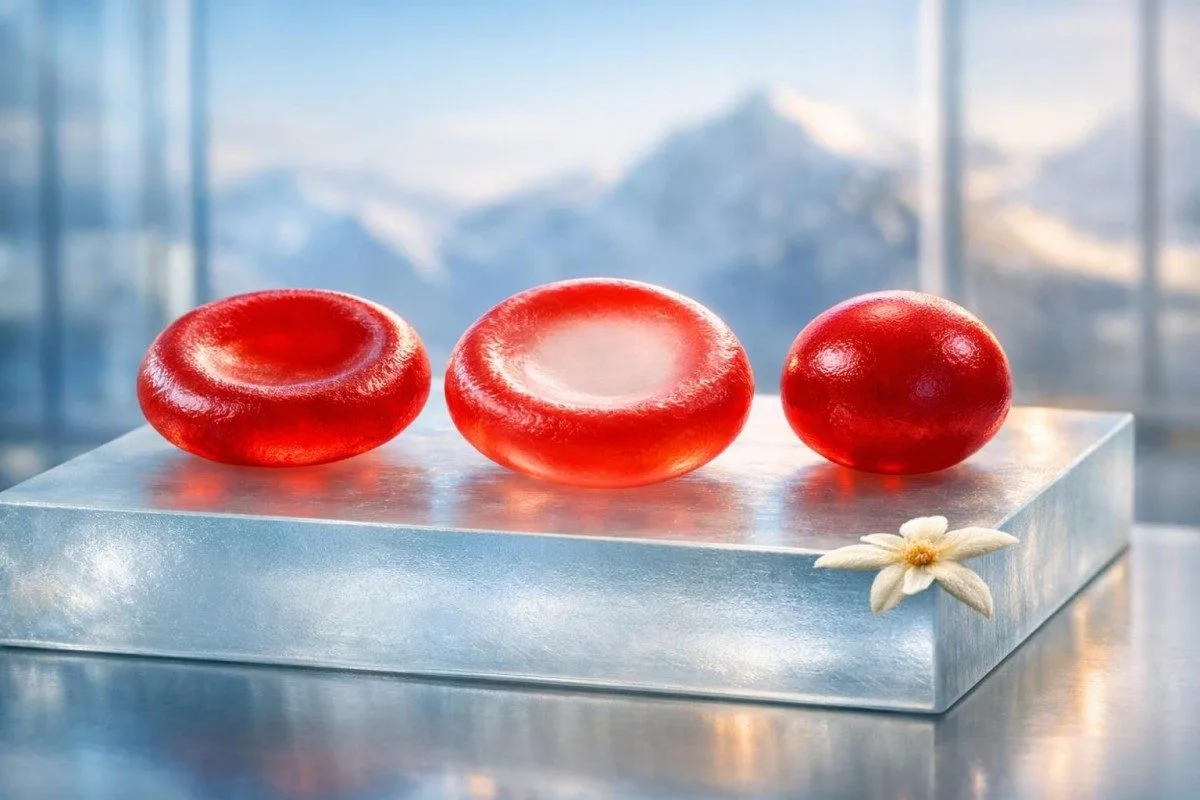
MCHC forteller deg hvor konsentrert hemoglobin er inne i hver enkelt rød blodcelle. Den nyttige delen er ikke bare merkelappen – det er mønsteret MCHC danner sammen med MCV, MCH, RDW, ferritin og retikulocytter.


- MCHC normalområdet er vanligvis 32-36 g/dL hos voksne, selv om noen laboratorier bruker 31.5-35.5 g/dL.
- Lav MCHC-betydning er vanligvis hypokromi – røde blodceller er underfylt med hemoglobin – og jernmangel er den vanligste årsaken.
- Høy MCHC-betydning over 36-37 g/dL er uvanlig og bør føre til en blodutstrykksvurdering eller gjentatt CBC før noen trekker forhastede konklusjoner.
- MCH måler hemoglobinmengde per rød blodcelle i picograms (pg), mens MCHC måler hemoglobin konsentrasjon per celle i g/dL.
- MCV måler cellestørrelse i femtoliter (fL); lav MCV pluss lav MCHC peker sterkt mot et mikrocytisk mønster.
- Hemoglobin below 12,0 g/dL hos de fleste ikke-gravide kvinner og 13.0 g/dL hos de fleste menn oppfyller WHOs anemi-terskler.
- Artifact clue: en MCHC på 39-42 g/dL er mer mistenkelig for kalde agglutininer, lipemi eller analysatorinterferens enn reell biologi.
- Beste oppfølgingstester for unormal MCHC er ferritin, transferrinmetning, RDW, retikulocytt-telling, bilirubin, LDH, haptoglobin, og noen ganger et blodutstryk.
Hva MCHC faktisk måler på en CBC
MCHC means gjennomsnittlig erytrocytthemoglobin konsentrasjon—den gjennomsnittlige konsentrasjonen av hemoglobin inne i de røde blodcellene dine. På de fleste CBC-rapporter for voksne, 32-36 g/dL regnes som normal. Low MCHC betyr vanligvis at cellene er underfylt med hemoglobin, oftest på grunn av jernmangel; high MCHC er mindre vanlig og peker ofte enten på en laboratorieartefakt eller på tette røde celler som sfærocytter. På Kantesti AI leser vi MCHC ved siden av MCV, fordi konsentrasjon bare gir mening når du også kjenner celle størrelsen.
Unlike total hemoglobin, MCHC er et forhold: hemoglobin ÷ hematokrit × 100. Den formelen har betydning fordi et falskt hemoglobin eller falsk hematokrit automatisk forvrenger MCHC; når jeg ser 39-40 g/dL, tenker jeg 'sjekk prøven' før jeg tenker 'sjelden sykdom'. Hvis du vil ha det bredere CBC-kartet, vår hvordan lese blodprøveresultater guide viser hvor MCHC passer inn.
Jeg ser dette mønsteret ofte: en 29 år gammel hyppig blodgiver har hemoglobin 12,4 g/dL, MCV 81 fL, og MCHC 31,2 g/dL med bare mild tretthet. Det er ingen krise, men det er et tidlig tegn på at de røde cellene blir blekere før anemi blir åpenbar. Disse stille skiftene betyr mer enn mange pasienter forventer.
I vår gjennomgang av mer enn 2 millioner opplastede labrapporter, er MCHC sjelden stjernen i diagnosen, men den er ofte avgjørende mellom to rimelige muligheter. Hos veiledning for forkortelser for blodprøver , Thomas Klein, MD, og vårt medisinske team behandler det som en mønstermarkør, ikke en dom. Hvis CBC-forkortelser fortsatt føles ugjennomsiktige, vår.
MCHC vs MCH, MCV og hemoglobin: fire tall, fire oppgaver
MCHC hjelper med å dekode alfabetsuppen., MCH forteller deg hvor tett hemoglobinet er pakket inne i hver celle, MCV forteller deg mengden hemoglobin per celle, hemoglobin forteller deg cellestørrelsen, og MCH med en normal hemoglobin, forteller deg den totale mengden som sirkulerer i blodet. Det er derfor en pasient kan ha lav.
En større rød blodcelle inneholder vanligvis mer hemoglobin rett og slett fordi den har mer plass. Så når MCV stiger over 100 fL, MCH stiger ofte også, mens MCHC forblir normal fordi cellen er større, ikke tettere. Jeg ser dette ved vitamin B12-mangel, alkoholrelatert makrocytose og rask retikulocytt-gjenoppretting etter behandling; vår vitamin B12-testguide går dypere inn i dette mønsteret.
Lav MCH kan dukke opp tidligere enn lav MCHC. En celle kan være litt liten og inneholde mindre hemoglobin i absolutte termer, men likevel ha en nesten normal konsentrasjon. Det er en grunn til at MCHC er nyttig, men ikke spesielt sensitiv, ved svært tidlig jernmangel.
Hemoglobin svarer på et annet spørsmål: 'Har du anemi akkurat nå?' WHO bruker fortsatt <12.0 g/dL for de fleste ikke-gravide kvinner og <13.0 g/dL for de fleste menn som praktiske grenser for anemi (World Health Organization, 2011). Hvis hemoglobin er lavt, ser jeg deretter på hematokrit og celleindeksene for å avgjøre om problemet er jerntap, hemolyse, fortynning, lav produksjon i benmargen eller noe sammensatt.
Normalt MCHC-område og når lav eller høy faktisk betyr noe
De fleste voksne laboratorier kaller MCHC 32-36 g/dL normal, selv om noen bruker 31.5-35.5 g/dL og noen europeiske rapporter viser 320-360 g/L. Low MCHC er vanligvis under 32 g/dL; high MCHC starts above 36 g/dL, men resultater over 37 g/dL fortjener en ny titt etter artefakter eller sfærocytter.
Referanseintervallene skifter litt etter analysator, alder, graviditetsstatus og prøvehåndtering. Graviditet senker ofte hemoglobin før det meningsfullt endrer MCHC fordi plasmapenet blir utvidet først. Hvis du er usikker på hva som engang ble målt på et rutinepanel, viser vår standard blodprøveveiledning hva en CBC kan og ikke kan fortelle deg.
Her er den praktiske regelen jeg lærer opp beboere: milde lave verdier rundt 31.5-31.9 g/dL er vanlige og ofte kroniske, mens gjentatte høye verdier over 37.0 g/dL er biologisk uvanlige. Røde blodceller har en pakkegrense; de bærer ikke komfortabelt uendelig hemoglobin-konsentrasjon. Følg resultatet med samme laboratoriemetode når mulig, fordi vår guide for sammenligning av blodprøver forklarer hvordan inter-lab-skifter kan skape falske endringer.
En enkelt MCHC på 31.8 g/dL hos en ellers frisk pasient er ikke det samme som 31.8 g/dL plus ferritin 9 ng/mL, pica, og fallende hemoglobin. Tall lever inne i konteksten. Dette er en av disse indeksene der symptomer, ferritin og retikulocytter ofte betyr mer enn desimaltegnet.
Lav MCHC-betydning: jernmangel først, men ikke bare jernmangel
Lav MCHC-betydning is usually hypochromia—røde celler er relativt bleke fordi de inneholder for lite hemoglobin for størrelsen sin. Den vanligste årsaken er jernmangel, men thalassemia-trait, anemi av kronisk inflammasjon, sideroblastiske prosesser og noen ganger blyeksponering kan også forårsake det. Når ferritin er <30 ng/mL, er jernmangel sannsynlig hos de fleste voksne; med inflammasjon kan ferritin se falskt betryggende ut, det er derfor jeg parer ferritin with TIBC og metning heller enn å behandle ett tall som evangelium (Camaschella, 2015).
Tidlig jernmangel kommer sjelden alt på en gang. Ferritin faller først, deretter RDW stiger ofte, deretter MCH synker, og først senere blir MCHC tydelig lav. Jeg ser dette spesielt hos menstruerende pasienter, utholdenhetsutøvere og hyppige bloddonorer; vår atletblodprøveguide dekker treningsdelen som blir oversett.
Thalassemia-trait ser annerledes ut. En pasient kan ha MCV 68 fL, MCH 21 pg, MCHC 31.5 g/dL, men en RBC-telling på 5.6 x10^12/L og en nesten normal RDW. Dette mønsteret får meg til å stoppe opp før jeg foreskriver jern, og vår jernundersøkelsesguide forklarer hvorfor en jerntablett kan grumse til bildet når det egentlige problemet er arvet globinproduksjon.
Normal MCV utelukker ikke lav MCHC-relevans. Ved blandede mangeltilstander – for eksempel jernmangel pluss B12-mangel – kan gjennomsnittlig celle størrelse lande i normal 80–100 fL vindu og lure deg. Når en pasient forteller meg: 'Min MCV var normal, så jern kan ikke være problemet', er det vanligvis øyeblikket vi senker tempoet og utvider utredningen.
Høy MCHC-betydning: når det er et reelt tegn på tette røde blodceller
Høy MCHC-betydning er annerledes: ekte forhøyelse er uvanlig og bør få deg til å tenke på sfærocytter, hemolyse eller veldig tette røde blodceller, samtidig som man husker at artefakt fortsatt er vanlig. En gjentatt MCHC på 36.5-38.0 g/dL med anemi, ikterus, retikulocytose eller familiehistorie med gallestein er et reelt spor. Når dette skjer, legger jeg vanligvis til en reticulocyte count og gjennomgår det bredere hemolysemønsteret ved bruk av LDH og bilirubin; vår retikulocytt- og LDH-verdier til å veilede er nyttig her, og den britiske retningslinjen for arvelig sfærocytose anser fortsatt denne kombinasjonen som klinisk meningsfull (Bolton-Maggs et al., 2012).
Arvelig sfærocytose er det klassiske eksamensspørsmålet, men det er også reell klinisk medisin. Disse cellene mister membranoverflateareal, blir rundere og tettere, og viser ofte MCHC rundt 36-38 g/dL med en lav-normal MCV og forhøyet RDW. Hvis bilirubin er opp mens leverenzymer holder seg normale, viser vår bilirubinmønsterguide hvorfor hemolyse hopper høyere på listen enn hepatitt.
Varm autoimmun hemolytisk anemi kan gi et lignende CBC-signatur fordi utstryket viser sfærocytter dannet under immunmediert membrantap. Grunnen til at vi bekymrer oss for høy MCHC pluss retikulocytose pluss indirekte bilirubin er at de samlet antyder aktiv ødeleggelse av røde blodceller, mens en mildt forhøyet MCHC alene ofte ikke gjør det. I daglig praksis avgjør utstryket og hemolysepanelet vanligvis argumentet.
Nå advarselen: en MCHC på 39-42 g/dL er vanligvis for høy til å tro på ved første øyekast. Reell biologi kan øke MCHC; laboratorieinterferens kan sende den ut i stratosfæren. Denne skillet sparer pasienter for mye unødvendig bekymring.
Når unormal MCHC sannsynligvis er en laboratorieartefakt
En unormal MCHC er en lab artifact oftere enn pasienter forventer, spesielt når resultatet er høyt og resten av CBC ser internt inkonsistent ut. Kalde agglutininer, lipemi, markert ikterus, alvorlig leukocytose, aldring av prøven og fortynning fra IV-væske kan alle forvrenge beregningen. Vi skrev om det generelle problemet med falske høydepunkter i vår dehydrerings- og falske høydepunkter-guide, men MCHC har sine egne tydelige mønstre.
Kalde agglutininer er den klassiske fellen. Røde blodceller klumper seg sammen ved romtemperatur, analysatoren kan telle dem for få, MCV kan hoppe, og MCHC kan se falskt høy ut. Hvis jeg ser MCHC 38,5 g/dL, MCV 112 fL, og et lavt RBC-tall som ikke samsvarer med det kliniske bildet, ber jeg laboratoriet om å varme opp prøven til 37°C og kjøre den på nytt.
Lipemi og uttalt hyperbilirubinemi forårsaker et annet problem: den fotometriske hemoglobinmålingen kan vise for høyt. Det betyr at telleren i MCHC-formelen er oppblåst, så den beregnede MCHC stiger selv om cellene i seg selv er vanlige. Når gulsott er en del av historien, hjelper vår guide til leverfunksjonstester pasienter å forstå hvorfor kjemipanelet og CBC må leses sammen.
Lav MCHC kan også være artefakt, selv om det er mindre dramatisk. Prøver tatt fra en arm med rennende IV-væsker kan være fortynnet, og eldre EDTA-prøver kan vise cellehevelse som presser MCHC ned. Hvis tallet ikke passer til personen, gjenta CBC fra en fersk perifer prøve på et pålitelig laboratorium; vår veiledning for valg av lokalt laboratorium forklarer hva man skal se etter.
Mønsterbaserte anemiarbeid: hvordan klinikere egentlig bruker MCHC
Klinikere tolker MCHC ved mønster, ikke isolert. Den mest nyttige kombinasjonen er MCHC + MCV + RDW + RBC-tall + ferritin + retikulocytter, fordi den klyngen skiller jernmangel fra talassemi-trekk, blandede mangler og hemolyse langt bedre enn noen enkeltverdi. Når Kantesti AI leser et anemi-panel, er denne mønsterlogikken nøyaktig det modellen vår bruker, og vår RDW guide fyller inn variasjonsdelen som MCHC ikke kan fange opp.
Mønster én er det vanlige: low MCV, low MCHC, høy RDW, ferritin <30 ng/mL, og et normalt til lavt RBC-tall. I praksis er det jernmangel til det motsatte er bevist. Hvis pasienten også har kraftige menstruasjoner, GI-symptomer eller utholdenhetstrening, begynner vi å lete etter årsaken til at jernlagrene faller, ikke bare konsekvensen av CBC.
Mønster to er 'ikke gi jern refleksivt'-mønsteret: low MCV, lav eller normal-lav MCHC, normal RDW, og et RBC-tall som er relativt høyt. En Mentzer-indeks —MCV delt på antall RBC—below 13 lener seg mot talassemi-trekk, mens over 13 lener seg mot jernmangel. Det er ikke perfekt, men ved sengekanten er det overraskende nyttig.
Mønster tre er den sovende: normal MCV with low MCHC. Det kan bety tidlig jernmangel, blandet jern- og B12/folatmangel, kronisk sykdomsanemi med overlagt jernrestriksjon, eller enkel laboratoriedrift. Mønster fire er high MCHC med retikulocytose og bilirubin- eller LDH-forhøyelse; det er da vi slutter å tenke 'ernæring' og begynner å tenke hemolyse eller sfærocytter.
Når ferritin ser normalt ut, men jernmangel fortsatt er mulig
Ferritin er et akuttfaseprotein. Et ferritin på 60 ng/mL utelukker ikke jernmangel hvis CRP er høy eller pasienten har inflammatorisk sykdom; i den situasjonen legger jeg mer vekt på metning under 20% og den kliniske historien. Dette er en grunn til at MCHC kan synke selv når ferritin ligger innenfor referanseområdet.
Hvorfor retikulocytter kortvarig kan forvirre bildet
Retikulocytter er store celler. Under bedring etter jernbehandling eller blødning kan retikulocytose påvirke MCV oppover med 2-5 fL og gjøre anemi blandet ut i en uke eller to. De fleste pasienter hører aldri om dette, men det forklarer mange meldinger på legekontoret som 'Hvorfor steg MCV etter behandling?'.
Hvorfor MCHC ofte henger etter ferritin
MCHC endres vanligvis senere enn ferritin og ofte senere enn MCH. På enkelt språk gir et normalt MCHC deg ikke en ren helseattest for jernstatus. Det er derfor vi ikke bruker én beroligende CBC-indeks til å overstyre en overbevisende jernhistorie.
Symptomer, faresignaler og når unormal MCHC krever raskere oppfølging
MCHC-endringer forårsaker ikke symptomer i seg selv; symptomene kommer fra den underliggende anemien, hemolysen eller jernmangelen. Søk rask hjelp hvis unormal MCHC følger med brystsmerter, besvimelse, tungpustethet i hvile, svart avføring, gulsott, mørk urin, eller hemoglobin under ca. 8,0 g/dL. Vår blodprøve-symptomdekoder går gjennom hvilke symptom-pluss-laboratoriekombinasjoner som fortjener raskere oppmerksomhet.
Lave MCHC-mønstre følger ofte med tretthet, redusert treningstoleranse, hodepine, pica, skjøre negler, hårtap, eller rastløse bein. Mange pasienter kaller dette 'bare å være sliten', men når ferritin er <15-30 ng/mL og CBC endres, forteller kroppen en mer spesifikk historie. Vi skisserer den utredningen i vår tretthetsprøver.
Høy MCHC blir mer bekymringsfull når den dukker opp sammen med gulsott, splenomegali, mørk urin, gallesteinshistorie, eller et plutselig fall i hemoglobin. Hos eldre, personer med koronarsykdom, og gravide, kan selv moderat anemi slå hardere enn selve tallet antyder. Kontekst endrer hastverk.
Jeg forteller pasienter at de ikke skal få panikk over en isolert mild unormalitet, men jeg forteller dem at de ikke skal ignorere trender. En stabil MCHC 31.7 g/dL i 5 år er en annen samtale enn 31,7 g/dL pluss et nytt fall i hemoglobin fra 13,4 til 10,8 g/dL i løpet av 4 måneder. Tidslinjen betyr nesten like mye som resultatet.
Hvordan Kantesti AI tolker MCHC i kontekst i stedet for isolert
Kantesti AI tolker MCHC ved å teste om tallet gir mening sammenlignet med resten av CBC og den bredere laboratoriehistorien. Motoren vår kryssjekker MCHC med MCV, MCH, hemoglobin, hematokrit, RDW, ferritin, transferrinmetningsgrad, retikulocytter, bilirubin, LDH, nyreparametere og tidligere trender, og flagger deretter når mønsteret ser biologisk lite sannsynlig ut. Denne metodikken er oppsummert i vår medisinske valideringsstandarder, og du kan laste opp en rapport sikkert via vår PDF-opplastings arbeidsflyt.
I vår analyse av mer enn 2 millioner laboratorierapporter fra 127+-land, isolerte MCHC-endringer er vanlige, men klinisk avgjørende MCHC-mønstre er vanligvis de som kombineres med minst én bekreftende markør. Derfor trente vårt medisinske vurderingsteam—detaljert på Medisinsk rådgivende styre -siden—systemet til å nedgradere foreldreløse resultater og løfte frem konsistente klynger. Det oppfører seg mer som en forsiktig kliniker enn en overskrift.
Verktøyet er spesielt nyttig når problemet handler om trendgjenkjenning. En pasient kan ha MCHC 32,4, 32,1, 31,8 og 31,4 g/dL over 18 måneder mens hemoglobin fortsatt ligger innenfor referanseområdet; denne langsomme glidningen er lett å overse på papir. Vår fotoskanner og tidslinjevisning gjør disse små endringene synlige før anemien blir åpenbar.
Vi prøver også å være ærlige om usikkerhet. Thomas Klein, MD, og teamet vårt bygde tolkningslaget slik at motstridende data—for eksempel lav MCHC med normal ferritin, men høy CRP—utløser 'vurder blandede eller inflammatoriske årsaker' i stedet for falsk sikkerhet. Hvis du vil ha den bredere historien om hvem vi er, er About Us -siden den mest ryddige oversikten.
Praktiske neste skritt etter et lavt eller høyt MCHC-resultat
Neste steg etter MCHC blodprøve lav eller høy er vanligvis enkelt: bekreft om anemi er til stede, og bestill deretter testene som forklarer mønsteret. Ved lav MCHC betyr det ofte ferritin, transferrinmetningsgrad og noen ganger CRP; ved høy MCHC betyr det ofte en blodutstryk, retikulocyttall, bilirubin, LDH og haptoglobin. Per 15. april 2026, som fortsatt er den mest fornuftige tilnærmingen – og hvis du vil ha en rask første gjennomgang, kan du prøve vår demo for tolkning av gratis blodprøver.
Still tre enkle spørsmål. Er hemoglobin faktisk lavt etter WHO sine kriterier; er mønsteret mikrocytisk, normocytisk eller hemolytisk; og passer resultatet med historien om blødning, kosthold, familiehistorie, inflammasjon eller nylig sykdom? Etter min erfaring går disse tre spørsmålene gjennom det meste av støyen.
Hvis MCHC er høy, spør også om laboratoriet vurderte artefakt. Ble prøven gjentatt, varmet opp eller vurdert på utstryk; var det lipemi eller ikterus; og hadde CBC-en flags fra analysatoren? Thomas Klein, MD, lærer denne helt konkrete rekkefølgen til beboere fordi den hindrer både overtesting og for tidlig beroligelse.
Konklusjon: MCHC er en kontekstmarkør, ikke en diagnose. Lave verdier betyr vanligvis at de røde blodcellene er underfylte; høye verdier betyr vanligvis enten tette røde blodceller eller en misvisende prøve. Hvis du vil se hvordan hele mønsteret henger sammen, viser vår pasienthistorier hvordan små CBC-ledetråder kan endre oppfølgingen.
Ofte stilte spørsmål
Hva betyr MCHC i blodprøveresultater?
MCHC betyr gjennomsnittlig erytrocytthemoglobin konsentrasjon, som er gjennomsnittlig konsentrasjon av hemoglobin inne i de røde blodcellene dine. De fleste laboratorier for voksne bruker et normalområde på omtrent 32-36 g/dL or 320-360 g/L. Et lavt resultat betyr vanligvis at cellene er relativt bleke eller underfylte med hemoglobin, mens et høyt resultat er mindre vanlig og kan peke enten på tette røde blodceller eller en testartefakt. MCHC diagnostiserer ikke en tilstand alene; klinikere tolker den sammen med hemoglobin, MCV, MCH, RDW, ferritin og retikulocytter.
Hva betyr lav MCHC på en CBC?
Lav MCHC betyr vanligvis hypochromia, som betyr at de røde blodcellene inneholder for lite hemoglobin i forhold til størrelsen. I praksis er den vanligste årsaken jernmangel, spesielt når ferritin er <30 ng/mL, MCV er lav, og RDW er høy. Thalassemia trait, anemi ved kronisk inflammasjon og blandede ernæringsmessige mangler kan også senke MCHC. En mildt lav verdi som 31.5-31.9 g/dL er ofte ikke akutt, men den fortjener kontekst.
Hva betyr høy MCHC på en blodprøve?
Høy MCHC betyr at de røde blodcellene ser uvanlig konsentrerte ut med hemoglobin, og verdier over 36-37 g/dL er sjeldne. Reelle årsaker omfatter hereditær sfærocytose, immunhemolyse med sfærocytter, og av og til andre tilstander med tette celler. Svært høye verdier som 39-42 g/dL skyldes imidlertid oftere artefakt fra kalde agglutininer, lipemi eller en misvisende måling av hemoglobin eller hematokrit. Derfor er en utstrykvurdering eller en ny CBC ofte neste steg.
Kan du ha normalt hemoglobin og lav MCHC?
Ja, du kan ha normalt hemoglobin og lav MCHC, spesielt i tidlig jernmangel. Ferritin kan allerede være lavt, RDW kan begynne å stige, og MCHC kan gli under 32 g/dL før hemoglobin faller under WHO sine terskler for anemi. Jeg ser dette ganske ofte hos menstruerende pasienter, blodgivere og utholdenhetsutøvere. Det er et godt eksempel på hvorfor 'normalt hemoglobin' ikke alltid betyr at jernstatusen er i orden.
Er høy MCHC vanligvis en laboratoriefeil?
Høy MCHC er ikke alltid en laboratoriefeil, men det er en laboratorieartefakt ofte nok til at klinikere bør sjekke konsistens før de handler på det. En MCHC som ligger litt over 36 g/dL kan være reell, spesielt hvis utstryket viser sfærocytter og retikulocyttallet er forhøyet. En MCHC over 37–38 g/dL med et merkelig MCV eller lav RBC-telling får meg ofte til å tenke på kalde agglutininer eller måleinterferens først. Å gjenta prøven, noen ganger etter at den er varmet opp til 37°C, er et vanlig og fornuftig trekk.
Hvilke tester bør gjøres ved en unormal MCHC?
De mest nyttige oppfølgingsprøvene ved unormal MCHC avhenger av om mønsteret er lavt eller høyt. For low MCHC, vil jeg vanligvis ha ferritin, transferrinmetningsgrad, TIBC, RDW, og noen ganger CRP; for high MCHC, vil jeg vanligvis ha utstryk, retikulocyttantall, bilirubin, LDH og haptoglobin. Hemoglobin, MCV, MCH, RBC-tall og hematokritt bør alltid vurderes samtidig fordi MCHC er en beregnet verdi. Hvis symptomene er betydelige eller hemoglobin er under omtrent 8,0 g/dL, bør utredningen gå raskere.
Kan dehydrering endre MCHC?
Dehydrering kan konsentrere noen blodverdier, men det skaper vanligvis ikke en virkelig høy MCHC alene. En markant høy MCHC—spesielt >37 g/dL—skyldes oftere problemer med prøven eller analysatoren, eller tette erytrocytttilstander som sfærocytose. Mild dehydrering kan fortsatt komplisere tolkningen av den totale CBC- og kjemipanelet, og derfor sammenligner vi MCHC med hematokritt, hemoglobin og det kliniske bildet. I praksis betyr mønsteret mer enn å skylde på én enkelt verdi for dehydrering alene.
Kan en nylig blodoverføring påvirke MCHC-resultater?
Ja. Donor-røde blodceller blandes med dine egne celler, så MCHC og andre CBC-indekser kan være vanskeligere å tolke i uker til måneder; informer legen din om enhver nylig overføring når resultatene sammenlignes.
Bør jeg ta jerntilskudd hvis MCHC-en min er lav?
Ikke uten å sjekke jernlagrene med mindre en kliniker allerede har diagnostisert jernmangel. Jern kan gi kvalme og forstoppelse og kan forsinke utredningen av blodtap; ferritintesting bidrar vanligvis til å avgjøre om behandling er hensiktsmessig.
Kan lav MCHC skje ved thalassemia trait i stedet for jernmangel?
Ja. Thalassemia trait kan gi små, bleke røde blodceller med lav MCH eller MCHC, men ferritin er vanligvis normalt med mindre jernmangel også foreligger. Kliniker kan foreslå hemoglobinelektroforese eller genetisk testing hvis mønsteret passer.
Få AI-drevet analyse av blodprøver i dag
Bli med over 2 millioner brukere over hele verden som stoler på Kantesti for øyeblikkelig, nøyaktig analyse av laboratorietester. Last opp blodprøveresultatene dine og få omfattende tolkning av 15,000+-biomarkører på sekunder.
📚 Refererte forskningspublikasjoner
Kantesti LTD (2026). B-negativ blodtype, LDH-blodprøve og veiledning for retikulocyttelling. Kantesti KI medisinsk forskning.
Kantesti LTD (2026). Diaré etter faste, svarte prikker i avføringen og GI-veiledning 2026. Kantesti KI medisinsk forskning.
📖 Eksterne medisinske referanser
World Health Organization (2011). Hemoglobinkonsentrasjoner for diagnose av anemi og vurdering av alvorlighetsgrad. Verdens helseorganisasjon.
⚕️ Medisinsk ansvarsfraskrivelse
Denne artikkelen er kun for informasjonsformål og utgjør ikke medisinsk rådgivning. Rådfør deg alltid med en kvalifisert helsepersonell for beslutninger om diagnose og behandling.
E-E-A-T tillitssignaler
Experience
Klinisk gjennomgang ledet av lege av arbeidsflyter for laboratorietolkning.
Expertise
Fagområde laboratoriemedisin med fokus på hvordan biomarkører oppfører seg i klinisk kontekst.
Authoritativeness
Skrevet av Dr. Thomas Klein med gjennomgang av Dr. Sarah Mitchell og Prof. Dr. Hans Weber.
Trustworthiness
Evidensbasert tolkning med tydelige oppfølgingsveier for å redusere uro.