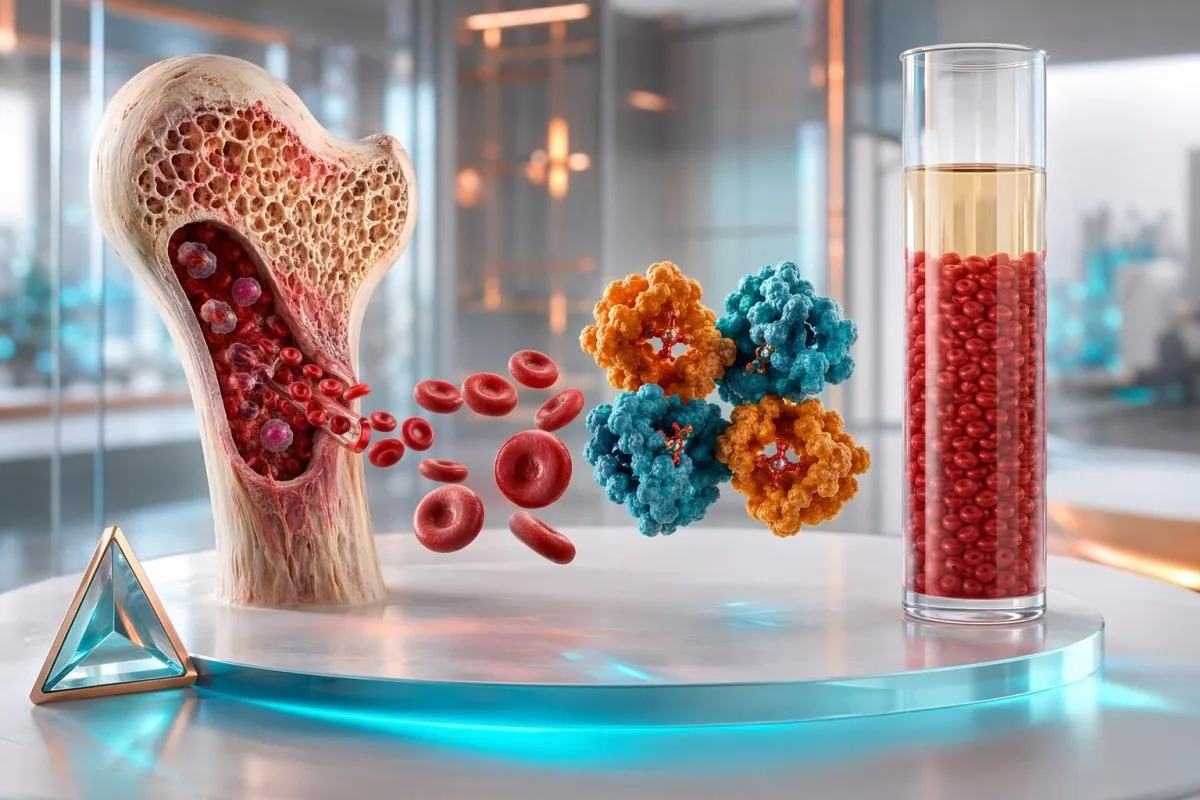
Una discrepanza nell’emocromo completo (CBC) di solito significa che le cellule sono diverse per dimensioni, concentrazione o tempistica — non che il referto sia automaticamente errato. Il pattern conta più di un singolo valore segnalato.


- Conteggio dei globuli rossi è il numero di globuli rossi, di solito riportato come milioni/µL o 10^12/L; può essere alto anche quando l’emoglobina è normale se le cellule sono piccole.
- Livelli di emoglobina misura la proteina che trasporta l’ossigeno; le soglie di anemia dell’OMS sono inferiori a 13,0 g/dL negli uomini, 12,0 g/dL nelle donne non in gravidanza e 11,0 g/dL in gravidanza.
- Ematocrito è la percentuale del volume ematico occupata dai globuli rossi; corrisponde in modo approssimativo a RBC × MCV ÷ 10.
- intervallo normale per i globuli rossi (RBC) è spesso circa 4,5–5,9 milioni/µL negli uomini adulti e 4,0–5,2 milioni/µL nelle donne adulte, ma gli intervalli di laboratorio differiscono.
- Intervallo di normalità dell’emoglobina è comunemente 13,5–17,5 g/dL negli uomini adulti e 12,0–15,5 g/dL nelle donne adulte.
- Disidratazione può aumentare emoglobina e hematocrit concentrando il plasma, spesso con albumina alta o rapporto BUN/creatinina elevato.
- La carenza di ferro spesso abbassa prima la ferritina; MCV, MCH e RDW possono spostarsi prima che l’emoglobina diminuisca.
- RBC alto con MCV basso spesso indica una forma di talassemia o una produzione di globuli rossi da lungo tempo limitata dal ferro.
- Sanguinamento recente può lasciare l’emoglobina apparentemente normale per diverse ore, per poi scendere dopo cambiamenti di distribuzione dei liquidi o dopo fluidi per via endovenosa.
- Variabilità di laboratorio di 1–3% è comune per le misure dei globuli rossi nell’emocromo completo; una variazione minima vicino al valore di cut-off è spesso rumore, non malattia.
Perché il conteggio dei globuli rossi, l’emoglobina e l’ematocrito non concordano
Conteggio dei globuli rossi, i livelli di emoglobina, E ematocrito possono non essere concordanti perché misurano cose diverse: numero di cellule, proteina di trasporto dell’ossigeno e volume dei globuli rossi concentrati. Un RBC alto con emoglobina normale spesso significa cellule piccole. Un’emoglobina alta con RBC normale spesso significa plasma concentrato, adattamento all’altitudine, fumo o cellule più grandi. Il nostro Analizzatore del sangue Kantesti AI legge questi dati come pattern, non come singoli segnali isolati.
Quando rivedo un emocromo completo, prima chiedo se la discrepanza sia matematica o biologica. L’ematocrito è di solito stimato dalla formula RBC × MCV ÷ 10, quindi un conteggio dei globuli rossi di 5,6 milioni/µL con un MCV di 68 fL dà un ematocrito vicino a 38%, che può sembrare normale nonostante un RBC alto.
La paura più comune che vedo nei pazienti è un singolo segnale rosso accanto a RBC mentre l’intervallo dell’emoglobina appare rassicurante. Questo pattern non è raro; spesso si associa alla microcitosi e la nostra guida più ampia a pattern dei numeri delle analisi del sangue spiega perché un singolo valore anomalo raramente racconta tutta la storia.
A partire dal 14 maggio 2026, continuo a vedere portali automatici etichettare questi risultati in modo che spaventa le persone inutilmente. Un emocromo completo è come una visione da tre telecamere dello stesso processo: numero di cellule, dimensione delle cellule e proteina di trasporto dell’ossigeno per cellula.
Cosa misura davvero ciascun indicatore dei globuli rossi nell’emocromo completo (CBC)
del numero di globuli rossi misura quante cellule rosse sono presenti, emoglobina misura la proteina che trasporta ossigeno, e ematocrito stima la percentuale del volume ematico costituita da globuli rossi. Queste tre di solito si muovono insieme, ma la dimensione delle cellule e il volume plasmatico possono separarli.
Una “terna” di globuli rossi normale è internamente coerente: il conteggio di RBC, l’emoglobina, l’ematocrito, MCV, MCH e MCHC raccontano tutti una storia compatibile. Se l’ematocrito è 45% e l’MCV è 90 fL, il conteggio di RBC dovrebbe essere vicino a 5,0 milioni/µL perché 5,0 × 90 ÷ 10 = 45.
L’emoglobina dipende meno dal numero di cellule e più dal “carico”. Una persona può avere 5,8 milioni/µL di globuli rossi ma solo 12,4 g/dL di emoglobina se ogni cellula è piccola e pallida; il nostro guida all’esame del sangue MCV approfondisce quel suggerimento sulla dimensione.
L’ematocrito è sensibile all’idratazione e ai calcoli dell’analizzatore. Se vuoi la versione in parole semplici di questo indicatore, di solito indirizzo i pazienti alla nostra guida ai livelli di ematocrito prima di parlare di diagnosi rare.
Intervallo normale di RBC e intervallo normale di emoglobina in base al contesto
intervallo normale per i globuli rossi (RBC) è comunemente circa 4,5–5,9 milioni/µL negli uomini adulti e 4,0–5,2 milioni/µL nelle donne adulte. Intervallo di normalità dell’emoglobina di solito è circa 13,5–17,5 g/dL negli uomini adulti e 12,0–15,5 g/dL nelle donne adulte, anche se ogni laboratorio stabilisce il proprio intervallo.
L’OMS usa soglie di emoglobina inferiori a 13,0 g/dL negli uomini, 12,0 g/dL nelle donne non in gravidanza, E 11,0 g/dL in gravidanza per definire l’anemia nelle indicazioni per la popolazione (Organizzazione Mondiale della Sanità, 2011). Queste soglie sono criteri di screening, non una diagnosi completa.
La gravidanza è la classica trappola. Il volume plasmatico aumenta di circa 40–50%, mentre la massa eritrocitaria aumenta meno, quindi l’emoglobina può scendere nell’intervallo 10,5–11,5 g/dL senza carenza di ferro; la nostra guida dell’intervallo di emoglobina copre la sfumatura del trimestre.
I bambini sono abbastanza diversi per cui gli intervalli degli adulti non dovrebbero essere applicati a loro. Ad esempio, i bambini piccoli spesso hanno un’emoglobina più bassa rispetto agli adolescenti, e la nostra guida per l’emocromo pediatrico è più sicura che fare supposizioni da un portale per adulti.
La disidratazione può aumentare emoglobina e hematocrit senza aggiungere cellule
Disidratazione può far sembrare alta l’emoglobina e l’ematocrito perché il volume plasmatico è più basso, non perché il corpo abbia improvvisamente prodotto molti nuovi globuli rossi. L’indizio è di solito un aumento parallelo dell’albumina, delle proteine totali, del sodio o del rapporto BUN/creatinina.
Un corridore di maratona di 52 anni mi mostrò una volta un’emoglobina di 17,2 g/dL dopo una gara calda, con albumina 5,2 g/dL e rapporto BUN/creatinina di 28. Due giorni dopo, dopo una normale idratazione, l’emoglobina era 15,6 g/dL e il panico sparì.
La disidratazione di solito aumenta l’emoglobina e l’ematocrito più di quanto aumenti il conteggio degli RBC. Se il sodio è 146 mmol/L, l’albumina è alta-normale e le urine sono concentrate, la nostra guida alla disidratazione “falso-alta” è spesso il primo punto a cui indico i pazienti.
Il rapporto BUN/creatinina è un utile indizio di supporto, non una sentenza. Un rapporto superiore a 20:1 può essere compatibile con disidratazione, elevato apporto proteico, perdita di liquidi a livello gastrointestinale o sanguinamento del tratto gastrointestinale superiore, quindi la nostra guida alla idratazione del BUN aiuta a separare queste storie.
La carenza di ferro può iniziare prima che l’emoglobina diventi bassa
La carenza di ferro spesso inizia con ferritina bassa e sottili cambiamenti degli indici eritrocitari prima che l’emoglobina scenda al di sotto dell’intervallo normale. La ferritina sotto 30 ng/mL è un cutoff pratico comune per indicare riserve di ferro esaurite, anche quando il laboratorio continua a etichettare l’emoglobina come normale.
La recensione di Camaschella sul New England Journal of Medicine descrive l’anemia sideropenica come un processo a fasi: prima calano le riserve di ferro, poi compare la produzione eritrocitaria limitata dal ferro e l’emoglobina scende più tardi (Camaschella, 2015). In ambulatorio, questa sequenza è esattamente il motivo per cui un’emoglobina normale non esclude una perdita di ferro precoce.
Il pattern iniziale più comune è ferritina sotto 30 ng/mL, saturazione della transferrina al di sotto di 20%, TIBC in aumento, MCH in calo sotto 27 pg, e RDW che inizia a salire sopra 14.5%. Nostro ferritina bassa emoglobina normale l’articolo è costruito proprio su questo mismatch.
Mi preoccupo di più quando i sintomi corrispondono alla chimica: gambe senza riposo, caduta dei capelli, intolleranza al freddo, mestruazioni abbondanti o stanchezza da sforzo. Se l’emoglobina è ancora 12,8 g/dL ma la ferritina è 9 ng/mL, la nostra guida sull’anemia da carenza di ferro spiega perché aspettare l’anemia può essere la strategia sbagliata.
Un alto numero di RBC con MCV basso spesso indica cellule piccole, non sangue “denso”
Elevato numero di globuli rossi con MCV basso spesso significa che il corpo ha molti globuli rossi piccoli. Le due cause classiche sono la talassemia trait e la produzione limitata dal ferro di lunga data, e la distinzione di solito dipende da ferritina, saturazione del ferro, RDW, storia sanitaria familiare e talvolta dall’elettroforesi dell’emoglobina.
Questo è uno dei pattern dell’emocromo completo più fraintesi. Un paziente potrebbe avere RBC 6,2 milioni/µL, MCV 65 fL, emoglobina 13,1 g/dL e HCT 40%; non è la stessa cosa della policitemia.
Nella talassemia trait, l’RDW può essere normale o solo lievemente alto, mentre il conteggio RBC è sproporzionatamente alto rispetto all’emoglobina. Il nostro articolo su globuli rossi (RBC) elevati con MCV basso illustra l’indice di Mentzer, in cui MCV ÷ RBC sotto circa 13 tende più verso la talassemia trait che verso la carenza di ferro.
Gli esami del ferro contano ancora perché la talassemia trait e la carenza di ferro possono coesistere. Di solito voglio ferritina, ferro sierico, TIBC e saturazione della transferrina insieme; la nostra guida agli studi sul ferro spiega perché il solo ferro sierico è troppo instabile per chiarire la questione.
Un sanguinamento recente potrebbe non abbassare l’emoglobina immediatamente
Sanguinamento recente può lasciare emoglobina ed ematocrito apparentemente normali nelle prime ore, perché si perde insieme il volume totale di sangue. L’emoglobina spesso diminuisce dopo spostamenti di liquidi, fluidi per via endovenosa o reidratazione, mentre i reticolociti di solito aumentano dopo 3–5 giorni se il midollo risponde.
Ho visto pazienti con epistassi o con perdite mestruali abbondanti mostrare un’emoglobina normale il primo giorno, per poi scendere di 1–2 g/dL il giorno successivo. Non è il laboratorio che cambia idea; è la circolazione che si riequilibra.
La conta dei reticolociti è il marcatore di recupero. La percentuale normale di reticolociti in un adulto è circa 0,5–2,5%, e un aumento della conta assoluta dei reticolociti dopo diversi giorni suggerisce che il midollo sta sostituendo le cellule perse; il nostro guida sul conteggio dei reticolociti fornisce i tempi.
Per epistassi ricorrenti, non mi limito a controllare l’emoglobina. Un emocromo completo, ferritina, PT/INR, aPTT e conta piastrinica possono individuare il pattern nascosto, motivo per cui il nostro guida di laboratorio per l’epistassi include sia test della coagulazione sia test del ferro.
L’altitudine, il fumo e l’apnea notturna possono aumentare l’emoglobina
Altitudine, fumo e apnea notturna possono aumentare emoglobina o ematocrito incrementando la segnalazione dell’eritropoietina dovuta a una minore disponibilità di ossigeno. Il pattern può mostrare emoglobina alta-normale o alta, ematocrito alto e talvolta un’elevata conta di globuli rossi.
Vivere a 2.000 metri può aumentare l’emoglobina di circa 0,5–1,0 g/dL in molte persone, anche se contano ascendenza, forma fisica e acclimatamento. Le correzioni dell’OMS per l’altitudine sottraggono gli aumenti dell’emoglobina man mano che l’elevazione cresce, evitando di sovrastimare la policitemia nelle comunità di montagna.
Il fumo aggiunge un’ulteriore complicazione: il monossido di carbonio si lega all’emoglobina, quindi il corpo può compensare producendo più capacità di trasporto dell’ossigeno. Un fumatore con emoglobina 17,0 g/dL e saturazione di ossigeno normale in ambulatorio può comunque avere un’elevata carbossiemoglobina, e il nostro emoglobina normale alta RBC l’articolo tratta questo contrasto dall’aspetto insolito.
L’apnea notturna è la causa meno controllata nella mia esperienza, soprattutto in persone con mal di testa al mattino, russamento, ipertensione resistente o ematocrito sopra 49%. Nostro guida di laboratorio per l’apnea notturna spiega perché le variazioni dell’emocromo sono solo un indizio, non uno studio del sonno.
La gravidanza e i liquidi per via endovenosa possono diluire l’emoglobina senza ridurre la massa dei globuli rossi
Anemia da diluizione si verifica quando il volume plasmatico aumenta più rapidamente della massa eritrocitaria. La gravidanza, i fluidi per via endovenosa e alcuni stati renali o infiammatori possono abbassare emoglobina ed ematocrito mentre la conta dei globuli rossi cambia in modo meno marcato.
La gravidanza è fisiologicamente progettata per diluire un po’ il sangue. A metà gravidanza, l’emoglobina intorno a 10,5–11,0 g/dL può essere dovuta a diluizione, ma la ferritina sotto 30 ng/mL o la saturazione della transferrina sotto 20% mi spinge anche verso una carenza di ferro.
I fluidi per via endovenosa possono creare lo stesso effetto entro poche ore. Dopo un intervento chirurgico o una visita d’urgenza, un calo dell’emoglobina da 14,0 a 12,2 g/dL può riflettere una diluizione se il paziente ha ricevuto 2–3 litri di cristalloidi e non presenta segni di perdite in corso.
Il contesto è tutto per le pazienti in gravidanza e nel post-partum. Il nostro guida all’esame del sangue prenatale distingue la diluizione dalla perdita di ferro durante la gravidanza, mentre il nostro nuova guida per le analisi della madre copre i tempi della ferritina post-partum e dell’emocromo completo che uso nella pratica.
La variabilità di laboratorio può creare piccole discrepanze nell’emocromo completo (CBC) vicino al valore di cut-off
Variabilità dell’emocromo completo di circa 1–3% è comune per gli indici eritrocitari, anche su analizzatori ben calibrati. Uno spostamento dell’emoglobina da 13,4 a 13,1 g/dL o uno spostamento dei RBC da 5,20 a 5,32 milioni/µL può essere un normale rumore analitico e biologico.
La postura conta più di quanto i pazienti si aspettino. Passare da sdraiati a in piedi può ridurre il volume plasmatico abbastanza da aumentare l’emoglobina e l’ematocrito di circa 5–10% nelle persone predisposte, soprattutto se il prelievo è di prima mattina e a digiuno.
Anche la gestione delle provette è importante. I campioni con EDTA che restano troppo a lungo possono mostrare artefatti sottili sulla dimensione delle cellule, mentre le agglutinine fredde possono far apparire falsamente basso il conteggio dei RBC e falsamente alto il MCV; il nostro guida alla variabilità degli esami mostra quali variazioni meritano una ripetizione.
Le unità causano un altro tipo di mancata corrispondenza. Alcuni laboratori riportano i RBC come 10^12/L, altri come milioni/µL, e il numero è essenzialmente lo stesso; il nostro guida alle unità di laboratorio aiuta i pazienti a evitare di scambiare una conversione di unità per un cambiamento biologico.
Quando un’emoglobina o un hematocrit elevati richiedono un approfondimento medico
Emoglobina o ematocrito persistentemente elevati merita una valutazione quando l’emoglobina è superiore a circa 16,5 g/dL negli uomini, 16,0 g/dL nelle donne, o quando l’ematocrito è superiore a 49% negli uomini O 48% nelle donne. Queste soglie compaiono nei principali quadri diagnostici della policitemia vera e non dovrebbero essere ignorate.
La linea guida della British Society for Haematology sulla policitemia vera sottolinea l’importanza di confermare l’eritrocitosi vera e di valutare lo stato della mutazione JAK2, il livello di eritropoietina, i fattori legati all’ossigeno e il rischio di trombosi (McMullin et al., 2019). Nelle cliniche reali, ripeto l’emocromo completo per primo, a meno che i sintomi o l’ematocrito non siano chiaramente preoccupanti.
Una valutazione pratica spesso include: ripetizione dell’emocromo completo, saturazione di ossigeno, ferritina, eritropoietina, test per JAK2 V617F, valutazione di reni e fegato e screening per l’apnea notturna. I nostri medici esaminano questi pattern rispetto agli standard clinici descritti in Kantesti validazione medica, non da un solo campanello d’allarme.
L’assistenza urgente è diversa. Nuovo dolore toracico, debolezza da un lato, forte mal di testa, cambiamenti della vista, fiato corto o ematocrito superiore a circa 55–60% richiedono un parere clinico nella stessa giornata e il nostro Comitato consultivo medico è molto diretto su quel confine di sicurezza.
Un’emoglobina bassa con un conteggio RBC normale indica problemi di carico o di dimensione
Emoglobina bassa con un numero normale di globuli rossi di solito significa che ogni cellula trasporta meno emoglobina, le cellule sono inusualmente grandi oppure il volume plasmatico è aumentato. MCV, MCH, MCHC, RDW, ferritina, B12, folati, funzionalità renale e i marcatori di infiammazione di solito chiariscono la causa.
Un’emoglobina di 11,2 g/dL con RBC 4,4 milioni/µL e MCV 72 fL indica una direzione diversa rispetto a un’emoglobina di 11,2 g/dL con MCV 108 fL. La prima fa pensare a una restrizione di ferro; la seconda mi porta a chiedere di B12, folati, malattia epatica, esposizione ad alcol, patologie tiroidee e farmaci.
La malattia renale può abbassare l’emoglobina riducendo l’eritropoietina anche quando il numero di RBC non appare drammaticamente basso. Anche le malattie infiammatorie possono “intrappolare” il ferro nelle riserve, producendo un basso ferro sierico con ferritina normale o alta.
Nostro le cause di emoglobina bassa l’articolo descrive i primi esami di controllo che di solito voglio: ferritina, saturazione della transferrina, conta dei reticolociti, B12, folati, creatinina/eGFR, CRP o ESR e, a volte, l’esame delle feci se la perdita di ferro non è spiegata.
Leggere l’andamento conta più di un singolo risultato CBC segnalato
andamento dell’emocromo completo è più affidabile di un singolo risultato delle emazie, perché idratazione, malattia, esercizio, tempistica del ciclo mestruale e metodo di laboratorio possono spostare i valori in modo modesto. Un cambiamento di 0,2–0,3 g/dL di emoglobina è spesso meno significativo di un calo costante di 1,0 g/dL nell’arco di diversi mesi.
Nelle mie revisioni, segno tre date prima di formulare una diagnosi. Un paziente in cui l’emoglobina passa da 14,1 a 13,2 a 12,4 g/dL in 9 mesi ha una storia; un paziente che passa da 14,1 a 13,9 g/dL dopo un lungo digiuno di solito no.
Il timing del nuovo test dipende dalla causa sospettata. Dopo l’inizio del ferro per via orale, i reticolociti possono aumentare entro 7–10 giorni, l’emoglobina spesso aumenta di circa 1 g/dL ogni 2–3 settimane, e la ripresa della ferritina può richiedere 2–4 mesi o più.
Nostro guida al confronto delle analisi del sangue insegna ai pazienti a confrontare “come con come”: stesso laboratorio se possibile, idratazione simile, stessa fascia oraria e nessun allenamento intenso nelle 24–48 ore precedenti se si stanno monitorando anche marcatori di muscolo o infiammazione.
Come Kantesti AI interpreta le discrepanze tra RBC ed emoglobina
Kantesti AI interpreta le discrepanze dell’emocromo completo combinando numero di RBC, emoglobina, ematocrito, MCV, MCH, RDW, reticolociti, esami del ferro, sintomi, età, sesso, stato di gravidanza, altitudine, fumo e storia dell’andamento. Un singolo campanello d’allarme non viene mai trattato come risposta completa.
La rete neurale di Kantesti ha analizzato più di 2M percorsi di esami del sangue in 127+ paesi e 75+ lingue, quindi ha visto le discrepanze noiose ma importanti che molti portali gestiscono male. Un RBC alto con MCV 66 fL viene instradato in modo molto diverso da un’emoglobina alta con albumina 5,4 g/dL.
Nostro Interpretazione degli esami del sangue basata sull'intelligenza artificiale la piattaforma può leggere un PDF o una foto e restituire una spiegazione strutturata in circa 60 secondi, includendo quale pattern si adatta, quale non si adatta e quali domande di follow-up un clinico potrebbe porre. Per i referti scansionati, il nostro guida per il caricamento PDF spiega i controlli di sicurezza.
Se vuoi testare il tuo pattern di emocromo completo, usa lo analisi del sangue con IA gratuita strumento e carica il referto completo, non solo la riga anomala. L’emocromo completo con ferritina e saturazione del ferro è molto più utile di uno screenshot di un singolo valore di RBC segnalato.
Domande che rendono più utile una visita di follow-up dopo un CBC
le migliori domande di follow-up per l’emocromo completo chiedere se la discrepanza dipende dalla dimensione delle cellule, dal volume plasmatico, da una recente perdita di sangue, dalla segnalazione dell’ossigeno, dallo stato del ferro o dalla variabilità di laboratorio. Portare con sé gli esami CBC precedenti, le modifiche dei farmaci, la storia di altitudine, lo stato di fumo e i sintomi fa risparmiare tempo.
Chiedere se l’ematocrito si adatta matematicamente a RBC e MCV. Se i numeri non combaciano, chiedo dei flag dell’analizzatore, della coagulazione del campione, delle agglutinine fredde o se quel valore sia stato calcolato in modo diverso da quel laboratorio.
Chiedere se gli esami del ferro sono abbastanza completi. La ferritina da sola può essere fuorviante durante l’infiammazione perché aumenta come proteina di fase acuta; una ferritina di 80 ng/mL con CRP 45 mg/L può comunque coesistere con una produzione di globuli rossi limitata dal ferro.
Chiedere se i sintomi corrispondono al risultato. La dispnea, feci nere, svenimenti, dolore toracico, grave stanchezza, sintomi neurologici o sanguinamento abbondante cambiano l’urgenza, e il nostro guida ai risultati critici delle analisi del sangue aiuta i pazienti a decidere quando non aspettare un appuntamento di routine.
Pubblicazioni di ricerca di Kantesti e governance clinica
Kantesti ricerca supporta un’interpretazione più sicura delle analisi del sangue testando la nostra IA su referti del mondo reale, flussi di lavoro multilingue e rubriche di ragionamento validate clinicamente. L’interpretazione della discrepanza tra CBC è un buon esempio: il modello deve resistere a un’eccessiva attribuzione di malattia, pur segnalando anemia vera, eritrocitosi e pattern urgenti.
Il nostro processo interno di revisione medica è guidato da medici e sottoposto ad audit rispetto a standard definiti, con dettagli di governance disponibili tramite Kantesti come organizzazione. Sono Thomas Klein, MD, e la mia regola pratica è semplice: una risposta dell’IA dovrebbe rendere il passo successivo del clinico più chiaro, non più rumoroso.
Per i lettori tecnici, il lavoro di benchmark Kantesti descrive una validazione basata su rubriche tra diverse specialità, inclusi casi trappola volutamente difficili in cui un modello potrebbe fare una sovradiagnosi. La pubblica Benchmark AI Kantesti fornisce il contesto di validazione clinica di livello superiore.
Due pubblicazioni formali Kantesti sono elencate di seguito con link DOI: il paper su deployment di triage per hantavirus di Figshare all’indirizzo 10.6084/m9.figshare.32230290 e la guida sulle proteine sieriche di Zenodo all’indirizzo 10.5281/zenodo.18316300. Non sostituiscono il tuo clinico, ma mostrano come il nostro team documenta metodo, deployment e revisione.
Domande frequenti
Perché il mio conteggio dei globuli rossi è alto ma l’emoglobina è normale?
Un numero elevato di globuli rossi con emoglobina normale significa più spesso che i globuli rossi sono più piccoli della media, quindi il corpo ha più cellule ma non più emoglobina totale. Questo quadro è comune nella caratteristica talassemica e può anche verificarsi in caso di carenza di ferro, soprattutto quando MCV è inferiore a 80 fL. Un indizio tipico è RBC oltre 5,5 milioni/µL con MCV sotto 75 fL e l’emoglobina intorno a 12–14 g/dL. Ferritina, saturazione della transferrina, RDW, storia sanitaria familiare e talvolta l’elettroforesi dell’emoglobina aiutano a distinguere le cause.
La disidratazione può far aumentare l’emoglobina e l’ematocrito?
Sì, la disidratazione può aumentare l’emoglobina e l’ematocrito concentrando il plasma sanguigno invece di aumentare la produzione di globuli rossi. Il quadro spesso include albumina, proteine totali, sodio alti-normali oppure un rapporto BUN/creatinina superiore a circa 20:1. Un emocromo completo (CBC) ripetuto dopo una normale reidratazione può diminuire di 0,5–1,5 g/dL l’emoglobina in alcuni pazienti. Un’alta emoglobina persistente richiede comunque una valutazione, soprattutto se l’ematocrito rimane sopra 49% negli uomini o 48% nelle donne.
Qual è più importante, il conteggio degli RBC o l’emoglobina?
L’emoglobina è di solito più importante per diagnosticare l’anemia perché misura direttamente la capacità di trasporto dell’ossigeno. Il conteggio degli eritrociti (RBC) resta comunque utile perché spiega il quadro, soprattutto quando MCV è basso o alto. Ad esempio, un’emoglobina di 11,5 g/dL con RBC 3,6 milioni/µL suggerisce un processo diverso rispetto a un’emoglobina di 11,5 g/dL con RBC 5,8 milioni/µL. I clinici interpretano insieme RBC, emoglobina, ematocrito, MCV, MCH, RDW e reticolociti.
Qual è l’intervallo normale per il conteggio dei globuli rossi?
L’intervallo normale di RBC (globuli rossi) per un adulto è in genere di circa 4,5–5,9 milioni/µL per gli uomini e 4,0–5,2 milioni/µL per le donne, anche se gli intervalli esatti variano in base al laboratorio. Bambini, gravidanza, altitudine e sesso assegnato alla nascita possono modificare i valori attesi. Un risultato lieve appena fuori dall’intervallo può dipendere dalla variabilità del laboratorio se l’emoglobina, l’ematocrito, il MCV e i sintomi sono nella norma. Un valore alto o basso persistente dovrebbe essere interpretato insieme all’emocromo completo.
Qual è l’intervallo normale per l’emoglobina?
L’intervallo normale comune dell’emoglobina è di circa 13,5–17,5 g/dL per gli uomini adulti e 12,0–15,5 g/dL per le donne adulte. Le soglie di anemia dell’OMS sono inferiori a 13,0 g/dL negli uomini, inferiori a 12,0 g/dL nelle donne non in gravidanza e inferiori a 11,0 g/dL in gravidanza. Alcuni laboratori usano limiti leggermente diversi a causa del metodo dell’analizzatore e dei dati di riferimento della popolazione. Sintomi, gravidanza, funzionalità renale, stato del ferro e altitudine sono importanti quando si interpreta un risultato borderline.
Un sanguinamento recente può mostrare un’emoglobina normale all’inizio?
Sì, un sanguinamento recente può mostrare inizialmente un’emoglobina normale perché i globuli rossi e il plasma vengono persi insieme. L’emoglobina spesso diminuisce dopo 6–24 ore, quando i liquidi si spostano nel circolo o dopo che i fluidi per via endovenosa diluiscono il campione. I reticolociti di solito aumentano dopo circa 3–5 giorni se il midollo osseo risponde in modo adeguato. Ecco perché potrebbe essere necessario ripetere l’emocromo completo e il test della ferritina dopo sanguinamenti importanti, epistassi, interventi chirurgici o perdite ematiche gastrointestinali.
Quando dovrei preoccuparmi per un’emoglobina o un ematocrito alti?
Emoglobina persistente sopra circa 16,5 g/dL negli uomini o 16,0 g/dL nelle donne, oppure ematocrito sopra 49% negli uomini o 48% nelle donne, merita una valutazione medica. Cause comuni includono disidratazione, fumo, altitudine, apnea notturna, terapia con testosterone, segnali renali e policitemia vera. È più sicuro seguire un consiglio nella stessa giornata se l’ematocrito alto si associa a dolore toracico, mancanza di respiro, mal di testa severo, cambiamenti della vista, debolezza da un lato o sintomi di trombo. Un medico può ripetere l’emocromo completo e controllare lo stato di ossigenazione, l’eritropoietina, la ferritina e l’esame per JAK2.
L'esercizio fisico intenso può influire sul mio conteggio dei globuli rossi o sul risultato dell'emoglobina?
L'esercizio fisico intenso, soprattutto con la sudorazione, può aumentare temporaneamente l'emoglobina e l'ematocrito riducendo il volume del plasma. Pianifica una ripetizione della CBC quando sei ben idratato ed evita esercizi insolitamente intensi per circa 24 ore prima, a meno che il tuo medico non ti indichi diversamente.
La carenza di vitamina B12 o di folati può modificare la mia CBC prima che si sviluppi l’anemia?
Sì. La carenza di vitamina B12 o di folati può rendere i globuli rossi più grandi, aumentando l’MCV e talvolta modificando il conteggio delle RBC prima che l’emoglobina diminuisca. Il tuo clinico può richiedere test per B12, folati e altri esami correlati in base ai tuoi sintomi e al pattern della CBC.
Devo assumere ferro se l’emoglobina è normale ma il mio MCV è basso?
Non iniziare il ferro solo perché MCV è basso; piccole emazie possono derivare da carenza di ferro o da tratto talassemico. Chiedi prima al tuo medico informazioni su ferritina e saturazione della transferrina, perché un ferro non necessario può causare effetti collaterali e non correggerà i pattern ereditari di microcitosi.
Ottieni oggi l’analisi degli esami del sangue con IA (AI-Powered Blood Test Analysis)
Unisciti a oltre 2 milioni di utenti in tutto il mondo che si fidano di Kantesti per un’analisi istantanea e accurata degli esami di laboratorio. Carica i tuoi risultati analisi del sangue e ricevi un’interpretazione completa dei biomarcatori di 15,000+ in pochi secondi.
📚 Pubblicazioni di ricerca di riferimento
Klein, T., Mitchell, S., & Weber, H. (2026). AI multilingue con supporto alle decisioni cliniche per il triage precoce dell'Hantavirus: progettazione, validazione ingegneristica e implementazione nel mondo reale su 50.000 referti di esami del sangue interpretati. Kantesti AI Medical Research.
Klein, T., Mitchell, S., & Weber, H. (2026). Guida alle proteine del siero: analisi del sangue per globuline, albumina e rapporto A/G. Kantesti AI Medical Research.
📖 Riferimenti medici esterni
Organizzazione Mondiale della Sanità (2011). Concentrazioni di emoglobina per la diagnosi di anemia e la valutazione della gravità. Organizzazione Mondiale della Sanità.
⚕️ Esclusione di responsabilità medica
Questo articolo ha solo scopo educativo e non costituisce consulenza medica. Consulta sempre un operatore sanitario qualificato per decisioni su diagnosi e trattamento.
Segnali di fiducia E-E-A-T
Esperienza
Revisione clinica guidata da un medico dei flussi di lavoro di interpretazione degli esami.
Competenza
Focus sulla medicina di laboratorio su come i biomarcatori si comportano nel contesto clinico.
autorevolezza
Scritto dal dott. Thomas Klein con revisione della dott.ssa Sarah Mitchell e del Prof. Dr. Hans Weber.
Affidabilità
Interpretazione basata su evidenze, con percorsi di follow-up chiari per ridurre l’allarme.