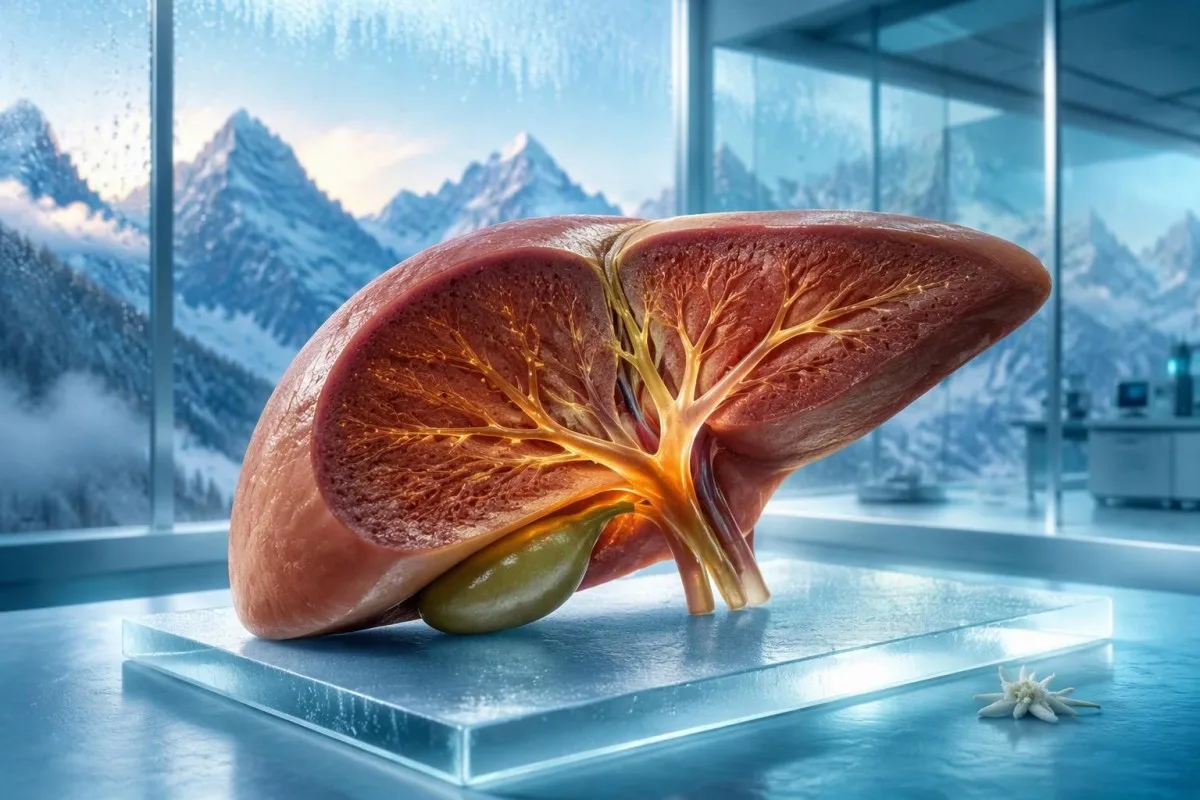
Lægur gildi gamma-glútamýltransamínasa er sjaldan viðvörun um lifrarskaða. Mikilvæga spurningin er hvort restin af lifrargreiningum þínum, næringarsaga, lyf og einkenni segi aðra sögu.


- Lágt GGT gildi eru venjulega meinlaus þegar ALT, AST, ALP, bilirúbín, albúmín og einkenni eru óveruleg.
- Viðmiðunarmörk eru breytileg: margar rannsóknarstofur fyrir fullorðna greina frá gróflega 5-55 U/L, en sumar merkja ekki lágt GGT yfirleitt.
- Gildi undir 5 U/L er venjulega undir greiningarmörkum eða einstaklingsbundinn grunnur, ekki sönnun fyrir lifrarbilun.
- Lágt gamma glútamýltransamínasi getur fylgt með litlu oxunarálagi, lægri líkamsmassa, hormónaáhrifum eða ákveðnum lyfjum, þótt sönnunargögn séu ekki nægilega sterk til að greina neina orsök.
- Sjaldgeng meðfæddur GGT skortur veldur glútationuria og víðtækari klínískum vísbendingum; einangrað lágt sermisgildi nær ekki þessari greiningu.
- ALP samhengi skiptir máli: Lægri GGT ásamt hærri ALP bendir frekar til beinagjafa en gallrásagjafa.
- Næringarrannsóknir ættu að vera markvissaðar: Lægri GGT ein og sér sýnir ekki Cinkskort, próteinskort, B6-vítamínskort eða skort á andoxunarefnum.
- Endurteknar rannsóknir eru skynsamlegar þegar niðurstaða er óvænt, en ekki þarf bráðaþjónustu vegna lægri GGT ein og sér án kvíðvænna einkenna.
Hvað lágt GGT blóðgildi þýðir venjulega
Lág GGT gildi eru næstum alltaf róandi niðurstaða frekar en sjúkdómamerki, sérstaklega þegar bilirúbín, basísk fosfatasi (ALP), ALT og AST eru innan viðmiðunarmarka rannsóknastofunnar. Lægri gildi gamma-glútamýl transferasa þýðir ekki að lifrin hafi “hætt að virka”; skert lifrarstarfsemi er metin með albúmíni, INR, bilirúbíni, blóðflögum og klínískum niðurstöðum – ekki aðeins lágu GGT gildi.
GGT er himnutengt ensím sem er sérlega mikið í gallrásarepithelíum, nýrnapíplum, briskirtli og nokkrum öðrum vefjum. Rannsóknastofur nota það aðallega sem stoðmerki um ensímörvun eða gallteppuáhrif, þess vegna er klínísk athygli venjulega beint að háum, ekki lágum gildum. EASL gallteppuleiðbeiningar nota GGT ásamt ALP og bilirúbín við mat á gallteppumynstri; þær skilgreina ekki neikvæðan lægri GGT þröskul (EASL, 2009).
Í klínískri vinnu minni krefst niðurstaða eins og GGT 4 U/L með ALT 18 U/L, ALP 72 U/L og bilirúbín 9 µmol/L útskýringa, ekki viðvörunar. Hún endurspeglar algengt eðlilegt líffræði, rannsóknaraðferð sem skilar niður að 3 eða 5 U/L, eða einstakling sem hefur lítinn örvun á ensímum frá áfengi, efnaskiptaálagi á lifur eða lyfjum. Fyrir víðari samhengi lifrarprófs, sjá leiðbeiningar okkar um hvað lifrarrannsóknir innihalda.
Þann 25. september 2026 mæla engar helstu lifrarleiðbeiningar með meðferð, myndgreiningu eða sérfæði eingöngu vegna þess að GGT er undir viðmiðunarmörkum. Dr. Thomas Klein, yfirlæknir hjá Kantesti, ráðleggur sjúklingum að staðfesta fyrst eininguna, viðmiðunarmörkin og nálægar niðurstöður áður en þeir leita eftir prófun á skorti. Kantesti er gervigreind blóðprófsgreiningartæki sem les lágt GGT ásamt heilu lifrarprófsmynstri frekar en að meðhöndla eitt lágt númer sem greiningu.
Af hverju GGT viðmiðunarmörk eru mismunandi milli rannsóknarstofa
Það er enginn alhliða lágmarksþröskur fyrir GGT, vegna þess að aðferðir, kvörðun, kynjaskipting og staðbundnar viðmiðunarhópar eru mismunandi. Mörg rannsóknastofur fyrir fullorðna nefna um það bil 5-55 U/L, á meðan aðrir nota 7-49 U/L fyrir konur og 10-71 U/L fyrir karla eða skýra einfaldlega gildi undir takmörkum mælis sem lág.
GGT er almennt mælt með hreyfimælinga litamælingarprófi sem greinir hlutfall ummyndunar substrate við 37°C. Tilkynnt niðurstaða “<3 U/L” er ekki það sama og nákvæmlega mæld gildi 0 U/L; það þýðir oft að virknin var undir áreiðanlegri kvörðunarmörkum aðferðarinnar. Þessi munur er auðvelt að missa af þegar sjúklingagáttir nota sjálfkrafa lága flagg.
Kyn, aldur, áfengisneysla, offita og valviðmiðunarviðmið rannsóknastofunnar breyta efri enda GGT bilinu mun meira en neðri endanum. 24 ára kona með GGT 3 U/L og 68 ára karl með GGT 3 U/L geta báðir verið heilbrigðir, að því gefnu að víðara prófið sé samræmt. Lestu eigin viðmiðunarmörk rannsóknastofunnar frekar en að nota tölu úr leitarútritun; okkar GGT viðmiðunarbil útskýrir algengar einingar og kynjamun.
Kantesti Gervigreind ber saman tilkynnt gildi við rannsóknastofusértæka svið þegar það er sýnilegt á uppladdri skýrslu, og athugar síðan hvort augljóst lágt gildi sé greiningarfræðilega merkilegt. Kantesti er vettvangur til túlkun blóðrannsókna sem er hannaður til að greina þegar merkt niðurstaða stangast á við raunverulegt klínískt mynstur. Einn punkts munur í kringum grunnmælingu táknar sjaldan merkjanleg líffræðileg breyting.
Hvenær lágt GGT gildi er algjörlega meinlaust
Low GGT is generally benign when it is isolated and stable over time. A person with GGT 2-6 U/L, normal ALP and bilirubin, no jaundice or persistent itch, and normal nutrition does not usually need a liver work-up because of that value.
The most useful clinical clue is stability. If GGT has been 4, 5, and 3 U/L over 4 years while ALT remains below 30 U/L and ALP below 120 U/L, that is more persuasive evidence of a personal baseline than one isolated draw. Biological variation affects enzymes, but values close to the lower analytic boundary may appear to bounce by 1-2 U/L without any biological consequence.
I see this after preventive panels in physically active people who do not drink alcohol and take few medicines. One 52-year-old trail runner had GGT 4 U/L, AST 46 U/L after a mountain race, and normal bilirubin; the muscle-related AST rise—not the low GGT—was what needed a repeat after 7 days without strenuous exercise. Our article on high AST after exercise gives useful context for that different pattern.
A normal GGT does not rule out every liver condition, and a low result certainly does not provide a “liver health score.” It simply has weak negative clinical meaning by itself. If you feel well and your other results are normal, save the date, fasting status, recent exercise, and medicines for comparison at your next grunnblóðpróf.
Næring, þyngdartap og fullyrðingar um lágt GGT
Low GGT levels do not diagnose poor nutrition, antioxidant deficiency, or “liver detoxification.” Severe undernutrition can affect many liver-related proteins and enzymes, but low GGT alone is neither sensitive nor specific enough to identify a nutrient shortfall.
GGT participates in extracellular glutathione metabolism, which has led to attractive but oversimplified online claims that a low value proves low glutathione, zinc deficiency, or inadequate protein intake. Human serum GGT activity is not a validated proxy for tissue glutathione stores. A person with poor protein intake is more likely to show clues such as low weight, reduced muscle mass, anemia, low phosphate, low albumin in advanced illness, or specific vitamin deficiencies.
Rapid weight loss deserves a more nuanced reading. During calorie restriction, GGT often falls alongside reductions in liver fat and insulin resistance, yet transient ALT changes can occur during rapid weight loss or heavy exercise. If fatigue, restrictive eating, missed periods, recurrent injuries, or low ferritin coexist, the priority is a broader nutrition assessment; our leiðbeiningum um rannsóknir fyrir þolíþróttafólk describes practical screening patterns.
Dr. Thomas Klein has seen patients spend substantial sums on antioxidant panels after a GGT of 4 U/L, only to find that their CBC, ferritin, vitamin B12, thyroid tests, and diet history were the real clinical leads. Targeted testing beats supplement guessing. A low GGT blood result is not a reason to start glutathione, zinc, or high-dose vitamin supplements without a documented indication.
Lyf og hormón sem geta lækkað GGT
Some medicines and hormonal states may lower GGT activity, but medication-related low GGT is usually clinically harmless. The practical issue is not to stop a prescribed treatment because one enzyme result falls below a reference interval.
Medication effects are far better established for elevated GGT than reduced GGT. Enzyme-inducing antiseizure medicines, for example, can raise GGT; conversely, improved metabolic control, reduced alcohol use, and some lipid-lowering therapies may reduce a previously higher value. A falling GGT after treatment is not automatically a direct drug effect—it may reflect the condition improving.
Oestrogen-containing contraception and pregnancy can alter several liver analytes, including GGT, but reference intervals for pregnancy are laboratory-dependent. In a person taking oral contraception with GGT 5 U/L, normal bilirubin, and no itching, the result usually requires no action. Persistent itch with raised bile acids in pregnancy is a different clinical question, covered in our bile-acid testing guide.
Bring a complete medication and supplement list to any repeat test, including antiseizure medicines, statins, antibiotics, herbal products, and hormonal treatments. Do not discontinue medication because of low gamma glutamyl transferase without discussing it with the prescriber. The risk of stopping an essential medicine is usually much greater than the significance of an isolated GGT of 3 U/L.
Hvernig á að túlka lágt GGT samhliða alkalískum fosfatasa
Low or normal GGT with elevated ALP often points away from a liver or bile-duct source and toward bone, intestine, or pregnancy-related ALP. This pairing is one of the few situations where GGT meaningfully changes the interpretation of another result.
ALP comes mainly from liver and bone in adults. When ALP is elevated but GGT remains low-normal, clinicians often consider vitamin D deficiency, healing fracture, high bone turnover, hyperparathyroidism, adolescence, or pregnancy before ordering biliary imaging. A GGT of 6 U/L does not exclude liver disease, but it makes an isolated ALP of 155 U/L less suggestive of cholestasis when bilirubin is normal.
The reason this pair matters is biochemical: biliary epithelial stress commonly increases both ALP and GGT, whereas osteoblast activity increases ALP without necessarily changing GGT. EASL's 2009 cholestasis guideline supports using GGT to help establish hepatic origin when ALP is raised (EASL, 2009). For a focused discussion of bone-source ALP, read our guide to ALP eftir beinbrot.
A 34-year-old with ALP 164 U/L, GGT 7 U/L, 25-hydroxyvitamin D 18 ng/mL, and normal bilirubin needs bone and vitamin D context—not reflex ultrasound. In contrast, ALP 260 U/L plus bilirubin 42 µmol/L and right-upper-abdominal pain warrants prompt clinical assessment even if GGT is unexpectedly low. Symptoms and the total pattern always outrank one enzyme.
Sjaldgeng meðfædd GGT skortur og glútationuria
True inherited GGT deficiency is exceptionally rare and is not diagnosed from a single low serum GGT value. It involves pathogenic changes affecting gamma-glutamyl transferase activity and may cause glutathionuria, neurological features, metabolic concerns, or abnormal findings from childhood.
The rare disorder sometimes called gamma-glutamyl transpeptidase deficiency affects glutathione processing and is evaluated with specialist biochemical and genetic testing. Published case descriptions include increased urinary glutathione, but the phenotype is variable and the evidence base is necessarily small because so few people are affected. An adult who feels well with an isolated GGT of 3 U/L is very unlikely to have this condition.
I would think about specialist referral only when the low result is persistent and there are additional clues: unexplained neurological or developmental symptoms, a childhood history of unusual metabolic findings, family members with a confirmed condition, or a report of abnormal urinary glutathione. Routine commercial genetic panels can produce uncertain variants, so they should not be interpreted without genetics expertise.
Kantesti's neural network can flag an unusually low GGT for contextual review, but it does not diagnose rare enzyme disorders from routine chemistry data. Kantesti is an AI-powered blood test analysis tool that identifies when low GGT coexists with other abnormalities that justify clinician-led follow-up. For laboratory questions that need careful method review, our yfirlit yfir læknisfræðilega staðfestingu útskýrir takmarkanir sjálfvirkrar túlkunar.
Af hverju lágt GGT þýðir ekki litla lifrarstarfsemi
Low GGT does not measure liver reserve, liver detoxification capacity, or liver failure. Liver synthetic function is better assessed using bilirubin, albumin, INR or prothrombin time, platelet trend, clinical examination, and—in selected cases—imaging or fibrosis evaluation.
GGT is an enzyme activity measurement, not a direct measure of hepatocyte mass. In advanced cirrhosis, GGT can be normal, high, or occasionally lower than expected depending on the cause and stage; therefore, neither a normal nor low GGT rules out chronic liver disease. New jaundice, confusion, abdominal swelling, black stools, or easy bruising require medical attention regardless of GGT.
When I review a panel, albumin below 35 g/L, bilirubin above 34 µmol/L, INR above 1.5 in someone not taking anticoagulants, and falling platelets are more clinically concerning than a GGT of 2 U/L. These are not stand-alone diagnoses either, but they point toward impaired synthesis, cholestasis, or portal hypertension more directly. Our guide to snemma merki um skorpulifur fjalla um víðtækara mynstur.
The phrase “liver enzyme” causes understandable confusion: ALT, AST, ALP, and GGT are injury, tissue-source, or induction markers—not a report card for overall organ performance. A low GGT blood result should never reassure someone away from urgent symptoms, and it should not create anxiety in an otherwise entirely normal panel.
Gæti lágt GGT gildi verið prófunargalli?
A very low GGT result can reflect assay sensitivity, sample handling, or ordinary analytic variation, especially near 3-5 U/L. Repeating the test is reasonable when the result is unexpected or conflicts with the rest of the panel, but a same-day emergency redraw is rarely necessary.
Unlike potassium or glucose, GGT is not usually one of the analytes most distorted by a brief delay in sample processing, yet every enzyme assay has imprecision near its lower measuring limit. A result changing from 4 U/L to 7 U/L may be entirely compatible with analytic and within-person variation. Compare the laboratory, units, fasting state, recent exercise, and medicines before interpreting a small shift.
Hemolysis, lipemia, and icterus can interfere with some laboratory measurements, but their effect depends on the exact analyzer and assay chemistry. A report that labels the specimen as hemolyzed or unsuitable should prompt laboratory-specific advice rather than assumptions. Our endurprófun eftir blóðskilun leiðbeiningar explains why a redraw can clarify selected panels.
If a low GGT is isolated, repeating it with the next routine panel in 3-12 months is usually sufficient. Repeat sooner—often within 2-8 weeks—if ALP, bilirubin, ALT, or symptoms are changing, not because the GGT itself is low. Record the exact value; “low” is a flag, not a clinical measurement.
Einkenni sem skipta meira máli en lágt GGT gildi
Symptoms change the plan when they suggest liver, biliary, gastrointestinal, or systemic illness; low GGT itself causes no recognized symptom syndrome. Yellow eyes, dark urine, pale stools, fever with abdominal pain, persistent generalized itch, or new confusion need prompt clinical assessment even if GGT is below range.
Bile-duct obstruction can present with pain, jaundice, dark urine, pale stool, and rising bilirubin or ALP. A low GGT would be unusual in that pattern but would not make it safe to wait. The same principle applies to viral hepatitis, medication-associated liver injury, and gallbladder inflammation: the symptom trajectory and wider laboratory pattern lead the decision.
Systemic symptoms can point elsewhere. Unintentional weight loss of more than 5% over 6-12 months, chronic diarrhoea, recurrent vomiting, or marked fatigue may justify CBC, ferritin, thyroid testing, coeliac screening, and nutrition review even when GGT is low. For persistent digestive warning signs, see our article on undigested food and red flags.
I tell patients this plainly: an isolated GGT of 4 U/L is not an emergency, but a person with jaundice and severe pain is not “cleared” by it. Medical triage is based on the whole person. Bring your test report and a timeline of symptoms, alcohol intake, medicines, recent infections, and travel exposures.
Hver þarf raunverulega eftirfylgni vegna lágs GGT?
Most adults need no follow-up for isolated low GGT, while a smaller group needs review because of associated abnormalities or a concerning clinical history. Follow-up is driven by the companion results, not by a numeric lower cutoff such as 5 U/L.
Arrange routine primary-care review if low GGT accompanies unexplained fatigue, marked dietary restriction, low BMI, repeated fractures, chronic diarrhoea, or other abnormal laboratory values. Consider timely review if ALP is raised, bilirubin is abnormal, albumin is low, INR is prolonged, or platelet count is falling. A low GGT with otherwise normal results generally does not require hepatology referral.
Children deserve a little more caution because reference intervals vary substantially with age, puberty, and laboratory method. A paediatrician should interpret persistently very low results in the setting of developmental, neurological, growth, or metabolic concerns. For families, our guide to safe age-based blood tests outlines why adult ranges cannot simply be copied onto children.
Kantesti AI supports result organization and trend review, but it cannot replace clinical examination or specialist assessment. If you are unsure whether a combination needs review, use a structured ábendingalisti fyrir læknisheimsókn to list values, symptoms, family history, and current treatments.
Hagnýt áætlun eftir að hafa séð lágt GGT á niðurstöðum
The practical response to low GGT is to confirm the laboratory range, inspect the full liver panel, review medicines and symptoms, and avoid unnecessary supplements. For an isolated value below range, this takes minutes and is usually more useful than ordering a large “detox” panel.
Start with five items: GGT value and unit; laboratory reference interval; ALT, AST, ALP, and bilirubin; albumin and platelet count if available; and symptoms. If all are reassuring, document the value as a likely personal baseline. If your report uses U/L, do not convert it to IU/L—these labels are generally used interchangeably for enzyme activity in routine reporting.
Next, list medication changes, hormonal therapy, alcohol pattern, major weight change, recent endurance exercise, pregnancy status, and supplements. This context helps distinguish a harmless low result from a panel that needs another look. Our leiðarvísir um tímalínu blóðprófa explains which life events can make one draw differ from the next.
Avoid “correcting” low GGT. There is no evidence-based target dose of zinc, glutathione, milk thistle, or B vitamins intended to raise GGT in a well person. If a nutritional concern exists, test and treat the relevant deficiency—for example, ferritin, vitamin B12, vitamin D, folate, zinc, or albumin—rather than chasing an enzyme number.
Hvernig Kantesti túlkar lágt GGT í samhengi
Kantesti interprets low GGT by checking the liver-panel pattern, reference interval, symptoms entered by the user, medications, and prior results—not by assigning a diagnosis to one low value. This approach is especially useful when the same report contains an ALP, bilirubin, ALT, or nutrition-related result that changes the clinical meaning.
Kantesti AI can process a laboratory-report PDF or photo and organize findings in roughly 60 seconds, while keeping the reported laboratory ranges visible for review. A low GGT is generally categorized as low clinical priority when it is isolated, then escalated for human discussion when paired with abnormalities such as high ALP, high bilirubin, low albumin, or concerning symptoms. Trend analysis is often more valuable than a single flagged result.
Our clinical team reviews medical content and safety boundaries; the Læknisfræðileg ráðgjafarnefnd provides physician oversight for how result explanations are framed. Kantesti is an AI lab test interpretation service that turns a low GGT result into a pattern-based question for the patient and clinician, rather than a misleading diagnosis. In our experience with more than 2 million interpreted reports, isolated low flags are a common source of avoidable worry.
The right endpoint is a better conversation with your clinician, not an automated verdict. Save the original report, note whether the test was fasting, and compare like with like over time. If you want to understand how our result-reading methodology handles reference intervals and uncertainty, review our leiðarvísir fyrir gervigreindartækni.
Niðurstaða: Lágt GGT er venjulega róandi niðurstaða
Low GGT levels almost never need treatment or urgent investigation on their own. The exception is not a particular low number; it is a low result appearing with other abnormal tests, significant symptoms, a relevant childhood or family history, or clear evidence of malnutrition.
Use the laboratory’s own reference interval and do not assume that a value of 3 U/L means the same thing across laboratories. A low value has very different implications from a high GGT, which is why guidance designed for elevated GGT should not be applied in reverse. The related overview of what GGT stands for may help when reading your report.
The most clinically useful question is, “What else is happening in this panel and in my life?” Normal ALP, bilirubin, ALT, AST, albumin, and platelets make an isolated low result reassuring. Symptoms such as jaundice, dark urine, persistent itching, fever, severe abdominal pain, confusion, or rapid weight loss deserve evaluation whether GGT is low, normal, or high.
Dr. Thomas Klein's practical advice is simple: do not supplement to raise GGT, do not stop medication because of it, and do not let a low flag overshadow more meaningful findings. For questions about the organisation and its clinical approach, see Um Kantesti.
Algengar spurningar
Er lágt GGT stig slæmt?
Lág gildi á GGT eru yfirleitt ekki slæm og benda sjaldan til lifrarsjúkdóms þegar aðrir lifrarprófanir eru eðlilegir. Mörg rannsóknarstofur nota viðmiðunarbil fyrir fullorðna nálægt 5-55 U/L, en það er enginn alheims samþykktur hættulegur lágmarksgildi. GGT upp á 3-5 U/L með eðlilegu ALT, AST, ALP, bilirúbíni, albúmíni og án einkenna er almennt góðkynja niðurstaða. Læknisskoðun er viðeigandi þegar lág GGT kemur fram með öðrum óeðlilegum prófum, marktækri þyngdartapi, meltingartruflunum eða viðeigandi sögu í æsku og fjölskyldu.
Hvað veldur lágu gamma glútamýl transferasa?
Lág gammaglútamýl transferasi getur endurspeglað eðlilegt einstaklingsbundinn mun, litla greiningarvirkni nálægt tilkynningarmörkum prófunar, minni útsetningu fyrir áfengi eða ensímörvandi lyfjum, hormónaástand eða bætandi líkamlega lifrarálag. Alvarleg vannæring getur haft áhrif á marga rannsóknargildi, en lágt GGT eitt og sér sönar ekki skort á próteini, sinki, vítamíni B6, glútationi eða andoxunarefnum. Sjaldgæfur GGT skortur sem er arfgengur er til, en hann felur venjulega í sér auka efnaskipta- eða klínísk merki og krefst sérfræðiprófana. Gildi undir 5 U/L eitt og sér er ekki nægjanlegt til að greina orsök.
Á ég að hafa áhyggjur ef GGT mitt er 4 U/L?
GGT gildi upp á 4 U/L eru venjulega ekki áhyggjuefni ef það er eitt sér og blóðprufunni þín er annars eðlileg. Athugaðu fyrst hvort rannsóknastofan skýrir gildi undir 3 eða 5 U/L sem mörkin fyrir mælingu, því litlar munir á þessu svæði hafa kannski ekki klíníska þýðingu. Skoðaðu ALP, bilirúbín, ALT, AST, albúmín, blóðflögufjölda, lyf og einkenni í stað þess að einbeita þér aðeins að GGT. Endurtekin próf geta beðið þar til næsta venjulega prófun nema aðrir niðurstöður eða einkenni breytist.
Getur lágt GGT bent til vítamín- eða steinefnaskorts?
Lægt GGT greinir ekki áreiðanlega nein vítamín- eða steinefnaskort. Þótt GGT taki þátt í umbrotum glútatíons, hefur virkni í sermi ekki verið staðfest sem klínísk mæling á sinkstöðu, B6-vítamínstöðu, próteininntöku eða andoxunarrými. Ef einkenni benda til næringarörðugleika velja læknar venjulega markvissar prófanir eins og ferritín, B12-vítamín, fólat, 25-hýdroxývítamín D, sink, CBC, albúmín og fosfat. Að taka fæðubótarefni eingöngu til að hækka GGT niðurstöðu sem er 3-6 U/L er ekki byggt á sönnunargögnum.
Hvað þýðir lágt GGT með hátt alkalískt fosfatasa?
Lág eða eðlileg GGT með hátt alkalískt fosfatasa getur bent til þess að alkalískt fosfatasa komi frá beinum fremur en lifur eða gallvegum. D-vítamínskortur, græðandi beinbrot, mikil beinumbrot, meðganga og kynþroska eru algengir samhengi fyrir þetta mynstur. Til dæmis, ALP 160 U/L með GGT 6 U/L og D-vítamín 18 ng/mL réttlætir mat á beinum og D-vítamíni áður en gert er ráð fyrir gallvegarsjúkdómi. Gula, dökkt þvag, kviðverkir eða hátt bilirúín þarfnast samt læknisfræðilegs mats óháð GGT.
Getur lyf lækkað GGT?
Lyf geta tengst lægra GGT, þótt lyfjameðhöndlun tengt GGT hækkun sé betur staðfest en lyfjameðhöndlun tengt GGT lækkun. Bætt efnaskiptaheilbrigði, minni áfengisneysla, hormónameðferðir og meðhöndlun á fyrri lifrarsjúkdómi geta allt saman orðið með lægra gildi. Ekki hætta statínum, flogaveikilyfjum, getnaðarvörn, sýklalyfjum eða fæðubótarefnum vegna þess að GGT niðurstaða er undir 5 U/L án þess að tala við lækninn. Fullt spjaldið og ástæða meðferðar skiptir meira máli en lágt einangrað ensím niðurstaða.
Fáðu AI-knúna greiningu á blóðprufum í dag
Vertu með yfir 2 milljónir notenda um allan heim sem treysta Kantesti fyrir tafarlausa og nákvæma greiningu á blóðprufum. Hladdu upp niðurstöðum blóðrannsókna þinna og fáðu yfirgripsmikla túlkun á 15,000+ lífmerkjum á sekúndum.
📚 Tilvísuð rannsóknarútgáfa
Klein, T., Mitchell, S., & Weber, H. (2026). Blóðprufa fyrir Nipah-veiruna: Leiðbeiningar um snemmbúna greiningu og greiningu 2026. Kantesti AI Medical Research.
Klein, T., Mitchell, S., & Weber, H. (2026). Leiðarvísir fyrir blóðflokk B neikvætt, LDH blóðpróf og fjölda retíkúlócýta. Kantesti AI Medical Research.
📖 Ytri læknisfræðilegar heimildir
Whitfield JB (2001). Gamma glútamýl transferasi. Critical Reviews in Clinical Laboratory Sciences.
⚕️ Fyrirvari vegna læknisfræðilegra mála
Þessi grein er eingöngu til fræðslu og felur ekki í sér læknisráðgjöf. Leitaðu alltaf til hæfs heilbrigðisstarfsmanns vegna ákvarðana um greiningu og meðferð.
E-E-A-T traustmerki
Reynsla
Læknastýrð klínísk yfirferð á vinnuferlum við túlkun rannsóknarniðurstaðna.
Sérþekking
Áhersla á rannsóknarstofulækningar: hvernig lífmarkarar hegða sér í klínísku samhengi.
Yfirvald
Skrifað af Dr. Thomas Klein með yfirferð Dr. Sarah Mitchell og próf. Dr. Hans Weber.
Traustleiki
Rökstudd túlkun byggð á gögnum með skýrum eftirfylgnileiðum til að draga úr ávörun.