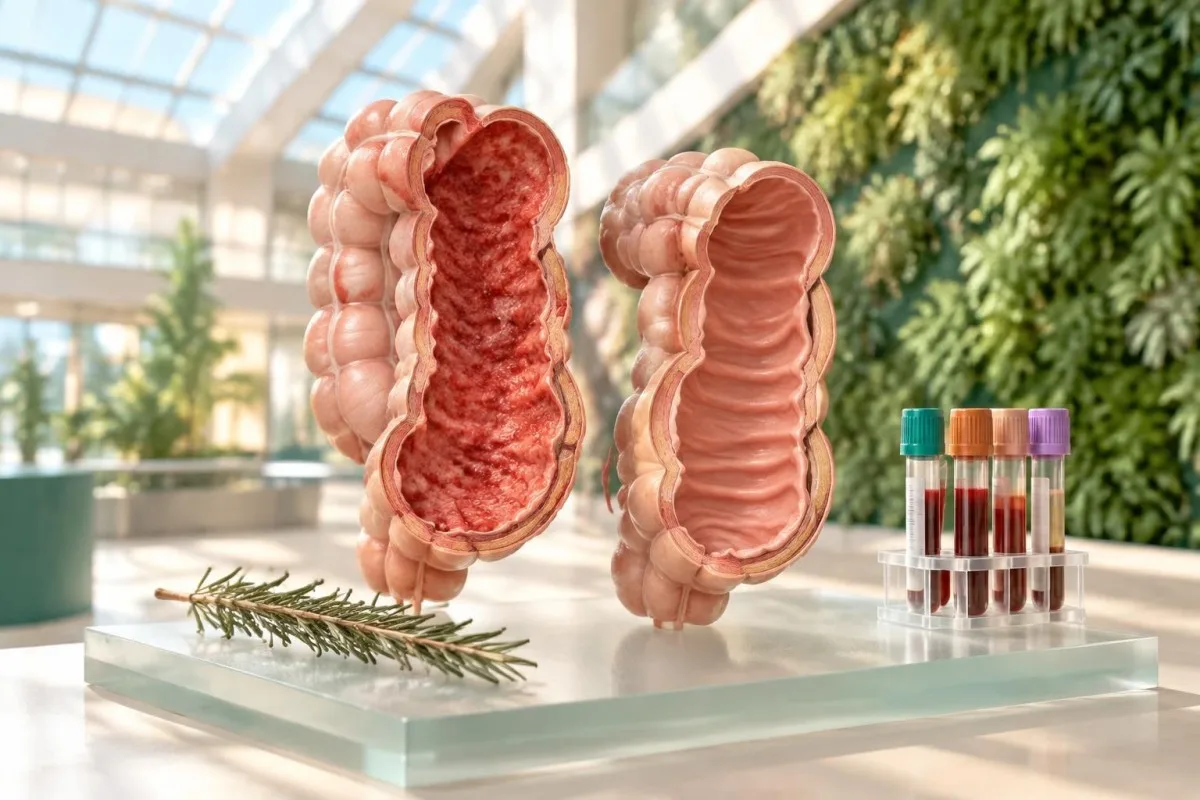
Krvni testovi za ulcerozni kolitis mogu otkriti sistemsku upalu, anemiju, nutritivne učinke i probleme povezane sa sigurnošću liječenja, no nijedan nalaz krvi sam po sebi ne potvrđuje ulcerozni kolitis. Dijagnoza se obično temelji na kombinaciji simptoma, testiranja stolice, kolonoskopije i pregleda tkiva.

Ključne napomene
- Dijagnoza: Nijedan krvni test ne potvrđuje ulcerozni kolitis; za postavljanje dijagnoze i utvrđivanje proširenosti bolesti obično je potrebna kolonoskopija s uzimanjem uzoraka tkiva.
- CRP i ESR: CRP ispod 5 mg/L i nizak ESR često upućuju na manju sistemsku upalnu aktivnost, ali uredni rezultati ne isključuju aktivni kolitis.
- KKS: Hemoglobin ispod 120 g/L kod mnogih odraslih žena koje nisu trudne ili ispod 130 g/L kod odraslih muškaraca upućuje na anemiju, koja može biti posljedica gubitka krvi iz crijeva ili kronične upale.
- Trombociti: Broj trombocita veći od 450 × 10⁹/L može biti povezan s aktivnom upalnom bolešću, iako isti obrazac mogu uzrokovati infekcija, manjak željeza i drugi uzroci.
- Albumin: Albumin ispod 30 g/L zabrinjavajući je pokazatelj kod teškog kolitisa jer može odražavati gubitak bjelančevina zbog upale, smanjen unos hrane ili istjecanje bjelančevina kroz crijeva.
- Testiranje stolice: Fekalni kalprotektin nije krvni test, ali vrijednosti iznad otprilike 150 µg/g često upućuju na aktivnu crijevnu upalu i pomažu odlučiti je li potrebna endoskopska procjena.
- Procjena pogoršanja: Liječnici tumače trendove CRP-a, hemoglobina, albumina i trombocita zajedno s učestalošću stolice, hitnošću, tjelesnom težinom te objektivnim nalazima stolice ili endoskopije.
- Ograničenja: Normalan CRP, negativan panel protutijela ili normalan broj bijelih krvnih stanica ne mogu sa sigurnošću isključiti ulcerozni kolitis niti dokazati remisiju.
Što krvni testovi za ulcerozni kolitis mogu, a što ne mogu pokazati
Krvne pretrage pomažu u procjeni ulceroznog kolitisa, ali ne potvrđuju dijagnozu. One mogu pokazati sistemsku upalu, anemiju, dehidraciju, nisku razinu proteina, zahvaćenost jetre i rizike povezane s lijekovima; ne mogu prikazati karakterističan kontinuirani obrazac sluznice koji pružaju endoskopija i pregled tkiva.
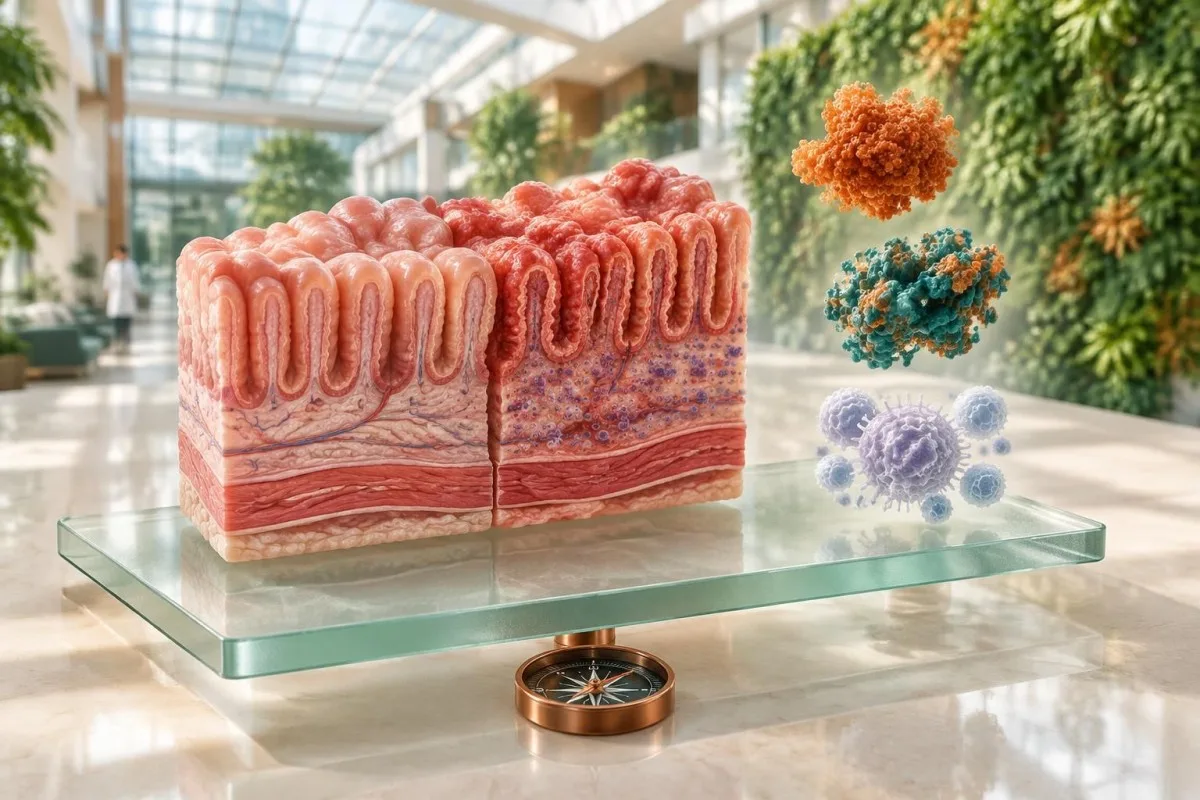
Povišen C-reaktivni protein, povišen ESR, nizak hemoglobin ili visok broj trombocita mogu učiniti aktivnu upalnu bolest crijeva vjerojatnijom, ali svaki od tih nalaza ima alternativna objašnjenja. Na primjer, CRP iznad 10 mg/L može se pojaviti kod respiratorne infekcije, infekcije mokraćnog sustava, pretilosti ili drugog upalnog stanja, stoga rezultat nije specifičan za kolitis.
Smjernica ACG-a iz 2019. opisuje ulcerozni kolitis kao dijagnozu koja se temelji na kliničkim, endoskopskim i histološkim informacijama, a ne na jednom laboratorijskom pragu (Rubin et al., 2019). Naše standarde medicinske validacije odražavaju istu granicu: tumačeni rezultat može organizirati dokaze, ali ne može zamijeniti gastroenterološku procjenu.
Hipotetska 28-godišnja osoba sa šest rijetkih stolica dnevno, CRP-om od 38 mg/L i hemoglobinom od 108 g/L ima obrazac koji zahtijeva brzu procjenu, a ne automatsko postavljanje dijagnoze. Kombinacija upućuje na aktivnu upalu s anemijom, dok bi CRP od 38 mg/L sam po sebi mogao odražavati brojna stanja; testiranje stolice na patogene i kolonoskopija i dalje odlučuju o dijagnozi.
CRP, ESR i leukociti tijekom pogoršanja
CRP, ESR i broj bijelih krvnih stanica mjere upalni odgovor, a ne oštećenje specifično za ulcerozni kolitis. CRP se mijenja relativno brzo tijekom otprilike 24 do 48 sati, ESR se mijenja sporije, a broj leukocita posebno je podložan utjecaju infekcije, kortikosteroida i stresa.
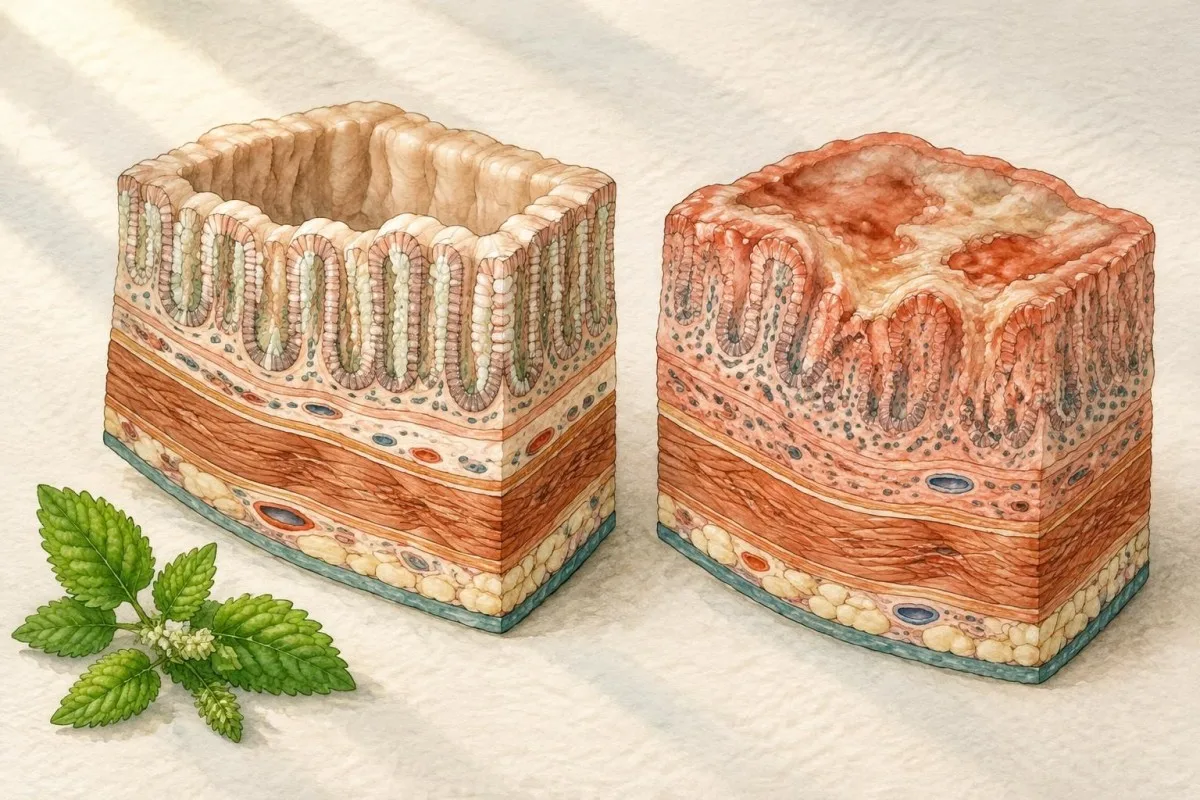
Mnogi laboratoriji navode da je CRP u odraslih normalan ispod 5 mg/L, iako neki koriste granicu ispod 3 mg/L; rezultat od 20 mg/L stoga ukazuje na značajan upalni odgovor, ali ne otkriva njegovo žarište. Referentne vrijednosti ESR-a razlikuju se ovisno o dobi i spolu, a ESR od 35 mm/sat može ostati povišen nakon što se CRP već snizio.
Broj leukocita iznad otprilike 11 × 10⁹/L može pratiti aktivni kolitis, ali prednizolon može povećati broj neutrofila zbog demarginacije, bez ukazivanja na pogoršanje odgovora crijevnog tkiva. Suprotno tome, imunosupresivno liječenje može ublažiti leukocitozu, zbog čega normalan broj od 6 × 10⁹/L ne može isključiti pogoršanje.
Neslaganje CRP-a i ESR-a često je: osoba može imati CRP 4 mg/L uz ESR 42 mm/sat zbog anemije, dobi ili drugog kroničnog stanja. Naš vodič za razlike između WBC i CRP-a objašnjava zašto su trend, simptomi i vrijeme uzimanja uzorka informativniji od tretiranja bilo kojeg markera kao testa s odgovorom da ili ne.
Zašto fekalni kalprotektin često pruža više informacija od krvnih testova
Fekalni kalprotektin odražava aktivnost neutrofila u crijevu i često je specifičniji za crijeva od CRP-a. To nije krvni test, ali rezultat ispod otprilike 50 µg/g općenito upućuje na nisku upalnu aktivnost u crijevu, dok vrijednosti iznad 150 µg/g često opravdavaju ponovnu procjenu ili daljnju obradu.
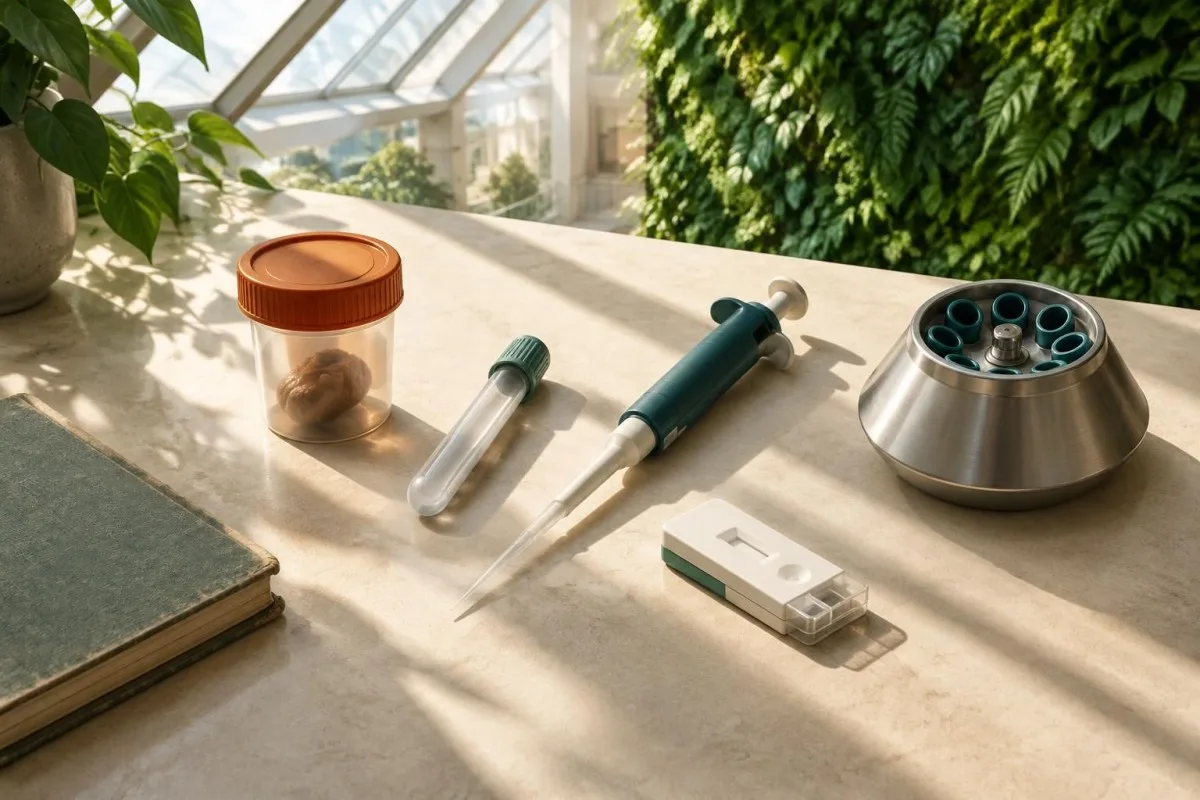
Kalprotektin između 50 i 150 µg/g predstavlja zonu neizvjesnosti, a ne dijagnozu; nedavna infekcija, nesteroidni protuupalni lijekovi i intenzivna tjelesna aktivnost mogu ga povisiti. Rezultat iznad 250 µg/g više zabrinjava zbog aktivne upale crijeva, ali još uvijek ne može razlikovati ulcerozni kolitis od Crohnove bolesti, infekcije ili nekih drugih crijevnih poremećaja.
The STRIDE-II treat-to-target update places symptoms, biomarkers such as CRP and faecal calprotectin, and endoscopic healing on different levels of assessment (Turner et al., 2021). That hierarchy matters because CRP 3 mg/L and calprotectin 420 µg/g are not contradictory: the first may be quiet systemically while the second detects local bowel activity.
A hypothetical patient whose calprotectin falls from 1,100 to 180 µg/g after treatment may be improving without having reached a low-risk target. Our calprotectin interpretation guide compares calprotectin with lactoferrin and explains why a sample collected during diarrhoea or shortly after NSAID use may need context.
Krvni testovi ne razlikuju pogoršanje od infekcije
A flare-like blood pattern can result from infection, so stool microbiology is part of safe assessment. C. difficile, Campylobacter, Salmonella, Shigella, parasites and cytomegalovirus-related disease can produce diarrhoea, raised CRP and low albumin that resemble ulcerative colitis activity.
CRP above 50 mg/L and a white-cell count of 14 × 10⁹/L may indicate severe inflammation, but the same numbers can occur with C. difficile colitis. Starting corticosteroids before appropriate infection assessment can worsen some infections, so clinicians often request stool toxin or molecular testing before escalating immunosuppression.
A positive C. difficile molecular assay can indicate toxin-gene carriage rather than toxin-mediated disease, particularly when stool is formed or symptoms have another explanation. The practical interpretation of C. difficile test combinations depends on symptoms, toxin results and the laboratory method, not on the blood count alone.
A negative stool pathogen panel also has limits: timing, prior antibiotics and the panel's organism coverage affect sensitivity. If a patient has CRP 12 mg/L, calprotectin 700 µg/g and persistent bloody diarrhoea after negative bacterial tests, endoscopic assessment may still be needed rather than assuming the result proves a non-infectious flare.
Rezultati CBC-a: anemija, trombociti i skriveno opterećenje bolešću
The complete blood count often reveals complications of ulcerative colitis rather than proving colitis itself. Low haemoglobin may reflect iron deficiency, inflammation, vitamin deficiency or ongoing intestinal loss; thrombocytosis can mirror inflammation but also occurs with iron deficiency and infection.

WHO thresholds commonly define anaemia as haemoglobin below 130 g/L in adult men and below 120 g/L in non-pregnant adult women, although pregnancy, age and local guidance change interpretation. A low MCV below 80 fL with low ferritin supports iron deficiency, while a normal or high MCV does not exclude mixed iron and B12 deficiency.
Platelets above 450 × 10⁹/L are often called thrombocytosis and may track inflammatory activity, but a platelet count of 510 × 10⁹/L is not specific. Iron deficiency can drive a similar rise, which is why clinicians pair the CBC with ferritin, transferrin saturation, CRP and the clinical history.
A hypothetical 52-year-old with haemoglobin 96 g/L, MCV 72 fL, ferritin 8 µg/L and platelets 590 × 10⁹/L has strong evidence of iron depletion with reactive thrombocytosis, not proof of a severe colitis flare. Reviewing low MCHC and red-cell patterns can help explain why the CBC needs iron studies rather than a single-marker conclusion.
Feritin i pretrage željeza kada je prisutna upala
Ferritin can be low in iron deficiency and falsely normal or high during inflammation. Ferritin below 30 µg/L commonly indicates depleted iron stores, but in active inflammatory bowel disease a value below 100 µg/L may still be compatible with iron deficiency when transferrin saturation is below 20%.

Transferrin saturation below 20% suggests insufficient circulating iron for red-cell production, while a high total iron-binding capacity often supports absolute iron deficiency. In inflammation, hepcidin reduces iron release and transferrin may fall, creating a mixed pattern in which ferritin 65 µg/L does not guarantee adequate iron stores.
A hypothetical patient with CRP 46 mg/L, ferritin 74 µg/L, serum iron 4 µmol/L and transferrin saturation 9% may have inflammation-associated functional iron restriction plus true deficiency. The referentni vodič za pretrage željeza explains why the result should be interpreted as a pattern and why oral or intravenous replacement depends on disease activity and clinical advice.
Iron deficiency can persist even when haemoglobin is 128 g/L, because storage depletion often precedes anaemia. Fatigue, reduced exercise tolerance and restless legs therefore deserve attention even when the CBC looks close to normal; repeat ferritin and saturation after treatment are more useful than assuming one normal haemoglobin ends the investigation.
Albumin, elektroliti i dehidracija tijekom aktivne bolesti
Low albumin and abnormal electrolytes indicate disease burden or physiological stress, not a unique ulcerative-colitis signature. Albumin below 35 g/L may reflect inflammation, reduced intake or protein loss, while values below 30 g/L are more concerning when accompanied by frequent diarrhoea, oedema, tachycardia or weight loss.
Albumin has a half-life of roughly 20 days, so it may remain low after CRP improves and should not be used as an instant flare meter. A sodium level of 132 mmol/L may reflect gastrointestinal losses or excess free-water intake, whereas potassium below 3.0 mmol/L can become clinically urgent because diarrhoea and some medicines increase arrhythmia risk.
A patient with albumin 27 g/L, potassium 2.9 mmol/L and creatinine 118 µmol/L may need urgent fluid and electrolyte assessment even if CRP is only 18 mg/L. The reason is that the combined pattern suggests volume depletion and protein loss; each value alone is less informative than the physiological cluster.
Prealbumin changes faster than albumin but is also affected by inflammation, liver function and kidney disease, so it is not a pure nutrition score. Our prealbumin limitations guide explains why dietitian assessment, weight trend and intake history should accompany protein markers.
Jetreni krvni testovi i stanja povezana s ulceroznim kolitisom
Liver tests can identify medication effects, bile-duct disease or fatty liver in people with ulcerative colitis, but they do not diagnose colitis. An alkaline phosphatase or gamma-glutamyl transferase rise may prompt evaluation for cholestasis, including primary sclerosing cholangitis, while ALT and AST more often reflect hepatocellular stress.

An ALT of 85 IU/L is approximately twice the upper limit in many laboratories, but reference limits differ and the result may reflect medication, metabolic liver disease or viral hepatitis. An alkaline phosphatase above 1.5 times the local upper limit, especially with raised GGT or bilirubin, deserves a different pathway from isolated mild ALT elevation.
Primary sclerosing cholangitis is associated with inflammatory bowel disease but is not identified by a single enzyme threshold; persistent cholestatic results may lead to ultrasound or magnetic-resonance cholangiography. A bilirubin of 45 µmol/L with alkaline phosphatase 360 IU/L is more suggestive of impaired bile flow than an isolated CRP rise, but obstruction and drug injury remain alternatives.
Medication review matters because thiopurines, biologics, corticosteroids and non-IBD medicines can alter liver results. A focused liver-test explanation can help organise ALT, AST, ALP, GGT and bilirubin, but persistent or worsening abnormalities require clinician-led investigation rather than self-directed drug changes.
Zašto IL-6 i drugi specijalizirani biljezi nisu rutinske pretrage
Specialist inflammatory markers such as interleukin-6 may rise in active disease, but they are not routine diagnostic substitutes for CRP, stool testing or endoscopy. IL-6 is biologically interesting because it drives hepatic acute-phase responses, yet assay availability, timing and treatment effects limit its individual clinical value.
An IL-6 concentration of 12 pg/mL may be above one assay's reference interval and normal for another, because methods and calibration differ. Cytokines also fluctuate over hours, so a single measurement can be less reproducible than CRP, whose routine interpretation is better standardised.
The reason IL-6 and CRP can disagree is biological: IL-6 may rise early, while the liver-derived CRP response follows later and can be altered by targeted treatment. Our IL-6 result guide explains why a specialist marker should answer a defined clinical question rather than become an expensive general screen.
Research assays may help compare populations or investigate treatment response, but a patient should not infer remission from IL-6 2 pg/mL if stool calprotectin is 600 µg/g and symptoms persist. The opposite combination also needs review, because a low cytokine result does not visualise the mucosa or exclude a structural complication.
Krvne pretrage za praćenje sigurnosti liječenja i razine bioloških lijekova
Once ulcerative colitis is diagnosed, blood tests often monitor treatment safety and drug exposure rather than diagnose the disease. Liver enzymes, creatinine, full blood count and infection screening protect against avoidable harm; trough drug levels can help explain loss of response in selected situations.
For infliximab, a trough concentration below about 3 to 5 µg/mL may support underexposure in some maintenance settings, but targets vary by assay, treatment phase and whether the goal is symptom control or mucosal healing. Anti-drug antibodies and albumin affect interpretation, so a low level does not automatically mean the medicine has failed.
A hypothetical result showing infliximab 1.2 µg/mL, high anti-drug antibodies and CRP 28 mg/L suggests a pharmacokinetic problem more than a simple need for dose escalation. The infliximab level guide explains why timing must be recorded precisely: a sample drawn immediately after infusion is not a trough.
Before biologic or immunomodulator treatment, clinicians may check hepatitis B, tuberculosis risk, vaccination status and baseline CBC or liver tests. A normal CRP does not make a medicine safe, and a raised ALT does not automatically prove toxicity; the medication timeline and repeat testing are essential.
TPMT, krvna slika i sigurnost primjene tiopurina
TPMT and NUDT15 testing can predict susceptibility to thiopurine toxicity, but they do not diagnose ulcerative colitis. A normal genotype or enzyme activity reduces one risk pathway; it does not remove the need for serial CBC and liver monitoring because toxicity can occur through other mechanisms.

TPMT activity below about 10 units per millilitre of red cells is often treated as low, while intermediate activity may require a reduced thiopurine dose; laboratories use different units and cutoffs. NUDT15 variants are especially relevant in some Asian and Hispanic populations, so a normal TPMT result alone may not capture inherited risk.
A falling neutrophil count below 1.5 × 10⁹/L or a rising ALT after starting azathioprine needs prompt clinical review, even if baseline testing was normal. The thiopurine metabolite guide shows why metabolite results can separate underdosing, non-adherence, preferential metabolism and toxicity patterns.
A blood test taken 3 days after treatment starts cannot reliably establish long-term safety because marrow suppression may develop later. Monitoring intervals vary by local protocol, but repeat CBC and liver tests during the first weeks and months are more informative than relying on one reassuring baseline panel.
Zašto endoskopija ostaje ključna za dijagnozu
Colonoscopy with tissue examination remains central because it directly assesses mucosal distribution, severity and microscopic change. Blood tests can indicate inflammatory burden, but they cannot show whether inflammation is continuous from the rectum, whether ulcers are present, or whether microscopic features support an alternative diagnosis.
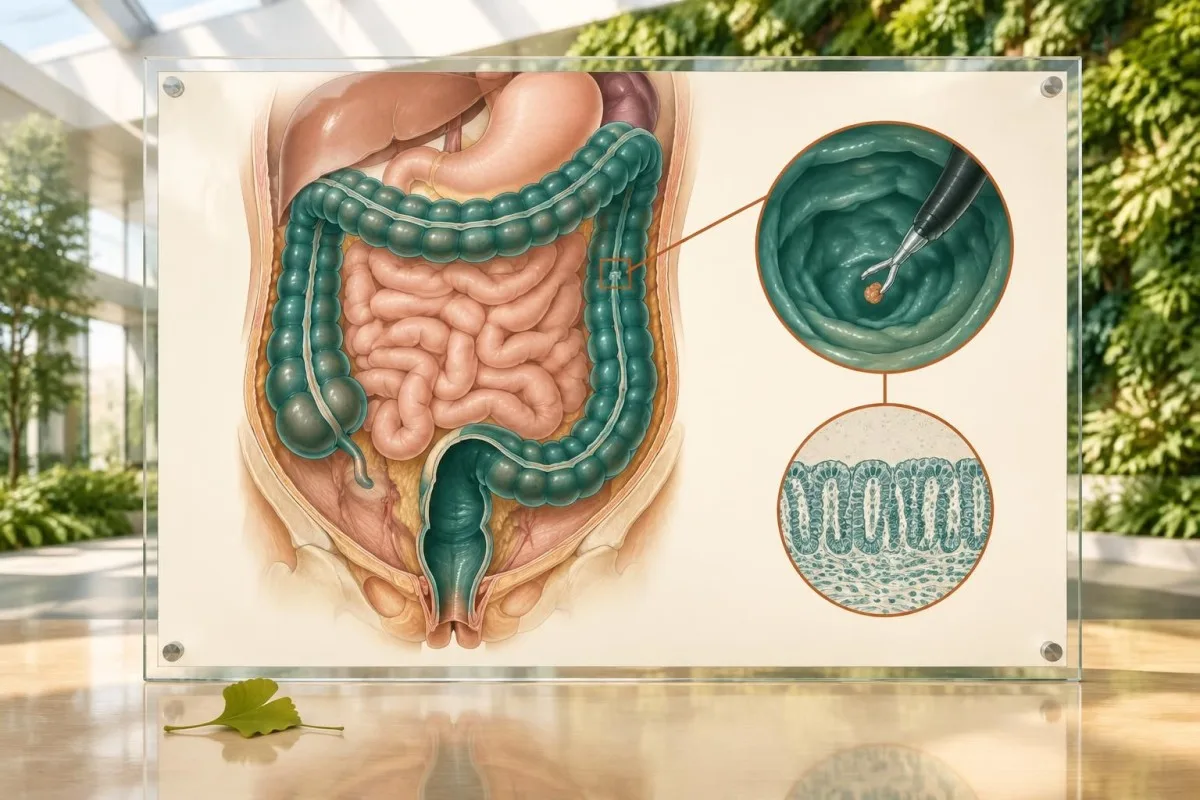
The ECCO-ESGAR diagnostic guideline recommends combining symptoms, laboratory results, stool testing, ileocolonoscopy and biopsies when evaluating suspected inflammatory bowel disease (Maaser et al., 2019). A CRP of 6 mg/L with rectal urgency may still warrant endoscopy, while CRP 80 mg/L may require urgent stabilisation before a full procedure.
Endoscopy also detects extent, which blood tests cannot grade reliably: proctitis, left-sided colitis and extensive colitis can produce overlapping CRP values. Histology may identify chronic architectural change, microscopic activity or cytomegalovirus-related findings that would alter treatment, even when the blood count is near normal.
A negative colonoscopy does not always end the workup if symptoms persist, because sampling location, preparation quality and treatment exposure affect what is seen. The diagnostic process should document medication use, stool results and the number and distribution of tissue samples rather than treating an isolated normal blood marker as decisive.
Kada nalazi krvi upućuju na tešku bolest ili potrebu za hitnom skrbi
Blood results become urgent when they combine with frequent bloody stools, fever, tachycardia, dehydration, severe pain or rapid deterioration. In acute severe ulcerative colitis, classic Truelove and Witts criteria include at least 6 bloody stools daily plus systemic features such as pulse above 90 beats per minute, temperature above 37.8°C, haemoglobin below 105 g/L or ESR above 30 mm/hour.

A haemoglobin of 101 g/L with pulse 112, temperature 38.1°C and six or more bloody stools is not a result to manage through an online interpretation alone. The combination raises concern for acute severe disease, where hospital assessment may include intravenous fluids, infection exclusion, abdominal imaging and urgent gastroenterology review.
Creatinine above a person's baseline, urea elevation, potassium below 3.0 mmol/L or lactate elevation can indicate dehydration or systemic compromise, but each result needs the clinical setting. A normal lactate of 1.3 mmol/L does not make severe colitis safe if the patient is faint, unable to drink or passing frequent blood-stained stools.
Do not wait for repeat home testing if there is heavy rectal blood loss, fainting, confusion, severe abdominal distension, persistent vomiting or inability to keep fluids down. Our explanation of coagulation test limits also clarifies that a normal PT or aPTT does not rule out gastrointestinal blood loss or determine its cause.
Kako tumačiti kretanja rezultata krvnih pretraga za ulcerozni kolitis
Trends are more useful than isolated ulcerative colitis blood-test values. A falling CRP, recovering albumin, stable haemoglobin and normalising platelets support improvement, but objective stool or endoscopic assessment is still needed because symptoms and mucosal activity can move at different speeds.

A CRP decline from 64 to 18 mg/L over 7 days is encouraging, but it does not prove mucosal healing; albumin may lag because its half-life is about 20 days. A haemoglobin fall from 124 to 111 g/L over the same period is a separate warning that ongoing loss or dilution may be occurring.
Kantesti is an AI blood test analyzer that compares serial biomarker patterns while preserving the distinction between inflammation, anaemia, nutrition and treatment safety. Our vodič uz pomoć AI tehnologije explains why trend interpretation can flag combinations for clinician review without converting a pattern into a diagnosis.
The most useful personal record includes sample date, symptoms, stool frequency, medication dose, recent infection, menstrual or other blood loss and whether the sample was taken during steroids. Two CRP results 48 hours apart after a viral illness do not carry the same meaning as two results 6 weeks apart during stable treatment.
Mogu li uredni nalazi krvi isključiti ulcerozni kolitis?
Normal blood tests cannot rule out ulcerative colitis, especially when disease is limited to the rectum or left colon. CRP may remain below 5 mg/L in active mucosal disease, and a normal haemoglobin or white-cell count says little about early, localised or intermittently active inflammation.
A patient with rectal bleeding, urgency and CRP 2 mg/L may have clinically significant proctitis even though systemic inflammation is minimal. The practical reason is anatomical: a small inflamed area may release too little signal to raise a whole-body marker, while symptoms remain locally intense.
Conversely, CRP 35 mg/L can result from pneumonia, dental infection or a strenuous inflammatory illness without any colitis. This is why a normal or abnormal result must be matched to stool studies, examination, calprotectin and endoscopy rather than used as a standalone rule-in or rule-out test.
A normal blood panel is reassuring for anaemia, kidney function and some complications, but it does not replace surveillance or a planned review. If symptoms persist for more than a few weeks, recur after treatment reduction or include blood and nocturnal diarrhoea, clinical assessment should take priority over repeated self-ordered panels.
Kako tumačiti nalaze krvnih pretraga bez zamjene za medicinsku skrb
AI interpretation can organise laboratory patterns, but it cannot confirm ulcerative colitis or decide urgent treatment. A safe workflow uses the original report, laboratory reference intervals, dates, medicines and symptoms, then sends concerning combinations to a qualified clinician.
Kantesti is an AI blood test interpretation platform that reads results in context, including units, reference intervals and changes over time. It can help a reader identify that CRP 42 mg/L, albumin 29 g/L and haemoglobin 104 g/L form a higher-concern pattern than any one result alone, but it cannot inspect the bowel or interpret an endoscopic image.
Kantesti uses a large biomarker knowledge base to explain possible meanings and follow-up questions, not to issue a definitive inflammatory bowel disease diagnosis. Uploading a report should never delay urgent care for severe pain, fainting, heavy rectal blood loss, fever above 38°C or inability to drink.
Before sharing results, remove identifiers when appropriate and retain the original laboratory report because ranges differ between countries and analysers. A clinician needs the exact assay, collection date and medication timeline; a copied number without units, such as CRP 18, is incomplete because mg/L and mg/dL differ by a factor of 10.
Što pitati nakon što dobijete rezultate krvnih pretraga za ulcerozni kolitis
The best follow-up questions connect the result to diagnosis, disease activity, complications and next action. Ask which findings are specific, whether infection has been excluded, whether a trend matters, and whether stool testing or endoscopy is needed.
Ask whether the laboratory used CRP below 5 mg/L as its reference limit, whether ferritin is reliable in the presence of inflammation, and whether the haemoglobin pattern suggests iron, B12 or folate deficiency. These questions prevent a result such as ferritin 70 µg/L from being misread as proof that iron stores are adequate.
Ask what would trigger repeat testing: for example, a CRP rise from 4 to 25 mg/L, albumin falling below 30 g/L or potassium below 3.0 mmol/L may each change urgency, but thresholds depend on symptoms and baseline values. Also ask whether the sample was taken before or after steroids, antibiotics, biologic dosing or intravenous fluids.
Kantesti is an AI-powered blood test analysis tool that can help prepare a concise list of result-specific questions for an appointment, while the Medicinski savjetodavni odbor explains the clinical oversight principles behind our health content. Bring the complete report and symptom timeline; do not bring only highlighted abnormal values.
Često postavljana pitanja
Može li krvna pretraga potvrditi ulcerozni kolitis?
Nijedna pretraga krvi sama po sebi ne potvrđuje ulcerozni kolitis. CRP iznad 5 mg/L, ESR iznad lokalnog referentnog raspona, anemija ili broj trombocita veći od 450 × 10⁹/L mogu upućivati na aktivnu upalu ili komplikacije, ali ti nalazi nisu specifični. Dijagnoza se obično postavlja kombinacijom procjene simptoma, pretrage stolice, kolonoskopije i analize tkiva, jer krvne pretrage ne mogu pokazati rasprostranjenost ni mikroskopski obrazac bolesti crijeva.
Koja razina CRP-a upućuje na pogoršanje ulceroznog kolitisa?
CRP viši od 5 mg/L premašuje uobičajenu referentnu granicu za odrasle, a vrijednosti iznad 10 mg/L često upućuju na klinički značajnu upalu, no nijedna vrijednost CRP-a ne dokazuje pogoršanje ulceroznog kolitisa. CRP može porasti zbog infekcije, ozljede ili drugih upalnih stanja, dok se aktivni lokalizirani kolitis može javiti uz CRP niži od 5 mg/L. Liječnici tumače CRP uz učestalost stolice, fekalni kalprotektin, testiranje na infekcije i pregled.
Koji krvni test pokazuje anemiju uzrokovanu ulceroznim kolitisom?
Kompletna krvna slika pokazuje anemiju, dok feritin i zasićenost transferina pomažu utvrditi nedostatak željeza. Hemoglobin ispod 130 g/L u mnogih odraslih muškaraca ili ispod 120 g/L u odraslih žena koje nisu trudne zadovoljava uobičajene kriterije za anemiju, a zasićenost transferina ispod 20% upućuje na nedostatnu količinu željeza koja je organizmu na raspolaganju. Feritin ispod 30 µg/L obično ukazuje na iscrpljene zalihe, ali upala može povisiti feritin, pa vrijednost ispod 100 µg/L i dalje može biti u skladu s nedostatkom željeza kod aktivne upalne bolesti crijeva.
Može li ulcerozni kolitis biti aktivan uz normalan CRP?
Da, ulcerozni kolitis može biti aktivan uz normalan CRP, osobito kada je upala ograničena na rektum ili lijevi kolon. CRP niži od 5 mg/L ukazuje na nizak stupanj sistemske upale, ali ne dokazuje cijeljenje sluznice. Trajna urgencija, proljev ili krv iz rektuma mogu zahtijevati određivanje fekalnog kalprotektina, testiranje stolice na infekcije ili endoskopiju čak i kada su CRP i broj leukocita normalni.
Koje se krvne pretrage rade tijekom pogoršanja ulceroznog kolitisa?
Uobičajene pretrage tijekom pogoršanja uključuju kompletnu krvnu sliku, CRP, ESR, elektrolite, bubrežnu funkciju, albumin, jetrene probe i pretrage statusa željeza. Hemoglobin niži od 105 g/L, albumin niži od 30 g/L, kalij niži od 3.0 mmol/L ili porast kreatinina iznad početne vrijednosti mogu upućivati na komplikacije koje zahtijevaju žurnu procjenu, iako je za tumačenje svake granične vrijednosti potreban klinički kontekst. Pretrage stolice na uzročnike bolesti i fekalni kalprotektin također su važni jer krvne pretrage ne mogu pouzdano razlikovati infekciju od crijevne upale.
Je li visok broj trombocita znak ulceroznog kolitisa?
Broj trombocita iznad 450 × 10⁹/L može pratiti aktivni ulcerozni kolitis, ali riječ je o nespecifičnom reaktivnom nalazu. Manjak željeza, infekcija, operacija i drugi upalni poremećaji mogu uzrokovati isti nalaz, pa broj trombocita ne dijagnosticira kolitis. Povišen broj trombocita postaje informativniji kada se nakon liječenja smanjuje zajedno s CRP-om i simptomima ili kada se javlja uz nizak feritin i mikrocitozu, što upućuje na manjak željeza.
Saznajte kako čitati krvnu sliku
Prenesite svoj laboratorijski nalaz i AI alata Kantesti objasnit će svaki biomarker jednostavnim jezikom u nekoliko sekundi. Koristi ga više od 2 milijuna ljudi diljem svijeta.
Reference
- Klein, T., Mitchell, S., & Weber, H. (2026). Vodič za pretrage željeza: TIBC, saturacija željezom i kapacitet vezanja. Medicinsko istraživanje uz Kantesti AI. DOI
- Klein, T., Mitchell, S., & Weber, H. (2026). Normalni raspon aPTT-a: vodič za D-dimer, protein C i zgrušavanje krvi. Medicinsko istraživanje uz Kantesti AI. DOI
- Rubin DB et al. (2019). ACG Clinical Guideline: Ulcerative Colitis in Adults. Američki časopis za gastroenterologiju. DOI PubMed
- Maaser C et al. (2019). ECCO-ESGAR Guideline for Diagnostic Assessment in IBD Part 1: Initial Diagnosis, Monitoring of Known IBD, Detection of Complications. Journal of Crohn's and Colitis. DOI PubMed
- Turner D et al. (2021). STRIDE-II: An Update on the Selecting Therapeutic Targets in Inflammatory Bowel Disease Initiative of the International Organization for the Study of IBD. Gastroenterology. DOI PubMed
- 2 milijuna+Analizirani testovi
- 127+Zemlje
- 100+Jezici
O medicinskom timu


E-E-A-T signal(i) povjerenja
Iskustvo
Liječnički vođena klinička revizija radnih tokova tumačenja laboratorijskih nalaza.
Stručnost
Fokus laboratorijske medicine na to kako se biomarkeri ponašaju u kliničkom kontekstu.
Autoritativnost
Medicinski recenzirao dr. Thomas Klein, uz doprinose dr. Sarah Mitchell i prof. dr. Hansa Webera.
Pouzdanost
Tumačenje utemeljeno na dokazima, s jasnim putovima praćenja kako bi se smanjila uzbuna.


Medicinsko odricanje od odgovornosti
Ovaj je članak samo u obrazovne svrhe i ne predstavlja medicinski savjet. Za odluke o dijagnozi i liječenju uvijek se posavjetujte s kvalificiranim pružateljem zdravstvenih usluga.
Objavljeno · Obratite se uredničkom timu
Izdaje Kantesti Ltd, registrirana u Engleskoj i Walesu, broj tvrtke. 17090423, London, Ujedinjeno Kraljevstvo.
