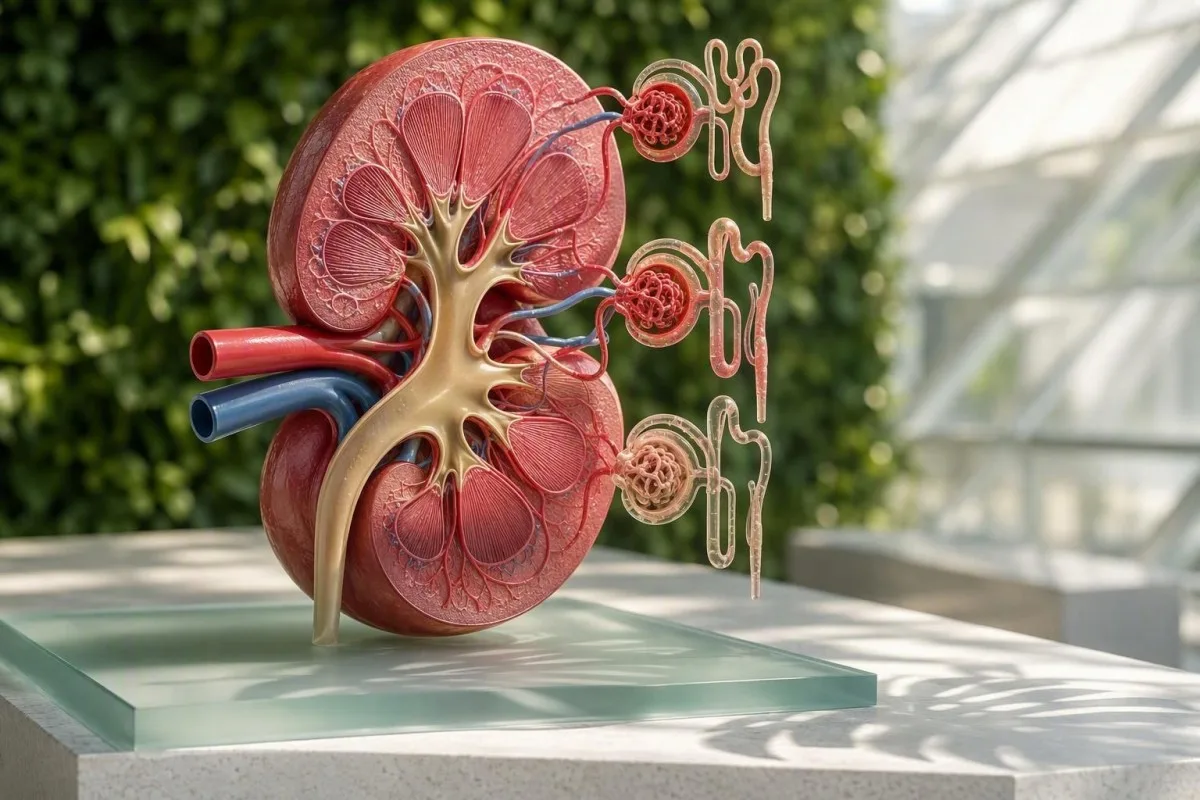
ઉલટી, ગરમીનો સંપર્ક, ઝાડા અથવા અપૂરતા પ્રવાહીના સેવન પછી ઓછું eGFR, ફરીથી થઇ શકે છે. પરિણામ હજુ પણ સંદર્ભની જરૂર છે: લક્ષણો, બેઝલાઇન ક્રિએટિનાઇન, પેશાબના તારણો, દવાઓ, અને સ્વસ્થ થવાની ગતિ મહત્વપૂર્ણ છે.


- કામચલાઉ નીચું GFR જ્યારે ડિહાઇડ્રેશન કિડનીમાં લોહીનો પ્રવાહ ઘટાડે છે અને કલાકોથી દિવસો સુધી ક્રિએટિનાઇનને વધારે છે ત્યારે થઈ શકે છે.
- AKI થ્રેશોલ્ડ 48 કલાકની અંદર ઓછામાં ઓછો 0.3 mg/dL નો ક્રિએટિનાઇન વધારો અથવા 7 દિવસની અંદર બેઝલાઇનના 1.5 ગણો છે.
- ક્રિએટિનાઇન ફરીથી તપાસ સામાન્ય ડિહાઇડ્રેશનના શંકાસ્પદ કેસોમાં પ્રવાહી અને સ્વસ્થ થયા પછી 24-72 કલાકની અંદર ઘણીવાર ગોઠવવામાં આવે છે.
- CKD વ્યાખ્યા ઓછામાં ઓછા 3 મહિના માટે 60 mL/min/1.73 m² થી નીચે eGFR અથવા કિડની-નુકસાન માર્કર્સની જરૂર પડે છે.
- મૂત્ર ACR 30 mg/g કે તેથી વધુ કિડનીને નુકસાન સૂચવી શકે છે, ભલે eGFR 60 mL/min/1.73 m² થી ઉપર હોય.
- તાત્કાલિક સમીક્ષા ખૂબ ઓછું પેશાબ ઉત્પાદન, મૂંઝવણ, શ્વાસ લેવામાં તકલીફ, સોજો, ગંભીર નબળાઇ, અથવા પોટેશિયમની અસામાન્યતાઓ માટે જરૂરી છે.
- દવાની જોખમતા ડીહાઇડ્રેશન સાથે NSAIDs, ACE ઇન્હિબિટર્સ, ARBs, મૂત્રવર્ધક દવાઓ, લિથિયમ અથવા SGLT2 દવાઓ સામેલ હોય ત્યારે વધે છે.
- એકલ પરિણામ મર્યાદાઓ મહત્વપૂર્ણ છે કારણ કે ઝડપથી બદલાતા કિડનીના કાર્ય દરમિયાન ક્રિએટિનાઇન-આધારિત eGFR ઓછું વિશ્વસનીય છે.
શું ડિહાઇડ્રેશન (શરીરમાં પાણીની ઉણપ) કામચલાઉ નીચું GFR પરીક્ષણ પરિણામ લાવી શકે છે?
હા—ડીહાઇડ્રેશન GFR પરીક્ષણ પરિણામને અસ્થાયી રૂપે ઘટાડી શકે છે કારણ કે ફરતા પ્રવાહીનું પ્રમાણ ઘટવાથી કિડનીમાંથી રક્ત પ્રવાહ ઓછો થાય છે, જેના કારણે ક્રિએટિનાઇન વધે છે અને ગણતરી કરેલ eGFR ઘટે છે. જો ટ્રિગરને તાત્કાલિક સુધારવામાં આવે, તો ઘણા લોકો 24-72 કલાકમાં તેમના અગાઉના બેઝલાઇનની નજીક પાછા ફરે છે; ઓછું GFR ક્યારેય આપમેળે અવગણવું જોઈએ નહીં.
GFR પરીક્ષણ સામાન્ય રીતે જાણ કરે છે ઇજીએફઆર, સીધા માપને બદલે સીરમ ક્રિએટિનાઇન, ઉંમર અને જાતિમાંથી ગણતરી કરેલ અંદાજ. તીવ્ર પ્રવાહી નુકશાન દરમિયાન, કિડની કાયમી રીતે ઇજાગ્રસ્ત થાય તે પહેલાં ક્રિએટિનાઇન એકઠા થઈ શકે છે. Kantesti એક છે AI રક્ત પરીક્ષણ વિશ્લેષક જે એક ઓછી સંખ્યાને નિદાન તરીકે ગણવાને બદલે ક્રિએટિનાઇન, યુરિયા, ઇલેક્ટ્રોલાઇટ્સ અને અગાઉના પરિણામોની સાથે eGFR વાંચે છે.
મારા ક્લિનિકલ કાર્યમાં, ક્લાસિક દૃશ્ય 38-વર્ષીય વ્યક્તિ છે જે બે દિવસના ગેસ્ટ્રોએન્ટેરાઇટિસ સાથે છે જેનો ક્રિએટિનાઇન 0.8 થી 1.2 mg/dL સુધી વધે છે અને eGFR 98 થી 58 mL/min/1.73 m² સુધી ઘટે છે. તે ઉલટાવી શકાય તેવી પ્રીરેનલ ફિઝિયોલોજી હોઈ શકે છે, પરંતુ 0.4 mg/dL નો વધારો તીવ્ર કિડની ઇજાના માપદંડને પૂર્ણ કરે છે અને માત્ર આશ્વાસનને બદલે સમયસર ફોલો-અપની ખાતરી આપે છે.
ડૉ. થોમસ ક્લાઈનનો વ્યવહારિક નિયમ સરળ છે: ઇતિહાસ અમને જણાવે છે કે ડીહાઇડ્રેશન શક્ય છે કે નહીં, જ્યારે પુનરાવર્તિત નમૂનો અમને જણાવે છે કે શું તે સંપૂર્ણ સમજૂતી હતી. એકલ નીચું મૂલ્ય ક્રોનિક કિડની રોગનું નિદાન કરી શકતું નથી; અમારું CKD સ્ટેજિસ માર્ગદર્શિકા સમજાવે છે કે શા માટે અવધિ અર્થઘટનને બદલે છે.
પ્રવાહીની ખોટ ક્રિએટિનાઇન અને eGFR ને શા માટે બદલે છે
પ્રવાહી નુકશાન રેનલ પરફ્યુઝન દબાણ ઘટાડીને eGFR ઘટાડે છે, તેથી કિડની મીઠું અને પાણી જાળવી રાખે છે જ્યારે ઓછું પ્લાઝ્મા ફિલ્ટર કરે છે. આને ફિલ્ટરેશનમાં પ્રીરેનલ ઘટાડો કહેવાય છે; તે ઝાડા, ઉલટી, તાવ, ગરમીના સંપર્કમાં, ભારે કસરત અથવા વધુ પડતા મૂત્રવર્ધક દવા સાથે થઈ શકે છે.
ક્રિએટિનાઇન મોટાભાગે સ્નાયુઓના ચયાપચય દ્વારા ઉત્પન્ન થાય છે અને ફિલ્ટરેશન દ્વારા સાફ થાય છે, તેથી ઊંચી સાંદ્રતા ઓછી ક્લિયરન્સ, પાણીના નુકશાનથી સાંદ્રતા, સ્નાયુઓના ભંગાણમાં વધારો અથવા ઘણા પરિબળોને એકસાથે પ્રતિબિંબિત કરી શકે છે. eGFR સમીકરણો પ્રમાણમાં સ્થિર ક્રિએટિનાઇન સ્તર ધારે છે; જ્યારે તે ઝડપથી બદલાઈ રહ્યું હોય, ત્યારે ગણતરી કરેલ eGFR વાસ્તવિક શરીરવિજ્ઞાન કરતાં પાછળ રહે છે.
યુરિયા-થી-ક્રિએટિનાઇન ગુણોત્તર લગભગ ઉપર 20:1 જ્યારે mg/dL માં જાણ કરવામાં આવે વોલ્યુમ ઘટાડવાને સમર્થન આપી શકે છે, પરંતુ તે ડીહાઇડ્રેશન પરીક્ષણ નથી. ગેસ્ટ્રોઇન્ટેસ્ટાઇનલ રક્તસ્રાવ, કોર્ટીકોસ્ટેરોઇડ્સ, ઉચ્ચ પ્રોટીન આહાર અને કેટબોલિઝમ પણ યુરિયા વધારી શકે છે; અમારા વિગતવાર જુઓ BUN અને ક્રિએટિનિન રેશિયો માર્ગદર્શન ટ્રેપ્સ ક્લિનિશિયન્સ ટાળે છે.
KDIGO તીવ્ર કિડની ઇજાને ક્રિએટિનાઇન દ્વારા વધારા તરીકે વ્યાખ્યાયિત કરે છે 48 કલાકની અંદર 0.3 mg/dL અથવા વધુ, સુધી વધી રહ્યું છે 7 દિવસની અંદર મૂળ સ્તર કરતાં 1.5 ગણો, અથવા 6 કલાક (KDIGO, 2012) માટે 0.5 mL/kg/કલાકથી ઓછું પેશાબ આઉટપુટ. તે થ્રેશોલ્ડ જાણી જોઈને સંવેદનશીલ હોય છે કારણ કે મોટા eGFR ઘટાડાની રાહ જોવાથી સારવાર યોગ્ય સમસ્યા ચૂકી શકાય છે.
ડિહાઇડ્રેશન પછી નીચા eGFR નંબરો કેવી રીતે વાંચવા
eGFR 60-89 mL/min/1.73 m² કિડની રોગ આપમેળે નથી, ખાસ કરીને ડીહાઇડ્રેશન પછી, વૃદ્ધ પુખ્ત વયના લોકોમાં, અથવા પેશાબની અસાધારણતા વિના. eGFR 60 થી નીચે ક્લિનિકલ રીતે નોંધપાત્ર બને છે જ્યારે તે 3 મહિના સુધી ચાલે છે અથવા ચિંતાજનક લક્ષણો અથવા અચાનક ક્રિએટિનાઇન વધારા સાથે થાય છે.
eGFR चे 90 અથવા તેથી વધુ mL/min/1.73 m² ને સામાન્ય રીતે પુખ્ત વયના લોકોમાં સામાન્ય અથવા ઊંચો ગણવામાં આવે છે, જોકે પેશાબમાં રહેલ એલબ્યુમિન હજુ પણ કિડનીને નુકસાન સંકેત આપી શકે છે. eGFR 45-59 ને G3a તરીકે વર્ગીકૃત કરવામાં આવે છે જ્યારે ક્રોનિસિટી અથવા કિડનીના અન્ય માર્કર્સ સ્થાપિત થાય છે; ઉંમર, સ્નાયુ સમૂહ અને અગાઉનું પરિણામ મહત્વપૂર્ણ સંદર્ભ રહે છે.
105 થી 62 સુધીનો અચાનક ઘટાડો એ ઘણા વર્ષોથી સ્થિર 62 ના વાંચન કરતાં વધુ માહિતીપ્રદ છે. તેનાથી વિપરીત, લાંબી દોડ પછી 25-વર્ષીય સ્નાયુબદ્ધ વ્યક્તિમાં 78 નો eGFR ફિલ્ટરેશન ઘટાડવાને બદલે અસ્થાયી ક્રિએટિનાઇન જનરેશનને પ્રતિબિંબિત કરી શકે છે; 62 નું આ સામાન્ય ખોટા એલાર્મ સમજાવે છે. વ્યાયામ પછીનું ક્રિએટિનિન સમજાવે છે.
KDIGO 2024 જણાવે છે કે ક્રોનિક કિડની રોગ માટે કિડનીની રચના અથવા કાર્યમાં અસાધારણતાની જરૂર પડે છે જે 3 મહિના સુધી (KDIGO વર્ક ગ્રુપ, 2024) માટે હાજર હોય. તે સમયની જરૂરિયાત ચિકિત્સકોને ટૂંકા ગાળાના નિર્જલીકરણના એપિસોડને ક્રોનિક રોગ તરીકે લેબલ કરતા અટકાવે છે.
લેબ સંકેતો જે સતત કિડની રોગને બદલે ડિહાઇડ્રેશનને સમર્થન આપે છે
પેશાબનો ઘટ્ટ નમૂનો, સુસંગત પ્રવાહી-નુકશાનનો ઇતિહાસ અને હાઇડ્રેશન પછી પુનઃપ્રાપ્તિ નિર્જલીકરણ તરફેણ કરે છે, જ્યારે એલબ્યુમિનોરિયા, પેશાબમાં લોહી, સતત અસાધારણતા, અથવા કિડનીની રચનાત્મક શોધ ક્રોનિક રોગની સંભાવના વધારે છે. પ્રશ્નનો નિર્ણય કોઈ એક પ્રયોગશાળા સંકેત દ્વારા થતો નથી.
1.020 થી વધુ પેશાબની વિશિષ્ટ ગુરુત્વાકર્ષણ 1.020 ઘણીવાર ઘટ્ટ પેશાબ સૂચવે છે, અને 1.030 થી વધુના મૂલ્યો 1.030 નોંધપાત્ર પાણીના સંરક્ષણ સાથે થઈ શકે છે. તે અપૂર્ણ છે: ગ્લુકોઝ, પ્રોટીન અને રેડિયોગ્રાફિક કોન્ટ્રાસ્ટ પણ વિશિષ્ટ ગુરુત્વાકર્ષણ વધારી શકે છે, તેથી જ પેશાબની વિશિષ્ટ ગુરુત્વાકર્ષણ પરિણામ માટે સંપૂર્ણ યુરિનલિસિસ સંદર્ભની જરૂર છે.
એક સામાન્ય યુરિનલિસિસ નિર્જલીકરણ સાબિત કરતું નથી, પરંતુ પ્રોટીન, લાલ કોષ તત્વો, સફેદ કોષ તત્વો, અથવા કાસ્ટ્સ તફાવત બદલી શકે છે. 60 mL/min/1.73 m² થી વધુ eGFR રહેવા છતાં, 200 mg/g થી વધુ એલબ્યુમિન-ટુ-ક્રિએટિનાઇન રેશિયો 30 mg/g અથવા વધુ કિડનીને નુકસાનનું માર્કર છે.
જે પેટર્ન વિશે હું ચિંતિત છું તે નીચું eGFR વત્તા પોટેશિયમ લેબોરેટરી રેન્જથી ઉપર, બાયકાર્બોનેટ 22 mEq/L થી નીચે 22 mmol/L, અથવા પેશાબમાં નવું પ્રોટીન છે. આ સાથે મળીને ગરમીના દિવસથી સરળ ઘટ્ટતાને બદલે ક્ષતિગ્રસ્ત રેનલ હેન્ડલિંગ સૂચવે છે, અને તેઓ ચિકિત્સક-માર્ગદર્શિત મૂલ્યાંકનને લાયક છે.
તમારે ક્યારે ક્રિએટિનાઇન ફરીથી તપાસની વ્યવસ્થા કરવી જોઈએ?
ક્રિએટિનાઇન રિચેક સામાન્ય રીતે 24-72 કલાકની અંદર યોગ્ય છે જ્યારે સરળ નિર્જલીકરણ સુધારવામાં આવ્યું હોય, પૂરી પાડવામાં આવેલ વ્યક્તિ પી શકે, સામાન્ય રીતે પેશાબ કરી શકે, અને કોઈ રેડ ફ્લેગ્સ ન હોય. ચોક્કસ સમય ક્રિએટિનાઇનમાં થયેલા વધારાની ડિગ્રી, બેઝલાઇન કિડની આરોગ્ય, ઉંમર અને દવાઓ પર આધાર રાખે છે.
સ્પષ્ટપણે ઉલટાવી શકાય તેવી બીમારી પછી, હળવા, અલગ પરિણામ માટે, ચિકિત્સકો ઘણીવાર મૌખિક રીહાઇડ્રેશન અને સામાન્ય ભોજન ફરી શરૂ થયા પછી ક્રિએટિનાઇન, યુરિયા, પોટેશિયમ, બાયકાર્બોનેટ અને યુરિનલિસિસનું પુનરાવર્તન કરે છે. બળજબરીથી પાણી પીવડાવવાની કોઈ સાર્વત્રિક માત્રા નથી; હૃદયની નિષ્ફળતા, યકૃત રોગ, અથવા અદ્યતન કિડની રોગવાળા લોકોને વ્યક્તિગત પ્રવાહી સલાહની જરૂર હોય છે.
Kantesti AI એ એક AI બ્લડ ટેસ્ટ રિપોર્ટ સમજો પ્લેટફોર્મ જે વર્તમાન રેનલ પેનલની ઐતિહાસિક મૂલ્યો સાથે સરખામણી કરે છે, જે ઘણીવાર કોઈ પરિણામની વસ્તી સંદર્ભ શ્રેણી સાથે સરખામણી કરતાં વધુ ઉપયોગી છે. 1.1 mg/dL નું ક્રિએટિનાઇન એક વ્યક્તિ માટે સામાન્ય હોઈ શકે છે અને બીજા માટે 0.6 mg/dL થી નોંધપાત્ર વધારો હોઈ શકે છે.
ફરી તપાસ 1-2 અઠવાડિયામાં ત્યારે જ વાજબી ગણી શકાય જ્યારે ચિકિત્સકે સ્થાપિત કર્યું હોય કે તીવ્ર એપિસોડ સુધરી રહ્યો છે અને મૂલ્યો બેઝલાઇન ની નજીક છે. શક્ય હોય ત્યાં સમાન પ્રયોગશાળાનો ઉપયોગ કરો, અને અમારા બેઝિક મેટાબોલિક પેનલ માર્ગદર્શિકા વાંચો, કોઈપણ ફ્લેગ કરેલ મૂલ્ય અલગ છે તેવું ધારતા પહેલા.
ડિહાઇડ્રેશન પછી નીચા GFR ની ક્યારે તાત્કાલિક સંભાળની જરૂર પડે છે
ન્યૂનતમ પેશાબ, સતત ઉલટી, મૂંઝવણ, ગંભીર ચક્કર, શ્વાસ લેવામાં તકલીફ, છાતીના લક્ષણો, સોજો, અથવા નોંધપાત્ર નબળાઈ સાથે ઓછો GFR માટે તે જ દિવસે તબીબી મૂલ્યાંકન કરો. આ લક્ષણો તબીબી રીતે નોંધપાત્ર પ્રવાહી અસંતુલન, તીવ્ર કિડની ઈજા, અથવા જોખમી ઇલેક્ટ્રોલાઇટ ફેરફારો સૂચવી શકે છે.
જ્યારે ક્રિએટિનાઇનમાં વધારો થાય ત્યારે તાકીદ વધે છે 0.3 mg/dL નો વધારો, એક અઠવાડિયામાં બેઝલાઇન થી 50%, અથવા જ્યારે પેશાબ ઉત્પાદન સ્પષ્ટપણે ઓછું થાય. 24 કલાકમાં લગભગ 400 mL થી ઓછો પેશાબ બનાવતા પુખ્ત વયના લોકોમાં, હું તાત્કાલિક ક્લિનિકલ માર્ગદર્શન વિના ઘરે વધુ પીવાની સલાહ નહીં આપું.
પોટેશિયમ ઉપર 6.0 mmol/L થી ઉપર, સોડિયમ 120 mmol/L, અથવા બાયકાર્બોનેટ નીચે 15 mmol/L લક્ષણો અને ECG તારણોના આધારે તાત્કાલિક સારવારની જરૂર પડી શકે છે. અમારા ઇલેક્ટ્રોલાઇટ રેડ-ફ્લેગ માર્ગદર્શિકા સમજાવે છે કે શા માટે કિડની પરિણામો અને ઇલેક્ટ્રોલાઇટ્સ એકસાથે વાંચવા જોઈએ.
ડિહાઇડ્રેશન સેપ્સિસ, પેશાબ અવરોધ, રેબડોમ્યોલિસિસ, ડાયાબિટીક કીટોએસિડોસિસ, અથવા દવાઓની ઝેરી અસર સાથે સહ-અસ્તિત્વ ધરાવી શકે છે. કોઈ વ્યક્તિને ઝાડા થયા છે તે હકીકત આ શક્યતાઓને નકારી કાઢતી નથી - ખાસ કરીને જો તાવ, ફ્લેન્ક પેઇન, ઘેરા કોલા-રંગીન પેશાબ, અથવા ગંભીર સ્નાયુ પીડા હાજર હોય.
ક્લિનિશિયન ડિહાઇડ્રેશનને ક્રોનિક કિડની રોગથી કેવી રીતે અલગ પાડે છે
ચિકિત્સકો કામચલાઉ eGFR ડિહાઇડ્રેશનને ક્રોનિક કિડની રોગથી સુધારણાનું દસ્તાવેજીકરણ કરીને, પેશાબ આલ્બ્યુમિન ચકાસીને, જૂના પરિણામોની સમીક્ષા કરીને, અને 3 મહિનાથી વધુ સમય સુધી સતત અસાધારણતાઓની શોધ કરીને અલગ પાડે છે. એક eGFR મૂલ્ય એકલા કિડની ક્ષતિના કારણ અથવા અવધિને સ્થાપિત કરી શકતું નથી.
પેશાબ આલ્બ્યુમિન-થી-ક્રિએટિનાઇન ગુણોત્તર નીચે 30 mg/g A1 તરીકે વર્ગીકૃત થયેલ છે, 30-300 mg/g A2 તરીકે, અને 300 mg/g થી ઉપર A3 તરીકે. તાવ, તીવ્ર કસરત, પેશાબના ચેપ, અથવા અનિયંત્રિત ગ્લુકોઝ પછી આલ્બ્યુમિન્યુરિયા કામચલાઉ હોઈ શકે છે, તેથી અસામાન્ય નમૂનાને સામાન્ય રીતે ઝડપી નિદાનને બદલે પુષ્ટિની જરૂર પડે છે.
ચિકિત્સકો બ્લડ પ્રેશર, ડાયાબિટીસની સ્થિતિ, કિડની અલ્ટ્રાસાઉન્ડ ઇતિહાસ, પારિવારિક ઇતિહાસ, દવાઓના સંપર્કમાં આવવું, અને ક્રિએટિનાઇન ક્યારેય સામાન્ય થયું હતું કે કેમ તેની પણ સમીક્ષા કરે છે. આલ્બ્યુમિન-ક્રિએટિનાઇન ગુણોત્તર તૈયારી માર્ગદર્શિકા કસરત અને માસિક સ્રાવ જેવી વ્યવહારિક સમસ્યાઓને આવરી લે છે જે નમૂનાને વિકૃત કરી શકે છે.
KDIGO 2024 GFR શ્રેણી અને આલ્બ્યુમિન્યુરિયા શ્રેણી બંનેનું મૂલ્યાંકન કરવાની ભલામણ કરે છે કારણ કે જોખમ ત્યારે વધુ વધે છે જ્યારે બંને અસામાન્ય હોય ત્યારે કરતાં જ્યારે eGFR એકલું સહેજ ઓછું હોય (KDIGO Work Group, 2024). મારા અનુભવમાં, તે જોડી મૂલ્યાંકન ઓછો પ્રતિભાવ અને બિનજરૂરી ગભરાટ બંનેને અટકાવે છે.
પેશાબના પરિણામો જે કામચલાઉ સમજાવટને ઓછી સંભવિત બનાવે છે
લોહી, નોંધપાત્ર પ્રોટીન, સેલ્યુલર કાસ્ટ્સ, અથવા પેશાબમાં સતત આલ્બ્યુમિન ડિહાઇડ્રેશન એકલાને ઓછું વિશ્વાસપાત્ર બનાવે છે અને સામાન્ય રીતે વધુ કિડની મૂલ્યાંકન તરફ દોરી જાય છે. ડિહાઇડ્રેશન પેશાબના નમૂનાને કેન્દ્રિત કરી શકે છે, પરંતુ તે સામાન્ય રીતે સતત સક્રિય પેશાબના કાંપ બનાવતું નથી.
નોંધપાત્ર ટ્યુબ્યુલર તાણ પછી ગ્રેન્યુલર કાસ્ટ્સ દેખાઈ શકે છે, જ્યારે લાલ કોષીય કાસ્ટ્સ ગ્લોમેર્યુલર રોગની ચિંતા વધારે છે. એકલ પ્રયોગશાળા અહેવાલને નમૂનાની ગુણવત્તા અને લક્ષણો સાથે સહસંબંધિત કરવો જોઈએ, પરંતુ આ તારણો સામાન્ય રીતે એકલ કેન્દ્રિત પેશાબ કરતાં વધુ ધ્યાન આપવા યોગ્ય છે; અન્વેષણ કરો યુરિનમાં ગ્રેન્યુલર કાસ્ટ્સ માટે કાળજીપૂર્વક વિશ્લેષણ.
ડીપસ્ટિક પ્રોટીન વધુ સાંદ્ર પેશાબમાં વધારે વાંચી શકે છે, તેથી એલ્બ્યુમિન-ટુ-ક્રિએટિનાઇન રેશિયો (albumin-to-creatinine ratio) પુષ્ટિ માટે સામાન્ય રીતે વધુ ઉપયોગી છે. સતત ACR 300 mg/g અથવા વધુ એ ઉચ્ચ-જોખમ માર્કર છે અને ડોક્ટરના સમીક્ષા વિના નબળા હાઇડ્રેશનને આભારી ન હોવું જોઈએ.
દ્રશ્યમાન લાલ અથવા ચા-રંગી પેશાબ, પડખામાં દુખાવો, તાવ, અથવા પેશાબ પસાર કરવામાં અસમર્થતા તાકીદ બદલી નાખે છે. અવરોધ અને પેશાબના ચેપ GFR ઘટાડી શકે છે, અને બંનેને ઘરે પ્રવાહી બદલવા કરતાં અલગ પ્રતિસાદની જરૂર પડે છે.
એવી દવાઓ જે ડિહાઇડ્રેશનને એક્યુટ કિડની ઈજામાં ફેરવી શકે છે
NSAIDs, મૂત્રવર્ધક દવાઓ, ACE અવરોધકો, ARBs, લિથિયમ, અને કેટલીક ડાયાબિટીસની દવાઓ ડિહાઇડ્રેશન-સંબંધિત GFR ઘટાડવામાં વધારો કરી શકે છે. આ દવાઓ ઘણીવાર યોગ્ય લાંબા ગાળાની સારવાર હોય છે, પરંતુ તીવ્ર બીમારી સલામતી યોજનાને બદલી શકે છે.
NSAIDs કિડનીની ફિલ્ટરેશન જાળવવાની ક્ષમતા ઘટાડી શકે છે જ્યારે ઓછું રક્ત પરિભ્રમણ હોય, ખાસ કરીને વૃદ્ધ પુખ્ત વયના લોકો અને મૂત્રવર્ધક દવા ઉપરાંત ACE અવરોધક અથવા ARB લેતા લોકોમાં. નિર્ધારિત દવાઓ તાત્કાલિક બંધ કરશો નહીં; તમારી પરિસ્થિતિઓ માટે વિશિષ્ટ બીમાર દિવસની યોજના માટે સૂચવનાર અથવા ફાર્માસિસ્ટને પૂછો.
SGLT2 અવરોધકો સામાન્ય રીતે શરૂ કર્યા પછી ગ્લોમેરુલસમાં હેમોડાયનેમિક ફેરફારને કારણે નાનો પ્રારંભિક eGFR ઘટાડો કરે છે, જે જરૂરી નથી કે કિડનીને નુકસાન હોય. ડિહાઇડ્રેશનથી ભેદ મહત્વપૂર્ણ છે, અને SGLT2 દવાઓ સાથે eGFR ફેરફારોની અમારી સમીક્ષા સમજાવે છે કે શા માટે ગ્લુકોઝ, બ્લડ પ્રેશર, લક્ષણો અને સમયનું એકસાથે મૂલ્યાંકન કરવામાં આવે છે. સમજાવે છે કે શા માટે ગ્લુકોઝ, બ્લડ પ્રેશર, લક્ષણો અને સમયનું એકસાથે મૂલ્યાંકન કરવામાં આવે છે.
મેટફોર્મિન સીધા GFR ઘટાડતું નથી, પરંતુ તીવ્ર કિડની ઈજા કામચલાઉ ચાલુ રાખવું સલામત છે કે કેમ તે બદલી શકે છે. લિથિયમનું સ્તર વોલ્યુમ નુકશાન સાથે વધી શકે છે, જ્યારે ટ્રાઇમેથોપ્રિમ માપેલ ફિલ્ટરેશનમાં પ્રમાણસર ઘટાડા વિના ક્રિએટિનાઇન વધારી શકે છે - તે સૂક્ષ્મતાઓમાંની એક જે સ્વ-અર્થઘટનને જોખમી બનાવે છે.
વય, ગર્ભાવસ્થા, સ્નાયુ સમૂહ અને કસરત eGFR અર્થઘટનને શા માટે અસર કરે છે
ક્રિએટિનાઇન-આધારિત eGFR સ્નાયુબદ્ધ લોકોમાં ફિલ્ટરેશનને ઓછો આંકી શકે છે અને ઓછું સ્નાયુ સમૂહ ધરાવતા નબળા લોકોમાં તેને વધુ પડતો આંકી શકે છે; ગર્ભાવસ્થા સંપૂર્ણપણે અલગ અપેક્ષાઓનો ઉપયોગ કરે છે. તેથી ડિહાઇડ્રેશન પછી ઓછો eGFR બોડીબિલ્ડર, વૃદ્ધ પુખ્ત અને ગર્ભવતી દર્દીમાં અલગ અલગ અર્થ ધરાવે છે.
ગર્ભાવસ્થામાં, GFR સામાન્ય રીતે વધે છે, તેથી ક્રિએટિનાઇન ઘણીવાર આસપાસ ઘટે છે 0.4-0.8 mg/dL; ગર્ભાવસ્થાની બહાર સામાન્ય ગણાતું મૂલ્ય સંદર્ભમાં ચિંતાજનક હોઈ શકે છે. ઉલટી, હાઈપરટેન્શન, માથાનો દુખાવો, સોજો, અથવા અસામાન્ય રેનલ પરિણામો સાથે ગર્ભવતી કોઈપણ વ્યક્તિએ તેમની પ્રસૂતિ ટીમનો સંપર્ક કરવો જોઈએ, અને અમારી ગર્ભાવસ્થા GFR માર્ગદર્શિકા સંબંધિત માળખું પૂરું પાડે છે.
ઓછી તરસની સંવેદના અને મૂત્રવર્ધક દવાના ઉપયોગ સાથે 78 વર્ષીય વ્યક્તિ દેખીતી રીતે સાધારણ પ્રવાહી નુકશાન સાથે કિડની હાઇપોપરફ્યુઝન વિકસાવી શકે છે. તેનાથી વિપરીત, એક સ્ટ્રેન્થ એથ્લેટ સ્નાયુ સમૂહ, ક્રિએટાઇન સપ્લિમેન્ટ્સ અથવા તાજેતરના તાલીમને કારણે રેફરન્સ અંતરાલ કરતાં વધુ ક્રિએટિનાઇન ધરાવી શકે છે, સામાન્ય સાચા ફિલ્ટરેશન સાથે પણ.
સિસ્ટેટિન સી ક્યારેક અનિશ્ચિત ક્રિએટિનાઇન પરિણામને સ્પષ્ટ કરી શકે છે કારણ કે તે સ્નાયુ સમૂહ પર ઓછું નિર્ભર છે, જોકે થાઇરોઇડ રોગ, ધૂમ્રપાન, સ્ટેરોઇડ્સ અને બળતરા તેને પ્રભાવિત કરી શકે છે. ડૉ. થોમસ ક્લેઇન ઘણીવાર તેનો ઉપયોગ ટાઈ-બ્રેકર તરીકે કરે છે, ઇતિહાસ અને ક્રમિક પરિણામોના વિકલ્પ તરીકે નહીં.
પુનરાવર્તિત GFR પરીક્ષણની રાહ જોતી વખતે ઘરે શું કરવું
જો તમે સજાગ છો, પીવા સક્ષમ છો, અને પેશાબ પસાર કરી રહ્યા છો, તો ધીમે ધીમે પ્રવાહી બદલો, ભારે કસરત અને NSAIDs ટાળો, અને તમારા ફરીથી તપાસ પહેલાં લક્ષણો રેકોર્ડ કરો. લાલ ધ્વજ અથવા ગંભીર બીમારી હાજર હોય તો ઘરેલુ ઉપાયો યોગ્ય નથી.
નાના વારંવાર પીણાં સામાન્ય રીતે મોટા જથ્થામાં ઝડપથી પીવા કરતાં વધુ સારી રીતે સહન થાય છે, ખાસ કરીને ઉલટી પછી. ઝાડા સાથે મૌખિક પુનર્જલીકરણ દ્રાવણ ઉપયોગી થઈ શકે છે કારણ કે તે સોડિયમ અને ગ્લુકોઝ તેમજ પાણીને બદલે છે; પ્રવાહી પ્રતિબંધ ધરાવતા લોકોને બદલે ડોક્ટર-વિશિષ્ટ સલાહની જરૂર પડે છે.
આછો પીળો પેશાબ યોગ્ય હાઇડ્રેશન સૂચવી શકે છે, પરંતુ તે ક્લિયરન્સ પ્રમાણપત્ર નથી. ઘાટો પેશાબ સાંદ્રતા, દવાઓ, બિલીરૂબિન, અથવા સ્નાયુ રંગદ્રવ્યને પ્રતિબિંબિત કરી શકે છે, તેથી અમારી માર્ગદર્શિકા વાંચો ડાર્ક યુરિનના ચેતવણી ચિહ્નો જો પ્રવાહી આપ્યા પછી પણ રંગ રહે.
માટે સખત કસરત ટાળો 24-48 કલાકમાં આયોજિત ક્રિએટિનાઇન ફરીથી તપાસતા પહેલા, જ્યાં સુધી તમારા ચિકિત્સક અન્યથા ન કહે. બીમારી, તાવ, ઝાડાના એપિસોડ, દવાના ડોઝ, કસરત, સપ્લિમેન્ટ્સ અને તમે કેટલી માત્રામાં પેશાબ કરી રહ્યા છો તેની તારીખો રેકોર્ડ કરો; આ નાની સમયરેખા ઘણીવાર અર્થઘટન બદલી નાખે છે.
એક નીચા eGFR પરિણામ કરતાં વલણો વધુ ઉપયોગી શા માટે છે
ક્રિએટિનાઇનમાં થતા ફેરફારની દિશા અને ગતિ સામાન્ય રીતે એકલ eGFR મૂલ્ય કરતાં વધુ ક્લિનિકલી ઉપયોગી છે. 55 નો સ્થિર eGFR અને 95 થી 55 નો નવો ઘટાડો, ભલે રિપોર્ટ થયેલ સંખ્યા સમાન હોય, તો પણ ખૂબ જ અલગ જોખમો ધરાવી શકે છે.
પ્રયોગશાળાઓ ક્રિએટિનાઇનમાં અણધાર્યા ફેરફાર વખતે ડેલ્ટા ચેક લાગુ કરી શકે છે, પરંતુ જૈવિક વિવિધતા, એસે વિવિધતા, આહાર અને હાઇડ્રેશન પણ ફાળો આપે છે. 0.1 mg/dL નો ફેરફાર એક સેટિંગમાં અવાજ હોઈ શકે છે અને બીજામાં અર્થપૂર્ણ હોઈ શકે છે જો વ્યક્તિનો બેઝલાઇન સતત 0.5 mg/dL હોય.
કાન્ટેસ્ટી એક છે AI-સંચાલિત બ્લડ ટેસ્ટ એનાલિસિસ ટૂલ જે તમે સાચવો છો તે ક્લિનિકલ સંદર્ભ સાથે શ્રેણીબદ્ધ રેનલ પરિણામોને ગોઠવે છે, જેમ કે બીમારી અને દવાના ફેરફારો. તે અભિગમ અમારા દ્વારા વર્ણવેલ વ્યવહારુ પદ્ધતિને સમાંતર છે લાંબાગાળાની લેબ વિશ્લેષણ માર્ગદર્શિકા: રોગની ગતિવિધિનું અનુમાન કરતા પહેલા તમારો પોતાનો બેઝલાઇન સ્થાપિત કરો.
29 ઓગસ્ટ, 2026 સુધીમાં, જ્યારે eGFR ઝડપથી ઘટી રહ્યું હોય ત્યારે કોઈ પણ ગ્રાહક-લક્ષી અર્થઘટન ચિકિત્સકના નિર્ણયનું સ્થાન લઈ શકશે નહીં. ગ્રાફ પેટર્ન ઓળખી શકે છે; તે ડિહાઇડ્રેશન, અવરોધ, હૃદયની નિષ્ફળતા અથવા પ્રણાલીગત બીમારી માટે દર્દીની તપાસ કરી શકતો નથી.
તીવ્ર બીમારી દરમિયાન પ્રમાણભૂત GFR પરીક્ષણની મર્યાદાઓ
ક્રિએટિનાઇન-આધારિત પ્રમાણભૂત eGFR ત્યારે સૌથી ઓછો વિશ્વસનીય હોય છે જ્યારે કિડની કાર્ય ઝડપથી બદલાઈ રહ્યું હોય, કારણ કે ક્રિએટિનાઇનને સંતુલિત થવામાં સમય લાગે છે. સક્રિય ડિહાઇડ્રેશન અથવા પ્રારંભિક પુનઃપ્રાપ્તિ દરમિયાન, ચિકિત્સકો એક ગણતરી કરેલ eGFR પર આધાર રાખવાને બદલે શ્રેણીબદ્ધ ક્રિએટિનાઇન અને પેશાબના ઉત્પાદનને અનુસરે છે.
2021 CKD-EPI ક્રિએટિનાઇન સમીકરણ વસ્તી-સ્તરના અંદાજને જાતિના સમાયોજનને દૂર કરીને સુધારે છે, પરંતુ તે હજુ પણ ધારે છે કે ક્રિએટિનાઇન ઉત્પાદન અને ઉત્સર્જન વાજબી રીતે સ્થિર છે. ક્રિએટિન સપ્લિમેન્ટ્સ, નમૂના લેવાના થોડા કલાકોમાં રાંધેલ માંસ, અંગવિચ્છેદન, કાચેક્સિયા અને ઉચ્ચ સ્નાયુ સમૂહ બધા અર્થઘટનને બદલી શકે છે.
Kantesti AI ફોલો-અપ માટે પરિણામ સંયોજનોને હાઇલાઇટ કરે છે પરંતુ તીવ્ર કિડની ઇજાનું નિદાન કરતું નથી અથવા પ્રવાહી ઉપચાર લખતું નથી. અમારું ટેકનોલોજી માર્ગદર્શિકા વર્ણવે છે કે સંદર્ભિત અર્થઘટન તબીબી મૂલ્યાંકનને બદલવાથી કેવી રીતે અલગ પડે છે.
બાહ્ય ગાળણ માર્કર્સનો ઉપયોગ કરીને માપેલ GFR પસંદગીની પરિસ્થિતિઓ માટે આરક્ષિત છે, જેમ કે દાતા મૂલ્યાંકન અથવા મુખ્ય અનિશ્ચિતતા, નિયમિત ડિહાઇડ્રેશન ફોલો-અપને બદલે. મોટાભાગના દર્દીઓને કાળજીપૂર્વક ક્લિનિકલ સમીક્ષા, મૂત્ર વિશ્લેષણ, પુનરાવર્તિત રેનલ પેનલ અને સંખ્યા પુનઃપ્રાપ્ત થઈ રહી છે કે કેમ તેનું મૂલ્યાંકન કરવાની જરૂર છે.
ડિહાઇડ્રેશન પછી નીચા GFR માટે ક્લિનિશિયનનું ચેકલિસ્ટ
એક સુરક્ષિત ફોલો-અપ યોજના તીવ્રતા, કારણ, પુનઃપ્રાપ્તિ, પેશાબના તારણો, દવાઓ અને ગૂંચવણો તપાસે છે - ફક્ત eGFR નંબર જ નહીં. આ સંરચિત અભિગમ એવા લોકોને ઓળખે છે જેઓ ટૂંક સમયમાં ફરીથી તપાસ કરાવી શકે છે અને જેમને તાત્કાલિક હોસ્પિટલ-સ્તરના મૂલ્યાંકનની જરૂર છે.
હું પ્રવાહીના નુકશાન, પેશાબનું પ્રમાણ, તાજેતરની કોન્ટ્રાસ્ટ ઇમેજિંગ, ચેપના લક્ષણો, સ્નાયુઓની ઇજા, પેશાબ અવરોધ, ડાયાબિટીસ, હૃદયની નિષ્ફળતા અને દરેક પ્રિસ્ક્રિપ્શન અથવા ઓવર-ધ-કાઉન્ટર દવાની દવા વિશે પૂછીશ. પછી હું ક્રિએટિનાઇનની છેલ્લા જાણીતા મૂલ્ય સાથે સરખામણી કરીશ અને યોગ્ય હોય ત્યારે પોટેશિયમ, બાયકાર્બોનેટ, યુરિયા, મૂત્ર વિશ્લેષણ અને પેશાબ ACR તપાસીશ.
પુનઃપ્રાપ્તિ પછી બેઝલાઇન તરફ પાછા ફરતું પુનરાવર્તિત પરિણામ અસ્થાયી હીમોડાયનેમિક કારણને સમર્થન આપે છે, જોકે તે ડાયાબિટીસ અથવા હાયપરટેન્શન ધરાવતા વ્યક્તિમાં ભવિષ્યના જોખમને દૂર કરતું નથી. જે પરિણામ ઓછું રહે છે, બગડે છે અથવા આલ્બ્યુમિન્યુરિયા સાથે હોય છે તેને ઔપચારિક કિડની વર્ક-અપ અને ક્યારેક નેફ્રોલોજી ઇનપુટ મળવો જોઈએ.
અમારી ક્લિનિકલ સામગ્રી દ્વારા વર્ણવેલ ધોરણો સાથે સમીક્ષા કરવામાં આવે છે Kantesti મેડિકલ વેલિડેશન ટીમ. Kantesti ની ભૂમિકા તમને વધુ સારી રીતે પ્રશ્નો તૈયાર કરવામાં અને વલણો શોધવામાં મદદ કરવાની છે; આગલો ક્લિનિકલ નિર્ણય એ વ્યાવસાયિકનો છે જે તમારી તપાસ કરી શકે છે અને પરિણામ પર કાર્ય કરી શકે છે.
વારંવાર પૂછાતા પ્રશ્નો
શું ડિહાઇડ્રેશન eGFR ને ઓછું દેખાડી શકે છે?
હા. ડિહાઇડ્રેશન કિડનીમાં રક્ત પ્રવાહ ઘટાડી શકે છે, સીરમ ક્રિએટીનાઇન વધારી શકે છે, અને ગણતરી કરેલ eGFR અસ્થાયી રૂપે ઓછો કરી શકે છે. 48 કલાકની અંદર ઓછામાં ઓછો 0.3 mg/dL નો ક્રિએટીનાઇન વધારો તીવ્ર કિડની ઇજા માટે KDIGO માપદંડ પૂરા કરે છે, ભલે કારણ ઉલટાવી શકાય તેવું હોય. રિકવરી પછી, સામાન્ય રીતે સરળ કિસ્સાઓમાં 24-72 કલાકની અંદર, રેનલ પેનલનું પુનરાવર્તન એ નક્કી કરવામાં મદદ કરે છે કે ફેરફાર સુધરી રહ્યો છે કે કેમ.
નિર્જલીકરણ પછી eGFR સુધારવામાં કેટલો સમય લાગે છે?
ડિહાઇડ્રેશન-સંબંધિત eGFR ફેરફાર સામાન્ય રીતે 24-72 કલાકમાં સુધરે છે જ્યારે પ્રવાહીની ખોટ બંધ થાય છે અને કિડની પરફ્યુઝન પુનઃસ્થાપિત થાય છે, પરંતુ ગંભીર બીમારી પછી અથવા અગાઉથી કિડની રોગ ધરાવતા લોકોમાં પુનઃપ્રાપ્તિમાં વધુ સમય લાગી શકે છે. ક્રિએટિનાઇન તાત્કાલિક બદલાતું નથી, તેથી eGFR ક્લિનિકલ સુધારણા કરતાં પાછળ રહી શકે છે. સતત નીચું eGFR, ક્રિએટિનાઇનમાં વધારો, ઓછું પેશાબ ઉત્પાદન, અથવા અસામાન્ય પોટેશિયમ માટે વારંવાર ઘરગથ્થુ હાઇડ્રેશનને બદલે તબીબી સમીક્ષાની જરૂર પડે છે. ક્રોનિક કિડની રોગનું નિદાન ત્યાં સુધી થઈ શકતું નથી જ્યાં સુધી ઓછામાં ઓછા 3 મહિના સુધી અસામાન્યતાઓ ચાલુ રહે.
શું મારે ક્રિએટીનાઇન ફરીથી તપાસતા પહેલા પુષ્કળ પાણી પીવું જોઈએ?
ક્રિએટિનાઇન ફરીથી તપાસતા પહેલા વધુ પડતું પાણી પીવાની ફરજ પાડશો નહીં; જ્યાં સુધી ક્લિનિશિયને પ્રવાહી મર્યાદા અથવા લક્ષ્યાંક નિર્ધારિત ન કર્યો હોય ત્યાં સુધી સામાન્ય, આરામદાયક હાઇડ્રેશનનું લક્ષ્ય રાખો. ઝડપી વધુ પડતું સેવન સોડિયમ ઘટાડી શકે છે, ખાસ કરીને વૃદ્ધો, સહનશક્તિ ધરાવતા રમતવીરો અને અમુક દવાઓ લેતા લોકોમાં. તબીબી રીતે સલામત હોય ત્યારે નમૂના પહેલા 24-48 કલાક માટે આલ્કોહોલ, NSAIDs અને અસામાન્ય રીતે કઠિન કસરત ટાળો. હૃદયની નિષ્ફળતા, સિરોસિસ અથવા કિડની રોગના અદ્યતન તબક્કામાં રહેલા લોકોએ તેમના ક્લિનિશિયનને પૂછવું જોઈએ કે કેટલું પ્રવાહી યોગ્ય છે.
ડિહાઇડ્રેશન પછી કયો eGFR નંબર જોખમી છે?
60 mL/min/1.73 m² કરતાં ઓછી eGFR કે જે નવી હોય તેનું મૂલ્યાંકન કરવું જોઈએ, જ્યારે 30 mL/min/1.73 m² કરતાં ઓછી eGFR સામાન્ય રીતે તાત્કાલિક તબીબી ચર્ચાને યોગ્ય ઠેરવે છે. જો પેશાબનું ઉત્પાદન ખૂબ ઓછું હોય, 48 કલાકમાં ક્રિએટીનાઇન 0.3 mg/dL વધે, પોટેશિયમ 6.0 mmol/L થી વધુ હોય, અથવા મૂંઝવણ અથવા શ્વાસ લેવામાં તકલીફ જેવા લક્ષણો દેખાય તો તાત્કાલિક મૂલ્યાંકનની જરૂર પડે છે.
ઓછી eGFR પછી કિડની રોગને સામાન્ય પેશાબ પરીક્ષણ દ્વારા નકારી શકાય છે?
ના. સામાન્ય પેશાબ વિશ્લેષણ કેટલાક દાહક કિડની રોગોની ચિંતા ઘટાડે છે પરંતુ તમામ કિડની રોગ અથવા અવરોધને નકારી શકતું નથી. 30 mg/g થી ઓછું પેશાબ આલ્બ્યુમિન-ટુ-ક્રિએટિનાઇન રેશિયો આશ્વાસન આપનાર છે, જ્યારે 30 mg/g અથવા તેથી વધુના સતત મૂલ્યો કિડનીને નુકસાન સૂચવે છે ભલે eGFR 60 mL/min/1.73 m² થી ઉપર હોય. ચિકિત્સકો પુનરાવર્તિત ક્રિએટિનાઇન, બ્લડ પ્રેશર, દવાની ઇતિહાસ, ડાયાબિટીસની સ્થિતિ અને અગાઉના કિડની માપનો સાથે પેશાબના પરિણામોનું અર્થઘટન કરે છે.
શું કસરત અથવા ક્રિએટાઇન GFR ટેસ્ટના નીચા પરિણામનું કારણ બની શકે છે?
ભારે કસરત, સ્નાયુઓને ઈજા, રાંધેલું માંસ અને ક્રિએટિનાઇન પૂરક સીરમ ક્રિએટિનાઇનને વધારી શકે છે અને સાચી ફિલ્ટરેશનના સમકક્ષ ઘટાડા વિના ક્રિએટિનાઇન-આધારિત eGFR ઓછું દેખાઈ શકે છે. આ અસર ખાસ કરીને લાંબા અંતરની ઇવેન્ટ્સ, તીવ્ર પ્રતિકાર તાલીમ અથવા ક્રોસફિટ-શૈલીની વર્કઆઉટ પછી સંબંધિત છે. કસરત પછી ગંભીર સ્નાયુઓમાં દુખાવો, નબળાઇ, સોજો અથવા કોલા-રંગીન પેશાબની તાત્કાલિક તપાસની જરૂર છે કારણ કે રેબડોમ્યોલિસિસ વાસ્તવિક તીવ્ર કિડની ઇજાનું કારણ બની શકે છે. જ્યારે ચિકિત્સક સુરક્ષિત માને ત્યારે 24-48 કલાક આરામ કર્યા પછી નમૂનાનું પુનરાવર્તન માહિતીપ્રદ હોઈ શકે છે.
આજે જ AI-સંચાલિત બ્લડ ટેસ્ટ વિશ્લેષણ મેળવો
વિશ્વભરના 2 મિલિયનથી વધુ વપરાશકર્તાઓ જોડાઓ જેઓ તાત્કાલિક, ચોક્કસ લેબ ટેસ્ટ વિશ્લેષણ માટે Kantesti પર વિશ્વાસ કરે છે. તમારાં બ્લડ ટેસ્ટ રિપોર્ટ અપલોડ કરો અને સેકન્ડોમાં 15,000+ બાયોમાર્કર્સની વ્યાપક સમજૂતી મેળવો.
📚 સંદર્ભિત સંશોધન પ્રકાશનો
ક્લાઇન, ટી., મિચેલ, એસ., અને વેબર, એચ. (2026). aPTT નોર્મલ રેન્જ: D-Dimer, પ્રોટીન C બ્લડ ક્લોટિંગ માર્ગદર્શિકા. Kantesti AI Medical Research.
ક્લાઇન, ટી., મિચેલ, એસ., અને વેબર, એચ. (2026). સીરમ પ્રોટીન માર્ગદર્શિકા: ગ્લોબ્યુલિન, આલ્બ્યુમિન અને એ/જી રેશિયો બ્લડ ટેસ્ટ. Kantesti AI Medical Research.
📖 બાહ્ય તબીબી સંદર્ભો
⚕️ તબીબી અસ્વીકરણ
આ લેખ માત્ર શૈક્ષણિક હેતુઓ માટે છે અને તે તબીબી સલાહનું સ્વરૂપ નથી. નિદાન અને સારવાર સંબંધિત નિર્ણય માટે હંમેશા લાયક આરોગ્યસેવા પ્રદાતા સાથે પરામર્શ કરો.
E-E-A-T વિશ્વાસ સંકેતો
અનુભવ
લેબ રિપોર્ટની વ્યાખ્યાયન વર્કફ્લોઝનું ડૉક્ટર-આધારિત ક્લિનિકલ સમીક્ષણ.
કુશળતા
લેબોરેટરી મેડિસિનનો ફોકસ કે બાયોમાર્કર્સ ક્લિનિકલ સંદર્ભમાં કેવી રીતે વર્તે છે તેના પર.
સત્તાવાદ
ડૉ. થોમસ ક્લાઇન દ્વારા લખાયેલ અને ડૉ. સારાહ મિચેલ તથા પ્રો. ડૉ. હાન્સ વેબર દ્વારા સમીક્ષિત.
વિશ્વસનીયતા
પુરાવા આધારિત વ્યાખ્યાયન સાથે સ્પષ્ટ અનુસરણ માર્ગો, જેથી ચિંતા/અલાર્મ ઓછું થાય.