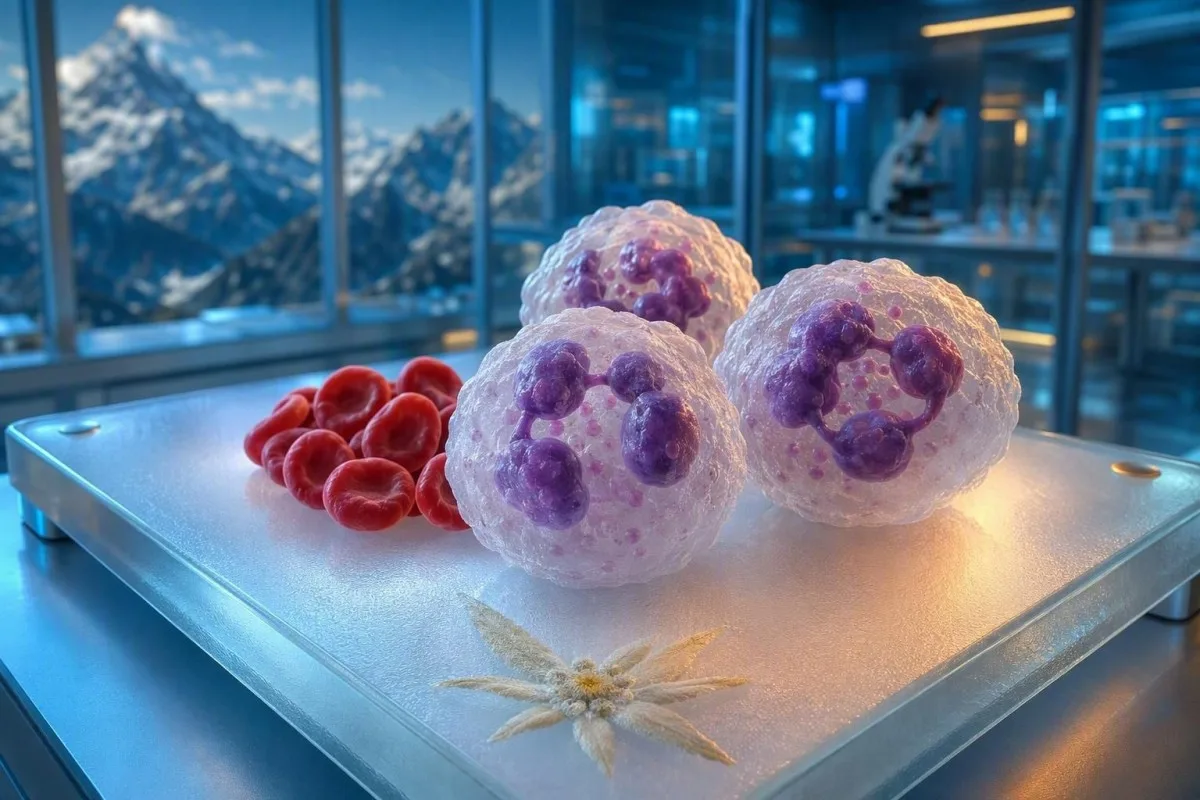
نتیجه بالای جزئی نوتروفیل اغلب موقتی است، اما تعداد مطلق نوتروفیل، بقیه CBC، علائم و روند، تعیین کننده نیاز به اقدام هستند.


- نوتروفیلهای مرزی معمولاً به معنای ANC کمی بالاتر از حد بالای آزمایشگاهی است، که اغلب در بزرگسالان حدود 7.0-7.5 × 10⁹/L است.
- شمارش مطلق نوتروفیلها آموزندهتر از درصد نوتروفیل است؛ ANC را به صورت WBC × درصد نوتروفیل ÷ 100 محاسبه کنید.
- نوتروفیلی خفیف کمتر از 15 × 10⁹/L بدون علائم هشدار دهنده معمولاً واکنشی است و میتواند پس از عفونت، سیگار کشیدن، ورزش یا درمان با استروئید رخ دهد.
- زمانبندی تکرار معمولاً 2-6 هفته پس از بهبودی از یک بیماری کوتاه، ورزش شدید، واکسیناسیون یا تغییر دارو است.
- بررسی فوری برای تب همراه با بیماری شدید، تنگی نفس، گیجی، افزایش سریع تعداد، سلولهای نابالغ، کمخونی یا پلاکت پایین مناسب است.
- استروئیدها و آدرنالین میتوانند نوتروفیلهای در گردش را در عرض چند ساعت با جابجایی سلولها از دیواره عروق به داخل حوضچه خونی اندازهگیری شده، افزایش دهند.
- افزایش مداوم بیش از 3 ماه، به ویژه بالاتر از 15-20 × 10⁹/L، نیاز به بررسی توسط پزشک و اغلب فیلم خون دارد.
- بارداری میتواند به طور معمول تعداد نوتروفیلها را افزایش دهد، به ویژه در سه ماهه سوم، بنابراین محدودههای مرجع بزرگسالان غیر باردار میتوانند گمراهکننده باشند.
معنای واقعی نتیجه مرزی نوتروفیل چیست
نوتروفیلهای مرزی معمولاً به معنای افزایش جزئی در تعداد مطلق نوتروفیل (ANC) هستند، نه یک تشخیص. در اکثر بزرگسالان سالم، ANC کمی بالاتر از محدوده آزمایشگاهی با عبور محرک موقت، تثبیت میشود؛ اولین کار بررسی تعداد مطلق، تعداد کل گلبولهای سفید و علائم است تا واکنش به یک درصد برجسته شده.
فواصل مرجع ANC بزرگسالان معمولاً از حدود 1.5 تا 7.5 × 10⁹/L, ، اگرچه حد بالا بسته به آنالایزر، تبار، وضعیت بارداری و روش آزمایشگاهی محلی متفاوت است. مقدار 7.8 × 10⁹/L از نظر بالینی با 28 × 10⁹/L بسیار متفاوت است، حتی اگر هر دو ممکن است بالا پرچمگذاری شوند؛ به راهنمای ما در مورد محدوده طبیعی نوتروفیل.
این درصد نوتروفیل صرفاً به دلیل کاهش لنفوسیتها پس از استرس یا قرار گرفتن در معرض کورتیکواستروئیدها میتواند بالا به نظر برسد. به عنوان مثال، WBC 6.0 × 10⁹/L با 78% نوتروفیل، ANC 4.68 × 10⁹/L را میدهد که با وجود درصد بالا، طبیعی است.
کانتستی یک آنالایزر آزمایش خون هوش مصنوعی که افتراقی CBC را در کنار WBC کل، هموگلوبین، پلاکتها و نتایج قبلی میخواند، به جای اینکه یک پرچم نارنجی را برچسب بیماری بدانیم. از تاریخ 28 اوت 2026، آن رویکرد الگوی اول ایمنترین راه برای تفسیر نتایج مرزی باقی میماند.
چرا پرچمهای آزمایشگاهی تشخیص نیستند
فواصل مرجع مرکزی 95% از یک جمعیت منتخب را پوشش میدهند، بنابراین حدود 1 نفر از هر 20 نفر اندازهگیریهای سالم ممکن است به طور اتفاقی خارج از محدوده اعلام شده قرار گیرند. پرچم هشداری برای زمینه است، نه مدرکی مبنی بر اینکه مشکلی وجود دارد.
چرا تعداد مطلق نوتروفیل مهمتر از درصد آن است
ANC تعداد است که پزشکان برای قضاوت در مورد افزایش نوتروفیلها از آن استفاده میکنند زیرا WBC کل را با افتراقی ترکیب میکند. درصد بالای نوتروفیل با ANC طبیعی اغلب یک شیفت نسبی است، در حالی که ANC بالا نوتروفیلی واقعی را تأیید میکند.
این فرمول ساده است: ANC = WBC × (% نوتروفیل + % باند) ÷ 100. با WBC 12.0 × 10⁹/L و نوتروفیل 75%, شمارش نوتروفیل مطلق (ANC) برابر با 9.0 × 10⁹/L است؛ این یک نوتروفیلی خفیف است و به تنهایی اورژانسی محسوب نمیشود.
من اغلب اضطراب قابل اجتناب را زمانی مشاهده میکنم که یک پورتال 82% نوتروفیل را گزارش میکند اما محاسبه را به وضوح نشان نمیدهد. قاعده عملی دکتر توماس کلین این است که قبل از تصمیمگیری در مورد معنی نتیجه، WBC، ANC، هموگلوبین، شمارش پلاکت و هرگونه پرچم گرانولوسیت نابالغ را یادداشت کنید؛ راهنمای ما راهنمای اجزای CBC به درک اصطلاحات کمک میکند.
WBC بالاتر از ۱۱ × ۱۰⁹/لیتر در بزرگسالان غیرباردار معمولاً لکوسیتوز نامیده میشود، اما علت را نمیتوان تنها از آن عدد استنباط کرد. رایلی و روپرت (2015) به پزشکان توصیه میکنند در صورت نامشخص یا پایدار بودن لکوسیتوز، CBC را تکرار کرده و اسمیر محیطی را بررسی کنند.
علل شایع موقتی نوتروفیلی خفیف
نوتروفیلی خفیف اغلب نشاندهنده یک فرآیند واکنشی موقتی است: عفونت اخیر، استرس فیزیکی، سیگار کشیدن، التهاب، اثر دارویی یا بارداری. این علل باعث افزایش نوتروفیلهای در گردش میشوند بدون اینکه لزوماً به این معنی باشد که مغز استخوان سلولهای غیرطبیعی تولید میکند.
سرماخوردگی، التهاب دندانی، علائم ادراری، شعلهور شدن پوست یا حتی روزهای اول پس از یک بیماری ویروسی میتواند ANC را تا محدوده ۸-۱۴ × ۱۰⁹/لیتر افزایش دهد. نوتروفیلها ممکن است برای روزها پس از رفع تب، خفیف بالا باقی بمانند زیرا آزادسازی مغز استخوان و بهبودی بافت همزمان متوقف نمیشوند.
یک جلسه تمرینی شدید، ماراتن، حمله پانیک یا درد حاد میتواند باعث دمارژینیشنشود — سلولهایی که قبلاً در کنار دیواره رگها در حالت استراحت بودند وارد نمونه در گردش میشوند. این افزایش میتواند در عرض چند دقیقه تا چند ساعت رخ دهد و یکی از دلایلی است که من از ورزشکاران میخواهم 24-48 ساعت قبل از CBC برنامهریزی شده از تمرینات به طور غیرمعمول شدید اجتناب کنند؛ راهنمای زمانبندی آزمایشگاهی مرتبط با ورزش ما الگوی گستردهتر را توضیح میدهد. سیگار کشیدن با افزایش WBC و شمارش نوتروفیل همراه است، در حالی که چاقی، بیماری مزمن لثه و اختلالات التهابی پوست میتوانند افزایش متوسطی را حفظ کنند. بنابراین، معنی نوتروفیلهای کمی بالا رفته اغلب مربوط به مواجهه و فیزیولوژی است، نه یک عفونت باکتریایی پنهان.
کورتیکواستروئیدها، اسپریهای بتا-آگونیست، لیتیوم و داروهای محرک کلونی میتوانند نوتروفیلها را افزایش دهند، گاهی به طور قابل توجهی.
داروها، واکسنها و رویدادهای زندگی که میتوانند نوتروفیلها را افزایش دهند
به دلیل پرچم CBC، داروی تجویز شده را قطع نکنید؛ در عوض، دارو، دوز و زمان مصرف را برای پزشک بررسی کننده نتیجه مستند کنید. سابقه دارویی، تفسیر تعداد بالای غیرمنتظره نوتروفیل را تغییر میدهد.
از طریق عدم حاشیهسازی (demargination)، تاخیر در حرکت به بافتها و کاهش پاکسازی سلولی افزایش دهند. نوتروفیلی مرتبط با استروئید اغلب فاقد دانهبندی سمی یا شیفت به چپ برجسته است که میتواند با عفونت باکتریایی شدید همراه باشد، اگرچه برای ارزیابی صحیح این موضوع به لام خون نیاز است. طی ۴ تا ۶ ساعت لیتیوم میتواند تولید گرانولوسیت را افزایش دهد، در حالی که فیلاستیم و درمانهای مرتبط به طور عمدی شمارش نوتروفیل را افزایش میدهند؛ جراحی اخیر، تروما و زایمان نیز باعث پاسخ استرسی میشوند. واکسن میتواند به طور موقت افتراقی را تغییر دهد، بنابراین یک آزمایش روتین که در عرض.
واکسیناسیون انجام شود، ممکن است کمتر نماینده خط پایه باشد؛ درباره 7 تا 14 روز تغییرات آزمایشگاهی پس از واکسیناسیون بیشتر بخوانید که به افراد امکان میدهد زمینه دارو و بیماری را با نتیجه ذخیره کنند، که از مقایسه اعداد خام مفیدتر است. لیست دارویی باید شامل اسپریها، کرمهای استروئیدی، تزریقها و محصولات "طبیعی" باشد - نه فقط قرصها..
کانتستی یک پلتفرم تفسیر آزمایش خون AI برای فردی که در غیر این صورت سالم است و نوتروفیلی خفیف و مجزا دارد، تکرار CBC با افتراقی در 2-6 هفته معمولاً پس از رفع محرک احتمالی معقول است.
چه زمانی باید CBC را برای نوتروفیلهای مرزی تکرار کرد
برای فردی که در غیر این صورت سالم است و نوتروفیلی ایزوله خفیف دارد، تکرار CBC با افتراقی در عرض ۲-۶ هفته پس از رفع محرک احتمالی معمولاً منطقی است. مجدداً زودتر آزمایش دهید - ظرف چند روز - در صورت بدتر شدن علائم، افزایش شمارش، یا اگر نتیجه اولیه به طور قابل توجهی بالا بود.
روزی باثبات برای نمونهگیری مجدد انتخاب کنید: بدون تب، بدون ورزش شدید به مدت ۲۴-۴۸ ساعت، هیدراتاسیون معمولی، و عدم شروع استروئید جدید مگر اینکه تجویز کننده طور دیگری گفته باشد. ناشتا بودن معمولاً برای CBC لازم نیست، اما تطابق زمان روز و شرایط، تفسیر تغییرات را آسانتر میکند؛ مقاله ما راهنمای زمانبندی آزمایش خون توضیح میدهد چرا.
اگر ANC ۷.۶-۱۲ × ۱۰⁹/لیتر و سایر سلولها طبیعی هستند، من معمولاً یک بررسی مجدد برنامهریزی شده را به جای آزمایش سریال هر چند روز یکبار ترجیح میدهم. تکرار در ۴ هفته میتواند گمراهکننده باشد اگر بیمار هنوز در حال بهبودی از پنومونی باشد، پردنیزولون را شروع کرده باشد، یا برای یک رویداد استقامتی تمرین کرده باشد.
تداوم مهمتر از یک عدد مجزا است. نوتروفیلی که فراتر از 3 ماه, طول میکشد، بدون توضیح واکنشی واضح، معمولاً نیاز به بررسی اولیه توسط پزشک مراقبتهای اولیه، لام خون دستی و آزمایش هدفمند بر اساس علائم دارد.
الگوهای CBC که افزایش نوتروفیل را نگرانکنندهتر یا کمتر نگرانکننده میکنند
افزایش خفیف و مجزای ANC با هموگلوبین و پلاکتهای طبیعی معمولاً کمتر نگرانکننده است تا نوتروفیلی همراه با کمخونی، ترومبوسیتوپنی، ترومبوسیتوز یا سلولهای نابالغ. الگوی CBC اطراف به عدد معنای بالینی آن میبخشد.
افزایش ANC به همراه پلاکتهای بالا بالاتر از 450 × 10⁹/L, ، کمخونی غیرقابل توضیح، بازوفیلی یا لام خون لکواریتروبلاستیک، نگرانی در مورد یک فرآیند مغز استخوان را افزایش میدهد. هیچ یک از این ترکیبات سرطان را تشخیص نمیدهد، اما بررسی فوری توسط پزشک را به جای تکرار سرپایی در ماههای بعد توجیه میکند؛ به مرور کلی ما از مسیر ارزیابی سرطان خون ما.
مراجعه کنید. “شیفت به چپ” به معنای حضور باندها، متامیلوسیتها یا میلوستها در خون محیطی است. تعداد کم میتواند در استرس شدید واکنشی رخ دهد، اما شیفت به چپ مداوم نیاز به بررسی لام خون دارد زیرا شمارندههای خودکار همیشه ریکاوری خوشخیم را از یک فرآیند کلونال تشخیص نمیدهند.
Kantesti AI زیرمجموعههای گلبول سفید را همراه با شاخصهای گلبول قرمز و روندهای پلاکت بررسی میکند، سپس ترکیباتی را برای پیگیری پزشکی پرچمگذاری میکند به جای تلاش برای تشخیص لوسمی از CBC. این رویکرد با اصول اعتبارسنجی بالینی منتشر شده ما مطابقت دارد..
عفونت، التهاب یا استرس: خواندن سرنخهای بالینی
تب، علائم کانونی و CRP بالا میتواند عفونت را تأیید کند، اما افزایش شمارش نوتروفیل به تنهایی نمیتواند عفونت باکتریایی را از استرس یا التهاب متمایز کند. پزشکان فرد جلوی خود را تشخیص میدهند، نه یک شمارش افتراقی را به تنهایی.
در پنومونی باکتریایی، پیلونفریت یا آپاندیسیت، ANC ممکن است بالاتر از ۱۵ × ۱۰⁹/لیتر, افزایش یابد، با این حال برخی عفونتهای جدی دارای شمارش WBC طبیعی یا پایین هستند - به خصوص در سالمندان یا افراد با نقص ایمنی. علائم، علائم حیاتی، معاینه و کشتها اغلب مهمتر از این هستند که آیا ANC 11 است یا 13.
CRP سریعتر از ESR بالا و پایین میرود، اما هیچ کدام برای عفونت اختصاصی نیستند. اگر نوتروفیلی همراه با CRP بالا، تورم مفاصل، علائم روده یا بثورات پوستی باشد، افتراق به سمت بیماریهای خودایمنی و التهابی گسترش مییابد؛ توضیح ما در مورد الگوهای ESR بالا ممکن است به چارچوب بندی آن بحث کمک کند.
در تجربه من، بیماری که ANC ۱۰.۵ × ۱۰⁹/لیتر، بدون تب و CRP طبیعی پس از مراجعه به اورژانس در اثر بیخوابی دارد، معمولاً نیازمند پیگیری آرام و نه آنتیبیوتیک است. برعکس، فردی بیمار با لرز و ANC ۶.۵ × ۱۰⁹/لیتر ممکن است علیرغم شمارش فنی طبیعی، نیاز به مراقبت فوری داشته باشد.
بارداری، سن و خط پایه شخصی تفسیر را تغییر میدهند
بارداری معمولاً باعث نوتروفیلی فیزیولوژیک میشود، به ویژه در اواخر حاملگی، و کودکان به محدودههای سنی خاص نیاز دارند. نباید از محدوده مرجع بزرگسالان غیرباردار برای غیرطبیعی برچسب زدن CBC یک فرد باردار بدون زمینه استفاده کرد.
در طول بارداری، مقادیر کل WBC میتواند به ۱۲-۱۵ × ۱۰⁹/لیتر برسد و در طول زایمان، عمدتاً از طریق نوتروفیل ها، بیشتر شود. افزایش شمارش بدون تب، حساسیت رحم، علائم ادراری یا سایر علائم بیماری ممکن است فیزیولوژیک باشد، اما تیمهای مامایی از تصویر بالینی کامل استفاده میکنند.
نوزادان و کودکان خردسال میتوانند شمارش نوتروفیلهایی داشته باشند که در گزارش بزرگسالان غیرطبیعی به نظر میرسد، در حالی که بزرگسالان مسنتر ممکن است در طول عفونت پاسخ گلبولهای سفید ضعیفی نشان دهند. نتیجه کودک را در برابر باند سنی آزمایشگاه تفسیر کنید؛ راهنمای محدوده نوزادان ما راهنمای محدوده نوزادان توضیح میدهد که چرا مقایسههای بزرگسالان شکست میخورد.
CBC های قبلی خود شما اغلب بهترین مقایسه هستند. ANC پایدار حدود ۷.۸ × ۱۰⁹/لیتر در طی پنج سال در یک فرد سالم، پروفایل احتمالی متفاوتی نسبت به افزایش جدید از ۳.۲ به ۱۲.۸ × ۱۰⁹/لیتر دارد.
سیگار کشیدن، عوامل متابولیکی و نوتروفیلی مزمن با درجه پایین
سیگار کشیدن، چاقی و مواجهات التهابی مزمن میتواند باعث نوتروفیلی خفیف شود که پس از بهبودی سرماخوردگی باقی میماند. این عوامل همچنان شایسته توجه هستند زیرا میتوانند بر سلامتی فراتر از نتیجه CBC تأثیر بگذارند.
لکوسیتوز مرتبط با سیگار کشیدن میتواند شامل نوتروفیلها، لنفوسیتها و مونوسیتها باشد، بنابراین ممکن است به صورت افزایش خالص نوتروفیل ظاهر نشود. تکرار CBC 8-12 هفته پس از ترک سیگار می تواند آموزنده باشد، اگرچه یک نتیجه طبیعی برای جشن گرفتن مزایای سلامتی توقف لازم نیست.
چاقی مرکزی، آپنه خواب و بیماری مزمن پریودنتال ممکن است به سیگنالینگ التهابی و تعداد کمی بالاتر WBC کمک کنند. این ارتباطات واقعی اما غیر اختصاصی هستند؛ نباید برای رد علائم جدید یا افزایش سریع تعداد از آنها استفاده کرد.
Kantesti، یک ابزار تحلیل آزمایش خون مبتنی بر AI, ، می تواند دیفرانسیل فعلی را با چندین گزارش قبلی مقایسه کند و تغییرات آهسته ای را که یک نتیجه سالانه واحد پنهان می کند، آشکار کند. برای پیگیری عملی، وضعیت سیگار کشیدن، تغییر وزن، عفونت های اخیر و قرار گرفتن در معرض استروئید را در کنار هر آزمایش در یک سابقه آزمایشگاهی طولی.
چه زمانی باید نگران نوتروفیلها بود و به دنبال کمک فوری بود
در صورت داشتن نتیجه نوتروفیل بالا همراه با بیماری شدید، تب و گیجی، تنگی نفس، درد قفسه سینه، گردن سفت یا علائم وخیم سریع، به دنبال ارزیابی پزشکی در همان روز باشید. فوریت ناشی از عفونت احتمالی یا بیماری سیستمیک است، نه صرفاً از یک ANC مرزی.
WBC یا ANC بالاتر از 25-30 × 10⁹/L شایسته تماس بالینی فوری است، به خصوص اگر جدید، در حال افزایش باشد یا همراه با گرانولوسیت های نابالغ باشد. تعداد بالاتر از 50 × 10⁹/L می تواند نشان دهنده واکنش لوسمی یا بیماری خونی باشد و نباید منتظر ویزیت سالانه روتین ماند.
تعریق شبانه بی دلیل، کاهش وزن، عفونت های مکرر، کبودی آسان، غدد لنفاوی متورم یا پری شکمی دلایلی برای مراجعه به پزشک در زمان مناسب هستند. نگرانی زمانی افزایش می یابد که علائم همراه با کم خونی، پلاکت پایین، بازوفیلی یا سلول های غیر طبیعی در هشدار آنالایزر وجود داشته باشند.
اگر پس از سفر، شیمی درمانی، درمان پیوند یا داروهای سرکوب کننده سیستم ایمنی بیمار هستید، از آستانه کمتری برای ارزیابی فوری استفاده کنید. sepsis-marker guide توضیح می دهد که چرا مقادیر طبیعی آزمایشگاهی هرگز بیماری جدی را رد نمی کنند.
پزشکان هنگام پایدار بودن نوتروفیلی چه چیزی را بررسی میکنند
نوتروفیلی پایدار و بی دلیل معمولاً با شرح حال، معاینه، تکرار CBC، فیلم خون محیطی و تست های التهابی یا عفونی هدفمند ارزیابی می شود. تست های مولکولی برای الگوهایی که نئوپلاسم میلوپرولیفراتیو را نشان می دهند رزرو می شوند، نه برای هر نتیجه کمی بالا.
پزشک ممکن است در مورد سیگار کشیدن، آپنه خواب، درد مزمن، علائم بیماری التهابی روده، مصرف استروئید، اسپلنکتومی اخیر و اختلالات خونی خانوادگی سؤال کند. آنها ممکن است CRP، ESR، مارکرهای کبدی و کلیوی، کشت یا تصویربرداری را فقط در صورتی که شرح حال به آن سمت اشاره کند، سفارش دهند—آزمایش گسترده بدون سؤال بالینی اغلب هشدارهای کاذب ایجاد می کند.
یک فیلم دستی می تواند گرانولاسیون سمی، تغییرات جسم دوهل، شیفت چپ، بازوفیلی یا بلاست ها را شناسایی کند که شمارش های دیفرانسیل خودکار ممکن است به طور ناقص پرچم گذاری کنند. طبقه بندی WHO 2022 لوسمی نوتروفیلی مزمن را به عنوان یک نئوپلاسم میلوئید نادر که نیاز به نوتروفیلی پایدار و معیارهای خاص مولکولی و مورفولوژیک دارد، توصیف می کند؛ این بیماری از یک نتیجه مرزی تشخیص داده نمی شود (Khoury et al., 2022).
تست BCR::ABL1، تست JAK2 یا تست CSF3R ممکن است توسط هماتولوژی در موارد منتخب در نظر گرفته شود. این تست ها زمانی معنادار هستند که الگوی CBC و یافته های بالینی از آنها حمایت کنند، نه به عنوان غربالگری اطمینان بخش برای ANC 8.1 × 10⁹/L.
نظرات فیلم خون و سلولهای نابالغ چه چیزی را میتوانند به شما بگویند
نظر فیلم خون مورفولوژی—ظاهر و بلوغ سلولها—را به شمارش CBC اضافه میکند. “تغییرات سمی” میتواند یک فرآیند واکنشی شدید را تأیید کند، در حالی که بلاستها یا اشکال نابالغ پایدار و بی دلیل نیاز به ارزیابی سریع تخصصی دارند.
باندهای نوتروفیلهای نابالغتری هستند و تعداد کمی از آنها میتواند در طول عفونت، جراحی یا بهبودی مغز استخوان ظاهر شود. آزمایشگاهها در نحوه گزارش باندهای متفاوت هستند، بنابراین یک درصد نباید مستقیماً بین سیستمها مقایسه شود مگر اینکه روش گزارش بررسی شود.
گرانولاسیون سمی و واکوولاسیون سیتوپلاسمی یافتههای توصیفی فیلم هستند، نه تشخیص. آنها میتوانند همراه با پاسخ شدید بافتی باشند، اما تفسیر به زمینه بالینی، CRP و وجود شیفت به چپ بستگی دارد؛ توضیح ما در مورد گرانولاسیون سمی نوتروفیل این اصطلاحات را پوشش میدهد.
بلاستها در یک گزارش، درخواست آزمایشگاهی برای بازبینی فوری نمونه، یا نظر جدید “سلولهای آتیپیک” باید در همان روز با پزشک درخواستکننده در میان گذاشته شود. این موقعیتی است که انتظار برای بررسی مجدد روتین، حرکت اشتباهی است.
چگونه برای یک تست مجدد مفید نوتروفیل آماده شویم
یک CBC تکراری مفید زمانی گرفته میشود که شما از نظر بالینی پایدار باشید و زمینه کافی برای توضیح هرگونه افزایش باقیمانده را فراهم کند. شما نمیتوانید با اطمینان نوتروفیلها را برای یک آزمایش “کاهش” دهید، اما میتوانید از نویز قابل پیشگیری اجتناب کنید.
برای یک آزمایش مجدد غیر فوری برنامهریزی شده، از تمرین شدید برای 24 تا 48 ساعت, خودداری کنید، به طور عادی هیدراته باشید و به تیم خونگیری در مورد دوز استروئیدها، اسپریها، واکسنها و عفونتهای اخیر اطلاع دهید. داروهای تجویزشده را حذف نکنید یا عمداً آب زیاد ننوشید تا مقدار آزمایشگاهی را تغییر دهید.
در صورت امکان، از همان آزمایشگاه استفاده کنید زیرا بازههای مرجع و روشهای تفکیکی مختص دستگاه متفاوت هستند. تفاوت 0.5-1.0 × 10⁹/L میتواند منعکسکننده تغییرات بیولوژیکی و تحلیلی معمول باشد، بهویژه زمانی که نتایج نزدیک به حد بالایی قرار دارند؛ مقاله ما در مورد تفاوتهای واقعی در مقابل تغییرات تصادفی آزمایشگاهی به این موضوع میپردازد.
گزارش قبلی را همراه بیاورید یا از آن عکس نگه دارید. تاریخچه تب، دوره مصرف آنتیبیوتیک، دوز استروئید یا تمرینات ورزشی سنگین اغلب بیش از یک نمونه خون اضافی، توضیحدهنده است.
استفاده ایمن از تفسیر هوش مصنوعی در کنار مراقبت بالینی
هوش مصنوعی میتواند روند CBC را سازماندهی کرده و سوالات پیگیری را شناسایی کند، اما نمیتواند علائم حیاتی را ارزیابی کند، غدد لنفاوی را معاینه کند یا عفونت فوری را رد کند. تفسیر با کیفیت بالا باید عدم قطعیت را بیان کند، محاسبه ANC را نشان دهد و علائم فوری را به مراقبت انسانی ارجاع دهد.
Kantesti AI نتایج نوتروفیل را با تجزیه و تحلیل تعداد مطلق، لکوسیتهای کل، سایر خطوط سلولی، بازه آزمایشگاهی و تغییرات طولی تفسیر میکند. این سیستم برای کمک به کاربران در آمادهسازی سوالات بهتر برای پزشکشان طراحی شده است، نه جایگزینی ارزیابی فوری یا تجویز درمان.
حریم خصوصی در مورد سوابق آزمایشگاهی اهمیت دارد زیرا CBC میتواند استفاده از دارو، تغییرات مربوط به بارداری و بیماری مزمن احتمالی را آشکار کند. Kantesti تفسیر امن نتایج را به زبانهای متعدد پشتیبانی میکند، در حالی که پزشکان ما نظارت را از طریق هیئت مشاوره پزشکی.
خط پایانی دکتر توماس کلاین سرراست است: یک افزایش کوچک و جدا شده معمولاً یک مشکل بازآزمایی و زمینهای است، در حالی که ANC بالا یا در حال افزایش همراه با علائم یا ناهنجاریهای دیگر CBC یک مشکل بررسی پزشکی است. اگر گزارش با احساس شما مغایرت دارد، بخواهید یک پزشک سند اصلی آزمایشگاهی را بررسی کند - نه فقط یک اسکرین شات.
یک طرح عملی گام بعدی برای نتیجه مرزی
بیشتر افراد با نوتروفیلهای مرزی میتوانند یک برنامه سه مرحلهای را دنبال کنند: ANC را تأیید کنید، یک محرک موقتی را شناسایی کنید، و یک آزمایش تکراری در زمان مناسب ترتیب دهید. در صورت وجود علائم پرچم قرمز یا ناهنجاریهای عمده CBC، بلافاصله تشدید کنید.
ابتدا، بررسی کنید که آیا مقدار پرچمگذاری شده درصد است یا ANC، و واحد دقیق را یادداشت کنید. ثانیاً، بیماری را در گذشته 2 هفته, ، ورزش شدید در 48 ساعت گذشته، سیگار کشیدن، وضعیت بارداری، داروها و زمان واکسیناسیون را یادداشت کنید.
ثالثاً، اگر حالتان خوب است و ANC با هموگلوبین و پلاکتهای طبیعی کمی بالا است، یک CBC تکراری را در 2-6 هفته از طریق پزشک معمول خود ترتیب دهید. اگر تا 3 ماه بالا باقی ماند یا به سمت 15 × 10⁹/L افزایش یافت، بپرسید که آیا بررسی فیلم و غربالگری متمرکز مناسب است؛ چکلیست نظر دوم ما میتواند به آمادهسازی ویزیت کمک کند.
برای اطلاعات بیشتر در مورد اینکه چگونه روششناسی ما روندها و عدم قطعیت را مدیریت میکند، راهنمای فناوری هوش مصنوعی. را مرور کنید. یک پرچم مرزی باید منجر به پیگیری منطقی شود، نه جستجوی تشخیص در اواخر شب.
سوالات متداول
نوتروفیل های کمی بالا به چه معناست؟
افزایش خفیف نوتروفیلها معمولاً به این معنی است که تعداد مطلق نوتروفیلها کمی بالاتر از حد بالای محدوده آزمایشگاه محلی است، که اغلب در بزرگسالان حدود 7.5 × 10⁹/L است. عفونت اخیر، ورزش، سیگار کشیدن، استرس عاطفی، بارداری و کورتیکواستروئیدها دلایل رایج هستند. اگر ANC کمتر از 15 × 10⁹/L باشد، هموگلوبین و پلاکتها طبیعی باشند و شما حال عمومی خوبی داشته باشید، تکرار CBC در 2-6 هفته معمولاً مناسب است. نتیجه باید در برابر محدوده آزمایشگاه و CBC های قبلی شما ارزیابی شود.
چه زمانی باید نگران بالا بودن گلبولهای سفید نوتروفیل باشم؟
نوتروفیلهای بالا نیاز به ارزیابی فوری دارند هنگامی که با تب شدید، گیجی، تنگی نفس، درد قفسه سینه، سفتی گردن، وخامت سریع بیماری یا شمارش به طور قابل توجهی بالا همراه باشند. ANC بالاتر از 25-30 × 10⁹/L، به ویژه اگر در حال افزایش باشد یا با سلولهای نابالغ، کمخونی یا پلاکت پایین همراه باشد، باید فوراً با پزشک تماس گرفته شود. ANC خفیف و ایزوله 8-12 × 10⁹/L در یک فرد سالم بسیار کمتر نگرانکننده است. علائم و بقیه CBC (CBC) قابل اعتمادتر از نظر تعیین فوریت نسبت به درصد به تنهایی هستند.
نوتروفیلها پس از عفونت چه مدت بالا باقی میمانند؟
نوتروفیلها ممکن است بسته به شدت عفونت و هرگونه درمان مورد استفاده، طی چند روز تا چند هفته پس از بهبودی عفونت، در سطح بالایی باقی بمانند. تکرار CBC 2 تا 6 هفته پس از بهبودی کامل، اغلب آموزندهتر از آزمایش مجدد در روز بعد است. افزایش مداوم بیش از 3 ماه بدون علت مشخص، نیازمند بررسی توسط پزشک است. درمان با استروئیدها میتواند نتیجه بالا را با افزایش نوتروفیلهای در گردش طی چند ساعت، طولانی یا تقلید کند.
آیا استرس یا ورزش میتواند باعث افزایش نوتروفیلها شود؟
بله، استرس عاطفی حاد، درد و ورزش شدید میتواند از طریق دمارژیناسیون (demargination)، که در آن سلولها از دیواره عروق به نمونه در گردش منتقل میشوند، به طور موقت تعداد نوتروفیلها را افزایش دهد. این تغییر میتواند ظرف چند دقیقه تا چند ساعت رخ دهد و اغلب ظرف ۲۴ تا ۴۸ ساعت پس از رفع عامل استرسزا، به حالت عادی بازمیگردد. اجتناب از ورزش بسیار شدید به مدت ۲۴ تا ۴۸ ساعت قبل از انجام تکراری CBC برنامهریزی شده، میتواند این منبع تغییر را کاهش دهد. این اثر به این معنی نیست که ورزش مضر است یا عفونتی وجود دارد.
آیا درصد بالای نوتروفیل با ANC بالا یکسان است؟
خیر، درصد بالای نوتروفیل لزوماً به معنای تعداد بالای نوتروفیل نیست. ANC (تعداد مطلق نوتروفیل) برابر است با کل WBC (تعداد گلبولهای سفید) ضربدر درصد نوتروفیل تقسیم بر ۱۰۰، بنابراین WBC برابر با ۶.۰ × ۱۰⁹/L با ۷۸ درصد نوتروفیل، ANC نرمال ۴.۶۸ × ۱۰⁹/L را نتیجه میدهد. درصد پایین لنفوسیت میتواند باعث شود درصد نوتروفیل بالا به نظر برسد حتی زمانی که تعداد مطلق نوتروفیل نرمال است. بالینگران عموماً از ANC برای تعیین نوتروفیلی واقعی استفاده میکنند.
آیا سرطان میتواند باعث افزایش نوتروفیلها شود؟
برخی از سرطانهای خون و تومورهای جامد میتوانند باعث نوتروفیلی شوند، اما اینها توضیحات غیرمعمولی برای یک نتیجه مرزی واحد هستند. نگرانی زمانی افزایش مییابد که نوتروفیلی مداوم باشد و با کمخونی، اختلالات پلاکت، بازوفیلی، سلولهای نابالغ غیرطبیعی، طحال بزرگ شده، تعریق شبانه یا کاهش وزن ناخواسته همراه باشد. طبقهبندی WHO 2022 برای تشخیص نئوپلاسمهای میلوئید به یافتههای بالینی، فیلم خون و مولکولی خاصی نیاز دارد. افزایش خفیف و جداگانه ANC سرطان را تشخیص نمیدهد.
همین امروز آنالیز آزمایش خون با هوش مصنوعی را دریافت کنید
به بیش از 2 میلیون کاربر در سراسر جهان بپیوندید که Kantesti را برای تحلیل فوری و دقیق آزمایشهای آزمایشگاهی مورد اعتماد قرار میدهند. نتایج آزمایش خون خود را بارگذاری کنید و در عرض چند ثانیه، تفسیر جامع 15,000+ از نشانگرهای زیستی را دریافت کنید.
📚 انتشارات پژوهشی ارجاعشده
کلاین، تی.، میچل، اس.، و وبر، اچ. (۲۰۲۶). Kantesti LTD. (2026). راهنمای پروتئینهای سرم: گلوبولینها، آلبومین و نسبت A/G آزمایش خون. Zenodo. از طریق DOI در دسترس است؛ پروفایلهای نویسندگان مرتبط ممکن است از طریق ResearchGate و Academia.edu جستجو شوند.. پژوهش پزشکی مبتنی بر هوش مصنوعی Kantesti.
کلاین، تی.، میچل، اس.، و وبر، اچ. (۲۰۲۶). Kantesti LTD. (2026). راهنمای تست خون C3 C4 کمپلمان و تیتر ANA. Zenodo. از طریق DOI در دسترس است؛ پروفایلهای نویسندگان مرتبط ممکن است از طریق ResearchGate و Academia.edu جستجو شوند.. پژوهش پزشکی مبتنی بر هوش مصنوعی Kantesti.
📖 منابع پزشکی خارجی
Riley LK, Rupert J (2015). ارزیابی بیماران با لکوسیتوز. American Family Physician.
⚕️ سلب مسئولیت پزشکی
این مقاله فقط برای اهداف آموزشی است و توصیه پزشکی محسوب نمیشود. برای تصمیمهای مربوط به تشخیص و درمان، همیشه با یک ارائهدهنده مراقبتهای بهداشتی واجد شرایط مشورت کنید.
سیگنالهای اعتماد E-E-A-T
تجربه
بازبینی بالینی مبتنی بر نظر پزشک از فرایندهای تفسیر آزمایشگاه.
تخصص
تمرکز بر پزشکی آزمایشگاهی و اینکه نشانگرهای زیستی در زمینه بالینی چگونه رفتار میکنند.
اقتدارگرایی
نوشتهشده توسط دکتر توماس کلاین، با بازبینی توسط دکتر سارا میچل و پروفسور دکتر هانس وبر.
قابل اعتماد بودن
تفسیر مبتنی بر شواهد با مسیرهای پیگیری روشن برای کاهش هشدارها.