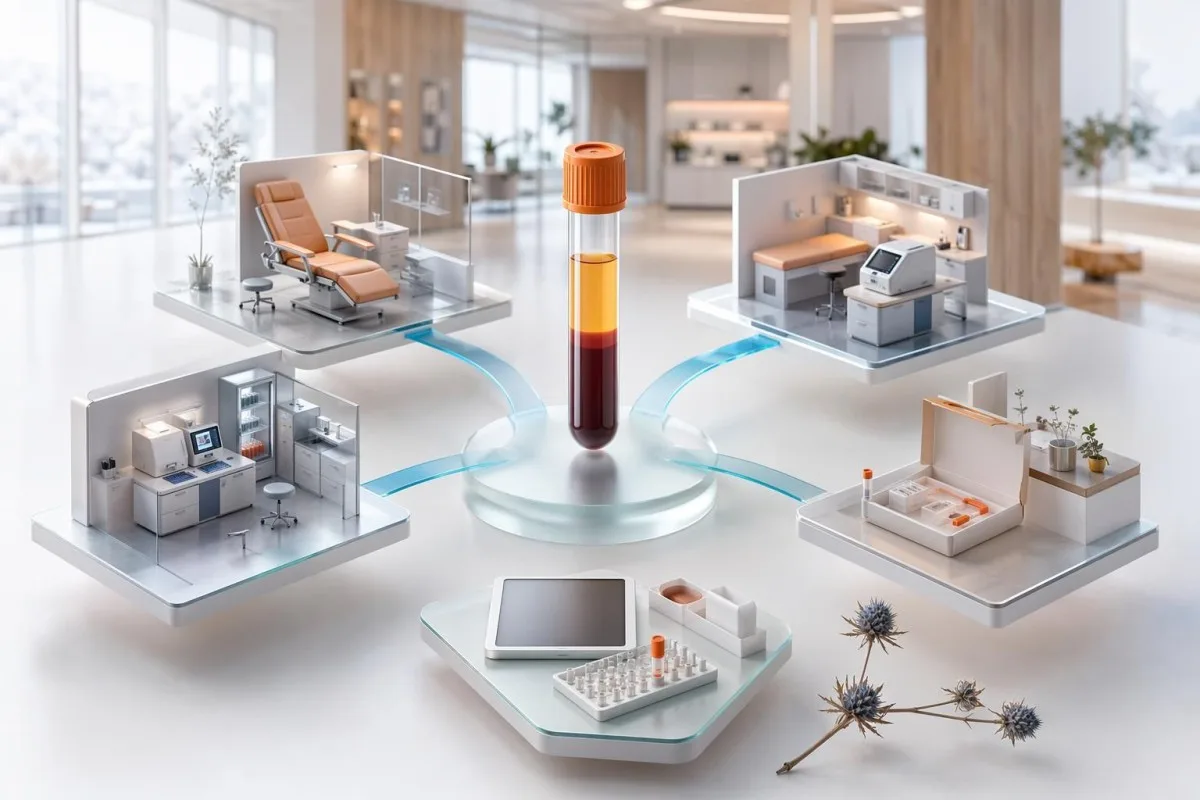
Für die meisten routinemäßigen Blutuntersuchungen sind unabhängige Labore bei den Preisen deutlich günstiger als der Preis in der Notfallversorgung und in der ER. Die richtige Wahl hängt von den Symptomen, der benötigten Bearbeitungszeit und davon ab, ob Sie jetzt einen Arzt brauchen oder nur eine Blutabnahme.


- Günstigste Einrichtung Unabhängige Labore berechnen normalerweise $15-$50 für gängige Selbstzahler-Routinetests, während die Notfallversorgung oft bei $120-$300 gesamt landet.
- ER-Preise Blutuntersuchungen in der Notaufnahme überschreiten häufig $500 und können $1,500-$6,000+ erreichen, sobald die Gebühren für Einrichtung und Arzt hinzukommen.
- CBC-Barzahlungsrate Ein routinemäßiges Blutbild kostet oft $15-$35 in einem ambulanten Labor.
- CMP-Kassenrate A CMP liegt normalerweise bei $15-$40 Bargeld bei einem lokalen Labor.
- HbA1c-Wert Ein A1c von 6.5% entspricht einem geschätzten durchschnittlichen Glukosewert nahe oder mehr unterstützt Diabetes; dieser Test erwischt oft Menschen, deren Nüchternblutzucker nur leicht erhöht ist, deren Verwertung nach dem Essen aber klar aus dem Ruder läuft. im Laufe der Zeit treiben kann.
- Kapillare Grenzen Heimtests sind für Kalium, Blutbild, Und Gerinnung fehleranfälliger, weil winzige Proben leichter gerinnen und stärker hämolysieren.
- Direct-Access-Regel Die Online-Bestellung von Bluttests ist in vielen Bundesstaaten üblich, bleibt jedoch eingeschränkt oder wird in New York, New Jersey und Rhode Island.
- Beste erste Anlaufstelle Wenn Sie stabil sind und eine routinemäßige Überwachung benötigen, wählen Sie zuerst ein ambulantes Labor; reservieren Sie die Notaufnahme für Brustschmerzen, Schlaganfallzeichen, Sepsis oder schwere Dehydrierung.
Welcher Bereich hat die niedrigsten Kosten für Bluttests?
Unabhängige ambulante Labore sind in der Regel der günstigste Ort für einen routinemäßigen Bluttest. Eine Selbstzahler- Blutbild liegt häufig bei $15-$35, a CMP $15-$40, und ein Lipidprofil $20-$50. Notfallversorgung erhöht den Komfort und die Zeit der Ärztin/des Arztes, sodass derselbe Besuch oft bei $120-$300 gesamt landet. Notaufnahmen ausgelegt ist, nicht auf Schnäppchenpreise; mit den Gebühren der Einrichtung kann selbst eine einfache Blutuntersuchung kosten $500-$3,000+. Wenn Sie nach den Kosten für Bluttests statt nach einer Notfallbehandlung suchen, beginnen Sie mit Kantesti AI.
Die niedrigste Rechnung ist nicht immer die niedrigsten Gesamtkosten. Ein Walk-in-Labor kann einen $29 CBC, nennen, während der Bereitschaftsdienst denselben Test in eine Besuchsgebühr und eine Bearbeitungsgebühr einrechnet; wenn Sie die Abrechnungsstruktur verstehen möchten, sehen Sie sich unsere Aufschlüsselung von an, warum sich die Laborpreise unterscheiden.
Ich bin Thomas Klein, MD, und der häufigste Fehler, den ich sehe, ist, dass ein Patient die Notaufnahme (ER) für stabile Müdigkeit, Haarausfall oder die jährliche Kontrolle nutzt, weil es sich schneller anfühlt. Es ist schneller für STAT Medizin, aber sobald die Einrichtungsgebühr, die Gebühr für den behandelnden Arzt und die erneute Testung hinzukommen, kann eine routinemäßige Abklärung von unter $100 Zu deutlich über $1.000.
Günstig ist das falsche Ziel, wenn die Symptome gefährlich sind. Brustschmerz, starke Atemnot, einseitige Schwäche, Ohnmacht oder Verwirrtheit gehören in die Notfallversorgung – auch wenn die Rechnung schmerzt; ein niedriger Preis ist bedeutungslos, wenn die Umgebung keinen Herzinfarkt, eine Sepsis oder eine schwerwiegende Elektrolytstörung ausschließen kann.
Was Menschen 2026 tatsächlich bezahlen
Reale Kosten für Bluttests im Jahr 2026 fallen in vorhersehbare Bereiche: Ambulante Labore sind meist am günstigsten, direkte Online-Bestellungen sind ähnlich, der Bereitschaftsdienst (Urgent Care) liegt im mittleren Preissegment, und ERs sind mit weitem Abstand am teuersten. Stand 17. Mai 2026, liegen die meisten Selbstzahler in den USA mit gängigen Routine-Panelen zwischen $15 und $70 pro Test in lokalen Laboren, noch bevor eine Gebühr für den Arztbesuch anfällt.
A Blutbild läuft oft $15-$35, a CMP $15-$40, HbA1c $20-$45, TSH $25-$60, Und Ferritin $25-$70 zu Barzahlungsraten. Wenn Sie nicht versichert sind oder einen Plan mit hohem Selbstbehalt haben, bietet unser Leitfaden zu Routine-Labortests ohne Versicherung die häufigsten Preisspannen, die Patienten tatsächlich angeben.
Urgent Care verändert die Rechnung, weil der Besuch der „Produktpreis“ ist. Die meisten Zentren verlangen ungefähr $90-$200 um gesehen zu werden, und fügen dann vor Ort oder als Versandlabore Laboruntersuchungen hinzu, sodass ein einfacher Bluttest bei einem „near me“-Besuch oft insgesamt $120-$300, ergibt – und manchmal mehr, wenn Infusionen, Bildgebung oder wiederholte Vitalwerte hinzukommen.
Notaufnahmen rechnen wiederum anders ab: Einrichtungsgebühr, Arzthonorar und oft separate Labor- und EKG-Gebühren. Nach meiner Erfahrung kann eine Abklärung bei Brustschmerz mit CBC, BMP, Troponin und EKG irgendwo zwischen $1.500 bis $6.000+ für einen Selbstzahler liegen – selbst wenn die endgültige Diagnose harmloser Reflux oder eine Dehydrierung ist.
Warum unabhängige Labore beim Preis meist gewinnen
Unabhängige Labore bieten in der Regel das beste Preis-Leistungs-Verhältnis für einen routinemäßigen Bluttest. Sie sind für hohe Auslastung, geringe Gemeinkosten und standardisierte Probenhandhabung ausgelegt, weshalb ein lokales Labor normalerweise der erste Ort ist, an den ich stabile Patienten schicke, die ein CBC, CMP, Lipidprofil, A1c, TSH oder Ferritin benötigen.
Wenn Sie „Bluttest in meiner Nähe“ in Ihr Telefon eingeben, achten Sie auf ein ambulantes Abnahmezentrum, das Barpreise veröffentlicht, zeitlich vereinbarte Termine einhält und erfahrenes Phlebotomie-Personal hat. Unsere Checkliste zu die Auswahl eines zuverlässigen lokalen Labors ist die, die ich mir wünsche, dass mehr Patienten lesen, bevor sie in den nächstgelegenen Laden gehen.
Hier ist eine praktische Einzelheit, die die meisten Preislisten verbergen: Abhol-/Kurier-Cutoff-Zeiten sind entscheidend. Verpassen Sie eine 15-Uhr Abholung, dann kann Ihr Ferritin, Vitamin D oder Hormonpanel das Gebäude möglicherweise nicht einmal bis zum nächsten Morgen verlassen, wodurch eine Abnahme am selben Tag zu einer 24-48 Stunden Verzögerung bei der Auswertung wird.
Qualitätsprobleme in ambulanten Laboren sind in der Regel präanalytisch, nicht analytisch. Eine schwierige Entnahme, ein gerinnendes Röhrchen oder eine Probe, die hämolysiert, kann Kalium, AST, Und LDH; fälschlich erhöhen; wenn ich ein isoliertes Kalium von 5,8 mmol/L bei einem ansonsten gut versorgten Patienten sehe, frage ich oft, wie die Probe entnommen wurde, bevor ich eine echte Hyperkaliämie annehme.
Wann sich die Notfallversorgung lohnt, trotz der Zusatzgebühr
Notfallversorgung ist das zusätzliche Geld wert, wenn Sie heute einen Arzt brauchen und die Fragestellung noch niedrig bis moderat ausgeprägt ist. Es ist nicht der günstigste Ort für eine routinemäßige Verlaufskontrolle, aber es kann der richtige Mittelweg sein bei Schwindel, Dehydrierung, Harnsymptomen, leichter Infektion oder Nebenwirkungen von Medikamenten, wenn Blutuntersuchungen eine Behandlung am selben Tag verändern.
Die meisten Rechnungen der Notfallversorgung werden durch den Besuch bestimmt, nicht durch das Röhrchen. Ein Zentrum kann schnelle Labore bewerben, aber die echten Kosten sind normalerweise Besuchsgebühr plus Testgebühr, weshalb ein einzelner BMP Test fünf bis zehnmal so teuer sein kann wie dasselbe Chemie-Panel in einem unabhängigen Labor.
Noch eine Nuance: Nicht jede Notfallversorgung führt dieselben Assays vor Ort durch. Viele können Glukose, Schwangerschaft, Influenza oder ein begrenztes Chemie-Panel sofort durchführen, aber ein vollständiges CMP, Schilddrüsentest, Eisenuntersuchungen oder eine Abklärung auf Autoimmunität werden oft an ein Referenzlabor geschickt; wenn Sie nicht sicher sind, was enthalten ist, prüfen Sie den Unterschied zwischen CMP- und BMP-Tests , bevor Sie für ein größeres Panel bezahlen, als Sie benötigen.
Ich nutze für bestimmte Patienten den ärztlichen Bereitschaftsdienst. Ein gesunder 29-Jähriger mit Erbrechen und Benommenheit kann von einem BMP, Urintest und Flüssigkeitengabe heute profitieren, während derselbe Patient ohne Warnzeichen in die Notaufnahme geht und dann in der Regel die Krankenhauspreise für ein Problem zahlt, das ein ärztlicher Bereitschaftsdienst sicher bewältigen kann.
Wann der ER-Preis gerechtfertigt ist
Die Notaufnahme ist die teuerste Versorgungsform, und dieser Preis ist nur dann gerechtfertigt, wenn eine zeitkritische Erkrankung im Raum steht. Wenn Sie Brustschmerzen, starke Bauchschmerzen, hohes Fieber mit Verwirrtheit, eine ausgeprägte Schwäche oder Symptome eines Schlaganfalls oder einer Sepsis haben, ist die Notaufnahme der Ort, an dem Bluttests Teil einer lebensrettenden Triage werden – statt wie beim Einkaufen.
Notfall-Laboruntersuchungen sind anders, weil sie STAT und protokollgesteuert sind. Ein Kalium-, Laktat-, Troponin-, CBC- und Blutkulturen-Test können in Minuten bis Stunden verarbeitet werden, und diese Ergebnisse können Sauerstoff, Flüssigkeiten, Antibiotika, Antikoagulation oder Katheterisierung auslösen, bevor ein ambulanter Laborauftrag die Probe überhaupt erst vollständig erfasst hat.
Die kardiologische Diagnostik ist das klassische Beispiel. Hochsensitives Troponin wird in der Regel als Reihe, interpretiert, nicht als Einzelwert, weshalb Patienten mit beunruhigenden Brustsymptomen wiederholte Messungen über 1-3 Stunden und eine Korrelation mit dem EKG benötigen; unser Leitfaden zu Troponin und kardialen Enzymen erklärt, warum ein einzelner günstiger Test einen ER-Ausschluss nicht sicher ersetzen kann.
Die meisten Patienten unterschätzen die Kosten einer Beobachtung. Ein zusätzliches wiederholtes Troponin, ein Kochsalzbolus und ein paar überwachte Stunden können aus einem einfachen Notaufnahmebesuch eine deutlich höhere Rechnung machen, aber wenn die Frage ein Myokardinfarkt, eine Lungenembolie, eine Sepsis oder eine GI-Blutung ist, ist das immer noch die richtige Ausgabe.
Wie die Online-Bestellung von Bluttests die Kosten verändert
Das Online-Bestellen von Bluttests ist oft eine der günstigsten Möglichkeiten, Routine-Laborwerte zu erhalten, wenn Ihr Bundesland einen direkten Zugang zur Testung erlaubt. . HbA1c, Lipide, TSH, oder Vitamin D, Der Preis ist in der Regel von Anfang an transparent, und bei unkomplizierter Nachsorge wie.
Der Hauptvorteil eines Online-Bluttest ist keine Zauberpreisgestaltung; es ist Preis-Transparenz. Sie wählen die exakten Marker aus, zahlen vor der Blutabnahme, nutzen dann eine Partner-Entnahmestelle, und unsere Schritt-für-Schritt-Anleitung zu Laboruntersuchungen ohne Arzt zeigt, wo dieses Modell gut funktioniert.
Das Landesrecht spielt weiterhin eine Rolle. Die Testung mit direktem Zugang bleibt in einigen wenigen Bereichen eingeschränkt oder wird modifiziert, insbesondere New York, New Jersey und Rhode Island, sodass derselbe Online-Bestellablauf, der in Texas oder Florida funktioniert, eine zusätzliche ärztliche Genehmigung erfordern kann oder gar nicht angeboten wird.
Der Haken ist die Fragmentierung. Wenn das Ergebnis auffällig ist, benötigen Sie möglicherweise trotzdem eine*n Kliniker*in, um es zu interpretieren, zu wiederholen oder mit Symptomen in Verbindung zu bringen; daher ist die Online-Bestellung am besten für geplantes Monitoring geeignet, statt für ganz neue Brustschmerzen, Gelbsucht oder rasch zunehmende Müdigkeit.
Heimtest-Kits: gut für einige Marker, schlecht für andere
Tests für zu Hause sind praktisch, aber sie sind nicht gleichwertig mit einer venösen Blutabnahme im Labor. Sie funktionieren für einige Marker recht gut, wie HbA1c, einige Lipid Messungen und ausgewählte Antikörper, sind aber schwächer bei Tests, die auf schnelle Verarbeitung, größere Probenvolumina oder makellose Zellzahlen angewiesen sind.
Nach meiner Erfahrung ist der häufigste Fehler, ein At-Home-Kit für den falschen Zweck zu verwenden. Unsere Überprüfung von die Genauigkeit und Grenzen von Bluttests zu Hause warum Kalium, Großes Blutbild (CBC) mit Differentialblutbild, Gerinnungsdiagnostik, und viele Hormonpanels sind außerhalb eines kontrollierten Labors anfälliger für Entnahmefehler.
Kapillare Probenentnahme klingt einfach, aber winzige Röhrchen gerinnen leichter und kleine Proben hämolysieren leichter. Eine teilweise geronnene Kapillarprobe kann Blutplättchen, MCV, Und Kalium, verfälschen, weshalb ein Heimtest, der bei $49 billig aussieht, eine Woche später zu einer zweiten venösen Blutabnahme führen kann.
Ich halte At-Home-Kits jedoch für sinnvoll beim Follow-up, wenn die Fragestellung eng und nicht dringend ist. Wenn Sie prüfen, ob HbA1c aus 6.0% auf 5.7%, gesunken ist, oder ob sich ein hs-CRP-Trend verbessert hat, können sie nützlich sein; wenn das Ergebnis für die Dosierung von Medikamenten oder die ER-Triage entscheidend ist, verwenden Sie eine Probe aus einer Praxis oder einem Krankenhaus.
Versicherung, Barzahlung und Codierungstricks, die die Rechnung verändern
Änderungen der Versicherung machen Bluttests teurer, als die meisten Patient*innen es für möglich halten. Ein präventives Panel, das für eine jährliche Untersuchung codiert ist, kann $0 aus eigener Tasche kosten, während exakt dasselbe Lipidpanel oder ein Glukosetest, der für Müdigkeit, Brustbeschwerden oder Adipositas codiert ist, Ihr Selbstbehalt treffen oder abgelehnt werden kann.
Vorbereitungsfehler verursachen außerdem versteckte Kosten. Fasten ist nicht für jeden Test nötig, aber wenn man nach Kaffee mit Sahne oder nach einem Workout erscheint, kann das eine erneute Blutabnahme für Glukose, Triglyceride oder Leberenzyme erzwingen; daher lohnt es sich zu prüfen, welche gängigen Tests wirklich Fasten erfordern an, bevor Sie buchen.
Die Diagnosecodierung ist genauso wichtig. Wenn eine*n Kliniker*in HbA1c zur Diabetes-Screening, TSH bei Haarausfall oder Vitamin D bei unspezifischer Müdigkeit anordnet, kann das sehr unterschiedliche Abdeckungsregeln auslösen, und eine kluge Startliste aus einer Checkliste für das Labor bei einem neuen Arztbesuch kann Sie davon abhalten, für sieben Zusatzleistungen zu zahlen, die ohnehin nie abgedeckt worden wären; Vitamin D ist eine gängige Ablehnung, sofern die Diagnose nicht die medizinische Notwendigkeit belegt.
Hochselbstbehalt-Patienten sollten immer zwei Fragen stellen, bevor die Probe entnommen wird: wie hoch ist der Barpreis heute, und wie hoch ist der vereinbarte Versicherungs-Satz. Ich habe gesehen, dass Barpreise von $29 die umgerechneten Rechnungen des Versicherers um $84, übertreffen, insbesondere bei gängigen Panels und Verlaufskontrollen. HSA- und FSA-Karten funktionieren normalerweise für berechtigte angeforderte Untersuchungen, einschließlich vieler Direktzugriffs-Laborbestellungen.
Bequemlichkeit und Bearbeitungszeit: Wer liefert die Ergebnisse am schnellsten?
Die Bearbeitungszeit hängt stärker von der Dringlichkeit und dem Laborablauf ab als davon, wer die Probe entnimmt. ERs sind am schnellsten für STAT Chemie und Troponin, unabhängige Labore sind meist am schnellsten für geplante Routine-Panels, der Bereitschaftsdienst/Notfallversorgung (Urgent Care) liegt dazwischen, und Heimtest-Kits sind in der Regel am langsamsten, weil der Versand Verzögerung hinzufügt.
Ein Krankenhaus kann Kalium oder Troponin In 30–90 Minuten, zurückgeben, während ein ambulantes Labor oft Blutbild, BMP, oder CMP später am selben Tag oder bis zum nächsten Morgen veröffentlicht. Wenn die Zeit für Sie entscheidend ist, ist unser Leitfaden zu Ergebnissen am selben Tag versus Send-outs realistischer als die meisten Marketingtexte.
Urgent Care kann sich an der Anmeldung schnell anfühlen und am Ende langsam. Ein verzichteter Glukose- oder Mononukleose-Test kann in 15–30 Minuten, aber TSH, Ferritin, Vitamin B12, bereit sein, und die meisten Hormontests werden häufig eingeschickt und dauern 1–3 Werktage.
Das Wochenend-Timing bringt viele durcheinander. Eine Probe, die freitags um 17:00 Uhr entnommen wurde, ist möglicherweise nicht wesentlich anders als eine Entnahme am Montagmorgen, wenn das Batch des Referenzlabors an Werktagen läuft—deshalb sage ich Patienten, sie sollen nicht allein wegen der Illusion von Schnelligkeit die Preise der Urgent-Care-Versorgung zahlen.
Ist die Testqualität in Laboren, Notfallversorgung und ERs unterschiedlich?
Bei gängigen Chemie- und hämatologischen Tests ist die analytische Qualität oft ähnlich in guten lokalen Laboren, Urgent-Care-Zentren und Krankenhauslaboren. Die größeren Unterschiede sind die Integrität der Probe, wie schnell die Probe das Analysegerät erreicht, und ob jemand das Ergebnis im klinischen Kontext interpretiert.
Deshalb kümmere ich mich mehr um Akkreditierung, Probenhandhabung und Ergebnisprüfung als um glänzendes Marketing. Unsere Zusammenfassung von medizinischen Validierungsstandards erklärt die langweiligen, aber entscheidenden Punkte: Kalibrierung, Qualitätskontrolle, Referenzintervalle und die Meldung kritischer Werte, und Kantesti KI liest das hochgeladene PDF in genau diesem Kontext.
Biologische Variabilität spielt ebenfalls eine Rolle. Eine Kreatinin-Verschiebung von 0,90 auf 0,96 mg/dL oder eine ALT-Verschiebung von 22 auf 28 U/L ist oft weniger aussagekräftig, als Patienten denken, und unser Beitrag zu wann Laborveränderungen wirklich wichtig sind erklärt, warum eine minimale Bewegung normales Rauschen sein kann und nicht eine Erkrankung; einige europäische Labore berichten auch über Lipide in mmol/L statt mg/dL, was unnötige Panik auslöst, wenn die Einheiten ignoriert werden. Thomas Klein, MD sieht das bei Kreatinin häufiger, als Patienten erwarten.
Einige Tests belohnen Einfachheit. Ein A1c von 6.5% entspricht einem geschätzten durchschnittlichen Glukosewert von etwa oder mehr unterstützt Diabetes; dieser Test erwischt oft Menschen, deren Nüchternblutzucker nur leicht erhöht ist, deren Verwertung nach dem Essen aber klar aus dem Ruder läuft. im Verlauf, weshalb ein grundlegendes, kostengünstiges Diabetes-Screening oft ausreicht, um das Risiko in der ersten Linie einzuschätzen (Nathan et al., 2008). Und bei Lipiden basiert die 2018er AHA/ACC-Leitlinie weiterhin auf LDL-C, Nicht-HDL-C, und dem Gesamtrisiko statt auf exotische Zusatzuntersuchungen für den durchschnittlichen Erwachsenen (Grundy et al., 2019).
Beste Anlaufstelle für gängige routinemäßige Bluttests
Die meisten routinemäßigen Bluttests gehören in ein unabhängiges Labor oder in eine Direktzugriffs-Ablassstelle, nicht in den Bereitschaftsdienst oder die Notaufnahme. Der beste Preis-Leistungs-Bereich für Blutbild, CMP, Lipidprofil, HbA1c, TSH, Ferritin, Vitamin B12, Und Vitamin D ist in der Regel ein standardmäßiger ambulanter Entnahmeort, außer Ihre Beschwerden sind akut oder ein Kliniker braucht die Antwort heute.
Hier ist die kurze Version. Nutzen Sie lokale Labore für die stabile Verlaufskontrolle, den Bereitschaftsdienst für die Bewertung am selben Tag plus begrenzte Laborwerte, und die Notaufnahme für Troponin, Laktat, Blutkulturen oder schwere Elektrolytbedenken; wenn Sie eine breitere Auswahl möchten, zeigt unser Leitfaden zu Biomarkern , wie viele Tests bestellt werden können, ohne dass Overhead auf Krankenhausniveau nötig ist.
Typische Bargeld-Spannen sind erstaunlich konstant: CBC $15-$35, CMP $15-$40, Lipidprofil $20-$50, HbA1c $20-$45, TSH $25-$60, Und Ferritin $25-$70 zu den ambulanten Tarifen. Für die meisten gesunden Erwachsenen deckt diese Handvoll Marker viel nützlichere Bereiche ab als ein gebrandetes Wellness-Paket, und unser Leitfaden zu den wichtigsten Bluttests erklärt, warum. Ein nicht nüchternes Lipidprofil ist in der Regel akzeptabel, sofern nicht erwartet wird, dass die Triglyceride sehr hoch sind, und bei Kantesti sind diese Kernmarker noch immer die Panels, die die meisten Nutzer zuerst hochladen.
Nierentests ist der eine Bereich, bei dem ich Patienten nachdrücklich rate, nicht blind das günstigste Panel zu kaufen. Kreatinin ohne eGFR ist unvollständig, und die neueren CKD-EPI-Gleichungen änderten die Klassifizierung für eine bedeutende Zahl von Patienten, insbesondere nahe an Entscheidungsschwellen wie eGFR 60 ml/min/1,73 m² (Inker et al., 2021).
Was nach der Blutabnahme zu tun ist
. Ein einzelner hoher oder niedriger Wert kann in die Irre führen; die Kombination der Marker, der Verlauf über die Zeit und Ihre Symptome entscheiden darüber, ob Sie Beruhigung, eine erneute Blutabnahme oder einen Anruf am selben Tag benötigen.. Ein einzelner hoher oder niedriger Wert kann irreführend sein; die Kombination von Markern, der Trend über die Zeit und Ihre Symptome entscheiden darüber, ob Sie eine Beruhigung, eine Wiederholung der Blutentnahme oder einen Anruf am selben Tag benötigen.
Beginnen Sie mit dem Originalbericht, nicht mit einem zugeschnittenen Screenshot. Unser Leitfaden zu sicherem PDF-Upload für Bluttests zeigt, warum Einheiten, Referenzbereiche, Probenhinweise und die Entnahmezeit die Bedeutung derselben Zahl verändern können.
Das Trend-Review ist der Ort, an dem viele Patientinnen und Patienten schließlich aufhören, zu viel zu bezahlen. In unserer Analyse von mehr als 2 Millionen hochgeladenen Berichten ist der größte Abrechnungsfehler eine erneute Testung, ohne zu prüfen, ob der Marker bereits besser wird, und unser Beitrag über die Labor-Trenddiagramm erklärt, wie Steigungen wichtiger sind als ein Aussetzer über einen Tag.
Die klinische Logik von Kantesti wird von Ärztinnen und Ärzten auf unserer Medizinischer Beirat, überprüft, und unsere CE-gekennzeichneten Workflows laufen unter HIPAA-, GDPR- und ISO-27001-Kontrollen. Wenn Sie die Methoden möchten, ist unser klinische Validierungsstudie verfügbar öffentlich. Der Paper zur mehrsprachigen Triage-Implementierung ist ebenfalls öffentlich.
Die meisten grenzwertigen Ergebnisse brauchen keinen ER-Besuch oder eine zweite Rechnung für den ärztlichen Bereitschaftsdienst. Sie können ein PDF oder ein Foto vom Telefon bei unserem KI Bluttest Analyse zur Interpretation hochladen, in etwa 60 Sekunden, und dann entscheiden, ob der nächste Schritt Monitoring, ein geplanter Termin oder der ärztliche Bereitschaftsdienst ist.
So wählen Sie heute die niedrigstpreisige passende Einrichtung
Wählen Sie zuerst die Versorgungsschwere (Acuity) und dann den Preis. Wenn Sie sich gut fühlen und ein routinemäßiges Monitoring brauchen, nutzen Sie ein lokales Labor oder eine Online-Bestellung; wenn Sie heute eine Ärztin oder einen Arzt brauchen, aber stabil sind, kann der ärztliche Bereitschaftsdienst den Aufwand wert sein; wenn die Symptome auf Herzinfarkt, Schlaganfall, Sepsis oder eine schwere Dehydrierung hindeuten, gehen Sie in die Notaufnahme und kümmern Sie sich später um die Rechnung.
Für die meisten Erwachsenen ist meine schnelle Faustregel einfach. Stabile Müdigkeit, Cholesterin-Kontrolle, Schilddrüsen-Kontrolle, Eisenuntersuchungen, Diabetes-Screening und Medikamentenmonitoring können in der Regel mit einer geplanten ambulanten Blutentnahme beginnen, und unser symptombasierter Laborleitfaden hilft dabei, einzugrenzen, welche Tests Sie anfordern sollten, bevor Sie für ein riesiges Panel bezahlen.
Wenn Sie wissen möchten, wie wir das klinisch denken, können Sie mehr sich unser Team an. lesen. Als Thomas Klein, MD, würde ich lieber sehen, dass eine Patientin oder ein Patient $40 für den richtigen ambulanten Test und eine sorgfältige Interpretation ausgibt, als $400 für Bequemlichkeit oder $4,000 für Gemeinkosten des Krankenhauses bei einer nicht-Notfall-Frage.
Fazit: unabhängiges Labor zuerst für routinemäßige Blutuntersuchungen, Notfallversorgung für Entscheidungen am selben Tag mit geringer Dringlichkeit, nur das ER bei Warnzeichen, Heimtest-Kits für ausgewählte Nachkontrollen und Online-Bestellung von Bluttests für eine transparente geplante Überwachung. Wenn Sie bereits Ergebnisse haben und einen schnellen zweiten Durchlauf möchten, probieren Sie unsere kostenlose Bluttest-Demo aus, bevor Sie für eine erneute Blutabnahme bezahlen, die Sie möglicherweise nicht benötigen.
Häufig gestellte Fragen
Wie viel kostet ein routinemäßiger Bluttest ohne Versicherung?
Ein routinemäßiger Bluttest kostet ohne Versicherung normalerweise $15-$35 für einen Blutbild, $15-$40 für einen CMP, $20-$50 für ein Lipidprofil und $20-$45 für HbA1c in einem unabhängigen ambulanten Labor. Die Notfallversorgung macht aus derselben Anfrage oft einen $120-$300 Besuch, sobald die Untersuchungsgebühren enthalten sind. Ein ER ist selten der richtige Ort für eine routinemäßige Überwachung, weil tests in Einrichtungen häufig $500 und können $1,500-$6,000+ überschreiten, wenn Wiederholungstests durchgeführt werden.
Ist der Bereitschaftsdienst günstiger als die Notaufnahme für Blutuntersuchungen?
Ja, die Notfallversorgung ist für Blutuntersuchungen fast immer günstiger als das ER, wenn das Problem stabil genug ist, um in der Notfallversorgung behandelt zu werden. Ein typischer Besuch in der Notfallversorgung mit begrenzten Laborwerten kostet etwa $120-$300 insgesamt, während ein Besuch in der Notaufnahme oft über $500 beginnt, bevor Gebühren für den Arzt, ein EKG, bildgebende Verfahren oder erneute Laboruntersuchungen hinzukommen. Die Notfallversorgung ist immer noch teurer als ein unabhängiges Labor, weshalb routinemäßige Screenings auf Cholesterin, Schilddrüse und Diabetes normalerweise in ein lokales Labor gehören.
Kann ich meine eigenen Bluttests online bestellen?
In vielen US-Bundesstaaten können Sie Ihre Bluttests online selbst bestellen und dann eine Partner-Abnahmestelle für die Entnahme nutzen. Häufig selbst bestellte Tests umfassen CBC, CMP, Lipidprofil, HbA1c, TSH, Ferritin, Vitamin D und STI-Screenings, oft zu Barpreisen, die ähnlich sind wie bei ambulanten Laboren. Direktzugangstests sind in New York, New Jersey und Rhode Island, jedoch weiterhin eingeschränkt oder modifiziert, sodass die Verfügbarkeit von lokalen Regeln und der medizinischen Aufsicht des Unternehmens abhängt.
Sind Bluttests zu Hause genauso genau wie eine Blutabnahme im Labor?
Bluttests zu Hause sind für einige Marker recht genau, aber sie sind nicht gleichwertig mit einer standardmäßigen venösen Blutabnahme für jeden Test. Fingerkuppen- oder Trockensammler-Kits können für HbA1c, funktionieren, für einige Lipidmessungen und ausgewählte Antikörpertests, doch Kalium, Großes Blutbild (CBC) mit Differentialblutbild, Gerinnungstests, und einige Hormontests sind anfälliger für Gerinnung, Versandverzögerungen oder Probenbeschädigung. Wenn ein Ergebnis zu Hause auffällig ist oder die Behandlung beeinflusst, bestätigen die meisten Ärztinnen und Ärzte es mit einer venösen Laborprobe.
Wie schnell kann ich Blutwerte Ergebnisse erhalten?
Blutwerte Ergebnisse am selben Tag sind realistisch für Krankenhaus- STAT Untersuchungen und viele routinemäßige ambulante Panels, aber nicht für jeden Marker. Ein Krankenhaus kann Kalium oder Troponin In 30–90 Minuten, melden, während ein ambulanter Blutbild, BMP, oder CMP oft später am selben Tag oder bis zum nächsten Morgen veröffentlicht. Ferritin, B12, Vitamin D, Schilddrüsenantikörper und viele Hormontests sind häufig Einsendungen, die 1–3 Werktage.
Wann sollte ich in die Notaufnahme gehen statt zu einem lokalen Labor für Blutuntersuchungen?
Sie sollten das ER statt ein lokales Labor wählen, wenn die Symptome auf eine Erkrankung hindeuten, die sich über Stunden statt über Tage verschlechtern kann. Brustschmerz, starke Atemnot, neue Verwirrtheit, einseitige Schwäche, Ohnmacht, schwere Dehydratation oder hohes Fieber mit toxischem Erscheinungsbild benötigt eine Notfallabklärung, da Blutuntersuchungen möglicherweise serielle Wiederholungen, EKG-Überwachung, Bildgebung oder eine sofortige Behandlung erfordern. Ein lokales Labor kann die Probe entnehmen, aber es kann einen Herzinfarkt, einen Schlaganfall, eine Sepsis oder einen Kalium-Notfall nicht sicher behandeln.
Deckt die Versicherung vorbeugende Blutuntersuchungen ab?
Die Versicherung übernimmt präventive Blutuntersuchungen oft anders als diagnostische Blutuntersuchungen. Ein Lipidprofil, ein Glukosetest oder HbA1c im Rahmen eines jährlichen präventiven Besuchs angeordnet kann kosten $0 aus eigener Tasche kosten, während derselbe Test, der bei Müdigkeit, Haarausfall, Brustbeschwerden oder Adipositas angeordnet wird, der Selbstbeteiligung oder Mitversicherung in Rechnung gestellt werden kann. Vitamin D Untersuchungen werden häufig abgelehnt, es sei denn, die Diagnose stützt die medizinische Notwendigkeit. Daher sollten Patientinnen und Patienten fragen, ob das Panel als präventiv oder diagnostisch abgerechnet wird, bevor die Probe entnommen wird.
Muss ich vor der routinemäßigen Blutentnahme nüchtern sein?
Viele routinemäßige Tests, einschließlich CBC und HbA1c, erfordern kein Nüchternsein. Lipid- und Glukose-Tests können andere Anweisungen haben, daher sollten Sie dies mit dem anordnenden Arzt oder Labor abklären; trinken Sie Wasser, sofern nicht anders angewiesen, und setzen Sie verschriebene Medikamente nicht ohne ärztlichen Rat ab.
Kann mein Arzt eine Anordnung für einen Bluttest an ein anderes Labor senden?
In der Regel ja. Bitten Sie das Büro der behandelnden Ärztin/des behandelnden Arztes, die Anordnung elektronisch zu übermitteln oder eine gedruckte Verordnung bereitzustellen, und bestätigen Sie dann, dass das ausgewählte Labor jeden Test durchführt und Ihre Versicherung akzeptiert; einige spezialisierte Tests müssen an ein bestimmtes Labor gehen.
Was soll ich tun, wenn meine Blutuntersuchungsrechnung deutlich höher ist als der Preis, den man mir genannt hat?
Fordern Sie eine detaillierte Rechnung an und vergleichen Sie sie mit dem schriftlichen oder Online-Angebot, einschließlich etwaiger Abnahme-, Handhabungs-, Kliniker- oder Einrichtungsgebühren. Wenn etwas falsch aussieht, rufen Sie die Abrechnung an und bitten Sie um eine Bargeldanpassung, eine Überprüfung der Kodierung oder einen Rabatt bei Vorauszahlung.
Hol dir heute eine KI-gestützte Bluttest-Analyse
Schließe dich über 2 Millionen Nutzern weltweit an, die Kantesti für sofortige, genaue Laboranalysen vertrauen. Lade deine Blutwerte Ergebnisse hoch und erhalte in Sekunden eine umfassende Interpretation von 15,000+-Biomarkern.
📚 Referenzierte Forschungsveröffentlichungen
Klein, T., Mitchell, S., & Weber, H. (2026). Mehrsprachige KI-gestützte klinische Entscheidungsunterstützung für die Früherkennung von Hantavirus-Triage: Design, technische Validierung und reale Implementierung bei 50.000 interpretierten Bluttestergebnissen. Kantesti KI-Medizinische Forschung.
Klein, T., Mitchell, S., & Weber, H. (2026). C3 C4-Komplement-Bluttest & ANA-Titer-Leitfaden. Kantesti KI-Medizinische Forschung.
📖 Externe medizinische Referenzen
⚕️ Medizinischer Haftungsausschluss
Dieser Artikel dient nur zu Bildungszwecken und stellt keine medizinische Beratung dar. Wende dich für Diagnose- und Behandlungsentscheidungen immer an eine qualifizierte medizinische Fachkraft.
E-E-A-T Vertrauenssignale
Erfahrung
Ärztlich geleitete klinische Überprüfung von Labor-Interpretations-Workflows.
Sachverstand
Fokus der Labormedizin darauf, wie Biomarker sich im klinischen Kontext verhalten.
Autorität
Verfasst von Dr. Thomas Klein, überprüft von Dr. Sarah Mitchell und Prof. Dr. Hans Weber.
Vertrauenswürdigkeit
Evidenzbasierte Interpretation mit klaren nächsten Schritten zur Reduzierung von Alarm.