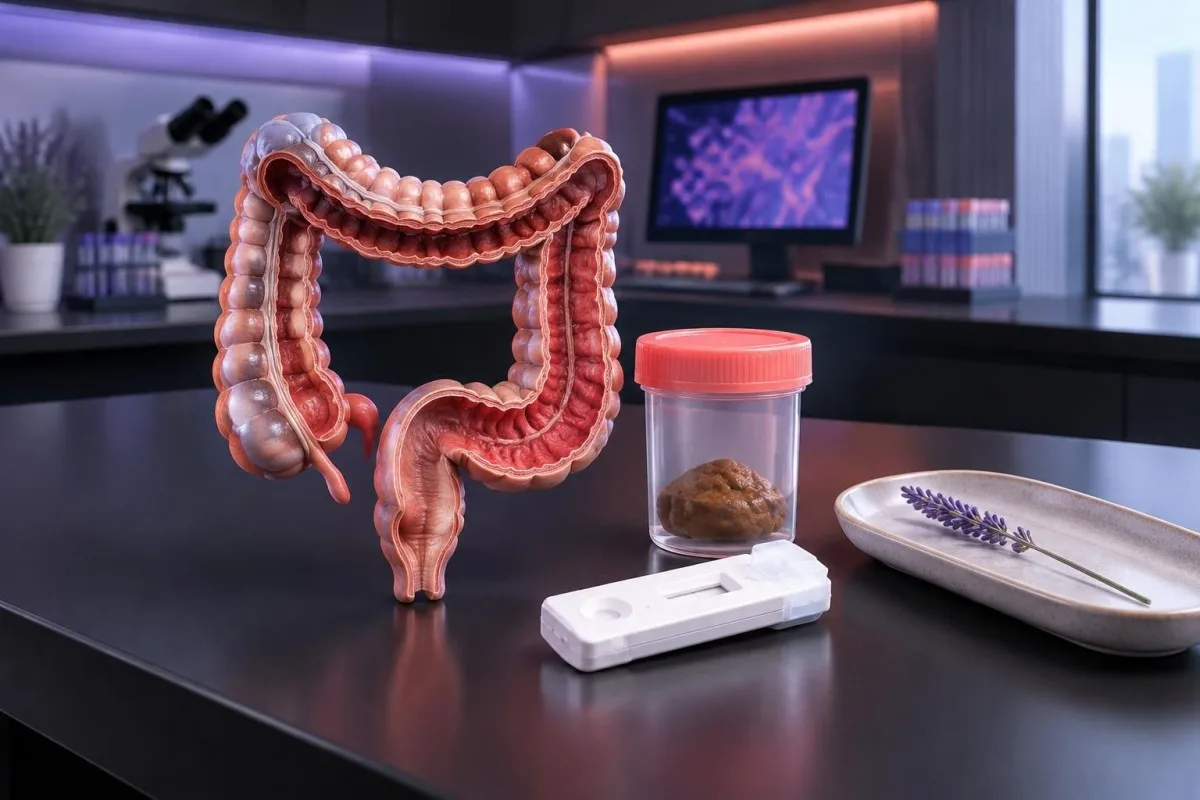
Fecal calprotectin can show intestinal inflammatory activity, but it cannot identify Crohn's disease or ulcerative colitis by itself. The result becomes useful when combined with symptoms, infection testing, blood markers, imaging and, when appropriate, colonoscopy.

Pangunang mga punto
- Calprotectin below 50 µg/g is commonly considered normal in adults, although laboratories use different assays and cutoffs.
- Borderline nga resulta ang mga 50-150 o 50-250 µg/g kasagarang nagkinahanglan og klinikal nga konteksto ug usahay pagsubli sa pagsulay imbes nga dayon nga pagdayagnos og IBD.
- Taas nga mga resulta above 150-250 µg/g increase concern for intestinal inflammation, but infection, NSAIDs, coeliac disease and other conditions can also raise calprotectin.
- Usa ka negatibong resulta lowers the likelihood of active colonic IBD but does not completely exclude mild, localised or small-bowel Crohn's disease.
- Lactoferrin sa hugaw is another neutrophil-derived marker; a positive result supports intestinal inflammation but cannot distinguish IBD from infection.
- Pagsusi alang sa mga pathogen importante tungod kay ang C. difficile, Campylobacter, Salmonella ug uban pang mga impeksiyon mahimong hinungdan sa kalibanga ug taas nga calprotectin.
- FIT o occult blood detects haemoglobin, not IBD itself; a positive result may require separate evaluation for bleeding, polyps or other bowel conditions.
- Mga sintomas nga kinahanglan ug dayon nga pagtagad sama sa kusog nga pagdugo sa rectum, dehydration, grabeng kasakit sa tiyan, padayon nga pagsuka o hilanat nanginahanglan og dinaliang medikal nga pagsusi bisan unsa pa ang calprotectin.
What does a stool test for IBD actually measure?
A stool test for IBD usually measures fecal calprotectin, a protein released mainly by neutrophils during intestinal tissue inflammation. Gibanabana niini ang kalihokan sa panghubag sa tinai, apan dili niini mailhan ang Crohn's disease o ulcerative colitis sa kaugalingon lamang; ang resulta kinahanglang hubaron uban sa mga sintomas, mga pagsulay alang sa impeksiyon ug uban pang mga imbestigasyon.
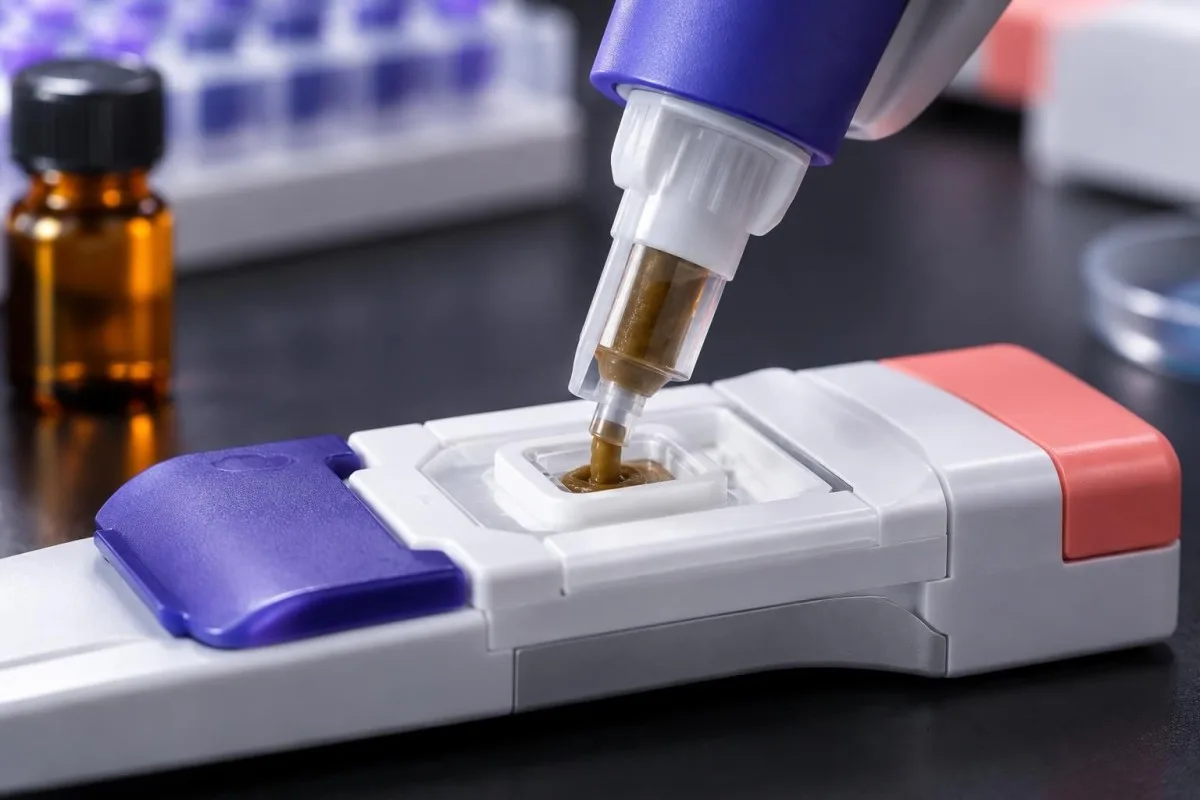
Fecal calprotectin gitaho sa micrograms matag gramo (µg/g) sa hugaw, ug daghang laboratoryo alang sa mga hamtong naghulagway sa mga bili nga ubos sa 50 µg/g isip normal. Ang protina medyo lig-on sa hugaw sulod sa pipila ka adlaw, nga naghimo niini nga praktikal alang sa outpatient nga pagsusi, apan ang kalig-on dili makahimo sa resulta nga espesipiko sa usa ka sakit: ang taas nga bili nagpasabot nga adunay kalihokan sa neutrophil sa usa ka dapit sa gastrointestinal tract.
Calprotectin is a probability marker, not a diagnostic label. Ang bili nga 380 µg/g mahimong angay sa aktibong ulcerative colitis, Crohn's disease, bacterial gastroenteritis, panghubag sa diverticula o laing sakit sa tinai, busa dili matino sa numero kung unsang diagnosis ang hinungdan. Ang rason nga iuban kini sa mga doktor sa ubang ebidensiya mao nga ang samang biyolohikal nga tubag mahimong motungha gikan sa daghang lain-laing hinungdan.
Ang resulta sa hugaw nagpakita usab kon asa nahitabo ang panghubag. Ang panghubag sa colon kasagarang mopagawas og igo nga marker ngadto sa hugaw aron makamugna og mas klarong pagsaka, samtang ang malumo nga isolated ileal Crohn's disease usahay makahatag og mas ubos nga resulta; usa kini sa mga hinungdan nganong ang normal nga test dili kanunay makapawalay-bisa sa nagpadayong mga sintomas. Ang giya sa pagtandi sa calprotectin ug lactoferrin explains why different stool markers can disagree.
Girekomenda sa National Institute for Health and Care Excellence ang fecal calprotectin isip tabang kung ang mga clinician nagpalahi sa gidudahang inflammatory bowel disease gikan sa dili makapahubag nga mga kondisyon sama sa irritable bowel syndrome, imbes nga gamiton kini isip nag-inusarang diagnostic test (NICE, 2013). Sa praktikal nga pagkasulti, labing mapuslanon ang pagsusi kung klaro ang pangutana sa wala pa ang pagsusi: aduna bay igo nga ebidensiya sa panghubag sa tinai aron mahatagan og katarungan ang dugang nga ebalwasyon?
Why the result is not the same as an IBD diagnosis
A calprotectin result cannot tell Crohn's disease from ulcerative colitis because both conditions can recruit neutrophils into the intestinal lining. It also cannot reliably distinguish active IBD from a short-lived infection when the sample is collected during acute diarrhoea; a pathogen panel and symptom timeline may be more informative in that setting.
Ang resulta labing lig-on kung makapausab kini og desisyon. Pananglitan, ang usa ka tawo nga adunay unom ka semana nga kalibanga, pagkunhod sa timbang ug calprotectin nga 620 µg/g nanginahanglan og lahi nga agianan kumpara sa usa ka tawo nga panagsa ra moburot ang tiyan, walay pagkunhod sa timbang ug calprotectin nga 42 µg/g. Walay usa sa mga numero lamang ang makapamatuod o makasalikway sa usa ka diagnosis.
What does a positive fecal calprotectin result mean?
A positive fecal calprotectin result means that intestinal inflammatory activity is more likely, not that IBD has been confirmed. Values above roughly 150-250 µg/g commonly prompt closer assessment, but the appropriate cutoff depends on the assay, age, symptoms, medications and whether infection has been excluded.
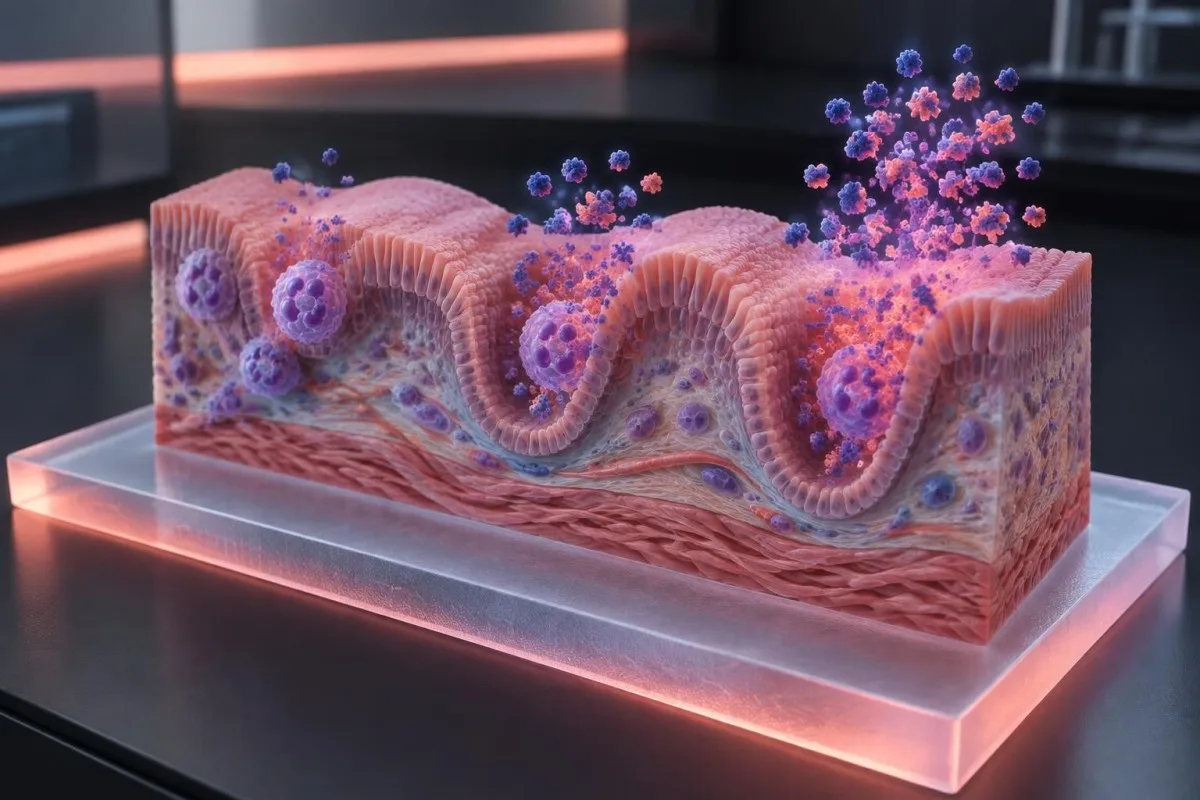
Many laboratories use less than 50 µg/g as a normal adult result, 50-120 or 50-150 µg/g as borderline, and values above 150-250 µg/g as clearly elevated. These are practical bands rather than universal laws: some services use 100 µg/g as a referral threshold, while others use 250 µg/g to improve specificity and reduce unnecessary colonoscopies. Always read the reference interval printed beside your own result.
A value above 250 µg/g is more concerning for active intestinal inflammation than a value of 75 µg/g, but the relationship is not linear. Calprotectin of 500 µg/g is not automatically twice as clinically serious as 250 µg/g, and it does not predict the exact length or location of affected bowel. It is better treated as a signal that needs explanation.
Ang mga hinungdan nga dili IBD sa pagtaas naglakip sa bacterial o parasitic gastroenteritis, C. difficile, regular nga paggamit sa NSAID, colorectal neoplasia, diverticulitis ug coeliac disease. Ang mga proton pump inhibitor ug bag-uhay nga kagubot sa gastrointestinal mahimo usab makapalibog sa paghubad sa resulta sa pipila ka pasyente, bisan pa nga dili kaayo segurado ang gidak-on ug pagkamakanunayon niini nga mga epekto kon itandi sa epekto sa impeksiyon o NSAID.
Ang meta-analysis sa 2021 ni Turvill ug mga kauban nakakaplag nga ang fecal calprotectin makatabang sa pagbulag sa panghubag gikan sa dili-panghubag nga mga sintomas sa tinai, apan ang performance sa diagnosis mausab depende sa cutoff ug sa populasyon sa mga pasyente. Kana nga kawalay-kasiguroan maoy nagpasabot nganong ang medyo positibong resulta kasagarang mosangpot sa pagsubli sa sample o dugang nga mga pagsulay, samtang ang hilabihan kataas nga resulta uban sa mga sintomas nga red flag mahimong mosangpot dayon sa pagtimbang-timbang sa gastroenterology.
| Lebel | Range | Kahulogan |
|---|---|---|
| Kasagaran normal | <50 µg/g | Active colonic inflammation is less likely, although mild or isolated small-bowel disease is not completely excluded. |
| Linya sa Utlanan | 50-150 µg/g | Ang pag-usab sa pagsulay ug pagrepaso sa impeksiyon, mga NSAID, bag-ong sakit ug mga sintomas kasagarang mas mapuslanon kaysa diha-diha nga paghatag og label. |
| Klarong taas | 150-250 µg/g | Inflammation becomes more plausible; clinicians may arrange further assessment, especially with diarrhoea, bleeding or weight loss. |
| Taas | >250 µg/g | Posible ang dakong panghubag sa tinai, apan kinahanglan gihapon hunahunaon ang impeksiyon ug uban pang mga hinungdan sa dili pa ma-diagnose ang IBD. |
Nganong naggamit og lain-laing cutoff ang mga laboratoryo
Ang mga assay sa calprotectin dili hingpit nga mapulihan-pulihan, busa ang resulta nga 120 µg/g mahimong iklasipikar sa lahi nga paagi sa duha ka laboratoryo. Ang mga kalainan sa mga antibody, pamaagi sa pagkuha, mga yunit sa pagreport ug mga populasyon nga reperensiya mahimong makausab sa makita nga threshold og pipila ka napulo ka microgram matag gramo.
Ang borderline calprotectin retesting guide naglangkob sa praktikal nga mga pangutana nga importante sa dili pa usbon ang pagkuha sa sample, lakip ang bag-uhay nga antibiotics, NSAIDs, acute nga kalibanga ug kon nag-ayo ba ang mga sintomas.
Makapawala ba sa posibilidad sa Crohn's disease o colitis ang negatibong pagsusi sa hugaw?
Ang negatibong resulta sa calprotectin makapamenos sa posibilidad sa aktibong colonic IBD, apan dili niini mapanghimakak ang tanang porma sa Crohn's disease o ulcerative colitis. The chance of a false-negative result is higher with mild disease, disease limited to a short segment, isolated small-bowel Crohn's disease, sampling problems or treatment that has already reduced inflammation.
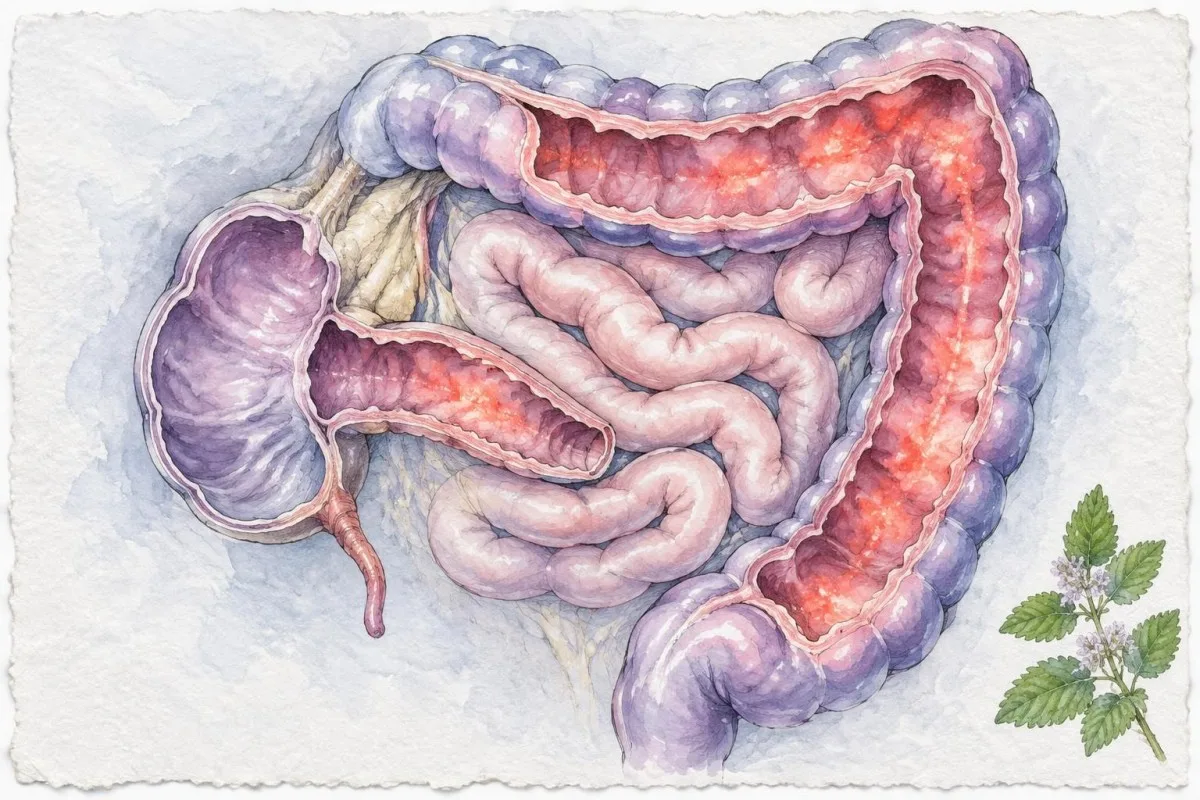
A low result is most reassuring when the sample was collected during active symptoms, before anti-inflammatory treatment, and when the person has no anaemia, raised C-reactive protein, rectal bleeding or unexplained weight loss. It is less reassuring when the only abnormality is persistent right-sided abdominal pain, because small-bowel disease can be harder for stool markers to capture.
For a hypothetical 29-year-old with three weeks of loose stools, calprotectin of 38 µg/g, normal haemoglobin and no nocturnal symptoms, immediate IBD is less likely than a self-limited or functional explanation. For a hypothetical 29-year-old with calprotectin of 38 µg/g, ferritin of 9 ng/mL and repeated nocturnal diarrhoea, the same stool value would not end the investigation.
Why can stool findings and symptoms disagree?
Discordant results usually mean that the marker, the symptoms or the timing needs closer examination; they do not automatically mean that one result is wrong. High calprotectin with mild symptoms may reflect a recent infection or medication effect, while severe symptoms with low calprotectin may reflect non-inflammatory disease, small-bowel disease, sampling limitations or a problem outside the test's target.
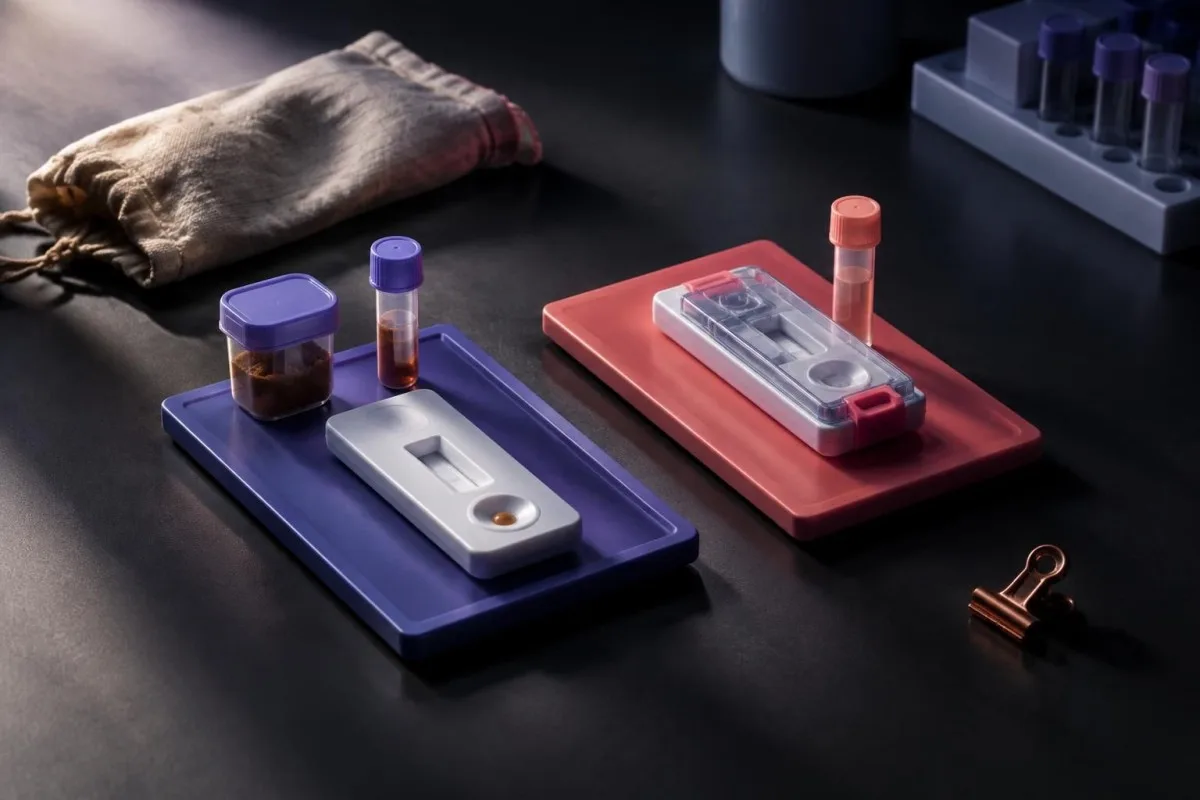
Ang taas nga calprotectin uban sa negatibong pagsusi alang sa mga pathogen ug medyo diyutay nga mga sintomas mahimong mahitabo sa sayong IBD, nagkahupay nga impeksiyon, pagkaladlad sa NSAID o usa ka estruktural nga problema sa tinai. Busa, ang usa ka bili nga 280 µg/g kinahanglang magpahinabo sa pagrepaso sa mga tambal ug sakit, dili sa paghunahuna nga adunay flare. Ang pagsubli sa pagsulay human mawala ang gidudahang temporaryong hinungdan makatino kon nagpadayon ba ang signal.
Severe symptoms with a low marker require a different question: is the symptom caused by mucosal neutrophil inflammation at all? Bile acid diarrhoea, lactose intolerance, coeliac disease, pancreatic insufficiency, microscopic colitis and functional bowel disorders can produce significant symptoms with little calprotectin rise. Some of these conditions require separate blood, breath, stool or tissue-based testing.
Calprotectin and C-reactive protein can also disagree because they measure different compartments. Calprotectin reflects neutrophil activity reaching stool, whereas C-reactive protein reflects a systemic liver response and may remain normal in localised disease. Conversely, obesity, infection outside the bowel or another inflammatory condition can raise C-reactive protein without causing IBD.
Ang mapuslanong sumbanan sa follow-up mao ang pagpadayon imbes nga usa lang ka nahilit nga abnormalidad. Pananglitan, ang mga bili sa calprotectin nga 310, 290 ug 275 µg/g sulod sa walo ka semana mas makapabalaka kay sa usa ka resulta nga 310 µg/g human sa gastroenteritis, ilabina kung mausab usab ang haemoglobin, albumin o platelet count. Ang giya sa uso sa platelet nagpatin-aw nganong ang pagsaka sa ihap sa platelet makadugang og konteksto sa panghubag sa tinai.
Praktikal nga checklist alang sa mga dili magkatakdo nga resulta
When symptoms and calprotectin disagree, check the sample date against the onset of diarrhoea, antibiotics, NSAIDs and anti-inflammatory treatment. Also compare the result with haemoglobin, albumin, C-reactive protein, platelet count, weight change and whether symptoms wake the person at night.
Ang pagtandi sa WBC ug CRP is useful when a stool marker and systemic inflammatory markers do not point in the same direction. No combination is perfect, but patterns are generally more informative than isolated flags.
Which related stool findings matter in an IBD workup?
Related stool findings help identify inflammation, bleeding and infection, but each test answers a different question. Fecal lactoferrin supports neutrophil activity, FIT or occult-blood testing detects haemoglobin, and pathogen testing looks for infectious causes that can imitate an IBD flare.
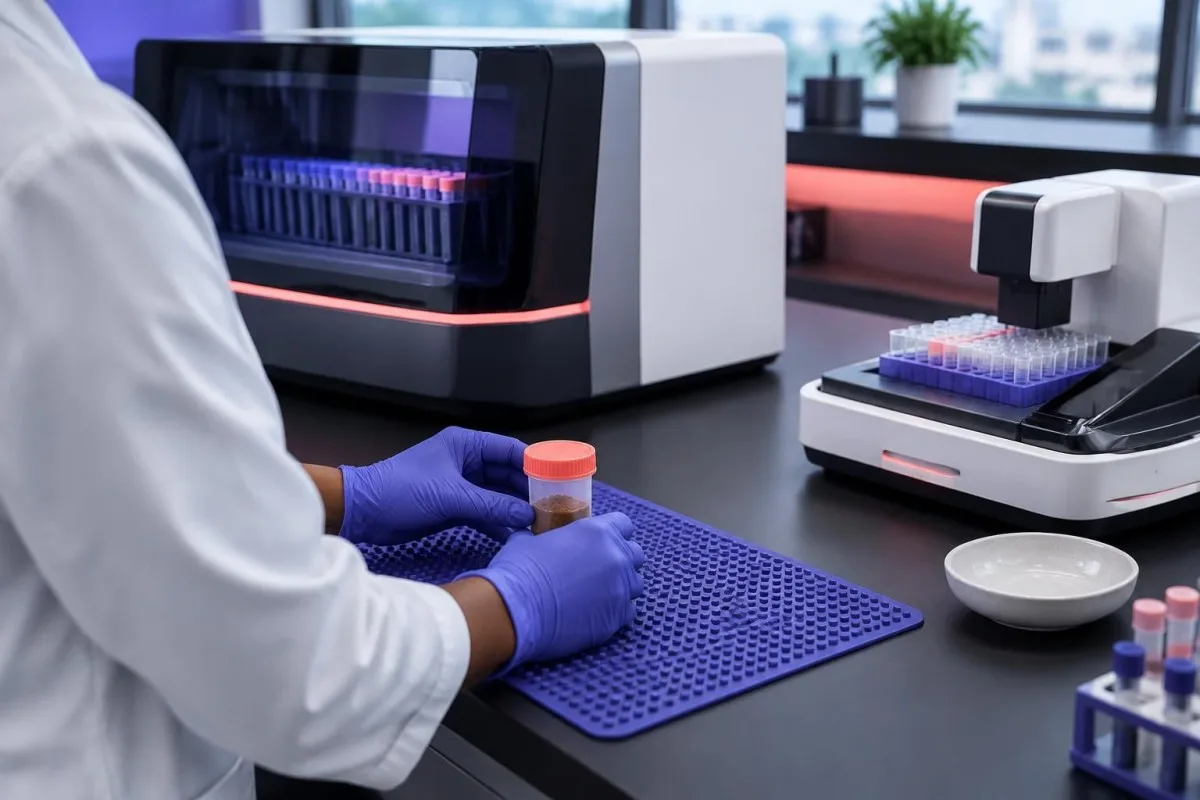
Fecal lactoferrin is a neutrophil-associated protein that can rise in active intestinal inflammation, with many laboratories reporting it qualitatively or in µg/g. A positive result can support IBD, but it can also occur with bacterial gastroenteritis, colorectal inflammation and other conditions; calprotectin and lactoferrin are complementary rather than interchangeable.
Pagsusi sa mga pathogen sa hugaw may include culture, multiplex PCR, ova-and-parasite testing or targeted assays based on travel, exposures and immune status. C. difficile deserves special attention because it can cause diarrhoea and raised calprotectin in people with or without known IBD, and treating it as an IBD flare without testing can lead to the wrong therapy.
FIT ug mga pagsusi alang sa occult blood sa hugaw makamatikod og hemoglobin, dili sa immune nga kalihokan sa tinai. Ang positibong FIT mahimong mahitabo tungod sa almoranas, mga polyp, colorectal cancer, impeksiyon o IBD, samtang ang negatibong FIT dili makapawala sa posibilidad sa IBD tungod kay ang panghubag mahimong dili magdugo sa paagi nga makita sa panahon sa pagkolekta; ang pagpasabot sa positibong FIT nagtabang sa pagpasabot niana nga kalainan.
Stool alpha-1 antitrypsin can support the investigation of protein-losing enteropathy, especially when low albumin accompanies diarrhoea or oedema, but it is not a routine IBD confirmation test. Stool fat, pancreatic elastase and microbiome panels answer different clinical questions and should not be treated as substitutes for calprotectin or endoscopic assessment.
Nganong ang pagsulay alang sa impeksiyon kinahanglang himoon sayo
Sa acute nga kalibanga nga molungtad og ubos sa 14 ka adlaw, ang impeksiyon kasagarang mas dihadiha nga katin-awan kaysa bag-ong IBD, ilabina kon adunay hilanat, exposure sa panimalay o bag-ong pagbiyahe. Ang positibong resulta sa pathogen makahatag og temporaryong katin-awan sa taas nga calprotectin, bisan pa nga ang nagpadayong mga sintomas human sa pagtambal mahimo gihapong magkinahanglan og pag-usab sa inflammatory testing.
Ang giya sa resulta sa C. difficile nagpasabot nganong mahimong dili magkauyon ang mga resulta sa GDH, toxin ug PCR. Ang pagkakita og organismo dili kanunay nagpasabot og sakit nga gipahinabo sa toxin, busa importante ang pamaagi sa laboratoryo ug ang klinikal nga hulagway.
How do stool results fit the diagnosis of Crohn's disease or ulcerative colitis?
Stool markers support an IBD workup by estimating inflammatory activity, while diagnosis usually depends on the combined pattern from history, examination, blood tests, endoscopy, tissue examination and imaging. Colonoscopy with biopsies is often central for suspected colitis, whereas magnetic resonance enterography or capsule assessment may be needed when small-bowel Crohn's disease is suspected.

The diagnosis of ulcerative colitis usually depends on a compatible symptom pattern and continuous mucosal inflammation beginning in the rectum, supported by colonoscopy and tissue examination. Crohn's disease can affect any part of the gastrointestinal tract, often in discontinuous areas, so imaging and small-bowel evaluation may be more important when symptoms suggest disease beyond the colon.
Ang mga pagsulay sa dugo nagdugang og lahi nga lebel sa ebidensiya. Ang ubos nga hemoglobin, ubos nga ferritin, ubos nga albumin, taas nga ihap sa platelet o taas nga C-reactive protein mahimong mosuporta sa aktibo o komplikadong sakit, apan ang normal nga mga pagsulay sa dugo dili magsalikway sa IBD. Ang giya sa pagtuon sa puthaw labi na nga may kalabotan tungod kay ang kakulang sa iron mahimong motungha pinaagi sa dugayng pagkawala sa dugo sa tinai o dili maayong pagsuyop sa wala pa dayag ang anemia.
Ang resulta sa calprotectin mahimong makaapekto sa kadinalian sa referral imbes nga mahatag ang diagnosis. Ang pasyenteng adunay chronic nga kalibanga ug 700 µg/g mahimong magkinahanglan og paspas nga pagsusi sa gastroenterology, samtang ang pasyenteng adunay 48 µg/g ug walay alarm features mahimong sa sinugdan madumala pinaagi sa pag-obserbar o pagsusi alang sa dili inflammatory nga mga hinungdan, depende sa kompletong kasaysayan.
The diagnosis also depends on excluding mimics. Coeliac disease, intestinal infection, colorectal neoplasia, microscopic colitis, medication injury and ischaemic or diverticular inflammation can overlap clinically with IBD. That is why the same stool result can lead to different next steps in different people.
Kung mas lagmit na ang colonoscopy o imaging
Mas lagmit nga himuon ang endoscopic nga pagtimbang-timbang kung magpabiling labaw sa lokal nga referral threshold ang calprotectin, magpadayon ang mga sintomas sulod sa kapin upat hangtod unom ka semana, adunay pagdugo sa rectum, anemia tungod sa kakulang sa iron, pagkawala sa timbang, kalibanga sa gabii o lig-on nga kasaysayan sa pamilya. Ang eksaktong panahon magkalahi depende sa edad, kabug-at sa mga sintomas ug pagkaanaa sa espesyalistang pag-atiman.
Kung gikabalak-an ang Crohn's disease sa gamay nga tinai, ang normal nga colonoscopy ug ubos nga calprotectin mahimong dili gihapon igo kung magpadayon ang sakit nga makababag, dili maipasabot nga kakulangan sa iron o pagkawala sa timbang. Ang cross-sectional imaging makaila sa mga kausaban sa bungbong sa tinai ug gawas sa lumen nga dili masukod sa mga marker sa hugaw.
What does calprotectin mean when IBD is already diagnosed?
In established IBD, calprotectin is mainly a monitoring marker: a rising value can precede symptoms, while a falling value may support a response to treatment. Dili gihapon niini ikapakita ang tibuok kabug-at sa sakit sa kaugalingon, ug ang mga desisyon sa pagtambal kinahanglang magtagad sa mga sintomas, mga nakit-an sa endoscopy, mga pagsulay sa dugo, lebel sa tambal ug mga komplikasyon.
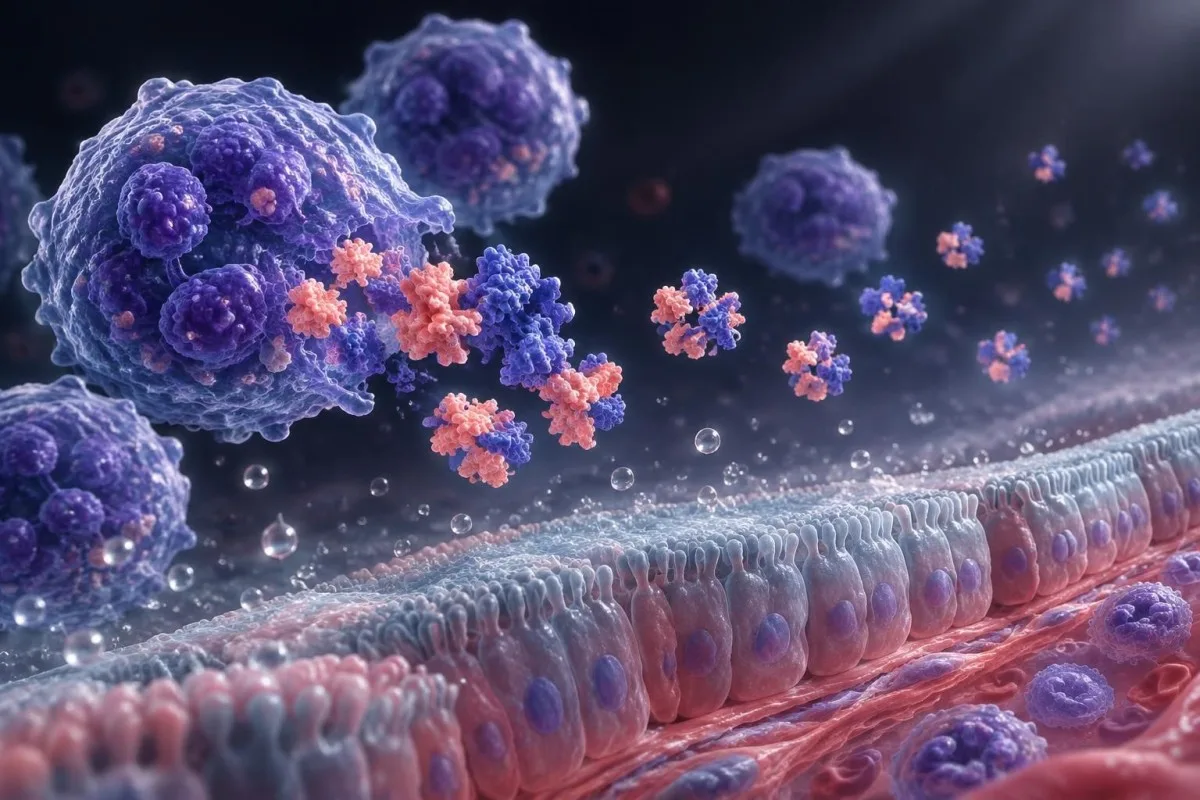
A single calprotectin value is less useful for monitoring than a trend measured with the same laboratory method. For example, a fall from 900 to 180 µg/g suggests reduced neutrophil activity, but 180 µg/g may still indicate residual inflammation; a person who feels better can still have incomplete mucosal healing.
The STRIDE-II treat-to-target recommendations identify normalisation or meaningful reduction in biomarkers such as fecal calprotectin as an intermediate treatment target, while recognising that biomarker thresholds are not absolute (Turner et al., 2021). Many clinicians use a range around 100-250 µg/g in monitoring discussions, but the target depends on disease history, assay and the planned treatment strategy.
A rising result can be clinically useful before a flare becomes obvious. A change from 70 to 420 µg/g over two months is more informative than a small change from 70 to 95 µg/g, particularly if loose stools, urgency, night waking or rectal bleeding have also returned. The trend can prompt adherence review, infection testing or medication assessment.
The opposite pattern also needs caution. Persistent diarrhoea with calprotectin falling from 500 to 80 µg/g may reflect controlled mucosal inflammation plus bile acid diarrhoea, infection, medication intolerance or functional symptoms. The giya sa lebel sa infliximab nagpakita nganong ang pag-assess sa pagkaladlad sa tambal ug sa tubag sa immune system mahimong bulagon kung dili magkauyon ang mga sintomas ug mga marka sa panghubag.
Unsa ka kanunay kini angay sublion?
Ang pagbalik sa pagsusuri nagdepende sa rason sa pagsusi. Ang borderline nga resulta human sa grabeng sakit mahimong balikon mga upat hangtod walo ka semana human mawala ang hinungdan, samtang ang dakong taas nga resulta nga adunay mga senyales sa peligro dili angay langanon aron makakuha og laing numero.
For established IBD, specialists may monitor every few months during treatment changes and less often during stable remission, but there is no universal schedule. Repeating the test through the same laboratory reduces apparent changes caused by assay differences rather than biology.
Unsaon nimo pag-andam ug pagbasa sa resulta sa sample?
Most fecal calprotectin tests do not require fasting, but accurate interpretation depends on proper collection, medication history and the timing of symptoms. Ang mga instruksyon sa laboratoryo maoy prayoridad tungod kay lahi-lahi ang mga sudlanan sa sample, mga limitasyon sa pagtipig ug mga himan sa pagkuha tali sa mga serbisyo.
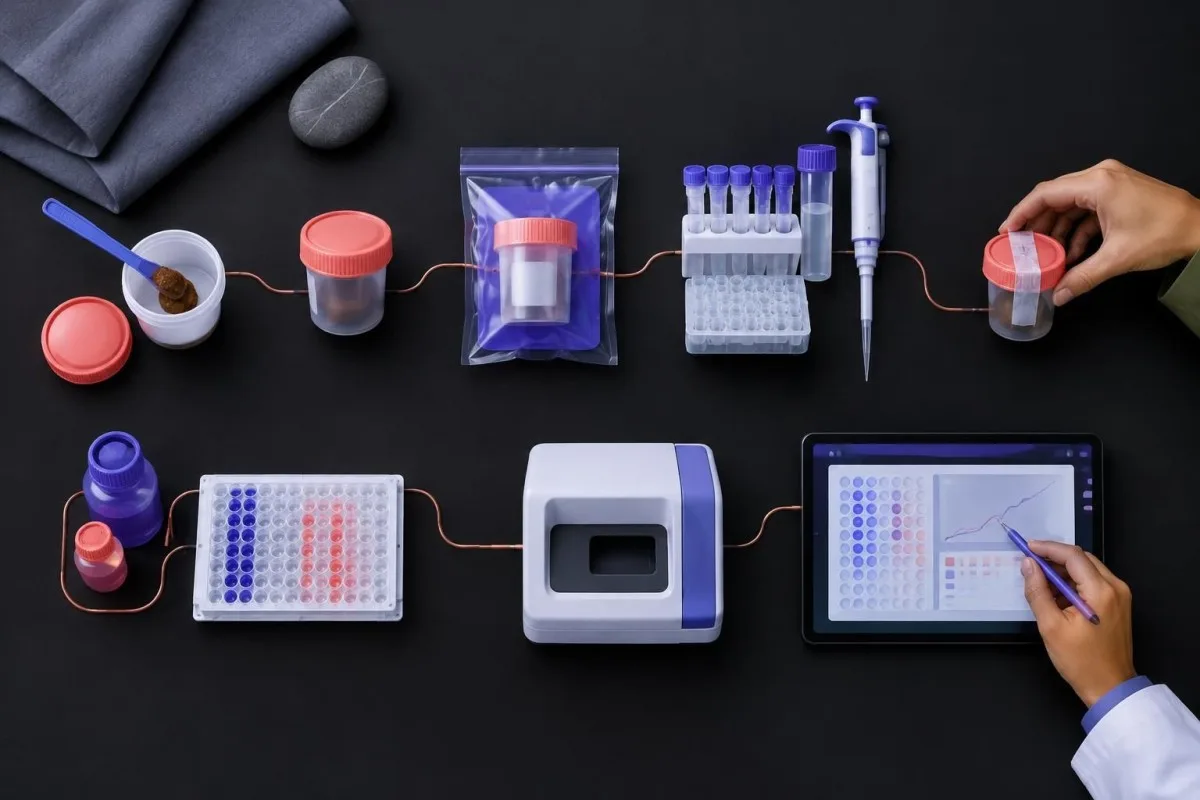
Avoid contaminating the sample with urine, toilet water or disinfectant, and collect from several portions of the stool when the instructions permit. A sample collected during the most symptomatic period may be more representative than one collected after diarrhoea has already resolved, but it should still be transported within the laboratory's stated time window.
Tell the clinician about NSAIDs such as ibuprofen or naproxen, recent antibiotics, proton pump inhibitors, recent travel, gastrointestinal infection, pregnancy, age and current IBD treatment. NSAID exposure is particularly relevant because it can cause intestinal mucosal irritation and produce an elevated calprotectin without Crohn's disease or ulcerative colitis.
Do not compare your value with an internet cutoff without checking the units and reference range. One laboratory may report 50 µg/g as the upper reference limit, while another uses 100 µg/g for a decision pathway; the same number can therefore lead to different flags even when the underlying biology is similar.
Alang sa usa ka pananglitan nga 52-anyos nga adlaw-adlaw nag-inom og naproxen ug adunay calprotectin nga 165 µg/g, ang praktikal nga sunod nga lakang mahimong pagrepaso sa tambal ug pag-usab sa pagsulay imbes nga diha-diha nga pagtambal sa IBD, kung luwas sa klinika ug nauyonan sa nagreseta. Alang sa usa ka 52-anyos nga adunay samang resulta dugang sa makita nga dugo ug pagkunhod sa timbang, ang dinaliang pagsusi maoy unahon kaysa paghulat sa pagsubli sa pagsulay.
Iupod ang resulta sa may kalabotan nga datos sa laboratoryo
Molambo ang paghubad kung ang report sa hugaw tan-awon uban sa mga petsa, sintomas, haemoglobin, ferritin, albumin, C-reactive protein ug ihap sa platelet. Ang resulta nga 240 µg/g uban sa nagkakunhod nga haemoglobin mas makapabalaka kaysa 240 µg/g human sa naresolbang impeksiyon nga lig-on ang mga pagsusi sa dugo.
Ang luwas nga personal nga rekord makatabang sa pagtipig sa daghang petsa nga magkatapad, apan dili kini angay mopuli sa pagrepaso sa usa ka klinisyan nga makasusi sa tibuok kasaysayan ug makahukom kon angay ba ang pagsubli sa pagsulay, imaging o endoscopy.
Kanus-a ang positibo o negatibong resulta angay sundon dayon?
Urgent care is guided by symptoms and overall risk, not by calprotectin alone. Ang kusog o padayon nga pagdugo sa rectum, itom nga hugaw, grabe o nagkagrabeng sakit sa tiyan, balik-balik nga pagsuka, pagkahimatay, kalibog, dakong dehydration, taas nga hilanat o paspas nga pagkadaot nagkinahanglan og dali nga medikal nga pagsusi bisan normal ang stool marker.
Ang taas nga resulta sa calprotectin nga walay emergency nga mga sintomas nanginahanglan gihapon og tukmang follow-up, ilabina kung kanunay kini molapas sa 250 µg/g o kauban sa anemia, ubos nga albumin, pagkunhod sa timbang o nocturnal nga kalibanga. Ang resulta dili magsulti kon gikinahanglan ba ang pag-atiman sa ospital, apan kadtong kaubang mga feature mahimong magpaila og mas mahinungdanong sakit o laing seryosong problema sa tinai.
A low result should not delay care for red flags. A normal calprotectin can reduce the likelihood of active colonic inflammation, but it cannot neutralise symptoms such as ongoing rectal bleeding, dehydration, severe pain or unexplained weight loss. The giya sa dugo sa hugaw describes why colour and quantity affect urgency.
Ang mga bata, tigulang, mabdos ug mga pasyenteng huyang ang resistensya tingali manginahanglan og lahi nga mga sukaranan o mas ubos nga sukaranan alang sa pagtimbang-timbang. Ang mga konsentrasyon sa calprotectin natural nga mas taas sa mga gagmay kaayong bata, ug ang mga cutoff sa hamtong dili awtomatikong angay gamiton sa mga masuso o gagmayng bata; gikinahanglan ang interpretasyon nga piho sa edad.
The safest next step is to ask what the result changes: does it support repeat testing, infection evaluation, gastroenterology referral, treatment monitoring or urgent assessment? For information about how medical content and safety boundaries are reviewed, see the mga sumbanan sa medikal nga sulod ug ang Lupon sa Medikal nga Magtatambag.
Questions to take to the appointment
Pangutan-a kung unsang cutoff ang gigamit sa inyong laboratoryo, kung ang resulta angay sublion, kung nahuman ba ang pagsulay alang sa impeksiyon ug kung ang mga tambal mahimong nagpataas o nagpapaubos sa bili. Pangutan-a usab kung ang sumbanan sa mga sintomas nagsugyot ba og sakit sa colon, sakit sa gamayng tinai o dili panghubag nga hinungdan.
Bring the collection date, symptom timeline, medication list and any related blood results. A clinician can interpret a calprotectin value of 180 µg/g very differently when it was collected during acute diarrhoea than when it remains elevated over three symptom-free months.
Mga kanunayng gipangutana
Unsa ang normal nga lebel sa fecal calprotectin para sa mga hamtong?
A fecal calprotectin level below 50 µg/g is commonly considered normal for adults, but laboratories use different assays and reference intervals. Results from 50-150 µg/g are often treated as borderline, while values above 150-250 µg/g commonly prompt closer clinical review. A normal result lowers the likelihood of active colonic IBD but does not completely exclude mild or isolated small-bowel Crohn's disease.
Does a high calprotectin result mean I have Crohn's disease?
A high calprotectin result does not diagnose Crohn's disease because infection, NSAID-related bowel irritation, coeliac disease, diverticulitis and other conditions can also raise the marker. Values above 250 µg/g are more concerning for significant intestinal inflammation than values near 75 µg/g, but the number still needs symptom, medication and pathogen context. Diagnosis usually requires a combination of blood tests, endoscopy, tissue examination and imaging.
Mahitabo ba ang ulcerative colitis bisan normal ang calprotectin?
Ang ulcerative colitis usahay mahitabo uban sa normal o hapit-normal nga calprotectin, ilabina kung malumo, limitado o nag-uswag na ang pag-ayo sa panghubag pinaagi sa pagtambal. Ang resulta nga ubos sa 50 µg/g nagpasabot nga mas dili lagmit ang dakong aktibong panghubag sa kolon, apan ang padayon nga pagdugo sa rektum, diarrhea sa kagabhion, anemia o pagkunhod sa timbang nagkinahanglan gihapon og medikal nga pagtimbang-timbang. Kinahanglang hubaron ang resulta uban sa mga sintomas ug, kung gikinahanglan, colonoscopy.
Unsa kadugay ko maghulat sa dili pa usbon ang borderline nga calprotectin?
Borderline calprotectin results around 50-150 or 50-250 µg/g are often repeated after approximately 4-8 weeks, depending on symptoms and the suspected temporary trigger. The repeat should be timed after acute gastroenteritis has resolved and after a clinician reviews medicines such as NSAIDs. A persistently elevated result is more informative than one borderline value, but red-flag symptoms should prompt assessment sooner.
Can an infection cause a positive stool test for IBD?
An intestinal infection can raise fecal calprotectin above 250 µg/g and can closely imitate an IBD flare. C. difficile, Campylobacter, Salmonella and other pathogens may cause diarrhoea, fever and neutrophil activity in stool. Pathogen testing is therefore important before interpreting an elevated calprotectin as new Crohn's disease or ulcerative colitis, although persistent symptoms after infection may still need IBD evaluation.
What should I do if my calprotectin is high but I feel well?
Ang taas nga resulta sa calprotectin nga walay sintomas angay susihon imbes pasagdan, ilabina kon balik-balik nga labaw sa 250 µg/g. Mahimong susihon sa clinician ang oras sa pagkolekta, paggamit og NSAID, bag-ohay nga impeksiyon, mga pagsusi sa dugo ug kon angay ba ang pag-usab sa sample. Ang pagbati nga maayo dili garantiya nga walay panghubag sa tinai, apan ang usa ka nahimulag nga taas nga resulta dili usab makapamatuod sa IBD.
Is a stool test enough to diagnose inflammatory bowel disease?
A stool test is not enough to diagnose inflammatory bowel disease because fecal calprotectin measures intestinal inflammatory activity rather than the cause, location or microscopic pattern. A value below 50 µg/g can make active colonic IBD less likely, while a value above 250 µg/g can support further investigation. Crohn's disease and ulcerative colitis are diagnosed using the combined evidence from symptoms, examination, blood tests, endoscopy, tissue examination and imaging.
Paipatin-aw ang imong resulta sa blood test
I-upload ang report sa imong laboratoryo ug ipatin-aw sa AI sa Kantesti ang matag biomarker sa yano nga pinulongan sulod sa pipila ka segundo. Gigamit sa kapin sa 2 ka milyon ka tawo sa tibuok kalibotan.
Mga Reperensya
- Klein, T., Mitchell, S., & Weber, H. (2026). BUN/Creatinine Ratio Gipasabut: Giya sa Pagsulay sa Pag-andar sa Bato. Panukiduki Medikal sa Kantesti AI. DOI
- Klein, T., Mitchell, S., & Weber, H. (2026). Urobilinogen sa Ihi nga Pagsulay: Kompleto nga Giya sa Urinalysis 2026. Panukiduki Medikal sa Kantesti AI. DOI
- National Institute for Health and Care Excellence (2013). Faecal calprotectin diagnostic tests for inflammatory diseases of the bowel. NICE Diagnostics Guidance DG11.
- Maaser C et al. (2019). ECCO-ESGAR nga Giya alang sa Pagtimbang-timbang sa Dayagnostiko sa IBD Bahin 1: Inisyal nga dayagnosis, pagmonitor sa nahibal-ang IBD, pag-ila sa mga komplikasyon. Journal of Crohn's and Colitis. DOI PubMed
- Turner D et al. (2021). STRIDE-II: An Update on the Selecting Therapeutic Targets in Inflammatory Bowel Disease initiative of the International Organization for the Study of IBD. Gastroenterology. DOI PubMed
- 2M+Mga gisusi nga eksaminasyon
- 127+Mga nasud
- 100+Mga pinulongan
Mahitungod sa medikal nga team


Mga E-E-A-T Trust Signals
Kasinatian
Pagsusi sa klinika nga gipangulohan sa doktor sa mga workflow sa interpretasyon sa lab.
Kahanas
Pokus sa medisina sa laboratoryo kung giunsa paglihok ang mga biomarker sa konteksto sa klinika.
Pagka-awtorisado
Gisusi sa medisina ni Dr. Thomas Klein, uban sa mga kontribusyon ni Dr. Sarah Mitchell ug Prof. Dr. Hans Weber.
Kasaligan
Interpretasyon nga base sa ebidensya, nga adunay klaro nga mga agianan sa sunod nga buhat aron makunhuran ang kabalaka.




Disclaimer sa medisina
Kini nga artikulo para sa katuyoan sa edukasyon ra ug dili kini mosangpot sa medikal nga tambag. Kanunay mokonsulta sa usa ka kwalipikado nga healthcare provider alang sa mga desisyon sa diagnosis ug pagtambal.
Gibilin · Kontaka ang team sa editoryal
Gipatik sa Kantesti Ltd, narehistro sa England ug Wales, numero sa kompanya. 17090423, London, United Kingdom.
