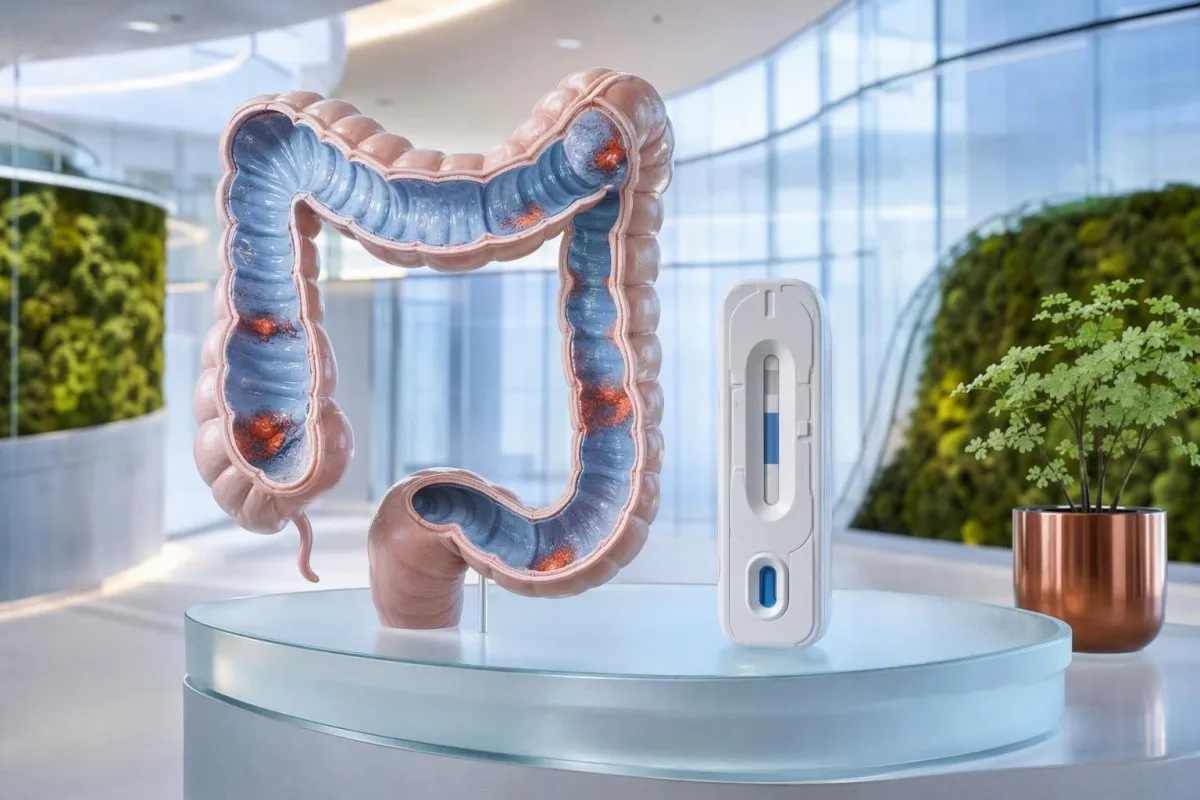
Ang hinay nga pagtaas sa resulta sa stool calprotectin kasagarang molubad human sa impeksyon, mga tambal nga pang-anti-inflammatory, o panahon—apan ang gidaghanon, mga sintomas, ug ang dagan ang magtino sa sunod nga lakang.


- Borderline range: Daghang mga adult laboratory ang nagtawag sa 50–120 o 50–150 µg/g nga borderline, samtang ang uban naggamit sa 100–250 µg/g isip usa ka intermediate band.
- Timing sa pagbalik: Sublion ang fecal calprotectin mga 2–6 ka semana human sa usa ka mubo nga pagkalibang nga sakit nga nawala na ug human sa paghisgot sa paggamit sa NSAID sa usa ka clinician.
- Ayaw ihunong ang mga tambal sa imong kaugalingon: Ang Ibuprofen, naproxen, aspirin, ug usahay ang mga proton-pump inhibitor mahimong makapataas sa calprotectin; ang gireseta nga pagtambal nagkinahanglan og pagrepaso nga gipangulohan sa clinician.
- Ilhanan sa impeksyon: Ang acute bacterial gastroenteritis mahimong makahatag og mga bili nga labaw sa 250 µg/g, busa ang usa ka taas nga resulta panahon sa kalibanga wala mag-diagnose sa inflammatory bowel disease.
- Referral threshold: Ang makanunayon nga taas nga resulta nga labaw sa 250 µg/g, o usa ka nagtaas nga resulta nga adunay mga sintomas nga red-flag, kasagaran nagkinahanglan og assessment sa gastroenterology.
- Mga sintomas nga kinahanglan ug daliang pagtan-aw: Itom nga bangkito, daghang pagdugo sa tumbong, hilanat nga adunay nagkagrabe nga kasakit, dehydration, dili tinuyo nga pagkunhod sa timbang, o anemia nagkinahanglan og dinalian nga medikal nga assessment.
- Importante ang konteksto: Gisukod sa Calprotectin ang kalihokan sa neutrophil sa tinai; dili kini makatug-an sa Crohn's disease, ulcerative colitis, impeksyon, diverticulitis, kanser, o iritasyon nga may kalabutan sa tambal sa iyang kaugalingon.
- Praktikal nga rekord: Luwasa ang eksaktong pagsulay, yunit, sintomas sa tinai, mga tambal, bag-o lang nga pagbiyahe, antibiotiko ug petsa sa pagsulay sa dili pa sublion.
Unsa ang una nimong buhaton human sa usa ka borderline nga resulta?
Borderline fecal calprotectin unsa ang buhaton: ayaw isip nga inflammatory bowel disease gikan sa usa ka gamay nga taas nga resulta sa hugaw. Susiha ang reference interval sa laboratoryo, irekord ang bag-o lang nga kalibanga ug mga tambal, ug pag-arrange og balik nga pagsulay sa mga 2–6 ka semana kung ikaw maayo sa klinikal ug walay mga alarm symptom.
Sugod sa Agosto 28, 2026, ang resulta nga duol sa cutoff labing maayo nga pagtratar isip usa ka signal sa pagrepaso sa konteksto, dili usa ka pagdayagnos. Sa akong klinika, ang kantidad nga 82 µg/g sa usa ka tawo nga nag-ayo gikan sa 48-oras nga stomach bug moresulta sa usa ka lahi kaayo nga plano kaysa 82 µg/g nga adunay unom ka semana nga gabii nga kalibanga ug pagkunhod sa hemoglobin.
Ang fecal calprotectin nagpakita sa neutrophils nga mosulod sa tinai, busa kini sensitibo sa paghubag sa tinai apan dili piho sa hinungdan niini. Ang AI nagbasa sa giimprinta nga laboratory range una ug dili usab magmarka sa usa ka resulta isip grabe tungod lang kay laing laboratoryo magmarka niini nga lahi; AI pagsabot sa resulta sa blood test platform nga makatabang sa pagbutang sa mga may kalabutan nga resulta—sama sa CRP, bug-os nga ihap sa dugo, ferritin ug albumin—sa tupad sa resulta sa hugaw, samtang naghimo sa tin-aw nga ang usa ka marka sa hugaw dili makatug-an sa IBD sa nag-inusara.
Isulat ang petsa, resulta, yunit, kasubsob sa tinai, Bristol stool type, bag-o lang nga pagbiyahe, pagkaladlad sa antibiotiko ug matag regular o panagsa nga tambal. Ang Bristol stool chart makapakurat sa pagka-mapuslanon dinhi tungod kay ang luag nga hugaw, pagkadinalian ug pagmata sa gabii nagbag-o sa pre-test probability labaw pa kay sa 10 µg/g nga kalainan duol sa usa ka cutoff.
Unsa nga mga bili sa fecal calprotectin ang tinuod nga borderline?
Ang fecal calprotectin sa mga hamtong nga ubos sa 50 µg/g kasagarang giisip nga normal, apan ang borderline ug referral thresholds magkalahi sa matag pagsulay ug lokal nga agianan. Ang pipila ka mga agianan sa UK naggamit og 100–250 µg/g isip usa ka intermediate band ug mga kantidad nga labaw sa 250 µg/g isip usa ka mas lig-on nga timailhan sa aktibo nga paghubag sa tinai.
Ang resulta nga 60 µg/g usa lamang ka gamay nga taas sa 50 µg/g cutoff; kini dili katumbas sa 220 µg/g. Ang British Society of Gastroenterology nag-ingon nga ang usa ka threshold sa 250 µg/g kasagarang gigamit sa pagpakita sa aktibo nga paghubag sa nahibal-an nga IBD, bisan kung ang husto nga cutoff nagdepende kung ang pangutana mao ang pagdayagnos, pagmonitor sa pagbalik sa sakit o referral (Lamb et al., 2019).
Lahi nga mga pagsulay naggamit ug lainlaing mga antibody, mga aparato sa pagkuha ug mga pamaagi sa pag-calibrate, busa ang pagtandi kinahanglan nga mogamit sa parehas nga laboratoryo. Ang AI nagbasa sa giimprinta nga laboratory range una ug dili mag-label pag-usab sa usa ka resulta isip grabe tungod lang kay laing laboratoryo magmarka niini nga lahi; ang pagsabot sa usa ka flag nga gawas sa range makapugong sa daghang dili kinahanglan nga kabalaka.
Ang kantidad nga ubos sa 100 µg/g sa usa ka hamtong nga walay red flags naghimo sa aktibo nga IBD nga dili kaayo posible, apan dili niini ma-rule out ang coeliac disease, bile-acid diarrhoea, microscopic colitis, impeksyon o colorectal disease. Sa kasukwahi, ang kantidad nga labaw sa 250 µg/g angayan sa klinikal nga atensyon apan nagkinahanglan gihapon og pagpangita og hinungdan kaysa usa ka awtomatikong Crohn’s label.
Kanus-a kinahanglan himuon ang usa ka fecal calprotectin repeat test?
Kadaghanan sa mga hamtong nga klinikal nga lig-on nga adunay gamay nga pagtaas sa fecal calprotectin mahimong sublion ang pagsulay pagkahuman sa 2–6 ka semana, kung ang acute diarrhea nahupay na ug ang mga temporaryong hinungdan natubag na. Ang pag-usab niini sa sunod nga adlaw sagad makadugang ug kasaba kaysa kalinaw.
Alang sa resulta nga 50–100 µg/g nga adunay pagkaayo sa mga sintomas, sagad akong gigamit ang 4-week repeat; alang sa 100–250 µg/g, 2–4 ka semana ang makatarunganon kung magpadayon ang mga sintomas apan walay dinalian nga mga bahin. Ang pag-usab kinahanglan dili makapalangan sa pagrepaso sa usa ka tawo nga adunay makita nga dugo, pagkawala sa timbang, anemia tungod sa kakulangan sa iron, o grabe nga kasakit.
Ayaw pagsulay sa pagmaniobra sa resulta gamit ang pagpuasa, higpit nga pagkaon o mga laxative. Hupti ang imong kasagaran nga pagkaon sulod sa pipila ka adlaw, likayi ang pagkolekta gikan sa tubig sa kasilyas o ihi, ug sunda ang mga instruksyon sa pagtipig sa kit; ang pagdumala sa sample ug ang biyolohikal nga kausaban mahimong makamugna og mga kausaban nga morag mas dako kaysa sa tinuod. Ang among giya sa tinuod nga mga kausaban tali sa mga pagbisita sa laboratoryo nagpatin-aw ngano nga ang mga uso nagkinahanglan og usa ka klinikal nga timeline.
Si Thomas Klein, MD, nakakita sa mga pasyente nga nag-usab sa pagsulay pagkahuman lamang sa 72 ka oras ug nahadlok sa usa ka dili hinungdanon nga pag-usab gikan sa 96 ngadto sa 118 µg/g. Ang nakapausab sa pagdumala mao ang usa ka malungtarong pagtaas, ilabi na ang pagdoble padulong o labaw pa sa 250 µg/g, dili gamay nga paglihok sa usa ka cutoff.
Makahatag ba ang impeksyon og usa ka fecal calprotectin false positive?
Oo—ang mga impeksyon sa gastrointestinal usa ka kasagaran nga hinungdan sa usa ka fecal calprotectin nga sayup nga positibo alang sa IBD. Ang Campylobacter, Salmonella, Shigella, C. difficile ug pipila ka parasitic infections mahimong makapataas sa calprotectin sa dakong paagi panahon sa aktibo nga pagtatae.
Ang Calprotectin dili sayop nga nakadetect sa paghubag panahon sa infectious diarrhea; ang paghubag tinuod, apan ang hinungdan niini mahimong temporaryo imbes nga chronic IBD. Nakita ni Waugh et al. nga ang fecal calprotectin mapuslanon sa pagbulag sa inflammatory gikan sa non-inflammatory bowel conditions, apan dili kini kasaligan nga makaila sa piho nga inflammatory diagnosis (Waugh et al., 2013).
Pangutan-a ang bahin sa mga simtomas sa miaging 4 ka semana: hilanat, pagsuka, mga kontak nga masakiton, pagbiyahe, dili gi-treat nga tubig, antibiotics, pagpaospital ug bag-ong pagkaon. Ang stool PCR o culture ilabina nga mapuslanon kung ang pagtatae nagpadayon, ug ang among pagpatin-aw sa mga resulta sa stool culture naglatid ngano nga ang usa ka nakadetect nga organismo nagkinahanglan gihapon og klinikal nga interpretasyon.
Ang pagsulay sa calprotectin nga gikuha panahon sa aktibo nga infectious diarrhea kinahanglan kasagaran nga usbon pagkahuman sa pagkaayo kaysa gamiton sa pag-diagnose sa IBD. Kung ang pagtatae molungtad labaw sa 7 ka adlaw, adunay dugo, pagkahuman sa antibiotics, o giubanan sa hilanat nga labaw sa 38.0°C, kontaka ang usa ka clinician imbes nga maghulat sa usa ka rutina nga pag-usab.
Unsa nga mga tambal ang makapataas sa calprotectin nga walay IBD?
Ang mga NSAID mao ang labing klaro nga naglibog nga tambal alang sa medyo taas nga resulta sa fecal calprotectin. Ang ibuprofen, naproxen, diclofenac ug aspirin makapasuko sa gamay nga tinai ug makadugang sa kalihokan sa neutrophil sa tinai, usahay bisan kung gamay ra ang kasakit.
Usa ka praktikal nga paagi mao ang pagpangutana sa nagreseta kung ang mga dili kinahanglanon nga NSAID mahimong likayan sulod sa mga 2 ka semana sa dili pa sublion ang calprotectin; ayaw paghunong sa aspirin nga gireseta pagkahuman sa atake sa kasingkasing, stroke o stent nga walay direkta nga tambag medikal. Ang NSAID enteropathy sayon nga makalimtan tungod kay kini mahimong hinungdan sa tinago nga iritasyon nga walay klasiko nga indigestion.
Ang mga proton-pump inhibitor sama sa omeprazole nalangkit sa kasarangan nga pagtaas sa pipila ka observational studies, apan ang ebidensya sa tinuud nagkasagol ug ang paghunong niini mahimong dili luwas sa mga tawo nga adunay sakit nga ulser o grabe nga reflux. Ribyuhon usab ang metformin, antibiotics, immune therapies ug laxatives; ang usa ka kompleto nga lista sa tambal mas mapuslanon kaysa pagtag-an gikan sa usa ka tambal.
Si Kantesti usa ka AI-powered blood test analysis tool nga makahimo og organisasyon sa konteksto sa laboratoryo nga nalambigit sa tambal, lakip ang ubos nga ferritin o pagtaas sa CRP, apan ang usa ka clinician kinahanglan magdesisyon kung ang pagbag-o sa tambal angay. Kung ang dugay nga pagpugong sa acid usa ka bahin sa istorya, ang among artikulo bahin sa pagmonitor samtang naggamit og PPI naglangkob sa mga blood markers nga kasagarang gisundan sa mga clinician.
Mahimo bang ipatin-aw sa pagkolekta sa sample o natural nga kausaban ang hinay nga pagtaas?
Ang mga sayup sa pagkolekta panagsa ra makahimo og dako nga resulta sa calprotectin, apan ang dili patas nga pagsulay sa hugaw, kalainan sa assay, ug ang adlaw-adlaw nga biyolohiya mahimong maglihok sa usa ka borderline nga kantidad sa cutoff. Mao kini ang hinungdan nga ang parehas nga kit, laboratoryo, ug pamaagi sa pagkolekta hinungdanon alang sa pagsulay pag-usab sa fecal calprotectin.
Kulekta gikan sa usa ka limpyo, uga nga sudlanan kaysa direkta gikan sa tubig sa kasilyas, ug likayi ang pagsagol sa sample sa ihi o mga produkto sa pagpanglimpyo. Pagkuha og gagmay nga mga bahin gikan sa labaw pa sa usa ka lugar kung ang kit nagsugo niini, tungod kay ang mucus ug mas humok nga mga rehiyon mahimong adunay lainlaing mga konsentrasyon sa makapahubag nga materyal.
Likayi ang paghubad sa usa ka borderline nga resulta gikan sa usa ka sample nga nakolekta dayon pagkahuman sa pagpangandam sa colonoscopy, usa ka enema, o usa ka dako nga yugto sa kalibanga ingon usa ka lig-on nga baseline. Alang sa mga tawo nga adunay variable nga paggawi sa tinai, gisugyot nako ang paglista sa porma sa hugaw ug kung adunay mucus o makita nga dugo sa adlaw sa pagkolekta; ang among giya sa mucus sa stool nagpatin-aw kung kanus-a kana nga obserbasyon hinungdanon.
Ang pagbag-o gikan sa 55 ngadto sa 72 µg/g mahimong dili kaayo hinungdanon sa analitikal, samtang ang pagtaas gikan sa 75 ngadto sa 380 µg/g mas lisud likayan. Hupti ang report kaysa pagsalig sa usa ka portal flag—ang ngalan sa assay ug ang sakup sa laboratoryo kay klinikal nga makahuluganon nga mga detalye.
Unsa nga mga sintomas ang naghatag og katarungan sa pagrepaso sa GI imbes nga maghulat sa pag-ulit?
Ang pagdugo sa tumbong, dili tinuyo nga pagkawala sa timbang, pagkalibang sa gabii, padayon nga hilanat, anemia nga kulang sa iron, ug usa ka mamatikdan nga masa sa tiyan nagkinahanglan og medikal nga pagrepaso bisan unsa pa ang usa ka borderline nga kantidad sa calprotectin. Ang resulta kinahanglan dili gayud mosupak sa makahahadlok nga mga sintomas.
Pangita og dinalian nga pagtimbang-timbang sa samang adlaw alang sa itom nga tarry stool, grabeng pagdugo sa tumbong, pagkalipong, grabe o nagkadaghan nga kasakit sa tiyan, kawalay katakus sa pagkuha og mga pluwido, kalibog, o mga timailhan sa grabeng dehydration. Kini mga sintomas sa triage, dili mga threshold sa calprotectin; ang ubos o borderline nga numero dili makahimo niini nga luwas balewalaon.
Usa ka pagrepaso sa GP sulod sa pipila ka adlaw makatarunganon alang sa pagkawala sa timbang nga labaw pa sa 5% nga gibug-aton sa lawas sa 6–12 ka bulan, kalibanga nga makapukaw kanimo gikan sa pagkatulog, hilanat, bag-ong pagbag-o sa tinai human sa edad nga 50, o suod nga kasaysayan sa pamilya sa colorectal cancer o IBD. Usa ka positibo nga FIT o FOBT nga resulta nag-una sa lahi nga dalan sa pagdayagnos ug dili angay ipasabut sa calprotectin.
Ang rason nganong mausab ang hulagway sa anemia mao nga ang laygay nga panghubag sa tinai, gamayng pagdugo, ug malabsorption mahimong mag-uban. Ang bug-os nga ihap sa dugo, ferritin, ug CRP mahimong mas makahatag og impormasyon kon mag-uban kay sa bisan unsang bili sa bangkito.
Unsa ang kasagarang susihon sa GP human sa hinay nga pagtaas?
Ang usa ka GP kasagarang magpares sa usa ka gamayng taas nga resulta sa fecal calprotectin uban sa pagrepaso sa sintomas, pagsusi sa tiyan, bug-os nga ihap sa dugo, CRP o ESR, ferritin, coeliac serology, ug pagsulay sa impeksyon sa bangkito kon gikinahanglan. Ang tumong mao ang pag-ila kung kinsa ang nanginahanglan og dali nga pag-refer ug kinsa ang luwas nga makasulay pag-usab.
Ang bug-os nga ihap sa dugo makaila sa anemia, taas nga platelets, o taas nga ihap sa puti nga mga selula, samtang ang CRP nagpakita sa panghubag sa tibuok lawas kay sa tinai lamang. Ang normal nga CRP wala maglakip sa Crohn’s disease, ilabi na sa isolated ileal disease, apan ang normal nga CRP, albumin, ug hemoglobin naghimo nga dili kaayo lagmit ang grabeng aktibong panghubag.
Ang coeliac screening kinahanglan maglakip sa tissue transglutaminase IgA ug total IgA samtang ang tawo nagkaon og gluten. Kon ang total IgA ubos, ang standard nga IgA-based coeliac tests mahimong sayop nga makapahayahay; tan-awa ang among praktikal nga giya sa low IgA ug coeliac pitfalls alang sa kasagaran nga sunod nga lakang.
Si Thomas Klein, MD, nagtambag sa pagdala og usa ka panid sa mga kamatuoran sa appointment: pagsugod sa mga sintomas, kadalas-an sa bangkito, mga tambal, kasaysayan sa pamilya, una nga colonoscopy, pagbiyahe, ug ang aktwal nga resulta. Kini naghimo sa konsultasyon nga mas hait, ilabi na kon ang mga sintomas nag-usab-usab sulod sa mga bulan.
Ang borderline calprotectin ba nagpasabot og IBS o inflammatory bowel disease?
Ang borderline fecal calprotectin dili makatambal sa IBS o IBD. Ang IBS kasagarang adunay normal nga resulta, samtang ang padayon nga pagtaas nagdugang sa pagduda sa IBD, apan ang impeksyon, diverticular disease, coeliac disease, colorectal neoplasia, ug NSAID injury nagpabilin nga posibleng mga katin-awan.
Ang IBS mahimong hinungdan sa pagsakit, pag-umbong, ug pag-usab sa kadalas-an sa bangkito nga walay neutrophil-driven nga panghubag sa tinai, busa ang calprotectin ubos sa 50 µg/g nagsuporta—apan dili pamatuod—sa usa ka IBS-type nga katin-awan. Sa mga hamtong nga adunay unang borderline nga resulta, ang klinikal nga pangutana kanunay kung ang mga sintomas ug ang trend naghatag og katarungan sa colonoscopy, dili kung ang pasyente kinahanglan mopili og IBS o IBD nga label karon.
Ang Crohn’s disease mahimong makaapekto sa gamayng tinai ug ang ulcerative colitis kasagaran makaapekto sa colon, apan pareho silang makapakita og taas nga calprotectin. Ang microscopic colitis usahay mahimong normal o gamay ra ang pagtaas sa calprotectin, nga usa ka rason nga ang tubig-tubig nga kalibanga sa mga hamtong nga kapin sa 50 ang edad mahimong magkinahanglan gihapon og imbestigasyon bisan pa sa dili impresibo nga numero.
Ang Kantesti AI naghubad sa mga may kalabutan nga mga marka sa dugo pinaagi sa pagsusi sa mga pattern sama sa ubos nga albumin, kakulangan sa iron, ug inflammatory thrombocytosis kauban sa resulta sa bangkito. Alang sa pagtandi, fecal lactoferrin usa pa ka neutrophil-associated stool marker, bisan pa kini nag-atubang sa daghang parehas nga mga limitasyon sa pagka-espesipiko.
Unsaon pag-usab sa edad, pagmabdos, ug nahibal-an nga IBD ang dalan?
Ang mga bata, tigulang nga mga hamtong, mabdos, ug mga pasyente nga adunay natukod nga IBD nagkinahanglan og indibidwal nga paghubad sa fecal calprotectin. Ang mga bata mahimong adunay mas taas nga baseline nga mga bili, samtang ang bag-ong mga sintomas sa tinai human sa edad nga 50 kinahanglan dili atubangon pinaagi lamang sa balik-balik nga pagsulay.
Ang mga masuso ug mga bata kanunay adunay mga bili sa calprotectin nga labaw pa sa adult cutoffs, busa ang mga adult range dili kinahanglan ipadapat sa usa ka bata nga walay giya sa bata. Ang usa ka bata nga adunay dili maayo nga pagtubo, dugo sa bangkito, padayon nga kalibanga, o dakong kasakit sa tiyan nagkinahanglan og pagsusi sa bata kaysa balik-balik nga pagsulay sa balay; ubos nga stool pH sa mga bata mahimong motubag sa laing pangutana bahin sa carbohydrate malabsorption.
Ang pagmabdos mismo dili rason sa pagbalewala sa bag-ong padayon nga kalibanga, dugo sa bangkito, o pagkunhod sa timbang. Ang Calprotectin makatabang sa pagsusi, apan ang obstetric, makatakod, ug GI teams kinahanglan maghubad niini uban sa bug-os nga kasaysayan sa pagmabdos ug listahan sa tambal.
Alang sa natukod nga IBD, ang resulta nga labaw sa 250 µg/g mahimong magpakita og mucosal inflammation bisan kung ang mga sintomas malumo, apan ang pagtambal dili kinahanglan usbon lamang gikan sa resulta sa balay. Ang BSG guidance nagsuporta sa paggamit sa calprotectin isip usa ka component sa pagtimbang-timbang sa relapse, kauban ang mga sintomas, mga marka sa dugo, ug usahay endoscopy (Lamb et al., 2019).
Unsaon nimo pagbasa ang usa ka calprotectin trend?
Ang usa ka makanunayon nga pataas o padayon nga taas nga calprotectin trend mas actionable kaysa usa ka borderline nga bili. Ang pagtaas gikan sa 70 ngadto sa 280 µg/g sulod sa 4–8 ka semana, ilabi na sa nagkagrabe nga kalibanga, lahi sa klinika gikan sa lig-on nga mga pagbasa sa palibot sa 70 µg/g.
Gamita ang parehas nga laboratoryo kutob sa mahimo ug itandi ang mga interval nga mohaum sa kahimtang sa klinika. Sa lig-on nga mga simtomas, ang interval nga 4–8 ka semana sagad naghatag ug mas klaro nga signal kaysa semana-saba nga pagsulay; sa nahibal-an nga IBD nga adunay plano sa flare, ang nagtambal nga team mahimong magtambag sa mas mubo nga interval.
Si Kantesti usa ka plataporma sa paghubad sa AI biomarker nga makapreserbar sa nalista nga laboratoryo nga konteksto ug makapakita sa usa ka makahuluganon nga uso alang sa pagrepaso, imbes nga tratohon ang matag gamay nga dili normal nga bili ingon usa ka bag-ong emerhensya. Kanang pamaagi nagsalamin sa prinsipyo sa atong gabay sa longitudinal nga resulta: ang direksyon, rate ug kauban nga mga sintomas importante.
Ayaw itandi ang resulta gikan sa likido nga tae atol sa gastroenteritis sa usa ka pormadong sample sa tae mga bulan sa ulahi nga ingon sila managsamang kahimtang. Ang pag-annotate sa timeline sa paggamit sa NSAID, mga antibiotiko, impeksyon ug pagdugo sa panahon sa pagregla makapugong sa usa ka dayag nga uso nga sobra ang paghubad.
Unsa ang angay nimong likayan nga buhaton human sa hinay nga pagtaas?
Ayaw kaugalingon nga magsugod og mga steroid, tangtanga ang daghang pagkaon, hunongon ang gireseta nga mga tambal, o mag-order og balik-balik nga inadlaw nga calprotectin tests pagkahuman sa gamay nga taas nga resulta. Kini nga mga aksyon makapawala sa tin-aw nga hulagway sa pagdayagnos ug, sa pipila ka mga kaso, makamugna og tinuod nga kadaot.
Ang mga steroid makapaubos sa mga timailhan sa paghubag samtang nagtakuban sa impeksyon, ug ang dili kinahanglan nga pagpugong sa pagkaon makapasamot sa pagkawala sa timbang o kakulangan sa iron. Kung ang mga simtomas nagpaila sa IBD, ang pagdayagnos sa kasagaran nagkinahanglan ug klinikal nga pagtimbang-timbang ug kanunay nga endoscopic o imaging nga ebidensya sa wala pa magsugod ang dugay nga pagtambal.
Ayaw gamita ang calprotectin ingon usa ka bowel cancer screening test. Ang FIT nakadetect ug tawhanong hemoglobin ug gigamit sa colorectal cancer pathways; ang calprotectin nagsukod sa kalihokan sa paghubag, busa ang mga pagsulay nagtubag ug lainlaing mga pangutana. Ang among pagtandi sa FIT at colonoscopy nagpatin-aw ngano nga ang usa ka negatibo nga stool marker dili gayud mopuli sa angay nga edad ug risgo nga screening.
Walay kasaligan nga suplemento nga luwas makapaubos sa calprotectin ingon usa ka target sa iyang kaugalingon. Ang pagtambal sa numero imbes nga ang hinungdan susama sa paghilom sa usa ka smoke alarm nga walay pagsusi sa lawak.
Unsaon nimo pagpangandam alang sa usa ka gastroenterology appointment?
Magdala ug nalista nga timeline sa mga simtomas ug tambal, matag resulta sa tae uban sa range sa laboratoryo niini, kasaysayan sa pamilya, nangaging mga report sa imaging o endoscopy, ug bag-o nga mga blood test sa GI appointment. Kini makapakunhod sa dobleng pagsulay ug makatabang sa espesyalista sa paghukom sa pagkadinalian.
Ang mapuslanon nga mga pangutana naglakip sa: Mahimo ba kini nga impeksyon o NSAID injury? Kinahanglan ba nako ang stool PCR, coeliac serology, FIT, colonoscopy, small-bowel imaging o balik-balik nga calprotectin? Pangutan-a kung unsa nga threshold ug time interval ang mag-aghat sa pagpadako sa imong kaugalingon nga kaso, tungod kay ang lokal nga mga agianan managlahi.
Kung girekomenda ang colonoscopy, kini kasagaran tungod kay ang mga simtomas, edad, kasaysayan sa pamilya, anemia o padayon nga paghubag nagpamatuod sa direkta nga pagtimbang-timbang sa colon—dili tungod kay ang usa ka calprotectin nga resulta nakadugok og kanser. Ang ubos nga ferritin nga walay bug-at nga mga pagregla makadugang sa pag-imbestiga; ang among giya sa GI clues sa ubos nga ferritin nagpasabot kung nganong.
Ang Kantesti AI makandam ug usa ka mubu nga kronomber sa laboratoryo alang sa diskusyon, apan dili kini mopuli sa espesyalista nga pagtimbang-timbang. Ang mga magbabasa mahimo usab nga magrepaso sa among mga sumbanan sa klinika ug pagdumala pinaagi sa medikal nga validation sa wala pa gamiton ang bisan unsang automated nga interpretasyon isip bahin sa pag-andam sa appointment.
Usa ka praktikal nga dalan sa desisyon alang sa hinay nga pagtaas sa calprotectin
Alang sa gamay nga taas nga resulta sa fecal calprotectin, susiha una ang mga red flag, unya i-exclude ang aktibong impeksyon ug mga epekto sa tambal, dayon balika sa 2–6 ka semana kung angay sa klinikal. Ang padayon nga taas nga mga bili, mga bili labaw sa 250 µg/g, o nakapabalaka nga mga simtomas kinahanglan nga magpadulong sa agianan ngadto sa GP o gastroenterology review.
Kung ang resulta mao 50–100 µg/g ug maayo ang imong gibati o nag-ayo gikan sa usa ka tin-aw nga mubo nga sakit, idokumento ang mga confounder ug pag-iskedyul og giplano nga balik-balik. Kung kini mao 100–250 µg/g, kontaka ang imong GP aron pagdesisyon kung sublion ba dayon, dugangan og mga pagsulay sa dugo ug impeksyon, o i-refer base sa klinikal nga hulagway.
Kung ang balik-balik nga pagsulay moubos sa laboratory cut-off ug mawala ang mga sintomas, dili na kinahanglan ang dugang nga calprotectin testing. Kung kini magpabilin nga taas, motaas, o mauban sa pagkawala sa timbang, mga sintomas sa gabii, dugo, hilanat, anemia o taas nga CRP, ang imbestigasyon kinahanglan nga ipadayon kaysa pagbalik-balik sa gisubli nga mga home kit.
Ang pamaagi sa Kantesti nga gisusi sa doktor gidesinyo aron ipasabut ang konteksto sa laboratoryo nga walay pagpakaaron-ingnon nga ang usa ka algorithm makasusi sa tiyan o makahimo og endoscopic diagnosis. Ang Lupon sa Medikal nga Magtatambag nagpasiugda sa among mga sumbanan sa kaluwasan, ug ang giya sa biomarker sa pagsulay sa dugo makatabang kanimo sa pagsabut sa mga kaubang blood marker nga mahimong iparequest sa usa ka clinician.
Kanunay nga Gipangutana nga mga Pangutana
taas ba ang 80 µg/g fecal calprotectin?
Ang resulta sa fecal calprotectin nga 80 µg/g kay gamay ra ang pagsaka kon ang laboratoryo naggamit og cutoff nga 50 µg/g alang sa mga hamtong, apan kini sagad giisip nga borderline imbes nga makapadayag sa IBD. Ang bag-o nga kalibanga, paggamit og NSAID, ug ang oras sa pagkolekta sa sampol makapatin-aw niini nga gidak-on. Sa usa ka hamtong nga walay mga alarma nga sintomas ug lig-on sa klinikal nga paagi, ang mga doktor kasagarang mag-usab sa pagsulay human sa mga 2–6 ka semana. Ang padayon nga mga sintomas o ang pagtaas sa resulta kinahanglan magpugos sa mas sayo nga pagrepaso sa GP.
Unsa ka dugay ako maghulat sa pag-usab sa fecal calprotectin?
Kadaghanan sa mga hamtong nga adunay gamay nga taas nga resulta sa fecal calprotectin mag-usab niini human sa 2–6 ka semana, kung ang usa ka acute nga sakit sa gastrointestinal naayo na. Ang 4 ka semana nga gilay-on kasagaran praktikal alang sa mga kantidad nga mga 50–100 µg/g, samtang ang 100–250 µg/g mahimong maghatag og katarungan sa mas sayo nga pagkontak sa clinician. Ang pag-usab kinahanglan mogamit sa parehas nga laboratoryo kung mahimo. Ayaw paglangan sa pagtimbang-timbang kung adunay pagdugo sa tumbong, pagkunhod sa timbang, anemia, hilanat o grabe nga kasakit.
Makapataas ba ang ibuprofen sa fecal calprotectin?
Ang ibuprofen ug uban pang NSAID, lakip ang naproxen ug diclofenac, makapataas sa fecal calprotectin pinaagi sa pagka-irritate sa tinai. Mahimong tambag sa mga clinician ang paglikay sa mga NSAID nga dili importante sulod sa mga 2 ka semana sa dili pa ang balik nga pagsulay, apan ang gireseta nga aspirin o anti-inflammatory treatment dili gayud angay hunongon nga walay tambag medikal. Ang mga pagsaka nga may kalabutan sa NSAID mahimong mag-overlap sa 50–250 µg/g nga borderline nga sakup. Ang usa ka timeline sa tambal busa kabahin sa kasaligang interpretasyon.
Makapasamot ba ang impeksyon sa tiyan sa taas nga fecal calprotectin?
Ang usa ka impeksyon sa bakterya o parasitiko sa tinai mahimong makapataas sa fecal calprotectin labaw sa 250 µg/g tungod kay kini makapahinabog tinuod nga kalihokan sa neutrophil sa tinai. Dili kini nagpasabot nga ang tawo adunay Crohn’s disease o ulcerative colitis. Ang padayon nga kalibanga, hilanat, pagbiyahe, paggamit og antibiotic, o pagka-exposed sa masakiton mahimong maghatag og katarungan sa stool PCR o culture. Ang balik-balik nga calprotectin kasagaran mas makahatag og impormasyon human mamaayo ang impeksyon.
Unsang lebel sa calprotectin ang nagkinahanglan og colonoscopy?
Walay usa ka fecal calprotectin value nga awtomatikong nagkinahanglan og colonoscopy tungod kay ang mga sintomas, edad, anemia, family history ug ang dagan sa mga pagsulay ang nagtino sa desisyon. Ang padayon nga mga kantidad nga labaw sa 250 µg/g kasagarang mosuporta sa referral sa gastroenterology, labi na kung adunay kalibanga o taas nga CRP. Ang usa ka tawo nga kapin sa 50 anyos nga adunay bag-ong kausaban sa paggawas sa tumbong o iron-deficiency anemia mahimong manginahanglan og imbestigasyon bisan kung ang calprotectin ubos sa 100 µg/g. Sa laing bahin, ang temporaryong resulta nga 120 µg/g human sa gastroenteritis mahimong mawala sa pagbalik-balik.
Makahatag ba ang IBS og borderline fecal calprotectin?
Ang IBS kasagaran adunay fecal calprotectin nga ubos sa 50 µg/g, bisan tuod ang gagmay nga mga pagtaas sa utlanan mahimong mahitabo ug dili awtomatikong dili iapil ang IBS. Ang makanunayon nga bili nga labaw sa 100–150 µg/g kinahanglan mag-aghat sa mga klinisyan sa pagkonsiderar sa panghubag, impeksyon, mga tambal, ug alternatibong mga pagdayagnos kaysa pagtudlo og IBS nga walay pagrepaso. Ang mga sintomas sa IBS mahimong mag-uban sa IBD, mao nga ang sumbanan ug uso sa sintomas parehong may kalabutan. Ang pagkalibang sa gabii, pagdugo, pagkunhod sa timbang, ug anemia dili kasagaran nga mga bahin sa IBS ug nanginahanglan og pagtimbang-timbang.
Karon na ang AI-Powered Blood Test Analysis
Apil sa kapin sa 2 milyon nga mga user sa tibuok kalibutan nga nagsalig sa Kantesti para sa dayon ug tukma nga pag-analisa sa lab test. I-upload ang imong resulta sa blood test ug makadawat og komprehensibong pagsabot sa 15,000+ nga mga biomarker sulod sa mga segundo.
📚 Mga Napangalan nga Research Publications
Klein, T., Mitchell, S., & Weber, H. (2026). Klein, T. et al. (2026). Multilingual nga Suporta sa Klinikal nga Pagdesisyon nga Gisuportahan sa AI alang sa Sayong Triage sa Hantavirus: Disenyo, Pagpamatuod sa Inhenyeriya, ug Pag-deploy sa Tinuod nga Kalibotan sa 50,000 ka Gi-interpretang mga Report sa Pagsulay sa Dugo. Figshare. https://doi.org/10.6084/m9.figshare.32230290. ResearchGate: https://www.researchgate.net. Academia.edu: https://www.academia.edu.. Kantesti AI Medical Research.
Klein, T., Mitchell, S., & Weber, H. (2026). Klein, T. et al. (2026). Usa ka Pre-Registered, Rubric-Based Automated Technical Benchmark sa Kantesti Blood-Test Interpretation Engine sa 100,000 Synthetic Test Cases. Figshare. https://doi.org/10.6084/m9.figshare.32095435. ResearchGate: https://www.researchgate.net. Academia.edu: https://www.academia.edu.. Kantesti AI Medical Research.
📖 Mga Panlabas nga Sanggunian sa Medisina
⚕️ Pagpasabot sa Medikal
Kini nga artikulo para sa katuyoan sa edukasyon ra ug dili kini mosangpot sa medikal nga tambag. Kanunay mokonsulta sa usa ka kwalipikado nga healthcare provider alang sa mga desisyon sa diagnosis ug pagtambal.
Mga E-E-A-T Trust Signals
Kasinatian
Pagsusi sa klinika nga gipangulohan sa doktor sa mga workflow sa interpretasyon sa lab.
Kahanas
Pokus sa medisina sa laboratoryo kung giunsa paglihok ang mga biomarker sa konteksto sa klinika.
Pagka-awtorisado
Gisulat ni Dr. Thomas Klein ug gisusi ni Dr. Sarah Mitchell ug Prof. Dr. Hans Weber.
Kasaligan
Interpretasyon nga base sa ebidensya, nga adunay klaro nga mga agianan sa sunod nga buhat aron makunhuran ang kabalaka.