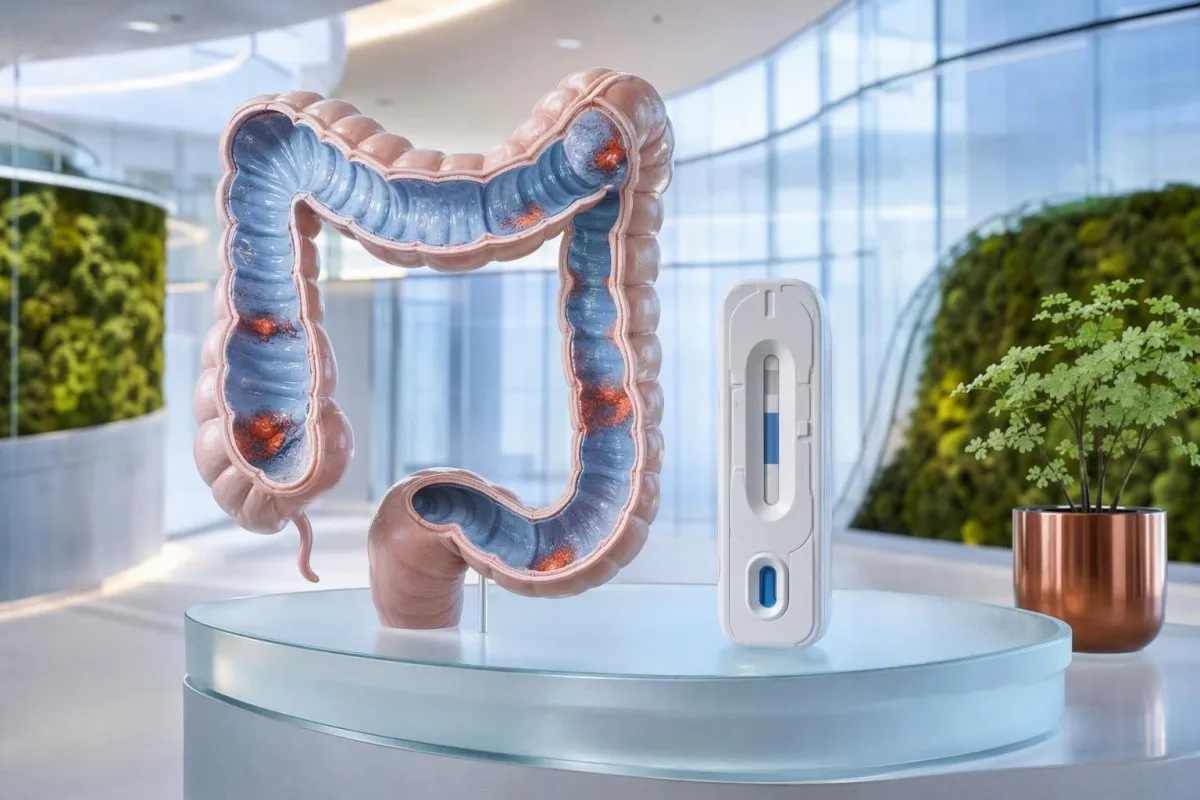
In mild ferhege koprokalproteïne-útkomst wurdt faak rêstich nei ynfeksje, anty-inflammatoare medisinen, of tiid - mar it nûmer, symptomen en trend bepale de folgjende stap.


- Grinsberik: In protte folwoeksen laboratoaren neame 50–120 of 50–150 µg/g grins, wylst oaren 100–250 µg/g brûke as in tuskenband.
- Timing fan werhelling: Werhelje fikele koprokalproteïne sawat 2–6 wiken nei in koartlibbene diarreeykte sykte is oplost en nei it besprekken fan NSAID-gebrûk mei in klinikus.
- Stopje medisinen net allinnich: Ibuprofen, naproxen, aspirine en soms proton-pompremmers kinne koprokalproteïne ferheegje; foarskreaune behanneling fereasket klinikus-liede oerlis.
- Ynfeksje oanwizing: Akute baktearjele gastroenteritis kin wearden boppe 250 µg/g produsearje, dus ien heech resultaat by diarree diagnostisearret gjin inflammatoire darm sykte.
- Ferwizing drompel: In oanhâldend ferhege resultaat boppe 250 µg/g, of in stigingresultaat mei read-flagge symptomen, fertsjinnet meastentiids gastroenterology-beoardieling.
- Dringende symptomen: Swarte stoel, substansjele rektale bloeding, koarts mei minder pine, útdroeging, ûnbedoeld gewichtsverlies, of bloedearmoed fereaskje prompt medyske beoardieling.
- Dúdskrift is fan belang: Kalprotektine mjit neutrofylaktiviteit yn 'e darm; it kin net op himsels de sykte fan Crohn, ulcerative colitis, ynfeksje, divertikulitis, kanker, of drugsrelatearre irritaasje ûnderskiede.
- Praktyske rekôrden: Bewarje de krekte test, ienheid, darmklachten, medisinen, resint reizen, antibiotika en testdatum foardat jo werhelje.
Wat moat jo earst dwaan nei in grinsresultaat?
Grinzjend faal kalprotektine wat te dwaan: oannimme gjin ûntstekking fan 'e darm út ien licht ferhege krukresultaat. Kontrolearje it referinsjeinterval fan it laboratoarium, registrearje resinte diarree en medisinen, en regelje in werhellingstest yn sawat 2-6 wiken as jo klinysk goed binne en gjin alarmklachten hawwe.
Fan 28 augustus 2026 ôf wurdt in resultaat tichtby de grins it bêste behannele as in sinjaal om de kontekst te beoardieljen, net in diagnoaze. Yn myn klinyk liedt in wearde fan 82 µg/g by ien dy't herstelt fan in 48-oere mage-bug ta in hiel oar plan as 82 µg/g mei seis wiken nachtlike diarree en fallende hemoglobine.
Faal kalprotektine wjerspegelt neutrofielen dy't it darmkanaal ynkomme, dus it is gefoelich foar darmûntstekking, mar net spesifyk foar de oarsaak. CRP is in AI bloedtest-útslachplatfoarm dat helpt by it pleatsen fan relatearre resultaten—lykas CRP, folsleine bloedtelling, ferritine en albumine—neist in stoelresultaat, wylst it dúdlik makket dat in stoelmarker IBD net allinich diagnostisearje kin.
Skriuw de datum, resultaat, ienheid, darmfrekwinsje, Bristol stoeltype, resint reizen, antibiotika bleatstelling en elke reguliere of ynsidintele medisyn op. De Bristol-krukkaart is ferrassend nuttich hjir, om't wetterige stoel, drang en nachtlike wekkerjen de pre-test kâns fier mear feroarje dan in ferskil fan 10 µg/g tichtby in grins.
Hokker fikele koprokalproteïne-wearden binne echt grins?
Folwoeksen faal kalprotektine ûnder 50 µg/g wurdt algemien as normaal beskôge, mar grinsjende en ferwizingsdrompels ferskille per assay en lokale paad. In oantal UK-paden brûke 100-250 µg/g as in tuskenband en wearden boppe 250 µg/g as in sterkere yndikaasje fan aktive darmûntstekking.
In resultaat fan 60 µg/g is mar in bytsje boppe in grins fan 50 µg/g; it is net lyk oan 220 µg/g. De British Society of Gastroenterology merkt op dat in drompel fan 250 µg/g faak wurdt brûkt om aktive ûntstekking oan te jaan yn bekende IBD, hoewol de juste grins ôfhinget fan oft de fraach diagnoaze, kontrôle fan weromfal of ferwizing is (Lamb et al., 2019).
Ferskillende tests brûke ferskillende antistoffen, ekstraksjeapparaten en kalibraasjemetoaden, dus fergeliking moat ideaalwei deselde laboratoarium brûke. AI lêst earst it printe laboratoariumberik en markearret in resultaat net as earnstich allinich om't in oar laboratoarium it oars soe markearje; it begripen fan in bûten-de-berik flagge foarkomt in protte ûnnedige panik.
In wearde ûnder 100 µg/g by in folwoeksene sûnder reade flaggen makket aktive IBD minder wierskynlik, mar it slút coeliakie, gal-soerdiarree, mikroskopyske kolitis, ynfeksje of kolorektale sykte net út. Omkeard fertsjinnet in wearde boppe 250 µg/g klinyske oandacht, mar fereasket noch altyd it finen fan de oarsaak ynstee fan in automatysk Crohn-label.
Wannear moat in fikele koprokalproteïne-werheljen test dien wurde?
De measte klinysk stabile folwoeksenen mei mild ferhege faeces calprotectin kinne de test werhelje nei 2-6 wiken, as akute diarree delset is en omkearde betizingen oanpakt binne. It de folgjende dei werheljen jout mear lûd as dúdlikens.
Foar in resultaat fan 50-100 µg/g mei ferbetterjende symptomen brûk ik faak in 4-week repeat; foar 100-250 µg/g is 2-4 wiken ridlik as symptomen oanhâlde, mar der binne gjin urgente funksjes. In werhelling moat gjin útstel jaan oan de beoardieling fan in persoan mei sichtber bloed, gewichtsverlies, izertekoart-anemy of slimme pine.
Besykje it resultaat net te manipulearjen mei fêstjen, beheinde diëten of laxeermiddels. Hâld jo gewoane dieet foar ferskate dagen, foarkom sammeljen út toiletwetter of urine, en folgje de bewaringsynstruksjes fan de kit; monsterhanneling en biologyske fariaasje kinne feroaringen meitsje dy't grutter lykje as se binne. Us gids foar echte feroarings tusken laboratoariumbezoeken ferklearret wêrom't trends in klinysk tiidline nedich hawwe.
Thomas Klein, MD, hat pasjinten sjoen dy't in test werhelje nei mar 72 oeren en skrikken wurde troch in ûnbelangryke swing fan 96 nei 118 µg/g. Wat it management feroaret is in oanhâldende stiging, benammen in ferdûbeling nei of foarby 250 µg/g, net lytse beweging om in grins.
Kin in ynfeksje in fikele koprokalproteïne falsk positief feroarsaakje?
Ja, gastrointestinale ynfeksjes binne in mienskiplike oarsaak fan in faeces calprotectin falsk positiven foar IBD. Campylobacter, Salmonella, Shigella, C. difficile en guon parasytêre ynfeksjes kinne calprotectin flink ferheegje by akute diarree.
Calprotectine detektearret falsk net ûntstekking by ynfekteuze diarree; de ûntstekking is echt, mar de oarsaak kin tydlik wêze ynstee fan chronike IBD. Waugh et al. fûnen dat faeces calprotectin nuttich is foar it skieden fan inflammatoare fan net-inflammatoare betingsten fan de yndustry, mar it kin de spesifike inflammatoire diagnoaze net betrouber identifisearje (Waugh et al., 2013).
Freegje nei symptomen yn de foarige 4 wiken: koarts, braken, sike kontakten, reizen, ûnbeljochte wetter, antibiotika, sikehûsopname en nije fiedingsblootstellingen. Stool PCR of kultuer is benammen nuttich as diarree oanhâldt, en ús ferklearring fan resultaten fan stoelkultuer sketsen wêrom't in detekteare organisme noch klinyske ynterpretaasje nedich hat.
In calprotectine test nommen by akute ynfekteuze diarree moat meast werhelle wurde nei herstel ynstee fan brûkt om IBD te diagnostearjen. As diarree mear as 7 dagen duorret, bloedich is, antibiotika folget, of begelaat wurdt troch koarts boppe 38.0°C, nim dan kontakt op mei in dokter ynstee fan te wachtsjen op in routine werhelling.
Hokker medisinen kinne koprokalproteïne ferheegje sûnder IBD?
NSAID's binne de dúdlikste medisyn betizing foar in mild ferhege faeces calprotectin resultaat. Ibuprofen, naproxen, diclofenac en aspirine kinne de lytse yndustry irritearje en de yndustriële neutrofile aktiviteit ferheegje, soms sels as der lyts pine is.
In praktyske oanpak is om de foarskriuwer te freegjen oft net-essensjele NSAID's foar sawat 2 wiken foar't de calprotectine werhelle wurdt; stopje aspirine dy't foarskreaun is nei in hertoanfal, beroerte of stent sûnder direkte medyske advizen net. NSAID-enteropaty is maklik te missen om't it latinte yrritaasje feroarsaakje kin sûnder klassike spijsverteringsproblemen.
Protonpompremmers lykas omeprazol wurde yn guon observaasjestúdzjes assosjeare mei mylde ferhegingen, mar it bewiis is earlik mingd en it stopjen kin gefaarlik wêze foar minsken mei mage-ûntstekking of slimme reflux. Kontrolearje ek metformin, antibiotika, immunoterapyen en laxeermiddels; in folsleine medisynlist is nuttiger dan rieden út ien medisyn.
Kantesti is in AI-oandreaune ark foar analyse fan bloedtests dat laboratoariumkontekst keppele oan medisinen organisearje kin, ynklusyf lege ferritine of CRP-ferheging, mar in klinikus moat beslute oft in medisynferoaring passend is. As langduorjende soere-ûnderdrukking diel útmakket fan it ferhaal, ús artikel oer monitoring by PPI-gebrûk behannelet de bloedmarkers dy't klinisy faak folgje.
Kinne stekproefkolleksje of natuerlike fariaasje in mylde stiging ferklearje?
Kolleksjefouten feroarsaakje selden in grut calprotectine-resultaat, mar ûngelyksume stoelmonsters, assayferskillen en dei-oan-dei biology kinne in grinswearde oer de drompel ferpleatse. Dêrom binne deselde kit, laboratoarium en kolleksjemetoade fan belang foar in werhellingstest fan koprocalprotectine.
Samle út in skjin, droech reseptakel ynstee fan direkt út wetter yn 'e húskes, en foarkomme dat it monster mingd wurdt mei urine of skjinmakmiddels. Nim lytse dielen út mear as ien gebiet as de kit dit oanjout, om't slym en sêftere gebieten ferskate konsintraasjes fan ûntstekkingmateriaal befetsje kinne.
Foarkom it ynterpretearjen fan in grinsresultaat fan in monster dat fuortendaliks nei de tarieding fan de kolonoskopy, in laxeermiddel, of in grutte diarree-episode sammele is, as in stabile basisline. Foar minsken mei wikseljende stoelgewoanten, suggerearje ik it opnimmen fan de foarm fan de stoel en oft der slym of sichtber bloed wie op de dei fan kolleksje; ús hantlieding foar slym yn de stoel ferklearret wannear't dy waarnimming fan belang is.
In feroaring fan 55 nei 72 µg/g kin analistysk ûnbelangryk wêze, wylst in stiging fan 75 nei 380 µg/g folle dreger te negearjen is. Bewarje it rapport ynstee fan te fertrouwen op in portalflag; de assaynamme en it laboratoariumberik binne klinysk betsjuttingsfolle details.
Hokker symptomen rjochtfeardigje GI-oerlis ynstee fan te wachtsjen om te werheljen?
Rektale bloeding, ûnbedoelde gewichtsverlies, nachtlike diarree, oanhâldende koarts, izertekoart-anemy en in palpabele abdominale massa rjochtfeardigje medyske beoardieling, ûnôfhinklik fan in grins calprotectine-wearde. It resultaat moat nea soargen symptomen oerhearskje.
Sykje driuwend beoardieling op deselde dei foar swarte teerachtige stoel, slimme rektale bloeding, flauwvallen, slimme of eskalerende buikpijn, ûnfermogen om floeistoffen binnen te hâlden, betizing, of tekens fan signifikante útdroeging. Dit binne triage-symptomen, gjin calprotectine-drompels; in leech of grinsgetal makket se net feilich om te negearjen.
In HZ-besite binnen dagen is sinfol by gewichtsverlies fan mear as 5% fan it lichemsgewicht yn 6-12 moannen, diarree dy't jo út 'e sliep wekker makket, koarts, nije stoelferoaring nei 50 jier, of in nauwe famyljeskiednis fan kolorektale kanker of IBD. In posityf FIT of FOBT resultaat folget in oar diagnostysk paad en moat net ferklearre wurde troch calprotectine.
De reden dat anemy it byld feroaret is dat chronike darmûntstekking, mikroskopyske bloedferlies en malabsorpsje tegearre foarkomme kinne. In folsleine bloedtelling, ferritine en CRP kinne tegearre mear ynformatyf wêze as elke isolearre stoelwearde.
Wat sil in Huisarts meastentiids kontrolearje nei in mylde ferheging?
In HZ kombinearret faak in myld ferhege calprotectine-resultaat mei in symptoomlist, abdominale ûndersyk, folsleine bloedtelling, CRP of ESR, ferritine, coeliakie-serology en stoelinfeksjetests as oanjûn. It doel is om te identifisearjen wa't fluch ferwiist wurde moat en wa't feilich opnij teste wurde kin.
In folslein bloedtelling kin anaemy, ferhege bloedplaatjes of in ferhege wite bloedtelling identifisearje, wylst CRP mear algemiene as allinich darm-spesifike ûntstekking wjerspegelet. In normale CRP slút de sykte fan Crohn net út, benammen isolearre ileale sykte, mar normale CRP, albumine en hemoglobine meitsje swiere aktyf ûntstekking minder wierskynlik.
Coeliak screening moat weefsel transglutaminase IgA en totale IgA befetsje, wylst de persoan gluten iten hat. As totale IgA leech is, kinne standert op IgA-basearre coeliak-tests falsk gerêststellend wêze; sjoch ús praktyske gids foar leech IgA en coeliak-fallen foar de gewoane folgjende stap.
Thomas Klein, MD, advisearret om ien side mei feiten mei te nimmen nei de ôfspraak: symptoom begjin, stoelfrekwinsje, medisinen, famyljeskiednis, eardere kolonoskopy, reizen en it eigentlike resultaat. It makket de konsultaasje skerper, benammen as symptomen moannenlang yntermittearjend west hawwe.
Betsjut grins koprokalproteïne IBS of inflammatoire darm sykte?
Grinslizzende fækale calprotectine diagnostisearret noch IBS noch IBD. IBS hat meastentiids in normaal resultaat, wylst oanhâldende ferheging it fertinking fan IBD fergruttet, mar ynfeksje, divertikel sykte, coeliak sykte, kolorektale neoplasma en NSAID-blessure bliuwe mooglike ferklearrings.
IBS kin krampen, opgeblazenheid en feroare stoelfrekwinsje feroarsaakje sûnder neutrofilen-gedreaune darmûntstekking, dus calprotectine ûnder 50 µg/g stipet – mar bewiist net – in IBS-type ferklearring. By folwoeksenen mei in earste grinslizzend resultaat is de klinyske fraach faak oft symptomen en trend kolonoskopy rjochtfeardigje, net oft de pasjint hjoed in IBS- of IBD-etiket kieze moat.
Crohn's sykte kin de tinne darm beynfloedzje en ulcerative colitis hat meastal de kolon, mar beide kinne ferhege calprotectine sjen litte. Mikroskopyske colitis kin soms normale of mar matich ferhege calprotectine hawwe, wat ien reden is dat wetterige diarree by folwoeksenen boppe de 50 noch ûndersyk fertsjinnet, nettsjinsteande in yndrukwekkend nûmer.
Kantesti AI ynterpreteart relatearre bloedmarkers troch te sykjen nei patroanen lykas lege albumine, izertekoart en ûntstekkingstrombocytose neist it stoelresultaat. Foar fergeliking, fecal lactoferrin is in oare neutrofilen-assosjearre stoelmarker, hoewol't it te krijen hat mei deselde spesifisiteitsgrinzen.
Hoe feroarje leeftiid, swangerskip en bekende IBD it paad?
Bern, âlderein, swangere froulju en pasjinten mei fêststelde IBD hawwe yndividualisearre fækale calprotectine ynterpretaasje nedich. Jonge bern kinne hegere basiswearden hawwe, wylst nije darm symptomen nei de leeftiid fan 50 net allinich mei werhelle testen behearre wurde moatte.
Poppen en pjutten hawwe faak calprotectine-wearden fier boppe folwoeksen grinswearden, dus folwoeksen berik moat net tapast wurde op in bern sûnder pediatryske begelieding. In bern mei swakke groei, bloed yn 'e stoel, oanhâldende diarree of serieuze buikpyn hat pediatryske beoardieling nedich ynstee fan werhelle thústesten; lege stoel pH by bern kin in oare fraach beäntwurdzje oer koalhydraat malabsorpsje.
Swangerskip sels is gjin reden om nije oanhâldende diarree, bloed yn 'e stoel of gewichtsverlies te negearjen. Calprotectine kin helpe by evaluaasje, mar ferloskundige, ynfeksje- en GI-teams moatte it ynterpretearje mei de folsleine swangerskipsskiednis en medisynlist.
Foar fêststelde IBD kin in resultaat boppe 250 µg/g slijmvliesûntstekking suggerearje, sels as de symptomen myld binne, mar behanneling moat net allinnich feroare wurde op basis fan in thúsresultaat. BSG-begelieding stipet it brûken fan calprotectine as in diel fan relapse-beoardieling, neist symptomen, bloedmarkers en soms endoskopie (Lamb et al., 2019).
Hoe moatte jo in koprokalproteïne-trend lêze?
In konstante opkommende of oanhâldend ferhege calprotectine-trend is mear aktyf as ien grinswearde. In stiging fan 70 nei 280 µg/g oer 4–8 wiken, benammen mei fergriemmende diarree, is klinysk oars as stabile lêzingen om 70 µg/g hinne.
Brûk safolle mooglik deselde laboratoarium en ferlykje yntervallen dy't passe by de klinyske situaasje. By stabile symptomen jout in ynterval fan 4–8 wiken faak in dúdliker sinjaal dan wyklikse testen; by bekende IBD mei in flareplan, kin it behannelteam in koarter ynterval advisearje.
Kantesti is in AI-biomarker-ynterpretaasjeplatfoarm dat dated laboratoarium kontekst bewarje kin en in betsjuttingsfolle trend foar resinsje oan it ljocht bringe kin, ynstee fan elke licht anormale wearde as in nije needgefallen te behanneljen. Dy oanpak liket op it prinsipe yn ús longitudinale resultaatgids: de rjochting, taryf en begeliedende symptomen binne fan belang.
Ferlykje in resultaat fan floeibere stoel yn gefal fan gastroenteritis net mei in foarme-stoelmonster moannen letter as wiene it identike omstannichheden. It annotearjen fan de tiidline mei NSAID-gebrûk, antibiotika, ynfeksjes en menstruaasjebloeden kin in skynbere trend foarkomme dy't tefolle ynterpretearre wurdt.
Wat moat jo foarkomme nei in mylde ferheging?
Begjin net sels mei steroïden, elimineer meardere fiedsels, stopje foarskreaune medisinen, of bestel deistige calprotectinetests nei in licht ferhege resultaat. Dizze aksjes kinne it diagnostyske byld ferfage en, yn guon gefallen, echte skea feroarsaakje.
Steroïden kinne ûntstekkingmarkers ferleegje by it maskearjen fan ynfeksje, en ûnnedige dieetbeperking kin gewichtsverlies of izertekoart fergrutsje. As symptomen IBD suggerearje, fereasket diagnoaze meastentiids klinyske beoardieling en faak endoskopyske of byldjende bewiis foardat langduorjende behanneling begjint.
Brûk calprotectine net as in darmkanker screenings test. FIT detektearret minsklik hemoglobine en wurdt brûkt yn kolorektale kankerpaden; calprotectine mjit ûntstekkingaktiviteit, dus de tests beantwurdzje ferskillende fragen. Us fergeliking fan FIT en kolonoskopy leit út wêrom't in negative stoelmarker nea passend leeftyd- en risikobasearre screening ferfangt.
Der is gjin betrouber fiedingssupplement dat feilich calprotectine ferleget as in doel op himsels. It oanpakken fan it nûmer ynstee fan de oarsaak is in bytsje as it dempen fan in reekalarm sûnder de keamer te kontrolearjen.
Hoe kinne jo jo tariede op in gastroenterology-ôfspraak?
Nim in datearre symptoom- en medikaasjetiidline, elk stoelresultaat mei syn laboratoariumberik, famyljeskiednis, eardere byldzjende of endoskopyske rapporten, en resinte bloedtests mei nei in GI-ôfspraak. Dit kin dûbele testen ferminderje en helpt de spesjalist de urginsje te beoardieljen.
Nuttige fragen binne ûnder oaren: Kin dit ynfeksje of NSAID-ferwûning wêze? Haw ik stoel PCR, coeliakie serology, FIT, kolonoskopy, lytse-darmbylding of in werhelling fan calprotectine nedich? Freegje hokker drompel en tiidinterval eskalaasje yn jo eigen gefal soene triggerje, om't pleatslike paden ferskille.
As kolonoskopy oanrikkemandearre wurdt, is it meastentiids om't symptomen, leeftiid, famyljeskiednis, bloedarmoede of oanhâldende ûntstekking direkte beoardieling fan de dikke darm rjochtfeardigje - net om't in calprotectineresultaat kanker hat diagnostearre. In lege ferritin sûnder swiere perioaden kin gewicht tafoegje oan ûndersyk; ús gids foar GI-aanwizings yn lege ferritin ferklearret wêrom.
Kantesti AI kin in beknopte laboratoariumkronology tariede foar diskusje, mar it ferfangt gjin spesjalistyske beoardieling. Lêzers kinne ek ús klinyske noarmen en tafersjoch besjen fia medyske falidaasje foardat jo automatyske ynterpretaasje brûke as ûnderdiel fan tarieding op ôfspraken.
In praktysk beslútpaad foar myld ferhege koprokalproteïne
Foar in licht ferhege resultaat fan fecale calprotectine, besjoch earst de read flags, slút earst aktive ynfeksje en medisynseffekten út, en werhelje dan oer 2-6 wiken as klinysk passend. Oanhâldend ferhege wearden, wearden boppe 250 µg/g, of soargen symptomen moatte it paad nei GP of gastroenterology resinsje bewege.
As it resultaat is 50–100 µg/g en jo fiele jo goed of binne oan it herstellen fan in dúdlike koartlibbene sykte, dokumintearje de fersteurende faktoaren en regelje in plande werhelling. As it is 100–250 µg/g, nim dan kontakt op mei jo húsdokter om te besluten oft jo it fuortendaliks werhelje moatte, bloed- en ynfeksjetests tafoegje, of ferwize op basis fan it klinyske byld.
As de werhelling ûnder de laboratoariumdrompel falt en symptomen ferdwine, is fierder calprotectinetesten mooglik net nedich. As it ferhege bliuwt, stigeret, of begelaat wurdt troch gewichtsverlies, nachtlike symptomen, bloed, koarts, bloedarmoede of ferhege CRP, moat it ûndersyk foarútgong meitsje ynstee fan troch werhelle thúskits te lussen.
Kantesti's troch dokters besjoene oanpak is ûntwurpen om laboratoariumkontekst út te lizzen sûnder te beweare dat in algoritme in abdominale ûndersyk kin útfiere of in endoskopyske diagnoaze meitsje kin. De Medyske Advysried ynformearret ús feiligensnoarmen, en de hantlieding foar bloedtestbiomarkers kin jo helpe de begeliedende bloedmarkers te begripen dy't in klinikus freegje kin.
Faak stelde fragen
Is 80 µg/g faekale calprotectine heech?
In feceskalproteïne -resultaat fan 80 µg/g is licht ferhege as it laboratoarium in grinswaarde foar folwoeksenen fan 50 µg/g brûkt, mar it wurdt faak behannele as grinsgefallend ynstee fan diagnostysk fan IBD. Resinte diarree, NSAID-gebrûk en de timing fan it stekproef kinne dizze rige ferklearje. By in klinysk stabile folwoeksene sûnder alarmsymptomen wurdt de test faak werhelle nei sa'n 2-6 wiken. Oanhâldende symptomen of in stiging fan it resultaat moatte earder troch de húsdokter besjoen wurde.
Hoe lang moat ik wachtsje om de fecale calprotectine te werheljen?
De measte folwoeksenen mei in mild ferhege resultaat fan faecescalprotectine werhelje dit nei 2–6 wiken, as in akute gastrointestinale sykte oplost is. In perioade fan 4 wiken is faak praktysk foar wearden om 50–100 µg/g, wylst 100–250 µg/g eardere kontakt mei de dokter rjochtfeardigje kin. De werhelling moat, as it kin, yn itselde laboratoarium barre. Stel de beoardieling net út by rektale bloeding, gewichtsverlies, bloedarmoede, koarts of slimme pine.
Kin ibuprofen de fetale kalprotektine ferheegje?
Ibuprofen en oare NSAID's, wêrûnder naproxen en diclofenac, kinne koprokalproteïne ferheegje troch yndestinale yrritaasje te feroarsaakjen. Clinici kinne advisearje om net-essinsjele NSAID's sawat 2 wiken foar in werhellingstest te foarkommen, mar foarskreaune aspirine of anty-inflammatoire behanneling moat nea stoppe wurde sûnder medysk advys. NSAID-relatearre ferhegingen kinne oerlape mei de grinssône fan 50–250 µg/g. In medikaasjetimeline is dêrom ûnderdiel fan in betroubere ynterpretaasje.
Kin in mage-ynfeksje hege fekale kalprotektine feroarsaakje?
In baktearjele of parasytyske gastrointestinale ynfeksje kin de koprokalproteïne goed boppe de 250 µg/g ferheegje, om't it echte intestinale neutrofile aktiviteit feroarsaket. Dit betsjut net dat de persoan Crohn's sykte of ulcerative colitis hat. Oanhâldende diarree, koarts, reisûnderfining, antibiotikagebrûk of sike kontakten kinne stoel-PCR of kweek rjochtfeardigje. Werkaloopkalproteïne is meastal mear ynformatyf neidat de ynfeksje oplost is.
Hokfieriich kalprotektine moat in kolonoskopy dien wurde?
Gjin inkele wearde fan fetale calprotectine fereasket automatysk in kolonoscopie, om't symptomen, leeftiid, bloedarmoede, famyljeskiednis en testtrends de beslútfoarming bepale. Oanhâldende wearden boppe 250 µg/g stypje faak ferwizing nei gastroenterology, benammen by diarree of ferhege CRP. In persoan fan boppe de 50 mei in nije feroaring yn darmgewoante of izertekoartbloedarmoede kin ûndersyk nedich hawwe, sels as de calprotectine ûnder 100 µg/g is. Oan de oare kant kin in tydlik resultaat fan 120 µg/g nei gastroenteritis by werhelling sakje.
Kin PDS grinzjende fekale kalprotektine feroarsaakje?
IBS hat meastentiids in fecale calprotectine ûnder de 50 µg/g, hoewol't lytse grinsgefallen foarkomme kinne en IBS net automatysk útslute. In oanhâldende wearde boppe 100–150 µg/g moat dokters oansette om ûntstekking, ynfeksje, medisinen en alternative diagnoazen te beskôgjen ynstee fan IBS te jaan sûnder resinsje. IBS-symptomen kinne tegearre foarkomme mei IBD, dus it symptoampatroan en de trend binne beide relevant. Nachtlike diarree, bloeden, gewichtsverlies en bloedearmoed binne gjin typyske IBS-funksjes en moatte beoardiele wurde.
Krij hjoed noch AI-oandreaune bloedtest-analyse
Doch mei oan mear as 2 miljoen brûkers wrâldwiid dy’t Kantesti fertrouwe foar direkte, krekte analyse fan laboratoariumtests. Upload jo bloedtest resultaten en ûntfange wiidweidige ynterpretaasje fan 15,000+-biomarkers yn sekonden.
📚 Ferwiisde ûndersykspublikaasjes
Klein, T., Mitchell, S., & Weber, H. (2026). Klein, T. et al. (2026). Meartalige AI-stipe Klinyske Beslútfoarming foar Iere Hantavirus Triage: Untwerp, Technyske Falidaasje, en Real-World Ynfiering oer 50.000 ynterpretearre bloedtestrapporten. Figshare. https://doi.org/10.6084/m9.figshare.32230290. ResearchGate: https://www.researchgate.net. Academia.edu: https://www.academia.edu.. Kantesti AI Medysk Undersyk.
Klein, T., Mitchell, S., & Weber, H. (2026). Klein, T. et al. (2026). In Pre-Registered, Rubric-Basearre Automatyske Technyske Benchmark fan de Kantesti Bloedtest-Yntepretasje-Engine op 100.000 Syntetyske Testgefallen. Figshare. https://doi.org/10.6084/m9.figshare.32095435. ResearchGate: https://www.researchgate.net. Academia.edu: https://www.academia.edu.. Kantesti AI Medysk Undersyk.
📖 Eksterne medyske referinsjes
⚕️ Medyske disclaimer
Dit artikel is allinnich foar ûnderwiisdoelen en foarmet gjin medysk advys. Rieplachtsje altyd in kwalifisearre soarchferliener foar besluten oer diagnoaze en behanneling.
E-E-A-T fertrouwensignalen
Ûnderfining
Dokter-oandreaune klinyske resinsje fan lab-ynterpretaasje-wurkprosessen.
Ekspertize
Fokus fan laboratoariummedisyne op hoe’t biomarkers har gedrage yn in klinyske kontekst.
Autoriteit
Skreaun troch dr. Thomas Klein mei resinsje troch dr. Sarah Mitchell en prof. dr. Hans Weber.
Betrouberens
Bewiis-basearre ynterpretaasje mei dúdlike ferfolchpaadkes om alarm te ferminderjen.