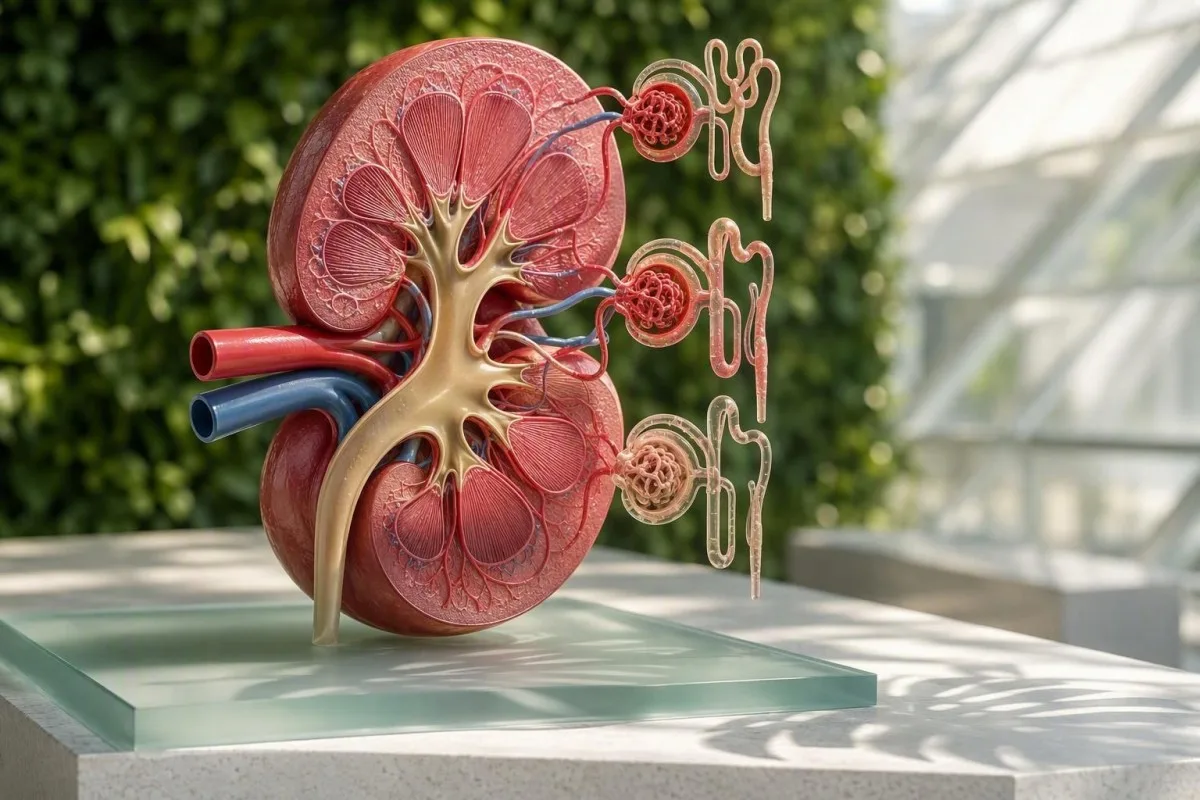
Нізкі eGFR пасля ваніт, уздзеяння цяпла, дыярэі або недастатковага прыёму вадкасці можа быць зваротным. Вынік усё яшчэ патрабуе кантэксту: сімптомы, зыходны крэатынін, вынікі аналізу мачы, лекі і хуткасць аднаўлення маюць значэнне.


- Часовы нізкі GFR можа ўзнікнуць, калі абязводжванне зніжае крывацёк нырак і павышае крэатынін на некалькі гадзін ці дзён.
- Прагрэсіўны парог AKI - гэта павелічэнне крэатыніна прынамсі на 0,3 мг/дл на працягу 48 гадзін або ў 1,5 разы зыходнага ўзроўню на працягу 7 дзён.
- Паўторны аналіз крэатыніна часта прызначаецца на працягу 24-72 гадзін пасля прыёму вадкасці і аднаўлення пры не ўскладненым падазрэнні на абязводжванне.
- Азначэнне CKD патрабуе eGFR ніжэй за 60 мл/мін/1,73 м² або маркераў пашкоджання нырак на працягу па меншай меры 3 месяцаў.
- ACR у мачы 30 мг/г або больш можа сведчыць аб пашкоджанні нырак, нават калі eGFR вышэй за 60 мл/мін/1,73 м².
- Неадкладны агляд патрабуецца пры вельмі нізкай выпрацоўцы мачы, спутаннасці свядомасці, дыхавіцы, ацёках, моцнай слабасці або парушэннях утрымання калія.
- Рызыка з боку лекаў павышаецца пры абязводжванні, калі ўдзельнічаюць НПВС, інгібітары АПФ, БРА, діуретікі, літый або лекі SGLT2.
- Абмежаванні адзінага выніку мае значэнне, таму што eGFR, заснаваны на крэатыніне, менш надзейны пры хутка зменлівай функцыі нырак.
Ці можа абязводжванне выклікаць часовы нізкі вынік тэсту GFR?
Так — абязводжванне можа часова знізіць вынік тэсту GFR таму што зніжэнне аб'ёму цыркулюючай вадкасці зніжае крывацёк праз ныркі, выклікаючы павышэнне крэатыніну і зніжэнне разліковага eGFR. Калі трыгер аператыўна выпраўлены, многія людзі вяртаюцца да свайго папярэдняга базавага ўзроўню на працягу 24-72 гадзін; нізкі GFR ніколі не варта аўтаматычна адкідваць.
Тэст GFR звычайна паведамляе СКФ, ацэнка, разлічаная на аснове крэатыніну сыроваткі, узросту і полу, а не прамое вымярэнне фільтрацыі. Пры вострай страце вадкасці крэатынін можа назапашвацца да таго, як ныркі будуць пастаянна пашкоджаны. Kantesti - гэта Аналізатар крыві са штучным інтэлектам , які чытае eGFR разам з крэатынінам, мачавінай, электралітамі і папярэднімі вынікамі, а не разглядае адно нізкае значэнне як дыягназ.
У маёй клінічнай працы класічны сцэнар - 38-гад.
практычнае правіла доктара Томаса Кляйна простае: гісторыя хваробы паказвае нам, ці магчыма абязводжванне, у той час як паўторны аналіз паказвае нам, ці было гэта ўсё тлумачэннем. Адзінкавае нізкае значэнне не можа дыягнаставаць хранічнае захворванне нырак; наша Памочнік па стадыях ХБН тлумачыць, чаму працягласць змяняе інтэрпрэтацыю.
Чаму страта вадкасці змяняе крэатынін і eGFR
Страта вадкасці зніжае eGFR за кошт зніжэння ціску перфузии нырак, такім чынам, ныркі захоўваюць соль і ваду, адфільтроўваючы менш плазмы. Гэта называецца прэрэнальным зніжэннем фільтрацыі; гэта можа адбыцца пры дыярэі, ванітах, ліхаманцы, уздзеянні цяпла, інтэнсіўных фізічных нагрузках або празмернай дыурэзе.
Крэатынін у асноўным генеруецца метабалізмам цягліц і выводзіцца праз фільтрацыю, таму больш высокая канцэнтрацыя можа адлюстроўваць ніжнюю кліранс, канцэнтрацыю ад страты вады, павышэнне распаду цягліц або некалькі фактараў разам. Ураўненні eGFR мяркуюць адносна стабільны ўзровень крэатыніну; калі ён хутка змяняецца, разліковы eGFR адстае ад рэальнай фізіялогіі.
Суадносіны мачавіны да крэатыніну вышэй прыкладна 20:1 пры справаздачнасці ў мг/дл можа падтрымліваць дэфіцыт аб'ёму, але гэта не тэст на абязводжванне. Страўнікава-кішачныя крывацёкі, кортікостероіды, высокае спажыванне бялку і катабалізм таксама могуць павышаць узровень мачавіны; гл. наш падрабязны суадносіны BUN і креатініна для пастак, якіх пазбягаюць клініцысты.
KDIGO вызначае вострае пашкоджанне нырак як павышэнне крэатыніну на 0,3 мг/дл або больш на працягу 48 гадзін, павышэнне да 1,5 раза ад зыходнага ўзроўню на працягу 7 дзён, або выпрацоўка мачы менш за 0,5 мл/кг/гадзіну на працягу 6 гадзін (KDIGO, 2012). Гэтыя парогі наўмысна адчувальныя, таму што чаканне значнага зніжэння eGFR можа прапусціць праблему, якую можна лячыць.
Як чытаць нізкія лічбы eGFR пасля абязводжвання
eGFR ад 60-89 мл/мін/1,73 м² не з'яўляецца аўтаматычна захворваннем нырак, асабліва пасля абязводжвання, у пажылых людзей або без анамалій мачы. eGFR ніжэй за 60 становіцца клінічна значным, калі ён захоўваецца на працягу 3 месяцаў або адбываецца з трывожнымі сімптомамі або раптоўным павышэннем крэатыніну.
eGFR 90 або больш мг/мін/1,73 м² звычайна лічыцца нармальным або высокім у дарослых, хоць альбумін у мачы можа па-ранейшаму сігналізаваць пра пашкоджанне нырак. eGFR 45-59 класіфікуецца як G3a толькі пры ўсталяванні хранічнасці або іншых нырачных маркераў; узрост, маса цягліц і папярэдні вынік застаюцца жыццёва важным кантэкстам.
раптоўнае падзенне са 105 да 62 часта больш інфарматыўнае, чым стабільнае значэнне 62 на працягу некалькіх гадоў. Наадварот, eGFR 78 у мускулістага 25-гадовага чалавека пасля доўгага бегу можа адлюстроўваць часовае нарастанне крэатыніну, а не зніжэнне фільтрацыі; наша артыкул пра крэатынін пасля фізічных нагрузак тлумачыць гэтую распаўсюджаную ілжывую трывогу.
KDIGO 2024 сцвярджае, што хранічнае захворванне нырак патрабуе анамалій структуры або функцыі нырак, якія прысутнічаюць на працягу як мінімум (KDIGO Work Group, 2024). Гэты тэрмін прадухіляе лекараў ад маркіроўкі кароткачасовага эпізоду абязводжвання як хранічнага захворвання.
Лабараторныя прыкметы, якія пацвярджаюць абязводжванне, а не ўстойлівае захворванне нырак
Канцэнтраваная проба мачы, сумяшчальная гісторыя страты вадкасці і аднаўленне пасля гідратацыі спрыяюць абязводжванню, у той час як альбумінурыя, кроў у мачы, устойлівыя анамаліі або структурныя знаходкі нырак робяць хранічнае захворванне больш верагодным. Ніводзін лабараторны паказчык сам па сабе не вырашае пытанне.
Удзельная вага мачы вышэй за 1.020 часта паказвае на канцэнтраваную мачу, а значэнні вышэй за 1.030 могуць узнікаць пры значным утрыманні вады. Гэта недасканалае: глюкоза, бялок і рэнтгенакантраст таксама могуць павышаць удзельную вагу, таму вынік удзельнай вагі мачы патрабуе поўнага аналізу мачы.
Благі аналіз мачы не даказвае абязводжванне, але бялок, чырвоныя клеткавыя элементы, белыя клеткавыя элементы або цыліндры змяняюць дыферэнцыял. Устойлівае суадносіны альбуміну да крэатыніну 30 мг/г або вышэй з'яўляецца маркерам пашкоджання нырак, нават калі eGFR застаецца вышэй за 60 мл/мін/1,73 м².
Схема, якая мяне турбуе, - гэта нізкі eGFR плюс калій вышэй за лабараторны дыяпазон, бікарбанат ніжэй за 22 ммоль/л, або новы бялок у мачы. Разам гэта сведчыць аб парушэнні нырачнай рэгуляцыі, а не простай канцэнтрацыі ад гарачага дня, і яны патрабуюць ацэнкі пад кіраўніцтвам лекара.
Калі варта прызначыць паўторны аналіз крэатыніна?
Паўторнае тэсціраванне крэатыніну звычайна мэтазгодна на працягу 24-72 гадзін пасля меркаванага няскладанага абязводжвання, якое было выпраўлена, пры ўмове, што чалавек можа піць, нармальна мачыцца і не мае чырвоных сцяжкоў. Дакладны час залежыць ад ступені павышэння крэатыніну, базавага стану нырак, узросту і лекаў.
Пры лёгкім, ізаляваным выніку пасля відавочна зваротнай хваробы лекары часта паўтараюць аналіз крэатыніну, мачавіны, калію, бікарбанату і мачы пасля аднаўлення аральнай рэгідратацыі і нармальнага харчавання. Няма універсальнай колькасці вады, якую трэба выпіць; людзі з сардэчнай недастатковасцю, захворваннямі печані або запушчанымі захворваннямі нырак патрабуюць індывідуальных рэкамендацый па вадкасці.
Kantesti AI — гэта Платформа AI для расшыфроўкі аналізу крыві , які параўноўвае бягучую нырачную панэль з гістарычнымі значэннямі, што часта больш карысна, чым параўнанне выніку з папуляцыйным эталонным дыяпазонам. Крэатынін 1,1 мг/дл можа быць звычайным для аднаго чалавека і значным скачкам з 0,6 мг/дл для іншага.
Паўторнае абследаванне пасля 1–2 тыдняў можа быць разумным толькі пасля таго, як лекар устанавіў, што востры эпізод праходзіць, а значэнні набліжаюцца да базавых. Па магчымасці выкарыстоўвайце тую ж лабараторыю і прачытайце наш даведнік па базавай метабалічнай панэлі перш чым меркаваць, што пазначанае значэнне з'яўляецца ізаляваным.
Калі нізкі GFR пасля абязводжвання патрабуе тэрміновай дапамогі
Звярніцеся за медыцынскай дапамогай у той жа дзень пры нізкім GFR з мінімальным вылучэннем мачы, пастаяннай ванітах, разгубленасці, моцным галавакружэнні, дыхавіцы, болях у грудзях, ацёках або значнай слабасці. Гэтыя сімптомы могуць сведчыць аб клінічна значным дысбалансе вадкасці, вострым пашкоджанні нырак або небяспечных зменах электралітаў.
Тэрміновасць павялічваецца, калі креатынін павышаецца на 0,3 мг/дл на працягу 48 гадзін, на 50% ад базавага ўзроўню на працягу тыдня, або калі вывад мачы значна зніжаецца. У дарослага чалавека, які вылучае менш за 400 мл мачы за 24 гадзіны, я б не раіў проста піць больш вады дома без неадкладнай медыцынскай кансультацыі.
Калій вище 6,0 ммоль/л, натрый ніжэй за 120 ммоль/л, або бікарбанат ніжэй 15 ммоль/л можа запатрабаваць неадкладнага лячэння ў залежнасці ад сімптомаў і дадзеных ЭКГ. Наш кіраўніцтва па электралітах з «чырвонымі сцягамі» тлумачыць, чаму вынікі аналізу нырак і электралітаў неабходна разглядаць разам.
Абязводжванне можа суправаджацца сэпсісам, абструкцыяй мачавых шляхоў, рабдаміялізам, дыябетычным кетоацыдозам або таксічнасцю лекаў. Той факт, што ў чалавека была дыярэя, не выключае гэтых магчымасцей, асабліва калі прысутнічае ліхаманка, боль у паясніцы, цёмная мача колеру колы або моцны боль у мышцах.
Як клініцысты адрозніваюць абязводжванне ад хранічнага захворвання нырак
Лекары адрозніваюць часовае абязводжванне eGFR ад хранічнай хваробы нырак, дакументуючы аднаўленне, правяраючы альбумін у мачы, праглядаючы старыя вынікі і шукаючы ўстойлівыя парушэнні на працягу 3 месяцаў. Сам па сабе паказчык eGFR не можа вызначыць прычыну або працягласць парушэння функцыі нырак.
Суадносіны альбуміну і креатыніну ў мачы ніжэй 30 мг/г класіфікуецца як A1, 30-300 мг/г як A2, і вышэй 300 мг/г як A3. Альбумінурыя можа быць часовай пасля ліхаманкі, інтэнсіўных фізічных нагрузак, інфекцыі мачавых шляхоў або некантралюемага ўзроўню глюкозы, таму анамальны ўзор звычайна патрабуе пацверджання, а не імгненнага дыягназу.
Лекары таксама ацэньваюць артэрыяльны ціск, стан дыябету, гісторыю УГД нырак, сямейны анамнез, уздзеянне лекаў і ці нармалізаваўся креатынін калі-небудзь. Кіраўніцтва па падрыхтоўцы суадносін альбуміну і креатыніну ў мачы ахоплівае практычныя пытанні, такія як фізічныя нагрузкі і менструацыя, якія могуць сказіць узор.
KDIGO 2024 рэкамендуе ацэньваць як катэгорыю GFR, так і катэгорыю альбумінурыі, паколькі рызыка значна ўзрастае, калі абодва паказчыкі анамальныя, чым калі eGFR адзінкава злёгку зніжаны (KDIGO Work Group, 2024). На мой досвед, такая парная ацэнка прадухіляе як недаацэнку, так і непатрэбную паніку.
Вынікі аналізу мачы, якія робяць часовае тлумачэнне менш верагодным
Кроў, значны бялок, клетачныя цилиндры або ўстойлівы альбумін у мачы робяць абязводжванне менш пераканаўчым і звычайна патрабуюць далейшага абследавання нырак. Абязводжванне можа прывесці да канцэнтрацыі ўзору мачы, але звычайна не стварае ўстойлівы актыўны апад мачы.
Зярністыя цыліндры могуць з'явіцца пасля значнага стрэсу канальцаў, у той час як чырвоныя клеткавыя цыліндры выклікаюць занепакоенасць з нагоды захворвання клубочкаў. Адзінкавы лабараторны справаздачу неабходна карэляваць з якасцю ўзору і сімптомамі, але гэтыя высновы, як правіла, заслугоўваюць большай увагі, чым проста канцэнтраваная мача; даследуйце гранулярних циліндрів у сечі для дбайнага аналізу.
Бялок паласкавага тэсту можа паказваць больш высокія значэнні ў канцэнтраванай мочы, таму суадносіны альбумін/крэатынін звычайна больш карысныя для пацвярджэння. Устойлівы ACR 300 мг/г або більше з'яўляецца маркерам высокай рызыкі і не павінен прыпісвацца дрэннай гідратацыі без агляду лекара.
Бачная чырвоная або гарбатападобная моча, боль у паясніцы, ліхаманка або немагчымасць мачавыпускання змяняюць тэрміновасць. Абструкцыя і інфекцыя мачавыводзячых шляхоў могуць знізіць GFR, і абодва патрабуюць іншага рэагавання, чым аднаўленне вадкасці дома.
Лекі, якія могуць ператварыць абязводжванне ў вострае пашкоджанне нырак
НПВС, діуретікі, інгібітары АПФ, БРА, літый і некаторыя лекі ад дыябету могуць павялічыць зніжэнне GFR, звязанае з абязводжваннем. Гэтыя лекі часта з'яўляюцца прыдатнымі для доўгатэрміновага лячэння, але вострая хвароба можа змяніць план бяспекі.
НПВС могуць знізіць здольнасць нырак падтрымліваць фільтрацыю пры нізкім аб'ёме цыркуляцыі, асабліва ў пажылых людзей і людзей, якія прымаюць діурецікі плюс інгібітар АПФ або БРА. Не спыняйце прызначаныя лекі рэфлекторна; запытайце ў лекара або фармацэўта план на выпадак хваробы, які адпавядае вашым станам.
Інгібітары SGLT2 звычайна выклікаюць невялікае зніжэнне eGFR пасля пачатку прыёму з-за гемадынамічных змен у клубочках, а не абавязкова пашкоджанні нырак. Адрозненне ад абязводжвання мае значэнне, і наш агляд змяненняў eGFR пры прыёме лекаў SGLT2 тлумачыць, чаму глюкоза, артэрыяльны ціск, сімптомы і час ацэньваюцца разам.
Метфармін не зніжае GFR напрамую, але вострае пашкоджанне нырак можа паўплываць на бяспеку яго часовага працягу. Узровень літыя можа павышацца пры страце аб'ёму, у той час як трыметапрыму можа павышаць крэатынін без прапарцыйнага зніжэння вымеранай фільтрацыі — адна з тых тонкасцей, якія робяць самаінтэрпрэтацыю рызыкоўнай.
Чаму ўзрост, цяжарнасць, мышачная маса і фізічныя нагрузкі ўплываюць на інтэрпрэтацыю eGFR
eGFR, заснаваны на крэатыніне, можа недаацэньваць фільтрацыю ў мускулістых людзей і пераацэньваць яе ў слабых людзей з нізкай мышачнай масай; цяжарнасць мае іншыя чаканні. Нізкі eGFR пасля абязводжвання, такім чынам, мае розныя наступствы для бодзібілдара, пажылога чалавека і цяжарнай пацыенткі.
Пры цяжарнасці GFR звычайна павышаецца, таму крэатынін часта зніжаецца прыкладна да 0,4–0,8 мг/дл; значэнне, якое лічыцца звычайным па-за межамі цяжарнасці, можа выклікаць занепакаенне ў кантэксце. Любая цяжарная жанчына з ванітамі, гіпертэнзіяй, галаўным болем, ацёкамі або анамальнымі нырачнымі вынікамі павінна звязацца са сваёй акушэрска-гінекалагічнай камандай, і наша кіраўніцтва па GFR пры цяжарнасці дае адпаведную структуру.
78-гадовы чалавек з нізкім адчуваннем смагі і прыёмам діурецікаў можа развіць гіпаперфузію нырак пры, здавалася б, умеранай страце вадкасці. Наадварот, спартсмен-сілавік можа мець крэатынін па-за межамі рэферэнтнага інтэрвалу з-за мышачнай масы, дабавак з крэацінам або нядаўняй трэніроўкі, нават пры нармальнай сапраўднай фільтрацыі.
Цыстацін С часам можа праясніць нявызначаны вынік крэатыніна, бо ён менш залежыць ад мышачнай масы, хоць захворванні шчытападобнай залозы, курэнне, стэроіды і запаленне могуць уплываць на яго. Доктар Томас Кляйн часта выкарыстоўвае яго як "апошні аргумент", а не як замену анамнезу і серыйных вынікаў.
Што рабіць дома падчас чакання паўторнага тэсту GFR
Калі вы у свядомасці, здольныя піць і мача выпускаецеся, аднаўляйце вадкасць паступова, пазбягайце інтэнсіўных фізічных нагрузак і НПВС, і запісвайце сімптомы перад паўторнай праверкай. Хатнія меры непрыдатныя, калі прысутнічаюць трывожныя сімптомы або цяжкае захворванне.
Невялікія частыя глыткі звычайна лепш пераносяцца, чым хуткае спажыванне вялікіх аб'ёмаў, асабліва пасля ваніт. Раствор для аральнай рэгідратацыі можа быць карысны пры дыярэі, паколькі ён замяшчае натрый і глюкозу, а таксама ваду; людзям з абмежаваннямі па вадкасці патрэбна спецыфічная парада лекара.
Светла-жоўтая моча можа сведчыць аб прымальнай гідратацыі, але гэта не сертыфікат ачысткі. Цёмная моча можа адлюстроўваць канцэнтрацыю, лекі, білірубін або мышачны пігмент, таму прачытайце наша кіраўніцтва па попереджувальних ознак темної сечі калі колер захоўваецца пасля ўвядзення вадкасці.
Пазбягайце цяжкіх трэніровак на працягу 24–48 гадзін перад запланаванай паўторнай праверкай крэатыніна, калі ваш лекар не загадае іншае. Запішыце даты захворвання, ліхаманкі, эпізодаў дыярэі, дозы лекаў, фізічныя нагрузкі, дабаўкі і колькасць выпітай вадкасці; гэты невялікі часовай прамежак часта змяняе інтэрпрэтацыю.
Чаму тэндэнцыі больш карысныя, чым адзін нізкі вынік eGFR
Напрамак і хуткасць змены крэатыніна звычайна больш клінічна карысныя, чым адзінкавае значэнне eGFR. Стабільны eGFR 55 і новае падзенне з 95 да 55 могуць несці вельмі розныя рызыкі, нават калі паведамлены лік ідэнтычны.
Лабараторыі могуць выкарыстоўваць дэльта-праверкі, калі крэатынін нечакана змяняецца, але біялагічныя варыяцыі, варыяцыі аналізу, дыета і гідратацыя таксама ўплываюць. Змена на 0,1 мг/дл можа быць шумам у адной сітуацыі і значнай у іншай, калі базавы ўзровень чалавека стабільна складае 0,5 мг/дл.
Кантэсці — гэта Інструмент аналізу вынікаў аналізу крыві з падтрымкай AI які арганізуе серыйныя нырачныя вынікі з клінічным кантэкстам, які вы захоўваеце, такім як захворванні і змены ў медыкаментах. Гэты падыход паралельны практычнаму метаду, апісанаму ў нашым кіраўніцтва па аналізе лабараторных дадзеных у дынаміцы: усталюйце свой уласны базавы ўзровень перад тым, як вызначыць траекторыю захворвання.
Па стане на 29 жніўня 2026 г. ніякія інтэрпрэтацыі, арыентаваныя на спажыўца, не павінны замяняць рашэнне лекара, калі eGFR хутка падае. Графік можа вызначыць заканамернасць; ён не можа агледзець пацыента на прадмет абязводжвання, абструкцыі, сардэчнай недастатковасці або сістэмнага захворвання.
Абмежаванні стандартнага тэсту GFR падчас вострага захворвання
Стандартны eGFR на аснове крэатыніна найменш надзейны, калі функцыя нырак хутка змяняецца, таму што крэатыніну патрабуецца час для эквілібрацыі. Падчас актыўнага абязводжвання або ранняга аднаўлення лекары сачаць за серыйным крэатынінам і вывядзеннем мачы, а не спадзяюцца на адзін разлічаны eGFR.
Ураўненне 2021 CKD-EPI для крэатыніна паляпшае ацэнку на ўзроўні насельніцтва шляхам выдалення карэкціроўкі па расе, але яно па-ранейшаму мяркуе, што выпрацоўка і вывядзенне крэатыніна даволі стабільныя. Дабаўкі з крэацінам, прыгатаванае мяса на працягу некалькіх гадзін пасля ўзяцця проб, ампутацыя, кахексія і вялікая маса цягліц могуць змяніць інтэрпрэтацыю.
Kantesti AI вылучае камбінацыі вынікаў для наступнага назірання, але не дыягнастуе вострае пашкоджанне нырак і не прызначае вадкасную тэрапію. Наш гід па тэхналогіі апісвае, чым кантэкстуальная інтэрпрэтацыя адрозніваецца ад замены медыцынскай ацэнкі.
Вымярэнне GFR з выкарыстаннем экзогенных фільтрацыйных маркераў зарэзервавана для выбраных сітуацый, такіх як ацэнка донара або значная нявызначанасць, а не для звычайнага назірання пасля абязводжвання. Большасць пацыентаў патрабуе дбайнага клінічнага агляду, аналізу мачы, паўторнага аналізу нырак і ацэнкі таго, аднаўляецца Ці лік.
Чэк-ліст клініцыста для нізкага GFR пасля абязводжвання
Бяспечны план назірання ўключае ацэнку цяжкасці, прычыны, аднаўлення, вынікаў аналізу мачы, лекаў і ўскладненняў — а не толькі лічбы eGFR. Гэты структураваны падыход вызначае людзей, якія могуць хутка прайсці паўторны агляд, і тых, хто мае патрэбу ў тэрміновай ацэнцы на ўзроўні бальніцы.
Я б спытаў пра страту вадкасці, аб'ём мачы, нядаўнія кантрасныя даследаванні, сімптомы інфекцыі, пашкоджанне цягліц, абструкцыю мачавых шляхоў, дыябет, сардэчную недастатковасць і кожны адпускаемы па рэцэпце або без рэцэпту лек. Затым я б параўнаў крэатынін з апошнім вядомым значэннем і пры неабходнасці праверыў калій, бікарбанат, мачавіну, аналіз мачы і ACR мачы.
Паўторны вынік, які вяртаецца да базавага ўзроўню пасля аднаўлення, пацвярджае часовую гемадынамічную прычыну, хоць гэта не здымае будучы рызыку ў чалавека з дыябетам або гіпертаніяй. Вынік, які застаецца нізкім, пагаршаецца або суправаджаецца альбумінурыяй, заслугоўвае афіцыйнага абследавання нырак і часам кансультацыі нефролага.
Наш клінічны кантэнт разглядаецца ў адпаведнасці са стандартамі, апісанымі медыцынскай камандай па валідацыі Kantesti. Роля Kantesti заключаецца ў тым, каб дапамагчы вам лепш падрыхтаваць пытанні і выявіць тэндэнцыі; наступнае клінічнае рашэнне належыць спецыялісту, які можа агледзець вас і прыняць меры па выніках.
Часта задаваныя пытанні
Ці можа абязводжванне прывесці да паніжэння eGFR?
Так. Абязводжванне можа знізіць крывацёк да нырак, павысіць узровень крэатыніну ў сыроватцы крыві і прывесці да часова нізкага разліковага eGFR. Павышэнне крэатыніну мінімум на 0,3 мг/дл на працягу 48 гадзін адпавядае крытэрыю KDIGO для вострага пашкоджання нырак, нават калі прычына можа быць зварачальнай. Паўторная нырачная панэль пасля аднаўлення, часта на працягу 24-72 гадзін у неўскладненых выпадках, дапамагае вызначыць, ці зніжаецца змяненне.
Колькі часу патрабуецца, каб eGFR палепшыўся пасля абязводжвання?
Змены eGFR, звязаныя з абязводжваннем, часта паляпшаюцца на працягу 24-72 гадзін пасля спынення страты вадкасці і аднаўлення перфузии нырак, але аднаўленне можа заняць больш часу пасля цяжкай хваробы або ў людзей з папярэднімі захворваннямі нырак. Крэатынін не змяняецца імгненна, таму eGFR можа адставаць ад клінічнага паляпшэння. Устойлівы нізкі eGFR, павышэнне крэатыніну, нізкі вывад мачы або анамальны калій патрабуюць медыцынскага агляду, а не паўторнага хатняга ўвільгатнення. Хранічная хвароба нырак не можа быць дыягнаставана, калі адхіленні не захоўваюцца на працягу мінімум 3 месяцаў.
Ці трэба мне піць шмат вады перад паўторным аналізам на крэатынін?
Не прымушайце сябе піць занадта шмат вады перад паўторным аналізам на крэатынін; прытрымлівайцеся звычайнага, камфортнага рэжыму ўжывання вады, калі толькі лекар не прызначыў абмежаванне ці мэту па прыёме вадкасці. Хуткае празмернае спажыванне можа знізіць узровень натрыю, асабліва ў пажылых людзей, спартсменаў на вынослівасць і людзей, якія прымаюць некаторыя лекі. Пазбягайце алкаголю, НПВС і незвычайна інтэнсіўных фізічных нагрузак за 24-48 гадзін да здачы аналізу, калі гэта медыцынска бяспечна. Людзі з сардэчнай недастатковасцю, цырозам або запушчанай хваробай нырак павінны пракансультавацца са сваім лекарам адносна колькасці вадкасці, якая ім падыходзіць.
Які паказчык eGFR небяспечны пасля абязводжвання?
Няма адзінага небяспечнага паказчыка eGFR, паколькі хуткасць змены, сімптомы, узровень калію, мачавыпусканне і базавая функцыя нырак вызначаюць тэрміновасць. eGFR ніжэй за 60 мл/мін/1,73 м², які з'явіўся нядаўна, патрабуе ацэнкі, у той час як eGFR ніжэй за 30 мл/мін/1,73 м² звычайна патрабуе неадкладнай медыцынскай кансультацыі. Тэрміновая ацэнка неабходная раней, калі выпрацоўка мачы вельмі нізкая, крэатынін павышаецца на 0,3 мг/дл за 48 гадзін, калій перавышае 6,0 ммоль/л, або з'яўляюцца такія сімптомы, як спутанность свядомасці або дыхавіца.
Ці можа звычайны аналіз мачы выключыць захворванне нырак пасля нізкага eGFR?
Не. Нармальны аналіз мачы зніжае занепакоенасць некаторымі запаленчымі захворваннямі нырак, але не выключае ўсе захворванні нырак ці іх абструкцыю. Суадносіны альбуміну да крэатыніну ў мачы ніжэй за 30 мг/г супакойваюць, у той час як пастаянныя значэнні 30 мг/г або больш сведчаць аб пашкоджанні нырак, нават калі eGFR вышэй за 60 мл/мін/1,73 м². Клініцысты інтэрпрэтуюць вынікі аналізу мачы разам з паўторным аналізам крэатыніну, артэрыяльным ціскам, гісторыяй прыёму лекаў, статусам цукровага дыябету і папярэднімі вымярэннямі функцыі нырак.
Ці могуць фізічныя практыкаванні або крэацін выклікаць нізкі вынік тэсту GFR?
Інтэнсіўныя фізічныя нагрузкі, пашкоджанне цягліц, прыгатаванае мяса і дабаўкі креаціна могуць павышаць узровень крэацініна ў сыроватцы крыві і прыводзіць да таго, што eGFR на аснове крэацініна будзе здавацца ніжэйшым без эквівалентнай страты сапраўднай фільтрацыі. Гэты эфект асабліва значны пасля працяглых мерапрыемстваў, інтэнсіўных сілавых трэніровак або трэніровак у стылі CrossFit. Моцны боль у цягліцах, слабасць, ацёк або моцны боль у паясніцы пасля фізічных нагрузак патрабуюць неадкладнай ацэнкі, паколькі рабдаміяліз можа выклікаць сапраўднае вострае пашкоджанне нырак. Паўторны аналіз праз 24-48 гадзін адпачынку можа быць інфарматыўным, калі лекар лічыць гэта бяспечным.
Атрымаць аналіз крыві з AI сёння
Далучайцеся больш чым да 2 мільёнаў карыстальнікаў па ўсім свеце, якія давяраюць Kantesti для імгненнага, дакладнага аналізу лабараторных тэстаў. Загрузіце вынікі аналізу крыві і атрымайце поўную інтэрпрэтацыю біямаркераў 15,000+ за лічаныя секунды.
📚 Публікацыі даследаванняў са спасылкамі
Кляйн, Т., Мітчэл, С., і Вебер, Г. (2026). Нармальны дыяпазон аЧТЧ: D-дымер, бялок С, кіраўніцтва па згусальнасці крыві. Kantesti AI Medical Research.
Кляйн, Т., Мітчэл, С., і Вебер, Г. (2026). Кіраўніцтва па сыроватачных бялках: аналіз крыві на глабуліны, альбумін і суадносіны A/G. Kantesti AI Medical Research.
📖 Знешнія медыцынскія спасылкі
⚕️ Медыцынская адмова ад адказнасці
Гэты артыкул прызначаны толькі для адукацыйных мэт і не з’яўляецца медычнай парадай. Заўсёды кансультуйцеся з кваліфікаваным спецыялістам аховы здароўя для прыняцця рашэнняў па дыягностыцы і лячэнні.
Сігналы даверу E-E-A-T
Вопыт
Клінічны агляд, які вядзе лекар, працэсаў інтэрпрэтацыі лабараторных паказчыкаў.
Экспертыза
Фокус лабараторнай медыцыны на тым, як біямаркеры паводзяць сябе ў клінічным кантэксце.
Аўтарытэтнасць
Напісана доктарам Томасам Кляйнам, з аглядам доктара Сара Мітчэл і праф. доктара Ганса Вебера.
Надзейнасць
Інтэрпрэтацыя на аснове доказаў з выразнымі шляхамі далейшых дзеянняў, каб паменшыць трывогу.