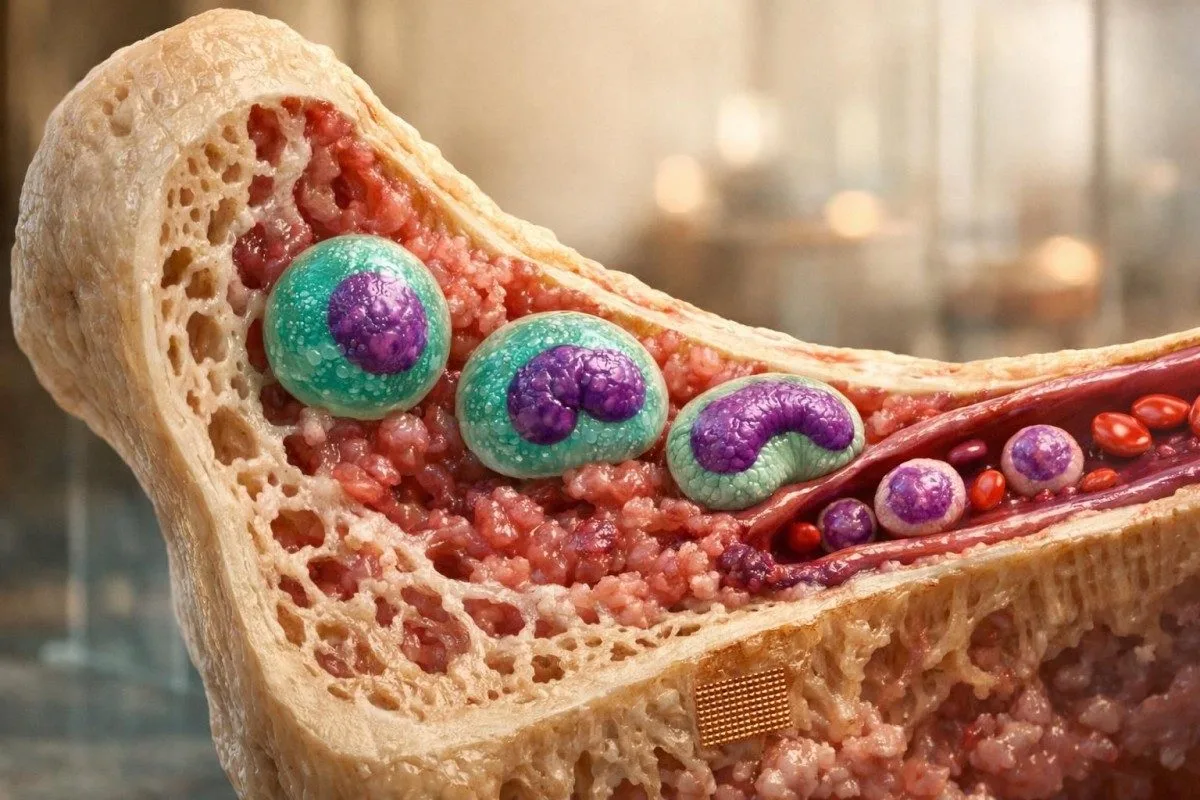
A small immature granulocyte rise is often temporary. The real question is whether the rest of the CBC points to routine recovery, inflammation, infection, or something that deserves prompt follow-up.


- Typical adult IG% is often 0.0% to 0.4%, although some labs accept values up to 0.9%.
- Absolute IG count is commonly normal at 0.00 to 0.03 x10^9/L; many labs flag 0.04 x10^9/L or higher.
- Mild elevation around 0.5% to 1.0% is often temporary after infection, inflammation, stress, or steroid exposure.
- Normal WBC does not rule it out; a total WBC of 4.0 to 10.5 x10^9/L can still hide a meaningful left shift.
- Infection pattern usually looks more convincing when IG rises with high neutrophils, low lymphocytes, fever, or CRP above 30 mg/L.
- Transient causes include late pregnancy, the first 24 to 48 hours postpartum, strenuous exercise, recent surgery, and marrow recovery.
- Red-flag pattern is more concerning when IG exceeds 1% to 2% and travels with anemia, low platelets, basophilia, or abnormal cells on smear.
- Reasonable follow-up is often a repeat CBC in 24 to 72 hours if symptomatic, or 1 to 2 weeks if you feel well.
- Urgent evaluation is warranted for fever above 38.0°C, shaking chills, confusion, breathing trouble, or an immunocompromised state.
What an immature granulocyte flag actually means
An immature granulocyte flag on a CBC usually means your bone marrow released early white-cell precursors, most often because of infection, inflammation, physical stress, steroid exposure, or recovery from illness. In adults, many labs expect 0.0% to 0.4%, and a one-off value around 0.5% to 1.0% is often not dangerous by itself. The result matters more when it appears with fever, rising neutrophils, low platelets, anemia, or new symptoms. If you came here looking for CBC blood test results explained in plain English, that is the short answer. You can also compare it with our CBC differential guide after reviewing your report on Kantesti AI.
Immature granulocytes are early granulocyte-line cells, usually promyelocytes, myelocytes, and metamyelocytes, that normally stay in marrow until they mature. On most automated analyzers, they are not the same thing as a mature neutrophil, and they are not always the same as a manual band count either.
I see this flag after very ordinary illnesses. A 29-year-old teacher in clinic had IG 0.7%, WBC 8.1 x10^9/L, and ANC 6.2 x10^9/L during a sinus infection; 5 days later the IG was 0.2%, and the rest of the CBC had settled without any sinister explanation.
As Thomas Klein, MD, I usually tell patients that an isolated flag is a clue, not a diagnosis. The reason we still pay attention is that an IG rise can appear before the rest of the CBC looks dramatic, especially in localized bacterial illness or early inflammatory flares.
Normal ranges, absolute counts, and why labs disagree
Typical adult IG% reference ranges are 0.0% to 0.4% on many labs, while others call anything under 0.9% acceptable. Absolute IG# is often normal at 0.00 to 0.03 x10^9/L, though some laboratories use 0.04 x10^9/L as the upper limit. That is why your result should always be read beside the lab's own interval and the total white count in a WBC range chart.
Here is the arithmetic most patients never get taught. If your WBC is 6.0 x10^9/L and IG is 0.8%, the absolute IG is roughly 0.048 x10^9/L, which many labs will flag even though the total WBC looks normal.
One annoyance in real-world complete blood count interpretation is that analyzers do not all classify cells the same way. Some European labs use slightly lower adult cutoffs, pregnancy can shift expectations, and not every report even displays IG# unless it crosses an internal threshold, which is one reason a comprehensive blood panel overview helps patients understand what is actually being measured.
As of April 23, 2026, I still trust the lab-specific reference interval more than generic internet numbers. In my experience, IG 0.5% in a well person is very different from IG 0.5% in someone with fever, tachycardia, or recent chemotherapy.
IG% versus IG#
IG% tells you the proportion of immature cells among white cells, while IG# tells you the actual quantity per liter. I lean more heavily on IG# when the WBC is unusually high or low, because percentages alone can look smaller or larger than the true cell burden.
The common causes: infection, inflammation, stress, and medicines
Elevated immature granulocytes most often reflect bacterial infection, sterile inflammation, major physiologic stress, corticosteroid exposure, or marrow stimulation from G-CSF medicines. When I review a panel with IG 1.1% and neutrophils 82%, infection moves higher on the list than anything exotic. Patients often see the same pattern in our high neutrophils guide.
Localized bacterial illness can do this even before the total WBC climbs. I have seen appendicitis, diverticulitis, dental abscess, and even a deep skin infection produce IG 0.6% to 1.4% while WBC remained between 6.5 and 9.5 x10^9/L.
There is another angle here: you do not need bacteria to push the marrow. Autoimmune flares, pancreatitis, major tissue injury, and postoperative states can all increase marrow signaling through cytokines such as IL-6 and G-CSF, so an elevated IG paired with a high CRP or ESR may fit the broader pattern in our inflammation lab comparison.
Medicines matter more than people expect. Prednisone, methylprednisolone, and especially filgrastim or pegfilgrastim can shift white-cell dynamics, and smokers or severely stressed patients sometimes show a mild left shift without a dangerous infection hiding underneath.
How to tell infection from inflammation using the rest of the CBC
Immature granulocytes are most useful as a pattern, not a standalone number. IG plus neutrophilia plus lymphopenia plus a CRP rise leans infectious; IG plus high ESR or CRP plus reactive platelets can lean inflammatory, though there is overlap. Seebach et al. reported that the left shift added diagnostic value beyond total leukocyte count alone, which still matches what I see in practice. It helps to compare your result with broader high WBC patterns.
A bacterial-leaning picture usually includes ANC above 7.5 x10^9/L, a falling lymphocyte percentage, and a patient who actually feels ill. If the IG is 0.9%, the neutrophils are 80%, the lymphocytes are 10%, and the CRP is 65 mg/L, I worry much more than I would about the same IG in isolation.
Inflammatory or autoimmune flares often look a little different. In rheumatoid or connective tissue disease, I may see IG 0.5% to 1.0%, platelets 420 to 550 x10^9/L, modest neutrophilia, and a very high ESR, which is one reason patients with borderline findings should read our borderline results guide.
Viral illness recovery can be sneaky. A patient may move from lymphocyte-predominant findings during the viral phase to a brief IG bump during marrow rebound, especially if they were febrile or dehydrated for several days.
A pattern I trust more than total WBC
A normal total WBC is less reassuring than most people think when the differential is shifting hard underneath it. The combination of rising ANC, low lymphocytes, and a new IG flag often tells me more than the headline white count alone.
Why the result can matter even when WBC is normal
Yes, immature granulocytes can matter even with a normal WBC. A total white count of 4.0 to 10.5 x10^9/L can still hide an abnormal left shift because the percentages inside the differential are moving in opposite directions. That is why I am careful with patients who also have relative neutrophilia, recent fever, or clues from our low neutrophils guide that their baseline differential already runs unusual.
The math explains the paradox. If one person goes from lymphocytes 32% to 12% while neutrophils rise from 55% to 78%, the total WBC may stay around 6.2 x10^9/L, yet the marrow is clearly behaving differently and the absolute IG may still be flagged.
I worry more about this pattern in older adults, transplant recipients, people on immune-suppressing therapy, and patients with chronic illness who do not mount dramatic white-count spikes. A frail 78-year-old with WBC 6.0 x10^9/L, IG 0.8%, and new confusion deserves more attention than a healthy 25-year-old runner with the same result.
The practical takeaway is simple: do not let a 'normal WBC' end the conversation too early. Our normal range pitfalls guide explains why a normal headline number can still hide a meaningful pattern change.
When the result is often transient and not alarming
A mild IG rise is often temporary after late pregnancy, the first 24 to 48 hours postpartum, strenuous exercise, recent surgery, or recovery from a viral illness. In those settings, values around 0.5% to 1.0% may normalize on repeat testing if the patient feels well. Context from a prenatal testing guide or an athlete lab guide can be surprisingly helpful here.
Pregnancy is one of the most misunderstood examples. Mild leukocytosis and a physiologic left shift can occur in the third trimester, and some obstetric patients show detectable IG without any bacterial illness, particularly if the rest of the CBC is stable and there are no symptoms.
I see a similar story in endurance athletes after heavy training blocks. A 41-year-old marathon runner once showed IG 0.6%, WBC 9.4 x10^9/L, and borderline neutrophilia the morning after a long race simulation; after hydration and 72 hours of recovery, the differential normalized.
Recovery can look messy before it looks normal. After influenza, COVID, or another febrile illness, marrow rebound sometimes produces a small IG blip for several days, which is why a repeat CBC often tells the truth better than a single snapshot.
When immature granulocytes raise concern for leukemia or marrow disease
Immature granulocytes become more concerning when the number is clearly elevated and the rest of the CBC is wrong too. IG above 2%, or a persistent IG# above 0.20 x10^9/L, deserves prompt review when paired with hemoglobin below 10 g/dL, platelets below 150 x10^9/L, circulating blasts, or basophilia. That is the point where our leukemia CBC patterns article becomes genuinely relevant.
The reason we worry about IG plus anemia or IG plus thrombocytopenia is that together they suggest a broader marrow process, not just a reactive immune response. Chronic myeloid leukemia, myelodysplastic syndromes, marrow infiltration, and severe systemic illness can all alter multiple cell lines at once.
Still, an elevated IG alone does not diagnose cancer. I have seen IG 3% in severe bacterial sepsis and IG 2.2% in an intense inflammatory postoperative state, so the smear review, trend, and physical exam remain crucial.
Here is the point I usually make very plainly: persistent abnormality is more worrying than a single blip. If the CBC stays off, symptoms are accumulating, or other lines are falling, use our critical value guide and speak with a clinician the same day.
How labs measure IG and why false flags happen
Modern hematology analyzers estimate immature granulocytes using light scatter, fluorescence, and cell complexity signals, but odd results still need human review. That is why our Medical Validation work matters. It is also why patients should understand the difference between analyzer output and human interpretation after reading about lab machines versus AI apps.
A subtle but important point: bands and immature granulocytes are not interchangeable on many analyzers. Cornbleet argued years ago that manual band counts are less reproducible than many clinicians assume, and that caution still holds up in everyday lab medicine (Cornbleet, 2002).
False or exaggerated flags do happen. Delayed transport, a partially clotted sample, very toxic neutrophil changes, or other abnormal cells in the tube can make the scatter pattern messy enough that the lab reflexes to a manual cell sample slide review rather than trusting the instrument alone.
Senthilnayagam et al. showed that automated immature granulocyte measurement is reliable enough for routine use, but not infallible (Senthilnayagam et al., 2012). As Thomas Klein, MD, I still trust the trend and the smear more than a lonely flag that does not fit the patient.
Why two labs may disagree
Different analyzers, different internal flagging rules, and different reference intervals can produce slightly different IG results on the same day. That is not necessarily an error; sometimes it is just the consequence of two laboratories asking the same biological question with slightly different thresholds.
What to do next after an unexpected immature granulocyte result
The right next step after an unexpected IG flag is usually a quick clinical check and a repeat plan, not panic. If you feel unwell, repeat testing often makes sense within 24 to 72 hours; if you feel fine and the elevation is mild, 1 to 2 weeks is often reasonable. Trend review is easier when you keep a blood test history and know how a PDF upload guide can preserve the exact numbers.
Start with the boring questions, because they are often the most useful. Fever over 38.0°C, new cough, urinary symptoms, abdominal pain, recent steroid injection, pregnancy, postpartum status, recent surgery, smoking, or use of filgrastim can all change the interpretation immediately.
A clinician may add tests based on symptoms rather than on the IG alone. Common next steps include CRP, ESR, procalcitonin, a peripheral smear, urine testing, or cultures when the story points toward bacterial illness rather than a sterile inflammatory flare.
Most patients find it reassuring to hear that time itself is part of the test. When a mild IG rise falls from 0.8% to 0.2% over a week and the symptoms resolve, the story becomes far less concerning than a result that stays elevated or rises despite feeling worse.
How Kantesti AI interprets immature granulocytes in context
Kantesti AI interprets an immature granulocyte result by reading the whole CBC pattern, not just the highlighted line. Our About Us team built the workflow so our AI weighs IG%, IG#, ANC, platelets, hemoglobin, age, symptoms, and prior results before assigning urgency.
Across 2M+ users in 127+ countries, our platform keeps seeing the same truth: isolated markers mislead, patterns help. That is why our blood biomarkers guide places IG beside related measures instead of treating it as a standalone diagnosis.
Our medical review process is not a black box written by marketers. The physicians on our Medical Advisory Board regularly review edge cases, and in our case discussions Thomas Klein, MD, keeps pushing the same question: what changed from this patient's own baseline, and does the clinical story fit the flag?
There is some honest uncertainty here, and I think patients deserve to hear that. Even very good software should be used with judgment, which is why our AI-powered blood test interpretation experience also points readers to the limits discussed in AI interpretation blind spots.
Bottom line: when to watch, when to call, and when to go now
Bottom line: most isolated mild IG elevations are watched, not feared. You should call promptly if the result comes with fever above 38.0°C, shaking chills, shortness of breath, confusion, a rapidly rising count, or any combination of low platelets, anemia, and abnormal white-cell forms. If you want a fast second pass on the pattern, try Free AI Blood Test Analysis.
Watchful waiting is usually reasonable when IG is mildly elevated, you feel well, the rest of the CBC is stable, and there is a believable short-term explanation such as recent infection recovery, strenuous exercise, or postpartum physiology. In that setting, a planned repeat CBC is often smarter than late-night internet spiraling.
Call your clinician within 24 hours if the IG is rising, the value is near or above 1%, or the CBC is changing in more than one direction at once. New fatigue, night sweats, easy bruising, or persistent infection symptoms make the result more meaningful.
Go now, not next week, if there is high fever, breathing difficulty, chest pain, severe weakness, confusion, or if you are immunocompromised and feel acutely unwell. For more patient-friendly lab reading after that, our blog library covers the follow-up questions people usually ask next.
Frequently Asked Questions
What does it mean if immature granulocytes are high on a CBC?
High immature granulocytes usually mean the bone marrow is releasing early white-cell precursors faster than usual. In adults, many labs consider 0.0% to 0.4% normal, so values above 0.5% often reflect infection, inflammation, physical stress, steroid exposure, or recovery from illness rather than a specific disease by themselves. The result matters much more when it appears with fever, high neutrophils, low platelets, anemia, or abnormal cells on smear. A single mild rise can be transient, but a persistent or rising result deserves follow-up.
Can immature granulocytes be high if my total WBC is normal?
Yes. Immature granulocytes can be abnormal even when the total WBC stays within the usual adult range of about 4.0 to 10.5 x10^9/L. This happens because the differential can shift underneath a normal total count, with neutrophils rising and lymphocytes falling at the same time. A normal WBC therefore does not cancel out an IG 0.7% to 1.0% result, especially if symptoms or inflammatory markers support infection or inflammation. Older adults and immunocompromised patients often show this pattern.
What immature granulocyte level is considered concerning?
There is no single universal cutoff, because laboratories use different analyzers and reference intervals. Many adult labs flag IG above 0.4% or 0.5%, and I pay closer attention once the value reaches 1.0% or the absolute IG exceeds about 0.10 x10^9/L. Concern rises further above 2.0%, especially if hemoglobin is low, platelets are falling, or the smear shows other abnormal white-cell forms. The trend over days often matters more than one isolated number.
Can stress or prednisone raise immature granulocytes?
Yes, both severe physical stress and corticosteroids can contribute to a mild immature granulocyte rise. Prednisone and similar drugs more often cause neutrophil demargination, but in a stressed marrow environment they can accompany IG values around 0.5% to 1.0%. Heavy exercise, surgery, major inflammation, and cytokine-stimulating medicines such as filgrastim can produce a similar effect. That is why medication history should be reviewed before assuming a bacterial cause.
Do immature granulocytes mean leukemia?
Not by themselves. Most mild immature granulocyte elevations are reactive and linked to infection, inflammation, recovery, or medication effects rather than leukemia. The result becomes more worrisome when IG exceeds 2%, stays elevated, or travels with anemia, low platelets, basophilia, or abnormal immature cells elsewhere on the CBC or smear. Persistent multi-line abnormalities are the pattern that should trigger urgent hematology review.
How soon should I repeat a CBC with high immature granulocytes?
If you feel unwell, many clinicians repeat the CBC within 24 to 72 hours so they can see whether the left shift is rising or settling. If you feel well, the rise is mild, and there is a likely short-term explanation, repeating in 1 to 2 weeks is often reasonable. Same-day review is smarter if you are immunocompromised, pregnant with symptoms, on chemotherapy, or have fever above 38.0°C. The repeat result is often more informative than the first flag.
Get AI-Powered Blood Test Analysis Today
Join over 2 million users worldwide who trust Kantesti for instant, accurate lab test analysis. Upload your blood test results and receive comprehensive interpretation of 15,000+ biomarkers in seconds.
📚 Referenced Research Publications
Klein, T., Mitchell, S., & Weber, H. (2026). Urobilinogen in Urine Test: Complete Urinalysis Guide 2026. Kantesti AI Medical Research.
Klein, T., Mitchell, S., & Weber, H. (2026). Iron Studies Guide: TIBC, Iron Saturation & Binding Capacity. Kantesti AI Medical Research.
📖 External Medical References
Seebach JD et al. (1997). The diagnostic value of the neutrophil left shift in predicting inflammatory and infectious disease. American Journal of Clinical Pathology.
Senthilnayagam B et al. (2012). Automated measurement of immature granulocytes: Performance characteristics and utility in routine clinical practice. Pathology Research International.
Cornbleet PJ (2002). Clinical utility of the band count. Clinics in Laboratory Medicine.
⚕️ Medical Disclaimer
This article is for educational purposes only and does not constitute medical advice. Always consult a qualified healthcare provider for diagnosis and treatment decisions.
E-E-A-T Trust Signals
Experience
Physician-led clinical review of lab interpretation workflows.
Expertise
Laboratory medicine focus on how biomarkers behave in clinical context.
Authoritativeness
Written by Dr. Thomas Klein with review by Dr. Sarah Mitchell and Prof. Dr. Hans Weber.
Trustworthiness
Evidence-based interpretation with clear follow-up pathways to reduce alarm.