
Most otherwise healthy people with uncomplicated nontyphoidal Salmonella diarrhea need fluids, not antibiotics. Severe illness, bloodstream infection, or a higher risk of invasive disease changes that decision.

Những điểm chính cần ghi nhớ
- Kháng sinh are usually unnecessary for uncomplicated nontyphoidal Salmonella gastroenteritis, which commonly improves within 4–7 days.
- High-risk patients include infants under 3 months, immunocompromised people, and adults over 50 with suspected atherosclerosis; assessment should not wait for worsening diarrhea.
- Các triệu chứng cần cấp cứu include confusion, fainting, inability to retain fluids, markedly reduced urination, or severe continuous abdominal pain; fever above 38.9°C also warrants prompt advice.
- PCR detection identifies Salmonella genetic material, not antibiotic susceptibility or proof that every detected organism remains alive.
- Persistent positivity can continue for weeks after recovery; a repeat positive PCR alone does not justify another antibiotic course.
- Bù nước works best with correctly mixed oral rehydration solution; adults can often start with approximately 200–250 mL after each loose stool.
- Food handlers generally need at least 48 hours without diarrhea or vomiting before returning in England, but local public-health clearance requirements can override this minimum.
- Typhoid warning: a report saying only Salmonella may not distinguish nontyphoidal infection from Typhi or Paratyphi; travel history and sustained fever require separate assessment.
Does a Salmonella PCR positive result require antibiotics?
A Salmonella PCR positive result usually does not require antibiotics when an otherwise healthy person has uncomplicated diarrhea and is improving. Antibiotics are considered for severe illness, infection outside the intestine, or a higher risk of invasive disease—not simply because the laboratory reports detection.
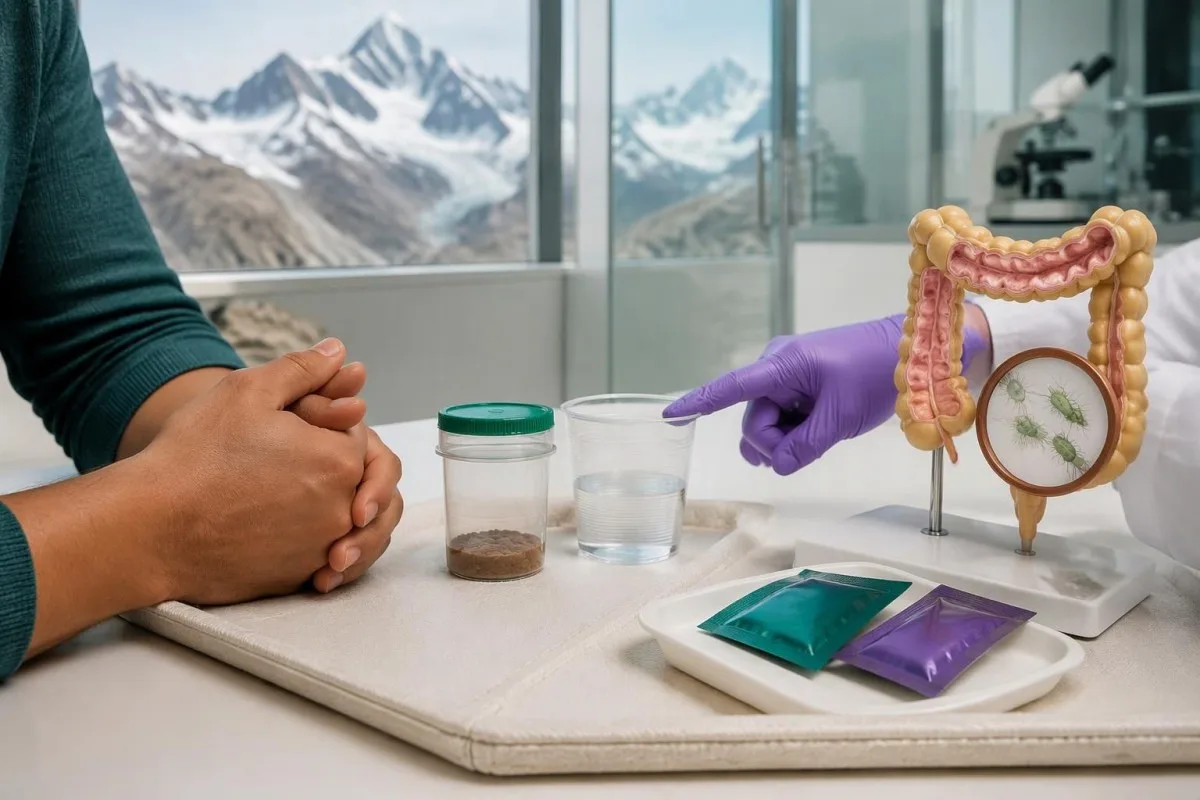
Uncomplicated gastroenteritis means an intestinal illness without evidence of sepsis, a focal infection elsewhere, or major dehydration that cannot be corrected orally. Symptoms commonly settle within 4–7 days, but that timeline is not a guarantee: a person who becomes faint on day 2 needs assessment even if diarrhea has only just begun.
For example, a hypothetical 34-year-old with 4 loose stools daily, improving cramps, normal urination, and no immune-suppressing medication would usually receive hydration advice rather than antibiotics. The same stool result in someone receiving chemotherapy leads to a different conversation; treatment thresholds also differ from those for Quyết định dùng kháng sinh đối với Campylobacter.
Kantesti là một Máy phân tích xét nghiệm máu AI that can help explain accompanying kidney-function and electrolyte results, but a stool PCR does not establish illness severity. Our và phạm vi lâm sàng của chúng tôi are separate from your treating service: neither a 60-second explanation nor a normal blood panel should delay urgent assessment when symptoms suggest deterioration.
What does a positive Salmonella stool PCR actually detect?
A positive Salmonella stool PCR detects bacterial genetic material in the submitted stool sample. It does not, by itself, identify antibiotic resistance, prove bloodstream infection, or distinguish living bacteria from genetic material remaining after organisms have been damaged or cleared.

PCR and culture answer different questions. A multiplex panel may report several organisms from 1 specimen, while culture attempts to recover viable bacteria for identification and susceptibility testing; the IDSA infectious-diarrhea guideline recommends culture after relevant culture-independent positive results when public-health investigation or susceptibility testing requires an isolate (Shane et al., 2017).
Some laboratories automatically perform reflex culture after a positive PCR; others require a separate request, and antibiotic exposure can reduce culture yield. Ask whether the original sample is available and whether 1 additional specimen is needed—particularly if your clinician is considering treatment or a health-protection team is investigating a shared food exposure.
A report marked detected is usually a qualitative result, not a bacterial count; a cycle-threshold value, if supplied, has no universally validated Salmonella cutoff for treatment or return to work. Our explanation of kết quả định tính so với định lượng helps clarify why 1 positive signal cannot be translated into a severity score.
How is nontyphoidal Salmonella different from typhoid?
Nontyphoidal Salmonella usually causes gastroenteritis, whereas Salmonella Typhi and Paratyphi cause enteric fever and generally require antibiotics. A panel reporting only Salmonella may not resolve this distinction, so sustained fever, travel exposure, and the laboratory's identification method matter.

Travel changes interpretation, especially after exposure in an area where enteric fever circulates or after contact with a known case. Nontyphoidal illness commonly begins 6 hours to 6 days after exposure, but incubation periods overlap between infections; a clinician should not use timing alone to exclude typhoid in someone with persistent systemic illness.
For example, a hypothetical traveler with 5 days of sustained fever, profound fatigue, and relatively little diarrhea needs an enteric-fever assessment rather than reassurance based on a stool-panel label. Blood cultures may be appropriate before antibiotics, and our guide to typhoid culture and testing explains why a Widal antibody result cannot reliably confirm the diagnosis.
Serovar identification also changes public-health management: Typhi or Paratyphi can trigger clearance arrangements different from those for ordinary foodborne salmonellosis. Tell your clinician about travel and household exposures from the preceding several weeks, even if only 1 person became ill; travel-related resistance can also influence which antibiotic is suitable.
Why are antibiotics usually avoided in uncomplicated illness?
Antibiotics usually offer no meaningful symptom benefit in otherwise healthy people with uncomplicated nontyphoidal Salmonella diarrhea. They can cause adverse effects, disrupt intestinal bacteria, select resistance, and sometimes prolong fecal carriage—so treating a laboratory result can create problems without improving recovery.
The Cochrane review Antimicrobials for treating symptomatic non-typhoidal Salmonella infection included 12 trials with 767 participants and found no clear clinical benefit in otherwise healthy people (Onwuezobe et al., 2012). Its findings should not be stretched to critically ill or immunocompromised patients, because evidence in those groups was insufficient for the same reassurance.
Longer carriage is possible, not inevitable. In the review, recovery of the same Salmonella serovar 1 month after treatment was more likely with antibiotics, with a risk ratio of 1.96 and a 95% confidence interval of 1.29–2.98; older trials and varied regimens mean the exact effect should not be assumed for every modern antibiotic.
A new episode of frequent diarrhea after antibiotics may represent an adverse effect or another diagnosis rather than persistent Salmonella; 3 lần đi ngoài phân không thành khuôn trở lên trong 24 giờ can prompt consideration of C. difficile testing in an appropriate clinical setting. Our diễn giải kết quả C. difficile explains why that diagnosis also requires symptoms, not an isolated screening result.
Who needs a lower threshold for antibiotics or assessment?
Infants, immunocompromised people, and patients at increased risk of invasive disease need a lower threshold for clinical assessment and possible antibiotics. IDSA specifically identifies infants up to 3 months and adults over 50 with suspected atherosclerosis, alongside immunosuppression, valvular or endovascular disease, and significant joint disease.

Age is not the whole decision. A hypothetical 55-year-old with known atherosclerosis may warrant more concern than a healthy 60-year-old without vascular disease, because Salmonella can occasionally seed vulnerable vascular sites; a prosthetic joint, vascular graft, or significant valve disease should be mentioned during the first clinical contact (Shane et al., 2017).
Chemotherapy, transplantation, advanced HIV, and some immune-suppressing medicines can increase the risk of spread beyond the intestine even when diarrhea appears modest. Bệnh hồng cầu hình liềm also changes concern about focal complications, including bone infection; our sickle cell warning signs explain why fever or new localized pain deserves prompt assessment rather than a 4–7-day wait.
Pregnancy is not an automatic antibiotic indication for every mild nontyphoidal Salmonella episode, but fever, dehydration, or systemic symptoms justify prompt pregnancy-specific advice. A baby under 3 months with a temperature of 38°C or higher needs urgent assessment regardless of whether a stool result is available; do not wait for a repeat PCR.
Which symptoms need urgent assessment rather than home care?
Confusion, fainting, inability to retain fluids, markedly reduced urination, or severe continuous abdominal pain require urgent assessment. Emergency help is appropriate for signs of shock or rapidly worsening illness; a positive stool result must not become an explanation that delays evaluation of another serious condition.

Fever above 38.9°C, substantial stool blood, or diarrhea lasting more than about 3 days without improvement should prompt clinical advice, although none independently proves antibiotics are needed. Small blood streaks and large-volume bleeding are different problems; our guide to mức độ khẩn cấp của máu trong phân explains why appearance and associated symptoms change the response.
For example, a hypothetical adult who has passed no urine for approximately 8 hours despite ongoing diarrhea and attempts to drink needs urgent advice—especially with dizziness on standing. This is a practical warning, not a universal diagnostic cutoff: infants, older adults, and people with kidney disease may deteriorate before reaching that interval.
Localized pain is a separate signal. Severe right-sided pain, a rigid abdomen, new chest or back pain, or a hot swollen joint should not be attributed automatically to gastroenteritis, particularly in a higher-risk person; deterioration on day 2 matters more than an expected 4–7-day recovery window, and antibiotics alone may not address the underlying complication.
Which blood tests help assess dehydration and invasive illness?
Electrolytes, kidney-function tests, and a complete blood count can help assess the consequences of Salmonella diarrhea, but they cannot independently decide whether antibiotics are needed. Blood cultures are more directly relevant when fever, systemic illness, infancy, or immune suppression raises concern about bacteria entering the bloodstream.
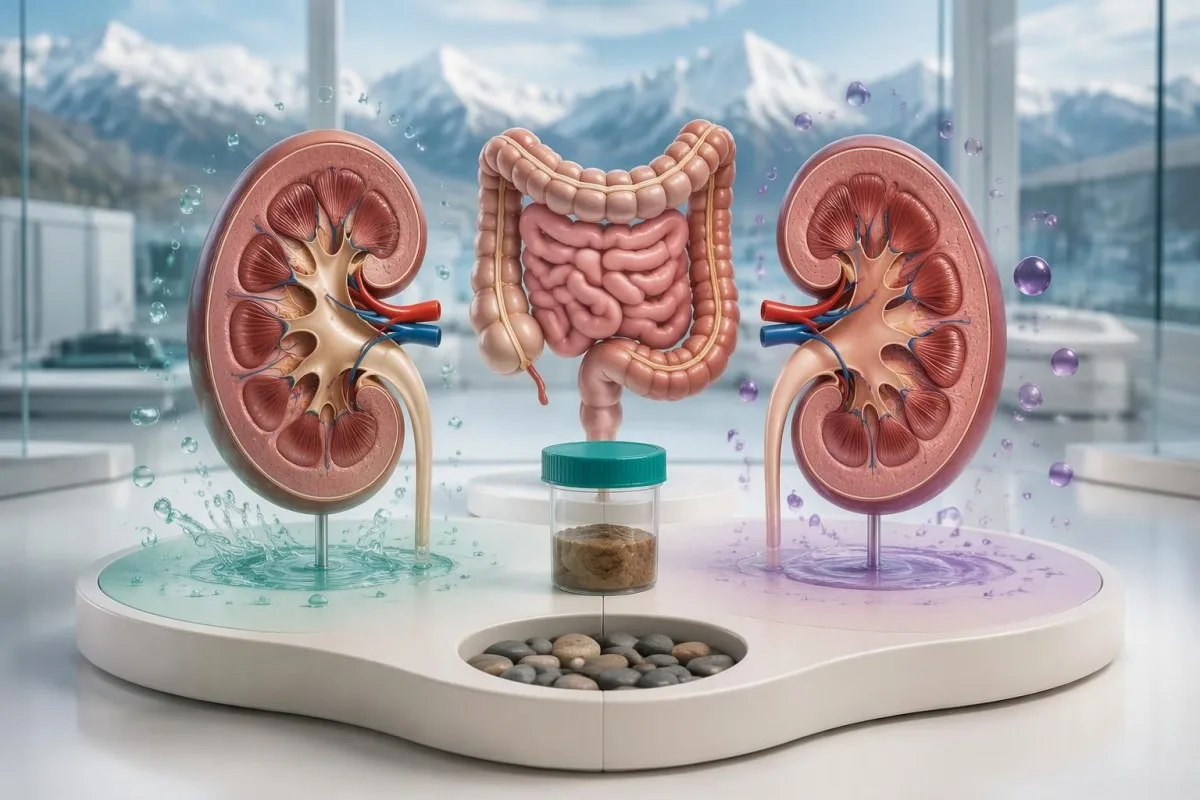
Tổn thương thận cấp can be identified by a creatinine increase of at least 0.3 mg/dL, or 26.5 µmol/L, within 48 hours, or at least 1.5 times baseline within 7 days. For example, a hypothetical rise from 70 to 105 µmol/L meets the ratio criterion; our hướng dẫn về mất nước và eGFR explains why eGFR estimates are less reliable while creatinine is changing rapidly.
Kantesti là một nền tảng giải thích kết quả xét nghiệm máu AI that can place sodium, potassium, and creatinine alongside the laboratory's reference intervals and previous results. Our về chỉ dấu sinh học trong máu explains those markers; sodium is commonly 135–145 mmol/L and potassium approximately 3.5–5.0 mmol/L in adults, but neither a normal electrolyte result nor a flagged value establishes Salmonella bacteremia.
Inflammatory markers are supportive, not decisive. An adult WBC reference interval is often approximately 4–11 × 10⁹/L, yet invasive illness can occur with a normal count, and CRP may remain elevated during recovery; our so sánh WBC và CRP của chúng tôi explains why 1 reassuring marker should not outweigh concerning symptoms or a high-risk medical history.
| Mức | Khoảng | Ý nghĩa |
|---|---|---|
| Adult sodium | Commonly 135–145 mmol/L | A reference interval, not proof of adequate hydration; diarrhea can occur with sodium inside this range. |
| Adult potassium | Commonly 3.5–5.0 mmol/L | Laboratory intervals vary; ongoing intestinal losses and kidney impairment can change potassium in opposite directions. |
| Adult white cell count | Often 4–11 × 10⁹/L | A normal count does not exclude invasive infection, especially with immune suppression. |
How should you manage dehydration at home?
Oral rehydration solution is the preferred replacement fluid for significant diarrhea because it supplies water, sodium, and glucose together. Small, frequent amounts work better when nausea is present; inability to keep them down or worsening dehydration means home treatment is no longer sufficient.
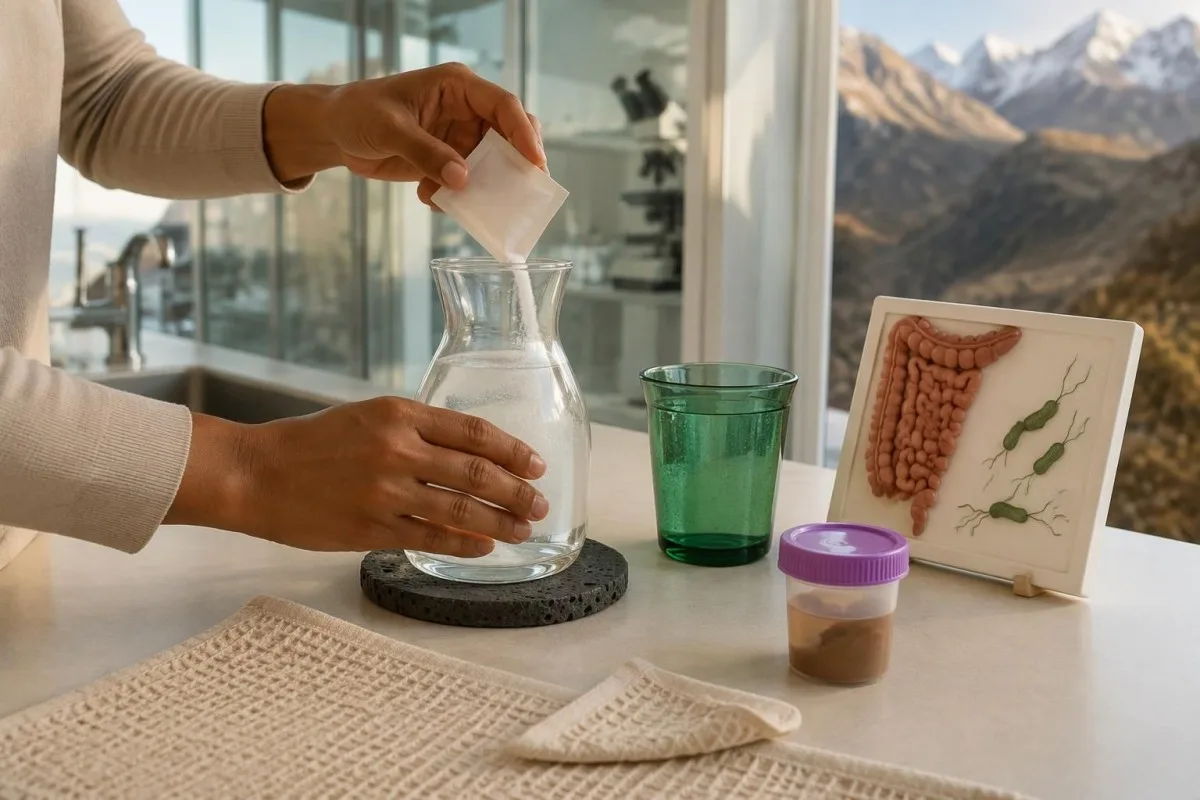
Mix each sachet with exactly the stated water volume—often 200 mL or 1 L, depending on the product—rather than assuming all brands use the same dilution. Making it too concentrated increases the salt and sugar load; juice, energy drinks, and very sweet beverages are not equivalent substitutes and can worsen diarrhea in some people.
An adult can often start with approximately 200–250 mL sau mỗi lần đi ngoài phân lỏng, adjusting for thirst, losses, and clinical advice; when nauseated, try 5–10 mL every 1–2 minutes. People with heart failure, advanced kidney disease, or prescribed fluid restrictions need individualized advice, and our giải thích về BUN và creatinine describes why dehydration can alter both kidney markers.
Children need weight-based assessment, not an adult drinking target; continue breastfeeding and seek help for reduced wet nappies, unusual sleepiness, or poor intake. Our childhood diarrhea and hydration guide discusses similar dehydration principles, while a child under 3 months or one unable to drink warrants a particularly low threshold for direct assessment.
Why can Salmonella PCR stay positive after recovery?
Salmonella PCR positive after recovery can reflect continued bacterial shedding, persisting genetic material, or both. Symptoms and stool detection do not necessarily end together, and a repeat positive result in a well person does not automatically mean relapse or a need for antibiotics.
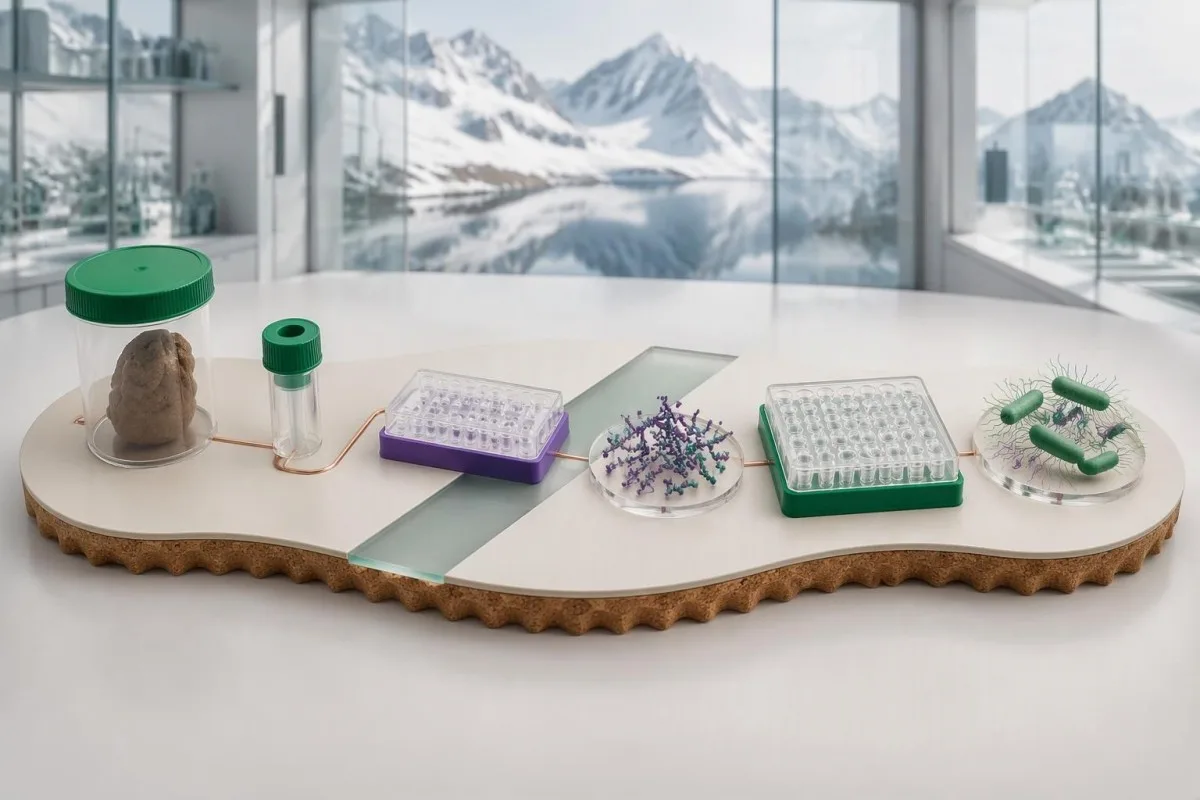
Shedding commonly continues for weeks, with longer periods possible, particularly in young children; there is no reliable day on which every patient becomes test-negative. A hypothetical person who feels well on day 7 but has a positive PCR on day 21 may be recovering normally, yet the result cannot establish that all detected material is nonviable or that transmission risk is zero.
Xét nghiệm test-of-cure PCR is generally unnecessary after uncomplicated recovery unless public health or a specific clinical circumstance requires follow-up. The IDSA guideline does not recommend routine follow-up testing for most people once diarrhea resolves (Shane et al., 2017); our prolonged PCR detection guide illustrates the broader principle, although each organism has its own shedding pattern.
Renewed symptoms change the question. A return of fever or worsening diarrhea after 2 symptom-free days calls for reassessment of relapse, reinfection, medication effects, or another illness, rather than automatically repeating the previous prescription; a clinician may request culture because another PCR alone cannot provide antibiotic susceptibility or establish the cause of the new episode.
Which antibiotics are used, and how long is treatment?
Azithromycin, a fluoroquinolone such as ciprofloxacin, or a third-generation cephalosporin such as ceftriaxone may be used when Salmonella antibiotics are needed. Selection depends on severity, susceptibility, travel exposure, age, pregnancy, kidney function, and the infection site; a PCR-only result cannot identify the best drug.
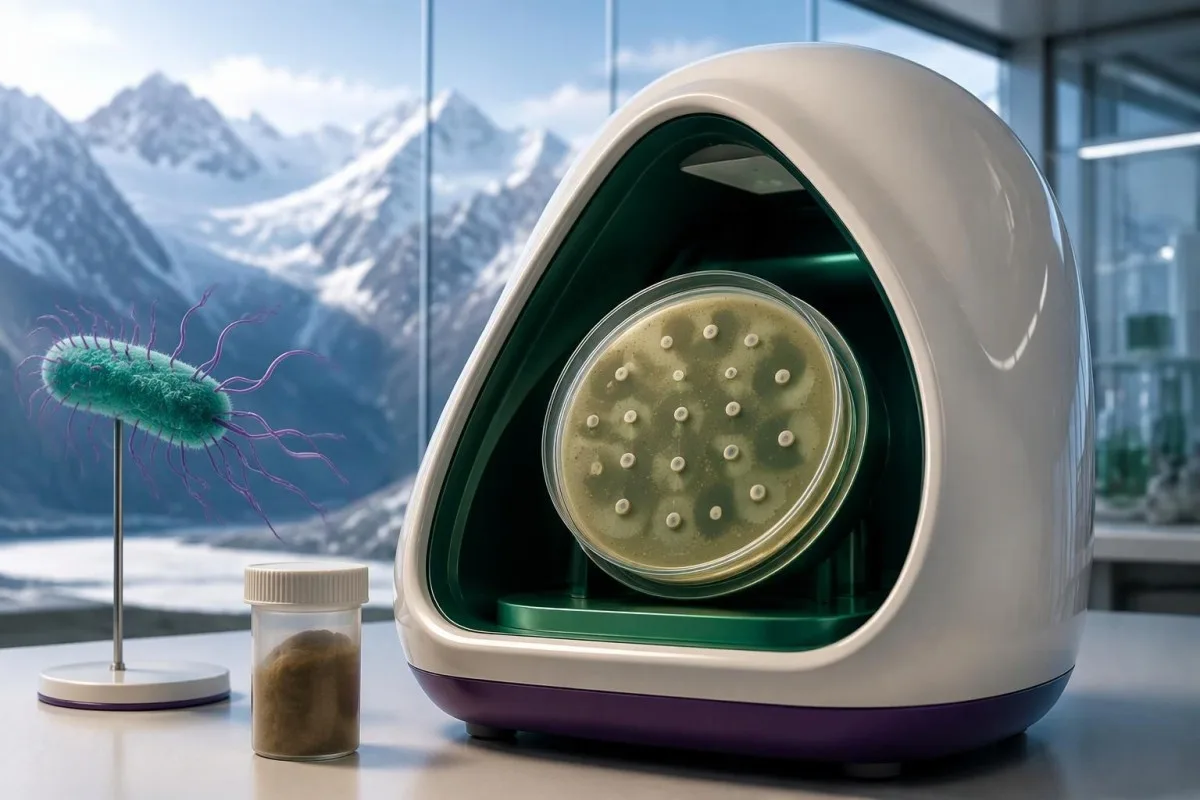
Resistance can change an otherwise familiar prescription. A clinician may request culture before treatment if practical, but should not delay necessary care for suspected sepsis; selected intestinal cases may receive a short course measured in days, while bloodstream infection often requires approximately 14 days or longer depending on immune status, clearance, and whether a focal site is involved.
For example, a hypothetical transplant recipient with a Salmonella stool test positive and persistent fever needs assessment for invasive illness, not simply the same 3–7-day plan sometimes used for selected gastrointestinal cases. Vascular, bone, or joint involvement can require treatment over several weeks and specialist management; persistent fever also raises questions about source control, not only whether the antibiotic dose should increase.
Do not use leftover antibiotics or try to obtain a negative work-clearance test by self-treatment; unnecessary treatment may prolong carriage and complicate later culture interpretation. Patients taking warfarin should discuss interaction monitoring because illness, reduced intake, and antibiotics can raise INR; our kháng sinh và INR explains why an additional check may be needed within several days.
When can food handlers return to work after Salmonella?
Food handlers with diarrhea or vomiting must stop handling food and follow local public-health instructions. In England, the usual minimum exclusion period for nontyphoidal Salmonella is 48 hours after symptoms stop, but outbreak circumstances, job duties, and specific health-protection advice can change the clearance requirements.

The 48-hour rule is not a universal international clearance standard. Public Health England's gastrointestinal-infection guidance distinguishes routine nontyphoidal Salmonella management from enteric fever and higher-risk circumstances (Public Health England, 2019); in other jurisdictions, a diagnosed food worker may need health-authority approval or specified stool testing even after feeling well.
For example, a hypothetical kitchen worker whose diarrhea stops on Monday at 10 a.m. reaches the 48-hour symptom-free minimum on Wednesday at 10 a.m., provided vomiting has also stopped and no stricter instruction applies. Kantesti cannot issue occupational clearance; tell your employer about the diagnosis and ask the responsible public-health team whether culture, rather than another PCR, is required.
Continued positivity does not create one worldwide exclusion period. Never assume that 1 negative PCR clears you or that a positive PCR requires indefinite absence; soap-and-water handwashing, careful toilet hygiene, and avoiding food preparation for others while symptomatic remain practical protections, and our post-recovery contagiousness guide explains why symptom resolution and microbial detection are different milestones.
What if diarrhea or joint symptoms persist after Salmonella?
Persistent symptoms after Salmonella do not always represent persistent active infection. Temporary lactose intolerance, post-infectious bowel dysfunction, medication effects, another intestinal infection, or reactive arthritis may explain ongoing problems; continued fever, weight loss, stool blood, or focal pain deserves reassessment rather than a reflex antibiotic course.
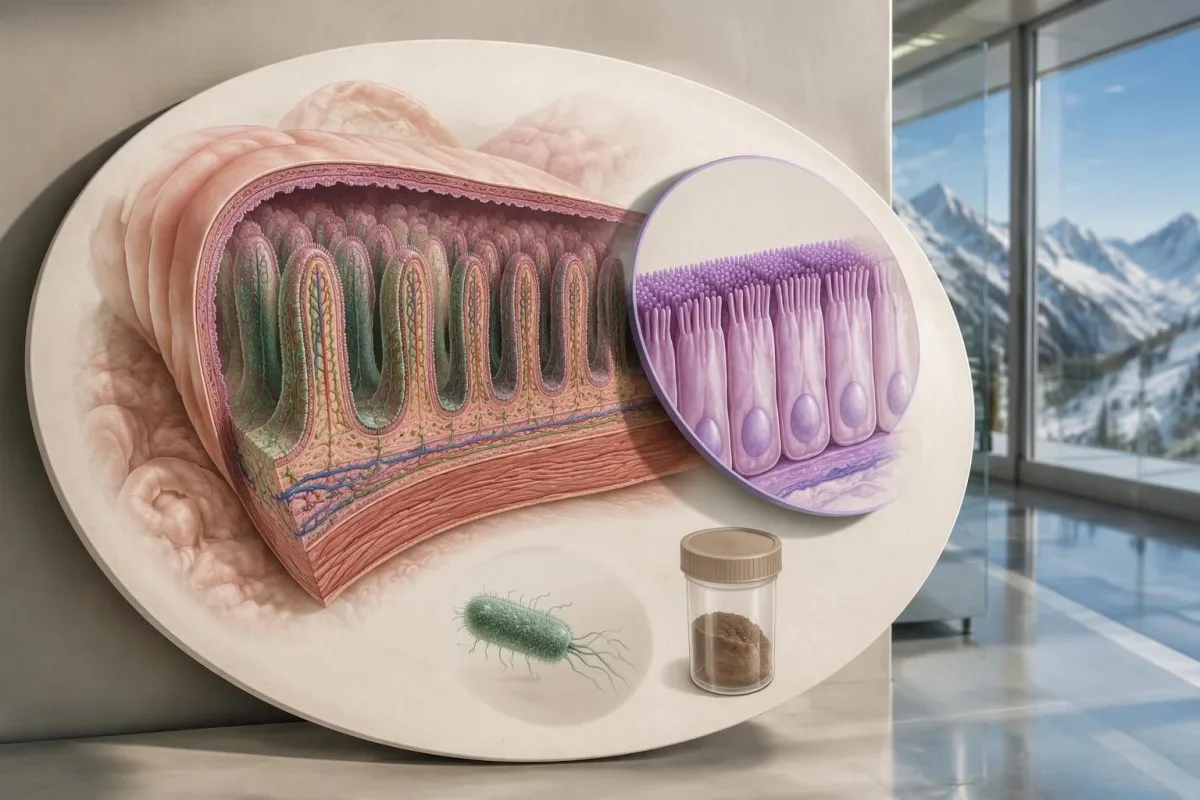
Diarrhea lasting 14 days or longer warrants a broader review, particularly with travel, immune suppression, or weight loss. A hypothetical adult whose fever has resolved but who develops bloating after milk during week 2 may have temporary lactose malabsorption; our lactose testing choices explains when dietary observation is more useful than immediately ordering another pathogen panel.
Fecal calprotectin can rise during infectious diarrhea, so an elevated value collected during the first week cannot by itself establish inflammatory bowel disease. If symptoms persist, clinicians may repeat testing after the acute illness has settled rather than interpret 1 result in isolation; our theo dõi calprotectin ở mức ranh giới explains why timing and persistent warning signs matter.
Reactive arthritis can begin approximately 1–4 weeks after an intestinal infection, when the diarrhea is already improving or gone. A newly swollen joint needs clinical assessment, and a painful red eye or light sensitivity warrants urgent eye care; these symptoms should not be treated as proof that a positive stool PCR requires another antibiotic, because joint and eye management follows a separate assessment.
What should you bring to a Salmonella follow-up appointment?
Bring the complete stool report, a symptom timeline, your medication list, and any public-health instructions. These details help distinguish uncomplicated recovery from dehydration, invasive illness, and an occupational-clearance question; the next useful test may be culture or kidney-function testing rather than another PCR.

Record a short 24-hour snapshot: stool frequency, vomiting, highest measured temperature, approximate fluid intake, and urination. Add the date symptoms started and any travel or shared meals; our Kiểm tra nguồn báo cáo y tế của chúng tôi explains why the exact assay wording and specimen date are more reliable than a cropped screenshot showing only positive.
Kantesti là một Công cụ phân tích xét nghiệm máu dựa trên AI that can help explain accompanying laboratory changes and compare them with earlier reports. Our chính sách quyền riêng tư và dữ liệu describe handling of uploaded information; a change in creatinine from 70 to 105 µmol/L should be discussed clinically, not treated as a self-contained AI diagnosis or a reason to ignore reduced urination.
Agree on 3 decisions before leaving: whether antibiotics are indicated, which symptoms should trigger urgent reassessment, and whether your job requires clearance testing. Ask who will contact you if culture identifies resistance or a different serovar; this prevents a well person from chasing repeated positive PCR results while a higher-risk person waits unnecessarily for action.
Các ấn phẩm nghiên cứu và bằng chứng đằng sau hướng dẫn này
Salmonella treatment recommendations here rely on infectious-diarrhea guidance, Salmonella antibiotic trials, and public-health exclusion guidance. The 2 Figshare publications listed below address other health topics; they are included as organizational research context, not as evidence that validates Salmonella diagnosis, treatment, or workplace clearance.

Evidence applies differently across patient groups. The Cochrane review's 12 trials address symptomatic nontyphoidal Salmonella treatment mainly in people without major complicating illness, while the 2017 IDSA guideline supplies risk-based recommendations for groups poorly represented in those trials; absence of benefit in uncomplicated diarrhea cannot establish absence of benefit in bacteremia or major immune suppression.
Các tài liệu của Kantesti các tiêu chuẩn về nội dung y khoa separate educational explanation from diagnosis and prescribing, including when a report requires direct clinical review. The women's-health publication and the hantavirus decision-support publication concern 2 different clinical subjects; neither should be cited as demonstrating that an AI system can determine whether a Salmonella-positive stool requires antibiotics.
Repository publication is not the same as a Salmonella clinical trial. The 50,000 interpreted reports named in the hantavirus publication's title are not a Salmonella treatment cohort, and a DOI provides a persistent reference rather than proof of clinical effectiveness; use the external medical references for the antibiotic and public-health statements, and your local health-protection service for individualized return-to-work instructions.
Câu hỏi thường gặp
Kết quả PCR Salmonella dương tính có phải lúc nào cũng đồng nghĩa với việc tôi cần dùng kháng sinh không?
A Salmonella PCR positive result does not automatically mean antibiotics are needed. Otherwise healthy people with uncomplicated nontyphoidal Salmonella diarrhea usually recover with fluids and supportive care within 4–7 days. Severe illness, bloodstream infection, immune suppression, or increased risk of invasive disease can justify antibiotics after clinical assessment. The stool result alone cannot identify those circumstances.
Why is my Salmonella PCR still positive after I feel better?
Salmonella PCR can remain positive for weeks after symptoms resolve because stool may still contain bacteria, bacterial genetic material, or both. A positive result on day 21 after recovery on day 7 does not by itself prove relapse or require another antibiotic course. PCR cannot reliably establish whether every detected organism is alive. Routine test-of-cure testing is usually unnecessary unless clinical or public-health circumstances require it.
Which people are more likely to need Salmonella antibiotics?
People at higher risk of invasive Salmonella disease include infants under 3 months, immunocompromised patients, and adults over 50 with suspected atherosclerosis. Significant valvular or endovascular disease and major joint disease also lower the threshold for assessment and possible treatment. Age over 50 alone is not an automatic prescription rule. Fever, new localized pain, or worsening illness should be assessed promptly in these groups.
When should I seek urgent care for Salmonella diarrhea?
Seek urgent assessment for confusion, fainting, inability to retain fluids, markedly reduced urination, severe continuous abdominal pain, or rapidly worsening illness. Fever above 38.9°C, substantial stool blood, or diarrhea persisting beyond about 3 days without improvement also warrants clinical advice. A baby under 3 months with a temperature of at least 38°C needs urgent assessment. Dehydration may require treatment even when antibiotics are not indicated.
Can I return to food-handling work while Salmonella PCR is positive?
Food-handler return-to-work requirements depend on the jurisdiction, symptoms, job duties, and public-health instructions—not PCR alone. In England, the usual minimum exclusion for nontyphoidal Salmonella is 48 hours after diarrhea and vomiting stop, unless stricter advice applies. Some jurisdictions or outbreaks require additional approval or specified stool testing. Do not self-prescribe antibiotics to obtain clearance, and do not assume that either 1 positive or 1 negative PCR settles the workplace decision.
How much should I drink with Salmonella diarrhea?
Correctly mixed oral rehydration solution is preferable to plain water alone when diarrhea causes substantial fluid and salt losses. Adults can often start with approximately 200–250 mL after each loose stool, while nausea may be managed with 5–10 mL every 1–2 minutes. Children require weight-based advice, and people with kidney disease, heart failure, or fluid restrictions need individualized targets. Inability to keep fluids down or worsening dehydration requires clinical assessment.
Tìm hiểu cách đọc kết quả xét nghiệm máu của bạn
Tải lên báo cáo xét nghiệm của bạn và AI của Kantesti sẽ giải thích từng dấu ấn sinh học bằng ngôn ngữ dễ hiểu chỉ trong vài giây. Được hơn 2 triệu người trên toàn thế giới sử dụng.
Tài liệu tham khảo
- Klein, T., Mitchell, S., & Weber, H. (2026). Cẩm nang Sức khỏe Phụ nữ: Rụng trứng, Mãn kinh và Các triệu chứng nội tiết tố. Nghiên cứu y khoa của Kantesti AI. DOI
- Klein, T., Mitchell, S., & Weber, H. (2026). Hỗ trợ ra quyết định lâm sàng bằng AI đa ngôn ngữ để phân loại sớm Hantavirus: Thiết kế, Thẩm định kỹ thuật và Triển khai thực tế trên 50.000 báo cáo xét nghiệm máu được diễn giải. Nghiên cứu y khoa của Kantesti AI. DOI
- Shane AL và cộng sự (2017). Hướng dẫn thực hành lâm sàng năm 2017 của Hiệp hội Bệnh truyền nhiễm Hoa Kỳ về chẩn đoán và quản lý tiêu chảy nhiễm trùng. Clinical Infectious Diseases. DOI
- Onwuezobe IO et al. (2012). Antimicrobials for treating symptomatic non-typhoidal Salmonella infection. Cơ sở dữ liệu Cochrane về các tổng quan hệ thống. DOI
- Public Health England (2019). Recommendations for the public health management of gastrointestinal infections 2019. Public Health England guidance.
- 2 triệu+Các xét nghiệm được phân tích
- 127+Các quốc gia
- 100+Ngôn ngữ
Về đội ngũ y tế


Tín hiệu tin cậy E-E-A-T
Kinh nghiệm
Đánh giá lâm sàng do bác sĩ phụ trách đối với quy trình diễn giải kết quả xét nghiệm.
Chuyên môn
Tập trung vào y học xét nghiệm: cách các chỉ dấu sinh học (biomarker) hoạt động trong bối cảnh lâm sàng.
Tính uy quyền
Được Tiến sĩ Thomas Klein đánh giá về mặt y khoa, với sự đóng góp của Tiến sĩ Sarah Mitchell và Giáo sư, Tiến sĩ Hans Weber.
Độ tin cậy
Diễn giải dựa trên bằng chứng, kèm các lộ trình theo dõi rõ ràng để giảm mức độ báo động.





Tuyên bố miễn trừ trách nhiệm y tế
Bài viết này chỉ nhằm mục đích giáo dục và không cấu thành lời khuyên y tế. Luôn tham khảo ý kiến của nhà cung cấp dịch vụ chăm sóc sức khỏe đủ năng lực để đưa ra quyết định chẩn đoán và điều trị.
Đã xuất bản · Liên hệ với ban biên tập
Xuất bản bởi Kantesti Ltd, đăng ký tại Anh và xứ Wales, số công ty. 17090423, London, Vương quốc Anh.
