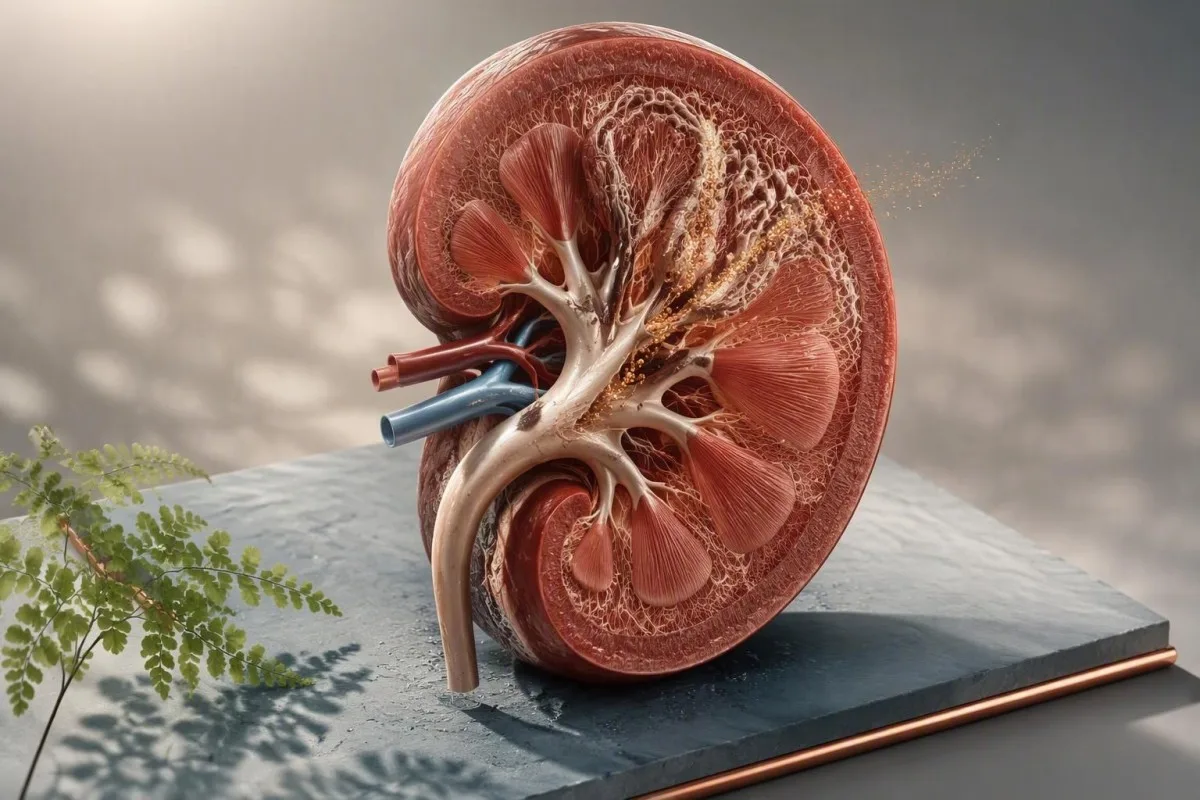
Ang mataas na flag ng urine calcium ay nangangailangan ng kumpirmasyon bago ang paggamot. Ang kapaki-pakinabang na tanong ay kung ang pagkawala ng calcium ay paulit-ulit, kung bakit ito nangyayari, at kung binabago ng natitirang bahagi ng profile ng stone-risk ang plano.


- Hypercalciuria karaniwang nangangahulugan ng higit sa 250 mg/araw ng urine calcium sa mga babae o 300 mg/araw sa mga lalaki, ngunit ang mga laboratoryo at laki ng katawan ay mahalaga.
- Spot urine calcium maaaring baluktot ng hydration at timing; hindi nito maaasahang masuri ang paulit-ulit na pagkawala ng calcium nang mag-isa.
- 24-oras na urine calcium ang pinipiling kumpirmasyon na pagsusuri para sa paulit-ulit na calcium stone formers at dapat bigyang-kahulugan kasama ang urine sodium, citrate, oxalate, volume, at pH.
- Salt intake pinapataas ang urinary calcium dahil ang sodium at calcium ay bahagyang muling sinisipsip nang magkasama sa bato; ang isang praktikal na target ay mas mababa sa 2,300 mg ng sodium araw-araw.
- Normal dietary calcium na humigit-kumulang 1,000 hanggang 1,200 mg/araw ay karaniwang mas ligtas para sa pag-iwas sa calcium oxalate stone kaysa sa pagbabawas ng pagkonsumo ng calcium food.
- Pagsusuri sa parathyroid ay angkop kapag ang mataas na calcium sa ihi ay sinasabayan ng mataas o mataas-normal na calcium sa dugo, mababang phosphate, pagkawala ng buto, o paulit-ulit na mga bato.
- Mga gamot na Thiazide ay nagpapababa ng calcium sa ihi ngunit nangangailangan ng pagsubaybay sa potassium, sodium, glucose, at uric acid.
- Kailangan ng agarang pagtatasa ay kinakailangan para sa lagnat na may pananakit sa tagiliran, pagsusuka na may mababang output ng ihi, isang gumaganang bato, o matinding sakit na may posibleng pagbara.
Ano talaga ang ibig sabihin ng mataas na urine calcium
Ang mataas na calcium sa ihi ay nangangahulugang ang mga bato ay naglalabas ng mas maraming calcium sa ihi kaysa sa inaasahan, hindi kinakailangang ang calcium sa dugo ay mataas. Ang isang spot na resulta ay isang palatandaan ng screening; ang paulit-ulit na hypercalciuria ay karaniwang kinukumpirma sa isang kumpletong 24-oras na koleksyon bago ito tawaging disorder ng bato o simulan ang paggamot.
Sa mga matatanda, maraming mga clinic ng bato ang gumagamit mahigit 250 mg bawat 24 oras para sa mga babae at mahigit 300 mg bawat 24 oras para sa mga lalaki bilang praktikal na mga threshold ng hypercalciuria. Ang isang threshold na batay sa timbang na higit sa 4 mg/kg/araw ay nakakatulong para sa mas maliit na matanda, habang ang ilang laboratoryo ay gumagamit ng 200 mg/araw bilang kanilang pinakamataas na limitasyon. Ang bilang ay makabuluhan lamang kung ang koleksyon ay kumpleto; tingnan ang aming gabay sa 24-oras na koleksyon.
Ang isang spot na konsentrasyon ng calcium sa ihi, tulad ng 9 mg/dL, ay halos hindi nagsasabi sa iyo ng anuman nang walang creatinine at konteksto ng pagdilaw ng ihi. Ang ratio ng calcium sa creatinine ay maaaring maging kapaki-pakinabang sa mga bata at sa mga napiling endocrine workup, ngunit ang papel nito sa pag-iwas sa bato sa mga matatanda ay limitado. Ang isang napaka-concentrated na sample sa umaga ay maaaring magmukhang nakakabahala kahit na ang pang-araw-araw na pagbuga ng calcium ay ordinaryo.
Si Kantesti ay isang AI blood test analyzer na naglalagay ng serum calcium, creatinine, bicarbonate, phosphate, bitamina D, at parathyroid hormone sa parehong clinical frame. Sa aking praktika, ang pinaka-maiwasang pagkakamali ay ang pagtrato sa isang solong bandila ng ihi bilang isang diagnosis sa halip na itanong kung ang tao ay may mga bato, panganib sa bali, mataas na sodium intake, o paliwanag sa gamot.
Ang isang resulta ay maaaring mataas nang walang mataas na antas ng calcium sa dugo
Humigit-kumulang 99% ng calcium sa katawan ay nakaimbak sa buto, at ang mga bato ay nagfi-filter ng humigit-kumulang 10,000 mg ng calcium araw-araw bago halos lahat nito ay ma-reabsorb. Samakatuwid, ang isang tao ay maaaring magkaroon ng normal na serum calcium at labis na urinary calcium nang sabay; ang pattern na ito ay karaniwan sa idiopathic hypercalciuria. Para sa background sa isang mataas na halaga ng dugo, basahin bahagyang mataas na calcium.
Spot urine flags kumpara sa 24-oras na urine calcium test
Ang 24-oras na pagsusuri ng calcium sa ihi ay mas maaasahan kaysa sa isang spot na resulta sa ihi dahil sinusukat nito ang kabuuang pang-araw-araw na pagkawala ng calcium sa ilalim ng totoong diyeta at kondisyon ng likido. Ito ang karaniwang susunod na pagsubok pagkatapos ng paulit-ulit na calcium stones, hindi maipaliwanag na mataas na spot calcium, o isang pinaghihinalaang metabolic stone disorder.
Para sa isang balido na koleksyon, itapon ang unang ihi sa simula ng oras, kolektahin ang bawat pag-ihi sa susunod na 24 na oras, pagkatapos ay isama ang huling pag-ihi eksakto sa oras ng pagtatapos. Ang pagkawala ng kahit isang malaking pag-ihi sa araw ay maaaring magbigay ng maling pagiging kampante; ang pagkolekta ng higit sa 24 na oras ay maaaring magpataas ng kabuuan. Ang urinary creatinine ay ang tahimik na quality check ng laboratoryo: ang napakababang output ay madalas na nagpapahiwatig ng isang hindi kumpletong koleksyon.
Ang mainam na pag-aaral ay sumusukat dami, calcium, oxalate, citrate, sodium, uric acid, pH, at creatinine mula sa parehong lalagyan. Ang dami ng ihi na mas mababa sa 2.0 L/araw ay independiyenteng may kaugnayan dahil ang mga calcium salt ay nagiging mas concentrated, habang ang isang target na output ng ihi na hindi bababa sa 2.0 hanggang 2.5 L/araw ay nagpapababa ng supersaturation. Mga ratio ng creatinine sa ihi ipaliwanag kung paano binabago ng pagdilaw ang interpretasyon ng single-sample.
Do not deliberately eat a calcium-free diet before testing unless the ordering clinician gives that instruction. A 52-year-old patient I saw had reduced dairy and calcium-fortified foods for three days before collection; her calcium appeared normal, but oxalate rose substantially. The clinically useful test reflects habitual intake, not a one-day attempt to pass the exam.
Paano pinapataas ng mataas na urine calcium ang panganib sa kidney-stone
High urine calcium kidney stones form when calcium combines with oxalate or phosphate in a urine environment that is too concentrated or chemically favorable for crystals. Calcium output alone predicts risk imperfectly; low urine volume and low citrate often matter just as much.
Most stones are calcium based, commonly calcium oxalate with or without calcium phosphate. The risk rises as urinary supersaturation rises, which is why a calcium result of 320 mg/day has a different meaning at 1.1 L urine volume than at 3.0 L/day. In the American Urological Association guideline, higher fluid intake sufficient to produce at least 2.5 L urine daily is a core prevention recommendation (Pearle et al., 2014).
Urine citrate below 320 mg/day is a useful warning sign because citrate binds free calcium and slows crystal growth. Low citrate plus high calcium is a much more actionable combination than either result alone; our guide to low urine citrate covers this pairing in detail.
Stone composition changes the workup. Calcium phosphate stones are more associated with urine pH persistently above 6.5, distal renal tubular acidosis, and sometimes primary hyperparathyroidism, while calcium oxalate stones often track with oxalate exposure, low calcium intake at meals, or intestinal malabsorption. A retrieved stone should be analysed at least once rather than guessed from an ultrasound report.
Crystals on a urinalysis do not prove a stone
Calcium oxalate crystals can appear after dehydration, a spinach-heavy meal, or delayed processing of urine and do not diagnose a stone by themselves. Repeated crystals plus pain, haematuria, or a stone history deserve more attention. Our discussion of mga kristal na calcium oxalate explains the common false alarms.
Mga sanhi ng diyeta ng hypercalciuria na maaari mong baguhin
High sodium intake is one of the most modifiable hypercalciuria causes because sodium loss in urine pulls calcium loss upward. Reducing salt is usually more useful than removing calcium-rich foods from the diet.
A practical sodium target for many stone formers is under 2,300 mg/day, and some people with hypertension benefit from closer to 1,500 mg/day if their clinician agrees. Packaged soups, sauces, breads, restaurant meals, and sports electrolyte products are more common sources than the salt shaker. A fall in urine sodium on repeat collection is often the best evidence that this change actually happened.
Dietary calcium should generally remain around 1,000 to 1,200 mg/day, preferably divided between meals. Calcium in food binds oxalate in the gut, reducing oxalate absorption; in Borghi's randomized trial, a normal-calcium, low-salt, lower-animal-protein diet prevented recurrent stones better than a low-calcium diet (Borghi et al., 2002). Kidney-focused nutrition guidance can help translate that into meals.
Very high animal-protein intake can increase calcium excretion, acid load, and uric acid while lowering citrate. I do not tell active patients to avoid protein; I ask them to avoid the bodybuilding-style extreme of 2.5 to 3.0 g/kg/day without a clear reason. Vitamin C supplements above 1,000 mg/day may also increase urinary oxalate in susceptible people.
Mga gamot at pandagdag na maaaring magpataas ng urine calcium
Loop diuretics, excessive vitamin D, calcium supplements taken away from meals, and some carbonic anhydrase inhibitors can increase urinary calcium or alter stone chemistry. Never stop a prescribed medicine solely because of a collection result; the reason for the medicine often outweighs stone risk.
Furosemide and related loop diuretics increase calcium excretion by reducing calcium reabsorption in the thick ascending limb. Topiramate and acetazolamide can raise urine pH and reduce citrate, making calcium phosphate stones more likely even if calcium is only modestly elevated. Review every prescribed medicine, over-the-counter product, protein powder, and antacid with the clinician ordering the test.
Vitamin D toxicity is uncommon at standard doses, yet high-dose regimens can uncover or worsen hypercalciuria in sensitive people. A 25-hydroxyvitamin D above 150 ng/mL (375 nmol/L) raises concern for toxicity, but urine calcium can rise well below that level in sarcoidosis or primary hyperparathyroidism. See vitamin D safety cutoffs before escalating a supplement.
Calcium supplements are not automatically forbidden. When needed for osteoporosis prevention, taking a modest dose with a meal is usually preferable to taking it at bedtime, because meal calcium binds dietary oxalate. Kantesti is an AI-powered tool para sa pagsusuri ng dugo that can identify a supplement-related pattern across calcium, 25-OH vitamin D, creatinine, and previous results, but a clinician must decide whether dose changes are safe.
Mga salik na parathyroid, bitamina D, at blood-test
Primary hyperparathyroidism should be considered when high urine calcium occurs with repeatedly high or high-normal serum calcium and a parathyroid hormone level that is not suppressed. This matters because surgery can prevent recurrent stones and protect bone in selected patients.
In true hypercalcaemia, parathyroid hormone should normally be low. A PTH that remains normal-range or elevated alongside adjusted calcium above the laboratory limit is “inappropriately normal” and warrants endocrine assessment. Useful companion tests include albumin, ionized calcium when appropriate, phosphate, creatinine/eGFR, magnesium, 25-OH vitamin D, and often a 24-hour urine calcium.
The calcium-to-creatinine clearance ratio can help distinguish primary hyperparathyroidism from familial hypocalciuric hypercalcaemia, a rare inherited condition in which urine calcium is usually low rather than high. A ratio below 0.01 supports FHH, whereas a ratio above 0.02 supports primary hyperparathyroidism; values between them overlap, especially with vitamin D deficiency or thiazide use.
Dr. Thomas Klein's clinical rule is simple: do not call a calcium result “normal” until albumin and the assay range have been checked. Patients can review the distinction between a blood calcium issue and urine loss in our calcium result explainer, but symptoms and trend data decide urgency.
Other systemic explanations
Sarcoidosis and some lymphomas can increase active vitamin D production, while prolonged immobilisation, hyperthyroidism, and severe bone turnover can increase filtered calcium. These are uncommon explanations for an isolated mild urine result. Weight loss, thirst, constipation, bone pain, or a changing serum calcium pattern raises the priority for direct medical review.
Mga kondisyon sa bato at bituka sa likod ng pagkawala ng calcium
Idiopathic hypercalciuria is the most common explanation when blood calcium is normal, but kidney tubular disorders and intestinal diseases can create distinctive patterns. The accompanying bicarbonate, potassium, urine pH, citrate, and stone composition narrow the possibilities quickly.
Distal renal tubular acidosis often presents with a non-anion-gap metabolic acidosis, low potassium, urine pH above 5.5, low citrate, and calcium phosphate stones. Serum bicarbonate below 22 mmol/L is a meaningful clue, although diarrhoea and chronic kidney disease can also lower it. Renal tubular acidosis patterns are worth reviewing when several of these clues cluster.
Inflammatory bowel disease, coeliac disease, bowel resection, and chronic fatty diarrhoea more often produce high urine oxalate than high urine calcium. Yet dehydration and low citrate can coexist, so the net stone risk remains substantial. A stool history is not trivial here: loose, oily stools after meals point the investigation toward intestinal absorption rather than simply blaming diet.
Chronic kidney disease usually lowers urinary calcium as filtration falls, so marked hypercalciuria with reduced eGFR deserves a careful review rather than a casual assumption. Conversely, a normal creatinine does not exclude stone-related obstruction. mga yugto ng chronic kidney disease provide the context for interpreting eGFR alongside urine tests.
Paano maghanda para sa tumpak na koleksyon
An accurate 24-hour urine calcium test requires an ordinary diet, ordinary fluid intake, and every urine sample during the timed interval. Acute diarrhoea, a marathon, major dietary change, or a newly started supplement can make the result less representative.
Ask the laboratory whether preservative is already in the container and whether it must be refrigerated. Do not urinate directly onto a preservative powder, and keep the container away from children. Start on a day without travel when possible; many missed samples happen during commuting, not because a patient is careless.
Maintain typical calcium, sodium, and protein intake for 3 hanggang 7 araw beforehand unless your clinician gives different instructions. Avoid collecting immediately after a 10-kilometre race or during a gastrointestinal illness because sweat loss and temporary low urine volume can exaggerate saturation. The wider context of mga bandila ng urine dipstick may help distinguish hydration clues from disease.
A collection should not be judged by calcium alone. Kantesti, an serbisyo ng AI lab test interpretation, can organise laboratory trends and highlight missing companion markers for discussion, but it cannot verify that every void entered the container. Write down supplements, unusually salty meals, pain episodes, and fluid intake; these details often explain a borderline result better than a repeat test does.
Basahin ang calcium kasama ang sodium, citrate, oxalate, pH at volume
The highest-risk profile is not simply high calcium; it is high calcium combined with low volume, low citrate, high oxalate, or an unfavorable urine pH. A complete profile tells clinicians which change is most likely to reduce supersaturation for that individual.
Urine sodium above 100 mmol/day often signals a salt intake that can sustain calcium loss, although athletes and people in hot climates need individualized advice. If calcium and sodium both fall on a repeat collection, a salt-focused intervention is probably working. This is more persuasive than assuming an herbal product or alkaline water has fixed the problem.
Urine oxalate above 40 mg/araw deserves a separate dietary and intestinal review. The practical step is usually pairing calcium-containing food with oxalate-containing meals—not trying to eliminate all plant foods. Interpretasyon ng urine pH adds value because calcium phosphate risk rises in more alkaline urine, while uric acid stones favour persistently acidic urine.
A 24-hour collection is a snapshot, and day-to-day calcium output varies. In my experience, repeating the collection after 8 to 12 weeks of one targeted change is more instructive than changing salt, calcium, fluids, supplements, and medication all at once. You need to know which lever moved the chemistry.
Unang-linya na pag-iwas para sa paulit-ulit na mataas na urine calcium
First-line treatment for persistent hypercalciuria is higher fluid intake, lower sodium intake, normal food calcium, and individualized protein moderation. These measures reduce stone supersaturation without compromising bone health in most adults.
Aim for enough fluid to make 2.0 to 2.5 L of urine daily, not merely to drink a fixed number of glasses. For many adults this means 2.5 to 3.0 L of fluid intake, with more needed in heat or exercise. Pale urine is a rough clue, but a measured 24-hour volume is more dependable.
Keep calcium-containing foods at meals and reduce sodium gradually over two to four weeks. The calcium target differs for adolescents, pregnancy, osteoporosis, and chronic kidney disease, so broad internet advice can be counterproductive. Kidney-safe supplement choices are particularly relevant if eGFR is reduced.
Citrate from fruits and vegetables can help some calcium stone formers, but lemon water is not a substitute for measuring low citrate or correcting severe metabolic acidosis. Sweetened lemonade can worsen metabolic risk, and potassium-containing products require caution with ACE inhibitors, ARBs, spironolactone, or impaired kidney function. Small, sustained changes beat heroic restriction.
Kailan isinasaalang-alang ang thiazide treatment
Thiazide or thiazide-like diuretics may be used for recurrent calcium stones with persistent hypercalciuria after diet and fluid measures, especially when hypertension is also present. These medicines lower urine calcium by increasing calcium reabsorption in the kidney.
Hydrochlorothiazide, chlorthalidone, and indapamide are commonly considered, but dose choice depends on blood pressure, kidney function, glucose, gout history, and adverse effects. The AUA guideline supports offering thiazides to recurrent calcium stone formers with high or relatively high urine calcium (Pearle et al., 2014). Benefit is not immediate proof that every stone was calcium-driven.
Thiazides can lower potassium and sodium, raise uric acid, and modestly worsen glucose tolerance. A basic metabolic panel is often checked about 1 hanggang 2 linggo after initiation or a meaningful dose change, then again based on clinical stability. Potassium citrate is sometimes added, but only after checking kidney function and serum potassium.
Ito ang isa sa mga dahilan kung bakit kami ay medication trend tracker focuses on trends rather than a single “normal” flag. A potassium of 3.4 mmol/L after a new thiazide may be more clinically relevant than a stable value of 3.4 mmol/L that has been discussed and monitored for years.
Kalusugan ng buto at mataas na urine calcium
Persistent idiopathic hypercalciuria can coexist with lower bone mineral density, particularly when dietary calcium is restricted or menopause, low body weight, or steroid exposure adds risk. Losing calcium in urine does not automatically mean bone is being lost, but the association deserves attention.
A history of low-trauma fracture, height loss, early menopause, chronic steroid use, or recurrent stones may justify bone-density testing. Hypercalciuria can be a marker of altered bone turnover, but osteoporosis has many causes; a DEXA result should not be attributed to urine calcium without checking thyroid status, vitamin D, PTH, nutrition, and medication history.
Avoiding calcium food sources can paradoxically harm both bone and stone prevention. Adults generally need 1,000 mg/araw, increasing to 1,200 mg/day for many women over 50 and men over 70, though national guidance varies. The dietary approach should be adapted if there is advanced CKD or a documented calcium balance disorder.
Si Kantesti ay isang platform ng interpretasyon ng biomarker ng AI that can bring vitamin D, phosphate, alkaline phosphatase, calcium, and kidney markers into a longitudinal view. For patients with an unexpectedly high alkaline phosphatase, our fracture-related ALP guide explains why bone and liver sources need to be separated.
Kailan nangangailangan ng espesyalista ang mataas na urine calcium
Specialist evaluation is appropriate for recurrent stones, urine calcium above 400 mg/day, high blood calcium, reduced kidney function, osteoporosis, or a suspected tubular disorder. A urologist, nephrologist, or endocrinologist may each be the right clinician depending on the pattern.
Refer sooner when there are two or more stone events, a stone before age 25, bilateral stones, a family history of inherited stone disease, or calcium phosphate stones. A high urine calcium result with serum calcium above the laboratory limit makes endocrine evaluation particularly important. Imaging can identify stone burden, but it does not replace metabolic testing.
Pregnancy, childhood, a solitary kidney, bowel disease, or eGFR below 60 mL/min/1.73 m² changes the safety margin for diet and medication advice. Children use age-specific calcium-to-creatinine ratios rather than adult 24-hour thresholds in many settings. A one-size-fits-all stone diet is frankly unsafe in these groups.
Kantesti's medical advisory board supports physician-led clinical review standards for results that may need escalation. Bring the original laboratory report, collection timing, stone analysis, current medicines, and any imaging report; that package prevents repeat appointments devoted to reconstructing basic facts.
Mga sintomas na nangangailangan ng agarang pangangalaga sa halip na ulitin ang pagsusuri
Fever or chills with flank pain, persistent vomiting, very low urine output, confusion, or pain in a person with one kidney can signal an obstructed infected urinary system and needs urgent assessment. High urine calcium itself is rarely an emergency, but a stone complication can be.
Seek same-day urgent care for a temperature of 38.0°C o mas mataas with suspected renal colic, especially with shaking chills, weakness, or rapid heart rate. Infection behind an obstruction can deteriorate quickly and needs imaging, urine testing, and prompt treatment. Do not wait for a 24-hour collection result when red flags are present.
Visible blood in urine deserves medical evaluation even when a stone is likely, particularly after age 40, with smoking history, painless bleeding, or persistent symptoms. Stones are common, but they should not become an automatic explanation for every episode. Our gabay sa dugo sa ihi covers the usual evaluation pathway.
Severe pain that is not controlled with prescribed treatment, inability to keep fluids down for 12 to 24 hours, or markedly reduced urine output also warrants rapid review. Home urine strips cannot rule out obstruction, sepsis, or kidney injury. A normal spot calcium would not make those symptoms safe.
Isang praktikal na plano ng follow-up pagkatapos ng mataas na resulta
After confirmed high urine calcium, most patients need one targeted change, repeat urine testing in 8 to 12 weeks, and blood monitoring tailored to the suspected cause. The plan should be driven by stone history and the full chemistry profile, not a generic “avoid calcium” instruction.
Step one is to confirm the collection and review urine volume, sodium, citrate, oxalate, pH, and creatinine. Step two is usually increasing fluids and reducing sodium while keeping ordinary food calcium. Step three is repeat testing after enough time for the new routine to become real life rather than a short-lived experiment.
If serum calcium is high, arrange PTH-based evaluation rather than repeating urine studies indefinitely. If serum bicarbonate is low, potassium is low, or urine pH stays high, investigate renal tubular acidosis. If stones recur despite good volume and sodium control, medication and specialist input become more reasonable.
As of September 21, 2026, the most defensible approach remains individualized metabolic assessment followed by measurable prevention targets. Kantesti's klinikal na pag-beripika na pamamaraan emphasizes that AI interpretation supports, rather than replaces, diagnosis by a qualified clinician. Dr. Thomas Klein recommends saving each collection report beside the corresponding blood results and medication list; pattern recognition is where the answer usually emerges.
Mga publikasyon sa pananaliksik at ebidensya sa likod ng pamamaraang ito
The strongest evidence for high urine calcium management supports full metabolic urine testing in recurrent stone formers, higher urine volume, sodium reduction, normal dietary calcium, and selective thiazide use. Evidence for individual supplements and alkaline drinks is far less certain, so claims should be checked against the measured urine pattern.
Pearle and colleagues' American Urological Association guideline ties recurrent calcium stone prevention to urine volume, dietary sodium reduction, normal calcium intake, and pharmacologic options when indicated (Pearle et al., 2014). Borghi and colleagues showed that normal dietary calcium paired with lower salt and animal protein outperformed a low-calcium diet for recurrent calcium oxalate stones (Borghi et al., 2002).
For related laboratory literacy, our kidney function research guide explains why serum markers cannot be substituted for a metabolic urine profile. Kantesti's clinical team uses research evidence as a starting point, then checks whether the person's actual stone type, collection quality, comorbidities, and medicines fit the evidence population.
Formal supplementary publications are listed below for transparency and broader laboratory-health context. They are not primary evidence for diagnosing hypercalciuria, and neither should be used to replace a stone clinic, endocrine assessment, or emergency evaluation when symptoms suggest obstruction.
Mga Madalas Itanong
Anong antas ng calcium sa ihi ang itinuturing na mataas?
High urine calcium is commonly defined as more than 250 mg per 24 hours in adult women or more than 300 mg per 24 hours in adult men, although laboratory limits and body size vary. Some clinicians also use more than 4 mg/kg/day as a weight-based threshold. A value above 400 mg/day is more clearly abnormal and usually warrants review for diet, supplements, parathyroid disease, recurrent stones, and collection accuracy. A spot urine value cannot reliably establish the diagnosis because urine concentration changes through the day.
Maaari bang magdulot ng bato sa bato ang mataas na calcium sa ihi?
High urine calcium increases the chance of calcium oxalate and calcium phosphate stones by raising calcium salt supersaturation in urine. Risk is greatest when urine volume is below 2.0 L/day, citrate is below about 320 mg/day, oxalate is high, or urine pH favors calcium phosphate crystallization. Many people with hypercalciuria never form a stone, so clinicians interpret calcium alongside the whole 24-hour profile. Producing at least 2.0 to 2.5 L of urine daily is a common prevention target.
Dapat ko bang ihinto ang pagkain ng calcium kung mataas ang calcium sa aking ihi?
Most adults with high urine calcium should not stop eating calcium-rich foods. A dietary calcium intake of roughly 1,000 to 1,200 mg/day, taken with meals, can reduce gut oxalate absorption and may prevent calcium oxalate stones better than a low-calcium diet. Calcium supplements may need timing or dose review, especially if taken away from meals. People with high blood calcium, advanced kidney disease, or a diagnosed parathyroid disorder need individualized instructions.
Anong mga pagsusuri sa dugo ang dapat tingnan sa mataas na calcium sa ihi?
The usual blood tests for high urine calcium include serum calcium with albumin, creatinine and eGFR, bicarbonate, phosphate, potassium, magnesium, 25-hydroxyvitamin D, and parathyroid hormone when serum calcium is high or high-normal. A bicarbonate level below 22 mmol/L or low potassium can suggest a renal tubular disorder in the right setting. PTH should usually be suppressed when blood calcium is genuinely high; a normal or raised PTH then needs endocrine review. Test selection changes with symptoms, medicines, kidney function, and stone type.
How do you prepare for a 24-hour urine calcium test?
For a 24-hour urine calcium test, keep your usual diet and fluid intake for several days, discard the first urine at the starting time, then collect every urine sample for exactly 24 hours. Do not intentionally avoid calcium foods or load up on water unless the clinician specifically instructs you to do so. Ask whether the collection container needs refrigeration and whether it contains preservative. A missed sample can make a high calcium result look falsely normal, which is why urine creatinine is often checked for collection completeness.
Kailan emergency ang mataas na calcium sa ihi?
High urine calcium alone is not usually an emergency, but a stone complication can be. Fever of 38.0°C or higher with flank pain, chills, persistent vomiting, minimal urine output, confusion, or pain in a person with a solitary kidney needs urgent assessment because infection behind an obstructing stone can damage the kidney quickly. Severe uncontrolled pain also needs prompt care. Do not wait for repeat urine testing when these symptoms are present.
Kumuha ng AI-Powered Blood Test Analysis Ngayon
Sumali sa mahigit 2 milyong user sa buong mundo na nagtitiwala sa Kantesti para sa agarang at tumpak na pagsusuri ng lab test. I-upload ang iyong resulta ng blood test at makakuha ng komprehensibong interpretasyon ng mga biomarker ng 15,000+ sa loob ng ilang segundo.
📚 Mga Sanggunian na Publikasyon sa Pananaliksik
Klein, T., Mitchell, S., & Weber, H. (2026). Gabay sa B Negatibong Uri ng Dugo, LDH Blood Test, at Bilang ng Reticulocyte. Kantesti AI Medical Research.
Klein, T., Mitchell, S., & Weber, H. (2026). Pagtatae Pagkatapos ng Pag-aayuno, Mga Itim na Batik sa Dumi at Gabay sa GI 2026. Kantesti AI Medical Research.
📖 Mga Panlabas na Sanggunian sa Medikal
⚕️ Pagtatanggi sa Medikal
Ang artikulong ito ay para sa mga layuning pang-edukasyon lamang at hindi ito bumubuo ng medikal na payo. Palaging kumonsulta sa isang kwalipikadong tagapagbigay ng pangangalagang pangkalusugan para sa mga desisyon sa diagnosis at paggamot.
Mga Signal ng Tiwala ng E-E-A-T
Karanasan
Pinamumunuan ng manggagamot na klinikal na pagsusuri ng mga daloy ng interpretasyon ng mga pagsusuri sa laboratoryo.
Kadalubhasaan
Pokus sa laboratoryong medisina kung paano kumikilos ang mga biomarker sa kontekstong klinikal.
Pagka-awtoridad
Isinulat ni Dr. Thomas Klein na may pagsusuri ni Dr. Sarah Mitchell at Prof. Dr. Hans Weber.
Pagiging Mapagkakatiwalaan
Interpretasyong nakabatay sa ebidensya na may malinaw na mga susunod na hakbang upang mabawasan ang pag-aalarma.