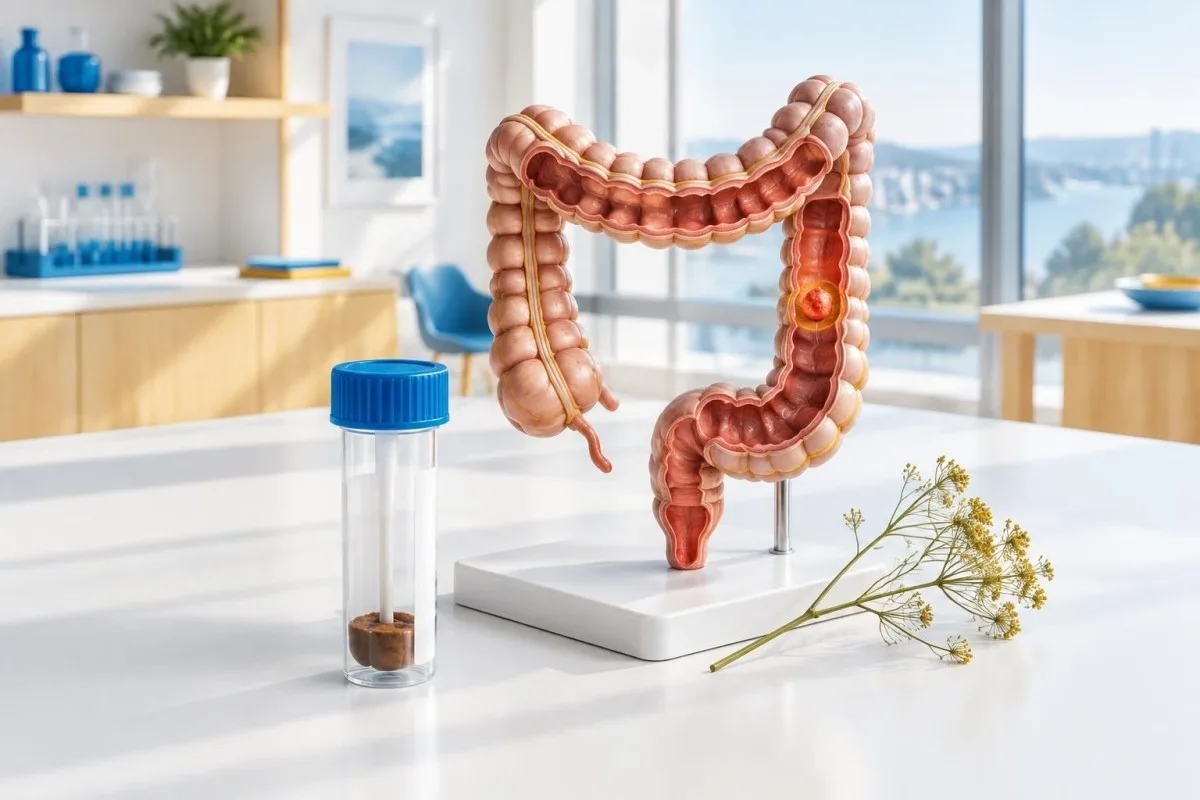
ผลบวกเป็นสัญญาณจากการคัดกรอง ไม่ใช่การวินิจฉัยมะเร็ง ขั้นตอนถัดไปโดยทั่วไปคือการส่องกล้องลำไส้ใหญ่ ซึ่งสามารถตรวจดูลำไส้ใหญ่และตัดหรือเก็บตัวอย่างจากความผิดปกติได้.

ประเด็นสำคัญ
- ผลเป็นบวกหมายความว่าจำเป็นต้องติดตามผล: การตรวจ DNA จากอุจจาระตรวจพบสัญญาณที่สัมพันธ์กับมะเร็งลำไส้ใหญ่และไส้ตรงหรือก้อนเนื้อก่อนมะเร็ง แต่ไม่สามารถวินิจฉัยภาวะใดภาวะหนึ่งได้.
- การส่องกล้องลำไส้ใหญ่เป็นการตรวจถัดไปตามปกติ: การตรวจนี้ตรวจดูลำไส้ใหญ่โดยตรง และช่วยให้แพทย์สามารถตัดติ่งเนื้อที่เหมาะสมหรือนำตัวอย่างเนื้อเยื่อไปตรวจได้ในหัตถการเดียวกัน.
- ผลบวกไม่ใช่ความน่าจะเป็นที่จะเป็นมะเร็ง: ในการศึกษาสำคัญ ความไวของการตรวจ DNA ในอุจจาระแบบหลายเป้าหมายสำหรับมะเร็งลำไส้ใหญ่และทวารหนักอยู่ที่ 92.3% แต่ความจำเพาะในผู้ที่ไม่มีเนื้องอกระยะลุกลามอยู่ที่ 86.6%.
- ผลลบจากการตรวจซ้ำไม่ได้ลบล้างผลครั้งแรก: สัญญาณจากการตรวจอุจจาระอาจแตกต่างกันระหว่างตัวอย่าง และการตรวจซ้ำไม่สามารถตัดแหล่งที่มาของผลบวกเดิมออกได้อย่างน่าเชื่อถือ.
- การติดตามผลการคัดกรองแตกต่างจากการดูแลเร่งด่วน: นัดส่องกล้องลำไส้ใหญ่โดยเร็วผ่านแพทย์ผู้ส่งตรวจ ติดต่อรับการประเมินอย่างเร่งด่วนหากมีเลือดออกมากอย่างต่อเนื่อง เป็นลม หรือปวดท้องรุนแรง.
- นำเอกสารที่เป็นประโยชน์มาด้วย: นำรายงานต้นฉบับ รายการยา อาการแพ้ รายงานการส่องกล้องลำไส้ใหญ่ครั้งก่อน และประวัติครอบครัวมาให้ครบถ้วน สอบถามทีมส่องกล้องว่ายาใดบ้างที่ต้องมีคำแนะนำเฉพาะบุคคล.
- การเตรียมตัวปรับให้เหมาะกับแต่ละบุคคล: คำแนะนำในการเตรียมลำไส้และการเปลี่ยนแปลงยาขึ้นอยู่กับแต่ละบุคคลและแผนการทำหัตถการ ดังนั้นให้ปฏิบัติตามคำแนะนำเป็นลายลักษณ์อักษรของหน่วยส่องกล้อง แทนการใช้กำหนดการทั่วไปจากอินเทอร์เน็ต.
ผลการตรวจคัดกรอง DNA ในอุจจาระเป็นบวกหมายความว่าอย่างไร
A การตรวจ DNA ในอุจจาระให้ผลบวก หมายความว่าตัวอย่างมีค่าถึงเกณฑ์ของห้องปฏิบัติการสำหรับตัวบ่งชี้ DNA อย่างน้อยหนึ่งชนิด และ/หรือสัญญาณที่เกี่ยวข้องกับเลือดซึ่งสัมพันธ์กับเนื้องอกของลำไส้ใหญ่และทวารหนัก ผลนี้เพิ่มความจำเป็นในการติดตามเพื่อการวินิจฉัย ไม่ได้แสดงว่าก้อนอยู่ที่ใด มีอยู่จริงหรือไม่ หรือเป็นมะเร็งหรือไม่.
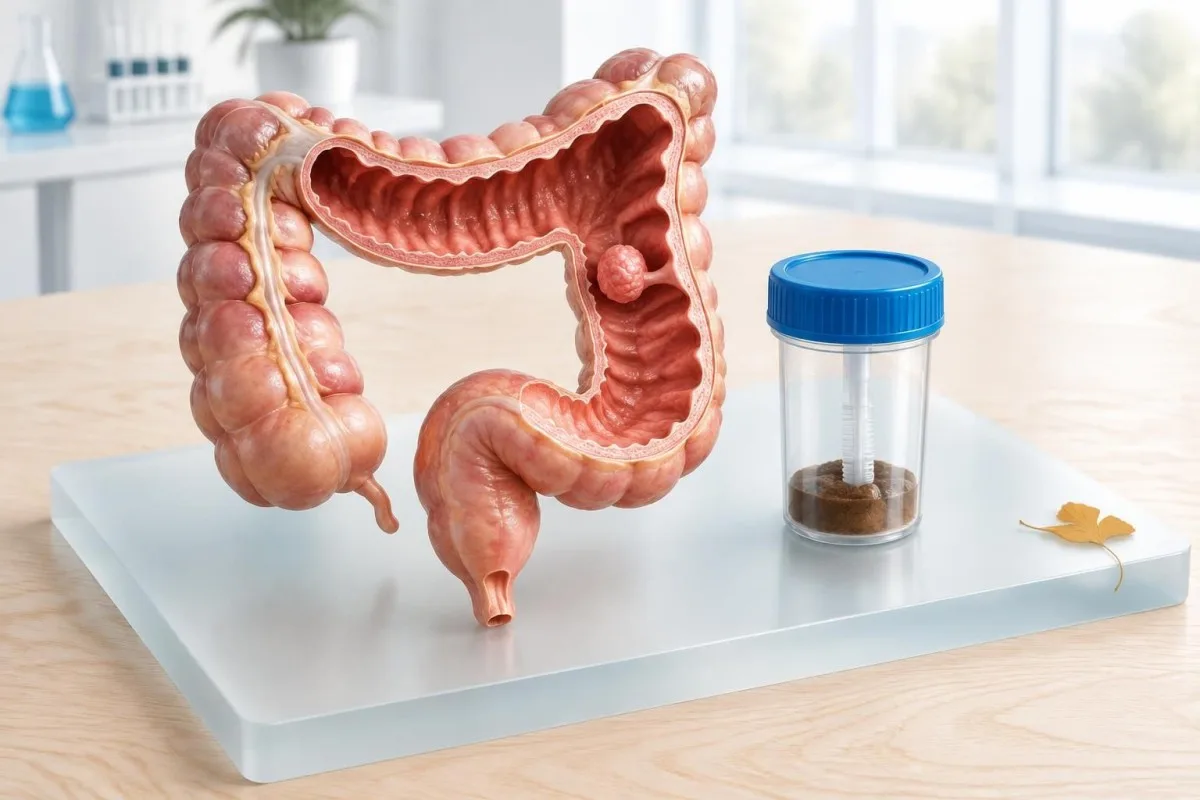
การตรวจคัดกรองมะเร็งลำไส้ใหญ่และทวารหนักด้วย DNA ในอุจจาระแบบตรวจหลายเป้าหมาย ซึ่งมักใช้ร่วมกับการตรวจเลือดในอุจจาระ ออกแบบมาเพื่อค้นหาผู้ที่ควรได้รับการประเมินเพิ่มเติม ในการศึกษาหลักโดย Imperiale และคณะในวารสาร New England Journal of Medicine ความไวต่อมะเร็งลำไส้ใหญ่และทวารหนักอยู่ที่ 92.3% ขณะที่ความไวต่อรอยโรคก่อนมะเร็งระยะก้าวหน้าอยู่ที่ 42.4%; ค่าเหล่านี้เป็นค่าประมาณประสิทธิภาพของการตรวจ ไม่ใช่โอกาสที่บุคคลหนึ่งจะเป็นมะเร็ง ดังนั้นผลบวกจึงเป็น สัญญาณจากการคัดกรอง, ไม่ใช่การวินิจฉัย.
การตรวจจะตรวจจับสัญญาณที่ถูกขับออกมากับอุจจาระ แต่ไม่สามารถระบุตำแหน่งที่แน่นอนหรืออธิบายได้ว่าเหตุใดสัญญาณเหล่านั้นจึงปรากฏ ผลบวกอาจเกิดขึ้นในกรณีมะเร็งลำไส้ใหญ่และไส้ตรง ติ่งเนื้อระยะลุกลาม หรือในกรณีที่ไม่พบเนื้องอกระยะลุกลามจากการส่องกล้องลำไส้ใหญ่ การศึกษาในปี 2014 รายงานความจำเพาะ 86.6% ในกลุ่มผู้เข้าร่วมที่ไม่มีเนื้องอกระยะลุกลาม ซึ่งหมายความว่าการจัดประเภทเป็นผลบวกลวงเกิดขึ้นได้ โดยเฉพาะเมื่อคัดกรองประชากรที่คนส่วนใหญ่ไม่มีโรคระยะลุกลาม.
ตัวอย่างเช่น ลองนึกภาพผู้มีสุขภาพดีอายุ 58 ปีที่ไม่มีอาการเกี่ยวกับลำไส้ได้รับผลตรวจเป็นบวกระหว่างการคัดกรองตามปกติ ผลดังกล่าวไม่ได้หมายความว่ามีแนวโน้มเป็นมะเร็งหรือได้รับการยืนยันว่าเป็นมะเร็ง แต่หมายความว่ากระบวนการคัดกรองยังไม่สมบูรณ์จนกว่าจะตรวจลำไส้ใหญ่ด้วยการส่องกล้อง ผู้ที่มีอาการ เช่น มีเลือดปนในอุจจาระอย่างต่อเนื่อง จำเป็นต้องได้รับการประเมินทางคลินิกสำหรับอาการเหล่านั้นด้วย ไม่ว่าผลคัดกรองจะเป็นบวกหรือลบ โปรดดูคู่มือของเราเกี่ยวกับ เลือดในอุจจาระ.
การตรวจนี้ไม่สามารถระบุตำแหน่งของก้อนได้
รายงานการตรวจ DNA จากอุจจาระไม่สามารถระบุได้ว่าสัญญาณนั้นมาจากลำไส้ใหญ่ด้านขวา ลำไส้ใหญ่ด้านซ้าย ไส้ตรง หรือแหล่งที่ไม่ใช่มะเร็ง การส่องกล้องลำไส้ใหญ่ให้ข้อมูลทางกายวิภาคดังกล่าว และการตัดออกหรือตรวจเนื้อเยื่อสามารถระบุได้ว่าความผิดปกติที่มองเห็นคืออะไร ผลการตรวจอุจจาระซ้ำที่ดูปกติไม่ได้ให้ข้อมูลที่เทียบเท่ากัน.
ผลตรวจนี้ไม่ใช่การวัดขนาด ระยะ หรือการแพร่กระจายของเนื้องอกเช่นกัน คำถามเหล่านั้นต้องอาศัยขั้นตอนการวินิจฉัยอื่น ๆ หากแพทย์พบมะเร็ง การตรวจอุจจาระเพียงอย่างเดียวไม่สามารถตอบคำถามเหล่านี้ได้.
เหตุใดการส่องกล้องลำไส้ใหญ่จึงเป็นการติดตามผลตามปกติ
หลังจากผลการคัดกรอง DNA ในอุจจาระเป็นบวก, การส่องกล้องลำไส้ใหญ่เป็นการติดตามผลตามปกติ เนื่องจากสามารถตรวจดูลำไส้ใหญ่ได้โดยตรง และเมื่อเหมาะสมยังสามารถตัดติ่งเนื้อหรือเก็บชิ้นเนื้อได้ในหัตถการเดียวกัน การตรวจอุจจาระครั้งที่สองไม่สามารถให้การตรวจด้วยสายตาหรือการรักษาดังกล่าวได้.
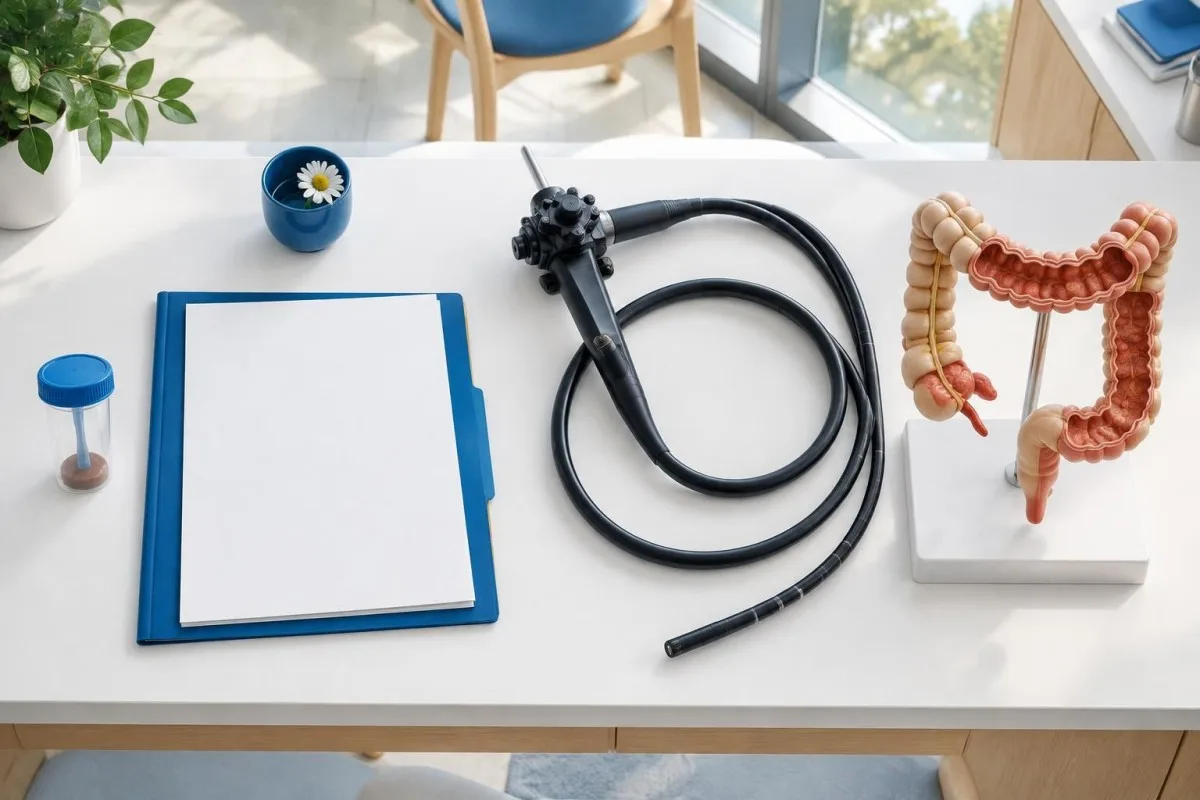
คำแนะนำการคัดกรองมะเร็งลำไส้ใหญ่และไส้ตรงปี 2021 ของคณะทำงานบริการป้องกันแห่งสหรัฐอเมริการะบุว่า ผลบวกจากการตรวจคัดกรองโดยใช้ตัวอย่างอุจจาระจำเป็นต้องติดตามด้วยการส่องกล้องลำไส้ใหญ่เพื่อให้ได้รับประโยชน์จากการคัดกรอง กล้องส่องลำไส้ใหญ่เป็นเครื่องมือที่ยืดหยุ่นและมีกล้อง แพทย์จะตรวจดูเยื่อบุลำไส้ใหญ่ และอาจตัดติ่งเนื้อที่เหมาะสมออกหรือเก็บตัวอย่างเนื้อเยื่อ นั่นทำให้การส่องกล้องลำไส้ใหญ่เป็นทั้งการตรวจวินิจฉัยและบางครั้งเป็นขั้นตอนการรักษา.
ในการเปรียบเทียบของ Imperiale และคณะในปี 2014 การตรวจ DNA ในอุจจาระแบบหลายเป้าหมายตรวจพบมะเร็งลำไส้ใหญ่และไส้ตรง รวมถึงรอยโรคก่อนมะเร็งระยะลุกลาม ได้มากกว่า FIT ในประชากรที่ศึกษา แต่ก็ให้ผลบวกลวงมากกว่าเช่นกัน นี่เป็นข้อแลกเปลี่ยนในการออกแบบการตรวจคัดกรอง: การตรวจที่ตรวจพบรอยโรคได้มากกว่าสามารถนำไปสู่การส่องกล้องลำไส้ใหญ่มากขึ้นในผู้ที่ผลการตรวจไม่พบเนื้องอกระยะลุกลาม การส่องกล้องลำไส้ใหญ่จะระบุว่าสัญญาณจากการคัดกรองมีความหมายอย่างไรสำหรับบุคคลนั้น.
การส่องกล้องลำไส้ใหญ่ที่ปกติหลังจากผลตรวจเป็นบวกเป็นผลลัพธ์ที่มีความหมาย ไม่ได้พิสูจน์ว่าการตรวจอุจจาระไม่มีประโยชน์ การตรวจนี้สามารถตัดความผิดปกติที่มองเห็นได้และจำเป็นต้องดำเนินการในการตรวจครั้งนั้นออกไป ขณะที่แพทย์ใช้คุณภาพการเตรียมลำไส้ ความครบถ้วนของการตรวจ และผลการตรวจก่อนหน้าเพื่อแนะนำช่วงเวลาการคัดกรองในอนาคต แนวทางฉันทามติปี 2017 ของ US Multi-Society Task Force กล่าวถึงการติดตามผลหลังการตรวจคัดกรองที่ไม่ใช่การส่องกล้องลำไส้ใหญ่ ประเด็นในทางปฏิบัติคือการตรวจวินิจฉัยให้ครบถ้วน แทนที่จะเริ่มการคัดกรองใหม่.
สิ่งที่การส่องกล้องลำไส้ใหญ่อาจตรวจพบ
สิ่งที่อาจพบ ได้แก่ ไม่พบความผิดปกติ ติ่งเนื้อที่ไม่ใช่ระยะก้าวหน้า รอยโรคก่อนมะเร็งระยะก้าวหน้า หรือมะเร็งลำไส้ใหญ่และทวารหนัก ลักษณะของติ่งเนื้อเพียงอย่างเดียวอาจไม่สามารถระบุชนิดที่แน่นอนได้ ดังนั้นติ่งเนื้อที่ตัดออกอาจถูกส่งตรวจทางห้องปฏิบัติการ แผนการติดตามขั้นสุดท้ายขึ้นอยู่กับผลดังกล่าว และขึ้นอยู่กับว่าการตรวจไปถึงและมองเห็นลำไส้ใหญ่ทั้งหมดได้อย่างเพียงพอหรือไม่.
หากการส่องกล้องลำไส้ใหญ่ไม่สมบูรณ์เนื่องจากการเตรียมตัวหรือความยากลำบากทางเทคนิค ทีมแพทย์อาจแนะนำให้ตรวจซ้ำหรือใช้การตรวจแบบอื่นเพื่อให้ครบถ้วน สอบถามว่ารายงานระบุหรือไม่ว่าส่องถึงซีคัมแล้ว และการเตรียมตัวเพียงพอหรือไม่ รายละเอียดเหล่านี้ส่งผลต่อความมั่นใจในการแปลผลการตรวจที่ไม่พบความผิดปกติ.
เหตุใดการตรวจอุจจาระซ้ำจึงไม่ใช่สิ่งทดแทน
การตรวจ DNA ในอุจจาระที่มีผลเป็นบวกซ้ำคือ ไม่ใช่สิ่งทดแทนการส่องกล้องลำไส้ใหญ่ เนื่องจากตัวอย่างที่ตรวจภายหลังให้ผลลบไม่สามารถลบล้างสัญญาณเดิมได้อย่างน่าเชื่อถือหรือใช้ตรวจดูลำไส้ใหญ่ได้ การตรวจคัดกรองออกแบบมาเพื่อระบุว่าใครจำเป็นต้องได้รับการประเมินเพื่อการวินิจฉัย ไม่ใช่เพื่อยืนยันผลซึ่งกันและกันด้วยการตรวจซ้ำเป็นลำดับ.
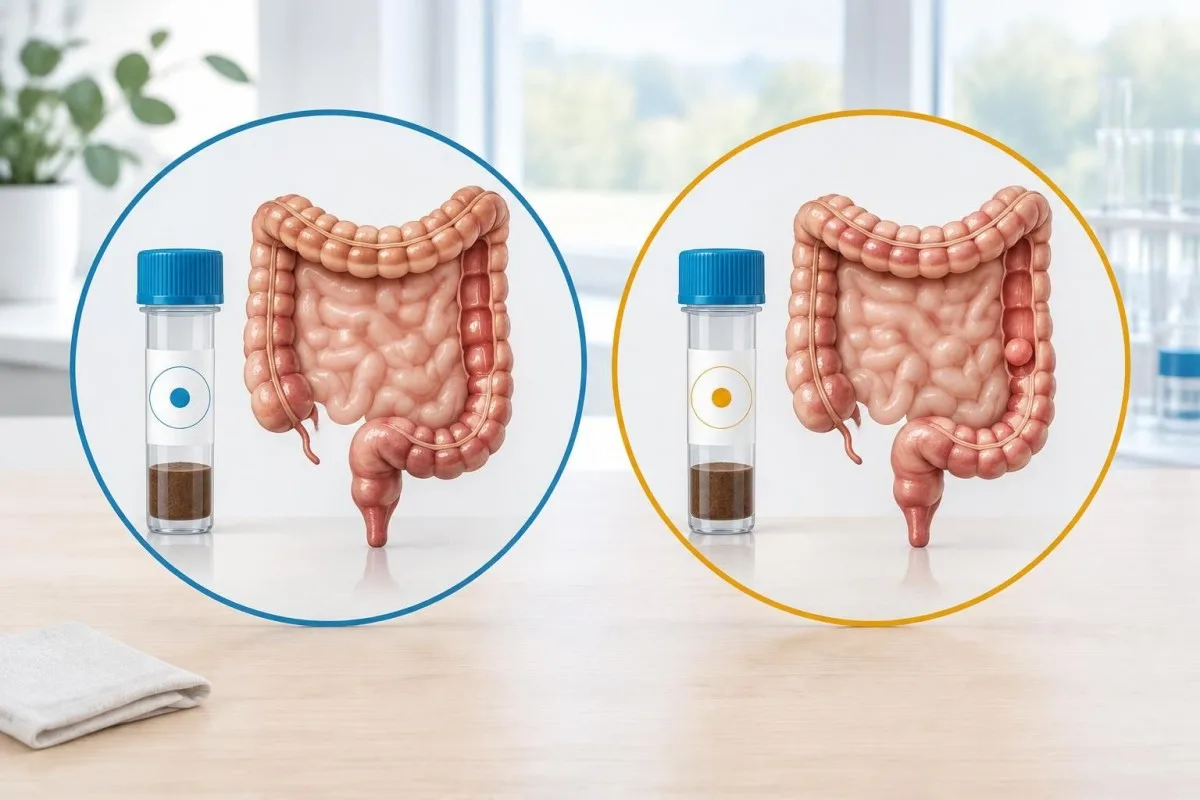
Signals in stool can vary from one bowel movement to another. A polyp or cancer may shed DNA or blood intermittently, so a second sample may not contain the same detectable material as the first. A negative repeat can therefore create false reassurance without resolving why the original test crossed its positive threshold.
This is a different situation from repeating a test after a documented collection or laboratory error. If the report says the specimen was invalid, the clinician or laboratory may advise a replacement sample; if the result is valid and positive, the usual next step is colonoscopy. Ask the ordering clinician to clarify whether the report says ผลบวก, invalid, หรือ unsatisfactory, since those terms lead to different actions.
A hypothetical example: a 62-year-old gets a positive multitarget stool DNA result, then repeats the kit and gets a negative result. The second result does not establish that the first was false; it may simply reflect variation in what was shed into each sample. The appropriate action is to discuss diagnostic colonoscopy, not to use the negative repeat as clearance.
Do not confuse screening with symptom testing
A person with persistent bowel changes, unexplained weight loss, iron-deficiency anemia, or visible bleeding needs an assessment based on symptoms and risk factors, not just a repeat screening kit. A screening stool DNA test is not designed to diagnose every cause of these symptoms, including inflammatory bowel disease or infection. Our overview of stool testing for IBD explains why different stool tests answer different clinical questions.
Likewise, a negative stool DNA result does not rule out colorectal cancer in someone with concerning symptoms. Screening is intended for people without symptoms who meet local eligibility guidance; symptoms may move care into a diagnostic pathway.
ผลบวกลวง ความแม่นยำ และความหมายของตัวเลข
A false-positive stool DNA result means the test is positive but colonoscopy does not find the advanced neoplasia the screening test is designed to detect. False positives are expected in screening and do not necessarily mean the laboratory made an error or that a hidden cancer is present.
In the 2014 Imperiale et al. study, multitarget stool DNA sensitivity for colorectal cancer was 92.3%, and specificity among people without advanced neoplasia was 86.6%. Sensitivity describes the proportion of people with a target condition who test positive; specificity describes the proportion without that condition who test negative. Neither number directly gives the probability that a particular person with a positive result has cancer.
Positive predictive value changes with the prevalence of disease in the screened population, age, prior screening, and other risk factors. For that reason, it would be misleading to convert the 92.3% sensitivity figure into a statement such as “you have a 92.3% chance of cancer.” The study also found a 42.4% sensitivity for advanced precancerous lesions, showing that performance differs by target condition.
The false-positive label is usually known only after diagnostic follow-up shows no relevant advanced neoplasia. A positive result may still have led to identification of a non-advanced polyp or another finding that informs future care. Our related explanation of FIT-positive follow-up covers a different stool-based test; its result should also be followed by colonoscopy rather than another screening test.
Why a positive result does not mean cancer
A screening test is built to sort people into those who need further evaluation and those who can continue routine screening, not to establish a diagnosis. The proportion of positive results that lead to cancer depends on the population tested and the mix of cancers, advanced polyps, and people without advanced disease. This is why the test manufacturer’s performance statistics cannot replace the individual's colonoscopy report.
If colonoscopy finds no advanced lesion, the clinician may review examination quality and whether another explanation or follow-up is needed. Additional upper gastrointestinal tests are not automatically required solely because stool DNA was positive and colonoscopy was negative; the decision depends on symptoms, anemia, examination quality, and clinical context. The 2017 US Multi-Society Task Force guidance is one reference point for this follow-up question.
การนัดหมายทำหัตถการและการเลือกช่วงเวลาที่เหมาะสม
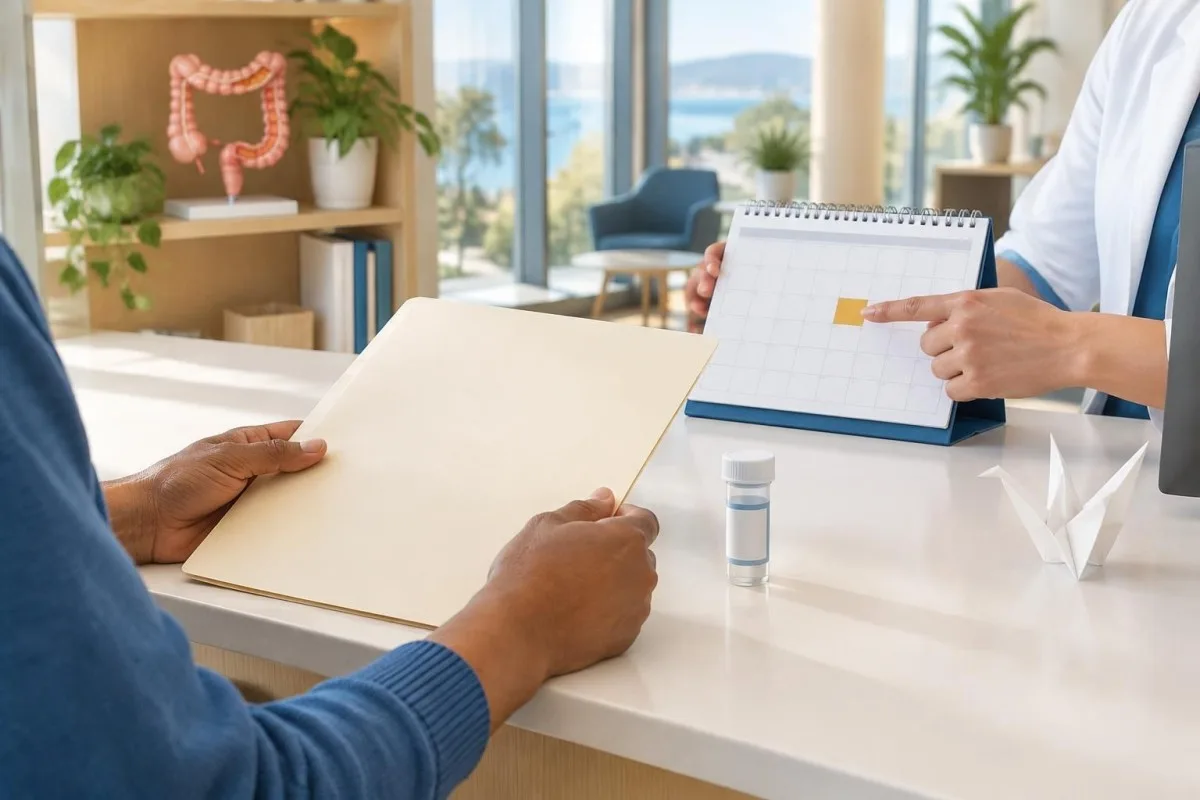
After a valid positive stool DNA screen, contact the clinician who ordered it or the endoscopy service to arrange diagnostic colonoscopy. The result usually calls for timely follow-up, but it is not generally an emergency in a person who feels well and has no acute warning symptoms.

There is no single universally stated deadline that applies to every positive stool DNA test in every health system. Arrange the referral promptly and ask the service how long the local wait is; do not wait for the next routine screening interval or repeat the home kit instead. If you have symptoms, a strong family history, or a history of polyps, mention those when booking because they may affect triage.
Evidence about delays is strongest for positive fecal immunochemical tests, not specifically for every multitarget stool DNA program. In a 2017 JAMA cohort study, Corley et al. found that longer delays after a positive FIT were associated with greater colorectal cancer risk and more advanced stage, particularly when colonoscopy occurred beyond 10 months. That observational finding supports avoiding prolonged delay, but it should not be presented as an exact deadline validated for all stool DNA tests.
If you cannot obtain an appointment, contact the referring practice and ask whether the referral was received, whether the result was marked diagnostic, and what to do if the wait becomes long. Keep the positive report and any previous colonoscopy records together. Our article on digestive symptoms and blood tests can help explain why routine blood results do not replace this examination.
When symptoms change the urgency
Seek urgent medical care for heavy ongoing rectal bleeding, fainting, severe or worsening abdominal pain, or signs of significant blood loss. These symptoms require assessment on their own and should not wait for a routine screening appointment. If symptoms are mild but persistent, tell the clinician arranging the colonoscopy rather than assuming they are explained by the screening result.
A positive screen in an otherwise well person is usually handled through an expedited outpatient diagnostic pathway. The clinical team can judge urgency using the full picture, including symptoms, hemoglobin results if available, age, family history, and prior findings.
สิ่งที่จะเกิดขึ้นก่อนการส่องกล้องลำไส้ใหญ่
Before colonoscopy, the endoscopy team reviews your health history, medicines, allergies, and prior procedures, then gives individualized bowel-preparation instructions. Preparation quality matters because stool residue can hide small abnormalities and may make the examination incomplete.
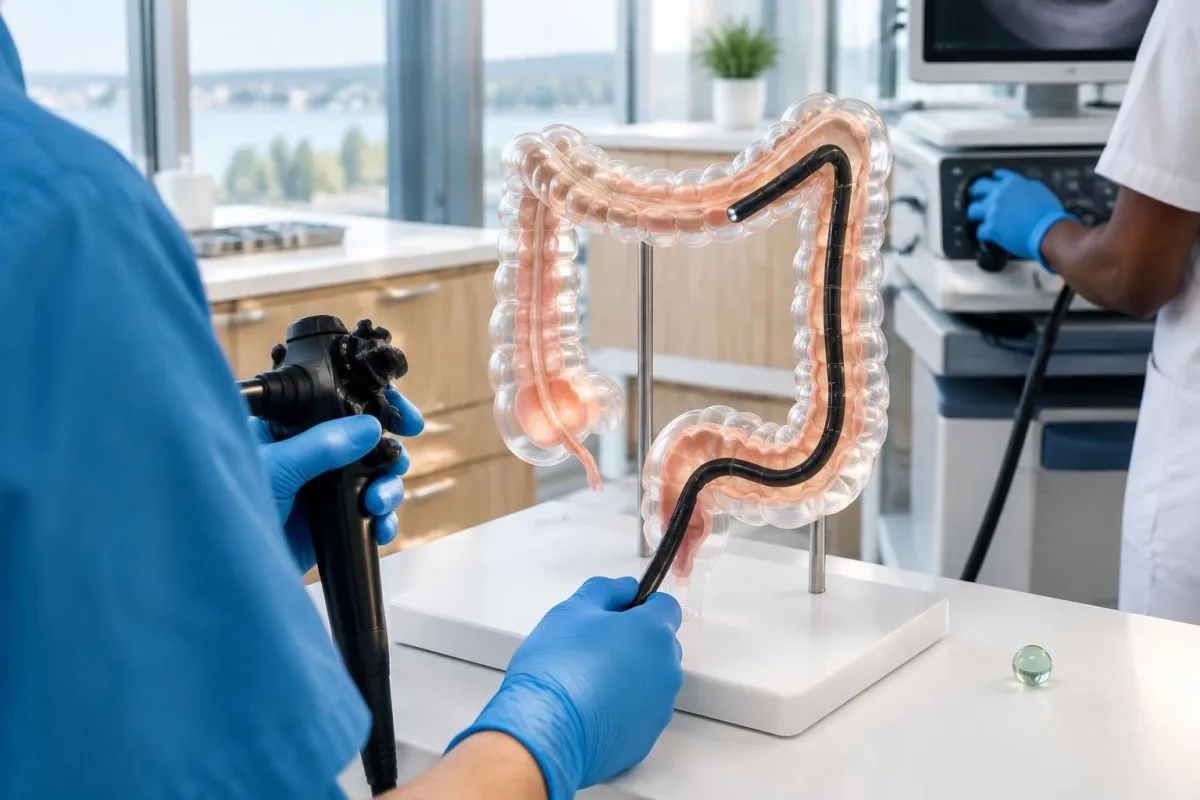
Expect questions about blood-thinning medicines, diabetes medicines, iron, kidney or heart conditions, allergies, and previous sedation problems. Do not stop a prescribed anticoagulant, antiplatelet medicine, insulin, or other regular treatment on your own; the prescriber and endoscopy team should decide whether any adjustment is appropriate. The right plan depends on why the medicine is used and on your medical history.
Most preparation plans use a prescribed bowel-cleansing solution, temporary changes to food, and clear-fluid instructions, but products and timing vary. Follow the written plan from your endoscopy service rather than combining advice from different websites. If the preparation instructions conflict with a medicine label or you cannot keep the solution down, call the service before the procedure.
A companion may be required after sedation, and driving is commonly restricted for the remainder of the day; exact rules vary by facility and sedation plan. Ask the clinic what time to arrive, whether you need someone to escort you home, and when to stop drinking clear liquids. For context on what different stool markers can show, see our guide to calprotectin และ lactoferrin; those tests address different questions from stool DNA screening.
Bring information that changes the plan
Bring the positive report, a list of medicines and doses, allergy information, and any previous colonoscopy or polyp pathology reports. Prior findings can affect the examination plan and the interval recommended afterward. Tell the team about a family history of colorectal cancer or advanced polyps, including the relative's age at diagnosis if known.
If you have kidney disease, heart failure, diabetes, or a history of difficult bowel preparation, raise it before starting the cleansing regimen. Some preparation products may be unsuitable for certain conditions, and the team can select instructions that fit your risks.
สิ่งที่คาดว่าจะเกิดขึ้นระหว่างและหลังหัตถการ
During colonoscopy, a trained clinician guides a flexible camera through the colon while you receive the agreed level of sedation or comfort measures. The procedure checks the bowel lining, and suitable polyps can often be removed during the same session.
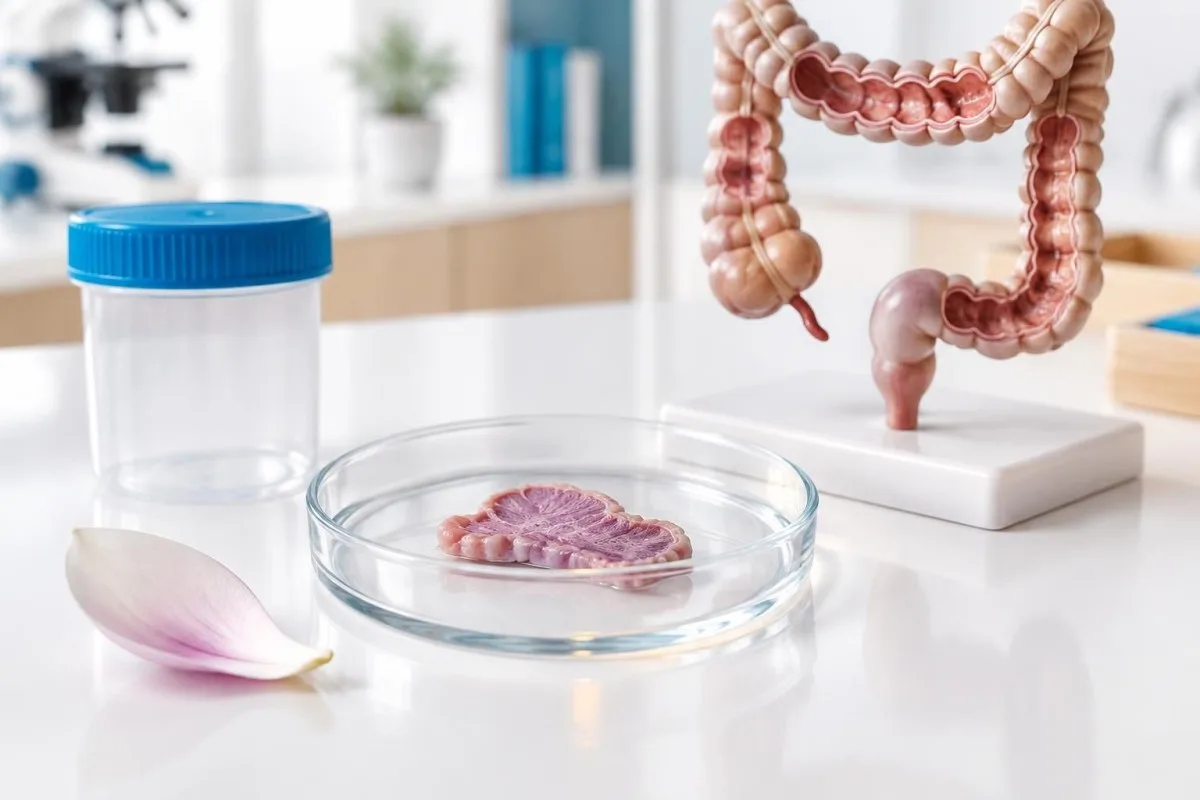
Before starting, staff confirm identity, consent, allergies, medicines, and the planned procedure. The examination may involve air or carbon dioxide to open the colon for viewing, which can cause temporary bloating afterward. Ask the endoscopy team what sedation they plan to use and what you will remember; this varies between patients and facilities.
If a polyp is removed or tissue is sampled, the specimen is sent for laboratory assessment and the final plan may take days or longer, depending on local processing. The endoscopy report may describe what was seen immediately, but pathology results can refine the diagnosis and follow-up interval. A finding's appearance during the procedure is not always enough to establish its exact tissue type.
After sedation, you may feel drowsy or bloated and need an escort, according to the clinic's policy. Follow the discharge instructions about food, medicines, driving, and when to call. Contact the service urgently for severe or worsening abdominal pain, heavy bleeding, fever, or fainting after the procedure; minor transient bloating is different from those warning signs.
The report has details worth checking
Ask whether the colonoscopy was complete, whether bowel preparation was adequate, and whether any polyps were removed or samples taken. These points help distinguish a reassuring high-quality negative examination from one that needs completion or earlier repeat evaluation. A normal result after a positive test should still be documented in your screening history.
If the examination is incomplete or preparation was poor, the clinician may recommend repeating colonoscopy sooner or using another method to assess the part not seen. Do not assume “no cancer found” means the whole colon was adequately examined; the procedure report supplies that context.
ผลตรวจส่งผลต่อการคัดกรองในอนาคตและความเสี่ยงของครอบครัวอย่างไร
The colonoscopy finding determines what happens next: no significant abnormality may lead to a longer interval, while certain polyps, cancer, or an incomplete examination require a different plan. Do not choose a future stool-test date until the clinician has reviewed the colonoscopy quality and any pathology.
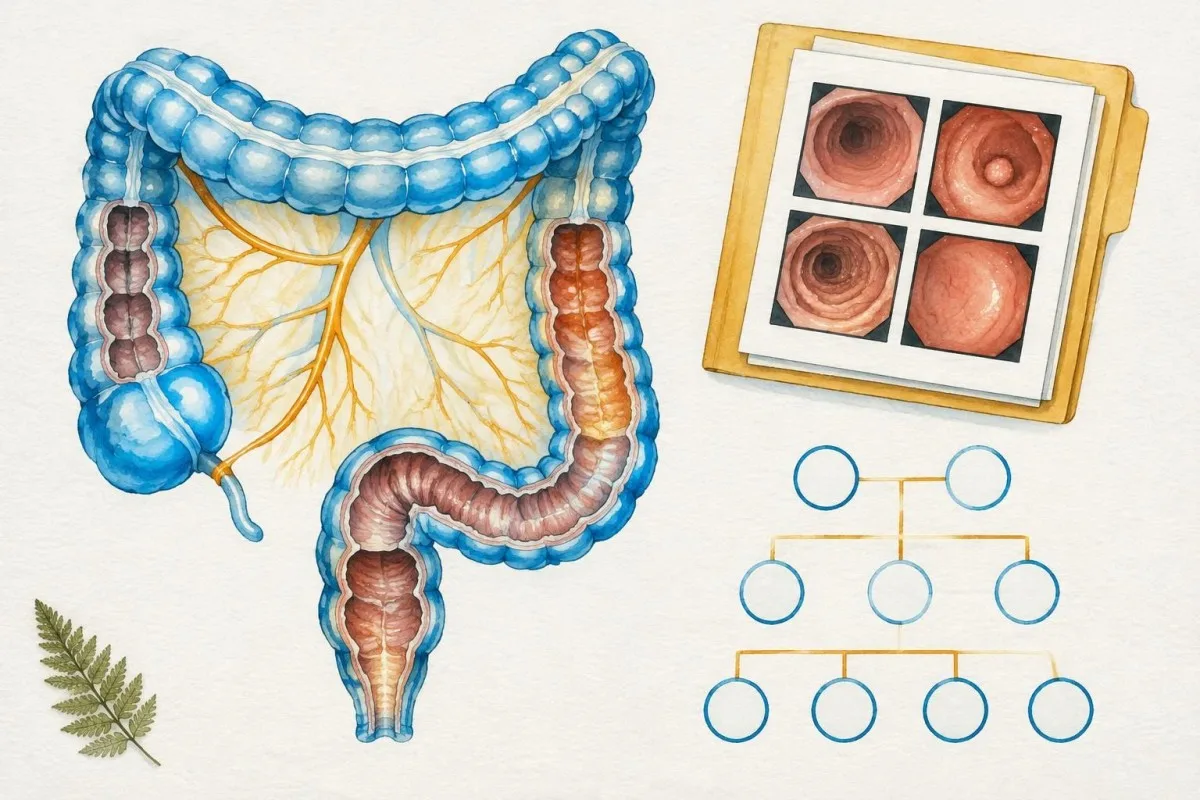
After a high-quality colonoscopy showing no relevant abnormality, routine screening may resume at an interval set by the clinician and local guidelines. A positive stool test alone does not automatically mean annual colonoscopy. If polyps are removed, size, number, histology, completeness of removal, and preparation quality can all influence the recommended interval.
Family history can change screening advice even when the colonoscopy is normal. A first-degree relative diagnosed with colorectal cancer or an advanced polyp at a younger age may justify earlier or more frequent screening, depending on the exact family pattern and local guidance. If relatives have multiple cancers or unusually young diagnoses, ask whether hereditary cancer assessment is appropriate; our Lynch syndrome testing guide explains how inherited risk evaluation differs from stool screening.
A negative colonoscopy does not explain every bowel symptom, and a positive stool DNA result does not prove that symptoms are caused by colorectal disease. If symptoms persist, the clinician may consider other explanations or tests based on the pattern; for instance, fecal calprotectin evaluates intestinal inflammation rather than colorectal cancer screening. People with a borderline calprotectin result can read about repeat testing and follow-up, but it does not replace the colonoscopy indicated by a positive DNA screen.
Keep screening and symptom evaluation separate
A stool DNA test is a screening tool for colorectal cancer and certain precancerous lesions; it is not a general test for digestion, infection, or inflammatory bowel disease. For example, persistent diarrhea or abdominal discomfort may need a separate assessment even after a normal colonoscopy. Our overview of stool changes and digestive symptoms discusses why symptom patterns need their own context.
Blood tests can show clues such as anemia, but a normal complete blood count does not rule out colorectal polyps or cancer. A clinician may use blood results alongside symptoms and history, but the positive screening test still needs the recommended diagnostic follow-up.
รายการตรวจสอบที่ใช้งานได้จริงหลังได้รับผลเป็นบวก
After a positive stool DNA result, save the report, contact the ordering clinician, and arrange diagnostic colonoscopy rather than repeating the kit. Share symptoms and family history, follow individualized preparation instructions, and ask who will communicate the final findings.
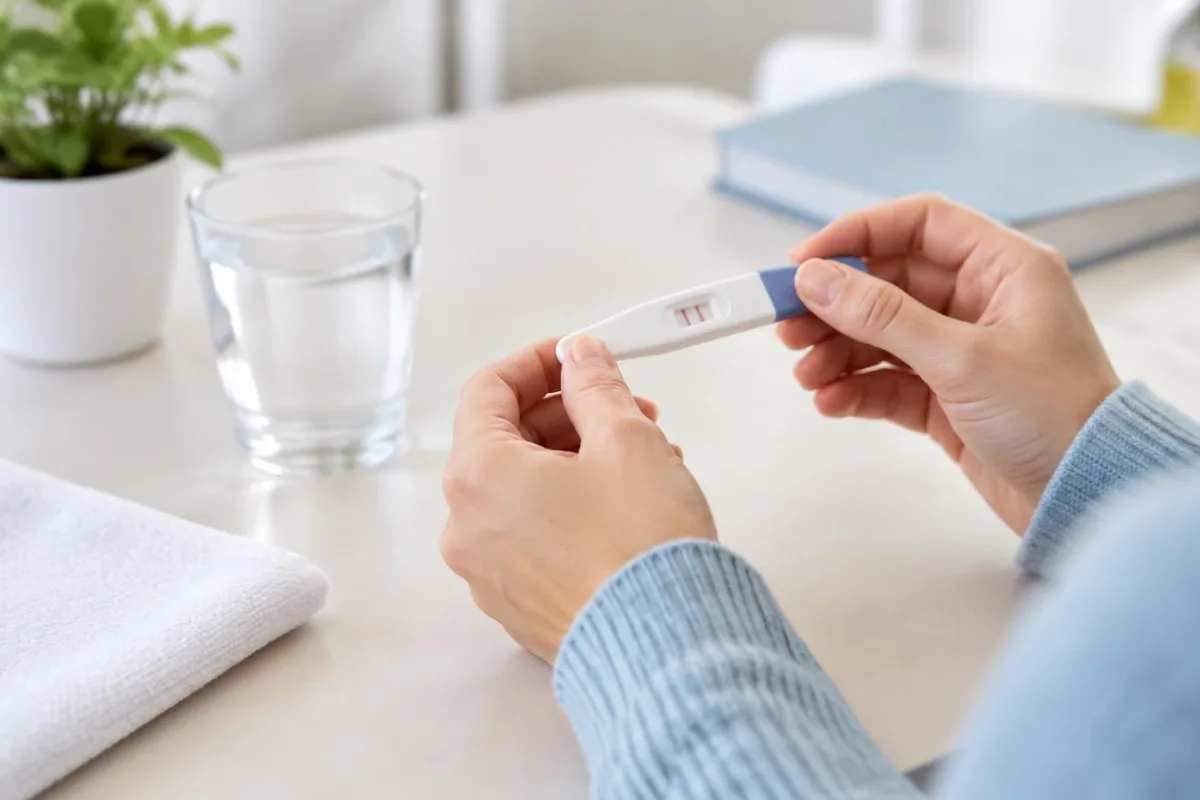
First, verify the exact wording of the report and ask whether it was a valid positive result or an invalid sample. Next, confirm that a colonoscopy referral has been placed and ask which service will contact you. If a referral has not moved forward, contact the ordering practice rather than ordering another stool test.
Before the appointment, provide the endoscopy team with previous colonoscopy reports, family history, current medicines, allergies, and relevant conditions such as diabetes or kidney disease. Ask who is responsible for changing medicines and how to reach the team if preparation is difficult. A clear handoff is especially useful when the ordering clinician and procedure unit are different services.
After the examination, obtain the report and ask when pathology results are expected, who will explain them, and what interval is recommended for the next screening test. If results are not communicated by the expected date, contact the clinic. Our มาตรฐานเนื้อหาทางการแพทย์ describe how patient-facing health information should distinguish screening signals from diagnoses; your own care plan should come from the clinician reviewing your complete record.
Questions to ask the endoscopy team
Ask whether the procedure is booked as a diagnostic colonoscopy after a positive screening test, what preparation product to use, and which medicines need specific instructions. Confirm whether you need an escort and when you may return to driving or work. The answers vary by facility, sedation, medical history, and local policy.
Also ask how you will receive the procedure report and any pathology results. Knowing the contact route in advance can prevent a polyp result or an incomplete examination from being lost between services.
คำถามที่พบบ่อย
ผลตรวจ DNA ในอุจจาระเป็นบวก หมายความว่าฉันเป็นมะเร็งลำไส้ใหญ่หรือไม่?
No, a positive stool DNA test does not diagnose colon cancer; it means the sample met the screening threshold and needs follow-up. In the 2014 Imperiale et al. study, the test's sensitivity for colorectal cancer was 92.3%, but that figure describes detection among people with cancer, not the chance that any one positive result is cancer. Colonoscopy is usually needed to identify whether a cancer, polyp, or no advanced abnormality is present.
ฉันควรตรวจดีเอ็นเอในอุจจาระซ้ำหรือไม่ หากผลตรวจเป็นบวกก่อนเข้ารับการส่องกล้องลำไส้ใหญ่?
ไม่ การตรวจ DNA ในอุจจาระที่ให้ผลบวกซึ่งมีความถูกต้องแล้วซ้ำ ไม่สามารถใช้ทดแทนการส่องกล้องลำไส้ใหญ่ได้ สัญญาณ DNA และสัญญาณที่เกี่ยวข้องกับเลือดอาจแตกต่างกันในอุจจาระแต่ละครั้ง ดังนั้นตัวอย่างที่ให้ผลลบในภายหลังจึงไม่สามารถลบล้างผลการตรวจครั้งแรกได้อย่างน่าเชื่อถือ โปรดติดต่อแพทย์ผู้สั่งตรวจเพื่อจัดการส่องกล้องลำไส้ใหญ่เพื่อการวินิจฉัย โดยทั่วไปการเก็บตัวอย่างซ้ำจะเกี่ยวข้องเฉพาะเมื่อห้องปฏิบัติการหรือแพทย์แจ้งว่าตัวอย่างเดิมไม่ถูกต้องหรือไม่เพียงพอ.
ควรส่องกล้องลำไส้ใหญ่ภายในเร็วแค่ไหนหลังจากผลตรวจดีเอ็นเอในอุจจาระเป็นบวก?
นัดหมายการส่องกล้องลำไส้ใหญ่โดยเร็วผ่านแพทย์ผู้สั่งตรวจ เนื่องจากผลคัดกรองด้วยการตรวจอุจจาระที่เป็นบวกจำเป็นต้องติดตามเพื่อวินิจฉัยต่อ ไม่มีระยะเวลาที่เป็นกำหนดตายตัวซึ่งใช้กับโปรแกรมตรวจ DNA จากอุจจาระและระบบบริการสุขภาพทุกแห่งโดยทั่วไป การศึกษาเชิงสังเกตในปี 2017 พบว่าผลลัพธ์แย่ลงเมื่อมีความล่าช้าหลังผล FIT เป็นบวก โดยเฉพาะเมื่อเกิน 10 เดือน แต่ไม่ควรถือว่าผลการศึกษาของ FIT เหล่านี้เป็นกำหนดเวลาที่แม่นยำซึ่งได้รับการยืนยันสำหรับการตรวจ DNA ทุกชนิด.
จะเกิดอะไรขึ้นหากการส่องกล้องลำไส้ใหญ่ของฉันไม่พบความผิดปกติหลังจากผลตรวจดีเอ็นเอในอุจจาระเป็นบวก?
การส่องกล้องลำไส้ใหญ่ที่ปกติหมายความว่า การตรวจไม่พบความผิดปกติที่มองเห็นได้ซึ่งจำเป็นต้องดำเนินการ แต่คุณภาพและความครบถ้วนของการตรวจมีความสำคัญ ควรถามว่าแพทย์ตรวจไปถึงปลายลำไส้ใหญ่หรือไม่ และการเตรียมลำไส้เพียงพอหรือไม่ กำหนดเวลาการคัดกรองในอนาคตขึ้นอยู่กับรายละเอียดเหล่านี้ ประวัติของคุณ และแนวทางในท้องถิ่น ผลตรวจ DNA จากอุจจาระที่เป็นบวกเพียงอย่างเดียวไม่ได้หมายความว่าจะต้องส่องกล้องลำไส้ใหญ่ทุกปีโดยอัตโนมัติ.
การตรวจ DNA ในอุจจาระที่ให้ผลเป็นบวกอาจเป็นผลบวกลวงได้หรือไม่?
ใช่ การตรวจ DNA ในอุจจาระอาจให้ผลบวกได้ แม้การส่องกล้องลำไส้ใหญ่จะไม่พบเนื้องอกลำไส้ใหญ่และทวารหนักระยะลุกลาม ในการศึกษาหลักปี 2014 ความจำเพาะในผู้ที่ไม่มีเนื้องอกระยะลุกลามอยู่ที่ 86.6% จึงเกิดการจัดประเภทผลบวกลวงได้ ความแม่นยำของการตรวจคัดกรองไม่ใช่ความน่าจะเป็นส่วนบุคคลที่จะเป็นมะเร็ง และการส่องกล้องลำไส้ใหญ่คือการตรวจที่ช่วยชี้แจงว่าผลบวกนั้นมีความหมายต่อบุคคลแต่ละคนอย่างไร.
ฉันจำเป็นต้องหยุดยาก่อนการส่องกล้องลำไส้ใหญ่หรือไม่?
อย่าหยุดยาที่แพทย์สั่งด้วยตนเองก่อนการส่องกล้องลำไส้ใหญ่ ทีมส่องกล้องและแพทย์ผู้สั่งยาควรให้คำแนะนำเฉพาะบุคคล โดยเฉพาะสำหรับยาต้านการแข็งตัวของเลือด ยาต้านเกล็ดเลือด ยารักษาโรคเบาหวาน และธาตุเหล็ก แผนการใช้ยาขึ้นอยู่กับชนิดยา เหตุผลที่คุณใช้ยา ภาวะสุขภาพของคุณ และการเตรียมการสำหรับหัตถการ.
อ่านผลตรวจเลือดอย่างไร
อัปโหลดรายงานผลตรวจของคุณ แล้ว AI ของ Kantesti จะอธิบายตัวบ่งชี้ทางชีวภาพแต่ละรายการด้วยภาษาที่เข้าใจง่ายภายในไม่กี่วินาที มีผู้ใช้ทั่วโลกมากกว่า 2 ล้านคน.
เอกสารอ้างอิง
- ไคลน์, ที., มิตเชลล์, เอส., & เวเบอร์, เอช. (2026). Clinical Validation Framework v2.0 (หน้า Medical Validation). Kantesti AI การวิจัยทางการแพทย์. โดอิ
- ไคลน์, ที., มิตเชลล์, เอส., & เวเบอร์, เอช. (2026). AI Blood Test Analyzer: วิเคราะห์ 2.5M การทดสอบ | Global Health Report 2026. Kantesti AI การวิจัยทางการแพทย์. โดอิ
- คณะทำงานบริการป้องกันโรคแห่งสหรัฐอเมริกา (2021). Screening for Colorectal Cancer: US Preventive Services Task Force Recommendation Statement. JAMA. โดอิ พับเมด
- Imperiale TF et al. (2014). Multitarget Stool DNA Testing for Colorectal-Cancer Screening. New England Journal of Medicine. โดอิ พับเมด
- Corley DA et al. (2017). Association Between Time to Colonoscopy After a Positive Fecal Test Result and Risk of Colorectal Cancer and Cancer Stage at Diagnosis. JAMA. โดอิ พับเมด
- 2 ล้าน+การตรวจที่วิเคราะห์
- 127+ประเทศ
- 100+ภาษา
เกี่ยวกับทีมแพทย์


สัญญาณความน่าเชื่อถือ E-E-A-T
ประสบการณ์
การทบทวนเชิงคลินิกโดยแพทย์ที่นำโดยกระบวนการตีความผลตรวจในห้องแล็บ.
ความเชี่ยวชาญ
โฟกัสด้านเวชศาสตร์ห้องปฏิบัติการเกี่ยวกับพฤติกรรมของไบโอมาร์กเกอร์ในบริบททางคลินิก.
อำนาจ
ทบทวนทางการแพทย์โดย นพ. Thomas Klein พร้อมผลงานจาก นพ. Sarah Mitchell และศาสตราจารย์ ดร. Hans Weber.
ความน่าเชื่อถือ
การตีความที่อิงหลักฐาน พร้อมเส้นทางการติดตามที่ชัดเจนเพื่อลดความตื่นตระหนก.

ข้อจำกัดความรับผิดชอบทางการแพทย์
บทความนี้จัดทำเพื่อวัตถุประสงค์ด้านการศึกษาเท่านั้น และไม่ถือเป็นคำแนะนำทางการแพทย์ โปรดปรึกษาผู้ให้บริการด้านสุขภาพที่มีคุณสมบัติเหมาะสมเสมอสำหรับการตัดสินใจด้านการวินิจฉัยและการรักษา.
เผยแพร่แล้ว · ติดต่อทีมบรรณาธิการ
เผยแพร่โดย Kantesti Ltd จดทะเบียนในอังกฤษและเวลส์ เลขทะเบียนบริษัท. 17090423, ลอนดอน สหราชอาณาจักร.
