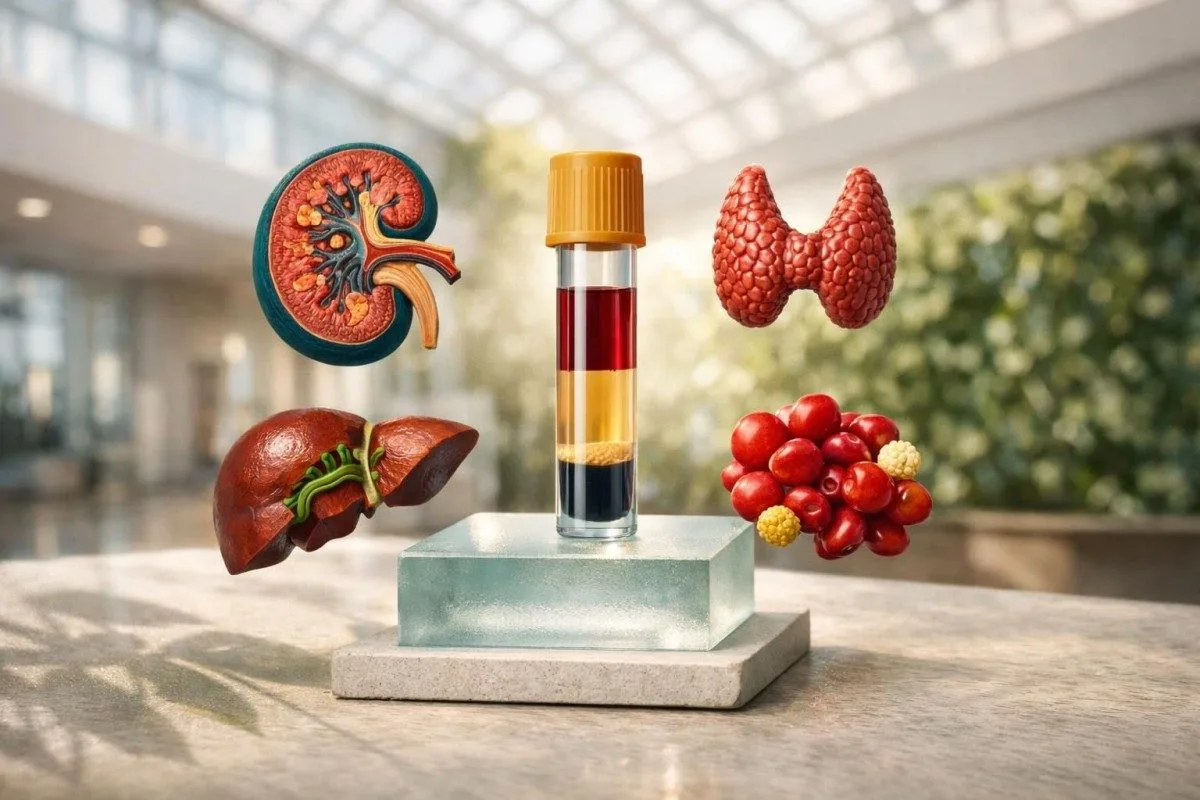
Zakres labolatoryjny je ônce punktem wyjścia, a nie wyrokiem. Kreatynina 1,0 mg/dL, ferrytyna 25 ng/mL abo TSH 3,8 mIU/L moze byc uspokajōnce, mylōnce abo pilne — zalezy, czyj to je wynik.


- Przedział referencyjny zwykle oznaczōm środek 95% wybranej populacyji, wiync tak 1 z 20 zdrowych ludźi wypadnie poza nim z założynio.
- Ferytyna poniżyj 30 ng/mL czesto wspierōm niedobōr żelaza, nawet przed spadniyciem hemoglobiny i nawet jak laboratorium jeszcze wypisuje normalne.
- TSH z może być akceptowalne w jednyj sytuacji, a w innej je warte dokładniejszego sprawdzenia. moze byc akceptowalne u jednego dorosłego, ale w ciōży w pierwszym trymestrze trzeba z tym ôstrozniyj — tam wiele lekōrzy jeszcze celujōm poniŏj 2,5 mIU/L.
- Kreatynina rosnōcō przez 0,3 mg/dL w 48 godzinach spełnia jeden warunek ostrego uszkodzenia nerek, nawet jak końcowa wartōść jeszcze siedzi w przedziale referencyjnym.
- Biotyna w 5,000-10,000 mcg/dzień moze zniekształcić niektóre testy tarczyce i immunoassaje troponiny i stworzyć fałszywie uspokajōnce abo alarmujōnce wyniki.
- ALT górne granice sōm czesto za szerokie; kilku ekspertōw uważa, że mniej wiyncyj 19–25 IU/L u kobiet i 29–33 IU/L u mężczyzn bliżej do prawdziwie zdrowych wartości.
- eGFR poniżyj 60 ml/min/1,73 m² przynajmniej 3 miesiōce sugeruje przewlekłōm chorobę nerek, ale sam kreatynin może to przeca przeca nie wykryć u ludzi z niskōm masōm mieśni.
- analiza trendōw wynikōw badańo krwi staje się przidatne po 3 porōwnywalnych wynikach; 5 abo wiyncyj robi twojōm osobistōm bazōm dużo czytelniejszōm.
- graniczny B12 w 200-300 pg/mL zakres wciąż może pasować do prawdziwych objawōw, zwłōszcza jeźli kwas metylmalonowy abo homocysteina są nieprawidłowe.
Czemu ten sam wynik badania krwi moze znaczi co innego
A spersonalizowane badanie krwi znaczy, że czytasz swōj wynik w odniesieniu do twojōm bazōm, a nie tylko do wydrukowanego zakresu. To samo: ferrytyna, TSH, kreatynin abo ALT może być uspokajōnce, mylōnce abo pilne, jak uwzględnimy wiek, płeć, leki, objawy, czas pobranio i wcześniejsze wyniki.
Wiynczo ludzi dostaje sprawozdanie z laboratorium i dowiaduje się tylko, czy liczba je wysoka abo niska. U sztuczno inteligyncyjo Kantesti, widzimy codziennie, że pojedynczy „snapshot” często nie łapie tego, co prawdziwe trendy w badaniach krwi w czasie robią oczywistym.
Weź TSH. Wartość może być akceptowalne w jednyj sytuacji, a w innej je warte dokładniejszego sprawdzenia. może być akceptowalnōm u bezobjawowego starszego człowieka, też za wysoka dla kogoś z objawami ze strony tarczyce i z pozytywnymi przeciwciałami TPO, a zwykle je to prowadzōne barzij ostrożnie w pierwszym trymestrze ciąży, gdzie wiyncy lekarze jeszcze celujōm poniżej 2,5 mIU/L.
Od 17. kwietnia 2026, najbezpieczniejszōm interpretacyjo wciąż je kontekstowa, a nie automatyczna. Jak Thomas Klein, dochtor, wciąż widzę pacjentōw, którym powiedzōno, że je „normalnie” po ferrytynie 22 ng/mL, choć kombinacyjo wypadania włosōw, znużenia i spadającego MCV robi wczesne wyczerpanie żelaza barzij prawdopodobnym, niźli to sugeruje flaga z laboratorium.
Wydrukowany zakres je punkt wyjścia, nic więcej. An ALP z 180 U/L martwi mnie to zupełnie inaczej u rosnącego 14-latka, niźli u siedzącego trybu życia 64-latka z spadkiem wagi, i dokłodnie dlategō to bazowy punkt ma znaczenie.
Jak laboratoria budujōm zakresy referencyjne — i czemu je nie trafiajōm w jednostki
Laboratoria zwykle budujōm przedział referencyjny ze środka 95% wynikōw w wybranej zdrowej populacyji. Tyn sposób je pożyteczny, ale je tępy, a tępe narzędzia bez przerwy mijōm indywidualnō fizyjologijō.
Ōb 1 z 20 zdrowych ludźi wypadnie poza przedział referencyjny z założynio, co je jedynō z powodōw, czemu standardowe badanie krwi moze wprowadzić w błąd, jak sie to użyje jako wyrok, a nie jako wskazōwka. Tyn fałszywy wskaźnik alarmu je wbudowany w matematyce, a nie je znakiym, że pacjent coś zrobiył źle.
Populacje referencyjne nie są powszechne. zespōł Kantesti przeglōndŏ raporty z 127+ krajōw, a górny limit dla ALT moze leżeć blisko 35 U/L w jednym laboratorium i 55 U/L w innyym, nawet zanim uwzględnisz zalecenia dopasowane do płci.
Prati i wspōłpracownicy argumentowali już lata temu, że naprawdę zdrowe ALT granice są niysze niż w wielu starych zakresach — z grubsza 19–25 IU/L u kobiet i 29–33 IU/L u mężczyzn. Niektōre europejskie laboratoria przeszły bliżej do tego; inksze nadal podajōm szersze odciynki, więc to samo ALT z 41 IU/L moze być oznaczōne w jednyym raporcie i zignorowane w inkszym.
Szum przedanalityczny dodaje jeszcze jednō warstwō. Nawodnienie, postawa, niedawno zrobiony ruch, czas opaski uciskowej i sposōb obsługi próbki mogōm lekko przesunōń albuminę, hematokryt, potas, laktat i bilirubinę tak, że zmienio sie całō historiō, a zaciśnięty piest podczas pobranio moze podnieść potas mniej wiyncyj o 0.2-0.4 mmol/L.
Czemu analiza trendōw wynikōw badańo krwi czesto lepsza niźli pojedynczy „snapshot”
Serijne wyniki pokazujōm kierunek i tempo zmiany, a to je często bardziej klinicznie użyteczne niż jedna odosobniona liczba. Prosto mówiąc: trend może być nieprawidłowy, zanim wartość zacznie wyglądać na nieprawidłową.
Wiele biomarkerów ma swój osobisty punkt odniesienia i stosunkowo małe wahania w obrębie jednej osoby. Prace Frasera nad biologiczno zmienność dlatego laboranci mówią o wartości zmiany referencyjny, i dokładnie dlatego pacjenci, którzy śledzą wyniki badańo krwi online zwykle rozumieją swoje zdrowie szybciej niż pacjenci, którzy zbierają niepowiązane pliki PDF.
Dla kilku rutynowych wskaźników indeks indywidualności jest na tyle niski, że twoja własna wartość wyjściowa wygrywa z szerokim przedziałem populacyjnym. kreatynina wzrost z 0.7 do 1.0 mg/dL może nadal wyglądać na normalne, ale 43% ten skok to nie coś, co można zbyć.
Ta sama logika dotyczy liczby płytek krwi, która dryfuje z 280 do 150 ×10^9/L albo ALT, która przesuwa się z 18 do 34 IU/L. Jeśli te zmiany zachodzą w podobnych warunkach, mają większe znaczenie niż samotna wartość, która przypadkiem tylko musnęła granicę laboratorium.
Szum pomiarowy w badaniu jest realny, więc liczy się technika. Jeśli jeden HbA1c jest wykonywany w Lab A, a następny w Lab B, różnica 0.2-0.3 punktu procentowego może wynikać z różnic metody; przesunięcie z 5.5% do 6.1% w warunkach dopasowanych jest znacznie trudniejsze do zignorowania.
Jak wiek, płeć, timing cyklu i masa mięsni przestawiajōm znaczenie wartōści
Wiek i płeć zmieniają interpretacyję, bo fizjologia zmienia punkt odniesienia, zanim choroba w ogóle wejdzie do gry. Hemoglobina, ferrytyna, kreatynina, ALP, lipid y i hormony zachowują się inaczej na różnych etapach życia.
Dorośli hymoglobina zwykle trzyma sie około 13.5-17.5 g/dL u mężczyzn i 12.0-15.5 g/dL u kobiet, a takżŏ ciąża, wysokość nad poziōm morza i nawodnienie przenoszō te liczby jeszcze dalej. Dlatego nasze przewodnikiym po zakresie hemoglobiny je barzij pożyteczne niźli pojedynczy uniwersalny próg.
Hormōny jeszce barzij zależą od kontekstu. Estradiol moze być zupełnie normalne w 40 pg/mL w jedny dzień cyklu, a nieoczekiwanie niskie abo wysokie w inkszym, przeto liczy się timing; nasz przewodnik do timing estradiolu pokazuje, czemu faza cyklu często ma tak samo wielkie znaczenie, jak sama wartość.
Potym je kreatynina. Mōcny 28-letni mąszczyzna na kreatynie moze żyć ôkoło 1,2 mg/dL przez lata, a wątły 82-letni z sarkopeniōm moze mieć zwodniczo dobry kreatynin z 0,8 mg/dL mimo zredukowanōj rezerwy nyrkowej.
Widzymy to samo efekt z ALP i ferytyna. ALP często je wyższe u nastolatków i w późnej ciąży, a feritin ma tendencję do niźszych wartości u doroślych, co menstruujō, przeto feritin 25 ng/mL nie je zamienny miyndzy płciami i etapami życia.
Które leki, suplementy i moment brania mogōm zniekształcić spersonalizowane badanie krwi
Leki i suplementy zmiyńōm wyniki badańo krwi na dwa sposoby: zmiyńōm fizjologię abo przeszkadzōm samym testōm. Jak to zignorujesz, mozesz źle odczytać zupełnie prawdziwy wynik.
Klasycznym przykładem je biotyna. Wiele produktōw do włosōw i paznokci zawiyra 5,000-10,000 mcg dziennie, w ilości wystarczajōcej, coby zniekształcić niektóre testy immunologiczne tarczyce i troponiny, co opisujemy w naszym artykule o biotynie i badaniu tarczyce.
Krōtkie kursy prednizon mogōm podwyzszōć neutrofile w ciōgu kilkōw godzin przōz demarginalizacyjo, czasym nawet o 2-5 ×10^9/L bez jakiejkolwiek infekcji. Przed zrobiyniem panelu przejrzyj podstawy w naszym przewodnik po badaniu krwi na czczo, bo kawa, odwodnienie i twardy trening dzien wcześniej mogōm zmienić glukozę, trójglicerydy, AST, CK, BUN i hematokryt.
Liczōm się też codzienne recepty. Metformina i inhibitory pompy protonowej mogōm obniżyć witamina B12 w czasie, doustny estrogen mogōm podwyzszōć globulinę wiążōcą hormony tarczyce i całkowite T4, a amiodaron mogōm podwyzszōć TSH, wolne T4, enzymy wątrobowe abo wszycko trzi.
Suplementy jeszcze bardziej to komplikujōm. Kreatyna mogōm podwyzszōć kreatyninę mniej wiyncyj o 0,1–0,3 mg/dL u niektórych uzytkownikōw bez uszkodzenia nyrek, a statyny mogōm lekko podnieść AST i CK, szczegōlnie po wytęzonym ćwiczeniu; dowody co do dokłodnego rozmiaru przesuniyncia sōm szczerze mieszane, ale kierunek je na tyle realny, że nigdy nie interpretujōm panelu „na ślepo”.
Czemu symptomy i wzory w wynikach majōm wiyncyj znaczenie niźli jedna wartōść poza zakresem
Samotne, łagodne nieprawidłowości często sōm mniej ważne niźli wzoru powiōzanych zmian plus objawy. Choroby zwykle psōm całe zbiory wskaźnikōw, a nie pojedyncze „piksele”.
Jeźli ferrytyna je 22 ng/mL, MCV zniża się poniŜej 84 fL, RDW jest powyżej 14.5%, a trombocyty idōmōjōm w gōrã, a wczesny niedobōr żelaza staje sie duzo bardziej prawdopodobny, nawet jeżli hemoglobina jeszce je normalny. Dlatego samō żelazo w surowicy czesto wprowadza w błąd w naszym przewodniku do wyniki badańo krwi: jak czytać wyniki badańo krwi.
Widza to wzōr u biegaczōw non stop. 52-letni maratończyk z AST 89 j.m./l, ALT 31 j.m./l, CK 620 j.m./l, a normalny bilirubina je bardziej prawdopodobnie pokazōwōm uwolnienie z mięśni, a nie pierwotno choroba wōntroby, a nasz przewodnik do AST: AST clue guide wyjaśnia, czemu ratio AST do kontekstu ma znaczenie.
To samo dzieje sie w drugą stronę. Łagōdny wzrost ALT staje sie bardziej niepokojōcy, kedy GGT i ALP takze sōm w gōrze, tak jak graniczno liczba białych krwinek ma większe znaczenie, kedy CRP je wysoki, a symptomy pasujōm do infekcyji abo reakcyji tkanki.
To je jedyn z tych obszarōw, gdzie kontekst ma większe znaczenie niż sama liczba. Kedy wyniki i symptomy sie nie zgadzajōm, praktycznym krokiem je powtōrzyć badanie w dopasowanych warunkach i dodać powiōzane markery, co domykajōm ten wzōr.
Co ô twojōm historii badańo krwi ôdkrōwa, czego zakres labolatoryjny nie potrafi
Twōj historia badańo krwi tworzy osobisty punkt odniesienia, a odchylenie od tego punktu moze mieć znaczenie, zanim raport zrobi sie czerwōny. W poradni to czesto je wskazōwka, co rozdziela szum od wczesnej choroby.
Przy nasza platforma AI do analizy krwi, wzrost kreatyniny o 0,3 mg/dL w 48 godzinach je traktowany poważnie, bo KDIGO używa tego zmiany jako jednego z kryteriōw dla ostrego uszkodzenia nerek, nawet kedy końcowo kreatynina jeszce wyglōda normalnie. Ta sama logika dotyczy spadku liczby płytek z 320 do 170 ×10^9/l abo sodu, co zjeżdza z 141 do 136 mmol/l w dobrym klinicznym kontekście.
Laboratoria szpitalne używajō sprawdzōnia delta z tego samego powodu: porównujō nowy wynik z wcześniejszymi i pytajō, czy ta luka je biologicznie prawdopodobna. Nasz standardów klinicznej walidacyji opisz, jak se normalizacyje jednostek, typ próbki i metoda badania są obsługiwane, coby sód z 139 mmol/L nie był naiwno porownywany z panele, co je ôdmiennie raportowany.
Indywidualno bazowo też pomaga we wyznaczaniu czasu do kontroli. TSH zwykle potrzebuje abo 6 tygodni po zmianie dawki lewotyroksyny, ferytyna je często znowu sprawdzane w 6-8 tydni po leczeniu żelazym, i HbA1c trza to z grubsza 8-12 tygodni. odzwierciedlić jako znaczącą zmianę w stylu życia abo w leku.
Jak ja, Thomas Klein, przeglądam sekwencyjne panele, to pytanie rzadko brzmi: „To je ôbcyne?”. Zwykle: „To je nowe? Czy to je podtrzymane? I czy to pasuje do reszty fizijologii?”.
Kiedy normalny wynik badania krwi tak naprawdō nie je uspokajōncy
Wynik, co wyglōndŏ jak normalny, może przegapić wczesno chorobę, jak zamówi sie zły test, wartość je na granicy dla twojij fizijologii, abo powiązane markery są ignorowane. „Normalne” to ôpis rozkładu, a nie „wszystko w porzōnku”.
Kreatynina, co wyglōndŏ ôrdynarnie, może wspōłwystępować z eGFR poniŏej 60 mL/min/1.73 m², szczegōlnie u starszych ôsob z niskōm masōm mięśni. Nasze niskie GFR przy normalnej kreatyninie ôdsyła, dlaczego funkcja nerek bywa często niedoszacowana, jak klinicyści patrzōm jynko na kreatyninę. pokazuje, czemu funkcja nerek bywa często niedoszacowana, jak klinicyści patrzōm jynko na kreatyninę.
Wyniki na granicy to ôstatny spychacz. Poziom witamina B12 z 200-300 pg/mL często nazywa sie „nisko-normalny”, a jednak neuropatia, zapalenie języka (glositis) abo objawy kognitywne nadal mogōm być prawdziwe, i nasze artykuł o jak czytać wyniki badańo krwi B12 jak czytać wyniki badańo krwi wyjaśnia, dlaczego kwas metylmalōnowy abo homocysteina moze rozstrzygnąć spór.
Ferityna zachowuje sie podobnie. Ferityna z 25 ng/mL może pasować do ôkresu w laboratorium i nadal sie zgadzać z wypadaniym włosōw, niespokojnymi nogami abo nietolerancją ôbciążenia, a wapń z 10.2 mg/dL wyglōndŏ mniej niewinno, jeżli PTH nie je stłumiony.
Troponina je ônôther klasyczny prziykład. Jedno normalne werto, wczesno po bōlu w klatce piersiōwej, nie wyklucza wiarygodnie uszkodzynia miōkśnia serca; co je najważniejsze, to wzrost abo spad w czasie, zastosowany test, i kliniczny obraz.
Jak AI Kantesti przerabia generyczny raport na spersonalizowane wyjaśnienie
Kantesti AI personalizuje ôbroz, czytōjąc ôkrealny raport, standaryzujōc jednostki, dokładajōc kontekst wiek i płeć, i porównujōc kolejne werty, a nie oceniajōc kôżde werto osobno. To brzmi technicznie, ale cel kliniczny je prosty: dopasować wynik do ôsobie.
Jeślibyś chcioł zobaczyć, jak bezpiecznie parsujemy raport, nasze poradnik do wgrywani PDF przeprowadzajō cię przez proces od fotki abo pliku do ôbrozu w ôkoło 60 sekund. Tyn sam workflow terŏz służy 2M+ używoczy bez 127+ krajōw i 75+ jynzykōw.
Zbudowali my ten workflow z medycznym nadzōrem, bo rozpoznawanie wzorōw bez klinicznych zabezpieczeń je ryzykowne. Nasze Rada Doradczo Medyczno przeglōdajō przypadki na granicy, a jako Thomas Klein, MD, najbarziej dbōm o wyniki w szarym pasie—ferrytyna zakresie 20-40 ng/mL, TSH 3-5 mIU/L, zmiany kreatyniny, co zostajō normalne, i panele zmienione przez suplementy abo niedawno przebyto chorobę.
Pod maskōm, Kantestiowe sieć neuronowo mapujō biomarkery na fizjologię, a nie traktujō je jako ôsobne wiersze. Metoda je ôpisana w naszym przewodnik po technologii AI, i je zasilana przez nasze 2.78T-parametr health AI.
My je ostrożni w granicach. Złe skany, brakōjōce czasy pobrania, ciążō, panele pediatryczne i szybko zmieniajōca się ostra choroba jeszcze mogō wymagać bezpośredniego przeglądu ze strony lekarza, dlatego nasz workflow z certyfikōtem CE, zgodny z HIPAA, GDPR i ISO 27001, je zbudowany, coby wspierać podejmowanie decyzji, a nie je zastępować.
Jak zbudować historiō badania krwi, z ktōrej lekarz naprawdō moze skorzystać
Najlepsza baza wychodzi z spōjnych warunkōw testowania, a nie z nieskończonego testowania. Jeśliby to było możliwe, ten sam lab, ta sama pora dnia, podobny stan na czczo, krótki zapis objawōw i co najmniej 3 porōwnywalnych wynikach cię zaskakujōco daleko.
Zacznij z nudnej spōjności. Jeślibyś chcioł przypōmniyć sobie, jak mocno płyny potrafiō przekrzywić chemię, przeczytaj nasze guide o odwodnieniu i fałszywie-wysokich wynikach; albumina, wapń, BUN, hemoglobina i hematokryt Wszyscy mogą wyglądać na wyższe, niż w rzeczywistości, jeźli pobranie robione jest po słabej hydratacyji.
Zostaw małą notatkę do każdigo wyniku: dzionek cyklu, infekcyjo, gorączka, alkohol, wyścig abo mocno trening na siłowni, nowe suplementy i zmiany w leku. Nasze dekodera symptōmōw pomaga pacjentom dopasować symptomy do dobrych wskaźnikōw do dalszigo postępowania, co je ważne, bo żelazo w surowicy po szybkim śniodaniu po prostu nie je porōwnywalne z porannym pobraniem na czczo.
Trzy porōwnywalne wyniki zwykle wystarczają, coby zacząć trend, a pięć je lepszych. Jeźli chcesz śledzić wyniki badańo krwi bez ręcznego budowania arkuszy, sprōbuj naszego darmowy pokaz badania krwi i wgrywaj te same wskaźniki w czasie, tak że widocny staje się wzōr—nie tylko flaga.
Większość pacjentōw uznaje to za zaskakujōco uspokajające. Jak już widzisz, że twoje ALT zawse trzyma sie w okolicy 17-22 IU/L albo że ferrytyna przewidywalnie spada co zimy, to łagodne „falowanie” je łatwiej interpretować, a prawdziwe zmiany szybciej wychodzą na wierzch.
Publikacje naukowe i głębsze czytanie
Jeźli chcesz szczegōł na poziomie wskaźnikōw, zacznij od prac o rozkładzie krwinek czerwonych i wzorach nerek, bo spersonalizowane czytanie często zależy od relacyj i trendōw, a nie od pojedynczych liczb. To są pożyteczne uzupełnienia, jak chcesz zajść głębiej niż standardowy materiał z labolatorije.
My trzymamy powiōzane aktualizacje na Blog Kantesty, gdzie artykuły sōm poprawiane, jak sie zmiyńiajōm praktyki w laboratorium i jak pojawiajōm sie nowe kliniczne przypadki na granicy.
Badanie krwi RDW: Kompletny poradnik do RDW-CV, MCV i MCHC. (2025). Zenodo. Zapis DOI: https://doi.org/10.5281/zenodo.18202598. Do wyszukiwania Zapis na ResearchGate. Do wyszukiwania Zapis na Academia.edu.
Wyjaśniony stosunek BUN/Creatinine: poradnik do badania funkcji nyrek. (2025). Zenodo. Zapis DOI: https://doi.org/10.5281/zenodo.18207872. Do wyszukiwania Zapis na ResearchGate. Do wyszukiwania Zapis na Academia.edu.
Czynsto zadawane pytania
Co to je spersonalizowane badanie krwi?
Spersonalizowane badanie krwi nie je ôdrębno ôdrobina abo specyjalny panel w laboratorium; to je sposōb ôdczytywania wynikōw w porōwnaniu do twojōch wlasnych punktōw odniesienia, wieku, płci, objawōw, lekōw i wprzodnich wartości. Kreatynina 1.0 mg/dL może być zwykła, jeźli je stabilna ôd lat, ale je niepokojōnca, jeźli wzrosła z 0.7 mg/dL w 48 godzinach. Wiynczi laboratoria drukujōm przedziały referencyjne dla populacyji, najczęsciej środek 95% wybranych zdrowych dorosłych. Spersonalizowane ôdczytywanie pyta, czy ta wartość je normalna dla ciebie, a nie tylko, czy mieści sie miyndzy dwoma wydrukowanymi liczbami.
Czy normalne werty badańo krwi jeszcze moze cos znaczyć, jeźli je cos nie tak?
Tak. Ferritina 25 ng/mL, witamina B12 240 pg/mL abo kreatynina, co wyglōnda na normōlnō, ale z eGFR poniżej 60 mL/min/1.73 m², moze nadal pasować do prawdziwych objawōw abo wczesnōj choroby. To je szczegōlnie czeste, jak powiōzane wskaźniki sō pomijane, czas pobranio prōbki je nie tak, abo pacjent ma niytypowō bazō (wyjściowe) wartości przez wiek, płeć, masę mięsni, ciążō abo brōnione leki. Normōlny zakres je narzōndzie do porōwnanio w populacyji, a niy je gwarancyjō, że nic niy je w porzōnku.
Ile poprzednich wyników je dość do analizy trendōw we wynikach badańo krwi?
Trzy porównywalne wyniki sō zwykle wystarczajōce, coby startnōć pōżytecznō analizō trendōw we wynikach badańo krwi, a piōć abo wiyncyj robiō bazō indywidualnō dużo czytelniejszō. „Porównywalne” znaczy: to samo wskaźnik, podobny czas pobranio, podobny stan na czczo, a ideolożnie tero samo metōda w laboratorium. W praktyce trend z ferrytyny 18 do 24 do 31 ng/mL mówi mi wiyncyj niźli jedna, odosobniona ferrytyna 24 ng/mL. To samo tyczy sie kreatyniny, HbA1c, ALT, płytek krwi i TSH.
Czy mam za każdym razym korzystać z tego samego laboratorium, jak śledzę wyniki badańo krwi?
Tak, jeźli mozesz. Różne analizatory i metody kalibracyje mogōm tworzyć małe różnice, a dla wskaźnikōw jak HbA1c przesunięcie o 0.2–0.3 punkta procentowego moze bydź wynikiem różnic w metodzie, a nie biologii. Wykorzystywanie tego samego laboratorium zmniejsza to szum i robi twojōm bazōwōm punkt czystszy. Jeźli musisz zmienić laboratorium, porōwnuj jednostki dokłado i podchodź ostrożniyj do małych zmian.
Które suplementy abo leki najczãsciej psujōm wyniki badańo krwi?
Biotyna, prednizon, kreatyna, statyny, metformina, inhibitory pompy protonowej, doustna estrogenowa terapia i amiodaron to częste „sprawcy kłopotów”. Biotyna w dawce 5 000–10 000 mcg dziennie może zniekształcać niektóre testy immunologiczne tarczycy i troponiny, podczas gdy prednizon może podnieść neutrofile w ciągu godzin bez infekcji. Kreatyna może podnieść kreatyninę o około 0,1–0,3 mg/dl, a metformina lub IPP mogą z czasem obniżać witaminę B12. Najbezpieczniejszym nawykiem jest zapisywanie nazwy leku, dawki i godziny ostatniej dawki przy każdym panelu.
Kedy zmiana w wynikach badańo krwi je pilno?
Pilność zależy zarówno od wartości, jak i tempa zmian. Wzrost kreatyniny o 0,3 mg/dL w cygu 48 godzin, potas powyzej 6,0 mmol/L abo poniżej 2,5 mmol/L, sód poniżej 125 mmol/L, nowy wzrost troponiny, abo spadek hemoglobiny o wiyncyj jak 2 g/dL z ôbjawami wimaga przecawej, szybkij pomocy medycznej. Jedyn ôgranicznie graniczny wynik bez ôbjawów je co innego niźli szybki przeskok z osłabieniem, bōlem w klatce piersiowej, dusznościōm, zamieszaniem abo omdleniym. Z mojij praktyki wynika, że najczãsciej przeca umyka to, co je połączenim szybkości z ôbjawami.
Jak Kantesti AI wikorzystuje historijō badańo krwi?
Kantesti AI wiykorzystuje historijō krwi, wyciyngajōc markery z PDF-a abo fotki, normalizujōc jednostki i porównujōc kolejne wyniki, zamiast oceniać kózdy numer osobno. Nasz system waży wiek, płeć, kontekst leku i powiōzane wzorce biomarkerów, tak że stały kreatynin 1.2 mg/dL niy je traktowany tak samo, jak nowy wzrost z 0.8 do 1.2 mg/dL. To szczególnie przidaje sie do wyników z „szarej strefy”, jak ferritina 20-40 ng/mL, TSH 3-5 mIU/L abo łagodne zmiany ALT. Pōdczas 2M+ użytkoŕzōw praktyczna wartość je prosta: wzorce stajōm sie widoczne szybciej.
Czy zestawy do domowych badań krwi mogům być użyte do zbudowania personalnej bazowej linii?
Mogům dopomóc we tropieniu trendu, kej używomy tego samygo sprawdzonego zestawu a zbiyramy próbki w podobnych warunkach, ale wyniki mogům niy być zamiyynne z laboratornymi badaniami z żyły. Potwierdźcie nieoczekiwane, piyrwyjse abo klinicznie znaczące wyniki z laboratornym testym, co go zleci lekarz.
Czy mogę porównać wyniki badańo krwi z różnych krajów, jeźli jednostki abo zakresy referencyjne sie różniōm?
Tak, ale porównuj je dopiero po potwierdzeniu jednostek i metody badania, bo wartości takie jak glukoza, cholesterol, ferrytyna i witamina D mogą być podawane inaczej. Trzimaj oryginalny raport, coby twój doktor abo narzędzie AI mogło dokładnie zinterpretować liczbę.
Czy odwodnienie może sprawić, że wyniki dotyczące nerek lub morfologii krwi będą wyglądały na nieprawidłowe?
Tak. Odwodnienie może zagęścić krew i tymczasowo podnieść kreatyninę, mocznik/BUN, sód, albuminę lub hematokryt, przez co wyniki mogą wyglądać gorzej niż twoja prawdziwa wartość wyjściowa. Jeśli byłeś/byłaś chory(a), dużo się pocisz lub piłeś/piłaś mało, zapytaj, czy ma sens powtórzenie badania po nawodnieniu.
Zdobōdź analizō krwi z AI dzisiaj
Dołącz do wiyncyj niż 2 milionōw użytkownikōw na całym świecie, co ufajōm Kantesti za natychmiastowō i dokładnō analizō badań labolatoryjnych. Wgraj swoje wyniki badańo krwi i dostōń kompleksowō interpretacyjo biomarkerōw 15,000+ w sekundach.
📚 Publikacyje badawcze z referencjami
Klein, T., Mitchell, S., & Weber, H. (2026). Test krwi RDW: Kompletny poradnik do RDW-CV, MCV i MCHC. Kantesti AI Medycynne Badań.
Klein, T., Mitchell, S., & Weber, H. (2026). Wyklarowany stosunek BUN/Kreatyniny: Poradnik do testōw funkcyje nerwōw. Kantesti AI Medycynne Badań.
⚕️ Uchylynie ôd ôdpowiedzialności medycznyj
Ten artykuł je wyłōncznie do celōw edukacyjnych i nie stanowi porady medyczno. Zawsze skonsultuj się z wykwalifikowanym pracownikiem ochrony zdrowio w sprawie decyzji o diagnozie i leczeniu.
Sygnały zaufanio E-E-A-T
Doświadczynie
Kliniczny przeglōnd prowadzōny przez lekarza w ramach procydur interpretacyje wynikōw laboratorijnych.
Ekspertyza
Skupiyńce na medycynie laboratorijnej: jak biomarkery zachowujōm sie w klinicznym kontekście.
Autorytetność
Napisane przez dr. Thomasa Kleina z przeglōndym przez dr. Sarah Mitchell i prof. dr. Hansa Webera.
Godność
Interpretacyja na bazie dowodōw z jasnymi ścieżkami dalszego postępowania, coby zredukujōć alarm.