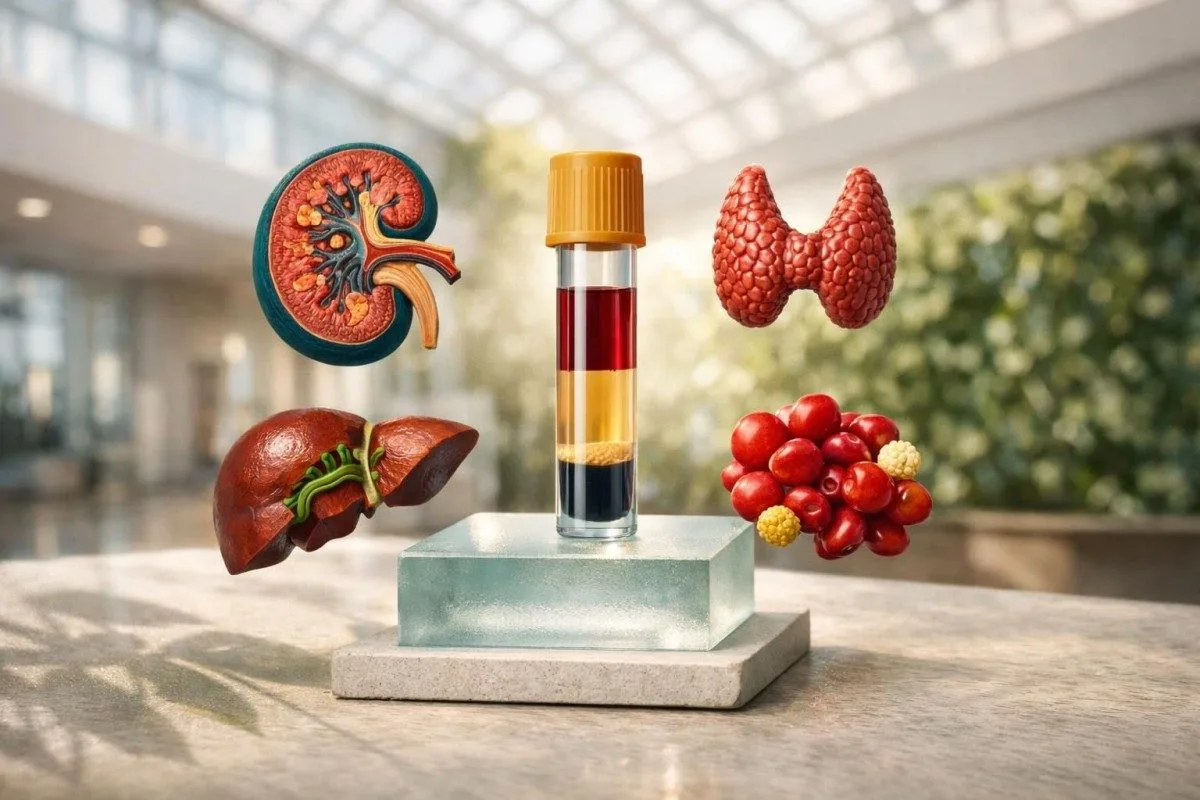
La laboratoria gamo estas deirpunkto, ne juĝo. Kreatinino de 1.0 mg/dL, feritino de 25 ng/mL, aŭ TSH de 3.8 mIU/L povas esti trankviliga, misgvida aŭ urĝa—depende de kies rezulto ĝi estas.


- Referenca intervalo kutime signifas la centran 95% de elektita populacio, do ĉirkaŭ 1 el 20 sanaj homoj falos ekster ĝi laŭdezire.
- Feritino sub 30 ng/mL ofte subtenas feromankon, eĉ antaŭ ol hemoglobino falas kaj eĉ kiam la laboratorio ankoraŭ presas normalon.
- TSH de 3.8 mIU/L povas esti akceptebla ĉe unu plenkreskulo, sed pritraktata pli singarde en gravediĝo en la unua trimonato, kie multaj klinikistoj ankoraŭ celas sube 2,5 mIU/L.
- Kreatinino altiĝante je 0,3 mg/dL ene de 48 horoj plenumas unu kriterio de akuta rena vundo, eĉ se la fina nombro ankoraŭ restas ene de la referenca gamo.
- Biotino ĉe 5,000-10,000 mcg/tage povas distordi iujn tiroidajn kaj troponinajn imunoanalizojn kaj krei falsajn trankviligajn aŭ alarmajn rezultojn.
- ALT superaj limoj ofte estas tro larĝaj; pluraj fakuloj konsideras proksimume 19–25 IU/L ĉe virinoj kaj 29–33 IU/L ĉe viroj pli proksime al vere sanaj valoroj.
- eGFR sub 60 ml/min/1.73 m² dum almenaŭ 3 monatoj sugestas kronikan rena malsanon, sed kreatinino sola povas tion preterlasi ĉe homoj kun malalta muskola maso.
- Analizo de tendencoj de sangoanalizo fariĝas utila post 3 kompareblaj rezultoj; 5 aŭ pli faras vian personan bazlinion multe pli klara.
- Limregiona B12 en la 200-300 pg/mL gamo ankoraŭ povas kongrui kun realaj simptomoj, precipe se metilmalona acido aŭ homocisteino estas nenormala.
Kial la sama rezulto de sangoanalizo povas signifi malsamajn aferojn
A personecigita sangoanalizo signifas legi vian rezulton kontraŭ via bazlinio, ne nur la presitan gamon. La sama ferritino, TSH, kreatinino aŭ ALT povas esti trankviliga, misgvida aŭ urĝa, post kiam ni enkalkulas aĝon, sekson, medikamentojn, simptomojn, tempon kaj antaŭajn rezultojn.
Plej multaj homoj ricevas laboratorian raporton kaj oni diras nur ĉu nombro estas alta aŭ malalta. Ĉe Kantesti AI, ni vidas ĉiutage ke unu sola momentfoto ofte preterlasas tion, kion realaj tendencoj de sangoanalizo tra la tempo faras evidenta.
Prenu TSH. Valoro de 3.8 mIU/L povas esti akceptebla ankaŭ ĉe sensimptoma pli aĝa plenkreskulo, tro alta por iu kun tiroidaj simptomoj kaj pozitivaj TPO-antikorpoj, kaj kutime pritraktata pli singarde en la unua trimestro de gravedeco, kie multaj klinikistoj ankoraŭ celas sub 2,5 mIU/L.
Ekde Aprilo 17, 2026, la plej sekura interpretado tamen restas konteksta, ne aŭtomata. Kiel Tomaso Klein, MD, mi daŭre vidas pacientojn diritajn ke ĉio estas normala post ferritino de 22 ng/mL, eĉ se la kombino de harperdado, laceco kaj faliĝanta MCV faras fruan feromankon multe pli verŝajna ol la laboratoriejo indikas.
Presita gamo estas nur startpunkto, nenio pli. An ALP de 180 U/L zorgigas min tute alimaniere ĉe kreskanta 14-jaraĝulo ol ĉe sidema 64-jaraĝulo kun malplipeziĝo, kaj ĝuste tial gravas la bazlinio.
Kiel laboratorioj konstruas referencajn gamojn—kaj kial ili preterlasas individuojn
Laboratorioj kutime konstruas referencan intervalon el la centra 95% de rezultoj en elektita sana populacio. Tiu aliro estas utila, sed ĝi estas kruda, kaj krudaj iloj maltrafas individuan fiziologion ĉiam.
Pri 1 el 20 sanaj homoj falos ekster referencan intervalon laŭdezire, kio estas unu kialo, ke norma sangoanalizo povas misgvidi, kiam ĝi estas uzata kiel juĝo anstataŭ kiel indico. Tiu falsa-alarmo-indico estas enkonstruita en la matematiko, ne signo, ke la paciento faris ion malĝustan.
Referencaj populacioj ne estas universalaj. La teamo recenzas raportojn de pli ol 127 landoj, kaj la supra limo por ALT povas sidi proksime al 35 U/L en unu laboratorio kaj 55 U/L en alia, eĉ antaŭ ol vi konsideras rekomendojn specifajn por sekso.
Prati kaj kolegoj argumentis antaŭ jaroj, ke vere sanaj ALT limoj estas pli malaltaj ol multaj malnovaj intervaloj—proksimume 19–25 IU/L ĉe virinoj kaj 29–33 IU/L ĉe viroj. Iuj eŭropaj laboratorioj moviĝis pli proksimen al tio; aliaj ankoraŭ raportas pli larĝajn tranĉpunktojn, do la sama ALT de 41 IU/L povas esti markita en unu raporto kaj ignorita en alia.
Antaŭanaliza bruo aldonas plian tavolon. Hidratiĝo, pozicio, lastatempa ekzercado, turniketa tempo, kaj specimenpritraktado povas iomete ŝanĝi albuminon, hematokriton, kalion, laktaton, kaj bilirubinon sufiĉe por ŝanĝi la rakonton, kaj kunpremita pugno dum kolektado povas puŝi kalion supren je proksimume 0.2-0.4 mmol/L.
Kial tendenca analizo de sangoanalizo ofte superas unuopan momentfoto
Sinsekvaj rezultoj montras direkton kaj indicon de ŝanĝiĝo, kaj tio ofte estas pli klinike utila ol unu sola izolita nombro. En simpla lingvo: tendenco povas esti nenormala, antaŭ ol valoro aspektas nenormala.
Multaj biomarkiloj havas personan valoran punkton kaj relative malgrandan variadon ene de la sama persono. La laboro de Fraser pri biologia variado estas kial laboratoristoj parolas pri valoro de referenca ŝanĝo, kaj ĝuste tial pacientoj kiuj interpretado de sangoanalizo kutime komprenas sian sanon pli rapide ol pacientoj kiuj kolektas malkonektitajn PDF-ojn.
Por pluraj rutinaj signoj, la indekso de individueco estas sufiĉe malalta ke via propra bazo venkas larĝan populacian intervalon.
kreatininon pliiĝo de 0.7 ĝis 1.0 mg/dL ankoraŭ povas aperi kiel normala, tamen tiu 43% salto ne estas io pri kio ni simple preterpasas.
La sama logiko validas por trombocitokalkulo kiu drivas de 280 al 150 ×10^9/L aŭ ALT kiu moviĝas de 18 al 34 IU/L. Se tiuj ŝanĝoj okazas sub similaj kondiĉoj, ili havas pli da pezo ol sola valoro kiu hazarde nur tuŝas la laboratorian limon.
La bruo de la analizo estas reala, do gravas la tekniko. Se unu HbA1c estas farita en Laboratorio A kaj la sekva en Laboratorio B, diferenco de 0.2-0.3 procentaj punktoj povas esti metoda bruo; movo de 5.5% al 6.1% sub kongruaj kondiĉoj estas multe pli malfacile malakceptebla.
Kiel aĝo, sekso, ciklotempigo kaj muskola maso reenkadrigas valoron
Aĝo kaj sekso ŝanĝas interpretadon ĉar fiziologio ŝanĝas la bazon antaŭ ol malsano eĉ eniras la bildon. Hemoglobino, feritino, kreatinino, ALP, lipidoj kaj hormonoj ĉiuj kondutas malsame tra vivstadioj.
Plenkreska hemoglobino kutime sidas ĉirkaŭ 13.5-17.5 g/dL ĉe viroj kaj 12.0-15.5 g/dL ĉe virinoj, kaj gravedeco, altitudo kaj hidratigo movas tiujn nombrojn plu. Tial nia hemoglobina intervala gvidilo estas pli utila ol unu sola universala limo.
Hormonoj estas eĉ pli sentemaj al kunteksto. Estradiolo povas esti tute ordinara ĉe 40 pg/mL en unu ciklotago kaj neatendite malalta aŭ alta en alia, do la tempo gravas; nia gvidilo pri estradiola tempo montras kial la fazo de la ciklo ofte gravas same kiel la valoro mem.
Poste estas kreatininon. Muskolforta 28-jara viro sur kreatino povas vivi ĉirkaŭ 1,2 mg/dL dum jaroj, dum malforta 82-jaraĝa kun sarkopenio povas havi trompe bonan kreatininon de 0.8 mg/dL malgraŭ reduktita rena rezervo.
Ni vidas la saman efikon kun ALP kaj feritino. ALP ofte estas pli alta ĉe adoleskantoj kaj en malfrua gravedeco, kaj feritino emas esti pli malalta ĉe menstruantaj plenkreskuloj, do feritino de 25 ng/mL ne estas interŝanĝebla inter seksoj kaj vivstadioj.
Kiuj medikamentoj, suplementoj kaj tempigo povas distordi personan sangoanalizon
Medikamentoj kaj suplementoj ŝanĝas sangajn testojn laŭ du manieroj: ili ŝanĝas fiziologion, aŭ ili interferas kun la analizo mem. Se vi tion ignoras, vi povas mislegi tute realan nombron.
La klasika ekzemplo estas biotino. Multaj haraj kaj najlaj produktoj enhavas 5,000-10,000 mcg ĉiutage, sufiĉe por distordi iujn tiroidajn kaj troponinajn imunoanalizojn, kiujn ni kovras en nia artikolo pri biotino kaj tiroida testado.
Mallongaj kursoj de prednisona povas altigi neŭtrofilojn ene de horoj per demarginiĝo, foje per 2-5 ×10^9/L tute sen infekto. Antaŭ panelo, reviziu la bazojn en nia gvidilo pri fastaj sangoanalizoj, ĉar kafo, dehidratiĝo kaj malfacila trejnado la antaŭan tagon povas ŝanĝi glukozon, trigliceridojn, AST, CK, BUN kaj hematokriton.
Ĉiutagaj preskriboj ankaŭ gravas. Metformino kaj protonpumpilaj inhibitoroj povas malaltigi vitamino B12 laŭlonge de la tempo, buŝa estrogeno povas pliigi tiroid-ligan globulinon kaj totalan T4, kaj amiodarono povas altigi TSH, liberan T4, hepatajn enzimojn, aŭ ĉiujn tri.
Suplementoj plue kompliki tion. Kreatino povas altigi kreatininon je proksimume 0,1–0,3 mg/dL ĉe iuj uzantoj sen rena vundo, kaj statinoj povas iomete ŝanĝi AST kaj CK, precipe post peniga ekzercado; la indico estas honeste miksita pri la preciza grandeco de la ŝanĝo, sed la direkto estas sufiĉe reala ke mi neniam interpretas la panelon “blind”.
Kial simptomoj kaj laboratoriaj ŝablonoj gravas pli ol unu ekster-gama nombro
Izolitaj mildaj anomalioj ofte estas malpli gravaj ol ŝablonon de rilataj ŝanĝoj kune kun simptomoj. Malsanoj kutime perturbas aretojn de signoj, ne unuopajn “pikselojn”.
Se feritino estas 22 ng/mL, MCV drivas sub 84 fL, RDW estas super 14.5%, kaj trombocitoj iom post iom moviĝas supren, frua fera manko fariĝas multe pli verŝajna eĉ se hemoglobino ankoraŭ estas normala. Tial nur seruma fero ofte misgvidas en nia gvidilo pri interpretado de fero.
Mi vidas ĉi tiun ŝablonon ĉe kuristoj la tutan tempon. 52-jara maratonisto kun AST 89 IU/L, ALT 31 UIL, CK 620 UIL, kaj normala bilirubino pli verŝajne montras muskolan liberigon ol primaran hepatan malsanon, kaj nia AST-indika gvidilo klarigas kial la AST-al-kunteksta rilatumo gravas.
La malo ankaŭ okazas. Mildeta plialtiĝo de ALT iĝas pli maltrankviliga kiam GGT kaj ALP ankaŭ estas altaj, same kiel limregiona blanka sangokvanto gravas pli kiam CRP estas alta kaj la simptomoj kongruas kun infekto aŭ hista respondo.
Ĉi tio estas unu el tiuj areoj, kie la kunteksto gravas pli ol la nombro. Kiam rezultoj kaj simptomoj ne kongruas, la praktika paŝo estas ripeti la teston sub kongruaj kondiĉoj kaj aldoni la rilatajn indikilojn, kiuj kompletigas la ŝablonon.
Kion via historio de sangoanalizo malkaŝas, ke la laboratoria gamo ne povas
Via historio de sangoanalizo kreas personan bazlinion, kaj devio de tiu bazlinio povas gravi antaŭ ol la raporto fariĝas ruĝa. En la ambulatorio, tio ofte estas la indico, kiu distingas bruon de frua malsano.
Je nia AI sangoanalizo-platformo, plialtiĝo de kreatinino de 0,3 mg/dL ene de 48 horoj estas traktata serioze, ĉar KDIGO uzas tiun ŝanĝon kiel unu el la kriterioj por akutan renan vundon, eĉ kiam la fina kreatinino ankoraŭ aspektas ordinara. La sama logiko validas por trombocitokvanto falanta de 320 al 170 ×10^9/L aŭ por natrio glitanta de 141 al 136 mmol/L en la ĝusta klinika kunteksto.
Klinikaj laboratorioj uzas deltokontrolojn pro la sama kialo: ili komparas novan rezulton kun antaŭaj kaj demandas ĉu la breĉo estas biologie akceptebla. Nia klinikaj validigaj normoj priskribas kiel unua normaligo, specimena tipo kaj analizo-metodo estas traktataj, por ke natrio de 139 mmol/L ne estu naive komparata kun panelo raportita alimaniere.
Persona bazo ankaŭ helpas pri la tempigo de sekvaj kontroloj. TSH kutime bezonas ĉirkaŭ 6 semajnoj post ŝanĝo de dozo de levotiroksino, feritino ofte oni rekontrolas post 6-8 semajnoj post fera traktado, kaj HbA1c bezonas proksimume 8-12 semajnoj por reflekti signifoplenan vivstilan aŭ medikamentan ŝanĝon.
Kiam mi, Thomas Klein, revizias sinsekvajn panelojn, la demando malofte estas Ĉu tio estas nenormala. Plej ofte temas pri Ĉu tio estas nova, ĉu ĝi daŭras, kaj ĉu ĝi kongruas kun la resto de la fiziologio.
Kiam normala rezulto de sangoanalizo ne estas vere trankviliga
Aspektanta normala rezulto povas preteratenti fruan malsanon kiam la malĝusta testo estas mendita, la valoro estas ĉe la limo por via fiziologio, aŭ rilataj signoj estas ignorataj. “Normala” estas priskribo de distribuo, ne “ĉio estas en ordo”.
Krejatino kiu aspektas ordinara povas kunekzisti kun eGFR sub 60 mL/min/1.73 m², precipe ĉe pli maljunaj plenkreskuloj kun malalta muskola maso. Nia malalta GFR kun normala krejatino montras kial rena funkcio ofte estas subtaksata kiam klinikistoj rigardas nur krejatinon. montras kial rena funkcio ofte estas subtaksata kiam klinikistoj rigardas nur krejatinon.
Limaj rezultoj estas alia kaptilo. A vitamino B12 nivelo de 200-300 pg/mL ofte estas nomata malalt-normala, tamen neuropatio, glosito aŭ kognaj simptomoj ankoraŭ povas esti realaj, kaj nia artikolo pri B12-interpretado klarigas kial metilmalona acido aŭ homocisteino povas solvi la disputon.
Ferritino kondutas simile. Ferritino de 25 ng/mL povas kongrui kun la laboratorintervalo kaj tamen vicigiĝi kun harperdado, senpacaj kruroj aŭ ekzercmaltoleremo, dum kalcio de 10,2 mg/dL aspektas malpli senkulpa se PTH ne estas subpremita.
Troponino estas alia klasika ekzemplo. Ununura normala valoro frue post brusta doloro ne fidinde ekskludas miokardan vundon; tio, kio gravas, estas la altiĝo aŭ falo dum la tempo, la uzata analizo, kaj la klinika bildo.
Kiel Kantesti AI transformas ĝeneralan raporton en personan interpretadon
Kantesti AI personecigas interpretadon legante la realan raporton, normigante unuojn, tavolante kuntekston pri aĝo kaj sekso, kaj komparante sinsekvajn valorojn anstataŭ poentigi ĉiun nombron izolite. Tio sonas teknike, sed la klinika celo estas simpla: fari ke la rezulto kongruu kun la persono.
Se vi volas vidi kiel ni sekure analizas raporton, nia gvidilo por alŝuto de PDF trairas la procezon de foto aŭ dosiero ĝis interpretado en ĉirkaŭ 60 sekundoj. Tiu sama laborfluo nun servas Pli ol 2 milionoj da uzantoj trans pli ol 127 landoj kaj Pli ol 75 lingvoj.
Ni konstruis tiun laborfluon kun kuracista superrigardo, ĉar ŝablonrekono sen klinikaj sekurbariloj estas riska. Nia Medicina Konsila Komisiono revizias kazojn de rando, kaj kiel Thomas Klein, MD, mi plej zorgas pri rezultoj en la griza zono—ferritino 20-40 ng/mL, TSH 3-5 mIU/L, ŝanĝoj en kreatinino kiuj restas normalaj, kaj paneloj ŝanĝitaj de suplementoj aŭ lastatempa malsano.
Sub la kapuĉo, la neura reto de Kantesti mapigas biomarkilojn al fiziologio anstataŭ trakti ilin kiel izolitajn vicojn. La metodo estas skizita en nia Gvidilo de AI-teknologio, kaj ĝi estas funkciigita de nia 2.78T-parametro san-AI.
Ni atentas pri limoj. Malbonaj skanadoj, mankantaj kolektotempoj, gravedeco, pediatriaj paneloj, kaj rapide ŝanĝiĝanta akuta malsano ankoraŭ povas postuli rektan revizion de kuracisto, tial nia CE-markita, HIPAA-, GDPR- kaj ISO 27001-konforma laborfluo estas konstruita por subteni decidon, ne por anstataŭigi ĝin.
Kiel konstrui historion de sangoanalizo, kiun via kuracisto vere povas uzi
La plej bona baza nivelo venas de konsekvencaj testkondiĉoj, ne de senfina testado. Se eble, la sama laboratorio, la sama horo de la tago, simila fastostato, mallonga simptoma protokolo, kaj almenaŭ 3 kompareblaj rezultoj vin kondukos surprize malproksimen.
Komencu per enuiga konsekvenco. Se vi volas memorigilon pri kiom forte fluidoj povas distordi kemion, legu nian dehidratiĝo kaj falsa-alta gvidilo; albumino, kalcio, BUN, hemoglobino kaj hematokrito povas aspekti pli altaj ol ili vere estas kiam la preno sekvas malbonan hidratadon.
Konservu etan noton kun ĉiu rezulto: tago de la ciklo, infekto, febro, alkoholo, raso aŭ intensa gimnazia trejnado, novaj suplementoj, kaj ŝanĝoj de medikamentoj. Nia simptoma kodilo helpas pacientojn kunligi simptomojn kun la ĝustaj sekvaj markiloj, kio gravas ĉar seruma fero post rapida matenmanĝo simple ne estas komparebla kun fastanta matena preno.
Tri kompareblaj rezultoj kutime sufiĉas por komenci tendencan ŝablonon, kaj kvin estas pli bone. Se vi volas spuri rezultojn de sangoanalizo sen permane konstrui tabelojn, provu nian senpagan demo de sangotesto kaj alŝutu la samajn markilojn laŭlonge de la tempo, por ke la ŝablono—ne nur la averto—iĝu videbla.
Plej multaj pacientoj trovas tion surprize trankviliga. Kiam vi povas vidi, ke via ALT ĉiam restas ĉirkaŭ 17-22 IU/L aŭ ke via feritino antaŭvide malaltiĝas ĉiun vintron, eta “tremeto” iĝas pli facile interpretata kaj veraj ŝanĝoj elstaras pli rapide.
Esploraj publikaĵoj kaj pli profunda legado
Se vi volas detalojn je nivelo de markiloj, komencu per artikoloj pri distribuo de ruĝaj globuloj kaj rena ŝablono, ĉar persona interpretado ofte dependas de rilatoj kaj tendencoj, ne de izolitaj nombroj. Tiuj ĉi estas utilaj komplementoj, kiam vi volas iri pli profunden ol norma labora manlibro.
Ni konservas rilatajn ĝisdatigojn en la Kantesti-blogo, kie artikoloj estas reviziitaj kiam ŝanĝiĝas labora praktiko kaj aperas novaj klinikaj “edge cases”.
RDW-Sangoanalizo: Kompleta gvidilo pri RDW-CV, MCV kaj MCHC. (2025). Zenodo. DOI-a rekordo: https://doi.org/10.5281/zenodo.18202598. Serĉebla Registro ĉe ResearchGate. Serĉebla Registro ĉe Academia.edu.
Klarigo de BUN/Creatinine-proporcio: Gvidilo pri rena funkcia testo. (2025). Zenodo. DOI-a rekordo: https://doi.org/10.5281/zenodo.18207872. Serĉebla Registro ĉe ResearchGate. Serĉebla Registro ĉe Academia.edu.
Oftaj Demandoj
Kio estas personecigita sangoservo?
Personigita sangoanalizo ne estas alia tubo aŭ speciala laboratoria panelo; ĝi estas maniero interpreti rezultojn kompare kun via propra bazo, aĝo, sekso, simptomoj, medikamentoj kaj antaŭaj valoroj. Kreatinino de 1.0 mg/dL povas esti ordinara se ĝi restis stabila dum jaroj, sed maltrankviliga se ĝi altiĝis de 0.7 mg/dL en 48 horoj. Plej multaj laboratorioj presas referencajn intervalojn por la loĝantaro, kutime la mezan 95% de elektitaj sanaj plenkreskuloj. Personigita interpretado demandas ĉu la valoro estas normala por vi, ne nur ĉu ĝi troviĝas inter du presitaj nombroj.
Ĉu normala sangoanalizo ankoraŭ povas signifi, ke io estas malĝusta?
Jes. Ferritino de 25 ng/mL, vitamino B12 de 240 pg/mL, aŭ kreatinino kiu ŝajnas normala kun eGFR sub 60 mL/min/1.73 m² tamen povas kongrui kun realaj simptomoj aŭ frua malsano. Ĉi tio estas precipe ofta kiam rilataj indikiloj estas ignorataj, kiam la specimen-tempo ne taŭgas, aŭ kiam la paciento havas nekutiman bazan valoron pro aĝo, sekso, muskola maso, gravedeco aŭ uzo de medikamentoj. Normala intervalo estas ilo por populacio, ne garantio, ke nenio estas malĝusta.
Kiom da antaŭaj rezultoj sufiĉas por interpretado de sangoanalizo-trendoj?
Tri kompareblaj rezultoj kutime sufiĉas por komenci utilan analizadon de sangoanaliza tendenco, kaj kvin aŭ pli multe pli klare montras la personan bazlinion. Komparebla signifas la saman markilon, similan kolektotempon, similan fastan staton, kaj ideale la saman laboratorian metodon. Praktike, tendenco de feritino 18 al 24 al 31 ng/mL diras al mi pli ol unu sola feritino de 24 ng/mL. Same validas por kreatinino, HbA1c, ALT, trombocitoj kaj TSH.
Ĉu mi uzu la saman laboratorion ĉiufoje kiam mi spuras rezultojn de sangoanalizo?
Jes, kiam vi povas. Malsamaj analiziloj kaj kalibraj metodoj povas krei malgrandajn diferencojn, kaj por markiloj kiel HbA1c ŝanĝo de 0,2–0,3 procentpunktoj povas reflekti metodan variadon prefere ol biologion. Uzi la saman laboratorion reduktas tiun bruon kaj faras vian bazlinion pli pura. Se vi devas ŝanĝi laboratoriojn, zorge komparu la unuojn kaj traktadu malgrandajn ŝanĝojn pli singarde.
Kiuj suplementoj aŭ medikamentoj plej ofte distordas sangoanalizojn?
Biotino, prednisono, kreatino, statinoj, metformino, protonpumpilaj inhibitoroj, buŝa estrogeno kaj amiodarono estas oftaj kaŭzoj de problemoj. Biotino je 5,000–10,000 mcg ĉiutage povas distordi iujn tiroidajn kaj troponinajn imunoanalizojn, dum prednisono povas altigi neŭtrofilojn ene de horoj sen infekto. Kreatino povas altigi kreatininon je ĉirkaŭ 0.1–0.3 mg/dL, kaj metformino aŭ PPIs povas malaltigi vitaminon B12 laŭlonge de la tempo. La plej sekura kutimo estas registri la nomon de la medikamento, la dozon kaj la tempon de la lasta dozo kun ĉiu panelo.
Kiam ŝanĝo en rezultoj de sangoanalizo estas urĝa?
Urĝeco dependas kaj de la valoro kaj de la rapideco de ŝanĝiĝo. Plialtiĝo de kreatinino je 0,3 mg/dL ene de 48 horoj, kalio super 6,0 mmol/L aŭ sub 2,5 mmol/L, natrium sub 125 mmol/L, nova plialtiĝo de troponino, aŭ falo de hemoglobino je pli ol 2 g/dL kun simptomoj meritas tujan medicinan atenton. Ununura limrezulta rezulto sen simptomoj estas malsama ol rapida ŝanĝiĝo kun malforteco, brustdoloro, manko de spiro, konfuzo aŭ svenado. Laŭ mia sperto, plej ofte oni preteratentas la kombinaĵon de rapideco plus simptomoj.
Kiel Kantesti AI uzas historion de sangoanalizo?
Kantesti AI uzas historion de sangoanalizo per ĉerpo de indikiloj el PDF-dosiero aŭ foto, normaligante unuojn, kaj komparante sinsekvajn valorojn prefere ol taksi ĉiun nombron aparte. Nia sistemo pezas aĝon, sekson, medikamentan kuntekston kaj rilatajn biomarkajn ŝablonojn, do stabila kreatinino de 1.2 mg/dL ne estas traktata same kiel nova pliiĝo de 0.8 ĝis 1.2 mg/dL. Tio estas precipe utila por rezultoj en la “griza zono”, kiel feritino 20-40 ng/mL, TSH 3-5 mIU/L, aŭ mildaj ŝanĝoj de ALT. Inter 2M+ uzantoj, la praktika valoro estas simpla: ŝablonoj fariĝas videblaj pli rapide.
Ĉu hejmaj sangotestaj ilaroj povas esti uzataj por konstrui personan bazlinion?
Ili povas helpi spuri tendencon kiam vi uzas la saman validigitan ilaron kaj kolektas specimenojn sub similaj kondiĉoj, sed rezultoj eble ne estas interŝanĝeblaj kun vejna laboratoria testado. Konfirmu neatenditajn, persistentajn aŭ klinike signifajn rezultojn per laboratoria testo mendita de kuracisto.
Ĉu mi povas kompari sangajn analizrezultojn el malsamaj landoj se la unuoj aŭ referencaj intervaloj estas malsamaj?
Jes, sed komparu ilin nur post konfirmo de la unuoj kaj la testa metodo, ĉar valoroj kiel glukozo, kolesterolo, feritino kaj vitamino D povas esti raportataj malsame. Konservu la originalan raporton, por ke via kuracisto aŭ AI-ilo povu interpreti la nombron precize.
Ĉu dehidratiĝo povas igi miajn renajn aŭ sangajn kalkulrezultojn aspekti nenormalaj?
Jes. Dehidratiĝo povas koncentri la sangon kaj provizore altigi kreatininon, ureon/BUN, natrion, albuminon aŭ hematokriton, tiel igante la rezultojn aspekti pli malbonaj ol via vera baza nivelo. Se vi estis malsana, ŝvitis aŭ trinkis malmulte, demandu ĉu ripeta testo post rehidratiĝo havas sencon.
Akiru hodiaŭ AI-movitan analizon de sangoanalizo
Aliĝu al pli ol 2 milionoj da uzantoj tutmonde, kiuj fidas je Kantesti por tuja, preciza analizo de laboratoriaj testoj. Alŝutu viajn rezultojn de sangoanalizo kaj ricevu ampleksan interpretadon de 15,000+-biomarkiloj en sekundoj.
📚 Referencitaj esplorpublikaĵoj
Klein, T., Mitchell, S., & Weber, H. (2026). Sangoanalizo de RDW: kompleta gvidilo pri RDW-CV, MCV kaj MCHC. Kantesti AI Medicina Esploro.
Klein, T., Mitchell, S., & Weber, H. (2026). Klarigo pri la Proporcio BUN/Kreatinino: Gvidilo pri Testoj de Rena Funkcio. Kantesti AI Medicina Esploro.
⚕️ Medicina Deklaro
Ĉi tiu artikolo estas nur por edukaj celoj kaj ne konsistigas medicinan konsilon. Ĉiam konsultu kvalifikitan sanprovizanton por diagnozaj kaj traktadaj decidoj.
Signaloj de fido E-E-A-T
Sperto
Kuracista gvidata klinika revizio de laboratoriaj interpretaj laborfluoj.
Kompetenteco
Laboratoria medicino fokusiĝas pri kiel biomarkiloj kondutas en klinika kunteksto.
Aŭtoritateco
Skribita de d-ro Thomas Klein kun revizio de d-ro Sarah Mitchell kaj prof. d-ro Hans Weber.
Fidindeco
Evident-bazita interpretado kun klaraj sekvaj vojoj por redukti alarmon.