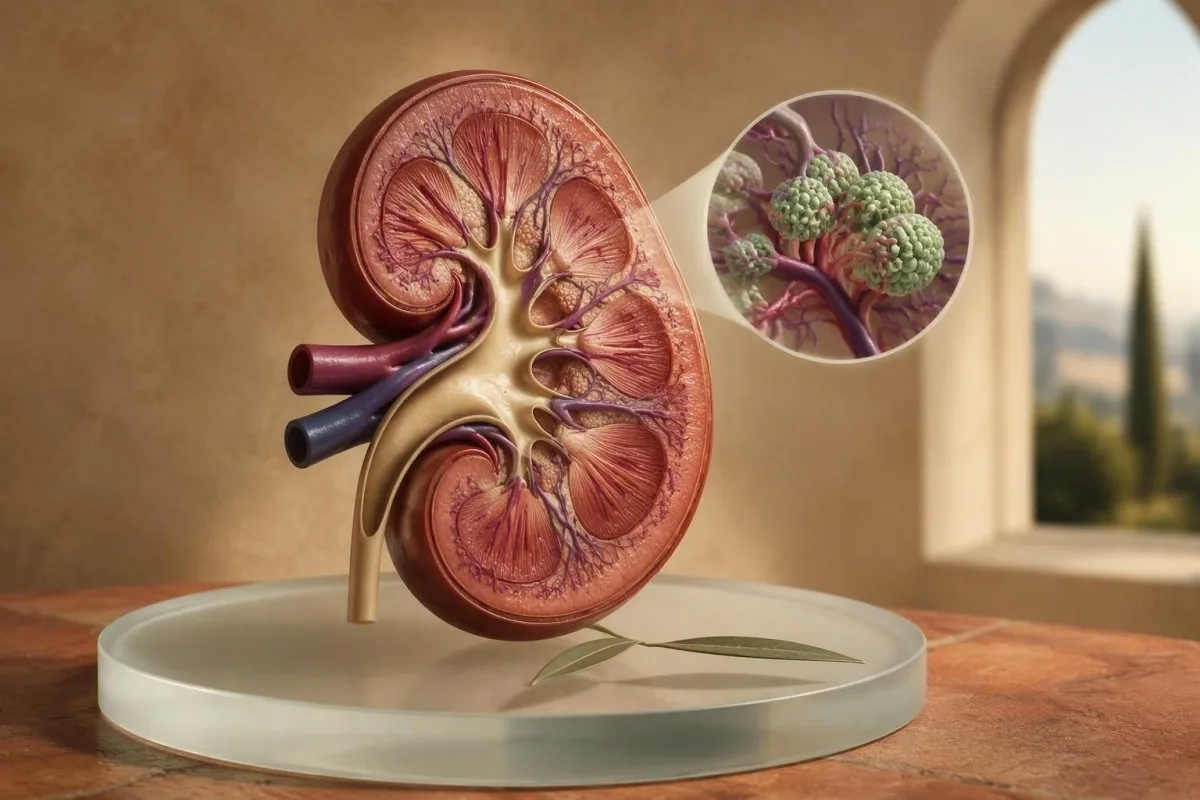
A high or borderline eGFR is usually a calculation issue or a normal finding, not kidney failure. The useful interpretation comes from creatinine, urine albumin, glucose, blood pressure, age, and the direction of change over time.


- Borderline eGFR meaning: An eGFR of 90 mL/min/1.73 m² or higher is not chronic kidney disease unless urine, imaging, or other evidence shows kidney damage for at least 3 months.
- High eGFR: A result of 100-120 mL/min/1.73 m² is often normal in a younger adult and is not, by itself, evidence of kidney failure.
- Hyperfiltration threshold: Persistent eGFR above roughly 135 mL/min/1.73 m² can suggest hyperfiltration, but no single cutoff applies to every age, sex, or laboratory.
- Low muscle mass: Low creatinine from small body size, frailty, muscle loss, vegetarian eating, or pregnancy can make creatinine-based eGFR look higher than true filtration.
- ACR companion test: A urine albumin-to-creatinine ratio below 30 mg/g is normal; 30-300 mg/g is moderately increased albuminuria and changes a high-eGFR interpretation.
- Diabetes clue: High eGFR plus raised fasting glucose, HbA1c, or urine albumin deserves follow-up because early diabetes can cause glomerular hyperfiltration.
- Best confirmation: Cystatin C-based eGFR is especially useful when creatinine may be misleading because of unusual muscle mass, diet, amputation, or chronic illness.
- Dalili za dharura: A high eGFR does not cause emergency symptoms, but swelling, breathlessness, markedly reduced urine, visible blood in urine, or severe hypertension need prompt clinical assessment.
What a borderline or high eGFR usually means
Borderline eGFR meaning is usually reassuring when the result is 90 mL/min/1.73 m² or higher and urine testing is normal. A high estimated GFR does not mean the kidneys are failing; it commonly reflects a low creatinine concentration, younger age, pregnancy, or genuinely efficient filtration. As of September 21, 2026, clinicians diagnose chronic kidney disease from an eGFR below 60 for 3 months or more, or from persistent markers of kidney damage—not from eGFR being high.
eGFR is an estimate, not a direct measurement. The laboratory enters serum creatinine, age, and sex into an equation, then reports filtration standardized to 1.73 m² of body surface area; it does not count individual nephrons. Kantesti is an AI blood test analyzer that reads eGFR alongside creatinine, urine markers, and the broader metabolic panel rather than treating one flag as a diagnosis.
A laboratory may display “>90” or “>60” rather than a precise high number because creatinine equations become less accurate at higher filtration rates. The 2024 KDIGO guideline classifies eGFR of 90 or above as G1, which is normal or high; G1 alone is not CKD (KDIGO, 2024).
In my clinical work, the anxious calls often come from people seeing eGFR 118 beside a low-normal creatinine of 0.58 mg/dL. In a healthy 29-year-old with normal blood pressure and a negative urine albumin test, that pattern is far more often physiology than disease; our biomarker guide explains why reference flags need context.
The phrase “borderline” can mislead
A borderline flag can be a laboratory display convention rather than a medical threshold. eGFR varies by about 5-10% from biological fluctuation and assay variation, so a single isolated result should not be used to label someone with kidney disease or hyperfiltration.
Why creatinine can make eGFR look unexpectedly high
A slightly elevated eGFR most often occurs because serum creatinine is lower than the equation expects for a person of that age and sex. Creatinine is produced by skeletal muscle and cleared by kidneys, so the same filtration rate can generate very different eGFR values in a bodybuilder and a small older adult.
The 2021 CKD-EPI creatinine equation removed race from eGFR reporting and uses age and sex alongside creatinine. Inker and colleagues found the new creatinine-cystatin C equation was more accurate than creatinine alone, particularly when precision matters (Inker et al., 2021). See our practical Mwongozo wa BUN na creatinine for why these two values answer different questions.
A serum creatinine of 0.50 mg/dL may produce eGFR above 120 mL/min/1.73 m² in an adult, but the number can overestimate filtration in sarcopenia, neuromuscular disease, cirrhosis, limb amputation, or substantial recent weight loss. High protein intake and creatine supplements usually push creatinine upward, which lowers calculated eGFR—the opposite direction.
Kantesti AI is an AI blood test interpretation platform that identifies when a creatinine-based estimate conflicts with weight change, CBC clues, liver markers, or prior results. That mismatch is a prompt for confirmation, not a reason to self-diagnose kidney damage.
Is eGFR of 100, 110, or 120 normal for your age?
An eGFR of 100-120 mL/min/1.73 m² is commonly normal in younger adults, whereas the expected average declines gradually with age. eGFR naturally falls from roughly 120 mL/min/1.73 m² in early adulthood by about 0.75-1 mL/min/1.73 m² per year after age 40, although individual variation is wide.
There is no universal “too high” range printed on every report. A value of 108 in a 25-year-old can be ordinary, while an abrupt rise from 72 to 110 in a 70-year-old should first make us check creatinine calibration, hydration, illness, and loss of muscle rather than assume healthier kidneys.
Body surface area adjustment matters. eGFR is normalized to 1.73 m², so in a very small or very large person, the reported value may differ materially from absolute filtration in mL/min; nephrologists may calculate non-indexed GFR for chemotherapy dosing or living-donor assessment.
If your eGFR is high but stable, record the actual creatinine value and date of each test. Trend review is more useful than comparing your number with a fit 22-year-old; uchambuzi wa maabara wa muda mrefu inaweza kusaidia kuhifadhi muktadha huo.
When high eGFR can indicate glomerular hyperfiltration
High eGFR becomes more clinically relevant when it is persistent, usually above about 135 mL/min/1.73 m², and occurs with diabetes, albumin in urine, obesity, or high blood pressure. This pattern is called glomerular hyperfiltration, but the cutoff is debated because age, body size, and the estimating equation alter the result.
Hyperfiltration means individual glomeruli filter unusually large volumes, often because intraglomerular pressure is elevated. It can precede later eGFR decline in type 1 and type 2 diabetes, but a creatinine-based eGFR above 135 alone does not prove that physiology; Tonneijck et al. describe this uncertainty clearly in their 2017 CJASN review.
The combination that concerns me is eGFR 138, HbA1c 7.4%, blood pressure 146/92 mmHg, and ACR 85 mg/g. By contrast, eGFR 138 with HbA1c 5.1%, ACR 5 mg/g, and a creatinine of 0.48 mg/dL in a lean young adult may simply be imprecision in the estimate; hatua za CKD na ACR put these categories together.
Kantesti AI flags persistent high-filtration patterns for clinician discussion when companion markers point the same way. Thomas Klein, MD, advises patients not to chase a lower eGFR number with dehydration, fasting, or unnecessary supplements—those tactics only distort the test.
The companion results that change a high eGFR interpretation
Urine albumin-to-creatinine ratio, urinalysis, blood pressure, glucose, HbA1c, and creatinine trend are the results that determine whether a high eGFR needs attention. A normal eGFR cannot rule out early kidney damage when urine albumin is elevated.
An ACR chini ya 30 mg/g (below 3 mg/mmol) is normal to mildly increased; 30-300 mg/g is moderately increased albuminuria, and zaidi ya 300 mg/g is severely increased. A first-morning urine sample is preferable because exercise, fever, urinary infection, menstruation, and marked hyperglycaemia can cause transient albumin elevation.
Dipstick protein is less sensitive than ACR for early albuminuria, while red cells, casts, or persistent glucose in urine point to different renal questions. Our Mwongozo wa maandalizi ya ACR covers how to avoid a misleading collection.
Serum albumin, potassium, bicarbonate, urea/BUN, and blood pressure provide useful supporting evidence. An eGFR of 115 with normal ACR, potassium 4.2 mmol/L, bicarbonate 25 mmol/L, and stable creatinine has a very different meaning from the same eGFR with abnormal urine sediment.
Diabetes, glucose, and the high eGFR pattern
Diabetes is one of the best-established high eGFR causes because early hyperglycaemia can increase glomerular pressure and filtration. Persistent fasting glucose of 126 mg/dL or higher, HbA1c of 6.5% or higher, or diabetes symptoms should shift the focus from eGFR alone to metabolic and urine-kidney risk.
Early diabetic hyperfiltration may occur before creatinine rises, particularly in younger people with recently diagnosed diabetes. Tonneijck et al. reported that hyperfiltration is biologically plausible but difficult to define accurately with estimated GFR, which is why clinicians repeat tests and use urine albumin rather than making a diagnosis from one value.
An HbA1c of 5.7-6.4% indicates prediabetes, while 6.5% or above meets the laboratory criterion for diabetes when confirmed in an appropriate clinical setting. High triglycerides, central adiposity, and hypertension add risk; see high glucose warning signs if symptoms are present.
Kantesti is an AI-powered blood test analysis tool that interprets eGFR with HbA1c, glucose, triglycerides, and liver markers, because metabolic risk is a pattern rather than a single creatinine calculation.
Other high eGFR causes: pregnancy, diet, and physiology
Pregnancy, a recent high-protein meal, recovery from illness, and some medicines can raise measured or estimated filtration without indicating kidney failure. Pregnancy commonly increases true GFR by roughly 40-50% by the second trimester, so non-pregnant eGFR reference assumptions do not apply.
Most laboratories do not validate routine creatinine eGFR equations during pregnancy. A creatinine above about 0.9 mg/dL can be more concerning in pregnancy than it would be outside pregnancy, while a low creatinine may be entirely expected; our mwongozo wa pregnancy GFR unaeleza njia salama zaidi.
High dietary protein can transiently raise actual GFR, but it rarely explains a striking eGFR result by itself. Non-steroidal anti-inflammatory medicines usually lower GFR in susceptible people, whereas SGLT2 medicines often produce a small initial eGFR dip that reflects a beneficial haemodynamic reset rather than injury; read about the kushuka kwa SGLT2 eGFR.
A 52-year-old endurance athlete I reviewed had eGFR 124 after a large recovery shake and a low creatinine baseline. Her ACR was 4 mg/g and repeat fasting creatinine was unchanged—reassuring, but still worth documenting rather than calling it “super-kidneys.”
Low muscle mass and frailty can falsely elevate eGFR
Low muscle mass can make creatinine-based eGFR look higher than the kidney’s true filtration capacity. This is most relevant after unintentional weight loss, prolonged immobility, advanced liver disease, eating disorders, neuromuscular conditions, or in frail older adults.
Creatinine generation may fall before a patient or clinician notices visible muscle loss. A creatinine of 0.42 mg/dL in a thin 79-year-old recovering from a hospital stay can produce eGFR above 100, yet cystatin C may suggest lower filtration; this discrepancy is clinically meaningful for medication dosing.
Cystatin C is produced by most nucleated cells and is less dependent on muscle mass, although thyroid disease, corticosteroids, smoking, and systemic illness can affect it. A combined creatinine-cystatin C eGFR is generally the most reliable estimate when the two markers disagree, according to Inker et al. (2021).
Do not use a high eGFR to dismiss frailty or nutritional risk. A low cystatin C result has different implications from low creatinine, and the clinical history decides which marker deserves more weight.
How clinicians confirm whether a high eGFR is real
The best confirmation for an unexpectedly high eGFR is repeat creatinine with urine ACR, followed by cystatin C or measured GFR when the answer will change care. Repeating a stable outpatient test in 1-3 months is usually more informative than ordering urgent imaging for an isolated high result.
For a clean repeat, avoid unusually strenuous exercise for 24-48 hours, maintain ordinary hydration, and tell the clinician about creatine, trimethoprim, cimetidine, and recent illness. Exercise can raise creatinine through muscle release, whereas excessive water intake can dilute it slightly; neither produces a reliable “better” kidney result.
Cystatin C-based eGFR is particularly helpful when creatinine is below 0.6 mg/dL or clinical muscle mass is clearly atypical. Directly measured GFR using exogenous filtration markers is reserved for selected situations such as donor work-up, certain drug dosing decisions, and unresolved discordance.
Repeat urine results matter as much as repeat blood results. A urine creatinine review can explain why a spot ACR was unreliable when the sample was extremely dilute or concentrated.
When to worry about eGFR and seek medical care
A high eGFR itself is rarely urgent, but high eGFR with albuminuria, diabetes, uncontrolled blood pressure, blood in urine, or a fast creatinine change warrants medical review. New swelling, breathlessness, confusion, a major reduction in urine output, or blood-coloured urine should be assessed promptly regardless of the eGFR displayed.
Persistent blood pressure at or above 140/90 mmHg should trigger assessment, while 180/120 mmHg with chest pain, neurological symptoms, or breathlessness is an emergency. Kidney disease can be silent, so a normal or high eGFR never overrides substantial albuminuria or a concerning urine sediment.
A new ACR above 30 mg/g should usually be repeated to establish persistence, ideally after excluding urinary infection and heavy exercise. Visible blood in urine, especially with clots, flank pain, or fever, needs timely evaluation; our guide to damu kwenye mkojo explains the usual pathway.
Thomas Klein, MD, has seen patients reassured too quickly by an eGFR of 95 despite ACR 600 mg/g. The kidney’s filtration rate and its barrier function are different jobs, so urine protein can be the earlier warning signal.
Why a high eGFR is not kidney failure
Kidney failure causes low filtration, not high eGFR; an eGFR below 15 mL/min/1.73 m² is the conventional threshold for kidney failure. The confusion happens because “out of range” on a report can sound dangerous even when the high direction is often benign.
An eGFR below 60 mL/min/1.73 m² for at least 3 months is one route to diagnosing CKD, and values below 30 merit more active evaluation and medication review. The symptoms people associate with renal failure—fluid retention, nausea, itch, fatigue, and reduced appetite—usually relate to advanced low filtration or another illness, not high eGFR.
Creatinine can rise temporarily after intense resistance exercise, dehydration, or a large cooked-meat meal, making eGFR appear lower. That counterpart is covered in our mwongozo wa creatinine baada ya mazoezi; it reinforces why one result should not be over-read.
A low eGFR and a high eGFR can both be inaccurate when creatinine is distorted. The right question is not “Which number is best?” but “Does the estimate fit the urine, symptoms, medicines, body composition, and prior baseline?”
Medication safety when eGFR seems unusually high
An unexpectedly high eGFR should not automatically be used to approve a higher medication dose, especially in older or low-muscle-mass adults. Drug dosing sometimes uses creatinine clearance by Cockcroft-Gault rather than lab-reported eGFR, and the two figures can differ substantially.
Antibiotics, metformin, lithium, direct oral anticoagulants, and some chemotherapy medicines have renal dose rules. For drug decisions, clinicians consider age, actual weight, creatinine trend, and the product label rather than relying on an eGFR above 90 as proof of normal clearance.
Trimethoprim and cimetidine can increase serum creatinine by reducing tubular secretion without reducing true GFR. Conversely, very low creatinine can hide impaired clearance in muscle wasting; lithium monitoring is a good example of why longitudinal renal data matter.
Never stop a prescribed medicine merely because eGFR is 125. Bring the full medication and supplement list to the prescriber, including creatine powders, anti-inflammatory pain medicines, and over-the-counter acid suppressants.
A practical retest plan for a borderline eGFR result
For an isolated high or borderline eGFR with no symptoms, repeat creatinine and urine ACR under usual conditions within 1-3 months. If diabetes, albuminuria, hypertension, pregnancy, or low muscle mass is present, arrange clinician review sooner and consider cystatin C.
Before the repeat, keep ordinary fluid intake, avoid a marathon or maximal gym session for 24-48 hours, and do not deliberately load protein or water. Record recent fever, vomiting, diarrhoea, medication changes, menstrual bleeding, and supplements—small details can explain apparent changes better than a new diagnosis.
Ask for creatinine, eGFR, urine ACR, urinalysis, blood pressure, fasting glucose or HbA1c when appropriate, and cystatin C if body composition makes creatinine unreliable. The paneli ya msingi ya kimetaboliki helps you identify the supporting electrolytes and bicarbonate.
Most patients find a written two-date comparison more calming than a single reference flag. Kantesti’s trend analysis can organize that comparison, while our yetu iliyochapishwa describes how we assess consistency across complex lab reports.
What not to do after seeing a high eGFR flag
Do not restrict water, start kidney supplements, or change a prescribed drug simply to alter a high eGFR result. A high creatinine-derived estimate is not an instruction to treat the kidneys, and dehydration may temporarily lower eGFR while causing real harm.
“Kidney detox” products can contain concentrated herbs, stimulants, or minerals with uncertain safety and no evidence that they correct hyperfiltration. Protein restriction is not appropriate for everyone either; it can worsen nutrition in frail adults and should be individualized if CKD is actually present.
Do not diagnose proteinuria from foamy toilet water alone. Persistent foam can be worth testing, but urine concentration and cleaning products can create bubbles; use an ACR rather than visual inspection, as explained in our mkojo wenye povu.
A sensible next step is modest: verify the result, look for albuminuria, and address real drivers such as diabetes and blood pressure. The clinicians on our Bodi ya Ushauri wa Matibabu support a safety-first approach in which AI interpretation complements—not replaces—individual clinical assessment.
Maswali Yanayoulizwa Mara Kwa Mara
eGFR isiyo kawaida sana inamaanisha nini?
Maana ya eGFR ya mpaka hutegemea ni upande upi wa kiwango ndio mpaka. eGFR ya 90 mL/min/1.73 m² au zaidi ni ya kawaida au juu na haionyeshi ugonjwa sugu wa figo isipokuwa kuna uharibifu wa kudumu wa figo kama vile ACR ya mkojo ya 30 mg/g au zaidi. eGFR ya 60-89 pia inaweza kuwa ya kawaida kwa watu wazima wengi wakati vipimo vya mkojo na upigaji picha ni vya kawaida. Ugonjwa sugu wa figo kwa ujumla huhitaji eGFR chini ya 60 kwa angalau miezi 3 au dalili nyingine ya kudumu ya uharibifu wa figo.
Je, eGFR inaweza kuwa juu mno?
eGFR iliyo juu ya 100 au 120 mL/min/1.73 m² mara nyingi huwa kawaida, hasa kwa watu wazima wachanga, na kwa kawaida si hatari yenyewe. Thamani zinazoendelea kuwa juu ya takriban 135 mL/min/1.73 m² zinaweza kuonyesha hyperfiltration ya kamba, hasa wakati kisukari, shinikizo la damu, unene kupita kiasi, au albin ya mkojo yapo. Hakuna mpaka wa juu wa eGFR unaokubaliwa na wote kwa sababu milinganyo ya kreatini si sahihi sana katika uchujaji wa juu. Rudia kreatini, kipimo cha ACR cha mkojo, kipimo cha sukari, na wakati mwingine cystatin C huweka wazi ikiwa matokeo ya juu yana maana.
Nini husababisha eGFR iliyoinuka kidogo?
Kuongezeka kidogo kwa eGFR mara nyingi husababishwa na kretini ya chini kwenye seramu kutokana na misuli kidogo, kupungua uzito hivi karibuni, ujauzito, umri mdogo, au mabadiliko ya kawaida ya kibiolojia. Ujauzito unaweza kuongeza GFR halisi kwa takriban 40-50%, wakati udhaifu au kupoteza misuli kunaweza kuongeza kwa uwongo eGFR inayotokana na kretini bila kuongeza uchujaji halisi. Kisukari cha awali pia kinaweza kusababisha hyperparameters, hasa wakati eGFR inapoendelea kuwa juu ya takriban 135 mL/min/1.73 m². ACR ya mkojo chini ya 30 mg/g na HbA1c ya kawaida hufanya hyperparameters hatari kuwa chini.
Should I worry about eGFR 120?
An eGFR of 120 mL/min/1.73 m² is usually not a reason to worry in a healthy younger adult with stable creatinine, normal blood pressure, and urine ACR below 30 mg/g. The result deserves more context if it is new, if creatinine is unusually low below about 0.6 mg/dL, or if diabetes, pregnancy, weight loss, or albuminuria is present. A repeat test in 1-3 months under ordinary hydration is a reasonable first step for most asymptomatic people. Cystatin C can help when muscle mass makes creatinine-based eGFR unreliable.
Is high eGFR a sign of diabetes?
High eGFR can be an early diabetes-related hyperfiltration pattern, but it cannot diagnose diabetes on its own. Diabetes is diagnosed with confirmed HbA1c of 6.5% or higher, fasting plasma glucose of 126 mg/dL or higher, or other accepted glucose criteria in the right clinical setting. High eGFR is more concerning when it occurs with HbA1c elevation, fasting hyperglycaemia, blood pressure above 140/90 mmHg, or urine ACR of 30 mg/g or higher. Normal glucose and normal urine albumin make diabetes-related kidney stress less likely.
What test confirms whether a high eGFR is accurate?
Cystatin C-based eGFR, ideally combined with creatinine-based eGFR, is the usual confirmation when a high eGFR may be distorted by low or unusual muscle mass. Creatinine eGFR can overestimate filtration in frailty, muscle wasting, liver disease, amputation, and major weight loss. A first-morning urine ACR below 30 mg/g adds reassurance that the kidney filtration barrier is intact. Directly measured GFR is reserved for selected cases such as living donor assessment or high-stakes medication dosing.
Pata Uchambuzi wa Vipimo vya Damu kwa AI Leo
Jiunge na zaidi ya watumiaji 2 milioni duniani kote wanaoamini Kantesti kwa uchambuzi wa papo hapo na sahihi wa vipimo vya maabara. Pakia matokeo yako ya vipimo vya damu na upate tafsiri ya kina ya viashiria vya 15,000+ ndani ya sekunde.
📚 Machapisho ya Utafiti Yanayorejelewa
Klein, T., Mitchell, S., & Weber, H. (2026). Urobilinogen in Urine Test: Complete Urinalysis Guide 2026. Zenodo. https://doi.org/10.5281/zenodo.18226379. ResearchGate: https://www.researchgate.net/search.Search.html?query=Urobilinogen%20in%20Urine%20Test%20Complete%20Urinalysis%20Guide%202026. Academia.edu: https://www.academia.edu/search?q=Urobilinogen%20in%20Urine%20Test%20Complete%20Urinalysis%20Guide%202026. Kantesti uchambuzi wa damu kwa AI ya utafiti wa matibabu.
Klein, T., Mitchell, S., & Weber, H. (2026). Iron Studies Guide: TIBC, Iron Saturation & Binding Capacity. Zenodo. https://doi.org/10.5281/zenodo.18248745. ResearchGate: https://www.researchgate.net/search.Search.html?query=Iron%20Studies%20Guide%20TIBC%20Iron%20Saturation%20Binding%20Capacity. Academia.edu: https://www.academia.edu/search?q=Iron%20Studies%20Guide%20TIBC%20Iron%20Saturation%20Binding%20Capacity. Kantesti uchambuzi wa damu kwa AI ya utafiti wa matibabu.
📖 Marejeo ya Nje ya Tiba
⚕️ Kanusho la Kimatibabu
Makala haya ni kwa madhumuni ya elimu tu na si ushauri wa kimatibabu. Wasiliana na mtoa huduma aliyehitimu kila wakati kwa maamuzi ya utambuzi na matibabu.
E-E-A-T Trust Signals
Uzoefu
Mapitio ya kimatibabu inayoongozwa na daktari ya mifumo ya tafsiri ya maabara.
Utaalamu
Kuzingatia dawa za maabara kuhusu jinsi viashiria (biomarkers) vinavyobadilika katika muktadha wa kliniki.
Mamlaka
Imeandikwa na Dk. Thomas Klein kwa mapitio ya Dk. Sarah Mitchell na Prof. Dk. Hans Weber.
Uaminifu
Tafsiri inayotegemea ushahidi yenye njia zilizo wazi za ufuatiliaji ili kupunguza tahadhari za hofu.