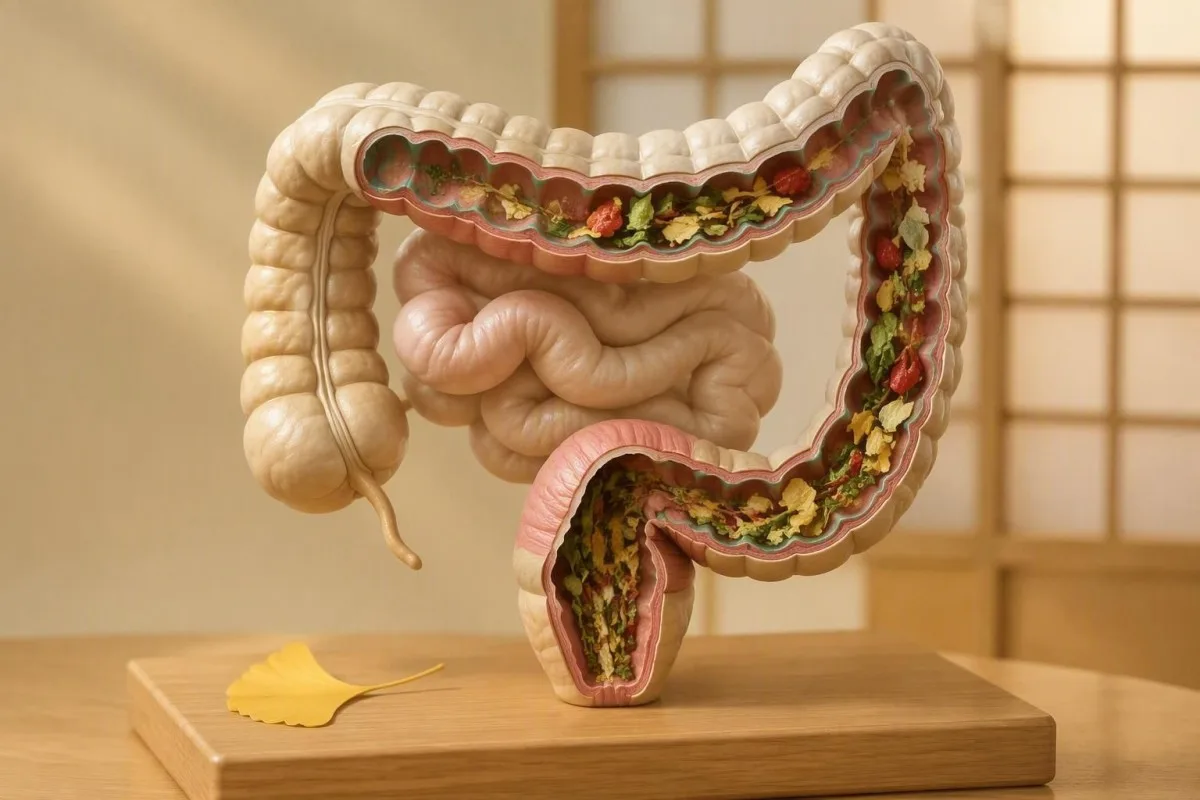
chembechembe za chakula zinazoonekana kwa kawaida ni suala la kasi ya mmeng'enyo au muundo wa chakula, sio ushahidi kwamba mwili wako unashindwa kunyonya virutubisho. Muundo wa kinyesi, uzito wako, dalili, na matokeo ya damu huamua ikiwa inastahili kupimwa.


- Chakula ambacho hakikunywewa kwenye kinyesi kwa kawaida ni cha kawaida kinapotokea baada ya milo yenye nyuzinyuzi nyingi na kinapotokea bila kupoteza uzito, kuhara sugu, au kinyesi chenye mafuta.
- Maganda ya mboga kama vile mahindi, pilipili, nyanya, mboga za majani, na kunde mara nyingi hubaki zikionekana kwa sababu wanadamu hawameng'enyi selulosi.
- Kasi ya usafiri wa chakula tumboni inaweza kuacha chembechembe za chakula kwenye kinyesi baada ya kuvimba kwa utumbo na tumbo, kuhara kunakoletwa na msongo wa mawazo, dawa za kutuliza, bidhaa za magnesiamu, au ulaji mwingi wa kafeini.
- Steatorrhoea humaanisha kinyesi kilicho na wingi, rangi ya rangi, chenye mafuta, na kigumu kufutwa na ni cha wasiwasi zaidi kuliko chembechembe za chakula zinazoonekana mara kwa mara.
- Kupungua uzito bila kukusudia ya 5% au zaidi kwa muda wa miezi 6 hadi 12 kunahitaji uchunguzi wa kimatibabu, hasa ikiambatana na kinyesi kinachoendelea kuwa laini.
- Calprotectin ya kinyesi husaidia kutathmini uvimbe wa matumbo; vipimo vya chini ya 50 micrograms/g kwa kawaida hufanya ugonjwa hai wa uchochezi wa matumbo kuwa chini ya uwezekano kwa watu wazima.
- Elastase-1 ya kinyesi chini ya 200 micrograms/g huashiria upungufu unaowezekana wa vimeng'enya vya kongosho, ingawa sampuli za maji zinaweza kutoa matokeo ya chini sana.
- Upimaji wa Celiac ni wa kuaminika zaidi wakati mtu bado anakula gluten; usianze chakula kisicho na gluten kabla ya kujadili upimaji na daktari.
Wakati chembechembe za chakula zinazoonekana kwenye kinyesi kwa kawaida ni za kawaida
Chakula ambacho hakijachimbwa kwenye kinyesi kwa kawaida ni cha kawaida kinapoonekana mara kwa mara baada ya mlo wenye nyuzi nyingi na kwa kawaida unajisikia vizuri, unadumisha uzito, na una kinyesi chenye umbo. Maelezo ya kawaida zaidi ni nyenzo za ukuta wa seli za mimea zinazoonekana, sio kunyonya virutubisho vibaya.
Kwa uzoefu wangu wa kimatibabu, mtu ambaye hugundua punje za mahindi, maganda ya nyanya, nyuzi za mchicha, au maganda ya pilipili mara moja au mbili kwa wiki mara chache huwa na shida kubwa ya kunyonya. Maganda ya seli za mimea yana selulosi, na vimeng'enya vya mmeng'enyo wa binadamu havivunji selulosi kuwa sukari inayoweza kunyonya. Wanga laini, protini, mafuta, na vitamini nyingi ndani ya chakula bado zinaweza kuwa zimenyonywa kawaida.
Muundo wa kutia moyo ni thabiti sana: chakula kinachotambulika hufuata mlo unaotambulika, mzunguko wa kinyesi kwa takriban kiwango chako cha kawaida, na hakuna uchovu unaoendelea au kupoteza uzito. Sheria ya vitendo ya Daktari Thomas Klein ni kwamba kinyesi kinapaswa kuhukumiwa kama muundo kwa muda wa wiki 2 hadi 4, sio kama uchunguzi mmoja wa kutisha kwenye tangi la choo. Jedwali la Bristol la kinyesi inaweza kufanya muundo huo uwe rahisi kuelezea kwa usahihi.
Kantesti ni Mchambuzi wa mtihani wa damu wa AI ambayo husaidia kuweka dalili zinazowezekana za mmeng'enyo pamoja na dalili dhahiri kama vile akiba ya chuma, vitamini B12, albumbini, alama za ini, na alama za uvimbe. Jopo la kawaida la lishe haliondoi kila hali ya matumbo, lakini hufanya upungufu mkubwa wa muda mrefu wa kunyonya kuwa chini ya uwezekano.
Je, chembechembe za chakula na vipande vya mboga huashiria nini hasa
Vipande vya chakula kwenye kinyesi mara nyingi ni vipande vya nyenzo ngumu za mimea, na umbo lao linaweza kuashiria mlo badala ya ugonjwa. Maganda ya gorofa yanayoonekana wazi na nyuzi ni tofauti na matone yenye mafuta, kamasi, au damu.
Maganda ya mahindi, maganda ya quinoa, maganda ya nyanya, maganda ya pilipili hoho, maganda ya uyoga, na nyuzi za mboga za majani ni mifano ya mara kwa mara. Rangi yao angavu inaweza kuonekana ya kushangaza kwa sababu rangi zinaweza kuhimili usafirishaji; beetroot inaweza kufanya kinyesi kuwa chekundu, wakati mchicha unaweza kuacha vipande vya kijani kibichi. Hii ni ya kawaida sana baada ya milo iliyo na 25 hadi 35 g ya nyuzi, karibu na malengo mengi ya lishe ya watu wazima.
Tofauti muhimu ni kama nyenzo hiyo inatambulika. Vipande vichache vinavyotambulika kati ya kinyesi cha kawaida kwa ujumla huashiria muundo wa chakula au usafirishaji wa haraka; sheen ya mafuta inayoonekana kila mahali, kinyesi cheupe kinachofanana na udongo, au kinyesi kinachoelea mara kwa mara kwa sababu ya mafuta yaliyonaswa huhitaji uchunguzi tofauti. Kinyesi cheupe kinachoendelea kinastahili umakini kwa sababu kinaweza kuonyesha kupungua kwa nyongo kufikia utumbo; angalia mwongozo wetu wa mifumo ya kinyesi cheupe.
Usijaribu kujitibu kwa kupiga picha kila haja kubwa. Badala yake, andika chakula, virutubisho, pombe, ugonjwa, na mzunguko wa kinyesi wa saa 24 zilizopita kwa siku 7. Shajara hiyo ndogo mara nyingi hufichua maelezo ya kawaida sana—hasa kifungua kinywa kipya cha nyuzi nyingi, virutubisho vya magnesiamu, au ugonjwa wa kuhara.
Kwa nini vyakula vyenye nyuzinyuzi nyingi huvuka mmeng'enyo
Vyakula vyenye nyuzi nyingi vinaweza kutoa vipande vinavyoonekana vya mboga kwa sababu vimeng'enya vya binadamu haviwezi kuchimba selulosi, lignin, na baadhi ya miundo ya wanga sugu. Seeing the outer layer of a food does not mean the calorie or micronutrient content passed through untouched.
Chewing and cooking change how much plant matter remains visible. A raw salad with kale, carrots, pepper skins, seeds, and legumes creates more recognisable residue than the same ingredients cooked into a soup. Even so, colonic bacteria ferment part of the fibre into short-chain fatty acids, which support the colonic lining and are absorbed as energy.
Rapidly raising fibre from 10 g to 30 g daily can also cause gas, urgency, and looser stools for 1 to 2 weeks. Most patients find a slower increase—about 5 g every 3 to 4 days—with adequate fluids is more comfortable. A sudden fibre increase may make food particles more obvious without causing any nutritional deficit.
If a high-fibre diet causes daily pain, nocturnal diarrhoea, or worsening bloating, do not simply force more fibre. Fermentable carbohydrates can aggravate symptoms in some people with irritable bowel syndrome, while coeliac disease and inflammatory conditions need different management. Our article on foods that shift stool tests explains why diet changes should precede stool testing by a sensible interval.
Je, kasi ya mfumo wa usafiri wa chakula tumboni huacha chembechembe za chakula zikiwa zinaonekana vipi
Fast intestinal transit can leave vegetable pieces in stool because food spends less time being mechanically broken down and exposed to digestive enzymes. Acute diarrhoea is the classic setting, but medication, stress, and diet can do the same thing.
Stool normally takes roughly 24 to 72 hours to travel through the colon, although healthy variation is broad. When transit speeds up, more water remains in stool and food is less fragmented. Viral gastroenteritis, food poisoning, a large coffee intake, endurance running, anxiety, and menstruation-related bowel changes can all temporarily shorten transit.
Magnesium citrate and magnesium oxide commonly loosen stool because poorly absorbed magnesium draws water into the bowel; doses above 350 mg daily from supplements are more likely to cause gastrointestinal effects. Metformin, antibiotics, GLP-1 medicines, laxatives, and some sugar alcohols can also change stool form. Do not stop a prescribed medicine without discussing it with the prescriber.
Chronic diarrhoea means loose or watery stool for 4 weeks or longer, not merely three bowel movements after a spicy meal. The British Society of Gastroenterology guideline recommends a structured history, medication review, coeliac serology, and targeted stool testing when diarrhoea persists (Arasaradnam et al., 2018). For related warning patterns, read our kipimo cha damu cha kuhara.
Kutafuna, kasi ya mlo na sababu ya mitambo iliyopuuzwa
Poor chewing can make food look less digested even when pancreatic enzymes and intestinal absorption are normal. The mouth is the first grinding stage of digestion, and rushed eating changes what reaches the colon.
I see this most often in people who eat lunch at a desk, have dental discomfort, wear poorly fitting dental appliances, or swallow quickly after a long fast. Large pieces of mushroom, carrot, nuts, leafy greens, and legumes are mechanically harder for the stomach and bowel to reduce. The practical experiment is simple: chew deliberately for 7 days before changing supplements or buying tests.
A 52-year-old runner I reviewed had visible kale and lentil fragments after race weekends, but no weight loss and a stable ferritin of 64 ng/mL. His pattern improved when he ate a smaller pre-run fibre load, drank less coffee immediately before exercise, and slowed his evening meal. That is not a universal prescription, but it shows why context beats panic.
Difficulty swallowing, choking, pain with chewing, or an unexpected change in dentition deserves dental or medical assessment rather than a digestive cleanse. If you have coexisting tiredness, paleness, or poor appetite, the mwongozo wa dalili za kiwango cha chini cha feritin may help you recognise when a blood count and iron studies are reasonable.
Kunyonya vibaya kunatofautiana vipi na nyuzinyuzi zinazoonekana ambazo hazina madhara
Malabsorption usually causes a repeated cluster of symptoms—weight loss, chronic loose stool, excess gas, nutrient deficiency, or greasy bulky stool—not isolated vegetable pieces. The combination matters far more than the visual appearance of one bowel movement.
Steatorrhoea describes excess fat in stool and often looks pale, bulky, oily, foul-smelling, or difficult to flush. It may float, although floating alone is not diagnostic because gas can do that too. A repeated greasy film plus weight loss is a much stronger warning sign than seeing corn or seeds.
Malabsorption symptoms can include iron-deficiency anaemia, recurrent mouth ulcers, low folate, vitamin B12 deficiency, low albumin, bruising from vitamin K deficiency, or bone pain from low vitamin D. No single blood test proves malabsorption, and normal results do not exclude early coeliac disease. Kantesti's jukwaa la tafsiri ya viashiria vya AI reviews iron indices, full blood count, albumin, calcium, liver tests, and nutrient markers as a pattern rather than treating one low value as a diagnosis.
The reason clinicians worry about loose oily stool combined with a falling weight is that together they suggest lost calories and fat-soluble nutrients, whereas food particles alone usually do not. If stool appears greasy or unusually light for more than 2 weeks, our faecal fat test overview explains what collection-based testing can and cannot establish.
Ishara za onyo zinazohitaji uchunguzi wa haraka wa kimatibabu
Visible food needs medical review when it occurs with blood in stool, black tarry stool, fever, persistent pain, dehydration, or unintentional weight loss. These features raise concern for inflammation, infection, bleeding, obstruction, or clinically meaningful malabsorption.
Seek urgent care today for black tar-like stool, maroon or large-volume red stool, severe constant abdominal pain, a rigid abdomen, fainting, confusion, or inability to keep fluids down. Black stool can be caused by iron or bismuth, but true melena is sticky, offensive, and may signal upper gastrointestinal bleeding. A positive stool blood test needs clinician-directed follow-up rather than repeated home tests.
Arrange a routine appointment within days to weeks if diarrhoea lasts beyond 4 weeks, stools wake you at night, weight drops by 5% or more in 6 to 12 months, or you develop persistent fatigue. Fever above 38.0°C with diarrhoea, recent international travel, recent antibiotics, or immune suppression lowers the threshold for stool infection testing.
Age changes the threshold too. New bowel habit change after age 50, or at any age with a first-degree relative with colorectal cancer or inflammatory bowel disease, deserves a proper review. Clinicians may use a faecal immunochemical test for occult bleeding, but it does not diagnose coeliac disease, pancreatic insufficiency, or all bowel conditions.
Dalili za CE naeliac disease nyuma ya chembechembe za chakula zinazoendelea kuonekana
Coeliac disease should be considered when persistent loose stools or food particles accompany iron deficiency, weight loss, recurrent mouth ulcers, low bone density, or a family history of coeliac disease. Many adults have non-classic symptoms and do not look underweight.
The first-line blood test is usually tissue transglutaminase IgA together with total IgA. A negative tissue transglutaminase IgA result is less reliable in IgA deficiency, which is why total IgA matters; IgG-based tests may then be used. The American College of Gastroenterology advises testing while the patient is consuming gluten, not after a self-started gluten-free diet (Rubio-Tapia et al., 2023).
Low ferritin can precede anaemia in coeliac disease. Ferritin below 15 ng/mL strongly supports iron deficiency in many laboratories, although inflammation can make ferritin appear falsely reassuring; transferrin saturation below 20% adds useful context. Our changamoto ya gluten discusses why stopping gluten before testing can create a false-negative result.
Dr. Thomas Klein has seen patients delay diagnosis because they assumed bloating and vegetable pieces meant they simply needed probiotics. Probiotics may change symptoms in selected cases, but they do not diagnose or treat immune-mediated gluten injury. Kantesti is an Zana ya uchambuzi wa vipimo vya damu inayotumia AI that can identify a blood-test pattern worth discussing with a clinician, not replace confirmatory coeliac assessment.
Wakati matatizo ya kongosho au nyongo yanapokuwa na uwezekano zaidi
Pancreatic enzyme deficiency and reduced bile delivery are more likely when stool is repeatedly greasy, pale, bulky, and associated with weight loss than when it simply contains vegetable skins. Both conditions affect fat digestion, so the stool changes are usually conspicuous.
The pancreas supplies lipase, proteases, and amylase to the small intestine. Faecal elastase-1 below 200 micrograms/g may suggest pancreatic exocrine insufficiency, while values below 100 micrograms/g are more strongly suggestive; a watery stool sample can dilute elastase and give a falsely low result. This test should be interpreted alongside symptoms, nutrition, imaging, and history of pancreatitis, pancreatic surgery, cystic fibrosis, or heavy alcohol exposure.
Bile obstruction can make stool pale or putty-coloured and may occur with dark urine, yellowing of the eyes, itching, or right-upper abdominal pain. Blood tests may show raised alkaline phosphatase, gamma-glutamyl transferase, and direct bilirubin, but normal liver tests do not explain every pale stool episode. Review our ruwaza za vipimo vya damu vya cholestasis for the combinations clinicians use.
Do not take over-the-counter digestive enzymes indefinitely to mask these symptoms. Enzymes can be appropriate after a diagnosis, but they may delay recognition of a bile duct or pancreatic condition. A stool elastase result is most helpful when the sample is formed or semi-formed and the symptom history is clear.
Vipimo gani vya kinyesi vinafaa na kwa nini
Stool testing is appropriate for persistent diarrhoea, greasy stools, blood, fever, travel-related symptoms, or suspected bowel inflammation—not for one isolated piece of corn. The best test depends on the clinical question.
Calprotectin ya kinyesi measures neutrophil-related intestinal inflammation. In many adult laboratories, a result below 50 micrograms/g makes active inflammatory bowel disease less likely, while 50 to 150 micrograms/g often leads to repeat testing after infection, NSAID use, or a flare settles. Values above 250 micrograms/g more strongly support prompt clinical investigation, although cut-offs vary by assay and age.
Stool culture or molecular pathogen testing is most useful with acute diarrhoea plus fever, blood, severe illness, recent travel, outbreaks, or immune compromise. Ova-and-parasite testing should be targeted to travel, exposure, prolonged diarrhoea, or specific risks rather than ordered automatically. Our stool culture results guide explains why a report can show normal flora without answering every symptom.
For pancreatic questions, request faecal elastase; for fat loss, clinicians may use a qualitative stain or quantitative faecal fat collection; for inflammatory questions, calprotectin or lactoferrin is usually more useful. The calprotectin versus lactoferrin comparison helps patients understand why these tests are not interchangeable.
Vipimo vya damu vinavyoweza kufichua matatizo ya muda mrefu ya kunyonya
Blood tests can reveal the consequences of chronic malabsorption, especially iron deficiency, anaemia, low albumin, vitamin deficiencies, and electrolyte disturbance. They do not identify food particles directly, but they can show whether digestion problems are affecting the rest of the body.
A sensible initial panel often includes full blood count, ferritin with transferrin saturation, folate, vitamin B12, albumin, liver tests, renal function, calcium, and coeliac serology when symptoms fit. Albumin below 35 g/L may reflect poor intake, inflammation, liver disease, kidney loss, or intestinal protein loss; it is not a stand-alone malabsorption diagnosis. Persistent low magnesium or potassium in someone with diarrhoea can signal clinically significant fluid losses.
ya Kantesti huduma ya kutafsiri vipimo vya maabara ya AI can organise these results against the laboratory's own ranges and show trends across dates. In our analysis of more than 2 million interpreted tests, the most useful signal is often a direction of travel—ferritin falling from 42 to 18 ng/mL, for example—rather than one borderline result.
Vitamin B12 below 200 pg/mL, or approximately 148 pmol/L, is commonly considered low, though laboratory thresholds differ and methylmalonic acid can clarify equivocal cases. Folate deficiency, iron deficiency, and low vitamin D together raise the index of suspicion for small-bowel disease, but diet restriction alone can produce the same combination. See our kulinganisha B12 na folate before treating a low value in isolation.
Maelezo maalum kwa watoto na watu wazima wazee
Children with visible food in stool are often experiencing normal dietary fibre passage or a short-lived viral illness, but poor growth and persistent diarrhoea need paediatric assessment. In older adults, a new bowel change deserves a lower threshold for review.
For children, contact a clinician promptly if there are fewer wet nappies or urinations, dry mouth, unusual sleepiness, fever, blood in stool, repeated vomiting, or slowed growth. Babies and toddlers can pass partially digested peas, carrots, and corn after diet changes because their chewing and digestive capacity are still developing. Never use adult anti-diarrhoeal medicines in a child without professional guidance.
In older adults, poor dentition, reduced appetite, polypharmacy, diabetes medicines, antibiotics, and reduced mobility can all alter stool appearance. New constipation alternating with diarrhoea, iron-deficiency anaemia, or a positive stool blood test should not be blamed on vegetables. Our article about senior medication effects may help prepare a medication list for the appointment.
Weight should be measured rather than guessed. A 3 kg loss matters differently in a 45 kg person than in a 100 kg person, which is why clinicians use percentage loss; 5% over 6 to 12 months is a common trigger for assessment. For paediatric laboratory questions, tafsiri salama ya AI kwa watoto explains the limits of automated result support.
Mpango wa vitendo wa siku 7 kabla ya miadi yako
A 7-day food, stool, and symptom record often separates harmless food residue from a persistent clinical pattern before any test is ordered. Record details that change medical decisions, not every minor variation.
Record meal timing, high-fibre foods, alcohol, caffeine, supplements, medicines, stool frequency, Bristol type, pain, urgency, and whether stool was oily or difficult to flush. Weigh yourself once at the start and once at day 7 under similar conditions. Avoid abruptly eliminating gluten if coeliac testing may be needed, and avoid starting enzyme products just before a clinical review.
Hydration is particularly important during diarrhoea. Adults with uncomplicated fluid loss can usually use oral rehydration solution or frequent small drinks; dizziness on standing, minimal urination for 8 to 12 hours, or inability to retain fluids needs same-day advice. If fasting has coincided with symptoms, our fasting and stool-change guide covers common non-dangerous mechanisms.
Bring a photograph only if it genuinely shows blood, black stool, pale stool, or repeated oily residue; most clinicians do not need routine images of vegetable pieces. Bring the diary and a medication list instead. Those two items often shorten the path to the right test more than an unstructured description of “undigested food.”
Dhana potofu kuhusu chembechembe za chakula, kuondoa sumu, na vimeng'enya
Visible food particles do not prove a “leaky gut,” toxin buildup, parasite infection, or lack of stomach acid. These claims sound plausible because the symptom is visual, but they are not reliable diagnostic shortcuts.
Commercial detoxes and colon cleanses can actually create the diarrhoea that makes food more visible. Stimulant laxatives may cause urgency, cramping, electrolyte shifts, and dependence when used regularly. Magnesium-containing products can be useful for constipation under guidance, but a new loose-stool pattern after starting them is often pharmacological rather than mysterious.
Parasites are possible after relevant travel, contaminated water exposure, certain occupational exposures, or prolonged diarrhoea, but food pieces are not a parasite test. Testing is more accurate than empiric anti-parasitic treatment because different organisms need different medicines. Our ova and parasite testing guide explains when sample collection is actually worthwhile.
Digestive enzymes can be medically appropriate for confirmed pancreatic exocrine insufficiency, but dosing depends on fat intake and diagnosis. “Low stomach acid” supplements may be unsafe for people with ulcers, gastritis, reflux, or certain medicines. Evidence-based review means identifying the mechanism first, then choosing treatment—not trying every bottle on the shelf.
Wakati wa kuweka miadi ya uchunguzi na daktari na nini cha kuuliza
Book a clinician review if food particles persist for more than 2 to 4 weeks with diarrhoea, pain, weight loss, greasy stools, or abnormal blood results. A focused history and a few targeted tests are usually more useful than broad commercial panels.
Ask: “Does my stool pattern suggest inflammation, infection, fat malabsorption, coeliac disease, or rapid transit?” Then ask which one or two tests would change management. This phrasing helps avoid scattershot testing. If you have existing results, include the laboratory name, collection date, reference ranges, and whether you were ill or taking supplements at the time.
Kantesti can help you organise a blood-test PDF or photo for discussion, flagging linked abnormalities and longitudinal changes in about 60 seconds; it cannot examine you, inspect a stool sample, or replace a clinician's diagnosis. Our approach is reviewed against clinical standards described in our muhtasari wa uthibitishaji wa kimatibabu, with physician input from the Bodi ya Ushauri wa Matibabu.
As of September 20, 2026, the sensible bottom line remains reassuring but specific: occasional vegetable pieces in otherwise normal stool are common; persistent greasy diarrhoea, blood, weight loss, fever, or nutrient-deficiency clues are not. The mwongozo wa viashiria vya kibayolojia wa Kantesti can help you prepare informed questions from laboratory results, while your own clinician determines the diagnosis and next step.
Maswali Yanayoulizwa Mara Kwa Mara
Je, chakula ambacho hakijafunzwa katika kinyesi ni kawaida?
Chakula ambacho hakijachimbwa kwenye kinyesi mara nyingi ni kawaida wakati nyenzo ni nyuzi za mimea zinazoweza kutambulika, kama vile mahindi, maganda ya nyanya, mchicha, pilipili, au kunde, na hakuna upungufu wa uzito au kuhara kwa kudumu. Binadamu hawawezi kumeng'enya selulosi, kwa hivyo sehemu za nje za mimea zinaweza kubaki zikionekana hata wakati virutubisho ndani ya chakula vilipomeng'enywa. Uhakiki wa kimatibabu unafaa ikiwa hali hii itaendelea kwa zaidi ya wiki 2 hadi 4 na kinyesi chenye mafuta, maumivu, homa, damu, au upungufu wa uzito wa 5% au zaidi kwa kipindi cha miezi 6 hadi 12.
Kwa nini ninaona vipande vya mboga kwenye kinyesi changu?
Vipande vya mboga kwenye kinyesi kwa kawaida huonyesha maganda yenye utajiri wa selulosi, kutafuna vibaya, au usafiri wa haraka wa matumbo badala ya uharibifu wa virutubisho. Kabichi mbichi, mahindi, uyoga, maganda ya pilipili, maganda ya nyanya, na maganda ya quinoa ni mifano ya kawaida kwa sababu nyenzo zao za miundo zinapinga mmeng'enyo wa chakula wa binadamu. Kuongezeka kwa ghafla kutoka karibu 10 g hadi 30 g ya nyuzi kila siku kunaweza kufanya vipande hivi viwe vinatambulika zaidi kwa wiki 1 hadi 2 wakati matumbo yanapojirekebisha.
Je, chakula kwenye kinyesi kinamaanisha nina shida ya kunyonya virutubisho?
Chakula kwenye kinyesi pekee hakimaanishi malabsorption. Malabsorption mara nyingi husababisha mchanganyiko unaojirudia wa kinyesi kilicho legevu au chenye mafuta kilichojaa, kupoteza uzito bila kukusudia, uchovu, upungufu wa chuma, viwango vya chini vya vitamini, au albin ya chini. Faecal elastase-1 chini ya mikrogramu 200/g inaweza kuonyesha upungufu wa vimeng'enya vya kongosho, wakati vipimo vya damu vya coeliac hutumiwa wakati ugonjwa wa utumbo mdogo unaohusiana na gluten unashukiwa.
Kinyesi chenye mafuta huonekanaje?
Kinyesi chenye mafuta, pia kinachoitwa steatorrhoea, kwa kawaida huwa na rangi ya rangi ya kijivu, kinakuwa kikubwa, chenye mafuta, harufu mbaya isiyo ya kawaida, na ni kigumu kufunza badala ya kuwa na mboga zinazoonekana tu. Kinyesi kinaweza kuelea, lakini kuelea pekee siyo utambuzi kwa sababu gesi ya utumbo pia inaweza kufanya kinyesi kuelea. Kinyesi cha mafuta kinachojirudia kwa kupoteza uzito kinapaswa kuhimiza tathmini ya kimatibabu, mara nyingi ikijumuisha elastase ya kinyesi, vipimo vya ini, viashiria vya lishe, na wakati mwingine upimaji wa mafuta ya kinyesi kwa wingi.
Je, wasiwasi unaweza kusababisha chakula ambacho hakijachungwa kwenye kinyesi?
Wasiwasi unaweza kuchangia chakula ambacho hakijachimbwa kwenye kinyesi kwa kuharakisha usafirishaji wa utumbo, hasa wakati unachochea kuhara, choo cha mara kwa mara, matumizi ya kafeini, au kula haraka. Usafirishaji wa haraka huacha muda mfupi kwa chakula kuvunjwa vipande vidogo, hivyo maganda ya mboga na nyuzi zinaweza kubaki zinatambulika. Wasiwasi hauelezei damu nyekundu, kinyesi cheusi cheusi, homa juu ya 38.0°C, kuhara kwa usiku usiokoma, au kupunguza uzito bila kukusudia.
Ni vipimo gani hupima madhrani?
Vipimo vya malabsorption huchaguliwa kulingana na sababu inayoshukiwa na vinaweza kujumuisha hesabu kamili ya damu, ferritin na kutosheka kwa transferrin, vitamini B12, folate, albumin, kalsiamu, coeliac serology, elastase ya kinyesi, na calprotectin ya kinyesi. Faecal calprotectin chini ya mikrogamu 50/g mara nyingi hufanya ugonjwa hai wa uchochezi wa utumbo kuwa chini ya uwezekano kwa watu wazima, wakati elastase ya kinyesi chini ya mikrogamu 200/g inaweza kuonyesha uhaba wa exocrine wa kongosho. Daktari anapaswa kutafsiri matokeo kwa kuonekana kwa kinyesi, dawa, lishe, mwelekeo wa uzito, na historia ya matibabu.
Pata Uchambuzi wa Vipimo vya Damu kwa AI Leo
Jiunge na zaidi ya watumiaji 2 milioni duniani kote wanaoamini Kantesti kwa uchambuzi wa papo hapo na sahihi wa vipimo vya maabara. Pakia matokeo yako ya vipimo vya damu na upate tafsiri ya kina ya viashiria vya 15,000+ ndani ya sekunde.
📚 Machapisho ya Utafiti Yanayorejelewa
Klein, T., Mitchell, S., & Weber, H. (2026). Kuhara Baada ya Kufunga, Madoa Meusi kwenye Kinyesi na Mwongozo wa GI 2026. Kantesti uchambuzi wa damu kwa AI ya utafiti wa matibabu.
Klein, T., Mitchell, S., & Weber, H. (2026). Mwongozo wa Afya wa Wanawake: Ovulation, Kukoma Hedhi na Dalili za Homoni. Kantesti uchambuzi wa damu kwa AI ya utafiti wa matibabu.
📖 Marejeo ya Nje ya Tiba
⚕️ Kanusho la Kimatibabu
Makala haya ni kwa madhumuni ya elimu tu na si ushauri wa kimatibabu. Wasiliana na mtoa huduma aliyehitimu kila wakati kwa maamuzi ya utambuzi na matibabu.
E-E-A-T Trust Signals
Uzoefu
Mapitio ya kimatibabu inayoongozwa na daktari ya mifumo ya tafsiri ya maabara.
Utaalamu
Kuzingatia dawa za maabara kuhusu jinsi viashiria (biomarkers) vinavyobadilika katika muktadha wa kliniki.
Mamlaka
Imeandikwa na Dk. Thomas Klein kwa mapitio ya Dk. Sarah Mitchell na Prof. Dk. Hans Weber.
Uaminifu
Tafsiri inayotegemea ushahidi yenye njia zilizo wazi za ufuatiliaji ili kupunguza tahadhari za hofu.