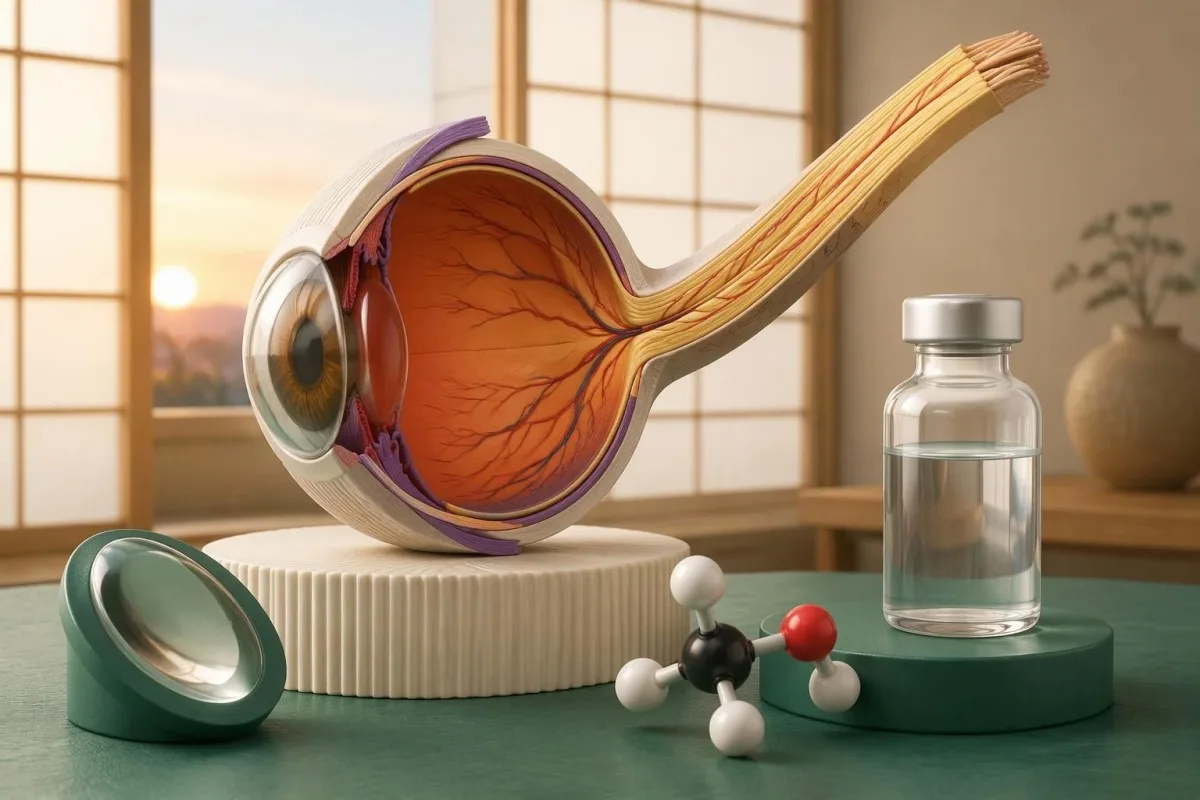
Sumnja na trovanje metanolom zahteva hitnu procenu, čak i pre pojave simptoma. Novo zamućenje vida nakon moguće izloženosti predstavlja hitan slučaj — nije razlog da se čeka nalaz krvi.

Кључне поруке
- Hitna procena potrebno je nakon sumnje na trovanje metanolom; odsustvo simptoma ne znači da ste van opasnosti.
- Odloženi simptomi često se javljaju oko 6–24 sata nakon izlaganja, ali etanol uzet istovremeno može odložiti pogoršanje i izvan ovog vremenskog okvira.
- Замагљен вид nakon moguće izloženosti metanolu zahteva hitno zbrinjavanje, čak i ako je zahvaćeno samo jedno oko ili je promena blaga.
- Koncentracija metanola od 20 mg/dL, približno 6.2 mmol/L, uobičajeni je bolnički prag za primenu antidota — nije granica za kućno praćenje.
- Ispitivanje acidobaznog statusa procenjuje pH i bikarbonate; uobičajeni arterijski pH iznosi 7.35–7.45, ali normalan rani nalaz ne može isključiti trovanje.
- Osmolalni i anjonski jaz pružaju 2 različita pokazatelja: prvi može porasti pre nego što se nagomilaju toksični metaboliti, dok drugi često raste kasnije.
- Teška acidemija sa pH vrednošću od 7,15 ili nižom jedna je od EXTRIP indikacija za dijalizu; novi ispadi vida mogu biti razlog za dijalizu nezavisno od te vrednosti.
- hitna akcija znači pozvati 999 ili 112 u UK, 911 u SAD ili lokalni broj hitne službe; nemojte sami voziti, izazivati povraćanje niti piti alkohol kao vid lečenja.
Kada simptomi trovanja metanolom zahtevaju hitno zbrinjavanje?
Sumnja na trovanje metanolom zahteva hitnu procenu, čak i bez simptoma. Zamagljen vid, duboko ili ubrzano disanje, konfuzija, napadi ili teškoće da ostanete budni nakon moguće izloženosti znaci su za hitnu reakciju; pozovite 999 ili 112 u UK, 911 u SAD ili lokalni broj hitne službe.
Osoba koja se u početku oseća dobro i dalje može biti izložena opasnosti jer najštetniji efekti nastaju nakon pretvaranja metanola u formijat. Često navođeno odlaganje od 6–24 sata nije preporučeni period posmatranja, a ni normalan razgovor ni sposobnost hodanja ne znače da je osoba van opasnosti. Lekari hitne službe zajedno procenjuju supstancu, put izlaganja, vreme, simptome i laboratorijske nalaze, umesto da čekaju da se pojave svi simptomi sa kontrolnog spiska.
Iznenadni gubitak vida ili novi neurološki simptomi takođe zahtevaju hitnu procenu kada podaci o izloženosti nisu pouzdani. Naš vodič za iznenadne neurološke znake upozorenja objašnjava još jedan vremenski osetljiv uzrok; moguće trovanje i moždani udar ne mogu se pouzdano razlikovati kod kuće. Recite dispečeru hitne službe i za promenu vida i za sumnju na izlaganje toj supstanci, umesto da sami birate jedno objašnjenje.
Kantesti je AI analizator krvnih testova namenjen razumevanju laboratorijskih nalaza, a ne hitna služba za procenu trovanja. Rezultat metanola ispod 20 mg/dL ne može sam po sebi da nadjača simptome vida ili neobjašnjenu acidozu; vreme i prethodno lečenje menjaju njegovo značenje. Naš принципи одговорне употребе вештачке интелигенције objašnjavaju zašto onlajn tumačenje nikada ne sme da odloži hitan pregled ili odluke o primeni antidota.
Kakva je vremenska linija simptoma trovanja metanolom?
Simptomi trovanja metanolom obično postaju primetni nakon kašnjenja od približno 6–24 sata, uz znatne individualne razlike. Kod nekih osoba javljaju se rani znaci intoksikacije ili stomačni simptomi, dok se ozbiljni poremećaji vida i metabolizma pojavljuju kasnije; istovremena izloženost etanolu može produžiti prividno dobro stanje i duže od 24 sata.
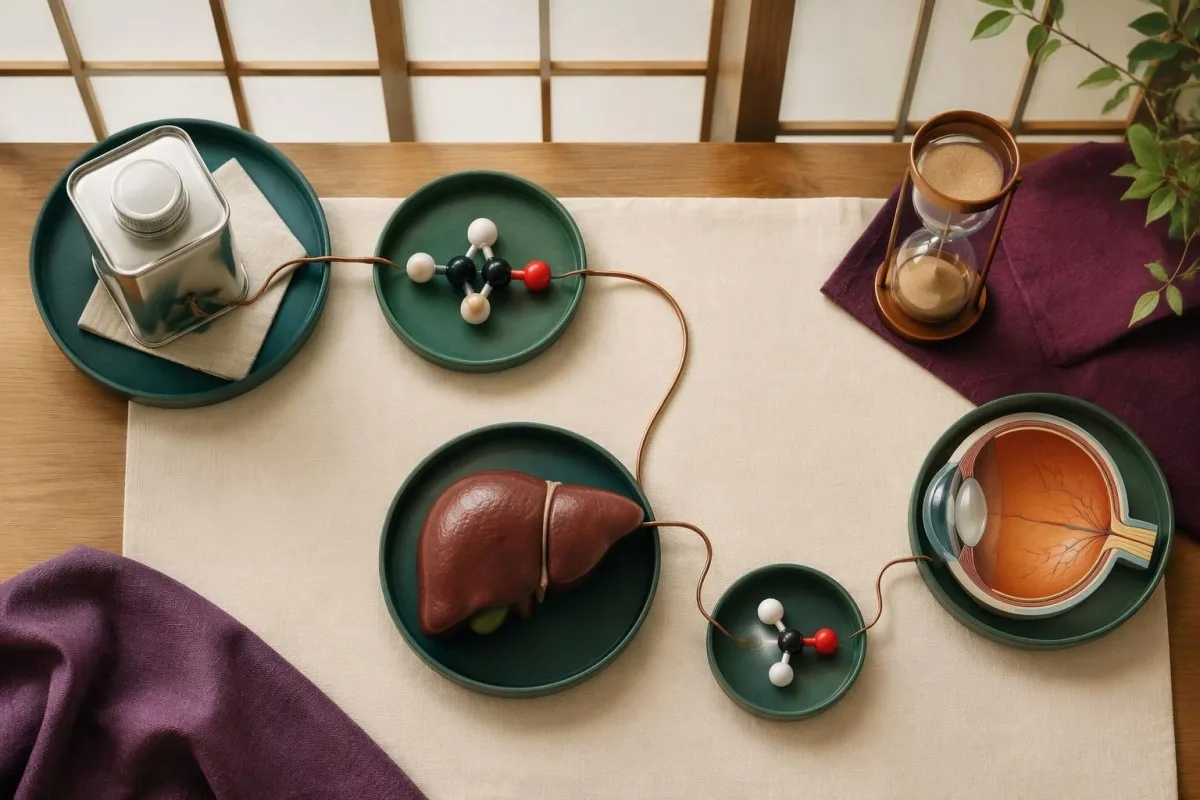
Jetra najpre pretvara metanol u formaldehid, koji se brzo pretvara u formijat; nagomilavanje formijata uzrokuje veliki deo acidoze i toksičnih efekata na vid. Rana glavobolja, mučnina, vrtoglavica ili pospanost mogu ličiti na uobičajenu intoksikaciju, ali ni njihovo odsustvo nije pouzdan pokazatelj. Smernice American Academy of Clinical Toxicology opisuju ovu latentnu fazu i važnost lečenja pre razvoja teške toksičnosti (Barceloux et al., 2002).
Etanol se takmiči za alkohol-dehidrogenazu i može usporiti pretvaranje metanola, odlažući simptome dok koncentracija etanola ne opadne. Izloženost u 22 časa, praćena relativno dobrim jutarnjim stanjem, stoga ne znači da je opasnost prošla, naročito ako je alkohol konzumiran istovremeno. Ovo odlaganje je farmakološki efekat, a ne zaštitna strategija koju bi ljudi trebalo sami da pokušavaju da ponove.
Odložena toksičnost nije jedinstvena za metanol, ali svaka otrovna supstanca ima svoja pravila testiranja. Naše objašnjenje testiranja na predoziranje u zavisnosti od vremena pokazuje zašto se rezultat prikupljen u jednom trenutku ne može tumačiti kao da je prikupljen u drugom. Kod sumnje na trovanje metanolom, navedite lekarima najranije i najkasnije moguće vreme izlaganja, umesto da izaberete jednu prividno preciznu satnicu.
Zašto je zamućenje vida usled trovanja metanolom hitan slučaj?
Zamagljen vid nakon moguće izloženosti metanolu zahteva hitnu reakciju jer formijat može da ošteti mrežnjaču i optički nerv, što može dovesti do trajnog gubitka vida. Simptomi vida mogu uključivati zamračenje, slepe tačke u centralnom vidu, osetljivost na svetlost ili izgled nalik snežnoj mećavi; ne postoji stepen zamagljenja zbog kog je bezbedno čekati.
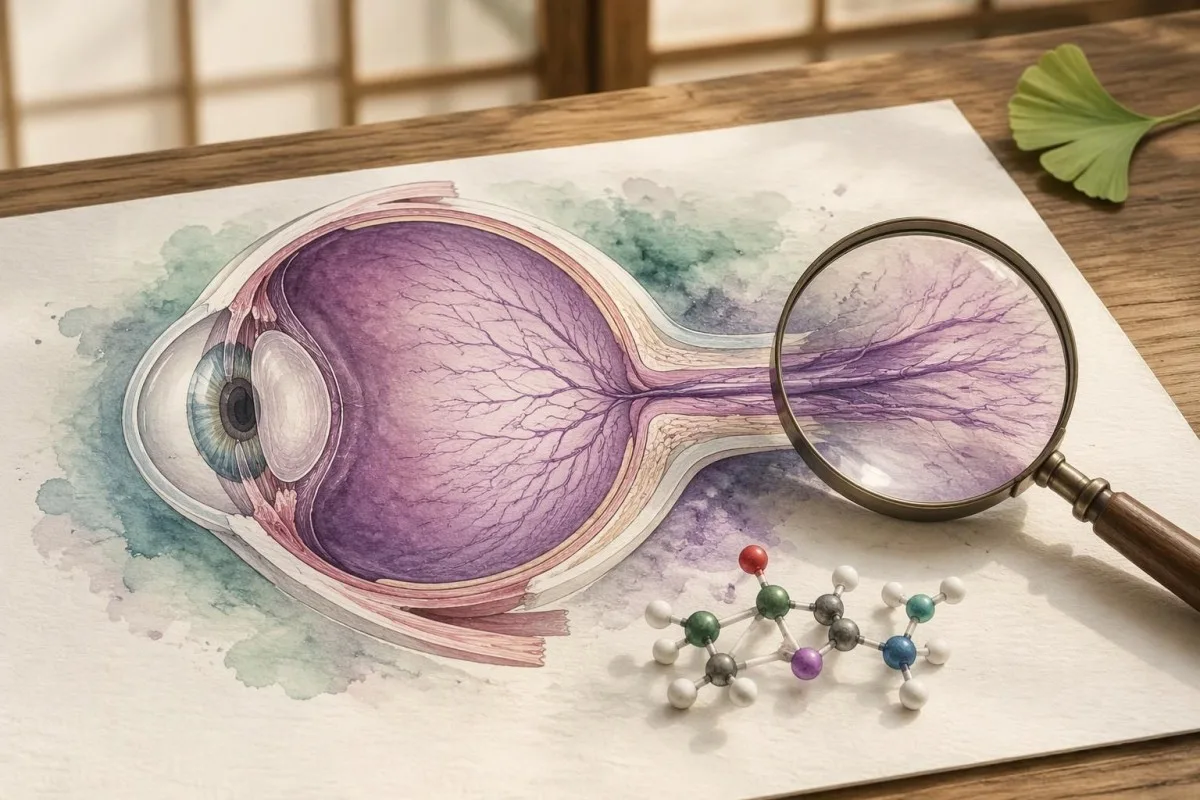
Promene vida povezane s metanolom često zahvataju oba oka, ali osoba može prvo primetiti promenu na jednoj strani ili nedosledno opisivati smetnje. Čak i novo zahvaćeno oko zahteva hitnu procenu nakon moguće izloženosti, jer i druga hitna stanja uzrokuju iznenadne promene vida. Bol nije neophodan, a privremeno poboljšanje simptoma ne dokazuje da optički nerv nije zahvaćen.
An early eye examination can appear less alarming than the patient's symptoms suggest. Clinicians assess visual acuity, pupils, colour perception, and the optic disc, but normal findings on 1 component do not exclude evolving toxicity or replace acid–base testing. Routine eye pressure and OCT testing answers different questions and should not become a detour before emergency toxicology assessment.
Formate interferes with mitochondrial energy production, making metabolically demanding visual tissues particularly vulnerable. EXTRIP recommends extracorporeal treatment for new visual deficits attributable to methanol poisoning, independently of whether the measured methanol concentration exceeds its concentration-based dialysis thresholds (Roberts et al., 2015). Describe the exact change—such as missing central detail or washed-out colours—but do not spend 20 minutes performing home vision comparisons before calling.
Koja izlaganja mogu izazvati znake trovanja metanolom?
Methanol poisoning can follow ingestion of methanol-containing products or contaminated drinks, and substantial inhalation or skin exposure can also cause systemic toxicity. Risk depends on concentration, duration, route, and absorbed amount; a brief incidental splash is not equivalent to swallowing a solvent, but uncertain exposure still needs prompt poison-service advice.
Potential sources include some industrial solvents, fuels, windshield-washer fluids, and improperly produced or adulterated drinks; formulations differ between countries and products. A product marketed as an alcohol or solvent may contain ethanol, methanol, isopropanol, or a mixture, so the name alone cannot establish its toxicity. Photograph the ingredient panel and concentration if available, but do not taste or deliberately smell an unidentified liquid.
Ordinary alcohol-related biomarkers do not identify acute methanol poisoning. For example, PEth results and limitations concern ethanol exposure history, not whether an unfamiliar liquid contains methanol or whether formate is accumulating now. There is no reliable home calculation from a drink's appearance, perceived strength, or number of sips to a safe absorbed dose.
Different chemicals produce different emergency patterns, and 2 people exposed to the same container may absorb very different amounts. Our guide to pesticide poisoning warning signs describes excessive secretions and other features that are not the characteristic methanol pattern. Bring the product identity into the discussion, but let emergency clinicians investigate mixed exposure rather than trying to diagnose the chemical from symptoms alone.
Šta treba odmah da uradite nakon sumnje na izloženost?
Call emergency services immediately for suspected methanol ingestion or symptoms suggesting poisoning; do not wait for a home test or an appointment. In the US, Poison Control is also available at 1-800-222-1222; in the UK, symptomatic or suspected serious poisoning belongs with 999 or 112, not a routine booking.
Move away from fumes into fresh air only if doing so is safe, and never enter a contaminated enclosed space to rescue someone without appropriate protection. Remove contaminated clothing and rinse exposed skin; for an eye splash, begin irrigation with clean lukewarm water for at least 15–20 minutes while arranging professional advice. These decontamination steps do not replace emergency assessment when ingestion or substantial systemic exposure is suspected.
Do not induce vomiting, drink alcohol as an antidote, or take activated charcoal unless a clinician specifically directs you. Methanol is absorbed rapidly and binds poorly to charcoal; hospital ethanol treatment requires controlled dosing and monitoring, unlike drinking spirits at home. If the person is unconscious or cannot swallow safely, give nothing by mouth and follow the dispatcher's instructions for breathing assessment and resuscitation.
Record 3 practical details if available: the product, the approximate exposure time, and the likely route or amount. A photo is safer than transporting a leaking container, and neither should delay departure. The same exposure-first approach applies to тестирање на угљен-моноксид и мере безбедности: remove the immediate hazard, seek care, and let clinicians interpret measurements in their time context.
Koje testove lekari nalažu kada sumnjaju na trovanje metanolom?
Clinicians combine a specific methanol concentration with acid–base testing, electrolytes, measured serum osmolality, glucose, and kidney-function tests. They commonly request an ethanol level and tests for alternative causes of acidosis; a routine metabolic panel does not automatically include methanol, formate, or a blood gas.
Blood gas testing provides pH and carbon dioxide information, while an electrolyte panel supplies sodium, chloride, and bicarbonate or total carbon dioxide for calculating the anion gap. Serum total CO2 is mainly a bicarbonate estimate, not a direct measurement of arterial ventilation. Our водичу за тумачење панела електролита explains why combinations of results reveal more than an isolated flagged value.
Direct methanol measurement often uses gas chromatography, and some hospitals must send the sample to another laboratory. A delay of several hours is a service limitation—not a reason to postpone antidote treatment when the exposure history and clinical pattern are concerning. Formate measurement may help where available, but many emergency departments cannot obtain it rapidly enough to guide the first treatment decision.
Kantesti AI can support later understanding of reported laboratory values, but the emergency team must verify the original report, specimen time, units, and treatments already given. If sodium, osmolality, and ethanol are collected at 3 different times, combining them can create a misleading osmolal gap. Clinicians therefore prefer coordinated sampling and repeat measurements when an evolving exposure could make an initially reassuring result obsolete.
Kako se tumače nivoi metanola pri hitnom zbrinjavanju?
A methanol concentration of at least 20 mg/dL, approximately 6.2 mmol/L, is a commonly used indication for alcohol-dehydrogenase-blocking treatment. A lower concentration does not exclude serious late poisoning, because methanol may already have been converted into formate; symptoms and acid–base findings remain central.
Unit conversion can prevent a major reading error: 20 mg/dL equals 200 mg/L, and 1 mg/dL methanol is approximately 0.312 mmol/L. A number written as 20 mg/L therefore represents a different concentration from 20 mg/dL. The AACT guideline uses concentration alongside exposure history and metabolic evidence rather than treating any single threshold as a complete diagnosis (Barceloux et al., 2002).
EXTRIP's concentration-based dialysis recommendations distinguish patients receiving fomepizole, ethanol, or no alcohol-dehydrogenase inhibitor: the respective thresholds are greater than 70, 60, and 50 mg/dL. These are dialysis criteria, not thresholds for deciding whether to attend hospital or start an antidote. Visual deficits, coma, seizures, severe or persistent acidosis, and other clinical findings can independently justify extracorporeal treatment (Roberts et al., 2015).
A laboratory's word 'negative' needs its detection limit and sampling context, especially after treatment or a long delay. Our guide to kvalitativni u odnosu na kvantitativne rezultate explains why a detected/not-detected answer contains less information than a concentration with units. Ask the team what the result measures, when the sample was taken, and whether it addresses parent methanol rather than its toxic metabolite.
Šta pH i bikarbonati pokazuju kod trovanja metanolom?
Low pH and low bicarbonate can indicate metabolic acidosis from accumulated formate, a major marker of methanol toxicity. Usual adult arterial pH is 7.35–7.45; a normal early pH cannot exclude poisoning, and mixed acid–base disturbances can partly mask the degree of metabolic illness.
Serum bicarbonate is commonly around 22–28 mmol/L, although laboratories use different intervals and specimen methods. A falling value means buffering capacity is being consumed, but it does not identify the acid by itself; ketoacidosis, lactic acidosis, and kidney dysfunction are alternative explanations. Our objašnjenje gasnih analiza arterijske krvi separates metabolic changes from carbon dioxide changes caused by breathing.
Deep, rapid breathing can be compensation for metabolic acidosis rather than an isolated lung problem. With bicarbonate of 10 mmol/L, Winter's formula estimates an expected arterial CO2 of about 23 mmHg, allowing roughly ±2 mmHg; a substantially higher CO2 suggests inadequate respiratory compensation. This is a clinician's cross-check, not a home decision rule, and sample type matters when comparing venous and arterial measurements.
Kantesti is an AI blood test interpretation platform that helps explain routine biomarkers, including why bicarbonate must be read alongside other results. Our Референтни водич за биомаркере cannot turn a pH of 7.40 into clearance after suspected methanol exposure: early sampling, vomiting-related alkalosis, or treatment may alter the apparent pattern. Emergency decisions require examination, repeat testing, and toxicology input rather than an automated normal-range label.
| Nivo | Opseg | Značenje |
|---|---|---|
| Usual adult arterial pH | 7.35–7.45 | A reference interval, not a rule-out test for early methanol poisoning. |
| Common serum bicarbonate interval | 22–28 mmol/L | Local intervals and measurement methods vary. |
| Usual adult arterial CO2 | 35–45 mmHg | Must be assessed against the expected respiratory response to metabolic acidosis. |
| EXTRIP severe-acidemia dialysis criterion | pH ≤7.15 | Supports extracorporeal treatment in methanol poisoning; other indications can apply at higher pH. |
Mogu li normalni osmolalni ili anjonski jaz isključiti trovanje metanolom?
Neither a normal osmolal gap nor a normal anion gap reliably excludes methanol poisoning. Unmetabolized methanol can raise the osmolal gap early, while formate raises the anion gap later; the relationship changes with time, ethanol co-exposure, baseline variation, and treatment.
The osmolal gap is measured osmolality minus calculated osmolarity; a common calculation in conventional units is 2 × sodium + glucose/18 + BUN/2.8. Ethanol requires an additional correction when present, and laboratories differ in the coefficient used. Our serum osmolality interpretation guide explains why a gap above about 10 mOsm/kg is a clue, not proof of a specific toxic alcohol.
The anion gap is usually sodium minus chloride minus bicarbonate when potassium is excluded. Many laboratories quote approximately 8–12 mmol/L, but analyzer-dependent intervals vary; low albumin can hide an increase, with a commonly used correction adding about 2.5 mmol/L for each 1 g/dL that albumin is below 4 g/dL. A late falling methanol level and normalizing osmolal gap can coexist with worsening formate-related acidosis.
Other acid–base conditions produce different patterns, so the gap cannot be interpreted independently of history, glucose, ketones, lactate, and kidney function. Our guide to obrasce bubrežne tubularne acidoze explains an important usually normal-gap alternative. EXTRIP includes an anion gap greater than 24 mmol/L among its methanol dialysis indications, but clinicians should not wait for that value if new visual deficits are present.
Kako naizgled ohrabrujući rezultati i dalje mogu biti opasni?
Apparently reassuring results can be dangerous when a sample is collected before metabolite accumulation, after methanol conversion, or after treatment. The following 3 hypothetical examples illustrate clinical reasoning only; they are not diagnostic templates and must never be used to decide whether someone can remain at home.
Hypothetical early exposure: a person presents 2 hours after swallowing a suspected solvent, with pH 7.39 and bicarbonate 24 mmol/L, while the direct methanol result is pending. Those values describe acid–base status at that moment, not the safety of the exposure. A credible ingestion history can justify immediate specialist assessment and empiric antidote treatment before laboratory confirmation or development of blurred vision.
Hypothetical late exposure: 24 hours after an uncertain drink, a person has new blurred vision, pH 7.12, bicarbonate 8 mmol/L, and methanol 12 mg/dL. The concentration is below the commonly used 20 mg/dL antidote threshold, but the clinical picture suggests serious metabolite toxicity rather than reassurance. New visual deficits and severe acidemia can support dialysis decisions without a higher parent-alcohol concentration.
Hypothetical competing diagnosis: a person has glucose 420 mg/dL, bicarbonate 12 mmol/L, and elevated ketones after a possible chemical exposure. Our vodič za ketoza naspram ketoacidoze explains why diabetic ketoacidosis is another urgent possibility, not proof that methanol is absent. At Kantesti, we explain these examples as pattern comparisons; only the treating team can determine whether one cause, mixed causes, or neither fits.
Zašto lečenje može početi pre potvrde trovanja metanolom?
Clinicians may start an antidote before methanol confirmation because blocking further metabolism can prevent additional formate formation while laboratory results are pending. Fomepizole is commonly preferred where available; ethanol is a hospital alternative requiring carefully controlled administration, glucose checks, and monitoring.
Fomepizole inhibits alcohol dehydrogenase, interrupting the first metabolic step rather than neutralizing methanol directly. Brent et al.'s prospective study in the New England Journal of Medicine supported its clinical use in methanol poisoning, although the study was not a large randomized comparison of every treatment strategy (Brent et al., 2001). A 20 mg/dL concentration is one common treatment trigger, but convincing exposure and metabolic findings can also justify action.
Antidote treatment does not instantly remove formate already present, which is why severe acidosis and visual changes demand additional assessment. Clinicians may administer bicarbonate for acidemia and folinic acid or folic acid to support formate metabolism; the evidence for adjunctive folate is less definitive than its biochemical rationale. These treatments are monitored hospital interventions, not a reason to take supplements or attempt oral alkalinization at home.
Blocking metabolism can leave parent methanol circulating for longer, so persistent detectability during treatment does not automatically mean the antidote has failed. Conversely, a lower concentration is not enough to establish recovery if pH or vision is worsening. Our discussion of aspirin toxicity treatment timing illustrates a related principle: poisoning care tracks symptoms, acid–base status, and serial levels rather than celebrating one falling number.
Kada je potrebna dijaliza kod trovanja metanolom?
Dialysis is recommended for severe methanol poisoning when features such as new visual deficits, coma, seizures, marked acidemia, or persistent metabolic acidosis are present. EXTRIP includes pH ≤7.15 and anion gap >24 mmol/L among its indications; a patient does not need to meet every criterion.
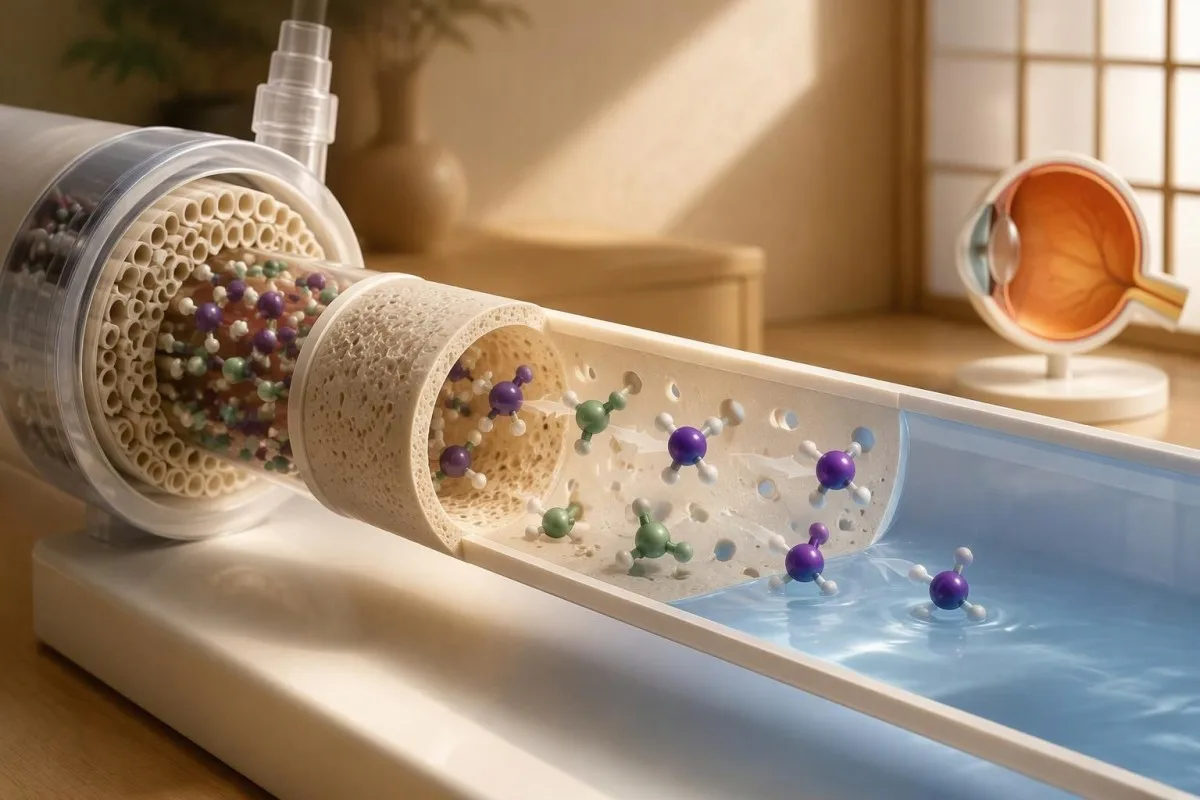
Extracorporeal treatment can remove both methanol and formate while correcting acid–base and electrolyte abnormalities. EXTRIP generally prefers intermittent hemodialysis when available; continuous techniques may be used when circumstances require them, with different clearance rates and treatment durations (Roberts et al., 2015). Antidote therapy continues during dialysis, and clinicians adjust its administration because extracorporeal treatment also affects drug clearance.
Dialysis for methanol poisoning is not reserved for people with chronic kidney disease. Someone with previously normal creatinine can need urgent dialysis because the target is toxic-alcohol and metabolite clearance, not simply replacement of failed kidney function. Our Водич за BUN и креатинин explains why these kidney markers cannot, on their own, measure the urgency of a poisoning-related dialysis decision.
EXTRIP suggests stopping extracorporeal treatment when methanol is below 20 mg/dL and clinical improvement is evident, with ongoing treatment and reassessment determined by the team. Kidney impairment adds another reason for concern, but a symptom checklist for low kidney-function warning signs should not become a requirement before escalation. Duration depends on the initial burden, technique, metabolic response, and visual or neurological course—not a universal number of dialysis hours.
Kakvo je praćenje potrebno nakon bolničkog lečenja?
Follow-up after methanol poisoning may include ophthalmology, neurological assessment, repeat metabolic testing, and support for the circumstances of exposure. A low or undetectable methanol concentration does not guarantee recovery of vision; persistent visual or cognitive changes require an individualized plan rather than interpretation of one discharge result.
A discharge summary should identify the exposure history, antidote, dialysis if used, relevant sample times, and outstanding follow-up. Keep the actual units: a final value of 15 mg/L is not 15 mg/dL, and a post-treatment result cannot reconstruct the original absorbed amount. Ask whether any visual deficit requires formal acuity, colour, field, or optic-nerve assessment and what change should trigger immediate reassessment.
Recovery varies with the severity and duration of metabolic disturbance, treatment timing, and visual or neurological involvement. Symptoms persisting 1 week after discharge cannot be judged from the original methanol concentration alone, and there is no reliable home prediction of permanent visual outcome. New or worsening blurring, confusion, breathing difficulty, or reduced consciousness after treatment should prompt urgent medical reassessment rather than waiting for a scheduled review.
Kantesti is an AI-powered blood test analysis tool that can help organize routine follow-up results after emergency clinicians have completed acute care. Our validacija i kliničke granice distinguish report explanation from diagnosing poisoning or predicting optic-nerve recovery; methanol below 20 mg/dL is not a stand-alone recovery endpoint. If exposure was intentional, involve urgent mental-health support alongside medical care, with a safety plan agreed before discharge.
Istraživačke publikacije i granice bezbednog tumačenja
Methanol emergency guidance should be based on toxicology evidence, not unrelated laboratory publications or an AI-generated normal-range assessment. The 2002 AACT guideline, 2001 fomepizole study, and 2015 EXTRIP recommendations support the clinical discussion here; the separate DOI publications below are not evidence for methanol diagnosis or treatment.
The Kantesti medical content team distinguishes established treatment principles from areas with limited comparative evidence. Immediate assessment, metabolism-blocking treatment when indicated, and extracorporeal treatment for severe poisoning have specialist support, but not every intervention has large randomized trials behind it. The 2015 EXTRIP paper explicitly combines a systematic evidence review with expert consensus, so its precise thresholds should be applied in clinical context rather than presented as infallible biological dividing lines.
Reliable interpretation also means explaining assumptions behind a calculation rather than publishing a single universal cutoff. For example, an albumin of 2 g/dL can conceal an approximately 5 mmol/L increase in an uncorrected anion gap under a commonly used correction; our vodič za albumin i serumske proteine provides supporting background. Neither that correction nor a mechanistic illustration validates a diagnosis without exposure history, examination, and appropriately timed measurements.
These 2 Kantesti DOI publications cover gastrointestinal and women's-health education, not toxic-alcohol outcomes, and should be read only as separate publications. A DOI identifies a deposited work; it does not itself establish peer review, clinical validation, or relevance to an emergency treatment claim. Our standardi medicinskog sadržaja explain the distinction between educational material and clinical evidence, while the external references below identify the sources directly relevant to methanol care.
Često postavljana pitanja
How long does it take for methanol poisoning symptoms to appear?
Simptomi trovanja metanolom često postaju očigledni nakon otprilike 6–24 sata, ali kašnjenje znatno varira. Etanol unet istovremeno može odložiti pojavu ozbiljnih simptoma za više od 24 sata usporavanjem metabolizma metanola. Rana mučnina ili vrtoglavica mogu se javiti pre promena vida i acidoze, ali se neke osobe u početku osećaju dobro. U slučaju sumnje na trovanje, neophodna je hitna procena zdravstvenog stanja, umesto čekanja da se simptomi pojave u ovom vremenskom okviru.
Da li je zamagljen vid nakon konzumiranja pića za koje se sumnja da je kontaminirano hitan slučaj?
Novo zamućenje vida nakon mogućeg konzumiranja kontaminiranog pića predstavlja hitan slučaj jer metaboliti metanola mogu da oštete mrežnjaču i očni živac. Ne postoji minimalni stepen zamućenja vida niti minimalno trajanje simptoma zbog kojih bi bilo bezbedno pratiti stanje kod kuće. Pozovite 999 ili 112 u Ujedinjenom Kraljevstvu, 911 u SAD ili lokalni broj za hitne slučajeve i nemojte sami voziti. Obavestite operatera i o piću i o promeni vida, čak i ako niste sigurni koliko ste popili.
Mogu li normalni rezultati krvnih analiza da isključe trovanje metanolom?
Normalni rani nalazi krvi ne mogu pouzdano da isključe trovanje metanolom. Arterijski pH može ostati u rasponu od 7,35 do 7,45 pre nego što se nakupi dovoljno formata, a rutinski metabolički panel ne meri automatski metanol. Normalan osmolalni jaz takođe ne može da isključi trovanje, naročito u kasnijoj fazi. Lekari uzimaju u obzir podatke o izloženosti, specifično testiranje na toksične alkohole, acidobazni status, simptome i ponovljena merenja.
Koji nivo metanola u krvi se smatra opasnim?
Koncentracija metanola od najmanje 20 mg/dL, odnosno približno 6,2 mmol/L, predstavlja često korišćeni bolnički prag za primenu antidota. Koncentracija ispod 20 mg/dL ne potvrđuje da je stanje bezbedno ako je metanol već pretvoren u toksični format. Teška acidoza ili novonastali poremećaji vida mogu zahtevati hitno lečenje i dijalizu, bez obzira na niži nivo nepromenjenog metanola. Ovi pragovi služe kao smernice za lekare i ne smeju se koristiti za odlučivanje o tome da li treba potražiti hitnu medicinsku pomoć.
Da li treba da pijem alkohol ili uzmem aktivni ugalj nakon izlaganja metanolu?
Nemojte piti alkohol, izazivati povraćanje niti uzimati aktivni ugalj kao kućni tretman za sumnju na trovanje metanolom. Etanol se može koristiti kao antidot u bolnici, ali je potrebna kontrolisana primena i praćenje; aktivni ugalj slabo vezuje metanol. U slučaju sumnje na gutanje ili simptoma trovanja pozovite hitnu pomoć, a u SAD se možete obratiti i Centru za kontrolu trovanja na broj 1-800-222-1222. Neposredna procena je bezbednija od pokušaja da se kod kuće primeni bolničko lečenje.
Zašto bi nekome sa normalnom funkcijom bubrega bila potrebna dijaliza zbog trovanja metanolom?
Dijaliza kod trovanja metanolom uklanja metanol i formijat i pomaže u ispravljanju teške acidoze, pa može biti potrebna čak i kada je funkcija bubrega prethodno bila normalna. EXTRIP među indikacije ubraja novonastale poremećaje vida, komu, napade, pH od 7,15 ili niži i anjonski jaz veći od 24 mmol/L. Pragovi zasnovani na koncentraciji zavise i od toga da li se primenjuje fomepizol, etanol ili antidot koji ne blokira metabolizam. Odluku donosi tim toksikologa i specijalista intenzivne nege koji leče pacijenta, na osnovu celokupne kliničke slike, a ne samo kreatinina.
Сазнајте како да читате крвну слику
Отпремите свој лабораторијски извештај, а AI алата Kantesti ће за неколико секунди објаснити сваки биомаркер једноставним језиком. Користи га више од 2 милиона људи широм света.
Референце
- Klein, T., Mitchell, S., & Weber, H. (2026). Dijareja nakon posta, crne tačkice u stolici i GI vodič 2026. Kantesti AI Medical Research. ДОИ
- Klein, T., Mitchell, S., & Weber, H. (2026). Водич за здравље жена: овулација, менопауза и хормонски симптоми. Kantesti AI Medical Research. ДОИ
- Barceloux DG et al. (2002). American Academy of Clinical Toxicology practice guidelines on the treatment of methanol poisoning. Journal of Toxicology: Clinical Toxicology. ДОИ
- Roberts DM et al. (2015). Recommendations for the role of extracorporeal treatments in the management of acute methanol poisoning: a systematic review and consensus statement. Critical Care Medicine. ДОИ
- Brent J et al. (2001). Fomepizole for the treatment of methanol poisoning. New England Journal of Medicine. ДОИ
- 2 милиона+Analizirani testovi
- 127+Земље
- 100+Језици
O medicinskom timu


Е-Е-А-Т сигнали поверења
Искуство
Клиничка ревизија процеса тумачења лабораторијских налаза коју води лекар.
Експертиза
Фокус на лабораторијску медицину: како се биомаркери понашају у клиничком контексту.
Ауторитативност
Medicinski pregledao dr Thomas Klein, uz doprinos dr Sarah Mitchell i prof. dr Hansa Webera.
Поузданост
Тумачење засновано на доказима, са јасним путевима праћења како би се смањила узнемиреност.



Medicinsko odricanje od odgovornosti
Овај чланак је само у образовне сврхе и не представља медицински савет. За одлуке о дијагнози и лечењу увек се консултујте са квалификованим здравственим радником.
Objavljeno · Kontaktirajte urednički tim
Objavio Kantesti Ltd, registrovan u Engleskoj i Velsu, broj kompanije. 17090423, London, Ujedinjeno Kraljevstvo.
