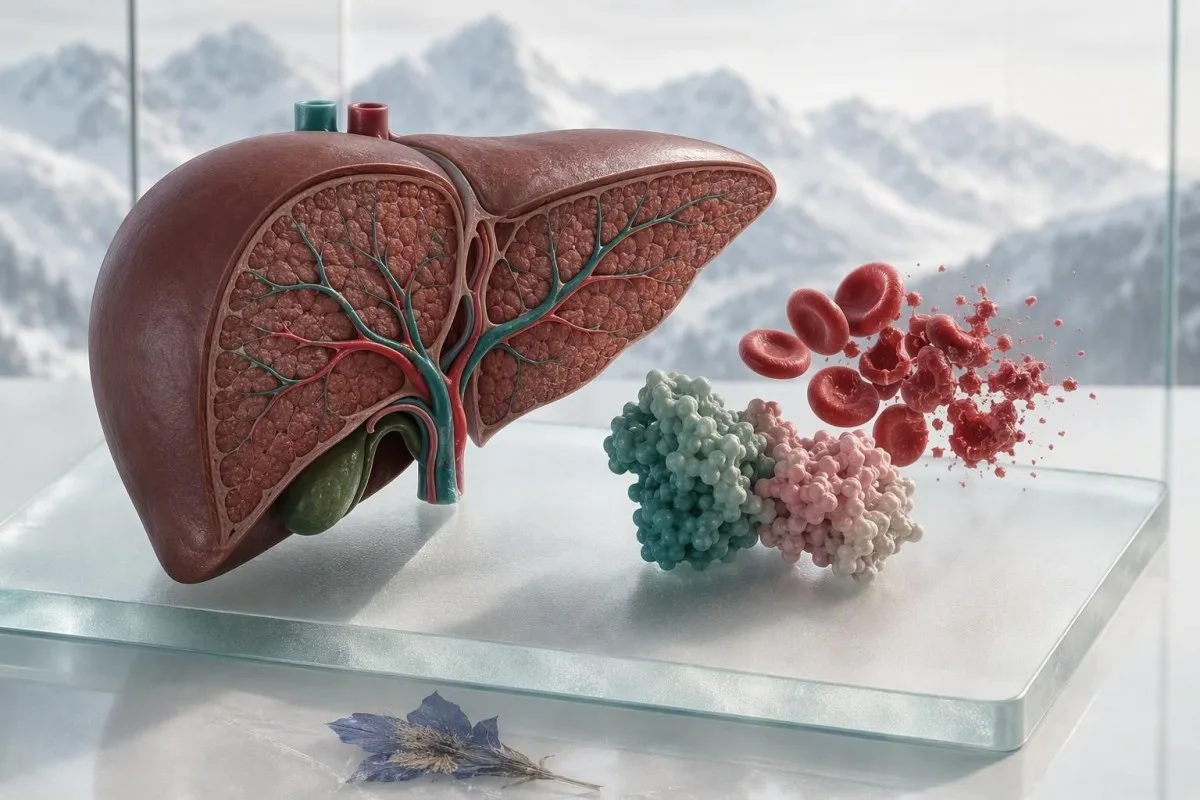
Nízký výsledek může odrážet rozpad červených krvinek, ale může také odrážet sníženou produkci jater, vrozený deficit, nedávné cvičení nebo způsob, jakým byl vzorek zpracován. Doprovodný CBC, retikulocyty, bilirubin, LDH a přímý antiglobulinový test rozhodují, které vysvětlení je správné.


- Význam nízkého haptoglobinu není automaticky hemolýza; nízká syntéza v játrech a vrozená anhaptoglobinémie mohou poskytnout stejný výsledek.
- Hemolysis රටාව obvykle kombinuje nízký haptoglobin se zvýšeným LDH, nepřímým bilirubinem nad přibližně 1,2 mg/dl a retikulocytózou.
- Odpověď retikulocytů pod přibližně 2% během anémie svědčí proti rychlému perifernímu ničení červených krvinek, pokud není potlačena produkce kostní dřeně.
- Jaterní kontext je důležitý, protože jaterní buňky tvoří haptoglobin; nízký albumin, prodloužené INR a stoupající bilirubin mohou vysvětlit nízkou hodnotu bez hemolýzy.
- Testování DAT podporuje imunitní hemolýzu pouze tehdy, je-li interpretováno s klinickým obrazem; negativní DAT nevylučuje každý imunitní mechanismus.
- ව්යායාම වේලාව lahko začasno zniža haptoglobin po vzdržljivostni aktivnosti, zlasti če je odvzeta kri v 24 do 48 urah.
- Prirojena odsotnost je najpogostejša pri nekaterih vzhodnoazijskih populacijah in lahko povzroči vztrajno zelo nizek ali nezaznaven rezultat pri sicer zdravih ljudeh.
- හදිසි පරීක්ෂාවක් je primeren za temno obarvan urin, zlatenico, zasoplost v mirovanju, bolečino v prsih, zmedenost ali hitro padajoč hemoglobin.
Co nízký výsledek haptoglobinu skutečně znamená
Nizek haptoglobin pomeni, da je bilo v serumu izmerjenih malo prostega haptoglobina, ne pa da je hemoliza dokazana. V praksi je prava intravaskularna razgradnja rdečih krvničk le eden od več vzrokov za nizek haptoglobin; zmanjšana sinteza v jetrih, prirojena odsotnost in prehodna poraba po vadbi so verodostojne alternative.
Haptoglobin je jetrni protein, ki veže hemoglobin, sproščen v plazmo. Večina laboratorijev za odrasle navaja referenčni interval blizu 30 do 200 mg/dL හෝ 0,3 do 2,0 g/L, vendar se analiza in interval dovolj razlikujeta, da prevlada natisnjen laboratorijski obseg. Rezultat pod 20 do 30 mg/dL si zasluži kontekst, ne panike.
Ko pregledam nizko vrednost, najprej vprašam, ali je hemoglobin padel in ali se telo odziva. Po mojih kliničnih izkušnjah ima oseba z hemoglobinom 14,1 g/dL, normalno LDH in štetjem retikulocitov 1,11 % bistveno drugačno verjetnost hemolize kot nekdo, čigar hemoglobin je v 10 dneh padel z 12,8 na 8,9 g/dL.
Preprosto delovno pravilo dr. Thomasa Kleina je: posamezen izčrpan beljakovinski "lovilec" ne more diagnosticirati procesa, ki bi moral pustiti več biokemičnih sledi. Za praktičen pregled same preiskave glejte naše haptoglobin ප්රතිඵල මඟපෙන්වීම.
Zakaj osamljeni rezultati zavajajo
Haptoglobin se med vnetjem tudi zviša, ker je reaktant akutne faze. To pomeni, da lahko normalen rezultat občasno prikrije blago hemolizo med okužbo, avtoimunsko boleznijo ali po operaciji; obratno, nizek rezultat z normalnimi označevalci prometa pogosto kaže stran od aktivne destrukcije.
Jak haptoglobin klesá během skutečné hemolýzy
Haptoglobin najbolj strmo pade pri intravaskularni hemolizi, ker prosti hemoglobin v obtoku hitro tvori komplekse, ki se odstranijo iz plazme. Tudi ekstravaskularna hemoliza ga lahko zniža, vendar pogosto manj dramatično in z mešanim vzorcem.
Biologija je uporabna. Prosti hemoglobin veže haptoglobin, kompleks pa se odstrani po makrofagnih poteh; vztrajno sproščanje lahko vodi haptoglobin do nezaznavne koncentracije. LDH se pogosto zviša nad lokalno zgornjo mejo normale, čeprav LDH ni specifičen in se lahko zviša zaradi poškodbe jeter, mišične poškodbe, malignosti ali poškodovanega vzorca.
Indirektni bilirubin se zviša, ko se hemu obdela hitreje, kot ga lahko jetra konjugirajo. Pri stabilnem odraslem osebi, celotni bilirubin nad 1,2 mg/dL (približno 20 µmol/L) z prevladujočim prozračnim deležem kaže na hemolizo le po upoštevanju Gilbertovega sindroma, stradanja in jetrne disfunkcije. Naša vodnik po neposrednem in posrednem bilirubinu එම බෙදීම (split) පැහැදිලි කරයි.
Barcellini in Fattizzo opisujeta klasični sklop kot zmanjšan haptoglobin z zvišanim LDH, nekonjugiranim bilirubinom in retikulociti, vendar opozarjata tudi, da ima vsak marker nevzročne vzroke (Barcellini & Fattizzo, 2015). Sklop – ne najnižje število – naredi diagnozo prepričljivo.
Čtěte LDH, bilirubin a retikulocyty jako jeden vzorec
Nizek haptoglobin plus visok LDH, visok indirektni bilirubin in ustrezen odziv retikulocitov je najmočnejši vzorec hemolize v rutinskih laboratorijskih preiskavah. Če dva ali trije od teh signalov manjkajo, naj zdravniki aktivno preverijo nevzročne razlage.
Odstotek retikulocitov sam nas lahko pri anemiji zavede. Popravljen odstotek retikulocitov se popravi glede na hematokrit; pri hematokritu 24% se surova vrednost retikulocitov 3% popravi na približno 1.6%, kar ni močan odziv kostnega mozga. Indeks produkcije retikulocitov pod 2 na splošno kaže na nezadostno produkcijo in ne na močan kompenzacijski odziv.
LDH nad 2-kratno zgornjo referenčno mejo je bolj zaskrbljujoč za klinično pomembno hemolizo kot mejna zvišanje od 10% do 20%, še posebej, če so kalij, AST in fosfat prav tako nepričakovano visoki zaradi poškodbe vzorca. Preglejte našo razlago virov visoke vrednosti LDH , preden pripišete ves LDH rdečim krvničkam.
කන්ටෙස්ටි යනු AI රුධිර පරීක්ෂණ විශ්ලේෂකය ki bere haptoglobin v povezavi s potekom hemoglobina, retikulociti, bilirubinom in jetrnimi markerji, namesto da bi eno samo rdečo zastavico obravnavali kot diagnozo. Ta razlika je najbolj pomembna, ko je rezultat tik pod območjem.
Onemocnění jater může snížit haptoglobin bez zničení červených krvinek
Jetrna bolezen znižuje haptoglobin z zmanjšanjem jetrne sinteze beljakovin, zato se lahko nizka vrednost pojavi brez povečane razgradnje rdečih krvničk. Ta razlaga postane bolj verjetna, ko je albuminska vrednost nizka, INR podaljšan, ali bilirubin in jetrni encimi kažejo koherenten jetrni vzorec.
Haptoglobin sintetizirajo predvsem hepatociti. Pri napredovali kronični jetrni bolezni, nizka albuminska vrednost pod 3.5 g/dL ට අඩු, INR nad laboratorijskim območjem, trombocitopenija in nizka vrednost haptoglobina se lahko pojavijo skupaj, tudi ko sta LDH in retikulociti neopazna. To je eden od razlogov, zakaj nizka raven ni samostojni test za hemolizo.
58-letni bolnik s cirozo, ki sem ga videl, je imel haptoglobin pod 8 mg/dL, hemoglobin 11,6 g/dL, LDH 184 U/L in retikulocite 1,0%. Rezultat je sprva sprožil nujno napotitev na pregled za hemolizo, vendar sta stabilna indeksa in okvarjena sintetična funkcija preusmerila preiskave k jetrni bolezni in prehranski slabokrvnosti. අක්මා පැනල් සංරචක (liver panel components) bili bolj informativni kot ponovitev haptoglobina.
Smernice EASL za dekompenzirano cirozo poudarjajo, da albumin, bilirubin, INR, kreatinin in natrij označujejo jetrno resnost in prognozo (European Association for the Study of the Liver, 2018). Haptoglobin lahko dopolni to sliko, vendar ne nadomesti teh uveljavljenih meril.
Vrozeně nízký nebo chybějící haptoglobin: tiché celoživotní vysvětlení
Dedna anaptoglobinemija lahko povzroči trajno zelo nizko ali nedetektabilno vrednost haptoglobina pri ljudeh brez anemije in brez biokemičnih dokazov o hemolizi. To je genetska težava s proizvodnjo, ne stalna razgradnja rdečih krvničk.
Popolna pomanjkljivost haptoglobina je redka po svetu, vendar se pogosteje poroča v vzhodnoazijskih populacijah, kjer je prepoznana alela za izbris gena HP. Ponavljajoča se nedetektabilna vrednost skozi leta, normalen hemoglobin, normalen bilirubin in normalen LDH bi morala vzbuditi to možnost – še posebej, če imajo sorodniki podobno nizke rezultate.
Praktična težava običajno ni vsakodnevno zdravje. Ljudje s pravo pomanjkljivostjo lahko tvorijo protitelesa po izpostavitvi krvnim pripravkom, ki vsebujejo haptoglobin, zato lahko dokumentirana zgodovina nekaj pomeni pred transfuzijo. Hematolog ali transfuzijska služba lahko svetuje, ali je dodatna potrditev primerna.
Ne domnevajte genetske razlage po enem testu. Ponovitev v času dobrega počutja, skupaj s CBC, retikulociti, bilirubinskimi frakcijami in jetrno ploščo, je varnejši prvi korak. Naš pregled celotne krvne slike kaže, zakaj so vzorci med ploščami pomembni.
Zánět může maskovat hemolýzu spíše než způsobovat nízký výsledek
Vnetje običajno zviša haptoglobin, zato normalen ali visok nivo ne izključuje popolnoma hemolize med okužbo ali avtoimunsko aktivnostjo. Resnično nizek rezultat kljub visoki vrednosti CRP je lahko bolj pokazatelj porabe ali slabe jetrne sinteze kot enak rezultat med dobrim počutjem.
Haptoglobin deluje kot akutnofazni protein, ki se pogosto povečuje skupaj s CRP. CRP nad 10 mg/L v mnogih laboratorijskih sistemih kaže na aktivno vnetje, čeprav ne identificira vzroka. V tem primeru je lahko vrednost 90 mg/dL v območju, vendar še vedno nižja, kot bi pričakovali za posameznika.
Ta nianca je še posebej pomembna pri avtoimunski hemolitični anemiji, kjer lahko vnetje in hemoliza sobivata. Jäger in sodelavci ugotavljajo, da je diagnoza odvisna od kliničnega konteksta, ugotovitev brisa in imunohematologije, ne od posameznega označevalca hemolize (Jäger et al., 2020).
Kantesti’s AI biomarker interpretation platform lahko označi nizko-normalno vrednost haptoglobina drugače, ko je CRP 2 mg/L, kot ko je 96 mg/L. To je namig za triažo, ne nadomestilo za klinični pregled bolnika.
Hemolýza vzorku a laboratorický kontext mohou zkreslit obraz
Poškodovan vzorec lahko lažno zviša LDH, kalij in AST, kar ustvari vzorec, ki izgleda kot hemoliza, čeprav bolnik nima razgradnje rdečih krvničk in vivo. Običajno ne pojasni resnično nizkega izmerjenega haptoglobina, lahko pa popači podporne dokaze.
Kazalnik hemolize v laboratoriju odraža razpad rdečih krvničk v epruveti, pogosto zaradi težkega odvzema, vibracij med transportom, ekstremnih temperatur ali pozne separacije. Kalij nad 5.5 mmol/L s signalom za hemolizo na analizatorju in normalnim delovanjem ledvic pogosto povzroči ponovno odvzem pred zdravljenjem. Enaka logika velja za nepričakovano zvišanje LDH.
Vprašajte, ali poročilo navaja “hemoliziran vzorec”, “interferenca” ali “rezultat je lahko prizadet”. vodnik za ponovni odvzem po hemolizi vzorca je uporaben, saj je najvarnejša poprava pogosto miren, pravilno obravnavan ponovni odvzem – ne obsežen nujni pregled.
Časovni potek tudi spremeni interpretacijo. Haptoglobin ima dovolj kratko funkcionalno odzivnost, da lahko meritev po akutnem dogodku zajame okrevanje ali izčrpanje, medtem ko lahko bilirubin in retikulociti zaostajajo v različnih smereh.
Cvičení a načasování: kdy je nízká hodnota přechodná
Dolgotrajno tečenje, gorsko tekmovanje in ponavljajoče se gibanje stopal lahko povzročijo začasno hemolizo in znižanje haptoglobina za približno 24 do 48 ur. Velikost se močno razlikuje glede na razdaljo, obutev, vročino, hidracijo in osnovno stanje železa pri športniku.
Hemoliza zaradi udarcev stopal je resnična, vendar nizka raven haptoglobina po dirki ne predstavlja nujno bolezni. Videla sem maratonce z nizkim haptoglobinom, rahlo povišanim LDH in stabilnim hemoglobinom po dirki; ponovno testiranje po 48 do 72 urah brez intenzivnega treninga pogosto pojasni osnovno stanje.
Intenzivna vadba lahko tudi zviša CK in AST, zaradi česar je panel videti bolj zaskrbljujoč, kot je. Če je CK znatno povišana, je treba nujno pregledati hude bolečine v mišicah, šibkost, zmanjšano izločanje urina ali zelo temen urin, ker poškodba mišic predstavlja ločeno skrb; glejte naš CK අනතුරු මාර්ගෝපදේශය.
Dr. Thomas Klein svetuje športnikom, naj z rezultati zabeležijo razdaljo dirke, nadmorsko višino, izpostavljenost vročini in hidracijo. Ta majhen časovni okvir je pogosto diagnostično bolj dragocen kot drug naključen test šest mesecev kasneje.
Kdy přímý antiglobulinový test pomáhá
Neposredno antiglobulinski test ali DAT zazna imunoglobulin ali komplement, pritrjen na rdeče krvničke, in pomaga oceniti sum na imuno hemolizo. Najbolj je uporaben, ko sta že prisotna anemija in prepričljiv vzorec hemolize.
Pozitiven DAT ne pomeni samodejno avtoimunske hemolitične anemije. Pozitivni rezultati se lahko pojavijo po transfuziji, z zdravili, med okužbo ali brez klinično pomembne hemolize; laboratorijsko poročilo mora navesti, ali je zaznalo IgG, C3d ali oboje. Razmaz in trend hemoglobina ostajata osrednjega pomena.
Nasprotno, negativen DAT ne izbriše hemolize. Obstaja DAT-negativna imunska hemoliza, in neimunski vzroki, kot so mehanska hemoliza srčne zaklopke, oksidativna poškodba, povezana z G6PD, mikroangiopatija, opekline in okužbe, zahtevajo drugačno testiranje. Schistociti na razmazu potrebujejo takojšnjo pozornost, kot je pojasnjeno v našem članku o nujnem razmazu.
Klinični zdravnik lahko naroči DAT, periferni razmaz, proste hemoglobine v plazmi, hemosiderin v urinu, aktivnost G6PD ali študije komplementa glede na vzorec. Testiranje vsega naenkrat lahko ustvari šum, zato naj začetni panel usmerja nadaljnje veje.
Nízké retikulocyty posouvají otázku směrem k produkci
Anemija z nizkimi ali neprimerno normalnimi retikulociti kaže na zmanjšano proizvodnjo rdečih krvničk bolj kot na periferno uničenje. V tej situaciji nizka raven haptoglobina lahko odraža jetrno sintezo ali se naključno pojavi skupaj z železovo pomanjkanje, pomanjkanjem B12, boleznijo ledvic ali zavrtostjo kostnega mozga.
Število retikulocitov pod 0.5% je običajno nizko, vendar pravilna interpretacija je odvisna od hemoglobina in hematokrita. Oseba z hemoglobinom 8 g/dL bi se morala odzvati; število 1,2% je lahko na papirju videti normalno, vendar neustrezno za resnost anemije.
Mikrocitoza, nizek ferritin in nizka nasičenost transferina kažejo na proizvodnjo, omejeno z železom. Makrocitoza z nizkimi retikulociti nakazuje na pomanjkanje B12, folatov, alkohol, bolezen jeter, hipotiroidizem, zdravila ali motnje kostnega mozga; naše MCV සහ MCH සංසන්දනය lahko pomaga pri organizaciji te diferencialne diagnoze.
Nizka raven haptoglobina ne izključuje železove pomanjkanje. Pojavijo se mešane težave: oseba s kronično boleznijo jeter in menstrualno izgubo železa lahko ima tako oslabljeno proizvodnjo haptoglobina kot anemijo z nizkim številom retikulocitov.
Příznaky nízkého haptoglobinu jsou ve skutečnosti příznaky příčiny
Nizka raven haptoglobina sama po sebi ne povzroča specifičnih simptomov; simptomi izvirajo iz anemije, hemolize, bolezni jeter ali osnovnega sprožilca. Mnogi ljudje z dedno nizko ravnijo se počutijo povsem dobro.
Hemoliza lahko povzroči utrujenost, zadihanost pri naporu, palpitacije, zlatenico, bolečine v hrbtu in čaj ali koka-kolo obarvan urin. Nov temen urin skupaj z zlatenico ali hitro padajoč hemoglobin zahteva oceno še isti dan, ne pa spremljanje z domačimi dodatki. Več o tem preberite tukaj අඳුරු මුත්රා පිළිබඳ අනතුරු ඇඟවීම්.
Simptomi, povezani z jetri, so drugačni: otekanje trebuha, enostavno modrice, bledo blato, srbenje, zmeda ali progresivno otekanje gležnjev kažejo, da je bolezen jeter klinično pomembna. Odsotnost simptomov je pomirjujoča, vendar ne izključuje zgodnje disfunkcije jeter.
Nujna oskrba je smiselna pri bolečinah v prsih, omedlevici, zmedi, zadihanosti v mirovanju, zmanjšanem izločanju urina, vročini z izrazito oslabelostjo ali nosečnosti z novimi simptomi anemije. Nizko število haptoglobina samo po sebi, zlasti pri stabilni osebi, redko določa nujnost.
Praktické stupňovité vyšetření po nízkém výsledku
Najučinkovitejši postopek ponovi vprašljive vzorce in združi haptoglobin s CBC, retikulociti, LDH, bilirubinskimi frakcijami in jetrnimi testi. DAT in testiranje krvnega razmaza sledita, ko začetni sklop podpira hemolizo ali je anemija nepojasnjena.
1. korak je preverjanje: potrdite enote, referenčni razpon, komentarje o kakovosti vzorca, nedavna vadba, transfuzije, nova zdravila in bolezen. 2. korak je ciljni panel — CBC z indeksi, število retikulocitov, LDH, skupni in neposredni bilirubin, AST, ALT, albumin in kreatinin. Ponovitev čez වැඩිවීමක් තවමත් පිළිගත හැකි විය හැක, නමුත් වැඩිවීම් වැඩි නම් නැවත සමාලෝචනය කළ යුතුය. ඉහළ අවදානම් ඇති බොහෝ රෝගීන්ට creatinine සහ potassium නැවත පරීක්ෂා කරන්නේ je pogosto razumna za stabilno, asimptomatsko osebo, ko ni nobene nujne naravnanosti.
3. korak je odvisen od tega, kaj se je spremenilo. Padajoč hemoglobin z retikulocitozo in povišanim bilirubinom podpira pregled razmaza in DAT; nizek albumin ali nenormalen INR podpira oceno jeter; nizek MCV in ferritin podpirata študije železa. රෙටිකියුලොසයිට් ගණන් කිරීමේ මාර්ගෝපදේශය අස්ථි මජ්ජාව පැත්තට යොමු කරයි. pojasnjuje, zakaj lahko nezreli delež retikulocitov doda uporaben namig za proizvodnjo.
කන්ටෙස්ටි යනු AI මගින් බලගැන්වූ රුධිර පරීක්ෂණ විශ්ලේෂණ මෙවලම uporabljen v 127+ državah za organizacijo te zaporednosti iz naloženega PDF-ja ali fotografije, vendar ne more pregledati razmaza, preiskati zlatenice ali nadomestiti diagnoze, ki jo vodi klinični zdravnik. V primeru akutnih simptomov najprej poiščite neposredno zdravniško pomoč.
Léky, transfuze a zvláštní situace, které mění interpretaci
Zgodovina zdravil in transfuzij lahko spremeni tako verjetnost hemolize kot pomen rezultata DAT. Seznam zdravil je še posebej pomemben, ko se nizka raven haptoglobina nenadoma pojavi po prej stabilnem vzorcu.
Potencialni sprožilci hemolize vključujejo nekatera protimikrobna zdravila, oksidativna zdravila pri pomanjkanju G6PD, imunoterapije in redko protitelesa, odvisna od zdravil. Časovni okvir je pomemben: upad hemoglobina, ki se začne 5 සිට 10 දින po novi izpostavitvi, si zasluži pregled zdravnika, medtem ko dolgo časa stabilno nizek haptoglobin ne pomeni enake nujnosti.
Po transfuziji se lahko zapoznele hemolitične reakcije pojavijo čez nekaj dni z upadom hemoglobina, zvišanjem bilirubina, novim protitelesom in včasih pozitivnim DAT. Takoj se obrnite na zdravnika, če se po transfuziji pojavi vročina, temen urin, zlatenica ali nepričakovana utrujenost.
Nosečnost, bolezen ledvic in huda okužba dodajo dodatne plasti. Na primer, poškodba ledvic lahko poslabša posledice sproščanja pigmentov, medtem ko nosečnost spremeni plazemski volumen in referenčna pričakovanja; naše ගර්භණීභාවය සඳහා රසායනාගාර අනතුරු සංඥා (lab red flags) zajema, kdaj poklicati brez odlašanja.
Proč trendy převyšují jednorázový výsledek haptoglobinu
Sprememba od vaše lastne predhodne osnovne vrednosti haptoglobina je pogosto bolj informativna kot dejstvo, ali ena vrednost leži nekoliko zunaj populacijskega referenčnega intervala. Stabilen nizek rezultat za več let ima drugačen pomen kot padec z 120 mg/dL na manj kot 10 mg/dL v nekaj dneh.
Ob vsakem rezultatu navedite datum odvzema, telesno aktivnost v predhodnih 72 urah, trajanje tešče, bolezen, vnos alkohola, potovanja, transfuzije in spremembe zdravil. Ti podatki naredijo očitno “laboratorijsko variacijo” razlagalno. Približno 20% do 30% nihanje se lahko pojavi pri bioloških in analitičnih variacijah mnogih beljakovin, medtem ko ponavljajoči se zlom do nezaznavnosti potrebuje pojasnilo.
Kantesti AI primerja longitudinalne biomarkerje in lahko prikaže nizek rezultat haptoglobina ob premikih hemoglobina, RDW, bilirubina in jetrnih encimov. Naše රුධිර පරීක්ෂණ ප්රවණතා විශ්ලේෂණ මාර්ගෝපදේශය opisuje, kako razlikovati pravi naklon od običajnega šuma med obiski.
Ne poskušajte dvigniti haptoglobina z dodatki. Ni ciljnega dodatka, ki bi temeljil na dokazih za samostojen nizek rezultat; zdravljenje je usmerjeno na hemolizo, bolezen jeter, pomanjkanje hranil ali drug identificiran vzrok.
Klinický závěr: testujte vzorec, ne strach
Nizek haptoglobin zahteva takojšnje prepoznavanje vzorcev, ne samodejne diagnoze hemolize. Nizek haptoglobin z normalnim LDH, bilirubinom, retikulociti in stabilnim hemoglobinom pogosto odraža nizko proizvodnjo, dedno odsotnost ali kontekst; več-markerni vzorec hemolize potrebuje nadaljnje spremljanje pod vodstvom zdravnika.
Od 22. avgusta 2026 noben pomemben smernik ne priporoča presejanja sicer zdravih odraslih za hemolizo samo s haptoglobinom. Uporabno vprašanje je: “Ali ta rezultat ustreza padajočemu hemoglobinu, kompenzacijskemu odzivu kostnega mozga in biokemičnim dokazom obrata rdečih krvničk?” Če ne, razširite diferencialno diagnozo, preden sprejmete zastrašujočo oznako.
කන්ටෙස්ටි යනු AI රසායනාගාර පරීක්ෂණ අර්ථකථන සේවාව s klinično pregledano metodologijo, ki uporabnikom pomaga pripraviti osredotočeno razpravo s svojim zdravnikom. Naše වෛද්ය සත්යාපන (medical validation) ප්රවේශය pojasnjuje omejitve samodejne interpretacije in zakaj je klinični pregled še vedno potreben pri sumu na hemolizo.
Za sorazmerni kontekst CBC je naša raziskovalna publikacija o RDW සහ රතු-සෛල දර්ශක morda koristna. Zdravniška ekipa Kantesti, vključno z našim වෛද්ය උපදේශක මණ්ඩලය, redno pregleduje izobraževalno gradivo; posamezni rezultati še vedno zahtevajo skrb, prilagojeno simptomom, zgodovini in pregledu.
නිතර අසන ප්රශ්න
Ali je lahko haptoglobin nizek brez hemolize?
Da. Nizek haptoglobin se lahko pojavi brez hemolize, ko jetra proizvajajo manj beljakovin, ko ima oseba dedno pomanjkanje haptoglobina ali po začasnem stresu rdečih krvničk, povezanem z vadbo. Nizek rezultat s stabilnim hemoglobinom, normalnim LDH, normalnim indirektnim bilirubinom in retikulociti okoli 0,5% do 2,0% manj podpira aktivno hemolizo. Celoten laboratorijski vzorec in simptomi določajo, ali je nadaljnje ukrepanje nujno.
Kakšna raven haptoglobina kaže na hemolizo?
Haptoglobinova vrednost pod približno 20 do 30 mg/dL lahko podpira hemolizo, vendar nobena posamezna mejna vrednost tega ne dokazuje, ker se laboratorijske vrednosti razlikujejo. Hemoliza je veliko bolj verjetna, kadar se nizka vrednost haptoglobina pojavi ob naraščajočem LDH, indirektnem bilirubinu nad približno 1,2 mg/dL, retikulocitozi in padajoči koncentraciji hemoglobina. Bolezen jeter in dedna pomanjkljivost lahko prav tako povzročita vrednosti pod 10 mg/dL brez aktivnega uničevanja rdečih krvnih celic.
Ali bolezen jeter povzroči nizek haptoglobin?
Da. Jetra proizvodi haptoglobin, zato oslabljena sinteza belančevina u jetri može sniziti serumske vrednosti haptoglobina bez hemolize. Nizak albumin ispod 3.5 g/dL, produženi INR, trombocitopenija i abnormalni bilirubini ili jetreni enzimi čine smanjenu produkciju verovatnijom. Kliničar obično tumači haptoglobin u kombinaciji sa jetrenim panelom, umesto da ga tretira kao zaseban test jetre.
Ali normalna vrednost LDH izključuje hemolizo, ko je haptoglobin nizek?
Normalna raven LDH zmanjšuje verjetnost hitre intravaskularne hemolize, vendar ne izključuje popolnoma blage, intermitentne ali pretežno ekstravaskularne hemolize. Če je raven LDH normalna ter so tudi hemoglobin, indirektni bilirubin in retikulociti stabilni, nizka raven haptoglobina pogosteje odraža sintezo v jetrih, dedno odsotnost ali časovni kontekst. Ponovitev CBC in hemolitičnega panela čez 1 do 2 tedna lahko pojasni stabilno stanje.
Ali lahko intenzivna vadba zniža haptoglobin?
Da. Vadbena za vzdržljivost, zlasti tekaške discipline s ponavljajočimi se udarci stopal, lahko za približno 24 do 48 ur začasno zniža haptoglobin. LDH, CK in AST se lahko po naporni aktivnosti prav tako zvišajo, kar lahko zaplete interpretacijo. Ponovitev testa po 48 do 72 urah brez napornega treninga je pogosto smiselna, če je hemoglobin stabilen in ni opozorilnih simptomov.
Kaj pomeni negativen neposredni antiglobulinski test?
Negativni neposredni antiglobulinski test pomeni, da test v tistem času ni zaznal pomembnih imunoglobulinov ali komplementa, pritrjenih na rdeče krvne celice. Zaradi tega je tipična avtoimunska hemolitična anemija manj verjetna, vendar ne izključuje DAT-negativne imunske hemolize ali neimunskih vzrokov, kot so mehanske poškodbe ali poškodbe, povezane z encimi. Periferni razmaz, anamneza zdravil, odgovor retikulocitov in vzorec bilirubina pomagajo določiti naslednji test.
අදම AI බලයෙන් රුධිර පරීක්ෂණ විශ්ලේෂණය ලබාගන්න
තත්පර කිහිපයකින් ක්ෂණික හා නිවැරදි රසායනාගාර පරීක්ෂණ විශ්ලේෂණය සඳහා Kantesti විශ්වාස කරන ලොව පුරා මිලියන 2කට වැඩි පරිශීලකයන්ට එක්වන්න. ඔබගේ රුධිර පරීක්ෂණ ප්රතිඵල උඩුගත කර, තත්පර කිහිපයකින් 15,000+ ජෛව සලකුණු පිළිබඳ සවිස්තර අර්ථකථනය ලබාගන්න.
📚 යොමු කර ඇති පර්යේෂණ ප්රකාශන
ක්ලයින්, ටී., මිචෙල්, එස්., සහ වෙබර්, එච්. (2026). RDW krvni test: Celovit vodnik po RDW-CV, MCV & MCHC. Kantesti LTD. (2026). Zenodo. https://doi.org/10.5281/zenodo.18202598. ResearchGate: https://www.researchgate.net/ | Academia.edu: https://www.academia.edu/. Kantesti AI වෛද්ය පර්යේෂණ.
ක්ලයින්, ටී., මිචෙල්, එස්., සහ වෙබර්, එච්. (2026). BUN/Creatinine Ratio පැහැදිලි කිරීම: වකුගඩු ක්රියාකාරිත්ව පරීක්ෂණය මාර්ගෝපදේශය. Kantesti LTD. (2026). Zenodo. https://doi.org/10.5281/zenodo.18207872. ResearchGate: https://www.researchgate.net/ | Academia.edu: https://www.academia.edu/. Kantesti AI වෛද්ය පර්යේෂණ.
📖 බාහිර වෛද්ය යොමු
⚕️ වෛද්ය වියාචනය
මෙම ලිපිය අධ්යාපනික අරමුණු සඳහා පමණක් වන අතර වෛද්ය උපදෙස් ලෙස නොසැලකේ. රෝග නිદાન සහ ප්රතිකාර තීරණ සඳහා සෑම විටම සුදුසුකම් ලත් සෞඛ්ය සේවා සපයන්නෙකුගෙන් උපදෙස් ලබාගන්න.
E-E-A-T විශ්වාස සංඥා
අත්දැකීම්
වෛද්යවරයා විසින් මෙහෙයවන ලද රසායනාගාර අර්ථකථන ක්රියාවලි පිළිබඳ සමාලෝචනය.
ප්රවීණතාව
සායනික සන්දර්භය තුළ ජෛව සලකුණු (biomarkers) හැසිරෙන ආකාරය පිළිබඳ රසායනාගාර වෛද්ය විද්යා අවධානය.
අධිකාරීත්වය
ආචාර්ය තෝමස් ක්ලයින් විසින් ලියන ලද අතර ආචාර්ය සාරා මිචෙල් සහ මහාචාර්ය ආචාර්ය හෑන්ස් වෙබර් විසින් සමාලෝචනය කරන ලදී.
විශ්වසනීයත්වය
අනතුරු ඇඟවීම් අඩු කිරීමට පැහැදිලි පසුකැඳවීම් මාර්ග සහිත සාක්ෂි-පාදක අර්ථකථනය.