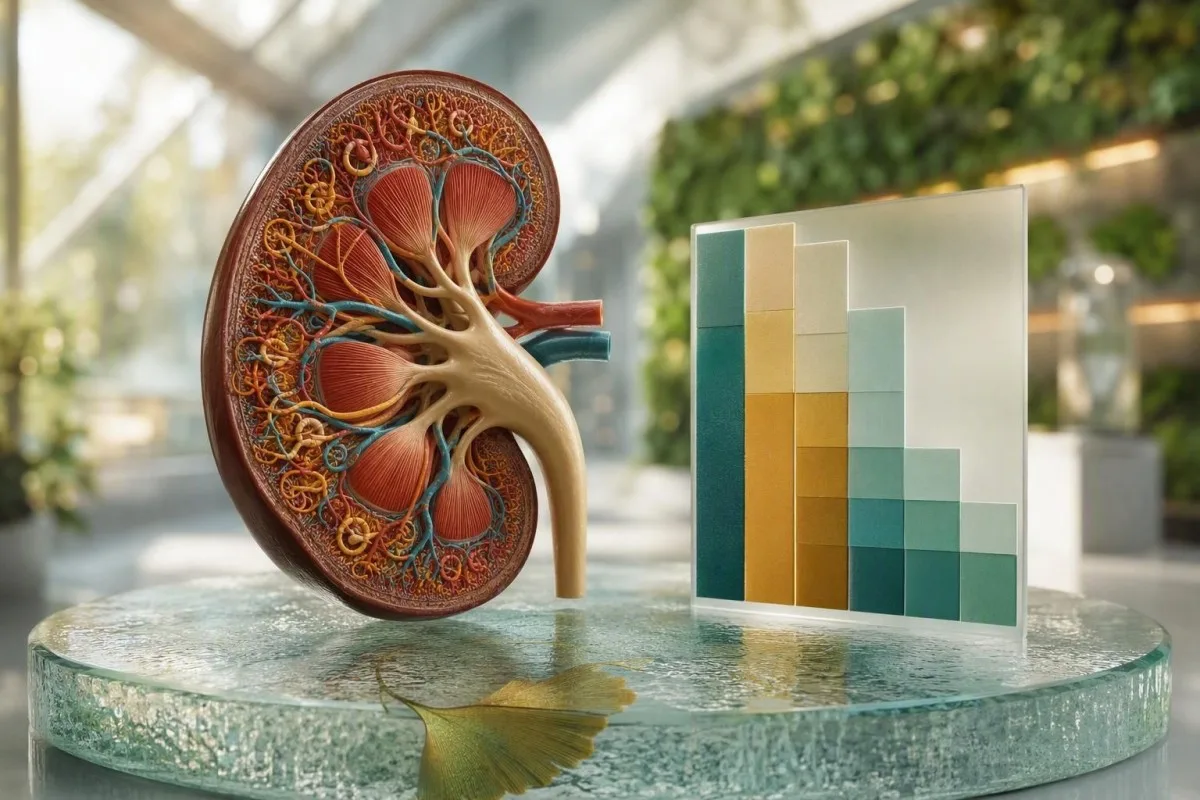
Uma alimentação amiga dos rins nunca é uma lista única de alimentos universal. Um plano útil começa com tendências laboratoriais, medicamentos, sintomas, achados urinários e o estágio da doença renal — não um único resultado “alto” ou “baixo”.


- Estadiamento do eGFR requer persistência por pelo menos 3 meses; uma única estimativa baixa após desidratação ou exercício intenso não estabelece doença renal crônica.
- Potássio de 6,0 mmol/L ou mais pode ser perigoso, especialmente com fraqueza, palpitações ou alterações no ECG, e não é um problema de plano alimentar para gerenciar em casa.
- Ingestão de proteína é comumente individualizada em torno de 0,6–0,8 g/kg/dia para muitos adultos com DRC sem diálise, enquanto a diálise geralmente aumenta as necessidades para cerca de 1,0–1,2 g/kg/dia.
- ACR urinária de 30 mg/g ou mais é albuminúria e altera discussões sobre dieta, pressão arterial e medicamentos, mesmo quando o eGFR parece preservado.
- Fosfato acima de um limite superior de laboratório próximo a 1,45 mmol/L requer revisão de aditivos, aglutinantes, terapia com vitamina D e estágio renal — não apenas a evitação de todos os alimentos proteicos.
- Sódio A ingestão inferior a 2 g/dia, equivalente a menos de 5 g/dia de sal, é recomendada pela KDIGO para a maioria das pessoas com DRC, a menos que um médico forneça uma meta diferente.
- Nutricionista por IA as recomendações devem usar valores laboratoriais e dados de medicação repetidos, e depois ser verificadas pelo nefrologista ou nutricionista renal antes de restrições significativas.
- Sinais de alerta incluem potássio de 6,0 mmol/L ou superior, eGFR em rápida queda, falta de ar grave, confusão, sintomas torácicos ou diminuição acentuada da produção de urina.
O que um nutricionista de IA pode personalizar com segurança para dietas renais
Um Nutricionista por IA pode ajudar a organizar de forma segura escolhas alimentares amigas dos rins quando lê eGFR, potássio, bicarbonato, fosfato, albumina urinária, marcadores de diabetes e medicamentos repetidos em conjunto; não pode diagnosticar doença renal nem substituir um nutricionista renal. O resultado seguro é um plano nutricional personalizado provisório com regras claras de escalonamento, não um menu rígido de baixo teor de potássio.
A partir de 1 de setembro de 2026, o papel útil da IA é o reconhecimento de padrões e a tradução prática: detetar que o potássio passou de 4,5 para 5,4 mmol/L após uma alteração no inibidor da ECA, sugerindo então uma revisão da medicação e da alimentação em vez de culpar uma banana. Kantesti é um analisador de exames de sangue por IA concebido para interpretar o contexto laboratorial e realçar questões para acompanhamento clínico. A nossa guia de estágios renais explica porque é que o eGFR e o ACR urinário pertencem juntos.
Um único painel renal de aspeto normal não é permissão para usar uma dieta renal genérica. No meu trabalho clínico, as pessoas mais prejudicadas por restrições amplas são muitas vezes idosos que cortam simultaneamente frutas, vegetais, laticínios e proteínas, perdendo peso ou ficando constipados, enquanto o seu potássio nunca esteve elevado.
A regra prática do Dr. Thomas Klein é simples: uma recomendação de IA deve indicar a data do laboratório, unidade, direção da tendência e limite de segurança. Se algum destes estiver em falta, não é nutrição individualizada; é uma cópia genérica de bem-estar.
A tarefa certa para a IA
A IA pode converter metas aprovadas pelo médico em substituições de compras, porções de receitas e lembretes de testes repetidos. Deve preservar as preferências alimentares culturais e sinalizar incerteza quando o momento do laboratório, a lista de medicamentos ou o estado da diálise estão ausentes.
Por que eGFR é uma estimativa, não uma prescrição dietética
eGFR inferior a 60 mL/min/1,73 m² durante 3 meses ou mais apoia a doença renal crónica quando persistente, mas não determina por si só restrições de potássio, fluidos ou proteínas. O eGFR estima a filtração a partir da creatinina ou cistatina C e pode variar com a massa muscular, dieta, hidratação e alguns medicamentos.
Um eGFR de 52 mL/min/1,73 m² num homem musculado de 35 anos após uma maratona merece uma resposta diferente da mesma resultado num idoso de 82 anos com albuminúria e hipertensão. A creatinina aumenta após exercício extenuante e a desidratação pode baixar temporariamente o eGFR; veja o nosso guia para alterações temporárias do eGFR.
A KDIGO define a DC a G3a como eGFR 45–59 e a G3b como 30–44 mL/min/1,73 m² quando a alteração persiste por pelo menos 3 meses (KDIGO CKD Work Group, 2024). Uma queda de 5 ou mais em testes repetidos excede a variação biológica esperada o suficiente para merecer revisão, especialmente após iniciar um medicamento com ação renal.
A rede neural Kantesti trata o eGFR como uma tendência, não como um veredito. Kantesti é uma plataforma de interpretação exame de sangue de IA que pode comparar relatórios datados, mas apenas o médico assistente pode decidir se um declínio aparente reflete a progressão da DC, doença aguda, obstrução, efeito de medicação ou uma diferença de relatório entre laboratórios.
Como os resultados de potássio mudam o aconselhamento alimentar
O potássio sérico de 3,5–5,0 mmol/L é típico em muitos laboratórios adultos, enquanto 5,5 mmol/L ou mais geralmente requer revisão clínica em tempo hábil. A restrição de potássio é apropriada apenas quando a elevação é persistente ou o risco é alto; muitas pessoas com DRC ainda podem comer refeições à base de plantas com segurança.
O potássio é afetado pela excreção renal, insulina, estado ácido-base, constipação e medicamentos como inibidores da ECA, BRA, espironolactona, trimetoprima e AINEs. Um valor de 5,7 mmol/L com bicarbonato de 17 mmol/L e constipação é um quadro clínico diferente de 5,7 após uma coleta visivelmente hemolisada; elevação falsa relacionada à coleta é surpreendentemente comum.
Potássio de 6,0 mmol/L ou mais justifica avaliação urgente no mesmo dia, e o atendimento de emergência é apropriado em caso de palpitações, desmaios, fraqueza severa, sintomas torácicos ou ECG anormal. Mudanças na alimentação levam dias, não minutos, então um nutricionista de IA nunca deve apresentar uma receita como tratamento para hipercalemia grave.
O ponto menos óbvio: aditivos de potássio em substitutos de carne processada, bebidas instantâneas e substitutos de sal de baixo teor de sódio podem ser mais absorvíveis do que o potássio naturalmente embalado em uma maçã inteira ou lentilhas. Um nutricionista pode usar métodos de preparo, como ferver e drenar vegetais, mas não recomendo rituais de imersão genéricos sem um alvo individual. Leia nosso guia sobre potássio ligeiramente aumentado.
As metas de proteína mudam com o estágio da DRC e a diálise
As necessidades de proteína diferem acentuadamente entre DRC não dialítica e dialítica. Muitos adultos metabolicamente estáveis com DRC G3–G5 que não recebem diálise são prescritos cerca de 0,6–0,8 g/kg/dia, enquanto a hemodiálise comumente requer 1,0–1,2 g/kg/dia para compensar as perdas de aminoácidos.
A diretriz nutricional KDOQI de 2020 apoia a restrição de proteínas sob supervisão de um nutricionista para adultos selecionados com DRC que são metabolicamente estáveis (Ikizler et al., 2020). Para uma pessoa de 70 kg, 0,8 g/kg/dia são aproximadamente 56 g diários — não é “evitar proteína” e não é motivo para eliminar leguminosas automaticamente.
O desperdício de proteína-energia muda a equação. Perda não intencional de mais de 5% do peso corporal em 3 meses, apetite reduzido, albumina interpretada em conjunto com inflamação ou fragilidade devem levar à avaliação por um nutricionista renal em vez de limites de proteína mais rigorosos. Nossa albumina e proteína orientam explica por que a albumina sérica não é um diário alimentar direto.
Um fluxo de trabalho personalizado de teste de sangue para plano alimentar deve perguntar sobre o tipo de diálise, gravidez, feridas ativas, tratamento de câncer, infecção, volume de exercício e tendência do peso corporal antes de calcular a proteína. Um paciente de 62 anos em diálise peritoneal com pouco apetite necessita de um plano mais denso em proteínas do que uma pessoa sedentária com DRC G3a; o mesmo número de eGFR levaria você ao erro.
Proteína vegetal não é automaticamente proibida
Proteínas vegetais podem se encaixar nos padrões alimentares da DRC, mas o tamanho da porção, o potássio, os aditivos de fosfato, o controle do diabetes e a meta de proteína são importantes. O objetivo clínico é nutrição adequada com menor carga renal, quando apropriado, não uma competição simplista entre animal e vegetal.
Fósforo, cálcio e PTH precisam de uma leitura conectada
Fosfato persistente acima de cerca de 1,45 mmol/L (4,5 mg/dL) em DRC avançada merece revisão, mas uma elevação modesta não prova excesso dietético. O distúrbio mineral-ósseo renal é interpretado através do fosfato, cálcio corrigido, hormônio paratireoideo, terapia com vitamina D, estágio renal e tempo de uso de quelantes.
O fosfato de aditivos geralmente é absorvido de forma mais eficiente do que o fosfato presente naturalmente em grãos, feijões, nozes ou laticínios. Um nutricionista de IA deve primeiro sinalizar padrões de ingredientes e perguntar sobre quelantes de fosfato em vez de reduzir reflexivamente alimentos vegetais nutritivos. Nosso artigo sobre fosfato alto causa cobre as causas não dietéticas relevantes.
As fórmulas de cálcio corrigido são imperfeitas quando a albumina está baixa, e o cálcio ionizado pode ser mais informativo em situações agudas selecionadas. Quelantes à base de cálcio, calcitriol e suplementos de vitamina D podem alterar o cálcio e o fosfato em direções opostas, e é por isso que o aconselhamento alimentar não pode ser separado da revisão da prescrição.
O Dr. Thomas Klein viu pacientes interromperem toda a ingestão de laticínios após verem o fosfato em 1,5 mmol/L, e depois substituí-lo por lanches processados contendo aditivos de fosfato. A pergunta mais útil é se o fosfato está persistentemente elevado em 2-3 testes, se o PTH está a aumentar e se o quelante prescrito está a ser tomado com as refeições, conforme indicado.
Bicarbonato, sódio e status de fluidos alteram o plano alimentar
Bicarbonato sérico abaixo de 22 mmol/L em DRC sugere acidose metabólica e requer revisão clínica, pois pode acelerar a degradação muscular e afetar os ossos. A redução de sódio ajuda na pressão arterial e no equilíbrio de fluidos, mas a restrição de fluidos é geralmente baseada em edema, débito urinário, sódio, estado cardíaco e prescrição de diálise — não apenas no eGFR.
A KDIGO 2024 sugere ingestão de sódio abaixo de 2 g/dia, aproximadamente 5 g de sal diariamente, para a maioria das pessoas com DRC. A maior fonte de sódio são frequentemente pães embalados, molhos, alimentos convenientes e refeições de restaurante, em vez do saleiro; um guia laboratorial DASH pode ajudar com trocas práticas.
Baixo teor de bicarbonato pode coexistir com um resultado de potássio normal, pelo que não deve ser negligenciado numa dieta baseada em exames de sangue. Estratégias de frutas e vegetais podem beneficiar alguns pacientes, mas DRC avançada, risco de hipercalemia e medicamentos para diabetes podem tornar uma “dieta alcalina” não supervisionada insegura.
Inchaço não é prova de que uma pessoa bebeu muita água. Novo inchaço no tornozelo com albumina baixa, creatinina elevada, falta de ar ou ganho de peso rápido necessita de avaliação para causas cardíacas, renais, hepáticas ou venosas; nosso guia laboratorial de inchaço descreve a sobreposição.
Por que o ACR urinário muitas vezes é mais importante do que apenas a creatinina
Uma razão albumina-creatinina urinária (ACR) abaixo de 30 mg/g é A1, 30–300 mg/g é A2 e acima de 300 mg/g é A3 albuminúria. A ACR deteta danos renais e risco cardiovascular que um eGFR baseado em creatinina pode não detetar, particularmente no início de diabetes ou hipertensão.
Uma primeira ACR elevada deve ser repetida, preferencialmente usando uma amostra matinal, pois febre, exercício vigoroso, infeção urinária, menstruação e hiperglicemia acentuada podem aumentar transitoriamente a excreção de albumina. Nossos guia de preparo da ACR detalhes práticos sobre erros evitáveis antes do teste.
O AI Kantesti lê a ACR juntamente com o eGFR e marcadores relacionados à pressão arterial para identificar onde aconselhamento alimentar não deve desviar a atenção da otimização da medicação. Kantesti é uma ferramenta de análise de exame de sangue com IA que podem apresentar uma tendência de ACR a partir de relatórios carregados, mas proteína em fita urinária, ACR e coletas de 24 horas não são testes intercambiáveis.
Para o planeamento alimentar, albuminúria A3 persistente pode reforçar a discussão sobre sódio, controle de diabetes, metas de pressão arterial e adesão a inibidores da ECA ou BRAs. Não justifica automaticamente restrição severa de potássio, fosfato ou fluidos quando esses valores estão normais.
Listas de medicamentos podem anular o aconselhamento alimentar genérico
Inibidores da ECA, BRAs, antagonistas do receptor de mineralocorticoides, inibidores da SGLT2, diuréticos, insulina, quelantes de fosfato e suplementos de potássio alteram a forma como os exames de laboratório renais devem ser lidos. Qualquer plano alimentar que não inclua uma lista de medicamentos atual pode ser inseguro.
Inibidores da ECA e BRAs podem causar um aumento modesto precoce da creatinina enquanto diminuem a albuminúria ao longo do tempo; uma queda do eGFR após um inibidor da SGLT2 também pode ser uma queda hemodinâmica esperada. A resposta correta é geralmente monitoramento programado, não interromper um medicamento protetor renal ou restringir excessivamente a alimentação; veja mudanças de eGFR com drogas SGLT2.
Substitutos de sal à base de potássio são um ponto cego frequente em pessoas que tomam inibidores da ECA, BRAs ou espironolactona. Eles podem diminuir a exposição ao sódio, mas aumentar o potássio, particularmente quando o eGFR é inferior a 45 mL/min/1,73 m².
AINEs merecem atenção especial: ibuprofeno, naproxeno e produtos similares podem piorar a perfusão renal, aumentar o potássio e atenuar o efeito de diuréticos. Uma IA deve perguntar sobre produtos de venda livre e preparações à base de ervas, pois os pacientes muitas vezes não os classificam como medicamentos.
Por que as tendências laboratoriais são mais importantes do que um único resultado renal
Uma tendência renal significativa requer exames comparáveis, datas, unidades e contexto clínico. Creatinina, potássio e ureia podem mudar após doença, desidratação, um treino intenso, uso de esteroides ou uma mudança no método laboratorial; interpretá-los sem o tempo de realização produz restrições alimentares falsas.
Quando reviso um aumento de creatinina de 88 para 103 µmol/L, pergunto primeiro sobre o tempo: a pessoa estava em jejum, desidratada, febril, tomando creatina ou foi testada após exercício intenso? Uma repetição em condições normais pode ser mais informativa do que mudar toda a dieta naquela tarde. Leia creatinina após exercício.
A análise de tendências do Kantesti compara valores datados e preserva as unidades originais, tornando mais fácil ver se o potássio variou 0,1 mmol/L ou 0,8 mmol/L. Nosso explicador de mudanças laboratoriais também discute o valor de referência de mudança - a ideia frequentemente esquecida de que algumas pequenas mudanças são ruído analítico.
O cronograma de repetição mais útil varia. Uma alteração medicamentosa com risco de potássio pode exigir testes em 1-2 semanas, enquanto uma DRC G3a estável pode ser monitorada a cada 6-12 meses; a equipe de tratamento define isso com base no risco, não em um aplicativo.
O que os dados laboratoriais não podem dizer a um nutricionista de IA
Os resultados laboratoriais não podem medir apetite, acesso a alimentos, capacidade de mastigação, alimentos básicos culturais, habilidades culinárias, fragilidade ou se uma pessoa pode pagar pelos alimentos sugeridos. Eles também não podem determinar a causa da doença renal apenas pela química de rotina.
Um resultado de potássio não pode dizer se valores altos vieram de substituto de sal, constipação, diálise perdida, acidose metabólica, uma interação medicamentosa ou uma coleta falha. Um resultado de albumina baixa não pode dizer se a ingestão alimentar é pobre, a inflamação está presente, a sobrecarga de fluidos diluiu a amostra, ou a doença hepática contribui.
É aqui que um plano nutricional personalizado deve convidar à correção em vez de afirmar certeza. Uma pessoa que depende de lentilhas, mandioca, arroz, milho, pães achatados, tofu, peixe ou vegetais locais necessita de adaptações baseadas em porções que mantenham calorias e identidade, não um transplante de um menu renal ocidental genérico.
O Kantesti suporta 75+ idiomas e pode tornar os relatórios laboratoriais mais fáceis de discutir entre os agregados familiares, mas não substitui a tomada de decisão partilhada. Nossa orientação sobre compartilhamento de resultados laboratoriais familiares cobre o consentimento antes que parentes visualizem os resultados de outra pessoa.
Um fluxo de trabalho mais seguro para criar refeições amigas dos rins com IA
O fluxo de trabalho de IA mais seguro tem cinco etapas: verificar o relatório, identificar o estágio renal e ACR urinário, conciliar medicamentos, definir metas aprovadas pelo médico e repetir o teste após as alterações. Pular a verificação de medicamentos ou sintomas é a rota mais comum para conselhos genéricos inseguros.
Comece com um relatório claro que inclua data de coleta, unidades, intervalos de referência, creatinina, eGFR, potássio, bicarbonato, cálcio, fosfato, glicose ou HbA1c e ACR urinário, quando disponível. Erros de extração de PDF ocorrem, especialmente com pontos decimais e unidades; use nosso lista de verificação de verificação de OCR antes de agir sobre um resultado.
Em seguida, informe o sistema sobre diálise, transplante, gravidez, diabetes, pressão arterial, alteração de peso, padrão intestinal, alergias alimentares e todas as prescrições e suplementos. Isso transforma sugestões de receitas em opções limitadas: por exemplo, “opções de almoço com baixo teor de sódio pendentes de revisão de potássio”, em vez de “coma isto diariamente”.”
O Kantesti utiliza tratamento alinhado com o GDPR e focado na privacidade para relatórios carregados e retorna uma interpretação em aproximadamente 60 segundos, mas as decisões clínicas permanecem com a equipe de atendimento da pessoa. Para metodologia e supervisão, revise nosso Abordagem de validação técnica.
Quando uma dieta com baixo teor de potássio pode causar danos
Uma dieta com baixo teor de potássio pode prejudicar pessoas com potássio normal, apetite fraco, constipação, diabetes ou alto risco cardiovascular, reduzindo desnecessariamente alimentos ricos em fibras. A restrição de potássio deve ser direcionada à elevação laboratorial e às circunstâncias clínicas, não automaticamente atribuída a todos os estágios de DRC.
Muitos alimentos ricos em potássio também fornecem fibras, folato, vitamina C, magnésio e proteína vegetal. Removê-los indiscriminadamente pode piorar a constipação — que por si só pode aumentar o potássio — e dificultar o controle glicêmico se forem substituídos por amidos refinados.
A técnica de cozimento oferece um meio-termo. Para alguns vegetais, ferver em bastante água e descartar a água reduz o potássio mais do que cozinhar no vapor; no entanto, o benefício real depende do tamanho da porção e da ingestão diária total, portanto o método deve seguir uma meta prescrita.
A mesma cautela se aplica a suplementos. Pós para “limpeza renal”, laxantes contendo magnésio e bebidas eletrolíticas de potássio podem ser arriscados em função renal reduzida; veja nosso Guia de segurança de suplementos para DRC.
Sinais de alerta que exigem um médico, não um algoritmo
Potássio 6,0 mmol/L ou superior, um rápido declínio do eGFR, falta de ar severa, confusão, sintomas torácicos, desmaio ou redução acentuada da produção de urina requerem avaliação humana urgente. Um nutricionista de IA pode identificar esses gatilhos, mas não deve tentar gerenciá-los por meio de conselhos alimentares.
Procure aconselhamento médico no mesmo dia para potássio 5,5–5,9 mmol/L quando houver DRC, uso de medicação relevante, sintomas ou uma tendência ascendente; o médico local pode aconselhar uma repetição urgente, ECG, ajuste de medicação ou avaliação de emergência. Potássio de 6,5 mmol/L ou superior é frequentemente tratado como um limiar de emergência, embora os protocolos locais difiram.
Um aumento abrupto de creatinina, nova presença de sangue na urina, febre com desconforto nos flancos ou edema em rápido desenvolvimento necessitam de diagnóstico antes do ajuste fino da dieta. Causas possíveis incluem obstrução, infecção, doença autoimune, lesão por medicação e perfusão renal reduzida; a alimentação raramente é a explicação completa.
Dr. Thomas Klein aconselha os pacientes a manterem uma lista de medicamentos datada e o PDF original do laboratório para revisão urgente. Se a incerteza persistir, nosso checklist de segunda opinião pode ajudar a preparar perguntas focadas para um médico.
Perguntas para levar ao seu médico renal ou nutricionista
As melhores perguntas sobre dieta renal são específicas: Qual meta se aplica a mim, qual resultado está mudando e quando deve ser reavaliado? Um nutricionista renal pode traduzir essas respostas em porções, métodos de cozimento e refeições que atendam às necessidades calóricas e proteicas.
Pergunte se a sua alteração do eGFR é persistente, se o ACR urinário foi verificado e se potássio, bicarbonato, fosfato e cálcio necessitam de ação dietética agora. Solicite metas nas unidades do seu relatório; “observar potássio” é menos acionável do que “manter o potássio abaixo de 5,2 mmol/L até a nova análise em 10 dias”.”
Traga um registro alimentar de 3 dias, incluindo bebidas, substitutos de sal, pós de proteína, laxantes e produtos herbais. O registro geralmente revela aditivos ocultos de sódio ou potássio com mais clareza do que uma entrevista baseada na memória, e ajuda a preservar os alimentos que você realmente gosta.
Nossos médicos revisam os princípios de segurança clínica por trás do conteúdo do Kantesti, enquanto o cuidado individual permanece com sua própria equipe. Você pode ver a governança clínica relevante em nosso página do Medical Advisory Board, e usar a discussão para tornar sua próxima consulta mais eficiente.
Conclusão: use os exames como guias, não como regras alimentares
A nutrição renal guiada por laboratório funciona melhor quando os laboratórios atuam como barreiras: eGFR e ACR definem risco, potássio e bicarbonato definem segurança imediata, e medicamentos explicam muitas alterações. O plano alimentar final deve proteger a nutrição, a qualidade de vida e a segurança renal ao mesmo tempo.
Uma dieta baseada em exames de sangue é mais forte quando utiliza pelo menos dois pontos no tempo, medicamentos atuais, dados de urina e sintomas. É mais fraca quando transforma um valor de creatinina em uma longa lista de proibições. Para contexto adicional sobre interpretação estruturada de laboratório, veja nosso checklist de segurança do relatório de IA.
Na prática, a maioria das pessoas tem melhores resultados com um pequeno número de alterações: substituir refeições embaladas ricas em sódio, evitar substitutos de sal de potássio se houver risco, ajustar a proteína ao estado de DRC ou diálise e repetir os exames relevantes dentro do prazo. Isso é menos glamoroso do que um “cardápio renal perfeito”, mas é assim que o cuidado seguro tende a funcionar.
Kantesti é um serviço de interpretação de exames laboratoriais por IA que ajuda os usuários a organizar perguntas sobre tendências laboratoriais para o seu médico; não prescreve tratamento. Para uma explicação transparente de como nossa análise funciona, consulte o guia de tecnologia de IA.
Perguntas frequentes
Um nutricionista de IA pode criar uma dieta renal a partir de exames de sangue?
Um nutricionista de IA pode criar um plano alimentar preliminar amigo dos rins a partir de resultados laboratoriais repetidos, mas não pode prescrever com segurança uma dieta renal com base apenas em um exame de sangue. eGFR, potássio, bicarbonato, fosfato, ACR urinário, lista de medicamentos, status de diálise, tendência de peso e sintomas afetam o plano apropriado. Por exemplo, um potássio de 5,6 mmol/L pode justificar medicação urgente e revisão de teste repetido, enquanto um potássio de 4,4 mmol/L geralmente não justifica uma dieta pobre em potássio. Um médico renal ou nutricionista deve aprovar restrições significativas de proteína, fluidos, potássio ou fosfato.
Qual eGFR requer uma dieta renal?
Nenhum valor isolado de eGFR exige automaticamente uma dieta renal restritiva. Um eGFR persistente abaixo de 60 mL/min/1.73 m² por pelo menos 3 meses apoia a DRC, mas as metas dietéticas dependem da ACR urinária, potássio, fosfato, bicarbonato, diabetes, pressão arterial, risco de desnutrição e se a diálise é utilizada. A DRC G3a é eGFR 45–59 mL/min/1.73 m², enquanto a G4 é 15–29 mL/min/1.73 m². Uma pessoa com G3a e potássio normal pode precisar de redução de sódio e proteína adequada, não de uma proibição alimentar generalizada.
Em que nível de potássio devo evitar alimentos ricos em potássio?
Potássio persistente acima de 5,0–5,5 mmol/L pode levar um clínico a individualizar a ingestão de potássio, particularmente quando a eGFR está reduzida ou são utilizados medicamentos que aumentam o potássio. Potássio de 6,0 mmol/L ou superior necessita de avaliação clínica urgente em vez de autotratamento através de mudanças na dieta. Um resultado falsamente elevado pode ocorrer com hemólise da amostra, pelo que uma nova colheita pode ser necessária quando o resultado conflita com o quadro clínico. Não utilize substitutos de sal à base de potássio sem aconselhamento clínico se tiver Doença Renal Crónica (CKD) ou tomar um inibidor da ECA (ACE), um BRA (ARB) ou espironolactona.
Quanta proteína uma pessoa com DRC deve comer?
Muitos adultos metabolicamente estáveis com Doença Renal Crónica (DRC) que não recebem diálise são aconselhados a consumir cerca de 0,6–0,8 g de proteína por kg de peso corporal diariamente, mas a meta deve ser individualizada. Um adulto de 70 kg a 0,8 g/kg/dia consumiria cerca de 56 g de proteína diariamente. Pessoas que recebem hemodiálise geralmente precisam de cerca de 1,0–1,2 g/kg/dia porque a diálise remove aminoácidos. Gravidez, fragilidade, doença ativa, perda de peso e falta de apetite podem aumentar as necessidades de proteína e requerem o acompanhamento de um nutricionista.
Posso comer frutas e vegetais com doença renal crônica?
A maioria das pessoas com doença renal crônica pode comer frutas e vegetais, e muitas não precisam de uma dieta pobre em potássio. A restrição é geralmente considerada quando o potássio está persistentemente elevado, muitas vezes acima de 5,0–5,5 mmol/L, ou quando um nefrologista identifica alto risco. O tamanho da porção, o método de cozimento, a constipação, o estado ácido-base, os medicamentos e os aditivos de potássio importam mais do que simplesmente rotular os alimentos como bons ou ruins. Substituir todas as frutas e vegetais por alimentos refinados pode reduzir as fibras e piorar a qualidade geral da dieta.
Quais exames de sangue do rim devo enviar para um plano de nutrição personalizado?
Uma revisão útil da nutrição renal inclui creatinina, eGFR, potássio, sódio, bicarbonato ou CO2 total, cálcio, fosfato, ureia ou BUN, glicose ou HbA1c e ACR urinária, quando disponível. Inclua pelo menos dois relatórios datados, quando possível, porque uma alteração na creatinina de 80 para 100 µmol/L pode ser temporária ou clinicamente significativa, dependendo do tempo e do contexto. A lista de medicamentos, o status de diálise, a pressão arterial, o peso corporal e o padrão alimentar são igualmente necessários. Um plano baseado apenas em um resultado de creatinina é incompleto.
Faça hoje a análise de exame de sangue com IA
Junte-se a mais de 2 milhões de usuários no mundo todo que confiam na Kantesti para análise instantânea e precisa de exames laboratoriais. Envie seus resultados de exame de sangue e receba uma interpretação abrangente de biomarcadores 15,000+ em segundos.
📚 Publicações de pesquisa referenciadas
Klein, T., Mitchell, S., & Weber, H. (2026). Valores normais de aPTT: Guia de coagulação sanguínea para dímero-D e proteína C.. Pesquisa Médica por IA da Kantesti.
Klein, T., Mitchell, S., & Weber, H. (2026). Guia de Proteínas Séricas: Exame de Sangue de Globulinas, Albumina e Relação A/G. Pesquisa Médica por IA da Kantesti.
📖 Referências Médicas Externas
⚕️ Aviso Médico
Este artigo é apenas para fins educacionais e não constitui aconselhamento médico. Consulte sempre um profissional de saúde qualificado para decisões de diagnóstico e tratamento.
Sinais de confiança E-E-A-T
Experiência
Revisão clínica orientada por médicos dos fluxos de interpretação de exames laboratoriais.
Especialização
Foco em medicina laboratorial sobre como os biomarcadores se comportam no contexto clínico.
Autoridade
Escrito pelo Dr. Thomas Klein, com revisão da Dra. Sarah Mitchell e do Prof. Dr. Hans Weber.
Confiabilidade
Interpretação baseada em evidências, com caminhos de acompanhamento claros para reduzir alarmes.