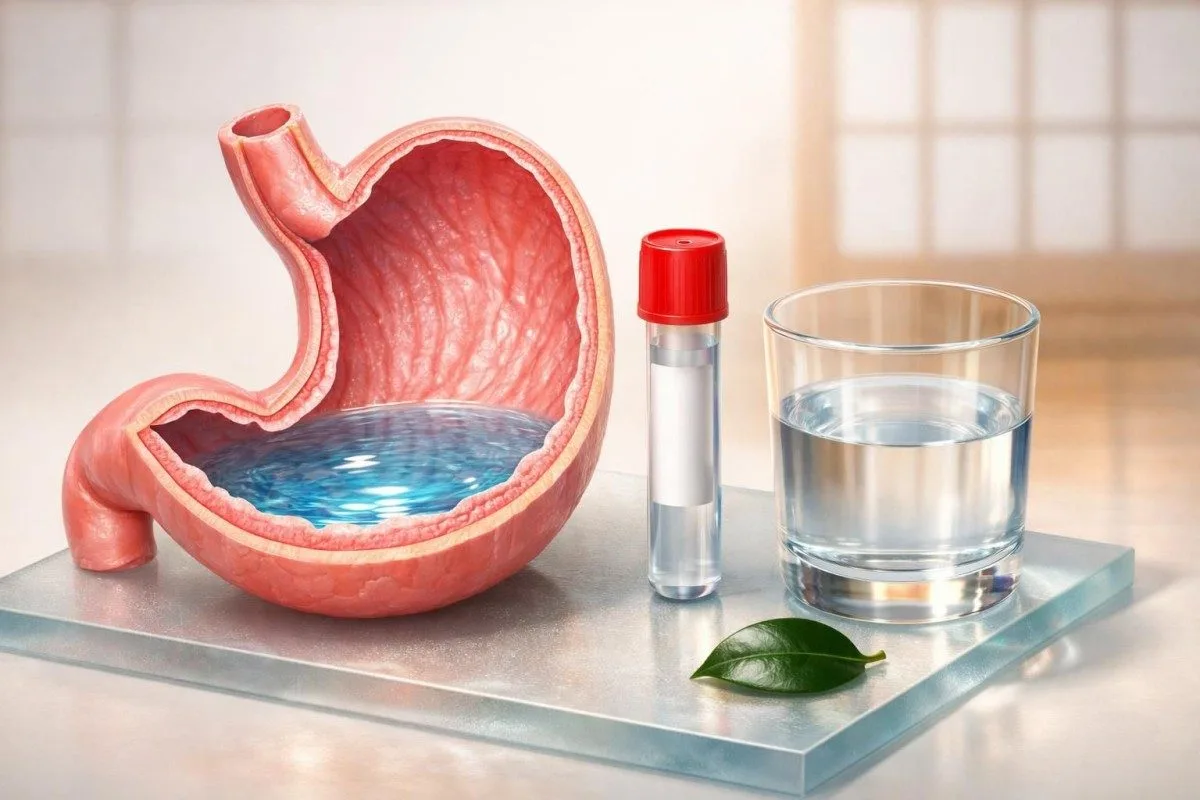
Généralament, òc: l’aiga plana es autorizada abans de la màger part de las analisi en dejú e sovent melhora la qualitat de l’analisi en evitar la desidratacion e la concentracion ligada a aquò. Las excepcions mai rigorosas son las analisi sensiblas als calòris, los panèls dependents del moment, e tot tiratge ligat a l’anestèsia.


- Aiga plana generalament, trenca pas un dejú perque a 0 kcal; 250-500 mL abans del tiratge es rasonable per la màger part dels adultes.
- glisèmia en dejú requerís al mens 8 oras sens calòris; 126 mg/dL o mai naut es dins la gamma de diabetis sus las analisi de qualificacion.
- Triglicèrids son sovent melhor verificadas aprèp 9-12 oras quand la precision conta; los valors abans en dejú, nautres que 400 mg/dL sovent desencadenan un torn de panèl en dejú.
- HbA1c requerís pas de dejú e es pas melhorat en sautant l’aiga.
- Patròn de desidratacion pòt far montar l’hematocrit 1-3 punts de percentatge e l’albumina mai naut que 5.0 g/dL sens malautiá vertadièra.
- Cafè e goma de mastegar pòdon distòrtir las analisi en dejú rigorosas; la cafèina pòt desplaçar la glucosa per 5-15 mg/dL en de personas sensiblas.
- Aigua preoperatoria pòt èsser autorizada fins a 2 oras abans l’anestèsia, jos la guida modèrna, mas las instruccions del cirurgià prevalon sus lo conselh general del laboratòri.
- Restriccion de liquids los pacients deu pas forçar l’aigua; los plans d’insufisença cardiaca o de dialisi sovent limitan l’ingesta a l’entorn de 1,0-1,5 L/dia.
Podètz beure d’aiga plana abans d’una analisi de sang en dejú?
Òc—l’aigua sola es autorizada abans la màger part dels examens d’analisi de sang en dejuni, e sovent ajuda. En data del 18 d’abril de 2026, se vos demandatz se pòdi beure d’aigua abans una analisi de sang, la responsa abituala es 1-2 copas d’aigua sola, sens calòrias, sens ensucrants, e sens limon. Kantesti AI, conselham als pacients de seguir la regla mai estricta sonque quand lo laboratòri o lo cirurgià o ditz. Nòstre guia separada de preparacion en dejuni cobre lo cafè e las autras fautas comunas.
L’aigua rompre pas un dejuni. Una analisi de sang en dejuni vòu dire pas de calòrias pendent 8-12 oras; l’aigua sola a 0 kcal, doncas aquò fa pas que s’ajaísca de biais significatiu la glucosa, l’insulina o los triglicerids. Las aigas aromatizadas, las begudas amb electrolytes, lo jus, l’aigua amb colagen e tot çò que siá ensucrat son diferentas.
Una desidratacion leugièra pòt distorsionar los resultats cap amont. Al centre, vei que los pacients amb la boca seca del matin arriban amb l’emoglobina 0,5-1,0 g/dL dessús del nivèl de basa, l’hematocrit 1-3 punts de percentatge mai naut, e l’albumina que s’escalfa cap amont de 5,0 g/dL solament per aver pas begut gaire pendent la nuèch. Aqueste biais es una concentracion, pas una malautiá novèla.
Lo punt es que l’aigua ajuda tanben lo flebotomista. Unicament 250-500 mL preses 1-2 oras abans la presa de sang fan sovent que las venas sián mai aisidas d’accedir e reduïsson las temptativas repetidas, subretot en adults mai grands e en personas que s’èran pasat d’èsser a manjar a las 22h.
Totun, disi als pacients de legir la fulla de comanda. De còps, de laboratoris juntan una glucosa en dejuni amb d’examens sens dejuni, e de còps de centres preoperatoris imprimisson de règlas tròp largues; se las instruccions son vagas, nòstra experiéncia clinica sus A prepaus de nosautres explica perqué la revision del metge importa.
Quéu analisi de sang requerisson vertadièrament un dejú — e quant de temps?
Solament una minoritat d’analisi de sang requerís vertadièrament un dejuni. Se vos demandatz quant de temps far dejuni abans una analisi de sang, la responsa usuala es de 8 oras per la glucosa en dejun, de 8-12 oras per l’insulina o HOMA-IR, e de 9-12 oras quand los triglicerids cal una basa neta; fòrça numeracions formula sanguina, examen foncion renala, examen foncion epatica, examens HbA1c, examen tiroïdian e examens de vitamina D ne fan pas. Se vòstre comandament inclutz glucosa, comença amb nòstre guia de sucre en dejun.
L’ADA definís la glucosa plasmica en dejun coma sensa ingesta calorica al mens per 8 oras. La diabetesa es diagnosticada a 126 mg/dL o mai naut sus una mostra en dejun que qualifica, mentre que 100-125 mg/dL es la franja de prediabetesa (American Diabetes Association Professional Practice Committee, 2025). Los valors a la limit son exactament ont un cafè o un gaug de nuèit pòdon èsser important.
Lo depistatge rutinari del colesteròl naut demanda pas totjorn de dejun. Lo consens europèu menat per Nordestgaard afirma que los lipids sens dejun son acceptables per fòrça pacients, mas un vertadièr dejun es encara util quand los triglicerids son nauts o quand los triglicerids sens dejun anteriors depassan 400 mg/dL (Nordestgaard et al., 2016). Guèrdas de laboratòris europèus senhalan los triglicerids sens dejun mai que 175 mg/dL que lo dejun 150 mg/dL limit. Per las basicas, vesètz nòstre interpretacion del panèl lipidic.
HbA1c ne demanda pas de dejun. Ni la màger part dels examens de numeracion formula sanguina, CMP, CRP, TSH, ferritina, B12 e vitamina D, malgrat que de còps los laboratoris locals demandan una mostra del matin solament per standardizar l’ora. L’error mai comuna del pacients es d’aviar que cada tiratge del matin demanda una preparacion a nivèl de fam.
Los clinicians despartisson sus qualques cas de frontièra. Lo fèrre seric e lo cortisol son mens ligats al dejun e mai al moment; se prene de pastillas de fèrre a 7 oras e tiratz a 8 oras, lo nombre pòt semblar falsament rasserenant.
Quand los panèls mesclats cambian la règla
Se un sol òrdre combina numeracion formula sanguina, TSH e glucosa en dejun, la glucosa fixa la preparacion. La question mai segura de pausar al laboratòri es pas solament se cal dejunar, mas quin analit dins l’òrdre es mai sensible a la preparacion.
Perqué l’aiga pòt melhorar l’accuratessa quand la desidratacion distòrta las analisi
L’aiga pòt melhorar l’accuratessa, perque la desidratacion concentra lo mostre. Quand los pacients demandan se pòdi beure d’aigua abans una analisi de sang, la question pauc considerada es pas de rompre lo dejuni; es d’evitar l’hemoconcentracion que pòt far que las analisas normalas pareguin liugierament anormalas. Explicam aqueste patròn en mai de detalh dins nòstre article sus los falses valors altes per desidratacion.
L’albumina, la proteïna totala, l’emoglobina, l’ematocrit, lo calci, lo sodiu e l’urea pòdon totes pujar quand sètz sec. L’albumina es generalament 3,5-5,0 g/dL dins los adults; quand ieu revisi una albumina isolada de 5.1 g/dL amb una proteïna totala nauta e pas cap d’autra senhal d’alarma, la desidratacion es sovent la primièra explicacion, pas una malautiá oculta. La proteïna totala es generalament 6.0-8.3 g/dL, de biais que un valor de 8.4 g/dL a costat de l’albumina nauta es sovent una pista de bon estat d’idracion.
Un rapòrt BUN/creatinina superior a aperaquí 20:1 pòt suggerir una desidratacion prerenala, totun aquò es pas especific. Lo rapòrt es mai convincent quand BUN puja e la creatinina demòra pròche de la basa, subretot aprèp dejuni, viatge, temps caud, o un esfòrç fisic dur. Nòstre guia de la rapòrt BUN/creatinina mòstra cossí aqueste patròn se desparièra de la malautiá intrínseca del ronyó.
Eccí un patròn que vei fòrça: un òme de 52 ans en bona santat arriba aprèp aver evitadas las liquids tota la nuèch, perque pensava que mai de dejuni èra melhor. L’ematocrit torna 51%, albumina 5.2 g/dL, lo calci 10,4 mg/dL, e la proteïna totala 8.4 g/dL—puèi totes quatre se normalizan aprèp una melhor idratacion al còp de tornar far l’analisi.
Las evidéncias sus exactament quant de punts la desidratacion fa mudar cada analit son, francament, mescladas, perque l’efèit depend de la talha del còs, de la pèrda de sanglada, dels diuretics e de la temperatura de l’ambient. Es per aquò que la ret neural de Kantesti analisa de clustèrs puslèu que de senhals solament, e per aquò nòstre estandards de validacion clinica importa mai que cap de chifra isolada.
Quéu analisi en dejú necessitan encara una preparacion mai rigorosa per de resultats precisos?
De quites analisis de dejuni necessitan una preparacion mai estricta, encara que l’aiga clara siá encara autorizada. L’insulina de dejuni, la glucosa, HOMA-IR, los triglicerids, l’examen de tolerància orala a la glucosa, e qualques estudis endocrins o de fèrre sensibles al moment son los que contraròli mai de près. Se la question es l’insulin-resisténcia, revisatz nòstre explicacion de HOMA-IR.
L’insulina de dejuni e HOMA-IR son plan distorsionadas per de petites causidas rutinàrias. Demandi 8-12 oras sensa calòrias, sensa goma, sensa nicotina, e sensa exercici aquela matin; altrament, una diferéncia entre la glucosa 99 mg/dL e 106 mg/dL o insulin 8 µIU/mL e 14 µIU/mL pòt mandar l’interpretacion cap a una direccion fòrça diferenta.
Los triglicerids son l’examen classic ont la preparacion encara conta. Un dinar tardiu gras o d’alcohol dins 24 oras pòt far pujar los triglicerids tant que cambia lo conselh de risc, e qualques laboratoris preferisson encara 9-12 oras de dejuni quand los triglicerids son l’objectiu principal. Se aquò es vòstre biomarcador, nòstre guia de limitacion dels triglicerids mòstra perqué 150 mg/dL dejun e 175 mg/dL sens dejun son pas intercanviables.
Los tests d’immunoassaig an un autre problèma: los suplements. Dòsis de biotina de 5-10 mg/dia—comunament presentas dins los produits pels pels e las ungles—pòdon donar de resultats enganaires d’examen tiroïdian e de biomarcadors cardiacs per 24-48 oras dins d’assajos sensibles. Nòstra guia de biotina e d’examen tiroïdian val la pena de legir se utilizatz de suplements.
E una trapa queta: l’èr sèrum es fòrça variable al cors del jorn. Dins mon practica, una presa del matin abans la pillula d’èr del jorn es generalament mai neta que una mostra aleatòria del ser, encara que la guia del laboratòri pòsca solament dire dejun. L’estendard es generalament mai fisable entre 7 e 10 del matin dins los òmes mai joves, e lo momentatge del cortisol es encara mai ajustat.
Quéu rompre vertadièrament un dejú abans d’una analisi de sang?
Las calòrias rompan lo dejuni; l’aiga sola, non. Lo cafè, lo te, la goma, las menta, la nicotina, los polvors abans l’entrenament, e quitament un exercici del matin que sembla inofensiu pòdon èsser importants per d’unes exams seleccionats, subretot la glucosa, l’insulina, lo cortisol, los triglicerids e las enzimas muscularas.
Lo cafè negre es pas neutre per la glucosa de dejuni dins totes. La cafèina pòt aumentar las catecolaminas e qualques còps desplaçar la glucosa per 5-15 mg/dL dins de pacients sensibles, çò que n’es pro per desplaçar un resultat al límit sus una linha clinica. Se l’objectiu es un mostreig estricte en dejú, sauta completament lo cafè e lo te.
Lo gòm e las menta sensa sucre son pas ideals abans d’analisis en dejú. Pòtser que i a pas gaire de calòrias, mas pòdon estimular la digestions, la saliva e las hormònas de stress; aquò generalament es pas important per una numeracion formula sanguina, mas pòt èsser important quand lo resultat que cercatz es a proximitat d’un punt de tall.
Los suplements son un problèma mai important que la màger part dels pacients pensan. En mai de la biotina, los comprimits de fèr, la niacina, la creatina e tanben la vitamina C a naut dosatge pòdon complicar l’interpretacion segon lo panèl e la metòde d’assaig. Diga a la laboratòri çò que prenguètz e quand.
L’exercici pòt confónder los resultats pendent 24-48 oras. Intervales fòrça intensos o una corsa longa pòdon elevar CK, AST, ALT, lactat e qualques còps la glucòsa, çò que explica perqué los atletes sovent besonhan una interpretacion especifica per lor cas. Nòstre guia d’analisi de sang pels atletes cobris melhor lo periòde de recuperacion que la màger part dels materials rutinèrs de laboratòri.
Quant d’aiga es rasonable lo matin del jorn de l’examen?
La màger part dels adults se’n sortisson plan amb 250-500 mL d’aiga plana abans d’una presa de matin. Aquò fa aproximativament 1-2 copas, presas sovent pendent lo 1-2 oras abans d’arribar, pas bevent a glops dins lo pargament. En nòstra plataforma d’analisi de sang amb IA, veiem mens de patrons confúses de desidratacion quand los pacients o mantenon simple e moderat.
Mai d’aiga es pas automaticament melhor. Beure 1,5-2 litres just abans la reünion solament te fa sentir mal a l’aise, e dins de personas que son predispausadas a l’iponatremia o a una sobrecarga de liquids, aquò pòt crear un autre problèma. Una ingestion pichona e regulara fonciona melhor.
Lo moment es mai important que las diferéncias d’extrem. Una copa quand te levàs e qualques glops sul camin cap a la laboratòri son sovent pro; se l’urina es gialda fòrça escura e te sentisses caparrós, es probable que n’aguèsses tròp pauc. L’urina completament clara es pas l’objectiu tanben.
La màger part dels medicaments de matin pòdon èsser avalits amb una quantitat pichona d’aiga, mas los medicaments per la diabetis son la principal excepcion. L’insulina, las sulfonilureas e qualques autres agents pòdon besonhar èsser pausats o ajustats per una presa en dejú, e aquela decision deu venir del clinician que comandèt l’examen, pas de l’endevinança.
Los flebotomistas o remarcán immediatament. Las presas mai facilas son rarament las personas que s’èran dejunadas heroicament pendent 14 oras; son aquelas que seguèron las instruccions, dormiguèron, e aguèron una copa d’aiga sensata.
Podètz beure d’aiga abans d’una analisi de sang abans d’una cirurgia?
Per una analisi de sang abans d’una cirurgia, las règlas sus l’aiga depenen mai de l’anestèsia que de la laboratòri. La meteissa laboratòri tolera generalament l’aiga plana, mas se seguís una sedacion o una anestèsia generala, las instruccions de l’equipa quirurgicala prenen lo dessús. L’ASA modular update afirma que los liquids clars son sovent autorizats fins a 2 oras abans l’anestèsia, mentre que fòrça sòlids s’arrestan 6-8 oras abans (American Society of Anesthesiologists Task Force, 2023). Nòstra guia de laboratòri pre-op descompausa los panèls abituals.
Res après mejanit es sovent de logistica anciana, pas totjorn de fisiologia. fòrça ospitals utilizan encara aquela frasa, perque las listas d’operacions cambian e i a de retards, mas las guidanças modèrnas d’anestèsia son mai nuançadas. Los pacients son sovent estonats que l’aiga simpla pòsca èsser acceptabla mai pròche de la cirurgia que un latte pres a las 5 del matin.
Las analisis de sang pre-op pròprias rarament te cal èsser sec. En fach, una quantitat modèsta d’aiga pòt facilitar la recòlta de mostras e pòt evitar que creatinina, urea, hemoglobina e hematocrit pareguin artificialament concentrats lo matin de la cirurgia.
Las instruccions de medicaments abans la cirurgia son separadas de las instruccions de dejuni. Las pastillas per la pression arterial sovent se prenen amb un glop d’aiga, mentre que los inhibidors SGLT2 son generalament arrestadas qualques jorns abans e los regims per la diabetès pòdon necessitar de cambiaments individualizats. Unes conselhs sus de medicaments GLP-1 tanben variàn segon l’anestèsista e lo risc de la procedura, per aquò las listas genericas sus internet son pas fisablas aquí.
Se vòstre fuèlh escrit contradís çò que vos an dich sus telefon, demandatz abans que lo jorn arribe. Nòstres clinicians a Contactatz-nos preferisson veire los pacients clarificar una sola question lèu que d’arribar espaventats e pas pro umidificats.
Perqué las instruccions d’anestèsia prevalon sus l’advís general
Lo risc d’aspiracion es un problèma diferent de la precision del laboratòri. Un panèl metabolic pòt tolerar l’aiga, mas un protocòl de sedacion pòt pas, per aquò lo fuèlh pre-op — e non pas l’advís general sus internet — a la darrièra paraula.
Qual cal que receba de conselhs ajustats: diabetis, malautiá renala, personas ancianas, enfants, atletes
L’advís ajustat conta per la diabetès, la malautiá renala, la fragilitat e la mainada. La màger part dels adultes pòdon beure qualque aiga abans las analisis de dejuni, mas las personas amb restriccion de liquids o amb de medicaments que baissan la glucosa necessitan una preparacion personalizada. Per las personas mai grandas, nòstre guia de las analisis del senior Es un bon punt de partida.
Las personas amb diabetès son al risc mai naut d’aver tort la preparacion de dejuni. Lo perilh es pas l’aiga; lo perilh es prene l’insulina o una sulfonilurea e puèi escartar las calòrias per 8-12 oras. HbA1c non necessita de dejuni, de biais que fòrça pacients pòdon evitar una baissa de sucre inutila lo matin en causissent lo bon examen del primièr còp.
La malautiá renala e l’insufisença cardiaca cambian lo conselh d’umanificacion. Se vos an dich de limitar los liquids a 1,0-1,5 litres per jorn, do not forçar d’aiga suplementària just perque l’internet a dit que l’idracion es utila. Uniçes glops pòdon èsser pro, e los pacients en dialisi devon seguir lo protocòl de lor unitat.
Los adultes mai ancians se desidratèron mai lèu, e los enfants pòdon se sentir fòrça mal a causa d’un dejuni prolongat. Al meu cabinet, lo pacient que se sent vertigiós dins la sala d’espèra es generalament lo de 78 ans que a sautat lo desjorn e l’aiga sens rason. Un petit beure planificat es sovent la causida mai segura.
Los atletes son un grop particular, perque l’entrenament modifica lo volum plasmatic e los marcaires musculars. Aprèp una corsa, l’hematocrit pòt semblar concentrat mentre que l’AST e lo CK s’augmentan per la renovacion del musclè, e non pas per una malautiá de la lòbra. Se seguissètz de laboratòris d’endurança, comparatz amb nòstre guia d’interpretacion de l’hematocrit e non pas reaccionar a una sola mostra aprèp la corsa.
Qué cal far se mangèretz per accident, se beguètz de cafè, o se vos oblidètz las règlas?
Se beviètz d’aiga plana, la màger part dels laboratoris pòdon encara contunhar. Se avètz begut de cafè, de jus, de goma de mastegar, d’alcohol, o un bocin, digatz al flebotomista abans que la mostra siá presa; aquela sola frasa pòt vos evitar un resultat trompador e una visita repetida.
Una fauta de preparacion afècta qualques tests e toca gaireben los autres. Un cracker o un cafè ensucrat pòt invalidar la glicèmia de dejuni, l’insulina, o los triglicerids, mas aquò solament solament demòra pas important per una numeracion formula sanguina o un panèl basic d’examen tiroïdian. La movuda practica es la declaracion, e non pas l’embaràs.
Se la mostra es ja tirada, l’interpretacion depend de la question clinica. Es fòrça mai probable que repetisca una glicèmia de 128 mg/dL après un dejuni pas perfèit que pas una vitamina D de 24 ng/mL, perque una se tròba just sus un limiti diagnostic e l’autra non.
Thomas Klein, MD, parlant de manièra clinica e non pas academica: lo mensongier alarma mai estranh que vei es pas l’aliment, es lo contèxte. Un corrèire que manja lo desjorn e s’entrena fòrça abans dels laboratoris pòt mostrar AST 89 U/L amb un bilirubina normal e panica sus la lòbra, quand la primièra lectura melhor es la carga musculara recenta; nòstre guia d’interpretacion d’AST entra dins aquela distincion.
La tendéncia ven abans d’un sol donada imperfecta. Se un resultat sembla solament un pauc fora e la preparacion èra mal facha, comparatz-lo amb los valors precedents abans de vos etiquetar coma malaut. Nòstre guia de comparason de l’analisi de sang explica cossí los clinicians decidisson quand una segonda presa es valenta.
Cossí interpretam los resultats al limit quand la preparacion en dejú èra pas totjorn perfecta
Los resultats a la franja son melhor interpretats coma de patrons, e non pas coma de senhals isolats. A Kantesti, avèm bastit nòstre flux de revision a l’entorn d’aquela problematica exacta: distinguir la vertadièra malautiá de la desidratacion, dels efèits de temporizacion, dels suplementes e de simples errors de preparacion. La equipa medica sus nòstre Conselh Consultatiu Medical revisa la logica clinica d’aquelas cridas.
Kantesti AI interpreta los resultats sensibles a l’idracion en analisant las relacions entre la CBC, la CMP e los indicadors renals, en luòc de legir cada senhal solament. Albumina 5.2 g/dL, hematocrit 50%, lo calci 10.3 mg/dL, e la rapòrt BUN/creatinina 22:1 en creissent ensems sovent indican una concentracion. Glucòsa 129 mg/dL amb albumina normala e hematocrit normal, al contrari, merita un seguiment vertadièr per diabetis.
Kantesti AI pòt legir lo rapòrt que ja tens en aperaquí 60 segondas. Enviar un PDF o una fotografia via nòstra guia per cargar un PDF de proves de sang e nòstre sistèma mapèja los biomarcadors, marca los resultats sensibles al dejuni, e los compara amb las tendéncias anterioras. Aquela maniòbra amb marca CE ara sostèn mai de 2 milions d’utilizaires dins 127+ païses e 75+ lengas jos los contraròtles HIPAA, GDPR e ISO 27001.
Nosautres mòstram tanben çò que cal far aprèp, pas solament çò que vòu dire lo nombre. Practicament, aquò pòt voler dire tornar far un contròle aprèp una melhor idracion, passar a un panèl de lipids sens dejuni, o demandar HbA1c en luòc d’un autre dejuni punitiu. Se volètz l’ensajar amb vòstre rapòrt, utilizatz nòstre demostracion liura d’analisi de sang.
Alara, aquò tot, que vòu dire per vosautres? Se demandatz se pòdi beure d’aigua abans una analisi de sang, la responsa per defaut es òc: l’aiga clara es generalament autorizada e sovent ajuda, mentre que las calòrias, los suplements, lo moment e las règlas d’anestèsia son los veritables trapaus de precision. Thomas Klein, MD, l’a escrich perque i vei totjorn de pacients culpabilizats pel laboratòri quand, sincerament, las instruccions èran la part confusa.
Questions frequentas
Pòdi beure d’aiga abans d’una analisi de sang en dejun?
Òc. L’aiga planament sovent trenca pas un dejun perquè a 0 calòrias, e 250-500 mL abans la presa sovent ajuda a prevenir l’emoconcentracion ligada a la desidratacion. Evita l’aiga aromatizada, l’aiga amb limon, las begudas d’electrolits, o tot çò que siá dolçificat. Se l’examen es ligat a una anestèsia o a un protocòl especific del laboratòri, seguis aquela instruccion en luòc.
Quant de temps deu’m dejunar abans d’una analisi de sang?
La majoritat dels exàmens de glucosa en dejú requerisson al mens 8 oras sensa calòrias. L’insulina o HOMA-IR sovent utilizant 8-12 oras, e los triglicerids se verifiquèsson comunament après 9-12 oras quand i a de besonh de precision. La numeracion formula sanguina, HbA1c, fòrça exàmens tiroïdians, e la màger part dels nivèls de vitaminas normalament requerisson pas de dejú. La responsa exacta depend del paquet d’exàmens, e non pas solament de las paraulas «examen de sang».
Pòdi beure d’aiga abans d’un examen de colesteròl?
D’òrdinari, sì. Uèi, fòrça panèls rutinari de colesteròl pòdon èsser fachs sens dejunar, mas se los triglicerids son nauts o se una valor anteriora sens dejunar èra estada superiora a 400 mg/dL, los clinicians sovent preferisson un dejun de 9-12 oras. L’aiga plana encara es autorizada dins la màger part dels cases, perque non fa pas pujar de biais material lo LDL, l’HDL o los triglicerids. L’alcohol e un dinar tardiu e fòrça pesuc son fòrça mai capables de distorsionar lo resultat.
Pòdi beure d’aiga abans de l’analisi de sang abans de la cirurgia?
Sovent, òc pel laboratòri, mas lo plan d’anestèsia sobrepassa las règlas generalas del laboratòri. Las licors claras son sovent autorizadas fins a 2 oras abans l’anestèsia, mentre que las sòlidas sovent s’arrestan 6-8 oras abans jos las guidanças actualas de l’ASA. Se se fa una extraccion de sang lo meteis matin que la procedura, seguissètz las instruccions escrichas del cirurgian o de l’anestèsista. Un sol got d’aiga pòt èsser acceptat per las pastillas, mas ne faguètz pas d’improvisacion.
E se beviéu de la cafè per error abans de las analisis en dejú?
Soscatz lo laboratòri immediatament. Lo cafè negre pòt desplaçar la glùcosa d’unes 5-15 mg/dL en qualques personas, e lo cafè amb de molhon o de sucre rompre definitivament un dejun de 8 oras per las proves de glùcosa, d’insulina o de triglicerids. Mantun còp, las numeracion formula sanguina, l’examen de vitamina D o los exàmens tiroïdians encara pòdon èsser interpretats, mas las proves de dejun estrictas pòdon necessitar de tornar far. L’error es generalament manejable se lo declaratz d’entrada.
Las personas amb malautiá de ren o restriccion de liquids devon beure d’aiga abans los analisis?
Solament dins lor plan medical usual. Los pacients amb insufisença cardiaca, malautiá renala avançada o instruccions de dialisi pòdon èsser limitats a aperaquí 1,0-1,5 litres per jorn, e deuràn pas forçar d’aiga suplementària solament per far una presa de sang. Uni pauc de glops pòdon èsser pro per facilitar la recuelhida de mostra sens empitjorar l’overcarga de flus. En cas de dobte, seguissètz lo plan de nefrologia o de cardiologia puslèu que un document generic de dejuni.
Devèdi aver un sangatge sanguin rutinari a json s'ai un resfrigèri o de fiebra?
Un resfrigèri leugièr empacha generalament pas lo test, mes la fiebra, los vòmits, la diarrea, o una infeccion importanta pòdon modificar temporàriament lo grèu, los globuls blancs, los marcaires inflamatoris, e las valors sensiblas a l'idratacion. Per un seguiment rutinari, demandar al clinician prescripteur se cal espèrar fins que vos sentissatz plan; ne retardar pas los tests urgents o preoperatòris sens instruccion.
Pòdi’m raspallar los dents abans d’una analítica de sang en dejú?
Òc. Brossetz vòstras dents coma d’abitud, mas ne bolegatz pas la pasta de dents ni utilizatz un colutòri dolç abans de la presa. Se bolegatz per accident una pichona quantitat, digatz-l’i al laboratòri; la màger part de las analísis de dejuni rutinàrias son encara utilizables.
Pòdi prene los mèdicaments regulars amb d’aiga abans de far los analyses de sang de dejuni?
D’un biais general, òc: prene los medicaments prescrits amb d’aiga planeta, levat se lo teu clinician t’a dich de los arrestar. Los medicaments per la diabetis, los diuretics, los anticoagulants e los medicaments abans de la cirurgia necessitan d’instruccions individualizadas, donc confirmatz abans del jorn de l’examen.
Obtén uèi una analisi de sang amb IA
Joinhètz mai de 2 milions d’utilizaires al mond que confian en Kantesti per una analisi instantanèa e precisa dels analisis de laboratòri. Mandatz vòstres resultats analisi de sang e recebetz una interpretacion complèta de 15,000+ biomarcadors en segondas.
📚 Publicacions de recerca citadas
Klein, T., Mitchell, S., & Weber, H. (2026). Guia de l’analisi de sang del complement C3 C4 e del títol ANA. Kantesti IA Recèrca Medicala.
Klein, T., Mitchell, S., & Weber, H. (2026). Pròva de sang del virus Nipah: Guida de deteccion precoça e de diagnostic 2026. Kantesti IA Recèrca Medicala.
📖 Referéncias mèdicas externes
Nordestgaard BG et al. (2016). Lo dejuni es pas necessari de manièra rutiniera per determinar un perfil lipidic: implicacions clinicas e de laboratòri, incluent la senhalizacion a punts de tall desiraibles de concentracion — una declaracion de consens conjunta de l’European Atherosclerosis Society e de l’European Federation of Clinical Chemistry and Laboratory Medicine. European Heart Journal.
Comitat professional de practica de l'American Diabetes Association (2025). 2. Diagnòstic e classificacion de la diabetis: Normas de Còdes de la Diabetis — 2025. Diabetes Care.
Societat Americana dels Anestesiologistas Task Force (2023). Directivas de practica de l’American Society of Anesthesiologists de 2023 per lo dejuni preoperatori: Liquids clars contenent d’idrats de carbòni amb o sens proteïna, mastegament de goma, e durada de dejuni pediatric — una actualizacion modulara de las directivas de 2017. Anesthesiology.
⚕️ Avertiment medical
Aqueste article es solament per tòcas educatius e constituís pas de conselh medical. Consultatz totjorn un professional de la sant qualificat per las decisions de diagnostica e de tractament.
Senhals de confiança E-E-A-T
Experiéncia
Revisión clinica menada pel metge de las practicas d’interpretacion de las analisis.
Expertisa
Fòcus sus la medicina de laboratòri sus cossí los biomarcadors se comportan dins un contèxte clinic.
Autoritat
Escrich pel Dr. Thomas Klein amb revisión pel Dr. Sarah Mitchell e Prof. Dr. Hans Weber.
Fisança
Interpretacion basada sus d’evidéncias amb de camins de seguiment clars per reduzir l’alarmisme.