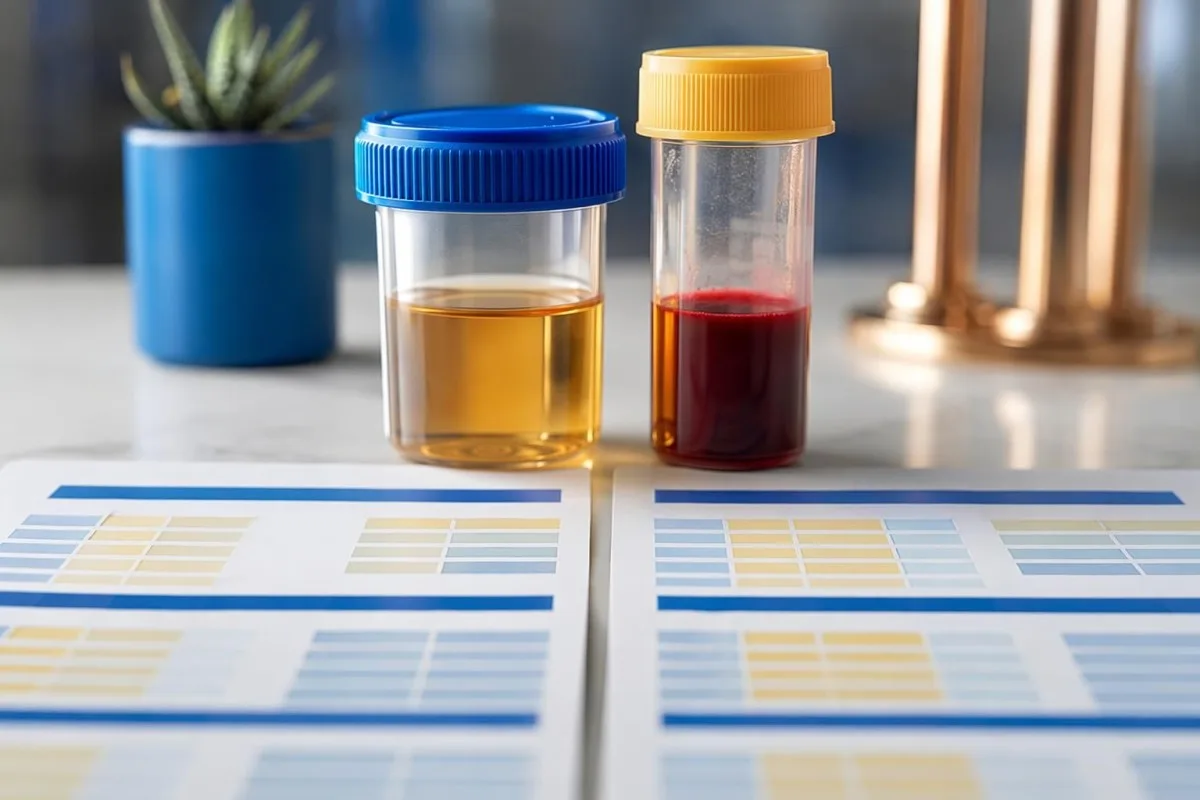
En side-ved-side blodprøvesammenligning er tryggest når du matcher enheter, faste-status, laboratoriemetode, medisineringstidspunkt og din egen baseline før du dømmer en økning eller nedgang. Fra 1. juni 2026 ser jeg fortsatt mer skade fra å overreagere på små laboratorieendringer enn fra rolig å gjenta riktig test.


- Side ved side blodprøve sammenligningen bør starte med enheter, dato, faste-status, labnavn og medisineringstidspunkt før man tolker noen endring.
- Normal biologisk variasjon betyr at en 5% natriumendring kan ha betydning, mens en 25% ALT-endring fortsatt kan være midlertidig etter trening eller sykdom.
- Triglyserider stiger vanligvis rundt 20-30 mg/dL etter vanlige måltider, så faste- og ikke-faste lipidrapporter bør ikke sammenlignes som identiske tilstander.
- Kreatinin endringer over omtrent 15-20% fortjener oppmerksomhet, spesielt når eGFR også faller eller urin albumin-kreatinin-ratio stiger.
- HbA1c endringer på 0,3 prosentpoeng kan være meningsfulle, men anemi, transfusjon, nyresykdom og hemoglobinvarianter kan forvrenge resultatet.
- TSH kan endre seg 20-50% med tid på døgnet, manglende levotyroksindoser, biotin, akutt sykdom og svangerskapstrimester.
- Medication timing er viktig: levotyroksin retesting trenger vanligvis 6-8 uker, statin lipidkontroller trenger ofte 4-12 uker, og jernlabber kan være forvrengt i dager etter tilskudd.
- Urgent changes inkluderer kalium over 6,0 mmol/L, natrium under 125 mmol/L, hemoglobin nær 7 g/dL, eller raskt stigende kreatinin med symptomer.
- Gjentatt analyse av blodprøver fungerer best når den neste testen gjentar samme laboratorium, samme tidspunkt for prøvetaking og samme rutine før testen.
Hvordan sammenligne labbesøk uten å overreagere
A side om side blodprøve blir først medisinsk nyttig etter at du har bekreftet at begge rapportene er sammenlignbare. Sammenlign samme biomarkør, samme enhet, lignende faste-tilstand, samme lab-metode om mulig, og samme medisinplan; spør deretter om endringen er større enn forventet dag-til-dag biologi.
Kantesti er en AI-blodprøvetolkningsplattform som plasserer gjentatte rapporter i en enkelt tidslinje heller enn å behandle ett rødt flagg som en diagnose. I vår kliniske gjennomgangsarbeidsflyt er den første gjennomgangen bevisst kjedelig: rapportdato, prøvetid, enhet, faste-tilstand, labnavn, og om pasienten var syk de siste 14 dagene. For et dypere pasientperspektiv på ekte trender, se vår guide til reelle laboratorietrender.
Som Thomas Klein, MD, forteller jeg pasienter at et resultat som går fra 4,2 til 4,5 mmol/L kalium vanligvis ikke er en historie i seg selv. Et resultat som går fra 4,2 til 6,2 mmol/L, spesielt med nyresykdom, ACE-hemmerbruk, eller hjertebank, er en helt annen samtale.
Frasen blodprøveforskjell mellom besøk kan høres dramatisk ut, men mange forskjeller er aritmetiske snarere enn medisinske. Et kreatinin på 1,0 mg/dL og 88 µmol/L er i hovedsak samme verdi fordi 1,0 mg/dL kreatinin tilsvarer omtrent 88,4 µmol/L.
Det praktiske trikset er å skille tre spørsmål: endret tallet seg virkelig, endret kroppen seg, og passer endringen til symptomene? De fleste feil skjer når folk svarer på det tredje spørsmålet basert på et isolert tall.
Kontroller enheter, datoer og analysemetoder før mening
Enhetsendringer kan få stabile resultater til å se unormale ut når ingenting biologisk har endret seg. Før du tolker en sammenligning av flere blodprøver, konverter enheter og bekreft at begge laboratorier målte samme analytt med samme type metode.
Kolesterol, LDL-C og HDL-C konverteres fra mg/dL til mmol/L ved å multiplisere med 0,02586; triglyserider konverteres ved å multiplisere med 0,01129. Hemoglobin i g/dL blir til g/L ved å multiplisere med 10, så 13,5 g/dL tilsvarer 135 g/L. Vår veiledning for enhetskonvertering går gjennom de vanlige fellene pasienter sender oss.
Analysemetoden er viktigst for hormoner, vitamin D, troponin, D-dimer og noen autoimmune antistoffer. Jeg har sett en pasient få panikk over et 25-OH vitamin D-fall fra 34 ng/mL til 78 nmol/L, når 78 nmol/L er omtrent 31 ng/mL; klinisk sett er dette en liten forskjell, ikke en kollaps.
Referanseområder kan ikke byttes ut mellom laboratorier. En TSH øvre grense kan være 4,0 mIU/L i ett laboratorium og 4,5 mIU/L i et annet; fri testosteronområder kan variere enda mer fordi immunanalyse og massespektrometri-metoder ikke oppfører seg likt.
Se også på prøvenotater. Hemolyse, lipemi, forsinket prosessering, eller en prøve tatt i feil rør kan endre kalium, AST, LDH, glukose og koagulasjonstester nok til å skape et falskt mønster.
Bruk biologisk variasjon til å avgjøre hva som endret seg
Biologisk variasjon er den normale fluktuasjonen innenfor en person som oppstår selv når helsen er stabil. En endring er mer overbevisende når den overstiger den forventede kombinerte variasjonen fra kroppen din og laboratorieinstrumentet.
Den klassiske Fraser og Harris-modellen beskriver referanseendringsverdien, ofte estimert som 2,77 × √(analytisk variasjon² + biologisk variasjon²), for å avgjøre om to resultater virkelig er forskjellige (Fraser og Harris, 1989). Enkelt forklart: noen markører er naturlig stabile, og andre spretter rundt.
Natrium er strengt regulert, så en bevegelse fra 140 til 132 mmol/L er mye mer meningsfull enn en triglyseridbevegelse fra 145 til 175 mg/dL etter lunsj. For dypere kontekst om forventede svingninger, vår variation guide forklarer hvorfor referanseområder som passer alle, overser personlige baselinjer.
Omtrentlige reelle endringsterskler jeg bruker klinisk er 4-5% for natrium, 10-15% for kreatinin, 20-30% for ALT, 30-50% for ferritin, og 40-60% for triglyserider eller TSH. Dette er ikke diagnosegrenser; de er grenser for signal-vs-støy.
Bevisene her er ærlig talt blandede for nyere velværemarkører som omega-3-indeks, IGF-1 og avanserte lipidpartikler. De kan være nyttige, men gjentatte tester bør standardiseres nøye fordi små skift kan reflektere pre-analytisk håndtering snarere enn fysiologi.
Faste-status endrer seg mer enn glukose
Faste- og ikke-faste-rapporter bør ikke behandles som identiske lab-besøk. Måltider kan endre triglyserider, glukose, insulin, bilirubin, fosfat og noen ganger nyremarkører nok til å forvirre en side-ved-side-gjennomgang.
Nordestgaard et al. rapporterte at rutinemessige lipidprofiler ofte kan måles uten faste, men ikke-faste-triglyserider stiger fortsatt med ca. 0,3 mmol/L, eller omtrent 26 mg/dL, etter vanlig matinntak (Nordestgaard et al., 2016). Det er greit for kardiovaskulær screening; det er mindre greit hvis du vurderer om en diett senket triglyserider med 20 mg/dL.
Fasteglukose på 100-125 mg/dL indikerer nedsatt fasteglukose, mens 126 mg/dL eller høyere ved gjentatt testing støtter diabetesdiagnose. Tilfeldig glukose over 200 mg/dL med klassiske symptomer er en annen diagnostisk setting, ikke noe å gjennomsnitte tilfeldig med fjorårets fasteverdi.
Bilirubin kan stige under faste, spesielt hos personer med Gilbert-syndrom; jeg ser ofte total bilirubin gå fra 1,1 til 1,8 mg/dL mens ALT og AST forblir normale. Vår guide til faste status endringer forklarer hvorfor det mønsteret vanligvis er mindre bekymringsfullt enn bilirubin pluss høy ALP eller GGT.
Nyrepaneler endrer seg også med nylig proteininntak og hydrering. BUN kan stige etter et proteinrikt måltid eller dehydrering, så BUN/kreatinin-forholdet bør sammenlignes med væskeinntak, ikke bare nyreangst.
Forskjeller fra lab til lab kan etterligne sykdom
Ulike laboratorier kan rapportere forskjellige verdier fra samme person på samme uke. Problemet er vanligvis kalibrering, testdesign, lokale referansepopulasjoner eller rapporteringskonvensjoner, snarere enn en plutselig sykdomsprosess.
Kantesti er en Analyseverktøy for blodprøver drevet av KI som sjekker om et resultat har endret seg fordi enheten, referanseintervallet eller laboratoriekilden har endret seg. Dette er spesielt nyttig for analyse av gjentatte blodprøver på tvers av land, der formater for rapportering av ferritin, vitamin D, skjoldbruskkjertel og nyrer varierer sterkt.
Noen europeiske laboratorier bruker en lavere øvre referansegrense for ALT enn eldre amerikanske rapporter, ofte rundt 35 IU/L for menn og 25 IU/L for kvinner. En verdi på 42 IU/L kan bli markert ett sted og ignorert et annet, selv om leveren ikke har endret seg mellom flyplassene.
Samme problem påvirker eGFR. En kreatininbasert eGFR på 58 mL/min/1.73 m² hos en 72-åring tolkes ikke likt som samme eGFR hos en 28 år gammel utholdenhetsutøver; alder, muskelmasse, cystatin C og urin-albumin avgjør risikoen.
Referanseområder beskriver populasjoner, ikke ditt personlige utgangspunkt. Vår artikkel om hvorfor normale områder gir feil inntrykk er verdt å lese før du jager hver verdi et poeng utenfor det trykte intervallet.
Medisineringstidspunkt er en del av resultatet
Tidspunkt for medisinering og tilskudd kan endre et laboratorieresultat like mye som sykdommen som overvåkes. En gyldig sammenligning registrerer dose, glemte doser, startdato, tidspunkt for siste dose, og om blodet ble tatt før eller etter medikamenttoppen.
Levotyroksin-doseringsendringer krever vanligvis 6-8 uker før TSH når en ny stabil tilstand. Testing etter 2 uker kan vise et misvisende resultat underveis, mens fritt T4 kan endre seg raskere enn TSH.
Biotin i 5-10 mg/dag kan forstyrre noen skjoldbruskkjertel-, troponin- og hormon-immunoassays; mange klinikere ber pasienter om å slutte med det i 48-72 timer før testing, avhengig av dose og testmetode. Jeg har sett en lav TSH og høy fritt T4 forsvinne etter at en pasient sluttet med et hårtilskudd i tre dager.
Jern-tilskudd kan midlertidig øke serum-jern og transferrin-metning, mens ferritin endrer seg saktere over uker. For detaljer om tidspunkt for medisinering etter medisinering, er vår veileder for medikament-tidslinje mer nyttig enn å prøve å huske hver halveringstid.
Statin-respons vurderes vanligvis etter 4-12 uker, og LDL-C faller ofte 30-50% avhengig av intensitet og etterlevelse. Hvis den andre lipid-paneltaken ble gjort etter glemte doser, ferie, eller annen faste-status, mister sammenligningen sin styrke.
Trening, sykdom og hydrering etterlater fingeravtrykk
Nylig trening, virusinfeksjon, vaksinasjon, varmeeksponering og dehydrering kan skape midlertidige laboratoriemønstre som ser skremmende ut isolert sett. Disse mønstrene er vanligvis gjenkjennelige når flere markører beveger seg sammen.
En 52 år gammel maratonløper med AST 89 IU/L og ALT 42 IU/L har kanskje ikke leverskade i det hele tatt hvis CK er 2800 IU/L og symptomene er muskelsårhet. AST finnes i muskler så vel som lever, så høy AST med normalt bilirubin og høy CK peker bort fra galleveisproblemer.
Dehydrering konsentrerer albumin, hematokrit, total protein, kalsium og noen ganger BUN. En hemoglobinøkning fra 14,2 til 15,7 g/dL etter en varm dag kan reflektere tap av plasmavolum snarere enn ny produksjon av røde blodlegemer.
Inflammasjonsmarkører henger etter symptomene. CRP kan nå en topp 24-72 timer etter at infeksjonen starter, og milde økninger under 10 mg/L er vanlig etter virusinfeksjon eller hard trening. Vår guide til laboratorieendringer etter trening går gjennom CK, AST, WBC og ferritin-mønstre.
Tidspunkt er også viktig etter vaksinasjon. En liten endring i WBC, CRP eller blodplater innen 1-7 dager er vanligvis mindre bekymringsfull enn en vedvarende unormalitet etter 3-4 uker, spesielt hvis feber, blåmerker, brystsmerter eller kortpustethet er fraværende.
Langsomme trender betyr ofte mer enn røde flagg
Sakte bevegelse over tre eller flere laboratoriebesøk er ofte mer klinisk meningsfull enn én grenseverdi. Gjentatt blodprøveanalyse fungerer best når den gjenkjenner helning, vedvarenhet og markørklustere heller enn isolerte unormale verdier.
I vår analyse av 2M+ bruker-opplastede rapporter, ser vi konsekvent risiko gjemt i verdier som fortsatt er teknisk normale. Et fasteglukose som stiger fra 86 til 94 til 101 mg/dL over tre år fortjener en annen samtale enn en enkelt 101 mg/dL etter dårlig søvn.
Nyre-risiko er lik. KDIGO 2024 bemerker at en eGFR-endring større enn 20% ved påfølgende testing overskrider forventet variasjon og krever evaluering, spesielt når urin albumin-kreatinin-ratio også forverres (KDIGO, 2024).
Ferritin er en annen markør for sakte trend. Et fall fra 78 til 42 til 18 ng/mL over 18 måneder kan forklare rastløse bein, hårtap eller tretthet før hemoglobin faller under 12 g/dL hos kvinner eller 13 g/dL hos menn.
For et dypere rammeverk, vår veiledning til trege laboratorietrender forklarer hvorfor tre punkter utgjør en trend og to punkter utgjør et spørsmål. Denne distinksjonen forhindrer både selvtilfredshet og unødvendig bekymring.
Hvilke endringer trenger umiddelbar medisinsk behandling
Noen laboratorieendringer bør ikke håndteres som rutinemessig trendgjennomgang. Alvorlige elektrolyttavvik, fallende hemoglobin, stigende kreatinin med symptomer, svært høyt glukose, positiv troponin, eller koagulasjonstester endringer på antikoagulantia krever tidsriktig klinisk vurdering.
Kalium over 6,0 mmol/L eller under 2,8 mmol/L kan være farlig, spesielt med svakhet, hjertebank, nyresykdom eller hjertemedisiner. En repetisjon kan være nødvendig for å utelukke hemolyse, men symptomer bør ikke vente på et regneark.
Natrium under 125 mmol/L eller over 155 mmol/L kan forårsake forvirring, kramper, fall eller alvorlig tørste avhengig av endringshastigheten. Samme tall kan tolereres når det er kronisk, men farlig når det er akutt, noe som er grunnen til at timing og symptomer betyr noe.
Hemoglobin nær 7 g/dL, blodplater under 20 × 10⁹/L, nøytrfile under 0,5 × 10⁹/L, eller WBC over 50 × 10⁹/L krever vanligvis direkte klinisk gjennomgang. Vår kritiske verdier veileder lister opp situasjoner der en akutt samtale er bedre enn hjemmetolkning.
Kreatinin som stiger 30% etter oppstart av ACE-hemmer kan overvåkes i noen tilfeller, men kreatinin dobling fra baseline er ikke en liten trend. Hvis redusert urinering, hevelse, tungpustethet, brystsmerter, svart avføring eller besvimelse oppstår med unormale laboratorieresultater, behandle personen først og sammenligningen deretter.
Hvordan sammenligne CBC, CMP, lipider og skjoldbruskkjertel
Vanlige paneler bør sammenlignes etter mønster, ikke ved å skanne etter røde bokstaver. CBC, CMP, lipidpanel, thyreoideaprøver, jernstudier og inflammatoriske markører har hver sine regler for meningsfull endring.
For CBC-er betyr absolutte verdier vanligvis mer enn prosentandeler. Neutrofiler på 75% kan se høye ut, men et absolutt antall nøytrofile på 4.8 × 10⁹/L er ofte normalt hvis total WBC er normal.
For CMP-er betyr klynger: ALT pluss AST tyder på hepatocellulær stress, ALP pluss GGT tyder på kolestatisk eller biliært mønster, og høyt kalsium pluss lav albumin kan trenge korrigert kalsium eller ionisert kalsium. Vår guide til abnorme klynger viser hvorfor grupperte resultater er tryggere enn tolkning av enkeltverdier.
For lipider forteller LDL-C, non-HDL-C, ApoB, triglyserider og fastetilstand litt ulike historier. I henhold til 2018 AHA/ACC-kolesterolretningslinjen kan ApoB være nyttig når triglyserider er 200 mg/dL eller høyere fordi LDL-C kan undervurdere partikkelrelatert risiko (Grundy et al., 2019).
For thyreoidea: sammenlign TSH med fritt T4 og tidspunkt. TSH kan stige over natten og falle senere på dagen; et skifte fra 2,8 til 4,1 mIU/L kan være tidsrelatert, mens TSH 12 mIU/L med lavt fritt T4 er et tydeligere hypothyreosemønster.
Din baseline endrer seg med alder, graviditet og trening
En god sammenligning bruker riktig utgangsverdi for personen, ikke bare det trykte referanseintervallet. Alder, graviditet, pubertet, overgangsalder, utholdenhetstrening, muskelmasse og kronisk medisinbruk kan alle endre forventet område.
Barn er ikke små voksne i laboratorietolkning. Alkalisk fosfatase kan være mye høyere under vekst, lymfocyttall er høyere hos yngre barn, og tolkning av ferritin avhenger av alder, inflammasjon og kosthold.
Graviditet senker kreatinin fordi nyrefiltrasjonen øker, så et kreatinin på 0,9 mg/dL kan være mindre betryggende sent i svangerskapet enn hos en ikke-gravid voksen. TSH-trimester-mål er også lavere tidlig i graviditeten, og derfor kan en rapport som er flagget som normal fortsatt trenge obstetrisk kontekst.
Idrettsutøvere har ofte høyere CK, lavere kreatinin i forhold til kroppsstørrelse hvis de er utholdenhetstrent, og forbigående AST-økninger etter harde økter. Eldre kan ha tilsynelatende normalt kreatinin til tross for lav muskelmasse; cystatin C kan hjelpe når eGFR ser for betryggende ut.
Hvis du sammenligner en forelder, et barn eller en idrettsutøver, bruk aldersspesifikk tolkning i stedet for generiske grenseverdier. Vår aldersspesifikke områder er et nyttig utgangspunkt for familier som følger flere rapporter sammen.
Hvordan Kantesti AI håndterer gjentakende rapporter
Kantesti AI sammenligner gjentatte rapporter ved å standardisere enheter, sjekke referanseintervaller, oppdage sannsynlige laboratorieartefakter og rangere endringer etter klinisk kontekst. Den gjør ikke én abnorm verdi om til en diagnose; den ser etter mønstre som fortjener oppfølging.
Kantesti er en AI-plattform for tolkning av biomarkører brukt av 2M+ personer i 127+ land, så motoren ser rapporter i mange enheter, språk og laboratorieformater. Systemet vårt kan lese en PDF eller et bilde på omtrent 60 sekunder, men hastighet er ikke det kliniske målet; kontekst er.
Plattformen sjekker om en kreatininendring skyldes enhetskonvertering, dehydrering, medisineringstidspunkt, eller mulig nyresvikt før den gir en forklaring på vanlig språk. Lesere som ønsker de tekniske detaljene kan se vår veiledning for AI-teknologi.
Vår medisinske valideringsprosess tester også for hyperdiagnostikk-feller, der et svar virker selvsikkert, men overdriver en normal variant. Den underliggende benchmark-designen er beskrevet i klinisk valideringsreferanse.
Jeg ønsker fortsatt at pasienter skal bruke klinikere. AI kan organisere, flagge og forklare; den kan ikke undersøke magen din, høre en ny bilyd, vurdere dehydrering ved sengekanten, eller avgjøre om brystsmertene dine er trygge.
Gjør sammenligningen til en nyttig legebeskjed
En nyttig legebeskjed er kort, datert og spesifikk. Send de endrede biomarkørene, endringens størrelse, symptomer, medisinendringer, faste status, og spørsmålet du trenger svar på.
En god melding lyder slik: Min kreatinin steg fra 0,92 til 1,18 mg/dL over 4 måneder, eGFR falt fra 82 til 63, jeg startet lisinopril 10 mg for seks uker siden, og jeg har ingen hevelse eller redusert urin. Det gir en kliniker nok signal til å avgjøre om gjenta, sjekke urin ACR, eller justere medisinering.
En svakere melding er: Mine nyrelaboratorietester er dårlige, hva betyr dette? Jeg sier det vennlig; angst gjør oss alle vage. Tall, datoer og symptomer reduserer sjansen for frem-og-tilbake forsinkelser.
Thomas Klein, MD og våre kliniske anmeldere bruker denne samme strukturen når vi reviderer vanskelige tolkninger: hva endret seg, hvor mye, under hvilke forhold, og hva annet endret seg med det. Vår medisinske rådgivende styre gjennomgår standardene bak hvordan vi rammer inn risiko uten å skremme folk unødvendig.
Legg ved begge rapportene hvis du kan. Skjermbilder som er klippet til én rød verdi, skjuler ofte ledetråden, som for eksempel et høyt albumin som antyder dehydrering eller et høyt CK som forklarer AST.
Standardiser neste retest før du dømmer fremgang
Neste retest bør gjenta forholdene som betyr noe for biomarkøren du sporer. Samme laboratorium, samme tid på dagen, samme fastevindu, lignende treningsbelastning og registrert medisineringstidspunkt gjør neste sammenligning langt mer pålitelig.
For lipider, bruk den samme fastebeslutningen hver gang hvis du vurderer livsstilsrespons. For skjoldbruskkjertelen, test på et lignende morgentidspunkt og unngå biotin i 48-72 timer hvis din kliniker er enig. For testosteron, trekk før kl. 10.00 når mulig, fordi nivåene om morgenen ofte er betydelig høyere.
For nyremarkører, kom normalt hydrert og unngå uvanlig høyt proteininntak eller intens trening i de forrige 24-48 timene. For ferritin og CRP, unngå testing under akutt sykdom med mindre sykdommen er årsaken til testing.
For HbA1c, ikke test for ofte. Fordi røde blodlegemers levetid i gjennomsnitt er rundt 120 dager, er en gjentakelse etter 8-12 uker mer informativ enn en etter 10 dager, med mindre det er spørsmål om nøyaktighet eller en stor terapijustering.
Kantesti følger dokumentert clinical standards for å forklare usikkerhet, gjentatte tester og eskalering. Konklusjon: en side-ved-side sammenligning handler ikke om å vinne mot forrige måneds tall; det handler om å finne endringene som er store nok, vedvarende nok og koherente nok til å fortjene handling.
Ofte stilte spørsmål
Hva er den beste måten å sammenligne to blodprøverapporter på?
Den beste måten å sammenligne to blodprøverapporter på er først å matche biomarkørnavn, enhet, analyseteknikk, fastestatus, prøvetakingstidspunkt og tidspunkt for medisinering. Deretter beregner du prosentvis endring i stedet for bare å reagere på om verdien er rød eller svart. En økning i kreatinin fra 0,9 til 1,1 mg/dL er omtrent 22%, noe som kan fortjene mer oppmerksomhet enn et lite avvik i ALT etter trening. Hvis endringen er stor, vedvarende eller ledsaget av symptomer, send begge rapportene til legen din.
Hvor mye variasjon i blodprøver er normalt mellom besøk?
Normal variasjon i blodprøver avhenger av markøren: natrium kan variere bare omtrent 4–5%, mens triglyserider, TSH, ferritin og leverenzymer kan variere 25–60% avhengig av faste, sykdom, trening og analysemetode. Et lite skift innenfor referanseområdet er ofte biologisk støy. En endring som overstiger forventet referanseendringsverdi, gjentar seg på en andre prøve, eller opptrer sammen med endringer i beslektede markører, er mer sannsynlig å være reell. Symptomer og tidspunkt for medisinering bør alltid vurderes før man bestemmer hva endringen betyr.
Hvorfor så blodprøven min dårligere ut ved et annet laboratorium?
En blodprøve kan se verre ut ved et annet laboratorium fordi enheter, referanseintervaller, instrumenter, antistoffanalyser og kalibreringsstandarder er forskjellige. For eksempel kan kreatinin som er oppgitt i mg/dL og µmol/L se helt annerledes ut med mindre du vet at 1,0 mg/dL tilsvarer omtrent 88,4 µmol/L. Skjoldbruskkjertelhormoner, vitamin D, ferritin og testosteron er spesielt sårbare for metodeforskjeller. Hvis mulig, gjenta trendfølsomme tester ved samme laboratorium.
Kan ikke-fastende prøver sammenlignes med fastende prøver?
Ikke-fastende prøver kan sammenlignes med fastende prøver bare for noen markører, og fastestatus må noteres. Triglyserider øker ofte rundt 20–30 mg/dL etter måltider, mens glukose, insulin, bilirubin, fosfat og BUN også kan endre seg. LDL-C og total kolesterol er ofte fortsatt nyttige for risikoscreening, men livsstilsfremgang bør vurderes under like forhold. Hvis resultatet ditt endret seg akkurat nok til å bekymre deg, gjenta det med samme fastevindu.
Hvilke endringer i blodprøver er akutte?
Akutte blodprøveendringer omfatter kalium over 6,0 mmol/L, kalium under 2,8 mmol/L, natrium under 125 mmol/L, natrium over 155 mmol/L, hemoglobin nær 7 g/dL, eller positiv troponin ved brystsmerter. Svært høy glukose, raskt stigende kreatinin, alvorlige trombocyttavvik eller endringer i koagulasjonstester ved blodfortynnende behandling krever også rask klinisk vurdering. En ny prøve kan være nødvendig for å utelukke en laboratorieartefakt, men symptomer som brystsmerter, besvimelse, forvirring, svakhet eller kortpustethet skal ikke vente. I slike tilfeller skal du oppsøke akutt medisinsk hjelp.
Hvor ofte bør jeg gjenta unormale blodprøver?
Gjentakelsestid avhenger av markøren og alvorlighetsgrad. Milde, isolerte avvik gjentas ofte etter 1–4 uker under standardiserte forhold, mens medikamentoppfølging kan kreve faste intervaller som 6–8 uker for TSH etter endringer i levotyroksin eller 4–12 uker for lipider etter endringer i statiner. HbA1c trenger vanligvis omtrent 8–12 uker for å gjenspeile en meningsfull behandlingsendring. Kritiske verdier eller unormale resultater med symptomer bør diskuteres samme dag i stedet for å planlegges tilfeldig.
Kan kunstig intelligens sammenligne flere blodprøver på en trygg måte?
AI kan trygt støtte sammenligning av flere blodprøver når den standardiserer enheter, sjekker kontekst for faste og medisiner, flagger sannsynlige artefakter og forklarer usikkerhet i stedet for å stille diagnose basert på én enkelt verdi. Kantesti AI er utviklet for å organisere gjentatte rapporter, identifisere mønstre og hjelpe pasienter med å stille bedre spørsmål på omtrent 60 sekunder. Den skal ikke erstatte en kliniker når resultatene er kritiske, symptomene er alvorlige, eller når diagnosen krever en undersøkelse. Den tryggeste bruken er AI i tillegg til medisinsk vurdering, ikke AI i stedet for behandling.
Kan menstruasjonssyklusen min påvirke hvordan jeg sammenligner svar fra blodprøver?
Ja. Estradiol, progesteron, luteiniserende hormon og follikkelstimulerende hormon varierer naturlig gjennom menstruasjonssyklusen, så noter syklusdag og tidspunkt for prøvetaking. Kraftige menstruasjonsblødninger kan også bidra til lavere hemoglobin og jernlagre over tid.
Hva bør jeg gjøre hvis den gamle labrapporten min mangler referanseområdet?
Du kan fortsatt sammenligne selve tallet og enheten, men tolkningen er mindre presis uten laboratoriets eget referanseområde og metode. Be laboratoriet eller klinikken om den fullstendige rapporten, spesielt for skjoldbruskkjertel, hormoner, vitaminer og spesialtester.
Få AI-drevet analyse av blodprøver i dag
Bli med over 2 millioner brukere over hele verden som stoler på Kantesti for øyeblikkelig, nøyaktig analyse av laboratorietester. Last opp blodprøveresultatene dine og få omfattende tolkning av 15,000+-biomarkører på sekunder.
📚 Refererte forskningspublikasjoner
Klein, T., Mitchell, S., & Weber, H. (2026). Klinisk valideringsrammeverk v2.0 (medisinsk valideringsside). Kantesti KI medisinsk forskning.
Klein, T., Mitchell, S., & Weber, H. (2026). AI Blood Test Analyzer: 2.5M Tests Analyzed | Global Health Report 2026. Kantesti KI medisinsk forskning.
📖 Eksterne medisinske referanser
Fraser CG og Harris EK (1989). Generering og anvendelse av data om biologisk variasjon i klinisk kjemi. Kritiske vurderinger innen klinisk laboratorievitenskap.
KDIGO Work Group (2024). KDIGO 2024 kliniske retningslinjer for evaluering og håndtering av kronisk nyresykdom. Kidney International.
⚕️ Medisinsk ansvarsfraskrivelse
Denne artikkelen er kun for informasjonsformål og utgjør ikke medisinsk rådgivning. Rådfør deg alltid med en kvalifisert helsepersonell for beslutninger om diagnose og behandling.
E-E-A-T tillitssignaler
Experience
Klinisk gjennomgang ledet av lege av arbeidsflyter for laboratorietolkning.
Expertise
Fagområde laboratoriemedisin med fokus på hvordan biomarkører oppfører seg i klinisk kontekst.
Authoritativeness
Skrevet av Dr. Thomas Klein med gjennomgang av Dr. Sarah Mitchell og Prof. Dr. Hans Weber.
Trustworthiness
Evidensbasert tolkning med tydelige oppfølgingsveier for å redusere uro.