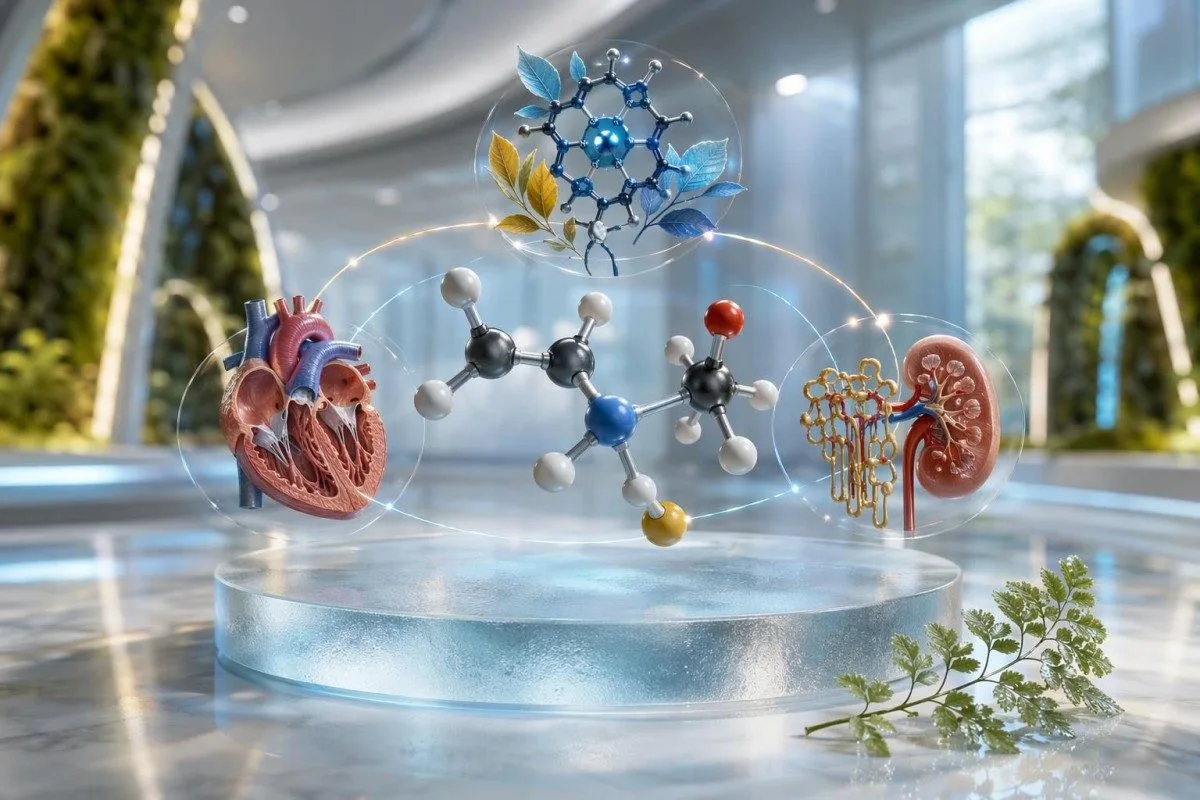
Homocystein er et lite tall med en overraskende bred historie: metylering, B-vitaminer, nyreclearance, vaskulær risiko, og noen ganger medikamenteffekter møtes her.


- Normalområde for homocystein er vanligvis rundt 5–15 µmol/L hos voksne, selv om mange klinikere foretrekker <10–12 µmol/L in people with vascular risk.
- Høye homocystein-nivåer are commonly grouped as mild 15–30 µmol/L, moderate 30–100 µmol/L, and severe >100 µmol/L.
- Homocystein og B12 henger sammen fordi B12 trengs for å resirkulere homocystein til metionin; lav eller funksjonelt lav B12 kan drive homocystein over 15 µmol/L.
- Folate status er viktig fordi folat tilfører metylgrupper for homocysteinmetabolisme; serumfolat <3 ng/mL often suggests deficiency.
- Kidney function endrer tolkningen fordi homocystein ofte stiger når eGFR faller under 60 mL/min/1.73 m², selv når vitaminnivåene ser tilstrekkelige ut.
- Medisingjennomgang er fornuftig hvis homocystein er høyt, spesielt med metformin, protonpumpehemmere, metotreksat, fenytoin, karbamazepin eller eksponering for lystgass.
- Ny test gir vanligvis mening etter 6–8 uker med korrigering av B12, folat, nyre-, skjoldbruskkjertel- eller medikamentfaktorer, ved bruk av samme laboratorium når mulig.
- Tolkning av hjerterisiko bør inkludere LDL-C, ApoB, blodtrykk, røyking, diabetesmarkører, hs-CRP og familiehistorie; homocystein alene bør ikke styre behandlingsbeslutninger.
Hva er normalområdet for homocystein?
Det normalområde for homocystein i de fleste voksenlaboratorier er omtrent 5–15 µmol/L, men jeg behandler vanligvis 10–15 µmol/L som en gråsone når B12-symptomer, nyresykdom eller høy kardiovaskulær risiko er til stede. Høye homocystein-nivåer over 15 µmol/L kan peke mot B12, folat, B6, nyre-, skjoldbruskkjertel-, medikament- eller genetiske bidragsytere. Vår Kantesti AI tolkning ser på dette mønsteret, ikke bare flagget.
Et homocysteinresultat på 8 µmol/L er vanligvis betryggende, mens 18 µmol/L er mildt forhøyet og fortjener en ny gjennomgang. Nyansen er at et resultat på 13 µmol/L hos en 31 år gammel veganer med numne tær er mer interessant for meg enn samme resultat hos en 82 åring med stabil nyresykdom stadium 3.
Laboratorier bruker ikke alle de samme grenseverdiene. Noen europeiske laboratorier flagger verdier over 12 µmol/L, mens mange amerikanske og britiske rapporter fortsatt viser en øvre referansegrense nær 15 µmol/L; vår artikkel om normale referanseområder for blodprøver forklarer hvorfor et referanseintervall ikke er det samme som et ideelt personlig mål.
Thomas Klein, MD, her: i klinikken handler jeg sjelden utelukkende basert på homocystein. Jeg stiller tre spørsmål først: ble prøven håndtert riktig, er det en B-vitamin- eller renal ledetråd i nærheten, og har pasienten vaskulær risiko som endrer terskelen for handling?
Hvordan måles homocystein blodprøven?
A homocystein blodprøve måler totalt homocystein i plasma eller serum, rapportert i mikromol per liter. Resultatet kan stige hvis laboratorieprøven blir liggende ubehandlet for lenge, noe som er en grunn til at en overraskende høy verdi noen ganger bør gjentas før noen får panikk.
De fleste laboratorier foretrekker faste i 8–12 timer, selv om faste ikke er like kritisk som for noen triglyseridtester. Hvis samme person tester kl. 08.00 fastende en måned og kl. 16.00 etter en proteinrik lunsj neste dag, ville en forskjell på 2–4 µmol/L ikke sjokkere meg.
Preanalytisk håndtering betyr mer enn mange pasienter får vite. Homocystein kan stige i en uprosessert prøve fordi celledeler fortsetter å frigjøre det; rask sentrifugering og kjøling kan forhindre et falskt høyere resultat med flere µmol/L i noen situasjoner.
Hvis du kombinerer homocystein med glukose, insulin eller lipider, sjekk de praktiske reglene i vår guide for fastende blodprøve. Jeg forteller vanligvis pasienter: vann er greit, hold kosttilskudd konsistente, og ikke test morgenen etter et uvanlig proteinrikt festmåltid.
Hva regnes som mild, moderat eller alvorlig forhøyelse?
Høye homocystein-nivåer klassifiseres vanligvis som milde ved 15–30 µmol/L, moderate ved 30–100 µmol/L og alvorlige over 100 µmol/L. Jo høyere tall, jo mer skifter jeg fra livsstilsdiskurs mot en bevisst søken etter mangel, nedsatt nyrefunksjon, medikamentelle effekter eller sjelden metabolsk sykdom.
En verdi på 16 eller 17 µmol/L er ofte reell, men vanligvis ikke en nødsituasjon. I vår analyse av blodprøver, er det vanligste mønsteret rundt det området ikke en sjelden genetisk lidelse; det er en blanding av grenseverdier for B12, lavere folatinntak, redusert eGFR, røyking eller medisinbruk.
En verdi på 45 µmol/L endrer samtaletonen. På det nivået ønsker jeg B12, metylmalonsyre, folat, kreatinin, eGFR, TSH, leverenzymer, CBC-indekser og en medisinreview fremfor en vag instruksjon om å spise mer grønnsaker.
Et gjentatt resultat er mest nyttig når gjentakelsesforholdene samsvarer med de opprinnelige forholdene. Vår guide til variasjon i blodprøver er verdt å lese før du tolker en endring på 3 µmol/L som et dramatisk biologisk skifte.
Hvordan kobler homocystein seg til hjerte- og hjerneslagrisiko
Homocystein er en markør for kardiovaskulær risiko, ikke en frittstående diagnose av hjertesykdom. Verdier over 15 µmol/L er assosiert med høyere vaskulær risiko i befolkningsstudier, men senking av tallet med vitaminer har ikke pålitelig forhindret hjerteinfarkt i randomiserte studier.
The Homocysteine Studies Collaboration rapporterte i JAMA at en 25% lavere vanlig homocystein konsentrasjon var assosiert med omtrent 11% lavere risiko for iskemisk hjertesykdom og 19% lavere risiko for hjerneslag etter justering (Homocysteine Studies Collaboration, 2002). Det er meningsfull epidemiologi, men det beviser ikke at en pille som senker homocystein fikser arterien.
Bevisene her er ærlig talt blandede. I HOPE-2-studien senket folsyre pluss vitaminene B6 og B12 homocystein med omtrent 2,4 µmol/L, men reduserte ikke signifikant det kombinerte endepunktet av kardiovaskulær død, hjerteinfarkt og hjerneslag, selv om hjerneslag alene ble redusert (Lonn et al., 2006).
Når jeg gjennomgår kardiovaskulære laboratorieprøver, kommer homocystein etter LDL-C, ApoB, blodtrykk, diabetesstatus, røyking og familiehistorie. Hvis du vil ha den bredere listen over markører, vår guide til hjertes blodsjekker gir hierarkiet jeg bruker i reelle konsultasjoner.
Hvorfor homocystein og B12 hører sammen
Homocystein og B12 hører sammen fordi vitamin B12 hjelper til med å omdanne homocystein tilbake til metionin. Hvis B12 er lavt, grenseverdi, eller funksjonelt utilgjengelig, kan homocystein stige selv før hemoglobin eller MCV blir åpenbart unormalt.
Et serum-B12 under 200 pg/mL er vanligvis mangelfullt, mens 200–300 pg/mL er området der jeg ser hardere etter hvis symptomene passer. Methylmalonsyre over ca. 0,40 µmol/L støtter funksjonell B12-mangel mer spesifikt enn homocystein, fordi folatmangel også kan øke homocystein.
Savage og kolleger viste i The American Journal of Medicine at methylmalonsyre og total homocystein var svært sensitive for å oppdage klinisk signifikant kobalamin- og folatmangel (Savage et al., 1994). Denne artikkelen stemmer fortsatt med det jeg ser: CBC kan se rolig ut mens de metabolske markørene allerede vinker.
En vanlig felle er at pasienten tar et multivitamin i 10 dager før prøvetaking. Serum-B12 kan se forbedret ut, men homocystein og methylmalonsyre kan henge etter; vår vitamin B12-testguide forklarer hvorfor timing og symptomer betyr noe.
Hvorfor nyrefunksjon endrer betydningen
Nyrefunksjon endrer tolkningen av homocystein, fordi nyrene bidrar til å fjerne og metabolisere homocystein. Når eGFR faller under 60 mL/min/1,73 m², stiger homocystein ofte inn i 15–30 µmol/L-området selv når B12 og folat ikke er tydelig mangelfulle.
Et kreatinin på 1,1 mg/dL kan være normalt hos én person og et nyrevarsel hos en annen, særlig når alder, kjønn og muskelmasse er ulike. Derfor foretrekker jeg eGFR og trenddata fremfor ett enkelt kreatinin når jeg tolker homocystein.
Mønsteret jeg ofte ser er homocystein 18–24 µmol/L med eGFR 45–59 og normalt serum-B12. I en slik situasjon kan aggressiv vitamindosering senke tallet litt, men den mer ærlige forklaringen er redusert renal clearance i tillegg til grunnleggende kardiovaskulær risiko.
Hvis rapporten din viser både høyt homocystein og nyremarkører nær grensen, les vår eGFR aldersveiledning. Beslutningen er annerledes for en frisk 38-åring med eGFR 58 enn for en 86-åring med stabil eGFR 58 i fem år.
Medikamenter, livsstil og MTHFR-ledetråder
Medikamenter og livsstil kan øke homocystein ved å redusere absorpsjon av B-vitaminer, endre folatmetabolismen eller øke behovet for metylering. Metformin, protonpumpehemmere, metotreksat, fenytoin, karbamazepin, valproat, kolestyramin og eksponering for lystgass (nitrous oxide) er verdt å spørre om.
Metformin er et klassisk eksempel, fordi langtidsbruk kan senke B12 i en del av pasientene. Jeg blir spesielt interessert når homocystein er høyt, B12 er 220–350 pg/mL, og pasienten har prikking, dårlig balanse, glossitt eller «brain fog».
Røyking, mye alkoholinntak, lav grønnsaksinntak, høyt kaffeinntak i noen studier, og ubehandlet hypotyreose kan også presse nivåene oppover. En TSH over 4–5 mIU/L med høyt homocystein er ikke bevis på årsakssammenheng, men det er et mønster jeg ikke ville ignorert.
MTHFR-varianter er for mye omtalt på nett og for lite satt inn i kontekst i klinikker. En vanlig MTHFR-variant betyr ikke automatisk sykdom; jeg bryr meg mer om den faktiske homocysteinverdien, folatstatus, B12-markører, nyrefunksjon og medikamenttidslinje, slik det er skissert i vår veiledning for medikamentovervåking.
Alder, graviditet, veganske dietter og atletiske mønstre
Alder, graviditet, kostmønster og treningsbelastning kan alle flytte tolkningen av homocystein. Eldre og personer som spiser lite eller ingen animalsk kilde til B12, har større sannsynlighet for å ligge høyt, mens graviditet ofte senker homocystein fordi plasmavolum og folatbehov endres.
Et homocystein på 14 µmol/L i graviditet er mer bekymringsfullt enn samme verdi utenfor graviditet, fordi mange gravide ligger lavere enn det. Jeg ville kombinert det med B12, folat, CBC-indekser, thyreoideaprøver og obstetrisk kontekst, heller enn å bruke referanseområdet for ikke-gravide voksne blindt.
Veganere og strenge vegetarianere kan ha normal hemoglobin i årevis mens B12-lagrene sakte faller. Vår veganske laboratoriekontrolliste inkluderer B12, MMA, homocystein, ferritin, vitamin D, jodrelaterte thyreoideamarkører og omega-3-kontekst av nøyaktig den grunn.
Idrettsutøvere er en sammensatt gruppe. Høyt proteininntak, intensiv trening, dehydrering og tilskuddssykluser kan alle gjøre tolkningen uklar, så vår AI-drevet tolkning av blodprøver oppfordrer til å sammenligne trender fremfor å reagere på ett enkelt resultat utenfor sesong.
Oppfølgingslaboratorier som gir mening etter et høyt resultat
Et høyt homocysteinresultat bør vanligvis følges opp med B12, methylmalonsyre, folat, CBC-indekser, kreatinin, eGFR, TSH, leverenzymene og markører for kardiovaskulær risiko. Den nøyaktige listen avhenger av symptomer, alder, medikamenteksponering, nyrestatus og hvor høyt verdien er.
For et homocystein på 16–22 µmol/L starter jeg ofte med B12, MMA, folat, CBC, kreatinin/eGFR og TSH. For et resultat over 30 µmol/L legger jeg til mer hast og går gjennom medisiner, kostholdshistorie, nevrologiske symptomer, familiehistorie med blodpropp, og noen ganger henvisningsterskler.
CBC-ledetråder kan være subtile. En stigende MCV over 95 fL, høy RDW, eller lav-normal hemoglobin kan støtte B12- eller folatstress selv før klassisk makrocytisk anemi oppstår; vår veiledning for markører ved vitaminmangel skisserer disse tidlige mønstrene.
Hvis ferritin, jernmetning, eller inflammatoriske markører også er unormale, ikke press alt inn i én forklaring. En pasient kan ha lav B12, grenseverdig nyrefunksjon, og inflammatorisk høyt ferritin samtidig; medisin kan irriterende nok ha mer enn ett svar.
Hvordan klinikere senker homocystein trygt
Kliniske leger senker homocystein ved å behandle årsaken, ikke ved å bare jage tallet. Typiske verktøy inkluderer B12-erstatning, folat eller folinsyre, vitamin B6 når det er hensiktsmessig, håndtering av nyresykdom, korrigering av skjoldbruskkjertelen, røykeslutt og medikamentgjennomgang.
Ved påvist eller sannsynlig B12-mangel, brukes vanligvis oral cyanokobalamin eller metylkobalamin 1000 mcg daglig, og injeksjoner kan velges ved alvorlige nevrologiske symptomer, malabsorpsjon eller svært lave nivåer. Jeg liker ikke små doser på 25 mcg når det er nummenhet, balanseendringer eller MMA-økning.
Folsyre 400–1000 mcg daglig kan senke homocystein når folatinntaket er lavt, men det bør ikke brukes til å skjule ubehandlet B12-mangel. Høyt folat kan forbedre anemi mens nerveskade fra B12-mangel fortsetter å utvikle seg, noe som er den gamle læren som fortsatt er viktig.
Vitamin B6 brukes noen ganger i doser på 10–25 mg/dag, men kronisk høydose B6 kan forårsake nevropati, spesielt ved doser over 50–100 mg/dag. Hvis du tar flere produkter, sjekk overlapp med vår veiledning for tidspunkt for tilskudd før du legger til en ny kapsel.
Når et høyt resultat krever raskere legehjelp
Homocystein over 100 µmol/L krever umiddelbar klinisk vurdering fordi alvorlig økning kan reflektere arvelige homocysteinmetabolismeforstyrrelser eller dyp ervervet mangel. Nevrologiske symptomer, uforklarte blodpropp, problemer med øyelinsen, utviklingshistorie eller et sterkt familiehistorikk bør fremskynde evalueringen.
De fleste voksne med mildt høyt homocystein trenger ikke akuttmottak. Men en verdi på 120 µmol/L, spesielt med en historie med blodpropp i ung alder eller nevrologiske endringer, er en annen kategori og bør ikke vente på en rutinemessig årlig undersøkelse.
Brystsmerter, ensidig svakhet, plutselige taleproblemer, alvorlig tungpustethet eller en hoven, smertefull legg bør behandles som akutte symptomer uavhengig av homocysteinresultatet. En biomarkør opphever ikke det kliniske bildet.
Ved blodpropprelaterte symptomer kan leger bruke D-dimer, bildediagnostikk, koagulasjonstester og spesialistuttalelser. Vår D-dimer-guide forklarer hvorfor en blodpropputredning er symptomstyrt, ikke homocystein-styrt.
Når man skal gjenta homocystein-testing
Gjentatt homocysteinmåling gir vanligvis mening 6–8 uker etter korrigering av B12, folat, medikamenter, skjoldbruskkjertelen eller kostholdsfaktorer. Måling tidligere kan gå glipp av den biologiske responsen, mens venting 6 måneder kan miste sjansen til å bekrefte at den valgte løsningen faktisk fungerte.
Hvis det første resultatet var grenseverdi, gjenta det fastende, om morgenen, og helst på samme laboratorium. Et fall fra 18 til 11 µmol/L etter 8 uker med B12- og folatkorrigering er klinisk mer overbevisende enn et fall fra 18 til 15 målt under forskjellige forhold.
Hvis nyrefunksjonen er hoveddriveren, kan målet være stabilitet snarere enn normalisering. En person med eGFR 42 og homocystein 21 µmol/L kan forbli mildt forhøyet til tross for god B-vitaminstatus, og det bør ikke automatisk utløse økende tilskuddsdoser.
Kantesti sin trendanalyse er designet nettopp for disse gjentatte spørsmålene. Opplasting av serierapporter i vår blodprøvehistorikktracker kan vise om homocystein, eGFR, MCV, B12 og lipider beveger seg sammen eller forteller separate historier.
Tolke homocystein sammen med andre hjertemarkører
Homocystein bør leses ved siden av LDL-C, ApoB, HDL-C, triglyserider, hs-CRP, HbA1c, blodtrykk, nyrefunksjon og røykestatus. En verdi på 18 µmol/L betyr noe annet hos en ikke-røyker med ApoB 70 mg/dL enn hos en røyker med ApoB 125 mg/dL og HbA1c 6.2%.
ApoB er ofte mer handlingsrettet enn homocystein fordi det teller aterogene partikler. Hvis LDL-C ser akseptabelt ut, men ApoB er høyt, vår ApoB-risikoveiledning forklarer hvorfor arterien fortsatt kan se for mange partikler.
Betennelse legger til et annet lag. hs-CRP over 2 mg/L kan støtte høyere vaskulær risiko når det gjentas og er uforklart, men en forkjølelse, tanninfeksjon eller nylig hard trening kan midlertidig forvrenge det; se vår hs-CRP-sammenligning for skillet.
Dette er et av områdene der kontekst slår en enkelt grenseverdi. Etter min erfaring tar pasienter bedre beslutninger når vi viser hele mønsteret: homocystein, ApoB, eGFR, A1c, blodtrykk, familiehistorie, og de kjedelige, men avgjørende detaljene som røyking og søvn.
Hvordan Kantesti AI tolker homocystein-rapporter
Kantesti AI tolker homocystein ved å sammenligne verdien, enheter, laboratoriets referanseområde, B12-folatmarkører, CBC-indekser, nyrefunksjon, medisiner, symptomer og kardiovaskulær kontekst. Vår plattform merker ikke et resultat som bra eller dårlig isolert, fordi isolert homocystein-tolkning er slik folk blir villedet.
Per 30. april 2026 betjener Kantesti brukere i 127+ land og 75+ språk, så vår AI må håndtere enheter som µmol/L, forskjellige laboratorieintervaller og oversatte rapporter uten å miste den kliniske nyansen. En verdi på 14 µmol/L kan være grønn på en rapport og markert på en annen.
Kantestis nevrale nettverk sjekker om høyt homocystein henger sammen med lav B12, høy MMA, makrocytose, redusert eGFR, forhøyet TSH, eller høy ApoB. Den mønstergjenkjenningen er beskrevet i vår medisinske valideringsstandarder, der vi forklarer hvordan legegjennomgang og benchmarking tester former utfallet.
Du kan laste opp en PDF eller et mobilbilde via vår AI laboratorieanalyseverktøy, og de fleste rapporter tolkes på ca. 60 sekunder. Det er ikke en erstatning for legen din, men det kan hjelpe deg å gå inn i timen med de riktige spørsmålene i stedet for et skjermbilde og en klump i magen.
Kantesti forskning, medisinsk gjennomgang og neste skritt
Kantesti publiserer strukturert medisinsk utdanning med legeovervåkning, og denne homocysteinveiledningen ble skrevet i den kliniske stemmen til Thomas Klein, MD, Chief Medical Officer ved Kantesti LTD. Hvis resultatet ditt er høyt, er det tryggeste neste steget å organisere de omkringliggende prøvene før du bestemmer deg for tilskudd eller kardiologisk oppfølging.
Våre leger og vitenskapelige rådgivere gjennomgår høyrisiko medisinske emner etter standardene beskrevet av Medisinsk rådgivende styre. Du kan også lese mer om Kantesti som organisasjon hvis du vil vite hvem som står bak analysen.
For et praktisk neste steg, last opp rapporten din til prøv gratis analyse av blodprøver med AI. Jeg ville spesielt gjøre dette hvis homocystein er over 15 µmol/L og rapporten din også inkluderer B12, folat, MCV, RDW, kreatinin, eGFR, TSH, kolesterol, eller HbA1c.
Kantesti LTD. (2026). RDW Blood Test: Complete Guide to RDW-CV, MCV & MCHC. Zenodo. https://doi.org/10.5281/zenodo.18202598. ResearchGate: publikasjonssøk. Academia.edu: publikasjonssøk.
Kantesti LTD. (2026). BUN/kreatinin-forhold forklart: Veiledning for nyrefunksjonstester. Zenodo. https://doi.org/10.5281/zenodo.18207872. ResearchGate: publikasjonssøk. Academia.edu: publikasjonssøk.
Ofte stilte spørsmål
Hva er normalområdet for homocystein?
Det normale referanseområdet for homocystein er vanligvis omtrent 5–15 µmol/L hos voksne, selv om noen klinikere foretrekker verdier under 10–12 µmol/L hos personer med kardiovaskulær risiko eller B12-symptomer. Verdier på 15–30 µmol/L kalles ofte lett forhøyet. Verdier over 30 µmol/L fortjener mer strukturert oppfølging, og verdier over 100 µmol/L krever rask medisinsk vurdering.
Er homocystein på 12 høyt?
Et homocystein på 12 µmol/L ligger ofte innenfor det trykte referanseområdet i laboratoriet, men det kan være grenseverdi avhengig av alder, graviditetsstatus, nyrefunksjon, B12-status og vaskulær risiko. Jeg ville ikke fått panikk av et homocystein på 12 µmol/L hos en ellers frisk voksen med normal B12, folat, eGFR og CBC. Jeg ville sett nærmere på det hvis samme person har nummenhet, vegansk kosthold, bruk av metformin, eGFR under 60 mL/min/1,73 m², eller sterk familiehistorie med hjerteproblemer.
Kan B12 være normal, men homocystein fortsatt være høyt?
Ja, B12 kan se normalt ut mens homocystein er forhøyet, fordi serum-B12 ikke alltid gjenspeiler funksjonell B12-aktivitet inne i cellene. Et B12-nivå på 200–300 pg/mL kan være grenseverdi, spesielt hvis metylmalonsyre er over ca. 0,40 µmol/L eller hvis nevrologiske symptomer foreligger. Folatmangel, nyresykdom, hypotyreose, røyking og medisiner kan også øke homocystein selv når B12 ser akseptabelt ut.
Kan senking av homocystein forebygge hjerteinfarkt?
Å senke homocystein forebygger ikke pålitelig hjerteinfarkt i randomiserte studier, selv om høyt homocystein er assosiert med økt karrisiko i observasjonsstudier. I HOPE-2 senket folsyre i kombinasjon med vitamin B6 og B12 homocystein med omtrent 2,4 µmol/L, men reduserte ikke signifikant det samlede utfallet av kardiovaskulær død, hjerteinfarkt og hjerneslag. Homocystein bør tolkes sammen med LDL-C, ApoB, blodtrykk, markører for diabetes, røykevaner, nyrefunksjon og familiehistorie.
Hvordan påvirker nyrefunksjonen homocystein?
Nedsatt nyrefunksjon kan øke homocystein fordi nyrene bidrar til å fjerne og metabolisere det. Homocystein stiger ofte når eGFR faller under 60 ml/min/1,73 m², og verdier i området 15–30 µmol/l er vanlige ved kronisk nyresykdom. I denne sammenhengen kan tilskudd med B-vitaminer hjelpe hvis det foreligger mangel, men en mild økning kan vedvare fordi utskillelsen er redusert.
Bør jeg faste før en blodprøve for homocystein?
Mange klinikere foretrekker en faste på 8–12 timer før en blodprøve for homocystein, fordi måltider, tidspunkt og proteininntak kan tilføre støy til grenseverdige resultater. Faste er ikke alltid påkrevd, men gjentatte tester er enklere å sammenligne når de gjøres om morgenen under like forhold. Vann er helt greit, og tilskudd bør holdes konsistente med mindre legen din ber deg om å pause dem.
Hvilke oppfølgingsprøver bør jeg be om hvis homocystein er forhøyet?
Nyttige oppfølgingsprøver etter forhøyet homocystein omfatter vanligvis vitamin B12, metylmalonsyre, folat, CBC med MCV og RDW, kreatinin, eGFR, TSH, leverenzymene og kardiovaskulære markører som LDL-C, ApoB, HbA1c og hs-CRP. Hvis homocystein er over 30 µmol/L, bør gjennomgangen også omfatte medisiner, kostmønster, nevrologiske symptomer, nyrehistorie og familiær trombosetendens. Verdier over 100 µmol/L bør vurderes raskt av en lege.
Trenger jeg MTHFR genetisk testing hvis homocystein er høyt?
Vanligvis ikke. Vanlige MTHFR-varianter endrer sjelden behandlingen; klinikere fokuserer vanligvis på gjentatte tester, B12- og folatstatus, nyrefunksjon, medisiner og generell kardiovaskulær risiko i stedet.
Kan hard trening påvirke homocysteinresultatet mitt?
En hard treningsøkt rett før testing kan midlertidig dytte noen resultater i en annen retning, særlig hvis du er dehydrert. For en renere sammenligning bør du unngå uvanlig intens trening og alkohol i 24 timer før blodprøven, med mindre legen din gir andre instrukser.
Kan homocystein være midlertidig høyt etter å ha vært syk?
Ja, en nylig infeksjon, dårlig inntak, dehydrering eller betennelse kan midlertidig påvirke homocystein. Hvis forhøyelsen er mild og du føler deg bra, kan legen din gjenta testen om noen uker før beslutninger om behandling tas.
Få AI-drevet analyse av blodprøver i dag
Bli med over 2 millioner brukere over hele verden som stoler på Kantesti for øyeblikkelig, nøyaktig analyse av laboratorietester. Last opp blodprøveresultatene dine og få omfattende tolkning av 15,000+-biomarkører på sekunder.
📚 Refererte forskningspublikasjoner
Klein, T., Mitchell, S., & Weber, H. (2026). RDW-blodprøve: komplett veiledning til RDW-CV, MCV og MCHC. Kantesti KI medisinsk forskning.
Klein, T., Mitchell, S., & Weber, H. (2026). Forklaring av BUN/kreatinin-forhold: Veiledning for nyrefunksjonstester. Kantesti KI medisinsk forskning.
📖 Eksterne medisinske referanser
⚕️ Medisinsk ansvarsfraskrivelse
Denne artikkelen er kun for informasjonsformål og utgjør ikke medisinsk rådgivning. Rådfør deg alltid med en kvalifisert helsepersonell for beslutninger om diagnose og behandling.
E-E-A-T tillitssignaler
Experience
Klinisk gjennomgang ledet av lege av arbeidsflyter for laboratorietolkning.
Expertise
Fagområde laboratoriemedisin med fokus på hvordan biomarkører oppfører seg i klinisk kontekst.
Authoritativeness
Skrevet av Dr. Thomas Klein med gjennomgang av Dr. Sarah Mitchell og Prof. Dr. Hans Weber.
Trustworthiness
Evidensbasert tolkning med tydelige oppfølgingsveier for å redusere uro.