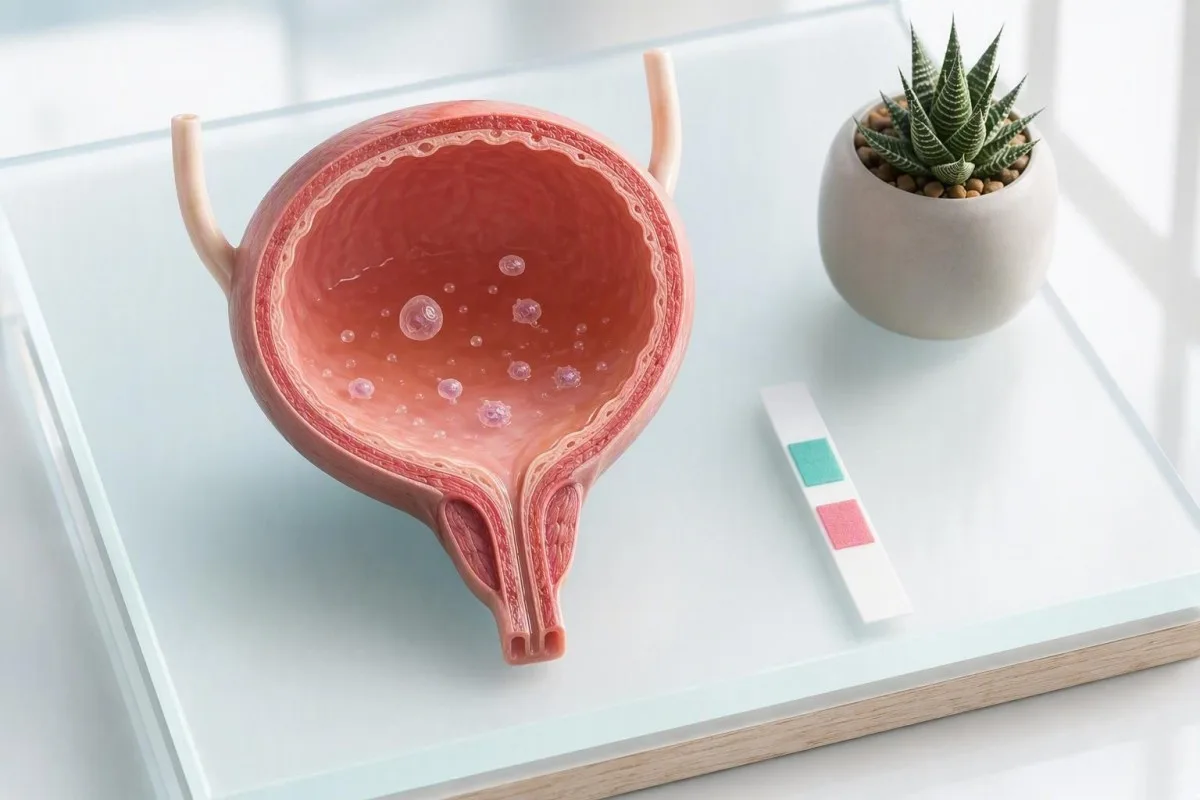
ဤမတူညီသော စက္ကူစမ်းသပ်မှု ပုံစံသည် ဆီးဖြူဥများကြောင့် ဖြစ်ရလေ့ရှိသော်လည်း မိမိဘာသာ UTI ကို အတည်မပြုနိုင်ပါ။ ရောဂါလက္ခဏာများ၊ စုဆောင်းမှု အရည်အသွေး၊ ကိုယ်ဝန်ဆောင်အခြေအနေနှင့် ဆီးယဉ်းစစ်ဆေးမှုတို့က နောက်ဆက်တွဲ လုပ်ဆောင်ရမည့်အရာကို ဆုံးဖြတ်ပေးသည်။.


- Leukocyte esterase သွေးဖြူဥများမှ ထုတ်လွှတ်သော အင်ဇိုင်းကို စမ်းသပ် detects; positive ရလဒ်သည် ဆီးလမ်းကြောင်း ရောင်ရမ်းမှုကို အချက်ပြသည်။ ကူးစက်ရောဂါကို အလိုအလျောက် မညွှန်ပြပါ။.
- Nitrite မရှိပါ UTI ကို ပယ်မထားပါ၊ အကြောင်းမှာ ဘက်တီးရီးယားအချို့က nitrite ကို မထုတ်လုပ်သောကြောင့်နှင့် ဆီးသည် ပုံမှန်အားဖြင့် ဆီးအိမ်တွင် အကြောင်းရင်း 4 နာရီခန့် ကြာအောင် ရှိနေရန် လိုအပ်သောကြောင့် ဖြစ်သည်။.
- ပထမဆုံး ယဉ်းစစ်ဆေးပါ လက္ခဏာများ သိသာထင်ရှားသောအခါ၊ ကိုယ်ဝန်ဆောင်ဖြစ်နိုင်သောအခါ၊ ပဋိဇီဝဆေးများ မအောင်မြင်သောအခါ၊ သို့မဟုတ် ကူးစက်ရောဂါ ပြန်လည်ဖြစ်ပွားနေသောအခါတွင် စက္ကူစမ်းသပ်မှုကို ထပ်ခါတလဲလဲ လုပ်ခြင်းထက် ပို၍ အသုံးဝင်သည်။.
- Contamination အချက်များ အရေပြားဆဲလ်များ အများအပြား၊ ပေါင်းစပ်ဘက်တီးရီးယားများ ပေါက်ဖွားမှု၊ မိန်းမ ကိုယ်အင်္ဂါမှ စွန့်ထုတ်မှု နှင့် မှန်ကန်စွာ မစုဆောင်းရသော နမူနာ ပစ္စည်းများ ပါဝင်သည်။.
- အရေးပေါ် လက္ခဏာများ အဖျား 38.0°C သို့မဟုတ် အထက်၊ နံရိုးနာကျင်မှု၊ အော့အန်ခြင်း၊ ဆီးလမ်းကြောင်း လက္ခဏာများနှင့် ကိုယ်ဝန်ဆောင်ခြင်း၊ သက်ကြီးရွယ်အိုတွင် စိတ်ရှုပ်ထွေးခြင်း၊ သို့မဟုတ် ဆီးမထိန်းနိုင်ခြင်းတို့ ပါဝင်သည်။.
- လက္ခဏာမပြသော ဘက်တီးရီးယားများ ကိုယ်ဝန်မဆောင်သော လူကြီးများတွင်၊ စက္ကူစမ်းသပ်မှု ရလဒ်များ ပုံမှန်မဟုတ်သော်လည်း ယေဘုယျအားဖြင့် ကုသသင့်သည်မဟုတ်ပါ။.
- မိုက်ခရိုစကုပ်ဓာတ်ခွဲခန်းစစ်ဆေးမှုသည် အရေးကြီးသည် သွေးဖြူဥဆဲလ် 5 ခုထက် ပိုတွေ့ပါက ဆီးထဲပြည်ပါခြင်းကို အထောက်အကူပြုသော်လည်း ဆေးဘက်ဆိုင်ရာ အခြေအနေကို ထည့်သွင်းစဉ်းစားရန် လိုအပ်သည်။.
- နိုက်ထရite စစ်ဆေးမှု အနုတ်လက္ခဏာပြခြင်း သည် Enterococcus၊ Staphylococcus saprophyticus၊ ဆီးအိမ်တွင် ဆီးကြာကြာမထားခြင်း၊ ဆီးကျဲခြင်းနှင့် အစားအသောက်တွင် နိုက်ထရate နည်းပါးစွာ စားသုံးခြင်းတို့နှင့် အလွန်အဖြစ်များသည်။.
ဤစက္ကူစမ်းသပ်မှု ပေါင်းစပ်မှုက တကယ်တမ်း အဘယ်အရာကို ဆိုလိုသနည်း
Leukocyte esterase အပေါင်းလက္ခဏာပြပြီး၊ nitrite အနုတ်လက္ခဏာပြခြင်း သည် ဆီးတွင် သွေးဖြူဥဆဲလ်များ ရှိနေသော်လည်း ဘက်တီးရီးယား နိုက်ထရite ဓာတ်ပြုမှုကို ရှာဖွေမရနိုင်ကြောင်း ဆိုလိုသည်။ ဆီးအပူလောင်ခြင်းနှင့် မကြာခဏ ဆီးသွားခြင်းတို့ ခံစားနေရသူတွင် ၎င်းသည် ဆီးလမ်းကြောင်းပိုးဝင်ခြင်း ဖြစ်နိုင်သေးသည်။ လက္ခဏာမပြသောသူတွင်မူ မသန့်ရှင်းမှု သို့မဟုတ် ကူးစက်မှုမရှိသော ရောင်ရမ်းမှုသည် မကြာခဏ ဖြစ်နိုင်ခြေပိုများသည်။.
Leukocyte esterase သည် ရောင်ရမ်းခြင်း သို့မဟုတ် ပိုးဝင်ခြင်းအတွင်း ဆီးထဲသို့ ရောက်ရှိလာသော သွေးဖြူဥဆဲလ်များဖြစ်သည့် neutrophils နှင့် အဓိက ဆက်စပ်နေသော အင်ဇိုင်းတစ်ခုဖြစ်သည်။ အနည်းငယ် သို့မဟုတ် 1+ ရလဒ်သည် 2+ သို့မဟုတ် 3+ leukocyte esterase နှင့် လက္ခဏာများ၊ မြင်နိုင်သော pyuria နှင့် တစ်မျိုးတည်းသော ပိုးမွေးမြူခြင်းတို့နှင့် နှိုင်းယှဉ်ပါက အရေးပါမှု နည်းပါးသည်။ dipstick သည် ထိုဆဲလ်များ၏ အကြောင်းရင်းကို မဖော်ထုတ်နိုင်သောကြောင့် ၎င်းသည် ရောဂါရှာဖွေရေးထက် စစ်ဆေးမှုတစ်ခုသာဖြစ်သည်။.
Nitrite သည် မတူညီသော လုပ်ငန်းစဉ်ကို ထင်ဟပ်စေသည်- ဘက်တီးရီးယားအချို့သည် ဆီးအိမ်ထဲတွင် ဆီးရှိနေစဉ် နိုက်ထရate ကို nitrite အဖြစ်သို့ ပြောင်းလဲစေသည်။ မကြာခဏ ရေသောက်သူ၊ တစ်နာရီမှ နှစ်နာရီတစ်ကြိမ် ဆီးသွားသူ သို့မဟုတ် အလွန်ကျဲသော နမူနာကို ပေးသူသည် အမှန်တကယ် ပိုးဝင်နေသော်လည်း nitrite အနုတ်လက္ခဏာပြနေနိုင်သည်။ ဆီးစစ်ခြင်းလမ်းညွှန်အပြည့်အစုံ သည် dipstick ဓာတုဗေဒနှင့် မိုက်ခရိုစကုပ်ဓာတ်ခွဲခန်းစစ်ဆေးမှုတို့ မည်သို့ သဘောမတူနိုင်သည်ကို ရှင်းပြသည်။.
ဩဂုတ်လ 28 ရက်၊ 2026 ရက်နေ့အထိ၊ ဤပုံစံကို ကုသရန် ရလဒ်တစ်ခုအဖြစ်ထက် အဖြေရှာရန် မေးခွန်းတစ်ခုအဖြစ် ကျွန်ုပ် အနက်ဖွင့်မည်။ ဒေါက်တာ Thomas Klein သည် ကျော့်အပေါ် တစ်ချက်တည်း အပေါင်းလက္ခဏာပြသောကြောင့် မလိုအပ်ဘဲ ပဋိဇီဝဆေးများ ရရှိခဲ့သော လူနာများကို မြင်ခဲ့ရပြီး၊ အခြားသူများမှာ နဂိုအတိုင်း cystitis လက္ခဏာများ ရှိသော်လည်း လုံးဝ အနုတ်လက္ခဏာပြသော nitrite ကွက်လပ်တစ်ခု ရှိနေသော်လည်း ပိုးမွေးမြူရန် လိုအပ်ခဲ့သည်။.
Leukocyte Esterase နှင့် Nitrite မည်သို့ သဘောတူညီမှု မရှိနိုင်
Dipstick ခွက်နှစ်ခုသည် သီးခြားဇီဝဖြစ်စဉ်များကို တိုင်းတာသည်- သွေးဖြူဥဆဲလ်လှုပ်ရှားမှုနှင့် ဘက်တီးရီးယား နိုက်ထရate လျှော့ချခြင်းတို့ဖြစ်သည်။ ထို့ကြောင့် မတူညီသော ရလဒ်သည် ဇီဝဗေဒအရ ဖြစ်နိုင်ပြီး အလွန်အဖြစ်များပြီး အထူးသဖြင့် လက္ခဏာရှိသော အောက်ပိုင်း ဆီးလမ်းကြောင်းပိုးဝင်ခြင်း၏ အစောပိုင်းအဆင့်တွင် ဖြစ်သည်။.
အပေါင်းလက္ခဏာပြသော leukocyte esterase ရလဒ်သည် အကြံပြုသည် pyuria, ၊ nitrite ရလဒ်သည် ဘက်တီးရီးယားမျိုးစိတ်များ၊ ဆီးထဲရှိ နိုက်ထရate၊ ဆီးအိမ်တွင် ဆီးရှိနေသည့်အချိန်နှင့် strip ကိုင်တွယ်မှုအပေါ် မူတည်သည်။ Devillé et al. (2004) ၏ စနစ်တကျ ပြန်လည်သုံးသပ်မှုတွင်၊ dipstick စွမ်းဆောင်ရည်သည် ဆေးဘက်ဆိုင်ရာ အခြေအနေများတွင် သိသိသာသာ ကွဲပြားခဲ့သည်၊ မည်သည့် pad မှ ပိုးဝင်ခြင်းကို ယုံကြည်စိတ်ချရစွာ မအတည်ပြုနိုင်ခဲ့ပါ။ လက္ခဏာများနှင့် ရလဒ်များကို ပေါင်းစပ်ခြင်းသည် အရောင်ပြောင်းလဲမှုကို ဆုံးဖြတ်ချက်အဖြစ် သတ်မှတ်ခြင်းထက် ပိုမိုတိကျသည်။.
အများစုသော nitrite-reducing Enterobacterales များသည် Escherichia coli မျိုးကွဲများအပါအဝင်၊ မှန်ကန်သော အခြေအနေများအောက်တွင် nitrite ထုတ်လုပ်နိုင်သည်။ Enterococcus မျိုးစိတ်များနှင့် Staphylococcus saprophyticus တို့သည် nitrite-negative UTI များကို မကြာခဏ ထုတ်လုပ်ကြပြီး၊ ဆီးအိမ်တွင် မိနစ် 30 မှ 60 သာ ထားရှိပြီးနောက် စုဆောင်းထားသော နမူနာသည် E. coli ရှိနေသော်လည်း တိုင်းတာနိုင်သော nitrite ကို မစုဆောင်းမိနိုင်ပါ။.
ကန်တက်စတီသည် AI သွေးစမ်းသပ်မှုခွဲခြမ်းစိတ်ဖြာ သို့မှသာ ဓာတ်ခွဲခန်းတွေ့ရှိချက်များကို ဆေးဘက်ဆိုင်ရာ အခြေအနေတွင် ထားရှိနိုင်သည်၊ သို့သော် အိမ်သုံးဆီး strip သည် ပိုးမွေးမြူခြင်း-အခြေခံသော အပင်အမှတ်အသားကို အစားထိုး၍ မရနိုင်ပါ။ ဆီးအစီရင်ခံစာနှင့်အတူ ကျောက်ကပ် markers များပါလာပါက၊ ကျွန်ုပ်တို့၏ ကျောက်ကပ်ရလဒ် လမ်းညွှန် သည် လူနာများအား ၎င်းတို့၏ ဆရာဝန်ထံ ပိုမိုအာရုံစိုက်သော မေးခွန်းများ ပြင်ဆင်ရန် ကူညီပေးနိုင်သည်။.
Nitrite-Negative ရလဒ်များက UTI ကို အချက်ပြနေသောအခါ
nitrite-negative dipstick သည် ဆီးလမ်းကြောင်းပိုးဝင်ခြင်းကို အထောက်အကူပြုနိုင်သေးသည်၊ သို့သော် ဆီးလမ်းကြောင်း လက္ခဏာများမှာ အသစ်ဖြစ်ပြီး ဒေသတွင်းဖြစ်နေပါက၊ အထူးသဖြင့် dysuria၊ ဆီးသွားလိုစိတ်ပြင်းပြခြင်း၊ မကြာခဏ ဆီးသွားခြင်း သို့မဟုတ် suprapubic သက်သောင့်သက်သာမရှိခြင်းတို့ ဖြစ်သည်။ မိုက်ခရိုစကုပ်ဓာတ်ခွဲခန်းစစ်ဆေးမှုသည် သွေးဖြူဥဆဲလ် 5 ခုထက် ပိုတွေ့ပါက ဖြစ်နိုင်ခြေ ပိုများလာသည်။.
အခြားသူများထက် ကောင်းမွန်သော ကိုယ်ဝန်မရှိသော အမျိုးသမီးတစ်ဦးတွင် အသစ်ဖြစ်သော dysuria နှင့် မကြာခဏ ဆီးသွားခြင်းတို့ ရှိသော်လည်း မိန်းမကိုယ်မှ ထွက်သော အရည်မရှိပါက၊ acute cystitis ၏ ပਰੀ-ဆန်းစစ်မှု ဖြစ်နိုင်ခြေမှာ မြင့်မားနေပြီဖြစ်သည်။ Leukocyte esterase သည် အထောက်အကူပြုသော်လည်း၊ အနုတ်လက္ခဏာပြသော nitrite ရလဒ်သည် ထိုဆေးဘက်ဆိုင်ရာ ပုံသဏ္ဍာန်ကို အဓိပ္ပါယ်ရှိစွာ ပယ်ချမည်မဟုတ်ပေ။ အသုံးဝင်သော မေးခွန်းမှာ လက္ခဏာများသည် ဆီးအိမ်နှင့် ကန့်သတ်ထားခြင်းရှိမရှိ သို့မဟုတ် ပိုမိုလေးနက်သော အပေါ်ပိုင်း-အကြောပြွန် ဖြစ်စဉ်ကို အကြံပြုခြင်းရှိမရှိ ဖြစ်သည်။.
ကျွန်ုပ် ပြန်လည်သုံးသပ်ခဲ့သော အသက် 29 နှစ်အရွယ် လူနာတစ်ဦးတွင် 3+ leukocyte esterase၊ အနုတ် nitrite၊ သွေးဖြူဥဆဲလ် 20 မှ 30 per high-power field၊ နှင့် မိနစ် 45 ကြာတိုင်း ဆီးသွားလိုစိတ်ပြင်းပြခြင်း ရှိသည်။ သူမ၏ ပိုးမွေးမြူခြင်းနောက်ပိုင်းတွင် Enterococcus faecalis ကို တွေ့ရှိခဲ့ပြီး၊ အနုတ် nitrite ကွက်လပ်ကို ကျန်းမာရေးကောင်းမွန်ကြောင်း မယူဆသင့်ပုံကို ဥပမာပြခဲ့သည်။ ကျွန်ုပ်တို့၏ လက်တွေ့နှိုင်းယှဉ်မှုကို ကြည့်ပါ။ urinalysis နှင့် culture စစ်ဆေးမှုတစ်ခုစီ၏ မတူညီသော ကဏ္ဍများအတွက်။.
ဂန္တဝင် ဘက်တီးရီးယား cystitis သည် အများအားဖြင့် အဖျားကြီးခြင်း သို့မဟုတ် ခါးနာခြင်းမရှိဘဲ ပူလောင်ခြင်းနှင့် မကြာခဏ ဆီးသွားခြင်းတို့ကို ဖြစ်စေသည်။ အဖျား 38.0°C သို့မဟုတ် ထို့ထက်ပိုခြင်း၊ ကျောအောက်ပိုင်းနံရိုးများတွင် နာကျင်ခြင်း၊ တုန်လှုပ်ခြင်း သို့မဟုတ် အန်ခြင်းတို့သည် အန္တရာယ်ကို အကဲဖြတ်ခြင်းကို ပြောင်းလဲစေသည်၊ အကြောင်းမှာ ကျောက်ကပ်ထိခိုက်မှု ဖြစ်နိုင်သောကြောင့်ဖြစ်သည်။ ထိုလက္ခဏာများသည် နောက်ထပ် ဆေးမပါဘဲ ဝယ်ယူနိုင်သော strip ထက် အလားတူနေ့တွင် ဆေးဘက်ဆိုင်ရာ အကြံဉာဏ်ကို ထိုက်တန်သည်။.
Contamination သည် Positive Leukocyte Esterase အတွက် အဖြစ်များသော ရှင်းလင်းချက်တစ်ခုဖြစ်သည်။
မသန့်ရှင်းမှုသည် အပေါင်းလက္ခဏာပြသော leukocyte esterase ကို ဖြစ်စေနိုင်သည်၊ အကြောင်းမှာ မိန်းမကိုယ်မှ ထွက်သော အရည်များ၊ အရေပြား သို့မဟုတ် မသန့်ရှင်းသော စုဆောင်းမှုမှ သွေးဖြူဥဆဲလ်များသည် ကွန်တိန်နာထဲသို့ ဝင်ရောက်နိုင်သောကြောင့် ဖြစ်သည်။ မိုက်ခရိုစကုပ်ဓာတ်ခွဲခန်းစစ်ဆေးမှုတွင် အများအပြားသော squamous epithelial cells များသည် midstream နမူနာ မသန့်ရှင်းမှု ပိုများနိုင်ကြောင်း အကြံပြုသော်လည်း ၎င်းကို မအတည်ပြုပါ။.
သန့်ရှင်းသော အလယ်အလတ် စုဆောင်းမှုဆိုသည်မှာ ပတ်ဝန်းကျင်ကို ဆေးကြောပြီးနောက် ဆီးကို အိမ်သာထဲသို့ စတင်စွန့်ပြီးနောက် အိုး၏ အတွင်းဘက်ကို မထိဘဲ အလယ်ပိုင်းကို စုဆောင်းခြင်း ဖြစ်သည်။ ကြာမြင့်ချိန်သည်လည်း အရေးကြီးသည်- အခန်းအပူချိန်တွင် ၂ နာရီထက် ပိုကြာအောင် ထားရှိသော ဆီးသည် ဘက်တီးရီးယားများ ပြောင်းလဲမှုကို ဖြစ်ပေါ်စေပြီး အနည်ထိုင်မှုနှင့် ဓာတ်ခွဲမှုကို ပျက်စီးစေနိုင်သည်။ အချိန်မီ မပြုလုပ်နိုင်ပါက အအေးခံခြင်းက ထိုပြောင်းလဲမှုများကို နှေးကွေးစေသည်။.
ရာသီလာသော သွေး၊ မိန်းမကိုယ်မှ မှို၊ ဘက်တီးရီးယား ကိုယ်တွင်း လျှို့ဝှက်သော ရောဂါများ၊ လိင်အင်္ဂါ အရေပြား ရောင်ရမ်းခြင်းနှင့် များပြားသော ကိုယ်တွင်း ထွက်ရှိမှုတို့သည် နမူနာတွင် leukocytes များကို ပေါင်းထည့်နိုင်သည်။ ဤအခြေအနေတွင်၊ လက္ခဏာများ ပြေလျော့ပြီးနောက် ဂရုတစိုက် စုဆောင်းထားသော နမူနာကို ထပ်ခါတလဲလဲ ပြုလုပ်ခြင်းသည် အဓိပ္ပါယ်ရှိနိုင်သော်လည်း ဆီးလမ်းကြောင်းဆိုင်ရာ လက္ခဏာများ အလွန်များပြားပါက ဘက်တီးရီးယား စိုက်ပျိုးခြင်းက ပို၍ ကောင်းသည်။ ကျွန်ုပ်တို့၏ လမ်းညွှန် ဆီးထဲရှိ epithelial cells သည် စုဆောင်းမှု ပြဿနာကို ဆီးလမ်းကြောင်းဆိုင်ရာ အရိပ်အယောင်မှ ခွဲခြားရန် ကူညီပေးသည်။.
ဘက်တီးရီးယား စိုက်ပျိုးမှုတွင် ရောနှောနေသော ကြီးထွားမှုသည် အများအားဖြင့် စုဆောင်းမှု ညစ်ညမ်းခြင်းကို ဆိုလိုသည်၊ အထူးသဖြင့် အလွန်များပြားသော ပိုးမွှားမရှိသောအခါတွင် အမျိုးမျိုးသော ဆီးလမ်းကြောင်းဆိုင်ရာ ပိုးမွှားများထက် ဖြစ်သည်။ ထို့ကြောင့်၊ ဆီးအိမ်ပိုက်တပ်ဆင်ထားသူများ၊ ဆီးလမ်းကြောင်း ပြန်လည်တည်ဆောက်မှု ပြုလုပ်သူများ သို့မဟုတ် ရှုပ်ထွေးသော ကူးစက်မှုများ ခံစားနေရသူများသည် အမှန်တကယ်ပင် polymicrobial cultures များ ရရှိနိုင်သောကြောင့် ဆရာဝန်များသည် ရောနှောနေသော ကြီးထွားမှုကို အလိုအလျောက် လျစ်လျူမရှုသင့်ပေ။ အခြေအနေသည် အတိုကောက်ထက် ပိုအရေးကြီးသည်။.
ဆီးထဲတွင် သွေးဖြူဥများ ရှိရခြင်း အခြားအကြောင်းရင်းများ
ဆီးတွင် သွေးဖြူဥများသည် ပုံမှန် ဘက်တီးရီးယား UTI မရှိဘဲ ပေါ်လာနိုင်သည်။ ကျောက်များ၊ လိင်မှတဆင့် ကူးစက်သော ရောဂါများ၊ မကြာသေးမီက ပြုလုပ်သော စက်ပစ္စည်းများ၊ interstitial cystitis၊ ကျောက်ကပ် ရောင်ရမ်းခြင်းနှင့် ဆေးဝါးအချို့တို့သည် sterile pyuria ကို ဖြစ်ပေါ်စေသည်—ပုံမှန် စိုက်ပျိုးမှု အနုတ်လက္ခဏာရှိသော pyuria ဖြစ်သည်။.
Sterile pyuria သည် ပုံမှန် စိုက်ပျိုးမှုတွင် ဘက်တီးရီးယား မကြီးထွားဘဲ ဆီးမှ သွေးဖြူဥများ ရှိသည်ဟု သတ်မှတ်လေ့ရှိသည်၊ သို့သော် တိကျသော ကန့်သတ်ချက်များသည် ဓာတ်ခွဲခန်းအလိုက် ကွဲပြားသည်။ မကြာသေးမီက အင်တီဘိုင်တစ် ပမာဏသည် ရောင်ရမ်းမှု ဆက်လက်ရှိနေစဉ် ၂၄ မှ ၄၈ နာရီအတွင်း စိုက်ပျိုးမှု ကြီးထွားမှုကို နှိပ်ကွပ်နိုင်သည်။ ဤသည်မှာ ဆရာဝန်များက နမူနာမယူမီ အင်တီဘိုင်တစ် ပေးခဲ့သလားဟု မေးမြန်းရသည့် အကြောင်းရင်းတစ်ခု ဖြစ်သည်။.
ကျောက်ကပ် ကျောက်များသည် မကြာခဏဆိုသလို နာကျင်ကိုက်ခဲသော ဘေးဘက် နာကျင်မှုနှင့် ဆီးစစ်ဆေးမှုတွင် သွေးပါခြင်းကို ဖြစ်စေပြီး chlamydia သည် dysuria နှင့် pyuria ကို ပုံမှန် ဆီး စိုက်ပျိုးမှု အနုတ်လက္ခဏာဖြင့် ဖြစ်ပေါ်စေနိုင်သည်။ ထိတွေ့မှု ရာဇဝင်၊ ဆီးပြွန် လက္ခဏာများ သို့မဟုတ် တင်ပါးဆုံ လက္ခဏာများ ဖြစ်ပေါ်လာသောအခါ လိင်ကျန်းမာရေး နျူကလစ်ခ် အက်ဆစ် စစ်ဆေးမှု—ပုံမှန် ဆီး စိုက်ပျိုးမှု မဟုတ်—သည် သင့်လျော်ပါသည်။ မြင်နိုင်သော သို့မဟုတ် မွှားမွှား သွေးသည် ၎င်း၏ ကိုယ်ပိုင် hematuria assessment.
ပရိုတွန်-ပန့်ဘ် အင်ဟစ်ဘီတာများ၊ non-steroidal anti-inflammatory drugs နှင့် အချို့သော အင်တီဘိုင်တစ်များသည် အန္တရာယ်ရှိသော အရင်းခံများအဖြစ် အသိအမှတ်ပြုခံရသည်။ Pyuria နှင့် တိုးလာသော creatinine၊ အရေပြား ယားယံခြင်း၊ ဖျားခြင်း သို့မဟုတ် eosinophilia သည် ဆေးဘက်ဆိုင်ရာ အမြန် ပြန်လည် စစ်ဆေးရန် လိုအပ်သည်။ ဒေါက်တာ Thomas Klein သည် ကျောက်ကပ် လုပ်ဆောင်ချက် ပြောင်းလဲနေချိန်တွင် အနုတ်လက္ခဏာ nitrite ရလဒ်ကိုသာ အခြေခံ၍ လူနာကို မ reassurance ပေးပါ။.
သင့်အား ဂရုစိုက်မှု လိုအပ်သည့် အမြန်နှုန်းကို ပြောင်းလဲစေသည့် လက္ခဏာများ
ဖျားခြင်း၊ နံဘေး နာကျင်ခြင်း၊ အန်ခြင်း၊ ကိုယ်ဝန်ဆောင်ခြင်း၊ ကိုယ်ခန္ဓာ အားနည်းခြင်း သို့မဟုတ် ရှုပ်ထွေးခြင်းတို့သည် leukocyte esterase အပြုသဘောဆောင်သော ရလဒ်ကို ပို၍ အရေးပေါ်ဖြစ်စေသည်၊ အဘယ်ကြောင့်ဆိုသော် ၎င်းတို့သည် အလွန်ရှုပ်ထွေးသော cystitis ထက် ကျော်လွန်သော ကူးစက်မှုကို ပြသနိုင်သောကြောင့် ဖြစ်သည်။ nitrite အပြုသဘောဆောင်သော သို့မဟုတ် nitrite အနုတ်လက္ခဏာ strip နှစ်ခုစလုံးတွင် ပြင်းထန်သော နာမကျန်းမှု ဖြစ်ပွားနိုင်သည်။.
အပူချိန် ၃၈.၀°C သို့မဟုတ် ထို့ထက်မြင့်မားခြင်း၊ တုန်ခါခြင်း၊ ဘေးဘက် နာကျင်ခြင်း၊ မကြာခဏ အန်ခြင်း၊ အသစ် ရှုပ်ထွေးခြင်း သို့မဟုတ် အရည်များကို မထိန်းနိုင်ခြင်းတို့အတွက် တစ်နေ့တည်း ကုသမှု ခံယူပါ။ ဤအချက်များသည် pyelonephritis သို့မဟုတ် ကိုယ်ခန္ဓာ နာမကျန်းဖြစ်ခြင်းကို စိုးရိမ်စေသည်၊ ဤအခြေအနေတွင် နောက်ကျသော ကုသမှုသည် အရေးကြီးနိုင်သည်။ အရွယ်ရောက်သူများတွင် သံသယဖြစ်ဖွယ် sepsis ရှိလျှင် အရေးပေါ် အကဲဖြတ်မှုတွင် အသက်ခန္ဓာ အတိုင်းအတာများနှင့် မကြာခဏ သွေး စစ်ဆေးမှုများ ပါဝင်သည်၊ ကျွန်ုပ်တို့၏ sepsis-marker overview.
ကိုယ်ဝန်ဆောင်ချိန်တွင် ဆက်သွယ်ရန် နည်းပါးသော အခန်းကန့်ကို အသုံးပြုသင့်သည်၊ အကြောင်းမှာ ဆီးလမ်းကြောင်း ကူးစက်မှုများသည် ပို၍ လျင်မြန်စွာ တိုးတက်နိုင်ပြီး ကိုယ်ဝန်ရလဒ်များကို ထိခိုက်စေနိုင်သည်။ ကိုယ်ဝန်ဆောင်ချိန်တွင် ဆီးလမ်းကြောင်း လက္ခဏာများသည် dipstick သည် မရေမရာဖြစ်နေသော်လည်းပင် စနစ်တကျ စုဆောင်းထားသော ဘက်တီးရီးယား စိုက်ပျိုးမှုကို အမြန်ဆုံး ပြုလုပ်သင့်သည်။ ဥပမာအားဖြင့်၊ Group B streptococcus သည် အရေးပါသော ပမာဏများတွင် တွေ့ရှိသောအခါ မီးဖွားရေး အစီအစဉ်ကို ပြောင်းလဲစေသည်၊ ကိုယ်ဝန်ဆောင် GBS စစ်ဆေးမှု.
အသက်ကြီးသူများသည် ဤရုပ်ပုံကို ရှုပ်ထွေးစေသည်။ တိမ်ထူသော သို့မဟုတ် အနံ့ဆိုးသော ဆီးသည် UTI ကို ရောဂါရှာဖွေရန် မလုံလောက်ပါ၊ ထို့အပြင် မူလ ဘက်တီးရီးယား ပေါက်ဖွားမှုသည် အဖြစ်များပါသည်၊ ပြင်းထန်သော ဖျားခြင်း၊ ဆီးလမ်းကြောင်း လက္ခဏာများ၊ သွေးလှည့်ပတ်မှု မတည်ငြိမ်ခြင်း သို့မဟုတ် ပွင့်လင်းသော အခြား အကြောင်းရင်းများသည် စစ်ဆေးမှုကို လမ်းညွှန်သင့်သည်။ Dipstick သည် delirium ရောဂါရှာဖွေရေး မဟုတ်ပါ။.
ဆီးယဉ်းစက္ကူ စမ်းသပ်မှုကို ထပ်ခါတလဲလဲ လုပ်ခြင်းထက် ဆီးယဉ်းစစ်ဆေးမှုက ပို၍ အကျိုးရှိသည့်အခါ
ရောဂါလက္ခဏာများ ဆက်လက်ရှိနေပါက၊ ကူးစက်မှု ပြန်ဖြစ်ပါက၊ ကိုယ်ဝန်ရှိနေပါက၊ အင်တီဘိုင်တစ်များ အလုပ်မလုပ်ပါက၊ သို့မဟုတ် အခြေအနေ ရှုပ်ထွေးနေပါက ဆီး စိုက်ပျိုးမှုသည် ထပ်ခါတလဲလဲ dipstick ထက် ပို၍ အသုံးဝင်သည်။ စိုက်ပျိုးမှုသည် ပိုးမွှားကို ဖော်ထုတ်ပြီး အင်တီဘိုင်တစ် susceptible ကို အစီရင်ခံသည်၊ dipstick သည် မည်သည့်အရာကိုမျှ မလုပ်နိုင်ပါ။.
ထပ်ခါတလဲလဲ dipstick သည် တူညီသော စုဆောင်းမှု အားနည်းချက်များနှင့်အတူ မကြာခဏဆိုသလို အကွယ်အကာ ဓာတ်ခွဲ အကဲဖြတ်မှုကိုသာ ထပ်ခါတလဲလဲ ပြုလုပ်သည်။ လက်တွေ့ကျပါက စိုက်ပျိုးမှုသည် မကြာခဏဆိုသလို အင်တီဘိုင်တစ်များ မပေးမီ စုဆောင်းသည်၊ အဘယ်ကြောင့်ဆိုသော် တစ်ကြိမ် သို့မဟုတ် နှစ်ကြိမ်မျှ ပမာဏသည် ဘက်တီးရီးယား ပြန်လည်ရရှိမှုကို လျှော့ချနိုင်သည်။ 10^5 colony-forming units per mL ၏ အနည်းဆုံး အစီရင်ခံထားသော ပမာဏသည် သမိုင်းအရ စံသတ်မှတ်ချက်အဖြစ် အသုံးပြုခဲ့သော်လည်း၊ ရောဂါလက္ခဏာရှိသော လူနာများသည် ပိုးမွှားများနှင့် နမူနာယူနည်းပေါ် မူတည်၍ အဓိပ္ပါယ်ရှိသော နည်းပါးသော ပမာဏများကို ရရှိနိုင်သည်။.
ထပ်ခါတလဲလဲ ရှုပ်ထွေးမှုမရှိသော UTI အတွက်၊ လမ်းညွှန်အများစုမှ ၆ လအတွင်း အပိုင်း ၂ ပိုင်း သို့မဟုတ် ၁၂ လအတွင်း ၃ ပိုင်းဟု သတ်မှတ်သည်၊ ပြင်းထန်သော အပိုင်းအတွင်း စိုက်ပျိုးမှု ရယူခြင်းသည် ပြန်လည်ဖြစ်ပွားခြင်း၊ ပြန်လည်ကူးစက်ခြင်း၊ ခံနိုင်ရည်ရှိခြင်း နှင့် မကူးစက်သော အတုများကို ခွဲခြားရန် ကူညီပေးသည်။ ပြန်လည်ကြည့်ရှုပါ ဆီး စိုက်ပျိုးမှု ပမာဏများနှင့် ရောနှောနေသော ကြီးထွားမှု အပြုသဘောဆောင်သော အစီရင်ခံစာတိုင်း အလားတူ ကုသမှု လိုအပ်သည်ဟု မယူဆမီ။.
ကန်တက်စတီသည် AI ဓာတ်ခွဲခန်း စစ်ဆေးမှု အနက်ဖွင့် ဝန်ဆောင်မှု ကျောက်ကပ် လုပ်ဆောင်ချက်၊ ရောင်ရမ်းမှု အမှတ်အသားများနှင့် ယခင် ဓာတ်ခွဲ သမိုင်းကြောင်းများကို စီစဉ်နိုင်သည့်၊ သို့သော် စိုက်ပျိုးမှု-ညွှန်ကြားသော ဆေးညွှန်းသည် ဆရာဝန်-ဦးဆောင်သော ဆုံးဖြတ်ချက်အဖြစ် ဆက်လက်ရှိနေသည်။ စိုက်ပျိုးမှုသည် မကြာသေးမီက ခရီးသွားခြင်း၊ ဆီးလမ်းကြောင်း ပြုလုပ်ခြင်း၊ ဆီးအိမ်ပိုက် အသုံးပြုခြင်း၊ ကိုယ်ခန္ဓာကို ခုခံအား ကျဆင်းစေသော ဆေးဝါးများ သို့မဟုတ် ခံနိုင်ရည်ရှိသော ကူးစက်မှု ရာဇဝင် အထူးတန်ဖိုးရှိသည်။.
ကျန်ရှိသော ဆီးစစ်ဆေးမှု ပုံစံကို မည်သို့ဖတ်ရမည်
Leukocyte esterase သည် ဆီး microscopy၊ သွေး၊ ပရိုတင်း၊ သီးခြားဆွဲငင်အားနှင့် ရောဂါလက္ခဏာများနှင့် တွဲဖက်သောအခါ ပို၍ အဓိပ္ပါယ်ရှိသည်။ မည်သည့် ဆီးစစ်ဆေးမှု အစိတ်အပိုင်းမျှ သွေး ဓာတ်ခွဲ ရလဒ်နှင့် တူညီသော “ပုံမှန် ကန့်သတ်ချက်” မရှိပါ။.
ဆီးထဲတွင် သွေးဖြူဥဆဲလ် 5 ခုထက်ပို၍ မြင်တွေ့ရခြင်းက ပုံမှန်အားဖြင့် ဆီးပြည်ကို ထောက်ခံသည်၊ သို့သော်မှန်ကန်စွာ စုဆောင်းထားသော နမူနာတွင် သွေးနီဥဆဲလ် 3 ခုထက်ပို၍ မြင်တွေ့ရခြင်းသည် အဏုကြည့်မှန်ပြောင်းဖြင့်သာ မြင်နိုင်သော သွေးပါသည့်ဆီး ဖြစ်ပြီး နောက်ဆက်တွဲ စစ်ဆေးမှု လိုအပ်နိုင်ပါသည်။ ပရိုတင်း 1+ သို့မဟုတ် ထိုထက်ပိုသော ပမာဏသည် အဖျား သို့မဟုတ် ကူးစက်ရောဂါကြောင့် ယာယီဖြစ်နိုင်သော်လည်း၊ ပရိုတင်းဆက်တိုက်ပါနေပါက ပမာဏကို တိုင်းတာ စစ်ဆေးရန် လိုအပ်ပါသည်။ ကျွန်ုပ်တို့၏ လမ်းညွှန်ချက် ဆီးထဲရှိ ပရိုတင်း သည် အယ်လ်ဘူမင်-ခရီယက်တင်နင်း အချိုးသည် မကြာခဏ နောက်ထပ်စစ်ဆေးမှုဖြစ်ကြောင်း ရှင်းပြသည်။.
ဆီး၏ဆွဲငင်အား 1.005 ထက် နိမ့်ပါက ဓာတ်ခွဲခန်းများစွာတွင် အလွန်ပါးလွှာသော ဆီးကို ညွှန်ပြပြီး ဆဲလ်များနှင့် နိုက်ထရိုက်၏ စုစည်းမှုကို လျှော့ချနိုင်သည်။ ဆွဲငင်အား 1.030 ထက် များပါက ရေဓာတ်ခမ်းခြောက်ခြင်း၊ သကြားဓာတ် သို့မဟုတ် အခြားပျော်ဝင်ပစ္စည်းများကို ထင်ဟပ်နိုင်ပြီး စုစည်းထားသော ဆီးသည် လက္ခဏာများကို ပိုဆိုးစေနိုင်သည်။ 비중 가이드 သည် စုဆောင်းချိန်နှင့် ရေဓာတ်သက်ရောက်မှုများကို ဆွေးနွေးသည်။.
သွေးဖြူဥဆဲလ် ကပ်များ (White-cell casts) သည် လွတ်လွတ်လပ်လပ် ပေါလောပေါ်နေသော သွေးဖြူဥဆဲလ်များနှင့် မတူပါ။ ၎င်းတို့သည် ကျောက်ကပ်မှ လာကြောင်း ညွှန်ပြပြီး ချက်ချင်း စစ်ဆေးရန် လိုအပ်သည်။ ဆီးကျောက်ကပ်ကဲ့သို့ အနည်အနှစ်များ (Granular casts)၊ ခရီယက်တင်နင်း တက်လာခြင်းနှင့် သွေးတိုးတို့သည် ရိုးရိုးဆီးအိမ်ရောင်ခြင်းထက် ကျောက်ကပ်ကို ကျယ်ကျယ်ပြန့်ပြန့် စစ်ဆေးရန် လိုအပ်ကြောင်း ညွှန်ပြသည်။ ဆီးစစ်တံသည် ကပ်များကို ယုံကြည်စိတ်ချစွာ ဖော်ထုတ်နိုင်မည်မဟုတ်ပါ။ အဏုကြည့်မှန်ပြောင်းဖြင့် စစ်ဆေးရန် လိုအပ်သည်။.
ဆေးဝါးများ၊ ဗီတာမင် C နှင့် ရလဒ်များကို ထိခိုက်စေသည့် ကိုင်တွယ်မှု အမှားများ
ဗီတာမင် C၊ မကြာသေးမီက သောက်ခဲ့သော ပဋိဇီဝဆေးများ၊ အလွန်ပါးလွှာသောဆီးနှင့် ပျဉ်ပြားကို ကြာမြင့်စွာဖတ်ခြင်းတို့သည် စစ်ဆေးတံ၏ ယုံကြည်စိတ်ချရမှုကို ပြောင်းလဲစေနိုင်သည်။ နိုက်ထရိုက် အနုတ်လက္ခဏာ အကျိုးရလဒ်များသည် အထူးသဖြင့် အက်စ်ကောဘစ်အက်စစ်နှင့် ထိတွေ့မှုနှင့် ဆီးအိမ်အတွင်း သုံးစွဲချိန်တိုတောင်းခြင်းတို့နှင့် ဆက်စပ်နေသည်။.
ဗီတာမင် C ၏ ကြီးမားသော ပမာဏသည် ပျဉ်ပြား အောက်siation ဓာတ်ပြုမှုအများအပြားကို ထိခိုက်စေနိုင်သည်၊ သို့သော် ထိခိုက်မှုသည် ပျဉ်ပြား ထုတ်လုပ်သူနှင့် ဆီး၏ စုစည်းမှုပေါ်မူတည်၍ ကွဲပြားသည်။ နေ့စဉ် 500 မှ 1,000 mg သောက်ပါက၊ ဆရာဝန် သို့မဟုတ် ဓာတ်ခွဲခန်းသို့ အကြံဉာဏ်မယူဘဲ သတ်မှတ်ထားသော ဖြည့်စွက်စာများကို ရပ်တန့်မည့်အစား အကြောင်းကြားပါ။ ပထမဆုံး မနက်ခင်း ဆီးနမူနာသည် နိုက်ထရိုက်ကို ရှာဖွေတွေ့ရှိမှုကို တိုးတက်စေနိုင်သည်၊ အဘယ်ကြောင့်ဆိုသော် ၎င်းသည် ဆီးအိမ်အတွင်း ကြာကြာ ရှိနေလေ့ရှိသောကြောင့်ဖြစ်သည်။.
Phenazopyridine သည် ဆီးကို လိမ္မော်ရောင်ပြောင်းစေပြီး အရောင်ကို မှန်ကန်စွာ အနက်မကောက်နိုင်စေဘဲ၊ ပဋိဇီဝဆေးများသည် ဘက်တီးရီးယား ပမာဏ ကျဆင်းသွားပြီးနောက် Leukocyte esterase ကို အပြုသဘောဆောင်စေနိုင်သည်။ ပျဉ်ပြားများကို ထုတ်လုပ်သူ၏ သတ်မှတ်ထားသော အချိန် – မကြာခဏ မိနစ် 60 မှ 120 ကြား၊ ပန်းကန်ပေါ် မူတည်၍ – ဖတ်သင့်သည်၊ အဘယ်ကြောင့်ဆိုသော် နောက်ကျစွာ ဖတ်ခြင်းသည် မှားယွင်းသော အရောင်ပြောင်းလဲမှုများကို ဖြစ်စေနိုင်သောကြောင့်ဖြစ်သည်။ ကျွန်ုပ်တို့၏ ပြန်လည်သုံးသပ်ချက် ဆီးအရောင်ပြောင်းလဲမှု သည် အန္တရာယ်ကင်းသော နှင့် စိုးရိမ်ဖွယ် အကြောင်းရင်းများကို လွှမ်းခြုံထားသည်။.
အိမ်သုံး ပျဉ်ပြားများသည် ပုံစံများကို သတိပြုမိရန် အသုံးဝင်သော်လည်း ပဋိဇီဝဆေးများ လိုအပ်ခြင်း ရှိ၊ မရှိ ဆုံးဖြတ်ရာတွင် အားနည်းသည်။ လက္ခဏာများနှင့် ပျဉ်ပြား အကျိုးရလဒ်များ ကိုက်ညီမှုမရှိပါက၊ လက္ခဏာများနှင့် ကျွမ်းကျင်သူ၏ စစ်ဆေးမှုကို ဦးစားပေးပါ။ ကျွန်ုပ်၏ အတွေ့အကြုံအရ၊ ပျဉ်ပြားကို ၎င်း၏ အချိန်တိုင်း အညွှန်းများနှင့်အတူ ဓာတ်ပုံရိုက်ခြင်းသည် ဆရာဝန်များ အမှန်တကယ် မြင်တွေ့ခဲ့ရသည်ကို နားလည်ရန် ကူညီပေးနိုင်သည်။.
အကယ်၍ သင်သည် ကောင်းမွန်စွာ ခံစားရသော်လည်း စက္ကူစမ်းသပ်မှုက ပုံမှန်မဟုတ်ပါက မည်သို့နည်း
ဆီးလမ်းကြောင်း လက္ခဏာများ မရှိဘဲ ပုံမှန်မဟုတ်သော ပျဉ်ပြားသည် ကိုယ်ဝန်မဆောင်သော အရွယ်ရောက်ပြီးသူများတွင် ပဋိဇီဝဆေးများကို မဖြစ်သင့်ပါ။ လက္ခဏာမဲ့ ဘက်တီးရီးယားပါသောဆီး နှင့် ပျူရီယာတို့သည် ပုံမှန်ဖြစ်လေ့ရှိသည်၊ အထူးသဖြင့် သက်ကြီးရွယ်အိုများ နှင့် ဆီးချိုရောဂါ၊ ကသီတာ၊ သို့မဟုတ် ဆီးလမ်းကြောင်း မမှန်သူများတွင် ဖြစ်သည်။.
2019 ခုနှစ် IDSA လမ်းညွှန်ချက်တွင် Nicolle et al. ဦးဆောင်သော၊ ကိုယ်ဝန်ဆောင်ချိန်နှင့် ရွေးချယ်ထားသော ကျူးကျော်ဝင်ရောက်နိုင်သော ဆီးလမ်းကြောင်း ခွဲစိတ်မှုများ မပြုလုပ်မီ လက္ခဏာမဲ့ ဘက်တီးရီးယားပါသောဆီးကို စစ်ဆေးရန်နှင့် ကုသရန် အကြံပြုထားသည်။ အခြားအုပ်စုအများစုတွင် ကိုယ်တွယ်မှု (Colonization) ကို ကုသခြင်းသည် အကျိုးရလဒ်များကို မတိုးတက်စေဘဲ ခုခံနိုင်သော သက်ရှိများကို ရွေးချယ်နိုင်သည်။ Leukocyte esterase အပြုသဘောဆောင်ခြင်းသည် ယဉ်ကျေးမှု (culture) အပြုသဘောဆောင်ခြင်းထက်ပင် နည်းသည်။.
ကိုယ်ဝန်မဆောင်သော အရွယ်ရောက်ပြီးသူတစ်ဦးသည် ကောင်းစွာနေထိုင်နေပြီး အဖျားမရှိဘဲ ဆီးလမ်းကြောင်း လက္ခဏာများ မရှိပါက ပုံမှန်အားဖြင့် အရေးပေါ် ပြန်လည်စစ်ဆေးခြင်း သို့မဟုတ် ကျန်နေသော ပဋိဇီဝဆေးများ မလိုအပ်ပါ။ ခြွင်းချက်များသည် သက်ဆိုင်သူအပေါ်မူတည်သည်- စီစဉ်ထားသော ဆီးလမ်းကြောင်း ကိရိယာတပ်ဆင်ခြင်း၊ ပြင်းထန်သော ခုခံအား ကျဆင်းခြင်း၊ သို့မဟုတ် အကြောင်းရင်းမသိသော ကျောက်ကပ်ဆိုင်ရာ ပြဿနာများကို စုံစမ်းနေသော ဆရာဝန်သည် အစီအစဉ်ကို ပြောင်းလဲနိုင်သည်။ ဤခြားနားချက်သည် အလွန်အကျွံ ကုသခြင်းကို ကာကွယ်ရန် လက်တွေ့ကျသော အကာအကွယ်တစ်ခုဖြစ်သည်။.
Kantesti AI သည် ဆီးလမ်းကြောင်း ကူးစက်ရောဂါ (UTI) ကို Leukocyte esterase တစ်ခုတည်းဖြင့် မဆုံးဖြတ်ဘဲ၊ အစီရင်ခံထားသော ဆက်စပ်အချက်အလက်များနှင့်အတူ ဓာတ်ခွဲခန်း ပုံစံများကို အနက်ဖွင့်ဆိုသည်။ ကျွန်ုပ်တို့၏ medical validation ချဉ်းကပ်နည်း သည် လက္ခဏာများ မရှိသော အချက်များသည် ရောဂါရှာဖွေမှုအဖြစ် မပြောင်းလဲမီ ဆရာဝန်နှင့် တိုင်ပင်ဆွေးနွေးရန် အဘယ်ကြောင့် အချက်ပြသည်ကို ဖော်ပြသည်။.
ကိုယ်ဝန်ဆောင်များ၊ ကလေးများ၊ အမျိုးသားများနှင့် ကသီတာအသုံးပြုသူများအား မတူညီသော စည်းမျဉ်းများ လိုအပ်သည်။
ကိုယ်ဝန်ဆောင်ခြင်း၊ ကလေးဘဝ၊ အမျိုးသား ဆီးလမ်းကြောင်း လက္ခဏာများ၊ နှင့် ကသီတာ အသုံးပြုခြင်းတို့သည် ရိုးရိုး ပျဉ်ပြားအခြေခံ ဆုံးဖြတ်ချက်များ၏ ယုံကြည်စိတ်ချရမှုကို လျှော့ချပြီး ယဉ်ကျေးမှု၏ တန်ဖိုးကို မကြာခဏ မြှင့်တင်ပေးသည်။ အလားတူ Leukocyte esterase အပြုသဘောဆောင်ခြင်း နှင့် Nitrite အနုတ်လက္ခဏာ ပုံစံသည် ဤအုပ်စုများကြားတွင် မတူညီသော အဓိပ္ပါယ်များ ရှိသည်။.
ကိုယ်ဝန်ဆောင်နေစဉ်တွင်၊ ဆရာဝန်များသည် လက္ခဏာများ ရှိနေသည့်အခါ ဆီးကို ယဉ်ကျေးမှုဖြင့် စစ်ဆေးပြီး ကိုယ်ဝန်ဆောင်ချိန်ဦးပိုင်းတွင် လက္ခဏာမဲ့ ဘက်တီးရီးယားပါသောဆီးကို စစ်ဆေးလေ့ရှိသည်။ တစ်မျိုးတည်းသော သက်ရှိ၏ 10^5 colony-forming units per mL ပါသော ယဉ်ကျေးမှုသည် လက္ခဏာမဲ့ ဘက်တီးရီးယားပါသောဆီးကို ပုံမှန်အားဖြင့် ထောက်ခံသည်၊ သို့သော် နိမ့်သော အရေအတွက်များကို စီမံခန့်ခွဲခြင်းသည် သက်ရှိ နှင့် အခြေအနေများပေါ် မူတည်သည်။ ပျဉ်ပြားမှ Nitrite အနုတ်လက္ခဏာသည် ကိုယ်ဝန်ဆောင်ခြင်းနှင့် ဆက်စပ်သော ကူးစက်မှုကို လုံခြုံစွာ မပယ်ဖျောက်နိုင်ပါ။.
ကလေးများတွင်၊ စုဆောင်းမှုနည်းလမ်းသည် အလွန်အရေးကြီးပါသည်။ အိတ် နမူနာသည် စစ်ဆေးမှုအတွက် အသုံးဝင်သော်လည်း ပိုမိုများပြားစွာ ညစ်ညမ်းနိုင်သည်၊ ကသီတာ သို့မဟုတ် သန့်ရှင်းသော နမူနာများသည် အသက်နှင့် အိမ်သာသုံးသင်တန်းပေါ်မူတည်၍ ကူးစက်မှုကို အတည်ပြုရန် ပိုကောင်းသည်။ အကြောင်းရင်း မရှင်းလင်းသော အဖျားရှိသော ကလေးငယ်လေးတွင် ကလေးဆေးပညာ စစ်ဆေးမှု လိုအပ်သည်၊ လူကြီး အိမ်သုံး ပျဉ်ပြား အယ်လဂိုရီသမ် မဟုတ်ပါ။.
အမျိုးသားများတွင် ဆီးလမ်းကြောင်း လက္ခဏာများသည် ဆီးအိမ်ရောင်ခြင်းထက် ကျား၊မğinhood၊ ဆီးကျောက်၊ သို့မဟုတ် လိင်မှတဆင့် ကူးစက်သော ကူးစက်မှုကို မကြာခဏ ထင်ဟပ်စေသည်။ ကသီတာ အသုံးပြုသူများသည် လက္ခဏာများ မရှိဘဲ ဘက်တီးရီးယားနှင့် သွေးဖြူဥများ ရှိတတ်သောကြောင့် အဖျား၊ တင်ပါးဆုံနာကျင်ခြင်း၊ ရင်ဘတ်နာကျင်ခြင်း သို့မဟုတ် စနစ်ကျသော လက္ခဏာများသည် ဆီး၏အသွင်အပြင်ထက် ပိုအရေးကြီးသည်။ ကူးစက်မှု မရှိသော ဆီး မကြာခဏ သွားခြင်းအတွက်၊ ပြန်လည်သုံးသပ်ပါ။ 잦은 소변을 보는 경우의 혈액검사.
ဤရလဒ်နောက်ပိုင်းတွင် အသိတရားရှိသော နောက်ဆက်တွဲ အစီအစဉ်
Leukocyte esterase အပြုသဘောဆောင်ပြီး Nitrite အနုတ်လက္ခဏာ ဖြစ်ပြီးနောက် နောက်ဆက်တွဲ လုပ်ဆောင်ရမည့် အဆင့်သည် လက္ခဏာများနှင့် အန္တရာယ်အပေါ် မူတည်သည်၊ စမ်းသပ် ပန်းကန် အရောင် မည်မျှ မှောင်နေသည် အပေါ် မူတည်သည် မဟုတ်။ ပြင်းထန်သော ရိုးရိုး လက္ခဏာများသည် ၂၄ မှ ၄၈ နာရီအတွင်း ဆရာဝန်၏ လမ်းညွှန်ချက်ဖြင့် စစ်ဆေးမှုကို ခွင့်ပြုနိုင်ပြီး၊ သတိပေးသည့် အချက်များ (red flags) သည် ထိုနေ့ အတောအတွင်း ကုသမှု ခံယူရန် လိုအပ်သည်။.
သင့်တွင် အဖျား၊ နံကျင်၊ အန်ခြင်း၊ ကိုယ်ဝန်ရှိခြင်း သို့မဟုတ် ပြင်းထန်သောရောဂါမရှိဘဲ ပူလောင်ခြင်း သို့မဟုတ် မကြာခဏ ဆီးသွားခြင်းတို့ ဖြစ်ပေါ်ပါက၊ ဆရာဝန် သို့မဟုတ် ဒေသဆိုင်ရာ ဆေးဆိုင် ဝန်ဆောင်မှုနှင့် တိုင်ပင်ဆွေးနွေးပြီး ယဉ်ကျေးမှု ခံယူရန် လိုအပ် မလို သတိပြုပါ။ ပဋိဇီဝဆေး သောက်သုံးဖူးမှုများ၊ မကြာသေးမီက ပဋိဇီဝဆေး သောက်သုံးမှုများ၊ ယခင်ယဉ်ကျေးမှု ရလဒ်များနှင့် လိင်ပိုင်းဆိုင်ရာ လုပ်ဆောင်မှုအပြီးတွင် လက္ခဏာများ စတင်ဖြစ်ပေါ်ခဲ့ခြင်း ရှိမရှိ စာရင်းကို ယူဆောင်လာပါ။ ထိုအသေးစိတ်အချက်အလက်များသည် ဒုတိယ စစ်ဆေးမှုထက် အစောပိုင်း အစီအစဉ်ကို မကြာခဏ ပြောင်းလဲစေပါသည်။.
ညစ်ညမ်းမှု ဖြစ်နိုင်သည်ဟု ထင်ရပြီး လက္ခဏာများ မရှိခြင်း သို့မဟုတ် အနည်းငယ်သာ ရှိပါက၊ ကျပန်းနမူနာများကို ထပ်ခါထပ်ခါ စစ်ဆေးခြင်းထက် ဂရုတစိုက် စုဆောင်းထားသော အလယ်လမ်း အလယ်နမူနာ တစ်ခုကို ပြန်လည် ပြုလုပ်ပါ။ ရေအနည်းငယ်ကို သောက်ပြီး ချက်ချင်း မစစ်ဆေးပါနှင့်။ ဆီးကျဲခြင်းက အနည်ထိုင်ခြင်းကို ဖုံးကွယ်နိုင်သည်။ အသစ်ထွက်သော ချွဲသည် အန္တရာယ်ကင်းနိုင်သော်လည်း၊ ၎င်းနှင့်အတူ ပေါ်လာသော လက္ခဏာများ ဆက်လက်ဖြစ်ပေါ်နေပါက ကျွန်ုပ်တို့၏ mucus-in-urine guide.
ယခင် ဖြစ်စဉ်မှ သိမ်းဆည်းထားသော ပဋိဇီဝဆေးများကို ကိုယ်တိုင် မစတင်ပါနှင့်။ မပြီးမြောက်သော သို့မဟုတ် မကိုက်ညီသော ကုသမှုသည် ယဉ်ကျေးမှု ရလဒ်ကို လျှော့ချနိုင်ပြီး အမှန်တကယ် အကြောင်းရင်းကို မကုသဘဲ ခုခံနိုင်စွမ်းကို တိုးမြှင့်နိုင်သည်။ လက်တွေ့ကျသော ရည်ရွယ်ချက်မှာ ရိုးရှင်းသည်- ဖြစ်နိုင်လျှင် ကုသမှုမပြုမီ ကောင်းမွန်သော နမူနာကို ရယူပါ၊ ထို့နောက် ဝေဒနာနှင့် အန္တရာယ်နှင့် လိုက်လျောညီထွေစွာ စွက်ဖက်ပါ။.
သင့်ဆရာဝန် သို့မဟုတ် ဆေးဝါးကျွမ်းကျင်သူထံသို့ မေးမြန်းရန် မေးခွန်းများ
အကောင်းဆုံး မေးခွန်းများသည် အတိအကျဖြစ်သည်- နမူနာသည် ညစ်ညမ်းခဲ့သလား၊ အဏုကြည့်မှန်ပြောင်းက ဆီးပြည်ကို ထောက်ခံပါသလား၊ ယဉ်ကျေးမှု လိုအပ်ပါသလား၊ နှင့် မည်သည့် ဝေဒနာများက အရေးပေါ် ပြန်လည် ဆန်းစစ်ရန် လိုအပ်မည်နည်း။ ဤမေးခွန်းများကို မေးမြန်းခြင်းက မရေရာသော စစ်ဆေးကိရိယာကို လုံခြုံသော အစီအစဉ်အဖြစ် ပြောင်းလဲရန် ကူညီပေးသည်။.
“အရေပြား ဆဲလ်များ ရှိခဲ့ပါသလား၊ ဤသည်မှာ သန့်ရှင်းသော ဖမ်းယူသော နမူနာလော” ဟု မေးပါ။ ထို့နောက် မြင့်မားသော အမြင်ကွင်း၊ သွေးနီဥ ဆဲလ်များ၊ ပရိုတင်း သို့မဟုတ် သွေးခဲများ အတွက် မြင်နိုင်သော သွေးဖြူဥ ဆဲလ် ၅ ခုထက် ပိုနေသလား ဟု မေးပါ။ ဤအသေးစိတ်အချက်အလက်များသည် ဓာတုပစ္စည်း ခံနိုင်ရည်ကို ကျောက်ကပ် သို့မဟုတ် ဆီးလမ်းကြောင်းဆိုင်ရာ နောက်ဆက်တွဲ လိုအပ်သော ပုံစံမှ ခွဲခြားပေးသည်။.
The nitrite-in-urine explainer organism biology affects strips.
ကန်တက်စတီသည် AI-powered သွေးစစ်ဆေးမှု ခွဲခြမ်းစိတ်ဖြာ ကိရိယာ Our doctors and medical reviewers set safety boundaries for that work; readers can review the ဆေးဘက်ဆိုင်ရာအကြံပေးဘုတ်အဖွဲ့ နှင့် အလွန်အမင်းပြင်းထန်သော လက္ခဏာများရှိပါက ပြည်တွင်းအရေးပေါ်ကုသမှုခံယူသင့်ပါသည်။.
မတူညီသော ဆီးစက္ကူစမ်းသပ်မှုများဆိုင်ရာ အနှစ်ချုပ်
ပိုးမရှိသော နိုက်ထရိတ်ဖြင့် ပိုးရှိသော လ్యూကိုဆိုက်စ် အက်စテレース သည် နိုက်ထရိတ်-လျှော့ချသည့် ဘက်တီးရီးယားများ မရှိဘဲ ဆီးဖြူ-ဆဲလ်လှုပ်ရှားမှုကို ညွှန်ပြသည်။ ၎င်းသည် UTI နှင့် ကိုက်ညီနိုင်သော်လည်း ညစ်ညမ်းခြင်း၊ ဆီးကျဲခြင်း၊ နိုက်ထရိတ်-မထုတ်ပေးသော သက်ရှိ၊ မကြာသေးမီက ပဋိဇီဝဆေးများ၊ ကျောက်များ သို့မဟုတ် ကူးစက်ခြင်းမဟုတ်သော ရောင်ရမ်းခြင်းတို့ကိုလည်း ထင်ဟပ်စေနိုင်သည်။.
ဆီးအိမ်ရောဂါလက္ခဏာများ ထင်ရှားသူများအတွက်၊ နိုက်ထရိတ်မရှိခြင်းသည် ကူးစက်မှုကို ပယ်မထားပါ။ ရောဂါလက္ခဏာများသည် ထပ်ခါတလဲလဲ၊ ရှုပ်ထွေးသော၊ ပြင်းထန်သော သို့မဟုတ် ကုသမှု-ခုခံနိုင်သောအခါတွင် ကုန်ကျစရိတ်သည် အထူးအသုံးဝင်သည်။ လက္ခဏာများမရှိသူများအတွက်၊ အဆိုးရွားဆုံး စစ်ဆေးမှုများသည် ပုံမှန်အားဖြင့် ပဋိဇီဝဆေးများကို မဖြစ်စေသင့်ပါ။ ထိုခွဲခြားမှုသည် ပျောက်ဆုံးနေသော ဖျားနာခြင်းနှင့် မလိုအပ်သော ကုသမှုတို့ကို ကာကွယ်ပေးသည်။.
အသုံးအများဆုံး ဆေးဘက်ဆိုင်ရာ အထောက်အထား ကွင်းဆက်သည် လက္ခဏာများအပြင် သန့်ရှင်းသော စုဆောင်းမှုအပြင် မိုက်ခရိုစကုပ် သို့မဟုတ် ကုန်ကျစရိတ်-အိမ်တွင်း အစင်းများ မဟုတ်ပါ။ အဖျား၊ နာကျင်မှုနေရာ၊ ကိုယ်ဝန်ဆောင်အခြေအနေ၊ အရည် intake၊ ဆေးဝါးများနှင့် ယခင်သက်ရှိများ၏ အတိုချုံးမှတ်တမ်းကို ထားပါ။ ဤသည်မှာ ကျွန်ုပ်တို့၏ တစ်ဦးတည်းတန်ဖိုးများနှင့် နှိုင်းယှဉ်၍ ခေတ်ရေစီးကြောင်းများကို အနက်အဓိပ္ပာယ်ဖွင့်ဆိုရာတွင် ကျွန်ုပ်တို့အသုံးပြုသည့် နိယာမနှင့် အတူတူပင်ဖြစ်သည်။ lab-trend analysis.
ဒေါက်တာ သောမတ်စ် ကလိုင်း၏ နောက်ဆုံး လက်တွေ့ အကြံပြုချက်သည် ရှုပ်ထွေးမှုမရှိပါ။ တစ်ခုတည်းသော မကိုက်ညီသော အစင်းပေါ်တွင် မကြောက်ပါနှင့်၊ သို့သော် ဖျားနာခြင်း၊ ဖျားနာခြင်း၊ အန်ခြင်း၊ ကိုယ်ဝန်ဆောင်ခြင်း သို့မဟုတ် ပိုဆိုးလာသော ဖျားနာခြင်းတို့ကို မလျစ်လျူမရှုပါနှင့်။ AI နည်းပညာ လမ်းညွှန် ကျွန်ုပ်တို့၏ ဆေးဘက်ဆိုင်ရာ-အခြေအနေ ချဉ်းကပ်နည်းသည် ဓာတ်ခွဲခန်းမှ ရောဂါခွဲခြမ်းစိတ်ဖြာမှုကို မည်သို့ ခွဲခြားသည်ကို ရှင်းပြသည်။.
အမေးများသောမေးခွန်းများ
ပိုးဝင်ခြင်း (UTI) ဖြစ်ပွားနေချိန်တွင် leukocyte esterase အပြုသဘောနှင့် nitrite အဆိုးသဘောကို တွေ့ရှိနိုင်ပါသလား။
ဟုတ်ပါသည်။ ဆီးလမ်းကြောင်းပိုးဝင်ခြင်း (UTI) သည် အနုတ် nitrile နှင့် အပေါင်း leukocyte esterase ကို ထုတ်လုပ်နိုင်ပြီး nitrile အတွက် အထူးဘက်တီးရီးယားများ၊ လုံလောက်သော အစားအသောက်နိုက်ထရေး ခံတွင်းရောဂါနှင့် ပုံမှန်အားဖြင့် ဆီးအိမ်၌ ၄ နာရီခန့် ကျန်ရှိနေရန် လိုအပ်ပါသည်။ Enterococcus နှင့် Staphylococcus saprophyticus တို့သည် nitrile-negative ကူးစက်မှုများကို ဖြစ်စေလေ့ရှိပါသည်။ လတ်တလော ဆီးသွားစဉ် နာကျင်ခြင်း၊ ဆီးသွားလိုစိတ်ပြင်းပြခြင်း၊ မကြာခဏ ဆီးသွားခြင်းနှင့် မြင့်မားသော စွမ်းအားနယ်ပယ်တစ်ခုတွင် သွေးဖြူဥ ၅ ခုထက်ပိုနေခြင်းတို့သည် ကူးစက်မှုဖြစ်နိုင်ခြေကို ပိုများစေပြီး ဆီးယဉ် culture သည် ပိုးမွှားကို ဖော်ထုတ်ပေးပါသည်။.
အပြုသဘောဆောင်သော လေကိုဆိုက် အက်စޓရေးစ် သည် အမြဲတမ်း ကူးစက်မှုကို ဆိုလိုပါသလား။
0. ပုံမှန်မဟုတ်သော ရောင်ရမ်းမှု (leukocyte esterase) အပြုသဘောဆောင်ခြင်းသည် ဆီးထဲတွင် သွေးဖြူဥများ သို့မဟုတ် ၎င်းတို့၏ အင်ဇိုင်းလှုပ်ရှားမှု ရှိနေခြင်းကို ဖော်ပြသည်၊ ဘက်တီးရီးယားပိုး ဝင်ရောက်ခြင်းကို အတည်မပြုနိုင်ပါ။ မိန်းမကိုယ်မှ ညစ်ညမ်းခြင်း၊ ကျောက်ကပ်ကျောက်တည်ခြင်း၊ လိင်မှတဆင့် ကူးစက်သော ရောဂါများ၊ မကြာသေးမီက ပဋိဇီဝဆေးများ သုံးစွဲခြင်း၊ ဆီးအိမ်ရောင်ခြင်း (interstitial cystitis) နှင့် ကျောက်ကပ်ရောင်ခြင်းတို့သည် ဤရလဒ်ကို ဖြစ်စေနိုင်သည်။ ဆီးလမ်းကြောင်းဆိုင်ရာ လက္ခဏာများ မရှိသူတစ်ဦးတွင်၊ အပြုသဘောဆောင်သော dipstick တစ်ခုတည်းက ပဋိဇီဝဆေးများအတွက် အကြောင်းပြချက် မပေးနိုင်ပါ။.
ဆီးအိမ်ထဲတွင် ဆီးမည်မျှကြာအောင်ထားရှိပါက နိုက်ထရိတ် (nitrite) အပေါင်းလက္ခဏာ (positive) ဖြစ်လာနိုင်သနည်း။
ဆီးသည် နိုက်ထရိတ်-လျော့နည်းစေသော ဘက်တီးရီးယားများ နိုက်ထရိုက်ကို အလုံအလောက် ထုတ်လုပ်ရန် ဆီးအိမ်တွင် ခန့်မှန်းခြေအားဖြင့် ၄ နာရီကြာအောင် ကျန်ရှိနေရန် လိုအပ်ပြီး ထို့နောက် စမ်းသပ်မှုအများစုတွင် စမ်းသပ်နိုင်သည်။ ထို့ကြောင့် မနက်ခင်း၏ ပထမဆုံးဆီးသည် နေ့ခင်းဘက်တွင် မကြာခဏ ဆီးသွားပြီးနောက် စုဆောင်းထားသော နမူနာထက် နိုက်ထရိုက် အပြုသဘောဆောင်သော စမ်းသပ်မှု ဖြစ်နိုင်ချေ ပိုများနိုင်သည်။ ၄ နာရီအကြာတွင်ပင် Enterococcus နှင့် အခြားသော သက်ရှိအချို့သည် နိုက်ထရိတ်ကို ယုံကြည်စိတ်ချစွာ မလျော့နည်းစေသောကြောင့် နိုက်ထရိုက် အပျက်သဘောဆောင်နေနိုင်သည်။.
ဆီးစစ်တောင့်ကို ထပ်စစ်သင့်သလား ဒါမှမဟုတ် ဆီးခွဲစစ်ဆေးမှု (urine culture) တောင်းသင့်သလား။
ဆီးလမ်းကြောင်းဆိုင်ရာ ရောဂါလက္ခဏာများသည် ၄၈ နာရီထက် ကျော်လွန်နေပါက၊ ရောဂါလက္ခဏာများ ပြန်ပေါ်လာပါက၊ ကိုယ်ဝန်ဆောင်နေပါက၊ ဖျားနာခြင်း သို့မဟုတ် နံရိုးအောင့်ခြင်းများ ဖြစ်ပေါ်ပါက၊ သို့မဟုတ် ပဋိဇီဝဆေးများ မကူညီပါက၊ ဆီး dipstick ကို ထပ်ခါထပ်ခါလုပ်သည်ထက် ဆီးယဉ်culture ကိုစစ်ဆေးခြင်းသည် ပိုမိုအကျိုးရှိစေပါသည်။ Culture သည် ပိုးမွှားများနှင့် ပဋိဇီဝဆေးများကို ခံနိုင်ရည်ရှိမရှိ ဖော်ပြပေးသော်လည်း dipstick သည် သွယ်ဝိုက်သော ဓာတုအရိပ်အယောင်များကိုသာ ရှာဖွေနိုင်ပါသည်။ ညစ်ညမ်းမှုဖြစ်နိုင်ပြီး ရောဂါလက္ခဏာများ မရှိတော့ပါက သို့မဟုတ် အလွန်အမင်း ပြင်းထန်မှုမရှိပါက ဂရုတစိုက် စုဆောင်းထားသော dipstick ကို ထပ်ခါထပ်ခါလုပ်ခြင်းသည် ကျိုးကြောင်းဆီလျော်ပါသည်။.
leukocytes esterase ရလဒ်တွင် မည်သည့်အရာက စိုးရိမ်ဖွယ်ရာဖြစ်သနည်း။
2+ သို့မဟုတ် 3+ ရှိသော leukeocyte esterase ရလဒ်သည် trace သို့မဟုတ် 1+ ထက် ဆီးအတွင်းရှိ white-cell ၏ လှုပ်ရှားမှုကို ပိုမိုဖော်ပြသည်၊ သို့သော် leukeocyte esterase အဆင့်တစ်ခုတည်းက ပြင်းထန်မှုကို မသတ်မှတ်ပါ။ ဆေးဘက်ဆိုင်ရာ အရေးပေါ်သည် ကိုယ်ခံအားစနစ် ကျဆင်းခြင်း၊ ကိုယ်ဝန်ဆောင်ခြင်း၊ ဗိုက်နာခြင်း၊ ပျို့အန်ခြင်းနှင့် 38.0°C သို့မဟုတ် ထို့ထက်မြင့်သော ကိုယ်ပူစသည့် လက္ခဏာများနှင့် သက်ဆိုင်ပါသည်။ မြင်ကွင်းရှာဖွေမှုမှ high-power field တစ်ခုတွင် white blood cell 5 ခုထက် ပိုနေခြင်းနှင့် single-organism culture အပြုသဘောဆောင်သော ရလဒ်သည် dipstick အဆင့်ထက် ပိုမိုခိုင်မာသော အထောက်အထားကို ပေးပါသည်။.
ရေဓာတ်ခမ်းခြောက်ခြင်းက leukocyte esterase ကို အပြုသဘောဆောင်စေနိုင်သလား။
ရေဓာတ်ခမ်းခြောက်ခြင်းသည် သွေးဖြူဥအက်စထရေးစ်ကို အထီးတည်း မဖြစ်ပေါ်စေသော်လည်း ဆီးကျဲပါးမှုသည် တည်ရှိနေသောဆဲလ်များနှင့် လက္ခဏာများကို ပိုမိုထင်ရှားစေပြီး စစ်ဆေးမှုများကို ခက်ခဲစေနိုင်သည်။ အထူးဆွဲငင်အား 1.030 ထက်မြင့်မားခြင်းသည် ဆီးကျဲပါးမှုကို မကြာခဏညွှန်ပြသော်လည်း ဂလူးကို့စ်နှင့် အခြားသော ပျော်ဝင်ပစ္စည်းများသည်လည်း ၎င်းကို မြင့်တက်စေနိုင်သည်။ ရေဓာတ်ဖြည့်တင်းခြင်းသည် သက်တောင့်သက်သာဖြစ်မှုကို တိုးတက်စေနိုင်သော်လည်း ကိုယ်ပူခြင်း၊ နံရိုးနာကျင်ခြင်း၊ အန်ခြင်း သို့မဟုတ် ဆီးလမ်းကြောင်းဆိုင်ရာ လက္ခဏာများ ပိုဆိုးလာခြင်းတို့ကို တုံ့ဆိုင်းစေရန် အသုံးမပြုသင့်ပါ။.
AI ပါဝါသုံး သွေးစစ်ဆေးမှု ရလဒ်ကို ယနေ့ စတင် ခွဲခြမ်းစိတ်ဖြာပါ
Kantesti ကို အချိန်မီ၊ တိကျသော ဓာတ်ခွဲခန်း စစ်ဆေးမှု ရလဒ်ခွဲခြမ်းစိတ်ဖြာမှုအတွက် ယုံကြည်သည့် ကမ္ဘာတစ်ဝန်း အသုံးပြုသူ 2 သန်းကျော်နှင့် ပူးပေါင်းပါ။ သင့် သွေးစစ်ဆေးမှု ရလဒ်များကို တင်ပြီး စက္ကန့်ပိုင်းအတွင်း 15,000+ biomarker များ၏ ပြည့်စုံသော အဓိပ္ပာယ်ဖတ်ချက်ကို ရယူပါ။.
📚 ကိုးကားထားသော သုတေသန ထုတ်ဝေမှုများ
Klein, T., Mitchell, S., & Weber, H. (2026). အစာရှောင်ပြီးနောက် ဝမ်းလျှောခြင်း၊ မစင်ရှိ အမည်းစက်များနှင့် GI လမ်းညွှန် 2026။ (2026)။ Figshare ။ https://doi.org/10.6084/m9.figshare.31438111 ။ ResearchGate: https://www.researchgate.net/ ; Academia.edu: https://www.academia.edu/. Kantesti AI Medical Research.
Klein, T., Mitchell, S., & Weber, H. (2026). Women's Health Guide: Ovulation, Menopause & Hormonal Symptoms. (2026). Figshare. https://doi.org/10.6084/m9.figshare.31830721. ResearchGate: https://www.researchgate.net/; Academia.edu: https://www.academia.edu/. Kantesti AI Medical Research.
📖 ပြင်ပ ဆေးဘက်ဆိုင်ရာ ကိုးကားချက်များ
⚕️ ဆေးဘက်ဆိုင်ရာ ရှင်းလင်းချက်
ဤဆောင်းပါးသည် ပညာရေးဆိုင်ရာ ရည်ရွယ်ချက်အတွက်သာ ဖြစ်ပြီး ဆေးဘက်ဆိုင်ရာ အကြံဉာဏ် မဟုတ်ပါ။ ရောဂါရှာဖွေခြင်းနှင့် ကုသမှု ဆုံးဖြတ်ချက်များအတွက် အရည်အချင်းပြည့်မီသော ကျန်းမာရေးစောင့်ရှောက်မှုပေးသူနှင့် အမြဲတမ်း တိုင်ပင်ပါ။.
E-E-A-T ယုံကြည်မှု အချက်ပြများ
အတွေ့အကြုံ
ဆရာဝန်ဦးဆောင်သည့် ဓာတ်ခွဲခန်း အဓိပ္ပာယ်ဖတ်ခြင်း လုပ်ငန်းစဉ်များကို ပြန်လည်သုံးသပ်ခြင်း။.
ကျွမ်းကျင်မှု
biomarker များသည် ဆေးဘက်ဆိုင်ရာ အခြေအနေတွင် မည်သို့ ပြုမူနေသည်ကို အာရုံစိုက်သည့် ဓာတ်ခွဲခန်း ဆေးပညာ။.
အခွင့်အာဏာရှိခြင်း
ဒေါက်တာ Thomas Klein မှ ရေးသားပြီး ဒေါက်တာ Sarah Mitchell နှင့် ပါမောက္ခ ဒေါက်တာ Hans Weber တို့က ပြန်လည်သုံးသပ်ထားသည်။.
ယုံကြည်စိတ်ချရမှု
စိတ်ပူစရာများကို လျော့ချရန်အတွက် ရှင်းလင်းသော နောက်ဆက်တွဲ လမ်းကြောင်းများပါဝင်သည့် သက်သေအထောက်အထားအခြေပြု အဓိပ္ပာယ်ဖတ်ချက်။.