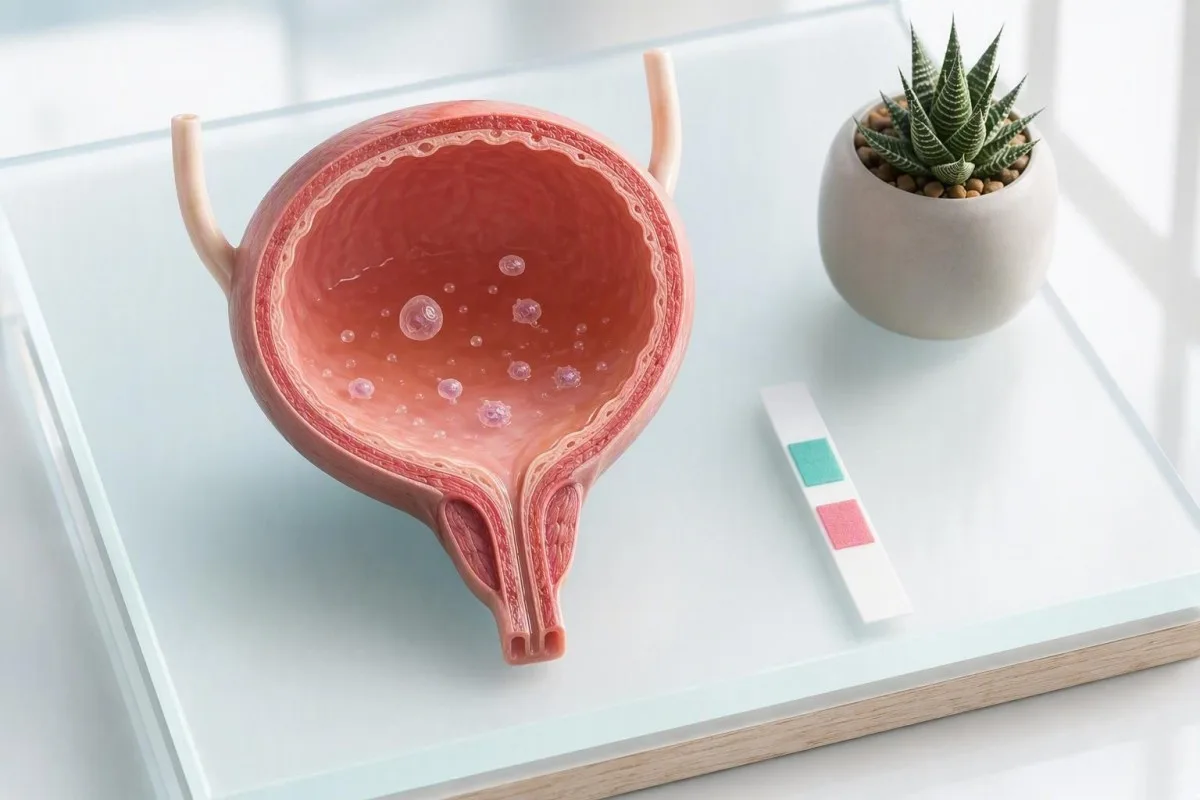
මෙම නොගැලපෙන ඩිප්ස්ටික් රටාව බොහෝ විට මුත්රා සුදු රුධිරාණු වල පිළිබිඹුවක් වන නමුත් එය තනිවම මුත්රා ආසාදනයක් (UTI) තහවුරු නොකරයි. රෝග ලක්ෂණ, එකතු කිරීමේ ගුණාත්මකභාවය, ගැබ්බර තත්ත්වය සහ මුත්රා සංස්කෘතිය ඊළඟට කුමක් සිදුවිය යුතුද යන්න තීරණය කරයි.


- Leukocyte esterase සුදු රුධිරාණු වලින් නිකුත් වන එන්සයිමයක් අනාවරණය කරයි; ධනාත්මක ප්රතිඵලය මුත්රා වල දැවිල්ලක් පෙන්නුම් කරයි, ස්වයංක්රීයව ආසාදනයක් නොවේ.
- නයිට්රයිට් නිෂේධිත මුත්රා ආසාදනයක් (UTI) බැහැර නොකරයි, මන්ද සමහර බැක්ටීරියා නයිට්රයිට් නිපදවන්නේ නැති අතර මුත්රා සාමාන්යයෙන් මුත්රාශයේ පැය 4 ක් පමණ පැවතීමට අවශ්ය වේ.
- මුලින් සංස්කෘතිය රෝග ලක්ෂණ කැපී පෙනෙන විට, ගැබ් ගැනීමක් සිදුවිය හැකි විට, ප්රතිජීවක අසමත් වූ විට, හෝ ආසාදනය නැවත නැවත ඇතිවන විට ඩිප්ස්ටික් නැවත නැවත කිරීමට වඩා සාමාන්යයෙන් ප්රයෝජනවත් වේ.
- දූෂණයේ සලකුණු බොහෝ ස්කොමස් එපිතේලියල් සෛල, මිශ්ර බැක්ටීරියා වර්ධනය, යෝනි ශ්රාවය, සහ අනිසි ලෙස එකතු කරන ලද සාම්පල ඇතුළත් වේ.
- හදිසි ලක්ෂණ උණ 38.0°C හෝ ඊට වැඩි, පාර්ශවීය වේදනාව, වමනය, මුත්රා රෝග ලක්ෂණ සහිත ගැබ් ගැනීම, වැඩිහිටියෙකුගේ ව්යාකූලත්වය, හෝ මුත්රා කිරීමට නොහැකි වීම ඇතුළත් වේ.
- රෝග ලක්ෂණ රහිත බැක්ටීරියුරියා ඩිප්ස්ටික් ප්රතිඵල අසාමාන්ය වුවද, සාමාන්යයෙන් ගැබ් නොගත් වැඩිහිටියන් තුළ ප්රතිකාර නොකළ යුතුය.
- අන්වීක්ෂ විද්යාවේ වැදගත්කම මන්ද, අධි බල ක්ෂේත්රයක සුදු රුධිරාණු 5 කට වඩා වැඩි ප්රමාණයක් පියුරියා (pyuria) සඳහා සහාය දක්වන නමුත් තවමත් සායනික සන්දර්භය අවශ්ය වේ.
- සෘණ නයිට්රයිට් පරීක්ෂණය විශේෂයෙන්ම Enterococcus, Staphylococcus saprophyticus, මුත්රාශයේ අඩු කාලයක් රැඳී සිටීම, තනුක මුත්රා සහ අඩු ආහාරමය නයිට్రేට් ගැනීම සමඟ බහුලව දක්නට ලැබේ.
මෙම ඩිප්ස්ටික් සංයෝජනය ඇත්ත වශයෙන්ම අදහස් කරන්නේ කුමක්ද?
ලියුකෝසයිට් එස්ටරේස් ධනාත්මක, නයිට්රයිට් සෘණ යන්නෙන් අදහස් වන්නේ මුත්රාවල සුදු රුධිරාණු ඇති බවට සාක්ෂි අඩංගු වන නමුත් බැක්ටීරියා නයිට්රයිට් ප්රතික්රියාවක් හඳුනාගත නොහැකි බවයි. මුත්රා කිරීමේදී දැවිල්ල සහ නව විටින් විට මුත්රා කිරීමේ රෝග ලක්ෂණ ඇති පුද්ගලයෙකු තුළ, මෙය තවමත් මුත්රා ආසාදනයක් (UTI) විය හැකිය; රෝග ලක්ෂණ නොමැති කෙනෙකු තුළ, දූෂණය හෝ ආසාදිත නොවන දැවිල්ල බොහෝ විට වැඩි ඉඩක් ඇත.
ලියුකෝසයිට් එස්ටරේස් යනු ප්රධාන වශයෙන් නියුට්රොෆිල්ස් (neutrophils) හා සම්බන්ධ එන්සයිමයක් වන අතර, දැවිල්ල හෝ ආසාදනය අතරතුර මුත්රාවලට සංක්රමණය වන සුදු රුධිරාණු වේ. ධනාත්මක රෝග ලක්ෂණ, දෘශ්යමාන පියුරියා සහ තනි-ජීවී සංස්කෘතියක් සමඟ 2+ හෝ 3+ ලියුකෝසයිට් එස්ටරේස් වලට වඩා ට්රේස් (trace) හෝ 1+ ප්රතිඵලය අඩු වැදගත්කමක් දරයි. ඩ්රිප්ස්ටික් එම සෛලවලට හේතුව හඳුනා නොගන්නා බැවින්, එය රෝග විනිශ්චයක් වෙනුවට තිරගත කිරීමේ පරීක්ෂණයකි.
නයිට්රයිට් වෙනත් ක්රියාවලියක් පිළිබිඹු කරයි: සමහර බැක්ටීරියා ආහාරමය නයිට్రేට්, මුත්රාශයේ මුත්රා රැඳී සිටින අතරතුර නයිට්රයිට් බවට පරිවර්තනය කරයි. නිතර පානය කරන, පැයකට 1-2 වතාවක් මුත්රා කරන, හෝ ඉතා තනුක සාම්පලයක් සපයන පුද්ගලයෙකුට සැබෑ ආසාදනයක් තිබියදීත් නයිට්රයිට් සෘණ විය හැකිය. සම්පූර්ණ මුත්රා විශ්ලේෂණ මාර්ගෝපදේශය ඩ්රිප්ස්ටික් රසායනික විද්යාව සහ අන්වීක්ෂ විද්යාව එකඟ නොවන්නේ මන්දැයි පැහැදිලි කරයි.
2026 අගෝස්තු 28 වන දින වන විට, මම මෙම රටාව ප්රතිඵලයක් ලෙස නොව, පිළිතුරු දිය යුතු ප්රශ්නයක් ලෙස අර්ථකථනය කරමි. ආචාර්ය තෝමස් ක්ලයින්, ස්ට්රිප් එකක එක් ධනාත්මක චතුරශ්රයකින් පසු අනවශ්ය ප්රතිජීවක ලබා ගත් රෝගීන් දැක ඇත, අනෙක් අයට සාමාන්ය සිස්ටිටිස් රෝග ලක්ෂණ තිබියදී සම්පුර්ණයෙන්ම සෘණ නයිට්රයිට් ක්ෂේත්රයක් තිබියදී සංස්කෘතියක් අවශ්ය විය.
ලියුකෝසයිට් එස්ටරේස් සහ නයිට්රයිට් එකඟ නොවීමට හේතුව
ඩ්රිප්ස්ටික් පෑඩ් දෙක වෙනම ජෛව සිදුවීම් මනිනු ලබයි: සුදු-රුධිරාණු ක්රියාකාරිත්වය එදිරිව බැක්ටීරියා නයිට්රේට් අඩුවීම. එබැවින් අසමගි ප්රතිඵලයක් ජෛව විද්යාත්මකව කළ හැකි හා තරමක් පොදු ය, විශේෂයෙන් රෝග ලක්ෂණ සහිත පහළ මුත්රා ආසාදනයේ මුල් අවස්ථාවලදී.
ධනාත්මක ලියුකෝසයිට් එස්ටරේස් ප්රතිඵලය යෝජනා කරයි pyuria, නයිට්රයිට් ප්රතිඵලය බැක්ටීරියා විශේෂ, මුත්රා නයිට්රේට්, මුත්රාශයේ රැඳී සිටින කාලය සහ ස්ට්රිප් හැසිරවීම මත රඳා පවතී. Devillé et al. (2004) ගේ ක්රමානුකූල සමාලෝචනයේදී, ඩ්රිප්ස්ටික් කාර්ය සාධනය සායනික සැකසුම් පුරාම සැලකිය යුතු ලෙස වෙනස් විය; කිසිම පෑඩ් එකක් පමණක් ආසාදනය විශ්වාසදායක ලෙස තහවුරු කළේ නැත. රෝග ලක්ෂණ සමඟ ප්රතිඵල ඒකාබද්ධ කිරීම, ඕනෑම වර්ණ වෙනසක් තීරණාත්මක ලෙස සැලකීමට වඩා නිවැරදි ය.
බොහෝ නයිට්රේට්-අඩු කරන Enterobacterales, බොහෝ Escherichia coli ප්රභේද ඇතුළුව, නිසි තත්ව යටතේ නයිට්රයිට් නිපදවිය හැකිය. Enterococcus විශේෂ සහ Staphylococcus saprophyticus සාමාන්යයෙන් නයිට්රයිට්-සෘණ UTI වලට හේතු වන අතර, මිනිත්තු 30 ත් 60 ත් අතර කාලයක් මුත්රාශයේ රැඳී සිටීමෙන් පසු එකතු කරන ලද සාම්පලයක E. coli තිබියදීත්, මැනිය හැකි නයිට්රයිට් සමුච්චය නොවිය හැක.
කන්ටෙස්ටි යනු AI රුධිර පරීක්ෂණ විශ්ලේෂකය රසායනාගාර සොයාගැනීම් සායනික සන්දර්භයක තබයි, නමුත් නිවසේ මුත්රා ස්ට්රිප් එකකට සංස්කෘති-පාදක ජීවී හඳුනාගැනීම ප්රතිස්ථාපනය කළ නොහැක. මුත්රා වාර්තාවක් වකුගඩු සලකුණු සමඟ පැමිණෙන විට, අපගේ වකුගඩු-ප්රතිඵල මාර්ගෝපදේශය රෝගීන්ට ඔවුන්ගේ වෛද්යවරයාට වඩාත් කේන්ද්රීය ප්රශ්න සකස් කිරීමට උපකාරී වේ.
නයිට්රයිට්-නිෂේධිත ප්රතිඵල තවමත් මුත්රා ආසාදනයක් (UTI) දක්වන විට
මුත්රා රෝග ලක්ෂණ අලුත් හා දේශීයකරණය වූ විට, විශේෂයෙන් ඩිසූරියා (dysuria), හදිසි බව, නිතර මුත්රා කිරීම හෝ සුප්රාපුබික් (suprapubic) අපහසුතාවය ඇති විට, නයිට්රයිට්-සෘණ ඩ්රිප්ස්ටික් එකක් තවමත් UTI සඳහා සහාය විය හැකිය. අන්වීක්ෂ විද්යාව මඟින් අධි බල ක්ෂේත්රයකට සුදු රුධිරාණු 5 කට වඩා පෙන්වන විට සම්භාවිතාව තවත් ඉහළ යයි.
ගැබ් නොගත්, සෙසු අය හොඳින් සිටින කාන්තාවකගේ, නව ඩිසූරියා සහ නිතර මුත්රා කිරීමේ රෝග ලක්ෂණ සහිත, නමුත් යෝනි මාර්ගයෙන් ස්රාවයක් නොමැති විට, උග්ර සිස්ටිටිස් (cystitis) සඳහා පූර්ව-පරීක්ෂණ සම්භාවිතාව දැනටමත් ඉහළ ය. ලියුකෝසයිට් එස්ටරේස් සහාය ලබා දෙන නමුත්, සෘණ නයිට්රයිට් ප්රතිඵලය එම සායනික චිත්රය අර්ථවත් ලෙස බැහැර නොකරයි. ප්රයෝජනවත් ප්රශ්නය නම් රෝග ලක්ෂණ මුත්රාශයට සීමා වී ඇත්ද නැතහොත් උග්ර-පත්ර ක්රියාවලියක් යෝජනා කරයිද යන්නයි.
මම සමාලෝචනය කළ 29-හැවිරිදි රෝගියෙකුට 3+ ලියුකෝසයිට් එස්ටරේස්, සෘණ නයිට්රයිට්, අධි බල ක්ෂේත්රයකට සුදු සෛල 20-30 ක් සහ සෑම 45 මිනිත්තු 21 කට වරක් නැවත නැවත මුත්රා කිරීම සිදුවිය. ඇගේ සංස්කෘතිය පසුව Enterococcus faecalis වගා කරන ලදී, එයින් නයිට්රයිට් චතුරශ්රය සෘණ වීම සෞඛ්ය සම්පන්න බවට සම්පූර්ණ සහතිකයක් ලෙස නොසැලකිය යුත්තේ මන්දැයි යන්න පැහැදිලි කරයි. අපගේ ප්රායෝගික සංසන්දනය බලන්න මුත්රා විශ්ලේෂණය (urinalysis) සහ සංස්කෘතිය (culture) එක් එක් පරීක්ෂණයේ විවිධ කාර්යභාරයන් සඳහා.
සම්භාව්ය බැක්ටීරියා සිස්ටිටිස් (cystitis) සාමාන්යයෙන් අධික උණ හෝ පැති වේදනාවකින් තොරව දැවිල්ල සහ නිතර මුත්රා කිරීම ඇති කරයි. 38.0°C හෝ ඊට වැඩි උණ, පිටුපසට යටින් ඇති ඉළ ඇටවල වේදනාව, දරුණු සෙලවීම්, හෝ වමනය අවදානම් තක්සේරුව වෙනස් කරයි, මන්ද වකුගඩු සම්බන්ධ වීම කළ හැකි බැවිනි. එම රෝග ලක්ෂණ තවත් ඕවර්-ද-කවුන්ටර් ස්ට්රිප් එකකට වඩා එකම දින සායනික උපදෙස් ලැබීමට සුදුසු ය.
ලියුකෝසයිට් එස්ටරේස් ධනාත්මක වීමට දූෂණය වීම පොදු පැහැදිලි කිරීමකි
සුදු රුධිරාණු යෝනි මාර්ගයේ ස්රාව, සම හෝ අපිරිසිදු එකතු කිරීමෙන් බහාලුම්වලට ඇතුළු වන බැවින් දූෂණය ධනාත්මක ලියුකෝසයිට් එස්ටරේස් ඇති කළ හැකිය. අන්වීක්ෂ විද්යාවේදී බොහෝ ස්කොමැමස් එපිටලියල් සෛල (squamous epithelial cells) දූෂිත මධ්යම ප්රවාහ සාම්පලයක් වඩාත් දුරට ඉඩ සලසයි, නමුත් ඒවා එය ඔප්පු නොකරයි.
Clean-catch midstream specimen එකක් යනු අවට ප්රදේශය සේදීම, මුත්රා කිරීමට මුලින් වැසිකිළියට මුත්රා කිරීම, ඉන්පසු කන්ටේනරයේ ඇතුළත ස්පර්ශ නොකර මැද කොටස එකතු කිරීමයි. ප්රමාද වීම ද වැදගත් ය: පැය 2කට වඩා වැඩි කාලයක් කාමර උෂ්ණත්වයේ තබා ඇති මුත්රා, බැක්ටීරියා වෙනස්කම් ඇති කළ හැකිය, එමඟින් අවසාදිත සහ රසායන විද්යාව වෙනස් කරයි. කල්තියා සැකසීමක් නොමැති නම් ශීතකරණය එම වෙනස්කම් මන්දගාමී කරයි.
ඔසප් රුධිරය, යෝනි පුරාවෘත, බැක්ටීරියා යෝනි විෂබීජනාශක, ලිංගික සමේ දැවිල්ල, සහ අධික විසර්ජනය සියල්ල විසින් එක් සාම්පලයකට ලියුකෝසයිට් එකතු කළ හැකිය. මෙම පසුබිමේ, රෝග ලක්ෂණ පහව ගිය පසු පරිස්සමින් එකතු කරන ලද සාම්පලයක් නැවත කිරීම යෝග්ය විය හැකිය, නමුත් මුත්රා ආශ්රිත රෝග ලක්ෂණ සැලකිය යුතු නම් සංස්කෘතිය වඩාත් සුදුසුය. අපගේ මාර්ගෝපදේශය මුත්රා වල epithelial cells එකතු කිරීමේ ගැටළුවක් මුත්රා මාර්ගයේ ඉඟියකින් වෙන්කර හඳුනා ගැනීමට උපකාරී වේ.
සංස්කෘතිය මත මිශ්ර වර්ධනය බොහෝ විට එකතු කිරීමේ දූෂණය මිස මුත්රා රෝග කාරක කිහිපයක් නොවන බව අදහස් කරයි, විශේෂයෙන් ප්රමුඛ පෙළේ ජීවියෙකු නොමැති විට. එසේ වුවද, කැතීටර්, මුත්රා ප්රතිසංස්කරණය, හෝ සංකීර්ණ ආසාදන ඇති පුද්ගලයින්ට සැබවින්ම පොලිමයික්රෝබියල් සංස්කෘතීන් තිබිය හැකි බැවින්, වෛද්යවරු මිශ්ර වර්ධනය ස්වයංක්රීයව ප්රතික්ෂේප නොකළ යුතුය. සන්දර්භය කෙටිමං වලට වඩා ශ්රේෂ්ඨ ය.
මුත්රා වල සුදු රුධිරාණු සඳහා වෙනත් හේතු
මුත්රා වල සුදු රුධිරාණු සාමාන්ය බැක්ටීරියා UTI නොමැතිව ද සිදුවිය හැක. ගල්, ලිංගිකව සම්ප්රේෂණය වන ආසාදන, මෑත කාලීන උපකරණ, අන්තර්ක්රියාකාරී සිස්ටිටිස්, වකුගඩු දැවිල්ල, සහ ඇතැම් ඖෂධ ස්ටෙරයිල් පියුරියා - සාමාන්ය සංස්කෘතියක් නොමැති පියුරියා - නිපදවිය හැකිය.
වඳ පියුරියා සාමාන්යයෙන් සංස්කෘතිය මත වර්ධනයක් නොමැති මුත්රා සුදු සෛල ලෙස අර්ථ දැක්වේ, නමුත් නියම කප්-ඕෆ් විවිධ රසායනාගාර අනුව වෙනස් වේ. මෑතකදී ලබාගත් ප්රතිජීවක මාත්රාවක් 24 සිට 48 පැය දක්වා සංස්කෘතියේ වර්ධනය මර්දනය කළ හැකි අතර දැවිල්ල පවතී. මෙය වෛද්යවරුන් සාම්පලය එකතු කිරීමට පෙර ප්රතිජීවක ආරම්භ කර ඇත්දැයි අසන එක් හේතුවකි.
වකුගඩු ගල් බොහෝ විට වේදනාකාරී පැති වේදනාවක් සහ මුත්රා විශ්ලේෂණයේ රුධිරය ඇති කරයි, අතර ක්ලැමීඩියා ඩිසුරියා සහ පියුරියා ඇති කළ හැකිය, සාමාන්ය මුත්රා සංස්කෘතියක් නොමැතිව. නිරාවරණ ඉතිහාසය, මුත්රාශයේ රෝග ලක්ෂණ, හෝ ශ්රෝණි රෝග ලක්ෂණ ගැලපෙන විට ලිංගික සෞඛ්ය න්යෂ්ටික අම්ල පරීක්ෂණයක් - සාම්ප්රදායික මුත්රා සංස්කෘතියක් නොවේ - සුදුසු වේ. දෘශ්යමාන හෝ අන්වීක්ෂීය රුධිරය එහිම hematuria assessment.
ඖෂධ-උත්තේජිත අතරමැදි නෙෆ්රයිටිස් දුර්ලභ නමුත් සායනිකව වැදගත් ය; ප්රෝටෝන-පොම්ප නිෂේධක, ස්ටෙරොයිඩ් නොවන ප්රති-ගිනි අවුලුවන drugs ෂධ සහ සමහර ප්රතිජීවක පිළිගත් ප්රේරක වේ. පියුරියා මෙන්ම ක්රියේටිනින් ඉහළ යාම, කුෂ්ඨ, උණ හෝ ඊසිනෝෆිලියා වහාම වෛද්ය සමාලෝචනයක් අවශ්ය වේ. ආචාර්ය තෝමස් ක්ලයින් වකුගඩු ක්රියාකාරිත්වය වෙනස් වන විට සෘණ නයිට්රයිට් ප්රතිඵලය මත පමණක් රෝගියෙකුට සහතික නොවන බව.
ඔබට කොතරම් ඉක්මනින් ප්රතිකාර අවශ්යද යන්න වෙනස් කරන රෝග ලක්ෂණ
උණ, පැති වේදනාව, වමනය, ගැබ් ගැනීම, පද්ධතිමය දුර්වලතාවය, හෝ ව්යාකූලත්වය ලියුකෝසයිට් එස්ටරේස් ධනාත්මක ප්රතිඵලය වඩාත් හදිසි කරයි, මන්ද ඒවා සංකීර්ණ නොවන සිස්ටිටිස් වලට ඔබ්බෙන් ආසාදනයක් සංඥා කළ හැකි බැවිනි. නයිට්රයිට්-ධනාත්මක හෝ නයිට්රයිට්-ඍණ තීරුවක් සහිත දරුණු අසනීපයක් සිදුවිය හැකිය.
උෂ්ණත්වය 38.0°C හෝ ඊට වැඩි, වෙව්ලන මිරිස්, පාර්ශවයේ වේදනාව, නැවත නැවත වමනය, නව ව්යාකූලත්වය, හෝ දියර පානය කිරීමට නොහැකි වීම සඳහා එම දවසේම රැකවරණ ලබා ගන්න. මෙම අංගයන් පයිලෝනෙෆ්රයිටිස් හෝ පද්ධතිමය අසනීපයක් පිළිබඳ කනස්සල්ල වැඩි කරයි, එහිදී ප්රමාද වූ ප්රතිකාරය වැදගත් විය හැකිය. සැක සහිත සෙප්සිස් සහිත වැඩිහිටියන් තුළ, හදිසි තක්සේරුවට ජීවтельных සලකුණු සහ බොහෝ විට රුධිර වැඩ ඇතුළත් වේ, අපගේ sepsis-marker overview.
ගැබ් ගැනීම සම්බන්ධයෙන් අඩු සීමාවක් ලැබිය යුතුය, මන්ද මුත්රා ආසාදන වේගයෙන් වර්ධනය විය හැකි අතර ගැබ්ගැනීමේ ප්රතිඵල කෙරෙහි බලපෑම් කළ හැකිය. ගර්භනී අවස්ථාවක මුත්රා රෝග ලක්ෂණ ඩෙප්ස්ටික් එක අපැහැදිලි වුවද, නිසි ලෙස එකතු කරන ලද සංස්කෘතියක් සඳහා හේතු විය යුතුය. උදාහරණයක් ලෙස, බීටා-හීමොලිටික් ස්ට්රෙප්ටොකොකස්, සැලකිය යුතු ගණනකින් සොයාගත් විට ප්රසව සැලසුම් වෙනස් කරයි; බලන්න ගර්භනීභාවයේ GBS පරීක්ෂාව.
වැඩිහිටියන් මෙම පින්තූරය සංකීර්ණ කරයි. වළාකුළු හෝ දුර්ගන්ධ මුත්රා පමණක් UTI හඳුනා ගැනීමට ප්රමාණවත් නොවේ, සහ බාසල බැක්ටීරියුරියා සාමාන්ය වේ; උග්ර උණ, මුත්රා රෝග ලක්ෂණ, රක්තපාත අස්ථාවරත්වය, හෝ පැහැදිලි විකල්ප පැහැදිලි කිරීමක් තක්සේරු කිරීමට මග පෙන්විය යුතුය. ඩෙප්ස්ටික් යනු මුලාවට රෝග විනිශ්චයක් නොවේ.
ඩිප්ස්ටික් නැවත නැවත කිරීමට වඩා මුත්රා සංස්කෘතිය කවදාද වඩා හොඳය
රෝග ලක්ෂණ පවතින්නේ නම්, ආසාදනය නැවත ඇති වුවහොත්, ගර්භනීභාවය පවතී නම්, ප්රතිජීවක ක්රියා නොකර ඇත්නම්, හෝ ඉදිරිපත් කිරීම සංකීර්ණ නම්, නැවත ඩෙප්ස්ටික් පරීක්ෂණයකට වඩා මුත්රා සංස්කෘතිය වඩාත් ප්රයෝජනවත් වේ. සංස්කෘතිය ජීවියා හඳුනාගෙන ප්රතිජීවක සංවේදීතාව වාර්තා කරයි; ඩෙප්ස්ටික් එක කිසිවක් කළ නොහැක.
නැවත ඩෙප්ස්ටික් පරීක්ෂණයකින් බොහෝ විට එකතු කිරීමේ දුර්වලතා සමඟම වක්ර රසායනික තිරගත කිරීමක් නැවත නැවත කරයි. ප්රායෝගික නම්, සංස්කෘතිය සාමාන්යයෙන් ප්රතිජීවක වලට පෙර එකතු කරනු ලැබේ, මන්ද එකක් හෝ දෙකක මාත්රාවන් පවා බැක්ටීරියා යථා තත්ත්වයට පත් කිරීම අඩු කළ හැකිය. 10^5 colony-forming units per mL ට සමාන ගණන් වාර්තා කිරීම ඓතිහාසිකව ප්රමිතියක් ලෙස භාවිතා කරන ලදී, නමුත් රෝග ලක්ෂණ සහිත රෝගීන්ට ජීවියා සහ නියැදි ක්රමය අනුව අර්ථවත් අඩු ගණන් තිබිය හැක.
පුනරාවර්තන සංකීර්ණ නොවන UTI සඳහා, බොහෝ මාර්ගෝපදේශ මගින් මාස 6 කින් අවම වශයෙන් 2 දෝෂ හෝ මාස 12 කින් 3 ලෙස අර්ථ දැක්වේ, උග්ර දෝෂයක් අතරතුර සංස්කෘතිය ලබා ගැනීම නැවත ඇතිවීම, නැවත ආසාදනය, ප්රතිරෝධය, සහ ආසාදන නොවන අනුකරණයන් වෙන් කිරීමට උපකාරී වේ. සමාලෝචනය කරන්න මුත්රා සංස්කෘති ගණන් සහ මිශ්ර වර්ධනය එක් එක් ධනාත්මක වාර්තාවට එකම ප්රතිකාරය අවශ්ය යැයි උපකල්පනය කිරීමට පෙර.
කන්ටෙස්ටි යනු AI රසායනාගාර පරීක්ෂණ අර්ථකථන සේවාව වකුගඩු ක්රියාකාරිත්වය, දැවිල්ල සලකුණු, සහ පෙර රසායනාගාර ඉතිහාසය සංවිධානය කළ හැකි, නමුත් සංස්කෘතිය-අධ්යක්ෂණය කරන ලද නියම කිරීම වෛද්යවරයෙකුට නායකත්වය දෙන තීරණයකි. සංස්කෘතිය විශේෂයෙන් මෑත කාලීන ගමන්, මුත්රා ක්රියා පටිපාටි, කැතීටර් භාවිතය, ප්රතිශක්ති ඌනතාවය, හෝ ප්රතිරෝධී ආසාදන ඉතිහාසය.
මුත්රා විශ්ලේෂණයේ ඉතිරි රටාව කියවීම
ලියුකෝසයිට් එස්ටරේස් මුත්රා අන්වීක්ෂය, රුධිරය, ප්රෝටීන්, නිශ්චිත ගුරුත්වාකර්ෂණය, සහ රෝග ලක්ෂණ සමඟ යුගල වූ විට වඩාත් අර්ථවත් වේ. එකම මුත්රා විශ්ලේෂණ අංගයකට රුධිර රසායන විද්යා ප්රතිඵලයකට සමාන විශ්වීය “සාමාන්ය පරාසයක්” නොමැත.
ක්ෂීරපායී 5කට වඩා දෘඩ-බල ක්ෂේත්රයකට ඉහළින් සාමාන්යයෙන් මුත්රා ආසාදනයක් ඇති කරයි, අතර නිසි ලෙස එකතු කරන ලද සාම්පලයකට දෘඩ-බල ක්ෂේත්රයකට රුධිර සෛල 3කට වඩා වැඩි ප්රමාණයක් ක්ෂුද්ර ජීව විද්යාත්මක රක්තහූනයක් විය හැකි අතර එය අනුගමනය කිරීම අවශ්ය විය හැක. ප්රෝටීන් 1+ හෝ ඊට වැඩි ප්රමාණයක් උණ හෝ ආසාදනය අතරතුර තාවකාලික විය හැක, නමුත් ස්ථාවර ප්රෝටීන් ප්රමාණාත්මක තක්සේරුවක් අවශ්ය වේ. අපගේ මාර්ගෝපදේශය මුත්රාවේ ප්රෝටීන් ඇල්බුමින්-ක්රියේටිනින් අනුපාතය බොහෝ විට ඊළඟ පරීක්ෂණය වන්නේ මන්දැයි පැහැදිලි කරයි.
1.005 ට අඩු නිශ්චිත ගුරුත්වාකර්ෂණය බොහෝ රසායනාගාරවල ඉතා තනුක මුත්රා පෙන්නුම් කරන අතර සෛල සහ නයිට්රයිට් වල සාන්ද්රණය අඩු කළ හැකිය. 1.030 ට වඩා වැඩි නිශ්චිත ගුරුත්වාකර්ෂණය විජලනය, ග්ලූකෝස්, හෝ වෙනත් ද්රාවක පිළිබිඹු කළ හැකිය, සහ සාන්ද්රගත මුත්රා රෝග ලක්ෂණ වඩාත් දරුණු ලෙස දැනීමට හේතු විය හැක. නිශ්චිත ගුරුත්වය මාර්ගෝපදේශය තුළ එකතු කිරීමේ කාලය සහ සජලන බලපෑම් සාකච්ඡා කරයි.
සුදු රුධිරාණු අච්චු, නිදහසේ පාවෙන සුදු සෛලවලට වඩා වෙනස් වේ: ඒවා වකුගඩු වලින් පැමිණෙන බව පෙන්නුම් කරන අතර කඩිනම් තක්සේරුවක් අවශ්ය වේ. ධාන්යමය අච්චු, වැඩිවන ක්රියේටිනින්, සහ අධි රුධිර පීඩනය සරල සිස්ටිටිස් වලට වඩා පුළුල් වකුගඩු තක්සේරුවක් යෝජනා කරයි. තීරුවක් විශ්වාසදායක ලෙස අච්චු හඳුනාගත නොහැක; අන්වීක්ෂය අවශ්ය වේ.
ප්රතිඵලවලට බලපාන ඖෂධ, විටමින් C, සහ හැසිරවීමේ දෝෂ
විටමින් C, මෑතකදී ගත් ප්රතිජීවක, ඉතා තනුක මුත්රා, සහ ප්රමාද වී තීරුව කියවීම ඩ්රිප්ස්ටික් විශ්වසනීයත්වය වෙනස් කළ හැකිය. වැරදි-නෙගටිව් නයිට්රයිට් ප්රතිඵල විශේෂයෙන් ඇස්කෝර්බික් අම්ලයට නිරාවරණය වීම සහ මුත්රාශයේ කෙටි කාලයක් පැවතීම සමඟ සම්බන්ධ වේ.
විශාල විටමින් C මාත්රාවන් ඩ්රිප්ස්ටික් ඔක්සිකරණ ප්රතික්රියා කිහිපයකට බාධා කළ හැකිය, නමුත් බලපෑම තීරුව නිෂ්පාදකයා සහ මුත්රා සාන්ද්රණය අනුව වෙනස් වේ. ඔබ දිනපතා 500 සිට 1,000 mg ගන්නවා නම්, උපදෙස් නොමැතිව නියමිත අතිරේක නතර කරනවාට වඩා වෛද්යවරයාට හෝ රසායනාගාරයට කියන්න. පළමු උදෑසන සාම්පලය නයිට්රයිට් අනාවරණය වැඩි දියුණු කළ හැකිය, මන්ද එය සාමාන්යයෙන් මුත්රාශයේ වැඩි කාලයක් රැඳී සිට ඇත.
ෆෙනාසොපිරිඩින් මුත්රා තැඹිලි පැහැයට හැරවිය හැකි අතර වර්ණ අර්ථ නිරූපණය විශ්වාස කළ නොහැකි කරයි, අතර ප්රතිජීවක බැක්ටීරියා බර පහත වැටීමෙන් පසුව ලියුකෝසයිට් එස්ටරේස් ධනාත්මකව තැබිය හැකිය. ඩ්රිප්ස්ටික් නිෂ්පාදකයා විසින් නියම කරන ලද වේලාවට කියවිය යුතුය — බොහෝ විට තීරුව මත පෑඩ් එක මත රඳා පවතින පරිදි තත්පර 60 ත් 120 ත් අතර — මන්ද ප්රමාද කියවීම වැරදි වර්ණ වෙනස්කම් ඇති කළ හැකිය. අපගේ සමාලෝචනය මුත්රා වර්ණ වෙනස්කම් හිතකර සහ සැලකිල්ලට ගත යුතු හේතු ආවරණය කරයි.
නිවසේ තීරුවල රටා දැකීම ප්රයෝජනවත් නමුත් ප්රතිජීවක අවශ්යද යන්න තීරණය කිරීමට දුර්වලය. රෝග ලක්ෂණ සහ තීරුවේ ප්රතිඵල පරස්පර විරෝධී නම්, රෝග ලක්ෂණ සහ වෘත්තීය තක්සේරුවට ප්රමුඛත්වය දෙන්න. මගේ අත්දැකීම් වලට අනුව, වේලාවට උපදෙස් අසල තීරුව ඡායාරූපගත කිරීම, ඇත්ත වශයෙන්ම නිරීක්ෂණය කළ දේ වෛද්යවරුන්ට තේරුම් ගැනීමට උපකාරී වේ.
ඩිප්ස්ටික් අසාමාන්ය නම් කුමක් කළ යුතුද?
මුත්රා රෝග ලක්ෂණ නොමැතිව අසාමාන්ය ඩ්රිප්ස්ටික් එකක් ගර්භනී නොවන වැඩිහිටියන් තුළ ප්රතිජීවක ආරම්භ නොකළ යුතුය. රෝග ලක්ෂණ නොමැතිව මුත්රාශයේ බැක්ටීරියා සහ මුත්රා ආසාදනය සාමාන්ය වේ, විශේෂයෙන් වැඩිහිටියන් හා දියවැඩියාව, කැතීටර්, හෝ මුත්රා අසාමාන්යතා ඇති පුද්ගලයින් තුළ.
2019 IDSA මාර්ගෝපදේශය Nicolle et al. විසින් මෙහෙයවන ලදී, ගර්භනීභාවය සහ තෝරාගත් ආක්රමණශීලී මුත්රා විද්යාත්මක ක්රියා පටිපාටි වලට පෙර රෝග ලක්ෂණ නොමැතිව මුත්රාශයේ බැක්ටීරියා පරීක්ෂා කිරීම සහ ප්රතිකාර කිරීම නිර්දේශ කරයි. අනෙකුත් කණ්ඩායම් බොහොමයක යටත් විජිතයට ප්රතිකාර කිරීම ප්රතිඵල වැඩි දියුණු නොකරන අතර ප්රතිරෝධී ජීවීන් තෝරා ගත හැකිය. ලියුකෝසයිට් එස්ටරේස් ධනාත්මක වීම පමණක් ධනාත්මක සංස්කෘතියකට වඩා අඩු නිරවද්ය වේ.
කිසිදු රෝග ලක්ෂණයක් නොමැති, උණ නැති, සහ මුත්රා රෝග ලක්ෂණ නොමැති ගර්භනී නොවන වැඩිහිටියෙකුට සාමාන්යයෙන් හදිසි නැවත තීරුවක් හෝ ඉතිරි වූ ප්රතිජීවක අවශ්ය නොවේ. ව්යතිරේකයන් තනි තනිව සලකනු ලැබේ: සැලසුම් කරන ලද මුත්රා මාර්ග උපකරණ, දැඩි ප්රතිශක්ති ඌනතාවය, හෝ පැහැදිලි කළ නොහැකි වකුගඩු සොයාගැනීම් පරීක්ෂා කරන වෛද්යවරයකුට සැලැස්ම වෙනස් කළ හැකිය. මෙම වෙනස අතිරේක ප්රතිකාරයට එරෙහිව ප්රායෝගික ආරක්ෂාවක් වේ.
Kantesti AI, ලියුකෝසයිට් එස්ටරේස් පමණක් මත UTI එකක් ප්රකාශයට පත් කිරීමට වඩා, වාර්තා කරන ලද සන්දර්භය සමඟ රසායනාගාර රටා අර්ථ නිරූපණය කරයි. අපගේ වෛද්ය සත්යාපන (medical validation) ප්රවේශය රෝග ලක්ෂණ නොමැති සොයාගැනීම් රෝග විනිශ්චයක් බවට පත් කිරීමට වඩා සායනික සම්බන්ධීකරණය සඳහා සලකුණු කරන්නේ මන්දැයි විස්තර කරයි.
ගැබ් ගැනීම, ළමුන්, පිරිමින් සහ කැතීටර් භාවිතා කරන්නන්ට විවිධ නීති අවශ්ය වේ
ගර්භනීභාවය, ළමා කාලය, පිරිමි මුත්රා රෝග ලක්ෂණ, සහ කැතීටර් භාවිතය සරල ඩ්රිප්ස්ටික්-පාදක තීරණ වල විශ්වසනීයත්වය අඩු කරන අතර සංස්කෘතියේ වටිනාකම වැඩි කරයි. එකම ධනාත්මක ලියුකෝසයිට් එස්ටරේස් ඍණ නයිට්රයිට් රටාව මෙම කණ්ඩායම් හරහා වෙනස් අර්ථයන් ඇත.
ගර්භනී සමයේදී, රෝග ලක්ෂණ ඇති විට වෛද්යවරුන් සාමාන්යයෙන් මුත්රා සංස්කෘති කරන අතර මුල් ගර්භනී සත්කාරයේ දී රෝග ලක්ෂණ නොමැති මුත්රාශයේ බැක්ටීරියා පරීක්ෂා කරයි. එක් ජීවියෙකුගේ මිලිලීටරයකට 10^5 යටත් විජිත ඒකක සහිත සංස්කෘතියක් සාම්පලීය රෝග ලක්ෂණ නොමැති මුත්රාශයේ බැක්ටීරියාවට සහාය වී ඇත, කෙසේ වෙතත් අඩු ගණන් වල කළමනාකරණය ජීවියා සහ තත්වයන් මත රඳා පවතී. ඩ්රිප්ස්ටික් ඍණ නයිට්රයිට් ගර්භනීභාවය-ආශ්රිත ආසාදනය ආරක්ෂිතව බැහැර නොකරයි.
ළමුන් තුළ, එකතු කිරීමේ ක්රමය තීරණාත්මක වේ. බෑග් සාම්පලයක් පරීක්ෂණය සඳහා ප්රයෝජනවත් විය හැකි නමුත් ඉහළ දූෂණ අනුපාතයක් ඇත; වයස සහ වැසිකිළි පුහුණුව මත රඳා පවතින ආසාදනය තහවුරු කිරීමට කැතීටර් හෝ පිරිසිදු-කැචි සාම්පල වඩා හොඳය. පැහැදිලි මූලාශ්රයක් නොමැතිව තරුණ දරුවෙකු තුළ උණ ඇතිවීම වැඩිහිටි නිවසේ තීරුව ඇල්ගොරිතමයට නොව ළමා රෝග විශේෂඥ තක්සේරුවක් අවශ්ය වේ.
පිරිමින් තුළ මුත්රා රෝග ලක්ෂණ බොහෝ විට සරල සිස්ටිටිස් නොවීමට හේතු වන අතර ප්රොස්ටැටයිටිස්, අවහිරතා, ගල්, හෝ ලිංගිකව සම්ප්රේෂණය වන ආසාදනය පිළිබිඹු කළ හැකිය. කැතීටර් භාවිතා කරන්නන්ට බොහෝ විට රෝග ලක්ෂණ නොමැතිව බැක්ටීරියා සහ සුදු සෛල ඇත, එබැවින් උණ, ශ්රෝණි අපහසුතා, පාර්ශවීය වේදනාව, හෝ ශරීරගත රෝග ලක්ෂණ මුත්රා පෙනුමට වඩා වැදගත් වේ. ආසාදනයක් නොමැතිව මුත්රා fréquence සඳහා, සමාලෝචනය කරන්න නිතර මුත්රා පිටවීම සඳහා රුධිර පරීක්ෂණ.
මෙම ප්රතිඵලයෙන් පසු ඊළඟ-පියවර සැලැස්ම
ලියුකෝසයිට් එස්ටරේස් ධනාත්මක, නයිට්රයිට් ඍණ පසු ඊළඟ පියවර රෝග ලක්ෂණ සහ අවදානම මත රඳා පවතින අතර, පරීක්ෂණ තීරුව කොතරම් අඳුරුද යන්න මත නොවේ. මෘදු සංකීර්ණ රෝග ලක්ෂණ 24 ත් 48 ත් අතර පැය තුළ වෛද්ය-මාර්ගෝපදේශිත තක්සේරුවක් යුක්ති සහගත කළ හැකිය, අතර රතු කොඩි දිනයක් තුළ රැකවරණය අවශ්ය වේ.
ඔබට මෘදු නව දැවෙන සංවේදනයක් හෝ නිතර මුත්රා කිරීමක් තිබේ නම්, උණ, පාර්ශවීය වේදනාව, වමනය, ගැබ් ගැනීම, හෝ ප්රධාන අසනීපයක් නොමැති නම්, උපදෙස් සඳහා වෛද්යවරයෙකු හෝ දේශීය ෆාමසි සේවාවක් අමතන්න සහ සංස්කෘතියක් අවශ්යදැයි විමසන්න. ප්රතිජීවක අසාත්මිකතා, මෑතකදී ප්රතිජීවක භාවිතය, පෙර සංස්කෘති ප්රතිඵල, සහ ලිංගික ක්රියාකාරකම් වලින් පසු රෝග ලක්ෂණ ආරම්භ වූවාද යන්න පිළිබඳ ලැයිස්තුවක් ගෙන එන්න. එම විස්තර බොහෝ විට දෙවන තීරුවකට වඩා මුල් සැලැස්ම වෙනස් කරයි.
දූෂණය සිදුවිය හැකි යැයි හැඟේ නම් සහ රෝග ලක්ෂණ නොමැති හෝ අවම නම්, අහඹු සාම්පල නැවත නැවත පරීක්ෂා කිරීමට වඩා ප්රවේශමෙන් එකතු කරන ලද මධ්යම ධාරා සාම්පලයක් නැවත කරන්න. ජලය ලීටර් කිහිපයක් පානය කිරීමෙන් පසු වහාම පරීක්ෂා කිරීමෙන් වළකින්න; තනුක මුත්රා අවක්ෂේප සොයාගැනීම් වසං කළ හැකිය. නව ශ්ලේෂ්මල benign විය හැකි නමුත්, එය සමඟ ඇතිවන persistent රෝග ලක්ෂණ අපගේ mucus-in-urine guide.
පෙර සිද්ධියකින් ඉතිරි කරගත් ප්රතිජීවක ස්වයං-ආරම්භ නොකරන්න. අසම්පූර්ණ හෝ නොගැලපෙන පාඨමාලාවක් සංස්කෘතියේ අස්වැන්න අඩු කර, සැබෑ හේතුවට ප්රතිකාර නොකර ප්රතිරෝධය වැඩි කළ හැකිය. ප්රායෝගික අරමුණ සරල ය: හැකි විට ප්රතිකාර කිරීමට පෙර හොඳ සාම්පලයක් ලබා ගන්න, පසුව රෝග ලක්ෂණ සහ අවදානම සමඟ මැදිහත්වීම ගලපන්න.
ඔබේ වෛද්යවරයාට හෝ ඖෂධවේදියෙකුට ගෙන යාමට ප්රශ්න
හොඳම ප්රශ්න විශේෂිත ය: සාම්පලය දූෂණය වී තිබේද, අන්වීක්ෂය පියුරියාට සහාය වේද, සංස්කෘතියක් අවශ්යද, සහ කුමන රෝග ලක්ෂණ සඳහා හදිසි නැවත ඇගයීමක් අවශ්යද යන්න. මෙම ප්රශ්න ඇසීමෙන් අවිනිශ්චිත ඩිප්ස්ටික් එකක් ආරක්ෂිත සැලැස්මක් බවට පත් කිරීමට උපකාරී වේ.
අසන්න, “ස්කොැමස් එපිටිලියල් සෛල තිබුණාද, මෙය පිරිසිදු-අල්ලාගැනීමේ සාම්පලයක්ද?” ඉන්පසු උස-බලැති ක්ෂේත්රයකට සුදු රුධිරාණු 5කට වඩා, රතු සෛල, ප්රෝටීන්, හෝ කැස්ට් තිබුණාදැයි අසන්න. මෙම විස්තර රසායන විද්යා පෑඩ් එකක් වකුගඩු හෝ මුත්රාශය ආශ්රිත අනුගමනයක් ලැබිය යුතු රටාවකින් වෙන්කර හඳුනා ගනී.
ප්රතිජීවක ප්රතිකාරයක් යෝජනා කරන්නේ නම්, සංස්කෘතියක් මුලින්ම ලබා ගත්තාද සහ ප්රතිකාරයේ වෙනසක් ඇති කරන්නේ කුමන ප්රතිඵලයදැයි අසන්න. කාල සීමාවක් සඳහා අසන්න: සංකීර්ණ නොවන රෝග ලක්ෂණ සාමාන්යයෙන් ඵලදායී ප්රතිකාරයෙන් පැය 48 ත් 72 ත් අතර කාලයකදී දියුණු වීමට පටන් ගත යුතුය, අනෙක් අතට රෝග ලක්ෂණ නරක අතට හැරීම සඳහා මුල් සමාලෝචනයක් අවශ්ය වේ. nitrite-in-urine explainer ජීවී රටාවන් වලට බලපාන දේ තේරුම් ගැනීමට ඔබට උපකාරී වනු ඇත.
කන්ටෙස්ටි යනු AI මගින් බලගැන්වූ රුධිර පරීක්ෂණ විශ්ලේෂණ මෙවලම රසායනාගාර සන්දර්භය තේරුම් ගැනීමට සහ සායනික සංවාද සඳහා සූදානම් වීමට මිනිසුන්ට උපකාර කිරීම සඳහා රටවල් 127+ පුරා භාවිතා කරයි. අපගේ වෛද්යවරුන් සහ වෛද්ය සමාලෝචකයන් එම කාර්යය සඳහා ආරක්ෂක සීමාවන් නියම කර ඇත; පාඨකයන්ට සමාලෝචනය කළ හැකිය වෛද්ය උපදේශක මණ්ඩලය සහ රෝග ලක්ෂණ දරුණු වන විට හදිසි දේශීය රැකවරණය භාවිතා කළ යුතුය.
නොගැලපෙන මුත්රා ඩිප්ස්ටික් පිළිබඳ අවසාන තීරණය
ධනාත්මක ලියුකෝසයිට් එස්ටරේස්, සෘණ නයිට්රයිට් සමඟ, මුත්රා සුදු-රුධිර සෛල ක්රියාකාරිත්වය හෙළිදරව් කළ හැකි නයිට్రేට්-අඩු කරන බැක්ටීරියා ක්රියාකාරිත්වය නොමැතිව පෙන්නුම් කරයි. එය UTI එකකට ගැලපේ, නමුත් එය දූෂණය, තනුක මුත්රා, නයිට්රයිට්-නිපදවන නොවන ජීවියෙක්, මෑතකදී ප්රතිජීවක, ගල්, හෝ ආසාදිත නොවන ගිනි අවුලුවීම පිළිබිඹු කළ හැකිය.
පැහැදිලි මුත්රාශයේ රෝග ලක්ෂණ ඇති පුද්ගලයින් සඳහා, සෘණ නයිට්රයිට් ආසාදනය බැහැර නොකරයි; රෝග ලක්ෂණ පුනරාවර්තන, සංකීර්ණ, දරුණු, හෝ ප්රතිකාර-ප්රතිරෝධී වන විට සංස්කෘතිය විශේෂයෙන් ප්රයෝජනවත් වේ. රෝග ලක්ෂණ නොමැති පුද්ගලයින් සඳහා, අසාමාන්ය ඩිප්ස්ටික් සොයාගැනීම් සාමාන්යයෙන් ප්රතිජීවක සඳහා යොමු නොකළ යුතුය. එම වෙනස මග හැරුණු අසනීප සහ අනවශ්ය ප්රතිකාර යන දෙකම වළක්වයි.
වඩාත් සායනිකව ප්රයෝජනවත් සාක්ෂි දාමය වන්නේ රෝග ලක්ෂණ plus පිරිසිදු එකතුව plus අන්වීක්ෂය හෝ සංස්කෘතිය - බහු ගෘහස්ථ තීරු නොවේ. උණ, වේදනා ස්ථානය, ගැබ් ගැනීම් තත්ත්වය, තරල පරිභෝජනය, ඖෂධ, සහ පෙර ජීවීන් පිළිබඳ කෙටි වාර්තාවක් තබා ගන්න. අපගේ lab-trend analysis.
ආචාර්ය තෝමස් ක්ලයින්ගේ අවසාන ප්රායෝගික උපදෙස් සරල ය: එක විසංවාදී තීරුවක් ගැන බිය නොවන්න, නමුත් උණ, පාර්ශවීය වේදනාව, වමනය, ගැබ් ගැනීම, හෝ රෝගය නරක අතට හැරීම නොසලකා හරින්න එපා. Kantesti's AI තාක්ෂණික මාර්ගෝපදේශය අපගේ සායනික-සන්දර්භ ප්රවේශය රසායනාගාර සංඥාවක් රෝග විනිශ්චයකින් වෙන් කරන්නේ කෙසේද යන්න පැහැදිලි කරයි.
නිතර අසන ප්රශ්න
ධනාත්මක ලියුකොසයිට් එස්ටරේස් සහ ඍණ නයිට්රයිට් සමඟ ඔබට මුත්රා ආසාදනයක් (UTI) තිබිය හැකිද?
CE. මුත්රා ආසාදනයක් (UTI) නිසා ලියුකෝසයිට් එස්ටරේස් (leukocyte esterase) ධනාත්මක සහ නයිට්රයිට් (nitrite) සෘණාත්මක විය හැක. මන්ද, නයිට්රයිට් සඳහා විශේෂිත බැක්ටීරියා, ප්රමාණවත් ආහාරමය නයිට్రేට් සහ සාමාන්යයෙන් මුත්රාශයේ පැය 4 ක පමණ රැඳී සිටීම අවශ්ය වේ. Enterococcus සහ Staphylococcus saprophyticus බහුලව නයිට්රයිට්-සෘණ ආසාදන ඇති කරයි. අලුතින් ඇතිවන මුත්රා කිරීමේදී වේදනාව (dysuria), මුත්රා කිරීමට අධික ආශාව (urgency), නිතර මුත්රා කිරීම (frequency) සහ අධි බල ක්ෂේත්රයකට (high-power field) සුදු රුධිරාණු 5 කට වඩා වැඩි ප්රමාණයක් තිබීම ආසාදනය වීමේ සම්භාවිතාව වැඩි කරයි, අතර මුත්රා වගාව (urine culture) රෝග කාරකය හඳුනා ගනී.
ලියුකෝසයිට් එස්ටරේස් ධනාත්මක වීම සැම විටම ආසාදනයක් අදහස් කරනවාද?
ආර්. මුත්රවල සුදු රුධිරාණු හෝ ඒවායේ එන්සයිම ක්රියාකාරිත්වය ධනාත්මක ලියුකෝසයිට් එස්ටරේස් මගින් දැක්වෙන අතර, එය තහවුරු කරන ලද බැක්ටීරියා ආසාදනයක් නොවේ. යෝනි මාර්ගයේ අපද්රව්ය, වකුගඩු ගල්, ලිංගිකව සම්ප්රේෂණය වන ආසාදන, මෑතකදී ලබාගත් ප්රතිජීවක, අන්තර්-කණ්ඩක සිස්ටිටිස් සහ වකුගඩු දැවිල්ල මේ සියල්ල මේ ප්රතිඵලය ඇතිකළ හැකිය. මුත්රා ආශ්රිත රෝග ලක්ෂණ නොමැති පුද්ගලයෙකු තුළ, ධනාත්මක ඩිප්ස්ටික් පරීක්ෂණයක් පමණක් සාමාන්යයෙන් ප්රතිජීවක සඳහා සාධාරණයක් නොවේ.
මුත්රාශයේ මුත්රා කොපමණ කාලයක් තිබිය යුතුද, එවිට නයිට්රයිට් ධනාත්මක වේද?
බොහෝ ඩිප්ස්ටික් සඳහා නයිට్రేට්-අඩු කරන බැක්ටීරියා විසින් නයිට්රයිට් ප්රමාණවත් ලෙස නිපදවීමට මුත්ර මුත්රාශයේ දළ වශයෙන් පැය 4ක් පමණ රැඳී සිටිය යුතුය. එබැවින්, දිවා කාලයේ නිතර මුත්රා කිරීමෙන් පසු එකතු කරන ලද සාම්පලයකට වඩා උදෑසන මුත්රා වල නයිට්රයිට් ධනාත්මක බව පරීක්ෂා කිරීමට වැඩි ඉඩක් ඇත. පැය 4කට පසුවද, Enterococcus සහ වෙනත් සමහර ජීවීන් නයිට්රේට් විශ්වාසදායක ලෙස අඩු නොකරන බැවින් නයිට්රයිට්-ඍණාත්මකව පැවතිය හැකිය.
මම ඩෙප්ස්ටික් එක නැවත කරන්නද, නැත්නම් මුත්රා කල්චර් එකක් ඉල්ලුවද?
මුත්රාවල රසායනික වෙනස්කම් (dipstick) පරීක්ෂණයකට වඩා මුත්රා කල්චර් (urine culture) පරීක්ෂණය සාමාන්යයෙන් වැඩි තොරතුරු සපයන්නේ මුත්රාවේ රෝග ලක්ෂණ පැය 48කට වඩා පැවතීම, රෝග ලක්ෂණ නැවත ඇතිවීම, ගර්භණීභාවය, උණ හෝ ඉළ ඇටයේ වේදනාව ඇතිවීම, නැතහොත් ප්රතිජීවක ඖෂධවලින් සුව නොවූ අවස්ථාවලදීය. කල්චර් මගින් ජීවියා සහ ප්රතිජීවක ඖෂධවලට දක්වන සංවේදීතාව වාර්තා කරන අතර, ඩිප්ස්ටික් මගින් වක්ර රසායනික සංඥා පමණක් හඳුනා ගනී. අපිරිසිදු වීමක් සිදුවිය හැකි අතර රෝග ලක්ෂණ නොමැති හෝ ඉතා සුළු රෝග ලක්ෂණ ඇති විට, ප්රවේශමෙන් කරන ලද නැවත ඩිප්ස්ටික් පරීක්ෂණයක් සාධාරණ විය හැකිය.
ලියුුුුුුුුුුුුුුුුුුුුුුුුුුුුුුුුුුුුුුුුුුුුුුුුුුුුුුුුුුුුුුුුුුුුුුුුුුුුුුුුුුුුුුුුුුුුුුුුුුුුුුුුුුුුුුුුුුුුුුුුුුුුුුුුුුුුුුුුුුුුුුුුුුුුුුුුුුුුුුුුුුුුුුුුුුුුුුුුුුුුුුුුුුුුුුුුුුුුුුුුුුුුුුුුුුුුුුුුුුුුුුුුුුුුුුුුුුුුුුුුුුුුුුුුුුුුුුුුුුුුුුුුුුුුුුුුුුුුුුුුුුුුුුුුුුුුුුුුුුුුුුුුුුුුුුුුුුුුුුුුුුුුුුුුුුුුුුුුුුුුුුුුුුුුුුුුුුුුුුුුුුුුුුුුුුුුුුුුුුුුුුුුුුුුුුුුුුුුුුුුුුුුුුුුුුුුුුුුුුුුුුුුුුුුුුුුුුුුුුුුුුුුුුුුුුුුුුුුුුුුුුුුුුුුුුුුුුුුුුුුුුුුුුුුුුුුුුුුුුුුුුුුුුුුුුුුුුුුුුුුුුුුුුුුුුුුුුුුුුුුුුුුුුුුුුුුුුුුුුුුුුුුුුුුුුුුුුුුුුුුුුුුුුුුුුුුුුුුුුුුුුුුුුුුුුුුුුුුුුුුුුුුුුුුුුුුුුුුුුුුුුුුුුුුුුුුුුුුුුුුුුුුුුුුුුුුුුුුුුුුුුුුුුුුුුුුුුුුුුුුුුුුුුුුුුුුුුුුුුුුුුුුුුුුුුුුුුුුුුුුුුුුුුුුුුුුුුුුුුුුුුුුුුුුුුුුුුුුුුුුුුුුුුුුුුුුුුුුුුුුුුුුුුුුුුුුුුුුුුුුුුුුුුුුුුුුුුුුුුුුුුුුුුුුුුුුුුුුුුුුුුුුුුුුුුුුුුුුුුුුුුුුුුුුුුුුුුුුුුුුුුුුුුුුුුුුුුුුුුුුුුුුුුුුුුුුුුුුුුුුුුුුුුුුුුුුුුුුුුුුුුුුුුුුුුුුුුුුුුුුුුුුුුුුුුුුුුුුුුුුුුුුුුුුුුුුුුුුුුුුුුුුුුුුුුුුුුුුුුුුුුුුුුුුුුුුුුුුුුුුුුුුුුුුුුුුුුුුුුුුුුුුුුුුුුුුුුුුුුුුුුුුුුුුුුුුුුුුුුුුුුුුුුුුුුුුුුුුුුුුුුුුුුුුුුුුුුුුුුුුුුුුුුුුුුුුුුුුුුුුුුුුුුුුුුුුුුුුුුුුුුුුුුුුුුුුුුුුුුුුුුුුුුුුුුුුුුුුුුුුුුුුුුුුුුුුුුුුුුුුුුුුුුුුුුුුුුුුුුුුුුුුුුුුුුුුුුුුුුුුුුුුුුුුුුුුුුුුුුුුුුුුුුුුුුුුුුුුුුුුුුුුුුුුුුුුුුුුුුුුුුුුුුුුුුුුුුුුුුුුුුුුුුුුුුුුුුුුුුුුුුුුුුුුුුුුුුුුුුුුුුුුුුුුුුුුුුුුුුුුුුුුුුුුුුුුුුුුුුුුුුුුුුුුුුුුුුුුුුුුුුුුුුුුුුුුුුුුුුුුුුුුුුුුුුුුුුුුුුුුුුුුුුුුුුුුුුුුුුුුුුුුුුුුුුුුුුුුුුුුුුුුුුුුුුුුුුුුුුුුුුුුුුුුුුුුුුුුුුුුුුුුුුුුුුුුුුුුුුුුුුුුුුුුුුුුුුුුුුුුුුුුුුුුුුුුුුුුුුුුුුුුුුුුුුුුුුුුුුුුුුුුුුුුුුුුුුුුුුුුුුුුුුුුුුුුුුුුුුුුුුුුුුුුුුුුුුුුුුුුුුුුුුුුුුුුුුුුුුුුුුුුුුුුුුුුුුුුුුුුුුුුුුුුුුුුුුුුුුුුුුුුුුුුුුුුුුුුුුුුුුුුුුුුුුුුුුුුුුුුුුුුුුුුුුුුුුුුුුුුුුුුුුුුුුුුුුුුුුුුුුුුුුුුුුුුුුුුුුුුුුුුුුුුුුුුුුුුුුුුුුුුුුුුුුුුුුුුුුුුුුුුුුුුුුුුුුුුුුුුුුුුුුුුුුුුුුුුුුුුුුුුුුුුුුුුුුුුුුුුුුුුුුුුුුුුුුුුුුුුුුුුුුුුුුුුුුුුුුුුුුුුුුුුුුුුුුIR] leukocyte esterase (LE) 800 U/L
2+ හෝ 3+ ලියුකෝසයිට් එස්ටරේස් ප්රතිඵලය, ට්රේස් හෝ 1+ ට වඩා මුත්රා සුදු රුධිරාණු වල සැලකිය යුතු ක්රියාකාරිත්වයක් පෙන්නුම් කරයි, නමුත් ලියුකෝසයිට් එස්ටරේස් ශ්රේණියක් පමණක් රෝගයේ තීව්රතාවය තීරණය නොකරයි. උණ 38.0°C හෝ ඊට වැඩි වීම, ඉළ ඇටයේ වේදනාව, වමනය, ගැබ් ගැනීම සහ ප්රතිශක්තිකරණ ක්රියාකාරිත්වය අඩාල වීම වැනි රෝග ලක්ෂණ මත වෛද්යමය හදිසිභාවය රඳා පවතී. ඉහළ බලැති ක්ෂේත්රයකට සුදු රුධිරාණු 5 කට වඩා පෙන්වන අන්වීක්ෂය සහ ධනාත්මක තනි-ජීව සංස්කෘතියක්, ඩිප්ස්ටික් ශ්රේණියට වඩා ශක්තිමත් සාක්ෂි සපයයි.
ඩිහයිඩ්රේෂන් ලියුකොසයිට් එස්ටරේස් ධනාත්මක වීමට හේතු විය හැකිද?
විජලනය සාමාන්යයෙන් ලියුකෝසයිට් එස්ටෙරාස් (leukocyte esterase) තනිවම ඇති නොකරයි, නමුත් සාන්ද්රගත මුත්ර මගින් පවතින සෛල සහ රෝග ලක්ෂණ වඩාත් කැපී පෙනෙන ලෙස පෙනී යා හැකි අතර, තීරු අර්ථ නිරූපණය සංකීර්ණ කළ හැකිය. 1.030 ට වඩා වැඩි විශේෂ ගුරුත්වය (specific gravity) බොහෝ විට සාන්ද්රගත මුත්ර වලට ඇඟවෙනු ඇත, නමුත් ග්ලූකෝස් සහ වෙනත් ද්රාව්ය ද එය ඉහළ නැංවිය හැකිය. ජලීයකරණය සුවපහසුව වැඩි දියුණු කළ හැකි නමුත්, උණ, ඉළ ඇටය අසල වේදනාව, වමනය හෝ මුත්ර වල රෝග ලක්ෂණ නරක අතට හැරීම පිළිබඳ තක්සේරුව ප්රමාද කිරීමට එය භාවිතා නොකළ යුතුය.
අදම AI බලයෙන් රුධිර පරීක්ෂණ විශ්ලේෂණය ලබාගන්න
තත්පර කිහිපයකින් ක්ෂණික හා නිවැරදි රසායනාගාර පරීක්ෂණ විශ්ලේෂණය සඳහා Kantesti විශ්වාස කරන ලොව පුරා මිලියන 2කට වැඩි පරිශීලකයන්ට එක්වන්න. ඔබගේ රුධිර පරීක්ෂණ ප්රතිඵල උඩුගත කර, තත්පර කිහිපයකින් 15,000+ ජෛව සලකුණු පිළිබඳ සවිස්තර අර්ථකථනය ලබාගන්න.
📚 යොමු කර ඇති පර්යේෂණ ප්රකාශන
ක්ලයින්, ටී., මිචෙල්, එස්., සහ වෙබර්, එච්. (2026). උපවාසයෙන් පසු පාචනය, මළපහේ කළු ලප & GI මාර්ගෝපදේශය 2026. (2026). Figshare. https://doi.org/10.6084/m9.figshare.31438111. ResearchGate: https://www.researchgate.net/; Academia.edu: https://www.academia.edu/. Kantesti AI වෛද්ය පර්යේෂණ.
ක්ලයින්, ටී., මිචෙල්, එස්., සහ වෙබර්, එච්. (2026). Women's Health Guide: Ovulation, Menopause & Hormonal Symptoms. (2026). Figshare. https://doi.org/10.6084/m9.figshare.31830721. ResearchGate: https://www.researchgate.net/; Academia.edu: https://www.academia.edu/. Kantesti AI වෛද්ය පර්යේෂණ.
📖 බාහිර වෛද්ය යොමු
⚕️ වෛද්ය වියාචනය
මෙම ලිපිය අධ්යාපනික අරමුණු සඳහා පමණක් වන අතර වෛද්ය උපදෙස් ලෙස නොසැලකේ. රෝග නිદાન සහ ප්රතිකාර තීරණ සඳහා සෑම විටම සුදුසුකම් ලත් සෞඛ්ය සේවා සපයන්නෙකුගෙන් උපදෙස් ලබාගන්න.
E-E-A-T විශ්වාස සංඥා
අත්දැකීම්
වෛද්යවරයා විසින් මෙහෙයවන ලද රසායනාගාර අර්ථකථන ක්රියාවලි පිළිබඳ සමාලෝචනය.
ප්රවීණතාව
සායනික සන්දර්භය තුළ ජෛව සලකුණු (biomarkers) හැසිරෙන ආකාරය පිළිබඳ රසායනාගාර වෛද්ය විද්යා අවධානය.
අධිකාරීත්වය
ආචාර්ය තෝමස් ක්ලයින් විසින් ලියන ලද අතර ආචාර්ය සාරා මිචෙල් සහ මහාචාර්ය ආචාර්ය හෑන්ස් වෙබර් විසින් සමාලෝචනය කරන ලදී.
විශ්වසනීයත්වය
අනතුරු ඇඟවීම් අඩු කිරීමට පැහැදිලි පසුකැඳවීම් මාර්ග සහිත සාක්ෂි-පාදක අර්ථකථනය.