
A platelet result becomes more concerning when it is very low, changes quickly, stays abnormal on repeat testing, or occurs with anemia, unusual white-cell results, clotting symptoms, or active bleeding. The same number can require routine follow-up in one person and urgent assessment in another.

Perkara utama
- Julat tipikal orang dewasa is approximately 150-450 x10^9/L, although every laboratory sets its own interval and pediatric or pregnancy ranges may differ.
- A rapid fall of 50% or more over days is more concerning than a stable count of 90 x10^9/L, particularly after heparin exposure or during acute illness.
- Trombositopenia teruk below 20 x10^9/L usually needs urgent clinician assessment; below 10 x10^9/L is associated with a higher risk of spontaneous bleeding.
- A count of 100-149 x10^9/L is often mild, but a new or worsening result should be confirmed with a repeat CBC and medication review.
- Persistent thrombocytosis above 450 x10^9/L needs an explanation, while counts above 1,000 x10^9/L warrant prompt assessment because clotting and bleeding risks can coexist.
- An isolated change with normal hemoglobin and white-cell counts is often less alarming than a platelet change accompanied by anemia, neutropenia, abnormal cells, or pancytopenia.
- Penggumpalan platelet in an EDTA tube can create a falsely low result; a blood-film review or repeat sample in a citrate tube can distinguish laboratory artifact from true thrombocytopenia.
- Simptom kecemasan include uncontrolled bleeding, black stool, vomiting blood, a sudden severe headache, new weakness, confusion, chest pain, or shortness of breath, regardless of the exact platelet number.
What a platelet count trend can reveal
The usual adult platelet reference range is about 150-450 x10^9/L, but the trend is often more informative than one flagged result. A fall from 240 to 120 x10^9/L in 48 hours deserves more attention than a stable result of 120 over 2 years, because speed can signal an active process rather than a longstanding baseline.
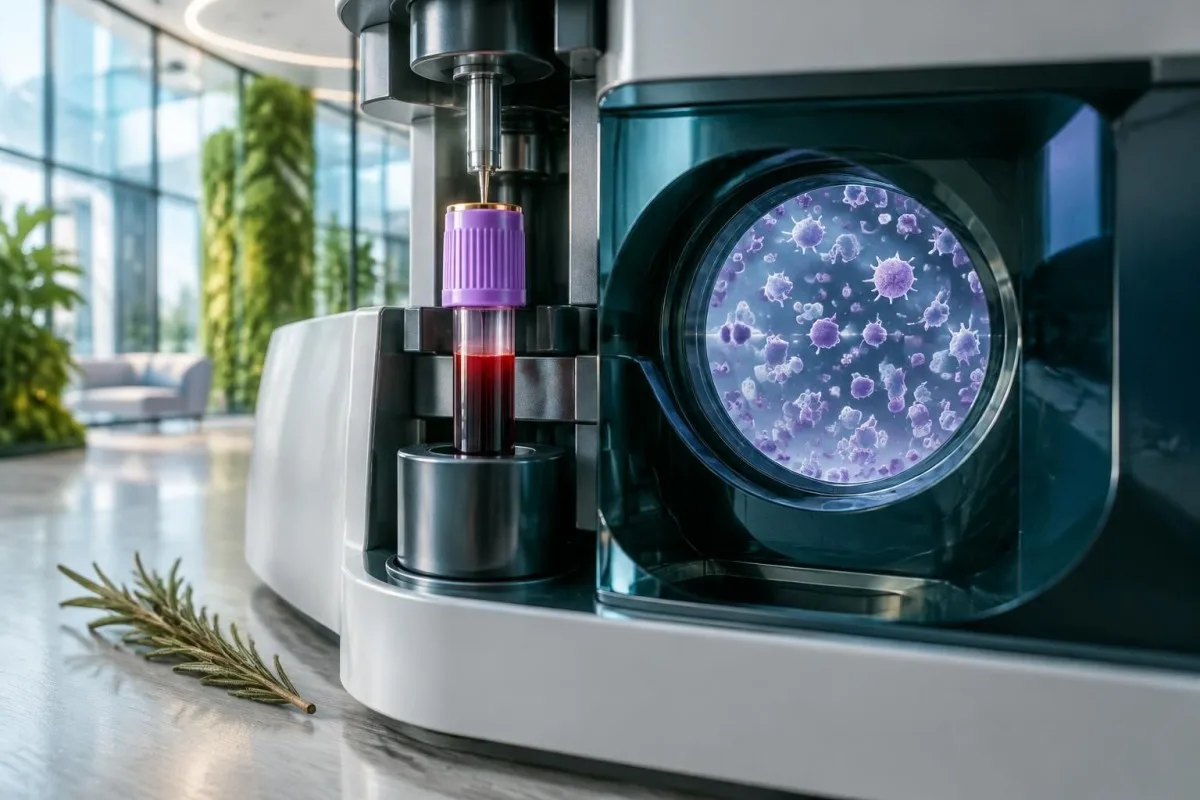
A platelet count measures the number of platelets in a defined volume of blood, usually reported as x10^9/L or thousands per microliter. The numerical value is not a diagnosis: 150 x10^9/L may be normal in one laboratory, while 149 x10^9/L may be flagged low in the same report because the reference boundary is statistical rather than a sudden biological cliff.
The size of the change matters because a 20% fall and a 70% fall do not carry the same meaning. For example, a hypothetical adult whose count falls from 300 to 240 x10^9/L has lost 20% but remains within many reference ranges; a fall from 300 to 90 x10^9/L represents a 70% reduction and requires faster clarification.
The timing of the repeat result also changes interpretation. A count of 95 x10^9/L repeated at 96 after 3 months suggests persistence, whereas 95 after a result of 210 one week earlier suggests a new change that should prompt review of symptoms, medicines, recent infection, and the full CBC.
Laboratories may use slightly different adult intervals, such as 150-400 or 150-450 x10^9/L, and this difference is usually less important than the direction of movement. Keep the date, laboratory, units, and reference interval beside each result; a trend can be distorted when one report uses x10^9/L and another uses thousands per microliter without making the conversion clear.
A useful way to organise several dates is a simple table with the collection date, platelet count, hemoglobin, white-cell count, medications, and recent illness. A broader panduan rujukan biomarker can help explain the other CBC fields that determine whether a platelet result is isolated or part of a larger pattern.
| Tahap | Julat | Maksudnya |
|---|---|---|
| Julat tipikal orang dewasa | 150-450 x10^9/L | Usually within the laboratory interval; the trend and symptoms still matter. |
| Agak rendah | 100-149 x10^9/L | Often needs confirmation and context, especially when new or falling. |
| Sederhana rendah | 50-99 x10^9/L | Prompt clinical review is appropriate; bleeding risk rises with illness, procedures, or medicines. |
| Sangat rendah | <20 x10^9/L | Urgent assessment is generally needed; <10 x10^9/L carries a higher spontaneous bleeding risk. |
Why the reference interval is not a safety guarantee
A result inside the laboratory range can still be clinically important when it has changed quickly. A drop from 420 to 180 x10^9/L over 5 days remains technically within many adult ranges, but a 57% fall may be more informative than the final value.
The reverse is also true: a count outside the range may be a person’s long-term baseline. A stable platelet count of 125 x10^9/L with normal hemoglobin, normal white cells, no bleeding, and a previous result of 130 may need planned monitoring rather than emergency care.
When a low platelet count needs prompt review
Kiraan platelet di bawah 50 x10^9/L needs prompt medical review, below 20 x10^9/L commonly requires same-day or urgent assessment, and below 10 x10^9/L is a medical emergency risk even without visible bleeding. These thresholds guide urgency, but symptoms, pregnancy, anticoagulant use, fever, kidney disease, and the speed of the fall can move the decision earlier.

Severe thrombocytopenia below 20 x10^9/L increases concern for spontaneous mucosal or internal bleeding, while counts below 10 x10^9/L are commonly treated as an emergency threshold. The number alone does not predict exactly who will bleed, but the risk becomes more difficult to accept when the result is new, falling, or accompanied by infection or medicines that impair platelet function.
A count between 20 and 50 x10^9/L may be tolerated without symptoms in some people, yet it becomes more consequential before surgery, dental extraction, childbirth, or an invasive procedure. A hypothetical patient with 42 x10^9/L and no symptoms may need urgent planning rather than an ambulance, while the same result with black stool or a severe headache needs emergency care.
The 2019 American Society of Hematology guideline for immune thrombocytopenia considers platelet level, bleeding, age, comorbidities, anticoagulants, and follow-up reliability rather than using one number in isolation (Neunert et al., 2019). This is why a new count of 18 x10^9/L should be discussed urgently even if the person feels well.
Do not wait for a repeat appointment when bleeding will not stop after 10 minutes of firm pressure, when urine or stool is visibly bloody, or when there is vomiting blood. Sudden severe headache, confusion, fainting, weakness on one side, or a new vision change can indicate a dangerous complication and requires emergency services.
Perbezaan praktikalnya ialah prompt clinician review versus emergency symptoms. For a deeper explanation of sudden neurologic warning signs, see this guide to stroke symptoms and emergency action; do not use a platelet article to delay urgent assessment.
Why the speed of change affects urgency
A rapid platelet count change is concerning when the count falls by roughly 30-50% or more over several days, even if the final value is not yet below 100 x10^9/L. The next step is usually confirmation with a repeat CBC and blood-film review, but a rapid fall after heparin, with clot symptoms, or with multiple abnormal CBC fields needs immediate clinical assessment.

A fall from 220 to 110 x10^9/L in 72 hours is a 50% decline and deserves more urgency than a stable count of 110 x10^9/L over 12 months. The reason is that active consumption, immune destruction, medication reaction, or laboratory error can evolve quickly, whereas a longstanding mild abnormality often follows a different diagnostic pathway.
An unexpected low result should be confirmed with a repeat platelet count, ideally with a manual smear review when the number does not fit the clinical picture. EDTA-dependent platelet clumping is reported in approximately 0.1-2% of hospital samples and can make an otherwise normal count appear dangerously low; a citrate or heparinized tube may be requested by the laboratory.
Heparin-induced thrombocytopenia is a particularly important time-linked pattern: the platelet count often falls by more than 50% about 5-10 days after heparin begins, and thrombosis may occur even when the absolute count remains above 50 x10^9/L. The 2018 American Society of Hematology HIT guideline recommends structured clinical assessment rather than relying on the platelet number alone (Cuker et al., 2018).
A repeat performed too far from the original result can miss the most informative part of the trend. If a result changes from 190 to 85 x10^9/L within 2 days, contact the ordering clinician or urgent service promptly; do not independently restart, stop, or substitute anticoagulants.
A high mean platelet volume can sometimes support increased platelet production after peripheral destruction, but it cannot diagnose the cause by itself. The related discussion of high MPV patterns explains why platelet size must be interpreted alongside the count, smear, and clinical timeline.
What the rest of the CBC adds
An isolated platelet abnormality with stable hemoglobin and white-cell counts is generally less alarming than thrombocytopenia accompanied by anemia, neutropenia, abnormal cells, or pancytopenia. The Corak CBC helps distinguish a platelet-specific process from reduced marrow production, major blood loss, systemic illness, or a medication effect.

A platelet count of 88 x10^9/L with hemoglobin 145 g/L and white cells 6.2 x10^9/L is an isolated abnormality, while 88 x10^9/L with hemoglobin 92 g/L and neutrophils 0.8 x10^9/L affects three blood-cell lines. The second pattern warrants more rapid evaluation because the bone marrow, immune system, medication exposure, or a serious systemic process may be involved.
The red-cell indices add useful clues. A falling platelet count plus hemoglobin 78 g/L, reticulocyte changes, or a rising RDW may point toward blood loss, hemolysis, nutritional deficiency, or marrow stress; the RDW dan MCV explains why red-cell size variation can change the interpretation of anemia.
White-cell abnormalities change the risk calculation in both directions. A platelet count of 70 x10^9/L with fever and neutrophils 0.4 x10^9/L is more urgent than the platelet number alone suggests, while a mild platelet reduction with normal white cells and no symptoms may allow a planned repeat depending on the history.
A peripheral smear can reveal platelet clumps, unusually large platelets, fragmented red cells, blasts, or other changes that an automated counter cannot classify reliably. Fragmented red cells plus falling platelets, anemia, kidney injury, confusion, or fever is an emergency pattern because it may signal a microangiopathic process.
Pancytopenia means low red cells, white cells, and platelets together; it is not explained by ordinary dehydration. Persistent pancytopenia or abnormal cells should be assessed promptly, and this overview of corak CBC anemia aplastik describes why multiple low lines need a different workup.
Common reasons platelet counts fall
Platelets can fall because they are being destroyed, consumed, trapped in an enlarged spleen, produced less effectively, or counted incorrectly. Recent infection, new medicines, liver disease, immune thrombocytopenia, heparin exposure, pregnancy-related disorders, and laboratory clumping are among the most useful clues when the change occurs over days or weeks.

A recent viral illness can temporarily lower platelets, sometimes into the 100-150 x10^9/L range, but a continued fall below 50 x10^9/L or new bleeding needs a clinician’s assessment. The count should not automatically be blamed on a virus when the result is worsening 2-4 weeks later or when hemoglobin and kidney results are also abnormal.
Medication timing is often more informative than the medication name alone. Drug-related thrombocytopenia can occur after exposure to medicines such as heparin, some antibiotics, anticonvulsants, quinine-containing products, or chemotherapy; the response may begin within days for a sensitized person, so every prescription, over-the-counter product, and supplement should be listed with its start date.
Liver disease and an enlarged spleen can lower circulating platelets by increasing sequestration, sometimes producing a stable count near 80-130 x10^9/L without dramatic bleeding. A new decline from 130 to 60 x10^9/L, however, should not be dismissed as cirrhosis without checking for infection, medication effects, active consumption, and laboratory error.
A platelet fall with new clotting after heparin is a different emergency from isolated immune thrombocytopenia. A suspected HIT pattern may involve a fall of at least 30-50% between days 5 and 10, while disseminated intravascular coagulation can produce falling platelets, prolonged clotting times, low fibrinogen, and high D-dimer during severe illness.
The timing of bleeding also matters. Heavy menstrual bleeding that soaks protection every hour for 2 hours, or recurrent nosebleeds lasting more than 20 minutes, deserves prompt medical contact even when the platelet count is 60 x10^9/L; the guide to tanda amaran pendarahan haid yang banyak covers symptoms that should not be normalised.
When a rising platelet count needs investigation
Kiraan platelet melebihi 450 x10^9/L is called thrombocytosis and should be interpreted as reactive or potentially clonal, especially when it persists on repeat testing. Counts above 1,000 x10^9/L need prompt medical assessment because very high platelets can increase clotting risk while also causing acquired bleeding problems.

Reactive thrombocytosis commonly follows infection, inflammation, surgery, tissue injury, iron deficiency, or removal of the spleen. A count of 520 x10^9/L during recovery from pneumonia may fall over 2-6 weeks, whereas 520 x10^9/L persisting for 3 months without an obvious trigger deserves a more deliberate evaluation.
The absolute level and the trend should be read together. A rise from 410 to 480 x10^9/L over 1 month is modest, but a rise from 480 to 950 x10^9/L over 10 days is a rapid change that warrants prompt review, particularly with headache, visual symptoms, chest pain, shortness of breath, or one-sided leg swelling.
Iron deficiency is a frequent reversible contributor to raised platelets, even when hemoglobin is still normal. Ferritin below 30 micrograms/L often indicates depleted iron stores in adults, although inflammation can make ferritin appear higher; an iron panel and clinical context are more useful than treating the platelet count alone.
Persistent thrombocytosis can occasionally reflect a bone-marrow disorder involving JAK2, CALR, or MPL variants. A positive JAK2 result supports a myeloproliferative neoplasm but does not establish the diagnosis without blood counts, examination, and specialist interpretation; the article on JAK2 test results explains why mutation testing is not a standalone answer.
Very high platelet counts can produce both thrombosis and bleeding because extremely numerous platelets may interfere with von Willebrand factor. Do not start aspirin solely because the count is 900 or 1,100 x10^9/L; treatment depends on the cause, bleeding risk, cardiovascular history, and specialist advice.
How soon should a repeat platelet count be done?
The appropriate repeat interval depends on the count, change speed, symptoms, and CBC pattern: stable mild thrombocytopenia may be rechecked in weeks, a count of 50-99 x10^9/L often needs review within days to 2 weeks, and a new count below 20 x10^9/L should not wait for routine monitoring. A repeat test should answer a specific question, such as confirming a result, checking recovery, or testing whether a suspected artifact disappears.
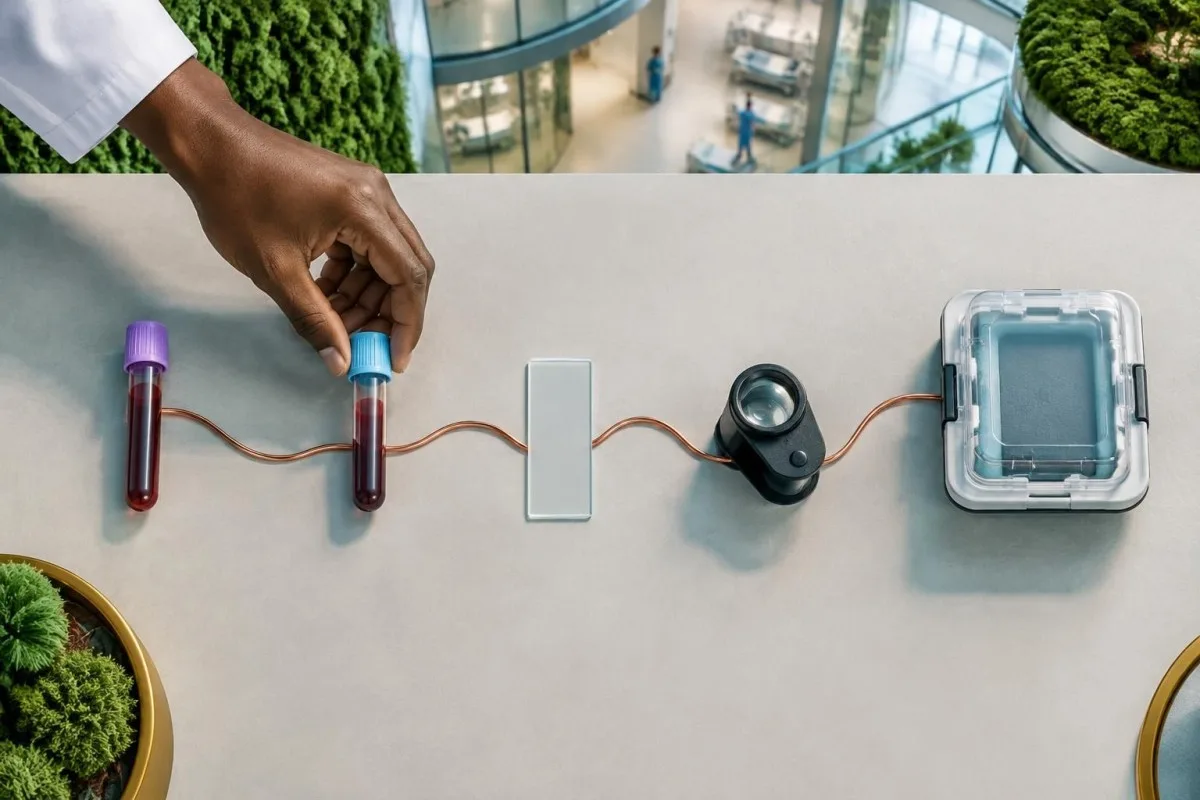
For an asymptomatic adult with a new platelet count of 100-149 x10^9/L and otherwise normal CBC, a clinician may choose a repeat in approximately 2-4 weeks, depending on history and prior results. A result of 50-99 x10^9/L usually deserves faster review, often within 1-2 weeks or sooner if falling, while a result below 50 x10^9/L should not be managed by an unattended routine repeat.
For thrombocytosis, a repeat after 4-6 weeks can show whether a suspected infection, inflammation, or iron deficiency is resolving. Persistent elevation at 450-600 x10^9/L after 2-3 months needs an explanation, and a count above 1,000 x10^9/L should be discussed promptly rather than simply rechecked months later.
Ask whether the laboratory should examine a blood film or use a citrate tube when platelet clumping is suspected. Repeating the same EDTA sample without addressing clumping can reproduce a falsely low result, while an urgent alternate-tube sample can prevent unnecessary treatment or referral.
Useful accompanying tests may include a CBC with differential, blood film, renal and liver tests, ferritin and iron studies, vitamin B12 and folate, inflammatory markers, and targeted viral testing. There is no universal panel for every low platelet result; testing should follow the clinical story rather than turning a single value into a hunt for rare diseases.
Results from several dates are easiest to compare when the same unit, laboratory interval, and collection context are retained. When a person is already tracking multiple laboratory markers, a private trend record can reduce transcription errors; the blood-test trend workflow gives a broader example of why dates and medication changes should be recorded together.
Situations that change the risk calculation
Pregnancy, planned procedures, anticoagulants, antiplatelet medicines, chemotherapy, kidney disease, liver disease, and recent hospitalization all lower the threshold for review of a platelet change. A count of 110 x10^9/L may be monitored in one setting but require same-day obstetric or hospital advice when combined with high blood pressure, severe headache, upper abdominal pain, or abnormal liver tests.

In pregnancy, mild gestational thrombocytopenia often remains above 100 x10^9/L and may be monitored, but a rapid fall below 100 x10^9/L with high blood pressure, protein in urine, severe headache, visual symptoms, or right-upper-abdominal pain requires urgent assessment. A platelet count of 75 x10^9/L can have very different implications in uncomplicated late pregnancy versus suspected HELLP syndrome.
Before surgery or an invasive procedure, the acceptable platelet threshold depends on the operation, bleeding history, anesthesia plan, and local protocol. Many procedures become more difficult to plan below 50 x10^9/L, while neuraxial anesthesia decisions often use a higher and context-specific threshold; never infer procedural clearance from the CBC alone.
Anticoagulants and antiplatelet drugs can increase bleeding consequences without causing the platelet count to fall. A person taking warfarin, apixaban, rivaroxaban, clopidogrel, or aspirin should contact the prescribing team promptly about a new platelet result and should not stop treatment independently unless instructed.
Chemotherapy, immune therapies, and some antibiotics may suppress production or trigger immune destruction over a predictable time window. A falling count 7-14 days after a treatment cycle may be expected in some regimens, but the oncology team still needs the actual result because fever, mucosal bleeding, or a count below 20 x10^9/L can change the plan immediately.
Kidney or liver dysfunction can amplify risk even at moderate platelet levels by affecting clotting proteins, platelet function, or drug clearance. A coagulation panel may be normal while platelet function remains impaired, so this panduan ujian pembekuan is useful for understanding why normal PT or aPTT does not rule out every bleeding problem.
Which symptoms mean emergency care is needed?
Emergency care is needed for uncontrolled bleeding, black or bloody stool, vomiting blood, a sudden severe headache, new weakness or confusion, fainting, chest pain, severe shortness of breath, or symptoms suggesting a blood clot. These symptoms require urgent action even when the last platelet count was 150 x10^9/L, because the count may have changed or another dangerous process may be present.
Persistent bleeding from the nose or a cut after 10 minutes of firm pressure is a reason to seek urgent advice, especially when platelets are below 50 x10^9/L or the person takes an anticoagulant. Black, tarry stool, red urine, vomiting blood, or a rapidly enlarging bruise needs medical assessment rather than observation at home.
A sudden severe headache, seizure, confusion, fainting, weakness on one side, difficulty speaking, or new visual loss is an emergency at any platelet count. Intracranial bleeding is uncommon, but the potential consequence is serious enough that symptom-based triage should override reassurance from an older CBC result.
Shortness of breath, chest pain, coughing blood, or one-sided leg swelling can indicate a clot, including in settings such as HIT where platelets fall while clotting risk rises. A count of 65 x10^9/L does not protect against thrombosis, and taking extra aspirin is not an appropriate substitute for emergency evaluation.
Fever with a platelet count below 50 x10^9/L, especially with neutrophils below 0.5 x10^9/L, needs urgent medical advice because infection and low blood counts can worsen one another. During pregnancy, severe headache, visual changes, upper abdominal pain, or heavy bleeding should prompt immediate contact with maternity or emergency services.
For non-emergency questions, bring the last 3-5 CBC reports, medication start dates, recent infection history, bleeding or clotting symptoms, and any pregnancy or procedure details. Clear documentation helps a clinician distinguish a true rapid change from a unit mismatch, collection error, or longstanding baseline.
Soalan lazim
Berapakah kiraan platelet yang dianggap sangat rendah dan berbahaya?
Kiraan platelet di bawah 20 x10^9/L secara umumnya dianggap cukup teruk sehingga memerlukan penilaian klinikal segera, dan kiraan di bawah 10 x10^9/L membawa risiko pendarahan spontan yang lebih tinggi. Tahap kesegeraan yang tepat bergantung pada gejala, kadar penurunan, kehamilan, penggunaan antikoagulan, jangkitan dan keputusan CBC yang lain. Pendarahan yang tidak terkawal, najis berwarna hitam, muntah darah, sakit kepala teruk yang berlaku secara tiba-tiba, kekeliruan atau kelemahan memerlukan rawatan kecemasan pada apa-apa kiraan platelet sekalipun.
Adakah kiraan platelet sebanyak 100 sesuatu yang perlu dibimbangkan?
Kiraan platelet sebanyak 100 x10^9/L berada di sempadan antara trombositopenia ringan dan sederhana dan biasanya memerlukan semakan oleh klinisian, bukannya panik secara automatik. Keputusan yang stabil sekitar 100 dengan hemoglobin dan sel darah putih yang normal mungkin dipantau, manakala penurunan daripada 220 kepada 100 x10^9/L dalam tempoh 48 jam memerlukan penilaian yang lebih segera. CBC ulangan, semakan ubat-ubatan dan pemeriksaan filem darah mungkin sesuai.
How fast can a platelet count change?
Platelets can fall by 30-50% within several days in conditions such as drug reactions, heparin-induced thrombocytopenia, severe infection, or active consumption. A fall from 200 to 90 x10^9/L over 72 hours is more concerning than a stable result of 90 over 12 months. A rapid change should be discussed promptly and may require a repeat CBC, blood film, and assessment for clotting or bleeding symptoms.
When should a high platelet count be repeated?
A platelet count above 450 x10^9/L may be repeated after approximately 4-6 weeks when a temporary cause such as infection or iron deficiency is plausible and the person has no urgent symptoms. Persistent elevation for 2-3 months needs investigation, while a count above 1,000 x10^9/L warrants prompt medical assessment. Chest pain, shortness of breath, neurologic symptoms, or one-sided leg swelling requires emergency care rather than routine retesting.
Can a low platelet result be a laboratory error?
Yes, EDTA-dependent platelet clumping can cause a falsely low automated count and is reported in roughly 0.1-2% of hospital samples. A blood-film review or repeat sample in a citrate tube can show whether the platelets are clumping outside the body rather than truly low in circulation. A very low unexpected result should still be addressed promptly until the laboratory confirms the result is spurious.
What other CBC results matter with a changing platelet count?
Hemoglobin, white-cell count, neutrophils, red-cell indices, reticulocytes, and the blood-film appearance help determine whether a platelet change is isolated. Platelets of 80 x10^9/L with normal hemoglobin and white cells suggest a different pathway from 80 x10^9/L with hemoglobin 85 g/L and neutrophils 0.4 x10^9/L. Multiple low blood-cell lines, abnormal cells, fever, kidney injury, or fragmented red cells require prompt assessment.
Dapatkan penjelasan tentang keputusan ujian darah anda
Muat naik laporan makmal anda dan AI Kantesti menerangkan setiap biomarker dalam bahasa mudah dalam beberapa saat. Digunakan oleh lebih daripada 2 juta orang di seluruh dunia.
Rujukan
- Klein, T., Mitchell, S., & Weber, H. (2026). Panduan Kumpulan Darah B Negatif, Ujian Darah LDH & Kiraan Retikulosit. Penyelidikan Perubatan AI Kantesti. DOI
- Klein, T., Mitchell, S., & Weber, H. (2026). Cirit-birit Selepas Berpuasa, Bintik Hitam dalam Najis & Panduan GI 2026. Penyelidikan Perubatan AI Kantesti. DOI
- Neunert C et al. (2019). American Society of Hematology 2019 guidelines for immune thrombocytopenia. Blood Advances. DOI PubMed
- Provan D et al. (2019). Laporan konsensus antarabangsa yang dikemas kini mengenai penyiasatan dan pengurusan trombositopenia imun primer. Blood Advances. DOI PubMed
- Cuker A et al. (2018). American Society of Hematology 2018 guidelines for management of venous thromboembolism: heparin-induced thrombocytopenia. Blood Advances. DOI PubMed
- 2J+Ujian dianalisis
- 127+negara
- 100+Bahasa
Mengenai pasukan perubatan


Isyarat Kepercayaan E-E-A-T
Pengalaman
Semakan klinikal yang diketuai oleh doktor terhadap aliran kerja tafsiran makmal.
Kepakaran
Fokus perubatan makmal tentang bagaimana biomarker berkelakuan dalam konteks klinikal.
Kewibawaan
Disemak secara perubatan oleh Dr. Thomas Klein, dengan sumbangan daripada Dr. Sarah Mitchell dan Prof. Dr. Hans Weber.
Kebolehpercayaan
Tafsiran berasaskan bukti dengan laluan susulan yang jelas untuk mengurangkan kebimbangan.




Penafian perubatan
Artikel ini adalah untuk tujuan pendidikan sahaja dan tidak merupakan nasihat perubatan. Sentiasa rujuk pembekal penjagaan kesihatan yang berkelayakan untuk keputusan diagnosis dan rawatan.
Diterbitkan · Hubungi pasukan editorial
Diterbitkan oleh Kantesti Ltd, berdaftar di England & Wales, nombor syarikat. 17090423, London, United Kingdom.
