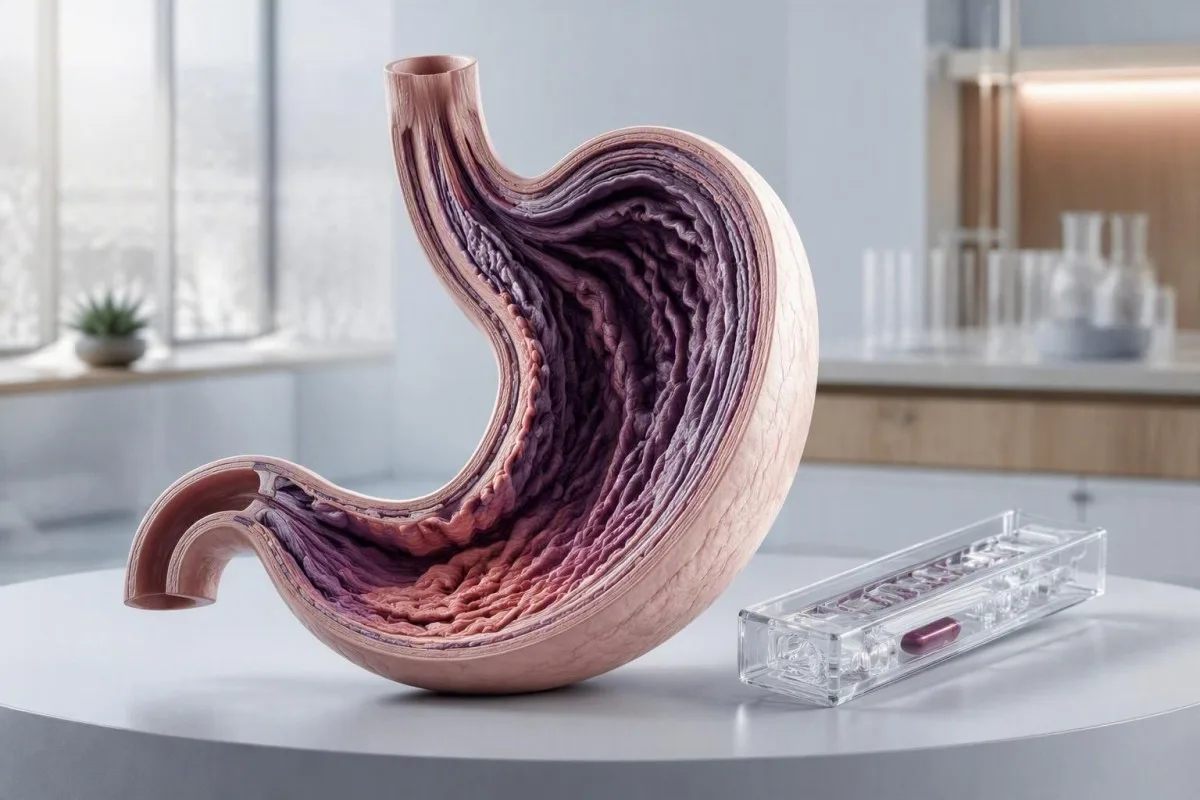
A high CA 72-4 result is not a cancer diagnosis. It is a non-specific marker best used as one piece of follow-up information after a known diagnosis, alongside symptoms, imaging, pathology, and changes over time.


- CA 72-4 high usually means a result above that laboratory's upper limit, often 6.9 U/mL, but reference intervals and assay methods differ.
- Not a screening test: CA 72-4 cannot diagnose or rule out cancer in someone without a confirmed malignancy.
- Хандлага (trend) чухал: a sustained rise on the same assay is generally more informative than one isolated value of 8 or 12 U/mL.
- Benign elevation can occur with gastritis, peptic ulcer disease, liver disease, pancreatitis, ovarian cysts, pregnancy, and some lung conditions.
- Gastric cancer monitoring is the best-established clinical setting, although many gastric cancers never produce CA 72-4.
- Do not self-order scans solely because of a mildly elevated result; the next test depends on symptoms, history, examination, and prior imaging.
- Яаралтай хяналт is appropriate for vomiting blood, black stool, worsening swallowing difficulty, jaundice, persistent vomiting, or unintentional weight loss.
- Кантести AI can organize the result with dates and related labs, but a clinician must decide whether imaging, endoscopy, or specialist review is needed.
What does a high CA 72-4 result actually mean?
A CA 72-4 high result means the laboratory detected more of a circulating mucin-associated antigen than its stated reference interval allows; it does үгүй mean that you have cancer. In most laboratories, values below about 6.9 U/mL are reported as normal, but the assay manufacturer determines that cutoff.
CA 72-4 measures epitopes associated with TAG-72, tumor-associated glycoprotein 72, rather than a cancer cell count. A number of 9 U/mL is therefore not “9 units of cancer”; it is a laboratory signal whose meaning changes with the clinical setting. Read why an out-of-range flag is only a starting point үзүүлэлттэй харьцуул.
In my clinical experience, the most anxious calls come after a marker was added to a broad private panel without a clear reason. Dr. Thomas Klein’s practical rule is simple: ask why it was ordered, whether there is a prior value from the same laboratory, and whether you have symptoms that need assessment now.
Кантести бол AI цусны шинжилгээний анализатор that places CA 72-4 beside date, laboratory range, liver tests, blood count, and documented diagnoses rather than treating one flagged number as a verdict. That context reduces false alarm, but it cannot replace examination, imaging, endoscopy, or tissue diagnosis.
Why laboratories report different upper limits
CA 72-4 assays are not fully interchangeable. One laboratory may use an upper limit of 6.9 U/mL while another uses 7.0 or 8.2 U/mL, so comparing absolute numbers across laboratories can create a false trend.
When clinicians use the CA 72-4 tumor marker
Clinicians use CA 72-4 tumor marker testing mainly to follow selected people with an already diagnosed cancer, especially gastric adenocarcinoma; it is not recommended as a population screening test. A normal baseline result also makes it a poor personal monitoring marker later.
For a patient whose gastric cancer produced CA 72-4 before treatment, repeat measurement may contribute to surveillance alongside symptoms, CT findings, and endoscopy. The 2022 ESMO gastric cancer guideline emphasizes staging and follow-up driven by clinical assessment and imaging rather than reliance on any single serum marker (Lordick et al., 2022). See our guide to tumor-marker trends after treatment.
CA 72-4 has also been studied in mucinous ovarian, colorectal, pancreatic, and lung cancers, but these associations are not specific enough to establish a diagnosis. A marker can stay low in substantial disease and rise in a benign condition; sensitivity and specificity are both limited.
Кантести бол AI цусны шинжилгээний тайлал платформ that can display serial results in chronological order, which is particularly useful when reports arrive from several appointments. A line graph is only meaningful when it identifies the assay, collection date, treatment dates, and the reason for testing.
CA 72-4 reference ranges and how to read your number
The usual adult CA 72-4 reference range is approximately 0 to 6.9 U/mL, though your report’s interval is the only range that applies to your assay. There is no universally accepted CA 72-4 level that confirms cancer or defines an emergency.
A value just above the cutoff, such as 7.4 U/mL against a limit of 6.9 U/mL, often warrants confirmation and clinical context rather than panic. Analytical imprecision, biological fluctuation, and a changed assay can each move a borderline result across the line.
Results above 20 or 30 U/mL deserve timely clinician review, particularly when there is a known cancer or concerning gastrointestinal symptoms, but the number still cannot identify the source. The useful question is whether the result is persistently rising over 4-12 долоо хоногийн дараа on the same method.
When reports use unfamiliar units or reference intervals, чанарын ба тоон шинжилгээ can help explain what the laboratory flag does and does not mean.
Benign reasons CA 72-4 can be elevated
Elevated CA 72-4 can occur without cancer, especially with upper gastrointestinal irritation, liver dysfunction, pancreatic disease, gynecological conditions, and some inflammatory lung disorders. The evidence for individual benign causes is uneven, so doctors investigate the person rather than assuming one explanation.
Gastritis, peptic ulcer disease, reflux-related mucosal injury, pancreatitis, cirrhosis, and benign ovarian cysts have all been reported alongside increased CA 72-4. A raised marker with abdominal discomfort and abnormal ALT, ALP, bilirubin, or lipase should prompt targeted evaluation rather than an automatic cancer conclusion. Review элэгний самбарын бүрэлдэхүүн хэсгүүдийг if those results were obtained together.
Pregnancy can increase several tumor-associated markers, and CA 72-4 interpretation is particularly unreliable in that setting. Menstrual timing has not been proven to create a predictable CA 72-4 pattern, but active pelvic symptoms still deserve ordinary gynecological assessment.
In one common real-world pattern, a person with CA 72-4 of 10 U/mL also has heartburn, positive Helicobacter pylori testing, and normal imaging. Treating and confirming eradication of the infection, then repeating only if clinically indicated, is more rational than repeating markers every few days.
Which cancers can raise CA 72-4?
CA 72-4 can rise in gastric cancer and may also be elevated in mucin-producing cancers of the ovary, colon, pancreas, lung, or breast, but it cannot locate a cancer. Gastric adenocarcinoma is the association most often discussed in practice.
In gastric cancer, published diagnostic studies report widely varying sensitivity because tumor stage, histology, assay, and cutoff differ. Early-stage tumors are frequently marker-negative, which is precisely why CA 72-4 should never be used to reassure someone with alarm symptoms or an abnormal scan.
CA 72-4 may be more likely to rise in diffuse or mucinous disease than in some other histologic patterns, but pathology—not serum markers—defines the diagnosis. A lesion seen on imaging generally requires endoscopy with tissue sampling for a reliable answer.
If your clinician is considering gastrointestinal causes, a high CA 72-4 is sometimes viewed alongside CEA болон Калифорниа 19-9, not because the combination diagnoses cancer, but because different cancers express markers differently. Our comparison of CEA ба CA 19-9 чиг хандлагын тухай гарын авлага explains why discordant markers are common.
Why CA 72-4 cannot screen for cancer
CA 72-4 cannot screen for cancer because too many people without cancer have abnormal results and too many people with early cancer have normal results. Screening tests need proven benefit in large, asymptomatic populations; CA 72-4 does not meet that standard.
Even a test with seemingly good specificity can generate many false positives when cancer is uncommon. For example, if a disease affects 1 in 1,000 people, a 95% specific test creates roughly 50 false-positive results per 1,000 tested—far more than true cases—before considering imperfect sensitivity.
A normal CA 72-4 does not rule out stomach, ovarian, pancreatic, or colorectal cancer. Persistent trouble swallowing, black stool, unexplained iron-deficiency anemia, progressive vomiting, or unintentional weight loss should be evaluated regardless of a “normal” marker; our article on positive FIT follow-up describes a validated bowel pathway.
For people with a family history, appropriate prevention is based on age, family pattern, genetic risk, and validated screening tools—not broad tumor-marker panels. See risk-based cancer blood testing for a safer framework.
Why the CA 72-4 trend matters more than one result
A consistent CA 72-4 rise measured by the same laboratory is more clinically useful than a single elevated result, especially after treatment for a cancer known to produce the marker. A one-off change of 1 or 2 U/mL near the cutoff may reflect ordinary variation.
Clinicians usually compare samples collected weeks or months apart, not tests drawn 48 hours apart. For surveillance, the direction, rate of rise, symptoms, imaging findings, and whether the same assay was used all matter more than any isolated threshold.
A fall after surgery or systemic treatment can be reassuring only when the marker was high before treatment. If CA 72-4 was 3 U/mL at diagnosis, a later value of 4 U/mL offers little usable surveillance information, even though both are within range.
Кантести бол AI-аар ажилладаг цусны шинжилгээний үр дүнгийн шинжилгээний хэрэгсэл that can identify whether a numerical change crosses the report’s reference interval or merely reflects a new lab method. For a deeper explanation of meaningful versus random variation, read blood-test changes between visits.
False high and misleading CA 72-4 test results
False or misleading CA 72-4 test results can arise from assay interference, sample handling differences, laboratory-method changes, and non-cancer tissue activity. A surprising isolated result should be checked against the original report before it drives major decisions.
Heterophile antibodies and other endogenous antibodies can interfere with immunoassays, although this is uncommon. If the number conflicts sharply with your condition—for example, 45 U/mL with normal imaging and no plausible clinical explanation—your clinician can ask the laboratory about repeat testing, dilution studies, or an alternative assay.
Biotin interference is assay-dependent and should not be assumed for CA 72-4 without checking the laboratory method. Bring an exact supplement list, including hair and nail products; doses of 5,000-10,000 микрограмм daily are common in over-the-counter biotin preparations.
A visibly compromised sample is not always obvious to patients. When a result is unexpected, жишээний асуудлын дараа дахин туршилт хийх is often more sensible than searching online for a diagnosis.
What doctors check alongside elevated CA 72-4
Doctors usually interpret elevated CA 72-4 with symptoms, examination, complete blood count, liver tests, iron studies, and targeted imaging or endoscopy—not with a second tumor marker alone. The accompanying abnormalities often provide the more actionable clue.
A CBC may show anemia, while ferritin and transferrin saturation can clarify whether iron deficiency is present. In adults, new iron-deficiency anemia without an obvious explanation can justify gastrointestinal investigation even when CA 72-4 is normal; see the төмрийн судалгааны гарын авлага.
ALT, AST, ALP, GGT, bilirubin, albumin, and lipase help distinguish hepatobiliary or pancreatic patterns from a marker-only abnormality. For example, itching with high ALP and direct bilirubin calls for a different pathway than isolated CA 72-4 of 8 U/mL.
If symptoms point to the stomach, upper endoscopy can directly inspect the lining and obtain tissue when needed. If lower-bowel symptoms predominate, stool-based screening or colonoscopy may be appropriate according to age and risk—not because CA 72-4 chooses the test.
Symptoms that matter more than the marker number
Black stool, vomiting blood, jaundice, persistent vomiting, rapidly worsening swallowing difficulty, severe abdominal pain, fainting, or unintentional weight loss need prompt medical assessment regardless of the CA 72-4 result. Tumor markers do not safely triage urgent symptoms.
Seek emergency care now for vomiting blood, black tar-like stool, collapse, severe dehydration, confusion with jaundice, or severe persistent abdominal pain. These can reflect bleeding, obstruction, or hepatobiliary disease and should not wait for a repeat marker.
Arrange an urgent appointment within days for progressive swallowing difficulty, early fullness, recurrent vomiting, unexplained weight loss, a new abdominal mass, or iron-deficiency anemia. Weight loss of more than 5% of body weight over 6 to 12 months is clinically meaningful when unintentional.
A high CA 72-4 itself usually causes no symptoms. People sometimes search for “CA 72-4 symptoms,” but symptoms come from an underlying condition, if one exists; compare this with our explanation of өндөр CEA шинж тэмдэг.
When to repeat a high CA 72-4 test
Repeat a high CA 72-4 test only when the result will change clinical management, typically after reviewing symptoms, prior values, and the reason it was ordered. For a borderline isolated result, many clinicians repeat in roughly 4-8 долоо хоногийн using the same laboratory if no urgent features are present.
Do not fast specifically for CA 72-4 unless the laboratory asks; fasting has no established role in improving this marker’s interpretation. More useful preparation is avoiding unnecessary repeat draws, recording recent illness, and listing medicines and supplements.
After treatment of a plausible benign condition, clinicians may wait long enough for symptoms and tissue response to settle before retesting. Repeating at 7 days often magnifies anxiety without producing a biologically meaningful answer.
Kantesti AI organizes repeat dates and related results, but it should not schedule cancer surveillance independently. Our лабораторийн хариу хянах чеклист outlines the details that make a future comparison clinically usable.
CA 72-4 after treatment for known cancer
After treatment for a known CA 72-4-producing cancer, a rising marker can suggest recurrence or progression, but imaging or pathology is still needed to confirm what is happening. A stable or falling value does not guarantee that disease is absent.
The strongest use case is an individual whose marker was clearly elevated before surgery or therapy and then fell with response. In that situation, a sustained rise may trigger earlier imaging or closer review, particularly when it matches new symptoms.
CA 72-4 should not be used to declare treatment failure after one increase. In clinical practice, we also consider the interval from treatment, infection or inflammation, imaging quality, and whether there is a second corroborating marker.
The Japanese Gastric Cancer Treatment Guidelines describe follow-up as a structured clinical process that includes history, examination, and imaging as appropriate; serum markers are adjuncts, not replacements (Japanese Gastric Cancer Association, 2023). Read our guidance on CA 19-9 limits for a similar principle.
Questions to bring to your next appointment
The best next question after elevated CA 72-4 is “What clinical question was this test meant to answer?” That question often determines whether you need a repeat result, routine review, targeted tests, imaging, endoscopy, or no further marker testing.
Ask: “What was my exact value and the lab’s upper limit?”, “Was this assay used previously?”, “Could a benign condition explain it?”, and “What symptoms should make me seek urgent care?” Take copies of prior results rather than relying on memory.
Ask whether any routine results change the plan: hemoglobin, ferritin, liver enzymes, bilirubin, kidney function, and inflammatory markers may provide more context than another tumor marker. A doctor-visit result summary can make a short appointment more productive.
If cancer is already part of your care, ask what degree and duration of rise would prompt imaging in your specific case. That threshold is individualized; it depends on tumor type, baseline marker behavior, current treatment, and your surveillance plan.
Using AI safely to understand CA 72-4 results
AI can help translate CA 72-4 test results, identify a trend, and prepare questions, but it cannot diagnose cancer or decide that a concerning symptom is safe. Any abnormal tumor marker requires human clinical context.
As of September 18, 2026, Kantesti AI interprets laboratory reports by reading the reported value, unit, reference interval, and related biomarker patterns. It does not see an endoscopy finding, physical examination, family history nuance, or pathology slide unless those facts are separately documented.
Kantesti, a privacy-focused AI лабораторийн шинжилгээний тайлбар үйлчилгээ, helps people organize results across laboratories and languages; it should be used to support—not delay—medical review. Our клиник баталгаажуулалт ба хяналт нь хиймэл оюун ухаанд тулгуурласан тайлбарын хязгаарыг тайлбарлана.
Доктор Томас Клейн болон Эмнэлгийн зөвлөх зөвлөл recommend a deliberately conservative approach: do not use a reassuring AI explanation to ignore alarm symptoms, and do not use an alarming one to assume cancer before appropriate diagnostic testing.
Байнга асуудаг асуултууд
10 U/mL-ийн CA 72-4 үзүүлэлт өндөр үү?
10 U/mL-ийн CA 72-4 үзүүлэлт нь танай лаборатори нь ихэвчлэн 6.9 U/mL-ийн дээд хязгаартай бол бага зэрэг өндөр байгаа боловч хорт хавдрыг оношлохгүй. 7-15 U/mL хоорондох хил заагтай үр дүн нь хоргүй гэдэс, элэг, нойр булчирхай, эмэгтэйчүүдийн өвчин, эсвэл аналитик хүчин зүйлсээс болж гарч болно. Эмч нь үр дүнг шинж тэмдэг, өмнөх үр дүн, шинжилгээний арга, ердийн шинжилгээтэй харьцуулах ёстой. Хэрэв ямар нэгэн сэрэмжлүүлэг шинж тэмдэг байхгүй бол ижил шинжилгээгээр 4-8 долоо хоногийн дараа дахин хийлгэх нь заримдаа үндэслэлтэй байдаг.
CA 72-4 хавдаргүй үед өндөр байж болох уу?
Тийм ээ, CA 72-4 хавдаргүйгээр өндөр байж болно. Хавдартай холбоогүй гэж мэдээлэгдсэн зүйлсэд ходоодны үрэвсэл, шархлаа, нойр булчирхайн үрэвсэл, элэгний өвчин, өндгөвчний хоргүй өвчин, жирэмслэлт, мөн зарим уушгины өвчин ордог. Өндөржилтийн хэмжээ нь хоргүй болон хорт хавдрын шалтгааныг найдвартай ялгах чадваргүй байдаг, үр дүн нь 20 U/mL-аас дээш байсан ч хамаагүй. Учир шалтгааныг тодорхойлохын тулд эмч шинж тэмдэг, үзлэг, дүрс оношилгоо, заримдаа дурангийн шинжилгээг ашигладаг.
Хавдар гэдгийг ямар CA 72-4 түвшин зааж өгнө вэ?
CA 72-4 хэмжээ дангаараа хавдрыг баттай оношлох хангалттай нотолгоо болохгүй. Олон лабораториуд 6.9 U/mL орчим утгыг дээд хязгаар болгон ашигладаг боловч энэ хязгаараас дээш утга нь тодорхой бус байдаг, харин батлагдсан зарим хавдрын утга үүнээс доогуур байдаг. CA 72-4-ийг үйлдвэрлэж байсан хавдрын эмчилгээний дараа тогтвортой өсөх хандлага нь дан утгаас илүү мэдээлэлтэй байдаг. Хавдрыг оношлоход зөвхөн цусан дахь маркер биш, зураглал, ихэвчлэн эдийн гистологи шинжилгээ шаардлагатай.
Should I repeat an elevated CA 72-4 test?
An elevated CA 72-4 test should be repeated only if the result will help answer a clinical question. For an unexpected borderline result such as 7 to 15 U/mL, clinicians may repeat it in 4 to 8 weeks using the same laboratory after reviewing possible benign causes and supplements. Repeating after only a few days rarely clarifies the cause because biological and analytical variation can be larger than the change observed. Urgent symptoms should lead to assessment rather than waiting for a repeat blood test.
Does a normal CA 72-4 rule out stomach cancer?
No, a normal CA 72-4 result does not rule out stomach cancer or other cancers. Early gastric cancers often do not release enough marker to produce an abnormal serum result, and marker expression varies between tumors. Symptoms such as black stool, persistent vomiting, progressive swallowing difficulty, unexplained iron-deficiency anemia, or weight loss require evaluation even when CA 72-4 is below 6.9 U/mL. Endoscopy with tissue sampling is far more definitive when stomach disease is suspected.
Can stress raise CA 72-4?
There is no reliable evidence that ordinary psychological stress directly raises CA 72-4 into an abnormal range. Stress can worsen reflux, appetite changes, and gastrointestinal symptoms, which may complicate the clinical picture, but it should not be used as the default explanation for a marker above 6.9 U/mL. A clinician should first verify the laboratory result and consider common medical explanations. Severe anxiety after an abnormal result is common and deserves support while the evaluation proceeds.
Өнөөдөр AI-аар дэмжигдсэн цусны шинжилгээний тайлал аваарай
Лабораторийн шинжилгээний агшин зуур, үнэн зөв тайлалд итгэдэг дэлхийн 2 сая гаруй хэрэглэгчтэй нэгдээрэй. Цусны шинжилгээний хариугаа байршуулж, 15,000+ биомаркеруудын цогц тайллыг хэдхэн секундын дотор аваарай.
📚 Иш татсан судалгааны нийтлэлүүд
Клейн, Т., Митчелл, С., ба Вебер, Х. (2026). Klein, T. (2026). RDW Blood Test: Complete Guide to RDW-CV, MCV & MCHC. Zenodo. https://doi.org/10.5281/zenodo.18202598. Kantesti AI Медикл Рисерч.
Клейн, Т., Митчелл, С., ба Вебер, Х. (2026). Klein, T. (2026). BUN/Креатинины харьцааг тайлбарласан нь: Бөөрний үйл ажиллагааны шинжилгээний гарын авлага. Zenodo. https://doi.org/10.5281/zenodo.18207872. Kantesti AI Медикл Рисерч.
📖 Гадаад эмнэлгийн лавлагаа
⚕️ Эмнэлгийн мэдэгдэл
Энэ нийтлэл зөвхөн боловсролын зорилготой бөгөөд эмнэлгийн зөвлөгөө биш болно. Оношилгоо, эмчилгээний шийдвэр гаргахдаа мэргэшсэн эрүүл мэндийн үйлчилгээ үзүүлэгчтэй заавал зөвлөлдөнө.
E-E-A-T итгэлийн дохио
Туршлага
Эмчийн удирдлагатай лабораторийн тайлалын ажлын урсгалын клиник хяналт.
Мэргэшсэн байдал
Биомаркерууд клиникийн нөхцөлд хэрхэн ажиллаж/өөрчлөгдөж байгаад чиглэсэн лабораторийн анагаах ухаан.
Эрх мэдэл
Доктор Томас Клейн бичсэн, Доктор Сара Митчелл, Проф. Доктор Ханс Вебер нар хянан тохиолдуулсан.
Найдвартай байдал
Сэрэмжлүүлгийг бууруулахын тулд тодорхой дараагийн алхамтай, нотолгоонд суурилсан тайлал.