
Laboratorijas atskaites saspaida daudz informācijas par medikamentiem sīkos kodos. Lūk, kā nolasīt biežākos no tiem, nepārcenšoties ar katra sarkanā karoga satraukumu.



- H un L karogi nozīmē, ka rezultāts ir virs vai zem attiecīgā laboratorijas atsauces intervāla; paši par sevi tie nav diagnozes.
- Atsauces diapazoni parasti raksturo atlasītas populācijas vidējo 95%, tāpēc aptuveni 1 no 20 veseliem cilvēkiem var būt ar karogu atzīmētu rezultātu.
- pilnas asins ainas saīsinājumi ietver WBC, RBC, Hb, Hct, MCV, MCH, MCHC, RDW un Plt; katrs stāsta par citu asins šūnu daļu.
- CMP un BMP vienības bieži atšķiras atkarībā no valsts: glikoze var būt norādīta kā mg/dL vai mmol/L, un kreatinīns var būt norādīts kā mg/dL vai µmol/L.
- Kritiskās vērtības piemēram, kālijs virs 6.0 mmol/L, nātrijs zem 120 mmol/L vai hemoglobīns zem 7 g/dL bieži prasa klīnisku izvērtēšanu tajā pašā dienā.
- LDL-C un HDL-C ir holesterīna frakcijas, savukārt TG nozīmē triglicerīdus; kardiovaskulārais risks ir atkarīgs no pilnā raksta, nevis no vienas rindas.
- eGFR novērtē nieru filtrāciju; vērtības, kas ir zem 60 mL/min/1,73 m² vismaz 3 mēnešus, liecina par hronisku nieru slimību.
- HbA1c no 6.5% vai augstāka parasti izmanto, lai diagnosticētu diabētu, taču anēmija, grūtniecība un daži hemoglobīna varianti to var izkropļot.
- Konteksts pārspēj krāsu kodēšanu jo badošanās statuss, fiziskās aktivitātes, grūtniecība, medikamenti, augstums un dehidratācija var pārvietot laboratorijas rādītājus bez slimības.
Ko nozīmē asins analīžu saīsinājumi īsumā
Asins analīžu saīsinājumi ir saīsināti nosaukumi laboratorijas marķieriem, brīdinājumiem un vienībām jūsu atskaitē. H nozīmē augsts, L nozīmē zems, un vienības, piemēram, mg/dL, mmol/L, IU/L, ng/mL un µmol/L, parāda, kā rezultāts tika mērīts. No 2026. gada 27. aprīļa drošākais veids, kā lasīt asins analīžu rezultāti ir marķieris plus vienība plus atsauces diapazons plus jūsu klīniskais konteksts, nevis tikai saīsinājums. Mūsu Kantesti mākslīgais intelekts asins analīžu analizators ir veidots tieši ap šo secību.
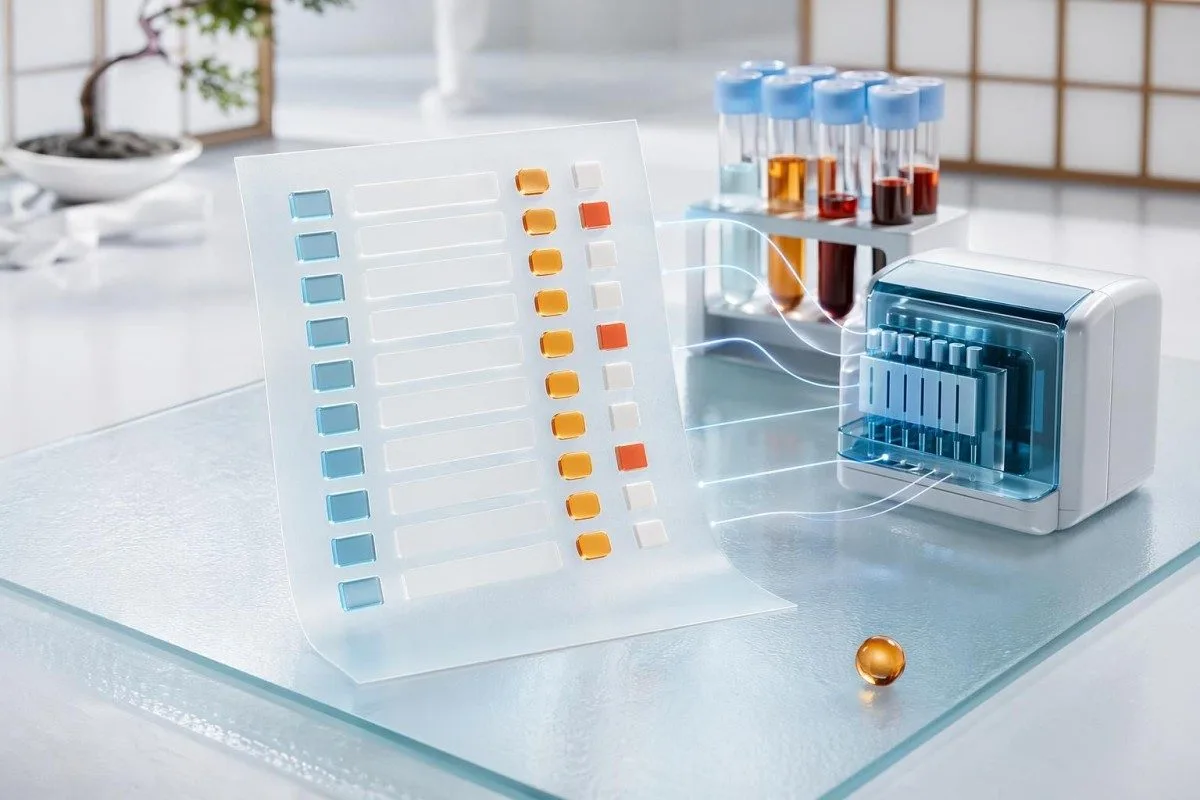
Es esmu Tomass Kleins, MD, un ātrākā kļūda, ko redzu klīnikā, ir sarkanā karoga uztveršana kā galīgo atbildi. Kalcijs 10.3 mg/dL vienā laboratorijā var būt nenozīmīgs, citā — viegli paaugstināts, bet tas kļūst vēl satraucošāks, ja albumīns ir 5.1 g/dL vai ir paaugstināts parathormons.
Laboratorijas atskaite patiesībā ir saspiesta klīniska saruna. Ja vēlaties plašāku ievadu pirms iedziļināšanās kodos, mūsu ceļvedis par rezultātu drošu lasīšanu izskaidro, kā ārsti atdala troksni no signāla.
Kantesti neironu tīkls nolasa saīsinājumu, nosaka vienību, pārbauda vietējo atsauces diapazonu un pēc tam meklē modeļus vairāk nekā 15 000 biomarķieru. Šis modeļa solis ir svarīgs: ALT 68 IU/L pēc maratona ir cits stāsts nekā ALT 68 IU/L, ja bilirubīns, INR un trombocīti virzās nepareizā virzienā.
Kāpēc H, L, “patoloģiski” un “kritiski” karogi nav diagnozes
H, L, patoloģiskie un kritiskie marķieri ir laboratorijas brīdinājumi, nevis medicīniskas diagnozes. H marķieris nozīmē, ka rezultāts ir virs attiecīgās laboratorijas noteiktā references intervāla, L marķieris — ka tas ir zem, bet kritiskais marķieris — ka vērtība sasniedz tās laboratorijas steidzamās paziņošanas slieksni.

CLSI EP28-A3c apraksta daudzus references intervālus kā definētas references populācijas vērtību centrālo 95%, kas nozīmē, ka aptuveni 5% veselu cilvēku var atrasties ārpus izdrukātā diapazona (Horowitz et al., 2010). Tāpēc viens vienīgs viegls marķieris, īpaši, ja tas ir mazāk nekā 10% ārpus diapazona, bieži vien pirms marķējuma pievienošanas prasa atkārtotu testēšanu.
Problēma ir tāda, ka laboratorijas nosaka diapazonus atšķirīgi. Dažas Eiropas laboratorijas nosaka ALT augšējo robežu tuvu 35 SV/L vīriešiem un 25 SV/L sievietēm, kamēr citos atskatos joprojām drukā 40 vai pat 55 SV/L; mūsu raksts par normālā diapazona slazdiem iedziļinās šajā problēmā.
Kritiskās vērtības ir cita kategorija. Kālijs virs aptuveni 6.0 mmol/L, glikoze zem 54 mg/dL, nātrijs zem 120 mmol/L un trombocītu skaits zem 20 × 10⁹/L parasti prasa tūlītēju klīnisku rīcību, taču pat tad paraugs var būt nepareizs, ja tas bija hemolizēts vai aizkavēts.
CBC saīsinājumi: WBC, RBC, Hb, Hct, MCV, MCH, RDW
pilnas asins ainas saīsinājumi apraksta leikocītus, eritrocītus, hemoglobīnu, trombocītus un šūnu izmēra modeļus. WBC parasti nozīmē leikocītu skaitu, RBC — eritrocītu skaitu, Hb vai Hgb — hemoglobīnu, Hct — hematokrītu, MCV — vidējo eritrocītu tilpumu, un RDW — eritrocītu sadalījuma platumu.
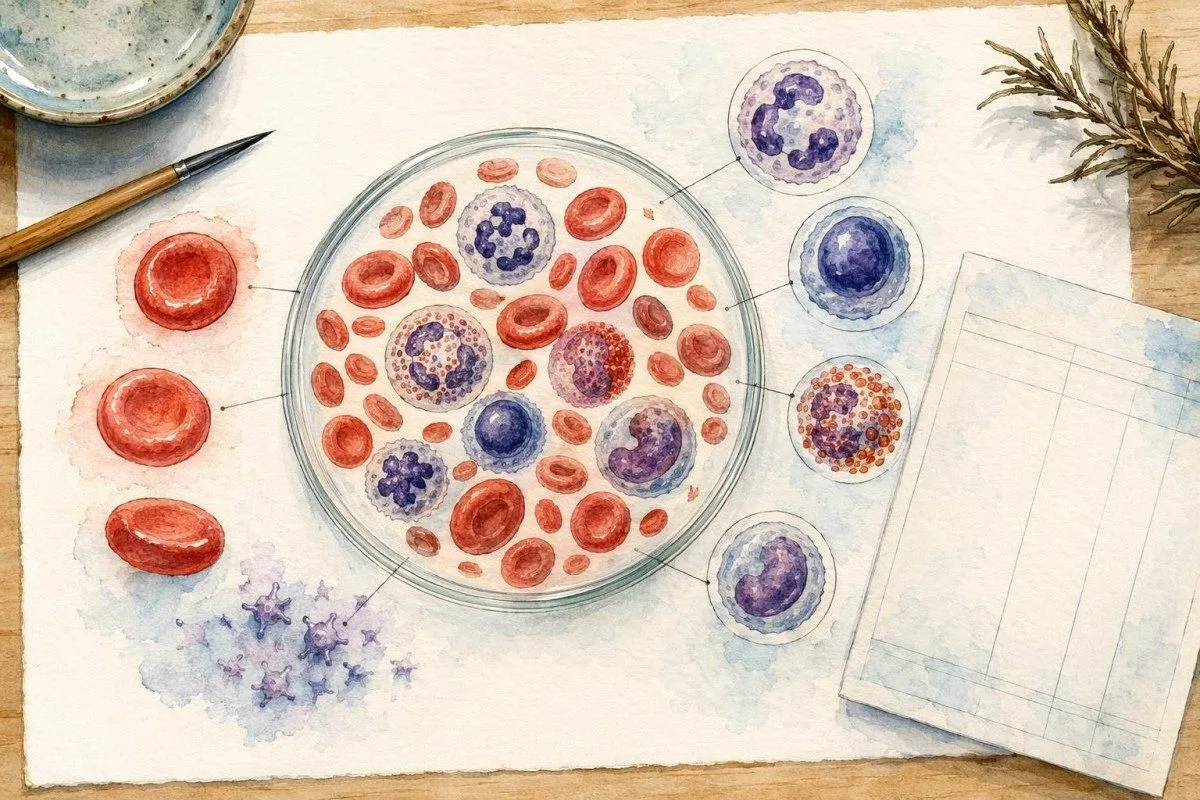
Pieaugušo hemoglobīns parasti ir aptuveni 13.5–17.5 g/dL vīriešiem un 12.0–15.5 g/dL sievietēm, tomēr grūtniecība, augstums un etniskā piederība var mainīt gaidītās vērtības. Hemoglobīns 11.2 g/dL daudzos pieaugušajos ir viegla anēmija, bet tas nozīmē ko citu 48 stundas pēc operācijas nekā 22 gadus vecam cilvēkam ar spēcīgām menstruācijām.
MCV ir viens no maniem mīļākajiem klusiem signāliem. Zems MCV zem 80 fL norāda uz dzelzs deficītu vai talasēmijas pazīmi, savukārt augsts MCV virs 100 fL palielina B12 deficīta, folātu deficīta, alkohola ietekmes, aknu slimību, hipotireozes un noteiktu zāļu iespējamību.
RDW bieži mainās pirms hemoglobīna straujas krišanās. Ja RDW ir augsts, bet MCV vēl ir normas robežās, es sāku domāt par agrīnu dzelzs zudumu, kombinētu B12 un dzelzs deficītu vai atveseļošanos pēc asiņošanas; mūsu CBC diferenciāļa ceļvedi parāda, kā pilnais panelis savienojas vienotā kopainā.
CMP un BMP saīsinājumi: glikoze, nieres, aknas, sāļi
BMP un CMP ir bieži izmantoti bioķīmijas paneļi. BMP parasti ietver nātriju, kāliju, hlorīdu, oglekļa dioksīdu jeb bikarbonātu, glikozi, BUN, kreatinīnu un kalciju; CMP papildus ietver albumīnu, kopējo proteīnu, bilirubīnu, ALP, ALT un AST.
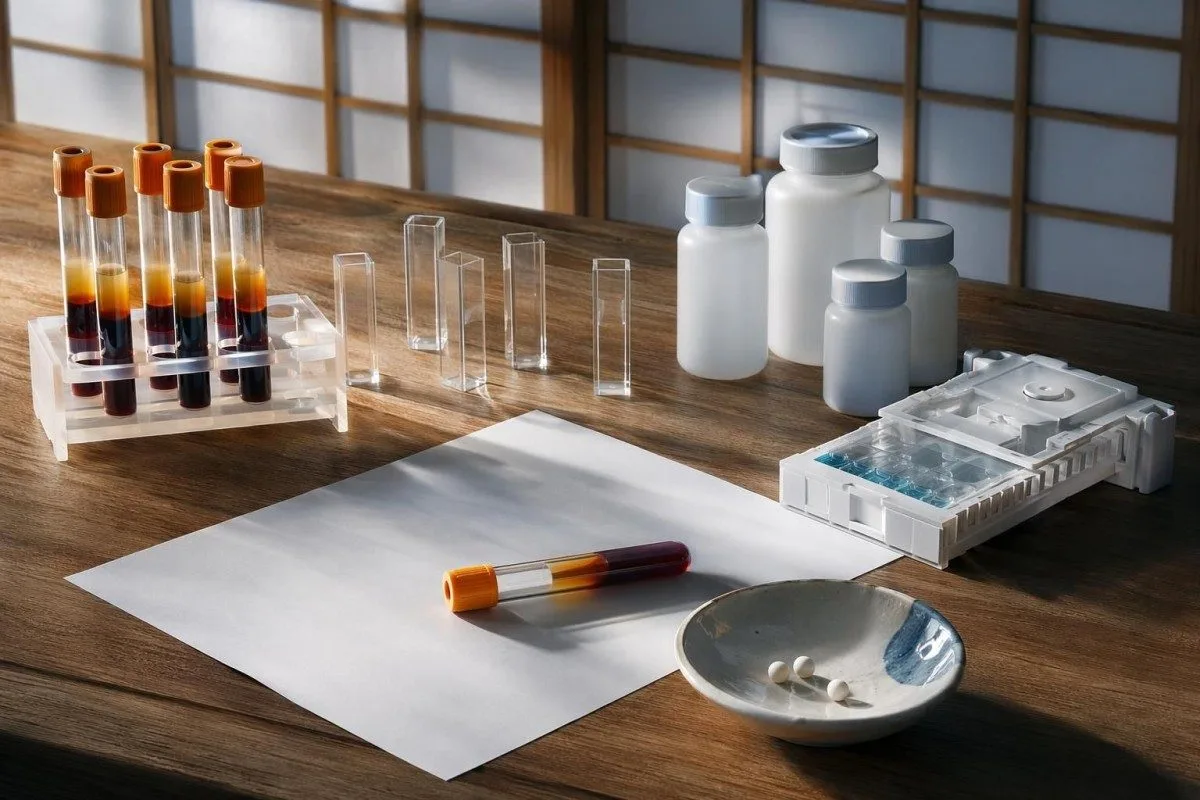
Atšķirība ir svarīga, jo pacienti bieži saka, ka viņiem veikts pilns panelis, lai gan patiesībā viņiem bija tikai BMP. Normāls BMP nepārbauda ALT, AST, bilirubīnu, albumīnu vai sārmaino fosfatāzi, tāpēc tas nevar izslēgt daudzus aknu vai proteīnu zuduma modeļus.
Oglekļa dioksīds BMP parasti ir bikarbonāta aprēķins, nevis plaušu oglekļa dioksīds, kas mērīts ar arteriālo gāzu analīzi. CO2 19 mmol/L var atspoguļot metabolisku acidozi, caureju, nieru problēmas ar skābes apstrādi vai vienkārši parauga apstrādes aizkavēšanos; anjonu sprauga palīdz to noskaidrot.
Kad es pārskatu neatliekamās palīdzības nodaļas analīzes, vispirms skatos nātriju un kāliju, jo tie var mainīt lēmumus dažu minūšu laikā. Praktiskai salīdzināšanai pa paneļiem skatiet mūsu CMP salīdzinājumā ar BMP ceļvedis.
Vienības laboratorijas atskaitēs: mg/dL, mmol/L, IU/L, ng/mL
Laboratorijas mērvienības norāda mērījumu skalu, un tas pats biomarķiera skaitlis dažādās vienībās var nozīmēt atšķirīgas lietas. Glikoze 100 mg/dL ir aptuveni 5,6 mmol/L, kreatinīns 1,0 mg/dL ir aptuveni 88 µmol/L, un D vitamīns 30 ng/mL ir aptuveni 75 nmol/L.

Tieši šeit pieķeras starptautiskie pacienti. Apvienotajā Karalistē un lielā daļā Eiropas holesterīns un glikoze bieži tiek norādīti mmol/L; ASV joprojām biežāk lieto mg/dL, un vecu rezultātu kopēšana jaunā lietotnē bez vienībām var radīt muļķības.
IU/L, dažkārt raksta U/L, mēra enzīmu aktivitāti, nevis masu. ALT 70 IU/L nenozīmē 70 miligramus ALT; tas nozīmē, ka paraugā enzīmu aktivitāte ir aptuveni virs laboratorijas atsauces aktivitātes sliekšņa.
Kantesti AI nosaka vienības pirms interpretēšanas laboratorijas rādītāji, un mūsu biomarķieru rokasgrāmata uzskaita vairāk nekā 15 000 marķieru ar biežiem nosaukumu variantiem. Piemēram, ja jūsu atskaitē enzīmiem ir norādīts µkat/L, tad pārvēršana uz U/L ir aptuveni reizināšana ar 60.
Lipīdu saīsinājumi: TC, LDL-C, HDL-C, TG, ApoB
Lipīdu saīsinājumi apraksta holesterīna daļiņas un taukus, ko izmanto, lai novērtētu kardiovaskulāro risku. TC nozīmē kopējo holesterīnu, LDL-C nozīmē zema blīvuma lipoproteīnu holesterīnu, HDL-C nozīmē augsta blīvuma lipoproteīnu holesterīnu, TG nozīmē triglicerīdus, bet ApoB novērtē aterogēno daļiņu skaitu.

LDL-C zem 100 mg/dL bieži tiek uzskatīts par pieņemamu zemāka riska pieaugušajiem, taču daudziem augsta riska pacientiem mērķi ir zem 70 mg/dL vai pat vēl zemāki atkarībā no vietējām vadlīnijām. Triglicerīdi zem 150 mg/dL parasti tiek saukti par normāliem, savukārt 500 mg/dL vai vairāk palielina bažas par pankreatītu.
ApoB ir “miega” marķieris. Ja triglicerīdi ir augsti, LDL-C var izskatīties mazāk satraucošs nekā patiesībā ir daļiņu slodze, tāpēc ApoB vai ne-HDL-C var precizēt riska novērtējumu pacientiem ar insulīna rezistenci vai metabolisko sindromu.
Neuztraucieties, ja pēc pusdienām jūsu nepaātrinātie triglicerīdi ir 190 mg/dL; es parasti atkārtoju analīzi tukšā dūšā, ja rezultāts maina rīcību. Mūsu lipīdu paneļa ceļvedis izskaidro, kad holesterīna tests bez badošanās joprojām ir uzskatāms par derīgu.
Diferenciālie rādītāji: ANC, ALC, eoz, baso, nenobriedušas granulocīti
Diferenciālie saīsinājumi sadala leikocītus neitrofilos, limfocītos, monocītos, eozinofilos un bazofilos. ANC nozīmē absolūto neitrofilo skaitu, ALC nozīmē absolūto limfocītu skaitu, eos nozīmē eozinofilus, baso nozīmē bazofilus, un IG nozīmē nenobriedušas granulocītus.
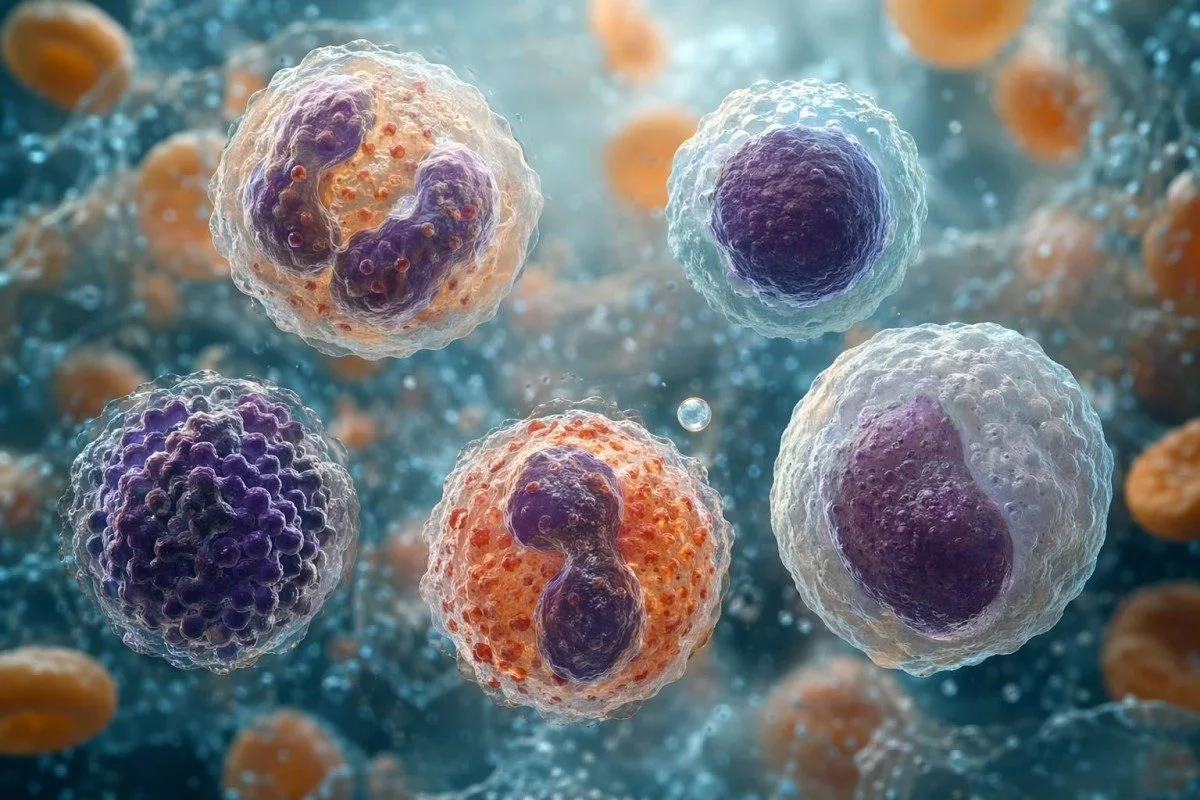
Procenti var maldināt. Limfocītu procentuālais īpatsvars 48% var šķist augsts, bet, ja absolūtais limfocītu skaits ir 2,4 × 10⁹/L un neitrofilu skaits ir zems normas robežās, rezultāts var vienkārši atspoguļot saucēju.
ANC zem 1,5 × 10⁹/L bieži sauc par neitropēniju, zem 1,0 × 10⁹/L ir klīniski nozīmīgāk, un zem 0,5 × 10⁹/L var radīt bažas par infekciju risku. Daudziem cilvēkiem ar afrikāņu, Tuvo Austrumu vai noteiktu Vidusjūras izcelsmi ir zemāks stabils ANC bez slimības.
Es redzu šo modeli katru nedēļu: vīrusu infekcija pazemina neitrofilus un 1–3 nedēļas paaugstina limfocītu procentuālo īpatsvaru. Mūsu neitrofilu–limfocītu ceļvedis izskaidro, kāpēc attiecība dažkārt ir noderīgāka nekā jebkurš no abiem skaitļiem atsevišķi.
Aknu enzīmu saīsinājumi: ALT, AST, ALP, GGT, bilirubīns
Aknu analīžu saīsinājumi apraksta dažādus aknu un žultsvadu signālus. ALT un AST ir enzīmi, kas izdalās no bojātām aknu vai muskuļu šūnām; ALP un GGT bieži norāda uz žultsvadu vai holestātisku (žults atteces traucējumu) modeli, bet bilirubīns atspoguļo hemes noārdīšanos un aknu apstrādi.
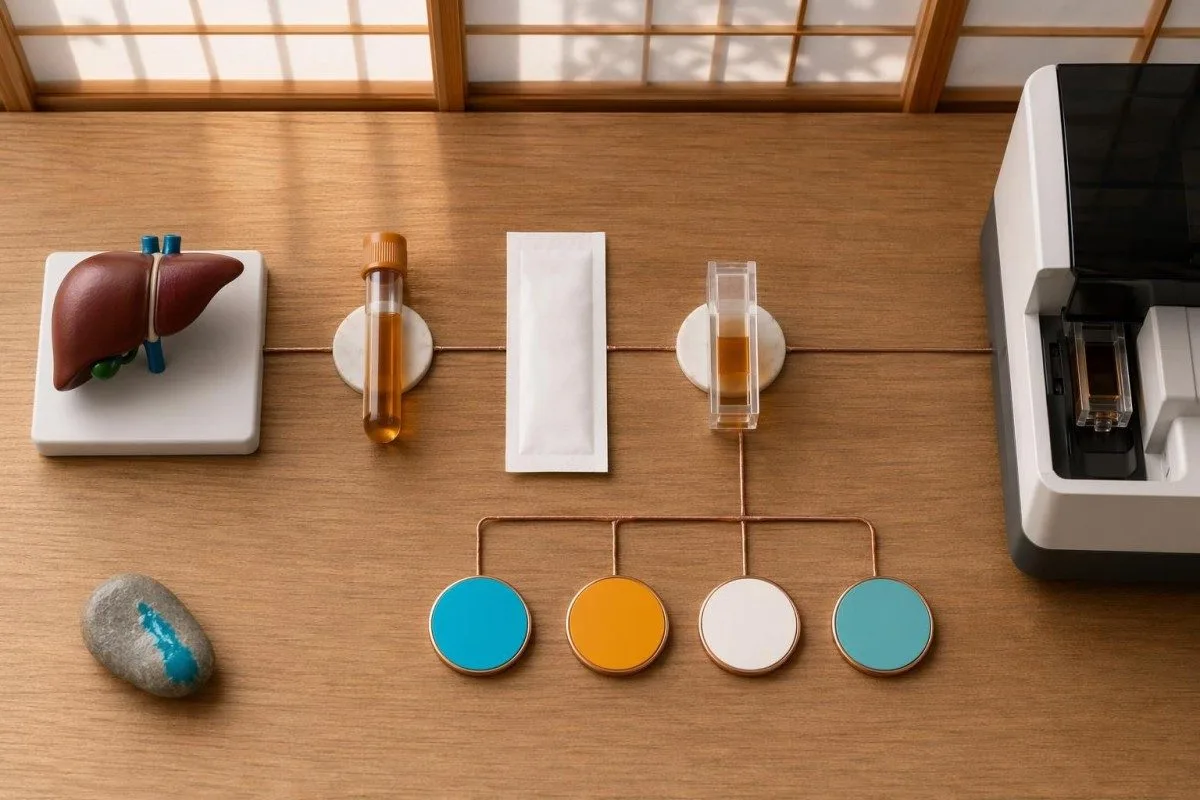
ALT ir aknām specifiskāks nekā AST, bet AST atrodas arī muskuļos. 52 gadus vecam maratonistam ar AST 89 SV/l un normālu ALT, bilirubīnu un GGT var būt nepieciešams pārbaudīt kreatīnkināzi, pirms kāds pasaka, ka tā ir aknu slimība.
Modelis pārspēj paniku. ALT un AST 2–5 reizes virs normas augšējās robežas liecina par hepatocelulāru bojājumu, savukārt ALP kopā ar GGT paaugstināšanos liecina par holestāzi; bilirubīna paaugstināšanās ar normāliem enzīmiem norāda uz citu sarakstu, tostarp Gilberta sindromu un hemolīzi.
Dažas laboratorijas ziņo par tiešo bilirubīnu un netiešo bilirubīnu; citas rāda tikai kopējo bilirubīnu. Lai lasītu dziļāk pēc modeļiem, mūsu aknu funkcijas testi ceļvedis aplūko ALT, AST, ALP un GGT kombinācijas.
Nieru saīsinājumi: Cr, eGFR, BUN, UACR, cistatīns C
Nieru saīsinājumi apvieno atkritumvielu marķierus, filtrācijas aplēses un urīna proteīna signālus. Cr nozīmē kreatinīnu, eGFR aplēš filtrāciju, BUN nozīmē asins urīnvielas slāpekli, UACR nozīmē urīna albumīna un kreatinīna attiecību, bet cistatīns C var precizēt nieru aplēses, ja muskuļu masa izkropļo kreatinīna rādītājus.
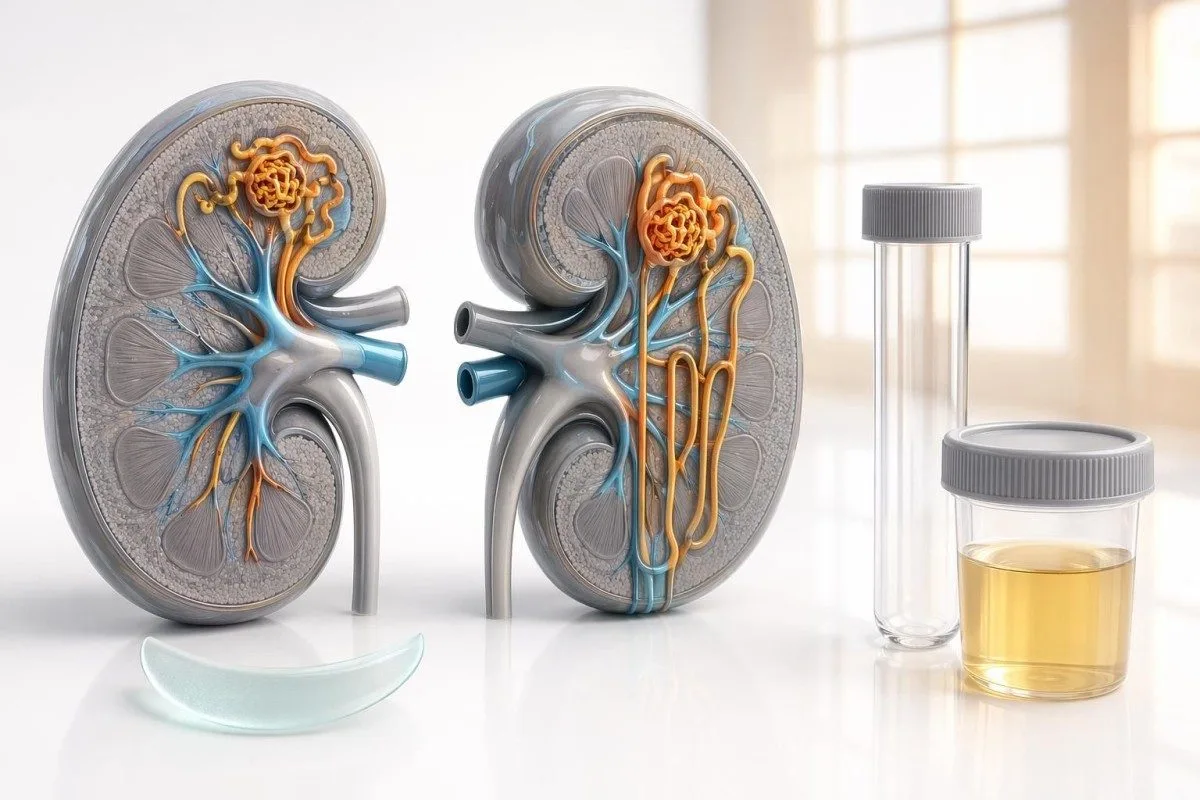
eGFR zem 60 ml/min/1,73 m² vismaz 3 mēnešus ir viens no kritērijiem hroniskas nieru slimības diagnosticēšanai, taču viens izolēts eGFR 58 pēc dehidratācijas nav tas pats. KDIGO 2024 uzsver hroniskas nieru slimības stadēšanu, balstoties gan uz GFR kategoriju, gan uz albuminūrijas kategoriju (KDIGO CKD Work Group, 2024).
Kreatinīns ir atkarīgs no muskuļu masas. Muskuļots 30 gadus vecs cilvēks var būt ar kreatinīnu 1,3 mg/dL un normālu filtrāciju, bet trausls 82 gadus vecs cilvēks var būt ar kreatinīnu 0,9 mg/dL, neskatoties uz samazinātu nieru rezervi.
UACR noķer bojājumu, ko kreatinīns var nepamanīt. UACR zem 30 mg/g parasti ir normāls, 30–300 mg/g ir mēreni paaugstināts, bet virs 300 mg/g ir būtiski paaugstināts; mūsu eGFR vecuma ceļvedi izskaidro, kāpēc interpretācija, ņemot vērā vecumu, ir svarīga.
Diabēta marķieri: FPG, RBG, OGTT, HbA1c un insulīns
Diabēta saīsinājumi raksturo glikozi dažādos laikos un ilgtermiņa glikācijas pakāpi. FPG nozīmē glikozes līmeni plazmā tukšā dūšā, RBG nozīmē nejaušu glikozes līmeni asinīs, OGTT nozīmē perorālu glikozes tolerances testu, HbA1c novērtē vidējo glikēmiju, un tukšā dūšā noteiktais insulīns palīdz izvērtēt insulīna rezistenci, bet viens pats nenosaka diabētu.
ADA aprūpes standarti izmanto HbA1c ≥6.5%, glikozes līmeni plazmā tukšā dūšā ≥126 mg/dL, OGTT 2 stundu glikozi ≥200 mg/dL vai nejaušu glikozes līmeni ≥200 mg/dL ar simptomiem kā diagnostikas kritērijus diabētam (ADA Professional Practice Committee, 2026). Rezultāti, kas ir tuvu robežvērtībai, parasti jāapstiprina, ja vien simptomi nav skaidri.
HbA1c ir ērts, bet nav ideāls. Dzelzs deficīts dažiem pacientiem var viltus veidā paaugstināt HbA1c, nesena asins zuduma dēļ tas var pazemināties, un hemoglobīna varianti var padarīt dažas analīžu metodes neuzticamas.
Es pievēršu uzmanību, ja glikoze tukšā dūšā ir 96 mg/dL, bet tukšā dūšā insulīns ir 18 µIU/mL un triglicerīdi pieaug. Šāds modelis bieži parādās gadiem, pirms HbA1c pārsniedz 5.7%; skatiet mūsu HbA1c robežvērtību ceļvedis robežgadījumu interpretācijai.
Vairogdziedzera un hormonu saīsinājumi: TSH, FT4, FT3, SHBG
Vairogdziedzera un hormonu saīsinājumi parasti apzīmē signālhormonus, brīvo hormonu frakcijas un saistvielas proteīnus. TSH ir vairogdziedzeri stimulējošais hormons, FT4 ir brīvais tiroksīns, FT3 ir brīvais trijodtironīns, TPOAb nozīmē vairogdziedzera peroksidāzes antivielas, un SHBG ir dzimumhormonu saistīšanās globulīns.
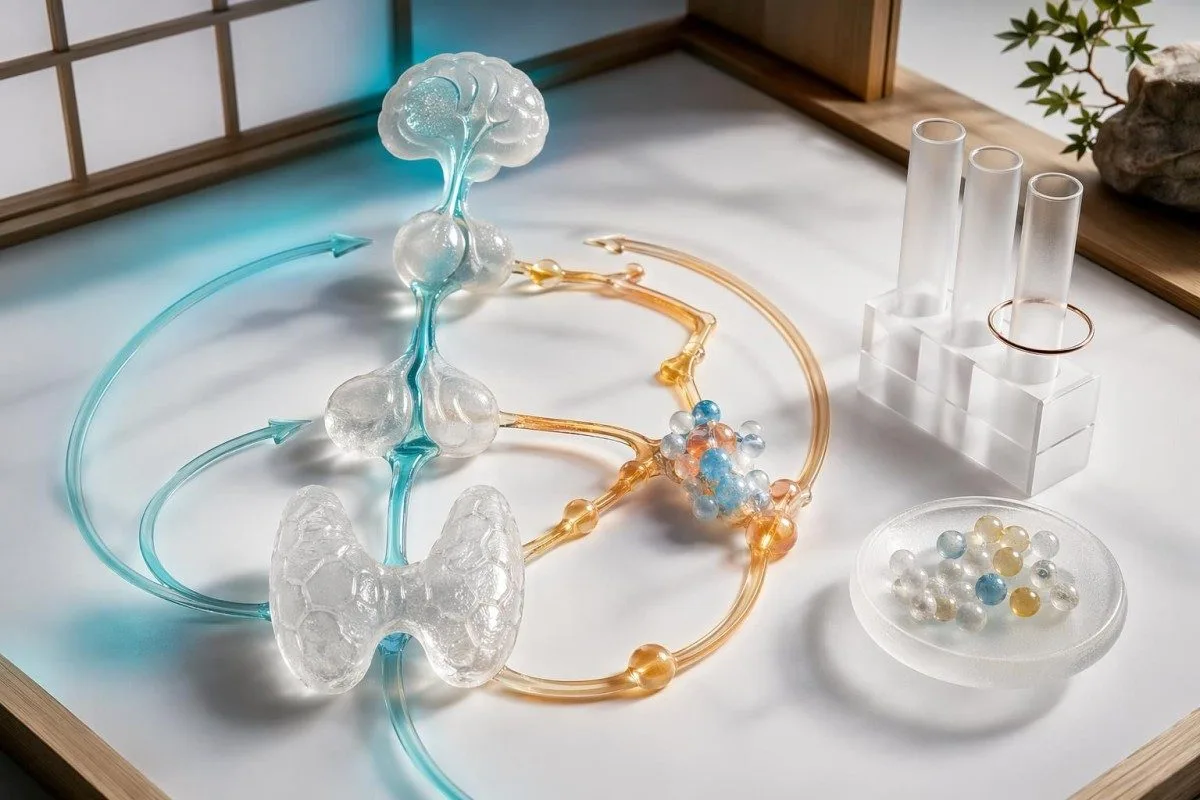
TSH ir ārkārtīgi jutīgs, bet lēns. Pēc levotiroksīna uzsākšanas vai devas maiņas es parasti gaidu 6–8 nedēļas, pirms vērtēju jaunu TSH, jo hipofīzes–aknu–vairogdziedzera atgriezeniskās saites cilpai ir nepieciešams laiks, lai stabilizētos.
Biotīns ir viltīgs traucēklis. Devas 5–10 mg dienā, kas ir izplatītas matu un nagu uztura bagātinātājos, var izkropļot dažus vairogdziedzera imūnanalīžu rezultātus un atkarībā no platformas likt TSH vai FT4 izskatīties nepareizi.
Hormonu analīzes ir atkarīgas no laika. Testosteronu parasti vislabāk pārbaudīt pirms plkst. 10:00, progesteronu ovulācijai bieži pārbauda apmēram 7 dienas pirms paredzamajām mēnešreizēm, un mūsu vairogdziedzera analīžu rokasgrāmatu izskaidro, kad FT4, FT3 un antivielas pievieno vērtību.
Dzelzs, vitamīnu un uztura saīsinājumi: feritīns, TSAT, B12
Dzelzs un vitamīnu saīsinājumi bieži atklāj agrīnu deficītu, pirms parādās klasiskā anēmija. Ferritīns novērtē dzelzs krājumus, TSAT nozīmē transferīna piesātinājumu, TIBC nozīmē kopējo dzelzi saistošo kapacitāti, 25-OH D vitamīns ir uzglabāšanas D vitamīna analīze, un B12 ir kobalamīns.

Ferritīns zem 30 ng/mL ir bieži lietots praktisks robežlielums zemu dzelzs krājumu gadījumā simptomātiskiem pieaugušajiem, pat ja izdrukātais laboratorijas diapazons sākas no 10 vai 15 ng/mL. Matu izkrišanas, nemierīgo kāju sindroma vai spēcīgas menstruālās asiņošanas gadījumā ferritīns 18 ng/mL nav kaut kas, ko es vienkārši ignorētu.
Augsts feritīns ne vienmēr nozīmē dzelzs pārslodzi. Tas pieaug arī iekaisuma, taukainu aknu slimības, alkohola lietošanas, infekcijas un ļaundabīgu audzēju gadījumā, tāpēc TSAT virs aptuveni 45% ir norāde, kas mani virza uz dzelzs pārslodzes izvērtēšanu.
D vitamīnu parasti izvērtē ar 25-OH D vitamīnu, nevis ar 1,25-OH aktīvo D vitamīnu, izņemot specifiskus jautājumus par kalciju, nierēm vai granulomatozām slimībām. Lai lasītu dzelzs rādītājus plašāk par vienu rindiņu, lasiet mūsu dzelzs pētījumu ceļvedis.
Kad “neparasti” izskatās laboratorijas rādītāji jums ir normāli
Nenormāli izskatītas analīžu vērtības var būt normālas konkrētai personai, ja novirze ir izskaidrojama ar fizioloģiju, laiku vai paraugu ņemšanu. Grūtniecība pazemina hemoglobīnu un kreatinīnu, smaga fiziska slodze paaugstina CK un dažkārt AST, dehidratācija koncentrē albumīnu un hematokrītu, bet badošanās maina glikozi, triglicerīdus un insulīnu.
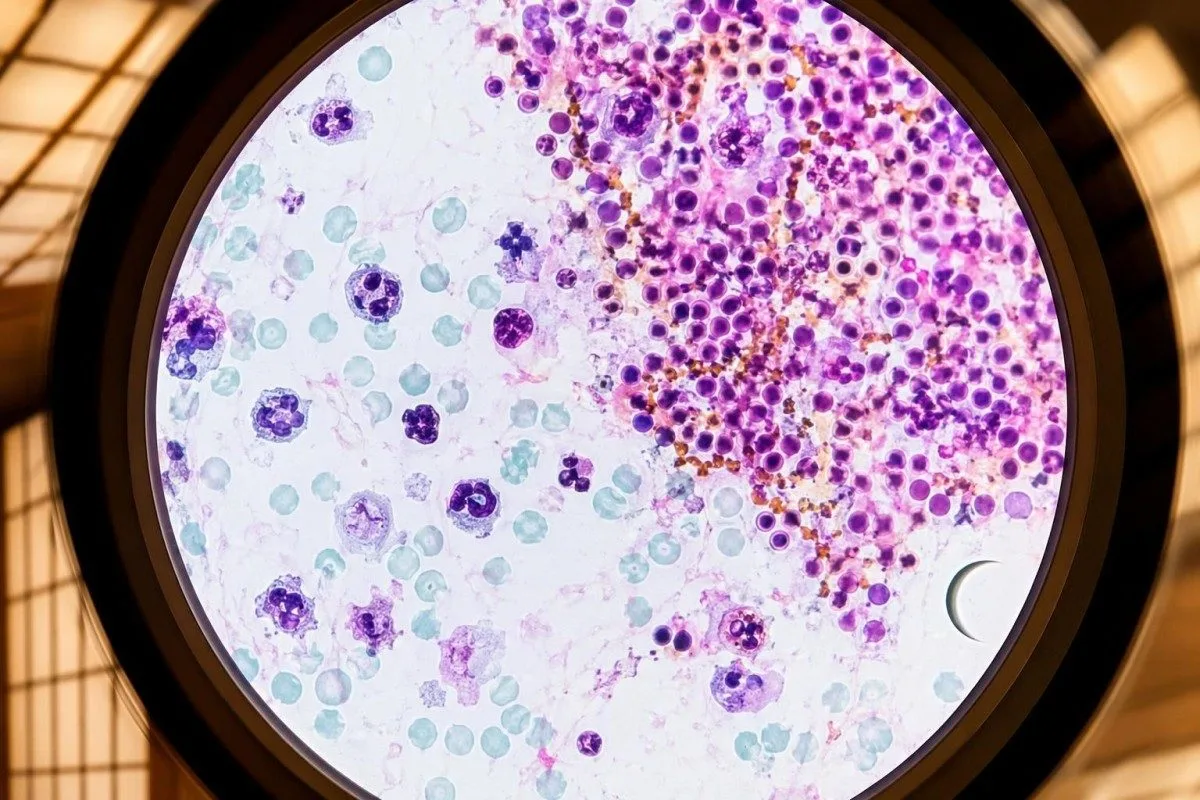
Vienam manam pacientam bija albumīns 5.3 g/dL, kalcijs 10.4 mg/dL un hematokrīts 51% pēc tāla lidojuma ar ļoti maz ūdens. Divas dienas vēlāk, pēc normālas hidratācijas, visi trīs atkal bija normas robežās; tā ir klasiska hemokoncentrācija, nevis trīs atsevišķas slimības.
Vēl viena grupa ir sportisti. CK pēc intensīvas treniņu slodzes var pārsniegt 1,000 IU/L, kreatinīns var būt augsts muskuļu masas dēļ, un AST var pieaugt muskuļu sabrukuma dēļ pat tad, ja ALT un GGT ir normāli.
Tendences atrisina daudzas no šīm mīklām. Stabils trombocītu skaits 470 × 10⁹/L 5 gadu laikā atšķiras no jauna pieauguma no 240 līdz 610 × 10⁹/L 6 nedēļās; mūsu dehidratācijas viltus paaugstinājumu ceļvedis parāda biežus klasterus, kas atkārtojas praksē.
Kā Kantesti AI droši lasa karogus, vienības un modeļus
Kantesti mākslīgais intelekts interpretē karogus un vienības, nolasot oriģinālo atskaiti, standartizējot marķieru nosaukumus, vajadzības gadījumā konvertējot vienības un salīdzinot rezultātus kā modeļus, nevis kā atsevišķus sarkanus skaitļus. Tas ir izstrādāts, lai atbalstītu pacienta izpratni un sarunas ar ārstiem, nevis aizstātu diagnozi.

Mūsu platforma pieņem PDF un foto augšupielādes, pēc tam daudziem ikdienišķiem pārskatiem atgriež interpretāciju aptuveni 60 sekundēs. Sistēma pārbauda, vai glikoze ir mg/dL vai mmol/L, vai kreatinīns ir mg/dL vai µmol/L, un vai laboratorijas paša diapazons atšķiras no vispārīgā pieaugušo diapazona.
Kantesti Ltd ir Apvienotās Karalistes uzņēmums, un mūsu klīniskie standarti tiek pārskatīti, izmantojot dokumentētas pārvaldības, privātuma un drošības kontroles, tostarp CE marķējumu, HIPAA, GDPR un ISO 27001 sertifikāciju. Jūs varat lasīt vairāk par mūsu medicīniskā validācija procesu un ārstiem, kas ir aiz mūsu Medicīnas konsultatīvā padome.
Thomas Klein, MD, un mūsu klīniskie recenzenti pievērš īpašu uzmanību pārmērīgas diagnostikas slazdiem: viegls ALT karogs pēc fiziskas slodzes, zems kreatinīns nelielam vecākam pieaugušajam vai robežvērtības TSH, kas pirms ārstēšanas būtu jāatkārto. Mūsu iepriekš reģistrētais etalons ir pieejams kā klīniskās validācijas pētījums, un Ar mākslīgā intelekta palīdzību veikta asins analīžu interpretācija ir visnoderīgākais, ja tas palīdz jums uzdot labākus jautājumus.
Kad sazināties ar ārstu par laboratorijas rezultātu saīsinājumiem
Nekavējoties sazinieties ar ārstu ja laboratorijas saīsinājums ir saistīts ar kritisku atzīmi, smagiem simptomiem vai bīstamu modeli. Kālijs virs 6,0 mmol/L, nātrijs zem 120 mmol/L, glikoze zem 54 mg/dL, troponīns virs laboratorijas noteiktā robežlīmeņa ar sāpēm krūtīs vai hemoglobīns zem 7 g/dL parasti nedrīkst gaidīt.
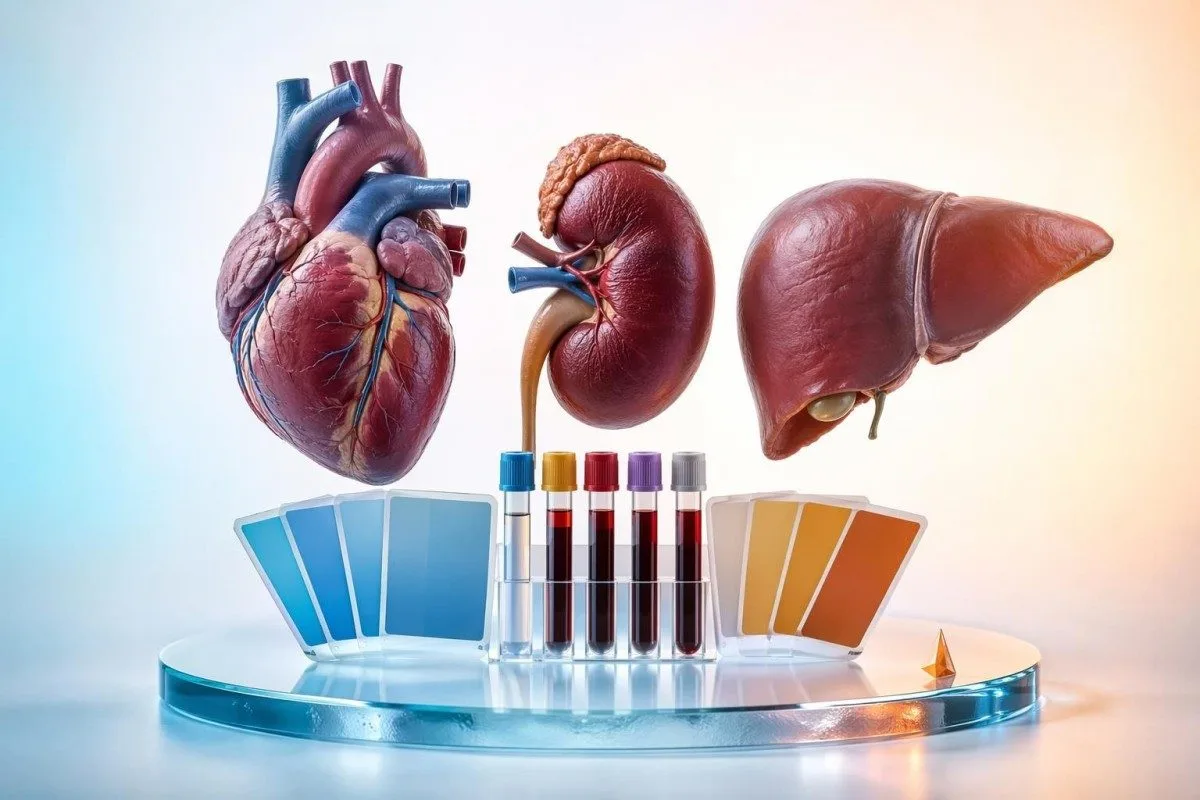
Nevadiet smagu elektrolītu, asins recēšanas vai sirds marķieru noviržu ārstēšanu, balstoties uz ierakstu blogā. Ja jūsu atskaite norāda kritisku vērtību, panikas vērtību, steidzamu situāciju vai laboratorija ir zvanījusi par rezultātu, uzskatiet to par reālu saasinājumu, līdz ārsts pateiks citādi.
Dažas ne-kritiskas atzīmes tomēr jāizvērtē atkārtoti dažu dienu līdz vairāku nedēļu laikā. Jaunas trombocītu vērtības virs 600 × 10⁹/L, eGFR samazināšanās par vairāk nekā 25%, ALT vairāk nekā 3 reizes virs augšējās normas robežas vai feritīns virs 1 000 ng/mL ir piemēri, ko es neignorētu.
Ja vēlaties palīdzību kodu tulkošanā pirms vizītes, jūs varat izmēģināt bezmaksas AI analīzi un parādīt kopsavilkumu savam ārstam. Ja simptomi saglabājas, ir neparastas kombinācijas vai neskaidras atskaites, mūsu komandu var sasniegt arī, izmantojot Sazinieties ar mums.
Praktisks padoms pirms jūs uzrakstāt savam ārstam
Nosūtiet pilno atskaiti, nevis viena sarkanās līnijas ekrānattēlu. Iekļaujiet savu vecumu, dzimumu dzimšanas brīdī, grūtniecības statusu, ja tas ir būtiski, badošanās statusu, neseno fizisko slodzi, uztura bagātinājumus, piemēram, biotīnu, un jebkuras zāles, kas uzsāktas pēdējo 8 nedēļu laikā.
Bieži uzdotie jautājumi
Ko nozīmē H un L asins analīžu rezultātos?
H nozīmē, ka asins analīžu rezultāts ir virs tās laboratorijas noteiktā references intervāla, bet L nozīmē, ka tas ir zem šī intervāla. Šie marķieri nav diagnozes, jo references intervāli bieži raksturo atlasītas populācijas vidējos 95%, tāpēc aptuveni 5% veselu cilvēku var iekļauties ārpus izdrukātā diapazona. Kālijs 6,1 mmol/L ir ļoti atšķirīgs no ALT 42 SV/L, jo steidzamība ir atkarīga no rādītāja, izmaiņu pakāpes un simptomiem.
Kāpēc mans laboratorijas analīzes rezultāts ir atzīmēts kā paaugstināts, ja mans ārsts saka, ka tas ir normāli?
Laboratorijas analīzes rezultātu var atzīmēt kā paaugstinātu, jo tas atrodas tieši ārpus laboratorijas statistiskās atsauces diapazona, pat ja jums tas klīniski ir nekaitīgs. Nelielas novirzes, kas ir aptuveni 10% ārpus diapazona, bieži tiek atkārtoti pārbaudītas vai salīdzinātas ar iepriekšējiem rezultātiem, pirms tiek veikta jebkāda rīcība. Vecums, grūtniecība, nesen veikta fiziska slodze, dehidratācija, augstums un medikamenti var pārbīdīt analīžu rādītājus, nenozīmējot slimību.
Kāda ir atšķirība starp mg/dL un mmol/L asins analīzēs?
mg/dL mēra masu uz tilpumu, savukārt mmol/L mēra molekulu skaitu uz tilpumu. To pašu glikozes rezultātu var pierakstīt kā 100 mg/dL vai aptuveni 5,6 mmol/L, tāpēc skaitļu salīdzināšana bez vienībām var būt bīstama. Kreatinīna rādītājs arī mainās atkarībā no vienībām: 1,0 mg/dL ir aptuveni 88 µmol/L.
Kuri asins analīžu saīsinājumi var būt steidzami?
Steidzamu asins analīžu saīsinājumi ietver K kālija, Na nātrija, Glu glikozes, Hb hemoglobīna, Plt trombocītu, INR asins recēšanai un troponīnu sirds bojājumam. Kālijs virs aptuveni 6,0 mmol/L, nātrijs zem 120 mmol/L, glikoze zem 54 mg/dL, hemoglobīns zem 7 g/dL vai trombocīti zem 20 × 10⁹/L bieži prasa medicīnisku izvērtēšanu tajā pašā dienā. Troponīns virs laboratorijas noteiktā robežlīmeņa, ja ir sāpes krūtīs, elpas trūkums vai svīšana, jāuztver kā steidzams stāvoklis.
Vai dehidratācija var likt asins analīžu rādītājiem izskatīties neparasti?
Jā, dehidratācija var koncentrēt asinis un likt albumīnam, kopējam proteīnam, kalcijam, hematokrītam, BUN un dažkārt kreatinīnam izskatīties augstākiem nekā parasti. Tipisks dehidratācijas modelis ir augšējā normas robeža albumīnam ap 5,0 g/dL, paaugstināts BUN, koncentrēts urīns un hematokrīts, kas pārsniedz cilvēka sākotnējo līmeni. Atkārtoti veicot analīzi pēc normālas hidratācijas, var noskaidrot, vai novirze saglabājas.
Vai Kantesti AI var interpretēt mana laboratorijas analīžu atskaites fotoattēlu vai PDF failu?
Kantesti AI var interpretēt daudzus asins analīžu PDF un fotoattēlu augšupielādes, nolasot saīsinājumus, mērvienības, atsauces diapazonus un brīdinājumu (flag) modeļus no oriģinālā ziņojuma. Daudzus ikdienas ziņojumus var apkopot aptuveni 60 sekundēs, tostarp CBC, CMP, lipīdu, vairogdziedzera, dzelzs, vitamīnu un diabēta marķierus. Izvade ir izstrādāta, lai atbalstītu pacienta izpratni un sarunu ar ārstu, nevis aizstātu neatliekamo palīdzību vai formālu diagnozi.
Vai matu un nagu uztura bagātinātāji var ietekmēt manus asins analīzes rezultātus?
Jā, biotīns matu un nagu uztura bagātinātājos var ietekmēt dažas vairogdziedzera analīzes un troponīna — sirds bojājuma marķiera — rezultātus, padarot tos maldinošus. Pirms analīzēm informējiet ārstu par lietoto produktu un devu; pajautājiet, vai tā lietošana uz laiku jāpārtrauc, jo norādījumi ir atkarīgi no analīzes veida un devas.
Vai pirms katras asins analīzes man ir jāgavē?
Nē. Lai veiktu CBC, nieru funkcionālo testu paneļa, vairogdziedzera analīze un daudzus citus testus, parasti nav nepieciešama badošanās. Lai veiktu glikozes, triglicerīdu vai plānotu badošanās līmeņa testu, sekojiet laboratorijas norādījumiem; ja nejauši ēdat, pirms asins paraugu ņemšanas zvaniet.
Kāpēc mani analīžu nosaukumi vai saīsinājumi mainās, ja izmantoju citu laboratoriju?
Laboratorijas var izmantot dažādus analizatorus, nosaukumu piešķiršanas konvencijas un references intervālus, tāpēc tas pats marķieris var parādīties ar nedaudz atšķirīgiem saīsinājumiem. Saglabājiet iepriekšējo atskaišu kopijas un palūdziet ārstam salīdzināt faktisko marķieri, vienību un tendenci, nevis tikai apzīmējumu.
Ko tas nozīmē, ja mans ārsts uzrauga tendenci, nevis vienu atzīmētu (brīdinājuma) rezultātu?
Tendence nozīmē viena un tā paša rādītāja salīdzināšanu laika gaitā, ideāli no tās pašas laboratorijas un vienībās. Neliela vienreizēja atzīme var būt mazāk satraucoša nekā pastāvīgs pieaugums vai kritums 2–3 rezultātos, īpaši, ja simptomi vai lietotie medikamenti atbilst šim modelim.
Iegūstiet AI vadītu asins analīžu analīzi jau šodien
Pievienojieties vairāk nekā 2 miljoniem lietotāju visā pasaulē, kuri uzticas Kantesti tūlītējai, precīzai laboratorijas analīžu interpretācijai. Augšupielādējiet savas asins analīzes rezultātus un dažu sekunžu laikā saņemiet visaptverošu 15,000+ biomarķieru interpretāciju.
📚 Atsauces pētniecības publikācijas
Kleins, T., Mičels, S., un Vēbers, H. (2026). Kantesti AI dzinēja klīniskā validācija (2.78T) 15 anonimizētos asins analīžu gadījumos: iepriekš reģistrēts rubrikas balstīts benchmarks, kas ietver hiperdiaģnozes slazda gadījumus septiņās medicīnas specialitātēs. Kantesti AI Medicīnas pētījumi.
Kleins, T., Mičels, S., un Vēbers, H. (2026). Klīniskās validācijas ietvars v2.0 (Medicīniskās validācijas lapa). Kantesti AI Medicīnas pētījumi.
📖 Ārējās medicīniskās atsauces
Horowitz GL et al. (2010). Reference intervālu definēšana, izveide un verifikācija klīniskajā laboratorijā; apstiprināts vadlīniju dokuments—Trešais izdevums. Clinical and Laboratory Standards Institute, CLSI EP28-A3c.
KDIGO CKD darba grupa (2024). KDIGO 2024 klīniskā prakses vadlīnija hroniskas nieru slimības izvērtēšanai un ārstēšanas vadībai. Kidney International.
Amerikas Diabēta asociācijas Profesionālās prakses komiteja (2026). 2. Diabēta diagnostika un klasifikācija: Diabēta aprūpes standarti—2026. Diabēta aprūpe.


⚕️ Medicīniskā atruna
Šis raksts ir paredzēts tikai izglītojošiem nolūkiem un nav medicīnisks padoms. Vienmēr konsultējieties ar kvalificētu veselības aprūpes speciālistu, lai pieņemtu lēmumus par diagnostiku un ārstēšanu.
E-E-A-T uzticēšanās signāli
Pieredze
Ārstu vadīta klīniskā laboratorijas interpretācijas darbplūsmu pārskatīšana.
Ekspertīze
Laboratorijas medicīnas fokuss uz to, kā biomarķieri uzvedas klīniskā kontekstā.
Autoritāte
Sagatavojis Dr. Thomas Klein, pārskatījusi Dr. Sarah Mitchell un prof. Dr. Hans Weber.
Uzticamība
Uz pierādījumiem balstīta interpretācija ar skaidriem turpmākās rīcības ceļiem, lai mazinātu trauksmi.