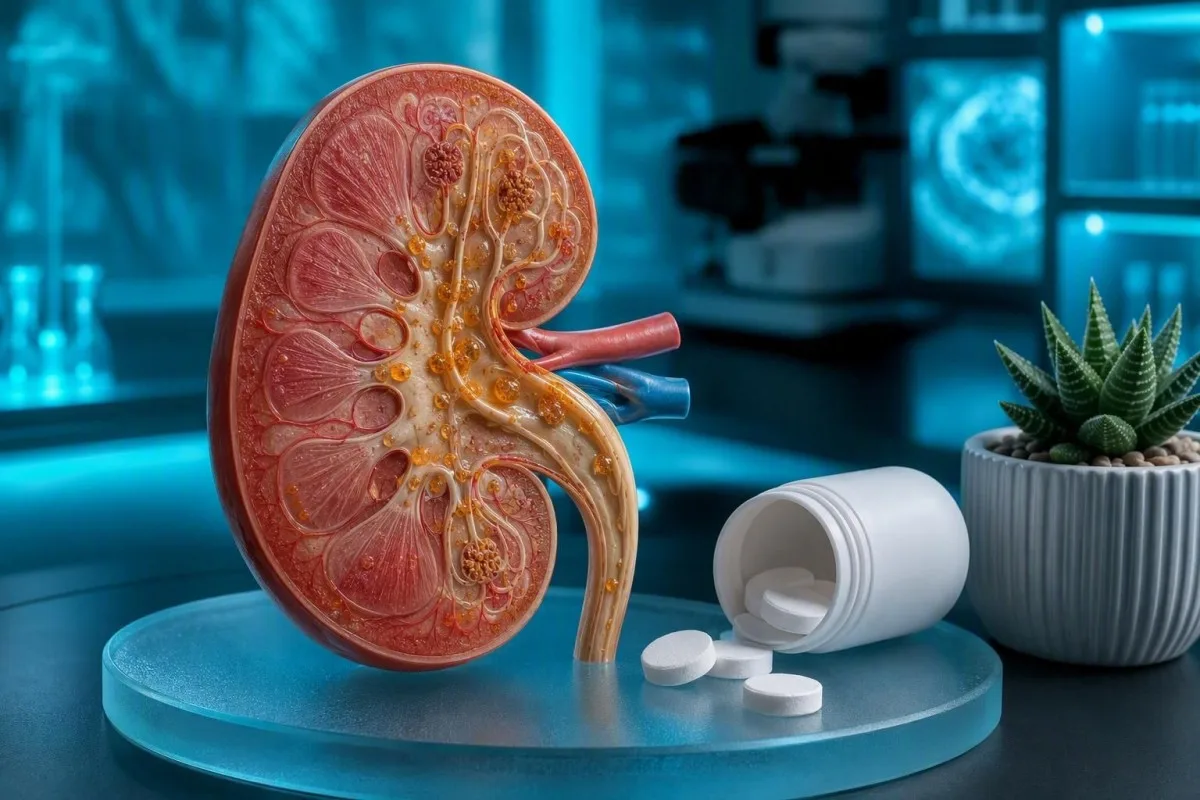
Calcium carbonate ສາມາດບັນເທົາອາການแสบร้อนທ້ອງໄດ້, ແຕ່ການກິນຫຼາຍເທື່ອອາດເຮັດໃຫ້ແຄລຊຽມສູງຂຶ້ນ, ເຮັດໃຫ້ເລືອດເປັນດ່າງ, ແລະເຮັດໃຫ້ไตເຮັດວຽກໜັກຢ່າງກະທັນຫັນ. ຄວາມສ່ຽງຈະສູງທີ່ສຸດເມື່ອມີອາການຮາກ, ຂາດນ້ຳ, ວິຕາມິນ D, ຫລື ການເຮັດວຽກຂອງไตຫຼຸດລົງ.


- ແຄລຊຽມສູງ ໂດຍທົ່ວໄປໝາຍເຖິງແຄລຊຽມທັງໝົດປະມານ 2.60 mmol/L (10.4 mg/dL) ຂຶ້ນໄປ, ແຕ່ອາວູເມນ (albumin) ແລະແຄລຊຽມທີ່ເປັນໄອອອນ (ionised calcium) ຈະເປັນຕົວກຳນົດວ່າຜົນດັ່ງກ່າວແມ່ນຖືກຕ້ອງແທ້ຫຼືບໍ່.
- ຄາລຊຽມຄາບອນເນດ ໝາຍເຖິງ 40% ຂອງແຄລຊຽມທີ່ເປັນອົງປະກອບ: ຢາເມັດ 1,000 mg ບັນຈຸແຄລຊຽມຕົວຈິງປະມານ 400 mg.
- ໂຣກ Milk-alkali syndrome ໝາຍເຖິງການລວມກັນຂອງການມີແຄລຊຽມສູງ (hypercalcaemia), ภาวะເລືອດເປັນດ່າງ (metabolic alkalosis), ແລະການບາດເຈັບไตແບບສ້ວຍແຫຼມ (acute kidney injury) ຫຼັງຈາກໄດ້ຮັບດ່າງທີ່ລະລາຍໄດ້ (absorbable alkali) ແລະແຄລຊຽມ.
- ຂີດຈຳກັດທີ່ຈຳເປັນດ່ວນ: ແຄລຊຽມໃນລະດັບ 3.0 mmol/L (12 mg/dL) ຫລືສູງກວ່ານັ້ນຮຽກຮ້ອງໃຫ້ມີການປະເມີນທາງຄລີນິກໃນມື້ດຽວກັນ, ໂດຍສະເພາະເມື່ອມີອາການຫຼືການເພີ່ມຂຶ້ນຂອງຄຣີອາຕີນິນ (creatinine).
- ອາການສຸກເສີນ ປະກອບມີຄວາມສັບສົນ, ເປັນລົມ, ອ່ອນແຮງຢ່າງຮຸນແຮງ, ໃຈສັ່ນ, ຮາກຊ້ຳແລ້ວຊ້ຳອີກ, ປະລິມານປັດສະວະໜ້ອຍຫຼາຍ, ຫລືບໍ່ສາມາດກືນນ້ຳໄດ້.
- ວົງຈອນການຂາດນ້ຳ ບັນຫາ: ພະຍາດແຄວຊຽມສູງເຮັດໃຫ້ມີອາການຫິວນໍ້າ ແລະ ຖ່າຍເບົາຫຼາຍ, ຈາກນັ້ນການສູນເສຍປະລິມານນໍ້າຈະຫຼຸດການຂັບແຄວຊຽມຂອງไตອອກ ແລະ ເຮັດໃຫ້ແຄວຊຽມສູງຂຶ້ນ.
- កុំធ្វើការព្យាបាលដោយខ្លួនឯង ຜົນແຄວຊຽມສູງໂດຍການດື່ມນໍ້າຫຼາຍເກີນໄປ ຫຼື ໃຊ້ອາຫານເສີມຫຼາຍເກີນໄປ; ຢຸດການໃຊ້ແຄວຊຽມຄາບອນເນດທີ່ບໍ່ໄດ້ສັ່ງໂດຍແພດ ແລະ ຂໍຄໍາແນະນໍາສ່ວນບຸກຄົນ.
- ກຸ່ມຫ້ອງທົດລອງທີ່ເປັນປະໂຫຍດ ລວມມີແຄວຊຽມປັບຄ່າ ຫຼື ແຄວຊຽມໄອອອນ, ຄຣີເອທີນີນ/eGFR, ໄບຄາບອນເນດ ຫຼື CO2 ທັງໝົດ, ຟອສເຟດ, ແມກນີຊຽມ, ໂພແທັດຊຽມ, ແລະ ຮໍໂມນ parathyroid.
ຄວາມໝາຍຂອງແຄລຊຽມສູງຫຼັງຈາກກິນຢາຕ້ານກົດແມ່ນຫຍັງ?
ໝາຍຄວາມວ່າແນວໃດ ຖ້າແຄວຊຽມສູງຫຼັງຈາກໃຊ້ຢາຕ້ານກົດ? ມັນອາດຈະໝາຍຄວາມວ່າການໃຊ້ແຄວຊຽມຄາບອນເນດກຳລັງປະກອບສ່ວນເຮັດໃຫ້ມີພາວະແຄວຊຽມໃນເລືອດສູງ, ໂດຍສະເພາະເມື່ອຜົນອອກມາຄຽງຄູ່ກັບລະດັບໄບຄາບອນເນດສູງ ແລະ ຄຣີເອທີນີນທີ່ເພີ່ມຂຶ້ນ. ຜົນອອກມາໜຶ່ງຄັ້ງທີ່ບໍ່ຊັດເຈນບໍ່ແມ່ນການວິນິດໄສ, ແຕ່ແຄວຊຽມ 3.0 mmol/L (12 mg/dL) ຫຼືສູງກວ່າ ຄວນໄດ້ຮັບການປະເມີນໃນມື້ດຽວກັນ.
ພາວະແຄວຊຽມສູງຈາກຢາຕ້ານກົດມັກຖືກເອີ້ນວ່າ ໂຣກແຄວຊຽມ-ອາລັກຄາລີ, ເຄີຍເອີ້ນວ່າ ໂຣກນົມ-ອາລັກຄາລີ. ຮູບແບບທີ່ທັນສະໄໝແມ່ນກ່ຽວກັບແຄວຊຽມຄາບອນເນດທີ່ໃຊ້ໃນການເຄືອບ, ອາຫານເສີມສໍາລັບໂລກກະດູກພຸນ, ຜະລິດຕະພັນທີ່ເສີມຄວາມແຂງແຮງ, ຫຼື ຫຼາຍອັນຮ່ວມກັນ. ໃນການເຮັດວຽກທາງດ້ານຄລີນິກຂອງຂ້ອຍ, ເຄັດລັບທີ່ຖືກລະເລີຍມັກຈະແມ່ນຄົນເຈັບເວົ້າວ່າ, “ມັນເປັນພຽງຢາຕ້ານກົດ,” ໃນຂະນະທີ່ກິນ 8 ຫາ 12 ເມັດໃນມື້ທີ່ເປັນພະຍາດກະເພາະອາຫານຮຸນແຮງ.
ແຄວຊຽມທັງໝົດປົກກະຕິປະມານ 2.15 ถึง 2.55 mmol/L (8.6 ถึง 10.2 mg/dL) ໃນຫ້ອງທົດລອງຜູ້ໃຫຍ່ຫຼາຍແຫ່ງ, ເຖິງແມ່ນວ່າລະດັບ ແລະ ວິທີການປັບຄ່າຈະແຕກຕ່າງກັນ. ແຄວຊຽມທີ່ເຊື່ອມຕໍ່ກັບອາລບູມິນສາມາດເຮັດໃຫ້ແຄວຊຽມທັງໝົດເບິ່ງຄືວ່າມີຄ່າສູງໃນລະຫວ່າງການຂາດນໍ້າ; ແຄວຊຽມໄອອອນ, ປົກກະຕິປະມານ 1.15 ຫາ 1.30 mmol/L, ເປັນສ່ວນທີ່ອອກລິດທາງຊີວະວິທະຍາ. ຄູ່ມືແຄວຊຽມສໍາລັບເດັກນ້ອຍ ອະທິບາຍວ່າເປັນຫຍັງລະດັບອາຍຸສະເພາະຈຶ່ງບໍ່ສາມາດນໍາໃຊ້ກັບຜູ້ໃຫຍ່ໄດ້.
ມາຮອດວັນທີ 30 ສິງຫາ 2026, ຂ້ອຍຈະຖືວ່າຜົນແຄວຊຽມເປັນຮູບແບບທາງຄລີນິກ, ບໍ່ແມ່ນຄະແນນທີ່ຈະເພີ່ມປະສິດທິພາບ. Kantesti ເປັນ AI ເຄື່ອງວິເຄາະເລືອດ ທີ່ວາງແຄວຊຽມໄວ້ຂ້າງໜ້າທີ່ການເຮັດວຽກຂອງไต, ອາລບູມິນ, CO2, ແລະ ຜົນລັບກ່ອນໜ້າ, ເພາະວ່າການປະສົມນັ້ນມີຂໍ້ມູນຫຼາຍກວ່າເຄື່ອງໝາຍ H ທີ່ໂດດດ່ຽວ. ກົດລະບຽບການປະຕິບັດຂອງດຣ. Thomas Klein: ນໍາເອົາຢາຕ້ານກົດ, ອາຫານເສີມ, ແລະ ຢາວิตามິນຫຼາຍຊະນິດທຸກຊະນິດມາປະເມີນ.
ປະລິມານ calcium carbonate ທີ່ຄົນເຈັບມັກຈະພາດ
ແຄລຊຽມຄາບອນເນດ ສາມາດເຮັດໃຫ້ລະດັບແຄລຊຽມສູງຂຶ້ນໄດ້ ເພາະມັນບັນຈຸ 40% ແຄລຊຽມທາດທີ່ເປັນອົງປະກອບ ແລະ ຍັງສົ່ງ ດ່າງທີ່ສາມາດດູດຊຶມໄດ້. ປ້າຍສະແດງແຄລຊຽມຄາບອນເນດ 1,000 mg ບໍ່ໄດ້ໝາຍຄວາມວ່າ 1,000 mg ຂອງແຄລຊຽມ; ມັນສະໜອງປະມານ 400 mg ແຄລຊຽມທາດທີ່ເປັນອົງປະກອບ.
ຄວາມແຕກຕ່າງນີ້ປ່ຽນແປງການຄິດໄລ່. ແຄລຊຽມຄາບອນເນດ 1,000 mg ຫ້າເມັດ ສະໜອງໃຫ້ປະມານ 2,000 mg ແຄລຊຽມທາດທີ່ເປັນອົງປະກອບ, ກ່ອນທີ່ຈະນັບແຄລຊຽມຈາກອາຫານ, ວິຕາມິນຫຼາຍຊະນິດ, ຫຼືຜະລິດຕະພັນບຳລຸງກະດູກ. ປ້າຍຢາລົດອາຊິດບາງຊະນິດແນະນຳບໍ່ໃຫ້ເກີນ 7,500 mg ຂອງແຄລຊຽມຄາບອນເນດພາຍໃນ 24 ຊົ່ວໂມງ, ແຕ່ຂີດຈຳກັດສູງສຸດຂອງປ້າຍນັ້ນບໍ່ແມ່ນການຮັບປະກັນຄວາມປອດໄພສ່ວນບຸກຄົນສຳລັບຜູ້ທີ່ມີພະຍາດໝາກໄຂ່ຫຼັງຊຳເຮື້ອ, ຂາດນ້ຳ, ຫຼືໄດ້ຮັບການປິ່ນປົວດ້ວຍວິຕາມິນ D.
ໂຣກ Milk-alkali ເກີດຂຶ້ນດ້ວຍການກິນໃນປະລິมาณໜ້ອຍກວ່າຄຳອະທິບາຍໃນตำราຮຽນເກົ່າ ທີ່ວ່າຫຼາຍກວ່າ 4 g ຂອງແຄລຊຽມທາດທີ່ເປັນອົງປະກອບຕໍ່ມື້. Felsenfeld ແລະ Levine ໄດ້ອະທິບາຍໂຣກນີ້ວ່າເປັນການລົບກວນທີ່ເພີ່ມທະວີດ້ວຍຕົນເອງຂອງການຮັກສາສົມດຸນແຄລຊຽມ ແທນທີ່ຈະເປັນຂີດຈຳກັດປະລິມານທີ່ງ່າຍດາຍ (Felsenfeld and Levine, 2006). ອາຍຸສູງ, ຢາຂັບປັດສະວະ thiazide, eGFR ຫຼຸດລົງ, ແລະການກິນນ້ຳບໍ່ພຽງພໍ ຈະເຮັດໃຫ້ຄວາມຜິດພາດນ້ອຍລົງ.
ນັບແຄລຊຽມຈາກ ທຸກ ແຫລ່ງທີ່ມາເປັນເວລາໜຶ່ງອາທິດປົກກະຕິ, ບໍ່ແມ່ນພຽງແຕ່ມື້ທີ່ຮ້າຍແຮງທີ່ສຸດ. ນັ້ນລວມມີຢາເມັດຄ້ຽວ, ຢາລົດອາຊິດແຫຼວ, ຜະລິດຕະພັນກ່ອນເກີດ, ແຄລຊຽມ/ວິຕາມິນ D ປະສົມ, ແລະ ເຄື່ອງດື່ມເສີມ. ຖ້າພາສາໃນປ້າຍສັບສົນ, ຄູ່ມື biomarker ການກວດເລືອດ ຂອງພວກເຮົາ ສາມາດຊ່ວຍກຳນົດຊື່ຫ້ອງທົດລອງທີ່ກ່ຽວຂ້ອງໄດ້, ແຕ່ຮ້ານຂາຍຢາເປັນຄົນທີ່ໄວທີ່ສຸດໃນການກວດສອບສູດຜະລິດຕະພັນຕົວຈິງ.
ເປັນຫຍັງເມັດທີ່ຄ້ຽວໄດ້ຈຶ່ງສ້າງຄວາມຮູ້ສຶກປອດໄພທີ່ຜິດພາດ
ເມັດທີ່ຄ້ຽວໄດ້ ງ່າຍຕໍ່ການກິນຊ້ຳ ເພາະວ່າການບັນເທົາອາການເກີດຂຶ້ນທັນທີໃນຂະນະທີ່ການສະສົມແຄລຊຽມແມ່ນບໍ່ມີອາການ. ຄົນເຈັບອາດກິນສອງເມັດຫຼັງອາຫານທ່ຽງ, ສອງເມັດກ່ອນນອນ, ແລະຫຼາຍເມັດໃນຕອນກາງຄືນໂດຍບໍ່ຮັບຮູ້ວ່ານີ້ແມ່ນ “ການໃຊ້ຢາ”. ບັນທຶກຄວາມແຂງແຮງຂອງເມັດ, ຈຳນວນທີ່ກິນ, ແລະເວລາ; ບັນທຶກນັ້ນມີປະໂຫຍດທາງຄລີນິກຫຼາຍກວ່າການຄາດຄະເນຈາກຄວາມຊົງ ຈຳ.
ອາການຂອງໂຣກ Milk-alkali syndrome ແລະຮູບແບບການກວດເລືອດສາມຢ່າງ
ອາການຂອງໂຣກ Milk-alkali ເກີດຂຶ້ນຈາກສາມປັດໄຈຄື: ແຄລຊຽມສູງ, ລະດັບອາຊິດໃນເລືອດເປັນດ່າງ, ແລະ ໝາກໄຂ່ຫຼັງເຮັດວຽກຜິດປົກກະຕິ. ຮູບແບບຫ້ອງທົດລອງຄລາດສິກຄື: ແຄລຊຽມສູງ, ໄບຄາບອນເນດ ຫຼື CO2 ທັງໝົດສູງ, ແລະ creatinine ສູງກວ່າລະດັບພື້ນຖານຂອງບຸກຄົນ ຫຼັງຈາກໄດ້ຮັບແຄລຊຽມ ແລະ ດ່າງໃນປະລິมาณຫຼາຍ.
ອາການຕ່າງໆສາມາດບໍ່ສະເພາະເຈາະຈົງທີ່ໜ້າລຳຄານ: ທ້ອງຜູກ, ຄລື້ນໄສ້, ຄວາມຢາກອາຫານຫຼຸດລົງ, ອ່ອນເພຍ, ຫິວນ້ຳ, ຍ່ຽວເລື້ອຍໆ, ສະ ໝອງຂີ້ຄ້ານ, ຫຼືກ້າມເນື້ອອ່ອນແຮງ. ນັ້ນຄືເຫດຜົນທີ່ຂ້ອຍຖາມສະເພາະກ່ຽວກັບຢາລົດອາຊິດ ເມື່ອຄົນເຈັບມີອາການ “ກະເພາະລຳໄສ້ອັກເສບ” ບວກກັບໄບຄາບອນເນດ 30 mmol/L ຫຼືສູງກວ່າ. ການຮາກຍັງສາມາດເພີ່ມໄບຄາບອນເນດໄດ້, ດັ່ງນັ້ນປະຫວັດການໃຊ້ຢາຈຶ່ງມີຄວາມສຳຄັນ.
ລະບົບການເຮັດວຽກຂອງຮ່າງກາຍແມ່ນເປັນວົງຈອນ. ແຄລຊຽມສາມາດເຮັດໃຫ້ເສັ້ນເລືອດໃນไตແຄບລົງ ແລະຫຼຸດການດູດຊຶມໂຊດຽມຄືນ, ເຮັດໃຫ້ນ້ຳເກືອ ແລະນ້ຳອອກ. ຫຼັງຈາກນັ້ນ, ການຫົດຕົວຂອງປະລິມານຈະເພີ່ມການກັກເກັບໄບຄາບໍເນດ ແລະຫຼຸດການຂັບຖ່າຍແຄລຊຽມ. ການທົບທວນຂອງ Medarov's Mayo Clinic ຍັງຄົງມີປະໂຫຍດຢູ່ທີ່ນີ້: ໂຣກແຄລຊຽມ-ດ່າງສາມາດກ້າວໄປຢ່າງໄວວາເມື່ອການບໍລິໂພກສືບຕໍ່ເຖິງແມ່ນວ່າຈະມີອາການຄື່ນໄສ້ ແລະການຫຼຸດລົງຂອງນ້ຳ (Medarov, 2009).
ແຄນເທສຕີ ເປັນ ແພລດຟອມການອ່ານຜົນກວດເລືອດຂອງ AI ທີ່ເນັ້ນໜັກເຖິງການລວມກຸ່ມນີ້ເມື່ອແຄລຊຽມ, CO2, ຄຣີເອຕີນິນ, ແລະ eGFR ເຄື່ອນທີ່ໄປນຳກັນໃນຊຸດ. ມັນບໍ່ໄດ້ວິນິດໄສໂຣກນົມ-ດ່າງ, ເພາະວ່າ hyperparathyroidism ປະຖົມ ແລະ ຄວາມເປັນມະເລັງກໍ່ສາມາດເຮັດໃຫ້ເກີດ hypercalcaemia ໄດ້ເຊັ່ນກັນ, ແຕ່ມັນສາມາດເຮັດໃຫ້ຄຳຖາມກ່ຽວກັບຢາຫຼຸດຄວາມເປັນໄປໄດ້ຍາກທີ່ຈະພາດ. ປຽບທຽບການປ່ຽນແປງຂອງไตກັບຄູ່ມືຂອງພວກເຮົາ ການຫຼຸດລົງຂອງ eGFR ຊົ່ວຄາວຫຼັງຈາກຂາດນ້ຳ.
ເປັນຫຍັງການຂາດນ້ຳຈຶ່ງເຮັດໃຫ້ການເປັນພິດຂອງ calcium carbonate ຮຸນແຮງຂຶ້ນ
ການຂາດນ້ຳສາມາດປ່ຽນການໃຊ້ຢາຫຼຸດອາຊິດໃນລະດັບປານກາງໃຫ້ເປັນ hypercalcaemia ທີ່ມີຄວາມສຳຄັນທາງຄລີນິກ ເພາະไตຕ້ອງການປະລິມານເລືອດໄຫຼເພື່ອຂັບຖ່າຍແຄລຊຽມ. ປັດສະວະສີເຂັ້ມ, ວິນຫົວເມື່ອຢືນ, ປາກແຫ້ງ, ແລະປະລິມານປັດສະວະຫຼຸດລົງແມ່ນຮູບແບບການເຕືອນ, ບໍ່ແມ່ນພຽງແຕ່ຄວາມບໍ່ສະດວກ.
ແຄລຊຽມສູງຫຼຸດຄວາມສາມາດຂອງไตໃນການເຮັດໃຫ້ປັດສະວະເຂັ້ມຂຸ້ນ, ດັ່ງນັ້ນຄົນເຮົາອາດຈະປັດສະວະໃນປະລິມານຫຼາຍຜິດປົກກະຕິໃນເບື້ອງຕົ້ນ ແລະຮູ້ສຶກຫິວນ້ຳ. ຕໍ່ມາ, ການຮາກ, ການກິນອາຫານໜ້ອຍ, ຫຼືຜູ້ສູງອາຍຸຫຼີກລ້ຽງນ້ຳຍ້ອນການເປັນຄືນເຮັດໃຫ້ເກີດຮູບແບບທີ່ແຕກຕ່າງຢ່າງໜ້າປະຫລາດໃຈ: ປັດສະວະໜ້ອຍຫຼາຍ ແລະຄຣີເອຕີນິນເພີ່ມຂຶ້ນ. ການປ່ຽນຈາກ polyuria ໄປຫາ oliguria ໂດຍສະເພາະແມ່ນເປັນທີ່ໜ້າກັງວົນ.
ອັດຕາສ່ວນ urea ຕໍ່ creatinine ທີ່ເພີ່ມຂຶ້ນອາດຈະສະໜັບສະໜູນການສູນເສຍປະລິມານ, ແຕ່ມັນບໍ່ແມ່ນການວິນິດໄສທີ່ເຊື່ອຖືໄດ້. Creatinine ສາມາດເພີ່ມຂຶ້ນໄດ້ພາຍໃນ 24 ຫາ 48 ຊົ່ວໂມງ ຂອງການຖືກກະທົບຈາກນ້ຳຢ່າງຮຸນແຮງ, ໃນຂະນະທີ່ eGFR ບໍ່ໜ້າເຊື່ອຖືໃນລະຫວ່າງພະຍາດສ້ ຳຄັນທີ່ປ່ຽນແປງຢ່າງໄວວາ. ຂອງພວກເຮົາ อัตราส่วน BUN ต่อครีเอตินีน guide ກວມເອົາວ່າເປັນຫຍັງທັງສອງຄ່ານີ້ຕ້ອງການສະພາບແວດລ້ອມ.
ຢ່າພະຍາຍາມ “ລ້າງແຄລຊຽມອອກ” ດ້ວຍການດື່ມນ້ຳຫຼາຍເກີນໄປ ຖ້າທ່ານມີອາການຫົວໃຈລົ້ມເຫຼວ, ພະຍາດไตຂັ້ນສູງ, ຫຼືຮາກ. ການຈອກນ້ອຍໆເລື້ອຍໆອາດຈະເປັນທີ່ຍອມຮັບໄດ້ໃນຂະນະທີ່ກຽມການດູແລ ຖ້າທ່ານສາມາດກືນໄດ້ ແລະບໍ່ມີຂໍ້ຈຳກັດນ້ຳ, ແຕ່ການຕັດສິນໃຈກ່ຽວກັບນ້ຳທາງເສັ້ນເລືອດແມ່ນຂຶ້ນກັບແພດ. ໄດ້ ຄູ່ມືເຕືອນນ້ ຳ ປັດສະວະເຂັ້ມ ມີປະໂຫຍດເມື່ອສີປັດສະວະເປັນໜຶ່ງໃນການປ່ຽນແປງຄັ້ງທຳອິດທີ່ທ່ານສັງເກດເຫັນ.
ຜົນກະທົບຕໍ່ไตຈາກແຄລຊຽມສູງຈາກຢາຕ້ານກົດ
ແຄລຊຽມສູງສາມາດເຮັດໃຫ້ເກີດຄວາມເສຍຫາຍຕໍ່ไตແບບສ້ ຳຄັນ ໂດຍການຫຼຸດຜ່ອນການໄຫຼຂອງເລືອດໃນไต, ສົ່ງເສີມການສູນເສຍນ້ຳ, ແລະການຝາກແຄລຊຽມໃນເນື້ອເຍື່ອไตເມື່ອການสัมผัสຍັງຄົງຢູ່. ການເພີ່ມຂຶ້ນຂອງ creatinine ຈາກລະດັບພື້ນຖານບວກກັບແຄລຊຽມສູງກວ່າ 2.60 mmol/L ນັ້ນໜ້າກັງວົນກວ່າຄວາມຜິດປົກກະຕິອັນໃດອັນໜຶ່ງພຽງຢ່າງດຽວ.
ຊຸດไตຄວນປະກອບມີ creatinine, eGFR, urea ຫຼື BUN, sodium, potassium, chloride, bicarbonate/CO2, magnesium, phosphate, ແລະ urinalysis ເມື່ອມີຄວາມຈຳເປັນ. phosphate ຕ່ ຳ ສາມາດມາພ້ອມກັບໂຣກແຄລຊຽມ-ດ່າງ ເພາະແຄລຊຽມຕິດກັບ phosphate ໃນລຳໄສ້, ເຖິງແມ່ນວ່າຮູບແບບນີ້ຈະບໍ່ມີທົ່ວໄປ. Potassium ປົກກະຕິບໍ່ໄດ້ໝາຍຄວາມວ່າບໍ່ມີຄວາມເຄັ່ງຕຶງຕໍ່ไตຢ່າງຮຸນແຮງ.
KDIGO ກໍານົດຄວາມເສຍຫາຍຕໍ່ไตແບບສ້ ຳຄັນບາງສ່ວນວ່າການເພີ່ມຂຶ້ນຂອງ creatinine 0.3 mg/dL (26.5 µmol/L) ພາຍໃນ 48 ຊົ່ວໂມງ ຫຼື 1.5 ເທົ່າຂອງລະດັບພື້ນຖານພາຍໃນ 7 ວັນ (KDIGO, 2012). ເຂດແດນນັ້ນຖືກອອກແບບມາເພື່ອການກວດພົບເບື້ອງຕົ້ນ, ບໍ່ແມ່ນການຮັບປະກັນ; ຄົນທີ່ມີມວນກ້າມເນື້ອຕໍ່າອາດມີຄວາມເສຍຫາຍທີ່ສຳຄັນທາງຄລີນິກ ເຖິງແມ່ນວ່າ creatinine ຍັງຄົງເບິ່ງຄືວ່າ “ປົກກະຕິ.”
ຂ້າພະເຈົ້າໄດ້ເຫັນຄົນເຈັບຈົດຈໍ່ກັບແຄລຊຽມສູງເລັກນ້ອຍ ໃນຂະນະທີ່ລະເລີຍ creatinine ທີ່ເພີ່ມຂຶ້ນສອງເທົ່າຈາກ 55 ຫາ 110 µmol/L. ການປ່ຽນແປງນັ້ນຄວນກະຕຸ້ນໃຫ້ມີການປະຕິບັດເຖິງແມ່ນວ່າຂອບເຂດອ້າງອິງຂອງຫ້ອງທົດລອງຈະກວ້າງ. ສໍາລັບທາງເລືອກອາຫານເສີມທີ່ປ້ອງກັນไตຫຼັງຈາກຟື້ນຟູ, ເບິ່ງ ອາຫານເສີມ ແລະ ພະຍາດไตຊຳເຮື້ອ.
ເມື່ອຜົນການກວດແຄລຊຽມຮຽກຮ້ອງການດູແລຢ່າງຮີບດ່ວນໃນມື້ນີ້
ຊອກຫາການປະເມີນດ່ວນພາຍໃນມື້ດຽວສໍາລັບແຄລຊຽມໃນລະດັບ 3.0 mmol/L (12 mg/dL) ຫຼືສູງກວ່າ, ແຄລຊຽມເພີ່ມຂຶ້ນຢ່າງໄວວາ, ຫຼືຜົນທີ່ສູງກັບການຮາກ, ຄວາມສັບສົນ, ຄວາມອ່ອນເພຍ, ການເຕັ້ນຂອງຫົວໃຈ, ຫຼືການຫຼຸດລົງຂອງປັດສະວະ. ໂທຫາບໍລິການສຸກເສີນແທນທີ່ຈະຂັບລົດເອງ ຖ້າມີອາການລົ້ມ, ນອນຫລັບຢ່າງຮຸນແຮງ, ເຈັບໜ້າอก, ຫຼືມີອາການສັບສົນໃໝ່.
ລະດັບຄວາມຮຸນແຮງບໍ່ໄດ້ຖືກກຳນົດໂດຍທາດແຄລຊຽມເທົ່ານັ້ນ. 2.75 mmol/L ອາດຈະສາມາດຈັດການໄດ້ດ້ວຍການກວດສອບຄົນເຈັບນອກຢ່າງທັນການໃນຄົນທີ່ມີສຸຂະພາບດີ ແລະມີການເຮັດວຽກຂອງไตທີ່ໝັ້ນຄົງ, ໃນຂະນະທີ່ 2.65 mmol/L ດ້ວຍອາການຮາກຊ້ຳໆ, eGFR 25 mL/min/1.73 m², ຫຼືອາການຂອງການເຕັ້ນຂອງຫົວໃຈທີ່ຜິດປົກກະຕິອັນໃໝ່ອາດຕ້ອງການການປິ່ນປົວໃນໂຮງໝໍ. ອາການ ແລະ ວິວັດທະນາການເປັນຕົວຕັດສິນຄວາມຮີບດ່ວນ.
ທ່ານໝໍສຸກເສີນມັກຈະກວດຫາທາດແຄລຊຽມຄືນໃໝ່, ກວດຫາທາດແຄລຊຽມທີ່ເປັນໄອອອນ, ໄດ້ຮັບເອົາເອເລັກໂຕໄລທ໌ ແລະ ຄຣີ້ອາຕິນິນ, ກວດເບິ່ງ ECG, ແລະໃຫ້ນ້ຳເກືອທາງເສັ້ນເລືອດດຳຖ້າເໝາະສົມ. ภาวะແคลຊຽມໃນເລືອດສູງສາມາດເຮັດໃຫ້ໄລຍະ QT ສັ້ນລົງ ແລະ ກະຕຸ້ນການເຕັ້ນຂອງຫົວໃຈຜິດປົກກະຕິ, ເຖິງແມ່ນວ່າ ECG ອາດຈະເປັນປົກກະຕິ ເຖິງແມ່ນວ່າບັນຫາທາດແຄລຊຽມຈະເປັນຄວາມຈິງກໍຕາມ. ຢ່າກິນທາດແຄລຊຽມຄາບອນເນດອີກເພື່ອແກ້ອາການຄລື້ນໄສ້ຫຼືບໍ່ສະບາຍທ້ອງໃນຂະນະທີ່ລໍຖ້າ.
Kantesti AI ຈະໝາຍທາດແຄລຊຽມບວກກັບຄວາມຜິດປົກກະຕິຂອງไตແລະເອເລັກໂຕໄລທ໌ເປັນສັນຍານການຕິດຕາມແທນທີ່ຈະບອກຜູ້ໃຊ້ວ່າຄ່າໜຶ່ງຄ່າເປັນສາເຫດ. ສໍາລັບກອບການຄັດແຍກທີ່ກວ້າງຂວາງກວ່າ, ຄວນອ່ານ ຄູ່ມືແນະນຳກ່ຽວກັບຮູບແບບເອເລັກໂຕໄລທ໌ແບບຮີບດ່ວນ.
ສັນຍານເຕືອນທີ່ນອກເຫນືອຈາກຕົວເລກແຄລຊຽມ
ຄວາມສັບສົນ, ຄວາມອ່ອນແອຢ່າງຮຸນແຮງ, ບໍ່ສາມາດກັກເກັບນ້ຳໄວ້ໄດ້, ເປັນລົມ, ຫົວໃຈເຕັ້ນຜິດປົກກະຕິ, ແລະ ການຫຼຸດລົງຢ່າງຊັດເຈນຂອງປະລິມານນ້ຳປັດສະວະເປັນອາການເຕືອນແມ້กระทั่งກ່ອນໄດ້ຮັບຜົນການກວດທາດແຄລຊຽມ. ໃນຜູ້ສູງອາຍຸ, ອາການທ້ອງຜູກໃໝ່ບວກກັບການຄິດຊ້າອາດເປັນອາການທີ່ເຫັນໄດ້ຄັ້ງທຳອິດແທນທີ່ຈະເປັນອາການກະຫາຍນ້ຳຮຸນແຮງ.
ອາການທາງລະບົບປະສາດອາດມີຕັ້ງແຕ່ອາການລະຄາຍເຄືອງແລະຂາດສະມາທິໄປເຖິງອາການຊຶມເສົ້າແລະໂຄມາໃນລະດັບທີ່ສູງກວ່າ. ອັດຕາການເພີ່ມຂຶ້ນມັກຈະສຳຄັນກວ່າການກຳນົດຂີດຈຳກັດໜຶ່ງຄັ້ງ: ທາດແຄລຊຽມເພີ່ມຂຶ້ນຈາກ 2.40 ຫາ 3.05 mmol/L ໃນສອງມື້ແມ່ນເຫດການທາງການແພດທີ່ແຕກຕ່າງຈາກຄ່າທີ່ໝັ້ນຄົງ 2.70 ໃນໄລຍະຫລາຍປີ. ສະມາຊິກໃນຄອບຄົວມັກຈະສັງເກດເຫັນການປ່ຽນແປງໃນການຄິດໄດ້ດີກວ່າຄົນທີ່ໄດ້ຮັບຜົນກະທົບ.
ອາການທ້ອງຜູກແມ່ນເປັນທີ່ພົບເລື້ອຍ ແຕ່ງ່າຍໃນການລະເລີຍ, ໂດຍສະເພາະໃນຄົນທີ່ກຳລັງໃຊ້ຢາແກ້ອາຊິດສຳລັບອາການບໍ່ຍ່ອຍ. ເມື່ອອາການທ້ອງຜູກເກີດຂຶ້ນພ້ອມກັບອາການກະຫາຍນ້ຳ, ຄລື້ນໄສ້, ຄວາມອ່ອນແອ, ແລະການໃຊ້ທາດແຄລຊຽມຄາບອນເນດຫຼາຍເກີນໄປ, ຂ້ອຍຈະພິຈາລະນາເຖິງภาวะແคลຊຽມໃນເລືອດສູງກ່ອນແນະນຳຢາອື່ນທີ່ມີສ່ວນປະກອບຂອງແມກນີຊຽມຫຼືແຄລຊຽມ. ຄຳແນະນຳກ່ຽວກັບຫ້ອງທົດລອງອາການທ້ອງຜູກທີ່ກ່ຽວຂ້ອງ ສາມາດຊ່ວຍໃນການກະກຽມການໄປພົບແພດ.
ອາການເຈັບສອງຂ້າງທີ່ເປັນໃໝ່, ມີໄຂ້, ຫຼືມີເລືອດອອກໃນນ້ຳປັດສະວະທີ່ເຫັນໄດ້ຕ້ອງໄດ້ຮັບການປະເມີນແຍກຕ່າງຫາກ; ອາການແຊນແລະການອຸດຕັນຂອງລະບົບທາງເດີນປັດສະວະສາມາດເກີດຂຶ້ນພ້ອມກັບທາດແຄລຊຽມສູງ ແຕ່ບໍ່ຄວນຖືວ່າເປັນບັນຫາດຽວກັນ. ເກັບຊອງຢາໄວ້ແລະຖ່າຍຮູບສະຫຼາກກ່ອນອອກຈາກບ້ານ. ມັນຊ່ວຍປະຢັດເວລາໃນການສຸກເສີນ.
ແຄລຊຽມທີ່ຖືກແກ້ໄຂ (Corrected calcium) ທຽບກັບແຄລຊຽມທີ່ເປັນໄອອອນ (ionised calcium): ຜົນໃດສຳຄັນ?
ທາດແຄລຊຽມທີ່ເປັນໄອອອນແມ່ນການວັດແທກທາງຊີວະສາດທີ່ໂດຍກົງທີ່ສຸດ, ໃນຂະນະທີ່ທາດແຄລຊຽມທີ່ປັບຕາມອາວເບີມິນແມ່ນຄ່າປະມານທີ່ສາມາດເຮັດໃຫ້ເຂົ້າໃຈຜິດໄດ້ໃນລະຫວ່າງການເຈັບປ່ວຍແບບຮຸນແຮງ. ຜົນການວັດທາດແຄລຊຽມທັງໝົດບໍ່ຄວນຖືກຕີລາຄາໂດຍບໍ່ມີອາວເບີມິນ, ບໍລິບົດຂອງການເກັບຕົວຢ່າງ, ແລະຊ່ວງອ້າງອີງຂອງຫ້ອງທົດລອງ.
ຫ້ອງທົດລອງຫຼາຍແຫ່ງໃນອັງກິດໃຊ້ການປັບຕົວທີ່ຄ້າຍຄືກັນກັບ: ທາດແຄລຊຽມທີ່ປັບແລ້ວ = ທາດແຄລຊຽມທີ່ວັດແທກໄດ້ + 0.02 × (40 − ອາວເບີມິນເປັນ g/L). ສູດນີ້ແມ່ນຂຶ້ນກັບການກວດວິເຄາະແລະຫ້ອງທົດລອງ, ແລະມັນຈະໜ້ອຍລົງກວ່າການເຊື່ອຖືໄດ້ໃນສະພາวะທີ່ເປັນອັນຕະລາຍ, ຄວາມຜິດປົກກະຕິຂອງອາຊິດ-ເບສຢ່າງຮຸນແຮງ, ພາຣາໂປຣເຕໃນມີມີອາ, ຫຼືຫຼັງຈາກການປ່ຽນແປງຂອງແຫຼວທີ່ສຳຄັນ. ໃຊ້ການປັບຕົວທີ່ພິມໂດຍຫ້ອງທົດລອງຂອງທ່ານເອງເມື່ອມີການສະໜອງໃຫ້.
ອາການເປັນດ່າງເພີ່ມການຜູກພັນຂອງທາດແຄລຊຽມກັບອາວເບີມິນແລະສາມາດຫຼຸດ ທາດແຄລຊຽມທີ່ເປັນໄອອອນ ເຖິງແມ່ນວ່າທາດແຄລຊຽມທັງໝົດຈະສູງ. ນັ້ນຟັງຄືວ່າຂັດແຍ້ງກັນ, ແຕ່ມັນອະທິບາຍວ່າເປັນຫຍັງອາການຊາຫຼືເປັນຕะຄິວຈຶ່ງສາມາດເກີດຂຶ້ນພ້ອມກັບຮູບແບບທາດແຄລຊຽມທັງໝົດທີ່ຜິດປົກກະຕິ; ມັນເປັນໜຶ່ງໃນເຫດຜົນທີ່ທ່ານໝໍອາດຈະກວດຫາທາດແຄລຊຽມທີ່ເປັນໄອອອນຄືນໃໝ່ແທນທີ່ຈະອີງໃສ່ການຄິດໄລ່. ສະພາวะອາຊິດ-ເບສປ່ຽນແປງຊີວະສາດ, ບໍ່ແມ່ນພຽງແຕ່ລາຍງານ.
ຕົວຢ່າງທີ່ມີຄວາມຫຍຸ້ງຍາກກໍສາມາດເຮັດໃຫ້ຜົນການກວດບິດເບືອນໄດ້. ການໃຊ້ສາຍຮັດແຂນດົນແລະການຂາດນ້ຳຢ່າງຮຸນແຮງສາມາດເຮັດໃຫ້ໂປຣຕີນເຂັ້ມຂຸ້ນ, ໃນຂະນະທີ່ວິທີການຂອງຫ້ອງທົດລອງກໍແຕກຕ່າງກັນ. ກ່ອນທີ່ຈະຖືວ່າມີແນວໂນ້ມທີ່ເປັນອັນຕະລາຍ, ໃຫ້ປຽບທຽບເວລາກັບ คู่มือความแตกต่างของผลตรวจเลือด (blood test difference guide) ແລະຖາມວ່າຄວນຈະເອົາຕົວຢ່າງຄືນໃໝ່ແບບຮີບດ່ວນພາຍໃຕ້ການຄວບຄຸມຂອງຄລີນິກຫຼືບໍ່.
ຄລີນິກວິທີຈຳແນກແຄລຊຽມທີ່ກ່ຽວຂ້ອງກັບຢາຕ້ານກົດອອກຈາກສາເຫດອື່ນໆ
ภาวะแคลเซียมในเลือดสูงที่เกี่ยวข้องกับยาลดกรดจะมีความเป็นไปได้มากขึ้นเมื่อระดับแคลเซียมสูงขึ้นหลังจากได้รับแคลเซียมคาร์บอเนตที่มีไบคาร์บอเนตสูงและฮอร์โมนพาราไทรอยด์ (PTH) ถูกกด แต่ก็ไม่ใช่สาเหตุเดียวที่เป็นไปได้เสมอไป. ภาวะต่อมพาราไทรอยด์ทำงานเกินจริงและมะเร็งยังคงเป็นคำอธิบายทั่วไปในผู้ใหญ่สำหรับภาวะแคลเซียมในเลือดสูงอย่างต่อเนื่อง.
Parathyroid hormone (PTH) ควรลดลงตามปกติเมื่อระดับแคลเซียมสูง PTH ที่สูงหรือปกติอย่างไม่เหมาะสมควบคู่ไปกับภาวะแคลเซียมในเลือดสูงที่ได้รับการยืนยันบ่งชี้ถึงสาเหตุที่ขึ้นอยู่กับ PTH โดยเฉพาะอย่างยิ่งภาวะต่อมพาราไทรอยด์ทำงานเกินจริง PTH ที่ต่ำจะเปลี่ยนการตรวจสอบไปสู่การบริโภคแคลเซียม สาเหตุที่เกี่ยวข้องกับวิตามินดี มะเร็ง โรคที่เกิดจากแกรนูโลมา โรคต่อมไทรอยด์ และยาบางชนิด.
แคลเซียมคาร์บอเนตอาจเป็นปัจจัยส่งเสริมมากกว่าที่จะเป็นคำอธิบายทั้งหมด ผู้เขียนเคยดูแลผู้ป่วยที่ใช้ยาลดกรดซึ่งทำให้ภาวะต่อมพาราไทรอยด์ทำงานเกินจริงเล็กน้อยที่มีอยู่เดิมรุนแรงขึ้น ทำให้มีอาการชัดเจนขึ้นระหว่างการเจ็บป่วยที่มีอาการอาเจียน การหยุดยาเม็ดอาจช่วยให้ตัวเลขดีขึ้น แต่การวินิจฉัยยังคงต้องได้รับการยืนยันหากระดับแคลเซียมยังคงสูงหลังจากการฟื้นตัว.
สอบถามเกี่ยวกับยาขับปัสสาวะกลุ่มไทอะไซด์ ลิเทียม อนุพันธ์ของวิตามินเอ ปริมาณวิตามินดี และการอยู่นิ่งเป็นเวลานาน ไทอะไซด์ช่วยลดการขับแคลเซียมออกทางปัสสาวะ ลิเทียมสามารถเปลี่ยนแปลงการควบคุม PTH บทความของเราเกี่ยวกับ สัญญาณเตือนวิตามินดีสูง อธิบายว่าทำไมการตรวจ 25-hydroxyvitamin D จึงมักจะสมเหตุสมผล แต่ไม่ใช่ทุกผลแคลเซียมสูงจะเป็นพิษจากวิตามินดี.
ຢາ ແລະສະພາບສຸຂະພາບທີ່ເພີ່ມຄວາມສ່ຽງ
การทำงานของไตลดลง ยาขับปัสสาวะกลุ่มไทอะไซด์ การบำบัดด้วยวิตามินดี การตั้งครรภ์ อายุมากขึ้น และการขาดสารน้ำ จะเพิ่มความเสี่ยงต่อภาวะแคลเซียมในเลือดสูงจากยาลดกรด. មនុស្សដែលមាន eGFR ទាបជាង ສະແດງວ່າເປັນ CKD, ຕ່ຳກວ່າ มีสำรองสำหรับแคลเซียมและด่างน้อยกว่า.
ไทอะไซด์ซึ่งมักสั่งจ่ายสำหรับความดันโลหิต จะช่วยลดการขับแคลเซียมออกทางปัสสาวะ ยา ACE inhibitors, ARBs และ NSAIDs ไม่ได้เพิ่มแคลเซียมโดยตรงในลักษณะเดียวกัน แต่ระหว่างภาวะขาดน้ำ อาจทำให้ปัญหาการไหลเวียนโลหิตของไตแย่ลง อย่าหยุดยาที่สั่งจ่ายทันที ติดต่อแพทย์ผู้สั่งยาหรือบริการฉุกเฉินเพื่อขอคำแนะนำเฉพาะบุคคล.
การตั้งครรภ์ต้องได้รับการดูแลเป็นพิเศษเนื่องจากอาการคลื่นไส้อาเจียนอาจนำไปสู่การใช้ยาลดกรด ในขณะที่ภาวะขาดน้ำอาจเกิดขึ้นได้อย่างรวดเร็ว ความต้องการแคลเซียมในระหว่างตั้งครรภ์เป็นสิ่งสำคัญ แต่ผลิตภัณฑ์แคลเซียมก่อนคลอด ยาลดกรด และเครื่องดื่มเสริมอาจซ้ำซ้อนกัน ທຸງແດງການກວດເລືອດໃນມື້ດຽວສຳລັບການຖືພາ เป็นแนวทางที่ปลอดภัยกว่าการคาดเดาจากเกณฑ์ทั่วไปสำหรับผู้ใหญ่.
ผู้ที่มีประวัติเป็นนิ่วในไต โรคซาร์คอยโดซิส ภาวะแคลเซียมในเลือดสูงก่อนหน้านี้ หรือการผ่าตัดลดความอ้วน ไม่ควรใช้แคลเซียมคาร์บอเนตเป็นระยะเวลานานโดยไม่ได้รับการตรวจจากแพทย์ หลักฐานยังไม่ชัดเจนอย่างแท้จริงว่าใครจะเกิดภาวะแคลเซียม-ด่างเมื่อได้รับยาในปริมาณที่กำหนด ความอ่อนไหวมีความสำคัญอย่างน้อยเท่ากับจำนวนเม็ด.
ຈະເຮັດແນວໃດໃນຕອນນີ້ ຖ້າສົງໄສວ່າມີແຄລຊຽມສູງຈາກຢາຕ້ານກົດ
หยุดแคลเซียมคาร์บอเนตและอาหารเสริมที่มีแคลเซียมที่ไม่ได้รับคำสั่งแพทย์ บันทึกสิ่งที่คุณรับประทาน และจัดให้มีการให้คำปรึกษาทางคลินิกทันทีหากระดับแคลเซียมของคุณสูงหรือคุณมีอาการ. อย่ากลับไปใช้ผลิตภัณฑ์อีกครั้งเพียงเพราะอาการแสบร้อนกลางอกกลับมา การรักษาอาการกรดไหลย้อนสามารถเปลี่ยนแปลงได้อย่างปลอดภัยหลังจากการตรวจ.
เขียนยี่ห้อ ความแรง จำนวนเม็ดหรือช้อน ปริมาณที่รับประทาน ปริมาณวิตามินดี และเครื่องดื่มเสริมแคลเซียมที่บริโภคในช่วง 7 วันที่ผ่านมา รวมถึงผลิตภัณฑ์ที่หาซื้อได้เองซึ่งดูเหมือนไม่เกี่ยวข้อง เช่น ยาระบายหรือยารักษาอาการไม่สบายท้อง ประวัติการสัมผัสยาอย่างง่ายๆ นี้มักจะวินิจฉัยได้ดีกว่าคำกล่าวอ้างที่คลุมเครือว่า “ใช้เป็นครั้งคราว”
หากคุณรู้สึกสบายดีและมีระดับแคลเซียมสูงเพียงเล็กน้อย แพทย์อาจทำการตรวจซ้ำระดับแคลเซียม อัลบูมิน ครีเอตินีน CO2 และ PTH หลังจากการทบทวนยาและการให้น้ำตามปกติ หากคุณมีอาการหรือระดับแคลเซียม 3.0 mmol/L หรือมากกว่า, อย่ารอการนัดหมายเพื่อตรวจซ้ำตามกำหนดเวลา ຄູ່ມື basic metabolic panel อธิบายการทดสอบที่มีแนวโน้มจะทำซ้ำ.
ແຄນເທສຕີ ເປັນ ឧបករណ៍វិភាគតេស្តឈាមដែលដំណើរការដោយ AI ใช้เพื่อจัดระเบียบผลการตรวจในห้องปฏิบัติการเป็นช่วงเวลาที่แพทย์เตรียมพร้อม รวมถึงการเปลี่ยนแปลงของแคลเซียมและครีเอตินีนที่เกิดขึ้นร่วมกัน ไม่สามารถทดแทนการตรวจร่างกาย การตรวจคลื่นไฟฟ้าหัวใจ หรือการรักษาฉุกเฉินได้ ใช้เพื่อรักษาบันทึกวันที่ ค่า และประวัติผลิตภัณฑ์ที่ทำให้การปรึกษาแพทย์มีประสิทธิภาพมากขึ้น.
อย่าชดเชยด้วยอาหารเสริมอื่น
ຫລີກລ້ຽງການເລີ່ມຕົ້ນ ແມກນີຊຽມ, ຟອສເຟດ, ໂພແທດຊຽມ, ຫຼືວິຕາມິນ D ປະລິມານສູງ ໂດຍອີງຕາມຄຳແນະນຳຈາກອິນເຕີເນັດ ໃນຂະນະທີ່ hypercalcaemia ຍັງບໍ່ໄດ້ຮັບການແກ້ໄຂ. ຜະລິດຕະພັນເຫຼົ່ານີ້ສາມາດເປັນປະໂຫຍດໃນການຂາດສານອາຫານສະເພາະ, ແຕ່ການບາດເຈັບຂອງไตປ່ຽນແປງວິທີທີ່ປອດໄພໃນການຈັດການກັບພວກມັນ. ຜູ້ປິ່ນປົວສາມາດຕັ້ງເປົ້າໝາຍການປິ່ນປົວຫຼັງຈາກການກວດຊ້ຳ.
ການປິ່ນປົວສຸກເສີນ ແລະການປິ່ນປົວໃນໂຮງໝໍອາດມີຫຍັງແດ່
ການດູແລໃນໂຮງໝໍສໍາລັບ hypercalcaemia ທີ່ກ່ຽວຂ້ອງກັບ antacid symptomatic ຫລື ຮ້າຍແຮງ ໂດຍທົ່ວໄປແລ້ວຈະເລີ່ມຕົ້ນດ້ວຍການຢຸດແຫຼ່ງແຄລຊຽມ, ການປ່ຽນແທນນ້ຳເກືອ IV ຢ່າງລະມັດລະວັງ, ແລະການຕິດຕາມ electrolyte ແລະ ໝາກໄຂ່ຫຼັງເລື້ອຍໆ. ການປິ່ນປົວແມ່ນມີຈຸດປະສົງເພື່ອຟື້ນຟູການຂັບຖ່າຍແຄລຊຽມຂອງ ໝາກໄຂ່ຫຼັງ ໂດຍຫລີກລ້ຽງການເພີ່ມປະລິມານນ້ຳເກີນ.
ຫຼາຍຊົ່ວໂມງທຳອິດມີຄວາມສຳຄັນ ເພາະແຄລຊຽມສາມາດຫຼຸດລົງໄດ້ເມື່ອການໄຫຼວຽນເລືອດດີຂຶ້ນ ແລະ ໝາກໄຂ່ຫຼັງເລີ່ມຂັບຖ່າຍແຄລຊຽມຄືນໃໝ່. ຜູ້ປິ່ນປົວຕິດຕາມປະລິມານປັດສະວະ, creatinine, sodium, potassium, magnesium, phosphate, bicarbonate, ແລະ calciumซ้ำ. Loop diuretic ບໍ່ແມ່ນ “ການປິ່ນປົວແຄລຊຽມ” ຕາມປົກກະຕິ; ມັນອາດຈະຖືກໃຊ້ພຽງແຕ່ຫຼັງຈາກການທົດແທນປະລິມານທີ່ພຽງພໍໃນຄົນເຈັບທີ່ຖືກເລືອກທີ່ມີຄວາມສ່ຽງຕໍ່ການເພີ່ມປະລິມານນ້ຳເກີນ.
Bisphosphonates, calcitonin, glucocorticoids, ຫລື dialysis ຖືກສະຫງວນໄວ້ສຳລັບສາເຫດສະເພາະ ຫລື hypercalcaemia ທີ່ຮ້າຍແຮງ refractory. ໃນ calcium-alkali syndrome, antiresorptive drugs ມັກຈະບໍ່ຈຳເປັນ ແລະ ສາມາດເກີນໄປເປັນ hypocalcaemia ໄດ້ເມື່ອແຫຼ່ງແຄລຊຽມຖືກຢຸດ. ນີ້ແມ່ນເຫດຜົນໜຶ່ງທີ່ການລະບຸສາເຫດກ່ອນການປິ່ນປົວ reflex ມີຄຸນຄ່າທາງຄລີນິກ.
ຄົນເຈັບສ່ວນຫຼາຍດີຂຶ້ນເມື່ອການสัมผัส ແລະ dehydration ຖືກແກ້ໄຂ, ແຕ່ການຟື້ນຕົວບໍ່ແມ່ນເຫດຜົນທີ່ຈະຂ້າມການຕິດຕາມ. Calcium, creatinine, ແລະ bicarbonate ຄວນກັບຄືນສູ່ລະດັບພື້ນຖານ; ຄວາມຜິດປົກກະຕິທີ່ຍັງຄົງຢູ່ຕ້ອງການ endocrine ຫລື renal work-up ທີ່ກວ້າງຂວາງກວ່າ. ອ່ານກ່ຽວກັບ ການປ່ຽນແປງຄ່າກວດຫຼັງຈາກອອກຈາກໂຮງໝໍ ກ່ອນທີ່ຈະປຽບທຽບ panels post-discharge ຕົ້ນ.
ການປ້ອງກັນແຄລຊຽມສູງຊ້ຳອີກຈາກການໃຊ້ຢາຕ້ານກົດ
ຍຸດທະສາດການປ້ອງກັນທີ່ປອດໄພທີ່ສຸດແມ່ນການປິ່ນປົວອາການแสบร้อนໃນກະເພາະອາຫານເລື້ອຍໆ ເປັນເຫດຜົນສໍາລັບການທົບທວນ ແທນທີ່ຈະເພີ່ມປະລິมาณແຄລຊຽມຄາບອນເນັດ. ການຕ້ອງການ antacids ສ່ວນຫຼາຍຂອງມື້ເປັນເວລາຫຼາຍກວ່າ 2 ອາທິດ ຄວນກະຕຸ້ນໃຫ້เภสัชกร ຫລື ຜູ້ປິ່ນປົວສົນທະນາ ກ່ຽວກັບສາເຫດຂອງ reflux ແລະ ການປິ່ນປົວທາງເລືອກ.
ເລີ່ມຕົ້ນດ້ວຍຮູບແບບ: ອາຫານຄ່ຳ, ອາຫານໄຂມັນສູງ, ຄາເຟອີນ, ການສູບຢາ, ເຫຼົ້າ, ການໃຊ້ NSAID, ການປ່ຽນແປງນ້ຳໜັກ, ການຖືພາ, ແລະອາການເຕືອນ ล้วນມີຄວາມສຳຄັນ. ອາຫານບໍ່ຍ່ອຍເລື້ອຍໆ ສາມາດເປັນ reflux, gastritis, H. pylori, ການລະຄາຍເຄືອງຈາກຢາ, ພະຍາດແຜ, ຫລື ບາງຄັ້ງສິ່ງທີ່ຮ້າຍແຮງກວ່າ. Antacids ປິດບັງອາຊິດ; ພວກມັນບໍ່ໄດ້ອະທິບາຍວ່າເປັນຫຍັງອາການຈຶ່ງເກີດຂຶ້ນເລື້ອຍໆ.
ຖ້າຜູ້ປິ່ນປົວແນະນຳແຄລຊຽມເພື່ອສຸຂະພາບກະດູກ, ໃຫ້ໃຊ້ປະລິມານ elemental ທີ່ສັ່ງ ແລະ ຫລີກລ້ຽງການເພີ່ມສອງເທົ່າຜ່ານ antacids. Calcium ໂດຍທົ່ວໄປແລ້ວຈະຖືກດູດຊຶມໄດ້ດີທີ່ສຸດໃນປະລິມານແບ່ງປັນຂອງ 500 ຫາ 600 mg elemental calcium ຫລື ນ້ອຍກວ່າ ໃນເວລາດຽວ, ແຕ່ແຜນການທີ່ແນ່ນອນແມ່ນຂຶ້ນກັບອາຫານ, ຄວາມສ່ຽງຕໍ່ກະດູກຫັກ, ການເຮັດວຽກຂອງ ໝາກໄຂ່ຫຼັງ, ແລະ ບໍ່ວ່າ calcium citrate ຈະດີກວ່າ. ຢ່າປ່ຽນສ່ວນປະກອບໂດຍບໍ່ໄດ້ກວດສອບຕົວຊີ້ວັດ.
ຈາກປະສົບການຂອງຂ້ອຍ, ລາຍການຢາທີ່ອັບເດດໃນແຕ່ລະຄັ້ງທີ່ແຕ້ມເລືອດ ປ້ອງກັນການເກີດຂຶ້ນຊ້ຳ ໄດ້ດີກວ່າຄຳເຕືອນທົ່ວໄປ. ຂອງພວກເຮົາ ຄູ່ມືການຕິດຕາມ PPI ໄລຍະຍາວ ປຶກສາຫາລືກ່ຽວກັບເສັ້ນທາງການສະກັດກັ້ນອາຊິດທີ່ແຕກຕ່າງກັນ ແລະ ຂໍ້ແລກປ່ຽນຂອງການຕິດຕາມ; ມັນບໍ່ແມ່ນຄຳແນະນຳໃຫ້ເລີ່ມຕົ້ນ ຫລື ຢຸດ PPI ໂດຍບໍ່ມີການກວດສອບ.
ວິທີການກວດສອບຜົນແຄລຊຽມ ແລະไตໃນໄລຍະເວລາ
ການທົບທວນແຄລຊຽມທີ່ສຳຄັນ ປຽບທຽບຜົນລັບປັດຈຸບັນກັບ calcium, albumin, creatinine, eGFR, CO2, ແລະ ການสัมผัสຢາກ່ອນໜ້າໃນຕາຕະລາງເວລາດຽວກັນ. ຜົນລັບໜຶ່ງສາມາດບິດເບືອນໄດ້ຍ້ອນ dehydration, ແຕ່ການເພີ່ມຂຶ້ນຊ້ຳຄືນທີ່ຊ້ຳກັນແມ່ນສັນຍານທາງຄລີນິກ ເຖິງແມ່ນວ່າແຕ່ລະຄ່າຈະເພີ່ມຂຶ້ນພຽງເລັກໜ້ອຍ.
ໃຫ້ສັງເກດທິດທາງ ແລະ ຄວາມໄວ. Calcium 2.58, 2.62, ແລະ 2.77 mmol/L ໃນໄລຍະຫຼາຍເດືອນ ສະແດງໃຫ້ເຫັນບັນຫາທີ່ແຕກຕ່າງຈາກ 2.77 ດຽວໃນລະຫວ່າງການເຈັບປ່ວຍດ້ວຍອາການຖອກທ້ອງ; ທັງສອງຍັງຕ້ອງການການທົບທວນ, ແຕ່ຄຳຖາມປ່ຽນໄປ. ການກວດຊ້ຳໂດຍທົ່ວໄປຄວນໃຊ້ວິທີການຫ້ອງທົດລອງດຽວກັນ ຖ້າເປັນໄປໄດ້, ເພາະວ່າຊ່ວງອ້າງອີງ ແລະ ການປັບ albumin ແຕກຕ່າງກັນ.
Kantesti AI ສາມາດປຽບທຽບລາຍງານກ່ອນໜ້າ ແລະ ສະແດງການປ່ຽນແປງໃນ calcium, albumin, ແລະ markers ໝາກໄຂ່ຫຼັງ ເພື່ອສົນທະນາ ກັບຜູ້ປິ່ນປົວຂອງທ່ານ. ຂອງພວກເຮົາ ຄູ່ມືການວິເຄາະການກວດເລືອດຕາມເວລາກຳນົດ ອະທິບາຍວ່າເປັນຫຍັງຄ່າພື້ນຖານຂອງເຈົ້າເອງຈຶ່ງມີຄວາມໝາຍຫຼາຍກວ່າຊ່ວງຄ່າຂອງປະຊາກອນ. ພວກເຮົາຈັດການຜົນລັບໃນຖານະຂໍ້ມູນສຸຂະພາບສ່ວນຕົວ, ແຕ່ການຕີຄວາມສຸດທ້າຍຍັງຄົງເປັນທາງດ້ານຄລີນິກ.
ທ່ານໝໍ Thomas Klein ແນະນຳໃຫ້ບັນທຶກ PDF ເດີມ, ບໍ່ແມ່ນພຽງແຕ່ຮູບໜ້າຈໍຂອງຄ່າທີ່ຖືກໝາຍໄວ້. ວັນທີອອກ, ຫົວໜ່ວຍ, ຊ່ວງອ້າງອິງ, ສະຖານະການຖືສິນອົດເຂົ້າ, ອາການເຈັບປ່ວຍບໍ່ດົນມານີ້, ແລະການໄດ້ຮັບສານເສີມ, ທັງໝົດນີ້ສົ່ງຜົນຕໍ່ຄວາມໝາຍທີ່ແທ້ຈິງຂອງແນວໂນ້ມ. ການປ່ຽນແປງທີ່ເບິ່ງຄືວ່າໜ້າຕົກໃຈໃນກາຟອາດເປັນການປ່ຽນແປງຫຼັງຈາກເຈັບປ່ວຍທີ່ຮູ້ກັນດີ—ຫຼືເປັນຂໍ້ຄຶດຄັ້ງທຳອິດຂອງຄວາມຜິດປົກກະຕິທີ່ແທ້ຈິງ.
ຄຳຖາມທີ່ຈະຖາມຄລີນິກຂອງທ່ານຫຼັງຈາກໄດ້ຮັບຜົນແຄລຊຽມສູງ
ຖາມວ່າທາດແຄລຊຽມຂອງທ່ານໄດ້ຮັບການປັບຕາມອາລບູມີນ ຫຼື ໄອອອນໄນສ໌ແລ້ວຫຼືບໍ່, ວ່າການເຮັດວຽກຂອງໝາກໄຂ່ຫຼັງປ່ຽນແປງຈາກຄ່າພື້ນຖານຫຼືບໍ່, ແລະວ່າ PTH ຖືກລະງັບຢ່າງເໝາະສົມຫຼືບໍ່. ຄຳຖາມສາມຂໍ້ນີ້ແຍກຮູບແບບທີ່ກ່ຽວຂ້ອງກັບຢາແກ້ອາການເຈັບທ້ອງທີ່ອາດຈະເປັນຊົ່ວຄາວ ອອກຈາກຄວາມຕ້ອງການໃນການກວດສອບອາການທ້ອງອືດຢ່າງກວ້າງຂວາງ.
ຄຳຖາມທີ່ເປັນປະໂຫຍດລວມມີ: “ຢາແກ້ອາການເຈັບທ້ອງຂອງຂ້ອຍສາມາດໃຫ້ທາດແຄລຊຽມທາດນີ້ໄດ້ຫຼາຍປານໃດ?”, “CO2 ຫຼື ໄບຄາບໍເນດຂອງຂ້ອຍສູງບໍ?”, “ຂ້ອຍຕ້ອງການກວດທາດແຄລຊຽມ ແລະ ຄຣີເອຕິນິນຊ້ຳມື້ນີ້ບໍ?”, ແລະ “ຢາທີ່ຂ້ອຍໄດ້ຮັບຄຳສັ່ງອັນໃດທີ່ຂ້ອຍຄວນສືບຕໍ່ກິນໃນຂະນະທີ່ເຈັບປ່ວຍ?” ຂໍໃຫ້ລະບຸຫົວໜ່ວຍ; mg/dL ແລະ mmol/L ບໍ່ສາມາດແລກປ່ຽນກັນໄດ້ໂດຍບໍ່ມີການປ່ຽນແປງ. ສຳລັບທາດແຄລຊຽມ, 1 mmol/L ປະມານເທົ່າກັບ 4 mg/dL.
ຍັງຖາມວ່າຄວນກວດເລືອດຄືນເມື່ອໃດຫຼັງຈາກຢຸດການໃຊ້ແຫຼ່ງທີ່ສົງໄສ ແລະ ວ່າການເພີ່ມຂຶ້ນຢ່າງຕໍ່ເນື່ອງຕ້ອງການ PTH, 25-hydroxyvitamin D, phosphate, magnesium, urinary calcium, ຫຼື imaging. ຄຳຕອບແມ່ນແຕກຕ່າງກັນໄປຕາມຄວາມຮຸນແຮງ ແລະ ອາການ. ບໍ່ມີກົດ “ກວດຄືນໃນໜຶ່ງເດືອນ” ທີ່ສົມເຫດສົມຜົນສຳລັບທຸກຄົນເມື່ອການເຮັດວຽກຂອງໝາກໄຂ່ຫຼັງມີການປ່ຽນແປງ.
ເນື້ອໃນທາງການແພດຂອງ Kantesti ໄດ້ຮັບການທົບທວນພາຍໃຕ້ການຊີ້ນຳທາງຄລີນິກ; ຂອງພວກເຮົາ ຄະນະທີ່ປຶກສາທາງການແພດ ຊ່ວຍກຳນົດຂອບເຂດຄວາມປອດໄພສຳລັບຜົນລັບທີ່ຕ້ອງການການປະເມີນຜົນໂດຍແພດ. ສຳລັບວິທີການ ແລະຂໍ້ຈຳກັດຂອງການຕີຄວາມອັດຕະໂນມັດ, ເບິ່ງ ព័ត៌មានបញ្ជាក់សុពលភាពផ្នែកគ្លីនិក (clinical validation information).
ບັນທຶກການຄົ້ນຄວ້າ ແລະຂໍ້ຈຳກັດຂອງການຕີຄວາມໝາຍດ້ວຍຕົນເອງ
ຫຼັກຖານທີ່ເຜີຍແຜ່ສະໜັບສະໜູນການໄດ້ຮັບທາດແຄລຊຽມຄາບໍເນດເປັນສາເຫດທີ່ສາມາດແກ້ໄຂໄດ້ຂອງ hypercalcaemia, alkalosis, ແລະການບາດເຈັບຂອງໝາກໄຂ່ຫຼັງ, ແຕ່ບໍ່ມີແອັບ ຫຼື ບົດຄວາມໃດສາມາດກຳນົດສາເຫດໃນແຕ່ລະບຸກຄົນໄດ້. ທາດແຄລຊຽມສູງຢ່າງຕໍ່ເນື່ອງຕ້ອງການການປະເມີນຜົນທາງຄລີນິກສະເໝີ ຫຼັງຈາກຢຸດຢາທີ່ສົງໄສ.
Felsenfeld ແລະ Levine (2006) ໄດ້ອະທິບາຍເຖິງວົງຈອນການປ້ອນຂໍ້ມູນຂອງໂຣກແຄວຊຽມ-ແຄວນ, ໃນຂະນະທີ່ Medarov (2009) ໄດ້ສະແດງໃຫ້ເຫັນວ່າຜະລິດຕະພັນແຄວຊຽມທີ່ບໍ່ຕ້ອງມີໃບສັ່ງແພດໃນຍຸກສະໄໝໃໝ່ໄດ້ປ່ຽນແປງລະบาดວິທະຍາຂອງໂຣກນີ້ແນວໃດ. ເອກະສານເຫຼົ່ານີ້ສະໜັບສະໜູນຈຸດປະສົງການປະຕິບັດ: ການປະສົມປະສານຂອງທາດແຄລຊຽມສູງ, alkalosis, ແລະການເສື່ອມຂອງໝາກໄຂ່ຫຼັງແມ່ນມີຄວາມສະເພາະຫຼາຍກວ່າອາການໃດໆດ້ວຍຕົວມັນເອງ. ພວກມັນບໍ່ໄດ້ອະນຸຍາດໃຫ້ມີການວິນິດໄສຕົນເອງ.
Kantesti ໄດ້ວິເຄາະລາຍງານຫຼາຍກວ່າ 2 ລ້ານລາຍງານໃນ 127 ປະເທດ, ແຕ່ການແຜ່ລະบาดໃນກຸ່ມຜູ້ໃຊ້ຂອງພວກເຮົາບໍ່ສາມາດໃຊ້ເປັນການປະເມີນຄວາມສ່ຽງທາງຄລີນິກໄດ້ ເນື່ອງຈາກການອັບໂຫຼດການກວດແມ່ນຖືກເລືອກດ້ວຍຕົນເອງ. Kantesti ເປັນ ບໍລິການຕີຄວາມຜົນການກວດຂອງ AI ອອກແບບມາເພື່ອເຮັດໃຫ້ພາສາຫ້ອງທົດລອງຊັດເຈນຂຶ້ນ, ບໍ່ແມ່ນເພື່ອທົດແທນການປະເມີນຜົນແບບດ່ວນ. ຄວາມປອດໄພຂອງບົດລາຍງານທາງການແພດຂອງ AI (AI medical report safety guide) ອະທິບາຍແຫຼ່ງຂໍ້ມູນທີ່ຄົນເຈັບຄວນກວດສອບກ່ອນດຳເນີນການ.
ສຳລັບບໍລິບົດທາງເຕັກນິກ, ໃຫ້ທົບທວນ មគ្គុទេសក៍បច្ចេកវិទ្យា Kantesti AI. ເອກະສານອ້າງອີງການຄົ້ນຄວ້າຂ້າງລຸ່ມນີ້ອະທິບາຍການລາຍງານຂອງພວກເຮົາ ແລະແຍກຕ່າງຫາກຈາກຫຼັກຖານທາງຄລີນິກພາຍນອກທີ່ໃຊ້ໃນບົດຄວາມນີ້.
ສິ່ງພິມວິຈັຍຂອງ Kantesti
Klein T. (2026). ເຄື່ອງວິເຄາະການກວດເລືອດດ້ວຍ AI: ກວດວິເຄາະ 2.5M ກໍລະນີ | ລາຍງານສຸຂະພາບທົ່ວໂລກ 2026. Zenodo. https://doi.org/10.5281/zenodo.18175532. ບັນທຶກ ResearchGate: https://www.researchgate.net/search.Search.html?query=AIBloodTestAnalyzer2.5MTestsAnalyzed. ບັນທຶກ Academia.edu: https://www.academia.edu/search?q=AIBloodTestAnalyzer2.5MTestsAnalyzed
Klein T. (2026). ການກວດເລືອດ RDW: ຄູ່ມືຄົບຖ້ວນສຳລັບ RDW-CV, MCV & MCHC. Zenodo. https://doi.org/10.5281/zenodo.18202598. ບັນທຶກ ResearchGate: https://www.researchgate.net/search.Search.html?query=RDWBloodTestCompleteGuide. ບັນທຶກ Academia.edu: https://www.academia.edu/search?q=RDWBloodTestCompleteGuide
ຄໍາຖາມທີ່ຖາມເລື້ອຍໆ
ຢາແກ້ກົດໃນກະເພາະອາຫານປະເພດແຄລຊຽມຄາບອນເນດ ສາມາດເຮັດໃຫ້ມີແຄລຊຽມສູງໄດ້ບໍ?
ແມ່ນແລ້ວ. ຢາແກ້ກົດໃນກະເພາະອາຫານປະເພດແຄວຊຽມຄາບອນເນດ ສາມາດເຮັດໃຫ້ເກີດภาวะแคลเซียมในเลือดสูง (hypercalcaemia) ໄດ້ ເນື່ອງຈາກແຄວຊຽມຄາບອນເນດມີສ່ວນປະກອບຂອງແຄວຊຽມທາດຢ່າງດຽວປະມານ 40% ແລະ ຍັງໃຫ້ດ່າງທີ່ສາມາດດູດຊຶມໄດ້. ຢາເມັດ 1,000 ມລກ ຈຳນວນ 5 ເມັດ ໃຫ້ແຄວຊຽມທາດປະມານ 2,000 ມລກ, ກ່ອນທີ່ຈະເພີ່ມແຄວຊຽມຈາກອາຫານຫຼືອາຫານເສີມ. ຄວາມສ່ຽງເພີ່ມຂຶ້ນຢ່າງໄວວາເມື່ອມີภาวะขาดน้ำ (dehydration), ภาวะไตทำงานลดลง (reduced kidney function), ການໃຊ້ຢາขับปัสสาวะกลุ่ม thiazide diuretics, ແລະການປິ່ນປົວດ້ວຍวิตามินดี (vitamin D). ຜົນການກວດວັດແຄວຊຽມທີ່ສູງກວ່າ 2.60 mmol/L (10.4 mg/dL) ຄວນເຮັດໃຫ້ທົບທວນການໃຊ້ຢາ, ແລະ 3.0 mmol/L (12 mg/dL) ຫຼືສູງກວ່ານັ້ນ ໂດຍທົ່ວໄປແລ້ວຕ້ອງການການປະເມີນຜົນພາຍໃນມື້ດຽວກັນ.
อาการของกลุ่มอาการนม-ด่างคืออะไร?
อาการของกลุ่มอาการนม-ด่าง (Milk-alkali syndrome) โดยทั่วไป ได้แก่ คลื่นไส้ ท้องผูก กระหายน้ำ ปัสสาวะบ่อย อ่อนเพลีย อ่อนแรง และสมาธิสั้น กรณีที่รุนแรงขึ้นอาจทำให้เกิด อาเจียนซ้ำ สับสน หัวใจเต้นผิดปกติ เป็นลม ปัสสาวะออกน้อยมาก และไตวายเฉียบพลัน ลักษณะทางห้องปฏิบัติการที่พบคือ แคลเซียมสูง ไบคาร์บอเนตหรือคาร์บอนไดออกไซด์รวมสูง และการทำงานของไตบกพร่องหลังได้รับแคลเซียมและด่าง ควรได้รับการประเมินอย่างเร่งด่วนเมื่อมีอาการร่วมกับระดับแคลเซียมตั้งแต่ 3.0 mmol/L (12 mg/dL) ขึ้นไป.
Calcium carbonate ຫຼາຍເກີນໄປແມ່ນເທົ່າໃດ?
ບໍ່ມີຂະໜາດຂອງແຄລຊຽມຄາບອນເນດທີ່ປອດໄພສຳລັບທຸກຄົນ ເພາະຄວາມສ່ຽງແມ່ນຂຶ້ນກັບການເຮັດວຽກຂອງໝາກໄຂ່ຫຼັງ, ລະດັບນ້ຳໃນຮ່າງກາຍ, ການໄດ້ຮັບວິຕາມິນ D, ແລະຢາອື່ນໆ. ແຄລຊຽມຄາບອນເນດໜຶ່ງກຣາມ ມີປະມານ 400 ມລກ ຂອງທາດແຄລຊຽມ, ສະນັ້ນການກິນໃນຮູບແບບເມັດເຄี้ยวຊ້ຳໆ ອາດເພີ່ມຂຶ້ນຢ່າງໄວວາ. ກໍລະນີຂອງໂຣກແຄລຊຽມ-ອາລຄາລີ ໄດ້ເກີດຂຶ້ນຕໍ່າກວ່າຄຳວ່າ 4 ກຣາມ ຂອງທາດແຄລຊຽມຕໍ່ມື້ ໃນຜູ້ທີ່ອ່ອນໄຫວ. ປະຕິບັດຕາມຄຳແນະນຳໃນສະລາກຜະລິດຕະພັນ, ແຕ່ຄວນປຶກສາແພດ ຖ້າທ່ານຕ້ອງການແຄລຊຽມຄາບອນເນດສ່ວນຫຼາຍທຸກໆມື້ ຫຼືກຳລັງໃຊ້ຜະລິດຕະພັນແຄລຊຽມອື່ນ.
ຄວ我停用鈣補充劑,如果我血液中的鈣含量很高?
ຢຸດການເສີມດ້ວຍແຄວຊຽມທີ່ບໍ່ໄດ້ສັ່ງໂດຍແພດ ແລະ ຢາແກ້ອາຊິດແຄວຊຽມຄາບອນເນດ ໃນຂະນະທີ່ກໍາລັງຈັດການປຶກສາທາງການແພດສໍາລັບຜົນແຄວຊຽມສູງ, ເວັ້ນແຕ່ວ່າຜູ້ປິ່ນປົວໄດ້ແນະນໍາຢ່າງຊັດເຈນເປັນຢ່າງອື່ນ. ຢ່າຢຸດການປິ່ນປົວຕາມໃບສັ່ງແພດຢ່າງກະທັນຫັນສໍາລັບອາການທີ່ສັບສົນໂດຍບໍ່ໄດ້ຕິດຕໍ່ກັບຜູ້ສັ່ງຢາ, ໂດຍສະເພາະໃນການຖືພາ, ການປິ່ນປົວໂລກກະດູກພຸນ, ຫຼືພະຍາດไตຂັ້ນສູງ. ນໍາເອົາປ້າຍໃສ່ກັບແລະບັນທຶກປະລິມານແຄວຊຽມທາດໃນໜ່ວຍ mg. ຜູ້ປິ່ນປົວອາດຈະເຮັດການກວດແຄວຊຽມ, ອາລບູມີນ, ຄຣີອາຕິນິນ, ໄບຄາບໍເນດ, ແລະ PTH ຄືນກ່ອນຈະຕັດສິນໃຈວ່າຈະເລີ່ມແຄວຊຽມຄືນໄດ້ຫຼືບໍ່.
ການຂາດນໍ້າສາມາດເຮັດໃຫ້ຜົນການກວດແຄວຊຽມສູງຜິດປົກກະຕິໄດ້ບໍ?
ການຂາດນໍ້າສາມາດເພີ່ມລະດັບແຄລຊຽມທັງໝົດໄດ້ໂດຍການເຮັດໃຫ້ ອัลบูมิน (albumin) ແລະໂປຼຕີນອື່ນໆເຂັ້ມຂຸ້ນຂຶ້ນ, ແຕ່ມັນກໍ່ສາມາດເຮັດໃຫ້ເກີດภาวะแคลเซียมในเลือดสูง (hypercalcaemia) ທີ່ແທ້ຈິງໄດ້ໂດຍການຫຼຸດການຂັບແຄລຊຽມອອກທາງไต. ການກວດວັດແຄລຊຽມທີ່ໄດ້ປັບຕາມ ອัลบูมิน (albumin) ຫຼືແຄລຊຽມໄອອອນ (ionised calcium) ຈະຊ່ວຍແຍກຄວາມເປັນໄປໄດ້ເຫຼົ່ານີ້ອອກ, ເຖິງແມ່ນວ່າສູດການປັບຄ່າຈະບໍ່ສົມບູນແບບໃນເວລາທີ່ເຈັບປ່ວຍຮ້າຍແຮງ. ການເພີ່ມຂຶ້ນຂອງ ครีเอตินีน (creatinine) 26.5 µmol/L (0.3 mg/dL) ພາຍໃນ 48 ຊົ່ວໂມງ ຖືວ່າເປັນໄປຕາມເງື່ອນໄຂໜຶ່ງຂອງ KDIGO ສຳລັບການບາດເຈັບຂອງไตຢ່າງກະທັນຫັນ. ດັ່ງນັ້ນ, ການຂາດນໍ້າບວກກັບແຄລຊຽມສູງຄວນໄດ້ຮັບການປິ່ນປົວເປັນບັນຫາທາງຄລີນິກທີ່ເປັນໄປໄດ້, ບໍ່ຄວນຖືກຍົກເລີກວ່າເປັນຄວາມຜິດພາດໃນຫ້ອງທົດລອງ.
ຄວ於甚麼情況下高鈣血症應送我往急診部?
ໄປຫາການປິ່ນປົວສຸກເສີນສຳລັບລະດັບແຄລຊຽມສູງທີ່ມີອາການສັບສົນ, ເປັນລົມ, ອ່ອນເພຍຮຸນແຮງ, ຫົວໃຈເຕັ້ນໄວ, ເຈັບໜ້າເອິກ, ຮາກຊ້ຳແລ້ວຊ້ຳອີກ, ບໍ່ສາມາດດື່ມໄດ້, ຫລືມີປະລິມານຍ່ຽວອອກຢ່າງຫຼວງຫລາຍ. ລະດັບແຄລຊຽມໃນຄ່າທີ່ເທົ່າກັນຫລືສູງກວ່າ 3.5 mmol/L (14 mg/dL) ໂດຍທົ່ວໄປແລ້ວແມ່ນຮຸນແຮງ ແລະ ໂດຍປົກກະຕິແລ້ວຕ້ອງໄດ້ຮັບການປິ່ນປົວໃນໂຮງໝໍ, ໃນຂະນະທີ່ 3.0 mmol/L (12 mg/dL) ຫລືສູງກວ່ານັ້ນຮຽກຮ້ອງໃຫ້ມີການປະເມີນຜົນໃນມື້ດຽວກັນເຖິງແມ່ນຈະບໍ່ມີອາການທີ່ເຫັນໄດ້ຊັດເຈນກໍຕາມ. ຜູ້ທີ່ເປັນພະຍາດไต, ຫົວໃຈລົ້ມເຫລວ, ຖືພາ, ຫລືມີການປ່ຽນແປງຢ່າງໄວຈາກສະຖານະປົກກະຕິຂອງຕົນຄວນໃຊ້ເງື່ອນໄຂທີ່ຕ່ຳກວ່າສຳລັບການໃຫ້ຄຳແນະນຳຢ່າງຮີບດ່ວນ. ຢ່າຂັບລົດເອງຖ້າທ່ານຮູ້ສຶກງ້ວງຊຶມ, ສັບສົນ, ຫລືເປັນລົມ.
ຮັບການວິເຄາະຜົນກວດເລືອດດ້ວຍ AI ທັນທີ
ເຂົ້າຮ່ວມຜູ້ໃຊ້ຫຼາຍກວ່າ 2 ລ້ານຄົນທົ່ວໂລກ ທີ່ໄວ້ໃຈ Kantesti ສຳລັບການວິເຄາະການກວດເລືອດທີ່ທັນທີ ແລະຖືກຕ້ອງ. ອັບໂຫຼດຜົນກວດເລືອດຂອງທ່ານ ແລະຮັບການຕີຄວາມໝາຍຢ່າງຄົບຖ້ວນຂອງ biomarker 15,000+ ໃນວິນາທີ.
📚 ບົດຄວາມວິຈັຍທີ່ອ້າງອີງ
Klein, T., Mitchell, S., & Weber, H. (2026). ເຄື່ອງວິເຄາະການກວດເລືອດດ້ວຍ AI: ກວດວິເຄາະ 2.5M ກໍລະນີ | ລາຍງານສຸຂະພາບທົ່ວໂລກ 2026. ການຄົ້ນຄວ້າທາງການແພດຂອງ AI Kantesti.
Klein, T., Mitchell, S., & Weber, H. (2026). ການກວດເລືອດ RDW: ຄູ່ມືຄົບຖ້ວນສຳລັບ RDW-CV, MCV ແລະ MCHC. ການຄົ້ນຄວ້າທາງການແພດຂອງ AI Kantesti.
📖 ເອກະສານອ້າງອີງທາງການແພດພາຍນອກ
⚕️ ຂໍ້ສັງເກດທາງການແພດ
ບົດຄວາມນີ້ມີຈຸດປະສົງເພື່ອການສຶກສາເທົ່ານັ້ນ ແລະບໍ່ແມ່ນຄຳແນະນຳທາງການແພດ. ຄວນປຶກສາຜູ້ໃຫ້ບໍລິການດ້ານສຸຂະພາບທີ່ມີຄຸນວຸດທິສະເໝີ ສຳລັບການວິນິດໄຊ ແລະ ການຕັດສິນໃຈດ້ານການຮັກສາ.
ສັນຍານຄວາມໄວ້ໃຈ E-E-A-T
ປະສົບການ
ການທົບທວນຄລີນິກຂອງແພດຜູ້ນຳພາ ກ່ຽວກັບຂັ້ນຕອນການຕີຄວາມໝາຍຜົນການກວດໃນຫ້ອງທົດລອງ.
ຄວາມຊ່ຽວຊານ
ວິຊາການແພດທົດລອງ (ການແພດທາງຫ້ອງທົດລອງ) ເນັ້ນໃສ່ວ່າຕົວຊີ້ວັດ (biomarkers) ມີພຶດຕິກຳແນວໃດໃນບັນບົດທາງຄລີນິກ.
ຄວາມເປັນອຳນາດ
ຂຽນໂດຍທ່ານດຣ. Thomas Klein ໂດຍມີການກວດທານໂດຍທ່ານດຣ. Sarah Mitchell ແລະ ສາດສະດາຈານດຣ. Hans Weber.
ຄວາມໜ້າເຊື່ອຖື
ການຕີຄວາມໝາຍອີງຕາມຫຼັກຖານດ້ວຍເສັ້ນທາງຕິດຕາມທີ່ຊັດເຈນ ເພື່ອຫຼຸດການຕົກໃຈ.