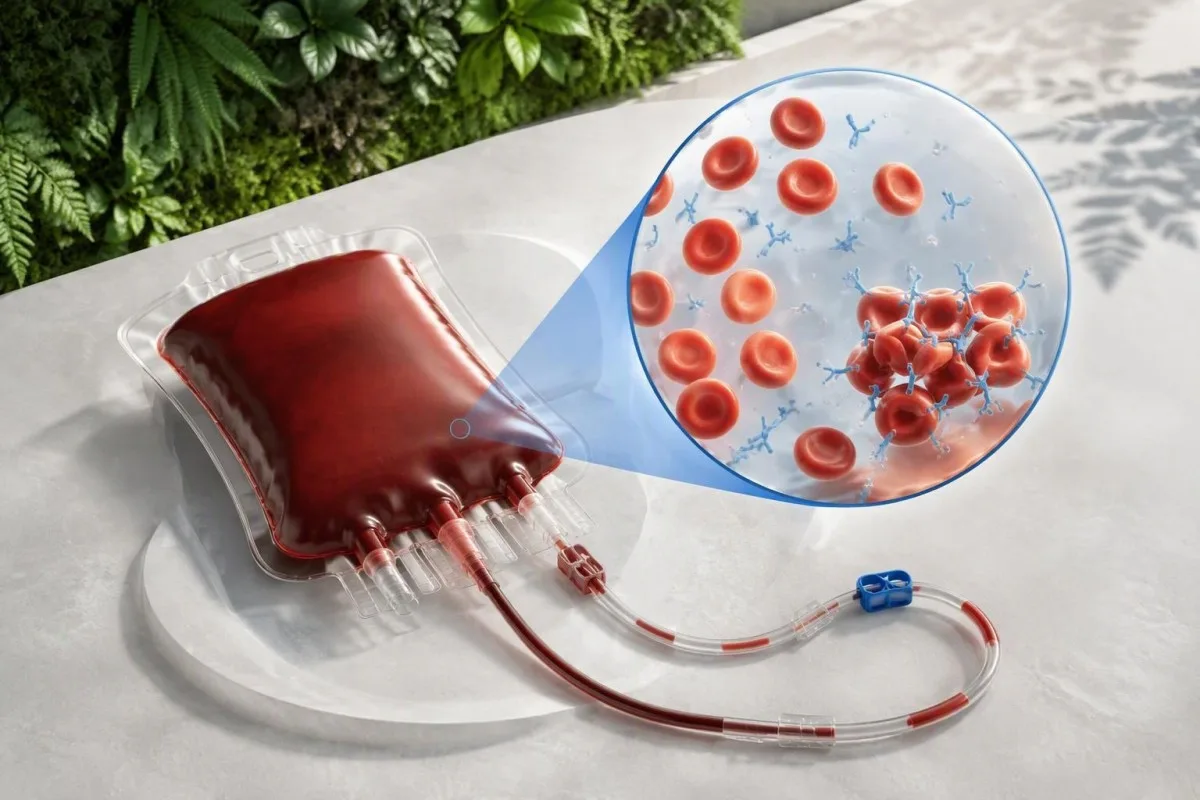
교차시험은 특정 공여자의 적혈구가 특정 수혈자에게 적합한지 확인합니다. ABO 및 Rh 혈액형 검사에 더해 적합성을 확인하지만, 모든 수혈 합병증을 예방할 수는 없습니다.



- 교차시험 특정 공여자와 수혈자의 조합을 확인합니다. 혈청학적 교차시험은 수혈자의 혈장을 공여자의 적혈구와 반응시켜 검사합니다.
- 세 가지 서로 다른 검사—혈액형 검사, 항체 선별검사, 교차시험—는 서로 다른 질문에 답하며 서로 대체할 수 없습니다.
- ABO 및 RhD 혈액형 일치 는 Kell, Kidd, Duffy 및 기타 Rh 항원을 포함한 다른 적혈구 항원에 대한 항체를 배제하지 않습니다.
- 교차시험 부적합 은 보통 선택된 혈액 단위를 조사하거나 교체해야 한다는 뜻이지, 환자가 수혈을 전혀 받을 수 없다는 뜻은 아닙니다.
- 과거에 확인된 항체 오늘날 항체 선별검사에서 음성으로 나오더라도 여전히 중요합니다. 과거에 확인된 모든 항체를 병원에 알리세요.
- 전자 교차시험 검체를 물리적으로 혼합하는 대신 검증된 검사실 소프트웨어를 사용합니다. 적용하려면 엄격한 검사실 기준을 충족해야 합니다.
- 검체 유효기간 은 최근 수혈 또는 임신 후 일반적으로 약 72시간으로 제한되지만, 현지 규정과 만료 시점 계산 방식은 다릅니다.
- 응급 수혈 치료 지연이 생명을 위협하는 경우 교차시험이 완료되기 전에 시작할 수 있습니다. O형 적혈구가 모든 항체에 보편적으로 적합한 것은 아닙니다.
- 새로운 증상 수혈 중이나 이후 며칠 동안 나타나는 증상, 특히 호흡곤란, 발열, 허리 통증, 황달 또는 짙은 색 소변은 신속한 임상 평가가 필요합니다.
교차시험은 실제로 무엇을 확인하나요?
A 교차시험 은 특정 공여자의 적혈구가 특정 수혈자와 적합한지 확인합니다. 검사실 교차시험에서는 수혈자의 혈장을 공여자 혈구와 반응시킵니다. 부적합 반응이 나타나면 추가 조사를 하고 보통 다른 혈액제제를 선택합니다. ABO 및 RhD 혈액형만 일치시켜서는 다른 적혈구 항원에 대한 항체를 배제할 수 없습니다.
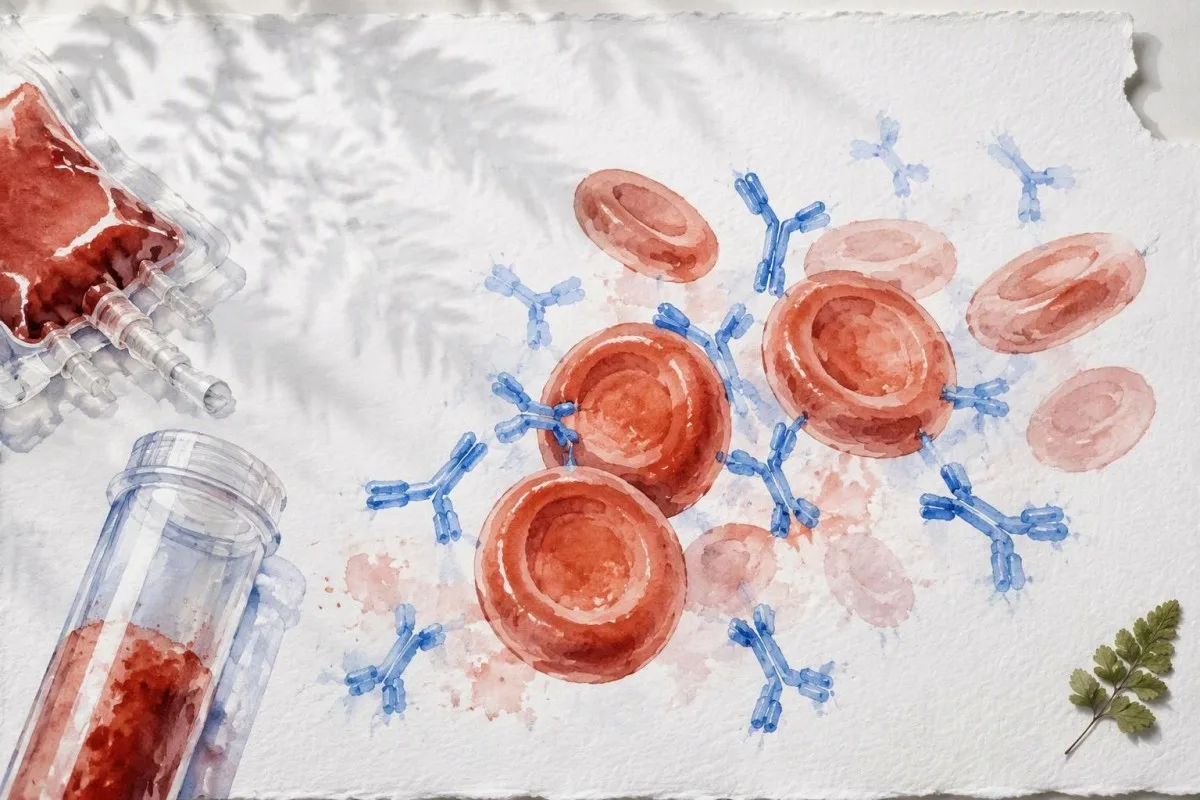
핵심 구분은 이 환자를 위한 이 혈액제제, 단순히 두 사람의 혈액형이 같은지를 확인하는 것이 아닙니다. A형 RhD 양성인 사람은 A형 RhD 양성 공여자의 혈액제제 하나에는 적합할 수 있지만, ABO 및 RhD 이외의 항원이 공여자마다 달라 다른 혈액제제와는 부적합할 수 있습니다.
적합 결과는 사용한 방법에 따라 필요한 적합성 검사에서 부적합 사유가 발견되지 않았다는 뜻입니다. 위험이 전혀 없다는 뜻은 아닙니다. 적혈구 적합성 검사 결과가 양호해도 알레르기 반응, 순환 과부하 및 일부 지연성 면역 반응이 발생할 수 있습니다.
중증 빈혈로 치료받는 58세 환자를 예로 들어 보겠습니다. 혈액은행에서 Kell K 항원에 대한 항체인 anti-K를 확인합니다. 실질적인 해결책은 단순히 ABO 혈액형이 같은 다른 혈액제제를 선택하는 것이 아니라, 적절한 혈액형 검사를 거친 K 음성 혈액제제를 선택해 필요한 적합성 검사를 통과시키는 것입니다.
MD인 Thomas Klein으로서 제 목표는 검사 결과지를 수혈 허가서로 바꾸지 않으면서 검사실의 판단을 이해하기 쉽게 설명하는 것입니다. Kantesti는 조직입니다 이 세 가지 검사 범주를 설명하는 데 도움이 되는 AI 혈액검사 분석기 뒤에 있는 조직입니다. 공여자 혈액제제 선택을 승인할 수 있는 곳은 담당 의료진과 수혈검사실뿐입니다.
혈액형 검사와 교차시험: 항체 선별검사는 어디에 해당하나요?
혈액형 검사 는 환자의 ABO 혈액형과 RhD 상태를 확인하며, 항체 선별검사(antibody screen) 결과가 양성이면 은 예상치 못한 적혈구 항체를 찾고, 항원(antigen) 는 선정된 공여자 혈액제제의 적합성을 평가합니다. 이들은 서로 관련된 세 가지 안전장치이지, 같은 검사를 가리키는 세 가지 명칭이 아닙니다.
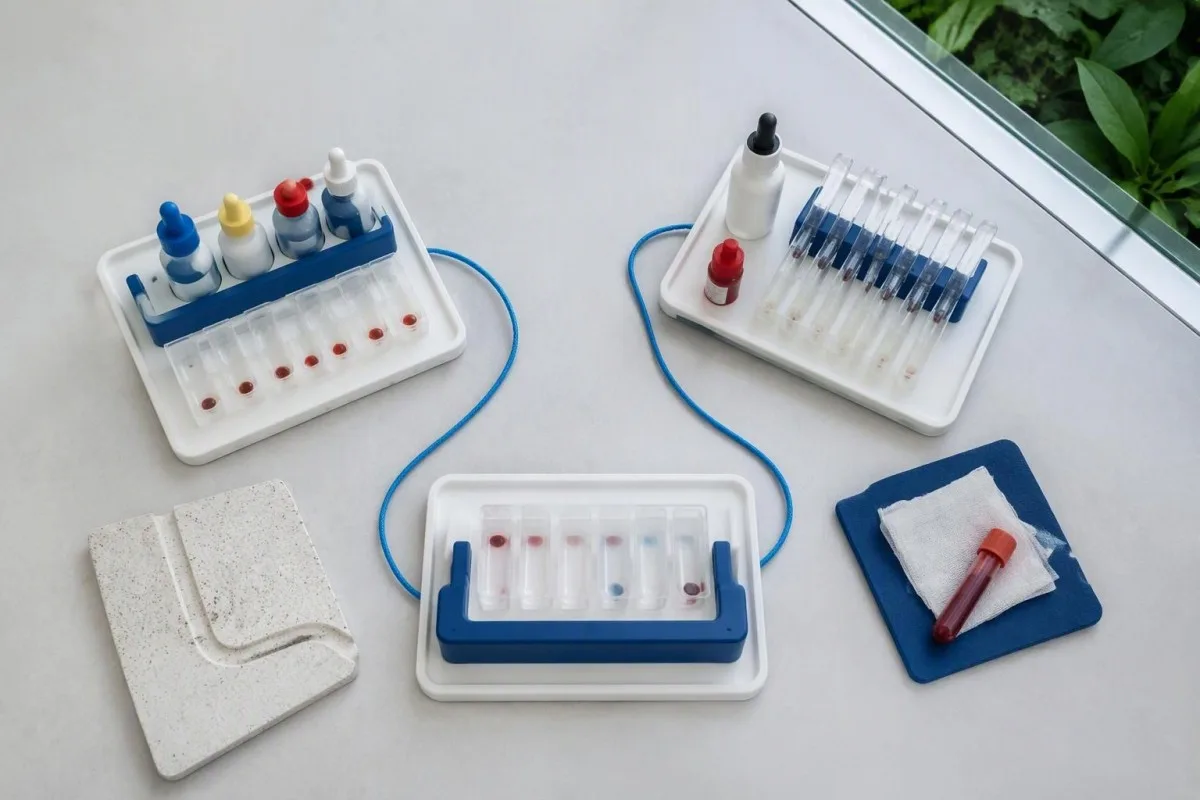
ABO 혈액형 검사는 보통 환자의 혈구를 검사하는 정방형 검사와 환자의 혈장을 검사하는 역형 검사를 포함합니다. 역형 검사가 적절한 경우 이 두 검사 결과는 일치해야 합니다. 결과가 일치하지 않으면 검사실에서 원인을 확인하는 동안 혈액 출고가 지연될 수 있습니다.
항체 선별검사에서는 수혈 대상 공여자의 적혈구 대신, 보통 2세포 또는 3세포 세트로 제공되는 선별 시약 적혈구를 사용합니다. 시약 적혈구에는 계획된 항원 조합이 있어, 사용 가능한 모든 혈액제제를 시험해 보는 대신 임상적으로 중요한 항체를 효율적으로 찾을 수 있습니다.
음성 선별검사로 모든 가능한 항체를 배제할 수는 없습니다. 예를 들어, 빈도가 낮은 항원에 대한 항체는 선별검사에 사용된 적혈구에는 해당 항원이 없더라도 그 항원을 가진 공여자와 반응할 수 있습니다. 이러한 차이는 왜 항체 검사 결과가 서로 다른 후속 조치를 필요로 하는지 설명하는 데 도움이 됩니다.
Milkins 등(2013)은 영국 적합성 검사 지침에서 혈액형 검사, 항체 검출, 공여자 적합성 검사 절차를 수혈 전 검사의 별도 항목으로 구분합니다. 따라서 혈액형 검사 및 항체 선별검사 또는 혈액형 및 선별검사(type and screen) 라고 표시된 의뢰가 자동으로 한 개 이상의 공여자 혈액제제가 이미 교차시험을 거쳤거나 따로 확보되었다는 뜻은 아닙니다.
ABO 및 RhD 혈액형을 맞추는 것만으로 충분하지 않을 수 있는 이유
ABO 및 RhD 를 일치시켜도 적혈구의 모든 항원이 일치하는 것은 아닙니다. Kell, Kidd, Duffy 또는 비-D Rh 항원에 대한 항체는 ABO형이 적합한 공여자 혈액이라도 부적합하게 만들 수 있으며, 특히 이전에 수혈을 받았거나 임신한 적이 있는 경우 그렇습니다. ABO 외 항원은 익숙한 혈액형이 일치하더라도 부적합을 유발할 수 있습니다.
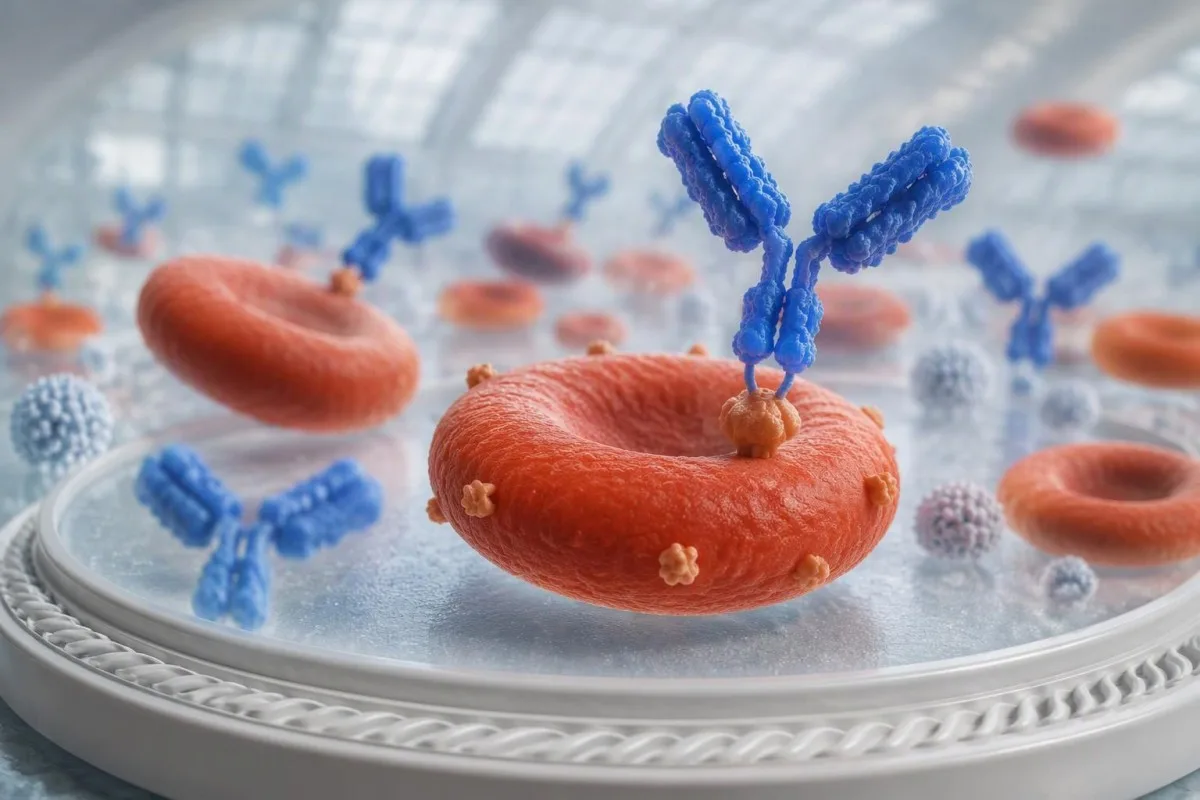
전체 Rh 체계가 아니라 RhD를 가리킵니다. D 양성인 두 사람도 C, c, E, e 항원이 서로 다를 수 있습니다. 수혈자에게 anti-E가 있으면 수혈자와 공여자가 모두 양성으로 표시되더라도 E 음성 적혈구가 필요할 수 있습니다., 과거의 항원 노출은 오늘날 검사 결과의 해석을 바꿉니다. 12년 전에 받은 수혈로 임상적으로 중요한 항체가 생겼다면 여전히 고려해야 합니다. 항체 농도는 나중에 선별검사의 검출 한계 아래로 떨어질 수 있지만 면역 기억은 남아 있을 수 있기 때문입니다.
Blood에 발표한 Tormey와 Hendrickson(2019)은 항체 소실과 불완전한 수혈 기록이 지연성 용혈 반응에 영향을 준다고 설명합니다. 위험한 경과는 현재 선별검사에서 음성으로 보인 뒤 해당 항원에 다시 노출되고 항체 반응이 재개되는 것이며, 반드시 검사 결과를 잘못 판독한 것은 아닙니다.
B 음성만 기재된 혈액형 카드는 공여자 선택에 영향을 미칠 수 있는 정보를 빠뜨립니다. 당사의.
혈액형 및 혈액학 안내서 는 혈액형 표기와 적혈구 회전율 지표를 구분합니다. LDH 수치나 망상적혈구 수치만으로는 어떤 공여자 항원을 피해야 하는지 알 수 없습니다. 혈청학적 교차시험은.
검사실 교차시험은 어떻게 시행되나요?
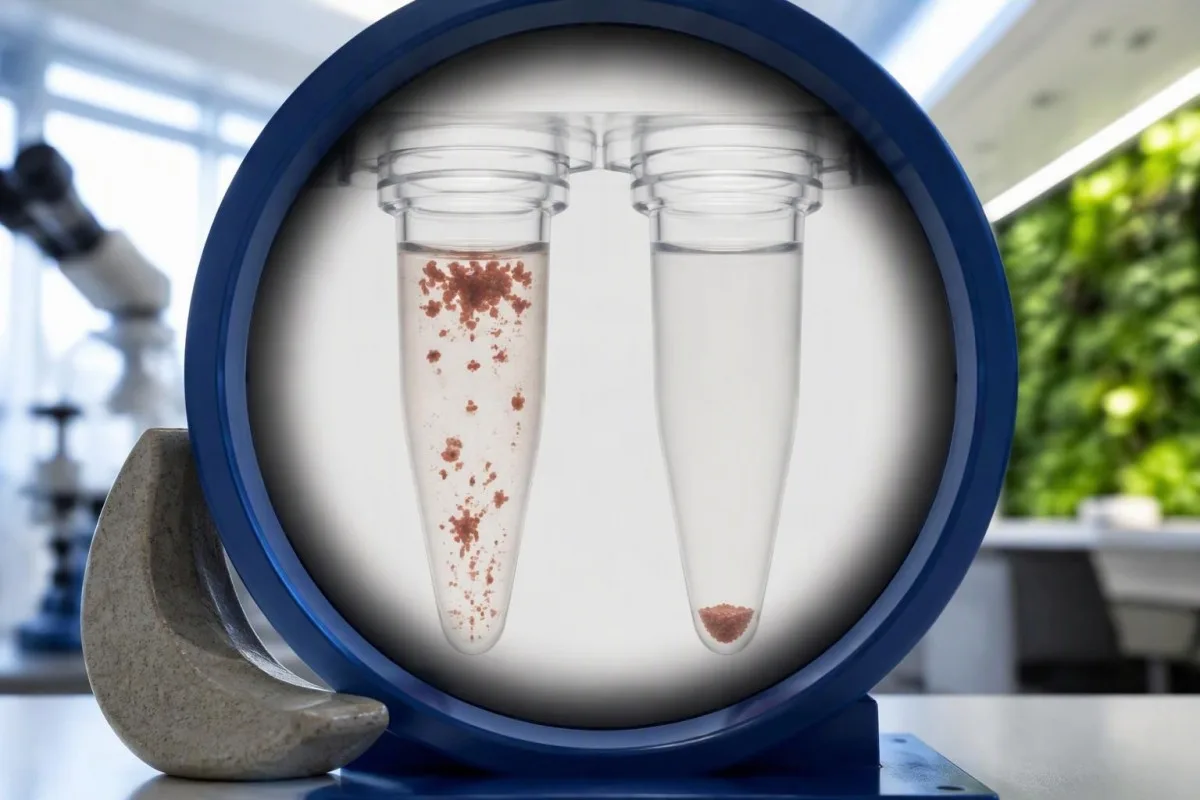
A 수혈자의 혈장 또는 혈청을 선택한 공여자 혈액제제의 적혈구와 반응시켜 검사합니다. 환자의 항체 검사 결과와 검사실 절차에 따라 임상적으로 중요한 항체를 검출하도록 설계된 신속 즉시 원심분리법 또는 간접 항글로불린법을 포함할 수 있습니다. 공여자 혈액제제의 적혈구와 수혈자의 혈장은 임상적 위험에 맞춰 선택된 방법으로 검사합니다.

즉시 원심분리 교차시험은 주로 ABO 부적합을 확인하며, 정해진 검사실 기준을 충족하는 경우에만 적합합니다. 임상적으로 중요한 IgG 항체를 조사해야 하거나 이전에 확인한 적이 있는 경우에는 항글로불린 교차시험을 대신할 수 없습니다.
간접 항글로불린 교차시험에는 일반적으로 약.
정도의 배양이 포함됩니다. 37°C, 체온에 가까운 온도에서. 겔, 컬럼 응집, 고상 및 시험관법은 작동 특성이 서로 다릅니다. 검사실은 모든 방법을 서로 바꿔 쓸 수 있는 것으로 취급하지 않고 검증된 검사 체계 내에서 반응을 해석합니다.
교차시험은 일반적으로 정성적 적합성 결과, 이며, mg/dL 단위의 정상 범위를 가진 농도값이 아닙니다. 반응 강도를 등급화할 수 있지만, 약한 반응이라고 해서 자동으로 무해한 것은 아닙니다. 항체 특이성, 반응 온도 및 전체 검사 결과를 종합해 그 의미를 판단합니다.
전자 교차시험이란 무엇이며, 언제 허용되나요?
안 전자 교차시험은 검증된 혈액은행 소프트웨어를 사용해 수혜자 혈장과 헌혈자 세포를 물리적으로 혼합하지 않고 적합성을 확인합니다. 일반적으로 적절한 음성 항체 선별검사 결과가 있고, 임상적으로 유의한 항체의 병력이 없으며, 혈액형 결과가 만족스럽게 검증된 환자에게만 시행합니다.
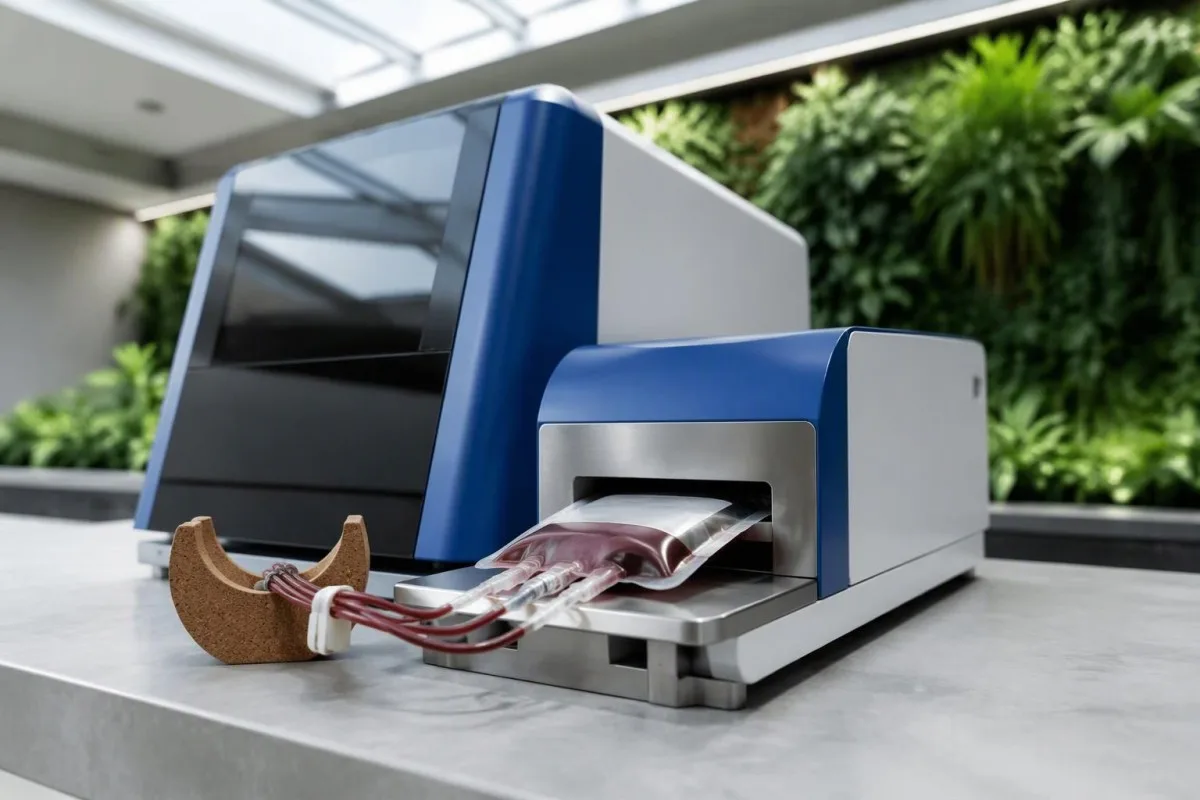
전자 교차시험은 항체 검사를 우회하는 지름길이 아닙니다. 소프트웨어는 기록된 환자 혈액형과 선택된 혈액제제를 대조하고 출고 규칙을 적용하며, 환자가 대상에 해당하는지는 검사실 절차로 확인합니다. 현재 항체 선별검사 결과가 음성이라고 해서 과거의 anti-K 또는 anti-Jka가 없어지는 것은 아닙니다.
신뢰할 수 있는 과거 혈액형 정보가 없는 경우, 많은 의료기관에서는 통상적인 전자 출고 전에 ABO 결과를 서로 독립적으로 두 번 확인하도록 요구합니다. 두 번째 판정에 별도의 채혈이 필요한지는 현지 정책과 환자 확인 안전장치에 따라 다르므로, 추가 검체 요청은 중복이 아니라 의도적인 보호 조치일 수 있습니다.
이전 검사가 완료되면 적격 혈액제제를 몇 분 이내에 출고할 수 있는 경우도 있습니다. 그러나 이 시간은 검체 채취, 운송, 혈액형 검사, 항체 선별, 불일치 해결 및 요청한 혈액제제의 준비 과정 전체가 아니라 출고 단계만을 가리킵니다.
Kantesti의 의학적 검증 정보 당사의 해석 서비스에 관한 내용이지, 병원 혈액은행 시스템의 검증에 관한 내용은 아닙니다. 이는 별개의 책임입니다. 설명을 제공하는 AI는 전자 교차시험을 수행하거나 혈액제제를 확보하거나 검사실의 출고 관리를 대체할 수 없습니다. 이는 당사의 검사 보고서 설명 안전 가이드에서도 강조하는 내용입니다.
교차시험 부적합의 의미: 결과는 무엇을 시사하나요?
안 부적합 교차시험은 선택된 헌혈자와 수혜자의 조합이 필수 적합성 평가를 통과하지 못했음을 의미합니다. ABO 문제, 헌혈자 항원에 대한 항체, 자가항체, 약물 간섭 또는 기타 검사상의 문제를 반영할 수 있지만, 그 자체로 원인을 밝혀 주거나 활동성 용혈을 입증하지는 않습니다.
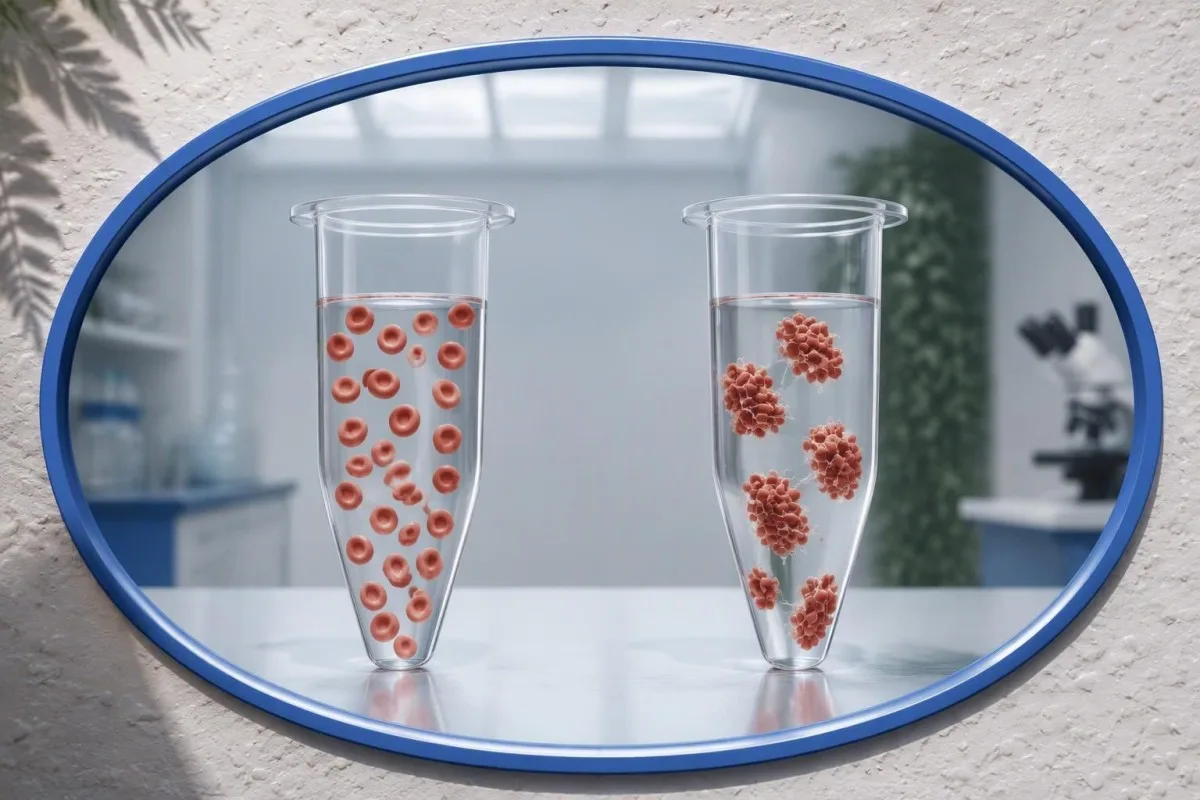
한 헌혈자 혈액제제에서만 나타난 반응은 그 헌혈자가 보유한 항원을 시사할 수 있는 반면, 여러 혈액제제에서 나타난 반응은 다른 가능성을 제기합니다. 검사실은 이러한 양상을 구분하기 위해 항체 선별검사, 항체 동정 패널, 환자 병력 및 경우에 따라 자가대조검사 결과를 비교합니다.
자가대조검사는 환자 혈장을 환자 자신의 세포와 반응시키며, 직접 항글로불린 검사, 또는 DAT는 해당 세포에 항체나 보체가 이미 부착되어 있는지 확인합니다. 어느 검사도 헌혈자 교차시험과 같지 않으며, 양성 쿠움스 검사 결과 이것만으로 임상적으로 유의한 용혈이 확정되는 것은 아닙니다.
약 37°C에서의 반응성은 더 낮은 온도에서만 나타나는 반응보다 적혈구 수혈에서 더 중요할 때가 많지만, 온도만으로 판단을 완결할 수는 없습니다. 냉반응성 항체, 온난 자가항체 및 기저 동종항체를 구분하려면 전문의가 추가 검사법을 시행해야 할 수 있습니다.
겉으로 보이는 모든 응집 덩어리가 면역 응집을 나타내는 것은 아닙니다. 혈장 단백질이 증가하면 세포 검사에서 연전 형성이 나타날 수, 있으며, 기술적 문제도 해석을 어렵게 할 수 있습니다. 따라서 보고서는 추가 검사로 이어져야 하며, 환자가 반응성이 가장 낮은 혈액백을 직접 선택하게 해서는 안 됩니다.
혈액은행은 어떻게 다른 공여자 혈액 단위를 선택하나요?
교차시험 부적합 후 혈액은행은 원인을 확인하고 환자의 항원 요건과 적합성 기준에 맞는 적혈구를 선정합니다. 임상적으로 유의한 동종항체가 원인인 경우, 일반적인 접근법은 antigen-negative donor blood followed by the appropriate crossmatch.
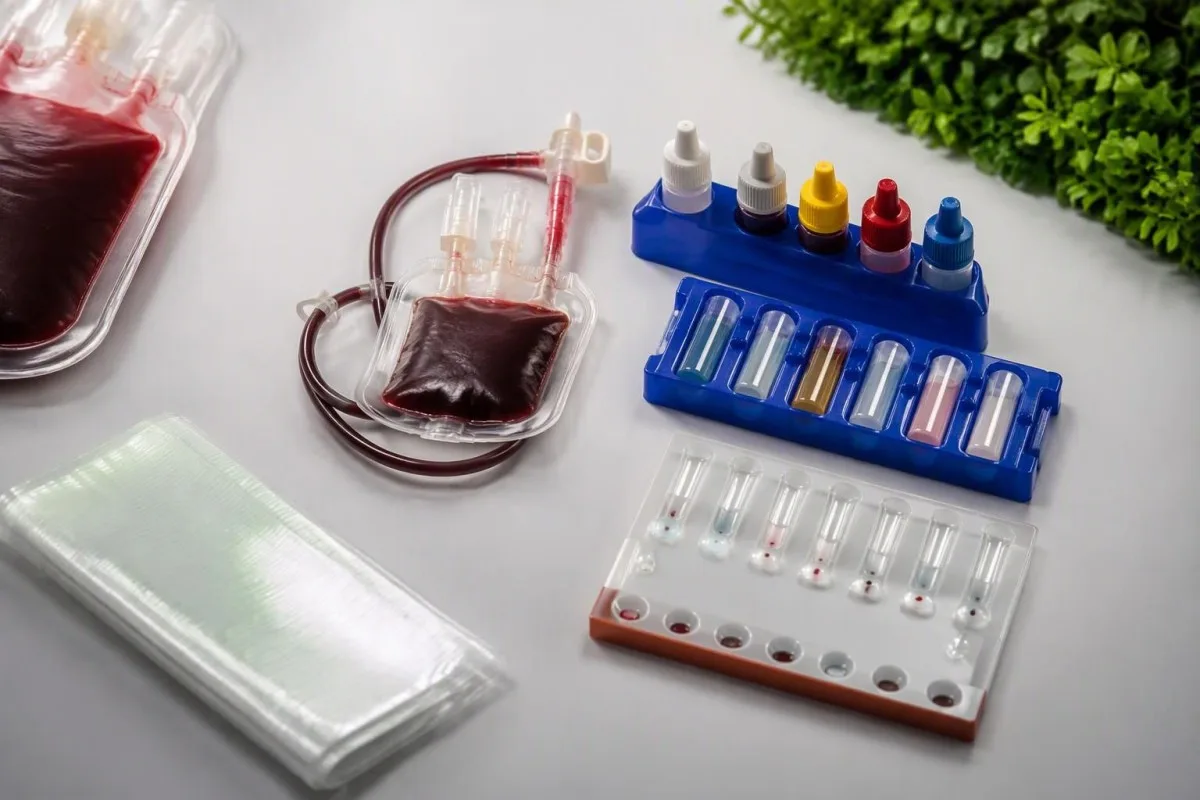
For a recipient with anti-K, the laboratory searches for K-negative units; for anti-Jka, it searches for Jka-negative units. If the patient has two or more clinically significant antibodies, each relevant antigen requirement must be considered, which can shrink the available donor pool substantially.
ABO-compatible blood does not always have to be ABO-identical, but any substitution follows the laboratory’s component-selection rules. Switching an A-positive patient to O-positive red cells does not solve anti-K incompatibility unless the selected O-positive unit also lacks the K antigen.
Patients receiving repeated transfusions may benefit from extended antigen typing or genotyping before future requirements become complicated. Someone with myelodysplastic syndrome who has received 20 units presents a different planning problem from someone needing a first transfusion, although unit count alone cannot predict whether antibodies have formed.
When a warm autoantibody makes many units react, the priority is excluding clinically significant alloantibodies and selecting appropriately matched blood—not simply finding the weakest reaction. The phrase least incompatible can be misleading; urgent release decisions belong to the transfusion specialist and treating clinician, with the residual uncertainty explicitly documented.
교차시험에는 얼마나 걸리며, 새 검체가 필요한 이유는 무엇인가요?
Straightforward compatibility testing may take approximately 30–60 minutes after the laboratory receives a suitable sample, but antibody investigations can take hours or longer. A new sample may be required because identification checks, recent transfusion, pregnancy history, or local sample-expiry rules make the previous sample unsuitable.
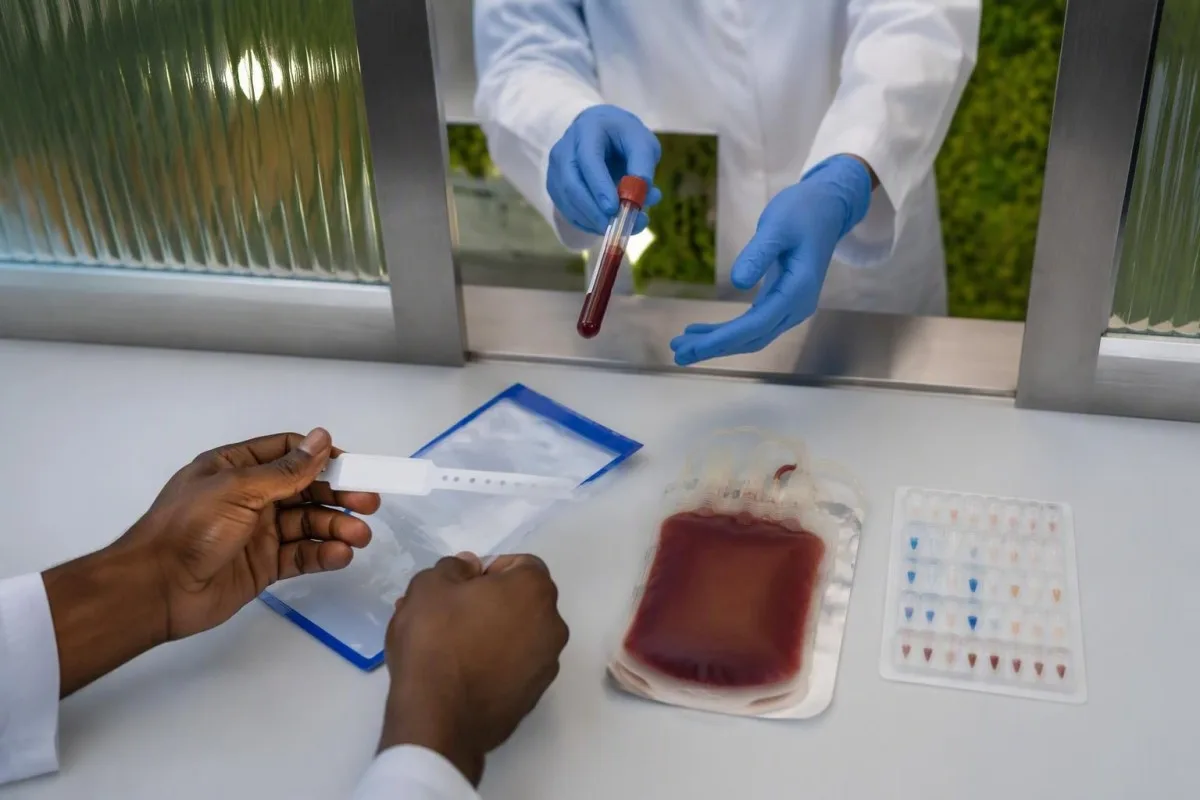
The commonly encountered 72-hour rule is about detecting newly developing antibodies after recent exposure, not about how long a tube can physically remain intact. Milkins et al. (2013) recommend restricted sample validity for patients transfused or pregnant within the preceding three months; exact expiry calculations follow local policy.
Three days and exactly 72 elapsed hours are not always operationally identical. Some services calculate expiry using the collection day and a specified midnight cutoff, while other jurisdictions use different intervals; ask the blood bank for the actual expiry timestamp rather than estimating it yourself.
Identification problems can stop testing even when the laboratory sample looks perfectly usable. A mismatch between the wristband, request, and sample label requires resolution because a technically compatible result from the wrong patient’s sample offers no protection to the intended recipient.
Hemolysis and other sample-quality problems may also trigger recollection, although acceptance depends on the test method and local procedures. Our 용혈 후 반복 검사 explains why a redraw can protect interpretation; a repeat collection is not evidence that the donor blood itself is incompatible.
환자는 수술이나 예정된 수혈 전에 무엇을 알려야 하나요?
Before planned transfusion, tell the team about previous transfusions, pregnancies, known red-cell antibodies, and transfusion reactions. These details can change the sample schedule and donor-unit requirements even when the current antibody screen is negative.

An old antibody card can save hours of investigation if it identifies the antibody precisely. Bring the original report when possible, including the hospital name and approximate year; a statement such as “my blood was difficult to match in 2014” is useful, but “anti-E identified in 2014” is much more actionable.
Pregnancy can expose the maternal immune system to red-cell antigens that differ from her own. A positive pregnancy antibody screen may therefore influence both pregnancy monitoring and future transfusion selection; anti-D following prophylactic immunoglobulin also needs interpretation in its timing and clinical context.
A preoperative group-and-screen sample collected several weeks ahead may identify an antibody early, yet a fresh sample can still be needed close to surgery. These two collections serve different purposes: the first allows planning, and the second meets current compatibility and sample-validity requirements.
Treating the cause of anemia can reduce the likelihood of transfusion, but it does not replace compatibility testing when transfusion becomes necessary. A patient with 과다월경출혈 and hemoglobin of 8.5 g/dL needs assessment of symptoms, ongoing losses, and iron deficiency—not an automatic transfusion based on that number alone.
교차시험이 끝나기 전에 응급 수혈을 시작할 수 있나요?
Emergency red-cell transfusion can begin before crossmatching is complete when waiting would create a greater immediate danger. The team may initially use uncrossmatched group O red cells, then change to appropriately selected group-specific blood as reliable laboratory information becomes available.
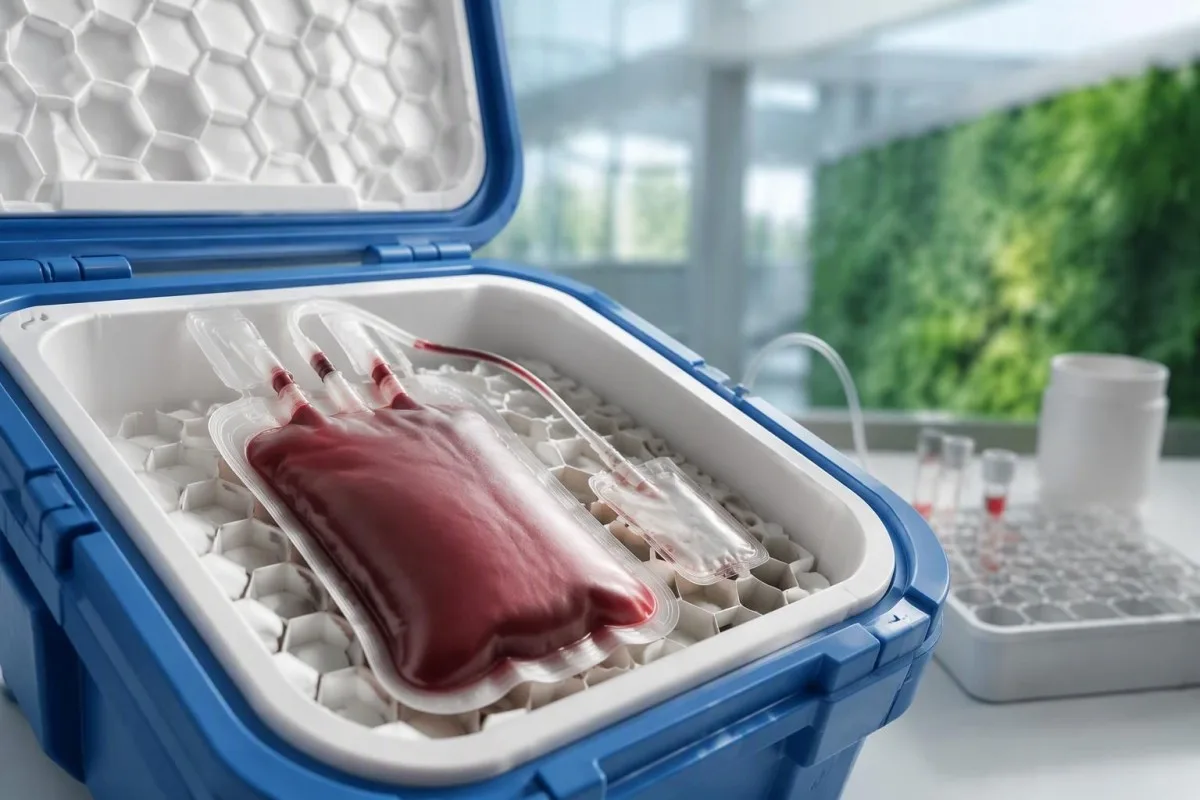
Group O red cells lack A and B antigens, but they can still carry Kell, Kidd, Duffy, and Rh antigens. Consequently, an O-negative unit is not universally compatible with every recipient who has an unexpected antibody; the word universal is an oversimplification outside ABO and RhD discussions.
O-negative red cells are often prioritized when avoiding D exposure is especially important, including certain patients with future pregnancy potential. Other patients may receive O-positive emergency red cells under local policy, balancing clinical urgency, sensitization risk, and the finite supply of O-negative donations.
A pretransfusion patient sample should be collected before the first unit when feasible without delaying resuscitation. Donor cells can complicate later grouping or antigen typing, while the pretransfusion sample preserves a clearer view of the recipient’s original cells and antibodies.
Major bleeding may require more than red cells: plasma, platelets, and fibrinogen replacement address different problems. Our DIC 검사실 소견 양상 그리고 응고검사 가이드 explain these separate assessments; passing a red-cell crossmatch does not correct a platelet count of 30 × 10⁹/L or a depleted fibrinogen concentration.
추가 혈액형 일치 검사나 전문 적합성 검사가 필요한 사람은 누구인가요?
다음과 같은 환자들입니다. sickle cell disease, multiple antibodies, warm autoantibodies, or certain antibody-based treatments may need additional compatibility procedures. Neonates also require a different approach because maternal antibodies and the infant’s age affect which tests are informative.
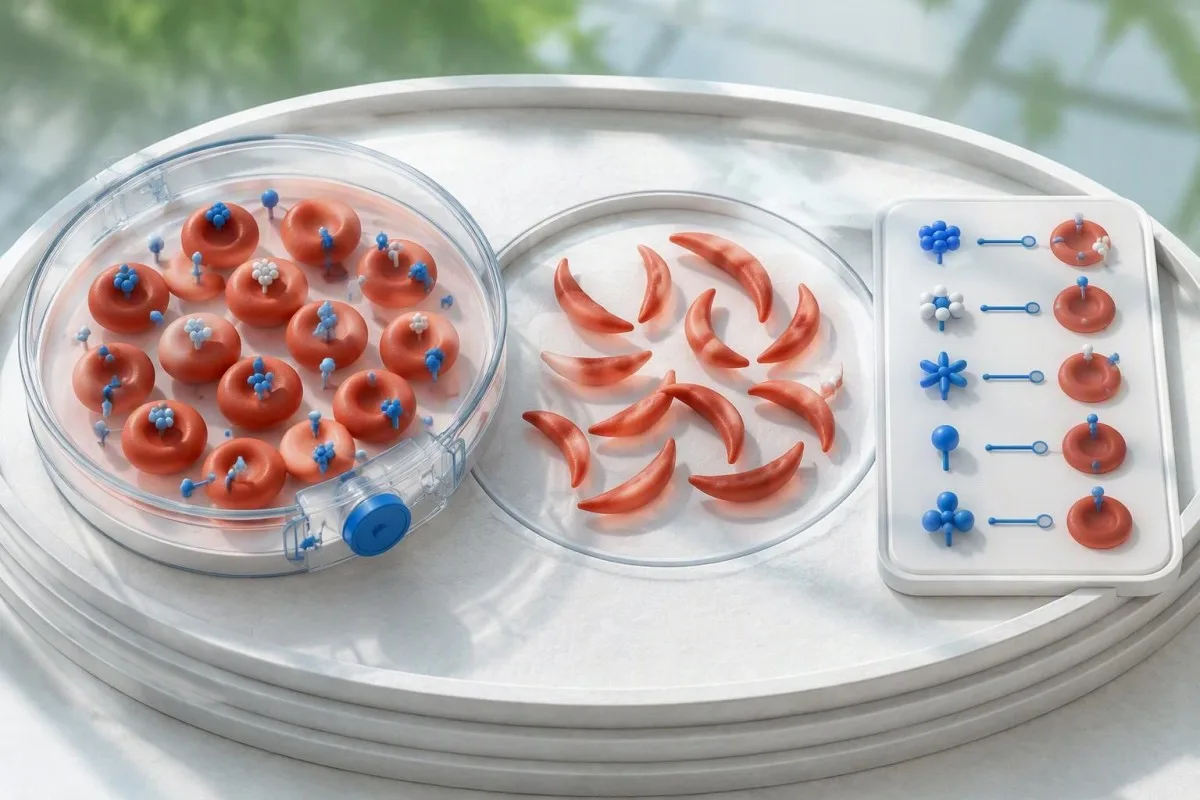
Chou et al. (2020), in the American Society of Hematology guideline, recommend prophylactic Rh C/E and K matching for patients with sickle cell disease receiving transfusions. An extended antigen profile, preferably obtained before the first transfusion, helps plan sickle cell transfusion care rather than waiting for an antibody to appear.
Recent donor cells can complicate serological phenotyping, so genotyping may provide useful additional information about the recipient’s antigen profile. Transfusion also affects hemoglobin fraction interpretation, meaning an HbS percentage measured after two donor units is not directly comparable with the patient’s untreated baseline.
Daratumumab, an anti-CD38 treatment, can cause widespread reactivity in indirect antiglobulin testing. Laboratories may use methods such as dithiothreitol treatment to reduce interference, but that treatment also affects certain antigens, including Kell; the medication history therefore changes both investigation and donor-selection precautions.
Infants younger than approximately four months often have transfusion-testing procedures that account for maternal antibodies and limited infant antibody production. Kantesti is an AI blood test interpretation platform that can explain these distinctions, but an adult compatibility pathway should never be assumed to apply unchanged to a newborn.
적합 판정을 받은 교차시험 후에도 어떤 문제가 발생할 수 있나요?
A compatible crossmatch does not rule out every transfusion reaction. It reduces particular red-cell incompatibility risks, but allergic reactions, transfusion-associated circulatory overload, lung injury, and delayed hemolysis require separate clinical monitoring.
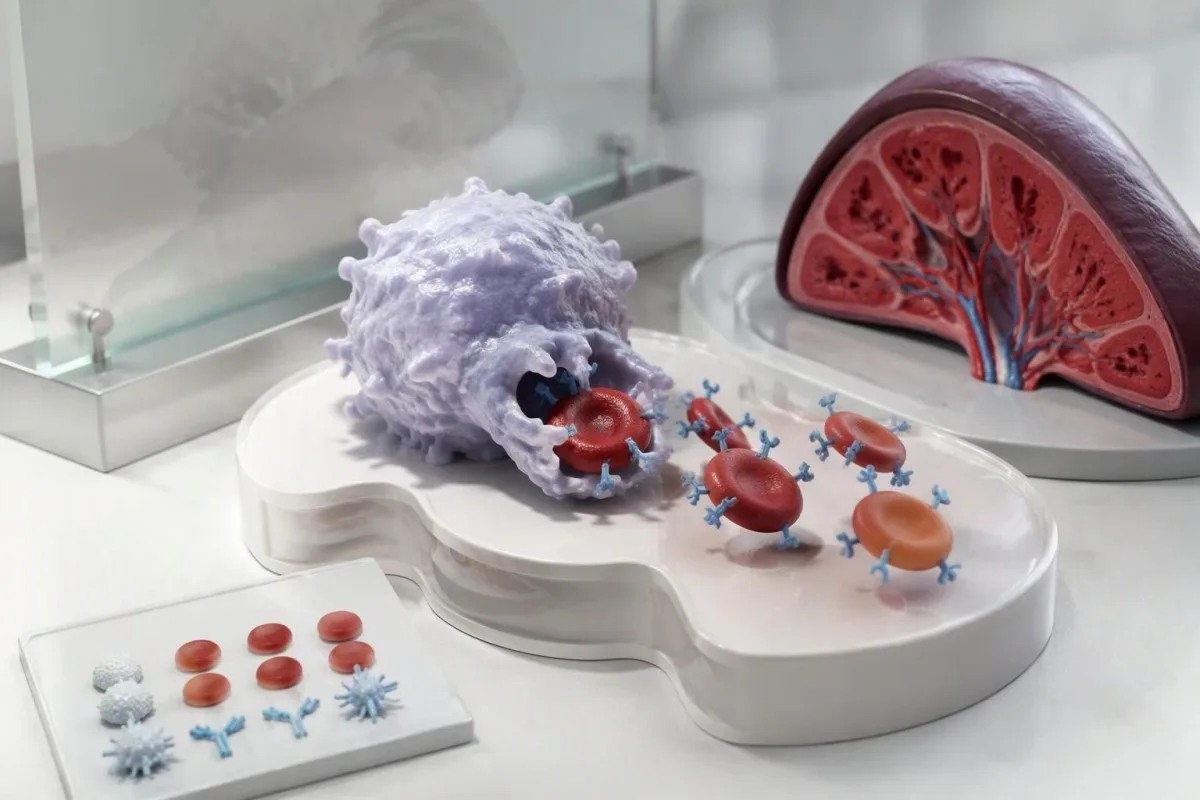
Symptoms during transfusion—including fever, chills, breathlessness, chest or back pain, or an unexpected blood-pressure change—should be reported immediately. Staff may stop the transfusion, reassess the patient, recheck identity and component details, and arrange laboratory investigations; a previously compatible result must not dismiss new symptoms.
Delayed hemolytic reactions often become apparent several days after transfusion, although timing varies and can extend over subsequent weeks. Falling hemoglobin, jaundice, dark urine, rising LDH, and reduced haptoglobin can support investigation, but low haptoglobin has other causes and is not diagnostic by itself.
For an adult without ongoing bleeding or major fluid shifts, one red-cell unit commonly raises hemoglobin by about 1 g/dL, 이는 10 g/L. A smaller increase needs context: continued losses, fluid dilution, sampling timing, or hemolysis can each explain it, so the team should not jump directly to an incompatible-transfusion diagnosis.
LDH is a marker of cell injury rather than a donor-compatibility measurement. An LDH result and its causes must be considered alongside bilirubin, haptoglobin, reticulocytes, DAT findings, and the hemoglobin trend; no single number can reconstruct the entire transfusion reaction.
교차시험 결과지를 어떻게 읽고 유용한 질문을 하려면 어떻게 해야 하나요?
Read a crossmatch report as a decision about a specified donor unit, method, and sample—not as a general certificate that all donor blood is safe for you. Ask whether antibodies were found, whether historical antibodies were checked, and whether the proposed unit meets any antigen-negative requirements.

Three practical questions are: “Was my antibody screen negative?”, “Do I have a clinically significant antibody now or in my history?”, and “Is this unit compatible using the method appropriate for me?” If the report says pending, incompatible, or emergency release, ask the team to explain what remains unresolved and why the chosen timing is appropriate.
Kantesti is an AI-powered blood test analysis tool that can help explain uploaded laboratory wording and associated anemia results. Our AI 기술 가이드 describes the interpretation process; it does not establish that a donor unit is compatible, verify bedside identity, or make a transfusion-release decision.
Transfusion dates also matter when reviewing later laboratory trends. For example, 수혈 후 HbA1c can be misleading because the measured red-cell population now includes donor cells; recording the date and number of units helps a clinician decide which follow-up measurements remain useful.
My advice here, as Thomas Klein, MD, is to preserve the original transfusion and antibody records rather than relying only on a simplified explanation. If using Kantesti to understand them, consider removing identifiers you do not need to share and read our 개인정보 및 데이터 관련 정보를 확인하고; explainable results and responsible handling are separate concerns.
연구 간행물 및 적합성 검사를 뒷받침하는 근거
The clinical recommendations in this article are supported by transfusion-specific guidelines and peer-reviewed literature, not by a general blood-test guide alone. As of 2026년 10월 25일, the distinction between compatibility testing, antibody history, and clinical monitoring remains fundamental; individual hospitals must apply their current validated procedures.
Milkins et al. (2013) provide the compatibility-testing framework; Tormey and Hendrickson (2019) explain antibody formation, disappearance, and clinical consequences; Chou et al. (2020) address additional matching in sickle cell disease. These three external references directly support the clinical discussion and are listed separately from the two repository publications below.
Nipah virus blood test: Early detection & diagnosis guide 2026. (n.d.). Zenodo. https://doi.org/10.5281/zenodo.18487418. This supplied repository reference concerns a different diagnostic topic and is not evidence for transfusion compatibility; its ResearchGate 제목 검색 그리고 Academia 제목 검색 는 확인되지 않은 간행물 사본이 아니라 검색을 위한 링크입니다.
B negative blood type, LDH blood test & reticulocyte count guide. (n.d.). Figshare. https://doi.org/10.6084/m9.figshare.31333819. This supplied reference offers adjacent blood-group and hematology context rather than a compatibility-testing guideline; its ResearchGate 논문 검색 그리고 Academia 논문 검색 should likewise be treated as searches rather than confirmed hosted versions.
The two repository entries use title-first APA-style citations because verified author and publication-date metadata were not supplied; readers should check the DOI landing pages before reusing those details. Kantesti’s 의료 콘텐츠 표준 distinguish explanatory material from clinical authorization: an educational article cannot override the blood bank’s compatibility investigation or an urgent bedside decision.
자주 묻는 질문
수혈 전 교차시험이란 무엇인가요?
교차시험은 선택된 공여자의 적혈구가 특정 수혈자와 적합한지 평가합니다. 혈청학적 교차시험은 수혈자의 혈장을 공여자 혈구와 검사하는 반면, 적격 전자 교차시험은 검증된 검사실 소프트웨어와 확인된 검사 결과를 사용합니다. 항글로불린법에는 임상적으로 유의한 항체를 검출하는 데 도움이 되도록 약 37°C에서 검사하는 방법이 흔히 포함됩니다. 교차시험은 선택된 혈액제제에 관한 검사이며, 환자에게 수혈이 필요한지 결정하거나 모든 수혈 위험을 없애는 것은 아닙니다.
혈액형 검사, 항체 선별검사, 교차시험은 어떤 차이가 있나요?
혈액형 검사는 ABO 혈액형과 RhD 상태를 확인하고, 항체 선별검사는 예상치 못한 적혈구 항체를 찾으며, 교차시험은 선택된 공혈자 혈액 단위를 평가합니다. 이 세 가지 검사는 서로 다른 질문에 답하므로 서로 대체할 수 없습니다. 항체 선별검사에는 일반적으로 예정된 공혈자의 세포가 아니라 2종 또는 3종의 시약 세포가 사용됩니다. 따라서 혈액형 검사와 항체 선별검사를 시행한 결과가 나왔다고 해서 공혈자 혈액 단위의 교차시험이 이미 완료되었거나 해당 혈액이 확보되었다는 뜻은 아닙니다.
교차시험 부적합은 무엇을 의미하나요?
부적합 교차시험 결과는 선정된 공혈자와 수혈자 조합이 필수 적합성 평가를 통과하지 못했음을 의미합니다. 가능한 원인으로는 ABO 부적합, 공혈자 항원에 대한 항체, 자가항체, 약물 간섭 또는 기술적 문제가 있습니다. 한 단위의 공혈 혈액에서 나타난 반응은 여러 단위에서 나타난 반응과 원인이 다를 수 있습니다. 혈액은행은 반응 양상을 조사하고 적절히 적합한 혈액을 선정합니다. 이 결과가 환자가 수혈을 절대 받을 수 없다는 뜻은 아닙니다.
ABO형과 Rh형이 일치해도 교차시험에서 부적합으로 나올 수 있나요?
ABO 및 RhD 혈액형이 일치하더라도 공여자 적혈구에 추가 항원이 있어 교차시험 결과가 부적합할 수 있습니다. 예를 들어, 항-K 항체가 있는 A형 RhD 양성 수혈자에게 K 항원을 보유한 A형 RhD 양성 공여자 혈액 제제를 수혈하면 반응이 일어날 수 있습니다. 10년 전에 확인된 임상적으로 중요한 항체는 오늘 항체 선별검사 결과가 음성이더라도 혈액 제제 선택에 계속 영향을 미칠 수 있습니다. 과거 항체 기록은 혈액은행이 해당 항원이 없는 혈액 제제를 선택하고 재노출을 방지하는 데 도움이 됩니다.
교차시험은 얼마나 걸리며, 검체는 얼마나 오래 유효한가요?
적합한 검체가 검사실에 도착한 후 일반적인 적합성 검사는 약 30~60분이 걸릴 수 있지만, 항체 검사는 몇 시간 이상 걸릴 수 있습니다. 모든 적격성 확인이 완료되면 전산 출고가 더 빠를 수 있습니다. 최근 수혈 또는 임신 후 검체의 유효기간은 일반적으로 약 72시간으로 제한되지만, 지역별 기간과 만료 시각 계산 방식은 다릅니다. 실제 만료 시각과 새 검체가 필요한지 여부는 혈액은행에 확인할 수 있습니다.
응급 상황에서 교차시험 없이 O형 Rh 음성 혈액을 수혈해도 안전한가요?
수혈을 지연하는 것이 더 위험한 생명 위협 응급 상황에서는 교차시험을 거치지 않은 O RhD 음성 적혈구를 사용할 수 있습니다. 이 적혈구에는 A, B, D 항원이 없지만 수혈받는 사람의 항체가 표적으로 삼는 다른 항원이 있을 수 있습니다. 현지 지침에 따라 일부 환자에게는 응급 O RhD 양성 적혈구도 사용할 수 있습니다. 치료를 지연하지 않고 가능하다면 첫 번째 혈액 단위를 수혈하기 전에 환자 검체를 채취해야 하며, 소생술 중에도 적합성 검사는 계속 진행합니다.
오늘 AI 기반 혈액검사 분석 받기
즉시 정확한 검사 분석을 위해 Kantesti를 신뢰하는 전 세계 200만 명 이상의 사용자와 함께하세요. 혈액검사 결과를 업로드하고 몇 초 만에 15,000+ 바이오마커에 대한 포괄적인 해석을 받아보세요.
📚 참고된 연구 출판물
Klein, T., Mitchell, S., & Weber, H. (2026). 니파 바이러스 혈액 검사: 조기 발견 및 진단 가이드 2026. Kantesti AI 의학 연구.
Klein, T., Mitchell, S., & Weber, H. (2026). B형 혈액형, LDH 혈액검사 및 망상적혈구 수(레티큘로사이트) 가이드. Kantesti AI 의학 연구.
📖 외부 의학 참고문헌
Milkins C et al. (2013). Guidelines for pre-transfusion compatibility procedures in blood transfusion laboratories. 수혈의학(Transfusion Medicine).
Tormey CA and Hendrickson JE (2019). Transfusion-related red blood cell alloantibodies: induction and consequences. 혈액.
Chou ST et al. (2020). American Society of Hematology 2020 guidelines for sickle cell disease: transfusion support. Blood Advances.


⚕️ 의료 면책 조항
이 글은 교육 목적만을 위한 것이며 의학적 조언을 구성하지 않습니다. 진단 및 치료 결정에는 항상 자격을 갖춘 의료 전문가와 상담하세요.
E-E-A-T 신뢰 신호
경험
의사가 주도하는 검사 해석 워크플로 임상 검토.
전문적 지식
임상 맥락에서 바이오마커가 어떻게 거동하는지에 대한 검사실 의학 중심.
권위
Dr. Thomas Klein이 작성했으며 Dr. Sarah Mitchell과 Prof. Dr. Hans Weber가 검토했습니다.
신뢰성
경고를 줄이기 위한 명확한 후속 경로가 포함된 근거 기반 해석.
