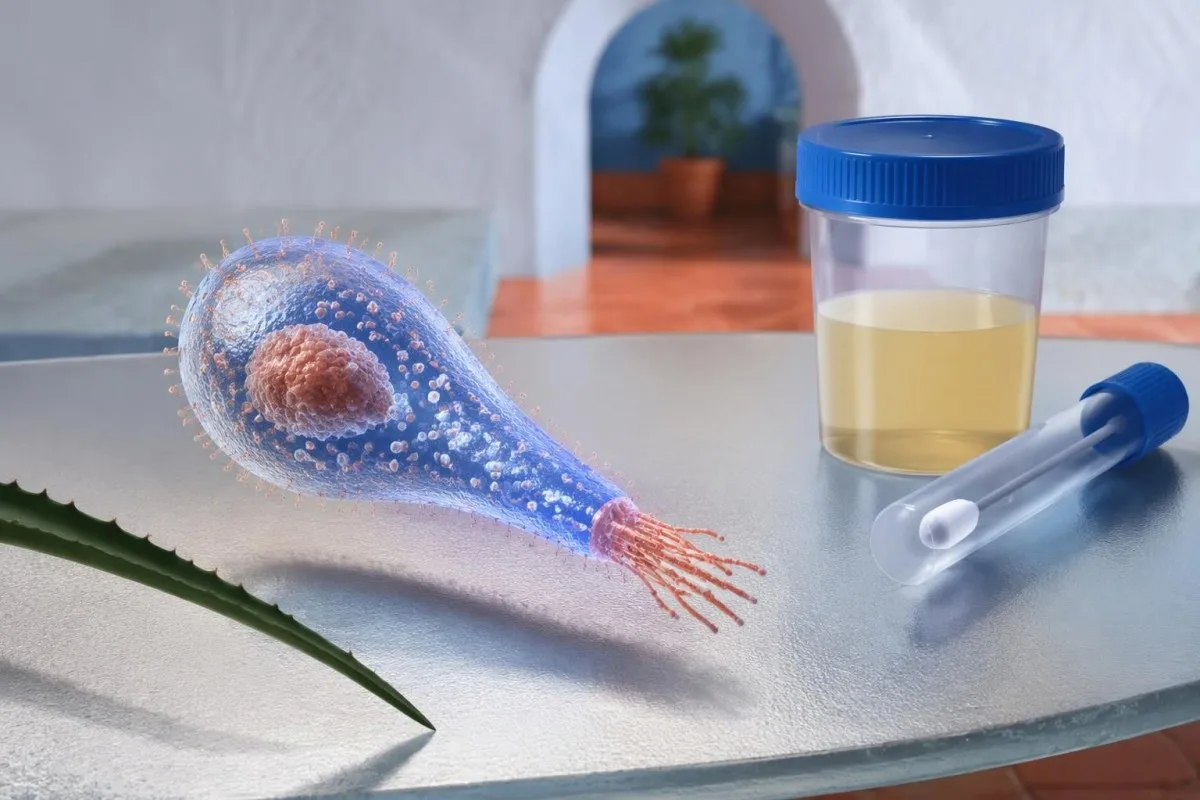
A positive genital or urine NAAT usually means Mycoplasma genitalium infection, a sexually transmitted infection requiring clinician-directed care. Treatment commonly uses sequential antibiotics selected around resistance; partners need assessment, and a test of cure, when indicated, is generally collected no earlier than 21 days after treatment ends.

要点
- Positive NAAT means Mycoplasma genitalium genetic material was detected; a result obtained within 21 days of finishing antibiotics may be difficult to interpret.
- Resistance-guided treatment commonly starts with doxycycline 100 mg twice daily for 7 days, followed immediately by a second antibiotic selected by the clinician.
- Macrolide susceptibility can support an extended azithromycin course totaling 2.5 g after doxycycline under the CDC regimen.
- Resistance or unavailable resistance testing commonly leads to moxifloxacin 400 mg once daily for 7 days after doxycycline, if clinically appropriate.
- Avoid single-dose azithromycin: azithromycin 1 g alone is not recommended for Mycoplasma genitalium because it can fail and select resistance.
- Partner care involves testing current partners where available and treating those who test positive; do not share tablets or assume identical prescriptions are appropriate.
- 治癒確認の検査 is selective under CDC guidance but broader under the 2021 European guideline; when required, wait at least 21 days after the final antibiotic dose.
- Pelvic inflammatory disease may require moxifloxacin 400 mg daily for 14 days when Mycoplasma genitalium is detected, rather than the uncomplicated-infection regimen.
What does a Mycoplasma genitalium positive NAAT mean?
A mycoplasma genitalium positive genital or urine NAAT detects genetic material from a sexually transmitted bacterium, usually indicating infection when the sample was collected before treatment. It does not measure severity, identify who transmitted it, or prove when acquisition occurred; a result collected within 21 days after antibiotics needs different interpretation.
NAAT stands for nucleic acid amplification test; PCR is one type, while other assays amplify different nucleic-acid targets. A report saying detected, positive, or reactive should be read with the organism name and specimen site, because a panel containing 5 organisms can produce separate answers requiring entirely different treatment decisions.
An unexpected positive result deserves a clinical review, not an automatic conclusion that the laboratory made a mistake. If there are 2 conflicting reports, the clinician should check collection dates, antibiotics taken between samples, and whether both laboratories tested the same anatomical site before deciding whether another specimen would help.
Negative chlamydia and gonorrhea tests do not exclude Mycoplasma genitalium, because these are 3 separate bacterial targets. Our explanation of chlamydia NAAT result timing shows why the test name and collection date matter more than the general label STI panel.
カンテスティは AI血液検査分析装置; Mycoplasma genitalium is usually diagnosed using a genital swab or urine NAAT, not a routine blood panel. We distinguish these 2 testing categories because neither a normal complete blood count nor an AI explanation establishes whether this organism is present or which antibiotic will work.
How to read Mycoplasma genitalium test results
Mycoplasma genitalium test results are usually qualitative: detected or not detected, rather than a concentration with a normal range. Read 4 fields together—the organism, specimen type, collection date, and any resistance result—because a positive organism result without resistance testing cannot identify the most effective second antibiotic.
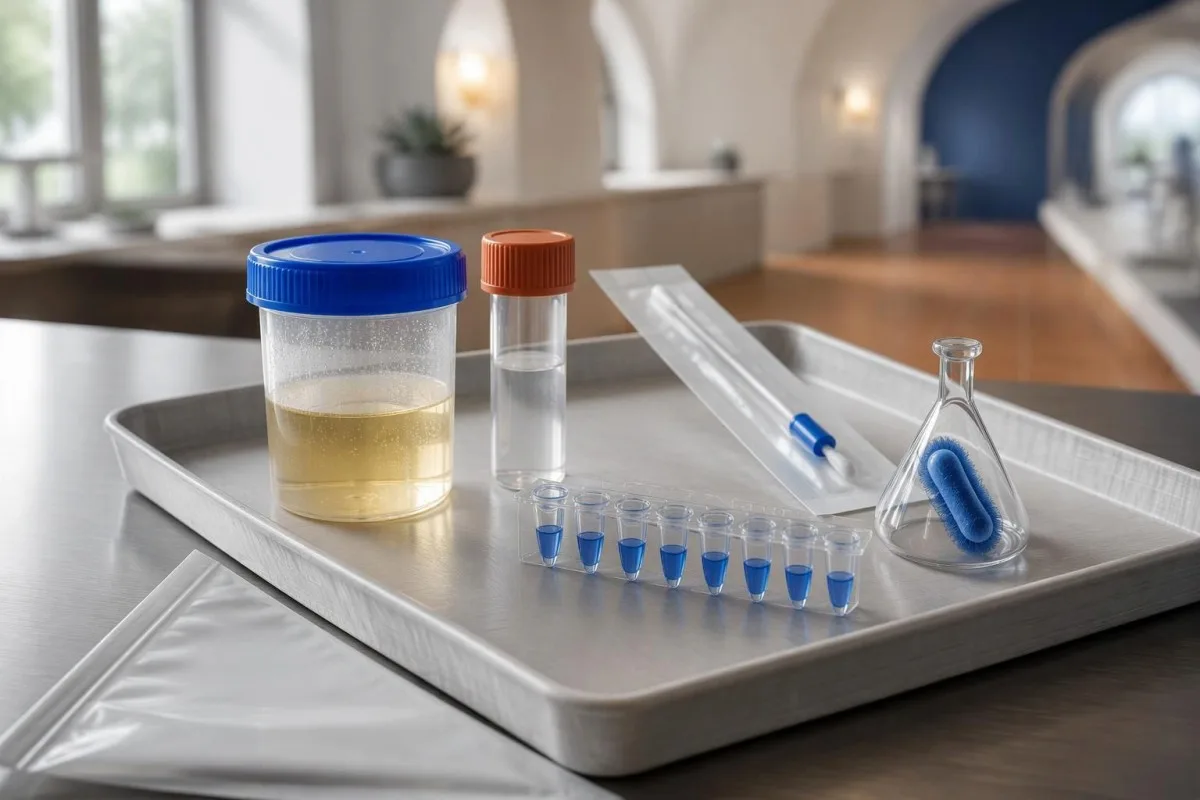
First-catch urine is not the same as midstream urine, which is commonly requested for a routine bacterial culture. Some NAAT kits request approximately 10–20 mL of the initial stream, but volume and time since last urination are assay-specific; follow the collecting laboratory's instructions rather than borrowing preparation rules from another test.
A vaginal swab generally offers better detection than urine in people with a vagina, although approved specimen types differ by assay and country. A negative result from 1 specimen does not necessarily answer a question about another site, and routine throat screening for Mycoplasma genitalium is not generally recommended.
A PCR cycle threshold is not a standardized severity score for Mycoplasma genitalium. Even when a laboratory supplies 1 numerical amplification value, sampling quality, assay chemistry, and recent treatment influence it; our 定性検査結果と定量検査結果 guide explains why numerical-looking data do not always support numerical treatment thresholds.
Routine urine testing can show white-cell activity without identifying the organism responsible. A positive leukocyte esterase result with negative nitrites has several explanations, and even 2 abnormal dipstick fields cannot replace an organism-specific NAAT; Mycoplasma genitalium also does not grow in an ordinary urine culture.
Is this the same as Mycoplasma pneumoniae or Ureaplasma?
Mycoplasma genitalium, Mycoplasma pneumoniae, and Ureaplasma are different organisms, and a positive result for 1 does not diagnose either of the others. Mycoplasma genitalium is primarily sexually transmitted; Mycoplasma pneumoniae causes respiratory illness, while Ureaplasma frequently occurs as genital carriage without disease requiring antibiotics.
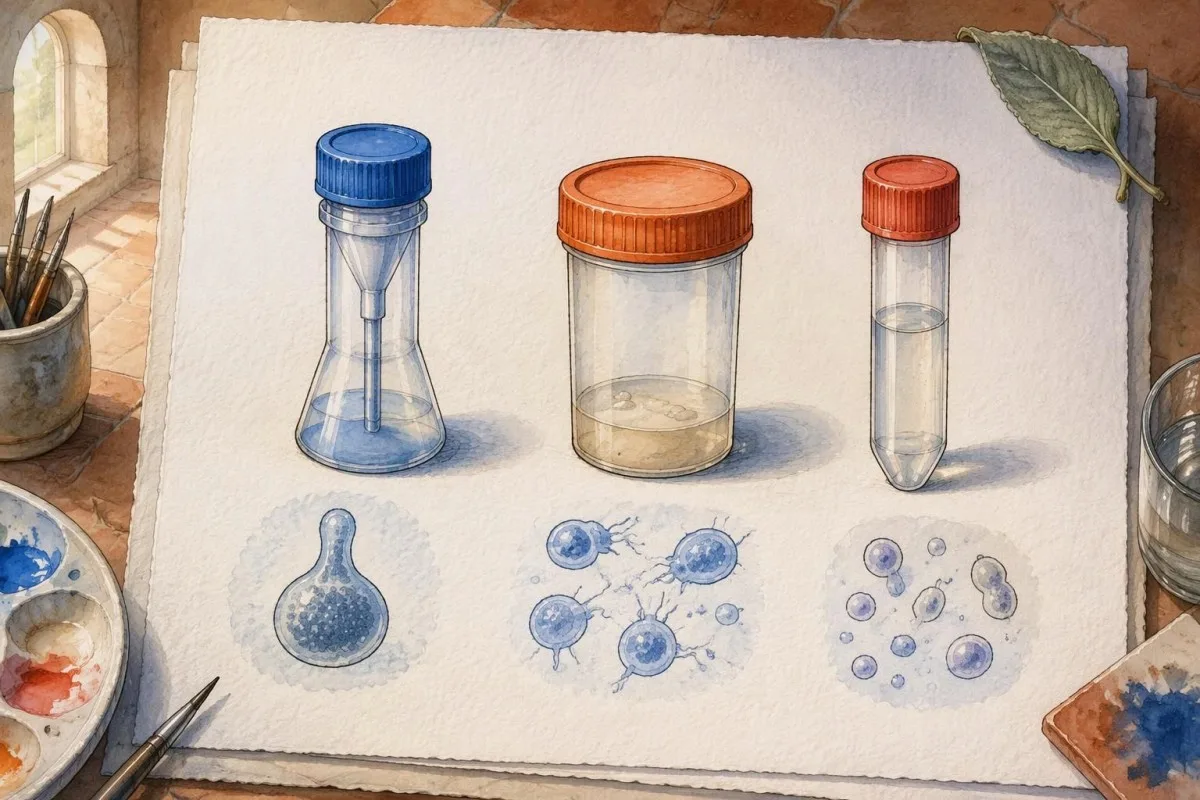
Mycoplasma pneumoniae IgM is an antibody result, not a genital NAAT result. Antibody responses can lag behind illness or remain detectable afterward, so a respiratory IgM result and a urine NAAT are 2 fundamentally different kinds of evidence; see our Mycoplasma pneumoniae IgM explanation for the respiratory-specific interpretation.
Ureaplasma detection often represents colonization, especially when found on broad commercial panels in people without symptoms. A report listing 3 organisms does not mean 3 antibiotic courses are needed; our Ureaplasma treatment and carriage guide explains why indiscriminate treatment can create more medication exposure without clear benefit.
Mycoplasma hominis is also not Mycoplasma genitalium, despite sharing the genus name. A panel may list both, creating 2 distinct results with different clinical implications and antibiotic susceptibility patterns; treatment should never be chosen by recognizing only the first word in a laboratory report.
There is no reliable way to infer the species from symptoms alone: cough, urinary burning, and genital irritation represent at least 3 different clinical pathways. The practical step is to copy the complete organism name and test method into your appointment notes, rather than describing every positive result simply as mycoplasma.
Which symptoms and complications need assessment?
Mycoplasma genitalium can cause urethritis, cervicitis, and pelvic inflammatory disease, but some infections produce no symptoms. The CDC guideline estimates that it accounts for approximately 15–20% of nongonococcal urethritis and about 40% of persistent or recurrent urethritis, making ongoing symptoms after standard treatment a reason for targeted testing.

Burning urination and discharge are not specific to this organism, and symptoms may overlap with gonorrhea, chlamydia, trichomoniasis, or noninfectious irritation. The CDC figures describe groups with urethritis, not your individual probability of infection; 40% in recurrent urethritis must not be applied to someone with only a positive screening result (Workowski et al., 2021).
Cervicitis may cause discharge or bleeding after sex, but these symptoms also need assessment for other causes. HPV and Pap screening results answer different questions; 1 reassuring cervical screening result does not rule out an STI, and an STI NAAT does not replace cancer screening.
Pelvic pain with fever, vomiting, or pregnancy possibility needs prompt evaluation, rather than waiting 21 days for a cure check. Sudden severe one-sided pelvic pain, fainting, or sudden testicular pain can indicate conditions needing emergency care; the presence of a positive STI result should not anchor the assessment to just 1 explanation.
The relationship between Mycoplasma genitalium and infertility is less certain than its relationship with urethritis; observational associations do not calculate an individual's future fertility. For a hypothetical 29-year-old with a positive NAAT but no pelvic symptoms, the immediate priority is appropriate infection management, not assuming permanent reproductive damage from the laboratory flag.
Why antibiotic resistance changes treatment choices
Mycoplasma genitalium antibiotic resistance changes treatment because macrolide-resistant organisms may survive azithromycin, and fluoroquinolone resistance can undermine moxifloxacin. The CDC's 2021 guideline reported macrolide-resistance markers in 44–90% of studied populations in the United States, Canada, Western Europe, and Australia; that range is not a universal local resistance rate.
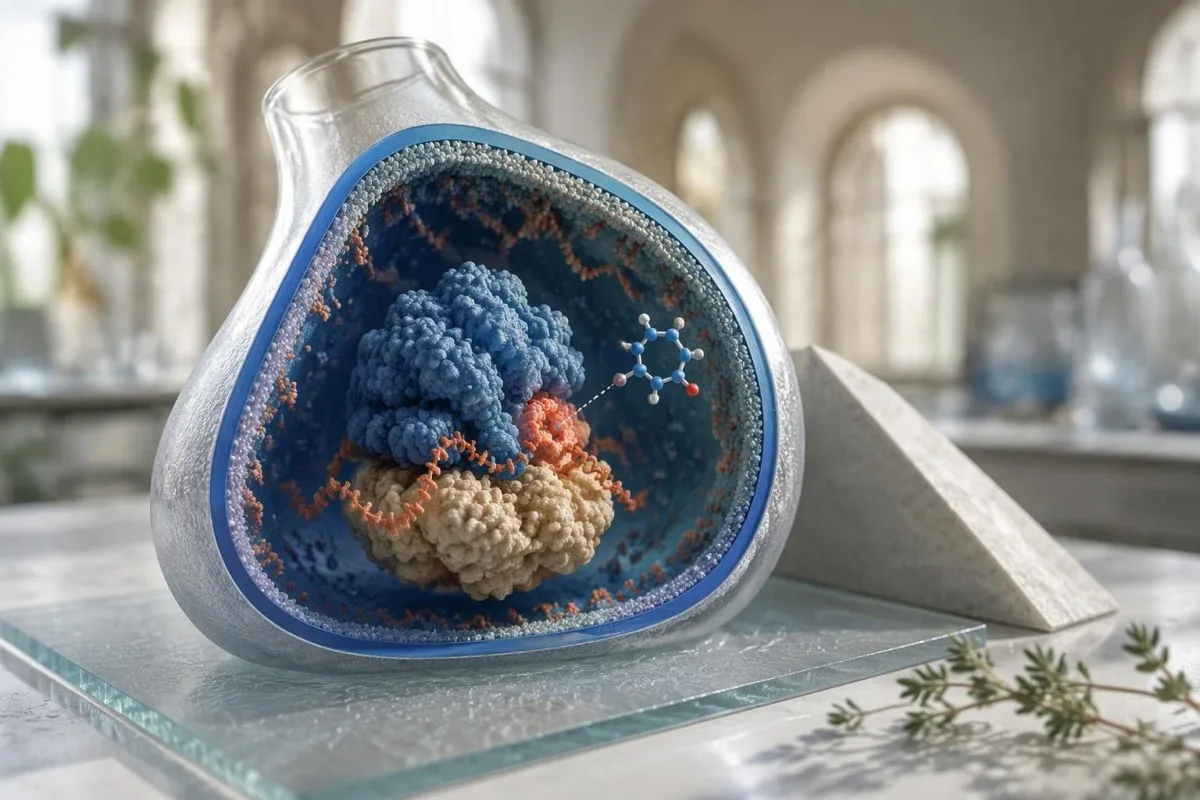
Macrolide resistance testing usually looks for mutations in the bacterial 23S rRNA gene, rather than measuring your body's antibiotic response. Some services automatically test positive samples; others require a separate request, so ask whether 1 stored specimen can provide both organism detection and resistance information before repeating collection.
Fluoroquinolone-resistance interpretation is more complicated because mutations in parC and gyrA do not all predict failure equally well. These are 2 bacterial genes, not inherited human traits; a report showing no tested resistance marker lowers uncertainty but does not guarantee cure, because the assay may not cover every relevant mutation.
Azithromycin 1 g alone is not recommended for Mycoplasma genitalium, partly because treatment can select resistant organisms. The CDC cites resistance selection in approximately 10–12% of initially susceptible infections treated with this single dose; those figures explain why convenient treatment borrowed from another STI can become a poor choice here (Workowski et al., 2021).
Resistance belongs to the bacterium, not to the person, and a previous antibiotic course does not prove every future infection will resist that drug. Our gonorrhea cure-check guidance provides a useful comparison: these 2 STIs both raise resistance concerns, but their recommended drugs and follow-up rules are not interchangeable.
What Mycoplasma genitalium treatment usually involves
Mycoplasma genitalium treatment commonly uses 2 sequential antibiotics, with doxycycline first to reduce organism load and a second drug to improve clearance. Under the CDC regimen, uncomplicated infection starts with doxycycline 100 mg orally twice daily for 7 days; resistance results and clinical suitability determine what follows immediately afterward.
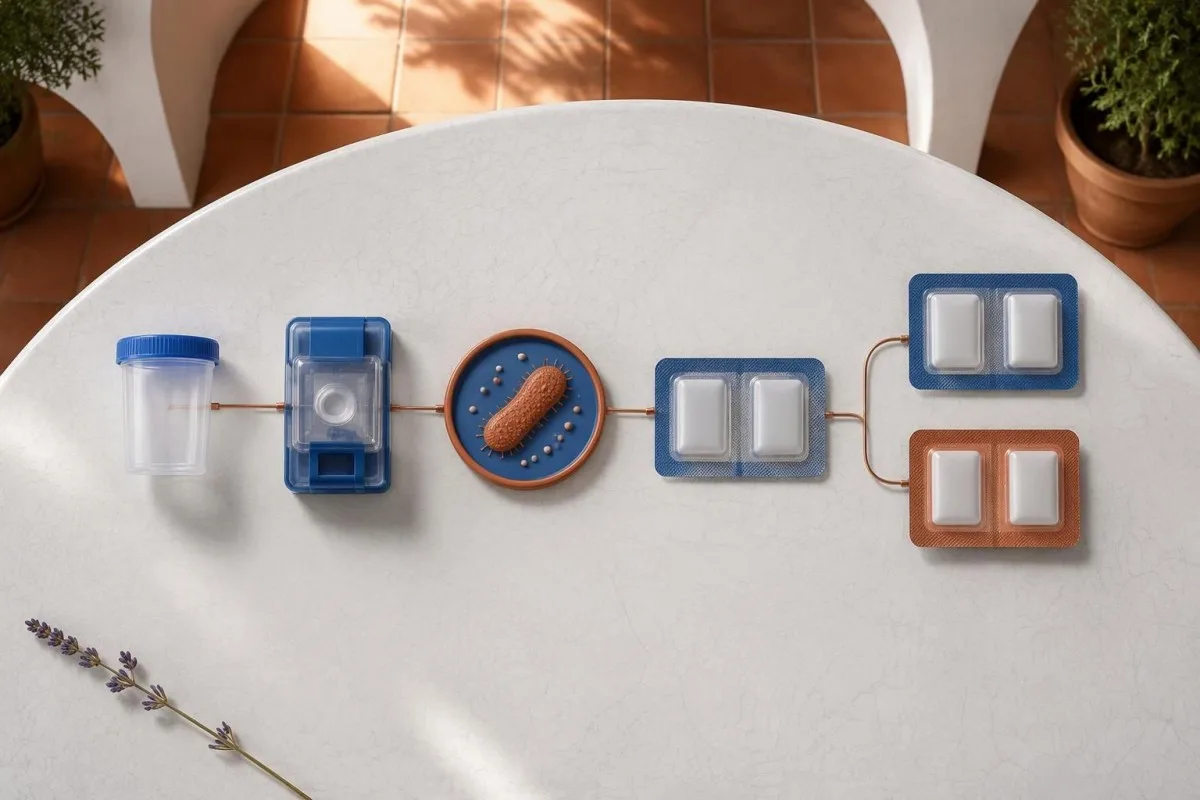
For a macrolide-susceptible infection, the CDC regimen follows doxycycline with azithromycin 1 g on the first azithromycin day, then 500 mg once daily for 3 more days. This totals 2.5 g of azithromycin after the initial 7-day doxycycline course; it is not the same prescription as a single 1 g dose.
When macrolide resistance is detected, the CDC regimen follows doxycycline with moxifloxacin 400 mg once daily for 7 days. The same sequence is recommended when resistance testing is unavailable and moxifloxacin is suitable; prescription choices differ internationally, so these numbers explain a recognized regimen rather than replace local prescribing guidance.
Doxycycline alone has limited cure effectiveness for Mycoplasma genitalium, which is why improvement during the first 7 days does not necessarily mean treatment is complete. The bacterium lacks a cell wall, making penicillin, amoxicillin, and cephalosporins ineffective against it; even successful ペニシリンアレルギーの再評価 would not make those drugs appropriate substitutes.
Resistance-guided treatment performs well but is not perfect: Durukan et al. reported cure rates of 95.4% with doxycycline–azithromycin and 92.0% with doxycycline–moxifloxacin in a sexual-health-clinic cohort (Clinical Infectious Diseases, 2020). These outcomes support targeted sequencing, but they are cohort estimates—not a guarantee for every resistance pattern, pregnancy, or complicated infection.
How to take prescribed antibiotics safely
Antibiotic safety depends on the prescribed drug, other medicines, pregnancy status, and previous adverse reactions, not just the positive NAAT. Doxycycline is commonly taken with a full glass of water and without lying down for at least 30 minutes; moxifloxacin requires additional review for tendon, nerve, and heart-rhythm risks.

Mineral supplements and antacids can reduce absorption of doxycycline or moxifloxacin when taken too close together. The correct interval depends on the product: moxifloxacin labeling commonly requires at least 4 hours before or 8 hours after products containing magnesium, aluminum, iron, or zinc; confirm instructions for every medicine rather than applying 1 universal gap.
Moxifloxacin and azithromycin can both prolong the QT interval, so clinicians may review other QT-prolonging medicines, electrolyte abnormalities, fainting history, or an ECG before prescribing. Taking 2 QT-prolonging drugs together is not automatically prohibited, but a medication list—including nonprescription products—is more useful than saying you take only your usual tablets.
New tendon pain, numbness, weakness, or serious neurological symptoms during moxifloxacin require stopping the drug and prompt medical advice; breathing difficulty or a severe allergic reaction requires emergency help. Antibiotics can also change warfarin response, as our 抗生物質関連のINRの変化 guide explains; 1 stable INR before treatment does not guarantee stability afterward.
カンテスティは AI血液検査の読み方プラットフォーム that can help explain relevant electrolyte or other blood-panel results, but cannot decide whether moxifloxacin is safe or issue a prescription. Our 臨床検証フレームワーク describes interpretation safeguards; decisions involving 2 interacting medicines still require a prescriber or pharmacist who can review the actual regimen.
How partner management and sex precautions work
Current sexual partners should be offered assessment and, where available, Mycoplasma genitalium testing, with treatment for those who test positive. Avoid sex until you and relevant partners have completed treatment and symptoms have resolved; some services also require a negative cure test, which usually cannot be collected before 21 days after treatment.

Partner management reduces opportunities for reinfection, but the evidence that a particular partner-notification strategy reduces Mycoplasma genitalium reinfection remains limited. The CDC permits offering the patient's regimen to a partner when testing is not possible, but pregnancy, allergies, interactions, and prior antibiotics mean 2 partners may still need different clinical decisions (Workowski et al., 2021).
Ask the clinic which partners to contact rather than automatically using the look-back period for another STI. Mycoplasma genitalium does not have 1 globally standardized partner-notification interval, and an asymptomatic infection can persist; confidential notification services can help without treating a positive result as proof of recent infidelity.
Finishing your antibiotics does not protect you from an untreated partner, and a negative result does not create lasting immunity. Condoms and barriers reduce risk but do not replace the treatment-related abstinence advice; write down both partners' final-dose dates so that 1 person's earlier completion does not accidentally become the couple's restart date.
Coinfections need their own partner rules and treatments rather than a single shared plan. Our トリコモナス症検査の説明では illustrates this distinction: a panel detecting 2 organisms may require different drugs, and whether one partner has symptoms does not reliably establish which infections they carry.
When is a test of cure appropriate?
A Mycoplasma genitalium test of cure checks whether treatment cleared the organism, and, when indicated, it should generally be collected no earlier than 21 days after the final antibiotic dose. CDC guidance does not routinely require it for asymptomatic people completing a recommended regimen, while the 2021 European guideline advises considering it for all patients.
Guidelines differ because testing can detect failures but can also create confusing early results. Jensen et al.'s 2021 European guideline, published in 2022, advises collecting cure-test specimens no earlier than 3 weeks after treatment completion; the CDC uses a more selective approach after recommended treatment when symptoms have resolved.
A cure test is especially relevant after an alternative regimen, suspected treatment failure, or persistent symptoms, according to the treating service's protocol. When moxifloxacin cannot be used and the CDC's limited-data doxycycline–extended-azithromycin alternative is chosen without resistance testing, a cure test 21 days after completion is required because macrolide resistance makes failure a substantial concern.
Count from the last antibiotic dose, including the second drug. In a hypothetical course ending on March 14, the earliest 21-day follow-up point is April 4—not 21 days after the first doxycycline tablet; missed doses, vomiting, or an interrupted sequence may change the plan and should be reported before booking.
Early NAAT positivity can reflect residual nucleic acid, while antibiotic suppression can also make poorly timed testing misleading. Keep the original report and actual medication dates together; our AIレポートソースチェックガイド explains why 2 documents with different dates should not be combined into a single presumed treatment outcome.
What if the test stays positive or symptoms return?
A positive follow-up NAAT can reflect treatment failure, reinfection, or testing too soon, so the next step is clinical reassessment rather than repeating leftover antibiotics. A result obtained at least 21 days after treatment completion is more interpretable, especially when the clinician also knows whether sex occurred with an untreated or new partner.

Treatment failure is not established by symptoms alone, because irritated tissue may take time to recover after microbiological clearance. Conversely, no symptoms do not guarantee cure when a test is indicated; these are 2 separate outcomes, and additional antibiotic exposure should not be based only on whether discomfort feels slightly better or worse.
A useful reassessment records 4 details: adherence, vomiting, interacting products, and sexual re-exposure. For example, a hypothetical person completing doxycycline but missing several moxifloxacin doses has a different explanation for a positive retest than someone who completed both drugs correctly and had no further exposure; resistance testing may help distinguish the remaining possibilities.
Repeating azithromycin or moxifloxacin without reassessment can compound resistance and adverse effects. Specialist salvage options may include a 14-day minocycline course or other locally available agents, but evidence, access, and suitability vary; these are not over-the-counter rescue plans, and complicated cases may need specialist sexual-health or infectious-disease input.
Persistent urinary symptoms also warrant checking for other STIs, a conventional urinary infection, or noninfectious causes. Our asymptomatic urine bacteria guide shows why 1 positive routine culture may be incidental, whereas a correctly timed Mycoplasma genitalium NAAT is an organism-specific result requiring its own interpretation.
What changes during pregnancy or pelvic inflammatory disease?
Pregnancy and pelvic inflammatory disease change Mycoplasma genitalium treatment decisions, so uncomplicated-infection instructions should not be copied into either situation. For detected Mycoplasma genitalium associated with PID, the CDC describes moxifloxacin 400 mg daily for 14 days; pregnancy requires specialist advice because usual sequential drugs may be unsuitable.
A standard PID regimen does not reliably eradicate Mycoplasma genitalium, even when it includes doxycycline. PID can involve multiple organisms, however, so clinicians must manage the broader syndrome rather than simply replacing everything with 1 Mycoplasma-directed drug; the 14-day recommendation is different from the 7-day moxifloxacin course used for uncomplicated infection.
Pregnancy limits routine use of doxycycline and moxifloxacin, while azithromycin's suitability does not eliminate the problem of macrolide resistance. If pregnancy is possible, tell the prescriber before the first dose; an early negative test may need reassessment, as our 尿中妊娠検査のタイミング guide explains when 1 result was obtained too soon.
Positive Mycoplasma genitalium results do not prove the cause of every pelvic symptom, and urgent conditions must still be considered. Sudden one-sided pain or fainting requires immediate assessment rather than an antibiotic wait-and-see approach; our ovarian cyst urgent warning signs explain another pathway that may coexist with an STI result.
The evidence linking Mycoplasma genitalium to adverse pregnancy outcomes is mixed, and a positive test cannot predict an individual's outcome. A hypothetical 10-week pregnancy with an unexpected positive panel therefore needs a specialist discussion of symptoms, resistance, medicine safety, and follow-up—not a claim that treatment is risk-free or that the pregnancy is inevitably affected.
Which additional tests help—and which do not?
Additional testing should address coinfection, complications, and medication safety, not attempt to diagnose Mycoplasma genitalium from nonspecific blood markers. Chlamydia, gonorrhea, HIV, and syphilis testing may be offered according to exposure and local practice; 1 normal CBC or CRP result cannot rule out localized Mycoplasma genitalium infection.
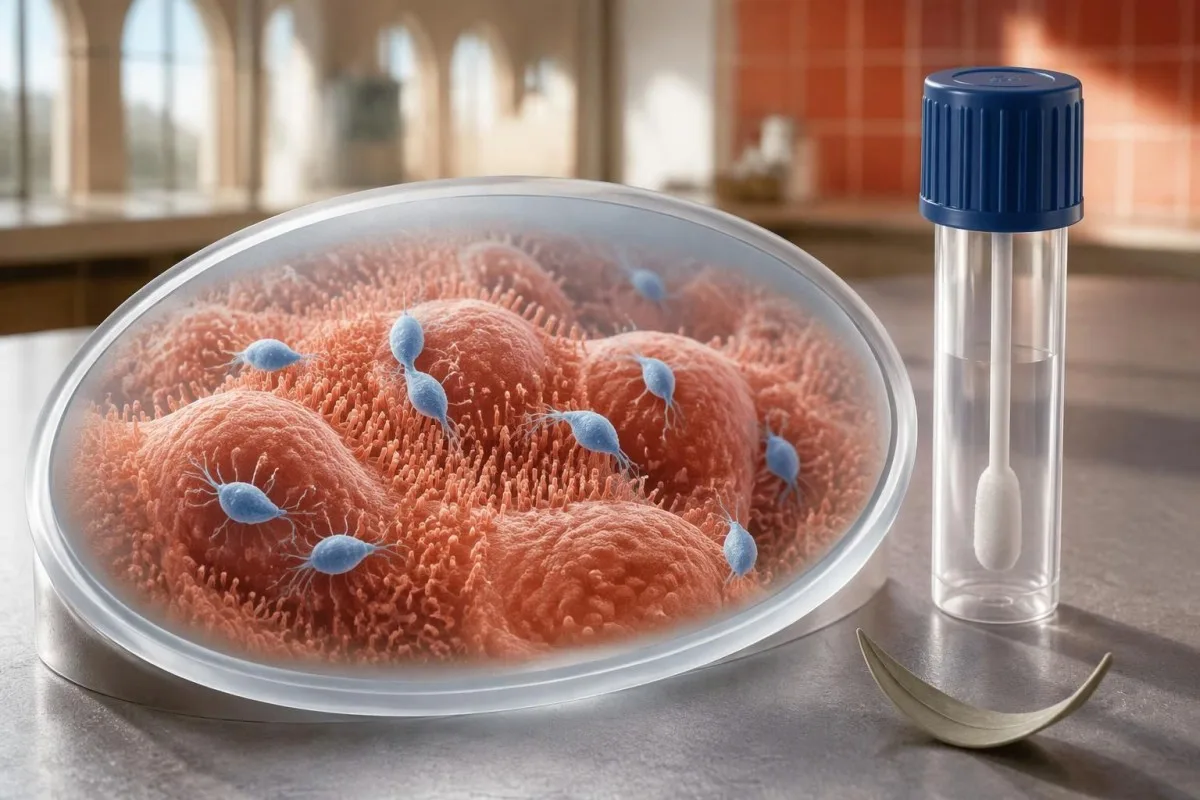
The CDC does not recommend routine Mycoplasma genitalium screening in asymptomatic people, partly because treatment consequences and resistance complicate the balance of benefit and harm. Targeted partner testing is a separate situation; absence of symptoms and absence of infection are 2 different statements, but broad screening is not automatically beneficial.
Inflammatory markers can be normal in localized infection or elevated for unrelated reasons. Our WBCとCRPの解釈 explains why 2 reassuring inflammatory results do not overrule a positive NAAT, and why a high CRP should trigger clinical assessment rather than an assumption that Mycoplasma genitalium is the only cause.
Routine microscopy and urine culture are not standard diagnostic methods for Mycoplasma genitalium. The organism is difficult to culture, and visible cellular changes are nonspecific; our routine urinalysis interpretation guide separates white cells, crystals, and other findings from molecular pathogen detection, preventing 1 generic urine report from being mistaken for an STI clearance test.
Blood tests before antibiotics are individualized rather than a universal 3-test package. Potassium, magnesium, kidney or liver tests, and an ECG may be relevant when medical history or other medicines raise safety concerns; ordering extra biomarkers simply because an STI result is positive can add cost without improving the treatment decision.
How to prepare for follow-up and protect your results
Bring the complete NAAT report, actual antibiotic dates, and a current medication list to follow-up, including supplements and any possible pregnancy. These 3 records help the clinician distinguish resistance, incomplete treatment, and reinfection; they are more actionable than a cropped screenshot showing only the word positive.

Write down missed doses, vomiting soon after a tablet, new symptoms, and any sexual exposure after diagnosis. If the prescribed sequence contains 2 antibiotics, record the end date of each rather than one general treatment date; this makes a 21-day cure-test calculation possible and helps identify accidental gaps between courses.
KantestiはAIを活用した血液検査の解析ツールです, not a laboratory that performs Mycoplasma genitalium NAAT or bacterial resistance genotyping. Our AI技術の説明 describes blood-report interpretation; these 2 specialized molecular tests still need a testing service, and antibiotic choices need a qualified prescriber.
An STI report may contain a name, date of birth, specimen site, and other sensitive information that should not be shared automatically with relatives. Kantesti's プライバシーとデータに関する情報を確認し、 explains our data approach; if you manage records for 2 adults, each person's consent and access settings should remain separate rather than relying on a shared family login.
Before leaving the appointment, ask 4 concrete questions: was resistance testing done, which drug follows doxycycline, when may sex resume, and is a cure test needed? Also confirm whom to contact if treatment cannot be completed; a practical contingency plan is safer than restarting a previous antibiotic or postponing review until the scheduled retest.
Research evidence and the limits of AI interpretation
Clinical STI guidelines—not blood-test AI benchmarks—determine Mycoplasma genitalium treatment and retesting recommendations. This article draws on 3 directly relevant medical sources: the CDC STI guideline, the European Mycoplasma genitalium guideline, and Durukan et al.'s resistance-guided treatment cohort; our separate technical publications address blood-report interpretation rather than antibiotic effectiveness.
The CDC and European guidance agree on resistance-aware care but differ on routine cure checks, explaining why 2 clinics may provide different follow-up instructions without either overlooking the result. Local drug availability, resistance patterns, and updated national protocols also affect practice; ask the treating service which guideline supports the plan rather than combining pieces from different countries.
Durukan et al.'s 2020 cohort provides treatment-outcome evidence, but 95.4% and 92.0% cure rates cannot be transferred unchanged to every population. The study's resistance-guided design, clinical setting, follow-up attendance, and circulating strains matter; the evidence supports a treatment strategy while leaving genuine uncertainty for multidrug-resistant infection and special clinical circumstances.
Kantesti's benchmark publication describes 10万件の合成テストケース, which are constructed scenarios rather than a cohort of people treated for this STI. The Clinical Validation Framework v2.0 addresses oversight and validation methods; neither publication demonstrates Mycoplasma genitalium NAAT accuracy, proves antibiotic cure, or justifies autonomous prescribing, so their citations are kept separate from clinical medical references.
私たちの organization and service information identifies Kantesti LTD, UK Company No. 17090423, and explains the role of our interpretation service. For a positive STI result, the useful endpoint is a clinician-agreed treatment, partner, and follow-up plan—not an AI-generated prescription; if a cure test is indicated, record the final dose and the minimum 21-day interval.
よくある質問
マイコプラズマ・ジェニタリウム検査が陽性ということは、性感染症にかかっているということですか?
0 陰部または尿検体のMycoplasma genitalium核酸増幅検査(NAAT)が陽性の場合、通常、検体が治療前に採取されていれば、性感染症を示します。抗菌薬の服用終了後21日以内に採取した検体の結果は、残存する核酸が検出され続ける可能性があるため、解釈が難しい場合があります。この結果から、感染がいつ始まったのか、どのパートナーから感染したのかは特定できません。性感染症に関する診察を受け、薬剤耐性検査が実施されたか確認してください。.
マイコプラズマ・ジェニタリウムの治療に用いられる抗菌薬は何ですか?
The CDC's uncomplicated-infection regimen commonly starts with doxycycline 100 mg twice daily for 7 days, followed immediately by a resistance-selected antibiotic. Macrolide-susceptible infection can receive extended azithromycin totaling 2.5 g; macrolide resistance or unavailable resistance testing commonly leads to moxifloxacin 400 mg daily for 7 days when suitable. Pregnancy, complicated infection, interactions, and local guidance can change this plan. Azithromycin 1 g alone is not recommended for Mycoplasma genitalium.
When should I retest after Mycoplasma genitalium treatment?
When a Mycoplasma genitalium test of cure is indicated, it should generally be collected no earlier than 21 days after the final antibiotic dose. CDC guidance does not routinely require a cure test for asymptomatic people who completed a recommended regimen, while the 2021 European guideline takes a broader approach. Persistent symptoms, suspected failure, or certain alternative regimens make follow-up testing more relevant. Ask the treating clinic for an exact date based on the whole antibiotic sequence.
Can I have sex after finishing Mycoplasma genitalium antibiotics?
Avoid sex until you and relevant partners have completed treatment and symptoms have resolved. Some clinics additionally advise waiting for a negative cure test, which generally cannot be collected before 21 days after treatment completion. The final-dose date matters for both partners, not only the person who tested first. Condoms reduce risk but do not replace the clinic's treatment-related abstinence advice.
Does my partner need treatment if they have no symptoms?
A current partner without symptoms should still be offered Mycoplasma genitalium assessment and testing where available, with treatment if positive. The CDC allows offering the patient's regimen when partner testing is not possible, but a clinician must consider pregnancy, allergies, interactions, and prior treatment. Two partners should not share tablets because each needs a complete, individually appropriate course. An asymptomatic partner can carry the organism, and treatment does not create lasting immunity.
Why is Mycoplasma genitalium still positive after treatment?
A positive Mycoplasma genitalium retest can reflect treatment failure, reinfection, or testing too soon. A specimen collected at least 21 days after the final antibiotic dose is more interpretable than an early repeat. The clinician should review missed doses, vomiting, interacting supplements, sexual re-exposure, and resistance results before selecting further treatment. Do not repeat leftover azithromycin or moxifloxacin without reassessment, because additional exposure can increase resistance and medication harms.
Is Mycoplasma genitalium the same as Mycoplasma pneumoniae or Ureaplasma?
Mycoplasma genitalium, Mycoplasma pneumoniae, and Ureaplasma are 3 different organisms with different clinical implications. Mycoplasma genitalium is primarily sexually transmitted, while Mycoplasma pneumoniae causes respiratory illness. Ureaplasma frequently represents genital carriage rather than disease requiring antibiotics. A positive respiratory antibody test or Ureaplasma panel does not establish Mycoplasma genitalium infection.
血液検査結果の見方を確認しましょう
検査報告書をアップロードすると、KantestiのAIが数秒で各バイオマーカーを平易な言葉で説明します。世界中で200万人以上が利用しています。.
参考文献
- Klein, T., Mitchell, S., & Weber, H. (2026). Kantesti血液検査解釈エンジンのための、100,000件の合成テストケースに基づく、事前登録されたルーブリックに基づく自動技術ベンチマーク。. Kantesti AI医学研究。. 掲載日
- Klein, T., Mitchell, S., & Weber, H. (2026). 臨床検証フレームワーク v2.0(医学的検証ページ)。. Kantesti AI医学研究。. 掲載日
- Workowski KA et al. (2021). Sexually Transmitted Infections Treatment Guidelines, 2021. MMWR推奨事項および報告書。. 掲載日
- Jensen JS et al. (2022). 2021 European guideline on the management of Mycoplasma genitalium infections. Journal of the European Academy of Dermatology and Venereology. 掲載日
- Durukan D et al. (2020). Resistance-Guided Antimicrobial Therapy Using Doxycycline-Moxifloxacin and Doxycycline-2.5 g Azithromycin for the Treatment of Mycoplasma genitalium Infection: Efficacy and Tolerability. Clinical Infectious Diseases. 掲載日
- 200万以上分析対象の検査
- 127+国
- 100+言語
医療チームについて


E-E-A-T 信頼性シグナル
経験
医師主導による、検査結果解釈ワークフローの臨床レビュー。.
専門知識
臨床的な文脈においてバイオマーカーがどのように振る舞うかに焦点を当てた検査医学。.
権威
Thomas Klein医師による医学的レビュー。Sarah Mitchell医師およびHans Weber教授の協力。.
信頼性
アラームを減らすための明確なフォローアップ経路を備えた、エビデンスに基づく解釈。.





医療免責事項
この記事は教育目的のみを対象としており、医療助言を構成するものではありません。診断や治療の判断を行う際は、必ず有資格の医療提供者にご相談ください。.
公開 · 編集チームにお問い合わせください
Kantesti Ltdが発行。イングランドおよびウェールズで登録、会社番号. 17090423, 、英国ロンドン。.
